Show full content
In the first post of this series, I have outlined the importance of having a proper operational framework in place before starting any talk of information-theoretic quantities. It is, however, a good idea to pin down even provisionally the kind of information-theoretic quantity one hopes to distill out of the operational formulation. This will be the topic of this post, and the starting point will be the paper by Carl Bergstrom and Martin Rosvall on the “transmission sense of information.”
Let me start by quoting the abstract of the paper for the common objections against applying information-theoretic ideas to biology:
Biologists think in terms of information at every level of investigation. Signaling pathways transduce information, cells process information, animal signals convey information. Information flows in ecosystems, information is encoded in the DNA, information is carried by nerve impulses. In some domains the utility of the information concept goes unchallenged: when a brain scientist says that nerves transmit information, nobody balks. But when geneticists or evolutionary biologists use information language in their day-to-day work, a few biologists and many philosophers become anxious about whether this language can be justified as anything more than facile metaphor.
The key claim of Bergstrom and Rosvall is that, by focusing on what they refer to as the transmission sense of information, it is possible to avoid the two pitfalls of mutual information, namely the “shallow” notion of correlation and the so-called parity thesis. In doing so, they emphasize the importance of operational notions in information theory “by taking the viewpoint of a communications engineer and focusing on the decision problem of how information is to be packaged for transport.” While this recognition of the importance of operationalization is not common in biology, I still think that it misses an important point: The relevant decision problem is not that of a communications engineer, it is that of a control engineer, whose primary aim to ensure reliable transmission of the global constraints (formal causes) governing the unfolding of phenotypes (starting with development and continuing on through the organism’s lifetime). In other words, the meaning and use (i.e., the semantics and the pragmatics) of the genome are primary, the symbolic packaging (the syntax) of the genome is secondary. This will be the subject of future posts. Here, my goal is more modest — a critical reconsideration of the Bergstrom and Rosvall paper and an alternative proposal to use directed information, rather than mutual information.
If you are not familiar with directed information, I recommend two old posts of mine (one, two) for the basic background. Briefly, the notion of directed information was proposed by Jim Massey in 1990 in order to analyze systems with feedback by focusing on functional, rather than statistical, dependencies:
… probabilistic dependence is quite distinct from causal dependence. Whether
causes
or
This point will be important to us later on.
1. The model
We will consider a very simple model involving the temporal evolution of genotypes and phenotypes in a random environment. We will work in discrete time, using 


Let us consider what happens in 


The factorization of the joint distribution in (1) encodes some important assumptions, which we need to spell out:
- The genotype and the environment are modeled by two discrete-time stochastic processes. Notice that the environment is not necessarily Markovian, but the genome process is a Markov process in a random environment (i.e., at each time
, the genome
is conditionally independent of
and
given
and
). This is a very simple model of asexual reproduction, and the process distribution of
models mutations (through stochastic dependence of
- The phenotype at
Again, I need to emphasize that this is a very simple model (see, e.g., the work of Rivoire and Leibler) that does not account for various feedback mechanisms by which the organisms can act on their environments, such as niche construction.
2. The lack of directivity and the parity thesis
Bergstrom and Rosvall consider what happens at each 

- Mutual information is a “shallow” notion of statistical correlation (in the words of Massey, it has no inherent directivity). Indeed, since the mutual information is symmetric, we have
, and this symmetry runs counter to the central dogma (no flow of information from proteins to genes). In fact, we can also include the environment and consider
, which runs into the same issues. There is also the related objection that, whatever information there is in the genes, it is semantic in some sense, whereas the semantic aspects are notably absent from Shannon’s theory.
- Once we bring the environment into the picture, we also have to deal with the so-called “parity thesis:” In the terminology of Bayes networks, the random triple
are mutually independent, and
is conditionally dependent on both of them —
. As a DAG, this Bayes network is symmetric with respect to
I agree with Bergstrom and Rosvall that these objections provide a strong argument against using mutual information in this context. However, this does not mean that there is no alternative information-theoretic construct that is free of the drawbacks of the mutual information. I claim that one has to use directed information instead. This should not be surprising, since we are in fact trying to capture functional, rather than statistical, dependencies. So, let us then compute the directed informations 



and are given by

With these, we can compute the corresponding directed informations:
![\displaystyle \begin{array}{rcl} I(G_t \rightarrow (E_t,X_t)) &=& D(P_{G_t,E_t,X_t}\|\vec{P}_{G_t|E_t,X_t} \times P_{E_t,X_t}) \\ &=& {\mathbf E}\left[\log \frac{P_{G_t,E_t,X_t}}{\vec{P}_{G_t|E_t,X_t} P_{E_t,X_t}}\right] \\ &=& {\mathbf E}\left[\log \frac{P_{G_t,E_t,X_t}}{P_{G_t} P_{E_t,X_t}} \right] \\ &=& I(G_t; E_t,X_t), \end{array}](https://s0.wp.com/latex.php?latex=%5Cdisplaystyle++%5Cbegin%7Barray%7D%7Brcl%7D++%09I%28G_t+%5Crightarrow+%28E_t%2CX_t%29%29+%26%3D%26+D%28P_%7BG_t%2CE_t%2CX_t%7D%5C%7C%5Cvec%7BP%7D_%7BG_t%7CE_t%2CX_t%7D+%5Ctimes+P_%7BE_t%2CX_t%7D%29+%5C%5C+%09%26%3D%26+%7B%5Cmathbf+E%7D%5Cleft%5B%5Clog+%5Cfrac%7BP_%7BG_t%2CE_t%2CX_t%7D%7D%7B%5Cvec%7BP%7D_%7BG_t%7CE_t%2CX_t%7D+P_%7BE_t%2CX_t%7D%7D%5Cright%5D+%5C%5C+%09%26%3D%26+%7B%5Cmathbf+E%7D%5Cleft%5B%5Clog+%5Cfrac%7BP_%7BG_t%2CE_t%2CX_t%7D%7D%7BP_%7BG_t%7D+P_%7BE_t%2CX_t%7D%7D+%5Cright%5D+%5C%5C+%09%26%3D%26+I%28G_t%3B+E_t%2CX_t%29%2C+%5Cend%7Barray%7D+&bg=ffffff&fg=000000&s=0&c=20201002)
so this equals just the mutual information between 
![\displaystyle \begin{array}{rcl} I((E_t,X_t) \rightarrow G_t) &=& D(P_{E_t,X_t,G_t} \| \vec{P}_{E_t,X_t|G_t} \times P_{G_t}) \\ &=& {\mathbf E}\left[\log \frac{P_{E_t,X_t,G_t}}{\vec{P}_{E_t,X_t|G_t} P_{G_t}} \right] \\ &=& {\mathbf E}\left[\log \frac{P_{E_t,X_t,G_t}}{P_{E_t}P_{X_t|G_t,E_t} P_{G_t}} \right] \\ &=& {\mathbf E}\left[\log \frac{P_{E_t,X_t,G_t}}{P_{E_t,X_t,G_t}} \right] \\ &\equiv& 0. \end{array}](https://s0.wp.com/latex.php?latex=%5Cdisplaystyle++%5Cbegin%7Barray%7D%7Brcl%7D++%09I%28%28E_t%2CX_t%29+%5Crightarrow+G_t%29+%26%3D%26+D%28P_%7BE_t%2CX_t%2CG_t%7D+%5C%7C+%5Cvec%7BP%7D_%7BE_t%2CX_t%7CG_t%7D+%5Ctimes+P_%7BG_t%7D%29+%5C%5C+%09%26%3D%26+%7B%5Cmathbf+E%7D%5Cleft%5B%5Clog+%5Cfrac%7BP_%7BE_t%2CX_t%2CG_t%7D%7D%7B%5Cvec%7BP%7D_%7BE_t%2CX_t%7CG_t%7D+P_%7BG_t%7D%7D+%5Cright%5D+%5C%5C+%09%26%3D%26+%7B%5Cmathbf+E%7D%5Cleft%5B%5Clog+%5Cfrac%7BP_%7BE_t%2CX_t%2CG_t%7D%7D%7BP_%7BE_t%7DP_%7BX_t%7CG_t%2CE_t%7D+P_%7BG_t%7D%7D+%5Cright%5D+%5C%5C+%09%26%3D%26+%7B%5Cmathbf+E%7D%5Cleft%5B%5Clog+%5Cfrac%7BP_%7BE_t%2CX_t%2CG_t%7D%7D%7BP_%7BE_t%2CX_t%2CG_t%7D%7D+%5Cright%5D+%5C%5C+%09%26%5Cequiv%26+0.+%5Cend%7Barray%7D+&bg=ffffff&fg=000000&s=0&c=20201002)
Since directed information quantifies causal (or functional), rather than statistical, dependencies, this is to be expected — the genes together with the environment exert causal influence on the phenotype, but the phenotype and the environment cannot exert any causal influence on the genes. Here it may also be useful to recall the conservation law that relates mutual information and directed information:

and, since the second term on the right-hand side is identically zero, in this particular instance the mutual information between
The “parity thesis” is more interesting, and it is indeed a subtle issue. It is easy to see that we can interchange the roles of

This is, as I had mentioned earlier, a simple consequence of the collider structure 


Remember, by the way, that in all of the above I have assumed that there is no dependence between the genome and the environment (i.e., genes may undergo mutation, but there is no selection). We can include selection as well, but the resulting mathematics will be a lot more complicated; in particular, we will need to consider so-called causally conditioned directed information, when we condition on the past realizations of 


3. The vertical dimension and the transmission sense
Again, let’s follow Bergstrom and Rosvall and simplify things for now by assuming no selection, so 


Thus, we can compute the directed information
![\displaystyle \begin{array}{rcl} I(G^T \rightarrow (E^T,X^T)) &=& {\mathbf E}\left[\log \frac{P_{G^T,E^T,X^T}}{\vec{P}_{G^T|E^T,X^T} \times P_{E^T,X^T}}\right] \\ &=& {\mathbf E}\left[\log \frac{P_{G^T,E^T,X^T}}{P_{G^T}P_{E^T,X^T}}\right] \\ &=& I(G^T; E^T,X^T), \end{array}](https://s0.wp.com/latex.php?latex=%5Cdisplaystyle++%5Cbegin%7Barray%7D%7Brcl%7D++I%28G%5ET+%5Crightarrow+%28E%5ET%2CX%5ET%29%29+%26%3D%26+%7B%5Cmathbf+E%7D%5Cleft%5B%5Clog+%5Cfrac%7BP_%7BG%5ET%2CE%5ET%2CX%5ET%7D%7D%7B%5Cvec%7BP%7D_%7BG%5ET%7CE%5ET%2CX%5ET%7D+%5Ctimes+P_%7BE%5ET%2CX%5ET%7D%7D%5Cright%5D+%5C%5C+%26%3D%26+%7B%5Cmathbf+E%7D%5Cleft%5B%5Clog+%5Cfrac%7BP_%7BG%5ET%2CE%5ET%2CX%5ET%7D%7D%7BP_%7BG%5ET%7DP_%7BE%5ET%2CX%5ET%7D%7D%5Cright%5D+%5C%5C+%26%3D%26+I%28G%5ET%3B+E%5ET%2CX%5ET%29%2C+%5Cend%7Barray%7D+&bg=ffffff&fg=000000&s=0&c=20201002)
and, once again, 


so focusing on the temporal unfolding of genes, proteins, and environments does not rid us of the parity thesis. Since both genes and environments affect the phenotype, this is not surprising at all.
Bergstrom and Rosvall’s resolution is to cut through all of this by focusing on just the genome process 

From the viewpoint of a communications engineer, Equation (2) does indeed describe a communication channel: The environment
Now, uncertainty about what? In order to answer this question, we need to pose an operational interpretation, an optimization problem that our fictitious engineer must solve. And, as I have stressed before, the value of this optimization problem cannot be stated a priori in information-theoretic terms; any such quantity has to be distilled from the nature of the original problem and from the interplay of the source, the channel, and the overall goals. Bergstrom and Rosvall do not give such a formulation, but it is possible to come up with one — see, e.g., the works by Rivoire and Leibler given in the references (I may write a blog post on their work in the future).
I want to close with a critical look at the following quote from the Bergstrom and Rosvall paper:
When information theorists think about coding, they are not thinking about semantic properties. All of the semantic properties are stuffed into the codebook, the interface between source structure and channel structure, which to information theorists is as interesting as a phonebook is to sociologists. When an information theorist says “Tell me how data stream A codes for message set B,” she is not asking you to read her the codebook. She is asking you to tell her about compression, channel capacity, distortion structure, redundancy, and so forth. That is, she wants to know how the structure of the code reflects the statistical properties of the data source and the channel with respect to the decision problem of effectively packaging information for transport.
While the last part is correct (about the structure of the code reflecting the statistics of the source and the channel with respect to the underlying operational criterion), the opening claim about semantics is not entirely accurate. I have touched upon some of these issues in a Twitter thread:
In this thread, I will argue that the conventional wisdom that Shannon’s information theory is all about syntax and not about semantics stems from superficial reading. On the contrary, even his 1948 BSTJ paper is already concerned with syntax, semantics, *and* pragmatics. 1/14
— Maxim Raginsky (@mraginsky) January 29, 2021
I will probably expand that thread into a blog post soon, but here I just want to emphasize the basic nature of the decision problem faced by a communications engineer. The goal is to convey some information about a source 


(and here I am simplifying quite a bit and not worrying about time structure, feedback, etc). Of the stochastic kernels making up this factorization, the two things that are not under the control of the system designer are the source probability law 


![{{\mathbf E}[c(S,A)]}](https://s0.wp.com/latex.php?latex=%7B%7B%5Cmathbf+E%7D%5Bc%28S%2CA%29%5D%7D&bg=ffffff&fg=000000&s=0&c=20201002)

It seems that the transmission sense of Bergstrom and Rosvall could pertain to the structure of the channel input and output alphabets and to the distributional properties of 

References
- Carl Bergstrom and Martin Rosvall, “The transmission sense of information”
- James Massey, “Causality, feedback, and directed information”
- Robert Cogburn, “Markov Chains in random environments: The case of Markovian environments”
- Olivier Rivoire and Stanislas Leibler, “The value of information for populations in random environments”
- Olivier Rivoire, “Information in models of evolutionary dynamics”
- Howard Pattee, “The physics of symbols: bridging the epistemic cut”
- Sridhar Vembu, Sergio Verdú, and Yossef Steinberg, “The source-channel separation theorem revisited”
- Gérard Battail, “Error-correcting codes and information in biology”

 denote the genome,
  the configuration of the organism,
  the configuration of the environment, and
  the developmental noise. Then the role of the genome is to act as the organism’s formal cause, i.e., to constrain the relation between all the other variables. In other words, treating everything except the genome as a trajectory in time, we can formalize the relations between the organism and its environment as a certain subset
  of the product space
 through the configuration space of the organism over its lifetime (here I am, of course, drastically oversimplifying things, ignoring, for instance, the fact that the lifetime of the organism is generally determined by its trajectory and its interaction with the environment). To be a bit more concrete, we may say that a tuple of trajectories
  is in
is in  ,
,  , and
, and  , such that

 that is compatible with these constraints, i.e., which could arise in this fashion for some realization of the environment
  and the developmental noise
  . Notice that this description introduces mutual constraints between the organism and its environment. So, if one were to think of the genome as a message to be transmitted in space and in time, then this message is a program (formal cause) of the organism, but it does not (indeed, cannot!) contain all the information about the phenotype. The missing information is contained in the environment and in the developmental noise.
 ; it cannot by itself select a particular trajectory in the behavior. Hence, if we wish to operationalize the problem of reliable transmission of genetic information, we need to phrase it in terms of criteria pertainig to preserving the behavior as a whole. I will take this up, in a simplified form, in subsequent posts; the next post, however, will mostly be about the Bergstrom-Rosvall paper on the transmission sense of information.
 on
on  . If
. If  , then we can use the (overdamped) continuous-time Langevin dynamics, governed by the Ito stochastic differential equation (SDE)
 is generated according to some probability law
  , and
, and  is the standard
  -dimensional Brownian motion. Let
  denote the probability law of
  , then
  for all
  — in fact, it is often possible to show that there exists a constant
  that depends only on

![\displaystyle dX_t = b(X_t,t)dt + dW_t, \qquad t \in [0,1] \ \ \ \ \ (2)](https://s0.wp.com/latex.php?latex=%5Cdisplaystyle++%09dX_t+%3D+b%28X_t%2Ct%29dt+%2B+dW_t%2C+%5Cqquad+t+%5Cin+%5B0%2C1%5D+%5C+%5C+%5C+%5C+%5C+%282%29&bg=ffffff&fg=000000&s=0&c=20201002)
 , such that:
 has probability law
  , the probability law of the process
 ![{(X_t)_{t \in [0,1]}}](https://s0.wp.com/latex.php?latex=%7B%28X_t%29_%7Bt+%5Cin+%5B0%2C1%5D%7D%7D&bg=ffffff&fg=000000&s=0&c=20201002) , is optimal in the sense that, among all the diffusion processes with values in
, is optimal in the sense that, among all the diffusion processes with values in  and having the marginal distribution
  , it remains “as close as possible” to the standard Brownian motion in the sense to be made precise below.
 denote the space of continuous functions (paths) from
 ![{[0,1]}](https://s0.wp.com/latex.php?latex=%7B%5B0%2C1%5D%7D&bg=ffffff&fg=000000&s=0&c=20201002) into
into ![{W = (W_t)_{t \in [0,1]}}](https://s0.wp.com/latex.php?latex=%7BW+%3D+%28W_t%29_%7Bt+%5Cin+%5B0%2C1%5D%7D%7D&bg=ffffff&fg=000000&s=0&c=20201002) denote the canonical coordinate process on
denote the canonical coordinate process on  ,
,  . Let
. Let  denote the Wiener measure on
  the marginal probability law of the value of the path at time
 denotes the Dirac probability measure on
 denotes the relative entropy between two probability measures on
  exists and is unique, and (b) show that it is the probability law of a diffusion process governed by an Ito SDE of the form
  ; without loss of generality, we can assume that
  . The chain rule then gives
 (respectively,
  ) denotes the conditional probability law of
 ![{X = (X_t)_{t \in [0,1]}}](https://s0.wp.com/latex.php?latex=%7BX+%3D+%28X_t%29_%7Bt+%5Cin+%5B0%2C1%5D%7D%7D&bg=ffffff&fg=000000&s=0&c=20201002) given
given  under
under  , whereas
  for the Wiener measure
 almost everywhere. This immediately implies two things:
 ;
;
 : Let
: Let  be an arbitrary bounded measurable real-valued function on
  ,
, ![\displaystyle \begin{array}{rcl} {\mathbb E}_{Q^\mu}[F(X)] &=& {\mathbb E}_\mu[{\mathbb E}_{Q^\mu}[F(X)|X_1]] \\ &=& {\mathbb E}_\mu[{\mathbb E}_P[F(X)|X_1]] \\ &=& {\mathbb E}_\gamma[f(X_1){\mathbb E}_P[F(X)|X_1]] \\ &=& {\mathbb E}_\gamma[E_P[f(X_1)F(X)|X_1]] \\ &=& {\mathbb E}_P[f(W_1)F(W)], \end{array}](https://s0.wp.com/latex.php?latex=%5Cdisplaystyle++%5Cbegin%7Barray%7D%7Brcl%7D++%09%7B%5Cmathbb+E%7D_%7BQ%5E%5Cmu%7D%5BF%28X%29%5D+%26%3D%26+%7B%5Cmathbb+E%7D_%5Cmu%5B%7B%5Cmathbb+E%7D_%7BQ%5E%5Cmu%7D%5BF%28X%29%7CX_1%5D%5D+%5C%5C+%09%26%3D%26+%7B%5Cmathbb+E%7D_%5Cmu%5B%7B%5Cmathbb+E%7D_P%5BF%28X%29%7CX_1%5D%5D+%5C%5C+%09%26%3D%26+%7B%5Cmathbb+E%7D_%5Cgamma%5Bf%28X_1%29%7B%5Cmathbb+E%7D_P%5BF%28X%29%7CX_1%5D%5D+%5C%5C+%09%26%3D%26+%7B%5Cmathbb+E%7D_%5Cgamma%5BE_P%5Bf%28X_1%29F%28X%29%7CX_1%5D%5D+%5C%5C+%09%26%3D%26+%7B%5Cmathbb+E%7D_P%5Bf%28W_1%29F%28W%29%5D%2C+%5Cend%7Barray%7D+&bg=ffffff&fg=000000&s=0&c=20201002)
 , in the second equation we have used the fact that the conditional laws
 ![{Q^\mu[\cdot|X_1 = x]}](https://s0.wp.com/latex.php?latex=%7BQ%5E%5Cmu%5B%5Ccdot%7CX_1+%3D+x%5D%7D&bg=ffffff&fg=000000&s=0&c=20201002) and
and ![{P[\cdot|X_1 = x]}](https://s0.wp.com/latex.php?latex=%7BP%5B%5Ccdot%7CX_1+%3D+x%5D%7D&bg=ffffff&fg=000000&s=0&c=20201002) coincide, and in the last equation
coincide, and in the last equation  and takes the form
 on
on  that depends only on
  such that
  , i.e., the optimal measure
 ![\displaystyle {\mathbb E}_{Q^\mu}[F(X)] = {\mathbb E}_P[F\circ T(W)]](https://s0.wp.com/latex.php?latex=%5Cdisplaystyle++%09%7B%5Cmathbb+E%7D_%7BQ%5E%5Cmu%7D%5BF%28X%29%5D+%3D+%7B%5Cmathbb+E%7D_P%5BF%5Ccirc+T%28W%29%5D+&bg=ffffff&fg=000000&s=0&c=20201002)
 . Moreover, we want this
  is an Ito diffusion process. In order to construct such a map, we will use a fundamental result in stochastic calculus, the Girsanov theorem, which gives the necessary and sufficient condition for a probability measure
 ![\displaystyle dX_t = -\nabla v(X_t,t)dt + dW_t, \qquad X_0 = 0, t \in [0,1] \ \ \ \ \ (6)](https://s0.wp.com/latex.php?latex=%5Cdisplaystyle++%09dX_t+%3D+-%5Cnabla+v%28X_t%2Ct%29dt+%2B+dW_t%2C+%5Cqquad+X_0+%3D+0%2C+t+%5Cin+%5B0%2C1%5D+%5C+%5C+%5C+%5C+%5C+%286%29&bg=ffffff&fg=000000&s=0&c=20201002)
 denotes the gradient with respect to the space variable. Then we will show that we can choose a suitable function
 ![{v : {\mathbb R}^d \times [0,1] \rightarrow {\mathbb R}}](https://s0.wp.com/latex.php?latex=%7Bv+%3A+%7B%5Cmathbb+R%7D%5Ed+%5Ctimes+%5B0%2C1%5D+%5Crightarrow+%7B%5Cmathbb+R%7D%7D&bg=ffffff&fg=000000&s=0&c=20201002) which is twice continuously differentiable in
which is twice continuously differentiable in 
 can be chosen in such a way that the right-hand side of
 ![{(V_t)_{t \in [0,1]}}](https://s0.wp.com/latex.php?latex=%7B%28V_t%29_%7Bt+%5Cin+%5B0%2C1%5D%7D%7D&bg=ffffff&fg=000000&s=0&c=20201002) by
by  . Ito’s lemma then gives
 is the Laplacian. Integrating and rearranging, we obtain
 gives
gives

![{(x,t) \in {\mathbb R}^d \times [0,1]}](https://s0.wp.com/latex.php?latex=%7B%28x%2Ct%29+%5Cin+%7B%5Cmathbb+R%7D%5Ed+%5Ctimes+%5B0%2C1%5D%7D&bg=ffffff&fg=000000&s=0&c=20201002) , subject to the terminal condition
, subject to the terminal condition  for some strictly positive function
  to be chosen later. Assuming that such a
 should be chosen in such a way that
  for all
  . Now, the PDE
  . It is then a straightforward if tedious exercise in multivariate calculus to show that the function
  solves a much nicer linear PDE
![{{\mathbb R}^d \times [0,1]}](https://s0.wp.com/latex.php?latex=%7B%7B%5Cmathbb+R%7D%5Ed+%5Ctimes+%5B0%2C1%5D%7D&bg=ffffff&fg=000000&s=0&c=20201002) subject to the terminal condition
subject to the terminal condition  . The solution of
 ![{t \in [0,1]}](https://s0.wp.com/latex.php?latex=%7Bt+%5Cin+%5B0%2C1%5D%7D&bg=ffffff&fg=000000&s=0&c=20201002) ,
, ![\displaystyle h(x,t) = {\mathbb E}_P[\psi(W_1)|W_t = x]. \ \ \ \ \ (11)](https://s0.wp.com/latex.php?latex=%5Cdisplaystyle++%09h%28x%2Ct%29+%3D+%7B%5Cmathbb+E%7D_P%5B%5Cpsi%28W_1%29%7CW_t+%3D+x%5D.+%5C+%5C+%5C+%5C+%5C+%2811%29&bg=ffffff&fg=000000&s=0&c=20201002)

 and using the fact that
 ![\displaystyle v(x,t) = - \log h(x,t) = - \log {\mathbb E}_P[\psi(W_1)|W_t = x],](https://s0.wp.com/latex.php?latex=%5Cdisplaystyle++%09v%28x%2Ct%29+%3D+-+%5Clog+h%28x%2Ct%29+%3D+-+%5Clog+%7B%5Cmathbb+E%7D_P%5B%5Cpsi%28W_1%29%7CW_t+%3D+x%5D%2C+&bg=ffffff&fg=000000&s=0&c=20201002)
![{v(0,0) = - \log {\mathbb E}_P[\psi(W_1)|W_0 = 0] = -\log {\mathbb E}_P[\psi(W_1)] = - \log {\mathbb E}_\gamma[\psi]}](https://s0.wp.com/latex.php?latex=%7Bv%280%2C0%29+%3D+-+%5Clog+%7B%5Cmathbb+E%7D_P%5B%5Cpsi%28W_1%29%7CW_0+%3D+0%5D+%3D+-%5Clog+%7B%5Cmathbb+E%7D_P%5B%5Cpsi%28W_1%29%5D+%3D+-+%5Clog+%7B%5Cmathbb+E%7D_%5Cgamma%5B%5Cpsi%5D%7D&bg=ffffff&fg=000000&s=0&c=20201002) . Substituting all of this into
. Substituting all of this into ![\displaystyle \frac{dQ}{dP}(W) = \frac{h(W_1,1)}{h(0,0)} = \frac{\psi(W_1)}{{\mathbb E}_\gamma[\psi]},](https://s0.wp.com/latex.php?latex=%5Cdisplaystyle++%09%5Cfrac%7BdQ%7D%7BdP%7D%28W%29+%3D+%5Cfrac%7Bh%28W_1%2C1%29%7D%7Bh%280%2C0%29%7D+%3D+%5Cfrac%7B%5Cpsi%28W_1%29%7D%7B%7B%5Cmathbb+E%7D_%5Cgamma%5B%5Cpsi%5D%7D%2C+&bg=ffffff&fg=000000&s=0&c=20201002)
 so that
  . Moreover, using the known Gaussian form of the transition probability densities of the Brownian motion, we can give the drift in
 ![\displaystyle \begin{array}{rcl} -\nabla v(x,t) &=& \nabla \log {\mathbb E}_\gamma[f(x + \sqrt{1-t}Z)] \\ &=& \nabla \log \int_{{\mathbb R}^d} f(x + \sqrt{1-t}z) e^{-|z|^2/2} dz \end{array}](https://s0.wp.com/latex.php?latex=%5Cdisplaystyle++%5Cbegin%7Barray%7D%7Brcl%7D++%09-%5Cnabla+v%28x%2Ct%29+%26%3D%26+%5Cnabla+%5Clog+%7B%5Cmathbb+E%7D_%5Cgamma%5Bf%28x+%2B+%5Csqrt%7B1-t%7DZ%29%5D+%5C%5C+%09%26%3D%26+%5Cnabla+%5Clog+%5Cint_%7B%7B%5Cmathbb+R%7D%5Ed%7D+f%28x+%2B+%5Csqrt%7B1-t%7Dz%29+e%5E%7B-%7Cz%7C%5E2%2F2%7D+dz+%5Cend%7Barray%7D+&bg=ffffff&fg=000000&s=0&c=20201002)
 is distributed according to the canonical Gaussian measure
 , to rewrite
 . The stochastic control connection is as follows: We seek an adapted control process
 ![{u = (u_t)_{t \in [0,1]}}](https://s0.wp.com/latex.php?latex=%7Bu+%3D+%28u_t%29_%7Bt+%5Cin+%5B0%2C1%5D%7D%7D&bg=ffffff&fg=000000&s=0&c=20201002) to minimize the expected cost
to minimize the expected cost ![\displaystyle J(u) := {\mathbb E}^u \left[ \frac{1}{2}\int^1_0 |u_t|^2 dt - \log f(X^u_1) \right], \ \ \ \ \ (13)](https://s0.wp.com/latex.php?latex=%5Cdisplaystyle++%09J%28u%29+%3A%3D+%7B%5Cmathbb+E%7D%5Eu+%5Cleft%5B+%5Cfrac%7B1%7D%7B2%7D%5Cint%5E1_0+%7Cu_t%7C%5E2+dt+-+%5Clog+f%28X%5Eu_1%29+%5Cright%5D%2C+%5C+%5C+%5C+%5C+%5C+%2813%29&bg=ffffff&fg=000000&s=0&c=20201002)
![{{\mathbb E}^u[\cdot]}](https://s0.wp.com/latex.php?latex=%7B%7B%5Cmathbb+E%7D%5Eu%5B%5Ccdot%5D%7D&bg=ffffff&fg=000000&s=0&c=20201002) denotes expectation with respect to the controlled diffusion process
denotes expectation with respect to the controlled diffusion process ![\displaystyle dX^u_t = u_t dt + dW_t, \qquad X^u_0 = 0, t \in [0,1]. \ \ \ \ \ (14)](https://s0.wp.com/latex.php?latex=%5Cdisplaystyle++%09dX%5Eu_t+%3D+u_t+dt+%2B+dW_t%2C+%5Cqquad+X%5Eu_0+%3D+0%2C+t+%5Cin+%5B0%2C1%5D.+%5C+%5C+%5C+%5C+%5C+%2814%29&bg=ffffff&fg=000000&s=0&c=20201002)
 is the control cost, while
  is the terminal cost at
  of the PDE
 ![\displaystyle v(x,t) := \min_{u} {\mathbb E}^u \Bigg[\frac{1}{2}\int^1_t |u_s|^2 ds - \log f(X^u_1) \Bigg|X^u_t = x\Bigg],](https://s0.wp.com/latex.php?latex=%5Cdisplaystyle++%09v%28x%2Ct%29+%3A%3D+%5Cmin_%7Bu%7D+%7B%5Cmathbb+E%7D%5Eu+%5CBigg%5B%5Cfrac%7B1%7D%7B2%7D%5Cint%5E1_t+%7Cu_s%7C%5E2+ds+-+%5Clog+f%28X%5Eu_1%29+%5CBigg%7CX%5Eu_t+%3D+x%5CBigg%5D%2C+&bg=ffffff&fg=000000&s=0&c=20201002)
 . Here, the idea is that we add the drift
  to the standard Brownian motion
 ![{v(0,0) = - \log {\mathbb E}_\gamma[f(Z)] = 0}](https://s0.wp.com/latex.php?latex=%7Bv%280%2C0%29+%3D+-+%5Clog+%7B%5Cmathbb+E%7D_%5Cgamma%5Bf%28Z%29%5D+%3D+0%7D&bg=ffffff&fg=000000&s=0&c=20201002) , and that the optimal control is of the state feedback form, given explicitly by the Föllmer drift. Moreover, one can show using the Girsanov theorem that every
, and that the optimal control is of the state feedback form, given explicitly by the Föllmer drift. Moreover, one can show using the Girsanov theorem that every  has law
 ![\displaystyle D(Q \| P) = {\mathbb E}^u \left[ \frac{1}{2}\int^1_0 |u_t|^2 dt \right] = J(u) + {\mathbb E}^u[\log f(X^u_1)] = J(u) + D(\mu \| \gamma).](https://s0.wp.com/latex.php?latex=%5Cdisplaystyle++%09D%28Q+%5C%7C+P%29+%3D+%7B%5Cmathbb+E%7D%5Eu+%5Cleft%5B+%5Cfrac%7B1%7D%7B2%7D%5Cint%5E1_0+%7Cu_t%7C%5E2+dt+%5Cright%5D+%3D+J%28u%29+%2B+%7B%5Cmathbb+E%7D%5Eu%5B%5Clog+f%28X%5Eu_1%29%5D+%3D+J%28u%29+%2B+D%28%5Cmu+%5C%7C+%5Cgamma%29.+&bg=ffffff&fg=000000&s=0&c=20201002)
 (which is completely arbitrary) and a binary label space
  . Let
. Let  be a class of functions
  , which we will call the hypothesis space. These functions are our models for the relationship between features and labels, which we wish to learn from data. In order to focus on the essential aspects of the problem, we will adopt the Bayesian approach and assume that the “true” model is a random element of
  , where
  . Here, each
  is an arbitrary point of
  as an individual sequence. The labels
  , though, are random and given by
  , where
  is the model drawn by Nature from
  , it has access to
  . Let us denote the pair
  . The learning task is: given the next input
  , predict the value
  . A learning algorithm
  is a sequence of possibly randomized mappings
  : at each time
  of
of  . After generating the prediction, the learning agent observes the true
 ![\displaystyle e_{{\bf x}}({\mathcal A},t) = Q\big[\widehat{Y}_t \neq Y_t\big] \equiv Q\big[a_t(Z^{t-1},x_t) \neq Y_t\big].](https://s0.wp.com/latex.php?latex=%5Cdisplaystyle++e_%7B%7B%5Cbf+x%7D%7D%28%7B%5Cmathcal+A%7D%2Ct%29+%3D+Q%5Cbig%5B%5Cwidehat%7BY%7D_t+%5Cneq+Y_t%5Cbig%5D+%5Cequiv+Q%5Cbig%5Ba_t%28Z%5E%7Bt-1%7D%2Cx_t%29+%5Cneq+Y_t%5Cbig%5D.+&bg=ffffff&fg=000000&s=0&c=20201002)
 as the learning curve of
  of inputs supplied to the learning agent during learning].
 are determined by the learning algorithm
  . When the learning agent observes
  at time
  by
by 
 is nonnegative because
  (information at time
  . The expected information gain is given by
 ![\displaystyle {\mathbb E} [{\rm IG}(t)] = I(F; Z_t | Z^{t-1}),](https://s0.wp.com/latex.php?latex=%5Cdisplaystyle++%7B%5Cmathbb+E%7D+%5B%7B%5Crm+IG%7D%28t%29%5D+%3D+I%28F%3B+Z_t+%7C+Z%5E%7Bt-1%7D%29%2C+&bg=ffffff&fg=000000&s=0&c=20201002)

 . Clearly,
  for all
![\displaystyle {\mathbb P}[F \in {\mathcal E}|Z^t=z^t] = Q({\mathcal E} | {\mathcal V}_t) = \frac{Q({\mathcal E} \cap {\mathcal V}_t)}{Q({\mathcal V}_t)}](https://s0.wp.com/latex.php?latex=%5Cdisplaystyle++%09%7B%5Cmathbb+P%7D%5BF+%5Cin+%7B%5Cmathcal+E%7D%7CZ%5Et%3Dz%5Et%5D+%3D+Q%28%7B%5Cmathcal+E%7D+%7C+%7B%5Cmathcal+V%7D_t%29+%3D+%5Cfrac%7BQ%28%7B%5Cmathcal+E%7D+%5Ccap+%7B%5Cmathcal+V%7D_t%29%7D%7BQ%28%7B%5Cmathcal+V%7D_t%29%7D+&bg=ffffff&fg=000000&s=0&c=20201002)


 . Since
  , we expect that each training sample shrinks the version space, and that the learning curve of any good learning algorithm should be controlled by the rate at which
  decreases. For future convenience, let us define the volume ratio at time
 , we have
 ![\displaystyle \xi_t = \frac{Q({\mathcal V}_t \cap {\mathcal V}_{t-1})}{Q({\mathcal V}_{t-1})} = {\mathbb P}[F \in {\mathcal V}_t | F \in {\mathcal V}_{t-1}].](https://s0.wp.com/latex.php?latex=%5Cdisplaystyle++%09%5Cxi_t+%3D+%5Cfrac%7BQ%28%7B%5Cmathcal+V%7D_t+%5Ccap+%7B%5Cmathcal+V%7D_%7Bt-1%7D%29%7D%7BQ%28%7B%5Cmathcal+V%7D_%7Bt-1%7D%29%7D+%3D+%7B%5Cmathbb+P%7D%5BF+%5Cin+%7B%5Cmathcal+V%7D_t+%7C+F+%5Cin+%7B%5Cmathcal+V%7D_%7Bt-1%7D%5D.+&bg=ffffff&fg=000000&s=0&c=20201002)

 : at time
  into two disjoint subsets


 will not, in general, be an element of
  : at time
 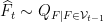 and predicts

 , i.e., whenever
  . Indeed, using the fact that, by definition of the version space,


 , and so
  . On the other hand, if
  , the Bayes algorithm will be correct:
  . Finally, if
  , then the Bayes algorithm will make a mistake with probability
  . Therefore,
 ![\displaystyle e_{{\bf x}}({\mathcal A}^{\rm Bayes},t) = {\mathbb E} [\vartheta(1/2-\xi_t)],](https://s0.wp.com/latex.php?latex=%5Cdisplaystyle++%09%09e_%7B%7B%5Cbf+x%7D%7D%28%7B%5Cmathcal+A%7D%5E%7B%5Crm+Bayes%7D%2Ct%29+%3D+%7B%5Cmathbb+E%7D+%5B%5Cvartheta%281%2F2-%5Cxi_t%29%5D%2C+%09&bg=ffffff&fg=000000&s=0&c=20201002)
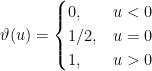
 is not in the version space
  . Since
  , we have
![\displaystyle e_{{\bf x}}({\mathcal A}^{\rm Gibbs},t) = {\mathbb P}\left[\widehat{F}_t \not\in {\mathcal V}_t\right] = {\mathbb E} [1-\xi_t].](https://s0.wp.com/latex.php?latex=%5Cdisplaystyle++%09%09e_%7B%7B%5Cbf+x%7D%7D%28%7B%5Cmathcal+A%7D%5E%7B%5Crm+Gibbs%7D%2Ct%29+%3D+%7B%5Cmathbb+P%7D%5Cleft%5B%5Cwidehat%7BF%7D_t+%5Cnot%5Cin+%7B%5Cmathcal+V%7D_t%5Cright%5D+%3D+%7B%5Cmathbb+E%7D+%5B1-%5Cxi_t%5D.+%09&bg=ffffff&fg=000000&s=0&c=20201002)
 is always bounded between
  and
and  . Moreover, we have the following useful formula: for any function
 ![{g : [0,1] \rightarrow [0,1]}](https://s0.wp.com/latex.php?latex=%7Bg+%3A+%5B0%2C1%5D+%5Crightarrow+%5B0%2C1%5D%7D&bg=ffffff&fg=000000&s=0&c=20201002) ,
, ![\displaystyle {\mathbb E} [g(\xi_t)] = {\mathbb E} [\xi_t g(\xi_t) + (1-\xi_t)g(1-\xi_t)] \ \ \ \ \ (1)](https://s0.wp.com/latex.php?latex=%5Cdisplaystyle++%7B%5Cmathbb+E%7D+%5Bg%28%5Cxi_t%29%5D+%3D+%7B%5Cmathbb+E%7D+%5B%5Cxi_t+g%28%5Cxi_t%29+%2B+%281-%5Cxi_t%29g%281-%5Cxi_t%29%5D+%5C+%5C+%5C+%5C+%5C+%281%29&bg=ffffff&fg=000000&s=0&c=20201002)


![{h^{-1} : [0,1] \rightarrow [0,1/2]}](https://s0.wp.com/latex.php?latex=%7Bh%5E%7B-1%7D+%3A+%5B0%2C1%5D+%5Crightarrow+%5B0%2C1%2F2%5D%7D&bg=ffffff&fg=000000&s=0&c=20201002) is the inverse of the binary entropy function
is the inverse of the binary entropy function  .
.  , we have
 ![\displaystyle I(F; Z_t | Z^{t-1}) = {\mathbb E} [-\log \xi_t] = -{\mathbb E} [\xi_t \log \xi_t + (1-\xi_t) \log (1-\xi_t)] = {\mathbb E} [h(\xi_t)].](https://s0.wp.com/latex.php?latex=%5Cdisplaystyle++%09%09%09I%28F%3B+Z_t+%7C+Z%5E%7Bt-1%7D%29+%3D+%7B%5Cmathbb+E%7D+%5B-%5Clog+%5Cxi_t%5D+%3D+-%7B%5Cmathbb+E%7D+%5B%5Cxi_t+%5Clog+%5Cxi_t+%2B+%281-%5Cxi_t%29+%5Clog+%281-%5Cxi_t%29%5D+%3D+%7B%5Cmathbb+E%7D+%5Bh%28%5Cxi_t%29%5D.+&bg=ffffff&fg=000000&s=0&c=20201002)
 , we have
 ![\displaystyle e_{{\bf x}}({\mathcal A}^{\rm Bayes},t) = {\mathbb E} [\vartheta(1/2-\xi_t)] = {\mathbb E} [\xi_t \vartheta(1/2-\xi_t) + (1-\xi_t) \vartheta(\xi_t - 1/2)] = {\mathbb E}\left[\min\{\xi_t,1-\xi_t\}\right],](https://s0.wp.com/latex.php?latex=%5Cdisplaystyle++%09%09%09e_%7B%7B%5Cbf+x%7D%7D%28%7B%5Cmathcal+A%7D%5E%7B%5Crm+Bayes%7D%2Ct%29+%3D+%7B%5Cmathbb+E%7D+%5B%5Cvartheta%281%2F2-%5Cxi_t%29%5D+%3D+%7B%5Cmathbb+E%7D+%5B%5Cxi_t+%5Cvartheta%281%2F2-%5Cxi_t%29+%2B+%281-%5Cxi_t%29+%5Cvartheta%28%5Cxi_t+-+1%2F2%29%5D+%3D+%7B%5Cmathbb+E%7D%5Cleft%5B%5Cmin%5C%7B%5Cxi_t%2C1-%5Cxi_t%5C%7D%5Cright%5D%2C+&bg=ffffff&fg=000000&s=0&c=20201002)
![{u \in [0,1]}](https://s0.wp.com/latex.php?latex=%7Bu+%5Cin+%5B0%2C1%5D%7D&bg=ffffff&fg=000000&s=0&c=20201002) ,
, 
 . The best prediction of the outcome of a single toss of that coin, with respect to the Hamming loss
  , is to predict heads if
  and tails otherwise. The expected loss in that case is equal to
  . The problem of predicting
  is equivalent to the above guessing problem with
  .
. , we have
 ![\displaystyle e_{{\bf x}}({\mathcal A}^{\rm Gibbs},t) = {\mathbb E} [1-\xi_t] = 2{\mathbb E} [\xi_t(1-\xi_t)].](https://s0.wp.com/latex.php?latex=%5Cdisplaystyle++%09%09%09e_%7B%7B%5Cbf+x%7D%7D%28%7B%5Cmathcal+A%7D%5E%7B%5Crm+Gibbs%7D%2Ct%29+%3D+%7B%5Cmathbb+E%7D+%5B1-%5Cxi_t%5D+%3D+2%7B%5Cmathbb+E%7D+%5B%5Cxi_t%281-%5Cxi_t%29%5D.+&bg=ffffff&fg=000000&s=0&c=20201002)
 coin, we can think of the following suboptimal scheme: guess
  with probability
  (i.e., just mentally simulate the coin toss). The probability of error is exactly
  , which is also twice the variance of a

![{h^{-1} : [0,1] \rightarrow [0,1]}](https://s0.wp.com/latex.php?latex=%7Bh%5E%7B-1%7D+%3A+%5B0%2C1%5D+%5Crightarrow+%5B0%2C1%5D%7D&bg=ffffff&fg=000000&s=0&c=20201002) is convex. Therefore,
is convex. Therefore, ![\displaystyle e_{{\bf x}}({\mathcal A}^{\rm Bayes},t) = {\mathbb E}\left[\min\{\xi_t,1-\xi_t\}\right] = {\mathbb E} [h^{-1}(h(\xi_t))] \ge h^{-1}\left({\mathbb E} [h(\xi_t)]\right) =h^{-1}\left(I(F;Z_t|Z^{t-1})\right).](https://s0.wp.com/latex.php?latex=%5Cdisplaystyle++%09e_%7B%7B%5Cbf+x%7D%7D%28%7B%5Cmathcal+A%7D%5E%7B%5Crm+Bayes%7D%2Ct%29+%3D+%7B%5Cmathbb+E%7D%5Cleft%5B%5Cmin%5C%7B%5Cxi_t%2C1-%5Cxi_t%5C%7D%5Cright%5D+%3D+%7B%5Cmathbb+E%7D+%5Bh%5E%7B-1%7D%28h%28%5Cxi_t%29%29%5D+%5Cge+h%5E%7B-1%7D%5Cleft%28%7B%5Cmathbb+E%7D+%5Bh%28%5Cxi_t%29%5D%5Cright%29+%3Dh%5E%7B-1%7D%5Cleft%28I%28F%3BZ_t%7CZ%5E%7Bt-1%7D%29%5Cright%29.+&bg=ffffff&fg=000000&s=0&c=20201002)
 in
in 
 , etc. What can we say about the expected fraction of mistakes? Given a learning algorithm
 . In order to get a handle on this quantity, we will need some
  denote the set of all distinct elements of the tuple
  . Say that two hypotheses
  are equivalent if
  for all
  . This defines an equivalence relation on
  . Here, the number of equivalence classes
  depends on
  , where
  . Each
  can be associated with a binary string
  . Then
  are in the same equivalence class if and only if they give rise to the same binary strings:

 , let us define
  in the obvious way: if
  , then we let
  . Let
. Let  be the largest integer
  , such that
 . A deep result, commonly known as the Sauer-Shelah lemma (see

![\displaystyle \begin{array}{rcl} \bar{e}_{{\bf x}}({\mathcal A}^{\rm Bayes},T) &\le& \bar{e}_{{\bf x}}({\mathcal A}^{\rm Gibbs},T)\\ &\le& \frac{1}{2T}\sum^T_{t=1} {\mathbb E} [-\log \xi_t] \\ &=& \frac{1}{2T}\sum^T_{t=1} {\mathbb E}\left[\log \frac{Q({\mathcal V}_{t-1})}{Q({\mathcal V}_t)}\right] \\ &=& \frac{1}{2T}{\mathbb E}\left[\log \frac{Q({\mathcal V}_0)}{Q({\mathcal V}_T)}\right] \\ &=& \frac{1}{2T}{\mathbb E}\left[\log \frac{1}{Q({\mathcal V}_T)}\right]. \end{array}](https://s0.wp.com/latex.php?latex=%5Cdisplaystyle++%5Cbegin%7Barray%7D%7Brcl%7D++%09%09%5Cbar%7Be%7D_%7B%7B%5Cbf+x%7D%7D%28%7B%5Cmathcal+A%7D%5E%7B%5Crm+Bayes%7D%2CT%29+%26%5Cle%26+%5Cbar%7Be%7D_%7B%7B%5Cbf+x%7D%7D%28%7B%5Cmathcal+A%7D%5E%7B%5Crm+Gibbs%7D%2CT%29%5C%5C+%09%09%26%5Cle%26+%5Cfrac%7B1%7D%7B2T%7D%5Csum%5ET_%7Bt%3D1%7D+%7B%5Cmathbb+E%7D+%5B-%5Clog+%5Cxi_t%5D+%5C%5C+%09%09%26%3D%26+%5Cfrac%7B1%7D%7B2T%7D%5Csum%5ET_%7Bt%3D1%7D+%7B%5Cmathbb+E%7D%5Cleft%5B%5Clog+%5Cfrac%7BQ%28%7B%5Cmathcal+V%7D_%7Bt-1%7D%29%7D%7BQ%28%7B%5Cmathcal+V%7D_t%29%7D%5Cright%5D+%5C%5C+%09%09%26%3D%26+%5Cfrac%7B1%7D%7B2T%7D%7B%5Cmathbb+E%7D%5Cleft%5B%5Clog+%5Cfrac%7BQ%28%7B%5Cmathcal+V%7D_0%29%7D%7BQ%28%7B%5Cmathcal+V%7D_T%29%7D%5Cright%5D+%5C%5C+%09%09%26%3D%26+%5Cfrac%7B1%7D%7B2T%7D%7B%5Cmathbb+E%7D%5Cleft%5B%5Clog+%5Cfrac%7B1%7D%7BQ%28%7B%5Cmathcal+V%7D_T%29%7D%5Cright%5D.+%09%5Cend%7Barray%7D+&bg=ffffff&fg=000000&s=0&c=20201002)
 is the equivalence class containing the “true” model
  , such that
  . Consequently, we can write
 ![\displaystyle \begin{array}{rcl} {\mathbb E}\left[\log \frac{1}{Q({\mathcal V}_T)}\right] &=& \sum^J_{j=1} {\mathbb E}\left[{\bf 1}\{F \in {\mathcal E}_j\}\log\frac{1}{Q({\mathcal V}_T)}\right] \\ &=& \sum^J_{j=1} {\mathbb E}\left[{\bf 1}\{F \in {\mathcal E}_j\}\log\frac{1}{Q({\mathcal E}_j)}\right] \\ &=& -\sum^J_{j=1} Q({\mathcal E}_j) \log Q({\mathcal E}_j). \end{array}](https://s0.wp.com/latex.php?latex=%5Cdisplaystyle++%5Cbegin%7Barray%7D%7Brcl%7D++%09%09%7B%5Cmathbb+E%7D%5Cleft%5B%5Clog+%5Cfrac%7B1%7D%7BQ%28%7B%5Cmathcal+V%7D_T%29%7D%5Cright%5D+%26%3D%26+%5Csum%5EJ_%7Bj%3D1%7D+%7B%5Cmathbb+E%7D%5Cleft%5B%7B%5Cbf+1%7D%5C%7BF+%5Cin+%7B%5Cmathcal+E%7D_j%5C%7D%5Clog%5Cfrac%7B1%7D%7BQ%28%7B%5Cmathcal+V%7D_T%29%7D%5Cright%5D+%5C%5C+%09%09%26%3D%26+%5Csum%5EJ_%7Bj%3D1%7D+%7B%5Cmathbb+E%7D%5Cleft%5B%7B%5Cbf+1%7D%5C%7BF+%5Cin+%7B%5Cmathcal+E%7D_j%5C%7D%5Clog%5Cfrac%7B1%7D%7BQ%28%7B%5Cmathcal+E%7D_j%29%7D%5Cright%5D+%5C%5C+%09%09%26%3D%26+-%5Csum%5EJ_%7Bj%3D1%7D+Q%28%7B%5Cmathcal+E%7D_j%29+%5Clog+Q%28%7B%5Cmathcal+E%7D_j%29.+%09%5Cend%7Barray%7D+&bg=ffffff&fg=000000&s=0&c=20201002)
 : that is,
 , we can invoke the Sauer-Shelah estimate

 is determined stochastically by its own state, as well as by the states of its neighbors, at time
  . The neighborhood of a vertex
  , denoted by
  , is the set of all vertices
  that are connected to
  . Let us fix a finite alphabet
  denote a copy of
  to each vertex
  is the space of all configurations. We will denote a generic configuration by
  ; for any set
  , we will denote by
  the natural projection of
  :
:  .
.  random variable, which is the bit we wish to store. We also pick two probability measures
  on
on  , we draw the initial
  configuration
  at random according to
  . We allow arbitrary correlations between the different
  ‘s, so our storage is distributed in this sense. Now let’s suppose that the state of each vertex evolves stochastically in discrete time according to a local Markov model: for each
  with input alphabet
  and output alphabet
  at time
 ![\displaystyle {\mathbb P}[X_{t+1}=x_{t+1}|W=w,X^t = x^t] = \prod_{v \in {\cal V}}K_v(x_{v,t+1}|x_{\partial_+ v,t}), \qquad t=1,2,\ldots \ \ \ \ \ (1)](https://s0.wp.com/latex.php?latex=%5Cdisplaystyle++%09%7B%5Cmathbb+P%7D%5BX_%7Bt%2B1%7D%3Dx_%7Bt%2B1%7D%7CW%3Dw%2CX%5Et+%3D+x%5Et%5D+%3D+%5Cprod_%7Bv+%5Cin+%7B%5Ccal+V%7D%7DK_v%28x_%7Bv%2Ct%2B1%7D%7Cx_%7B%5Cpartial_%2B+v%2Ct%7D%29%2C+%5Cqquad+t%3D1%2C2%2C%5Cldots+%5C+%5C+%5C+%5C+%5C+%281%29&bg=ffffff&fg=000000&s=0&c=20201002)
![{{\mathbb P}[W=w]=1/2}](https://s0.wp.com/latex.php?latex=%7B%7B%5Cmathbb+P%7D%5BW%3Dw%5D%3D1%2F2%7D&bg=ffffff&fg=000000&s=0&c=20201002) ,
,  , and
, and ![{{\mathbb P}[X_1 = x_1|W=w]=\mu_w(x_1)}](https://s0.wp.com/latex.php?latex=%7B%7B%5Cmathbb+P%7D%5BX_1+%3D+x_1%7CW%3Dw%5D%3D%5Cmu_w%28x_1%29%7D&bg=ffffff&fg=000000&s=0&c=20201002) ,
,  . Thus, we end up with a Markov chain
 is also Markov “in space:” the state of vertex
 , where
 such that
  for all
  , then our memory cell is capable of storing one bit. If, on the other hand,
  as
as 
 , where
  , the channel from
  is arbitrary, and the channel from
  is given by
  . Clearly,
  for every
  .
. and let
 satisfying the constraints
  and
and  . The difference is that in
  , whereas in
 of
of  denotes the marginal distribution of
  . Both
  and
and  measure the “noisiness” of
  of a given node at time
  and not on anything else. Thus, if boundary condition, i.e., the configuration of all the nodes except for
  , then the amount of information about


 , then
  . Then, for any
  ,
, 

 and
and  , consider two probability distributions
  and
and  of
of ![\displaystyle \nu_w(y) := {\mathbb P}\Big[ Y = y\Big| W=w, X_{{\cal K},t} = x_{{\cal K},t}, X_{{\cal J},t+1} = x_{{\cal J},t+1}\Big], \quad w \in \{0,1\}.](https://s0.wp.com/latex.php?latex=%5Cdisplaystyle++%09%09%5Cnu_w%28y%29+%3A%3D+%7B%5Cmathbb+P%7D%5CBig%5B+Y+%3D+y%5CBig%7C+W%3Dw%2C+X_%7B%7B%5Ccal+K%7D%2Ct%7D+%3D+x_%7B%7B%5Ccal+K%7D%2Ct%7D%2C+X_%7B%7B%5Ccal+J%7D%2Ct%2B1%7D+%3D+x_%7B%7B%5Ccal+J%7D%2Ct%2B1%7D%5CBig%5D%2C+%5Cquad+w+%5Cin+%5C%7B0%2C1%5C%7D.+&bg=ffffff&fg=000000&s=0&c=20201002)
 , and then let

 and
and  , we obtain
  , any
, any  ,
, 

 . Let us use the chain rule to write the conditional mutual information
  in two ways:

 , we obtain the statement of the lemma.

 and for all

 , any
, any  , and any
  denote the collection of all finite subsets of
  , and for any
  by
by 
 defined in Eq.
  : indeed, by the chain rule we have
 , we can also compute
  :
: 
 for all
 , we have
 ![\displaystyle \begin{array}{rcl} I^+_{t+1}(\{u,v\} | {\cal K}) &\le& (1-\eta)I^+_{t+1}(\{u\}|{\cal K}) + \eta I^+_{t+1}(\{u\} | {\cal K} \cup \partial_+ v) + \eta I_t(\partial_+ v | {\cal K}) \\ &\le& (1-\eta) \eta I_t(\partial_+ u | {\cal K}) + \eta^2 I_t(\partial_+ u | {\cal K} \cup \partial_+ v) + \eta I_t(\partial_+ v | {\cal K}) \\ &=& (1-\eta)\eta \left[I_t(\partial_+ u | {\cal K}) + I_t(\partial_+ v | {\cal K})\right] + \eta^2 I_t(\partial_+ u | {\cal K} \cup \partial_+ v) \nonumber\\ && \qquad \qquad \qquad - (1-\eta)\eta I_t(\partial_+ v | {\cal K}) + \eta I_t(\partial_+ v | {\cal K}) \\ &=& (1-\eta)\eta \left[I_t(\partial_+ u | {\cal K}) + I_t(\partial_+ v | {\cal K})\right] + \eta^2 \left[I_t(\partial_+ v | {\cal K}) + I_t(\partial_+ u | {\cal K} \cup \partial_+ v) \right] \\ &=& (1-\eta)\eta \left[I_t(\partial_+ u | {\cal K}) + I_t(\partial_+ v | {\cal K})\right] + \eta^2 I_t(\partial_+ u \cup \partial_+ v | {\cal K}), \end{array}](https://s0.wp.com/latex.php?latex=%5Cdisplaystyle++%5Cbegin%7Barray%7D%7Brcl%7D++%09I%5E%2B_%7Bt%2B1%7D%28%5C%7Bu%2Cv%5C%7D+%7C+%7B%5Ccal+K%7D%29+%26%5Cle%26+%281-%5Ceta%29I%5E%2B_%7Bt%2B1%7D%28%5C%7Bu%5C%7D%7C%7B%5Ccal+K%7D%29+%2B+%5Ceta+I%5E%2B_%7Bt%2B1%7D%28%5C%7Bu%5C%7D+%7C+%7B%5Ccal+K%7D+%5Ccup+%5Cpartial_%2B+v%29+%2B+%5Ceta+I_t%28%5Cpartial_%2B+v+%7C+%7B%5Ccal+K%7D%29+%5C%5C+%09%26%5Cle%26+%281-%5Ceta%29+%5Ceta+I_t%28%5Cpartial_%2B+u+%7C+%7B%5Ccal+K%7D%29+%2B+%5Ceta%5E2+I_t%28%5Cpartial_%2B+u+%7C+%7B%5Ccal+K%7D+%5Ccup+%5Cpartial_%2B+v%29+%2B+%5Ceta+I_t%28%5Cpartial_%2B+v+%7C+%7B%5Ccal+K%7D%29+%5C%5C+%09%26%3D%26+%281-%5Ceta%29%5Ceta+%5Cleft%5BI_t%28%5Cpartial_%2B+u+%7C+%7B%5Ccal+K%7D%29+%2B+I_t%28%5Cpartial_%2B+v+%7C+%7B%5Ccal+K%7D%29%5Cright%5D+%2B+%5Ceta%5E2+I_t%28%5Cpartial_%2B+u+%7C+%7B%5Ccal+K%7D+%5Ccup+%5Cpartial_%2B+v%29+%5Cnonumber%5C%5C+%09%26%26+%5Cqquad+%5Cqquad+%5Cqquad+-+%281-%5Ceta%29%5Ceta+I_t%28%5Cpartial_%2B+v+%7C+%7B%5Ccal+K%7D%29+%2B+%5Ceta+I_t%28%5Cpartial_%2B+v+%7C+%7B%5Ccal+K%7D%29+%5C%5C+%09%26%3D%26+%281-%5Ceta%29%5Ceta+%5Cleft%5BI_t%28%5Cpartial_%2B+u+%7C+%7B%5Ccal+K%7D%29+%2B+I_t%28%5Cpartial_%2B+v+%7C+%7B%5Ccal+K%7D%29%5Cright%5D+%2B+%5Ceta%5E2+%5Cleft%5BI_t%28%5Cpartial_%2B+v+%7C+%7B%5Ccal+K%7D%29+%2B+I_t%28%5Cpartial_%2B+u+%7C+%7B%5Ccal+K%7D+%5Ccup+%5Cpartial_%2B+v%29+%5Cright%5D+%5C%5C+%09%26%3D%26+%281-%5Ceta%29%5Ceta+%5Cleft%5BI_t%28%5Cpartial_%2B+u+%7C+%7B%5Ccal+K%7D%29+%2B+I_t%28%5Cpartial_%2B+v+%7C+%7B%5Ccal+K%7D%29%5Cright%5D+%2B+%5Ceta%5E2+I_t%28%5Cpartial_%2B+u+%5Ccup+%5Cpartial_%2B+v+%7C+%7B%5Ccal+K%7D%29%2C+%5Cend%7Barray%7D+&bg=ffffff&fg=000000&s=0&c=20201002)
 ; in the third, we add and subtract
  ; and the last step uses the chain rule. Continuing inductively, we see that, for any
  ,
, 
 with
with  , we obtain
 . Therefore,

 . Now, we write
 for every
  can be bounded as
  . Thus, if
 as
as  denote the size of the largest code over a
  -ary alphabet that has blocklength
  and minimum distance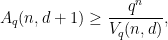
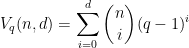
 . The usual way of arriving at the GV bound is through a greedy construction: pick an arbitrary codeword
  from all codewords that have already been picked. When this procedure terminates, the complement of the union of the Hamming balls of radius
  be an undirected graph. A set
  of vertices is called independent if no two vertices in
  , is the cardinality of the largest independent set. The following lemma is folklore in graph theory:
 -regular, i.e., every vertex has exactly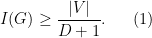
 be a maximal independent set. Any vertex
  is connected by an edge to at least one
  , because otherwise
  edges with one vertex in
  . On the other hand, because
  such edges. This means that
 vertices, and each vertex has degree
  . Moreover, there is a one-to-one correspondence between independent sets of vertices and
  . The bound
  edges), the lower bound
  for some
  and replace exact combinatorial bounds by entropy bounds.
 such that
  , we have
 is the distance from the point
  to the set
 , define the
  -blowup of

 and take
  — the usual Euclidean distance. Let
  , where
  is the
  identity matrix. Then for any
 equipped with the normalized Hamming distance

 and
and  disagree. Let
  for all

 as
as  . The $64,000 question is: how do we get such bounds?
 . Let
. Let  denote the conditional distribution of
  . That is, for any (measurable) set
  we have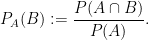
 to indicate the fact that
 we have
 . Therefore, by definition of the divergence,
 the function
 ,
, ![\displaystyle f_A(x) - f_A(x') = \inf_{y \in A}d(x,y) - \inf_{y \in A} d(x',y) \le \sup_{y \in A} \left[d(x,y) - d(x',y)\right] \le d(x,x'),](https://s0.wp.com/latex.php?latex=%5Cdisplaystyle++f_A%28x%29+-+f_A%28x%27%29+%3D+%5Cinf_%7By+%5Cin+A%7Dd%28x%2Cy%29+-+%5Cinf_%7By+%5Cin+A%7D+d%28x%27%2Cy%29+%5Cle+%5Csup_%7By+%5Cin+A%7D+%5Cleft%5Bd%28x%2Cy%29+-+d%28x%27%2Cy%29%5Cright%5D+%5Cle+d%28x%2Cx%27%29%2C+&bg=ffffff&fg=000000&s=0&c=20201002)
 , we get the Lipschitz property. Moreover, let us consider the random variable
  , where
  .
.
 , then
 :
: 
 denotes any median of
  . We already showed, by passing from
  , that
 , where
![\displaystyle [A_f]_r = \Big\{ x \in {\mathsf X}: d(x,A_f) \le r \Big\},](https://s0.wp.com/latex.php?latex=%5Cdisplaystyle++%5BA_f%5D_r+%3D+%5CBig%5C%7B+x+%5Cin+%7B%5Cmathsf+X%7D%3A+d%28x%2CA_f%29+%5Cle+r+%5CBig%5C%7D%2C+&bg=ffffff&fg=000000&s=0&c=20201002)
 we must have
![\displaystyle {\mathbb P}\Big( f(X) > m_f + r \Big) \le {\mathbb P}\Big( d(X,A_f) > r \Big) = 1 - P\left([A_f]_r\right) \le \alpha_X(r).](https://s0.wp.com/latex.php?latex=%5Cdisplaystyle++%7B%5Cmathbb+P%7D%5CBig%28+f%28X%29+%3E+m_f+%2B+r+%5CBig%29+%5Cle+%7B%5Cmathbb+P%7D%5CBig%28+d%28X%2CA_f%29+%3E+r+%5CBig%29+%3D+1+-+P%5Cleft%28%5BA_f%5D_r%5Cright%29+%5Cle+%5Calpha_X%28r%29.+&bg=ffffff&fg=000000&s=0&c=20201002)
 has the concentration property if real-valued Lipschitz functions
  Wasserstein distance (or transportation distance) between any two probability measures
 ![\displaystyle W_1(P,Q) := \inf_{X \sim P, Y \sim Q} {\mathbb E}[d(X,Y)],](https://s0.wp.com/latex.php?latex=%5Cdisplaystyle++W_1%28P%2CQ%29+%3A%3D+%5Cinf_%7BX+%5Csim+P%2C+Y+%5Csim+Q%7D+%7B%5Cmathbb+E%7D%5Bd%28X%2CY%29%5D%2C+&bg=ffffff&fg=000000&s=0&c=20201002)
 , such that
  and
and  . Now consider a random variable
  , for which we wish to establish concentration. What Marton showed is the following: Suppose the distribution

 with
with  . Recalling our notation for conditional distributions, we can write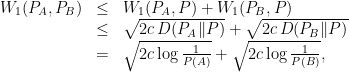
 and let
  for some
  denotes set-theoretic complement. Then we can show that
  . On the other hand,

 , then we get
 , at least for large enough values of

 such that
 ![{{\mathbb E}[f(X)] = 0}](https://s0.wp.com/latex.php?latex=%7B%7B%5Cmathbb+E%7D%5Bf%28X%29%5D+%3D+0%7D&bg=ffffff&fg=000000&s=0&c=20201002) . We can apply the well-known Chernoff trick: for any
. We can apply the well-known Chernoff trick: for any  we have
 ![\displaystyle {\mathbb P}\Big( f(X) \ge r \Big) = {\mathbb P}\Big( e^{\lambda f(X)} \ge e^{\lambda r} \Big) \le e^{-\lambda r} {\mathbb E}[e^{\lambda f(X)}].](https://s0.wp.com/latex.php?latex=%5Cdisplaystyle++%7B%5Cmathbb+P%7D%5CBig%28+f%28X%29+%5Cge+r+%5CBig%29+%3D+%7B%5Cmathbb+P%7D%5CBig%28+e%5E%7B%5Clambda+f%28X%29%7D+%5Cge+e%5E%7B%5Clambda+r%7D+%5CBig%29+%5Cle+e%5E%7B-%5Clambda+r%7D+%7B%5Cmathbb+E%7D%5Be%5E%7B%5Clambda+f%28X%29%7D%5D.+&bg=ffffff&fg=000000&s=0&c=20201002)
![{\Lambda(\lambda) := \log {\mathbb E}[e^{\lambda f(X)}]}](https://s0.wp.com/latex.php?latex=%7B%5CLambda%28%5Clambda%29+%3A%3D+%5Clog+%7B%5Cmathbb+E%7D%5Be%5E%7B%5Clambda+f%28X%29%7D%5D%7D&bg=ffffff&fg=000000&s=0&c=20201002) . The entropy method, which was the subject of Gabor Lugosi’s plenary, is the name for a set of techniques for bounding
. The entropy method, which was the subject of Gabor Lugosi’s plenary, is the name for a set of techniques for bounding  by means of various inequalities involving the relative entropy between various tilted distributions derived from
  , the tilted distribution
  via
via 
 exists and is finite). Then we have
 ![\displaystyle \begin{array}{rcl} D(P^{(t)} \| P) &=& \int dP^{(t)} \left[ tf - \Lambda(t)\right] \\ &=& \frac{1}{e^{\Lambda(t)}} t\, {\mathbb E}\left[f(X)e^{tf(X)}\right] - \Lambda(t) \\ &=& t \Lambda'(t) - \Lambda (t) \\ &=& t^2 \frac{d}{dt} \left(\frac{\Lambda(t)}{t}\right). \end{array}](https://s0.wp.com/latex.php?latex=%5Cdisplaystyle++%5Cbegin%7Barray%7D%7Brcl%7D++%09D%28P%5E%7B%28t%29%7D+%5C%7C+P%29+%26%3D%26+%5Cint+dP%5E%7B%28t%29%7D+%5Cleft%5B+tf+-+%5CLambda%28t%29%5Cright%5D+%5C%5C+%09%26%3D%26+%5Cfrac%7B1%7D%7Be%5E%7B%5CLambda%28t%29%7D%7D+t%5C%2C+%7B%5Cmathbb+E%7D%5Cleft%5Bf%28X%29e%5E%7Btf%28X%29%7D%5Cright%5D+-+%5CLambda%28t%29+%5C%5C+%09%26%3D%26+t+%5CLambda%27%28t%29+-+%5CLambda+%28t%29+%5C%5C+%09%26%3D%26+t%5E2+%5Cfrac%7Bd%7D%7Bdt%7D+%5Cleft%28%5Cfrac%7B%5CLambda%28t%29%7D%7Bt%7D%5Cright%29.+%5Cend%7Barray%7D+&bg=ffffff&fg=000000&s=0&c=20201002)
 , we get
 for some

 by a quadratic function of
  ,
,  , and the function
  , such that changing the
  th argument of
  :
: 

 on the product space
  satisfies the transportation inequality
 . By the Bobkov–Götze result quoted above, this is equivalent to the concentration bound
 ![\displaystyle {\mathbb P}\left( f(X) \ge {\mathbb E}[f(X)] + r \right) \le \exp\left( - \frac{r^2}{2c}\right) = \exp\left( - \frac{2r^2}{\sum^n_{i=1}c^2_i}\right).](https://s0.wp.com/latex.php?latex=%5Cdisplaystyle++%7B%5Cmathbb+P%7D%5Cleft%28+f%28X%29+%5Cge+%7B%5Cmathbb+E%7D%5Bf%28X%29%5D+%2B+r+%5Cright%29+%5Cle+%5Cexp%5Cleft%28+-+%5Cfrac%7Br%5E2%7D%7B2c%7D%5Cright%29+%3D+%5Cexp%5Cleft%28+-+%5Cfrac%7B2r%5E2%7D%7B%5Csum%5En_%7Bi%3D1%7Dc%5E2_i%7D%5Cright%29.+&bg=ffffff&fg=000000&s=0&c=20201002)