Self-organization can be broadly defined as the ability of a system to display ordered spatiotemporal patterns solely as the result of the interactions among the system components. Processes of this kind characterize both living and artificial systems, making self-organization a concept that is at the basis of several disciplines, from physics to biology and engineering. Placed at the frontiers between disciplines, artificial life (ALife) has heavily borrowed concepts and tools from the study of self-organization, providing mechanistic interpretations of lifelike phenomena as well as useful constructivist approaches to artificial system design. Despite its broad usage within ALife, the concept of self-organization has been often excessively stretched or misinterpreted, calling for a clarification that could help with tracing the borders between what can and cannot be considered self-organization. In this review, we discuss the fundamental aspects of self-organization and list the main usages within three primary ALife domains, namely “soft” (mathematical/computational modeling), “hard” (physical robots), and “wet” (chemical/biological systems) ALife. We also provide a classification to locate this research. Finally, we discuss the usefulness of self-organization and related concepts within ALife studies, point to perspectives and challenges for future research, and list open questions. We hope that this work will motivate discussions related to self-organization in ALife and related fields. Self-Organization and Artificial Life Carlos Gershenson, Vito Trianni, Justin Werfel and Hiroki Sayama Artificial Life Early access. Posted Online July 22, 2020https://doi.org/10.1162/artl_a_00324
//Please forward to whom may be interested.
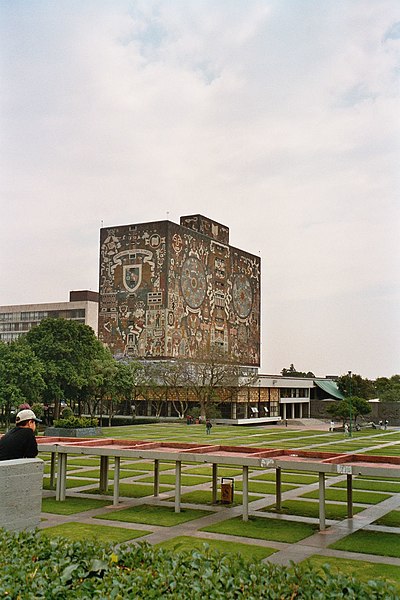
The National Autonomous University of Mexico (UNAM) has an open call for postdoctoral fellowships to start in September, 2020. Candidates should have obtained a PhD degree within the last five years to the date of the beginning of the fellowship.
The area of interests of candidates should fall within complex systems, artificial life, information, evolution, cognition, robotics, and/or philosophy. Interested candidates should send CV and a tentative project/research interests (1 paragraph) to cgg-at-unam.mx by February 10th (we need some time for paperwork).
Postdoctoral fellowships are between one and two years (after renewal). Spanish is not a requisite. Accepted candidates would be working at the Computer Science Department (http://turing.iimas.unam.mx ) of the IIMAS (http://www.iimas.unam.mx ), and/or at the Center for Complexity Sciences (http://c3.unam.mx/ ), both at UNAM's main campus. To know more about UNAM, visit http://turing.iimas.unam.mx/~cgg/unam.html
Requirements are available at https://dgapa.unam.mx/index.php/posdoctoral-2016 (check in the upper left corner for POSTDOCTORAL 2019 for documents from the previous call, only the dates have changed) .
More information at https://dgapa.unam.mx/index.php/formacion-academica/posdoc [in Spanish].
There are two calls per year for these scholarships.
The Center for Complexity Sciences (C3) at the Universidad Nacional Autónoma de México is seeking candidates for a one year researcher position (extensible for a second year).
The candidates should have more than ten publications in indexed journals and to have directed at least one thesis (doctorate, masters, or bachelors). Projects can be individual or related to current research at the C3.
Interested candidates should send CV and research statement before June 20th to cgg at unam dot mx.
A month late, but I share a draft where we propose a simple measure of antifragility and apply it to random and biological Boolean networks. Spoiler: biological networks are antifragile.
Abstract: Antifragility is a property that enhances the capability of a system in response to external perturbations. Although the concept has been applied in many areas, a practical measure of antifragility has not been developed yet. Here we propose a simply calculable measure of antifragility, based on the change of "satisfaction" before and after adding perturbations, and apply it to random Boolean networks (RBNs). Using the measure, we found that ordered RBNs are the most antifragile. Also, we demonstrate that seven biological systems are antifragile. Our measure and results can be used in various applications of Boolean networks (BNs) including creating antifragile engineering systems, identifying the genetic mechanism of antifragile biological systems, and developing new treatment strategies for various diseases.
My first philosophical text in years, comments welcome.
Information theory has been developed for seventy years with technological applications that have transformed our societies. The increasing ability to store, transmit, and process information is having a revolutionary impact in most disciplines. The goal of this work is to compare the formal approach to information with Buddhist philosophy. Considering both approaches as compatible and complementary, I argue that information theory can improve our understanding of Buddhist philosophy and vice versa. The resulting synthesis leads to a worldview based on information that overcomes limitations of the currently dominating physics-based worldview.
Gershenson, Carlos, Information in Science and Buddhist Philosophy: Towards a non-Materialistic Worldview (October 4, 2018). https://ssrn.com/abstract=3261381
I’m turning 40. Given the current life expectancy, statistically it’s about half of my life. A proper moment to reflect on what I’ve done, what I could have done, and what I would still like to do.
The dominating emotion is gratitude: for all that I have experienced, it has been amazing. Grateful to my parents, family, teachers, mentors: my origins. Grateful to my wife, my friends, my colleagues: my companions. Grateful to my children and students: my legacy.
So, it is a favorable moment to throw out some unsolicited advice. I’m not saying anything new, so perhaps it is just a reminder list to myself, of what I think is important in life (because I keep on forgetting):
Don’t worry. We’re all gonna die sooner than later. Everything changes, so all that you cherish and and that you despise will vanish. It doesn’t mean that you shouldn’t strive, it means that worrying about doing or not doing is not useful for achieving. Just do it.
It is OK to be mistaken. Well, if you learn from it. It is part of natural selection: most attempts are crap, but you need to go through them to reach the best. If you want to learn how to skate, you will have to fall. A lot. Get up and carry on. (Fall again, fall better).
You can always learn from mistakes, but there are some mistakes which are not worth the learning. Don’t drift. 1 and 2 might suggest that everything will be OK, so we can relax. It won’t, so don't. Avoid problems as much as you can. Learn only from those that you cannot avoid. Well, it is about maximizing benefits.
Enjoy the moment. Carpe diem. Today will never repeat. Don’t let it go to waste. Don’t think about what happened or about what could happen, be here and now.
Plan ahead. The future will come for sure, be prepared, for winter or summer. Schedule to do things at their best possible moment.
Strive for balance. The previous advices might seem contradictory. They aren’t, just don’t go to extremes. If you get too relaxed, entropy will take you. If you are too stiff, you won’t be able to adapt. You need a bit of both: balance. How much? The situation will tell. Adapt.
Know what you want. It is difficult to reach a goal if you do not know what the goal is. Sometimes we don’t know what we want. It is difficult to enjoy just drifting in life. The way of knowing is just trying. Again, no problem if an attempt fails, it will take you closer to knowledge.
Do what you want. Some say “don’t do what you love, love what you do”, meaning that one should find enough willpower to do what you must to reach your goals. But if your goals are clear, precisely things which take you closer to them will be fulfilling. It is difficult to enjoy life if your actions aren’t taking you towards your goals. So rush for them.
Take from this list what seems suitable for you. Will see in ten years, how much of this has changed for me.
The recent dramatic increase in online data availability has allowed researchers to explore human culture with unprecedented detail, such as the growth and diversification of language. In particular, it provides statistical tools to explore whether word use is similar across languages, and if so, whether these generic features appear at different scales of language structure. Here we use the Google Books N-grams dataset to analyze the temporal evolution of word usage in several languages. We apply measures proposed recently to study rank dynamics, such as the diversity of N-grams in a given rank, the probability that an N-gram changes rank between successive time intervals, the rank entropy, and the rank complexity. Using different methods, results show that there are generic properties for different languages at different scales, such as a core of words necessary to minimally understand a language. We also propose a null model to explore the relevance of linguistic structure across multiple scales, concluding that N-gram statistics cannot be reduced to word statistics. We expect our results to be useful in improving text prediction algorithms, as well as in shedding light on the large-scale features of language use, beyond linguistic and cultural differences across human populations.
Morales, J. A., Colman, E., Sánchez, S., Sánchez-Puig, F., Pineda, C., Iñiguez, G., Cocho, G., Flores, J., and Gershenson, C. (2018). Rank dynamics of word usage at multiple scales. Frontiers in Physics, 6:45.
Two generalizations of the traveling salesman problem in which sites change their position in time are presented. The way the rank of different trajectory lengths changes in time is studied using the rank diversity. We analyze the statistical properties of rank distributions and rank dynamics and give evidence that the shortest and longest trajectories are more predictable and robust to change, that is, more stable.
The equal headway instability—the fact that a configuration with regular time intervals between vehicles tends to be volatile—is a common regulation problem in public transportation systems. An unsatisfactory regulation results in low efficiency and possible collapses of the service. Computational simulations have shown that self-organizing methods can regulate the headway adaptively beyond the theoretical optimum. In this work, we develop a computer simulation for metro systems fed with real data from the Mexico City Metro to test the current regulatory method with a novel self-organizing approach. The current model considers overall system’s data such as minimum and maximum waiting times at stations, while the self-organizing method regulates the headway in a decentralized manner using local information such as the passenger’s inflow and the positions of neighboring trains. The simulation shows that the self-organizing method improves the performance over the current one as it adapts to environmental changes at the timescale they occur. The correlation between the simulation of the current model and empirical observations carried out in the Mexico City Metro provides a base to calculate the expected performance of the self-organizing method in case it is implemented in the real system. We also performed a pilot study at the Balderas station to regulate the alighting and boarding of passengers through guide signs on platforms. The analysis of empirical data shows a delay reduction of the waiting time of trains at stations. Finally, we provide recommendations to improve public transportation systems.
Carreón G, Gershenson C, Pineda LA (2017) Improving public transportation systems with self-organization: A headway-based model and regulation of passenger alighting and boarding. PLoS ONE 12(12): e0190100. https://doi.org/10.1371/journal.pone.0190100
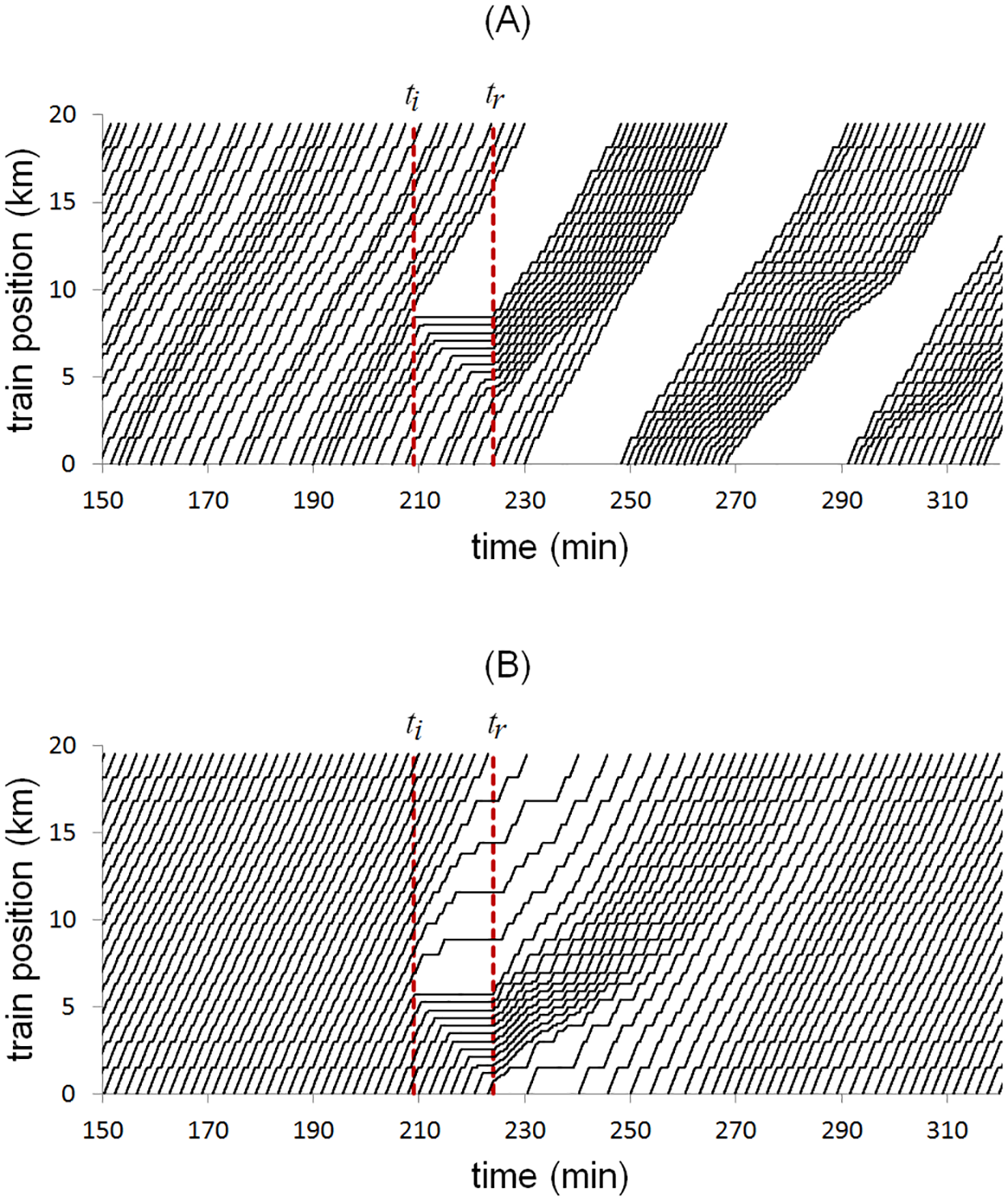
Fig 14. Time-space diagram of the trains.
(A) After the mechanical failure in GM, the system exhibits a striped pattern characteristic of the equal headway instability. (B) The SOM-II has a homogeneous pattern and stable before and after the mechanical failure, the trains in front of train0 already wait more at stations even before the failure ends, since the balance between the variables ETNextTrain and antipheromoneStation delay the departure. This improves the resilience and accelerates the recovery of the system.
https://doi.org/10.1371/journal.pone.0190100.g014
Two generalizations of the traveling salesman problem in which sites change their position in time are presented. The way the rank of different trajectory lengths changes in time is studied using the rank diversity. We analyze the statistical properties of rank distributions and rank dynamics and give evidence that the shortest and longest trajectories are more predictable and robust to change, that is, more stable.
Trajectory stability in the traveling salesman problem
Sergio Sánchez, Germinal Cocho, Jorge Flores, Carlos Gershenson, Gerardo Iñiguez, Carlos Pineda
https://arxiv.org/abs/1708.06945
Traffic signals are ubiquitous devices that first appeared in 1868. Recent advances in information and communications technology (ICT) have led to unprecedented improvements in such areas as mobile handheld devices (i.e., smartphones), the electric power industry (i.e., smart grids), transportation infrastructure, and vehicle area networks. Given the trend towards interconnectivity, it is only a matter of time before vehicles communicate with one another and with infrastructure. In fact, several pilots of such vehicle-to-vehicle and vehicle-to-infrastructure (e.g. traffic lights and parking spaces) communication systems are already operational. This survey of autonomous and self-organized traffic signaling control has been undertaken with these potential developments in mind. Our research results indicate that, while many sophisticated techniques have attempted to improve the scheduling of traffic signal control, either real-time sensing of traffic patterns or a priori knowledge of traffic flow is required to optimize traffic. Once this is achieved, communication between traffic signals will serve to vastly improve overall traffic efficiency.
Self-Organization in Traffic Lights: Evolution of Signal Control with Advances in Sensors and Communications
Sanjay Goel, Stephen F. Bush, Carlos Gershenson https://arxiv.org/abs/1708.07188
Self-organizing traffic lights have shown considerable improvements compared to traditional methods in computer simulations. Self-organizing methods, however, use sophisticated sensors, increasing their cost and limiting their deployment. We propose a novel approach using simple sensors to achieve self-organizing traffic light coordination. The proposed approach involves placing a computer and a presence sensor at the beginning of each block; each such sensor detects a single vehicle. Each computer builds a virtual environment simulating vehicle movement to predict arrivals and departures at the downstream intersection. At each intersection, a computer receives information across a data network from the computers of the neighboring blocks and runs a self-organizing method to control traffic lights. Our simulations showed a superior performance for our approach compared with a traditional method (a green wave) and a similar performance (close to optimal) compared with a self-organizing method using sophisticated sensors but at a lower cost. Moreover, the developed sensing approach exhibited greater robustness against sensor failures.
Zapotecatl, J. L., Rosenblueth, D. A., and Gershenson, C. (2017). Deliberative self-organizing traffic lights with elementary cellular automata. Complexity, 2017:7691370. https://doi.org/10.1155/2017/7691370
We present a set of Matlab/Octave functions to compute measures of emergence, self-organization, and complexity applied to discrete and continuous data. These measures are based on Shannon’s information and differential entropy. Examples from different datasets and probability distributions are provided to show how to use our proposed code.
Highlights
•
The useful of quantitative indicators of ecological complexity is evaluated.
•
Chaos should not be confused with complexity.
•
Light and temperature cause different ranges of complexity in the gradient.
•
Homoeostasis variation is related to the seasonal changes and transitions.
•
Autopoiesis reveals groups with higher and lower degree of autonomy.
Abstract
Measuring complexity is fast becoming a key instrument to compare different ecosystems at various scales in ecology. To date there has been little agreement on how to properly describe complexity in terms of ecology. In this regard, this manuscript assesses the significance of using a set of proposed measures based on information theory. These measures are as follows: emergence, self-organization, complexity, homeostasis and autopoiesis. A combination of quantitative and qualitative approaches was used in the data analysis with the aim to apply these proposed measures. This study systematically reviews the data previously collected and generated by a model carried out on four aquatic ecosystems located between the Arctic region and the tropical zone. Thus, this research discusses the case of exploring a high level of self-organization in terms of movement, distribution, and quality of water between the northern temperate zone and the tropics. Moreover, it was assessed the significance of the presence of a complex variable (pH) in the middle of the latitudinal transect. Similarly, this study explores the relationship between self-organization and limiting nutrients (nitrogen, phosphorus and silicates). Furthermore, the importance of how a biomass subsystem is affected by seasonal variations is highlighted in this manuscript. This case study seeks to examine the changing nature of how seasonality affects the complexity dynamics of photosynthetic taxa (lakes located in northern temperate zone) at high latitudes, and it also investigates how a high level of self-organization at the tropical zone can lead to increase the amount of planktonic and benthic fish which determines the dynamics of complexity. This research also compares the emerging role of how a biomass subsystem has a highest temporal dynamics compared to he limiting nutrients’ subsystem. In the same way, the results associated to autopoiesis reflect a moderate degree of autonomy of photosynthetic biomass.
It is also discussed the case of how complexity values change in the middle of the latitudinal gradient for all components. Finally, a comparison with Tsallis information was carried out in order to determine that these proposed measures are more suitable due to they are independent of any other parameter. Thus, this approach considers some elements closely related to information theory which determine and better describe ecological dynamics.
Keywords
Biocomplexity;
Information theory;
Self-organization;
Emergence;
Homeostasis;
Autopoiesis
Fernández, N., Aguilar, J., Piña-García, C. A., and Gershenson, C. (2017). Complexity of lakes in a latitudinal gradient. Ecological Complexity, 31:1–20. http://dx.doi.org/10.1016/j.ecocom.2017.02.002
//Please forward to whom might be interested
CCS'17: The Conference on Complex Systems 2017
Cancun, Mexico. September 17-22.
http://ccs17.unam.mx
The flagship conference of the Complex Systems Society will go to Latin America for the first time in 2017. The Mexican complex systems community is enthusiast to welcome colleagues to one of our richest destinations: Cancun.
The conference will include presentations by the recipient of the Nobel Prize in Chemistry Mario Molina (environment), Raissa D'Souza (network science), Ranulfo Romo (neuroscience), Jaime Urrutia-Fucugauchi (geophysics), Antonio Lazcano (origins of life), Marta González (human mobility), Dirk Brockmann (epidemiology), Kristina Lerman (information sciences), Stefano Battiston (economics), John Quackenbush (computational biology), Giovanna Miritello (data science), and more TBA.
We invite abstract contributions (500 words maximum) for oral presentations or posters in the following tracks:
//Please forward to whom may be interested.
The National Autonomous University of Mexico (UNAM) has an open call for postdoctoral fellowships to start in September, 2017. Candidates should have obtained a PhD degree within the last five years to the date of the beginning of the fellowship. There will be another call to begin March, 2018 closing around June 2017.
The area of interests of candidates should fall within complex systems, networks, artificial life, urbanism, information, evolution, cognition, robotics, and/or philosophy. Interested candidates should send CV and a tentative project/research interests (1 paragraph) to cgg-at-unam.mx by Tuesday, January 31st (paperwork has to be made before February 3rd).
Postdoctoral fellowships are between one and two years (after renewal). Spanish is not a requisite. Accepted candidates would be working at the Computer Science Department (http://turing.iimas.unam.mx ) of the IIMAS (http://www.iimas.unam.mx ), and/or at the Center for Complexity Sciences (http://c3.unam.mx/ ), both at UNAM's main campus. To know more about UNAM, visit http://turing.iimas.unam.mx/~cgg/unam.html
More information and requirements ara available at http://dgapa.unam.mx/index.php/formacion-academica/posdoc [in Spanish].
We apply game theory to a vehicular traffic model to study the effect of driver strategies on traffic flow. The resulting model inherits the realistic dynamics achieved by a two-lane traffic model and aims to incorporate phenomena caused by driver-driver interactions. To achieve this goal, a game-theoretic description of driver interaction was developed. This game-theoretic formalization allows one to model different lane-changing behaviors and to keep track of mobility performance. We simulate the evolution of cooperation, traffic flow, and mobility performance for different modeled behaviors. The analysis of these results indicates a mobility optimization process achieved by drivers’ interactions.
Cortés-Berrueco LE, Gershenson C, Stephens CR (2016) Traffic Games: Modeling Freeway Traffic with Game Theory. PLoS ONE11(11): e0165381. doi:10.1371/journal.pone.0165381
With the recent refugee wave from countries with a Muslim majority, we have been flooded by a wave of fear-fueled propaganda against them. Muslims treat their women badly. Muslims are violent. Muslims are this, Muslims are that. The Koran says this, the Koran says that. Europe is not what it used to be, it is getting full of Muslims. After living four years in Brussels and dealing with plenty of Moroccans and Turks, these clichés never matched my experience. I teach that science has flourished and been repressed in Muslim and Christian countries at different epochs, so the obstacle has been not so much the religion but how the institutions use a religion. Just like Jihadists use Islam to promote their agenda, you can interpret other texts for your own ends, and then you have Nazism and the KKK. Humanism and reason should be beyond religions. But the Koran says kill all the infidels. And the Bible says kill all the blasphemous. It is true that terrorists groups are using Islam to brainwash terrorists. But these are very similar to the Mexican youth convinced to work and kill for the cartels: no life alternatives, fake goals imposed by the media, no future. It is the conditions, not Islam which breeds assassins.
I would like to share an episode from yesterday. We arrived at Brussels South station, lots of luggage. Took a taxi, the driver suggested to take an alternative route, because of road works. My first thought: he is taking us for a ride to charge more (this not because he was Moroccan, but because that is the cliché of taxi drivers in Mexico), so I was alert on the roads and turns he was taking. Finally arrived at our friends' place, no problem. A couple of hours later, we realized we had left three bags in the taxi's back seat. Again, images of Mexican clichés made me wonder about whether we would see the bags and the precious toys of our daughters within again. So I took a public bike back to the South Station, and told my story in subpar French to other Moroccan drivers. Looking at the roster of drivers of the day and asking about the driver, they started making calls. First one didn't remember, didn't find anything. Second one, no didn't go in our direction. Who else could be? A third one. No. The fourth was the one, Hamid, and he had our bags. Relief. He was on a ride to Charleroi so would take him some time to return, but told me to write his number and call him in an hour. So I waited, called, met him, got the bags. Gave him a banknote as a token of thankfulness, he smiled, told he wasn't necessary, I insisted, and he took it. Then called me back, telling it was too much, that he could give me change. I insisted. He called back, finally offering us a free ride on our way back. I loaded a public bike and rode back to our friends' place, unaffected by the heavy traffic that the road works Hamid warned us about were causing.
Note that not only Hamid was helpful. All the other Moroccan drivers were. They could have been impatient with my French, or rude, or uninterested. But they weren't. They could help me and they did. And this is not surprising because they are Muslim or from Muslim origin. It is not surprising because they are humans. And just like that, we should not be surprised that most people, independently of their origin or religion, will be humanistic and empathic. Unfortunately, depending on the propaganda we are exposed to, we can become intolerant and hateful, and that is why we have had Inquisition, holy wars, and genocides. It is ignorance we must fight against, not any religion or people.
Cities are changing constantly. All urban systems face different conditions from day to day. Even when averaged regularities can be found, urban systems will be more efficient if they can adapt to changes at the same speeds at which these occur. Technology can assist humans in achieving this adaptation. Inspired by cybernetics, we propose a description of cities as adaptive systems. We identify three main components: information, algorithms, and agents, which we illustrate with current and future examples. The implications of adaptive cities are manifold, with direct impacts on mobility, sustainability, resilience, governance, and society. Still, the potential of adaptive cities will not depend so much on technology as on how we use it.
Adaptive Cities: A Cybernetic Perspective on Urban Systems
Carlos Gershenson, Paolo Santi, Carlo Ratti http://arxiv.org/abs/1609.02000
//Please forward to whom may be interested.
The National Autonomous University of Mexico (UNAM) has an open call for postdoctoral fellowships to start in March 1st, 2017. Candidates should have obtained a PhD degree within the last three years and be under 36 years, both to the date of the beginning of the fellowship.
The area of interests of candidates should fall within complex systems, artificial life, information, evolution, cognition, robotics, and/or philosophy. Interested candidates should send CV and a tentative project/research interests (1 paragraph) to cgg-at-unam.mx by Monday, June 13th (paperwork has to be made before the end of June).
Postdoctoral fellowships are between one and two years (after renewal). Spanish is not a requisite. Accepted candidates would be working at the Computer Science Department (http://turing.iimas.unam.mx ) of the IIMAS (http://www.iimas.unam.mx ), and/or at the Center for Complexity Sciences (http://c3.unam.mx/ ), both at UNAM's main campus. To know more about UNAM, visit http://turing.iimas.unam.mx/~cgg/unam.html
Requirements are available at http://dgapa.unam.mx/Reglamentos/2016_posdoc_reglas_operacion_ingles.pdf .
More information at http://dgapa.unam.mx/html/posdoc/posdoc.html [in Spanish].
Urban mobility systems are composed multiple elements with strong interactions, i.e. their future is co-determined by the state of other elements. Thus, studying components in isolation, i.e. using a reductionist approach, is inappropriate. I propose five recommendations to improve urban mobility based on insights from the scientific study of complex systems: use adaptation over prediction, regulate interactions to avoid friction, use sensors to recover real time information, develop adaptive algorithms to exploit that information, and deploy agents to act on the urban environment.
ALife XV: The Fifteenth International Conference on the Synthesis and Simulation of Living Systems will take place in Cancun, Mexico, on July 4-8, 2016.
The deadline for paper and abstract submissions was extended to February 29th. This extension is final. All accepted contributions will be published by MIT Press as open online proceedings. There are two submission options: Full papers (8 pages) should report on new, unpublished work. Extended abstracts (2 pages) can report on previously published work, but offer a new perspective on that work. Submitted or novel work is also acceptable for abstracts.
Accepted works will be selected as oral or poster presentations.
Submissions can be made also for a Special Session on ALife and Society. The Call for Artworks is out. Accepted Workshops and Tutorials will be announced soon.
We are happy to announce that our keynote speakers cover a wide variety of topics and include Randall Beer, Ezequiel Di Paolo, Stuart Kauffman, Francisco C. Santos, Linda Smith and Antonio Lazcano. We are also honored to have an artistic premier by Ken Rinaldo, whose artworks have extensively explored the intersection of life and technology.
Important dates:
Submission of papers or abstracts: February 14th 29th, 2016
Notifications: March 25th, 2016
Camera-ready versions April 24th, 2016
Details of submissions at: http://xva.life/?page_id=349
Early-bird membership registration is already available (until April 10th). You can find registration costs and more information about the event at http://xva.life
Website: http://xva.life
Email: contact@xva.life
Social media: Twitter | Facebook
//Please forward to whom may be interested.
The National Autonomous University of Mexico (UNAM) has an open call for postdoctoral fellowships to start in September, 2016. Candidates should have obtained a PhD degree within the last three years and be under 36 years, both to the date of the beginning of the fellowship.
The area of interests of candidates should fall within complex systems, artificial life, information, evolution, cognition, robotics, and/or philosophy. Interested candidates should send CV and a tentative project/research interests (1 paragraph) to cgg-at-unam.mx by Monday, February 8th (if starting in September 2016, otherwise in the coming months, there will be a later call for March, 2017 with a summer deadline).
Postdoctoral fellowships are between one and two years (after renewal). Spanish is not a requisite. Accepted candidates would be working at the Computer Science Department (http://turing.iimas.unam.mx ) of the IIMAS (http://www.iimas.unam.mx ), and/or at the Center for Complexity Sciences (http://c3.unam.mx/ ), both at UNAM's main campus. To know more about UNAM, visit http://turing.iimas.unam.mx/~cgg/unam.html
Requirements are available at http://dgapa.unam.mx/Reglamentos/2016_posdoc_reglas_operacion_ingles.pdf .
More information at http://dgapa.unam.mx/html/posdoc/posdoc.html [in Spanish].





 //Please forward to whom might be interested
CCS'17: The Conference on Complex Systems 2017
Cancun, Mexico. September 17-22.
//Please forward to whom might be interested
CCS'17: The Conference on Complex Systems 2017
Cancun, Mexico. September 17-22.