The revelation in 2024 that Arm was planning to develop its own silicon sent chills down the spines of its licensees. However, its AGI CPU announcement allayed those fears and showed a pathway for the company’s ambition to become an AI silicon player without trampling its licensees.
AGI CPU is carving out a sizable $100 billion slice of the gigantic $1 trillion AI infrastructure silicon market, going head-to-head against its traditional rivals Intel and AMD. But more importantly, it’s accomplishing that without directly competing with behemoths such as Nvidia, hyperscalers, or Arm’s ecosystem partners. With Meta as the lead customer and collaborator, and support from more than 50 players, Arm positions itself as a formidable AI player.
While the ecosystem benefits from AGI CPU in the short term, Arm’s future silicon ambitions will decide the former’s fate.
AI infrastructure market dominated by GPUs, with room for CPUs
In the AI data center silicon market, Nvidia and its GPUs get all the limelight. However, the landscape is much more complex and nuanced, with many architectures, topologies, and players. At a very high level, it can be divided into GPU and AI accelerators, CPUs, and interconnects. For our discussion, only the first two are relevant.
By all accounts, GPU and AI accelerators account for the largest share of the market. Currently, the GPU market is dominated by Nvidia, with AMD playing second fiddle. The AI accelerators market is a mix of hyperscalers, including Google, AWS, Microsoft, and Meta, developing their own silicon, largely for their own use, and merchant silicon players such as Groq (owned by Nvidia), Cerebras, Tenstorrent, and others.
Before the AI boom, CPUs with x86 architecture were the staple for data centers, dominated by Intel. Even today, Intel holds a large share of the CPU market, followed by AMD. Arm architecture is gaining traction. Many hyperscalers have their own Arm-based CPUs, which they again primarily utilize for their own needs. AWS’s Graviton and Microsoft’s Cobalt are some good examples. Nvidia’s Vera CPU is also based on the Arm architecture. There are also some merchant players such as Ampere and Fujitsu.
But yesterday’s cloud data centers are rapidly transitioning to AI data centers. Initially, even now, the focus is on training, where GPUs and AI accelerators run the bulk of the workload. But the shift toward inference and the growth of agentic AI are making CPUs important again.
During the announcement keynote, Arm CEO Rene Haas presented an informative slide highlighting the role of CPUs in modern agentic data centers.
The agentic data center is where a user interacts with specialized AI agents. (Source: Tantra Analyst)
In cloud data centers, CPUs managed all the queries. In AI data centers, queries are answered by tokens generated by GPUs. But when we move to agentic AI, the system doesn’t just answer queries; agents perform complex, multi-step tasks based on those queries. Orchestration of all those agents and their tasks is performed primarily by CPUs.
Agentic AI is growing rapidly (e.g., massive popularity of OpenClaw). Arm projects that close to 120 million CPUs will be needed for a 1 GW AI data center. Given power constraints in data centers, more efficient CPUs will be in demand. Again, Arm projects the market at around $100 billion by 2030, a sizable portion of the overall AI data center silicon market that Arm aims to serve.
AGI CPU: a smart balancing act between customers, competitors, and licensees
Arm should be commended for carving out a sizable market without making most of its licensees utterly unhappy or competing with the giants of the AI infrastructure world. First, it is not competing with GPU giants Nvidia and AMD, or hyperscalers building their own AI accelerators. This is a stark contrast to other merchant silicon vendors trying to compete with GPUs using Arm-based AI accelerators.
Second, it is not directly competing with hyperscalers that make their own CPUs. From the outside, AGI CPUs might seem like direct competition to Google, AWS, and Microsoft’s own CPUs—but not so, when looking more closely. One of the main reasons these hyperscalers started developing their own CPUs is the inability of the x86 architecture to scale power efficiency and its slow evolution.
Additionally, these hyperscalers aren’t selling their CPUs to others. So, AGI CPU won’t directly compete with them in the marketplace. On the contrary, if AGI CPU performs as well as Arm claims, they might even consider using it. And just as Meta closely collaborated on the AGI CPU, they might consider collaborating with Arm to create CPUs optimized for their workloads.
Most of these assertions are apparent from the slew of endorsements Arm has received for this launch, to the point that Nvidia CEO and senior executives from AWS and Google spoke during the keynote. The only exception is Ampere, against which AGI CPU will directly compete.
Arm is butting heads directly with Intel and AMD, who, as mentioned before, provide the majority of merchant CPUs to data centers today. Despite its recent strides, x86 is still not as power efficient as Arm. Arm shared impressive power and performance comparison charts during the event. Looking at the history of these architectures, the results look plausible. Additionally, Intel’s current fab and other challenges will only make this easy for Arm.
What AGI CPU means for Arm licensees, now and in the future
AGI CPU has, for the time being, calmed the nerves of Arm licensees. To my written questions regarding the effect of AGI CPU on licensees, Arm replied, “Neutrality and ecosystem openness remain foundational for Arm. We continue to provide broad and equal access to architecture, IP, and CSS, and the addition of silicon is meant to expand optionality, not reduce it. This model gives partners and customers flexibility to choose what works best for them, whether that is building custom silicon using Arm IP and CSS, or deploying Arm-designed silicon. It expands access to Arm technology rather than restricting it and reinforces our role as a neutral platform provider.”
But a lot depends on how wide Arm plans to spread its silicon net. AGI CPU has a clear long-term roadmap. But Arm was very cryptic about what comes beyond that, saying only that there’s a lot more to come, with a possible addressable market of more than $1 trillion by 2030.
In the short term, for most licensees, AGI CPU is likely to be very positive. It gives full legitimacy to the architecture in the AI data center space and accelerates the maturity of software, tools, and infrastructure. Arm’s EVP of Cloud AI business, Mohamed Awad, stated that Arm will contribute many foundational platform elements, software, validation, tooling, and other components to the Open Compute Project, which will benefit all licensees.
But $1 trillion is a staggering target. That might indicate that Arm’s silicon ambitions are going far beyond this intelligently carved-out market segment and extend to AI accelerators, edge AI, and even smartphones and compute devices. That will hit at the heart of almost every licensee’s market. And Arm’s entry there will fundamentally change the dynamics—even the possibility of licensees adopting alternatives more aggressively, such as RISC-V.
Closing thoughts
The AI and AI infrastructure markets are still in their infancy. The projected opportunity is massive, and there’s room for enough players. Hence, currently, everyone is treating everyone else as frenemies. There are many unknowns about how this will evolve, such as the quantum of training vs. inference, the growth of agentic AI, artificial general intelligence (AGI), edge AI, new architectures and topologies, and more.
It seems today’s demarcation between GPUs, CPUs, accelerators, etc., will blur, and AI will run across the stack. What is certain is that power will be at a premium. All these processors will ultimately have to compete for the fixed rack power envelope. And processors that deliver the best performance per watt for specific AI workloads will win. The future is interesting and exciting, for sure.
If you want to read more articles like this and get an up-to-date analysis of the latest tech industry news, sign up for our monthly newsletter at TantraAnalyst.com/Newsletter, or listen to our Tantra’s Mantra podcast.
After many years of incremental performance improvements, Samsung introduced an interesting new hardware feature in its latest flagship Galaxy S26 Ultra — Privacy Display. This offers immediate, tangible benefits to all, especially privacy-sensitive and enterprise users.
I received a review unit at the Galaxy Unpacked event in San Francisco on Feb 25, 2026. It is a fantastic phone with tons of improvements to the camera, AI features, and, of course, the display.
There are complaints in the media about Galaxy S26 Ultra’s display not being bright enough, and some people with sensitive eyes experiencing eye fatigue and headaches. Because of that, this time, I took extra time (more than three weeks) to test and use the phone more rigorously before posting this review. I ran multiple tests comparing Galaxy S26 Ultra and S25 Ultra displays across various configurations and found negligible brightness loss with privacy ON and a noticeable loss with maximum privacy ON. However, once I configured it correctly (conditional privacy), had no issues, nor did I find the display brightness lacking. The summary of my findings and recommendations is in the table below, and the full details, including comparison pictures, are in my X (Twitter) and LinkedIn posts.
Check out our other flagship product reviews hereIndustry’s first built-in Privacy Display
Today’s smartphones are a feast for peeping Toms, be it sitting on the planes, trains, meetings, or anywhere, where there are curious people around you. This is even more problematic for enterprise users, who often access confidential information from their phones. The only solution so far has been slapping a privacy screen on the display, which is a hassle and ruins the display experience. But no more, with S26 Ultra’s Privacy Display.
The new display uses two types of LEDs: one regular type that emits light in all directions, and another that emits light only in the front. When Privacy Mode is turned ON, only the new directional LEDs activate, blocking visibility from all sides except the front. Supporting privacy at the LED level allows activating privacy mode only when and where needed. For example, when viewing confidential or private content, only for selected apps, notifications, PIN, and password entry screens, etc (conditional privacy). The feature is highly configurable, even allowing maximum privacy, which makes the viewing angle even narrower, with sharp roll off.
I was actually surprised by how often I use it. It was a lifesaver during my recent trip to Mobile World Congress. I was able to read all the embargoed press releases, NDA decks, emails with confidential information, etc., on my flight without worrying about someone peeking in. Without the S26 Ultra with the Privacy Display, I would have had to wait till I got off the plane to check them out. I wish such displays would soon come to laptops too. I can work worry-free anywhere. Another important benefit of this display over screens is that it blocks visibility from the top and bottom as well.
Since maximum privacy protection noticeably reduces screen brightness, it is best to use that mode only when needed. Most other times, set it to conditional privacy, so that you get the best of both options (bright display and adequate privacy).
Evolution toward Agentic AI Phone
Galaxy S25 graduated Galaxy AI from novelty to utility, and S26 takes it even further, eventually making it an Agentic AI Phone. S26 Ultra introduces new AI features and enhances and refines many existing ones.
The “Now Briefs” are made agentic and action-oriented. They now extract relevant information from messages, calendars, and other sources, learn behavior, understand routines and context, and offer useful, actionable suggestions.
There are useful new features, such as Call Screening and Scam Alert. As the name suggests, Call Screen receives the calls like your personal assistant and summarizes the content. This is super useful if you are like me and get lots of cold sales calls, mixed with some important ones. I use this feature at least a few times a day. Scam Alert monitors the discussion during the ongoing call and sends a visual alert if it detects any scam. I never got this alert, but it is extremely beneficial for the elderly and non-tech-savvy folks who are easily duped by online fraud.
Galaxy AI has become a somewhat confusing mix of Bixby and Google’s Gemini. Bixby is primarily used for tasks within the phone and can work without cloud connectivity (on-device processing only). Whereas Gemini is a universal chatbot that requires cloud connectivity. I use both of them quite extensively in my daily life.
Bixby has access to all the apps and settings on the phone, so it can execute multistep, multi-app tasks, like an agent. For example, you can ask it to set up a meeting with someone at a specific time on a specific day. Bixby will find the person in the contacts app, schedule the meeting in the calendar app, and send the invite email in the mail app. Bixby was quite useful during MWC last week. I could easily search my mailbox for specific emails and meeting details, find overlaps, etc., while on the move, with just voice prompts, using the new Galaxy Buds4 Pro. I could accomplish all this while Bixby is set for “device-only” data processing. Gemini can’t do any of this because it doesn’t have access to the apps.
But the confusion arises because Bixby can do most, if not all, of what Gemini does. I highly recommend that Samsung implement a single interface for Galaxy AI and hide the complexity of model selection from regular users. Perhaps AI agents will become that single interface. Meanwhile, I suggest using Bixby for on-device AI and Gemini for cloud AI.
Evolution to Agentic AI Phone is a journey, and we are at the early stages. Thanks to its SoC, the Snapdragon 8 Elite Gen5 for Samsung, with a strong NPU, the S26 Ultra is already set for that journey.
Improved Camera, better editing, and creative tools
Camera improvements are a staple for any new phone. Keeping up with that S26Ultra brings a slew of camera enhancements, including Nitography. A wider camera aperture provides less grainy pictures in low-light conditions. Super-Steady Horizontal Lock feature provides excellent stabilization for video shoots, and many more. I used both features and observed a noticeable improvement compared to S25 Ultra.
Again, thanks to Snapdragon SoC, there are also tons of AI-based upgrades to photo and video editing tools, such as prompt-to-edit, generative erase, audio erase for both native and third-party apps, and many more. A new hardware-accelerated upscale engine sharpens both photos and videos.
A new feature that allows you to change outfits or “clean up” spills on clothing in photos using generative AI. The new Creative Studio lets you sketch an idea or provide a prompt and turn it into a high-quality sticker, invitation, or personalized wallpaper directly in the gallery.
Suffice to say, the S25 Ultra is a must-have for anyone who is privacy-sensitive and for almost all enterprise users. It is also a desirable upgrade for anybody looking for a better performance and an AI-focused phone.
If you want to read more articles like this and get an up-to-date analysis of the latest tech industry news, sign up for our monthly newsletter at TantraAnalyst.com/Newsletter, or listen to our Tantra’s Mantra podcast.
Projected retail food waste of $540 billion in 2026 is driving the adoption of improved RFID labels for perishables.
Spoiled food is a major contributor to the global sustainability challenge. It is an even bigger financial challenge in the retail food sector, where food waste losses are projected to reach a staggering $540 billion in 2026. Much of this waste comes from perishables such as meat, bakery, deli, and fresh produce. The strict expiry dates and the need for “farm fresh” products make perishable logistics highly complex. But the latest advancements in RFID label (“tags” in industry lingo) technology and economies of scale are beginning to solve that complexity to help dramatically reduce perishable food waste.
According to Avery Dennison, traditional RFID struggles within cold, high-moisture, and densely packed environments inherent to fresh food retail. To address this challenge, the company this week launched its AD IdentiFresh Inlay Series RFID labels for perishable food categories, which are powered by RFID manufacturer Impinj’s M800 series endpoint ICs and Gen2X enhancements.
Challenges in managing the logistics of perishables
The challenges of managing perishables are well known in the industry. These are high-velocity, experience-driven products that require frequent repositioning on shelves and price adjustments. For retailers, it is a constant struggle between high-cost manual inventory monitoring and selling before expiry or eating (pun intended) the cost of spoilage. Both significantly affect the bottom line.
RFID technology is not always conducive to tagging perishable products, for various reasons. For example, perishables are usually stored in extremely cold, high-humidity environments, in metal enclosures (fridges, freezers), and often packed in metal trays or foil, all of which are bad for RF signal propagation. These items are usually densely stocked, with unstructured shelf placements that are often disrupted by customers, requiring high-capacity, fast, and robust scanning. Traditional labels used for perishables were also too small for the RFID antennas. Moreover, the whole business operates on low-margin economics, so a good ROI is essential to make any solution viable.
Solving the RFID labeling challenge for perishable food
The wide adoption of RFID in the apparel and retail sectors had naturally piqued the food industry’s interest. This adoption is reducing RFID costs and making it viable for perishables, provided the technology challenges are addressed. That is exactly where Impinj’s M800-series ICs with Gen2X enhancements come into play.
Most modern RFID ICs comply with the industry standard RFID Gen2v2 specification, published in 2013. But those specifications are not enough to address the unique challenges of perishables. Impinj has developed a set of features beyond these standards, called Gen2X, that are critical to enabling RFID labels for perishables.
As with many wireless systems, the backlink (tag to reader) is the limiting factor in RFID performance. Anything that improves backlinks will improve the overall performance. That’s what some Gen2X features do, while also improving scanning efficiency and reliability. Gen2X features include:
Gen2X Tag Reply Formatting: This changes the preamble structure and modulation of the backlink to make it more robust. Impinj claims this can improve the link budget by up to 6dB.
Gen2X Fast Re-inventory: This allows readers to suppress unnecessary replies for already-identified tags, accelerating re-inventory cycles (up to 100% faster).
Tag Quieting: This selects flags to quiet specific tag subgroups and prevent repeated responses from known tags, improving accuracy and efficiency in high-volume operations.
Gen2X Tag Selection: This enables readers to specify which tags respond during a Gen2X inventory scan and which remain silent, thereby reducing unwanted responses, minimizing RF congestion, and improving read accuracy in dense tag environments.
Power Boost: This increases the transmit power of readers via waveform shaping to improve tag sensitivity, extend range, and enhance reliability. Impinj claims this can deliver up to 2dB of additional effective power.
The broader range and improved sensitivity of Gen2X have enabled Avery Dennison to develop more performant antennas within the same footprint as today’s food labels. “Gen2X delivers meaningful improvements in speed, accuracy, and reliability, enabling high-performance RFID deployments, including challenging categories like fresh food,” said Impinj’s VP of endpoint ICs George Dyche. “As enterprises measure ROI, Gen2X support across tag ICs and readers is becoming essential for modern RFID systems.”
It’s worth noting that Gen2X is compatible with Gen2v2 specifications but needs support on both ends (reader and endpoint). Recognizing this, Impinj is collaborating with a broad ecosystem of vendors to accelerate adoption. The company is even licensing Gen2X royalty-free to reader manufacturers, and the company said it is also open to contributing broadly useful elements of Gen2X to the next version of the specifications.
RFID labels enable more automation, optimization, and AI
RFID labels for perishables not only reduce waste but also open up significant opportunities for automation and AI to optimize operations and maximize profits for retailers.
Accurate, fast inventorying helps retailers avoid the dilemma I mentioned earlier, allowing them to price and position perishables effectively to maximize revenue and minimize waste. Given the scale of today’s large food suppliers and grocery chains, even single-digit reductions in spoilage can have major benefits.
RFID labels, when used with overhead readers, enable supply chain automation, such as automated inward inventory management and cashless “grab and go” shopping. In the near future, AI models could ingest RFID data to improve demand forecasting, which is extremely crucial for perishables, as well as dynamically determine prices based on inventory, expiry dates, and other factors.
The AD IdentiFresh labels are an early proof point, and their success is very likely to further increase adoption, which in turn would contribute to reducing overall food waste. That means higher margins for retailers, and improved sustainability for the entire planet, a win-win situation indeed.
Prakash Sangam is the founder and principal at Tantra Analyst, a leading boutique research and advisory firm. He is a recognized expert in 5G, Wi-Fi, AI, Cloud and IoT. To read articles like this and get an up-to-date analysis of the latest mobile and tech industry news, sign-up for our monthly newsletter at TantraAnalyst.com/Newsletter, or listen to our Tantra’s Mantra podcast.
Originally published in RCR Wireless News, on January 30, 2026
Folding smartphones have been around for many years and are almost on the verge of becoming mainstream. But what these foldable screens mean for laptops was not clear. But thanks to some bold steps taken by PC market leader Lenovo, clear use cases and usable form factors are emerging.
I have been using and testing the world’s first and only rollable laptop—ThinkBook Plus Gen 6 Rollable (I know, quite a mouthful), for a few weeks, and checked out new concepts such as Legion Pro Rollable and ThinkPad Rollable XD at CES 2026, as well as ThinkBook VertiFlex and Auto Twist AIPC at IFA 2025. These highlight the trend and early target users, such as content creators, gamers, specific enterprise personas, and others.
Bringing design innovation and excitement to laptops
Ever since their inception in the 1980s, laptops have always been clamshell rectangular boxes, with a display on one side and a keyboard on the other. Sure, thickness and weight have reduced, battery life has increased, display sizes have changed, performance has improved by magnitude, but the basic shape and look haven’t changed much. This is a far cry from how phones have evolved, from feature phones to keyboard phones (BlackBerry), touch screens, curved displays, and to the latest foldables.
Lenovo has been trying to change that by introducing design innovation and breathing new life into the laptop category. It pioneered the 2-in-1 form factor with a 360-degree hinge in 2012, introduced the first commercial laptop with a vertical rollable display in 2025, and showcased a slew of rollable form factors at various trade shows.
In a recent discussion on my Tantra’s Mantra podcast, Tom Butler, Lenovo’s VP of worldwide commercial portfolio, compared these new formfactors to concept cars that car companies demo at industry events. The concept devices may or may not be introduced as is, but the technologies and designs are surely commercialized in future products.
Lenovo ThinkBook Plus Gen 6 Rollable — world’s first rollable laptop
This was the first incarnation of the rollable laptop concept. I have been using this device for a few weeks and have also been talking to a few likely enterprise users about it. It looks like a regular 14-inch laptop, but its screen extends vertically to a 16.7-inch (diagonal) portrait-mode display. The concept was announced in 2022, the prototype was displayed at MWC in March 2025, and the commercial version quickly started shipping in June 2025. The laptop is currently sold out on the Lenovo site, primarily due to the limited production run. It is also discontinued, probably in preparation for its next version. Nonetheless, it is a good proxy for such devices that will come in the future.
Lenovo rollable PCs charting a new path for laptops (Analyst Angle) 5
The display of this laptop, which extends and shrinks with the press of a button, seems like sheer magic. It turns out it has many practical use cases too. At the very outset, it would be ideal for anybody working with long-format content. At the top of the list are content creators, as well as folks who deal with long documents, such as legal and financial professionals, contract personnel, software/ web developers, and the like.
In today’s mobile age, content, especially visuals and videos (e.g., Instagram), is optimized for smartphone screens, i.e., for portrait mode. Usually, content creators use desktop PCs or laptops with vertically mounted external displays for editing and managing such content. This laptop would be ideal for them. Even for consumers, watching such content on a large vertical display would maximize screen real estate rather than fitting it on a horizontal screen with a lot of unused space. Since social media is optimized for scrolling, a long vertical display is almost a match made in heaven.
For folks who read, write, review, and debug long-form documents, a vertical extended display means fewer page-ups/downs and back-and-forth, which directly translates into improved productivity. Considering that the enterprise personnel who handle such content are usually highly paid (e.g., lawyers, financial analysts, software developers), even small productivity gains might yield significant cost and time savings.
Personally, I am a big user of X (Twitter) and LinkedIn, both of which are optimized for vertical content. Hence, I found this laptop extremely useful. I live-tweet/post from events, during which, in addition to sharing my own opinions, I have to monitor social media trends and what others post continuously. In such a case, this display is a lifesaver, as I can review a large chunk of content with a quick glance without scrolling. As an analyst, I also read a lot of documents and reports and review long spreadsheets, etc. For all of this, I found out firsthand that the productivity improvements are real.
There are two things you should consider before buying this or any such rollable product. First, its price! Being the first such laptops on the market, they will be priced as a premium offering (this rollable retailed at $3499). That means it is well-suited only for those who can realize productivity gains and achieve reasonable RoI. Second, it’s weight. Because of the larger display and rolling mechanism, such laptops will be slightly heavier. That means your utility of the larger screen has to be enough to justify lugging the extra weight all the time.
Since rollable displays are flexible OLED displays, not traditional glass screens, you also need to ensure the display quality meets your needs, especially if you are a graphics artist, etc. Also, they have moving parts, and the rolling mechanism is still in its early stages; you have to be cognizant of the working environment, such as the effects of dust, moisture, etc.
Just to be sure, during my limited use, I did not encounter any of these issues, and the user experience was very similar to that of traditional laptops, of course, with the added benefits of the large display. Lenovo rates the rolling mechanism for 20,000 rolling cycles, which cover most, if not all, use cases. I also got good battery life (almost a full day), even with extended, fully rolled-out display time.
Bottom line, if you are one of the target users and personas identified above, and can afford the price tag, buying these laptops is a wise choice.
Even more exciting rollable concepts coming soon
As mentioned, Lenovo is working on a broad portfolio of rollable concept devices, most of which were shown during its own and industry events.
The first one is ThinkPad Rollable XD, an evolution of the Gen 6 rollable, and likely its replacement. In this, the additional screen, when not in use, instead of stowed away, wraps around and works as a secondary display. This can enable many interesting use cases that increase productivity. For example, to share the screen with somebody in front of you, say for translation and other interactions, for customer service terminals, etc. Also, when the laptop is closed, the external display can be used for notifications, quick lookups, etc., minimizing the need to open the laptop and fire up the whole screen, mimicking the way foldable phones work. This will also increase battery life.
Lenovo rollable PCs charting a new path for laptops (Analyst Angle) 6
The most exciting concept was the Legion Pro Rollable gaming PC, which expands laterally to turn a standard 15-inch display into a 24-inch-wide screen. This would be an instant hit if priced right. Also, the increased weight of rollable laptops would be negligible compared to the usually heavy gaming laptops.
Lenovo rollable PCs charting a new path for laptops (Analyst Angle) 7
Going back to the notion of mimicking the smartphone experience on laptops, the Vertiflex brings it even further without a rollable display. It allows the display to rotate 90 degrees and switch between landscape and portrait modes. This is done manually, requiring a simple hinge mechanism without the extra weight or complexity of the rollable display.
Lenovo rollable PCs charting a new path for laptops (Analyst Angle) 8
I am sure this is only the beginning of these new form factors. The rollable concept allows designers to go wild and experiment like never before. And with Lenovo’s proven track record of quickly commercializing them, foldables are charting a new path for laptops, and users are in for an exciting journey.
check out our Product Reviews herePrakash Sangam is the founder and principal at Tantra Analyst, a leading boutique research and advisory firm. He is a recognized expert in 5G, Wi-Fi, AI, Cloud and IoT. To read articles like this and get an up-to-date analysis of the latest mobile and tech industry news, sign-up for our monthly newsletter at TantraAnalyst.com/Newsletter, or listen to our Tantra’s Mantra podcast.
Originally published in Fierce Network, on September 18, 2025
In wireless communications, multiple antennas typically results in improved performance
Fitting more antennas within the constraints of a smartphone and managing them is a major challenge
A new feature called 6Rx will allow up to six antennas per phone
In wireless communications, the use of multiple antennas typically results in improved performance. However, fitting more antennas within the constraints of a smartphone and managing them is a major challenge. That’s why today’s smartphones typically have only two or four antennas. But a new feature called 6Rx will allow up to six antennas per phone. Additionally, the on-device AI intelligently manages these antennas to maximize performance and optimize power consumption and battery life. The cellular modem supporting these features was introduced last year, followed by the announcement of a smartphone this year.
The primary benefit of 6Rx is a significant improvement in downlink cell-edge speeds and user experience. This effectively closes the 5G coverage gap (compared to 4G) created by the mid-band spectrum utilized by most operators. Additionally, 6Rx enhances overall capacity and uplink performance. Moreover, this feature doesn’t require any standards changes or upgrades to the network infrastructure, making it a cost-effective and fast time-to-market feature for 5G operators.
5G performance needs
The rapid proliferation of 5G, the popularity of true unlimited data plans, and the unprecedented growth of fixed wireless access (FWA) are quickly depleting the available capacity in today’s 5G networks. Operators are seeking cost-effective ways to enhance the capacity and performance of their existing networks without requiring significant infrastructure investments.
Most operators utilize midband spectrum (e.g., 3.5 GHz) for 5G. However, the underlying networks are built on 1800 NHz, 1900 MHz, or 2.1 GHz 4G site grids. Since higher frequencies have a smaller coverage footprint, this difference in frequency between 4G and 5G creates coverage gaps. Much of these gaps are addressed by 5G’s massive MIMO, which can support up to 64 antennas on base stations (64T64R). However, massive MIMO may not be beneficial in improving performance at the edges of cells, in hard-to-reach areas such as indoors, basements, and urban jungles. Weak signal is one of the consistent customer complaints of 5G. The current solutions, such as small cells and network densification, are very expensive and time-consuming.
In such a condition, 6Rx is an ideal solution to this challenge that 5G operators are facing today.
What is 6Rx?
As the name suggests, this feature utilizes six receive antennas, instead of the typical four, in 5G devices. More antennas mean better diversity gain and coverage. But keeping all antennas active all the time significantly increases power consumption and reduces battery life. Therefore, the smart approach is to use only as many as needed to maximize coverage, neither more nor less.
You might ask, “What is the big deal here? FWA CPEs have as high as 8Rx configuration!” The primary difference lies in the constrained space and battery life requirements of smartphones. Each of these antennas will have a complete receive chain, comprising of low-noise amplifiers (LNA), filters, mixers, analog-to-digital converters (ADC), and digital signal processors (DSPs). Fitting all of them for all antennas into a small smartphone form factor with sufficient isolation and diversity gain is a Herculean effort. It requires deep technology expertise and experience.
Managing these antennas is another major hurdle. RF conditions change extremely rapidly. The decision of how many and which antennas to use must be made in almost real-time. That’s exactly where on-device AI comes into play. AI algorithms determine how many and which antennas to use, based on the type of traffic (best effort or latency-sensitive), spectrum, signal conditions, near-end obstructions (e.g., hand or head blocking), antenna performance, and other relevant parameters.
Qualcomm was first introduced to 6Rx in its Snapdragon X80 5G modem in 2024. Following that, the company announced its second-generation solution, Snapdragon X85 5G, during MWC Barcelona 2025, which further enhances performance. Xiaomi was the first Smartphone OEM to adopt 6Rx, and many others are keenly interested in it.
Since 6Rx is a proprietary technology that does not require standards or changes to the network, vendors have the full flexibility to optimize their designs and AI algorithms, offering highly differentiated solutions.
Performance improvements with 6Rx
The user’s perception of network coverage and experience is often determined by the performance at the cell edges. Studies have shown that 6Rx can increase the cell-edge data rates by 20% or more. For users, that means being able to make voice calls where it was previously impossible, enjoying stutter-free video streaming, a more immersive gaming experience, and improved performance of lower-latency applications.
Additionally, 6Rx can increase the overall network capacity by up to 20%. This is because more antennas enable smartphones to achieve better signal quality and minimize interference. Both will increase overall user data rates and, thereby, the network capacity.
Qualcomm’s field tests, utilizing smartphones with their latest X85 5G modem, have shown that overall user speeds can be as high as 35%. Currently, Qualcomm is the only provider that supports this feature in 5G modems.
Qualcomm field testing (Source: Qualcomm)
Interestingly, these six antennas can also improve uplink performance. Although the uplink diversity remains 2x, it can utilize the best two antennas of the available six antennas, which will significantly improve user data speeds and latency. Again, AI can determine which of the two antennas to use, when for the best performance. Higher uplink performance is becoming crucial with the increasing popularity of social media apps. For example, during Super Bowl LIX 2025, Verizon experienced, for the first time, that the uplink traffic exceeded the downlink traffic at the sites covering the stadium. In such cases, six antennas can be extremely helpful.
What about Apple?
The feature is starting to gain commercial traction, led by the leading Chinese vendor, Xiaomi. While other OEMs are also considering the feature, one question in everybody’s mind is “What about Apple?” There is currently no public information available on the type/make/model of the modems that will be used for the latest iPhone 17 series, except for the iPhone Air, which will utilize its own C1X. There are rumors that all other models will use Qualcomm’s modems.
I am highly doubtful that iPhone 17s will have 6Rx (specs on Apple’s site don’t list it). There are many reasons for my doubt. Firstly, Apple’s C1X is still far behind contemporary modems from Qualcomm and MediaTek in terms of features. Even basic features, such as mmWave, are missing. So, doubt such advanced features are its priority now. Secondly, historically, Apple has always used the previous year’s/generation’s modem in its latest phones, and has been a laggard in adopting new wireless technologies. Thirdly, and most importantly, from a business perspective, it would be unwise for Apple to create too much of a performance gap between third-party and its own modems.
It’s a no-brainer
For anyone familiar with wireless technology, it is a no-brainer that more antennas mean better performance. The new 6Rx feature allows up to antennas in 5G smartphones, overcoming the space and power consumption constraints. Utilization of AI takes the 6Rx performance even further. This feature doesn’t require any changes to the network and can cost-effectively address two of the crucial challenges of operators—better cell-edge experience and higher overall network capacity. The feature is already commercially available, with smartphones featuring the feature starting to be rolled out.
Prakash Sangam is the founder and principal at Tantra Analyst, a leading boutique research and advisory firm. He is a recognized expert in 5G, Wi-Fi, AI, Cloud and IoT. To read articles like this and get an up-to-date analysis of the latest mobile and tech industry news, sign-up for our monthly newsletter at TantraAnalyst.com/Newsletter, or listen to our Tantra’s Mantra podcast.
Originally published in RCR Wireless News, on August 05, 2025If managed well, the Z Fold7 has the potential to propel this device category from today’s niche to mainstream
The tagline of Samsung Galaxy Z Fold7 is “Galaxy S25 Ultra Unfolds.” I found that to be true during my last almost a month of rigorous use, after getting it on the day of the announcement. In many aspects, it is even better, because of its obvious large 8-inch display and lighter weight, but also for better grip and single-handed usage — no wonder it is seeing unprecedented traction, as reported by Samsung.
In my view, Z Fold7 is a “no-compromise” foldable tablet-phone, phablet, hybrid, or whatever you want to call it. It indeed is the ultimate productivity device. The only remaining hurdle is its hefty price tag. If managed well, the Z Fold7 has the potential to propel this device category from today’s niche to mainstream.
Check out our analysis of Samsung Unpackedhere and reviews of the Galaxy S25 Ultra and other devices.Z Fold7 — “No-compromise” Ultra-like foldable experience
I have been using foldables since the Z Fold4, which, in my view, was the first mainstream-class device. So far, Z Fold users have had to make compromises, be it size, shape, weight, battery life, camera performance, or something else. But Z Fold7, for the first time, eliminates the tradeoff and allows users to have both the Ultra-like flagship smartphone experience and the convenience of a tablet.
Z Fold7 is comparable to Galaxy S25 Ultra in thickness (0.35 inch, folded and 0.17 inch unfolded vs. 0.32 inch), weight (7.6 Oz vs. 7.7 Oz), camera system (200 MP sensor), performance (powered by Qualcomm Snapdragon 8 Elite for Samsung, SoC), full suite of Galaxy AI features, and more. In essence, when folded, it looks, feels, and works like a flagship phone.
Apart from the expansive 8-inch display, many things are even better than the S25 Ultra. For starters, it is lighter and fits much better, with a firmer grip when held in one hand. Since the camera bump is slightly thicker, I was thinking it might be top-heavy and prone to slipping and falling. But that is not the case. Its slightly smaller size seems perfect. I would say it will offer a much better single-handed grip for most users with average-sized hands.
Z Fold7 is beyond comparison against its predecessor, Z Fold6. It is markedly better in every respect. The improvement in thickness and weight is obvious. However, what is not that obvious is the wider width, when folded. Z Fold6 was narrow; it was very inconvenient to type, making people unfold it even for simpler tasks like texting. But Z Fold7 feels like a regular phone when typing, avoiding those unnecessary unfolds. Less unfolding means less power consumption and longer battery life.
My pet peeve with modern phones continues with the Z Fold7. The phone’s exterior body is very smooth and very slippery. The chances of dropping it, especially when trying to unfold are very high. I highly recommend using one of those sleek cases to protect this expensive device.
The phone has excellent performance and battery life, thanks to the Qualcomm Snapdragon 8 Elite for Galaxy, SoC. I found the battery life of the Z Fold7 to be far better than that of the ZFold 6. I get a full day of battery life even for my intense productivity use case. Key to the longer battery life of any foldable is the balance between the use of the outer and folding displays. For typical smartphone uses, like emails, texting, and others, I use the outer display and only unfold when the large screen adds value. I am not a big gamer; hence, I don’t have opinions on the subject. But with the same SoC as S25 Ultra, the performance should be similar. The larger screen substantially improves the gaming experience but might also affect the battery life.
There are a few shortcomings compared to S25 Ultra as well. First, the telephoto camera is only 10MP and space zoom is limited to 30x, compared to 50MP and 100x of S25 Ultra. This made no difference to my productivity use case. Surprisingly, Z Fold7 has a smaller battery (4,400 mAh vs. 5,000 mAh). That meant I had to charge this phone every day, compared to every other day of S25 Ultra.
Highly functional tablet
When unfolded, Z Fold7 is a delightful tablet. It is impossible to comprehend how thin it really is. You have to actually see it to believe it. Even with that thinness, it feels sturdy and solid. Some people complained about it bending around the hinge. But mine has remained straight as an arrow.
The split keyboard is my favorite. It’s such a joy typing on it. The larger display is the best for consuming any long-form content, from reading documents, long emails, long texts, to reviewing presentations, spreadsheets, browsing websites, watching videos, and more. It is ideally suited for typing long emails, texts, etc., as well as for editing content. You will see the real value of Z Fold7 when using multiple windows. You can arrange them in a few ways, resize them, and make them pop up, all through simple swipes. I think Samsung can further enhance this multi-window usability through context-based management and AI. For example, if I am writing an email and mention attachments, it’s logical that I might use the Gallery or the File manager to check out the photo or document to attach, so, bring those windows up. The on-device AI can learn my usage pattern and fine-tune this further.
There are many Galaxy AI features that are tuned for tablet display. Gemini Live is now multimodal and understands the context, including what you are watching and doing. For example, if you share your screen with Gemini Live in real-time, it can analyze the screen and help answer questions and even take actions across Samsung and Google apps. Generative Edit is adapted for the large screen, and it can even suggest what to erase. Audio Eraser works like magic, automatically detecting and removing background noise like traffic and wind noises, and unwanted disturbances from video and audio recordings. It can be used directly from the Gallery and on audio recordings in other apps like Samsung Notes, Voice Recorder, and phone-recorded voice calls.
In the early days of tablet introduction, I tried to adopt it into my usage pattern. I tried to juggle with my phone, laptop, and tablet, but it quickly became unmanageable, and I settled for a phone + laptop combination. Unfortunately, that means that, for anything that the phone can’t handle (e.g., long-form content), I had to fire up my laptop, which was a significant inconvenience. Most of the time, I would postpone those things and often forget. But not the case anymore. Z Fold7 has significantly reduced my laptop usage. This is even more true when I am on the go. When travelling, I usually only open my laptop at the end of the day; I manage to get by during the day just with the Z Fold7. Many executives and enterprise users will realize this very quickly when they start using Z Fold7. The secondary effect of using Z Fold7 is that the battery life of your laptop has been significantly extended.
What is needed to make Z Fold7 mainstream
Z Fold7 truly offers a tremendous opportunity for Samsung to transform this foldable category into mainstream, especially for productivity use cases and in the enterprise market. There is just one hurdle to overcome — the hefty price tag. Samsung should also consider adopting some unconventional tactics to promote this device to this target market.
The retail price of $2,000, notwithstanding Z Fold7’s exceptional value, is still very steep. Samsung is trying to lower the effective price for consumers through attractive trade-ins and other offers. However, I think the enterprise market will ultimately decide the success of the Z Fold7. Samsung should focus on both the supply and demand sides of this market.
From the supply side, work with the carriers to offer attractive volume/corporate discounts, long-term contracts, and other incentives to lower the total cost of ownership (TCO). From the demand side, do not treat this as another phone and only work through carriers. But also work directly with the enterprises. For example, target specific verticals, such as medical, retail, financial, and particular personas within large and medium-sized enterprises, such as sales personnel, road warriors, executives, healthcare and finance professionals, etc., who are always on the move and need large screens for their work. Samsung should develop typical use cases for these people, study and publish case studies to position Z Fold7 as an ultimate productivity tool and showcase the productivity gains and other tangible benefits. These would be immensely beneficial in influencing IT managers, CIOs, CFOs, and decision makers within enterprises.
Although Android OS, One UI 8, and many Google and Samsung apps are optimized for the tablet form factor, there is still a dearth of apps. Most apps simply don’t effectively utilize the larger display. Both companies, along with other OEMs, should work together to encourage and incentivize developers and create an ecosystem to not only optimize the existing apps but also develop new experiences tailored for foldables. The rumored entry of Apple into the foldables might give a bigger impetus to this effort.
In closing
After pioneering the foldable category, Samsung ultimately has a foldable tablet-phone that is ready for the mass market, especially in the productivity and enterprise domains. Z Fold7 is a no-compromise foldable rivaling any flagship smartphone in the market today, except for the price tag. A conscious all-around effort is needed to transition this category into the mainstream.
Prakash Sangam is the founder and principal at Tantra Analyst, a leading boutique research and advisory firm. He is a recognized expert in 5G, Wi-Fi, AI, Cloud and IoT. To read articles like this and get an up-to-date analysis of the latest mobile and tech industry news, sign-up for our monthly newsletter at TantraAnalyst.com/Newsletter, or listen to our Tantra’s Mantra podcast.
Originally published in RCR Wireless News, , on July 18, 2025
I have been using Samsung’s category-defining Galaxy S25 Edge for the last three weeks and loving it. My biggest realization during that time is that liking this phone comes down to a simple question: “Do you know what you want?”
If you are looking for an ultra-thin, unbelievably light, high-performance smartphone with a full-day battery life and the latest AI experiences for typical productivity use, then the Galaxy S25 Edge is a perfect fit for you. However, if you’re an enthusiast who enjoys experimenting with the camera beyond simple point-and-shoot, or a power user seeking extreme battery life, then I suggest you try the Galaxy S25 Ultra.
Check out our reviews of the Galaxy S25 Ultra and other devices hereKnowing what you want is key
The Galaxy S25 Edge was announced with great fanfare during this year’s first Galaxy Unpacked event in January 2025. It was officially launched on May 13 and started shipping on May 30, 2025. No question, it started the Ultra-Thin phone trend, which even Apple is rumored to follow soon. Chinese OEMs are already on this path. Since then, numerous reviews of the phone have been published and I have spoken with many owners as well. The feedback is generally good. When it’s not, it’s most likely a case of wrong or unreasonable expectations. We often forget – if you plant an orange tree, you get oranges, not mangoes!
Slimness for the eyes, lightness for the soul
My expression when I picked up the Galaxy S25 Edge for the first time was “Whoa! It’s incredibly light,” far exceeding my expectations. Unsurprisingly, that was also the reaction of many of my friends when they held my S25 Edge for the first time. Most are impressed by its thinness, but are blown away by the lightness. Someone actually asked me whether it is a real working phone!
The thinness serves not only for an attractive look but also has a lot of utility. It fits perfectly in any of my pockets, whether it’s a shirt or jeans, without protruding. The former is more popular in India & other Asian regions. The perfect fit reduces the risk of the phone falling out of your pocket and allows you to sit comfortably, even when it’s in the back pocket. The titanium frame makes it sturdy enough so that it doesn’t bend in your back pocket. The “Bendgate” of the iPhone 6 is still fresh in people’s minds. What is impressive is that the Galaxy S25 Edge offers all of this with a screen size comparable to that of the S25 Ultra (6.7 in vs 6.9 in).
I think more important than its thinness is its lightness, as putting a thick case would nullify the charm of the former. Lower weight, on the other hand, is very addictive and universally useful. For starters, the biggest complaint with today’s large and heavy phones is the difficulty in holding, because the phone’s center of gravity is toward the top. This makes phones unstable and prone to being dropped when held in one hand. Also, operating with one hand puts a lot of weight on the pinky. Galaxy S25Edge solves all these problems.
Even with a 6.7-inch display, it has a very comfortable single-handed hold. Folks with smaller hands will love this phone. Since you don’t have to hold the phone tightly, the maneuverability of your thumb is very high, especially compared to the Galaxy S25 Ultra.
Since S25 Edge has a slightly bulged camera protrusion, I was worried that it might make it top-heavy and unstable. But I didn’t feel that at all. However, I will once again bring up my pet peeve here—the phone’s body is very slippery. I don’t know why Samsung doesn’t make the sides with a textured finish. That would make it grip even better and the fear of dropping that much lower.
Battery and camera — Perfect for regular user, not for the power user
Phone design is a complex tradeoff between the battery size, battery life, sustained processor performance (and its heat dissipation), various functions, physical size, and most importantly, cost. It’s all physics and there is no free lunch. To achieve this phenomenal thinness and lightness, Samsung has made numerous optimizations and trade-offs. The question is whether those are reasonable for the target users.
In my experience, the battery life is adequate for a regular productivity user profile, which typically might include checking emails and updates throughout the day, a couple of video conferences (Teams/Zoom), five to ten short to medium voice calls, some web browsing and video consumption, as well as taking and sharing a few pictures. On most of my regular days, I had more than 10% battery still remaining at the end of the day. However, on busy days, when I was on travel, working primarily from my phone (no laptop), continuously using cellular connectivity, taking a lot of pictures, live tweeting, etc., ending up with a dead battery was a real worry. I had to charge at least once midday or at the end of the day.
So, the decision comes down to how many such “power user” days do you have in a week or a month and whether you are willing to trade the thinness and lightness for the inconvenience of charging and perhaps the anxiety of running out of juice.
Now, coming to the camera, the Galaxy S25 Edge takes beautiful pictures. It has the same 200MP sensor as in the Galaxy S25 Ultra. It has an inferior ultrawide lens (12 MP vs. 50 MP) and lacks the 3x and 5x telephoto lenses. You will most likely not notice a significant difference between S25 Edge and Ultra pictures during everyday use, such as taking family photos, portraits or selfies. However, you will see the difference, again, when you move toward the “power user” category. Last weekend, I was at my son’s amateur rocket launch event. Most of the pictures came out great. However, the zoomed shots of the rocket far up in the sky, as well as those taken in the evening with low light, were slightly grainy. Additionally, the S25 Edge takes longer to focus when taking close-ups. So, there is some trade-off and you have to decide whether that makes sense for you.
Evolution of the ultra-thin phone category
The Galaxy S25 Edge is launching a new device category, expanding the smartphone portfolio, which now ranges from ultra-thin and ultra-light to extra-large display foldables, to an extreme performance line-up. Most major OEMs have or are planning to have all these categories. It is encouraging that, if rumors are true, Apple will also soon have an ultra-thin iPhone Air and a foldable. Therefore, I am confident that the ultra-thin category will continue to evolve and remain a long-standing presence. At some point, it might replace and become the standard flagship offering (e.g., Galaxy S-series for Samsung).
There will be significant similarity and reuse of technology among all three, i.e., ultra-thin and ultra-light, foldable and performance. The overlap between ultra-thin and foldables will be even greater. Any technology that makes phones thinner and lighter will be highly relevant for foldables. As evident, there is a lot of commonality between S25 Edge and the newly announced ultra-thin and ultra-light foldable, Galaxy ZFold 7. I am currently testing that phone and look forward to sharing my review here very soon.
To further enhance its appeal, Samsung is also offering incredible discounts and trade-in deals. In summary, Galaxy S25 Edge is a perfect choice for you if you know what you want and understand the tradeoffs you are making. It is a good reminder that your best phone isn’t always the one that has the most of everything, but the one you enjoy using every day.
Prakash Sangam is the founder and principal at Tantra Analyst, a leading boutique research and advisory firm. He is a recognized expert in 5G, Wi-Fi, AI, Cloud and IoT. To read articles like this and get an up-to-date analysis of the latest mobile and tech industry news, sign-up for our monthly newsletter at TantraAnalyst.com/Newsletter, or listen to our Tantra’s Mantra podcast.
Samsung Mobile held its second Samsung Galaxy Unpacked event of this year in Brooklyn, New York, on July 19th. As expected, the extravaganza event saw the announcement of its latest foldables and watches. I was among the select analysts invited to attend the event in person.
The star of the show was Galaxy ZFold 7, the ultra-thin, ultra-light folding phone/tablet hybrid. As evident, it is the 7th generation and has the most significant leap in improvements across the board—size, weight, camera, construction, and more. Along with that, Samsung also announced the Galaxy ZFlip 7, Galaxy ZFlip 7 FE, and Galaxy Watch 8 series. All devices are now ready for pre-order and will start shipping from July 25th, 2025.
You can find detailed specifications of each of the devices here: Galaxy ZFold 7, Galaxy ZFlip 7, Galaxy ZFlip 7 FE, Galaxy Watch 8 Series.
The launch event was preceded by an in-depth NDA analyst briefing with Samsung product managers and executives, and a hands-on experience session was held after the event, open to all attendees. During the hands-on session, numerous devices were available for exploration, and experts were on hand to answer any questions. I received one of the Z Fold 7 review units and am currently testing it. Be on the lookout for my review here.
Tantra’s take:Galaxy ZFold 7:
Samsung foldables have come of age. After pioneering the concept, Samsung has brought continuous improvements and enhancements in terms of performance, reliability, and features to foldables. The latest Galaxy Z Fold 7 is their best yet, representing a significant leap in evolution, especially in terms of thinness, weight, and camera quality.
This phone has addressed most of the pain points of a foldable smartphone/tablet hybrid, including bulkiness, heaviness, fragility, difficulty in typing when folded, inferior camera, and others. Its ultra-thinness and ultra-light weight make it look and feel like a regular smartphone. Samsung has rightly dubbed this device the “unfolded Galaxy S25 Ultra,” the company’s latest flagship smartphone. And that is true in many respects:
Similar thickness when folded (0.35 in vs. 0.32 in)
Lighter weight (7.58 oz vs. 7.69 oz)
Comparable outer display (6.7 vs. 6.9 in)
Similar camera (200MP sensor)
Same performance (Qualcomm Snapdragon8Elite SoC)
Now, choosing foldable is no longer a tradeoff. It represents the best of both – a smartphone and a tablet – and is the ultimate productivity device.
The biggest remaining pain point is the price. All the attractive deals and trade-ins that Cellular Service Providers (CSPs) and Samsung are offering should ease the pain a little bit, but a $1,899 retail price is still a steep hill to climb for consumers.
However, for the enterprise market, the price hurdle can be effectively addressed through corporate volume discounts, bundling, and long-term service commitments. Here, a close relationship with CSPs and Samsung would be very crucial. Some might ask, “How is this different from previous Folds?”. Well, everybody likes a larger display. However, until now, many enterprise users have not been willing to make the trade-off of a foldable. But ZFold 7 changes all that.
My advice to Samsung is to seize the opportunity, position this as the ultimate productivity device, and sell it hard to enterprises, directly and through CSPs. They should target specific personas within enterprises, showcase use cases, and conduct case studies to highlight the tangible productivity gains that can be achieved. Some of the early target personas could be executives on the move who need instant access to dashboards, records, documents, and other data. For example, senior executives, sales executives, shop floor, retail floor managers, and others. They should also collaborate with the app developer community to not only optimize existing apps but also develop new ones for dual/foldable displays, much like how Apple has iPad-optimized apps.
Wide adoption in enterprises is crucial for the ZFold product line to become mainstream; otherwise, it will continue to be a niche, premium device.
Galaxy ZFlip 7 and Galaxy Watch 8:
The biggest attraction of the ZFlip7 compared to its predecessor is the large outer display with almost zero bezel, as well as its integration with Galaxy AI. The key to making foldable devices attractive is to allow most activities to be performed on this display, thereby minimizing the need to unfold the phone. This not only enhances user experience and stickiness, but more importantly, significantly improves battery life. Galaxy AI’s ability to run from the outer display and many other features achieves precisely that.
The biggest surprise in ZFlip 7 is the choice of SoC. Bucking the trend, Samsung is using its own Exynos 2500 in all the regions. This marks the first time in many years that an Exynos-powered premium smartphone has entered the US market. It will be interesting to see how customers react to the performance and the absence of a traditional Qualcomm Snapdragon SoC.
If played well, foldable phones have the potential to replace today’s flagship phones, but OEMs must ensure that users don’t have to compromise on reliability, display quality, camera, and other features, as well as price. This would be similar to how large display “phablets” started as a niche but quickly became mainstream smartphones.
Galaxy Watch 8 series introduces some interesting new features and enhancements, but most are incremental. The most notable feature is the return of the beloved rotating bezel on the Classic version. The new Vascular Load and Antioxidant Index measurements further increase the healthcare appeal of the watch. The watch body is now thinner and lighter.
Galaxy ZFlip7 FE:
This is the first Fan Edition (FE) of any foldable that Samsung has ever launched. FEs are cost-optimized versions of S-series devices. I think the launch of the Galaxy ZFlip 7 FE is significant for several reasons. The straightforward reason is that foldables have been around for years now and have become so robust; expanding them into multiple tiers makes sense. The interesting reason, however, is competitive pressure. Motorola Mobility, which is seeing a resurgence after being bought by Lenovo. It has introduced truly inspiring foldables under its Razr brand. Although Motorola primarily serves the prepaid market in the US, where Samsung is less prominent, these Razr phones, especially the Razr Ultra, could pose a challenge to Samsung in international markets.
Samsung is taking a smart approach by anticipating this challenge and releasing a cost-optimized model early to address the market. Samsung is achieving the lower cost by using last year’s design and last year’s SoC—its own Exynos 2400. Interestingly, ZFlip 7 FE’s direct competitor, the Razr Ultra, utilizes top-of-the-line Qualcomm Snapdragon 8 Elite SoC. It is worthwhile keeping an eye on this competition.
In summary, this Galaxy Unpacked event marked a major milestone in Samsung’s foldable journey. It will be interesting to see how the market reacts to all the new devices announced.
Fierce Wireless, 02 May, 2025
Artificial intelligence was a dominant theme at this year’s Mobile World Congress, the show that foretells the industry’s future direction. The most exciting use of AI in mobile networks is for vRAN. Since AI requires high-caliber computing and radio networks require near-real-time, low-latency processing, in the future, there will be an intense focus on the processors used in vRAN infrastructure products.
Among the top global infra vendors, when it comes to vRAN acceleration, Ericsson has historically been firmly in the Intel/x86-based CPU camp, and Nokia in the Arm ASICs camp. However, unlike its peers, Samsung Networks has been offered both solutions, giving operators a greater choice.
The introduction of AI and the increasing role of GPUs make these options even broader and more diverse. Ultimately, the major vendors have to provide solutions to most of these options, if not all, to cater to operators’ needs. In such a scenario, Samsung has already gotten a head start and is leading the race now, and is also actively collaborating with ecosystem partners on upcoming solutions.
Diverse vRAN configurations and processor architectures
Intel has pioneered and owns a majority share of the vRAN processor market. Its Xeon scalable processors power most global vRAN/Open RAN deployments today. With the evolution of its CPU cores, Intel has been offering increasingly higher vRAN performance and features, the latest being the sixth-generation Xeon (Granite Rapids-D). Intel has chosen the “lookaside” configuration with a built-in vBoost accelerator.
However, as 5G networks and technology evolved, especially with higher-order MIMO such as 64T64R, many vendors proposed specialized ASIC-based accelerators working in an “in-line” configuration, instead of Intel’s general-purpose processors. Qualcomm and Marvell are the primary vendors supplying these ASICs, viz. Qualcomm Dragonwing X100 Accelerator and Marvell Octeon series. Both use the Arm microarchitecture. The commercial deployment of these Arm-based solutions is still in its infancy, but is starting to ramp up.
Cloud giant Amazon Web Services (AWS) and AI giant Nvidia have recently entered the vRAN market. AWS supports vRAN accelerators on its Arm-based Graviton processors (ASICs) instances, and Nvidia has developed its GPU-based AX800 accelerator. Both these accelerators are yet to be commercially deployed.
Nvidia’s AI-RAN effort is the latest sensation in the mobile industry. It has been gaining considerable industry attention, with many operators and vendors collaborating. Most of these are still in the proof-of-concept and early trial stages.
With AI poised to play a significant role in different aspects of mobile networks, including RAN, deciding what kind of processors and architectures will be used for what applications and use cases has become a major industry discussion topic: Is it general-purpose CPUs, ASICs, or GPUs, whether x86, Arm, or something else?
vRAN/Open RAN infrastructure vendor landscape
As vendors started developing vRAN /Open RAN systems, they adopted one or the other processors and architecture to optimize their R&D investments. For example, Ericsson opted for Intel’s Xeon CPUs with “lookaside” configuration. They even forcefully defended this approach through detailed analysis and whitepapers. Since Intel was the pioneer and offered a software reference design called FlexRAN based on its processors, it was easy for many early vRAN players, including Samsung, Ericsson, Mavenir, Rakuten and others, to adopt it.
On the other side, another major infra provider, Nokia, espoused Arm ASICs-based “inline” configuration, working closely with Marvell. Other vRAN players like Fujitsu and NEC have adopted Qualcomm’s in-line Arm solution. Recently, Mavenir, Rakuten and Viettel have announced support for Qualcomm’s solution as well. Nokia, Marvell and Qualcomm have also presented their own analysis and reports claiming the benefits of the dedicated inline accelerator.
Because of Nvidia’s outsized influence in the AI domain, almost all vendors are either already collaborating with it or planning to collaborate on GPU-based vRAN accelerators and AI-RAN efforts.
In my opinion, because of the diversity of global operators, no matter where they have started, major vendors have to support most of these processors and configuration options.
Samsung embraced processor diversity early, setting the trend for the industry
Realizing the importance of choice, vRAN leader Samsung has embraced all the options: Intel, AMD, Arm and Nvidia, early on, offering choice to operators.
As mentioned, adopting Intel was a natural decision because of the early availability. Samsung has supported successive generations of Intel Xeon processors, including the latest sixth-generation, on which it claimed the industry’s first vRAN call in 2024. It even showed its multi-cell vRAN testing with sixth-generation Xeon at MWC 2025. Because of Intel’s dominant vRAN market share, most of Samsung’s vRAN deployments are also Intel-based. Samsung has also offered ARM-based lookaside accelerators. Although not publicly known, it seems to use Marvell Technology’s ASICs.
Keeping the spirit of diversity, Samsung started collaborating with AMD very early. It successfully completed the industry’s first end-to-end call with AMD EPYC 8004 (aka Siena) processor in 2024 and multi-cell testing using both the Siena as well as the latest generation (Turin) processor in early 2025. Further, Samsung was the first to make a data call on AWS Graviton instances in 2024. More importantly, it demonstrated AI-RAN proof-of-concept with NVIDIA in its research lab later in the year.
To support this multitude of processor platforms, Samsung has developed a highly versatile and flexible vRAN software platform that can be easily ported to all processors and architectures. As industry moves toward this diverse processor landscape, Samsung has gotten an early start in the processor race and a formidable edge against competitors. It will be interesting to see how the company can leverage this edge to win the marketplace.
Prakash Sangam is the founder and principal at Tantra Analyst, a leading boutique research and advisory firm. He is a recognized expert in 5G, Wi-Fi, AI, Cloud and IoT. To read articles like this and get an up-to-date analysis of the latest mobile and tech industry news, sign-up for our monthly newsletter at TantraAnalyst.com/Newsletter, or listen to our Tantra’s Mantra podcast.
EE Times, 03 March, 2025
Many readers of EE Times will very likely be familiar with the ongoing legal tussle between Arm and Qualcomm, which had its day in court last December, with Qualcomm coming out on top. Since the trial, there have been many significant developments in that case. Additionally, Qualcomm has filed a new, related (but separate) case against Arm.
Next steps for the current trial
In the December trial (see daily blogs on the court trial here), held in a Delaware court, the jury decided in favor of Qualcomm in two of the three questions, which cleared the company of breach of the Nuvia Architecture License Agreement (ALA) and allowed the company to sell products with Nuvia technology through its own ALA. But the jury was deadlocked on one question: “Did Nuvia breach its ALA with Arm?” The parties and the judge continue to discuss how to move forward.
Arm has publicly said that it will ask to declare this a “mistrial” and request a full retrial. Being in court during the trial and watching Judge Maryellen Noreika’s reactions to the case, I doubt whether she will entertain a full retrial request. She has even ordered mandatory mediation between the parties before seeing them back in court. Arm also has the option to appeal the judgment.
This trial’s discovery and witness testimony have become a treasure trove of information in many aspects. Referring to some of the statements from Arm witnesses, Qualcomm claims that Arm did not comply with the ALA requirement of safeguarding Nuvia’s confidential information, even using that in its products. The testimony from a couple of Arm employees indicated that they did not get any instructions to destroy Nuvia’s confidential information after Arm unilaterally canceled the license.
In fact, there was evidence that Arm engineers ran a digital comparison of Nuvia’s confidential configuration file against a configuration file provided by Qualcomm for one of Qualcomm’s custom CPUs, in direct breach of ALA provisions. Additionally, Arm is said to have incorporated certain Nuvia-suggested confidential improvements to its coherent mesh network feature.
Further, under a legal doctrine called “unclean hands,” Qualcomm claims that since Arm itself did not comply with the ALA confidentiality requirements, it does not have a basis to claim that Nuvia breached the same contract by not destroying Arm’s confidential information. This motion was filed on Jan. 29, 2025, and the trial should be coming up in 2026.
I believe this “unclean hands” claim significantly weakens Arm’s argument, specifically regarding the undecided question and even the full retrial or the appeal.
Fallout of CEO testimony and leaked plans of making own chips
During the court testimony, Qualcomm’s lawyer asked Arm CEO Rene Haas quite a few questions about Arm building its own chips and whether Qualcomm is Arm’s competitor. Haas answered that Arm had thought about building chips, which was a surprise for many in the industry (including me) but denied that Arm and Qualcomm were competitors as in both companies were not building the same products to sell to the same customers. Lo and behold, within two months of that testimony, Financial Times reported that Arm is working on its own data center chip, and that social media giant Meta might be the likely first customer. More interestingly, on the same day, Reuters reported that Arm was actively hunting for chip design talent from its licensees weeks before the testimony.
This was a double whammy for the vast Arm ecosystem. First, industry leaders, especially the Arm licensees, were surprised to hear Arm’s intention to develop its own chip. Second, very shortly after its CEO categorically said they were not competitors to Qualcomm (a licensee), the news of the chip development came. Knowing the ins and outs of the semiconductor industry and how long it takes to design a chip, it is very clear that Haas knew the chip plans when he gave that testimony. I think Judge Noreika might remember it and consider it when deciding the course of the trial.
Qualcomm files a new case against Arm
After the court trial, Qualcomm filed a new case against Arm on Jan. 3, 2025, claiming that the latter is withholding deliverables required by its ALA. This was specifically for Qualcomm’s custom core designs based on Nuvia technology. Qualcomm says that since these deliverables were solely within Arm’s knowledge and control, it had no way of knowing what was withheld and for how long.
Qualcomm also claims that Arm misrepresented the facts about the earlier case to Qualcomm’s customers, creating a scenario that casts doubts on Qualcomm’s ability to deliver the products that it promised to its customers. Qualcomm also alleges that Arm sent and leaked its letter of notice of cancellation of ALA to coincide with the latter’s high-profile annual conference, Snapdragon Summit, in 2024 to inflict business harm. This cancellation notice has now been withdrawn.
In essence, Qualcomm’s new case against Arm is a combination of claims of anti-competitive practices, breach of ALA requirements and obstruction of business. The trial for this case is expected in March 2026.
Final thoughts
The legal war between the two companies continues. Although settlement is always possible, this relationship has too many dimensions and considerations, making the resolution very complex and messy. Those considerations include, from Qualcomm’s side, moving its entire portfolio to custom cores, which takes time. It is not clear whether it makes sense to design custom cores for all its product lines, especially for the mass market, cost-sensitive part of the product portfolio. What will its strategy be after 2033, when the current Arm ALA expires, and others?
From Arm’s side, unwinding many ALAs to increase its revenue and value, designing its own chips, competing against and upsetting its own licensee ecosystem, bracing for the rising RISC-V ISA, and more. There are many unknowns, too; for example, consider Arm’s rumored data center chip for Meta. Knowing that Nuvia was working on such chips and collaborated with Arm, there is a possibility of legal consequences. Suffice it to say there is much more to come in this saga.
Prakash Sangam is the founder and principal at Tantra Analyst, a leading boutique research and advisory firm. He is a recognized expert in 5G, Wi-Fi, AI, Cloud and IoT. To read articles like this and get an up-to-date analysis of the latest mobile and tech industry news, sign-up for our monthly newsletter at TantraAnalyst.com/Newsletter, or listen to our Tantra’s Mantra podcast.
Samsung announced its latest flagship Galaxy S25 series phones at the Unpacked event in San Jose, CA, on Jan 22nd, 2025. I was one of the lucky ones to get a Galaxy S25 Ultra to review. It is an attractive-looking phone with excellent hardware and performance, a slew of useful Agentic Gen AI features usable now, and whose utility will expand and improve over the device’s lifetime.
With extremely attractive discounts and trade-ins, performance, and AI features, the Galaxy S25 phones offer exceptional value compared to equivalent iPhones, making them a no-brainer buy.
Check out our other product reviews hereExcellent hardware and performance
First, let’s get the more straightforward part out of the way—the hardware. My views are about Galaxy S25 Ultra, but they should also apply to the other phones in the series with the same specs and features.
I like this first redesign of the Ultra line-up, especially the sharp edges and the slightly textured sides, which give a good grip. Combining that with the titanium body, which makes the phone thin and light, and the rugged Corning Gorilla Armor 2 glass display, dare I say, you could use this phone without a case. The low-glare and bright display (2,600 nits) make the phone highly usable in bright outdoors, especially when reading text.
The new 50MP ultra-wide camera is a nice touch to the Ultra line-up’s already excellent quad-camera system, whose pictures I have always admired. The enhancements to Nitography make low-light videos with moving objects less noisy. Samsung Log features make colors look more real, and the virtual aperture supported in Expert RAW mode gives more control and makes the pictures pro-like. Frankly, I am not a pro photographer. Hence, I didn’t play with them much. But all these features greatly benefit a burgeoning group of freelancing content creators and influences.
I am impressed with the Galaxy S25 Ultra’s long battery life. This is my first truly multi-day battery-life phone. So far, I have only charged it on alternate days/nights and have moved away from the nightly charging routine. We will see how long that goes.
The phone’s excellent performance is primarily due to Qualcomm’s Snapdragon 8 Elite for Galaxy SoC. Unlike in previous years, Qualcomm has done many Samsung-exclusive hardware and software customizations to this chip (be on the lookout for my Tantra’s Mantra podcast on this). Again, unlike previous generations, the SoC utilizes Qualcomm’s custom cores based on Nuvia microarchitecture design. It boasts a 37% CPU, 30% GPU, and 40% NPU performance increase over its predecessor, which shows up in the phone’s snappy experience, long battery life, and Gen AI features.
Galaxy AI – Real use cases now, even more and better later
After much talk about Gen AI on devices, we finally have a phone with real-life use cases that benefit most users. Galaxy AI supports Agentic Gen AI, where users interact with “Agents” instead of apps. These agents work across many apps to execute complex, multi-step functions. Adding natural language capabilities to the mix, Agentic AI has the potential to fundamentally upend smartphones’ User Interface (UI) paradigm. Galaxy S25 gives an early flavor of that.
On the back end, Galaxy AI blends Google’s Gemini cloud-based AI models with Samsung’s Personal Data Engine (PDE) device-based models. On the front end, it weaves together Gemini Live, One UI7, and Bixby to create a relatively smooth user experience, hiding all the complexity.
Let’s look at some of these key Galaxy AI features:
Gemini Live: This is the most visible and will probably be the most used Galaxy AI feature. It is activated, by default, by a “long press” of the phone’s side button. The feature works as a voice assistant for complex multi-step agentic functions I mentioned above (along with traditional internet search). I tested the feature quite a bit. Here are a few things I did: Searching my mailbox to find the email with my friend’s address in it, looking for directions and sending them to Google Maps; Sending text messages to many people on my contact list; Opening a specific page from a file in Google Docs; Opening various settings or apps on the phones and more. All this is done just with voice prompts on Gemini Live without going to any apps.
Similarly, with Gemini Live, I could interact live with YouTube videos playing on the phone or images displayed on the phone. I could ask questions about videos or pictures being displayed, create a summary of a long YouTube video without entirely watching it, even hum a tune to search for relevant videos on YouTube, etc. Gemini uses hybrid AI with a mix of cloud and device-based processing.
With Gemini Live, possibilities are endless. However, not all of them are yet possible. Its agentic interaction within Google Apps is the best. For now, it can only open other apps but not interact with them. Hopefully, that will be coming soon.
Now Bar: I call this a passive personal assistant. On the locked screen, it shows your most important, timely, and relevant updates. For example, reminders for an upcoming flight, live scores from big games, forthcoming appointments, etc., all without opening apps.
Now Briefs: These are also passive assistants; they are personalized updates and actionable insights that show up on the main screen throughout the day. They updated a few times a day for me with titles like Good Morning, Morning Brief, Good Day, Tonight’s Brief, Late Night Recap, etc. Typically, the Morning Briefs include a snapshot of your sleep, weather forecast, top news headlines, your schedule for the day, and important reminders such as birthdays, anniversaries, etc. The Evening Briefs include a review of key activities from the day, photos you took, upcoming travel plans, a wrap-up of the day, reminders for the next day, etc. In my briefs, only a few of these elements showed up, not all of them. I assume these can become richer, more informative, and smarter as we move forward.
Both Now Bar and Now Briefs seem to run on the phone and only fetch information from outside without sending data out of the phone. Currently, you can only select the apps considered for these features, but there is no option to configure what to include, from what sources, etc. Presumably, that will be available in the future.
Photo Gallery Search: If you are like me, who takes tons of pictures, never catalogs them, and vaguely remembers what they contain, this feature is for you. It is integrated into the Samsung Gallery app and activated by voice prompt or typing. You can ask this to search for any content in Samsung Gallery. You can ask to find pictures or videos with specific people, animals, or objects, or from a particular day, event, or almost anything distinct and identifiable. The prompt also allows enough words for the search string. Since I have many pictures on the phone, I had a lot of fun running the queries. Again, the possibilities are limitless. But not all of them are available yet. I am sure that will improve as time progresses. Gallery Search also runs only on the device, with no data leaving the phone.
Since you must use the app’s search function for this, that might create some confusion with Gemini Live, which uses a long press on the side button.
Modes and Routines: These allow you to change the phone’s settings to suit your context and automate your routines. They were supported on earlier Galaxy phones. However, because of Agentic AI capabilities, they can be significantly improved and almost become ambient actions on the Galaxy S25 series. They could also utilize other Samsung devices, sensors, wearables, and others connected through Smart Things for even better context-based action determination. I am still studying these, and they seem to have a lot of promise. I will probably write a separate article on this.
In addition to the above, there are Audio Erase and Noise Cancellation features, as well as improved versions of existing Gen AI features such as Circle to Search, Generative Edit, Drawing Assist, and others. Like previous phones, there is a master switch to restrict the processing of AI data only on the device.
In closing
The Galaxy S25 Ultra is an excellent flagship smartphone. Thanks to the customized Qualcomm Snapdragon 8 Elite for Galaxy, it has stellar hardware and outstanding performance. Some basic Gen AI features are easy to use now, while others might have a slight learning curve. But the beauty of Gen AI is that it can learn user behavior over time and adapt to it. Suffice it to say there is a vast scope for personalization and adaptability during the device’s lifetime.
Samsung and its carrier partners are offering very generous discounts and trade-in offers for new Galaxy S25 Series phones. Utilizing those offers, you could buy these for just a few hundred dollars, which is exceptional value. That’s why I am saying it is a no-brainer buy.
Prakash Sangam is the founder and principal at Tantra Analyst, a leading boutique research and advisory firm. He is a recognized expert in 5G, Wi-Fi, AI, Cloud and IoT. To read articles like this and get an up-to-date analysis of the latest mobile and tech industry news, sign-up for our monthly newsletter at TantraAnalyst.com/Newsletter, or listen to our Tantra’s Mantra podcast.
Summary of Day 5
Check out the summaries of previous days: Day 1, Day 2, Day 3, Day 4.
The final day of the trial was a slow-moving soap opera, most of the day with a nail-biting finish that brought victory to Qualcomm.
The day started slow, with the Jury resuming deliberations and remedy discussion scheduling. Around 11 am, the judge summoned the parties back into the room and informed them that the Jury was deadlocked on Question 1 (Whether Nuvia breached Nuvia ALA) and had decided on Question 2 (Whether Qualcomm breached Nuvia ALA) and Question 3 (Are Qualcomm products using Nuvia technology covered under Qualcomm ALA?)
After giving deadlock-related jury instructions, the jury was sent back with additional time. At around 1 pm, they came back without any change. At that point, the judge decided to accept the two decisions and announced the verdict:
Question 1 – No decision; Question 2 – Qualcomm won; Question 3 – Qualcomm won
Before the decision, Arm’s lawyer tried to convince the judge not to accept the two verdicts, but none of the arguments persuaded her. Additionally, the judge put a high bar for retrial. She will order mediation and is not keen to see them back in court quickly. That makes this case a sure win for Qualcomm.
With that, Qualcomm kept its impressive streak of winning major court trials. Recently, it won against FTC, won one, and settled another case against Apple, and now against Arm (actually SoftBank, which owns 90% of Arm).
Come back for… well, today was the final day. Happy Holidays! Check out our other content on the site!
Highlights of Day 5:
When the court opened, the judge asked both parties whether they wanted to discuss remedies today before the jury verdict or postpone it to sometime in January. Bot lawyers choose the latter
About two hours into the day, the judge (through the clerk) asked both parties whether she should check with the jury on progress. But the Arm lawyer declined
Around 11 am, the judge informed everyone that the jury was deadlocked on Question 1 and had decisions on Question 2 and Question 3
The jury was summoned back to the courtroom, and the Judge gave them jury instructions related to deadlock and explained what happens if they don’t break the deadlock (retrial with a jury from the same jury pool)
The jury was given another hour or so to see whether they could converge on Question 1
It was pretty clear to me at that stage that Qualcomm had won on Question 2 and Question 3 because if they had not, Question 1 would have been an easy decision
Around 1 pm, the court reconvened. The judge said nothing had changed, and she was ready to accept the decisions for Question 2 and Question 3.
Arm’s lawyer objected to that, saying Q1 and Q2 are linked, so she should not accept the partial verdict, quoting a possible precedence (Palo Alto vs. Juniper case)
The judge asked for details. Arm team scrambled to get some specifics, but she was unconvinced about the relevance of the cited precedence
Arm’s lawyer suggested bringing back the jury on Monday, which the Judge summarily rejected, saying they had already spent more than 10 hours on deliberations and had decided on two questions unanimously. She added that Arm will have a chance for a retrial
Finally, the jury was brought to the room, and the judge asked each of the jurors whether they could decide on Question 1 if more time was given. All of them said no.
At that point, she received the verdict from the jury, and the clerk read them out
After the jury left, the judge came back to the room and discussed the next steps
She thought the case should have been settled instead of coming to trial
She will not entertain a quick retrial to come to her court. Instead, she will order mediation for the companies. She even offered to recommend good mediators who have worked on complex cases. But all of that will be next year
With that, the judge wished happy holidays for everyone and dismissed the court
Summary of Day 4
Check out the summaries of previous days: Day 1, Day 2, and Day 3.
Today was the last day of the hearing. Both parties gave their closing statements, which were primarily rehashes of their arguments so far. The presiding judge gave final jury instructions, and the jury started deliberations around noon. They will have to decide on three questions, and their verdict on each of the questions will have to be unanimous. They deliberated until the end of the day (4:30 p.m.) but didn’t converge. They will return tomorrow at 9 am. The judge might also discuss remedies tomorrow.
I am hopeful that the Jury will come up with a verdict tomorrow, or else they will have to come back on Jan 3rd next year because of the Christmas holidays. That will be a nightmare scenario as they might have forgotten all the testimonies and other details.
Come back here tomorrow for the fifth and possibly the final day’s update.
Highlights of Day 4:
There are three questions (really two, as 1 & 2 are similar) the jury has to answer, as I had discussed in the Day 2 blog:
Whether Nuvia has breached section 15.1(a) of Nuvia ALA?
Whether Qualcomm has breached section 15.1(a) of Nuvia ALA?
Are Qualcomm products using Nuvia technology covered under Qualcomm ALA?
Section 15.1(a) refers to destroying Arm’s confidential information after ALA cancellation. The second question is interesting, as Qualcomm was never a party to the Nuvia ALA. However, Arm claims that since Qualcomm enjoyed the benefits of the technology developed under the Nuvia ALA, it has to be associated with that contract. The third question is Qualcomm’s counterclaim, which is to protect it from any future litigation related to Nuvia technology.
Arm, in its closing statement, reiterated the same arguments from the last three days and tried to address some of the issues raised by Qualcomm
Nuvia/Qualcomm needed Arm consent for acquisition
Nuvia breached the confidentiality requirements of ALA by sharing it with Qualcomm
Qualcomm bought Nuvia because of cost savings, not performance issues
Arm Technology includes Architecture Compliant Core (check out Day 2 blog for details)
Many things Qualcomm raised are irrelevant (e.g., SoftBank/ Masayoshi Son’s influence, letters to Qualcomm customers, CEO compensation, etc.)
Arm’s presentation was more direct – this is a contract case, and here are our arguments on why we are right.
Qualcomm’s closing statement also included a rehash of arguments presented during the course of the trial, as well as a few new things:
Where is the harm? Arm never claimed any harm or damage
It sent letters to over 40 OEMs suggesting Qualcomm had breached the Arm contract
Processor design, RTL code, and other Nuvia Technology were not a derivative of Arm technology
There was no assignment of #ALA to Qualcomm – Qualcomm ALA covers all its products (Contract states “work done by itself & others”)
Arm Architecture Reference Manual is a publicly available document, not confidential
The primary reason for Arm to bring this case is to increase revenue from Qualcomm, done at the behest of the Chair of the Board
Unlike Arm, Qualcomm’s approach was a little bit emotional, mentioning harm to the chip industry and ecosystem, etc.,
Summary of Day 3
Check out the summary of Day 1 here and Day 2 here.
Significant progress was made on the third day. At the end of the day, the case has boiled down to two questions to be decided by the jury: 1) Whether Qualcomm and/or Nuvia breached a specific section of the Nuvia ALA (15.1a), which requires Arm to prove that Qualcomm was required to destroy all products using the Nuvia technology that Qualcomm acquired; 2) Whether Qualcomm’s products are licensed under the Qualcomm ALA. The first was the decision by Arm lawyers, and the second is the confirmation asked by Qualcomm.
The day saw intense cross-examination of Qualcomm expert witness Dr. Murali Annvaram and the testimony of Qualcomm CEO Cristiano Amon. Arm’s lawyer tried to make Dr. Annavaram say that cores are Arm technology, which he didn’t. Cristiano explained that Arm’s lagging behind Apple in performance was the main reason for buying Nuvia, and he would be happy to get TLA from Arm if it provided high-performance cores even now.
All the testimonies are now completed. Tomorrow, both parties will make their closing statements, and jury deliberations will begin. If the Jury decides quickly, we might have a decision by tomorrow evening.
Come back here tomorrow for the fourth day’s update.
Highlights of Day 3:
Cross-examination of Annavarm was pretty intense. There is a lot of back and forth on defining what Arm Technology is. Although there is a definition of the term in the ALA, the discussion focused on the explanation of “Confidential Information,” which seems to suggest that “Architecture Compliant Core” is an Arm derivative. Dr. Annavarm didn’t agree to that at all. This is the same thing that was the bone of contention during Gerard Williams’s testimony on Day 2
The “Arm Technology” term has been used many, many times during the last three days. It does have a specific definition in the contract. That doesn’t include any of the work, including design, RTL, and lots of other stuff done by companies like Nuvia to design processors. This is in contrast to how it is mentioned in the definition of “Confidential Information” mentioned above. It will be interesting to see how the jury will view this.
Qualcomm’s counsel turned Arm’s Piano analogy on its head. Arm compared its ISA to a Piano Keyboard design during the opening statement and used it throughout the trial. It claimed that no matter how big or small the Piano is, the keyboard design remains the same and is covered by its license. Qualcomm’s counsel extended that analogy to show how ridiculous it would be to say that because you designed the keyboard, you own all the pianos in the world. Suggesting that is what Arm is trying to do.
Key Points from the testimonies:Video depositions from Arm engineers and managers
Internal messages suggesting Arm has no basis to sue Qualcomm after the Nuvia acquisition but only after the company ships actual products
Another opinion is that Arm ARM doesn’t help in designing processors or developing any features
For the compute platform (Hamoa), Qualcomm started the project with Nuvia implementer ID and changed it to that of Qualcomm
Emails suggesting Qualcomm was complaining Arm substantially increased its royalty rates after the company disbanded it’s custom core effort
Messages suggesting Qualcomm complained that Apple’s cores have 20-25% better performance than Arm cores
Dr. Murali Annavaram – Qualcomm expert witness
Professor at USC, previously worked for Intel and Nokia, lots of awards/recognitions
Reviewed source code of Qualcomm and Nuvia RTL
Explained what microarchitecture is and how designing cores involves switching 15 billion transistors on and off etc, in simple terms to the jury
1000s of microarchitecture blocks in a chip – computing, storage, memory, scheduler etc.
Opined strongly that Nuvia/ Qualcomm CPU cores do not use or are derived from Arm technology
Claimed that the commonality between Arm RTL and Qualcomm RTL is less than 1%
RTL codes are regularly regenerated, so most of the codes in cores will be Qualcomm’s
The commonality between Nuvia/Arm RTL codes highlighted by Arm was mostly in comments, not in code
Long winding back and forth between Arm counsel and Dr. Annavaram on whether Arm complaint cores are derivative of Arm technology. The confusion stems from how they are defined differently in two parts of the contract.
Annavaram said, he is not a lawyer, and he can’t opine on how it is defined in the contract. But based on his technical knowledge, cores are not a derivative
Cristiano Amon
Explained Qualcomm and Arm relationship in the last few years – started with ALA for building the first smartphone SOC, when Arm didn’t have its core
Arm came to Qualcomm with TLA deal and made the company stop its custom core effort
Arm fell behind Apple in performance and even behind Intel and AMD in PCs
Had a few executive-level meetings with Arm to complain about it
Bought Nuvia because of Gerard Williams, and his reputation at Apple building Apple M series chips
Worked with Arm’s then-CEO Simon Segars to resolve the Nuvia licensing issue but in vain
Got a call from TM Roh, head of Samsung Mobile, asking for assurance of supply of Snapdragon chips. He was worried because the chairman of Arm board and SoftBank CEO Masayoshi Son had told him that Qualcomm’s Arm license will expire in 2025 and may not be extended (actually, the contract runs till 2028 with an option to extend for five more years)
Agreed to Arm’s “Piano” analogy but gives qualifications (e.g., accordion also has same keys)
Went to Nuvia first to create custom CPU but didn’t workout
Strongly said to many questions that Qualcomm is committed to honoring all contracts, not just license ones
Qualcomm CFO’s initial Nuvia price estimate was $500B
Reiterated that he didn’t believe Qualcomm needed permission from Arm to buy Nuvia but asked for approval anyway to maintain good relationship
Said it is very unreasonable for Arm to ask for the destruction of Nuvia’s work, which was not dependent on Arm’s license
Was asked about his compensation, for which he replied that he didn’t remember and said it’s public information
Summary of Day 2
Check out the summary of Day 1 here.
The second day had very interesting morning and boring afternoon sessions. The most important discussion was whether processor design and RTL are a derivative of Arm’s technology. During Nuvia founder, CEO, and now Qualcomm SVP Gerard Williams’s testimony, Arm’s lawyer tried to corner him into agreeing to that. She even pointed to the Nuvia ALA text, which seems to suggest that Nuvia’s technology is a derivative of Arm’s technology (Arm ARM – Architecture Reference Manual). But Gerard vehemently opposed and fought against it throughout his lengthy testimony.
This assertion of derivative seems an overreach and should put a chill down the spine of every Arm customer, especially the ones that have ALA, which include NXP, Infineon, TI, ST Micro, Microchip, Broadcom, Nvidia, MediaTek, Qualcomm, Apple, and Marvell. No matter how much they innovate in processor design and architecture, it can all be deemed Arm’s derivative and, hence, its technology.
Today Arm finished its testimonies, and Qualcomm started with its witnesses. Tomorrow, I expect to see Qualcomm vehemently fighting against Arm’s assertion and most likely see Qualcomm CEO Christian Amon take the witness stand.
Come back tomorrow for the third day’s update.
Highlights of Day 2:
The second day saw testimonies from Gerard Wiliams, a couple of expert witnesses, Jonathan Weiser, SVP of Qualcomm, and a product manager from Arm.
Arm tried to link Nuvia’s processor design work to ALA in many ways. Their lawyer grilled Gerard by showing many different parts of the contract, his presentations, internal emails, messages, and other things to prove this point. Gerard did a great job defending against all of them. However, an obscure explanation for the derivates of Arm’s technology (known as ARM – Architecture Reference Manual) in Nuvia’s ALA seems to indicate that Nuvia’s architecture (design and RTL code) is part of it. Gerard disagreed with it.
I am not a lawyer, so I don’t know how to interpret this seeming mention, and how strong will it stand. More importantly, how much weight Jury will give it., vis-à-vis all the testimony they have heard yesterday.
There were three expert witnesses today, two from Arm and one from Qualcomm. The first was Dr. Robert Colwell. He tried to say that processor designs are dependent on Arm ARM, but buckled during cross-examination because of inconsistencies in responses. Second was Dr. Shuo-Wei (Mike) Chen, who analyzed the RTL codes between Nuvia and Qualcomm cores and saw similarities, which was expected. Third was Dr. Murali Annavaram, who opined on Qualcomm’s claim about Arm using some other Nuvia’s IP without permission.
Key Points from the testimonies:Gerard Williams
This was the longest and most consequential testimony.
Nuvia Founder and CEO, now Qualcomm SVP, previously worked for Apple and Arm
He looked a little bit unsure in the beginning but became confident as the questioning progressed
Rejected Arm’s claim that Nuvia needed approval from Arm for acquisition
Said he made sure during ALA negotiations that Nuvia had ownership of all the technology it developed, independent of Arm’s technology
Asserted that processor design and RTL code are independent of Arm’ ARM
Processors become Arm-compatible after they are certified as such, not when designing
When Nuvia designs were transferred to Qualcomm, they were still in design, so they were not yet Arm-compatible
Reiterated that Arm ARM is freely available on the internet for anybody to download, hence not confidential
Only the latest versions of the ARM are confidential and will eventually released on the internet
In compliance with ALA, Nuvia destroyed confidential information (latest, non-pubic ARM documents) during acquisition
Claimed ARM is not a recipe for creating a processor. Even if somebody fully studied the ARM they can’t design a processor
Explained how designing processors needs a lot of engineering talent and experience. That’s why he built a team with about 300 engineers (150 CPU experts + 150 System/SoC experts)
Nuvia first tried to use Arm’s TLA but ultimately decided to build its own cores using ALA, hence ended with both licenses
Nuvia ALA had a clause that made it null after any acquisition
Disagreed that Nuvia got a deep-discount deal, paid $22M
Dr. Robert Colwell – Arm’s expert witness
Ex-Intel, Ex-DARPA, previously consulted with Qualcomm
Opined that processor design and RTL are dependent on the architecture
Asserted that there was commonality in Arm RTL and Nuvia RTL
Buckled under cross-examination because of inconsistencies between the deposition statements and today’s testimony ( ISA is useless, stats used, etc.)
Dr. Shuo-Wei (Mike) Chen – Arm expert witness
Professor at USC, MS & PhD at UC Berkeley
Studied the commonality between Nuvia and Qualcomm cores
Code commonality: 57% in Compute, 47 % in Mobile, 37% in Auto, and 20% in new unnamed platforms
This is no surprise, as Qualcomm has readily agreed that it built its cores on Nuvia design
Since Compute was the first commercial solution, it had the highest commonality and went down as it was introduced in to other domains
Jonathn Weiser
30 years at Qualcomm, was involved in negotiating ALA and TLA
Qualcomm ALA and TLA signed in 2013, after 2-3 years of negotiations
Earlier TLA was signed in 1995, and TLA in 2003
ALA was amended in 2017
Qualcomm informed Arm in Jan 2021 that Nuvia engineers have joined Qualcomm and will be covered by the company’s ALA
Background
Qualcomm is one of the largest customers of Arm. However, ever since Qualcomm announced that it is acquiring Nuvia, the two companies have been at odds regarding their license contracts, culminating in today’s court trail. Today was the first day of this jury trial.
Check out my article series on the details of the fight between the two companies for more details.
Summary of Day 1
On the first day, both companies fired their first salvos through opening statements and testimonies and tried to set the narrative for the other party. Arm is trying to convince the jury that Qualcomm acquired Nuvia to save on license costs. It knows that it needs a new license to use Nuvia technology, but it doesn’t want to negotiate with Arm. They tried to negotiate with Qualcomm, but since they couldn’t agree on new terms, they had no other choice than to sue.
On the other hand, Qualcomm is trying to project that it acquired Nuvia because Arm was falling behind on performance, and its current ALA with Arm covers Nuvia technology. Additionally, Arm is trying to ask for higher licensing fees to cater to the demand of its parent company, SoftBank, to increase its revenue.
In my view, Arm’s opening statement was simple and told a complete story. It presented with a soft, almost victim-like demeanor. Qualcomm’s statement was more assertive and included many strong facts (e.g., Arm internal communications saying Qualcomm has “Bombproof” ALA).
Testimonials were quite informative and revealed many interesting facts, some rumored and others unknown (e.g. Arm considered a fully vertically integrated approach). Arm’s first testimony was bungled during cross-examination, the second was neutral, and the last one was powerful.
The day started balanced, swung toward Qualcomm, and ended with a neutral/slight advantage to Qualcomm.
Come back tomorrow for the second day’s update.
Highlights of Day 1 :
The first day started with pretrial discussions, opening statements from both companies and testimonies from Plaintiff Arm. Today’s witnesses were Arm Chief Commercial Officer Will Abbey, SVP Paul Williamson, and CEO Rene Haas, in that order. Key points of the Arm opening statement
Arm gave a deeply discounted licensing model to Nuvia, expecting to benefit when the company is acquired. The contract clearly states that the acquisition needs approval from Arm to assign its license to the new company.
It used a metaphor of piano keys to explain its licensing model – its tech tells what note keys should play, and it doesn’t matter how big the keys look, what music they create, etc.
Claimed that Qualcomm bought Nuvia to reduce its cost because the royalty rate for an Architecture License Agreement (ALA) is much lower than a Technology License Agreement (TLA). Showed a Qualcomm email claiming about $1.4B annually
Replied to one of Qualcomm’s claims that since Arm specifications are openly available on their website, hence not confidential, by saying license to use them.
Key points of the Qualcomm opening statement
Qualcomm reiterated it doesn’t need Nuvia ALA, as its own ALA with Arm covers Nuvia technology. Shared a lot of Arm’s internal emails/messages to show it also understood this, but sued Qualcomm to increase its revenue (Qualcomm has a “bombproof” license).
Used a metaphor of home to explain its view of licensing – the specification of doors, windows, etc, is similar to Arm license, but Qualcomm still needs to build the home, which is significant work and innovation. Developing the underlying RTL and creating processes is akin to this.
Said Qualcomm had to buy Nuvia as Arm was falling behind in performance
Arm’s deal made Qualcomm licensing 100-400% more expensive and included conditions like Nuvia engineers not working on new architecture design for 3 years, etc.
Showed a lot of Arm internal communication regarding how the change in Arm management /ownership pushed it to go hard against Qualcomm
Key Points from the testimonies:Will Abbey
Long-time Arm executive, was responsible for Nuvia and Qualcomm relationship
Reiterated Arm’s stance, said this is the first and the only time Arm is suing a customer in its entire history, and the only instance when the license was terminated (Nuvia)
Said Qualcomm requested, and Arm assigned licenses when the former acquired CSR and Atheros. These were TLA, whereas Nuvia had ALA
Surprised that Nuvia executives were never present in any negotiations after the acquisition
During cross-examination, Qualcomm’s lawyer pointed out many inconsistencies between his statements during the sworn deposition and today’s statement (e.g., during the deposition, Will had said Nuvia had canceled its license but said Arm canceled it now). For that, he had to explain that he didn’t prepare well for the deposition, and preparation for the testimony “triggered” more memories. However, the deposition was almost one year closer to the actual events than today’s testimony.
Paul Williamson
Currently leads IoT business but was responsible for mobile business during the Nuvia acquisition
Reiterated many of Arm’s stances and things expressed by Will, such as CSR, Atheros assignment, and others
During cross-examination, many Arms internal emails/messages about what Qualcomm ALA covers were revealed. One key exchange was between him and Arm’s licensing person, where the latter opined Qualcomm ALA covered Nuvia technology
Discussion revealed Qualcomm ALA is valid till 2028, with an option to extend for five more years with a $1M/year fee
Arm offered a new deal to Qualcomm, called the “TC model,” which had total processor licensing (CPU, GPU, & others) for ~500% higher licensing price
Arm sent letters to its (and Qualcomm’s) customers and PC OEMs about Qualcomm working products for which Arm canceled licenses.
Rene Haas
This was probably the longest and most consequential testimony.
11 years at Arm, 35 years in the Semiconductor industry
He said, since he authorized the litigation, he felt he had to come to the testimony
Talked about impressive Arm growth, which really took off in 2013. Highlighted looking to add more value and increase revenue
Shared slide on how Arm is looking to outperform Nuvia with Black Hawk (Cortex X925)
Cross-examination was full of discussion around tons of Arm internal communications
Lots of messages and emails on how Qualcomm (and another player, most likely Apple’s) ALA rates are low and need to be unwound to increase Arm revenue
The final offer to Qualcomm was a one-time $123M assignment fee, the current ALA for mobile, and different rates for Compute, Auto, and others, which was rejected
Disagreed with previous CEO’s “finding middle ground with Qualcomm” approach
Discussions with SoftBank’s (which owns 90% of Arm) Masayoshi Son to keep the pressure up with Qualcomm, and overall increase in Arm revenue
Arm only has between 5 – 10 ALA customers
Some of Arm’s disclosures to the UK government during the Nvidia acquisition were not consistent with its positions elsewhere, and Rene had to explain the reasons (mostly timing)
Arm considered fully vertical model, making its own processor products. Even joked about how that would blow everybody else
Also suggested collaborated vertical integration with Samsung LSI for Samsung devices
Originally published in Fierce Wireless, on November 22, 2024
Four long years after its debut, Qualcomm 5G Open RAN platforms witnessed a major launch last week in Vietnam with the state carrier Viettel.
Viettel, which is both an operator and infrastructure vendor, announced an initial deployment of 300 sites, including the capital, Hanoi, in early 2025 and the potential for thousands more in the future. Viettel uses Qualcomm QRU100 RU and X100 DU platforms and Edgewise multi-vendor Service Management and Orchestration (SMO) solution for the deployment.
The announcement is even more significant, considering Viettel has services in many Asian, African and Caribbean countries where 5G is yet to be deployed, offering Qualcomm and Open RAN a huge business expansion opportunity.
Viettel is also a vendor
Unlike most cellular operators, Viettel, Vietnam’s largest operator, is not only a service provider but also a vendor. It designs and manufactures its own 5G gear from core network to RAN. This is crucial for a cost-sensitive market like Vietnam and many others it serves. RAN is one of the most difficult technologies to master, and 5G and Open RAN are the most complex. But Viettel has cracked the code with a long and deep collaboration with Qualcomm.
As an operator, Viettel is spreading its bets and deploying 5G networks from Ericsson and Nokia. But, notably, unlike Qualcomm, these will utilize legacy architecture, not the latest Open RAN. Viettel network will need thousands of 5G base stations to provide adequate country-wide coverage. It would be safe to assume that the deployment will be divided roughly equally between the three vendors.
Viettel and Qualcomm’s longstanding collaboration
Viettel and Qualcomm have been working on this for many years. Their first public statement about collaboration was in 2022 when they revealed that Viettel was developing its own infrastructure products using Qualcomm’s 5G Open RAN platforms. In 2023, during the Mobile World Congress show, they reported that they jointly developed 5G Radio Units and Distribution Units (DU). Finally, this month, they announced the first large-scale deployment of the commercial network.
Viettel has developed the state-of-the-art 32T32R massive MIMO RUs based on the Qualcomm QRU100 5G RAN platform and DUs based on the Qualcomm X100 5G RAN Accelerator Card. Both these products are fully compliant with O-RAN Alliance specifications, which means they can work with other vendors’ spec-complaint RUs and DUs. However, currently, it’s a single-vendor deployment, just like most other initial commercial deployments of Open RAN.
There has been an intense debate on the architecture to be used for Open RAN DU, specifically, the Layer-1 protocol, aka High-Phy, which includes the most demanding, highly latency-sensitive functions. The choice is between offloading these to a dedicated, purpose-built, in-line accelerator card or running them on the general-purpose host CPU with a look-aside accelerator. Qualcomm is a strong proponent of the former. Viettel’s choice of Qualcomm makes its preference clear as well. Obviously, proponents of in-line accelerators assert that it is the most cost- and power-efficient option. However, many vendors and operators have opted for look-aside architecture. So, the jury is still out on that.
The adoption of Qualcomm’s Edgewise management platform is also an interesting decision. Since it already supports multiple vendors, it is easy to assume that Edgewise will become an integral part of Viettel’s suite across the network, not just its own gear.
Viettel’s development of a full 5G RAN from scratch in such a short span is a testament to its caliber and the advantages of virtualized Open RAN architecture. In this architecture, software and hardware are aggregated, allowing multiple parties to develop them. Qualcomm’s crucial role in making this happen goes without saying.
Some might say it took quite a long time for Qualcomm to have a commercial deployment. Considering that it takes years, even for vendors who have been in the business for decades, Qualcomm is not late. Additionally, understanding what the future holds for the company in this business is even more critical, especially when Open RAN seems to be losing steam, according to Dell’Oro.
Looking to the future
Open RAN seems to have missed the bus for the first phase of 5G. The deployments in most of the major markets have been completed using legacy architecture. There is still uncertainty about when the next phase of 5G expansion will come and how big it will be. However, the biggest opportunity for Open RAN will be in the regions where 5G is not yet deployed. This includes significant portions of Asia (except China, India, Japan, and Korea), most of Africa, and many parts of the Middle East. For many of these regions, 5G deployment is still very expensive. And that’s precisely the opportunity for Open RAN, Viettel, and Qualcomm.
For example, Viettel has properties in Cambodia, Laos, Peru, Haiti, Mozambique, Cameron, East Timor, Tanzania, Burundi and Myanmar. All of these markets require cost-effective 5G deployments. Their current option was to deploy legacy systems and be deprived of all the wonderful opportunities Open RAN offers now and, most importantly, in the future. But I am sure Viettel would like to take their own 5G Open RAN infrastructure to all these places and, of course, give a much wider footprint and validation and endorsement for Qualcomm 5G Open RAN platforms. We will see how that will turn out.
Prakash Sangam is the founder and principal at Tantra Analyst, a leading boutique research and advisory firm. He is a recognized expert in 5G, Wi-Fi, AI, Cloud and IoT. To read articles like this and get an up-to-date analysis of the latest mobile and tech industry news, sign-up for our monthly newsletter at TantraAnalyst.com/Newsletter, or listen to our Tantra’s Mantra podcast.
Creators, whether in major corporations, ad agencies, or individuals, are constantly under pressure to create unique, stylized content. For many, Adobe Stock is the go-to place to find appropriate imagery. However, finding the exact image in the right colors, background, and style is almost impossible, especially if there are strict branding guidelines. But no more! Adobe’s newly introduced Gen AI-enabled features will allow creators to transform stock images and quickly and easily create exactly what they want.
These features will also increase the usability of contributed images and contributors’ earning potential without any additional effort.
AI-powered image transformation
In a blog post, Adobe announced a suite of features built right into Adobe Stock, all powered by its Firefly AI model. Firefly was introduced in 2023 and has created more than 13 billion images. The model is already available on other Adobe products, such as Photoshop, Premiere Pro, Adobe Express, Lightroom, and others.
The new features can be grouped into four categories:
Background: Easily remove/modify image background. With the click of a button, you can remove the background, change it to the background of another image, or even create a new one using your imagination and text prompts.
Style: Convert the style of any image to that of a reference. This is extremely useful for converting images to comply with companies’ style guidelines.
Composition: Just like Style, you can change the color scheme, depth, shadows, outline, etc., of any image to that of a reference or create an entirely new one.
Expand and resize: Crate any sized version of the image. This uses Firefly’s very popular “Generative Fill” functionality right within Adobe Stock. You can convert portrait orientation into landscape, 4:3 into 16:9, or from any size to any other size as if it was natively created in that format.
With millions of images in Adobe Stock, your imagination is the only limit to how many variations you can create. That means any image you create can be as unique as you like and perfectly align with your company’s color pallet, style, and brand guidelines or the theme you are trying to project. You can also create collaterals in any size or form to suit different needs, such as for the website, banner, flyer, T-shirt, packing, or anything else. All of this is done within minutes through simple clicks or descriptive text prompts.
These features allow creators to easily scale up and cost-effectively keep their content pipeline filled. Most importantly, Firefly is commercially safe, giving creators or their companies peace of mind no matter how many variations are created.
Higher earning potential for contributors
Adobe Stock contributors already receive higher compensation for agreeing to use their images for AI model training. These new Gen AI features add a new dimension and a new revenue opportunity. Since the same images can be used in unlimited variations, their usage can dramatically increase without any additional effort, thereby increasing the revenue potential of contributors.
Further, the higher revenue potential can even spur the growth of new contributors and encourage existing ones to contribute even more. As I explained in my article, contrary to the misguided belief that AI hurts creators, it might actually help them.
Prakash Sangam is the founder and principal at Tantra Analyst, a leading boutique research and advisory firm. He is a recognized expert in 5G, Wi-Fi, AI, Cloud and IoT. To read articles like this and get an up-to-date analysis of the latest mobile and tech industry news, sign-up for our monthly newsletter at TantraAnalyst.com/Newsletter, or listen to our Tantra’s Mantra podcast.
Originally published in Forbes, on October 11, 2024
U.S. tech giants, known for their innovative technologies, are now venturing into the world of soccer. Why? Consumers are diverse, and different things resonate with people of various regions, age groups and interests. As a result, it is always a challenge for marketers in the tech space to reach potential customers and influence their decisions. Finding a shared passion across a large swath of consumers and connecting them emotionally is akin to finding a gold mine.
As the most popular global sport with a passionate and loyal fanbase, soccer is an example of one such gold mine. It can offer opportunities for global brands to connect with consumers. Soccer boasts a fanbase of an estimated 5 billion people worldwide, according to FIFA. The sport is on a strong growth trajectory in the U.S., especially among GenZ and Gen Alpha, Sports Business Journal reported. The U.S., Canada and Mexico are also hosting the highly anticipated FIFA World Cup in 2026.
There are thousands of professional clubs across 135 countries. As I see it, league soccer has transformed the sport into a structured, competitive and commercially viable enterprise. It has brought consistency and enabled player, team and overall sports development. Most importantly, leagues have made soccer a fertile ground for fan engagement and an excellent channel for marketers.
Some tech companies are taking notice.
Tech Companies Entering The Soccer Arena
One example is Qualcomm, a client of mine. The company signed a sponsorship deal with British soccer team Manchester United. This deal gives Qualcomm the exclusive right to display its consumer brand on the front of players’ jerseys. It also pulled in its partner, Microsoft, to feature its Copilot+ PC branding on the back of shirts for select matches.
Manchester United is one of the most celebrated teams in the Premier League. It has won a record 13 titles since the league was founded in 1992. The team reportedly has about 1.1 billion fans worldwide. Most importantly, it is among the most loved teams in China and India, which are big markets for U.S. tech companies.
The deal was initially reported for three years for $225 million, with an option to extend for two more years. But interestingly, both parties quickly exercised the option and extended it to five years. The content created for the sponsorship has amassed more than two billion digital media impressions, which was more than any previous partner launch in the club’s history.
Other U.S. tech companies have realized soccer’s potential and started on this path as well. For example, Amazon signed a multi-year deal with the U.S. National Women’s Soccer League.
Some companies are even collaborating with soccer teams to improve their operations and fan experience. For instance, Google Pixel officially partnered with England Teams, Arsenal Football Club and Liverpool Football Club, which will help “improve the visibility of women’s football,” according to Google’s website. Similarly, Apple signed a 10-year deal with U.S.-based Major League Soccer to exclusively stream the matches on Apple TV. This aligns with the MLS’s goal to avoid a “fragmented viewing landscape“ for fans.
Maximizing The Value Of Sports Partnerships
For companies that are currently only collaborating, helping teams with technology or watching from the outside, my strong suggestion is to go bold, just like Qualcomm and Manchester United. Leverage the popularity of soccer and its beloved teams for your marketing and brand building. This could be a win-win proposition for both parties.
1. View partnerships as more than promotions. Partnerships like these should not be seen as a simple transactional promotion; they can go far deeper. Many fans idolize soccer players and make them part of their lives, from adoring their posters on their walls to using them as inspiration. A well-placed brand identity, like your company’s logo on jerseys, goes everywhere the images of the players go.
2. Cultivate long-term brand loyalty. A large portion of soccer’s fan base is young. As they grow, so can the brand. Using brand nostalgia marketing can be very effective.
3. Leverage social media to further boost engagement. There is an abundance of opportunities to use sponsorships for marketing through various social media platforms. Soccer can be used to create a range of interesting content that appeals to a brand’s target market segments. When you distribute that content through a plethora of channels, be it YouTube, TikTok, Instagram or anything else, you not only promote the company but also associate the brand with the characteristics of the players. This can help amplify your brand messaging and promise.
The strong traction of the deals I described above shows their promise. Suffice it to say, “When you find a gold mine, mint it to the maximum.” I am sure many companies will be closely watching the impact of these sponsorships and partnerships during the next soccer season. If these brands are successful, I have no doubt that many other tech companies with deep pockets will consider tapping into soccer’s global reach and the affinity of its fans for technology brands.
Prakash Sangam is the founder and principal at Tantra Analyst, a leading boutique research and advisory firm. He is a recognized expert in 5G, Wi-Fi, AI, Cloud and IoT. To read articles like this and get an up-to-date analysis of the latest mobile and tech industry news, sign-up for our monthly newsletter at TantraAnalyst.com/Newsletter, or listen to our Tantra’s Mantra podcast.
Originally published in USA Today, on October 14, 2024
Our lives are increasingly being defined by digital content and experiences. This is even more true for the younger generation, whose world revolves around TikTok, Instagram, Snapchat and other social media platforms — whether work, life or play. This has resulted in a rapidly growing $250-billion “creator economy.”
To succeed in this economy young people will need advanced digital skills, which the World Economic Forum says are seriously lacking in today’s conventional education system. To address that, the digital content solutions company Adobe is launching an ambitious $100-million training program helping 30 million learners. The program starts this month, and the course fees are as low as $49.
Gen Z – The TikTok, Instagram and Snapchat generation
It wouldn’t be wrong to say that the lives of Gen Z — the people in their late teens and early 20s — revolve around a handful of social media platforms. Almost every aspect of their life, from what they wear to what they buy, eat, think and like, is influenced by the trends on these platforms. According to studies, 72% of Gen Z and millennials follow influences on social media. Fifty percent of millennials trust product recommendations from influencers, which is comparatively higher than celebrities (39%).
This is not lost on marketers — one in four marketers (or companies) leverage influencer marketing, and 89% of marketers who currently engage with influencer marketing indicated in 2023 that they would increase or maintain their investment. No wonder the creator economy is growing rapidly and is expected to reach $480 million by 2027, according to Goldman Sachs.
Undoubtedly, this large economy will create significant job opportunities in the years to come, both in large corporations as well as in small and medium-sized enterprises. Additionally, since this industry is very conducive to entrepreneurs, it will further boost the spirit of entrepreneurship.
The significant digital skill gap – World Economic Forum findings
With the growth of the creator economy, digital transformation, and the integration of AI in every aspect of human activity, digital skills will be the basic needs of the modern workforce. According to the World Economic Forum, by 2027, creative thinking, AI and big data skills will be among the top in demand.
However, many essential creative and digital skills today’s kids need for success aren’t being taught in schools. This education gap leaves the next generation ill-equipped and underprepared for the demands of future jobs. The same World Economic Forum report predicts that six in 10 workers will require training before 2027, but only half of workers have access to adequate training opportunities today.
Here at home, the National Skills Coalition (NSC) reported that while 92% of US jobs require digital skills, one-third of workers have low or no such skills due to historical underinvestment and structural inequities. The gap is even wider for underprivileged communities. In the country, Black youth are three times as likely as white youth to have limited or no independent digital skills, and Hispanic youth are nearly twice as likely.
Adobe’s Global Initiative to develop digital literacy for the youth
During its annual creativity conference, Adobe announced a new global initiative to bridge the glaring digital skill gap for youth worldwide. The details disclosed during the announcement indicate that it is a bold, comprehensive and long-term plan.
For starters, this year Adobe is committing to $100 million through donations, scholarships, product access and partnerships, with additional investments coming in the future. Adobe is targeting to train 30 million learners by 2030, and the program is for students of all ages — even the teachers. This will be offered through schools, colleges, universities and alternative educational institutions. And it comes with an Adobe certification, which could be a significant asset for students when applying for jobs.
The curricula aims to be very broad, and it’s not just Adobe product training. It will include social media content, multimedia content development, content marketing, multi-channel content advertising, generative AI content creation, responsible and ethical AI and more. “The rise of the creator economy and breakthrough AI technologies have unleashed a wave of new opportunities across every industry,” said Stacy Martinet, VP of Marketing Strategy and Communications at Adobe. “We want to make sure that AI bridges the digital divide, not widens it.”
To address the even wider digital skills gap in underprivileged communities, Adobe is committing $250,000 in scholarships during the program’s first year. These will be distributed through nonprofit organizations.
The first courses will be available on Coursera this month. These courses will cover content creator and graphic designer certifications, with additional courses in digital marketing coming in early 2025. The course fees start as low as $49 and go up to $399, depending on the course, scholarship availability and other considerations. This will be an excellent opportunity for everyone to get the skills needed to prepare for the digital future.
Prakash Sangam is the founder and principal at Tantra Analyst, a leading boutique research and advisory firm. He is a recognized expert in 5G, Wi-Fi, AI, Cloud and IoT. To read articles like this and get an up-to-date analysis of the latest mobile and tech industry news, sign-up for our monthly newsletter at TantraAnalyst.com/Newsletter, or listen to our Tantra’s Mantra podcast.
Samsung Mobile had a launch event for Fan Edition (FE) versions of this year’s Galaxy phone, watch, and flagship Tablets on Sep 25th, 2024, in New York, at its Manhattan office. I was one of the select industry analysts invited to the event. The theme “Galaxy Al for All” was apt for the event, as all the devices announced had Galaxy AI support, including the first-ever AI-enabled Galaxy tab.
The most noteworthy devices were the Galaxy Tabs, not because of their AI function but because of the SoC that powered them—MediaTek Dimensity 9300+. This marks MediaTek’s entry into the premium device category in the US. As expected, all the FE devices were powered by Samsung’s own Exynos SoCs.
Here is the full list of announced devices and their salient features:
Galaxy Tab S10 Ultra / S10+
Display: Dynamic AMOLED 2x (120Hz)
Display Size: 14.6in / 12.4in
Memory: Up to 16 GB RAM + 1TB / Up to 12GB RAM + 512GB
After the event, the demo space was opened, which had ample new devices, as well as recently announced devices to check out and experience. More importantly, the key Samsung product managers responsible for the announced products were also available for discussion and Q&A. This was very helpful, as Samsung didn’t do any pre-briefings for this announcement.
Tantra’s take:
This was a short and very productive event, without much fanfare. “AI for all” has been a common theme these days, where all companies are trying to bring AI to all types and tiers of devices. Interestingly, AI capability seems to be the same or similar across tiers. This is to encourage and stimulate AI usage, not use it as a tiering mechanism. It makes perfect sense now, but I am sure, as the AI usage picks up, those capabilities will also be tiered.
As evident from the recent consumer feedback, there hasn’t been an AI “device upgrade super cycle” that many were expecting. In my view, that is because, unlike hardware features like an upgraded camera or faster modem, the benefits of many AI features are more subtle. Users will not see an immediate, observable step-up in experience when these AI features are enabled. For example, things like circle-to-search, sketch-to-image, magic erasure, magic fill, etc., are not used on an everyday basis. But when they do use them, it feels like magic. So, these will gradually grow on people, and at some point, they become something that they can’t live without.
So, in my view, instead of users running now to stores to buy new devices for these AI features, it will be more like demanding them when buying future devices. They would even be open for newer, more upgraded features.
Other features like instant translation and live captioning might be useful for select people working with content in different languages, dealing with people from different countries, or even of different generations. Samsung mentioned that some of these are the most used AI features on its phones, even in the USA.
As mentioned, the SoCs powering these devices is definitely noteworthy. The FE devices were powered by Samsung Exynos SoCs. However, Galaxy S10 series tablets being powered by MediaTek SoC was a major development. MediaTek, till now, has been mostly supplying SoCs to the mid and lower their devices in the USA, for example, Samsung’s A-series phones. But it seems it has shattered that glass ceiling and entered the premium club. This is even more interesting considering that Tab S10+ also has a 5G version with a supposedly MediaTek-integrated modem. With all the rumors about the S25 flying around, it seems like next year’s Samsung Unpacked, which usually happens in the first quarter, will be very interesting to look forward to.
During the presentation, Samsung shared an important factoid: “1 in 4 households in the US have at least 3 Samsung devices.” This is a big opportunity for Samsung to offer a differentiated and unique “Samsung experience” for its loyal customers. This will not only reward them for their loyalty but also develop a higher affinity and stickiness for Samsung’s products and services.
Samsung could implement a thin middle layer on all its products so that they can automatically recognize other Samsung products when in the vicinity or on a common network. This can be utilized to offer the Samsung-to-Samsung experience that will be far better and more integrated than any other combination. For example, if a user has a Samsung phone, laptop, and watch, all the devices should go to silent mode if he/she joins a conference on the laptop. Similarly, notifications are shown on the watch only when it is worn and away from the phone/laptop. Also, if the user is working on the laptop, he/she shouldn’t get notifications of a new email/message on the phone kept near the laptop. These are simple use cases, but the possibilities are endless with AI. I strongly suggest Samsung invest in such use cases and fully exploit the opportunity.
Prakash Sangam is the founder and principal at Tantra Analyst, a leading boutique research and advisory firm. He is a recognized expert in 5G, Wi-Fi, AI, Cloud and IoT. To read articles like this and get an up-to-date analysis of the latest mobile and tech industry news, sign-up for our monthly newsletter at TantraAnalyst.com/Newsletter, or listen to our Tantra’s Mantra podcast.
Originally published in USA Today, on September. 21, 2024
If you are looking to buy a new laptop for this school year or as a gift during the holiday season, you will be faced with a major decision: Should you buy a next-generation AI-powered Copilot+ PC? However, the recent flurry of announcements by laptop OEMs and chip providers that power them has made that decision almost a misnomer.
What is a Copilot+ PC, and why do you need it?
Copilot+ PCs are a new breed of laptops with significant on-device (Generative) Artificial Intelligence (AI) capabilities. To get this moniker from Windows provider Microsoft, laptops must meet or exceed specific minimum AI processing requirements. For the technically inclined, the requirement is to have a Neural Processing Unit (NPU) with at least 40 TOPS (Trillion Operations Per Second) processing power. Copilot+ PCs offer a full day or more battery life, lightning-fast performance, enhanced user experience and are very thin, light and sleek.
Currently, most of the AI processing happens in the cloud, which means all your information, be it your interaction with ChatGPT or text-to-image creation with many tools, is sent to the cloud. However, with Copilot+ PCs, most of that processing happens on the device. That means your data remains private and securely stored in the device. Additionally, on-device AI is more accurate, personalized, relevant and almost free. If you want more details on this, please check my articles here and here.
Even if you are not looking to use AI, you have to buy Copilot+ PCs, as they are the best of the breed, most secure and best-looking laptops in the market today, outperforming anything else, even Apple’s MacBook.
All Copilot+ PCs are not created equal
Copilot+ PCs have a lot of variances in terms of the chip platforms, various configurations of those platforms, many OEMs, price and performance tiers and more. It all started when the smartphone technology giant Qualcomm joined Microsoft and scores of PC OEMs to introduce the first Copilot+ PCs based on its Snapdragon XElite and XPlus platforms in May of this year. They set a new bar for laptop performance.
Following Qualcomm, the personal computing giant Intel and AMD introduced their Copilot+ PC platforms. Intel’s platform is called Core Ultra 200V (project name Lunar Lake), and AMD’s is called Ryzen AI300. Many OEMs announced laptops with these platforms at the recently concluded European consumer show IFA.
There are some key differences between Qualcomm and Intel/AMD platforms. Qualcomm platforms are designed using the technology from Arm, a British company. This technology has been used in smartphones for over twenty years and is known for its exceptional power efficiency. Qualcomm introduced this for PC platforms to achieve path-breaking battery life and thin, light and sleek designs, and it set the target for other vendors. Because it is new, the Arm for Windows app ecosystem is still developing. Almost all essential apps are supported, but some apps, especially some games, may not yet be supported.
Intel and AMD platforms are based on X86 technology, which has been around for over 30 years, so app compatibility is not the issue. However, the Core Ultra 200V and Ryzen AI300 are new designs, and their performance is not yet proven.
So, when choosing Copilot+ PCs, along with price points, features and others, users must also be aware of the platforms used on those PCs. For reference, here is my review of Lenovo’s Yoga Slim 7x.
Why is it a good time to buy them now?
Technology is akin to waves in the ocean — by the time one reaches shore, another one is ready just behind it. If you want to get the maximum benefits of the latest technology, you must jump in when it is reasonably mature, with ample choices in the market. Copilot+ PCs are exactly at that stage now.
Almost all PC OEMs now offer Copilot+ PCs, including Lenovo, Dell, HP, Samsung, Microsoft, Asus, Acer and many others. They are available for both consumer and enterprise segments at all price points. For example, PC market leader Lenovo has ThinkPad for enterprises, Yoga for premium consumers, IdeaPad for mid/value-tier and more. Each segment has different variations to suit every consumer and business need. Other PC OEMs have similar offerings as well. At IFA, Qualcomm even introduced a new platform targeting laptops in the $700 range.
Microsoft offers many Copilot+ AI features and applications for better video calls, live captioning in many languages, text-to-image creation and more. AI is still in its infancy; as we progress, there will be a continuous flow of innovative and user experience-enhancing AI apps and features.
One key common factor among all Copilot+ PC platforms is that they have the same AI capability across tiers. For example, Qualcomm’s XElite and XPlus have the same AI processor. This means no matter which Copilot+ PC you choose, you get excellent performance for years to come. In summary, if you are in the market for a laptop this year, go ahead and consider a Copilot+ PC.
Prakash Sangam is the founder and principal at Tantra Analyst, a leading boutique research and advisory firm. He is a recognized expert in 5G, Wi-Fi, AI, Cloud and IoT. To read articles like this and get an up-to-date analysis of the latest mobile and tech industry news, sign-up for our monthly newsletter at TantraAnalyst.com/Newsletter, or listen to our Tantra’s Mantra podcast.
This year’s Lenovo Innovation World was in Berlin, right before the largest European consumer electronics show, IFA 2024. During the event, Lenovo announced scores of Intel Core Ultra 200V (aka Lunar Lake), AMD Ryzen AI300, and Qualcomm Snapdragon X Plus (8 core) based Copilot+ PCs across its ThinkPad, ThinkBook, Yoga, and IdeaPad portfolio. These address all segments (enterprise, consumer, prosumer) and price tiers. With the newly announced and already commercial Qualcomm’s Snapdragon X Elite and X Plus-based laptops, Lenovo is making Copilot+ PCs mainstream.
Let’s look at what they announced at the event:Intel Core Ultra 200V laptops:
Lenovo Yoga Slim 7i Aura Edition (15″, 9)
Lenovo ThinkPad X1 Carbon Gen 13 Aura Edition
Lenovo Auto Twist AI PC proof of concept
AMD Ryzen AI300 laptops:
The Lenovo Yoga Pro 7 (14”, 9) – Premium Prosumer
Lenovo IdeaPad Slim 5 (13” and 15”, 10)
ThinkPad T14s Gen 6 AMD – Mainstream Enterprise
ThinkBook 16 Gen 7 and Gen 7+ – Affordable Enterprise
Snapdragon X Plus laptops
The Lenovo IdeaPad Slim 5x (14”, 9)
Lenovo IdeaPad 5x 2-in-1 (14”, 9)
Other notable announcements:
AURA Edition – Exclusive Lenovo and Intel features that include five Smart Modes for better user experience and usability, impressive Smart Share through which pictures on the phone can be instantly seen on the PC with a simple tap, and Smart Care, which gives real-time support from Lenovo technicians
Lenovo Creator Zone – Gen AI based Image creation powered by on-device AI in collaboration with Midjourney/Stability AI.
AI PC Fast Start—A service designed to help enterprises easily transition to AI-ready devices, maximizing ROI through AI-powered advisory and simplified deployment.
The event consisted of analyst-only private embargoed briefings and an invite-only public launch for media, partners, and customers. The briefing was very informative, with open communication with the product managers and other executives of Lenovo. It really gave a clear and in-depth understanding of the design philosophy, tradeoffs, market interest, positioning, and other topics, as well as ample hands-on time with the announced devices.
The launch event was a highly polished and produced event, attended by a sizable crowd. The event was kicked off by Emily Ketchen, Global VP & CMO of Intelligent Devices Group & International Markets at Lenovo, and hosted by Luca Rossi, EVP of Lenovo Group and President of Intelligent Devices Group (IDG). The presentation had impressive walk-ons from Pavan Davuluri of Microsoft to Michelle Holthaus of Intel, Jack Huynh of AMD, Kedar Kondap of Qualcomm, Shan Shan Wong of Stability AI, and Stefano Domenicali of Formula1.
The event was a real show of force worthy of Lenovo’s market-leading position, pushing the “Smarter AI for All” theme through its sprawling Copilot+ PC portfolio.
Tantra’s take:
This was my first Lenovo Innovation World, and I came back highly impressed by Lenovo’s ability, strategy, partnerships, and commitment to keep its global PC market leadership. Here are some specific observations and thoughts.
By embracing all the PC SoC vendors in a big way and developing a full range of Copilot+ PCs, Lenovo clearly wants to lead the market from the front. The broad portfolio provides differentiation against competition. Additionally, Lenovo, because of its scale will have lower R&D cost on per unit basis, compared to competition.
Qualcomm’s entry into the market has shaken the PC market, setting a new, higher bar for performance. It has compelled Intel and AMD to rethink and develop solutions that can provide more than a day’s battery life and advanced AI (NPU) capabilities.
In these PCs, the competition is currently not about Copilot/AI features but more about CPU performance and battery life. The last few months have proven the Snapdragon X-series platform’s performance and confirmed the well-expected app compatibility issues. On the other hand, the benchmarks and initial testing of Intel Core Ultra 200V seem promising, and Lenovo also seems confident of its performance. However, the real test will be when these new laptops are in people’s hands in volume and are used for real workloads.
Check out our reviews of Lenovo Yoga Slim 7x and Samsung Galaxy Book4 Edge laptops. Both are powered by Snapdragon X Elite.
For now, Lenovo is offering a full range of options using all the SoCs across segments and tiers, letting customers decide. The market will take some time to stabilize and determine what fits where. Ultimately, Lenovo has to position its offerings in a much more focused way so that it doesn’t confuse customers with too many choices and also not overburden its R&D budgets. There will be even more options in the future, with rumored MediaTek’s and possibly Samsung’s entry into the PC SoC market. Adding to this, the transition to Windows 11 will make it a very interesting market to observe.
Apart from SoC considerations, I think the collaborations with Intel for Aura edition products and Stability Ai for Lenovo Creator Zone were also notable for many reasons.
Many AURA features are built on Intel’s Unison app, which enables tighter PC and smartphone integration. Intel made a big splash about Unison a couple of years ago, but there was no news about it till now. AURA features are exclusive to Intel and Lenovo; both companies have invested in this effort. This shows Lenovo’s more profound commitment to Intel, considering that Lenovo could have chosen to collaborate with Microsoft to use “Link to Windows,” which offers similar capabilities. Additionally, that would have enabled such capabilities across Lenovo portfolio. Despite that they chose Intel, hence my comment.
These laptops got the Copilot+ PC moniker mainly because of their NPU capabilities (over 40 AI TOPS), but currently, there is a dearth of AI features, apps, and use cases. To address this issue, Lenovo has partnered with Stability AI and ported its Midjourney Large Language Model (LLM) into an on-device app. This could be an excellent tool for designers and graphics artists to create images free of cost. Without mainstream “Killer Apps” for AI, I expect such collaborations to increase and expand to other AI model providers. Other PC OEMs might follow Lenovo’s lead and offer similar apps on their devices.
I am also attending Lenovo’s Tech World 2024 and analyst summit in October 2024. There will be even more insights from them. So, be on the lookout for those on this site.
Prakash Sangam is the founder and principal at Tantra Analyst, a leading boutique research and advisory firm. He is a recognized expert in 5G, Wi-Fi, AI, Cloud and IoT. To read articles like this and get an up-to-date analysis of the latest mobile and tech industry news, sign-up for our monthly newsletter at TantraAnalyst.com/Newsletter, or listen to our Tantra’s Mantra podcast.
RCR Wireless News, September 12, 2024A laptop you can fall in love with, but with some minor quirks
Samsung Galaxy Book4 Edge is a premium laptop among over 20 Copilot+ PCs announced on May 20th, 2024. Powered by the high-performance Qualcomm Snapdragon X Elite platform variant (X1E-84-100), with top-notch hardware and software, it is a laptop targeted at premium consumer and small and midsize enterprise (SME) market segments. After using the 16-inch model for over six weeks, I can say that it is a PC one can fall in love with.
The small quirks are mostly because of app compatibility, limited game support, and some minor annoyances with the keyboard.
Note: Make sure to check out my other product reviews hereGorgeous looks, excellent performance, and top-notch hardware
The difference between other PC OEMs and Samsung is that it’s not just a perfectly working device but something you love and feel proud to own. That means something that looks as beautiful as a work of art, offers the best performance, has excellent battery life, and has top-notch hardware and build. In my six weeks of testing, I found Galaxy Book4 Edge to have all these characters.
Arm-based Qualcomm’s X Elite Platform is the biggest reason behind many of these characteristics. At 12.3mm thickness (14-inch version, 10.9mm), Galaxy Book4 Edge is the thinnest Copilot+ PC. It is also extremely light, weighing only 1.55kg (14-inch, 1.16kg). It feels so light when carrying it around that often; I check my backpack to confirm I have it and haven’t forgotten it somewhere.
Galaxy Book4 Edge is the only Copilot+ PC with a 16-inch screen option. It comes in only Sapphire Blue color, which gives it a distinctive modern look, differentiating it from the traditional aluminum grey of most other premium laptops, including the MacBook Pro.
The power of the high-performance X Elite variant becomes evident in how smoothly the applications run, be it productivity tools like Microsoft Office suite, browsers, video and audio editing, and even scores of games supported on Arm. With 45 NPU TOPS, X Elite is an AI powerhouse. Samsung claims the Galaxy Book4 Edge is 4x faster than the Galaxy Book4 (Intel Core Ultra SoC). Numerous benchmark tests have shown that X Elite is among the best, if not the best-performing, laptop SoC in the market today.
With the 61.8Wh battery, Galaxy Book4 Edge provides a full day of battery life, even on busy working days, for productivity use cases. Unsurprisingly, Samsung computing lead Anjum Hassan mentioned in our Tantra’s Mantra podcast that longer battery life was the top requirement of their customers when designing Copilot+/Arm PCs. The included 65W fast charger can charge up to 45% in just 30 minutes. Although I didn’t time my charges, I found that charging even for a few minutes during breaks generated enough juice to get on with the work, and battery life was never a concern. For most day trips, I left my charger at home.
In addition to the SoC, the other hardware on Galaxy Book4 Edge is top-notch as well. The dynamic AMOLED 3k display with an adaptive 120Hz refresh rate provides a wider range of brightness and colors that pop. 500nits brightness, Vision Booster, and anti-reflective features make the laptop usable outdoors in daylight. I did not use the touchscreen much. Book4 Edge supports Wi-Fi 7, making its connectivity futureproof.
Copilot+, Samsung ecosystem features – Some useful, others good to have
As explained in my earlier Lenovo Yoga Slim7x review, some of the Copilot+ features are useful, while others are just good to have. The marquee “Recall” feature is still not supported. “Windows Studio Effects” is quite useful and works very well. It replaces Samsung’s proprietary “Studio Mode” feature found in earlier PCs. “Live Captions” and “Co-Creator” also worked well, but I didn’t test them much.
Among all PC OEMs, Samsung’s ecosystem features offer the best differentiation. Many of these are further enhanced in Galaxy Book4 Edge. The “Link to Windows” and “Quick Share” are much more reliable and work faster now. The “Multi-Control” feature, which allows Samsung Galaxy phones and tablets to be controlled through the Galaxy Book4 Edge’s mouse and keyboard, is as useful as ever. Additionally, the Google “Circle to search” on Galaxy phones can now be accessed through Galaxy Book4 Edge using Link to Windows, effectively bringing the feature to PCs. The importance of this is now reduced as Google Lens-based search is now available on Chrome.
App compatibility – vastly improved, but still a “work in progress”
I call Windows on Arm app compatibility “still in progress” because that’s exactly what it is. It is continuously improving, though. Many issues I discovered during the Yoga review have been improved or solved. For example, the WhatsApp frequent disconnection issue is almost resolved. Because of Galaxy Book4 Edge’s superior processor, many apps work better. For example, Da Vinci Resolve for Arm, out of Beta now, works smoothly for low-complexity tasks. Many engineering apps, such as Sold Works, MATLAB, and Ultimaker Cura, that I found almost unusable on others run at a decent speed on Galaxy Book4 Edge (but still not perfect).
The much-awaited Adobe Illustrator support is now available in beta. The biggest pet peeve—VPN support is now addressed, with support for many apps, including Surfshark, Express VPN, and PIA. Game support is quickly expanding as well. The official www.WorksonWoA.com portal lists nearly 1400 games, compared to 1200 during Computex in May 2024.
Besides the app compatibility issues, Galaxy Book4 Edge has minor quirks and annoyances. First, I am not a big fan of its keyboard. Compared to Galaxy Book3, the keys are slightly elevated, not as firm, and quiet. Some keys, especially the ones wider than standard width, such as the space bar, Shift, Enter, and Backspace keys, are wiggly and noisy. The noise when typing in a quiet place like a library or working late at night could be annoying. Also, the keys are gray, making the white lettering on them less visible. Again, I much liked the white-on-black lettering and overall build of the Galaxy Book3 keyboard.
The overall higher pricing of Copilot+ PCs could be a heartburn for some, especially when much-marketed Copilot+ features are not currently useful. Galaxy Book4 Edge is probably the most expensive of all the Copilot+ PCs. However, it is a premium offering. Despite minor quirks, I think it provides great value for the price. Also, Samsung and its retailers offer many attractive deals, significantly reducing its effective price.
The bottom line—Galaxy Book4 Edge is a laptop that you can fall in love with, not just for its looks but also for its top-notch performance, long battery life, and excellent build.
Check out reviews of Lenovo Yoga Slim 7x and other devices Prakash Sangam is the founder and principal at Tantra Analyst, a leading boutique research and advisory firm. He is a recognized expert in 5G, Wi-Fi, AI, Cloud and IoT. To read articles like this and get an up-to-date analysis of the latest mobile and tech industry news, sign-up for our monthly newsletter at TantraAnalyst.com/Newsletter, or listen to our Tantra’s Mantra podcast.
Forbes, 12August, 2024
Generative AI (Gen AI) has already started to affect everyday life. Like any technology transition, there has been fear and criticism about how it will take away jobs and replace workers. This fear is even more pronounced in the content creation industry as Gen AI adoption has taken off with models like Adobe Firefly, Midjourney and others. Although there is some truth to this fear, in my view, it is largely overblown.
AI is still in its infancy, so I decided to speak directly to many content creators—both freelancers and corporations—to understand the impact. I learned that Gen AI is broadly helping creators significantly improve their productivity and, in some cases, even opening new revenue opportunities. Ultimately, I believe it will not be a “human vs. AI” consideration but a “human with AI vs. human without AI” race.
Gen AI is changing the content creator landscape.
As I pointed out in my earlier Forbes article, easy access to powerful tools is one of the key reasons for the meteoric rise of the creator ecosystem. The creative industry is among the first to not only commercialize but also generate new revenue with Gen AI. The relatively young workforce, eager to experiment with new things, has led to early and quick adoption.
Gen AI can significantly reduce the entry barrier and makes it more accessible. Even novices with limited experience or skill sets can generate images, videos, text, audio and other content for advertisements, marketing and product literature with simple text prompts. The ease of creation is making the industry march toward more and higher-quality content, faster turnaround and efficient delivery.
According to Market.Us, the Gen AI content creation market, estimated at around $11 billion in 2023, is projected to skyrocket to $175 billion by 2033, with an impressive 31% compound annual growth rate. This accelerated growth illustrates Gen AI’s massive impact in reshaping the creative landscape. Industry leaders like Adobe showcase how Gen AI is set to revolutionize the entire content creation supply chain.
Content creators are benefiting from Gen AI.
Today, content creation is an iterative, multistep process. It is labor-intensive, and much of it is done manually. For example, for the ideation of image creation, creators have to imagine and visualize their creativity, draw multiple rough sketches, iterate and close in on the final image. This is done on physical or digital canvas and may use some software tools, but it is still labor- and time-intensive. However, with Gen AI, you only have to imagine and describe what you need with a few prompts. AI models do the trick and almost instantly create multiple options for the image. This fast creation allows the creators to try many ideas, much more than they would have otherwise, before homing in on their target.
Similarly, once the concept is decided, Gen AI allows creators to iterate quickly, optimize many things and finalize the image. Again, this involves many more iterations than otherwise possible. So, with Gen AI, creators are limited by their imagination, not time or effort.
Many creators, especially in the corporate sector, mentioned to me that Gen AI’s significant advantage is automating routine and mundane tasks so that they can focus on creative tasks, which they excel at and enjoy. This not only improves productivity but also boosts employee morale.
Gen AI also enables the expansion of creator offerings. Creators can quickly and accurately create a multitude of variations of the same content to suit the specific needs of their customers. This is a game changer in the ad industry, where customized content is the name of the game. Additionally, it could open new opportunities. For example, creators who contribute to repositories like Adobe Stock can make more money by allowing Adobe and its customers to use their images for Gen AI training and to create derivative content. With the scrutiny of data used for training AI models increasing, more AI players will be inclined to use licensed content, further expanding the opportunity. This will create (pun intended) more income for creators for the same effort.
Will Gen AI replace content creators?
This is the crucial question. When talking to creators, I spent more time on this than any other question. The unequivocal answer I heard was “no.” One of them said that “authentic creations” will always have value. For example, original paintings are a highly valued asset. Although one can create many realistic-looking copies, that never diminishes the value of the original. In fact, as making copies becomes easier, the value often increases. There is also a groundswell of support for tagging AI-generated content, which will likely further increase the value of originals.
With AI adoption rapidly increasing, I expect it to become table stakes soon. As the rising tide elevates all boats, the baseline for almost all creators will be raised, keeping their relative competitive position intact.
It is also true that creative executives in corporations are starting to feel pressure from chief financial officers to show cost savings as a return on their investments in Gen AI tools. However, I heard from executives that there is so much demand for content that all the productivity gain will be utilized to create more content rather than making anybody redundant.
Just with any technology transition, some work will definitely be reduced. For instance, in our image generation example above, the mundane work that AI can automate is one such work. The folks responsible for such work must adapt to do it more efficiently using AI and even retrain to go up the value chain. If not, I believe they will be replaced. That’s precisely why I am saying it’s not “human vs. AI,” but “human with AI vs. human without AI.”
Prakash Sangam is the founder and principal at Tantra Analyst, a leading boutique research and advisory firm. He is a recognized expert in 5G, Wi-Fi, AI, Cloud and IoT. To read articles like this and get an up-to-date analysis of the latest mobile and tech industry news, sign-up for our monthly newsletter at TantraAnalyst.com/Newsletter, or listen to our Tantra’s Mantra podcast.
RCR Wireless News, 31 July, 2024
Since the announcement on May 20th, 2024, the PC industry has been abuzz with the new generation CoPilot+ PCs. Lenovo Yoga Slim 7x laptop was among over 20 models launched in June 2024. These PCs have started shipping as we enter the busy back-to-school season, which has traditionally been one of the peak buying periods for consumer PCs.
That’s exactly what I focused on when I tested and used the Lenovo Yoga Slim 7x over the last three weeks. My verdict: Excellent hardware, most commonly used apps work, but ensure the specific apps and games you need are supported before buying.
Great hardware, battery life, and looks
As the name suggests, the Yoga Slim 7x is a sleek, light, and lovely 14-inch premium consumer laptop. It is available only in a gorgeous cosmic blue color. At only 12.9mm thin and weighing 2.82 lbs., it is highly portable. For kids, this will almost feel like carrying another notebook when carrying it around the campus.
The top three unmissable features for buying this laptop are:1) Excellent performance, 2) Long battery life, and 3) Beautiful OLED display. The new powerful Qualcomm Snapdragon X Elite platform powering this PC brings the first two. Proven by a score of benchmarks, X Elite is one of the best, if not the best laptop SoC in the market today. It handled everything I threw at it, from apps to games, like a champ (check the apps section below). They all worked without the computer getting hot and, in many cases, without turning the fan on. It only got warm, and fans turned on when playing intense games or for an extended time.
Everybody, whether you are a student, a regular consumer, a productivity user, or a small business owner, will love this laptop for its very long battery life, thanks again to X Elite. Not surprisingly, that was also one of the key design criteria for CoPilot+ PCs, as mentioned by Pooja Sathe, Lenovo’s Director and Category Leader of Worldwide Commercial AI PCs, on our Tantras Mantra podcast. If you are a power user, the 70 Wh battery will easily last more than a day. If you are a light user, it can go even a couple of days without charging. Most importantly, it goes to real sleep when you put it to sleep, and all the battery life remains intact while sleeping. And comes back from sleep very quickly, unlike today’s Windows laptops. All this means you don’t have to lug along the charger for a full day of classes or work. The included charger provides a couple of hours of runtime with only 15 minutes of charge.
The bright 14.5” 3K OLED touch display with Dolby Vision and 90Hz refresh rate is worthy of Yoga-class and is stunning, offering better viewing even in bright sunlight. So, if you are a student sitting on the lawn during sunny summer or spring days, you can still work on it. The FHD Camera offers crystal clear video calls, the IR sensor saves the battery by turning off the display when not needed, and the manual privacy shutter gives complete peace of mind.
CoPilot+ features—some useful, others good to have
The name-sake features of this laptop were launched with a lot of fanfare. However, one of the marquee features, much promoted by Microsoft—Recall—was recalled (pun intended) before shipping due to privacy concerns. I tested all the CoPilot+, i.e., AI features on this laptop. All of them worked well. But how much you really need them is a question worth pondering. My most used feature was Windows Studio Effects. It substantially increases the quality and utility of the camera on Zoom, Microsoft Teams, and video apps, with auto framing, eye contact, portrait light, filters, and other features. Many laptops today offer some of these as proprietary features, but now they are democratized by CoPilot+.
The next most used feature was Live Captions, which automatically translates any content you are listening to on the laptop to 44 languages. It works reasonably well. I tried English captions for Hindi content. The translation was accurate when the content was more structured, like a newscast. However, accuracy degraded if the speech was fast, informal, conversational, or had an accent. The use of NPU for this was clearly visible when checked through processor utilization.
I didn’t use the Co-creator much. But it seems like a useful tool for students to create diagrams, etc., for their schoolwork. These features currently seem “good to have” rather than an absolute necessity and may not be a major reason to buy CoPilot+ PCs now. However, one should remember that AI is an incredibly fast-moving field. It is highly conceivable that new, interesting, and useful AI features and apps are on the horizon. Having one of the industry’s most powerful AI capabilities with an NPU offering market-leading 45 TOPS makes these PCs futureproof.
App compatibility—most apps work, but still a “work in progress”
The biggest issue, by far, when I used Windows on Arm PCs a couple of years ago (reviews here and here) was app compatibility. Even simple things like Zoom and Google Meet backgrounds didn’t work. But the situation is far better now. Microsoft, Qualcomm, and even OEMs like Lenovo have put in a lot of work to ensure most of the essential apps, be it productivity apps like Microsoft Office or creative apps like many Adobe tools, work. Google recently released its Chrome browser for Arm, which has made an enormous difference, and now almost all browser-based plug-ins work.
But if you are a tech enthusiast or an engineering college-bound student, you have to make sure the specific apps you need are supported. For example, the popular 3D CAD software Solid Works didn’t even install. The simulation software MATLAB ran sluggishly. The popular 3D printer software Ultimaker Cura was very slow for complex models.
Even the apps that worked have some rough edges. For example, unlike others, I could not run the popular video editing software DaVinci Resolve. The popular WhatsApp messenger app would go randomly offline and needed logout/relog-ins a few times a day. I couldn’t connect my old Samsung/HP laser printer. It took some workaround and manual configuration to make Office Outlook365 work for Exchange Server setup. I don’t know whether these are not supported, need optimization, or I was doing something wrong. But again, that is symptomatic of app compatibility. Suppose apps work perfectly; it’s all good. If they don’t, you don’t know what’s wrong and can’t easily find a solution. Making things worse, there is no good resource for consumers to check and confirm whether a specific app is supported and, if yes, whether it will run as a native app or using the simulator. Microsoft – If you are reading this, please create a website with a simple look-up table for consumers to check compatibility. This basic need is not being met right now.
When it comes to gaming, it’s a mixed bag. Qualcomm CEO Cristiano Amon claimed during his Computex 2024 keynote that they have tested 1200 games. I let my teenage son and nephews test their favorite games on Yoga. They found many that were playable with low settings, such as Bloons Tower Defense 6, Cyberpunk, Grand Theft Auto 5, and others. It’s a bummer that simple, popular games like Minecraft and Valorant are unsupported. Unlike apps, there is an aptly named website, www.WorksonWoA.com, to check the compatibility of games.
That’s why my claim is “work in progress” for apps. The good news is that more and more developers are porting and developing apps for Windows on Arm, and compatibility will only grow.
So, what is my recommendation for Yoga Slim 7x for back-to-school? It’s a BUY, if you are looking for a premium consumer PC that is futureproofed, but do your research if you have specific, uncommon apps or games that you can’t live without. If you are the kind who doesn’t want to be on the bleeding edge of technology and don’t want to experiment, then look elsewhere.
Prakash Sangam is the founder and principal at Tantra Analyst, a leading boutique research and advisory firm. He is a recognized expert in 5G, Wi-Fi, AI, Cloud and IoT. To read articles like this and get an up-to-date analysis of the latest mobile and tech industry news, sign-up for our monthly newsletter at TantraAnalyst.com/Newsletter, or listen to our Tantra’s Mantra podcast.
USA Today, 2024 July, 10
This question arises every year when Samsung announces its latest foldable phones.
From the conception of this category in 2018 till now, only a niche group of users and consumers on the bleeding edge of technology have been trying out these foldable phones. But the latest Samsung Galaxy Z Fold6 and Z Flip6 announced Wednesday may start to change that.
The reliability and performance of these phones are reaching the level of today’s premium flagship smartphones, making it worthwhile for consumers to take a closer look.
Why do you need foldable smartphones?
There are many use cases and reasons to buy a foldable phone. They differ based on whether it’s the large screen tablet-style foldable like the Galaxy Z Fold series or the classic flip-phone-style version like the Galaxy Z Flip series..
The tablet-style foldable combines the portability and convenience of regular phones with the large screens of tablets. This works for those whose primary computing device is a smartphone.
When folded, the phone’s outside display can be used for routine things like calling, texting, taking pictures, checking notifications, messages and emails. When unfolded, the larger display is perfect for web browsing, watching videos, gaming, reading books and magazines, reading and writing long emails, editing pictures and videos, and and other activities that require a larger display. Creators might even use the larger screen with a stylus as an instant canvas or a drawing board.
The flip-phone-style foldable offers the same experience as a standard smartphone with half the size.
Why is it a good time to buy foldables now?
The biggest issue so far with foldables has been they were still experimental and reportedly unreliable. The folding display and hinge technologies were also still evolving. The displays didn’t last long. Early devices were thick and heavy. Folding was imperfect, with an ugly, visible gap around the hinge. And their performance, especially camera and battery life, was inferior to that of flagship smartphones.
Additionally, they were priced much higher than the premium phones. As I described in my review of Z Fold 4, the target audience was productivity users and tech enthusiasts.
That is starting to change. The foldable display and hinge technologies have been perfected through the last five generations and are ready for prime time.
The hinge is much thinner and robust now. New materials make the phones stronger. The foldable displays are guaranteed for 200,000 folds, lasting more than ten years (for an average of 50 folds per day). Both phones are IP48 grade water and dust-resistant, critical for the folding mechanism. And the thickness is significantly reduced. Z Fold6 is only 1.6 times thicker than the equivalent Samsung Galaxy S24 Plus, and the Z Flip6 is 1.9 times thicker.
They are also lighter – the Z Fold6 weighs 239 grams (just over 8 ounces), and the Z Flip6 187 grams (about 6 1/2 ounces), compared to 196 grams (just under 7 ounces) of the Galaxy S24 Plus. Above all, they use the same camera system and SoCs used for Galaxy S24 and other flagship phones. When you buy a foldable today, you buy the best-performing and best-looking phone without any compromises.
Galaxy Z Fold6 and Z Flip6: The best foldable smartphones in the country
Almost every major smartphone OEM besides Apple offers foldable smartphones. That includes Samsung and Motorola in the USA and many Chinese vendors such as Huawei, Honor, Oppo, Vivo, and others sold globally. Z Fold6 and Z Flip6 have the best specifications and performance.
Z Fold6 has bright and expansive, 7.6-inch foldable and 6.3-inch outside displays, uses market-leading Qualcomm Snapdragon 8 Gen 3 SoC, and has a high-quality 3-camera system. The Z Flip6 received a significant upgrade this year. It has a bigger battery and many personalization options – widgets and wallpapers for the outer display, decorated cases, and other accessories.
Both foldables support Galaxy AI, which has many useful features. Those include Circle to Search, which allows easy search by just circling images on the screen; Note Assist, which offers transcription, translation, summarization, and voice recording of notes; Sketch to Image, which creates high-quality images using simple sketches and drawings; and many more. The dual display setup will make AI features like the Interpreter and Live Translate even more useful on foldables.
Other considerations before buying a foldable
The biggest hurdle for anybody buying foldables is the price. Z Fold6 start at $1899.99, which is pretty steep, making it suitable only if one can increase productivity and have specific use cases in mind. Also, consider that it can replace your phone and tablet and even reduce laptop usage. On the other hand, Z Flip6 is more affordable, starting at $1099.99. It is only slightly more expensive than the Galaxy S24 Plus.
Additionally, Samsung and service carriers have many offers to sweeten the purchase. Preorders spark offers that are even more generous.
Prakash Sangam is the founder and principal at Tantra Analyst, a leading boutique research and advisory firm. He is a recognized expert in 5G, Wi-Fi, AI, Cloud and IoT. To read articles like this and get an up-to-date analysis of the latest mobile and tech industry news, sign-up for our monthly newsletter at TantraAnalyst.com/Newsletter, or listen to our Tantra’s Mantra podcast.
USA Today, 21 May 2024
With good cameras and photo editing tools available on smartphones today, we all want our pictures on Instagram, Facebook, or those framed in our homes to be nearly perfect. Whether it is your kid’s graduation or a family vacation, you want them to be flawless so that you can celebrate and remember the moments that matter.
The challenge really comes when those once-in-a-lifetime pictures don’t turn out as great as you remember them, and you feel like you might need to be a pro to figure out how to use all those photo editing tools.
No more. New artificial intelligence tools in Adobe Lightroom make photo editing easier and more intuitive than ever. With just a few taps in the Lightroom mobile app, you can adjust the photo’s lighting, remove unwanted objects, enhance the focus, and more.
Removing undesirable things in your photos
Capturing photos to savor special memories is something everyone can relate to. For example, imagine it’s your daughter’s graduation – a moment you want to capture perfectly. You snap a great shot, but there are frustrating distractions like trashcans, power lines, other grad photobombers, and more.
You can’t recreate these once-in-a-lifetime experiences. But you can polish those pictures if, like millions of smartphone users, you use Adobe Lightroom.
With Lightroom’s latest feature, “Generative Remove,” you can fix your photo quickly. Simply identify the unwanted objects and distractions in the photo with your finger and click remove. Within seconds, the app removes them and replaces them with something that matches and blends with the surroundings, as if those distractions were not in the picture. It generates pixel-perfect, high-quality, realistic results. The tool even provides three generated options to select the version you prefer most.
The tool is excellent at editing even the most complicated backgrounds and surroundings, from removing stains from patterned clothing to removing someone standing in front of busy wallpaper.
You might be thinking, there are already tools like this out there, so what’s the big deal? It’s simple: the difference is ease of use and quality. For example, when editing the boundaries between the desired and undesired objects – for example, the person’s hair against a background or objects of the same color like water and the sky – the tool does a great job delivering results that are pixel perfect so that the edited generations blend in with the surrounding areas.
And, adhering to responsible AI principles, the photos modified with Generative Remove are embedded with that information, using a technology called “Content Credentials”, which we explained in an earlier USA TODAY article.
Lens Blur
Another great tool to highlight the focus of your photo is Lightroom’s Lens Blur, which helps you achieve perfect depth and focus in just a few taps on your phone. It enables you to achieve blur effects, tailor-made to your photo with Adaptive Presets.
To achieve the perfect blur, the AI algorithm builds the image’s 3D map, meaning it estimates how near or far various things in the image are from the Lens. If you are a fiddler and would like to fine-tune focus and blurring further, there are many options to vary the depth, where to focus, and what kind of background blurring you want.
Photo Editing for Everyone
Creating pro-quality images with smartphones is not just a catchphrase. It really can be handy in many cases, from creating stunning portraits of you and your loved ones to creating almost impossible-to-take pictures like you standing alone in front of the Eiffel Tower to even erasing your ex from some of your favorite vacation pictures.
No matter your skill level, these tools give you the confidence to stay in the moment when you take photos, knowing you can edit them later to get the exact look you want. The possibilities are endless with Lightroom’s latest AI features.
If you want to know what’s under the hood, this is all made possible by Adobe’s Firefly generative AI model. Firefly powers AI features across Adobe’s consumer and professional creativity tools.
Prakash Sangam is the founder and principal at Tantra Analyst, a leading boutique research and advisory firm. He is a recognized expert in 5G, Wi-Fi, AI, Cloud and IoT. To read articles like this and get an up-to-date analysis of the latest mobile and tech industry news, sign-up for our monthly newsletter at TantraAnalyst.com/Newsletter, or listen to our Tantra’s Mantra podcast.
After a few years of a lull because of COVID-19, the Huawei Analyst Summit was in-person this year. As usual, it was in Shenzhen from April 17th to April 19th, attended by many prominent analysts worldwide, but only a select few from the USA. The event’s highlight was 5.5G, Huawei’s name/brand for the next phase of 5G. The company went over the board to show that 5.5G is not just a vision but the real deal.
Apart from the keynotes and sessions, the event’s highlight was the tour of China Unicom’s Innovation Center in the industrial province of Guangzhou. During the tour, Unicom executives illustrated their groundbreaking work with Huawei in developing and deploying many realistic use cases of 5.5G.
Regarding the next phase of 5G, it doesn’t take too much to understand how far ahead Huawei and Chinese operators are compared to their cohorts in the US, Europe, and other regions. At the same time, questions remain on how all the restrictions put on Huawei regarding access to semiconductor technologies will affect their lead. However, those restrictions didn’t affect Huawei’s share in 2023 global infrastructure revenues.
What is “5.5G?”
Naming the phases of cellular standards has always been a fun but confusing exercise. 3GPP, the standards body, comes up with the official “marketing name” for specific sets of releases. But, vendors and operators take liberty in spinning their own names and definitions. This practice gets particularly abusive in the in-between phases. For example, LTE Advanced, a 3GPP name, had many alternatives, such as 4.5G, 4G Advanced, Pre-5G, and Evolved 5G. And it seems the story will be repeated for the next phase of 5G. 3GPP calls the Releases 18 and beyond 5G Advanced. However, Huawei and some of its friendly operators are calling it 5.5G. Even more confusing is that the features included in 5G Advanced and 5.5G are similar but not the same. If so, then what exactly is 5.5G?
5.5G is the vision to take the performance and usability of 5G to the next level without being beholden to any specific 3GPP releases. As defined by Huawei, 5.5G is a heterogeneous mix of standard and product features. It includes things like Red-Cap (Rel.17), passive IoT (Rel.18), utilizing all bands (from 900 MHz to mmWave), improvements such as Giga MIMO, beamforming, and Extremely Large Antenna Arrays (ELAA), as well as using AI for better O&M and optimization, etc. it can provide up to 10 Gbps downlink and up to 1 Gbps uplink speeds, higher capacity, lower latency, and power consumption while supporting next-gen applications, services, and use cases.
MWC 2024 was Huawei’s coming out party for 5.5G. At the analyst summit, the objective was to show progress on the ground and explain what’s on the horizon.
Highlights of the event
The event was spread into three days. The first day was full of keynotes and a couple of AI sessions. The second day had several overlapping breakout sessions for networking, cloud, data center, etc. I focused mainly on the network track and couldn’t attend others. The third day was all about tours and live demos. I chose Huawei 5.5G Park and China Unicom Guangzhou Innovation Center tours.
Keynotes
The keynotes were delivered by Zhou Hong, Huawei Strategy Research Institute’s President, and Eric Xu, Deputy Chairman and Rotating Chairman of Huawei. As one would expect, the keynotes were all about the grand vision of how AI will change the world and the role Huawei will play in it. Eric talked about 5.5G, Harmony OS strategy, Self-driving opportunities, energy generation, and more.
For Harmony OS, Huawei’s initial focus is on building a solid ecosystem in China with more than 5,000 local developers and later expanding to international markets.
Huawei is developing its own pre-trained Chinese NLP model, Pangu, and plans to use it across industries along with its Ascend cloud services and Kunpeng (Arm-based) silicon platform.
Specifically, regarding AI in telecom, the current focus is on simplifying network management and optimization. Huawei’s vision is to fully automate managing telecom networks through four levels, akin to autonomous driving levels. You can get a glimpse of the keynote here.
AI for RAN session
In the AI for RAN session, Eric Zhou, VP and CMO of Huawei Wireless Solutions, introduced three critical elements of their AI strategy:
1) Telecom Foundational AI model for network policy analysis and decision-making
– Huawei will offer the models to operators and even allow them to tune it to their needs
2) RAN Intelligent Agents – For O&M, Network Optimization and Provisioning
– O&M Agent minimizes human intervention, allows faster troubleshooting, and automates tasks to improve productivity and efficiency of operations
– Network Optimization Agent optimizes the network across many dimensions, such as user experience, performance, energy efficiency, and many others, which is magnitudes better than today’s single-dimensional optimization.
– Provisioning Agent enables high precision SLA visualization, zero-touch, agile provisioning, and fast time to market for new features, etc.
3) RAN Digital Twin System
As the name suggests, this is building a complete high-accuracy digital twin of the network so that all the changes, updates, and new features can be thoroughly tested and optimized before deployment in the actual network. This will allow quick deployment and minimize post-upgrade issues.
All these are part of Huawei’s 5.5G vision.
5.5G Readiness, BTS, Small cells, Spectrum and Antenna Sessions
Huawei and their Chinese operator partners made a heavy pitch that the market is ready for 5.5G: China Mobile has publicly announced the 5.5G upgrade for 300 cities; Other Chinese operators, China Unicom and China Telecom, have also committed to 5.5G; STC in Saudi Arabia, du in UAE and some other operators in Europe have committed to 5.5G as well. Just to be sure, some of these have announced 5G Advanced commitments, which Huawei is counting as 5.5G. From an infrastructure readiness point of view, Huawei has commercialized many features of 5.5G. There are already enough RedCap chipset vendors and devices in the market. More importantly, Huawei claims applications, services, and business cases are ready to utilize 5.5G and monetization opportunities for operators.
Huawei product folks talked about how their popular Meta AAU baste station products are ready for 5.5G, supporting some of the initial features and the vision of 5.5G. The indoor session showcased their strong product folio with examples of large-scale deployments. They also illustrated interesting use cases, such as small cells in parking garages, autonomous parking, and the summoning of self-driving cars. The antennas session discussed PoC for digital antennas, whose propagation pattern, gain, azimuth, and tilt can be changed remotely.
5.5G Park and China Unicom Guangzhou Tour
Huawei took a bunch of analysts to their office in Shenzhen, which has a live over-the-air 5.5G test network. They showed demos of autonomous vehicle, Giga MIMO, Passive IoT, mmWave, RedCap, FWA use cases, and others.
But the most impressive was the tour of the innovation center of China Unicom Guangzhou branch. Guangzhou is one of the most industrialized provinces in the country, accounting for 10% of overall Unicom subscriptions and revenue. Huawei claimed that Unicom Guangzhou is at the forefront of 5.5G commercialization. So, developments here are at scale and matter for the entire network. They have an extensive 5G SA network and sizable RedCap development, with 127,000 sites providing the whole region, and offer more than 20 modules and terminals.
Being the country’s Industrial base, Guangzhou has no dearth of applications, services, and use cases, spanning consumer, enterprise, and industrial segments. The same applies to private networks. Huawei and Unicom have deployed private networks in many factories, warehouses, ports, etc.
One interesting and highly successful use case Unicom highlighted was providing guaranteed high-quality connectivity to online influencers/streamers at a higher price. Influencer streaming is extremely popular and has become a major e-commerce platform in China. Unicom even uses network slicing to ensure quality for these subscribers. Unicom also talked about other commercialized industrial, home/enterprise connectivity, and edge services that will use the capabilities of 5.5G and provide monetization opportunities for operators.
A unique use case I haven’t seen before was using 5G for the command and control system for Drones, which Unicom calls Low-Altitude Network. It manages 9,100 Sq.km of coverage area with more than 300 Drone hangers.
Tantra’s Take
There are differing views on whether China and Huawei are behind at par or ahead of the USA in 5G and its evolution. There is also the notion that all the latest technology is being developed in the western hemisphere, and China is ahead only because of the enormous size of its network. But based on the discussions at HAS24, especially the things that China Unicom had already commercialized and has in its pipeline, for the next phase of 5G, there wouldn’t be any question on how far ahead Chinese operators are compared to their US and European counterparts.
In my view, the 5.5G naming is confusing. I didn’t get a clear answer as to whether 5.5G is a B2B name or will also be extended to end consumers. Since 3GPP already has 5G Advanced branding, and there is no one-to-one mapping with 5.5G, confusion between the two is inevitable. For example, when services are launched, it’s unclear whether the devices will display “5GA” or “5.5G.” It might vary between operators and regions, further confusing everybody.
The primary objective of the next phase of 5G, whatever you call it, is services beyond simple smartphone-based broadband—taking 5G connectivity to IoT, enterprises, industrial applications, drones, private networks, and much more. To win in this phase, there are three primary requirements: 1) Market demand; 2) Infrastructure to service that demand; and 3) Technological capability. Let’s examine where the operators and vendors in the USA and EU stand relative to the Chinese operators and Huawei.
Looking at the market requirements, there has to be enough demand, with attractive monetization opportunities, for the services enabled by this phase. These include cases that utilize extreme speeds, lower latency, and features like RedCap, network slicing, etc. The need has to be large enough and on a network-wide basis. And there have to be viable business models to make the investment worthwhile. Currently, this is a major challenge for the operators in the US, EU, and other developed markets. However, in China, because of the large industrial base, much higher digitization of the economy, and higher affinity of consumers to use the latest technology, there is a natural demand for the services the next phase of 5G will offer.
Regarding Infrastructure requirements, 5G deployed in Sub-6GHz bands (for ubiquitous coverage) and sufficient spectrum/capacity are a must to realize almost anything the next phase of 5G offers. Additionally, 5G Stand Alone (SA) is key to support things like RedCap and Network Slicing. Most 5G networks in the western hemisphere are Non-Stand Alone. Operators in the USA have enough spectrum, but the ones in Europe don’t. The 5G footprint in Europe is pretty limited. On the contrary, most of the 5G networks in China are 5G SA. All Chinese operators have a good amount of spectrum.
Technology-wise, it was pretty clear from the event that Huawei seem to have the network technology to bring the next phase of 5G to fruition. There is a healthy ecosystem of devices and apps/services vendors to bring the 5.5 vision to life.
However, the questions remain about Huawei’s access to the latest semiconductor technology and supply chain. All the vision Huawei painted relies heavily on a sound semiconductor ecosystem. Interestingly, that subject was not discussed during the event. To Huawei’s defense, despite tough US sanctions, the company managed to slightly increase its global infrastructure revenue share in 2023. It would be interesting to observe how the company will fare with these restrictions, which are expected to be in place for an extended period.
Prakash Sangam is the founder and principal at Tantra Analyst, a leading boutique research and advisory firm. He is a recognized expert in 5G, Wi-Fi, AI, Cloud and IoT. To read articles like this and get an up-to-date analysis of the latest mobile and tech industry news, sign-up for our monthly newsletter at TantraAnalyst.com/Newsletter, or listen to our Tantra’s Mantra podcast.
Forbes, 29 March, 2024Mobile World Congress was back to its past glory this year with more than 100,000 visitors, as reported by the organizer GSMA. As expected, there was lots of news, and open RAN was one of the major themes. Among many things I cover, I found it interesting how Samsung Networks expanded its partnerships, extended its reach and solidified its position as one of the top 5G global infrastructure players.
The open RAN action started much before MWC this year. Verizon touted that it has deployed more than 130,000 open RAN compatible radios in February 2024. Before that, AT&T, which hasn’t been outspoken about its open RAN strategy, surprised the industry with a large single-vendor contract to Ericsson in December 2023. This contract upset the infrastructure market structure. Suddenly Ericsson, a laggard so far, became an overnight open RAN champion. Meanwhile the deal reduced Nokia’s relationship to only T-Mobile, among the top three U.S. mobile network operators (MNOs). These announcements indicated that open RAN is slowly but surely becoming mainstream.
The open RAN action started much before MWC this year. Verizon touted that it has deployed more than 130,000 open RAN compatible radios in February 2024. Before that, AT&T, which hasn’t been outspoken about its open RAN strategy, surprised the industry with a large single-vendor contract to Ericsson in December 2023. This contract upset the infrastructure market structure. Suddenly Ericsson, a laggard so far, became an overnight open RAN champion. Meanwhile the deal reduced Nokia’s relationship to only T-Mobile, among the top three U.S. mobile network operators (MNOs). These announcements indicated that open RAN is slowly but surely becoming mainstream.
Samsung’s continued operator traction
I have closely followed Samsung Networks’ journey from its disruptive international debut to carefully charted global expansion to its current leadership position, as documented in my ongoing article series.
In North America, Samsung currently has major 4G LTE, 5G legacy and open RAN deployments at Verizon, a legacy deployment at Telus and exclusive multi-vendor 5G open RAN deployment at Dish Network. Samsung supplied a majority of the aforementioned 130,000 open RAN compatible radios at Verizon. It further expanded its reach in the region by signing up to deploy Canada’s first open RAN network with Telus. This is noteworthy also because Samsung will provide comprehensive solutions, including the latest vRAN 3.0 for 4G/5G, open RAN compliant Massive MIMO radios (up to 64T64R), support for third-party radio integration, and AI-based Services Management and Orchestration (SMO) platform, a first for Samsung.
In Europe, Samsung has established a strong relationship with Vodafone since 2021. Last year, Samsung and Vodafone began a large-scale open RAN rollout across 2,500 sites in the U.K. At MWC, both companies announced that they are extending that further to deploy open RAN in 20 major cities in Romania. Samsung is rapidly expanding its footprint and becoming a critical player in the region.
Telecom: a game of partnerships
Telecom is a game of partnerships. It’s even more critical in open RAN, where the whole premise is to utilize various vendors’ different software and hardware components. During MWC, Samsung announced new partnerships and further strengthened existing ones.
The first was with AMD, where Samsung and Vodafone made the first end-to-end open RAN data call on AMD processors. The call was made with AMD EPYC 8004 series processors on Supermicro’s Telco/Edge servers, supported by Wind River Studio Container-as-a-Service (CaaS) platform.
Following that, Samsung announced the industry’s first end-to-end call in a lab environment with Intel’s next-gen Granite Rapids processors. Earlier this year, Samsung and AWS announced a data call using Samsung’s versatile vRAN software, Samsung’s vRAN accelerator card and Amazon Elastic Compute Cloud (Amazon EC2) instances powered by AWS Graviton processors.
As the debate rages on whether x86 or Arm processors are the best, or in-line or look-aside accelerators are most suitable for vRAN/open RAN, Samsung is not taking sides and is offering all the options, giving choice to operators. One might think offering all options is more expensive and resource-intensive. This is precisely where the financial strength of the larger Samsung conglomerate comes into the picture and makes Samsung Networks differentiate itself.
Let me explain. Global Infrastructure is a relatively new, strategic and growth business for the mothership. In today’s dynamic infrastructure market, marred by financial challenges and geopolitics, Samsung has the opportunity to prove itself as a significant, reliable global infrastructure player by leveraging its economic strength, technological prowess and international presence.
The additional cost to support all options is fully justified if that means more contract wins, market leadership and more significant influence in the market. That’s why I think, instead of being an arbitrator, offering choice is a brilliant move by the company.
Looking ahead – 5G SA Core network, RIC, 5G Advanced, 6G
Samsung Networks is known for its RAN and is a market leader in vRAN/open RAN. However, it also has the Core Network business that has been steadily growing and is now ready to change gears. The timing is impeccable, as the industry is slowly transitioning to the new cloud-native architecture and, more importantly, to standalone (SA) mode, creating opportunities for new vendor introduction.
Samsung already supplies its vCore to SK Telecom, KT, and LGU+ in South Korea. It recently went live with the nationwide commercial 5G SA Core Network for KDDI and deployed the virtual roaming gateway for TELUS.
With open RAN slowly becoming mainstream for many operators, the focus is now moving toward automation and other advanced capabilities this architecture offers. Many of those are realized through RAN Intelligent Controller (RIC) and rApps. At MWC, Samsung highlighted its Non-Realtime RIC platform, its own rApps, as well as those of Viavi, Capgemini, ZinkWorks and others. RIC and rApps will soon be the new battleground for infrastructure players.
5G Advanced is the next phase of 5G with many exciting features, including AI. At MWC, Samsung discussed its chipsets for AI-based baseband and radios, as well as using AI for enhanced beamforming and uplink performance. It also showed mock-ups of advanced radios with next-gen Massive MIMO, supporting up to 256 TRX and 3072 antenna elements. The company indicated that these radios would support 6 GHz and 13 GHz bands, all gearing up for possible 5G Advanced and 6G deployments. Although technology discussions are starting now, there is still quite a bit of time for 6G.
In summary, MWC proved to be an excellent time for Samsung to showcase its progress and solidify its position as a top 5G infrastructure player.
Prakash Sangam is the founder and principal at Tantra Analyst, a leading boutique research and advisory firm. He is a recognized expert in 5G, Wi-Fi, AI, Cloud and IoT. To read articles like this and get an up-to-date analysis of the latest mobile and tech industry news, sign-up for our monthly newsletter at TantraAnalyst.com/Newsletter, or listen to our Tantra’s Mantra podcast.
Forbes, 04 March, 2024
Generative AI (Gen AI) can be a godsend tool for content creators. The creative possibilities are only limited by human imagination. But it is not without significant challenges. The concerns around copyright and licensing are already giving jitters to users, and the questions around the authenticity of the content are putting the believability of any content on the internet in peril.
However, some clear trends and best practices are emerging to tackle these challenges. Some forward-looking organizations, such as Adobe, have adopted them proactively and are leading the way.
Copyright/Licensing Challenges of Gen AI And The Menace Of Fake Imagery
Gen AI models require enormous amounts of data to train. This data includes pictures, videos, text, audio and other media. The Gen AI model is only as good as its training data. Currently, there is generally no mechanism to share or transparency around what inputs Gen AI models have used. That absence creates uncertainty regarding copyright or licensing risks. The ongoing court cases against Gen AI startups like Midjourney, Stable Diffusion and Open AI as well as giants like Microsoft are likely only the beginning. As AI-generated content usage expands and awareness about the inputs increases, these challenges, if not addressed, could grow exponentially. The risks will be magnitudes greater for Gen AI models created by social media and other companies with access to vast depositories of public images and other data.
The uncertainty regarding legality could discourage Gen AI usage, especially for enterprises. They may face legal action, financial distress, operational disruptions, damage to their brands and more.
At the same time, we are also starting to see the menace of fake imagery. Currently, identifying fake imagery is painstaking manual work that requires experts. Even that is done after the imagery goes viral and the damage is done. This threat will likely also increase significantly as Gen AI tools become more advanced and easily accessible.
How To Mitigate Copyright And Licensing Risks
The most effective solution to manage copyright and licensing risks is to use clean inputs, i.e., use data to which you have complete rights for Gen AI model training. If you use third-party sources, maintain complete transparency about the source, what terms and conditions they have signed, and so on. For example, note whether they explicitly agreed to Gen AI use and whether the licensing for their content is without any restrictions (e.g., whether it is export-controlled).
Not many Gen AI companies can boast that they have full rights to their training data. The traditional content creators, aggregators or distributors have a distinct advantage here. A great example of such a model is Adobe’s Firefly, which Adobe claims is trained on its vast collection of licensed stock content (or public domain and openly licensed content). Getty Images also claims it uses its own creative content and data for its image generation service. I haven’t seen social media companies or other major enterprises claim that.
Another solution to mitigate the copyright and licensing risks is for Gen AI model companies to indemnify customers for any risks. This acts as an insurance policy that seems logical but is not without complexities. For example, indemnity likely can’t be unlimited because of financial reasons. So, users must be careful about the coverage limits, restrictions and exclusions.
Many Gen AI players, including Google, Microsoft, Amazon, Open AI, IBM, Adobe and others, have recently announced indemnification of varying degrees for their models. Many have one or more limitations with lots of fine print. Some have offered it proactively, and others retroactively. It seems Adobe is among the first to offer it proactively. Smaller players without deep pockets typically offer nothing.
So, then, the question boils down to this: Is either of the options—licensed inputs or indemnity—sufficient on its own, or do you need both? The first minimizes the risks, and the second provides peace of mind. But clearly, with so much at stake, both are needed. However, currently, very few players support both.
How To Fight Against Fake Imagery
There is a concerted effort in the industry to identify fake imagery. Even though many companies started working independently, they all seem to be aligning behind a common approach that involves embedding credentials into the content. This is akin to the nutrition label used for food products.
Two entities are currently working together to spearhead that effort. The first is a standards group called the Coalition for Content Provenance and Authenticity (C2PA), with steering members including Adobe, Intel, Microsoft and Truepic. It develops the specifications. The second is a large industry forum, Content Authentication Initiative CAI, that implements those standards. Creators can easily incorporate the CAI implementations into their content.
As I discussed on Yahoo! Finance, both entities together have members across a broad spectrum of industries, including Adobe, Nikon, Canon, Sony, The New York Times, the Associated Press, the BBC, Reuters, The Wall Street Journal, Qualcomm, Intel, Microsoft and more. Recently, Google joined C2PA, and Meta announced that it will adopt C2PA standards to identify AI-generated content on its platforms.
In summary, the Gen AI revolution has started, but so have the challenges. Early trends and best practices are emerging to address and future-proof against those challenges. It is incumbent on the users, especially enterprises, to be aware of the pitfalls, make the right choices and be prepared for their Gen AI journey.
The information provided here is not legal advice and does not purport to be a substitute for advice of counsel on any specific matter. For legal advice, you should consult with an attorney concerning your specific situation.Prakash Sangam is the founder and principal at Tantra Analyst, a leading boutique research and advisory firm. He is a recognized expert in 5G, Wi-Fi, AI, Cloud and IoT. To read articles like this and get an up-to-date analysis of the latest mobile and tech industry news, sign-up for our monthly newsletter at TantraAnalyst.com/Newsletter, or listen to our Tantra’s Mantra podcast.
Broadband Breakfast, 06 February, 2024
The millions of IoT devices we use knowingly or unknowingly make our modern societies function. These include utility meters, traffic lights, and they even connect to the national grid. 5G is elevating their use to even higher levels and making them an integral part of the country’s critical infrastructure.
But that also is making that infrastructure more vulnerable to security threats. Reps.Mike Gallagher and Raja Krishnamoorthi of the U.S. House Select Committee on China understand this threat and are rightly sounding alarm bells. It’s fascinating how these seemingly benign and almost invisible IoT devices can be such a grave threat.
IoT devices are an integral part of the national critical infrastructure
The U.S. IoT market is massive, estimated to be $199B in 2024, according to Statista. IoT technology is found in almost any connected device for individual or industrial use. Since IoT devices manage and control the country’s critical assets, including power, water, natural gas, and many industries, even more with 5G IoT, they are part of national critical infrastructure.
Imagine the havoc the sudden collapse of the national grid or large-scale disruption of utilities can create. Such catastrophes can bring the country to a screeching halt, threaten lives, and cause lasting damage.
Despite its critical role, IoT security hasn’t gotten the attention of regulators and governments it deserves. It was considered a “business risk” to be managed by the industry. Fortunately, that is starting to change. The recent letters from the congressmen to the FCC, the Department of Defense, and the Treasury Department regarding cellular connectivity modules used in IoT devices indicate that lawmakers are now treating this as a national security issue.
Vulnerabilities of IoT devices
When it comes to cellular IoT devices, the biggest threat is the security of the connectivity module (aka IoT module) on which they are built. This module is the gatekeeper, which controls all the data going in and out of the device. If the module is compromised, the whole device, and in many cases all the systems it connects to, are compromised.
Connectivity modules could have many vulnerabilities. There could be backdoors built into the hardware or the software when modules are shipped from the factory (called “Zero Day” attacks) or introduced during numerous upgrades modules receive during their more than ten years of lifespan. These upgrades are similar to the ones our smartphones receive but are usually automatically executed.
Because of prohibitive costs, operators can’t examine and verify all the devices and their firmware updates. No matter who and how these vulnerabilities are created, they can be exploited by bad actors. If those bad actors are state-sponsored, the risk is even higher.
As FBI Director Christopher Wray mentioned in his recent testimony, “Hackers are positioning on American infrastructure in preparation to wreak havoc and cause real-world harm to American citizens and communities.”
The attackers can stay dormant for a long time and attack at a time of their choosing. Hence, it wouldn’t be wrong to say that any device with such vulnerabilities can become a ticking national security timebomb.
IoT security: A tragedy of commons
IoT is a largely low-margin, low-revenue (per subscription) business with a highly cost-competitive market. Most operators manage security as a business risk. They invest just enough to protect against fraud and liability. National security probably never makes it to their priority list.
Considering the complexity, cost, and potential risks involved, the responsibility of ensuring the security of IoT devices, from a national security perspective, rests squarely on the regulators and the government. The simple and highly reliable approach to achieve that seems to be establishing a fully trusted supply chain comprising local players and players from trusted national partners.
This is where things get complicated. According to Counterpoint Research, almost a quarter of the US cellular connectivity module is controlled by one Chinese company, Quectel. More alarmingly, a large portion of the IoT modules used in the cellular network used by first responders called FirstNet are also Chinese.
And that’s precisely why these congressmen are concerned and asking relevant US departments to intervene. As opined by many law experts, Chinese laws require all Chinese companies “to support, provide assistance, and cooperate in national intelligence work.”
So, then the question arises: Is the Huawei-like approach of totally banning these companies the right strategy? If not, are there any other remedies available? What are the pitfalls? All these questions need to be addressed before taking any substantive action. Look out for my next article for details on them and possible answers.
Prakash Sangam is the founder and principal at Tantra Analyst, a leading boutique research and advisory firm. He is a recognized expert in 5G, Wi-Fi, AI, Cloud and IoT. To read articles like this and get an up-to-date analysis of the latest mobile and tech industry news, sign-up for our monthly newsletter at TantraAnalyst.com/Newsletter, or listen to our Tantra’s Mantra podcast.
USA Today, 06 February, 2024
Apple’s Vision Pro is a creator’s dream come true. One can create their own world and be immersed in it.
There are many innovative tools that the Vision Pro supports, but Adobe’s Firefly, which gives the high-tech headset the power of generative AI (Gen AI), enables consumers to bring their imaginations to life.
Firefly is a text-to-image creator, popular across many platforms, including Apple Macs and iPads, now supported natively on Vision Pro.
Imagine wearing Vision Pro and wanting to adorn your room with creative art to set your mood. Simply open the Firefly app and indicate what image you want to create, either through a voice prompt or by typing on the virtual keyboard. Maybe you like abstract art, pictures of nature, or even a funny flying cat. Whatever you want, you can have within seconds, as Firefly creates images as unique as your imagination. It also generates four variations of the image to give you options.
Vision Pro and Adobe Firefly Gen AI let youcreate your own virtual space
You didn’t like what it created? No problem. Just give a new prompt. In no time, another set of four pictures will be ready.
Or, if you want to modify what was already created, go back to the prompt and say or type your tweaks. Perhaps you have a theme in mind; if so, utilize the many options in the Firefly app to make it happen. You can even combine elements of all the images you created, again, by returning to the prompt and letting Firefly and Vision Pro do the magic.
You get the point.
Plaster your wall with your virtual pictures
The images are very high resolution, meaning they can be used in various ways once created. You can make them as big or as small as you want, plastering the entire wall of your virtual room with the picture or making it a painting or photo on your desk. Because of Vision Pro’s pinch-based control, editing and moving is a breeze.
The images can also be shared with other apps in Vision Pro, with other devices, as well as with other people. For example, you can import the images into an attractive invite you are creating for your house party or college reunion, or send your flying cat picture to your friends using iMessage. They IN TURN can edit on their computer using apps like Photoshop on Vision Pro and send it back.
If you are photographically inclined, you could utilize pro tools like Adobe Lightroom and take advantage of the large life-like canvas and gesture-based controls of Vision Pro to edit and finetune the images. Since Lightroom is supported natively on Vision Pro, you can enjoy all your photos on a large scale and re-live your memories.
What’s next for Firefly and Vision Pro?
In the future, Firefly could create 360-degree wrap-around panoramas and environments. That means you can transform your room or any surroundings into an exotic location of your choosing. For example, put on the Vision Pro and be visually transported to a beach, watching the sunrise in the morning or sunset in the evening. Virtually sit in a serene forest while you meditate in the middle of the day. Or sit on a Manhattan balcony enjoying the picturesque view while sipping your martini.
As an analyst, I also foresee being able to create 3D and video versions of these experiences in the future. Thanks to the exceptional processing capabilities of Vision Pro and the fact that most of the Firefly processing happens in the cloud, these will be software upgrades, propelling the experience and usability of Vision Pro even further. You’ll be able to initiate those actions with simple voice or text prompts. The possibilities are endless.
Are the images safe to use?
Adobe claims it only uses its own content and license-free images to train Firefly Gen AI models. That means the created images are free from any copyright or licensing issues. But more importantly, images will be marked as AI-generated to fight the menace of fake photos. They are embedded with content credentials similar to a “nutrition label” on food products. Check out my earlier article about this for more details.
So, be ready to create your own world and be immersed in it with Vision Pro and Adobe Firefly.
Prakash Sangam is the founder and principal at Tantra Analyst, a leading boutique research and advisory firm. He is a recognized expert in 5G, Wi-Fi, AI, Cloud and IoT. To read articles like this and get an up-to-date analysis of the latest mobile and tech industry news, sign-up for our monthly newsletter at TantraAnalyst.com/Newsletter, or listen to our Tantra’s Mantra podcast.
ChatGPT going public was a watershed moment for AI. The feverish pitch of Gen AI is affecting every aspect of the technology sector. Samsung Galaxy Unpacked 2024 was no different. Unlike previous events, where the new devices were the center of attraction, this event had “Samsung AI” as the hero. The newly announced S24 series was merely the first instance of the technology.
Samsung proclaimed that these phones powered by AI, specifically its own “Galaxy AI,” will start a new era. But the question is whether the AI in phones is significant enough to trigger another smartphone upgrade cycle akin to 4G and 5G.
What is “Galaxy AI?”
Samsung AI is a set of user experiences enabled by AI. It includes regular or legacy AI and Gen AI functions and features of its own as well as its partners, such as Google.
The Galaxy S24 series packs quite a few features that utilize AI. Many improve existing functionality, such as better picture/video capture and editing, while others create entirely new experiences, such as circle-to-search, live voice, and text translation.
Although Samsung mentioned “On-device AI” several times, they didn’t push it hard, as it is not all on-device. Also, not all is Gen AI either. For example, the circle-to-search runs entirely on the cloud and is not Gen AI. Live voice and text translations are a mix of cloud and on-device AI. Most camera and photo/video editing features are on-device. Galaxy S24 offers very granular settings for users to decide whether to share their data with the cloud. However, If they decline, many of the features that depend on the cloud will not work.
Note: To learn more about the advantages of on-device AI, please check these articles.
Many Galaxy AI applications and functions currently offered come directly from Samsung or Google. Samsung did talk about its ecosystem using many of the AI features. However, it was unclear how and to what extent third-party app developers would get access to Samsung AI. I assume that Samsung will offer app developers SDKs and APIs sooner or later. The app developer ecosystem is crucial to scale and make a difference.
I am saying this was more a Galaxy AI event than the S24 launch because Samsung AI is not exclusive to the S24 series but will be available on select existing Galaxy. Most likely on Galaxy ZFold5, ZFlex5, and possibly S23.
SoC selection, build, display, and other improvements.
Unlike last year, when Qualcomm Snapdragon powered the entire Galaxy S23 line-up, the S24 will use both the latest Snapdragon 8 Gen 3 and Exynos 2400 SoCs. The distribution between them is also different than in previous years. Instead of simply dividing them by regions, SoCs are also being used for tiering for the first time.
Snapdragon will be used for all models in the USA, China, Japan, and the highest-tier Galaxy S24 Ultra worldwide. Exynos will be used for S24 and S24+ globally, except for the region mentioned above. Historically, the need for CDMA support drove the decision to utilize Snapdragon SoC in certain areas. However, with that technology sun setting, I wonder what factors decided the distribution. Interestingly, Samsung Ai doesn’t seem to be using any of the components from the Qualcomm AI stack.
Because of the dual-sourcing, Qualcomm was also not mentioned during the Unpakced on-stage presentation. Additionally, although Snapdragon boats an impressive AI stack, there was no mention of it being part of Galaxy AI, neither in Samsung’s nor Qualcomm’s press releases.
Following Apple’s lead, Samsung uses a titanium body for the S24 series and the latest Corning Gorilla Armor glass, which is claimed to be far better scratch and break-resistant. S24 Ultra’s display has an impressive 2500 nits max brightness, much higher than the Apple iPhone 15’s 2000 nits. This makes the S24 Ultra highly usable outdoors in bright sunlight.
One of the most significant announcements of the day was the decision to offer several years of security updates and seven generations of software upgrades. Samsung is following Google’s lead here and will pretty much make it the industry standard. Among all the commendable work Samsung is doing for sustainability, this step, in my view, has the highest impact.
As with any new flagship smartphone, there are incremental improvements in the camera system CPU, GPU, NPU performance, battery life, etc. There is still no satellite connectivity in Samsung phones. It is unclear whether it is waiting to incorporate standards-based NTN or rely on third-party solutions such as AST Space Mobile, which promises statellite connecity with unmodified smartphones. Notably, the latter has used Samsung devices for its demos and PoCs.
Tantra’s Take
At the very outset, it is commendable that Samsung is taking another bold step by becoming the first vendor to introduce Gen AI to smartphones. This continues its tradition of being first with innovations in this industry, be it new form factors like foldable, larger displays, integrated S-pen, etc.
The Samsung AI’s applications and functionality are impressive. However, they seem incremental and improve the existing functionality and experience. They also seem “good to have” and are infrequently used instead of daily drivers. For example, live translation is very impressive but only useful when traveling abroad or talking to somebody who doesn’t know your language. Something seldom happens, especially for Americans. Circle-to-search is handy, but it seems it mostly runs in the cloud and doesn’t require a lot of local AI processing. That means it could be run on older devices, too. Among all the Gen AI applications, camera improvements and photo editing seem to be the most impactful, benefiting almost every user.
So, now the question is whether these things are enough to entice users to buy new phones and start a new upgrade cycle. I think it is still in the early days for Gen AI. The ultimate benefit of on-device GenAI will be when third-party app developers introduce new, exciting use cases, applications, services, and experiences with mass appeal. Until that happens, I am skeptical about a new upgrade cycle starting.
Of course, the new capabilities will advance the purchase of users who are due and looking to upgrade their phones anyway. The excitement of new, shiny technology will entice some bleeding-edge customers to buy new phones. But most others will wait for the mass appeal experiences to be available.
Prakash Sangam is the founder and principal at Tantra Analyst, a leading boutique research and advisory firm. He is a recognized expert in 5G, Wi-Fi, AI, Cloud and IoT. To read articles like this and get an up-to-date analysis of the latest mobile and tech industry news, sign-up for our monthly newsletter at TantraAnalyst.com/Newsletter, or listen to our Tantra’s Mantra podcast.
Forbes, 14 November, 2023
The dark days of the pandemic exposed the glaring educational digital divide and how a substantial portion of students lack sufficient internet access, jeopardizing their ability to participate in online education. Despite many efforts, the challenge still persists.
According to the National Center for Education Statistics (NCES), in 2021, 22% of children whose parents had less than a high school education did not have internet at home. Unless addressed holistically, the divide could widen, especially as remote learning becomes an integral part of education and advanced learning techniques like extended reality (XR) require more reliable connectivity.
I think it’s important for school administrators and business leaders, particularly those in education or within its supply chain, to understand the ways to build and deploy more reliable internet networks as a part of their investments and strategies.
Bridging The Digital Education Gap With Private Networks
I see 5G private networks, together with fixed wireless access (FWA) technology, emerging as a potent, cost-effective and sustainable solution to bridge the digital divide in education.
Private networks deployed on school premises have the ability to provide cellular coverage to the homes of large numbers of students living in the surrounding areas. In-home Wi-Fi connectivity via mobile hotspots (Mi-Fi) and FWA terminals (aka customer premise equipment) (CPE) can allow students to reliably connect their devices to the private network and complete coursework from home. I believe that private networks can be particularly effective in economically challenged areas where public broadband carriers may not have adequate coverage.
Successfully proving the viability of the concept, roughly 40 such private networks have already been deployed by Kajeet. Major cellular infrastructure providers such as Samsung and many other smaller players are also building private networks for schools. Research by my company shows that the total cost of ownership (TCO) of deploying a private network can be up to seven times lower (download required) than other options.
Post-Pandemic Shift And Funding Challenges
Following the pandemic, there’s been a continued interest in hybrid education, combining traditional in-person instruction with online learning. Today, both students and educators recognize the value of online learning, which allows students to learn at their own pace. A recent study of 10 U.S. states revealed that enrollment in remote schools rose on average 176% between 2021 and 2022, even when in-person schools opened back up.
To help strategically plan and collaborate, I think it’s important for business leaders to account for the many federal, state and local government funding programs available to solve the education digital divide. The CARES Act enacted in response to Covid-19 has distributed $30.75 billion to the U.S. Department of Education. The E-Rate Program, governed by the FCC, has provided discounts to assist most schools and libraries in the country. Similarly, the California K-12 High-Speed Network (K12HSN) provides high-speed internet access to California schools. It is extremely important that these funds be invested in solutions that are cost-effective and provide long-term solutions to schools.
How To Maximize Access Using Private Networks
One of the quickest solutions is to utilize government funds to buy subsidized broadband subscription plans from public mobile network operators (MNOs). But there are shortcomings—for example, it might be hard to find adequate coverage or affordable plans in many economically challenged areas. Even if they are available, this is a temporary solution that relies on continued government funding. I believe that private networks, on the other hand, can be a long-term and sustainable solution.
Building a school private network is a multi-step process. On the network side, it typically involves deploying a handful of 5G small cells on the top of school district buildings. These provide adequate coverage in and around the school, typically where students live. A compact core network to connect to the internet and operations and maintenance system for managing subscriptions, access, content control, etc. is also needed.
On the user side, every student home must be equipped with mobile hotspots or FWA CPEs. These connect to the private network on one end and provide Wi-Fi coverage in the homes on the other. Students use their devices to connect to the mobile hotspots of FWA over Wi-Fi and access the school’s intranet and internet. If available, students can use connected PCs with integrated 4G/5G connectivity, smartphones and other cellular devices to directly connect to the school’s private network.
FWA CPEs are especially helpful for students in hard-to-reach areas where the signal from the school’s private network may not reach. They can be mounted outdoors to provide robust and reliable connectivity.
Over the past years, deploying and managing cellular networks has become less complex. The deployment costs have also decreased significantly, thanks to the advancements in small cells. I predict that the strong industry traction for 5G enterprise private networks will further improve the cost structure.
Similarly, managing these networks has become straightforward and can even be handled by the school’s IT staff. The most significant advantage of private networks is their typical ten or more years of lifespan.
Technologies That Power Private Networks
Using the latest connectivity technologies is critical to provide students with the best online educational experience. As 5G continues to expand, school private networks are being updated, and newer Wi-Fi technologies like Wi-Fi 7 are being deployed. Thanks to their gigabit speeds, lower latency and high capacity, I see these technologies enabling more use cases. Advanced tools to look out for include augmented, virtual, mixed and extended reality (AR/VR/MR/XR). These tools can help further enrich the learning experience for students. In fact, there is significant research to illustrate that students have much higher information retention when receiving instruction through such interactive visual tools.
To conclude, the need to solve the digital divide is more important than ever. Businesses can help bridge this divide by investing and helping schools implement the right technologies and products (small cells, fixed wireless access devices, Wi-Fi networks, laptops). I urge organizations and business leaders in education and children’s welfare sectors to follow these advancements and seriously consider private networks as a way to bridge the digital divide.
If you want to read more articles like this and get an up-to-date analysis of the latest mobile and tech industry news, sign-up for our monthly newsletter at TantraAnalyst.com/Newsletter, or listen to our Tantra’s Mantra podcast.
Fierce Wireless News, 14 November, 2023
Most of you on Fierce Wireless have heard about open RAN, but how about OpenWiFi? Some recent announcements and launches have made the industry notice and look seriously at OpenWiFi. It is a Telecom Infra Project (TIP) initiative attempting to disrupt the Wi-Fi industry through disaggregation and open-source software development. It promises to lower the total cost of ownership (TCO), end age-old vendor lock-in, and substantially expand the ecosystem.
What is OpenWiFi?
Today’s Wi-Fi network systems are monolithic. All the hardware, software, and cloud components are proprietary and come from the same vendor. That has led to the inevitable vendor lock-in, which has resulted in a higher cost structure, less flexibility and a very high entry barrier.
TIP’s OpenWiFi is set to change all that through a disaggregated software system approach. As shown in the figure, it includes enterprise-grade access point (AP) firmware, cloud controller SDK, and white-box AP, all designed and validated to work seamlessly together. The software is fully community-developed and offered as a free, open-source stack.
Under the auspices of TIP, the ecosystem partners collaborate, contribute and develop a single code base that becomes the “plumbing” for OpenWiFi systems. Solution providers then integrate this software into white-box APs, offering customers a complete system. Since it is all open-sourced, with open APIs, solution providers, and customers can easily mix and match hardware and software from different vendors without interoperability challenges. They can also deploy their own applications, services and differentiation on the top.
What are the benefits of OpenWiFi?
The biggest allure of OpenWiFi is its lower TCO, mainly because the basic software is open-sourced (free), and open systems create a highly competitive and cost-effective marketplace. The absence of huge R&D spend considerably lowers the entry barrier. Solution providers and customers can mix and match “best of breed” parts to offer the best possible Wi-Fi performance, achieve flexibility, scalability and quick time-to-market.
Since TIP provides basic Wi-Fi plumbing, the ecosystem participants can focus on specific parts of the system in which they have expertise, and solution providers can concentrate on applications and service innovation. Overall, OpenWiFi creates a large ecosystem of diverse players.
The current state of OpenWiFi
OpenWiFi was conceived and is still managed by TIP. It is one of the groups under TIP’s OpenLAN project, started in 2021. Jack Raynor from Meta is the group chair. It includes major service providers, solution providers, chipsets, and ODM/OEM vendors. According to Raynor, as of November 2023, the group counted more than 1,100 representatives from 330 companies as its members. There were over 30 AP and cloud controller vendors. What is more impressive is that over 165,000 APs supporting OpenWiFi have already been deployed in commercial networks across the globe.
“OpenWiFi has grown substantially in 2023 with global deployments across hospitality, multifamily, stadium, senior living, student housing, and stadium verticals,” said Raynor. “OpenWiFi’s success is a testament to our community and how collaboration creates positive momentum. As they say, a rising tide lifts all boats.”
Some notable networks include the Boingo Wireless deployments in U.S. Military base barracks and dorms across the country, Spectra’s multifamily and enterprise deployments across India, PMD Group’s network in Supersport Cricket Stadium in South Africa, Single Digits‘ Ronald McDonald House of Greater Charlotte multifamily housing, and many more in Kenya, Pakistan and other countries.
OpenWiFi has found strong initial traction in emerging markets. These are places where robust connectivity is seriously lacking, require highly cost-effective solutions, and are usually greenfield deployments without any legacy systems or business arrangements to support. With low TCO, a large ecosystem hungry for business, and a mission to connect the unconnected, this technology is a perfect match for such markets.
Challenges and opportunities
An undertaking as big and disruptive as OpenWiFi wouldn’t be without challenges. And there are a few that technology is grappling with. A handful of large vendors currently control the enterprise and carrier Wi-Fi networking market. All of them have fully vertically integrated proprietary solutions. Obviously, they wouldn’t be keen to support OpenWiFi. That means, it will be tough for OpenWiFi to penetrate the established markets.
Wi-Fi has become mission-critical for enterprises and carriers. That means they will be highly risk-averse to anything disruptive that could potentially affect their operations. Unless major vendors they trust jump into the fray, they are unlikely to embrace OpenWiFi. Both segments are accustomed to the “single throat to chock” philosophy. It is difficult to find that “single throat” in open architectures.
Integration is a formidable challenge in any open system. Aligning hundreds of members on a single feature-set and, more importantly, on a common roadmap will not be easy for OpenWiFi. Although TIP manages the overall roadmap of the software stack, there is still a dependency on chipset providers, ODMs, and OEMs for hardware roadmap, evolution, etc.
There are plenty of opportunities for OpenWiFi as well. Since it has found a firm footing in the emerging markets, there is still a vast unaddressed market there. Sustained success there not only provides immediate business opportunities but also proves OpenWiFi’s effectiveness and opens the doors to the lucrative enterprise and carrier market in developed countries.
In closing
OpenWiFi is getting notoriety and traction, especially in emerging countries. Its lower TCO and ability to break vendor lock-in is very attractive for enterprise and carrier markets. It has built up a large and growing ecosystem with key players. Some significant challenges remain. It will be interesting to watch its progress, especially in developed regions.
If you want to read more articles like this and get an up-to-date analysis of the latest mobile and tech industry news, sign-up for our monthly newsletter at TantraAnalyst.com/Newsletter, or listen to our Tantra’s Mantra podcast.
USA Today, 26 October, 2023
The menace of fake imagery is evident, especially during these politically sensitive and emotionally charged times. The threat will grow exponentially with the latest generative artificial intelligence tools that can create natural-looking artificial images, video, and audio.
These days, fact-checking is painstaking manual work done by experts. But all that is about to change soon, thanks to the ongoing efforts led by the Content Authenticity Initiative (CAI), co-founded by Adobe in 2019, to bring trust and transparency to digital content. CAI is developing a technology called Content Credentials, a “nutrition label” for content that could be embedded into digital content.
Today, Lecia, the premier camera maker, announced the M11-P, the first camera with Content Credentials built-in. Pictures taken by M11-P will have the Content Credentials symbol as a setting option that, when turned on, will attach information, including the creator or owner, device, date and time, and more – delivering authenticity at the point of capture.
Don’t fall for AI deepfakes:Here’s how to spot them
This is only the beginning. The underlying technology is set to revolutionize and simplify how all content is authenticated, whether captured by a camera or created by AI.
How Content Credentials work
Simplified image authentication is made possible by two entities: First, an industry standards group that collaborates on this technology specification called the Coalition for Content Provenance and Authenticity (C2PA), and second is CAI, the large cross-industry forum mentioned above.
The authenticity information is embedded in a tamper-evident format when creating digital content using any device that supports Content Credentials technology, whether it is a camera or an app on a phone or computer. If this information is altered or stripped off at any point in the content’s lifecycle, you will see it in the Content Credentials history.
Every time the content is edited, the same information about the editor is appended to the record. This history can be seen by simply clicking the Content Credential symbol on the content or by uploading it to https://contentcredentials.org/verify.
Not just authenticity, this technology will be crucial for establishing content ownership – helping creators get credit for their work.
How soon will this technology be widely available?
Because of the burgeoning threat of fake imagery, there is a groundswell of support for this transparency-based approach. The CAI is reaching nearly 2,000 members across a broad spectrum of industries, including Nikon, Canon, the New York Times, the Associated Press, the BBC, Reuters, The Wall Street Journal, Qualcomm, Microsoft, and more. Then, the C2PA has over 60 members, including the who’s who of technology and content creator ecosystem, such as Adobe, BBC, Canon, Intel, Microsoft, Sony, and others, including Gannett, USA TODAY’s parent company.
Leica’s announcement with its latest camera and the new Content Credentials feature is only the beginning. The company not only makes its own high-end cameras but also supplies cameras to many major smartphone makers, such as Huawei and Xiaomi. So, we could see support for this feature in those phones soon, too. Smartphone giant Qualcomm’s latest Snapdragon8 Gen3 platform‘s camera system also supports C2PA-based authentication.
Many generative AI-based content creator platforms, such as Adobe Firefly, Microsoft Bing Image Creator, and others, have also announced the adoption of Content Credentials. Recently, Google announced that its SynthID will embed the watermark directly into images created by its Gen AI tools.
Since this technology benefits the $5-billion digital rights management industry, this effort is not only societal but also a major business imperative for a score of large global conglomerates.
With such strong cross-industry support and the dire need, widespread adoption is only a matter of time.
The revolution to identify fake and fabricated imagery has started, and the announcement from Leica is a small, visible first step in that direction. Very soon, you will not be in limbo about an image being “real or fake.” Instead, you will have transparency and context to decide for yourself.
If you want to read more articles like this and get an up-to-date analysis of the latest mobile and tech industry news, sign-up for our monthly newsletter at TantraAnalyst.com/Newsletter, or listen to our Tantra’s Mantra podcast.
Fierce Wireless, August 07, 2023
Samsung recently opened the doors to its North American Samsung Networks Innovation Center in Plano, TX, further boosting its presence in the region. This state-of-the-art facility, supported by development centers and well-equipped labs, not only helps Samsung Networks and its partners to optimize, test and showcase their 5G products and services, but it also signifies the company’s strong commitment to support the needs of customers and build new partnerships in the region.
I got to tour the Innovation Center and the labs firsthand a couple of weeks ago and was impressed by the facilities. The opening of the Innovation Center is even more opportune, considering that we are at the cusp of the second phase of 5G, driven primarily by architecture like vRAN/open RAN, new business propositions like private networks, new and exciting use cases such as Industrial IoT, URLLC and XR. This center will be a valuable asset for Samsung Networks and its customers and partners in experiencing new technologies in real life, and ultimately helping make those technologies mainstream.
This is yet another step in the remarkable global growth of Samsung Networks in the 5G era, which I have documented in the article series here.
Showcase of the best of Samsung Networks’ technology
The front end of the expansive Samsung facilities is the Innovation Center, which houses many live demonstration areas highlighting various technologies and use cases. The current set-up includes demos of vRAN/open RAN with network orchestration, fixed wireless access (FWA) both FR-1 (Sub6 Ghz) and live FR-2 (mmWave) systems, private network with low-latency based IIoT use cases, X.R. and others.
The most impressive for me was the Radio Wall of Fame — a vast display of Samsung Networks’ radios deployed (and ready to be deployed) in the Americas, supporting a wide range of the spectrum, output power, form factors, bandwidths, bands and band combinations, MIMO configurations and more. It is awe-inspiring that in a short span, Samsung Networks has developed almost all the configurations desired by customers in the Americas.
Optimizing and perfecting technologies for the Americas
The hallmark of any successful infrastructure player is to “think global and act local,” as markets are won by best addressing the specific needs of local and regional customers, which might often be disparate. Like other major cellular infra players, most of Samsung Networks’ core development happens offshore. But most, if not all, the customization and optimization happens in the country, including the crucial lab and field testing.
The best example of this localization is the fact that Samsung supports spectrum bands and band combinations needed for U.S. operators, including its unique shared CBRS band. There are estimated more than 10,000 possible band combinations defined by 3GPP, many of which are necessary in the USA. “Supporting and testing all the band combinations operators require is an arduous task, and that’s precisely where our well-equipped labs come into play,” says Vinay Mahendra, director of engineering, Networks Business, Samsung Electronics America, “The combinations are tested for compliance, optimized for performance, and can be demonstrated to operators at this facility before deploying them in the field.” This applies to many other local needs, such as configurations, deployment scenarios, and use cases. The new Plano Innovation Center is the showcase, and existing labs there and elsewhere in the country serve as the brains and plumbing.
Testing ground for partners
A 5G network is an amalgamation of different vendors, and seamless interoperability between them is a basic need. This need elevates the complexity to a new level with vRAN/open RAN, where software and hardware are disaggregated and might come from different vendors. A typical multi-vendor open RAN network could have different RU, D.U., CU vendors, cloud orchestration and solution providers, chip and cloud providers, etc. Integrating all those hardware and software pieces and making the system work together is no small task. It requires close collaboration among vendors, ensuring the system is thoroughly tested and pre-certified, so that the disruptions and issues in the field and hence the time and costs can be minimized. That’s exactly the role of the Innovation Center and the labs.
The next phase of 5G will be driven by non-traditional applications, services and use cases, such as IIoT, mission critical services, X.R., private networks, and many others that we haven’t even imagined yet. Those must be developed, tested, perfected, and showcased before being offered on commercial networks. Being a market leader, Samsung, with its partners, is in the driving seat to enable these from the network side. Again, a task cut out for its Innovation Center.
In closing
Samsung Networks’ Innovation Center in the U.S. is opening at the critical juncture when 5G is ready for its next phase in the country, exploring new deployment models, architectures and use cases. The center and the adjoining labs will serve as a centerpiece for the company and its partners to develop and commercialize that next phase. It will help Samsung Networks showcase its innovations and partner technologies and show company’s commitment to its customers in the region.
I am looking forward to seeing new technologies and concepts being demonstrated there.
If you want to read more articles like this and get an up-to-date analysis of the latest mobile and tech industry news, sign-up for our monthly newsletter at TantraAnalyst.com/Newsletter, or listen to our Tantra’s Mantra podcast.
Fierce Wireless, July 24, 2023
The architectures of vRAN and open RAN with their disaggregation and open interfaces are opening the doors for smaller players, particularly radio unit (RU) vendors. As a result, there is now a pressing need for robust RU testing within the industry.
These new Open RAN RU (O-RU) players have different test equipment requirements from traditional vendors. They demand purpose-built, user-friendly, compact, cost-effective testing solutions to meet their needs.
Recognizing this demand, the Test and Measurement (T&M) industry has risen to the challenge and is actively developing the right solutions to address their unique requirements. LitePoint’s IQFR1-RU is an excellent example of one such solution.
RU testing is critical for vRAN/open RAN deployments
The vRAN/open RAN architecture disaggregates the software and hardware components and enables multi-vendor interoperability. Its implementation depends on whether the operator is an existing (brownfield) or a new one (greenfield). For existing operators, the process typically involves two steps: first, implementing a single-vendor vRAN with open interfaces, and second, transitioning to a multi-vendor fully open RAN. New operators, on the other hand, can achieve this in a single step.
The key point to note is that both options significantly lower the entry barriers, allowing new players to enter the market. This trend is particularly evident in the RU space, where new original design manufacturers (ODMs) like Foxconn, LiteOn, Pegatron, Sercomm, WNC, and many others have already introduced a range of products. Many others are planning to jump into the fray soon. Most traditional RAN players support vRAN/open RAN and also offer O-RUs.
Operators will require hundreds of thousands of RUs with varying configurations, ranging from 2×2 MIMO to 64T64R, many spectrum bands, bandwidths over 400 MHz, etc. The sweet spot for new O-RU entrants appears to be 2×2 and 4×4 MIMO, Sub-6 GHz, and up to 100 MHz bandwidth, as these configurations are less complex, relatively easier to develop, and are well-suited to complement macro deployments with smaller indoor or outdoor cell sites. Additionally, the expanding ecosystem around these configurations can make them cost-effective. In a recent report, Stefan Pongratz, VP of Dell’Oro, said, “…although massive MIMO traction is increasing, from a volume perspective, 2×2 and 4×4 MIMO configurations make up more than 80% of overall shipments….”
From the operators’ perspective, the deployment of a large number of RUs allows them to experiment with new vendors without risking the entire network. Because of the sheer volume, even a small cost-efficiency achieved per RU can result in substantial overall cost and power consumption savings.
However, the introduction of new interfaces and new entrants poses serious interoperability challenges. Specifically, the new standardized optical Front-Haul interface makes the O-RU testing unique compared to traditional RUs. Further, the critical role that O-RUs play in the overall system performance is making robust testing a fundamental requirement for the industry.
Unique testing needs of O-RUs
Traditional infrastructure vendors invest substantial amounts of money in building end-to-end testing infrastructure. The Test and Measurement (T&M) ecosystem has historically been tailored to meet their requirements. Together they have developed sophisticated, flexible, multifunction testing systems comprising multiple units that can be utilized for different network protocols, and types of radios, supporting varying technologies and configurations. These comprehensive testing solutions can cost tens of millions of dollars.
On the other hand, new O-RU players have distinct needs that differ from traditional vendors. Firstly, they may not require complete end-to-end testing if they solely focus on O-RUs. Secondly, they don’t need the flexibility to support multiple configurations since many of them specialize in producing and selling high-volume RUs with a subset of features. Thirdly, they may not possess elaborate testing facilities and thus require compact testing solutions. Fourthly, they may lack teams of highly qualified test engineers who are proficient in configuring, operating, and troubleshooting complex test instruments. Furthermore, the cost is their most critical consideration, especially when scaling testing to hundreds of thousands of O-RUs.
Moreover, new O-RU players will also seek readymade automation software and tools to simplify their testing processes. They will want solutions that not only cover their design validation test scenarios but can also scale to the manufacturing environment.
Right solutions are emerging
Indeed, the T&M industry has recognized the challenge and is actively developing suitable solutions to cater to the unique needs of the O-RU market. An excellent example of such a solution is IQFR1-RU O-RAN Radio Unit Test System by LitePoint, a Teradyne company. This tester is a recent addition to LitePoint’s comprehensive suite of wireless test solutions.
The IQFR1-RU is a compact, feature-rich, and high-performance RU testing kit specifically designed and built to address the requirements of O-RU vendors. Today’s O-RU test solutions comprise multiple signal generators, a signal analyzer, a DU emulator, and RF interfacing components. In contrast, IQFR1-RU is designed as a single-box wrap-around solution for O-RUs, simplifying test setups. It is ideal for Design and Verification Testing (DVT) and allows companies to scale seamlessly into production testing. It supports 3GPP Rel. 16 and the latest O-RAN Alliance radio specifications. It comes with a suite of software automation tools with many test cases preconfigured. The IQFR1-RU is being used by many O-RAN silicon and O-RU makers today.
Recognizing the market opportunity, other players in the T&M industry are following LitePoint’s lead and are working on optimizing solutions for O-RAN product testing. It will be interesting to observe how this new market and competitive landscape develops in the coming months and years.
If you want to read more articles like this and get an up-to-date analysis of the latest mobile and tech industry news, sign-up for our monthly newsletter at TantraAnalyst.com/Newsletter, or listen to our Tantra’s Mantra podcast.
Silverlinings, July 21, 2023
In the fast-moving generative AI (Gen AI) market, two sets of recent announcements, although unrelated, portend why and how this nascent technology could evolve. The first set was Microsoft’s Office 365 Copilot and Adobe’s Firefly announcements, and the second was from Qualcomm, Intel, Google and Meta regarding running Gen AI models on edge devices. This evolution from cloud-based to Edge Gen AI is not only desirable but also needed, for many reasons, including privacy, security, hyper-personalization, accuracy, cost, energy efficiency, and more, as outlined in my earlier article.
While the commercialization of today’s cloud-based Gen AI is in full swing, there are efforts underway to optimize the models built for power-guzzling GPU server farms to run on power-sipping edge devices with efficient mobile GPUs, Neural and Tensor processors (NPU and TPU). The early results are very encouraging and exciting.
Gen AI Extending to the Edge
Office 365 Copilot is an excellent application of Gen AI for productivity use cases. It will make creating attractive PowerPoint presentations, analyzing and understanding massive Excel spreadsheets, and writing compelling Word documents a breeze, even for novices. Similarly, Adobe’s Firefly creates eye-catching images by simply typing what you need. As evident, both of these will run on Microsoft’s and Adobe’s clouds, respectively.
These tools are part of their incredibly popular suites with hundreds of millions of users. That means when these are commercially launched and customer adaption scales up, both companies will have to ramp up their cloud infrastructure significantly. Running Gen AI workload is extremely processor, memory, and power intensive—almost 10x more than regular cloud workloads. This will not only increase capex and opex for these companies but also significantly expand their carbon footprint.
One potent option to mitigate the challenge is to offload some of that compute to edge devices such as PCs, laptops, tablets, smartphones, etc. For example, run the compute-intensive “learning” algorithms in the cloud, and offload “inference” to edge devices when feasible. The other major benefits of running inference on edge are that it will address privacy, security, and specificity concerns and can offer hyper-personalization, as explained in my previous article.
This offloading or distribution could take many forms, ranging from sharing inference workload between the cloud and edge to fully running it on the device. Sharing workload could be complex as there is no standardized architecture exists today.
What is needed to run Gen AI on the edge?
Running inference on the edge is easier said than done. One positive thing going for this approach is that today’s edge devices, be it smartphones or laptops, are powerful and highly power efficient, offering a far better performance-per-watt metric. They also have strong AI capabilities with integrated GPUs, NPUs, or TPUs. There is also a strong roadmap for these processor blocks.
Gen AI models come in different types with varying capabilities, including what kind of input they utilize and what they generate. One key factor that decides the complexity of the model and the processing power needed to run it is the number of parameters it uses. As shown in the figure below, the model size ranges from a few million to more than a trillion.
Gen AI models have to be optimized to be run on edge devices. The early demos and claims suggest that devices such as smartphones could run models typically one to several billion parameters today. Laptops, which can utilize discrete GPUs, can go even further and run models with more than 10 billion parameters now. These capabilities will continue to evolve and expand as devices become more powerful. However, the challenge is to optimize these models without sacrificing accuracy or with minimal or acceptable error rates.
Optimizing Gen AI models for the edge
There are a few things that help in optimizing the Gen AI model for the edge. First, in many use cases, inference is run for specific applications and domains. For example, inference models specific to the medical domain need fewer parameters than generic models. That should make running these domain-specific models on edge devices much more manageable.
Several techniques are used to optimize trained cloud-based AI models for edge devices. The top ones are quantization and compression. Quantization involves reducing the standard 32-bit floating models to 16-bit, 8-bit, or 4-bit integer models. This substantially reduces the processing and memory needed with minimal loss in accuracy. For example, Qualcomm’s study has shown that these can improve performance-per-watt metric by 4-times, 16-times, and 64-times, respectively, with often less than 1% degradation in accuracy, depending on the model type.
Compression is especially useful in video, images, and graphics AI workloads where significant redundances between succussive frames exist. Those can be detected and not processed, which results in substantially reduced computing needs and improves efficiency. Many such techniques could be utilized for optimizing the Gen AI inference model for the edge.
There has already been considerable work and some early success for this approach. Meta’s latest Llama 2 (Large Language Model Meta AI ) Gen model, announced on July 18th, 2023, will be available for edge devices. It supports 7 billion to 70 billion parameters. Qualcomm announced that it will make Llama 2-based AI implementations available on flagship smartphones and PCs starting in 2024. The company had demonstrated ControlNet, an image-to-image model currently in the cloud, running on Samsung Galaxy S23 Ultra. This model has 1.5 billion parameters. In Feb 2023, it also demonstrated Stable Diffusion, a popular text-to-image model with 1 billion parameters running on a smartphone. Intel showed Stable Diffusion running on a laptop powered by its Meteor Lake platform at Computex 2023. Google, when announcing its next-generation Gen AI PaLM 2 models during Google I/O 2023, talked about a version called Gecko, which is designed primarily for edge devices. Suffice it to say that much research and development is happening in this space.
In closing
Although most of the Gen AI today is being run on the cloud, it will evolve into a distributed architecture, with some workloads moving to edge devices. Edge devices are ideal for running inference, and models must be optimized to suit the devices’ power and performance envelope. Currently, models with several billion parameters can be run on smartphones and more than 10 billion on laptops. Even higher capabilities are expected in the near future. There is already a significant amount of research on this front by companies such as Qualcomm, Intel, Google, and Meta, and there is more to come. It will be interesting to see how that progresses and when commercial applications running Gen AI on edge devices become mainstream.
If you want to read more articles like this and get an up-to-date analysis of the latest mobile and tech industry news, sign-up for our monthly newsletter at TantraAnalyst.com/Newsletter, or listen to our Tantra’s Mantra podcast.
RCR Wireless News, June 19, 2023
I have been using the Galaxy S23 Ultra for over two months, and I think it’s one of the best and most versatile camera phones on the market today. If you are looking to upgrade to a better camera phone with extensive productivity features and already own other Samsung devices, S23 Ultra is unquestionably the top choice. The scores of exchanges and other offers from various carriers make the upgrade even more attractive and easier on your wallet.
Note: Make sure to check out my other product reviews hereThe best camera system
The camera is one of the most used features on smartphones. And camera performance has become one of the top, if not the top, decision criteria when purchasing smartphones. In my experience, S23 Ultra takes the best pictures of any phone I have ever used. At the heart of its camera system is the new Adaptive Pixel 200MP sensor, which captures content with tens of millions of details for ultra-fine resolution. Pixel binning supports multiple levels of high-resolution processing at once: 50MP combines four pixels into one larger pixel, and 12MP combines 16 pixels into one. The best use of this feature is to zoom in and get close-ups without pixelation, either during the shoot or after.
My wife is an Indian classical dancer and often gives performances. To take close-ups, I have to be always close to the stage. But that is not always possible. With S23 Ultra, I don’t have to. I could be wherever and zoom in and click. Indian classical dance has many intricate postures and moves. When my wife and her students perform together on the stage, it is hard to concentrate on all of them to capture their poses. But with S23 Ultra, I can take pictures of the entire group during the performance and create portraits of each dancer with different postures during editing without sacrificing quality.
I am finding more uses for the 200MP camera as I continue to use the phone. S23 Ultra’s low-light performance is exceptionally better. Its pictures and videos are often even better than I can see with my naked eyes.
The tools that come with S23 Ultra make the pictures look even better and more realistic. The Bokeh effect and the ability to adjust skin tones make portraits pro-grade. The images are crisp with vibrant colors that pop out, especially when viewed on the phone’s bright AMOLED display. Some might think colors are over-saturated, but I love bright colors and deep blacks, for example in the pictures of Disneyland laser show below.
S23 Ultra’s artificial intelligence-based computational photography has gotten some bad rap. However, the function does exactly what it is supposed to: understand the scene and improve the picture to project the scene in the best possible way. That is how you make an ordinary person take professional-grade pictures. If you don’t like the feature, you can easily turn it off.
S23 Ultra takes excellent videos as well. Two examples of how it enhances video performance are “Super stretch” mode, which makes videos crisp even in low-light conditions, and the super HDR Selfie setting for crystal clear video calls. The latter is super helpful for me because I attend numerous conference calls and speak at events, when on the road. S23 Ultra even supports 8K video recording. Although it’s futuristic, I didn’t test it as I don’t have an 8K TV.
Photo enthusiasts have even more options and controls for pro-level editing through Expert RAW. This Samsung Galaxy app supports precise image shooting and editing in RAW and JPEG. There is also a downloadable Camera Assistant app to customize many camera settings.
Seamless Samsung “connected experience”
One major step Samsung has taken this year is providing differentiated experiences within its device ecosystem, which they call “Connected Experience.” It is a suite of features that allows connecting and managing select Samsung devices seamlessly. The “Quick share” feature enables pictures, videos, documents, and other files to be easily shared between other Samsung phones, tablets, and laptops. This is extremely useful when sharing videos and photo albums with friends and family and backing them up on your computer. Another feature in the suite allows S23 Ultra to be controlled by a Samsung Galaxy Book3 laptop through its keyboard and mouse. This is especially useful when chatting on phone-only apps like Kik.
Note: Check out my review of Galaxy Book3 Pro here
The most interesting Connected Experience function on S23 Ultra is the ability to manage its camera through a connected Samsung Galaxy Watch 5. You can even adjust the camera zoom to capture the best frame for your picture or video. I used this often when shooting my wife’s dance performances. I would put the camera on a tripod and manage it through my Galaxy Watch5 Pro. Earlier, on S22 Ultra, I used to use the S-Pen as the remote, but I couldn’t zoom and also had the risk of losing it.
Note: Check out my review of Galaxy Watch5 Pro here
Another useful feature of Connected Experience is using Samsung Galaxy Bud2 Pro with S23 Ultra. You can capture 360-degree audio through the connected buds when recording video on S23 Ultra. For example, if you are taking video at a music concert or other places, you can record, share and enjoy 360 audio with the excellent video captured by the phone. I couldn’t test this feature, as I don’t have Galaxy Bud2 Pro. But I am looking forward to getting them to try this at a future concert.
Goodness of Samsung display, hardware, and software
S23 Ultra is packed with great features, tools, and functions that make using it a pleasure, whether as a regular consumer or an enterprise/productivity user.
One of the unmissable characteristics is its bright (up to 750 nits), 120 Hz, QHD+ Dynamic AMOLED 2X Infinity display. In my view, the pictures and videos captured by S23 Ultra’s fabulous camera are best viewed and experienced on its equally remarkable display.
The importance of the S23 Ultra’s display can be easily felt when using it outdoors on sunny days. Its Vision Booster adjusts the brightness between three levels and combats glare so that the screen is highly visible and readable. On the other hand, at night or during low-light conditions, the brightness, contrast ratio, and color temperature can be set using a unique algorithm to reduce eye strain.
A couple of enhancements to Google Meet are helpful for people on the go. Users can co-watch the host’s screen or live stream from it. It also allows the co-editing of documents on the phone itself. I realized the benefit of co-editing when helping my son with his essay while waiting for my flight at the airport. He would have missed his submission deadline if I had waited till after my flight landed to give my feedback. Also, I had no time to open the laptop before boarding. I could open the document on my S23 Ultra quickly, mark comments with my S-Pen, and co-edit it with him, all before the flight took off.
S23Ultra is one of the best-performing Android phones. It is powered by Industry-leading Qualcomm Snapdragon 8 Gen 2 Mobile Platform, optimized for Galaxy. Although details on the optimizations are unavailable, one visible differentiation of this chip compared to its generic cousin is increased peak processor clock rates.
The larger cooling system with a vapor chamber ensures that S23 Ultra can offer sustained peak performance without getting throttled. The 5000 mAh battery lasts more than a day, even with heavy camera usage and video viewing.
I am not a gamer, but some of the popular games, such as Shadow Fight 4 and Shadow Gen Legends, that my son plays worked flawlessly.
In closing
No question that S23 Ultra is a super camera phone. It can take excellent pictures and videos and has tools to edit further and enhance them. It empowers ordinary people to take pro-grade photographs and videos. Samsung’s Connected Experience suite provides a differentiated experience when using other select Galaxy laptops, phones, watches, and tablets. The impeccable performance, the display, and many features and tools make this a great consumer and enterprise device.
If you are looking to upgrade your old smartphone, there is no better option. The many carrier deals make that decision even easier on your wallet.
Meanwhile, If you want to read more articles like this and get an up-to-date analysis of the latest mobile and tech industry news, sign-up for our monthly newsletter at TantraAnalyst.com/Newsletter, or listen to our Tantra’s Mantra podcast.
Silverlinings, May 31, 2023
It would be an understatement to say that Generative AI (GenAI) is having its day in the sun. Most of today’s GenAI powered by Large Language Models (LLMs) is run in the centralized cloud, built with power-hungry processors. However, it will soon have to be distributed across different parts of the network and value chain, including devices such as smartphones, laptops and edge-cloud. The main drivers of this shift will be privacy, security, hyper-personalization, accuracy, and better power and cost efficiency.
AI model “training,” which occurs less often and requires extreme processing, will remain in the cloud. However, the other part, “inference,” where the trained model makes predictions based on the live data, will be distributed. Some model “fine-tuning” will also happen at the edge.
Challenges of today’s cloud-based GenAI
No question that AI will touch every part of human and even machine life. GenAI, which is a subset application, will also be very pervasive. That means the privacy and security of the data GenAI processes will be critically important, and unfortunately, there is no easy or guaranteed way to ensure that in the cloud.
Equally important is GenAI’s accuracy. For example, ChatGPT’s answers are often riddled with factual and demonstrable errors (Google “ChatGPT hallucinations” for details). There are many reasons for this behavior. One of them is that GenAI is derived intelligence. For example, it knows 2+2=4 because more people than not have said so. The GenAI models are trained on enormous generic datasets. So, when that training is applied to specific use cases, there is a high chance that some results will be wrong.
Why GenAI needs to be distributed
There are many reasons for distributing GenAI, including privacy, security, personalization, accuracy, power efficiency, cost, etc. Let’s look at each of them from both consumer and enterprise perspectives.
Privacy: As GenAI plays a more meaningful role in our lives, we will share even more confidential information with it. That might include personal, financial, health data, emotions and many details even you or your family and closest friends may not know. You do not want all that information to be sent and stored perpetually on a server you have no control over. But that’s precisely what happens when the GenAI is run entirely in the cloud.
One might ask, we already store so much personal data in the cloud now, why is GenAI any different? That’s true, but most of that data is segregated, and in many cases, access to it is regulated by law. For example, health records are protected by HIPPA regulations. But giving all the data to GenAI running in the cloud and letting it aggregate is a disaster waiting to happen. So, it is apparent that most privacy-sensitive GenAI use cases should run on devices.
Security: GenAI will have an even more meaningful impact on the enterprise market. Data security is a critical consideration when utilizing GenAI for enterprises. Even today, the concern for data security is making many companies opt for on-prem processing and storage. In such cases, GenAI has to run on the edge, specifically on devices and the enterprise edge cloud, so that data and intelligence stay within the secure walls of the enterprise.
Again, one might ask, since enterprises already use the cloud for their IT needs, why would GenAI be any different? Like the consumer case, the level of understanding of GenAI will be so deep that even a small leak anywhere will be detrimental to companies’ existence. In times when industrial espionage and ransomware attacks are prevalent, sending all the data and intelligence to a remote server for GenAI will be extremely risky. An eye-opening early example was the recent case of Samsung engineers leaking trade secrets when using ChatGPT for processing company confidential data.
Personalization: GenAI has the potential to automate and simplify many things in life for you. To achieve that, it has to learn your preferences and apply appropriate context to personalize the whole experience. Instead of hauling, processing, storing all that data and optimizing a large power-hungry generic model in the cloud, a local model running on the device would be super-efficient. That will also keep all those preferences private and secure. Additionally, the local model can utilize sensors and other information in the device to better understand the context and hyper-personalize the experience.
Accuracy and domain specificity: As mentioned, using generic models trained with generic data for specific tasks will result in errors. For example, a model trained on financial industry data can hardly be effective for medical or healthcare use cases. GenAI models must be trained for specific domains and further fine-tuned locally for enterprise applications to achieve the highest accuracy and effectiveness. These domain-specific models can also be much smaller with fewer parameters, making them ideal for running at the edge. So, it is evident that running models on devices or edge cloud is a basic need.
Since GenAI is derived intelligence, the models are vulnerable to hackers and adversaries trying to derail or bias their behavior. A model within the protected environments of enterprise is less susceptible to such acts. Although hacking large models with billions of parameters is extremely hard, with the high stakes involved, the chances are non-zero.
Cost and power efficiency: It is estimated that a simple exchange with GenAI costs 10x more than a keyword search. With the enormous interest in GenAI and the forecasted exponential growth, running all that workload on the cloud seems expensive and inefficient. It’s even more so when we know that many use cases will need local processing for the reasons discussed earlier. Additionally, AI processing in devices is much more power efficient.
Then the question becomes, “Is it possible to run these large GenAI models on edge devices like smartphones, laptops, and desktops?” The short answer is YES. There are already examples like Google Gecko and Stable Diffusion optimized for smartphones.
Meanwhile, If you want to read more articles like this and get an up-to-date analysis of the latest mobile and tech industry news, sign-up for our monthly newsletter at TantraAnalyst.com/Newsletter, or listen to our Tantra’s Mantra podcast.
RCR Wireless News, May 19, 2023
Nowadays, all Windows laptops in a given segment look and work alike—premium aluminum body, full-day battery life, performance in alignment with the processor they use, etc. Even among such equals, Samsung’s Galaxy Book3 Pro stands out as a premium product, mainly because of its super bright display, close integration with other Samsung devices, and productivity tools.
When I moved from almost a year-old Galaxy Book to Galaxy Book3 Pro 360, it was an upgrade in every aspect. I used the Book3 Pro 360 for a month as my daily driver connected to Galaxy Z Fold4 and brand-new Samsung Galaxy S23 Ultra (experience review of that coming soon). I found it to be a well-rounded laptop that functions as a great work, life, and play companion.
All my experience is with Book3 Pro 360—quite a mouthful but descriptive —3rd generation Galaxy Book, a Pro version, 360-degree rotating display. There are also Ultra, Pro, 360, and plain vanilla Book3 versions, with varying capabilities and price points.
Note: If you would like to check out my other device reviews, please visit https://bit.ly/TA_ProdRev
Sleek and light with a premium look
Even with a touchscreen display and 360-degree hinge, Galaxy Book3 Pro 360 is only 0.5in thick and is one of the thinnest 2-in-1 laptops in the market. It also weighs only 3.66 lbs. The slim aluminum body, lightweight, and non-slippery grip makes it ideal for traveling, moving around for meetings, or working while watching your kid finish karate class.
Compared to the first-gen Galaxy Book, Book3 is far more stylish. Its tapered and contoured soft edges give it a modern, premium look.
On the outside, it has plenty of ports, one HDMI, two USC-C Thunderbolt 4, one USB-A 3.2, a Headphone/Mic jack, and a microSD slot that supports up to 1TB.
Samsung “Connected Experience”
The most distinctive character of the Galaxy Book3 series is a suite of “Connected Experience” features that allow connecting and managing select other Samsung devices seamlessly. The first in the suite is Multi-Control, which lets you use Books3’s keyboard and mouse with other devices and easily copy/paste/transfer files between them. I am a power user of the “Phone Link + Link to Windows” combination, and Multi-Control takes that experience to the next level. I keep my phone and laptop next to each other on my desk, and most of the day, I never have to touch the phone; everything is managed through Multi-Control.
The second feature is Quick Share. It automatically identifies all the nearby Samsung devices and facilitates easy content sharing. No set-up is needed. It even converts the files to a suitable format if the receiving device can’t play the original format. The next level of this is Private Share. This one is a bit more involved and requires some set-up. As the name suggests, shared files are kept only in specific folders. These can’t be reshared. Even you can’t take screen grabs of these. The sender can also set an expiration time.
These sharing features use cellular, Bluetooth, Wi-Fi, or Wi-Fi Direct. So, you could use them even when not in cellular/Wi-Fi coverage. I tested them with Galaxy Book3, Galaxy S23 Ultra, S22 Ultra, and Z Fold 4 phones. The experience was buttery smooth, and worked consistently. The other two features are using a tablet as a second display and instantly synching RAW photos from Samsung S22/23 Ultra phones. I don’t have a Samsung tablet or use RAW format, so I couldn’t test them.
This is the first time that Samsung has adopted an “ecosystem” approach to its products and tried providing differentiated experiences among its own devices. If done correctly, with its broad reach, covering every part of the consumer electronics market, Samsung has the potential to build a formidable ecosystem play. That can help it build consumer preference, increase the stickiness of its offerings across the board and build a loyal following that is even bigger and more meaningful than Apple’s.
Bright display, excellent performance, and battery life
Another unmissable feature of this laptop is its gorgeous, super bright (400 nits). AMOLED 3k (2880 x1800), 16in display. You will enjoy it when watching movies or videos or working on it outdoors.
The bright display has high utility for me. Being in San Diego, one of my favorite things is to work from my backyard, overseeing our pool and picturesque landscape. I couldn’t do that on most sunny days before. But Book3 solved that problem. The touch screen is very responsive as well.
The 16in size and 16:10 aspect ratio is a pleasure for road warriors like me. I was unsure how different it would be from a 15.6in/16:9 display. It was apparent when working on long documents or wide spreadsheets. You have to use it to believe it.
I have mixed feelings about its enormous touchpad. On the one hand, it makes it more accessible, but parts of the hand often touch it while typing and make the mouse/cursor jump around.
The Galaxy Book3 Pro 360 I tested had Intel 13th Gen Core i7 (1360P) with 16 GB RAM. It handled every productivity workload I threw at it. At any given time, I was simultaneously running many Microsoft Word documents, Excel sheets, large graphic-intense PowerPoint files, Microsoft Outlook with many open messages, more than 30 active tabs in Edge, and about ten in Chrome, WhatsApp, Phone Link, and other programs. All worked fine, without any lag. More importantly, the laptop was highly stable. Imagine my agony if it froze when those many programs were open with unfinished business. But that never happened, not even once during the 5 to 6 weeks I used it. When at home, I usually use my AOC 32in (1080p) external monitor as a second display. That worked well too.
I am not a big gamer, but I let my son use my laptop while on travel to play a few of his favorites. Minecraft played pretty well, Apex Legends was playable, Fortnite was mostly ok, and Counter Strike: Global Offensive struggled. All except Minecraft were in low settings. Of course, if you are a serious gamer, you should consider the pricier Book3 Ultra, which has a beefy discrete Nvidia GeForce 4050/4070 GPU.
With Book3 Pro 360, I always got more than a day of battery life. The included 65W compact, fast charger charges more than 30% in 30min or so. So, I never experienced being totally out of juice.
Unparalleled productivity and creativity tools
Apart from the premium hardware, what stands out are the productivity tools of Galaxy Book3. Even after Covid-19, over 75% of my meetings are still online. Additionally, I speak at a lot of online events. All of that requires the best camera and audio performance, and that’s precisely what Book3 offers. The 1080p FHD camera provides lifelike image quality, even in low light conditions. The AKG quad speakers with Atmos provide clear, loud sound with bass. The studio-quality dual-mic with bi-direction noise cancellation works best even in a noisy background. After Book3, I stopped using external cameras, speakers, and mics, except for podcast recording.
Additionally, the AI-based Studio Mode software tools make conference calls professional grade. The auto-framing feature ensures you are always at the center of the frame with perfect zoom. The blurring background effect is one of the best I have seen. Eye contact correction is excellent when reading and moving your eyes. For people concerned about how they look on screen, Face Effect has options to smoothen wrinkles and skin tone.
The included S-Pen in Book3 Pro 360 is interesting. I am slowly warming up to it for taking notes, drawing schematics, etc. If it could be stored in the laptop, I would have probably used it more. Others, who are more artistic, can use it better for drawing, painting, etc.
In summary
Samsung Galaxy Book3 Pro 360 is a worthy upgrade. It has many things that stand out in the crowded laptop market. Currently, it sells for $1099, which might feel a bit pricy, but it is well worth the premium hardware and the experience you get, especially if you have other Samsung devices.
If nothing else, I would buy this just for the “connected experience’ and super bright display alone.
If you want to read more articles like this and get an up-to-date analysis of the latest mobile and tech industry news, sign-up for our monthly newsletter at TantraAnalyst.com/Newsletter, or listen to our Tantra’s Mantra podcast.
Digital transformation is not just a buzzword but a force that is bringing positive change across geographies, businesses and societies. It is empowering people and organizations to create extraordinary digital experiences that can help solve tough business and societal challenges. These include expanding the reach of small businesses, giving voice to the oppressed, driving sustainability […]
Forbes News, March 30, 2023
Digital transformation is not just a buzzword but a force that is bringing positive change across geographies, businesses and societies.
It is empowering people and organizations to create extraordinary digital experiences that can help solve tough business and societal challenges. These include expanding the reach of small businesses, giving voice to the oppressed, driving sustainability and addressing the digital divide.
I think that recognizing such experience makers, celebrating their successes and inspiring others is extremely important. Adobe’s Experience Maker Awards is an excellent example of doing exactly that.
Others, like the annually published Gartner Magic Quadrant for Digital Experience Platforms report also highlights DXPs, but I see Adobe, with its inclusion of categories such as “The Changemaker” for those driving environmental or social change—as well its celebratory tone—as particularly impactful. Using their example, as well as some of the companies that they highlight, I hope to show how other businesses and brands can find ways to encourage, innovate and celebrate digital transformation.
Digital Transformation: Using Technology For Good
In today’s hyper-connected world, much of everyday life has become a collection of digital experiences. A recent Statista report forecasts the global digital economy will be $53.3 trillion in 2023, roughly half the U.S. Gross Domestic Product. But since many digital goods and services are free, the actual market size could be much bigger than that.
The Covid-19 pandemic proved to be a watershed moment for digital transformation. It showed the importance of digital experiences and, more importantly, put the global digital economy to the test and vividly exposed its grade shortcomings. With a quick snap, almost everything went online and digital—working, learning, shopping, healthcare, etc.
It forced businesses, large and small, to utilize whatever tools they had and create new ones. Cloud became central to everything, connectivity became a norm and almost every product and service has to be transformed into a digital experience. This meant businesses had to embrace the digital and transform themselves.
That also meant the most vulnerable in society, who had no or limited access to the digital economy, became victims. However, that is precisely where “technology for good” comes into play. Many of the digital experience makers equipped with the right tools were able to take this challenge head-on and create experiences that helped reach the underserviced and bring them into the fold of digital transformation.
Enablers And Makers Of Digital Experiences
When you think of digital experiences, the companies that often come to mind include Zoom, Google, YouTube, Netflix, Amazon, etc. While these are all important, to me, what is equally important, if not more so, are digital experience platforms (DXP). Garner defines DXPs as “an integrated set of core technologies that support the composition, management, delivery, and optimization of contextualized digital experiences.”
I see DXPs as a must for anybody wanting to create digital experiences and deliver them in a consistent and frictionless way. Many major companies, including Adobe, IBM, Microsoft, Oracle and others, offer DXPs with varying levels of features, sophistication, target markets, user-friendliness and price points. I think we can learn a lot from those deemed exemplary in their field.
For example, the Illinois Department of Innovation & Technology (DoIT), whose mission is to empower others to provide better services to residents, businesses and visitors, utilized Adobe Experience Cloud and Adobe Document Cloud toward a major modernization of the state’s digital ecosystem, serving 12 million residents. DoIT was recently honored with NASCIO State IT Recognition Award for “Elevating Accessibility for Residents with Disabilities.”
Another example, the National Center for Missing and Exploited Children (NCMEC), built a responsive, mobile-first digital platform to keep information about children in ongoing cases secure while still delivering resources to the right audiences. Ice cream giant Ben & Jerry’s also used Adobe’s tools to reach higher levels of sustainability, while Save the Children U.K. used the company’s tools to keep up with its donations. Lastly, the Hawaii State Public Library System was able to keep its virtual doors open during Covid-19 utilizing DXPs.
Obviously, Adobe is highlighting its products in its namesake awards for the above organizations. Nonetheless, the point remains that numerous digital experiences and their makers are achieving extraordinary results through digital transformation and making a difference in business outcomes and many people’s lives.
Supporting And Growing Digital Experience Makers
I believe organizations and business leaders who prioritize customer experiences through digital transformation will be the ones who experience performance and efficiency gains.
Early adopters can serve as role models and mentors for other organizations looking to follow suit. The rapid pace of digital transformation is continuing unabated. Ensuring the digital experience maker ecosystem is supported is crucial for the meaningful success of the digital economy.
Such recognition that companies like Adobe give is not just altruistic but has a lot of economic value for the companies recognized. It provides them opportunities to highlight their services and show how other companies can join the cause.
In today’s economy, corporate social responsibility has become a major topic, and numerous studies have shown how it can positively affect companies’ branding, customer preference, employability, and even financial performance. In the hyper-connected world, where companies’ moves are closely monitored, I expect this trend only to increase as digital transformation progresses.
I highly suggest all companies, big or small, invest in creating and recognizing digital experiences. Doing so has the potential to ensure that the world remains equitable, sustainable and prosperous.
Meanwhile, If you want to read more articles like this and get an up-to-date analysis of the latest mobile and tech industry news, sign-up for our monthly newsletter at TantraAnalyst.com/Newsletter, or listen to our Tantra’s Mantra podcast.
Softbank is reportedly planning Arm IPO while locked in a high-stakes legal battle with Qualcomm. Although the case is becoming a game of chicken, because of its enormous impact on many stakeholders, including the litigants, the huge Arm ecosystem and especially the two major markets – personal and cloud computing – it is worthwhile to understand the best and worst case […]
Light Reading, March 23, 2023
Softbank is reportedly planning Arm IPO while locked in a high-stakes legal battle with Qualcomm. Although the case is becoming a game of chicken, because of its enormous impact on many stakeholders, including the litigants, the huge Arm ecosystem and especially the two major markets – personal and cloud computing – it is worthwhile to understand the best and worst case scenarios.
Before analyzing those, it is also important to address lingering questions and confusion about the case.
Clearing the confusion and misconceptions
Generally, anything related to licensing is shrouded in secrecy, creating confusion. Fortunately, the court filings have clarified some questions and misconceptions people have.
Is the case only about Nuvia Intellectual Property (IP), or does it affect the other licenses Qualcomm has with Arm?
It’s only about Nuvia’s Architecture License Agreement (ALA) with Arm and products based on Nuvia IP. None of Qualcomm’s other designs and products, which are covered by its existing license with Arm, are affected.
The case will be in court for more than 2-3 years. Can Qualcomm develop and commercialize products based on Nuvia IP during that time?
Yes. So far, Arm has not asked for injunction relief against Qualcomm. Even if asked, it is highly unlikely that it will be granted. Injunctions are hard to get in the US, and Arm must explain why it waited so long. So, Qualcomm can use Nuvia’s IP while the case drags on in the courts. Qualcomm has already announced Oryon CPU based on Nuvia IP and is working with several PC OEMs.
Can Arm unilaterally cancel its licenses with Qualcomm?
No. Qualcomm claimed to have a legally binding licensing contract for several years in the court filings. So, unless Qualcomm violates any conditions of the agreement, Arm can’t unilaterally cancel the licenses.
As alleged in one of the court filings, can Arm change its practice of licensing to chipset vendors and instead license to device OEMs?
Arm can’t change licenses of existing licensees such as Qualcomm, Apple and many others, as they have legally binding agreements. But for any new licenses, Arm is free to engage with anybody it wishes, including device OEMs.
With these questions clarified, let’s look at the various scenarios.
Best and worst cases for Qualcomm
The best case for Qualcomm would be winning the case. The win would disrupt the personal and cloud computing market and revolutionize smartphone, auto and other markets. That means it will keep paying Arm at its current ALA rate for all the products that incorporate Nuvia IP.
The absolute worst case would be losing the case and all the following appeals (more on this later). But a realistic worst-case scenario would be settling with terms favorable to Arm. That means its ALA rate will go up. It is hard to predict by how much. The upper bound will probably be the rate in Nuvia’s ALA.
Best and worst cases for Arm
Surprisingly, the best case for Arm is not winning the case and the court ordering Qualcomm to destroy its designs and products (more on that later). Instead, it is the case heavily tilting to its side, making Qualcomm settle on terms favorable to Arm, even before its IPO. Those terms will depend on Qualcomm’s success with Nuvia IP, Arm’s IPO valuation and Soft Bank’s patience in extending the IPO timeline. It would be reasonable to agree that the upper bound would be the Nuvia ALA rate.
A settlement would also help calm the nerves of its other licensees.
The worst-case scenario for Arm is the status quo, where Qualcomm pays lower ALA rates instead of 20-30 cents per device Technology License Agreement (TLA) rates for all devices based on Nuvia IP. In my view, this is one of the reasons for Arm to go the litigation route – there is a significant potential upside if it can force Qualcomm to pay more. The downside is tied to litigation costs and a long, protracted legal fight can cost hundreds of millions.
There will be a substantial downside in the medium and long term, especially considering its IPO plans. A significant part of its revenue from Qualcomm is at risk if the latter moves all its design to Nuvia IP, and starts paying meager ALA rates. Additionally, this fight will unsettle the Arm ecosystem, and many licensees, including Qualcomm, will move aggressively to the competing RISC-V architecture. All of these will reduce Arm’s IPO valuation.
Absolute worst-case for everybody
The absolute worst case for the litigants and the industry will be Arm winning the case and the court agreeing to its request that Qualcomm destroys all its designs and products based on Nuvia IP. I think it is highly unlikely to happen. If at all, the court might order Qualcomm to pay punitive damages, but ordering to destroy years and billions of dollars of work, some of which consumers would already be using, seems excessive.
For the sake of argument, if all the designs were to be destroyed, Arm would have lost its biggest opportunity to expand its influence in the personal and cloud computing market. Among all its licensees, Qualcomm is the strongest and has the best chance to succeed in those markets. For Arm, this would be akin to winning the battle but losing the war. I think Arm is smart enough to let that happen.
Similarly, such destruction would be bad for Qualcomm as well. It would have lost all the time and money invested in buying Nuvia and developing products based on its IP. That will also sink its chances of disrupting personal and possibly cloud computing markets. Again, just like Arm, Qualcomm is smart enough to let that happen.
Losing such an opportunity to disrupt large markets such as personal and cloud computing would also be a major loss for the tech industry. This will also make any of Arm’s licensees almost impossible to acquire and the whole Arm ecosystem jittery. That will be a significant hurdle in the ecosystem’s otherwise smooth and expansive proliferation.
Hence, my money is on settlement. The only questions are when and on what terms.
Meanwhile, If you want to read more articles like this and get an up-to-date analysis of the latest mobile and tech industry news, sign-up for our monthly newsletter at TantraAnalyst.com/Newsletter, or listen to our Tantra’s Mantra podcast.
The telecom industry’s biggest show returned to its old glory with estimated 90,000 attendees. Also back were the expensive air tickets and hotels, long taxi lines, crowded metros and restaurants, and more. But it was all well worth for this yearly pilgrimage every serious telecom industry participant has to make.
In my view, no dominant theme came out of the show floor or the meetings I had, but many vital topics. That aligned with the organizer GSMA’s nondescript theme, “Velocity.” That was to suggest faster innovation, technology development, and everything else, in a way symbolizing the pace with which 5G has proliferated. According to GSA, in a short span, 5G has been launched in 95 countries worldwide, the fastest among all generations of cellular technologies.
The primary discussion topics included vRAN / Open RAN, Private Networks, reformed Metaverse, reformed IoT, foldables and rollables, satellite connectivity for smartphones, and others. Let’s look at each of them in some detail:
▸vRAN / Open RAN
This was a common topic across almost every exhibitor at the show. Thankfully, it was not the hype we had seen before, but more substance and tangible progress. There were numerous announcements from many companies, too long to list all here. The progress at Dish Wireless (greenfield) and Vodafone (Brownfield), and to some extent Verizon, reflects the current situation. Dish and Samsung touted their deployment plans. Vodafone has made a few announcements that it uses both Samsung and Nokia. Ericsson was pointing to its announcement with Verizon a few months ago.
One of the discussion points within vRAN / Open RAN was around the optimal compute architecture, especially for Layer-1. The best option, in my view, is using a dedicated optimized accelerator instead of generic compute (CPU). Marvell Technology announced its Octeon10 Fusion processor for such accelerators (with my quote in it!), Nokia showed a card based on it. Qualcomm had a demo of the power savings achieved through their accelerator card. Ericsson and Intel believe a CPU with a built-in accelerator is good enough. I will discuss this topic on my Tantra’s Mantra podcast soon.
Note: For more information, please check out my Fierce Wireless article about the best compute architecture for vRAN / Open RAN. ▸Private Networks
The most significant endorsement of the importance of Private Networks came from Nokia. It changed its logo to reflect its focus on the enterprise (and public) networks market, shunning the older consumer brand image.
There was no hype but much talk about products and deployment plans. There were a few announcements. But more importantly, almost everybody I talked to had a solid commercialization plan for 2023 or 2024.
Two interesting demos I saw were at Verizon and HTC booths. Verizon is building a dedicated network in NFL stadiums for coach-to-coach communications, which can also extend to the coach-to-players system. This represents an excellent case where high quality, reliable, secure, and a dedicated network for an enterprise like NHL that has the capital to invest. I will discuss the HTC demo in the next section. There were a few factory automation and industrial network demos as well. But most were repeats of previous years.
▸Reformed Metaverse (aka XR/VR/AR)
This year’s most noticeable change was companies trying to disassociate themselves from the Metaverse phrase and call it by its previous name—XR/VR/AR. Every booth had a customary XR/VR/AR section with similar applications and use cases we have seen and heard for a long time. Some realistic ones, such as gaming, Enterprise use cases (training, collaboration, etc.), were pretty good. In my view, these have the potential to be real businesses. The interesting demo was one at the HTC booth.
HTC showed a live XR Private Network-in-a-box. Its size is slightly bigger than a pizza box, with the collapsed Core Network and RAN built into it. All you need is to install Radio Units (RU) where need, connect them to the box, bring backend connectivity, and you are ready to go. The box supports 7.2 split of Open RAN with built-in XR optimizations. If you are an enterprise trying to build a private network for, say, your employee training center based on XR, you just install this setup and are ready to go, instead of working across many vendors. I will also have a Tantra’s Mantra podcast episode on this soon.
▸Reformed IoT
IoT has been the staple of MWC for a long time. Over the years, I have seen numerous announcements and demos from almost everybody in the industry. But this year, instead of discussing concept demos, many discussions were about specific use cases for particular segments. Interestingly instead of clubbing all of them under the IoT umbrella, exhibitors named them smart agriculture, smart cities, smart this, and smart that. Despite much talk, cellular IoT still remains niche and growth challenging.
The hottest topic in IoT this year was Application Programmable Interfaces (API). This is to give the developer community open and easy access to the cellular Network. Notable announcements were GSMA Open Gateway, a universal network API framework that operators worldwide can adopt, and Qualcomm Aware, a cloud API to access Qualcomm’s cellular IoT platforms.
There were also Red Cap (Reduced Capability in Rel. 17, aka NR-Light) announcements from Qualcomm and MediaTek in the lead-up to MWC, but no significant demos or talk at the show. Ericsson had a demo with low-latency gaming. There were lots of smaller companies showing IoT devices and demos. But nothing new or eye-popping.
▸Satellite connectivity for smartphones
Even since Apple’s announcement last year, satellite connectivity support of smartphones has become a hot topic. Qualcomm announced its Snapdragon Satellite at CES and talked it up at the show. However, the announcement of British ruggedized gear maker Bullitt Group’s live demo of the Motorola Defy 2 smartphone (and a clip-on puck) with satellite connectivity stole the show and even bagged the GSMA award. Unlike Apple and Qualcomm, they use MediaTek’s world’s first 3GPP 5G IoT-NTN standard-based MT6825 chipset.
Ericsson and Qualcomm showed 5G NR-NTN simulated demo at the former’s booth. MediaTek had a similar demo at their booth too. Both showed video calls on a satellite link. Many other booths had at least some sort of display about 5G NTN connectivity.
▸Foldables and Rollables
Being a cellular show, MWC always had large booths of many phone vendors displaying their latest and greatest devices. This year was no different. There were sizable booths of Samsung, Xiaomi, Oppo, Honor (smartphone spinoff from Huawei), and others. Almost all of them had foldables. The most notable feature touted by all of them was the absence of the infamous “gap” on the folding side on current phones (e.g., Samsung’s Galaxy Z Fold and Z Flip). Oppo Find N2 Flip and Honor Magic VS all touted this absence of gap, foretelling the trend for this year.
Note: For details, please check out my reviews of Galaxy Z Fold4 and Z Flip 4.
Motorola Mobility finally displayed its much-awaited rollable phone and laptops. Both have extendable displays that roll up (unfold) when needed to make the screen bigger and roll down (fold) when not needed. As one of the Motorola product managers I spoke to at the booth agreed, this is still at a concept stage, and the use cases are yet to be worked out. The use case for a rollable display laptop is pretty compelling, but I’m not sure about the smartphone. Also, the devices at the booths were for display only and were not allowed to be handled by visitors. That showed that the technology is not yet robust enough to go commercial.
Samsung’s Display business had a sizable booth showing concepts of future foldable devices. It had devices with multiple folds and extendable displays. The most interesting for me was a display cum laptop device. This can become a 20-inch display when fully unfolded or a laptop when folded in half, where the bottom half becomes the touch-screen keyboard and mouse pad. I think that form factor has considerable potential, especially for road warriors like me who miss large desktop displays of our home/office setup when traveling.
▸Other topics and misses
There were many other topics with considerable interest from the ecosystem. They included Fixed Wireless Access, the hottest new revenue-generating service for operators, network power saving (Intel Xeon scalable demo), AI, WiFi7, and others.
Many times you find most interesting things in the booths of startups and smaller players. I found a couple of gems this year. First was the smart RU and testing solutions at Lite Point’s booth and the other was r/xApps demo of Aira technologies in VMWare’s booth.
There were a few misses as well. With the popularity of ChatGPT, I was expecting a louder buzz and more demos. But the only one I found interesting was Qualcomm’s demo of porting Stable Diffusion on a smartphone. I also didn’t hear or see much of Mobile Edge Cloud (MWC), which was a major miss considering how much interest there is around the topic. I also expected much vocal and visible discussion around 5G Advanced, knowing that standardization of Rel, 18 is fully underway. Huawei and ZTE had some demos, but all others mainly had slideware. That is understandable, as 5G operators are still grappling with the question of monetizing their current network investments before putting in more.
One memorable moment I had this year was the opportunity to attend the celebration of 50 years of making the first cellular phone call. GSMA commemorated this special occasion by honoring Marty Copper, the founder of the cellphone. In a way, he is the very reason for the existence of this show.
Wrapping up
Overall, I found this year’s event to be more grounded in reality than the hype of one thing or another that you usually see. The discussions and demos gave a peek into the products and services we will see this and the next year. I think whoever made the pilgrimage to Barcelona felt they got the worth for their money—lots of information and trends they can take back home and try to strategize their businesses around them. It will be interesting to see how those will materialize this year and what new things will spring up during next year’s show.
Prakash Sangam is the founder and principal at Tantra Analyst, a leading boutique research and advisory firm. He is a recognized expert in 5G, Wi-Fi, AI, Cloud and IoT. To read articles like this and get an up-to-date analysis of the latest mobile and tech industry news, sign-up for our monthly newsletter at TantraAnalyst.com/Newsletter, or listen to our Tantra’s Mantra podcast.
MWC 2023 turned out to be a graduation party for Samsung Networks, from a market disruptor to a mature, reliable and confident 5G infrastructure leader. This was evident from the flurry of announcements made around the event, including its own, as well as from operators and other ecosystem partners. The announcement season actually started late […]
Fierce Wireless News, March 14, 2023
MWC 2023 turned out to be a graduation party for Samsung Networks, from a market disruptor to a mature, reliable and confident 5G infrastructure leader. This was evident from the flurry of announcements made around the event, including its own, as well as from operators and other ecosystem partners.
The announcement season actually started late last year when DellOro Group crowned Samsung Networks the vRAN/open RAN market leader. To top that, during MWC, Samsung Networks announced its next-gen vRAN 3.0, as well as many collaborations and partnerships.
To my credit, Samsung Networks followed the trajectory I outlined in this article in 2021. It has meticulously built and expanded its global footprint and created a sizeable ecosystem of partners that are technology and market leaders in their respective domains.
Next-gen infrastructure solutions
Unlike other large infrastructure vendors such as Ericsson, Huawei and Nokia, Samsung was an early and enthusiastic adopter of vRAN/open RAN architecture. Being a challenger and a disrupter made that decision easy — it didn’t have any sacred cows to sacrifice, i.e., legacy contracts and relationships. That gave it a considerable head start that it continues to maintain.
The vRAN/open RAN transition is shaping up to be a two-step process: First, a disaggregated, cloud-native, single vendor, fully virtualized RAN (vRAN), with open interfaces, followed by a multi-vendor truly open RAN. Many of Samsung Network’s competitors are still on the first step, deploying their first commercial base stations. In contrast, Samsung Networks has already moved on to the second step (more on this later).
Samsung Networks announced its next-gen solutions, dubbed vRAN 3.0, which brings many performance optimizations and significant power savings. The former brings a key feature that supports up to 200 MHz of bandwidth with 64T64R massive MIMO configuration. That almost entirely covers the mid-band spectrum of U.S. operators. The latter involves optimizing usage and sleep cycles of CPU cores to match user traffic, thereby minimizing power consumption. These software-only features (with the proper hardware provisioning) exemplify the benefits of a disaggregated vRAN approach, where the new capabilities can be rapidly developed and deployed.
Also, part of vRAN 3.0 is the Samsung Cloud Orchestrator. It streamlines the onboarding, deployment and operation processes, making it easier for operators to manage thousands of cell sites from a unified platform.
Although large parts of vRAN/open RAN are software-defined, the key radio technologies still reside in hardware. That is where Samsung Networks has a strong differentiation. It is the only major network vendor that can design, develop and manufacture 4G and 5G network chipsets in-house.
Strong operator traction and contract wins
Samsung Networks’ collaboration with Dish Wireless is notable at many levels. Dish Wireless is one of the biggest open RAN greenfield deployments. Its trust in keeping Samsung Networks as a primary vendor says a lot. It is also a multi-vendor deployment, wherein Samsung Networks is integrating its own as well as Fujitsu’s radio units (RU) into the network. Interestingly, Marc Rouanne, EVP and chief network officer of Dish Wireless, joined Samsung Networks’ analyst briefing at MWC and showered lavish praise on their work together, especially on system integration, the Achilles heel of open RAN.
Vodafone has been a great success story for Samsung Networks. After successfully launching the U.K. network with the famous Golden Cluster and integrating NEC radios, both companies are now extending their collaboration to Germany and Spain.
In Japan, Samsung’s Network’s relationship with KDDI has grown tremendously. Leading up to MWC, they announced the completion of network slicing trials, followed by commercial 5G open RAN deployment along with Fujitsu (for RU) and a contract for a 5G standalone core network, a first for Samsung outside Korea.
A recent Dell’Oro report identified North America and Asia-Pacific as the growth drivers for vRAN/open RAN. Although Europe is a laggard, even then, that region’s revenue is expected to top $1 billion by 2027. Apart from the above announcements, Samsung Networks has announced many operator engagements and contract wins across these three regions over the years. So, geographically, Samsung Networks is putting the bets in the right places.
Expanding the partner ecosystem
Success in the infrastructure business is decided by the company you keep and the partnerships you nourish. That is even more true with vRAN/open RAN, where networks are cloud-native, software-defined, and multi-vendor, with open interfaces.
There was a long list of partner announcements around MWC 2023. The cloud platform provider VMWare is working with Samsung Networks for the Dish deployment. Another provider, Red Hat, announced a study that can save significant power for operators when their platform and Samsung Networks’ RAN are working together.
Cloud computing provider Dell Technologies announced through its 5G Head of Marketing Scott Heinlein‘s blog a collaboration to integrate Samsung Network’s vCU and vDU with its PowerEdge servers.
Finally, Intel, in its announcement, confirmed that Samsung had validated its 4th Gen Intel Xeon Scalable processors for the core network.
Again, these are just the MWC 2023 announcements. There were many more in the last few years.
In summary, through its differentiated solutions, strong operator traction and robust partnerships, Samsung Networks has graduated from a credible disrupter to a reliable, mature infrastructure player, especially for vRAN/open RAN. It was vividly on display with all its glory at MWC 2023 through its proven track record, product, operator, and partner announcements. I can’t wait to see how its next chapter unfolds while global networks transition to new architectures.
Meanwhile, if you want to read more articles like this and get an up-to-date analysis of the latest mobile and tech industry news, sign-up for our monthly newsletter at TantraAnalyst.com/Newsletter, or listen to our Tantra’s Mantra podcast. If you want to know more about the vRAN/open RAN market, check out these articles.
When the telecom industry is busy with Mobile World Congress preparations, taking stock of the vRAN/open RAN market and the key emerging trends, especially the compute architecture, is worthwhile. It is becoming clear that companies that provide advanced technologies, feature parity (or superiority) with legacy RAN, and the most power- and cost-efficient solutions will win […]
Fierce Wireless News, February 23, 2023
When the telecom industry is busy with Mobile World Congress preparations, taking stock of the vRAN/open RAN market and the key emerging trends, especially the compute architecture, is worthwhile.
It is becoming clear that companies that provide advanced technologies, feature parity (or superiority) with legacy RAN, and the most power- and cost-efficient solutions will win the race.
vRAN/open RAN – operators’ primary considerations
As operators embark on their journey, it is getting clear that it will be a two-step process. First, a single vendor vRAN with open interfaces. Second, multi-vendor open RAN. This approach minimizes the system integration burden and enables smooth migration. They are also realizing that outlandish cost-saving claims of open RAN are not true. If at all, the initial deployments will be more expensive. But, the hope is that without vendor lock-in, the second step might bring cost savings.
Feature parity with established 5G networks is becoming another critical consideration. While initial vRAN/open RAN deployments only had simpler 4T4R and 8T8R MIMO configurations, the more advanced 32T32R and 64T64R are beginning to happen. 5G itself and many such features were delayed in vRAN/open RAN. Parity becomes even more important when commercializing Rel. 17 and Rel. 18. features. These bring additional processing complexity, creating another major challenge — power efficiency.
In a recent survey conducted by GSMA Intelligence, energy efficiency came as the top consideration for operators, even higher than security.
The reason energy efficiency is this high is twofold. First, fundamental operational and financial needs, and second, climate change compulsions. Reducing carbon footprint and becoming carbon neutral is in almost every operator’s corporate charter.
The most effective option for operators to save energy is in RAN. GSMA Intelligence estimates that RAN accounts for a whopping 73% of operators’ total power consumption. That is apparent, as each operator has hundreds of thousands of base stations. Even a slight improvement in energy efficiency in base station components can have a significant impact. So, suffice to say, power consumption is one of the most, if not the most, important considerations when operators evaluate vRAN/open RAN solutions.
The best compute architecture
One of the key things holding off vRAN and open RAN for this long, while the core network has been virtualized for a long time, is the critical and demanding nature of RAN workloads. The complexity lies in Layer-1 (aka physical layer or PHY) processing.
vRAN/open RAN comprises of three parts. First is the Central Unit (CU), which manages Radio Resource Control and Packet Data Convergence Protocol functions. The Second is the Distributed Unit (DU), which manages Radio Link Control, Medium Access Control, and PHY. And third is the Radio Unit (RU), which manages digital-to-analog conversion, MIMO antenna management, and others.
From a protocol perspective, CU manages Layer-3 and part of Layer-2. DU manages part of Layer-2 and part of Layer-1. RU manages the remaining portion of Layer-1. The complexity, latency constraints, and processing needs drastically increase as you move down from Layer-3 to Layer-1. In fact, Layer-2 and 1 together consume almost 90% of the processing power of RAN.
The crucial Layer-1 functionality is divided into two parts: Low-Phy and High-Phy. Low-Phy is managed by Radio Unit (RU). The High-Phy, which includes the most demanding functions such as demodulation, beamforming, channel coding, and Forward Error Correction (FEC), is managed by DU. These functions are highly latency-sensitive and consume a significant portion of the 90% processing power mentioned above.
Regarding compute, there is consensus on using dedicated, optimized silicon, such as application-specific processors (ASICs) for RU. The common industry perception was that general-purpose compute, often called COTS — Commercial Off The Shelf servers based on x86 or Arm processors are good enough for the CU. However, big data center operators like hyperscalers and large enterprises realized long ago that generic compute is highly inefficient for complex networking and security workloads, such as IPSec and encryption. Such functions are typically offloaded to optimized Accelerators known as DPUs or Smart NICs. When the industry is starting on the vRAN journey, it is similarly beginning to realize that COTS servers are also inefficient for High-Phy.
High-Phy is where 5G rubber hits the road and is the essence of 5G radio technology. High-Phy functions make or break vRAN/open RAN. RAN vendors spend years, if not decades, on optimizing the performance of these functions. They also offer the opportunity for vendors to differentiate. In such a case, it is straightforward and logical to understand that purpose-built and optimized Accelerators are an absolute necessity for this critical workload.
So, DU will be a mix of COTS (aka host processor) running Layer-2 and one or more Accelerators running High-Phy (and networking functions). These are connected through a standard PCIe interface, widely used in the IT industry. This setup also has many other advantages. Being optimized for specific radio workloads, Accelerators are far more energy efficient, require far less cooling, and have a smaller PCB footprint. They are easy and cost-effective to scale. For example, you can add more Accelerators, not the expensive COTS processors, to increase capacity or introduce new features such as URLLC. The PCIe interface ensures full interoperability, and eliminates vendor lock-in, be it Accelerators or host processors. Additionally, this allows Accelerator vendors to differentiate. Finally, the Accelerator + PCIe + host processor setup, in the true spirit of Open RAN, offers the best-of-the-breed combination: best Accelerators from radio experts and COTS processors from generic compute experts.
Theoretically, Accelerators could be FPGAs or optimized processors (ASICs or standard/semi-custom baseband processors). However, because of the nature of the specialized workload, it makes sense to use optimized processors rather than FPGA, from power, performance, and PCB space considerations. Of course, all accelerators are not created equal. They differ in terms of the number of Layer-1 functions supported and their configuration.
Accelerators can be deployed in look-aside or in-line configurations. As the names suggest, in the look-aside configuration, Accelerator acts as a side gig, relying on the host processor to communicate with Low-Phy. In the in-line configuration, Accelerator is in charge and communicates directly with Low-Phy. When the functions that Accelerator runs are so critical and latency-sensitive, it is a no-brainer to utilize in-line configuration. Recently announced Marvell’s OCTEON 10 Fusion is an excellent example of an optimized, in-line Accelerator.
Closing thoughts
It’s pretty clear that a combination of dedicated, optimized in-line Accelerator for High-Phy (and networking), ASICs for RU, and COTS host servers for everything else is the most optimal compute configuration for vRAN/open RAN. Then the question for operators becomes how to choose the best vendor for their network. That boils down to whoever offers the best performance (processing power, capacity, and power consumption), advanced features such as 64T64R massive MIMO, beam steering, beamforming techniques, carrier aggregation, etc., in a standard compliant and virtualized architecture. Also, vendors’ track record and experience in cellular infrastructure matter.
Obviously, whichever vendor scores high on these parameters will win in the marketplace. The beauty of open RAN is that operators have the luxury of selecting the best of the breed, be it COTS, Accelerators, cloud providers, and others, for a true multi-vendor open RAN. However, that creates system integration challenges. But that is the topic for another day and another article.
Meanwhile, if you want to read more articles like this and get an up-to-date analysis of the latest mobile and tech industry news, sign-up for our monthly newsletter at TantraAnalyst.com/Newsletter, or listen to our Tantra’s Mantra podcast.
Samsung returned to in-person unpacked this month after more than two years. Its highlight was the launch of Galaxy S23 smartphones and Galaxy Book3 laptops. There was also a pre-launch event for select media and analysts, where Samsung’s executives discussed their commitment to sustainability.
▸Galaxy S23, S23+ and S23 Ultra
The Galaxy S series, led by its Ultra variant, is famous for its camera. S23 extends that legacy further with lots of camera advancements. Those include 200MP Adaptive Pixel sensor, improvements in Nightography mode, Super HDR selfie camera, better optical image stabilizer, noise-free low light performance, lots of AI-based enhancements, and more. The Expert RAW support is now extended to S23 and S23+.
S23 Ultra also offers a superior gaming experience, with a better GPU, advanced features such as real-time ray tracing, and more, thanks to Qualcomm’s Snapdragon 8, Gen-2 for Galaxy SoC.
▸Galaxy Book3 360, 360 Pro, and UltraGalaxy Book3s are the latest Samsung flagship laptops. Galaxy Book3 Pro is a sleek and light workhorse, Book3 Pro 360 is a 2-in-1 with a touchscreen display, and Book3 Utlra is the ultimate creativity and gaming laptop. Ultra has 13th Gen Intel® Core i9 processor, NVIDIA® RTX Geforce 4070 laptop GPU, and a Dynamic AMOLED 2X Display (first time in a laptop), with 3K (2880×1800) resolution and 120 Hz refresh rate. All these should make Ultra a perfect fit for the creativity segment currently dominated by Apple. It can also be a strong competitor to today’s gaming laptops, such as Dell Alienware, Acer Predator, and MSI.
▸Seamless Samsung Galaxy Connected Experience
I think Samsung Galaxy Connected Experience can potentially have a far-reaching impact on the Samsung ecosystem. It is a set of features that make Galaxy devices work seamlessly together, providing an improved user experience. Here are some of the features: “Link to Windows/Microsoft Phone Link,” introduced last year, offers connectivity between Galaxy Book3 and Galaxy phones; “Samsung Multi-Control” allows Galaxy Book3 to control Galaxy phone and Galaxy Tab and seamlessly move files between them; “Second Screen” converts Galaxy Tab into a second screen; “Quick Share” on S23 automatically finds nearby Galaxy devices for seamless photo and video sharing. All of these work using the Wi-Fi Direct protocol.
There is also the ability to sync all devices through a single Samsung account sign-on. And finally, the Galaxy Book Switch allows easy migration of data and accounts from any windows PC/laptop to Galaxy Book3, similar to the Samsung Switch used in smartphones.
▸Sustainability
Interestingly, sustainability was a major theme at both pre-launch and launch events. The former had two panels with Samsung’s head of R&D Won-Joon Choi, sustainability executives Inhee Chung and Mark Newton, joining United Nations Development Programme (UNDP) representative, and two young icons of global sustainability efforts.
The discussion highlighted Samsung’s various sustainability efforts and specifics on S23, which uses recycled aluminum and glass, recycled plastics sourced from discarded fishing nets, water barrels, and polyethylene terephthalate (PET) bottles. All of S23’s packaging is made with 100% recycled paper.
Samsung executives also discussed its phone reuse program, where old phones are refurbished and sent to economically challenged regions.
Tantra’s take:
The Galaxy S23 series has a great camera and excellent performance. However, not sure whether the improvements leap is big enough to entice S22 owners to upgrade. But it looks very attractive for users of previous generations. Galaxy Book3 series has significant upgrades, and Book3 Ultra will make heads turn and could be a game changer. I will have more to say about both in my upcoming reviews.
Galaxy Connected Experience is the first time that Samsung is trying to leverage its vast ecosystem to provide a differentiated experience. I have been advocating this for a long time. This is a good start and has significant future potential if extended to Samsung’s entire portfolio, including TVs, refrigerators, media players, IoT devices, and others.
I strongly suggest that Samsung develop a proprietary mid-layer protocol that it can integrate into all its products. That will enable smooth, automatic device discovery, seamless connectivity, and easy device management, especially for headless IoT devices. Such an ecosystem of devices connected with a common protocol can enable numerous new experiences that only Samsung can provide. This approach will create high desirability and stickiness for Samsung products and guarantee replacement business.
On sustainability, smartphone companies can have on highest impact if they extend device life. Samsung deserves recognition for offering the most robust software support among Android OEMs (five years of OS and four years of security upgrades). Most smartphones start to slow down after two years, especially burdened by increasingly heavy OS upgrades. Samsung and Google providers could work together and design upgrades that do not overburden the old SoCs and do not slow them down. Samsung’s R&D chief mentioned they are working on something on those likes.
The S23 launch was notable for Qualcomm. Unlike previous years, it scored a 100% share of S23 SoCs. Maybe to return the favor, it has offered a somewhat optimized version (higher clock speeds) of its flagship Snapdragon 8 Gen 2 SoC for S23. Who knows, this could be the start of a new trend.
It was surprising to see S23 was missing the hot satellite connectivity feature. This is a miss at many levels. First, Samsung is always the first to introduce new features, far ahead of Apple. Second, Qualcomm announced its satellite connectivity service for Snapdragon 8 Gen2, expected to be available later in 2023. Samsung just needed to include a couple of RF components required to support this feature in S23, so it could enable it when Qualcomm launched its service. It is unclear whether S23 has those components. If not, S23 will have a significant handicap against other phones. I contacted both Samsung and Qualcomm on this but did not get any confirmation.
There was also some strange on-stage show of support for XR by Samsung’s Mobile chief TM Roh, Qualcomm CEO Cristiano Amon, and Android chief Hiroshi Lockheimer. I didn’t quite get what they were trying to communicate—perhaps forming a unified front to keep the interest in XR alive, as the public confidence in XR and Metaverse has significantly eroded in the last few months.
Prakash Sangam is the founder and principal at Tantra Analyst, a leading boutique research and advisory firm. He is a recognized expert in 5G, Wi-Fi, AI, Cloud and IoT. To read articles like this and get an up-to-date analysis of the latest mobile and tech industry news, sign-up for our monthly newsletter at TantraAnalyst.com/Newsletter, or listen to our Tantra’s Mantra podcast.
In the ongoing Qualcomm vs. Arm saga, the US District Court of Delaware recently released the case schedule, setting the stage for the battle. It reveals two critical dates. The first is for the discovery process, during which early settlements often occur. Second is the trial date, which lays out how long the litigants have to wait […]
RCR Wireless News, December 22, 2022
In the ongoing Qualcomm vs. Arm saga, the US District Court of Delaware recently released the case schedule, setting the stage for the battle. It reveals two critical dates. The first is for the discovery process, during which early settlements often occur. Second is the trial date, which lays out how long the litigants have to wait for a legal resolution. Usually, litigants, which can wait longer, have the upper hand, especially if the opposing party can’t handle the uncertainty and is pressed for time.
Unless either party realizes that their case is weak during discovery, we are on for a long battle. In such a case, Qualcomm has the luxury of time, which might push Arm for a quicker and unfavorable settlement.
Note: If you would like to know the chronology of this battle, what the issues are, and what is at stake, check out my earlier article, “Qualcomm, Arm legal spat regarding Nuvia becomes more bitter“It’s a game of chicken
Typically, litigation between large companies, such as this, is a “game of chicken.” It’s a matter of who gives up first. There are a couple of stages where this “giving up” can happen.
The first is during the discovery phase, when both parties closely examine the other party’s evidence and other details. A good legal team can assess their case’s merits and, if weak, settle quickly.
If the discovery is inconclusive, the next thing both companies try to avoid is a long-drawn jury trial, which brings all the dirty laundry into the open. So, most such cases get settled before the jury trial begins. Even if the case goes to trial and is decided in the lower courts, litigants with the luxury of time can keep appealing to higher courts and delay the final verdict. So, it all boils down to who has the time advantage and can stay longer without succumbing to market, business, and other pressures.
Time in on Qualcomm’s side
In the Qualcomm vs. Arm case, discovery is set to start on January 13th, 2023, and the trial on September 23rd, 2024. The actual trial is almost two years away. In such a case, I think Qualcomm has the time-advantage, for a few reasons:
Qualcomm can keep using Nuvia IP without any issues till the matter is resolved
Based on precedent, it is highly unlikely that Arm will get an injunction against Qualcomm. And probably realizing this, Arm has not yet even asked for a preliminary one. This means Qualcomm can keep making and selling chips based on the disputed IP while the case drags on.
No matter who wins, the other party will most likely appeal, which might extend the case to 2025 or even 2026.
Qualcomm can indemnify and mitigate the risks of OEMs using the disputed IP
Qualcomm is initially targeting the laptop/compute market with Nuvia IP through its newly announced Oryon CPU core. Arm might be thinking because of the litigation, OEMs will be discouraged from developing products based on Oryon. However, Qualcomm can easily address that by indemnifying any investment risks OEMs face.
Since OEMs will initially utilize Oryon for fewer models, the overall shipments will be relatively small. Hence Indemnification is quite feasible for Qualcomm.
This will be an easy decision for OEMs – their limited initial investments for experimenting with the new platform are protected, while the possible future upside is enormous.
Qualcomm’s litigation prowess and recent successes against giants like Apple and FTC will give a lot of confidence to OEMs.
SoftBank would like to IPO Arm as soon as it can. However, the uncertainty of this case will significantly depress its valuation.
This case puts Arm’s future revenue from Qualcomm at risk. If Arm loses, its revenue from Qualcomm will be reduced to a paltry architecture license fee of 2 to 3 cents per device (estimated), magnitudes lower than the current rate.
If Arm wins, there is a considerable upside. That might attract some risky investors, but they will demand a discount from SoftBank/Arm for that risk.
Qualcomm’s strong track record in litigation will also affect investor sentiment.
SoftBank may not want to wait till the case is over for IPO
If the case drags on till 2026, that is a long time in the tech industry. A lot of things can change. For example, competing architectures like RISC-V might become more prominent. Qualcomm recently said it has already shipped 650 million RISC-V-based microcontrollers. Many major companies, including Google, Intel, and AMD, are members of the RISC-V group. This might reduce Arm’s valuation if SoftBank waits longer for IPO.
SoftBank’s other bets are also not doing so great. The upcoming slowdown in the tech industry might push it to dispose of Arm sooner than later.
Arguably, the prolonged litigation will also have some adverse impact on Qualcomm. As indicated many times by its CEO Cristiano Amon and other executives, Qualcomm plans to build on Nuvia IP and use it across its portfolio, from smartphones to automotive and IoT. The uncertainty might affect its long-term strategy, roadmap planning, and R&D investments. This might incentivize an early settlement but is not significant enough to compel them to do it.
Closing thoughts
The Qualcomm vs. Arm case has become a game of chicken. There might be a settlement based on discovery. If not, SoftBank/Arm can’t afford prolonged litigation, but Qualcomm can. This might push Arm to settle sooner and at terms more favorable to Qualcomm.
There are some other considerations as well, such as the worst- and best-case scenarios, how the recent appointment of Qualcomm veteran and previous CEO Paul Jacobs to the Arm board affect the dynamics of the case, and so on. Those will be the subject of my future article. So, be on the lookout.
Meanwhile, If you want to read more articles like this and get an up-to-date analysis of the latest mobile and tech industry news, sign-up for our monthly newsletter at TantraAnalyst.com/Newsletter, or listen to our Tantra’s Mantra podcast.
Marvell Technologies held its yearly industry analyst day on Dec 6th, 2022, at its headquarters in Santa Clara, California. The overwhelming message from the event was how its relentless focus on the Data Infrastructure market across mainly four segments— Data Center, Carrier Infrastructure, Automotive, and Enterprise Networking—is paying off.
All the speakers, including the COO, President, CTO, Chief Development Officer, all the business heads, and the breakout session leads, drove this message home with good proof points. Many guest speakers from present there physically or through videos endorsed Marvell’s technology and the collaboration between the companies.
Here are some of the key points from the presentations:
Data Infrastructure company
88% of Q3 FY22 revenues from data infrastructure business (12% from the consumer)
Serving the majority of the top customers in all the four target segments
Revenue doubling between 2021 and 2023e (~$3B to ~$6B)
Automotive semiconductor content is increasing (Up to $125 per car)
Custom Silicon Business
> 25% of SAM
Leveraging all of Marvell’s technologies
Unique business model, unmatched in the industry
Challenge of AI training platforms
AI to surpass human intelligence in 2045
Scalable, fully disaggregated data center, enabled by integrated optically connected computing, is the only solution
Marvell best positioned for this future
Tantra’s take:
Although there were no announcements, the event gave a good overview of Marvell’s breadth of technology, range of products, and overarching strategy. Marvell’s portfolio might look like a disparate collection of products and technologies. But, the executives spun a nice cohesive story connecting the dots to position Marvell as a key enabler for the data infrastructure market across many segments. Among those, two are particularly interesting to me—Carrier Infrastructure and Automotive. I am also intrigued by their custom silicon business.
Marvell’s Carrier Infrastructure business is primarily driven by custom silicon. It supplies all major legacy vendors, including Ericsson, Nokia, Huawei, and ZTE. That domain expertise is helping them in the new 5G cloud-native, virtual / Open RAN space. They have two publicly announced partnerships with the leading 5G infra providers—Nokia and Samsung.
Marvell’s collaboration with Nokia seems to be pretty deep. Marvell helped Nokia when its in-house SoC efforts were delayed and failing. That relationship appears to have further developed and blossomed, resulting in the recent announcement of the latest SharkReef chipset portfolio, based on Marvell’s Octeon 10 5nm platform. The Nokia representative’s presence at the event and the talk about their strategic relationship with Marvell are noteworthy. This partnership should help Marvell in Europe and US, where Nokia has a solid presence despite some headwinds at Verizon.
The relationship with Samsung seems to be progressing well too. Both companies, along with Vodafone, announced the collaboration for developing Open RAN systems in the UK and beyond. Partnership with Vodafone is crucial because it is at the forefront of Open RAN commercialization. However, it is not yet a ticket to success, as Vodafone is working with almost every Open RAN solution provider, including Marvell’s competitors, Intel and Qualcomm. In spite of developing solutions for many of its products, it is noteworthy that Samsung relies on Marvell to co-develop key RAN technologies like massive MIMO. This clearly shows the technical and product prowess of Marvell. This collaboration will be key to Marvell’s continued success in the telecom space as Samsung has the most robust financial position among all non-Chinese vendors and has been considerably gaining share in the US and Europe.
There hasn’t been much news about Marvell’s Chinese infrastructure customers, Huawei and ZTE. It’s unclear how the recent US Government sanctions on Huawei and other Chinese companies have affected those relationships.
In terms of products, the key differentiator for Marvell is its inline accelerators and transport solutions. During the event, Marvell reemphasized the importance of its inline, power-efficient RAN accelerators, compared to general-purpose CPUs or FPGAs, mocking Intel’s CPU approach. You can read more about this in my articles in Forbes and other publications.
Another critical factor that will help Marvell in the vRAN/Open RAN market is its close relationship with Hyperscalers and cloud players, who play an increasingly more prominent role in 5G networks.
Regarding the Automotive market, most of Marvell’s talk has been about ethernet solutions, including switching and PHY. However, I think its power-efficient Octeon processors can be an excellent fit for In-Vehicle Infotainment (IVI), autonomous driving, and other systems. A couple of trends can help Marvell in that pursuit. The first is ongoing “Domain Consolidation,” replacing 10s of microcontrollers in today’s cars with beefy SoCs. This perfectly suits Marvell’s products and strategy.
Note: Check out Tantra’s Mantra podcast Episode #12 to know more about “Domain Consolidation” in the automotive industry.
Second, Marvell’s AI expertise and collaboration with hyperscalers could be a significant asset in autonomous driving. Thirdly, its custom silicon business model is a perfect fit for the major auto OEMs who like to be involved in system development and offer their customers a unique, differentiated experience. Marvell already has a relationship with many of these OEMs through the ethernet business. So, I wouldn’t be surprised if we hear more about this in the near future.
Closing thoughts:
At the event, Marvell painted an impressive picture of its story of being a leading data infrastructure player across key market segments. It seems to have the right products and partnerships in the two key industry segments I closely follow—Carrier Infrastructure and Automotive. In the Carrier Infrastructure space, its increasing collaboration with Nokia and Samsung bodes well for the future. In the Automotive market, it has the right technology/products, market conditions, and business model to expand further.
RCR Wireless News, December 15, 2022
If you are still wondering about a holiday gift for your loved one, I have a perfect idea—Samsung Galaxy Watch5 Pro. It has a well-balanced mix of consumer and pro features for those who enjoy a nifty smartwatch and sometimes like to venture into the wilderness for serious outdoor activity. Advanced health monitors such as ECG and oximeter round it up as an excellent prosumer watch.
I used it for more than eight weeks to give a thorough spin and convince myself of its full potential. And for sure, this is a keeper.
Rugged build with stylish looks
Galaxy Watch5 Pro’s prosumer theme starts right from its build and looks. It has a solid titanium case and a strong Sapphire Crystal glass display, which gives it the ruggedness and the feel of a pro watch, similar to Garmin Fenix or Casio G-Shock. At the same time, its right-sized, bright color display, medium thickness, and lack of many large, flashy buttons make it look more like a consumer watch.
I used the watch as a daily driver and during rugged hikes. I even dropped it a couple of times. It escaped all the abuse without many scratches on the body or display. Although some complain about the missing rotating bezel in this model, I think its fixed elevated bezel makes it look sleeker while making the display even more secure.
The D-Buckle gives it a premium, distinctive look and makes it easy to put on and take off.
Everything that a consumer smartwatch needs
Watch5 Pro has almost every feature a typical consumer watch should have and some very advanced health features. It supports many activities, including walking, hiking, running, swimming, treadmill, elliptical, etc. I found its automatic activity detection to be very useful and highly reliable. Every time, it automatically started the activity and accurately identified the type if it was specific enough. E.g., it would differentiate walking from running, but not walking from hiking (when on flat trails without using hiking poles).
When paired with the phone, it displays configured notifications, allows accepting or rejecting calls, etc. The feature I found especially useful was replying to text messages from the watch itself without taking the phone out of pocket.
The health and fitness trackers are the highlight of Watch5 Pro, especially when paired with Samsung Health and Samsung Health Monitor apps installed on Samsung phones (Galaxy Fold4, in my case). The Health app provides comprehensive information regarding exercises as well as sleep. The sleep details were pretty eye-opening for me to understand how my patterns were irregular. Higher heart rates made me start yoga and meditation. The body composition details are informative and advised me to work out more!
Note: Checkout my Samsung Galaxy Fold4 and Galaxy Flip4 here
Support of the Electrocardiogram (ECG) is revolutionary. Fortunately, I had a normal heart rhythm on every occasion I checked. I also got to test the oximeter when I recently developed Covid-like symptoms. The readings from the watch were accurate and comparable to the fingertip oximeter. The watch also has a skin temperature sensor, but Samsung has not yet activated it.
Even though none of these trackers are considered clinical-grade or replace medical equipment, they indeed put a solid foundation for the future. A collection of such sensors can be utilized for ambient wellness monitoring and anomaly detection. For example, abnormal heartbeats and body temperature combined with other biomarkers could alert consumers to seek immediate medical attention, which they would have otherwise missed. Early detection might make a difference between life and death in cases like heart attack and stroke. So, although all these look like novelties now, they are the building blocks for that future.
Key features that pro users want
Apart from the rugged build, many other features make Watch5 Pro a good option for users that often engage in pro-like activities. I am that kind of a person; hence this watch is a perfect fit for me.
The most significant and hyped pro feature is GPX file support. I often used this while hiking locally here in San Diego and during our recent trip to Zion, Bryce, and Antelope Canyons. For reference, I compared this functionality with my brother-in-law’s Garmin Fenix 5, a top-rated pro watch, and the experience was comparable. For the most part, the feature lived up to its hype.
Most of the popular trails usually have GPX files on sights like AllTrails.com. It’s pretty easy to upload them onto the watch. GPX files are handy when going on new, low-traffic, or unmarked trails. Because of the continuously moving wrist, step-by-step directions are not perfect. But at crossroads on trails, they can be life savers. Watch5 Pro also warns if you veer off course. Again, accuracy may not be perfect, but it should give correct directionality.
Using the connected Samsung Heath app, you can also create GPX files from your own hikes. This is extremely helpful for finding your way back on unknown or unmarked trails, as well as for sharing your trails with others. In essence, with GPX files, you will not get lost in your outdoor explorations.
Although I only tested GPX files for hiking, they are helpful for other activities like biking, running, etc.
Good battery life and fast charging
Galaxy Watch5 Pro has a great battery life for a consumer watch. I consistently got three days or more with a single charge, with at least one hour of vigorous activity every day. The battery life largely depends on the GPS and display usage. This is where it lags behind pro watches like Garmin Fenix 5, which can last up to a week even with heavy GPS and display usage. But Watch5 Pro addresses this shortfall with fast wireless charging support. I did not accurately monitor charging times, but Samsung’s claims of zero to 45% in 30 minutes and zero to 100% in 90 minutes more or less seem to hold.
A few not-so-great things
Of course, I was not too fond of a few things about the Galaxy Watch5 Pro. One of them is the D-Buckle strap. It is cumbersome to set up and hard to adjust quickly. During steep climbs, when I wanted to loosen the belt because of sweat, I had to stop and readjust the buckle, upsetting my hiking rhythm. The buckle also makes charging the watch from the phone impossible. That means you always have to carry the charger.
Sometimes it can be quirky to come off from power-save mode. Once the watch is fully charged, it flashes the option to turn off power-save mode. If you miss it, the watch remains in that mode until you manually turn it off. Unfortunately, the automatic activity detection doesn’t work in the power-save mode. I missed counting many steps and hikes because of this.
Finally, the Watch5 Pro’s price tag is on the higher side. Even with all the discounts, it will be more expensive than regular consumer watches. On the flip side, it is much cheaper than other pro watches. People might feel the bite even more if they don’t use pro features often.
In closing
Galaxy Watch5 Pro is a great prosumer watch, combining the best consumer and pro features. Its advanced health and wellness features put a strong foundation for future medical and healthcare uses. It is an excellent fit for people who like to use it mainly as a consumer watch but also frequently dab into serious outdoor activities.
If you would like to read reviews like this and get an up-to-date analysis of the latest mobile and tech industry news, sign-up for our monthly newsletter at TantraAnalyst.com/Newsletter, or listen to our Tantra’s Mantra podcast.
Taiwanese tech giant MediaTek held its yearly executive summit last week in California. It had a bunch of exciting announcements and a set of executive presentations. The most interesting announcement was that of Dimensity 9200, the smartphone SoC, which signaled the arrival of MediaTek in the 5G premium segment. The executive speeches demonstrated MediaTek’s growing confidence in projecting its technology leadership and substantial share in the markets they play.
Announcements:Dimensity 9200 SoC – This chipset offers a slew of advanced technologies, including the AI Processing Unit with impressive power savings, the world’s first Arm Immortalis-G715 GPU, hardware-accelerated ray tracing, AI-enhanced modem supporting mmWave and Sub 6GHz bands, WiFi7 connectivity, and more. It is fabed using TSMC’s latest 4nm Gen 2 process. You can check out its press release and specifications for more details.
T800 Thin modem – This connectivity chipset offers 7.9 Gbps peak speeds, supports both mmWave and Sub-6GHz, 3GPP Re. 16, 4x carrier aggregation, and other advanced features. It targets Industrial IoT, M2M, always-connected PCs, and other markets beyond smartphones. You can check out its press release and specifications for more details.
Kompanio 520 and Kompanio 528 – These are chipsets supporting entry-level Chromebooks. You can check out their press release for more details.
Pentonic 1000 – This chipset is for the latest smart TVs and media players. You can check out its press release for more details.
Tantra’s take:
Dimensity 9200 is a full-featured premium SoC by any standards. This chipset will be a beast if it performs as claimed in the specs. With that performance and their excellent relationship with Chinese OEMs, MediaTek may finally have a chance of breaking out of the “mid-tier leader” mold and piercing the premium tier.
As expected, the phones with 9200 will start rolling out in China in early 2023, followed by Europe, Latin America, and India. The most interesting market will be the European premium segment, where Chinese OEMs, such as Xiaomi, Oppo, and Vivo, fiercely compete with Samsung. The critical question is whether and how many flagship models based on 9200 these OEMs will field there.
When I asked about the US market, MediaTek’s executives squarely prioritized consolidating and expanding their recent considerable share gain in the mid-tier over premium. Mid-tier has become a happy hunting ground for MediaTek in the US. As you may recall, IDC reported that MediaTek became the Android market share leader in the US in Q4 2021. It also reached the significant milestone of offering its first 5G phone with mmWave support, Motorola Edge 2022. Allegedly Qualcomm was less focused on this segment because of the chip supply shortage. But with smartphone demand slowing, there might be a stiff fight ahead.
MediaTek’s strategy of focusing on mid-tier now makes sense, as the only premium Android OEM in the region, Samsung, is committed to using Qualcomm SoC for the next couple of years. MediaTek’s VP Eric Fisher did talk about their ambition to enter the US premium segment, but that is still some ways away.
Another interesting announcement was T800 thin modem. MediaTek emphasized that the chipset was for the 5G IoT market. But its feature set makes it a viable choice for smartphone OEMs using thin modems, such as Apple and Google. I will keep an eye on any developments in that area.
The newly announced Chromebook chipsets give OEMs more options, further allowing MediaTek to consolidate its current dominant market position. Similarly, the latest Smart TV solution should cement its leadership in the TV and media player space.
Closing comments:
Apart from product announcements, a couple of other things stood out for me at the summit. MediaTek’s confidence in projecting its technology and market leadership was the first and most significant. The CEO, Rick Tsai, explained how they markedly changed their strategy from fast follower to technology leader in the last few years. For example, they decided to be on the leading edge of process nodes and forged a close relationship with TSMC to be among the first to get to access the latest 4nm node. They also focused on being among the first with advanced technologies such as WiFi7, hardware-based ray tracing, and others. All these marks their arrival as a strong contender on the 5G premium smartphone scene.
Another vital aspect was showcasing their diversified portfolio—smartphones represent only 55% of the overall business. The remaining comes from Compute, FWA CPE, IoT, WiFi, media, and other offerings. Additionally, in those segments, they have not only significant market share but also strong partnerships. For example, they collaborate with all major OEMs in the Chromebook market, work with Intel for 5GPCs, partner with Amazon for media players, and have strong traction with Verizon, T-Mobile, KDDI, BT, Telefonica for CPEs, etc.
In summary, MediaTek gave a compelling story to show how the strong product line-up and relationships give them a lot of confidence going into 2023. It will be interesting to see how the year unfolds, especially when all indications are that it might turn out challenging for the tech sector.
Prakash Sangam is the founder and principal at Tantra Analyst, a leading boutique research and advisory firm. He is a recognized expert in 5G, Wi-Fi, AI, Cloud and IoT. To read articles like this and get an up-to-date analysis of the latest mobile and tech industry news, sign-up for our monthly newsletter at TantraAnalyst.com/Newsletter, or listen to our Tantra’s Mantra podcast.
‘Samsung Galaxy Z Flip4 Perfect fusion between the small size of a flip phone and… advanced functions’ My wife Ashwini and I have been using and testing Samsung Galaxy Z Flip4 for over a month. My wife uses it as a daily driver, and I intermittently steal it from her to try it and compare it with […]
RCR Wireless News, November 18, 2022‘Samsung Galaxy Z Flip4 Perfect fusion between the small size of a flip phone and… advanced functions’
My wife Ashwini and I have been using and testing Samsung Galaxy Z Flip4 for over a month. My wife uses it as a daily driver, and I intermittently steal it from her to try it and compare it with my Galaxy Z Fold4. In our collective opinion (you know how seldom that happens between couples), Z Flip4 is a perfect fusion between the small size of a flip phone and the advanced functions of a modern premium smartphone.
If you are looking for a highly functional phone with a trendy form factor that turns heads and makes a statement while not robbing your bank, buy Z Flip4.
Bold form factor that turns heads
Being a fashionista, my wife loves the admiring and curious looks she gets when she unfolds her Z Flip4 and starts using it. I get the kick when people wonder why Apple hasn’t yet done a foldable. That illustrates Samsung’s thought and technology leadership. Samsung deserves credit for imagining, experimenting, and finally commercializing a new form factor in the otherwise boring smartphone market.
Just like how the whole industry followed Samsung’s pioneering idea of large-display smartphones, I am sure other OEMs, including Apple, will do the same with foldable. Motorola/Lenovo introducing its foldable Razr phone was a good early indication of that.
With the latest generation of Z Flip and Z Fold phones, Samsung seems to have solved the chronic problems of folding displays—crease and reliability. On these phones, the crease is only noticeable when the display is dark or seen from an angle. However, it is hardly visible and doesn’t affect the experience during everyday use. Contrary to the common belief, the crease remained the same (it didn’t get intense, deep, or worse) despite our heavy usage in the last five weeks.
Note: For one-month review of Samsung Galaxy Z Fol4, please check out this article.Highly functional and practical foldable
When foldable phones were introduced, there was much excitement about the technology. But many questioned the utility of a folding display on a regular smartphone. Many even thought this would be a fad, similar to the curved displays introduced by Samsung Galaxy S7. However, we found that folding phone, especially Z Flip4, has lots of utility.
Most Natural Selfies: Selfies taken from regular phones are easily identifiable as such. But with Z Flip4, your selfies will look like pictures somebody took for you. You just fold the phone, keep it where you like, set the timer, and get a perfect picture of yourself with friends, family, pets, or anybody else. No more awkward angles, photo warping, and no need for a selfie stick either.
Perfect Video Calling: Video calling has always been tricky with smartphones. You either have to hold it in your hand, which is very unstable, or use a stand or a bulky case with a stand. It’s fully handsfree with Z Flip4. You just bend it, and it’s ready to go. This is my wife’s most liked feature, as she is a video call buff.
Convenient Video Viewing: Since Z Flip4 doesn’t need a stand, it is also an excellent video viewer, be it watching recipes when cooking or watching videos on the plane.
Highly portable: Flip4 is the most portable mobile phone out there. It is most handy for ladies, as it can fit in the smallest women’s purses or handbags. When folded, it looks and fits like a vanity makeup mirror that you find in almost every woman’s purse. Z Flip4 is also handy for men; it fits deep and securely in the front or back pocket.
Versatile Cover Screen: This screen is the highlight of any foldable. Z Flip4’s screen shows many notifications, which minimizes the unfolding of the phone. The screen is highly configurable as well. You can receive calls, take selfies, make payments, see text messages and even send simple replies without unfolding the phone.
Incredible “Flex Mode.”
Flex mode is basically splitting the screen into two for content and control. The bottom half of the display can be converted to a mousepad or control panel to manage brightness and volume and take screenshots. You can even use two fingers to scroll and move the cursor.
Flex mode is helpful for hands-free operations, such as taking selfies or watching videos, as explained earlier, as well as leaving comments while watching YouTube videos, managing notes, documents, etc., where the cursor is more useful than the touch. Many applications, such as YouTube, Notes, and others, are optimized for Flex Mode.
Great camera, smooth performance, and long battery life
Z Flip4 has a great camera with excellent low-light performance. Here are some of the pictures we took:
In our experience, Z Flip4’s battery lasted more than a full day. The usage of the cover screen is critical for its long battery life. If you configure it well, you can efficiently do the bulk of your work on a regular day without unfolding the phone and lighting up the main display.
Enhancements that could further improve the experience
Foldables are still pretty new and evolving. Here are some enhancements that could further improve their usability and experience.
Larger Cover Screen:– This allows even more tasks such as texting, calendar, email previews, podcast listening, and others can be done without unfolding.
More Apps on the Cover Screen: Currently, only a few apps are supported. Support for apps such as OTT messaging, social media, and others should further increase the screen’s utility.
More Apps Optimized for Flex Mode: Although some essential apps are supported, the support of others would increase the attractiveness of foldable.
Closing thoughts
Galaxy Z Flip4 is an excellent flagship premium phone. It is extremely portable, highly functional, practical, has excellent performance, and has bold looks. With concerns about the display reliability and crease addressed, if you are looking for a cost-effective head-turning foldable without any compromises, don’t hesitate to get one.
If you would like to read articles like this and get an up-to-date analysis of the latest mobile and tech industry news, sign-up for our monthly newsletter at TantraAnalyst.com/Newsletter, or listen to our Tantra’s Mantra podcast.
When the legal struggle between long-term allies Qualcomm and Arm became public, everybody thought it was an innocuous case that would quickly settle. Although I believe that is still the case, the recent uptick in hostilities points to a more convoluted battle. It all started when Qualcomm announced and finally acquired processor design startup Nuvia in 2021. […]
Fierce Wireless News, November 09, 2022
When the legal struggle between long-term allies Qualcomm and Arm became public, everybody thought it was an innocuous case that would quickly settle. Although I believe that is still the case, the recent uptick in hostilities points to a more convoluted battle.
It all started when Qualcomm announced and finally acquired processor design startup Nuvia in 2021. Nuvia was developing a new CPU architecture that it claims is superior to anything in the market. Qualcomm has publicly stated that it will use Nuvia designs and the team for its entire portfolio, including smartphones, tablets, PCs, Automotive, IoT and others.
Nuvia’s designs run Arm’s instruction set. It had an Instruction Set Architecture (ISA) license from Arm, with certain licensing fees. This license is also known as Architecture License Agreement (ALA) in legal documents. Since Qualcomm also has an ALA with Arm, with a different licensing fee structure, there is a difference of opinion between Qualcomm and Arm on which contract should apply to Nuvia’s current designs and its evolutions.
If you want to know more about the types of licensing Arm offers and other details, check out this article.
According to the court documents, the discussions between Qualcomm and Arm broke down, and unexpectedly, Arm unilaterally canceled Nuvia’s ALA and asked it to destroy all its designs. It even demanded Qualcomm not to use Nuvia engineers for any CPU designs for three years. Arm officially filed the case against Qualcomm on August 31, 2022.
Qualcomm filed its reply on September 30, 2022, summarily rejecting Arm’s claims. Following that, on October 26, 2022, Qualcomm filed an amendment alleging that Arm misrepresented Qualcomm’s license agreement in front of Qualcomm’s customers. Further, it asked the court to enjoin Arm from such actions.
Why is Arm really suing Qualcomm? Is it about the PC market?
Easy question first. No, it’s not just about the PC market. Qualcomm’s intention to use Nuvia designs across its portfolio is an issue for Arm.
Qualcomm has both ALA and Technology License Agreement (TLA) with Arm. The former is required if you are using only Arm’s instruction set, and the latter if you use cores designed by Arm. TLA fees are magnitudes higher than ALA. Qualcomm currently uses Arm cores and TLA licensing. According to Strategy Analytics analyst Sravan Kundojjala, it pays an estimated 20 – 30 cents per chip to Arm.
Since Qualcomm negotiated the contract years ago, its ALA rate is probably very low. So, if Qualcomm adopts Nuvia designs for its entire portfolio, it will only pay this lower ALA fee to Arm. For Arm, that puts all the revenue coming from Qualcomm at risk. That is problematic for Arm, especially when it is getting ready for its IPO.
With the Nuvia acquisition, Arm saw an opportunity to renegotiate Qualcomm’s licensing contract. Moreover, Nuvia’s ALA rate must be much higher than Qualcomm’s. That is because of two reasons. First, Nuvia was a startup with little negotiation leverage. And second, it was designing higher-priced, low-volume chips, whereas Qualcomm primarily sells lower-priced, high-volume chips. So, it is in Arm’s favor to insist Qualcomm pay Nuvia’s rate. But Qualcomm disagrees, as it thinks its ALA covers Nuvia designs.
Core questions of the dispute
Notwithstanding many claims and counterclaims, this is purely a contract dispute and boils down to these two core questions:
Does Nuvia’s ALA require mandatory consent from Arm to transfer its designs to a third party, Qualcomm?
Does Qualcomm’s ALA cover the designs they acquire from a third party, in this case, Nuvia?
Clearly, there is a disagreement between the parties regarding these questions. Since the contracts are confidential, we can only guess and analyze them based on the court filings. I am sure many things are happening behind the scenes as well.
Let’s start with the first one. Since Nuvia was a startup, its acquisition by a third party was given. I am assuming there is some language about this in the ALA. But, interestingly, Arm, in its complaint, hasn’t cited any specific clause of the contract supporting this. Arm only claims Nuvia requires consent. The argument that Arm didn’t want to disclose that in a public document doesn’t also hold. They could have cited the clause with the details redacted, just like other clauses mentioned there.
In the amended Qualcomm filing, there is some language about needing consent to “assign” the license to the new owner. But according to Qualcomm, it doesn’t need this license “assignment” as it has its own ALA.
If there is no specific clause in the Nuvia ALA regarding the acquisition by an existing Arm licensee. Then shame on the Arm contract team.
There is not much clarity on the second question. Most of Arm’s claims in the case are related to Nuvia ALA. Qualcomm claims it has wide-ranging licensing contracts with Arm that cover using Nuvia’s designs. But I am sure this question about Qualcomm ALA will come up as the case progresses.
Closing thoughts
Qualcomm and Arm have been great partners for a long time. Together they have created a vast global ecosystem. However, recent developments point to a significant rift between the two. Especially, Qualcomm’s allegation about Arm threatening to cancel its license in front of Qualcomm’s customers is troubling. There was some alleged talk of Arm changing its business model and other extremities, which might also unnerve other licensees. We are yet to hear Arm’s reply to these allegations.
I think the widely anticipated out-of-court settlement is still the logical solution. When the case enters the discovery phase, both parties will have access to each other’s evidence and understand the relative strengths. Usually, that triggers a settlement.
In my opinion, both parties wouldn’t be interested in a lengthy court battle. Arm is looking for IPO and doesn’t need this threat hanging over its head, which will spook its investors. Qualcomm is planning a major push into the PC market in collaboration with Microsoft, and supposedly planning its future SoC roadmap on Nuvia designs. So, it would also like to end the uncertainty at the earliest. Notwithstanding this case, Qualcomm seems to be going ahead with its plans.
We are still in the very early stage of this case. Arm lawyers have extensive licensing experience, and Qualcomm’s lawyers are battle-hardened from their recent lawsuits against Apple and FTC. I will be closely watching the developments and writing about them. So, be on the lookout.
Meanwhile, If you want to read more articles like this and get an up-to-date analysis of the latest mobile and tech industry news, sign-up for our monthly newsletter at TantraAnalyst.com/Newsletter, or listen to our Tantra’s Mantra podcast.
Prakash Sangam is the founder and principal at Tantra Analyst, a leading boutique research and advisory firm. He is a recognized expert in 5G, Wi-Fi, AI, Cloud and IoT. To read articles like this and get an up-to-date analysis of the latest mobile and tech industry news, sign-up for our monthly newsletter at TantraAnalyst.com/Newsletter, or listen to our Tantra’s Mantra podcast.
Forbes News, October 31, 2022
Unless you were hiding in a cave the last couple of years, you’ve probably noticed how traditional norms in advertising, marketing and content creation are being challenged and transformed by neo creators. They utilize a slew of social media and other online channels, offering products, services and content appealing to consumers that yearn for differentiated experiences, values and identity.
A visible acknowledgment of the role this ecosystem is playing in changing the world came recently, when Adobe announced its inaugural “Creators To Watch” list, both celebrating these rising stars and presenting a platform for them to continue their groundbreaking work. I hope this marks the start of a trend. Let’s discuss more about the importance of the creator economy and why more companies should recognize these world-changing stars.
The Emergence Of The Creator Economy
Traditionally, content creation was relegated to large companies because of the need for expensive tools and limited market access. The creative process was restrictive, without room for freedom or experimentation.
But thanks to advancements in technology and a change in the mindset of consumers and businesses, all of that is changing. There are many reasons behind the proliferation of the creator economy, but in my view, two are the most significant:
1. Democratization of creative tools. Advancements in computing have allowed consumer/prosumer PCs and laptops to be used for creation. High-performance computers and tools for video production and other visual arts are now easily accessible. You only need a simple smartphone with a decent camera to create YouTube or TikTok videos, or creative photography.
2. Democratization of marketing and business channels for easy monetization, such as social media channels and the web. Consumers are open to exploring this new world and are ready to spend money on products that allow them to express their identity and individuality.
Both of these have liberated the creative world, and the creator economy is exploding. While market size estimates vary based on different ideas of what the creator economy includes, NeoReach Influencer Marketing Hub claims that it reached a market size of $104 billion in May 2021. And the recently published Adobe “Future Of Creativity” study reported more than 303 million global content creators in 2022, more than 165 million of whom joined in the last two years. According to the study, “one in four people are contributing to online spaces, reshaping the future of work, social causes and mental health.” They are driven not just by profit but by their passion, a sense of purpose, socioeconomic reasons and others.
Creators like those on Adobe’s “Creators To Watch 2022” list are entrepreneurs, small-business owners, hobbyists and other ordinary people with ordinary means achieving extraordinary heights. For example, Justina Blakeney runs a home decor business selling products designed with Adobe Express and promoted through Instagram. Tejas Hullur crates his Tiktok videos though Adobe Premier and markets them through his social media channels. Of course, Adobe highlights creators who use Adobe products, but many other companies provide powerful, even professional-grade creative tools at similar price points, such as iMovie, Canva, Visme, Pinnacle Studio, Final Cut Pro, Da Vinci Resolve and others.
The web, mainly social media platforms, has opened the floodgates for creative people to reach customers and monetize their creations. Instagram, YouTube, TikTok and Facebook have become mainstream platforms for influencers to reach their audience. Audiences not only get information and consume content on these platforms but directly engage with creators. Creator webpages and online marketplaces have significantly lowered the cost and complexity of setting up sales channels.
During the pandemic, when people were stuck in their homes and unable to go to stores, the creator economy flourished and drastically changed consumer behavior. That behavior continues even as restrictions are being removed.
Supporting The Creator Economy
This creator ecosystem is great for the global economy. According to the Adobe 2022 study, 17% of creators were business owners, while 39% aspired to become business owners one day. Many creators are already earning either a part-time or full-time income. According to an Oxford Economics study, YouTube’s creator ecosystem alone supported 425,000 full-time equivalent (FTE) jobs in the U.S. in 2021. If this trend continues, it will not only create more jobs; I believe it will also increase overall mental health since, as the saying goes, “If you get a job you love, you’ll never work a day in your life.”
Many Millennials and Gen-Zs have become part of this ecosystem, as creators, consumers or both. HubSpot’s 2022 Consumer Trends Report found that 38% of Millennials and 30% of Gen-Z considered themselves content creators. Many major brands support these creators through sponsorships, making creators their brand ambassadors and even their sales channels in some cases. I expect that to increase in the coming years, especially with technology, creativity tools and market channels now reaching much further into China, India and various nations in Africa.
I highly recommend major brands and businesses embrace this creator ecosystem. Unlike celebrities, these creators represent regular consumers, expressing genuine experiences and passions. Companies can use content creators to develop a trusting relationship with consumers by collaborating and supporting them and their causes. The industry should also further empower this ecosystem with even better tools, as well as making existing tools more accessible.
Finally, I think recognizing the emerging stars of this economy and celebrating their successes will encourage even more creators to take the plunge and explore creative and artistic pursuits in new ways. So I think Adobe’s step in launching the annual “Creators to Watch” is a commendable way to help nurture this emerging ecosystem that is set to change the world. How can your company engage with and acknowledge the new wave of creators?
RCR Wireless News, October 31, 2022
I have been using Galaxy Fold 4 for the last six weeks and can confidently say that this is the best productivity device for people on the move. It significantly reduces reliance on laptops and eliminates the need for a tablet. It’s an excellent phone and media device with good cameras and long battery life. I found the grip far better than large screen phones, and the foldable display’s crease is not an issue. Not to mention the curious and admiring looks I get when I unfold it and start working wherever I am.
If you are a busy executive looking to maximize your productivity, balancing work, life, and play, can live with a tad bit thicker and heavier phone, and afford the higher sticker price, look no further. Galaxy Fold 4 is your phone. And, of course, the pleasure of being at the bleeding edge of technology is priceless.
New bold form factor
During the time that Smartphones have become boring, with newer models bringing only incremental improvements, foldables are a breath of fresh air. They are not technology for technology’s sake but bring a bold new look and experiences. Galaxy Fold 4, being the 4th generation, is the best foldable phone out there. Once you use it, you will never go back.
There are reports that even Apple is working on its foldable. That illustrates Samsung’s thought and design leadership.
Larger display that reduces laptop reliance and eliminates tablet usage
Many people ask me why I need such a large display on the phone. Being a busy executive, always on the move, I have to be productive wherever I am. My work involves creating and reviewing lots of documents and presentations, sifting through large spreadsheets, running extended Twitter and LinkedIn sessions covering live events, and constantly multitasking. I am sure most executives are involved in most, if not all, such activities. Phone screens are usually not big enough to conveniently manage such detailed tasks. So, I constantly fire up my laptop. That meant always carrying the laptop and needing a good place and enough time to use it. But with Galaxy Fold 4 and its large 7.6-inch display, it’s just a matter of unfolding it. I am productive no matter where and how much time I have. I am sure my laptop is missing me!
The split, wide keyboard makes typing a pleasure for somebody like me who hates typing on smartphones. Last week, I exclusively used Fold 4 to live-tweet the 5G Americas Analyst event. It replaced my typical setup of a laptop (typing), smartphone (pictures), and Windows Phone Link/Link to Windows app (to connect the two).
Paired with a small Bluetooth keyboard, I don’t need to take the laptop, its bulky charger, or even a tablet for meetings and short business trips.
Good camera, bright displays, and long battery life
Galaxy Fold 4’s main three-camera system is excellent. It can take pretty good pictures and videos. Its low-light performance is comparable to that of the Galaxy S22 Ultra. This is perfect for average consumer or productivity use unless you are a pro photographer requiring RAW files or 100x zoom. Here are some pictures in low-light conditions from my backyard.
Another critical benefit of Fold 4 for productivity is its bright displays with vivid colors. Both are pretty bright, emitting 1000 nits. You can use both in bright sunlit outdoors. That makes Fold 4 perfect for uses such as checking content (diagrams, plans, websites) outdoors. Also, the viewing experience of the flexible folding display was similar to that of the traditional outer display.
Fold 4’s battery life largely depends on the usage of its folding display. I consistently got one full working day when the large folding display was used for a few hours. Recharging was required if it was always open and continuously used.
Better grip and perfect width for narrow pockets
Large-display phones have become increasingly popular. I particularly like them because of the relative ease of typing and multitasking. But wider phones are usually tricky to use with one hand. They typically don’t have a good grip, feel awkward to hold, and are hard to type. They also usually don’t fit well in tight/narrow pockets.
Since Fold 4 is narrow when folded (2.64 in), it provides a perfect grip and can be operated with only one hand. It can also fit narrow pockets. It feels like the Candy bar phones of yester years.
Perfect for multitasking
Galaxy Fold 4 is a multitasking champion. I usually work on multiple apps at a time and exchange information between them. For example, I use TweetDeck to check out the latest trends, my personal Twitter account to post tweets based on those trends, and the Parallel app with the company’s Twitter account to comment on those tweets. I often move content between the three. Fold 4’s multi-screen is perfect for that.
On other phones, you could do all this with split screens, but it feels natural and more manageable when you have them on two screens next to each other. This is useful for Outlook, where you can check your mailbox while keeping emails open for a laptop-like experience and convenience. Similar is the case with Messaging, Whatsapp, and other apps.
My experience with frequently cited concerns
During my review, I talked to a few previous Fold users and industry observers and heard their experiences and concerns. Here are some of them:
Crease – The biggest concern was “How’s the crease?” My answer always has been, “What crease? You can notice it on a blank dark screen, but hardly visible when doing any work or watching content. Some previous Fold owners have warned me that it will worsen over time. It hasn’t changed much in the last six weeks. I will report how it holds up in the future on my Twitter and LinkedIn accounts.
Thickness – Fold indeed is thicker than standard smartphones. But surprisingly, its total thickness, when folded, is only 1.6 times than, say, Galaxy S22 Ultra (14.2mm vs. 8.9mm). But more importantly, its thickness is almost identical to phones with card holder cases. Here is a side-by-side picture comparing Fold 4 and Galaxy S21 in a case. Since such cases are popular, I imagine the thickness wouldn’t be an issue.
Folding screen vs. Split screen – Since devices with split screens, such as Microsoft Surface Duo, are coming, some even questioned, “Why take the risk with a foldable screen?” Well, the difference in experience between the two is similar to watching movies on an IMAX screen vs. many smaller displays stacked together. Split display works for multitasking but not as a replacement for tablets and laptops.
Weight – Galaxy Fold 4 is slightly heavier than large display phones (263g compared to 228g of S22 Ultra). It is a tradeoff one has to make for a larger display. However, the phone can still fit in men’s back pockets or women’s purses.
Some shortcomings
I realize the OS and apps for foldables are still evolving. However, a few things can make the Fold 4 experience even better and more productive. If the home screen has two pages, it still shows it as such when unfolded, displaying an empty second-half screen. I think that can be easily fixed. Since Fold 4 runs regular smartphone apps, they lack full functionality that can better utilize the larger displays. For many things, I use the browser in desktop mode.
Also, the outer display might look slightly narrow, and the keyboard might feel squeezed when folded. It might be clumsy to type, requiring unfolding to type even shorter messages. That might eat into the battery life. Additionally, weight and thickness might make it hard to fit into the pockets of skinny jeans. It might feel a bit heavy when using with one hand, and may even fall off.
Galaxy Fold 4 is expensive. That is because it costs more to make, and Samsung is targeting it to its top-tier customers. Many operator deals bring its overall price down to flagship smartphone pricing, but it is pricey, no matter what.
In conclusion
Galaxy Fold 4 is an excellent productivity tool with bold looks and impressive features. It will substantially increase productivity allowing users to work anywhere, anytime, reducing reliance on laptops and tablets. It is ideal for executives who are on the move and appreciate being at the bleeding edge of technology.
Samsung has already addressed the lingering concerns, such as display crease and reliability. If you are sitting on the fence about owning a foldable and can afford one, Galaxy Fold 4 is your best bet, and I highly recommend you take the plunge.
If you want to read articles like this and get an up-to-date analysis of the latest mobile and tech industry news, sign-up for our monthly newsletter at TantraAnalyst.com/Newsletter, or listen to our Tantra’s Mantra podcast.
When you think of enterprise Wi-Fi, what comes to mind is an office with many laptops, smartphones, and other devices all seamlessly connecting over wireless. However, the irony is that it takes lots of cabling and rooms full of wired routers and switches to make that happen. But a startup in the Bay area called Airvine is […]
RCR Wireless News, October 25, 2022
When you think of enterprise Wi-Fi, what comes to mind is an office with many laptops, smartphones, and other devices all seamlessly connecting over wireless. However, the irony is that it takes lots of cabling and rooms full of wired routers and switches to make that happen. But a startup in the Bay area called Airvine is set to change all that through its high-performance multi-gigabit wireless backhaul system. This should simplify and hasten deployments and reduce costs while making networks more flexible, be it new builds or augmenting existing networks.
Enterprise connectivity in need of upgrades
After a long period of “working from home,” when workers started slowly returning to their offices, they quickly realized that their office’s Wi-Fi was too slow, unable to handle the load of video meetings and online real-time collaboration. A recent CCS Insight study showed that unreliable Wi-Fi in offices could hamper hybrid/remote work strategies and cause employee frustration. This realization has started an upgrade cycle of enterprise networks, utilizing high-performance WiFi6/e and, very soon, WiFi7 technologies.
By definition, enterprise network upgrades include futureproofing. That means going beyond today’s typical dimensioning of 10s of Mbps per user to gigabit and even multi-gigabit speeds. The networks must support increased video and other data traffic as well as latency-sensitive applications such as XR and metaverse.
Such upgrades don’t simply mean changing the old Access Points (APs). Instead, it includes replacing years-old Fast Ethernet or Gigabit Ethernet cabling, as well as bringing in new routers and switches. All of that requires millions of dollars of investment, months of work, and a considerable amount of business interruption.
Airvine is looking to make enterprise Wi-Fi networks truly wireless
Upgrade cycles offer the perfect opportunity to reevaluate traditional norms and adopt modern, more efficient approaches. That’s precisely what Airvine is trying to do.
Airvine’s solution, in a nutshell, involves backhauling all the APs, IoT gateways, and wired devices with wireless links and local switches. That eliminates most cabling and the strenuous job of hauling all traffic to centralized switching rooms.
At the heart of Airvine’s solution are WaveTunnel nodes. Each node contains a pair of high-performance, high throughput, specially engineered 60 GHz radios, a Layer2/3 switch, and Airvine’s secret sauce. One node can connect up to four APs through onboard ethernet ports.
Airvine targets indoor deployments, such as large office buildings, event venues, hospitals, hotels, etc. In a typical deployment, several nodes are spread across the building, connected through 60 GHz unlicensed spectrum in a Sonnet-like ring architecture. This ring becomes the common backhaul for all the APs, IoT gateways, and others. Currently, the 60 GHz band has up to 14 GHz of available spectrum, enough to provide the capacity needed for any enterprise deployment.
According to its CEO, Vivek Raghavan, the WaveTunnel system brings four distinct innovations to make all this possible.
Radios – The most significant innovation lies in the 60 GHz radios and antennas. This spectrum typically requires a line-of-site connection for proper operation. Airvine has burnt lots of midnight oil to break this paradigm and offer a 60GHz solution that penetrates through obstructions (NLOS -Non-Line of Site (NLOS). Currently, their technology can connect through drywalls, glass, and wood – materials usually found in indoor office construction. They have achieved this by implementing a 256-element antenna array with highly suppressed sidelobes, creating a very sharp main beam. This array offers very high gain, providing enough link margin to compensate for the penetration loss of walls. The array is only 8cm x 8cm in size and is a key reason for WaveTunnel’s small form factor. The radios also have beamforming and beam steering for easy alignment.
The radios use IEEE 802.11ad/ay standard air interface. You might remember that a few years ago, Qualcomm and Intel enthusiastically marketed the 60 GHz spectrum and these standards for mobile communications. In addition, Facebook (Meta) uses this spectrum for its Terragraph project for backhauling outdoor Wi-Fi APs serving wireless broadband to homes and businesses. Although none of those efforts got much market traction, they created a healthy ecosystem of chipsets and component providers. Airvine is smartly leveraging this spectrum for more realistic use cases and the mature ecosystem to develop radios and antenna arrays more cost-effectively.
Raghavan mentioned that Airvine has/applied for three broad system design patents covering their radio innovations, which should hopefully protect them from copycats.
Ring architecture – The nodes are connected in a Sonnet-like ring architecture, meaning the network is self-healing and resilient to any link failures. The architecture also optimizes the latency over the entire WaveTunnel network ensuring support for latency-sensitive applications. In conventional wired deployments, APs are connected through a cascade of switches, where the latency of the APs farther from the router/switch might be much higher than the closer ones.
Security – The WaveTunnel system employs several measures from the radio layer up through layer 2 to ensure networks are as secure as their cable counterpart. With WaveTunnel, users get physical and virtual traffic segmentation, be it IT (Informational) or OT (Operational- IoT).
Fast, Plug-and-play, flexible deployments and management – As one can imagine, deployment of these nodes is far quicker than cabling. Adding new APs or changing the network configuration is very simple and fast. The system is configured and managed through a smartphone app without requiring expensive skilled labor. Even the finicky 60 GHz radios can be easily aligned using beamforming and beam steering capabilities.
Based on their initial studies, Raghavan mentioned that Airvine deployments could be up to 5x lower in cost compared to traditional cabling, depending on the type and size of deployments. That seems impressive. However, I haven’t had a chance to look at these studies in detail, maybe for my follow-up article!
Closing thoughts
Airvine seems to have an exciting solution to modernize Enterprise Wi-Fi. Although using wireless for backhauling wireless is a simple idea, the various novel innovations that Airvine brings make it a remarkable end-to-end backhaul system. That could also offer some differentiation if existing players providing outdoor 60 GHz backhaul products today decide to enter the indoor market.
The claimed 5x savings are very attractive, and any Enterprise will definitely take a serious look at Airvine’s solution. This seems like a no-brainer for new network builds. But because of WaveTunnel’s plug-and-play approach and APIs to integrate into existing network management systems, it is ideal for augmenting existing networks with cabled backhaul. Enterprises could also take a phased approach. For example, they could start with the WateTunnel system in high-traffic areas or whenever they are deploying the latest WiFi6/e or WiFi7 APs, and transition the entire network based on the capacity needs, budget, usage pattern, and other considerations.
As of May 2022, WaveTunnel was shipped to over 40 prospective partners and end customers. That is noteworthy, considering the product is yet to be commercially available (expected late Q4 of this year). Airvine also recently closed Series A funding, raising $10 Million, led by Crosslink Capital. That should give some confidence to players looking to consider Airvine.
In summary, Airvine’s solution seems promising. Enterprise network players value its performance, savings, simplicity, fast deployment, and flexibility. I look forward to its commercial launch and will probably do a more in-depth study of some of the claims.
Meanwhile, if you want to read articles like this and get an up-to-date analysis of the latest mobile and tech industry news, sign-up for our monthly newsletter at TantraAnalyst.com/Newsletter, or listen to our Tantra’s Mantra podcast.
It is no secret that whenever Apple introduces a new feature in Phones, it becomes the industry norm, be it removing the audio jack, non-removable batteries, or anything else. Other OEMs are either forced to adopt such features for parity or blindly follow suit, thinking those will become mainstream. However, the support for satellite communications […]
Fierce Wireless News, September 20, 2022
It is no secret that whenever Apple introduces a new feature in Phones, it becomes the industry norm, be it removing the audio jack, non-removable batteries, or anything else. Other OEMs are either forced to adopt such features for parity or blindly follow suit, thinking those will become mainstream.
However, the support for satellite communications (satcom) announced as part of the iPhone14 series has seen different responses. Some pundits think this will revolutionize the satellite industry, and others discount it as a novelty that only a few adventurers will use. Nonetheless, it has created a lot of interest in satcom. For example, T-Mobile and Elon Musk-owned Starlink preempted and announced their own plan a couple of days before Apple’s announcement.
In this article, I look deeper into Apple’s motivation, monetization opportunities, service evolution, competitive landscape, and how this might affect Apple’s rumored modem development plan. Most importantly, whether this will be a game-changer.
Apple’s motivation for bringing satcom to phones
If you are a serious hiker like me, you will love this feature. Most national parks, where the exciting climbs and trails are, be it Grand Canyon or Mt. Whitney, don’t have cellular coverage. I know of many lone hikes losing their lives because they couldn’t call for help after slipping or falling. The only option for such hikers now is an expensive satellite texting device that costs $400 or more.
In the U.S. alone, millions of square miles of mainly rural regions don’t have cellular service, probably much more outside. These include country roads, where people often get stuck because of accidents, vehicle breakdowns or bad weather. For them, having this feature might be the difference between life and death. For others, this will be an insurance policy.
When performance gains in the smartphone are slowing, Apple has recently championed privacy and security as its central themes, which help its business as well as customer perception. If Apple can say it provides emergency connectivity no matter where you are on the planet, that has enormous marketing value.
How did Apple do it, and how can it monetize the investment?
The previous efforts to bring satcom to phones such as Iridium have failed because of two primary reasons: 1) Dedicated satcom modems in phones that affect its size and battery life; 2) Dedicated satellite networks for phone services, which are very expensive. Apple was smart enough to avoid both of these pitfalls.
As I had predicted, Apple is using Qualcomm’s Snapdragon X65 modem for this purpose. It also has custom RF circuitry for the purpose. Most likely, Apple has some proprietary, very narrow band, rudimentary air interface, like GSM or NB-IoT, to connect to satellites. So, the whole thing can be implemented without compromising the device’s size or battery life. Any wideband solution will require a lot of development, and the standard-based solution requires licensing, etc., delaying implementation.
As widely discussed, Apple is utilizing the Globalstar satellite system. Apple will pay 95% of the CAPEX needed for this service, amounting to a couple of hundred million dollars. That is a lot of money but negligible compared to a dedicated satellite network. So, there you have it. Answer to all those naysayers, pointing out previous failures.
The simple answer to the monetization question is “stickiness.” There are multiple dimensions to this. Apple’s current strategy is to utilize its unparalleled installed base to sell content and services. For that to work, it needs as many lock-in options as possible. Satcom connectivity and emergency service give existing customers more reason to stick around. The peace of mind this service can provide is priceless.
The satcom connectivity on iPhones is free for the first two years. I feel Apple will keep the basic emergency services free forever and only charge for non-emergency connectivity, e.g., subscription plans for outdoor pros. It could also bundle this with its other slew of content and services, such as Apple One. There are many such upsell options. Additionally, since this will be unique to Apple for a considerable period, they could add this to iMessage and extend the “Blue bubble” differentiation and legacy. There’s some good discussion on this on a Twitter thread here.
Can other OEMs support it easily?
Since this connectivity is working on a Qualcomm modem, technically, it should be possible for other OEMs to replicate it, working with Globalstar or other satcom providers. However, Globalstar has committed 85% of its capacity to Apple, and I assume there might also be some exclusivity. The bigger challenge will be the backend system and logistics. Substantial initial and ongoing investment is needed to offer true emergency service. Only a company like Apple, with its large customer base and high margins, can scale it without significant direct revenue. Samsung might have the scale to make it possible, but nobody else.
The other option is to use 5G standard-based Non-Terrestrial Network (NTN) connectivity. This is what I think T-Mobile and Starlink are envisioning. However, scaling this model globally will be challenging, as Starlink has to harmonize the frequency and sign deals with many operators worldwide, which will be a slow, arduous process. If you look at how long it took for global roaming to work, you get an idea. Neither satellite companies nor operators nor phone OEMs have a clear monetization opportunity. Maybe Google can step in and create scale but it would still face hurdles because of the fragmented Android ecosystem.
To summarize, it will be hard for the competition to match Apple’s offering quickly. Even if it did, it would not be for at least the next 2-3 years.
Evolution of smartphone satcom connectivity
Although Apple’s announcement has reinvigorated the interest in the satellite industry, a handful of players, such as AST SpaceMobile, Lynk, and others, have been steadily working on this idea. Only that they are still at very early stages, whereas Apple is all set to provide commercial, albeit very limited service. I don’t think satcom will ever be able to replace terrestrial service, performance or cost-wise. However, there is enough interest and market need to provide such connectivity to smartphones and beyond to augment terrestrial cellular networks. Services such as rural/agricultural IoT, maritime communications, etc., are some potential use cases, which are, in fact, the reasons behind 3GPP’s 5G NTN effort.
Considering that Apple’s solution is very low-speed, low-traffic and low-capacity, it might be hard to evolve it far beyond. If this service takes off, and Apple has to offer expanded services such as MMS, video, etc., it may have to switch to NTN later, supporting higher speeds and more capacity.
Additionally, satcom functionality being in the modem increases Apple’s dependency on Qualcomm and adds another hurdle to its rumored effort to make its own cellular modem.
In closing
To summarize, Apple’s decision to support satcom seems to be a well-calculated move. It brings an exciting new feature without compromising the iPhone size or battery or building a new satellite network. The most prominent monetizing option is to increase the stickiness and opportunity to market Apple’s concern for its customers’ safety and security, with possible subscription revenue from outdoor pros.
Under current conditions, it might be hard for the competition to support such a service quickly. So, Apple will enjoy this differentiation for a few years. This feature might slightly complicate Apple’s own modem plans.
I want to acknowledge my good friend and fellow analyst Samir Khazaka here, with whom I vehemently debated and brainstormed the ideas and concepts in the article.
Prakash Sangam is the founder and principal at Tantra Analyst, a leading boutique research and advisory firm. He is a recognized expert in 5G, Wi-Fi, AI, Cloud and IoT. To read articles like this and get an up-to-date analysis of the latest mobile and tech industry news, sign-up for our monthly newsletter at TantraAnalyst.com/Newsletter, or listen to our Tantra’s Mantra podcast.
Is Apple modem delayed because of Qualcomm patents? The simple answer is NO! When highly reliable TF International securities analyst Ming-Chi Kuo tweeted claiming that Apple’s in-house modem effort had failed (for 2023 iPhones), people had varied reactions. Many were shocked, some were in disbelief and others scratched their heads at what might have gone wrong. But few […]
Fierce Wireless News, August 15, 2022
Is Apple modem delayed because of Qualcomm patents? The simple answer is NO!
When highly reliable TF International securities analyst Ming-Chi Kuo tweeted claiming that Apple’s in-house modem effort had failed (for 2023 iPhones), people had varied reactions. Many were shocked, some were in disbelief and others scratched their heads at what might have gone wrong. But few like me, who know how hard it is to develop cellular modems, felt vindicated. In my earlier article and recent Wall Street Journal interview, I had expressed my views about the effort.
Some analysts and news outlets with an unwavering belief in Apple’s capabilities, looking for excuses, started speculating that it is not Apple’s inability, instead, some obscure patents that Qualcomm holds are the reason. That speculation can’t be farther from reality for anybody who knows patents and licensing.
Do modem vendors need an IP license from Qualcomm?
The simple answer is NO! For example, MediaTek, the other major modem provider, and Qualcomm’s direct competitor, doesn’t need or have a license from Qualcomm. Intel, with its now defunct modem business, didn’t need or have a license from Qualcomm. Similarly, Apple doesn’t need Qualcomm’s license to make or sell its modem.
The reason is that Qualcomm licenses its patents (IP – Intellectual Property) to device OEMs. Before legally selling their device, any 3G, 4G or 5G device OEM has to get a license from Qualcomm (and a few other IP holders such as Ericsson and Nokia). The question of whether IP holders have the right to enforce their licenses on OEMs (vs modem vendors) has been vigorously litigated and decisively settled in the US federal courts.
To know more about this litigation, check out my extensive article series covering the yearlong FTC vs. Qualcomm antitrust case.
Apple already has an IP license from Qualcomm
Essentially, patents can be grouped into two categories — Standard Essential Patents (SEPs) and non-SEPs. As the name suggests, SEPs are a must for any device to work in compliance with the standards. For example, if an OEM is making a 3G, 4G or 5G device, they need to implement the technologies defined in the SEPs and hence, require a license to use them. Similarly, non-SEPs are not essential but desirable to achieve higher performance than the bare minimum defined in the standards or for differentiation.
To know more about SEPs and non-SEPs, check out my article series “Demystifying Cellular patents and licensing.”
Qualcomm offers SEP-only or both SEP + non-SEP licenses at different price points. The licensing fees are a small percentage of the device’s Average Selling Price (ASP), with a pre-set maximum ceiling. Apple being a cellular device OEM, already at least has a SEP license. If you recall, Apple and Qualcomm settled their multiple legal disputes in 2019 by signing licensing and modem supply contracts.
Regarding the claimed Apple modem delay, media outlets have further speculated that the reason might be a couple of non-SEPs. Because of the secret nature of licensing deals, there is no public information on whether Apple has SEP or non-SEP licenses from Qualcomm. Even if it is SEP-only, that can’t be the reason for the delay because these cited non-SEPs are not essential for the basic functioning of the device. If Apple performance is higher than defined in standards, they can either develop technologies that bypass those patents or take a non-SEP license from Qualcomm. After all, innovation has to be rewarded. That’s the basic tenet of IP regime!
Some might argue that getting this new license could be what is delaying the modem. Well, first of all, it’s all speculation, and second, such requirement is not new or unknown. If Apple didn’t anticipate it, then it’s on them. But honestly, knowing how meticulously Apple plans its products, I am almost sure this is not the reason.
Does Apple need a Qualcomm license even if they use their modem?
The simple answer is YES!
OEMs need a license to sell their cellular devices, no matter who’s modem they are using. Even now, when Apple uses Qualcomm modems, it has two contracts, one for the license and another for modem supply. As was made abundantly clear in the FTC case, there has to be a firewall between these two businesses.
An appropriate example is Samsung. Samsung is an OEM selling many cellular devices, and it has its own modem. Last week Qualcomm and Samsung announced that they extended their existing licensing contract for another seven years (until 2030) and signed a separate Snapdragon platform supply deal.
In summary, after examining all the possible angles, it is abundantly clear that patents can’t be the reason for Apple’s claimed modem delay. Then, the question becomes, is it really delayed? If so, what could be the reason? Well, wait for my next article to find out.
Prakash Sangam is the founder and principal at Tantra Analyst, a leading boutique research and advisory firm. He is a recognized expert in 5G, Wi-Fi, AI, Cloud and IoT. To read articles like this and get an up-to-date analysis of the latest mobile and tech industry news, sign-up for our monthly newsletter at TantraAnalyst.com/Newsletter, or listen to our Tantra’s Mantra podcast.
Samsung Networks held its mid-year analyst day last week, giving an update on their progress on the vRAN/Open RAN front, Dish deployment, and the opportunities they see in the Private Networks space. I was among a few key analysts they invited to their offices in Dallas for the meeting. I came out of the meeting […]
RCR Wireless News, July 28, 2022
Samsung Networks held its mid-year analyst day last week, giving an update on their progress on the vRAN/Open RAN front, Dish deployment, and the opportunities they see in the Private Networks space. I was among a few key analysts they invited to their offices in Dallas for the meeting. I came out of the meeting well informed about their strategy and future path, which is following the trajectory I discussed in my earlier articles here.
Strong vRAN/Open RAN progress
Since launching its vRAN portfolio, Samsung has steadily expanded its sphere of influence in North America, Europe, and Asia. Although its surprising debut at Verizon was with legacy products, Samsung Network has used its market-leading vRAN/Open RAN portfolio as leverage to expand its reach, including at Verizon’s c-band deployments and at newer customers, regions, and markets. Having both legacy and vRAN support makes them an ideal partner with any operator, be it the ones continuing to use the legacy approach for faster deployment and expansion of 5G or the ones looking to utilize newer architectures for building future-proof networks, or even the ones looking to bridge between the two.
The chart below captures the continuing successes Samsung Networks has witnessed in the last couple of years.
As Verizon’s VP Bill Stone explained to me during a recent interview, a significant portion of their c-band deployment is vRAN. An operator like Verizon, who considers its network a differentiator, putting full faith in Samsung’s vRAN portfolio shows the latter’s product quality and maturity.
Vodafone UK partnered with Samsung Networks to commercialize its first Open RAN site and has plans to expand it to more than 2,500 sites. You can read more about this in my earlier article here.
To clarify, people often confuse between vRAN and Open RAN. vRAN is the virtualization of RAN functions so that you can run them on commercial off-the-shelf (COTS) hardware. In contrast, Open RAN is building a system with hardware and software components with open interfaces from different vendors. vRAN is firmly on its way to becoming mainstream. However, there are still challenges and lingering questions about Open RAN. That’s why the progress of early Open RAN adopters such as Dish, interests everybody in the industry.
Samsung’s recent announcement regarding 2G support for vRAN was interesting. I knew that there are some 2G markets out there. But was surprised to see the size of this market, as illustrated in the chart below:
This option of supporting 2G on the same Open RAN platform will help operators efficiently support the remaining customers and eventually transition them to 4G/5G while using the same underlying hardware. From the business side, this option will help Samsung Networks break into new customers, especially in Europe.
Powering America’s first-ever Open RAN network with Dish
Nothing illustrates more than one of the world’s most watched new 5G operators fully committed to Open RAN launches its network with you as the primary infra vendor. Dish has a long list of firsts: the first fully cloud-native vRAN and Open RAN network in the US; the first multi-vendor Open RAN network in the US; the First to use public cloud for its deployment, and more.
As evident from many auctions, public disclosures, and this study by Allnet Insights & Analytics, Dish has a mix of many different spectrum bands with highly variable characteristics. They include bands from 600 MHz to 28 GHz, bandwidths ranging from 5 MHz to 20 MHz, paired (FDD), unpaired (TDD and supplemental downlink), licenses in crosshairs with satellite broadband operators, and so on. Dish has embarked on a unique journey of being a major greenfield countrywide cellular provider in the US in a few decades while adopting a brand-new architecture such as Open RAN. Additionally, it also has tight regulatory timelines to meet. In such a scenario, it needs a reliable, versatile, financially strong infra partner with a solid product portfolio. Above all, it needs a vendor fully committed to Open RAN. Dish seems to have found such a partner in Samsung Networks.
To be clear, it is still very early days for Dish and Open RAN. The whole industry is watching their progress with open and watchful eyes.
Finding a foothold in the private networks market
Private Networks is one of the most hyped concepts in the cellular industry today. Indeed, 5G Private Networks have a great prospect with Industry 4.0 and other futuristic trends. But based on my interactions with many players in the space, customers’ real needs seem to be plain-vanilla mobile broadband connectivity. In many cases, be it large warehouses, educational institutions, or enterprises with sprawling campuses, cellular Private Networks will be needed for use cases requiring seamless mobility, expanded coverage (indoor and outdoor), increased capacity, and in some cases, higher security. And these will complement Wi-Fi networks.
During the event, Samsung Networks explained how they are addressing these immediate and prospective long-term needs of the market, with examples of early successes. These include deployments at Howard University in the USA, a relationship with NTT East in Japan, and the latest collaboration with Naver Cloud in South Korea.
Naver also has deployed an indoor commercial 5G Private Network in its office. The network, covering a sizeable multi-story building, serves a bunch of autonomous robots. These robots work as office assistants, providing convenience services, such as delivering packages, coffee, and lunch boxes to Naver employees throughout the building. All the robots are controlled by Naver’s cloud-based AI. The need for 5G instead of Wi-Fi stems from mobility, low latency, coverage, and capacity requirements.
Mobility is needed for reliable connectivity with hand-offs when robots are moving around. Low latency is required to connect robots to cloud AI for seamless operations. Extended coverage and capacity are needed to ensure the connectivity of robots is not degraded by the traffic from all the other office machines, including computers, printers, network drives, and others.
Naver and Samsung are planning to market such concept and services to other customers.
In closing
The analyst meeting provided other analysts and me with a good understanding of Samsung Networks’ current traction in vRAN/Open RAN and an overview of their strategy for the future.
It seems Samsung Network is well poised to expand its market with its vRAN/Open RAN portfolio, along with support for legacy architecture. Dish being a bellwether for Open RAN, the industry is very closely watching its success and its collaboration with Samsung Networks.
Private Networks is an emerging concept for 5G with great potential. Samsung Networks seems to have scored some early partners and deployment wins.
The 5G infrastructure market expansion is exciting, and Samsung seems to have gotten a good head start. It will be interesting to see how it evolves, especially with the fears of global recession looming.
Meanwhile, to read articles like this and get an up-to-date analysis of the latest mobile and tech industry news, sign-up for our monthly newsletter at TantraAnalyst.com/Newsletter, or listen to our Tantra’s Mantra podcast.
Samsung Networks’ news cycle started weeks before the much-awaited Mobile World Congress 2022, making its mark in Europe. The cycle continued, with many more announcements coming right before, during and after the event. The notable ones were: building a solid coalition to streamline virtualized RAN (vRAN) and open RAN, expansion into the red-hot private networks domain and […]
Fierce Wireless News, March 23, 2022
Samsung Networks’ news cycle started weeks before the much-awaited Mobile World Congress 2022, making its mark in Europe. The cycle continued, with many more announcements coming right before, during and after the event. The notable ones were: building a solid coalition to streamline virtualized RAN (vRAN) and open RAN, expansion into the red-hot private networks domain and traction in public safety deployments.
All this point to Samsung Networks evolving from its initial disruptor role to a market and thought leadership role, tracking the trajectory I had detailed last year in this article.
Building comprehensive, interoperable vRAN/open RAN ecosystem
As I had explained in my recent Forbes article, the biggest challenge of new architectures like vRAN and open RAN is stitching together a system with disparate pieces from many different companies. Most of these pieces, by definition, are generic and off-the-shelf (COTS – Commercial Off the Shelf). In such case, it is an arduous task for operators and system integrators to ensure these pieces interwork seamlessly and operate as a single system. Moreover, this system has to meet and exceed the performance of legacy architectures. Understanding this challenge, Samsung Networks is taking charge to innovate and build a comprehensive ecosystem of vRAN/open RAN players with fully interoperable solutions.
An announced coalition consists of well-known brands with a proven track record. It has cloud infra players such as Dell and HPE, chipset giants such as Intel, and cloud software platform players such as Red Hat and Wind River. I wouldn’t be surprised if the roster grows with additional partners such as Qualcomm, Marvel and hyperscalers in the near future.
The primary objective of the coalition is to develop fully interoperable, deployment-ready, pre-tested, and pre-integrated vRAN and Open RAN solutions. Anybody who has done system integration knows that even though, in theory, standards-compliant products should interwork, during actual deployments, nasty surprises always spring up. This collaboration is designed to remove that exact element of surprise and make deployments seamless, predictable, and cost-effective.
By joining hands with Samsung Networks, all these players who are leaders in their respective domains have recognized the leadership and growing influence of the company.
CBRS and Private Networks deployments
Private Networks have attracted a lot of attention lately. There has been much news regarding deployment plans, commitments, and trials. Samsung Networks was among the first to deploy an actual commercial Private Network on the campus of Howard University.
On the second day of MWC, Samsung Networks announced that NTT East selected it as the partner for Private Network deployments in the eastern region of Japan. This followed successful completion of 5G Standalone (SA) network testing by both the companies. 5G SA is a crucial feature for Private Networks, especially for delivering massive IoT and mission-critical services to enterprises, large industries, and others.
In the USA, CBRS shared spectrum is touted as the ticket to Private Networks. After a somewhat slow start, CBRS deployments have been picking up pace in the last couple of years. During MWC, Samsung announced a collaboration with Avista Edge Inc, for an interesting use case of the CBRS spectrum. Avista Edge is a last-mile, fixed wireless access (FWA) technology provider, with an innovative approach to delivering broadband. As part of the deal, Avista Edge will offer broadband services to rural communities through electric utilities and Internet Service Providers. Samsung will provide its On-Go Alliance certified Massive MIMO radios and compact core network to Avista Edge.
Right after MWC, Samsung also announced another CBRS deal—with Mercury Broadband in collaboration with t3 Broadband. Mercury Broadband is a rural broadband provider, and t3 Broadband is an engineering services company. Samsung will provide its 6T64R Massive MIMO radios and baseband units for more than 500 FWA sites across Kansas, Missouri, and Indiana. The network is expected to expand to additional states through 2025.
Public safety partnership and new mmWave use case
Samsung Networks and the Canadian operator TELUS announced the country’s first Mission Critical Push-to-X (MCPTX) deployment, serving first responders, public safety workers, and others. It will be deployed over TELUS’s 4G and 5G networks and has already been trialed with select customers. The broader commercial availability is expected in the for later part 2022.
Samsung Networks’ MCPTX solution packs a comprehensive suite of tools, offering: real-time audio and video communication between the first responders, priority access in congested networks during natural disasters, connected ambulances, and vehicular traffic controls.
In an interesting use case of mmWave, Samsung Networks signed a deal with all three Korean operators to provide a high capacity mmWave backhaul to the subway Wi-Fi system in Seoul. Seoul is one of the highly connected cities in the world, and data consumption continues to grow. The system will provide high capacity backhaul to Wi-Fi Access Points in the subway stations and trains, allowing users to enjoy extreme speeds, capacity, and better broadband experience while in transit. This set-up was successfully trialed in September 2021.
In closing
After impressive 5G rollouts in the USA over the years, including its most recent Verizon C-band deployment, Samsung Networks is set to establish a solid foothold in Europe. Further, it is becoming a recognized leader in vRAN/Open RAN, and is widening its appeal to rural players and private network providers around the globe.
Its announcements at MWC 2022 provided solid proof of its expansion strategy and early success. I’ll be interested to see how Samsung Network grows and tracks the trajectory outlined in my 2021 article.
Prakash Sangam is the founder and principal at Tantra Analyst, a leading boutique research and advisory firm. He is a recognized expert in 5G, Wi-Fi, AI, Cloud and IoT. To read articles like this and get an up-to-date analysis of the latest mobile and tech industry news, sign-up for our monthly newsletter at TantraAnalyst.com/Newsletter, or listen to our Tantra’s Mantra podcast.
During Samsung’s announcement of Galaxy S22 phones, I tweeted that it’s all about the camera. But after using Galaxy S22 Ultra for the last few weeks, I have realized that it’s not just the camera, but productivity as well, thanks to Samsung’s hallmark, built-in S-Pen. If you are looking to upgrade your phone, those two should be […]
RCR Wireless News, March 17, 2022
During Samsung’s announcement of Galaxy S22 phones, I tweeted that it’s all about the camera. But after using Galaxy S22 Ultra for the last few weeks, I have realized that it’s not just the camera, but productivity as well, thanks to Samsung’s hallmark, built-in S-Pen. If you are looking to upgrade your phone, those two should be very compelling reasons to buy a new Galaxy S22 Ultra.
Review by not just testing but experiencing the phone
I am sure there are tons of reviews of Galaxy S22 Ultra out there. Like many reviewers, Samsung sent me the phone well in advance. Instead of rushing the review with a few quick tests, I waited this long to share my view only after using it as a daily driver for a reasonable duration. I am now confident to recommend this to anybody looking to upgrade to a premium 5G phone.
Distinct look and feel
All smartphones have a similar look these days, with shiny bodies and rounded corners. However, Galaxy S22 Ultra stands apart with its square corners, thanks to the design element borrowed from the Galaxy Note series. Its distinct shape makes it easy to quickly identify it when lying around with tons of other test phones and phones of family members at home. The aluminum body with rounded side edges provides a solid grip, ensuring it doesn’t easily slip from your hands (I ended up dropping and cracking my earlier similar sized phone, S10 5G, with the slippery body, even before buying the case).
Bright display makes outdoor viewing delightful
Galaxy S22 Ultra’s gorgeous 6.8in QHD+ AMOLED display is perfect for viewing photos, videos, and other content. With up to 1750nits brightness and Vision Booster, it is the first-ever phone that makes viewing in bright outdoors a pleasure. Being in sunny San Diego, my favorite activity is to sit in our sun-soaked backyard, doing emails, reading and watching the news, watching YouTube, etc., mixing work and play. It was such a pain to do that with my earlier phones, but no more with this phone. If you often use your phone outdoors, this is your best choice.
It’s all about the camera
Have you ever felt “over-kill is worth it?” Well, that precisely summarizes how I felt about Galaxy S22 Ultra’s camera, with all the bells and whistles.
Its low-light “Nitography” shots are amazing. I never had such clear night pictures before from a phone camera. Sometimes, the photos were even brighter and more vivid than what I could see with my eyes. Here are some of the pics of my daughter and the color-lit pool in our backyard. All pictures shown here were shot at night, with only accent lighting, and have no edits, other than cropping.
The massive 100x zoom is very impressive. But what shines even more when using the zoom is its image stabilization. Even when holding the phone in my hands (no tripod), I could zoom into and focus on the smallest of things. And the lenses are switched automatically when you zoom. This road sign in the following picture is more than 850ft away, and the photo was taken with 50x zoom. The text is clear, with minimal blurriness.
Image stabilization was also evident when I got a close-up of this flower, even when it was swaying because of the wind.
The biggest surprise was Galaxy S22 Ultra’s ability to take clear pictures when the camera directly faces the sun. Here are a couple of shots of that. The first one was in regular “Photo” mode, and the second was in “Portrait” mode. You can see the sun shining on the top-left edge.
I didn’t do a lot of video testing. But I believe that any camera that can take great photos can make great videos.
Editing tools further enhance the camera experience
Galaxy S22 Ultra comes with tons of onboard photo editing tools. I am no big fan of editing pictures, let alone on the phone. But things like magic erasers are handy for a novice like me. For example, removing the ugly plastic chair in this otherwise excellent picture of San Diego golden hour. Using the S-Pen makes this editing even more precise.
The Photo Remaster feature is excellent in theory, but I was not impressed with its performance. It only applies to the photos it chooses, and improvements were hardly noticeable.
Galaxy S22 Ultra captures pictures in Multi Frame RAW format for pro-level editing. This editing requires a separate Expert RAW app that can be downloaded for free. But not being a pro, I didn’t play around with it.
To summarize, the camera on Galaxy S22 Ultra is literally “Point-and-shoot.” You can get pro-like photos without pro skills.
S-Pen, the ultimate productivity tool
The built-in S-Pen is an ultimate productivity tool. Its legendary note-taking ability now supports more than 80 languages. I tried English and Hindi, both were a pleasure to take notes in, and the app recognized my ugly handwriting and did the conversion quickly and accurately. The ability to easily annotate pictures or documents and share them with others is pretty neat.
I read quite a lot on the phone. Taking notes from what I was reading for further reference was cumbersome (taking screenshots or copying links, etc.). But it is a breeze with the S-Pen. I can mark what I need and quickly attach it to Samsung Notes.
The more you use the S-Pen, the more uses you will find.
Many useful features that people miss
Galaxy S22 Ultra packs quite a few handy features that people don’t realize unless they look more closely. Support for eSIM and Dual-SIM are some examples. eSIM is a software-based SIM that reduces activating a new cellular service on the phone to just downloading operator profile (After signing up for service).
The other related feature is Dual SIM, where you can have two SIMs from different operators working simultaneously on the same phone. Dual-SIM has been available in the international markets for a long time but has been recently introduced in the US. eSIM and physical SIM together make Dual-SIM configuration possible on Galaxy S22 Ultra.
My set-up with Google Fi physical SIM and Verizon eSIM worked perfectly on Galaxy S22 Ultra, as shown below. I get calls on both numbers and can pick either for data or to make calls.
Dual-SIM is a lifesaver for frequent international travelers like me. I can continue to be available on my US phone number while using international SIM for data and local calling without paying exorbitant roaming charges. The eSIM/Dual-SIM options are also available on regular Galaxy S22, but I did not test them.
The other such features are seamless connectivity between Samsung devices and excellent integration with Windows11 laptops, as explained in my Samsung Galaxy Book review. I fully operte the phone through the Windows Phone app when using my computer.
The high capacity 5000 mAh battery provides a long, more than a full day of battery life but also makes the device a little bulky. The 45w superfast charging is very useful, especially for long working days or for extended video play or recording. However, the charger has to be purchased separately.
Being a wireless engineer at heart, I couldn’t pass up testing the wireless connectivity of this phone. I got over 4 Gbps download speeds in the limited mmWave coverage areas, and 100s of Mbps speeds in the mid-band coverage area.
Some shortcomings
I’d be remiss if I didn’t point out some of the shortfalls of the phone. The well-publicized throttling issue seems to have been solved with the software update. Since I am not a big gamer, It didn’t really impact my experience.
The large size, thickness, and slightly higher weight of Galaxy S22 Ultra make single-handed use difficult, and fitting it in the pockets of skinny jeans inconvenient. This may not be an issue for regular Note users. But this being a premium Galaxy S-series phone, people who don’t care for the S-Pen functionality might feel the thickness and weight not worth it.
The face unlock feature is also less than stellar. It takes too long or does not work if there is not enough light on your face. Of course, unlocking doesn’t work when you have the mask on. Also, there is no microSD card slot.
In closing
Samsung Galaxy Galaxy S22 Ultra is a worthy upgrade as your next premium 5G smartphone. It packs tons of features, an excellent camera, and an S-Pen productivity tool. I highly recommend it if you can afford the price tag.
Meanwhile, to read reviews like this and get an up-to-date analysis of the latest mobile and tech industry news, sign-up for our monthly newsletter at TantraAnalyst.com/Newsletter, or listen to our Tantra’s Mantra podcast.
Cloud and 5G are the biggest trends in the tech industry today. These are feeding on each other, resulting in the tremendous proliferation of both across many industries. The most profound and long-lasting impact of that will be in disrupting the decades-old practice of building cellular networks, especially Radio Access Network (RAN). In this article, […]
Forbes News, March 3, 2022
Cloud and 5G are the biggest trends in the tech industry today. These are feeding on each other, resulting in the tremendous proliferation of both across many industries. The most profound and long-lasting impact of that will be in disrupting the decades-old practice of building cellular networks, especially Radio Access Network (RAN). In this article, I explore the idea of what it takes to build a modern, cloud-native, fully virtualized, multi-vendor Open RAN, and specifically the role of specialized accelerators in it.
What Is A Modern 5G Open Radio Network?
For the last four decades, despite five generations of technologies and numerous connectivity innovations, cellular operators have relied on the same architecture and very similar ecosystem to build their RAN. At the same time, the other part of the cellular network called Core Network (CN) has been fully modernized with cloud-native and virtualized architecture.
The biggest reason for RAN continuing with legacy architecture is the need to support extremely low latency. So far, this was only possible with fully integrated proprietary hardware and software coming from the same company. That means vendor lock-in, lack of diversity and, generally, higher costs. But thanks to the developments in computing, it is now possible to disaggregate hardware and software, use a mix of commercial off-the-shelf (COTS) hardware and hardware accelerators to achieve the same or better performance. This will end vendor lock-in, offer diversity and lower costs.
The modem 5G RAN is fully virtualized, cloud-native and features open interfaces. Virtualization converts various RAN functions into software. Cloud-native means RAN utilizes universal cloud architectures, such as Kubernetes and hypervisor, making scaling easy and cost-effective. Open interfaces enable interoperability across multiple software and hardware vendors. These concepts were introduced and perfected in the cloud market for some time, and it’s natural for the 5G ecosystem to utilize them for the modern RAN. The overarching objective is to lower the entry barrier, significantly expand the RAN ecosystem and cost-optimize 5G deployments.
What Is Needed, And Who Are The Players?
The legacy RAN ecosystem is tiny and shrinking, mainly because of the huge entry barrier and geopolitical issues. With the Open RAN, there will be various players from almost every part of the technology ecosystem. These include cloud giants like Google, Amazon, Microsoft and Facebook; players that offer COTS compute such as Intel, AMD, Arm and Marvell; hardware accelerator providers such as Qualcomm; and a plethora of software providers and systems integrators. Same players could be providing multiple versions of these things. For example, many legacy players such as Samsung, Nokia and Ericsson are transforming and looking to be key providers of Open RAN. There will likely be lots of realignment, including mergers, acquisitions and collaborations across players in this field in the near future.
One of the key things many are realizing is that the initial assumption about COTS being able to manage all the RAN workload can’t be further from the truth. It cannot provide the needed low latency—the very reason it took so long to transform RAN. That means a mix of dedicated hardware accelerators that perform crucial RAN functions, working seamlessly with the generic COTS hardware.
Hardware Accelerator For Real-Time Functions
As can be expected, there is a lot of processing involved in running the RAN workload. A part of it is non-real-time, such as radio resource management, ciphering, retransmissions, etc. These can be efficiently run on x86 or Arm-based general-purpose COTS processors (aka host). And then there are real-time functions such as demodulation, beamforming, channel coding, Forward Error Correction (FEC), etc.—sometimes referred to as “High-L1” functions—that are extremely latency-sensitive and would bring down the whole system if not executed properly. Purpose-built, dedicated hardware accelerators can efficiently offload these functions from the host processor.
Hardware accelerators can be used in two configurations: look-aside and in-line. In the look-aside configuration, accelerators only communicate with the host processor. This only works for non-crucial functions. In the in-line configuration, the accelerator sits between radio units and the host and communicates with both in real time. This configuration is a must for time-critical High-L1 functions like demodulation, beamforming, channel coding, etc.
These in-line accelerators have an even more prominent role when implementing advanced features, such as massive MIMO, beamforming, carrier aggregation and others. The requirements will become more challenging as networks grow even more complex.
From the user perspective, 5G is all about enabling new experiences, such as extended reality (XR), the metaverse, industrial IoT and others. All require ultra-reliable low-latency connectivity (URLLC). It is impossible to provide URLLC in Open RAN without well-designed, finely tuned, advanced in-line hardware accelerators.
The use of accelerators is a concept extensively used in cloud infrastructure, which bodes well for 5G RAN cloudification. In the modern virtualized Open RAN, it’s not just supporting these features but offering performance to meet or exceed that of legacy RAN that will be a critical factor for success. Further, the performance of accelerators will be a tool for vendor differentiation. As a proof point, HPE and Qualcomm announced an Open RAN platform with in-line hardware accelerators, starting the trend. I am sure many will follow.
Conclusion
After decades of status quo, the 5G industry is ready for disruption. The virtualized, cloud-native Open RAN is set to revolutionize the 5G infrastructure business with the expanded ecosystem, vendor diversity and lower costs. One key component that makes modern Open RAN possible is the in-line hardware accelerators. They are essential to managing the extremely latency-sensitive parts of the RAN workload and are crucial to enabling advanced network features and new experiences.
The accelerator performance will also be a differentiation tool for vendors. Many vendors are vying to lead in this space. But only the ones with proven technology, extensive technical expertise and the right collaborations will win. The race is on, and we will have to wait to know the outcome.
Meanwhile, If you want to read more articles like this and get an up-to-date analysis of the latest mobile and tech industry news, sign-up for our monthly newsletter at TantraAnalyst.com/Newsletter, or listen to our Tantra’s Mantra podcast.
After being badly battered by the global pandemic, Mobile World Congress (MWC)—the mobile industry’s biggest show, is back to its old glory. It will again be the place where futuristic technologies and products are revealed as well as market trends are set. If you are looking to understand the future of 5G and the roadmap […]
RCR Wireless News, February 28, 2022
After being badly battered by the global pandemic, Mobile World Congress (MWC)—the mobile industry’s biggest show, is back to its old glory. It will again be the place where futuristic technologies and products are revealed as well as market trends are set. If you are looking to understand the future of 5G and the roadmap to 6G, make sure to check out Qualcomm R&D’s technology demos at their booth at Hall 3, Stand 3E10. This year they seem to be compensating for the missed last two years and showing a large number of live, over-the-air demos, proving that these technologies work in flesh and blood. They also have a slew of simulation demos that provide a first impression of very new concepts.
Last week, I got an early view of these demos at Qualcomm’s headquarters in San Diego. Here are some of the ones I found interesting and will give a glimpse of the future.
Side note: If you would like to understand more about 5G Advanced, check out this article and a recent Tantra’s Mantra podcast.AI-enabled 5G air interface design
The complexities of the wireless link (air interface) are well hidden from consumers who enjoy the simplicity of modern mobile devices. When you look more closely, how wireless link works is no short of black magic. It works based on sophisticated data models. Hence its management is a fertile ground for Artificial Intelligence (AI) and Machine Learning (ML). AI/ML for link management is being introduced in 3GPP Rel. 18, and I am convinced that this is only a first step and will be a significant focus area for 6G and beyond.
Qualcomm’s current demo shows AL/ML application to two areas—channel state feedback (CSF) and mmWave beam management. CSF is the primary input to decide modulation, coding, and other settings used for wireless links. So, accurate CSF is highly critical to link performance. Currently, the network obtains it through continuous reporting by devices. The proposal in Rel. 18 is to use AI/ML models on both networks and devices to estimate CSF instead of actual reporting. This will significantly reduce the overhead and improve capacity. Moreover, it also improves latency, as there is no need to wait for feedback. The demo shows how the AL/ML CSF estimation closely matches the measured CSF.
5G mmWave performance is solely dependent on accurate beamforming and beam-steering. These are also based on statistical models, and using AI/ML for beam management is a no-brainer. The demo shows improved performance with the AI/ML approach.
Enabling the metaverse
No demo is complete without Metaverse! Qualcomm has many AR/VR/XR research initiatives that far predate the recent euphoria about the Metaverse. Qualcomm has demos that touch many of its aspects. These include boundless XR with split rendering, latency optimizations, mmWave based sensing for tracking, to better match the physical and digital realms, and others. In my view, the most significant among them was developing a new modem-based API to expose radio conditions to app developers. This will allow AR/VR and gaming applications to quickly adopt their characteristics, be it rendering quality, positioning, or action moves, to fast-changing radio conditions.
Advanced MIMO and mmWave evolution
If you think mmWave spectrum is a higher band, then brace for this: Qualcomm is working on 145 GHz, called sub-Tera Hertz band. That high frequency requires a special antenna technique called Lensed MIMO and promises Terabit/sec speeds. The demonstrated working prototype provides up to 100 Gbps speeds using more than 100 GHz of the spectrum. This has the potential to write another new chapter in connectivity.
There is a demo utilizing the 13 GHz spectrum on the mid-band side, called the upper mid-band. The demo shows that a system with a similar antenna size and 5x higher bandwidth can provide the same coverage and magnitudes higher capacity than the current 3. 5GHz system. The band itself stretches from 7 to 24 GHz.
Before any such futuristic concepts come to fruition in 5G Advanced and 6G, there are also ample demos of technologies for the near future, such as Sub-Band Full-Duplex (SBFD) and mmWave evolution. SBFD was introduced in Rel. 18 to improve latency, especially for industry verticals, and has the potential to evolve to single-frequency full-duplex in 6G. The demo showcases the performance improvements SBFD can bring. Qualcomm has been working on this technology for a long time. There seems to be a lot of traction for this, enabling the next phase of 5G. There was also an announcement from Kumu networks on SBFD a couple of days ago.
There are also mmWave enhancement demos that include improved mobility enhancements for applications such as AR/VR that need extremely low latency, shared spectrum deployment, and mmWave network planning tool that utilizes 3D street models to predict coverage better.
Precise indoor and outdoor positioning
Precise positioning has become a critical need, especially for applications such as Industrial IoT, where industrial robots in factories need to be managed. There are a variety of prototypes and simulations showing positioning using mid-band, 5G mmWave, 60 GHz mmWave, and the Reduced Capacity (RedCap) category defined in Rel. 17. These utilize various techniques, including RF fingerprinting, AI/ML, angle of arrival/departure, and others.
Automotive safety enhancements
We all know how vital radars are for autonomous vehicles. But radars, too, can have blind spots. The collaborative radar demo shows how radars of vehicles connected either through the cloud or through vehicle-to-vehicle (V2V) communication can collaborate to eliminate these blind spots. This is one demo where you don’t even know such pitfalls exist unless you see them.
There are other Cellular V2X demos that utilize roadside units for accurate positioning for areas with poor GPS coverage (e.g., urban canyons) and other safety applications.
Wide-area IoT and industrial IoT enhancements
There is also a range of demos related to IoT. The wide-area IoT demos include capacity simulation of RedCap devices to illustrate how the network can support a very high density of lower complexity devices, extending the coverage of IoT devices through mesh connectivity. The Industrial IoT demos showcase the robust high-reliability connectivity in factories complying with O-RAN Alliance specification and others, using techniques such as Coordinated MultiPoint (CoMP).
Additionally, there are demos to illustrate how power saving in networks can be achieved as part of 3GPP’s initiative to enable green networks. Power saving is one of the critical objectives of Rel. 18
For easy reference, Qualcomm has posted videos of all the demos on YouTube.
In closing
MWC has become an annual pilgrimage for the mobile industry participants to witness new technologies and discover new trends. MWC 2022 is turning out to be a worthwhile event after two years of a lull because of the pandemic. Qualcomm always shines at the event with its cutting-edge technology demos. This year is no different. Qualcomm demos provide a sneak peek into the future of 5G and the path toward 6G. So, if you are in Barcelona for the event, don’t forget to visit the Qualcomm booth for these demos. If you couldn’t make it, make sure to check out the videos.
Meanwhile, to read articles like this and get an up-to-date analysis of the latest mobile and tech industry news, sign-up for our monthly newsletter at TantraAnalyst.com/Newsletter, or listen to our Tantra’s Mantra podcast.
A single cellular site has never been this noteworthy and a milestone across multiple dimensions. I am talking about the recently launched Open RAN site in the UK by Vodafone and Samsung Networks. This was the first such commercial site in the UK—a brownfield deployment, among the first by a large European operator, and many more. This […]
RCR Wireless News, February 25, 2022
A single cellular site has never been this noteworthy and a milestone across multiple dimensions. I am talking about the recently launched Open RAN site in the UK by Vodafone and Samsung Networks. This was the first such commercial site in the UK—a brownfield deployment, among the first by a large European operator, and many more. This launch marked the dawn of Open RAN in the region and will be a stepping stone for Samsung Networks in Europe.
I interviewed Andrea Dona, Chief Network Officer of Vodafone, and Thomas Riedel, Head of Samsung Networks Europe, over email regarding the launch. Here is what I found out and what I think this launch means for Open RAN and Samsung Networks in the region.
Start of the Open RAN revolution in the UK
Recently, there has been so much talk about Open RAN that some might even flag it as hype. The only way to remedy that sentiment is to show real progress on the ground and a committed roadmap with a tangible set of goals. That’s precisely what this announcement achieves. “This is the down payment we are making today for a large-scale, commercial Open RAN network in the UK,” said Andrea Dona, “which we plan to expand to 2,500 sites and complete by 2027, covering large parts of the South West and Wales.”
Unlike many demos, trials, and proof of concept tests, the site is carrying live customer traffic and working with the surrounding legacy 5G network. As a next step, the single site will grow into what Dona calls a “Golden Cluster” of 10-15 sites and will gradually be scaled to cover across the country’s southwest. The applications will start with mobile broadband and evolve to FWA, massive IoT, Mission Critical Services, and others, in parity with the legacy 5G network.
“Currently, we are utilizing 800 MHz and 2.1 GHz bands, in Dynamic Spectrum Sharing mode, and the system is based on 3GPP Rel. 15 specs, said Thomas Riedel, “by mid-2022, today’s 2T2R and 4T4R configurations will be upgraded to 64T64R, and later to Stand Alone (SA) configuration as well.”
Riedel pointed out that the current system is already multi-vendor. It has Samsung’s vRAN and radios, Wind River’s CaaS platform, and Intel-based servers from Dell. Later this year, Samsung’s vRAN solutions will integrate with NEC’s 5G Massive MIMO radios. He didn’t forget to highlight that Samsung’s competitiveness and innovations in Open RAN are the main reasons why Vodafone selected Samsung’s solutions.
In the later phases, Vodafone plans to employ a system integrator to scale up the network, harnessing the diverse ecosystem of hardware and software providers.
Debunking the myths
Although launching just a single site might look like a trivial step, it was a significant milestone in many respects and has debunked many myths. First, being a commercial site, it proves that Open RAN has finally graduated from concept to commercial reality. Second, being deployed by a major European carrier, the myths that Open RAN is only for greenfield opportunities and for non-prime carriers have been quashed. Third, this illustrates that leading operators have realized the challenges of transitioning to Open RAN and are open to adopting new models and acquiring new skill sets. For example, Vodafone has engaged with system integrators, has kicked off initiatives to establish design centers, and has acquired software development assets.
Ever since the discussion of Open RAN deployment for brownfield networks has started, the big question has been how the Open RAN and traditional networks will coexist. Vodafone seems to have identified the challenge early. Dona went to lengths to explain the rationale behind Vodafone’s phase-wise approach of “learn and progress.” In every phase from a single site to Golden Cluster to the full 2,500 site network, Vodafone plans to rigorously test, study and optimize the deployment. And one of the critical learning criteria will be the coexistence of the two networks in the commercial setting.
Samsung Networks entry into Europe
Samsung Networks is very closely tracking the international growth trajectory I had outlined in my earlier article Disrupting the landscape, Samsung emerges as a global 5G infra leader. Vodafone, one of the biggest European and global carriers, selecting Samsung Networks as a partner for its maiden Open RAN journey speaks volumes of the maturity and competitiveness of its technology and solutions.
Along with this significant engagement with Vodafone, Samsung is also working with Deutsche Telecom in the Czech Republic and Orange in France. These three give it access to the largest and most lucrative European markets in the heartlands of traditional players such as Ericsson and Nokia.
Samsung is also in a unique and highly enviable position. It has both legacy and Open RAN solutions to address both opportunities. But not being fully entrenched in the legacy business, especially in the European market, can aggressively push Open RAN and project itself as a disruptor. Its strong financial position and diversified business, gives it a huge leg-up against the competition in the highly capital-intensive 5G infrastructure market. Additionally, the ongoing focus on supply chain security and geopolitical situations that Chinese vendors are embroiled in will prove to be a solid tailwind for its ambitions in the region.
As an analyst and a key industry observer, it would be fascinating to track how vigorously Vodafone evolves its Open RAN network and how Samsung Networks expands its sphere of influence in the European region, riding the Open RAN wave. With Mobile World Congress upon us, I am sure there will be many announcements and developments on both fronts.
Meanwhile, to read articles like this and get an up-to-date analysis of the latest mobile and tech industry news, sign-up for our monthly newsletter at TantraAnalyst.com/Newsletter, or listen to our Tantra’s Mantra podcast.
The talk of the outsized role of cloud players in Open RAN is as old as talk of Open RAN itself. After prolonged anticipation, the collaboration between traditional telco and cloud players is finally coming to fruition. The recent HPE and Qualcomm announcement about virtualized Distributed Unit (vDU) is an important milestone and sets off an industry […]
RCR Wireless News, February 24, 2022
The talk of the outsized role of cloud players in Open RAN is as old as talk of Open RAN itself. After prolonged anticipation, the collaboration between traditional telco and cloud players is finally coming to fruition. The recent HPE and Qualcomm announcement about virtualized Distributed Unit (vDU) is an important milestone and sets off an industry trend. It also signifies how both industries have to come together for Open RAN to succeed.
Collaboration between cloud and telco players is critical for Open RAN
A fundamental tenet of Open RAN is cloudification. Not only employing cloud architecture but also utilizing cloud infrastructure to simplify and optimize the cost of RAN deployments. That means using cloud-native architectures such as Kubernetes, Hypervisor, and Microservices for Open RAN. These make RAN completely software-defined and just another workload that runs on the cloud infrastructure. Cloudification brings many benefits, including RAN to rapidly and cost-effectively scale up, following the trajectory of the cloud market. As well as expand the telco ecosystem to giant cloud players with deep knowledge and significant financial muscle.
However, there is a slight kink in all of this. RAN workload is unlike any other cloud workload. It is incredibly complex and highly latency-sensitive. In fact, that is the reason why it has taken this long for the Open RAN to be a commercial reality. The last few years of work have convinced everybody in the know of two things. One, it is impossible to run the full RAN workload efficiently only on generic compute (aka COTS – Commercial Off the Shelf), requiring specialized accelerators. Second, the need for extensive domain expertise that only key telco players can bring. In such a case, the collaboration between cloud and telcos players is inevitable.
Leveraging best of the breed
The success of Open RAN depends on matching or exceeding the performance of legacy systems. Early adopters indicate that the performance of relatively simple configurations such as 4T4R and Rel. 15 based enhanced mobile broadband feature set is at par or better than legacy networks. So, now the race is to prove that the networks with advanced antenna configurations, wider bandwidths, and evolutions beyond Rel. 15 can achieve that while still delivering on the cost-savings promise. The industry will need best-of-the-breed solutions from both cloud and telco systems to accomplish that. That is precisely what this latest collaboration between HPE and Qualcomm achieves.
Ever since announcing its 5G RAN solutions back in 2020, Qualcomm has been making waves, getting endorsements from a long list of leading and large operators, including Vodafone, Dish, Reliance Jio, Airtel, and others.
Qualcomm’s X100 5G RAN accelerator is a critical building block for any Open RAN system. It offloads latency-sensitive, real-time functions such as demodulation, beamforming, channel coding, Forward Error Correction (FEC), and others, often referred to as “Layer-1 functions” from the host processor. It works in “Inline” mode vs. the other option, “Look aside” mode. Inline mode is a must to achieve the extremely latency-sensitive workload, especially for configurations like 64T64R, bandwidths of 100MHz or more, features such as Carrier Aggregation, and applications that need ultra-low latency, and ultra-high reliability (aka URLLC – Ultra Reliable Ultra-Low Latency Communications).
Please check out the article A fresh look at building 5G radio access networks for more details on Inline accelerators.
Qualcomm, a leader and a dominant 5G technology player brings decades of radio experience with X100. HPE, on the other hand, has been a proven leader in the cloud market. Their HPE ProLiant DL110 Gen10 Plus is a carried-grade server platform optimized for RAN workloads.
The X100 card can address various traffic 5G deployments, either in a single site or aggregated vDU configurations. It supports the popular PCI-e interface and can work with any cloud/compute platform that supports that interface, including x86 Xeon processors.
The announcement claims this vDU can provide up to 60% lower Total Cost of Ownership (TCO) improvement over today’s vDU solutions, based on both vendors’ joint study. If true, that indeed is an impressive achievement. I can’t wait to get my hands on that study to examine the details.
Beginning of an industry trend
So far, Qualcomm and other telco players have been working with others within the industry. But this collaboration is going beyond the traditional partners and reaching a major cloud player. That indeed is a significant development and will be a recurring theme as the march toward Open RAN progresses. With reinvigorated Mobile World Congress upon us, after two years of subdued presence, I am sure there will be many more such announcements in the lead up to and at the event, following this trend.
Meanwhile, to read articles like this and get an up-to-date analysis of the latest mobile and tech industry news, sign-up for our monthly newsletter at TantraAnalyst.com/Newsletter, or listen to our Tantra’s Mantra podcast.
If you think the successive generations of Wi-Fi are coming far more quickly than before, you are not wrong. While Wi-Fi 6E is relatively new, and Wi-Fi 6 devices are ramping up now, the industry is already readying the next step, Wi-Fi 7. There are indeed good reasons for this accelerated development. Consumers and enterprises […]
RCR Wireless News, February 22, 2022
If you think the successive generations of Wi-Fi are coming far more quickly than before, you are not wrong. While Wi-Fi 6E is relatively new, and Wi-Fi 6 devices are ramping up now, the industry is already readying the next step, Wi-Fi 7. There are indeed good reasons for this accelerated development. Consumers and enterprises were consuming Wi-Fi at a feverish pace, to begin with, and the pandemic added more fuel to the fire. At the same time, new concepts such as metaverse require even higher performance and quality of experience. So, Wi-Fi 7 is coming at the right time. Let’s look at what it is and why you have to be ready for it.
Why do you need the next generation?
Three dimensions necessitate the next generation of Wi-Fi. First, continuously increasing data consumption and demand. Thanks to the pandemic, everybody knows that simply getting connected to the network is not enough. You need enough speeds and lower latency for a smooth user experience, adequate capacity to handle many users being online simultaneously, and good coverage everywhere. These needs will only increase with content getting richer, working from home becoming a norm, gaming getting social, more interactive, cloud-based, and more.
The second dimension is new experiences and architectures with demanding performance needs. The much-hyped metaverse promises unparalleled immersive experiences with augmented reality, virtual reality, and extended reality. As the cloud evolves from its centralized approach to a distributed architecture, the value moves toward the edge, creating edge cloud. Edge cloud seems to have almost unlimited possibilities, many of which are even yet to be imagined.
These new trends and experiences need extreme speeds and capacity, with extremely low latency that the current generation can not support.
The third dimension is the spectrum. Thanks to the relentless effort of the industry, Wi-Fi now has large swaths of the spectrum: The good old 2.4 GHz band with about 80 megahertz of bandwidth and good range; the 5 GHz band divided into two parts totaling close to 500 megahertz; the latest 6 GHz band, with a whopping up to 1200 megahertz of bandwidth. The challenge is to utilize all these bands for the best possible performance.
When you put all these dimensions together, it is clear that developing a new generation of Wi-Fi is not an option but a necessity.
How will Wi-Fi 7 solve today’s and future challenges?
Wi-Fi 7 is based on IEEE 802.11be specifications. As with any generation, the specifications have lots of features. But usually, only a subset of them will be commercialized, depending on the vendor interest and market demand. Based on the folks I have spoken to across the industry, there seems to be unanimous support for some key features that effectively address the challenges I have outlined in the previous section. Let’s look at some of those features and their benefits.
Up to 320 megahertz of channel bandwidth providing higher speeds and capacity
Using wider bandwidth is the simplest way to increase performance for any wireless technology. Wi-Fi 7 supports channel bandwidth of up to 320 megahertz, offering more than 10 Gbps theoretical peak speeds. The 6 GHz band with 1200 megahertz of the available spectrum allows up to 5 contiguous 320 megahertz bands. If the contiguous spectrum is unavailable, one can aggregate two 160 megahertz channels to achieve the full bandwidth. That’s where the next feature comes in handy.
Multi-Link Operation (MLO) for lower latency, higher speeds, and reliability
MLO aggregates two links from any spectrum bands, similar to carrier aggregation in 4G or 5G. Depending on the cost and performance considerations, there are two options. The first is simply alternating between the two links, depending on what is available. The second is combining both the links to create a fatter data pipe.
Image courtesy of Qualcomm.
The alternating option opportunistically selects the best possible link at any given time. This option only needs one receive chain in the device, and hence very cost-effective. However, it improves performances performance only in some scenarios, and the latency is highly dependent on the traffic conditions.
In the combining option, both links are always connected, providing higher speeds and consistently lower latency in perceivably all cases, compared to alternating. Also, because of redundancy, it offers significantly better reliability. With all these, combing MLO is a must for new-age experiences such as Metaverse and Edge Cloud.
Some vendors, such as Qualcomm, claim that the best performance is achieved when combining two high-bands (5 or 6 GHz), not 2.4 GHz. That makes sense as 2.4 GHz is highly congested, and with only 20 megahertz channel bandwidth, it can’t materially improve performance.
MLO is also helpful in regions without the 6 GHz band. It can maximize the performance of the 5 GHz band by offering up to 240 megahertz (160 + 80 megahertz) of channel bandwidth.
Preamble puncturing for wider bandwidth even with interference
The wider bandwidths are often not possible because of the presence of incumbent narrowband users (interference). Preamble Puncturing effectively solves this challenge by puncturing the wideband channel around the interference, as shown in the schematic.
Image courtesy of Qualcomm.4096 (4k) QAM
Another simple yet hard to implement option is higher-order modulation. Wi-Fi 7 standardizes the support for 4096 QAM. Some vendors, such as Qualcomm, have already implemented it in commercial products in a proprietary way. The challenge with 4K QAM is its limited range. In my view, its utility is more for marketing reasons, as it enables vendors to claim extreme peak speeds.
Long list of other enhancements
There are also some more meaningful enhancements that Wi-Fi 7 brings. These include Restricted Target Wakeup Time (TWT) that reserves timing for specific devices. This allows latency-sensitive devices to be served on a priority basis and improves device battery life by extending their sleep cycles. New QoS signaling is also being introduced to support deterministic low latency connections and a slew of security enhancements.
Final thoughts
Wi-Fi 7 is coming at the right time when the industry to ready for its next phase with new experiences and new architectures that demand extreme performance. There have already been some demos and other announcements, and there will be more this year. I even expect commercial products from vendors vying for market leadership toward the end of the year.
If you would like to read articles like this and get an up-to-date analysis of the latest mobile and tech industry news, sign-up for our monthly newsletter at TantraAnalyst.com/Newsletter, or listen to our Tantra’s Mantra podcast.
When the Super Bowl fever is gripping the country, and everybody is looking forward to the first major public sports event coming out of the Omicron wave, the timing couldn’t have been better for Verizon to showcase its preparedness and 5G prowess. It opened the doors to its impressive 5G lab and command center in […]
RCR Wireless, February 11, 2022
When the Super Bowl fever is gripping the country, and everybody is looking
forward to the first major public sports event coming out of the Omicron wave, the timing couldn’t have been better for Verizon to showcase its preparedness and 5G prowess. It opened the doors to its impressive 5G lab and command center in Los Angles to a select few media and analysts. I was fortunate to be one of them. The tour of facilities, followed by executive Q&A, gave an excellent view of Verizon’s preparedness as well as a glimpse of the 5G future.
Preparedness for the big gameSoFi stadium, the venue of this year’s Super Bowl, is one of the most highly connected stadiums in the world. Verizon has been working on stadium connectivity for several years. Two things showcase that work. First, covering the entire stadium with mmWave, and second, spending more than $119 million for providing solid 5G coverage and capacity in and around the stadium using its new c-band spectrum.
Verizon said it has deployed 169 new small cells, four new macro cell sites, and 24 new in-building systems to cater to the flood of traffic generated by the enthusiastic fans before, during, and after the event. “We are ready,” said Philip French, VP of Network Engineering, while giving the tour of the busy command center located inside a nondescript building close to LAX International Airport.
The network is also fortified in critical areas where the fans are expected to stay and congregate during their visit. These include nearly hotels, restaurants, cafes, bars, and other hangout places. Phill added that Verizon’s 24/7 operating command center will be monitoring the network performance even more closely during the event and will be in constant touch with the public safety and emergency agencies.
One exciting thing where Verizon’s investment in the stadium is paying off is a feature called “Multi-View” that will supercharge the second screen experience in the stadium. Multi-View provides up to seven different camera angles simultaneously, instant replays, and the ability to project AR overlays of the NFL’s stats for players. These angles and replays may not even be available on the jumbotron—all at the touch of a button on your smartphone.
Offering Multi-View to a large number of Verizon customers in the stadium without lag requires tons of capacity and lower latency. Brian Mecum, VP of Device Technology, explained passionately how this was made possible by the 5G mmWave deployments in the stadium and, of course, supported by c-band. Multi-View can be found in the NFL Ticketholder app and is available on select new 5G phones.
A suite of public safety and emergency solutions
Verizon also showcased its suite of public safety and emergency communications solutions, including the impressive Tactical Humanitarian Operations Response (THOR) vehicle. THOR is a mobile, self-sufficient 5G rapid-response command center. It offers 5G Ultra Wideband Private Network with a satellite backhaul and a long list of services to assist in emergency or disaster situations.
Also displayed were cell site on wheels, a two-sector 4G and Wi-Fi services trailer with a satellite backhaul, vehicle-mounted Mobile Edge Compute (MEC), and a satellite backhaul van that can keep the cell sites up even if the fiber backhaul fails.
Many of these things will be deployed during the Superbowl.
Imagining and creating the future in 5G lab
The last stop of the visit was Verizon’s 5G lab, one of the many they have opened across the country. The lab Director Christian Guirnalda explained that this is where Verizon imagines and creates the future of future 5G experience and attempts to bring the grand 5G vision to reality. Verizon works with many partners to put these experiences together.
The demonstrations included immersive entertainment, connected venues, building security, connected sports training and player performance monitoring, cashier-less stores, and other concepts, all enabled by 5G and MEC. Christian pointed out that some of these concepts have already graduated to commercial reality.
Verizon was trying to project that although 5G connectivity is critical, they are working hard to bring the entire ecosystem and offer end-to-end solutions to its customers, especially enterprise customers. That makes sense considering that in 4G, the OTT players took away most of the value, making cellular operators simple dumb pipe providers. But it seems Verizon is determined and prepared not to repeat that with 5G. Instead, it is imagining and driving next-generation experiences of 5G that create value for its customers and its own.
The visit concluded with a round-table discussion and Q&A with some of Verizon’s key executives, including Massimo Peselli – SVP, Global Enterprise, Debika Bhattacharya – SVP, 5G & Enterprise Solutions, Brian Higgins – Senior Vice President of Device & Consumer Product Marketing. and Brian Mecum, VP Device Technology.
The discussion was around how technologies and experiences that Verizon has worked hard to implement at the venue for the Superbowl are directly transferable to many of the industry verticals and enterprises Verizon is looking to serve. For example, immersive technologies like Multi-View could be enabled for second screens in homes when watching games on the TV. The crowd management solution enabled by 5G and MEC could be used for venue management. The cashier-less store concept used for concession stands and merchandise stores is almost universal and applicable for a variety of locations and circumstances, and so on.
In closing
The demonstrations, Q&A, and the entire visit were very informative. It gave a glimpse of Verizon’s preparedness for the big event and the care it has taken to ensure an immersive and enjoyable 5G connectivity experience for the Super Bowl LVI visitors. It also provided a peek into Verizon’s vision and strategy to take 5G beyond smartphones and broadband to many enterprises and industry verticals. We will know how their preparedness fared very soon!
Meanwhile, to read articles like this and get an up-to-date analysis of the latest mobile and tech industry news, sign-up for our monthly newsletter at TantraAnalyst.com/Newsletter, or listen to our Tantra’s Mantra podcast.
It is no easy task picking the right laptop from a plethora of options that consumers and enterprises have today. But if you are looking for a mid-tier, nice-looking, and cost-effective option for everyday productivity tasks, be it a consumer, enterprise, or student, the Samsung Galaxy Book is a great choice. It has a solid build, robust […]
RCR Wireless News, February 10, 2022
It is no easy task picking the right laptop from a plethora of options that consumers and enterprises have today. But if you are looking for a mid-tier, nice-looking, and cost-effective option for everyday productivity tasks, be it a consumer, enterprise, or student, the Samsung Galaxy Book is a great choice. It has a solid build, robust performance, and attractive price point, as well as quality, reliability, and style that only the world’s leading brand for consumer electronics products can offer. But, if you are a superuser, you have to look elsewhere. That is based on my experience of using it as a daily driver for the last eight weeks.
Samsung sent me a 15.6-inch Galaxy Book with an 11th generation Intel Core i5- 1135G7. My review is for that specific model. Also, I have been using Arm/Snapdragon-powered ACPCs from Microsoft, Samsung, and Lenovo, for the last two years. So, my views might be biased from that perspective.
Solid build and sleek, premium look
Housed in a silver-colored full metal casing, Galaxy Book feels solid. Its thin (0.61 in. thickness) and light body (3.51 lb. weight) give it a sleek, premium look. The texture of the body provides a firm and satisfying grip when holding. Even being a 15.6-inch laptop, it is highly portable, easy, and comfortable to carry around, much better than the other similar-sized laptops I have used.
Inside, the long hinge makes the swivel very stable. It is not a 2-in1, so it can only bend up to 170 degrees. The wide keyboard with a dedicated numeric keypad is pretty nice. The keystrokes are crisp and give firm feedback. The large touchpad is very responsive as well. Multiple login options using face detection and fingerprint scanners are convenient and work flawlessly. The fingerprint scanner integrated into the power button definitely needs getting used to. It looks and feels like a standard key with similar feedback intensity. I accidently turned off the computer a few times when trying to scan my finger.
On the outside, it has plenty of ports— two USB-C, two USB 3.2, HDMI, lock, and MicroSD slot (1 TB capacity). I use a 32in an external monitor, wireless keyboard mouse, and printers in my home office. With all these ports, I could get my home set up working without any dock, which kept my desk clean and neat.
The fan is not super quiet but not loud enough to bother me, even though I am accustomed to fanless ACPCs.
Quality display, camera, and fast connectivity
Galaxy Book has a Full HD display with 300nits brightness. The display is not reflective, which makes it highly functional outdoors. I could comfortably use it outdoors in places like cafes, hotel courtyards, my back yard, and other places with bright sunlight. The spec sheet shows that this specific model has a touch screen. However, Samsung told me they sent me an enterprise version that doesn’t have a touch screen. So, I couldn’t test that feature.
Camera and audio features have become vital in laptops, with the pandemic making working and schooling from home a basic necessity. Gone are the days when OEMs could get away with the low-cost, low-performance camera and audio components. Galaxy Book has a high-quality, great-performing 720p camera that takes clear and crisp photos and video. I was pleasantly surprised with its low-light performance. Being on the speaker circuit, I am often invited to speak and moderate panels at virtual events, webinars, etc. Many of these are in early hours to accommodate European and other international audiences. I had always needed external lighting for those early morning sessions with my earlier laptops. But not with Galaxy Book. My images were pretty bright and clear, even in dawn low light conditions.
I was thoroughly impressed with the superfast Wi-Fi 6 connectivity on this laptop. I hit the max speeds of my home 300/300 Mbps internet connection when in the same room as the access point. And over 200/200 Mbps in rooms two walls away. The speeds on Galaxy Books were far superior to my Galaxy S21 smartphone at most places in my home.
The onboard microphone is basic, without advanced features such as noise cancellation, etc., and okay for regular use, such as conference calls, Zoom or Team sessions, etc. But I had to use an external microphone for the speakership and other important occasions where many people were listening to my speech. Considering that this is a mid-tier laptop, that is expected. However, the built-in speaker performance is average, and its volume is pretty low. Even with volume revved to the max, it is sometimes hard to hear, especially on Zoom/Teams calls if the other party has a bad connection or low sound.
Adequate processor performance for everyday productivity
The included Intel Core i5- 1135G7 processor with a 2.4GHz average speed and boosts up to 4.2 GHz is adequate for everyday productivity tasks such as browsing, running office applications, enterprise tools, etc. I could comfortably open more than ten Microsoft Edge browser tabs, up to 5 Chrome browser tabs, a few Word documents, Excel, and PowerPoint, simultaneously.
I am not a big gamer, but I tried some popular low-intensity games and was pleased with the performance, considering that this is not a gaming laptop by any stretch. For example, Minecraft 1.18.1 ran reasonably smooth, and the frame rate never dropped below 40 fps. Minecraft 1.7.10 & 1.8.9 ran at solid 60fps. Valorant ran at full 60fps at medium settings but struggled at high settings. Civilization VI played really well and smooth. The more intensive ones like Halo Infinite couldn’t even launch because of high graphics processing needs. This makes Galaxy Book a great option for dorm-bound students looking for a solid laptop for their schoolwork and light gaming.
However, if you are a productivity power user like me, you might find this model a bit lacking. I often have more than 25 tabs open, using them as my to-do list, with readings I must do, tech, business, and financial news sites, publications, and such. At the same time will have four to five Word documents open, which are usually the articles, and large reports that I am writing and publishing. Additionally, open three to four PowerPoint files to refer to for the writing and so on, along with one or two Excel files with tables, forecasts, etc. Galaxy Book could barely keep up with all these when opened simultaneously. Further, if I also fire up my audio editor to edit my podcast at the same time, it would almost be unusable. I get it that not everybody is the multitasking freak that I am. But if you are, you would instead upgrade to a higher model or look elsewhere.
Stable Windows 11 performance and good battery life
Windows 11 was extremely stable on Galaxy Book. It didn’t even hang or crash once in the more than eight weeks that I used it. The integration with the Microsoft Phone app, connecting to the Galaxy S21 smartphone, is perfect. The Phone app on my earlier laptop had lots of issues. It would always lose connection and needed a constant restart of the app. But not with Galaxy Book. Since I often live-tweet from keynotes at events, the Phone app comes in handy to take the pictures using my phone, instantly grab them, and post them on Twitter with my commentary using the Galaxy Book.
With a 54Wh battery, the laptop can run for a day without recharging for moderate work. That means there is no need to chug along with the charger if you are on a day trip or a short customer visit. If you are looking for an intensive day of work, better to bring the small and light travel charger that comes with the laptop. There are no wattage markings on the charger. I didn’t test the charging performance, but it charged reasonably quickly.
The Galaxy Book is currently priced at MSRP, starting from $749. The pricing might be a bit high for the level of performance but reasonable for a premium build, look, and Samsung brand.
In closing
The Galaxy Book with Intel Core i5-1135G7 is a robust everyday laptop for consumers, enterprises, and students. It has a solid build, lightweight, thin and sleek premium look, great display, high-quality camera, and fast Wi-Fi connectivity. The battery life and processor are well suited for regular users, but power users have to upgrade or look elsewhere.
To read more reviews like this as well as to get an up-to-date analysis of the latest mobile and tech industry news, sign-up for our monthly newsletter at TantraAnalyst.com/Newsletter, or listen to our Tantra’s Mantra podcast.
Telecom operators have been building cellular networks for more than four decades. During that time, four generations have passed, many technologies have come and gone, numerous innovations and advances have occurred. Cellular smartphones have even fundamentally changed how we live, work and play. All the while, how the cellular networks are built has hardly changed. […]
RCR Wireless News, December 17, 2021
Telecom operators have been building cellular networks for more than four decades. During that time, four generations have passed, many technologies have come and gone, numerous innovations and advances have occurred. Cellular smartphones have even fundamentally changed how we live, work and play. All the while, how the cellular networks are built has hardly changed. But now, the industry is on the cusp of a major transformation that will entirely change how cellular networks are orchestrated, deployed, and managed, all enabled by a new approach brought by the culmination of virtual RAN (vRAN), Open RAN, and cloudification.
In this article, I will take a fresh look at what is involved in building a modern cellular network, the opportunities and challenges, and how the landscape is changing. A follow-on article will dive deeper into what is needed to address those challenges and win.
A new modern approach
The fundamental change in building cellular networks has resulted from three independent yet dominant trends in the larger tech industry: virtualization, open ecosystems, and cloudification. These concepts are not new, but the cellular industry has slow-peddled their adoption. The virtualization of the core network is complete. All the focus now is on virtualizing RAN. That was thought to be impossible just a few years ago, mainly because of the extremely low latency needed. But the impressive growth of computing and the relentless industry efforts are making it possible now. The idea of Open RAN goes back to 3G or even 2G. Again, the intense desire to expand the ecosystem and unprecedented geopolitical developments are hastening the move to Open RAN. When such fundamental shifts are afoot, moving away from the traditional node-based architecture to a highly successful, well-understood, widely used, modern cloud-native architecture (aka cloudification) is all but natural.
There has been some confusion about vRAN and Open RAN. Many mistakenly use them as synonyms. Although related, they are different—vRAN disaggregates the RAN software and hardware and unshackles the dependency between the two that has been there since the first day of cellular. On the other hand, Open RAN allows the software, the hardware, and different functional components to be from different vendors, while ensuring seamless interworking. That is, again, unlocking the single vendor lock-in that has been there since the first day.
More than these three individual trends, what is forcing the new approach is their culmination, which can bring scalability, cost-efficiency, and ecosystem diversification to 5G networks.
The building blocks
The first step in defining the new approach is to have an architecture conducive to all three trends. And the proposed vRAN/Open RAN architecture has three functional blocks: virtual Central Unit (vCU), Distributed Unit (DU), and Radio Unit (RU). vCU is responsible for non-real-time functions, such as radio resource management, ciphering, retransmission, etc. On the other hand, DU manages real-time functions such as demodulation, beamforming, channel coding, etc., and RU contains the RF functions such as amplification, filtering, etc. Typically, a single vCU can manage many DUs, and a single DU can connect to multiple RUs.
vCU primarily runs on Commercial Off-the-Shelf (COTS) compute hardware. DU runs on a combination of COTS and specialized hardware accelerators. RU purely has analog components without any digital blocks. The hardware, software, accelerators could all be coming from different vendors. All of these adopt a cloud-native architecture, meaning they utilize Kubernetes or Hypervisor for software and hardware disaggregation. As you can see, vRAN, Open RAN, and cloudification are complementary, enabling and improving the value of each other as well as that of the entire system.
From a deployment perspective, vCU and DU could be collocated and running on the same hardware (centralized mode) or on different hardware located at separate places (distributed mode), depending on use cases. For example, it makes sense to collocate vCU and DU at a central location in dense and high-traffic parts of the network. That is because, they can be run on large server clusters to achieve higher cost, processing, and energy efficiency. On the other hand, for small cell or mmWave deployments, it might make sense to collocate DU and RU. That is because mmWave’s beamforming/beamsteering and wide bandwidths (200 MHz – 2 GHz) require low-latency and very tight coupling between the digital (aka baseband) functions in the DU and the RF in RU. The cellular specifications body 3GPP has defined many different split configurations of vCU, DU, and RU to address various use cases.
Among all these blocks, the most challenging is DU, mainly because it controls the real-time functions. That is the very reason vRAN has taken so long to materialize. Additionally, fully virtualized multi-vendor Open RAN is still very much “work-in-progress,” especially for the advanced features such as massive MIMO, carrier aggregation, and others. The industry has realized that it is highly inefficient and almost impossible to run all DU on COTS, and hence specialized dedicated hardware accelerators are necessary. Those could be FPGAs (Field Programmable Gate Arrays), ASICs (Application Specific ICs), GPUs, or a combination thereof. And for best performance, they need to be in what is called “in-line” configuration. I will discuss more on this in a separate follow-up article.
Opportunities, challenges, and changing landscape
The best way to understand the opportunities of this novel approach is to compare IT/cloud and cellular ecosystems. The former has expanded tremendously in the last decade, resulting in a vast, diverse, and rich ecosystem of large and small players out-innovating each other. In contrast, the latter has seen severe shrinkage in the infrastructure space. Many infra vendors are needing governmental support, even when the cellular industry has thrived and prospered on the success of smartphones.
Although virtualization, open ecosystem, and cloudification seemed like a piped dream a few years ago, they have quickly become the only way forward for the industry. That is mainly because operators have realized the tremendous value they can bring, in terms of scale, flexibility, vendor diversity, speed of innovation, and most importantly, substantial cost-savings.
With the new approach, the cellular infra landscape is very rapidly changing. Prominent cloud players like Microsoft, Amazon, Facebook, Google, IBM, enterprise players like Dell, HPE, chipset vendors such as Qualcomm, Marvell, Intel, and scores of smaller, nimble yet innovative and disruptive companies are joining the traditional players like Ericsson, Nokia, Samsung, Huawei, ZTE.
Pivoting an industry thriving for more than four decades is easier said than done. Although there have been impressive early successes, more work needs to be done to ensure the performance of the new approach meets or exceeds the traditional one, especially in dense deployments with advanced features. The transformation will be gradual and must be methodical.
In terms of deployments, greenfield deployments are easy targets. All of them will start with the new architecture as that offers the most benefits with the minimum downside. However, existing networks, often referred to as “brownfield,” will probably transition in phases. First, moving to virtual and cloud-native architectures, even with open interfaces, but implemented with a single vendor. Soon after, moving to a fully open, fully interoperable, multi-vendor deployment.
In the following article, I will do a deep dive on how to build these modern 5G networks with the new approach, what is needed, from infrastructure, software, hardware, and especially DU accelerator perspective, and what it takes to ensure that these networks deliver on the grand promise of 5G.
In the meanwhile, for more articles like this, and for an up-to-date analysis of the latest mobile and tech industry news, sign-up for our monthly newsletter at TantraAnalyst.com/Newsletter, and listen to our Tantra’s Mantra podcast.
As an eventful 2021, which witnessed 5G becoming mainstream despite all the challenges, comes to a close, the analyst part of my mind is reviewing and examining major disruptions in the cellular market brought by 5G. The rise of Samsung, mostly known for its flagship galaxy phones and shiny consumer electronics, as a global 5G […]
RCR Wireless News, December 16, 2021
As an eventful 2021, which witnessed 5G becoming mainstream despite all the challenges, comes to a close, the analyst part of my mind is reviewing and examining major disruptions in the cellular market brought by 5G. The rise of Samsung, mostly known for its flagship galaxy phones and shiny consumer electronics, as a global 5G infrastructure leader really dawned on me as a key one.
As a keen industry observer, I have been tracking Samsung Networks for a long time. A little more digging and research revealed how systematically it charted a path from its solid home base in Korea to its disruptive debut in the USA, followed by expanding its influence in Europe and other advanced markets. All the while building a comprehensive 5G technology and product portfolio.
In this article, I will try to follow its growth steps in the last two years and explore how it is well-positioned to lead in the upcoming 5G expansion.
Strong presence at home and early success in India built the Samsung foundation
Korean operators like Korea Telecom and SK Telecom have always been at the bleeding edge of cellular technology, even from 3G days. As their key supplier, Samsung’s technology prowess has been a significant enabler for these operators’ leadership, especially in 4G and 5G. That has also helped Samsung to be ahead of the curve.
Samsung’s first major international debut was in India in 2013, supporting Reliance Jio, a new cellular player that turned the Indian cellular and broadband market upside down. Samsung learned valuable lessons there about deploying very large-scale, expansive cellular networks.
The leadership at home combined with the experience in India provided Samsung a solid foundation for the next phase of its global expansion.
Disruptive debut in the USA that changed the infra landscape
U.S. cellular industry observers sulking about the lack of 5G infra vendor diversity were pleasantly surprised when Samsung won a large share of Verizon’s contract to build the world’s first 5G network. That was a major disruption because of two reasons. First, Samsung virtually replaced a well-established player, Nokia. And second, it’s Verizon, for whom the network is not just a differentiation tool but the company’s pride. Verizon entrusting Samsung with the deployment of its high-profile, business-critical, first 5G network, speaks volumes about Samsung’s technical expertise and product superiority.
Over the years, Samsung has scored many key 5G wins in the U.S., including early 5G-ready Massive MIMO deployments for Sprint (now T-Mobile), supplying CBRS-compliant solutions to AT&T and 4G and 5G network solutions for US cellular.
These U.S. wins were the result of a well-planned strategy, executed with surgical precision. Samsung started 5G work in the U.S. as early as 2017 with testing and trials. In fact, Samsung was the first to receive FCC approval for its 5G infra solution, in 2018, quickly followed by outdoor and indoor 5G home routers.
It’s not just the initial contract wins and delivering on the promise. Samsung has been consistently collaborating with operators in demonstrating, trialing and deploying new and advanced 5G features such as 64T64R Massive MIMO and virtual RAN, c-band support, indoor solutions, small cells and more.
In other words, Samsung has fully established itself as a major infra player in the lucrative and critical U.S. market. The rapid deployment of 5G, even in rural areas, and the impending rip and replace of Chinese infrastructure for national security reasons bode well for Samsung’s growth prospects in the country.
Samsung methodically expands into Europe, Japan and elsewhere
After minting success in the high-stakes U.S. market, Samsung signed a contract with Telus of Canada in 2020. Canada was a simple expansion, and going after other advanced markets, such as Europe and Japan, was a natural next step.
Europe is one of the most competitive and challenging markets to win. Not only it is the home to two well-established infra players–Ericsson and Nokia – but also the biggest market outside China for Huawei and ZTE. Samsung has seen early success with some of the key players in Europe. For example, it successfully completed a trial with Deutsche Telecom in the Czech Republic, potentially giving Samsung access to DT’s extensive footprint in the region. Recently, Vodafone UK selected Samsung as the vRAN and Open RAN partner for its sizable commercial deployment, and Samsung is collaborating with Orange for Open RAN in France. Getting into these leading operators in the region is a significant accomplishment. In my view, with the other players such as Telefonica being very keen on vRAN and Open RAN, entry there is only a matter of time.
Even with these wins, it is still early. The company’s strategy in Europe is still unfolding. A significant tailwind for Samsung is the heightened national security concern, which has significantly slowed the traction of Chinese players. Additionally, onerous U.S. restrictions have seriously crippled Huawei.
Japan has always been the most advanced market. So far, it is dominated by local players such as NEC and Fujitsu. Expanding its wings there, Samsung has been collaborating with KDDI on 5G since 2019. It also got into the other major operator NTT DoCoMo earlier this year with the contract to supply O-RAN compliant solutions.
Comprehensive technology and product portfolio that fueled all this growth
5G has always been characterized as a race. That means the first to market and the leaders will emerge as winners taking a large share of the value created by 5G. Interestingly, it has played out as such so far. The investments in 5G are so large that once companies establish leadership and ecosystem relationships, it is extremely hard to change or displace them.
Realizing that, Samsung invested big and early in 5G technology development. Being both a network and device supplier, it can utilize that investment over a much broader portfolio. Samsung conducted pioneering 5G testing and field trials as early as 2017 and 2018, in Japan with KDDI. When many in the industry were still debating the ability of mmWave to support mobility, Samsung collaborating with SK Telecom, demonstrated successful 5G video streaming in a race car moving at 130 Mph speed. Samsung was also the industry’s first to introduce mmWave base stations with integrated antennas, significantly simplifying deployment.
In the emerging area such as Edge-Cloud, Samsung is already working with major Cloud providers such as Microsoft and IBM and chipset players such as Marvel.
Currently, Samsung has one of the most comprehensive portfolio of network solutions, software stack and tools, support for all commercial 5G bands, including both Sub-6 GHz and mmWave, with advanced features such as Massive MIMO, for indoor and outdoor deployments, for new architectures such as vRAN and Open RAN, for public or private networks and so on.
One of the major advantages of Samsung, when compared to its infra competitors, is its strong financial strength that comes from being part of a huge industrial conglomerate. In businesses like 5G, where investments are large, risks are high and payback times are long, such financial strength can decide between winning and going out of business.
In closing
Samsung Networks’ journey from its humble beginnings in Korea to a global 5G infrastructure leader is fascinating. It has invested heavily to become a technology leader, and has successfully used that leadership along with meticulous planning and execution to be a global leader in the 5G infra business.
It is still early days for both 5G and Samsung. It will be interesting to watch how Samsung can utilize this early lead to capture even bigger opportunities created by the expanding 5G’s reach and new sectors such as Industrial IoT.
In the meantime, for more articles like this, and for an up-to-date analysis of the latest mobile and tech industry news, sign-up for our monthly newsletter at TantraAnalyst.com/Newsletter, and listen to our Tantra’s Mantra podcast.
Qualcomm insists on calling its product offering a “Modem-RF System” highlighting the importance of RF in achieving excellent smartphone performance, as well as the tight integration between modem and RF subsystems that can take the performance even further. Despite the rapid expansion of its RF product portfolio and business growth, there was a small but important […]
RCR Wireless News, November 3, 2021
Qualcomm insists on calling its product offering a “Modem-RF System” highlighting the importance of RF in achieving excellent smartphone performance, as well as the tight integration between modem and RF subsystems that can take the performance even further.
Despite the rapid expansion of its RF product portfolio and business growth, there was a small but important gap in Qualcomm’s RF armor—BAW filters, which are important for spectrum bands higher than 2.5 GHz. With the announcement of ultraBAW filters, Qualcomm sealed that gap and become a de facto one-stop shop for the RF needs of 5G device OEMs.
RF – The least understood yet most important sub-system in 5G devices
One of the biggest reason RF is not talked about as much as the other parts of a smartphone such as GPU or CPU is that it is obscure, complex, and hard to understand. Yet, the very reason we can easily and seamlessly navigate our smartphones between different technologies, be it 3G, 4G, 5G, Wi-Fi, Bluetooth, or others, numerous spectrum bands including traditional Sub-5GHz bands or new mmWave bands, all with a single, sleek device, is because of the magic of phones’ RF subsystem.
RF subsystem is not monolithic. It is a collection of several different components each with specific a purpose. Typically, a smartphone would have a few high-power amplifiers (HPAs) and low noise amplifiers (LNAs), a variety of filters, lots of switches, as well as envelop tackers, antenna tuners, and more. The volume of these components and their complexity grew exponentially when we moved from 3G to 4G to 5G and are set to increase even more with the expansion of 5G. Accordingly, the importance and the value of RF grew in parallel. The share of RF in the total Bill of Material (BoM) of today’s 5G phones is rapidly growing. Hence RF has become a major growth driver for many companies. Qualcomm publicly sets itself a rather challenging target of achieving a 20% share of the total RF Serviceable Addressable Market (SAM), and it has claimed that it is on track to achieve or exceed that target by 2022.
Side note: For details more details on the Modem-RF system, please check out my Forbes article Differentiate 5G Smartphone Performance with The Right Modem and RF Strategy. What is the significance of the ultraBAW announcement?
Historically RF market has been very fragmented. Typically, OEMs would get different components from a variety of vendors, trying to achieve a fine balance between performance, cost, and vendor diversity. Among the various RF components, some are more valuable than others. For example, switches are the least complex and are a volume driver, HPA and LNA are quite important for performance. Filters are altogether a different beast. Their importance has especially increased with the increase in the number of bands and operating frequencies. This 2015 chart from TDK presented by Mr. Christian Block nicely presents the various kinds of filters needed for different frequency bands. It is worth noting that Mr. Block is currently the head of Qualcomm’s RFFE business.
Surface Acoustic Wave (SAW) filters have been around for a long time. They are best suited for frequencies up to 2.5 GHz. Temperature Controlled – SAW (TC-SAW) filters, as the name suggests, are for high-temperature applications to maintain integrity and performance. Bulk Acoustic Wave (BAW) filters are needed to support frequencies higher than 2.5 GHz. Considering that many of the 5G bands including the 3.5GHz mid-band will be in the higher range, BAW filters are going to be a key part of the 5G device RF. So far, Broadcom almost had a monopoly on high-performance BAW filters, but, no more!
Qualcomm as part of the expansion of its RF portfolio had announced utraSAW filters in 2020. They claim that these filters perform far better than traditional SAW and TC-SAW filters, and even extend their utility up to 2.7GHz. Now with the announcement of ultraBAW filters, they will have solutions that cover any band up to 7 GHz, including cellular and Wi-Fi technologies. These will span applications across broadband, automotive, IoT, and other markets.
The fact that in a short span Qualcomm has bagged many design wins for its ultraSAW filters bodes very well for the prospect of ultraBAW filters. It would be interesting to watch how their competition with Broadcom shapes in the coming months and years.
Comprehensive portfolio – One-stop shop for 5G RF
Kudos to the vision of its management, Qualcomm quite early foresaw the RF challenges and opportunities that will arise with 5G. Accordingly, they meticulously invested and built their RF business in the last few years—first through the joint venture with TDK, and later fully acquiring TDK’s RF business. Qualcomm currently has an expansive and comprehensive portfolio of RF solutions. The only thing missing was BAW filters, but with this announcement, that gap has been filled as well. This means Qualcomm has become a one-stop shop for not only RF but also for the full Modem-RF system in 5G devices.
Being a complete supplier brings lots of benefits to OEMs, Qualcomm as well as end-users. For starters, a well-integrated and tightly coupled Modem-RF system improves performance, in terms of better coverage, higher and consistent speeds, longer battery life, thinner and lighter devices, and more. OEMs can simply utilize Qualcomm’s reference design with its modem and RF components for not only best-performing devices but also for substantially reduced R&D and product development time and costs. For Qualcomm, this means an even higher share in the device BoM, the opportunity to bundle their offerings for better efficiency, more stickiness in business, strong leadership in a fast-expanding market, and most importantly performance leadership. That’s exactly why I think this announcement is a key development in the 5G ecosystem space. In one of my earlier Forbes articles, I had likened the modem-RF relationship to “made for each other” marriage. And now with ultraBAW, that marriage just got even stronger.
For more articles like this, and for an up-to-date analysis of the latest mobile and tech industry news, sign-up for our monthly newsletter at TantraAnalyst.com/Newsletter, and listen to our Tantra’s Mantra podcast.
How do you confirm your gut feelings and logical reasoning? Well, you do a detailed techno-economic study and get a definitive answer. That’s exactly what the recently published report regarding mmWave deployments from the consulting arm of the legendry Bells Labs achieved. The report finds an estimated Return on Investment (RoI) of 20-30% with payback periods less […]
RCR Wireless News, October 18, 2021
How do you confirm your gut feelings and logical reasoning? Well, you do a detailed techno-economic study and get a definitive answer. That’s exactly what the recently published report regarding mmWave deployments from the consulting arm of the legendry Bells Labs achieved.
The report finds an estimated Return on Investment (RoI) of 20-30% with payback periods less than 4 years when used in the right deployment scenarios for the right use cases. What is interesting is most of the revenues to realize this impressive RoI was coming from consumers moving to higher-tier data plans, enabled by 5G, not relying on fancy applications such as AR/VR, Mission Critical Services, etc. Most of the global 5G operators are already seeing the data plan uplift.
Those fancy applications indeed have huge future potential, and any revenue and profit lift they provide will be above and beyond what the traditional broadband services can provide in the near term.
5G spurring another round of data consumption splurge
5G has enabled operators to offer extremely high and consistent data speeds and truly unlimited data plans, without any limits or throttling. That has resulted in a sharp increase in data consumption. Recently, T-Mobile’s Neville Ray disclosed that their high-end 5G customers consume up to 35GB of data in a month, much higher than 4G users. Ericsson’s Mobility report forecasts the average user data consumption in the USA to increase from 11GB in 2020 to 50 GB in 2026.
Operators are capitalizing on this surge by offering much pricier data plans and encourage consumers to upgrade to them. This also has become a lucrative primary monetization tool for operators to recoup their 5G investments. To keep up with this consumption surge and to maintain 5G’s higher Quality of Experience (QoE), operators have to continuously increase the capacity in their networks. That means, adding more spectrum and sites. However, in extremely high traffic areas, the traditional Sub-6GHz band may not be enough to provide the needed capacity or to achieve the required site density. That’s exactly where the mmWave bands come to play.
Key to mmWave success – right locations and use cases
The straightforward answer to the mmWave skeptics who often point out its small coverage footprint is—it’s not coverage, but capacity! The report rightly points out the typical locations that they call “hot zones” and use cases that are a perfect fit for mmWave. These hot zones are extremely dense and high-traffic areas, whose capacity needs can’t be met by the Sub-6GHz spectrum. During the study, Bell Labs Consulting identified numerous such zones in a UK operators coverage area, including, outdoor hotspots, indoor malls, stadiums, train stations, and more.
Deploying mmWave networks at these hot zones creates 4200 Peta Bytes /year mobile data traffic capture potential, 300 million Euros of incremental revenue potential, and 8% incremental revenue potential, according to the study.
Fixed Wireless Access (FWA) is another exciting opportunity for 5G operators. Although there was a dire need for alternatives to DSL and cable fixed broadband services for a long time, 4G was not viable because of its limited spectrum and capacity. 5G mmWave because of its large available spectrum and capacity, makes it a perfect FWA solution.
Why is just the sub-6GHz spectrum not enough?
One of the most asked questions, whenever I talk about mmWave is, why is not just the sub-6GHz spectrum sufficient? Well, the sub-6GHz spectrum is most essential for operators to have expansive coverage. However, it may not be sufficient to cost-effectively support this deluge of data traffic prompted by 5G, especially in the fore mentioned hot zones. The report makes this point succinctly through a cost/GB comparison between the two bands over four years. The mmWave deployments could be up to 75% cheaper in typical busy train station locations. This is because of the large amount of bandwidth available to carry the increased traffic. These estimates were based on a 400 MHz mmWave deployment. With many operators having access to as much as 800 MHz bandwidth, the difference could be even higher.
In many cases, the sub-6 GHz band will not be able to support such dense deployments, because densely deployed sites will interfere with each other, and adding more will not yield any increased capacity. However, the small coverage footprint of mmWave allows dense deployment with minimal interference.
Many people also ask, why not Wi-Fi be used in these locations. Well, Wi-Fi suffers from the same interference issue, as well as hand-off challenges, when users move between sites. Additionally, a dense Wi-Fi network has to implement complex frequency planning to be even functional.
Impressive RoI on mmWave investments
The report has RoI analyses for a score of use cases. The one that caught my eye was about outdoor hot zones, for example, shopping malls, stadiums, etc. It shows an Internal Rate of Return (IRR) of 33% after four years.
This is again mainly because of the huge amount of capacity that mmWave developments offer. Once invested, it can support a large amount of incremental traffic over the years without requiring more Capex infusion, while continuing to bring revenues.
The biggest value of this report to operators is its guidance on identifying the best opportunities for mmWave. The analysis indicates that hot zones with subscribers between 1,000 – 3000, and with 2-4 years of payback to be most optimal.
Although all the analysis in the report is based on the UK market, most of the findings are relevant and applicable to almost any advanced 5G market with similar demography, such as the US, Europe, Japan, Korea, China, and others.
Other considerations for mmWave deployments
There are many interesting use cases and considerations beyond what the report examined that further highlight the benefits of mmWave. For example, Samsung recently successfully demonstrated the use of mmWave as a backhaul for Wi-Fi on subways and trains. This increased the user speeds by up to 25 times compared to traditional means.
The mmWave deployments can significantly improve the uplink capacity, which is becoming a bottleneck when social media-obsessed smartphone users continue to stream, share and broadcast everything. Recently, Verizon, Samsung, and Qualcomm announced mmWave uplink reaching a whopping 711Mbps in a lab trial. This paves the way for taking 5G uplink performance to a whole new level.
As mmWave needs dense site deployment, there are many options for operators to cost-effectively achieve that density. For example, Integrate Access Backhaul (IAB) units with Interference Cancellation (aka SLICK) allow operators rapid deployment and solve the backhaul challenge.
Side Note: For more information on IABs, please check out my article series “5G Integrated Access Backhaul (IAB).”In closing
The biggest reason for adopting mmWave bands is capacity, especially in high-traffic hot zones. While the Bells Labs Consulting report not only proves what is obvious but also provides a quantitative analysis to show an impressive 20-30% RoI, with less than four years payback period. Additionally, it offers guidelines on the most optimal opportunities for mmWave deployment.
For more articles like this, and for an up-to-date analysis of the latest mobile and tech industry news, sign-up for our monthly newsletter at TantraAnalyst.com/Newsletter, and listen to our Tantra’s Mantra podcast.
Ever since the cloud-native virtual RAN (vRAN) and Open RAN architectures have started gaining popularity, one key question both proponents and adversaries have been asking is “What about security?” Considering the massive number of services and critical applications that 5G will connect, security risks couldn’t be higher. Some contend that any disaggregated, virtualized, multi-vendor system […]
RCR Wireless News, August 30, 2021
Ever since the cloud-native virtual RAN (vRAN) and Open RAN architectures have started gaining popularity, one key question both proponents and adversaries have been asking is “What about security?” Considering the massive number of services and critical applications that 5G will connect, security risks couldn’t be higher.
Some contend that any disaggregated, virtualized, multi-vendor system will naturally have security vulnerabilities. Others challenge that assertion and suggest that an expansive open ecosystem with many large players will make the system inherently more robust.
No matter which view you hold, the best approach is to have a dedicated hardware-based, AI-powered onboard security. Let’s explore why and what it takes to bring such security.
Basics of cloud-native virtual and Open RAN architecture
The security mechanism in traditional RAN networks is relatively straightforward because all the software and hardware in the baseband is proprietary and supplied by a single vendor. But it is not so in new architectures.
In vRAN, the software is disaggregated and runs on off-the-shelf hardware, and in Open RAN that software comes from many different vendors. In a cloud-native approach, the software is containerized, that is, the monolithic RAN baseband software is divided into many containerized microservices: PHY, RLC, MAC, transport, and other functions. These microservices are orchestrated in a Kubernetes cluster. The 5G infrastructure providers have realized that the cloud-native approach used in data centers by cloud service providers (CSPs) is the best architecture to leverage for scalability and efficiency. So, using that same infrastructure and the same Kubernetes architecture saves them from reinventing the wheel. That being said, they must deal with the same issues the CSPs do regarding security, disaggregation, and latency with a focus on those aspects as they pertain to 5G use cases.
Microservices must securely communicate with each other to function. This communication is usually managed by a cloud-native entity called “service mesh” such as Istio. There are two parts in a service mesh: (1) the control plane that sets up the communication channels between the microservices, and (2) the data plane, that manages the transfer of actual data. For our discussion here, we focus on the control plane, as it is much more crucial from a security point of view.
Microservices are heterogeneous and highly distributed. They can run on multiple different servers that are geographically and logically separated, and they might be supplied by different vendors, each providing different baseband functions. Additionally, if vRAN is hosted on the public or shared cloud, microservices from different cellular operators or even non-operators could be running on the same cloud infrastructure. In such a case, one could imagine the complexity of the implementation and the large attack security surface involved.
Another important dimension of this cloud-native architecture is latency. Microservices are transient entities that are created and broken down in terms of milliseconds. Further, the microservices activity in telco clouds is magnitudes higher than other clouds, mainly because of user mobility. For that reason, securing the microservices while managing the latency is even more crucial, especially for 5G URLLC (Ultra Reliable Low Latency Communications) applications and services. So, the timing involved in the creation, as well as the communication between microservices directly impacts the system performance.
Securing cloud-native virtual and Open RAN
Service mesh enforces policies upon the microservices the Kubernetes cluster manages, including where they are running and how they are connected. Service mesh uses certificates to authenticate the microservices and crypto keys to encrypt the communication between them.
The traditional approach is to run the service mesh in the software, on the underlying layers, say, in the operating system. In that case, the certificates and keys are generated, stored, and managed locally. Letting the security reside in software makes the whole RAN network extremely insecure, and highly susceptible to attacks.
The best and most comprehensive option to secure cloud-native RAN networks is to relegate all the key security functions, including the service mesh, to a dedicated purpose-built ruggedized processor. A good example of such a processor is the Trusted Control/Compute Unit (TCU) offered by a leading security solutions company Axiado. Gopi Sirineni, CEO of Axiado, explains “TCU is a state-of-the-art secure processor with hardware root-of-trust (based on its immutable hardware ID), secure boot, secure storage, and Trusted Execution Environment (TEE). He adds, “Such a processor will be tamper-resistant, it can store and manage keys certificates safely, and provide a holistic security cover for the whole system.”
Side note: You can read more about this approach in this article that Gopi and I have cowritten- AI-powered, hardware-based preemptive security is a game-changer.
Some cloud-native systems utilize a third-party cloud-based service mesh. But that adds latency to the system. To meet the stringent latency requirements of 5G RAN, especially for URLLC applications, a secure processor must be onboard and within proximity to where the microservices are being run.
Some might suggest that most of the vRAN microservices, such as PHY, RLC, and MAC, are always running, and may not require frequent authentication. Hence service mesh can be run remotely on the cloud. However, the biggest promise of cloud-native architecture is enabling extreme RAN scalability—instantly upscale and downscale capacity where and when needed. Running microservices round-the-clock significantly degrades this benefit.
As is true in the non-telco ecosystem, security in the 5G ecosystem is often reactive with pre-defined rules based on known threat behaviors. A robust service mesh system must not only facilitate secure communications but also observe and identify suspicious behavior. Hence the dedicated security processor should also have AI capabilities so that any potential security threat can be proactively identified and stopped before any damage. AI capability also helps in continuously learning and adapting to the constantly changing security risk landscape. This critical supplement to more traditional security measures will be recognized as a necessity moving forward as the growth of the vRAN footprint attracts an equally growing opportunity for bad actors.
In closing
While the cellular industry is moving toward cloud-native, vRAN, and Open RAN architectures, security is one of the fundamental challenges. With software and hardware disaggregated, being supplied by many different vendors, it is extremely risky to rely on the security of each of the components or only on a software-based approach.
The best option is to utilize a dedicated hardware-based, on-board, AI-powered approach that can provide holistic, future-proof security.
If you would like get more articles like this, and an up-to-date analysis of the latest mobile and tech industry news, sign-up for our monthly newsletter at TantraAnalyst.com/Newsletter, and listen to our Tantra’s Mantra podcast.
While the media is abuzz with the news of Samsung Foldable smartphones, being a network engineer at heart, I am more excited about Verizon and Samsung’s recent announcement about the successful completion of 5G virtual RAN (vRAN) trials using the C Band spectrum. Verizon’s adoption of vRAN for its network build, and Samsung’s support for advanced features such […]
RCR Wireless News, August 23, 2021
While the media is abuzz with the news of Samsung Foldable smartphones, being a network engineer at heart, I am more excited about Verizon and Samsung’s recent announcement about the successful completion of 5G virtual RAN (vRAN) trials using the C Band spectrum. Verizon’s adoption of vRAN for its network build, and Samsung’s support for advanced features such as Massive MIMO (mMIMO) for its vRAN portfolio bodes very well for the rapid 5G expansion in the USA. I recently spoke to Bill Stone, VP of technology development and planning at Verizon, and Magnus Ojert, VP and GM at Samsung’s Network Business, regarding the announcement as well as the progress of C Band 5G deployments.
The joint trial
The trials were conducted over Verizon’s live networks in Texas, Connecticut, and Massachusetts. Since the spectrum is still being cleared for use, Verizon had to get a special clearance from FCC. The trials used Samsung’s containerized, cloud-native, fully virtualized RAN software and hardware solutions supporting 64T64R mMIMO configuration for trials. This configuration is extremely important to Verizon for many reasons that I will explain later in the article. This trial is yet another critical milestone in Verizon’s race to build the C Band 5G network.
Verizon’s race to deploy C Band 5G network
After spending $53B on C Band auctions, Verizon is in a race against itself and its competition to put the new spectrum to use. It needs to have a robust network in place before the strong 5G demand outpaces the capacity of its current network. As many of you might know, Verizon is currently using the Dynamic Spectrum Sharing (DSS) technique to opportunistically use its 4G spectrum for 5G, along with focused mmWave deployments. Verizon also needs an expansive coverage footprint to effectively compete against T-Mobile, which is capitalizing on the spectrum-trove it got through the Sprint acquisition.
Verizon is busy like a beehive—signing deals with tower companies, site-prep work for deployments, working closely with its vendors, running many trials, and so on. Owning a significant portion of the fiber backhaul to sites is helping Verizon expedite the buildout. Stone confirmed that vRAN will be the mainstay for their C Band deployments, and they are firmly on the path to transition to virtual and Open RAN across the entire network. This will give Verizon more flexibility, agility, and cost-efficiency in enabling new services in the future, especially during the later phases of 5G, when the service expands beyond the smartphone and mobile broadband market. He added that the trials like this one are a great step in that direction. Although their vRAN equipment supports open interfaces, the initial deployments will only be single-vendor. I think the—single-vendor vRAN followed by multi-vendor Open RAN— is a smart strategy that will be adopted by many operators.
The most interesting C Band development all the industry is watching is how Verizon’s plan to use its AWS band (1.7 GHz) site-grid for C Band (3.5 GHz) will pan out. According to Stone, one way Verizon is looking to compensate for C Band’s smaller coverage footprint is to use the 64T64R antenna configuration. He expects this to improve the uplink coverage, which is the limiting factor. He added that the initial results from the trial are very encouraging.
The coverage benefit will necessitate a rather expensive 64T64R configuration across most of its outdoor macro sites. Verizon is also looking at small cells, indoor solutions, and other options to provide comprehensive coverage. He aptly said, “All the above” is his mantra when it comes to using these options to expand coverage. Considering that robust network and coverage are Verizon’s key differentiators, there is not much margin for error in its C Band deployments.
Samsung leading with its mMIMO and vRAN portfolio
After scalping a surprise win by getting a substantial share of Verizon’s 5G contract, Samsung has been consolidating its position by continuously expanding its RAN portfolio. Ojert emphasized that they are working very closely with Verizon for a speedy and successful C Band rollout.
Side note: To know more about Samsung’s network business, please listen to this Tantra’s Mantra podcast interview of Alok Shah, VP Samsung Networks.
Being a disruptor, Samsung has been an early adopter of vRAN and Open RAN architectures. It understands that the key success factor for these new architectures is providing performance that meets or exceeds that of legacy networks. The 64T64R has almost become a litmus test for whether the new approaches can easily evolve to support complex features such as mMIMO.
There have already been commercial deployments of legacy networks supporting 64T64R. Hence, it becomes a de facto bar for any new large-scale vRAN deployments. The telecom industry is hard at work to make it a reality. Verizon’s plan to use it to close the coverage gap of the C Band makes it almost mandatory for all its vendors.
Running these trials on live networks, that too at multiple locations makes a great proof-point for the readiness of Samsung’s gear for large-scale deployments. Ojert emphasized that by being a major supplier for cutting-edge 5G networks in Korea that use a similar spectrum, Samsung better understands the characteristics of the band. He added that they will utilize the entire portfolio of Samsung solutions including small cells, indoor solutions, and others in helping Verizon build a robust network.
C Band commercial deployments and service
FCC is expected to clear up to 60 megahertz of the total up to 200 megahertz of C Band spectrum later this year. Verizon is projecting to have C Band 5G service in the initial 46 markets in the first quarter of 2022, covering up to 100 million people. It will expand that as the additional spectrum is cleared, to reach an estimated 175 million people by 2024.
The initial deployments will be based on the Rel. 15 version of 5G, with the ability to do a firmware upgrade to Rel. 16, and beyond, for services such as URLLC, as well as Stand-Alone configuration.
C Band (along with its mmWave) spectrum indeed is a potent option for Verizon to substantially expand 5G services, effectively compete, and prepare for the strong evolution of 5G. It will be interesting to watch how the rollout will change the market landscape.
Meanwhile, for more articles like this, and for an up-to-date analysis of the latest mobile and tech industry news, sign-up for our monthly newsletter at TantraAnalyst.com/Newsletter, and listen to our Tantra’s Mantra podcast.
Marvell is a recognized leader in the data center chipsets market. However, when it comes to cellular space, despite being a valuable silicon provider to major network vendors, Marvell has largely remained away from the limelight. But that is set to change with the industry pivoting toward virtual, open, and cloud-native RAN architectures. The company, […]
RCR Wireless News, August 10, 2021
Marvell is a recognized leader in the data center chipsets market. However, when it comes to cellular space, despite being a valuable silicon provider to major network vendors, Marvell has largely remained away from the limelight. But that is set to change with the industry pivoting toward virtual, open, and cloud-native RAN architectures. The company, capitalizing on its technology expertise, end-to-end portfolio, and strong partnerships, is set to play a key role in 5G, as networks with these new architectures are starting to get rolled out.
Silent partner to leading cellular infra players
For the last few years, much before the virtual and Open RAN frenzy, Marvell has been providing data, baseband, and network processors for radio base stations. The majority of tier-1 global cellular infra vendors, including Nokia, Samsung, Fujitsu, and others, except Huawei are Marvell’s customers.
Marvell not only supplies off-the-shelf merchant silicon solutions but also offers the flexibility to customize some portions of those solutions (aka custom ASICs) to better suit customer’s needs. Its standard offerings include Octeon Fusion, Octeon TX2, and newly introduced Octeon 10 Data Processing Units (DPUs) as well as a slew of networking products. The latest—Octeon 10—announced in June 2021, is its tenth-generation solution and boasts many industry firsts.
For a merchant provider of data infrastructure silicon, custom ASICs are somewhat unique to Marvell. The customization has allowed infra vendors to offer differentiation in legacy networks, where the software and hardware are proprietary. At the same time, it has allowed Marvell to develop crucial technology such as massive MIMO (aka mMIMO or MaMIMO). The acquisition of Avera Semi from Global Foundries in 2019, significantly expanded Marvell’s customization capabilities.
Large opportunity with virtual and Open RAN
The remarkable growth of 5G and the significant global traction for virtual and Open RAN architecture are expanding an already large opportunity for Marvell. Granted that the vast majority of today’s 4G/5G networks are based on the legacy architecture, and deployment of fully open multi-vendor networks might take some time to become mainstream. However, the RAN virtualization is surely underway. Many of the new major deployments, such as c-band in the USA, will be fully virtualized. Additionally, green-field opportunities such as Dish and many major operators in Europe are committed to Open RAN as well.
There are two aspects that position Marvell very well for this fast-emerging attractive market opportunity: Technology and product expertise gained through building products for the traditional macro networks, and excellent relationships with the leading cellular infra vendors.
Technology and product expertise built through merchant and custom silicon
The technology expertise of legacy networks can be easily ported over to virtual and Open RAN systems. This is because the new architectures simply define how the same radio and baseband functions are distributed among the virtual Radio Unit (RU), Distributed Unit (DU), and Central Units (CU).
For example, a popular vRAN configuration known as Split 7.2 divides the physical layer (aka PHY) into two parts—the first part (with latency-sensitive functions) known as Low-PHY or L1-Low that resides in the RU and the second part known as High-PHY or L1-High in the DU. DU will also support MAC and RLC layers (aka L2). The remaining parts of the baseband functions will reside in the CU. This means that you will need processors of different capabilities in RU, DUs, and CUs.
Marvell’s Octeon family of solutions is flexible and well-suited to enable virtual and Open RAN. One of the radio solutions supporting L1-low is used for RUs, Octeon Fusion processor supporting L1-high, and L-2 is used for DUs, and Octeon TX2 is used for CUs. These new variants of existing processors are aptly named Octeon Fusion-O RU, DU, and CU.
The flexibility has also allowed Marvell to offer an end-to-end portfolio supporting the full virtual and Open RAN network blocks.
Close relationships that will make the difference
It is quite telling that every major cellular infra vendor other than Huawei has embraced virtual and Open RAN architecture—legacy players such as Ericsson more reluctantly and new entrants such as Samsung much more enthusiastically. Marvell’s close relationship with the major infra vendors is key to winning in the new landscape.
Early this year Samsung and Marvell announced the joint development of MaMIMO SoCs. This vividly demonstrates Samsung’s confidence in Marvell, and a natural progression of the work both have done on Marvell’s silicon. This collaboration might include joint IP development as well.
Last year Nokia also chose to develop its 5G baseband units with customized versions of Marvell’s solutions. It is worth noting that this was to replace Nokia’s earlier decision of using FPGAs, which turned out to be more expensive and power-hungry. It found a good partner in Marvell to develop custom ASICs.
Another interesting collaboration Marvell has is with Facebook—the driving force behind Telecom Infra Project (aka TIP). This collaboration is to supply chipsets for Facebook’s Evenstar program. Evenstar is an effort to build open reference designs for RU and DU that enable plug-and-play multi-vendor systems. The first versions of the RU have already completed lab validation and are headed to field trials. Marvell will be providing processors for Evenstar’s DU designs. Evenstar will have a huge potential, if it can ultimately make RAN software and hardware truly open and portable, without any inter-dependencies. Expect more from me on this.
In closing
Marvell’s profile is rapidly rising in the cellular space, thanks to the increased industry attention on virtual and Open RAN architectures. Marvell indeed has an interesting product mix, and technology expertise to be a force to reckon with. Its strong relationships with major infra players position it very well in the changing landscape. It will be interesting to watch how Marvell will exercise its strengths to lead in this market.
Meanwhile, for more articles like this, and for an up-to-date analysis of the latest mobile and tech industry news, sign-up for our monthly newsletter at TantraAnalyst.com/Newsletter, and listen to our Tantra’s Mantra podcast.
The twin events of 3GPP RAN Plenary #92e and Rel. 18 workshops are starting to shape the future of 5G. The plenary substantially advanced Rel.17 development and the workshop kick-started the Rel 18 work. Amidst these two, 3GPP also approved the “5G Advanced” as the marketing name for releases 18 and beyond. Being a 3GPP […]
5G Americas News, 12th July 2021
The twin events of 3GPP RAN Plenary #92e and Rel. 18 workshops are starting to shape the future of 5G. The plenary substantially advanced Rel.17 development and the workshop kick-started the Rel 18 work. Amidst these two, 3GPP also approved the “5G Advanced” as the marketing name for releases 18 and beyond. Being a 3GPP member, I had the front row seats to witness all the interesting discussions and decisions.
With close to 200 global operators already live with the first phase of 5G, and almost every cellular operator either planning, trialing, or deploying their first 5G networks, the stage is set for the industry to focus on the next phase of 5G.
Solid progress on Rel. 17, projects mostly on track
The RAN Plenary #92-e was yet another virtual meeting, where the discussions were through a mix of emails and WebEx conference sessions. It was also the first official meeting for the newly elected TSG RAN chair Dr. Wanshi Chen of Qualcomm, and three vice-chairs, Hu Nan of China Mobile, Ronald Borsato of AT&T, and Axel Klatt of Deutsche Telekom.
Most of the plenary time was spent on discussing various aspects of Rel. 17, which has a long list of features and enhancements. For easy reference and better understanding, I divide them (not 3GPP) into three major categories as below:
New concepts:
Enhancements for better eXtended Reality (XR), mmWave support up to 71 GHz, new connection types such as NR – Reduced Capability (RedCap, aka NR-Light), NR & NB-IoT/eMTC, and Non-Terrestrial Network (NTN).
Improving Rel.16 features
Enhanced Integrated Access & Backhauls (IAB), improved precise positioning and Sidelink support, enhanced IIoT and URLLC functionality including unlicensed spectrum support, and others.
Fine-tuning Rel. 15 features
Further enhanced MIMO (FeMIMO), Multi-Radio Dual Connectivity (MRDC), Dynamic Spectrum Sharing (DSS) enhancements, Coverage Extension, Multi-SIM, RAN Slicing, Self-Organizing Networks (SON), QoE Enhancements, NR-Multicast/Broadcast, UE power saving, and others.
For details on these features please refer to my article series “The Chronicles of 3GPP Rel. 17.”
There was a lot of good progress made on many of these features in the plenary. All the leads reaffirmed the timeline agreed upon in the previous plenary. It was also decided that all the meetings in 2021 will be virtual. The face-to-face meetings will hopefully start in 2022.
3GPP RAN TSG meeting schedule (Source: 3gpp.org)
Owing to the workload and the difficulties of virtual meetings, the possibility of down-scoping of some features was also discussed. These include some aspects of FeMIMO and IIoT/URLLC. Many delegates agreed that it is better to focus on a robust definition of only certain parts of the features rather than diluted full specifications. The impact of this down-scoping on the performance is not fully known at this point. The discussion is ongoing, and a final decision will be taken during the next RAN plenary #93e in September 2021.
The dawn of 5G Advanced
The releases 18 and beyond were officially christened as 5G Advanced in May 2021, by 3GPP’s governing body Project Coordination Group (PCG). This is in line with the tradition set by HSPA and LTE, where the evolutionary steps were given “Advanced” suffixes. 5G Advanced naming was an important and necessary decision to demarcate the steps in the evolution and to manage the over-enthusiastic marketing folks jumping early to 6G.
The 5G Advanced standardization process was kickstarted at the 3GPP virtual workshop held between Jun 28th and July 2nd, 2021. The workshop attracted a lot of attention, with more than 500 submissions from more than 80 companies, and more than 1200 delegates attending the event.
The submissions were initially divided into three groups. According to the TSG RAN chair, Dr. Wanshi the submissions were distributed almost equally among the groups:
eMBB (evolved Mobile BroadBand)
Non-eMBB evolution
Cross-functionalities for both eMBB and non-eMBB driven evolution.
After the weeklong discussions (on emails and conference calls), the plenary converged to identify 17 topics of interest, which include 13 general topics and three sets of topics specific to RAN Working Groups (WG) 1-3, and one set for RAN WG-4. Most of the topics are substantial enhancements to the features introduced in Rel. 16 and 17, such as MIMO, uplink, mobility, precise positioning, etc. They also include evolution to network topology, eXtended Reality (XR), Non-Terrestrial Networks, broadcast/multicast services, Sidelink, RedCap, and others.
The relatively new concepts that caught my attention are Artificial Intelligence (AI)/Machine Learning (ML), Full and Half Duplex operations, and network energy savings. These have the potential to set the stage for entirely new evolution possibilities, and even 6G.
Wireless Networks are extremely complex, highly dynamic, and vastly heterogenous. There cannot be any better approach than using AI/ML to solve the hard wireless challenges. E.g., cognitive RAN can herald a new era in networking.
Full-duplex IABs with interference cancellation broke the decades-old system of separating uplink and downlink either in frequency or time domains. Applying similar techniques to the entire system has the potential to bring the next level of performance in wireless networks.
Reducing energy consumption has emerged as one of the existential challenges of our times because of its impact on climate change. With 5G transforming almost every industry, it indeed is a worthy effort to reduce energy use. The mobile industry with the “power-efficient” approach embedded in its DNA has a lot to teach the larger tech industry in that regard.
In terms of the topics of discussion, Dr. Wanshi said that he cannot emphasize enough that they are not “Working Items” or “Study Items.” He further added that the list is a great starting point, but much discussion to rationalize and prioritize it is needed, which will start from the next plenary, scheduled for Sep 13th, 2021.
For the full list of Rel. 18/5G Advanced topics, please check this 3GPP post.In closing
The events in the last few weeks have surely started to define and shape the future evolution of 5G. With Rel. 16 commercialization starting soon, Rel. 17 standardization nearing completion, and Rel. 18 activities getting off the ground, there will be a lot of exciting developments to look forward to in the near future. So, stay tuned.
Meanwhile, for more articles like this, and for an up-to-date analysis of the latest mobile and tech industry news, sign-up for our monthly newsletter at TantraAnalyst.com/Newsletter, and listen to our Tantra’s Mantra podcast.
Undoubtedly, our future is being driven by technology. The pervasive smartphone experience has programmed many in the “mobile-first” generation to expect almost everything to be untethered, mobile and in many cases autonomous, be it augmented reality/virtual reality headsets, vacuum cleaners, vehicles or machines in factories. I believe all of these will be powered by the […]
Forbes News, July 6, 2021
Undoubtedly, our future is being driven by technology. The pervasive smartphone experience has programmed many in the “mobile-first” generation to expect almost everything to be untethered, mobile and in many cases autonomous, be it augmented reality/virtual reality headsets, vacuum cleaners, vehicles or machines in factories. I believe all of these will be powered by the same technologies and solutions that drove the spectacular growth of the mobile industry — connectivity, processors (SoCs), touchscreens, cameras and more.
That means battery life — and in turn, power consumption — becomes the fundamental consideration for creating that future. And I believe the power-efficient approach espoused by the mobile industry is key to winning that power-constrained future.
Mobile-first experiences will define the future of technology and society.
Today, over 6 billion people have smartphones, and they have become almost a basic need for every age group to work, live and play. For many people, smartphones and apps are the interfaces to the world, be it socialization, media, commerce or anything else. Naturally, their smartphone or mobile-first experiences are shaping and defining their future technological experiences and expectations. And this influence is not just limited to people, it is even more so to the industry. In many ways, the famed Industry 4.0, the next industrial revolution, is defined by many characteristics of mobile-first experience and technologies.So, what are these characteristics? App-driven intuitive touch or gesture interfaces that hide all the complexity from the users, access to everything at the touch of a finger, no matter where you are, even millions of miles away on the other side of the planet. Most importantly — always connected and always ON.
Low power consumption is going to be the basic need.
The applications, services and workloads of the future will require increasingly higher computing performance. But the performance has to be scaled up while keeping the power consumption to a minimum. So, power efficiency will be the basic need. I think this will also permanently change the computing industry’s historical approach of measuring processing capability from just “performance” to “performance per watt.”
If you are thinking this is an exaggeration and sensationalizing only one aspect of the system, consider some of these next-generation use cases:
Automotives are being transformed from mechanical machines into electro-mechanical gadgets driven by processors and software. Electrification and autonomous are the future, where almost everything is run by processors and powered by batteries. As you can imagine, how much power processors consume defines the vehicle performance, i.e., the range.
Future factories will be run by untethered robots — but if the processors and technologies that run them are not power-efficient and require heavy batteries or frequent charging, you can imagine the loss in productivity it can cause. If there are no power-efficient solutions, the vision of Industry 4.0 would be impossible to realize.
Even beyond mobile and untethered realms, low-power consumption is relevant to industries such as the cloud and data centers. The energy consumption of modern server farms has become a major environmental issue, and the industry has been forced to look at solutions that are power efficient. The move toward edge-cloud, where the installations are inherently space- and energy-limited, will further necessitate this trend.
In summary, no matter what industry you are in, performance per watt will be the focus.
What does it take to win?
Many companies have realized that pivoting from a performance to performance-per-watt philosophy requires a fundamental change and an architectural realignment. There is a lot to learn from the mobile industry on power efficiency. Since its very inception, it has built and evolved power-efficient technologies. It started with 3G, which made voice untethered and mobile. 4G made data untethered and mobile. And now, 5G is making everything untethered and mobile, all of this with more than full-day battery life.
The meteoric rise of smartphones and the mobile industry’s path is full of companies that unsuccessfully tried to address power consumption as an afterthought. In my experience, the power-efficient approach has to start from the very concept and run through the full life cycle of any product or system. Every part, every feature, every enhancement must be designed for an optimal power envelope.
When it comes to processors, this means having well-rounded SoCs with heterogeneous architecture so that you use the right processor for the right workload, along with intelligent power management solutions to orchestrate them.
Another key consideration is the compute micro-architecture. Traditionally, there have been two dominant options: Intel’s x86 and Arm. x86 was primarily focused on performance, not power, and Arm on power consumption, not performance. Both are evolving and trying to overcome their deficiencies. In my opinion, Arm seems to be still in a better position in terms of power consumption. There are also new, open architectures such as RISC-V on the horizon. Whichever architecture offers the best performance-per-watt metric will likely win.
Finally, consider the connectivity block. Since 5G will likely be the primary connectivity fabric, complemented by Wi-Fi, having extremely efficient modems and well-integrated RF solutions will be extremely important.
Who is best positioned to win?
In my opinion, dominant mobile SoC players such as Qualcomm, Apple, Samsung and others are extremely well-positioned. (Disclosure: Qualcomm is a customer of my company.) How these companies keep their competitive edge over others will decide who wins and by how much. Major processor players have already started their pivot toward heterogeneous architectures — CPU behemoth Intel is developing their GPU and NPUs, and the GPU major Nvidia is developing CPUs and even looking to acquire Arm. How that pivot will play out in the market remains to be seen. The cloud players such as Google, Amazon and Microsoft have long ago realized the importance of power efficiency and are moving toward designing workload-specific SoCs. It’s still early days, but, ultimately, the ones that excel in power-efficient computing will win.
For more articles like this, and for an up-to-date analysis of the latest mobile and tech industry news, sign-up for our monthly newsletter at TantraAnalyst.com/Newsletter, and listen to our Tantra’s Mantra podcast.
The floodgate of Mobile World Congress 2021 announcements has opened! 5G Open RAN will undoubtedly be the biggest theme among them. On the first day of the event, the 5G behemoth Qualcomm announced the world’s first 3GPP Rel. 16 Small Cell platform FSM200xx as well as a new 5G Distributed Unit (DU) X100 Accelerator Card. Both are set to give […]
RCR Wireless News, JUNE 28, 2021
The floodgate of Mobile World Congress 2021 announcements has opened! 5G Open RAN will undoubtedly be the biggest theme among them. On the first day of the event, the 5G behemoth Qualcomm announced the world’s first 3GPP Rel. 16 Small Cell platform FSM200xx as well as a new 5G Distributed Unit (DU) X100 Accelerator Card. Both are set to give the ecosystem a big boost and accelerate the move toward 5G virtual / Open RAN while positioning Qualcomm as a strong infrastructure player.
Rel. 16 Small cells increase capacity and kickstart Industry 4.0
FSM 200xx improves upon its predecessor—the first-gen FSM 100xx—in many ways to further enhance its use in high traffic areas such as airports, shopping malls, venues, enterprise and educational campuses, and many others. Its timing could not be more perfect, as operators, after initial launches, are looking to substantially expand their 5G footprint. FSM200xx’s wider bandwidth support (up to 200 MHz) is extremely useful for catering to the burgeoning traffic that the rapidly growing 5G device penetration will bring, and its ability to support almost all commercial mmWave bands makes this a global solution. Its smaller form factor and high power efficiency make deployments easy and flexible, be it indoors or outdoors.
While FSM200xx can make a big difference immediately after deployment, I am more psyched about its potential to kick start Industry 4.0—the famed next industrial revolution. 5G’s journey on Industry 4.0 track gets a big boost from 3GPP Rel. 16. This release firmly establishes 5G’s path for industry verticals, expanding its reach far beyond smartphones. 5G will play a critical role in making future factories untethered, modular, and highly flexible, a key component of the Industry 4.0 vision.
Side Note: If you would like to know more about Rel. 16, check out this report “3GPP Rel. 16: Enhancing and expanding 5G’s reach – Broadband, IoT and beyond”
When you think of assembly lines or industrial campuses, small cells will be the mainstay for building industrial 5G networks. These could be indoor small cells covering factory floors connecting a plethora of robots, machines, and control infrastructure. Or could also be outdoor small cells covering the entire factory campus. So, it makes perfect sense to commercialize the pioneering Rel. 16 features first on a small cell platform. For example, features such as Time Sensitive Networking (TSN), and enhanced Ultra Reliable Low Latency Communication (eURLLC) that enable replacement of wired industrial ethernet with wireless, are the first major step toward making factories modular and flexible.
That is exactly what Qualcomm’s FSM200x does. Apart from supporting these key features, It has enough processing capability and flexibility to support a wide range of features that may be required in future factories. This is important because the industrial transformation is still in its infancy, and many of the requirements are not yet fully understood. A capable and flexible platform offers futureproofing and enables a robust evolution path.
The bottom line is, the feature-rich, high-capacity FSM200x small cell platform is ideal to support the coverage, capacity, or future needs of any deployment—be it connecting hundreds of machines with thousands of sensors in factories, or thousands of people and devices in high-traffic hotspots.
5G DU X100 Accelerator Card simplifies and accelerates virtual/Open RAN deployments
Distributed Unit (DU) is one of the key parts of any virtual/Open RAN system, as it manages latency-sensitive functions such as demodulation, beamforming, channel coding, etc.
Side note: If you would like to know more about virtual / Open RAN architecture check out this article.
The biggest reason why virtualization of RAN did not happen till now, while virtual core networks have been mainstream for some time, is these latency-sensitive functions. General-purpose processors are highly inefficient for such workloads. The industry has come to realize that a dedicated hardware accelerator is the only feasible solution. These accelerators could be FPGAs (Field Programmable Gate Arrays), ASICs (Application Specific ICs), GPUs, or a combination thereof. They can be implemented either in “look-aside” or “inline” modes. In the look-aside mode, accelerators interact only with the main processor, and this mode is suited for offloading only some select functions, such as Forward Error Correction (FEC). There are already a few FPGA-based look-aside accelerators in the market.
In the inline mode, accelerators directly interact with the main processor as well as the radio, and hence this mode is perfect for offloading an entire data pipeline. As 5G virtual /Open RAN 5G networks get denser, carrying large amounts of traffic, and when advanced features such as carrier aggregation, Massive MIMO are supported, inline accelerators become a necessity.
Qualcomm’s 5G DX 100 card is an inline accelerator that can offload almost entirely the latency-sensitive data pipeline, often referred to as “High-L1 processing.” It is built on Qualcomm’s previously announced DU platform. That means the new card comes with all of Qualcomm’s famed and proven 5G expertise built-in.
The card comes in an industry-standard PCIe form-factor and interface, which means it can work with any server platform. This is a major advantage, as the industry is still evolving, and being open gives operators and OEMs more choice in selecting the right server platform for their needs.
Suffice to say that Qualcomm 5G DX100 Accelerator Cars is a powerful, all-in solution that solves the complexity of DU functionality, and significantly accelerates virtualized and Open RAN infrastructure development.
In closing
Defying the scenic view of naysayers that vRAN and Open RAN are just hype, there has been tremendous traction and real progress on the ground. These architectures have become a de-facto option for greenfield networks and are fast becoming a mainstream option for brown-field operators. These two new Qualcomm offerings simplify the complexity, accelerate the transition, and bring the Industry 4.0 vision that much closer.
For more articles like this, and for an up-to-date analysis of the latest mobile and tech industry news, sign-up for our monthly newsletter at TantraAnalyst.com/Newsletter, and listen to our Tantra’s Mantra podcast.
On the inauguration day of China Tech day, Qualcomm announced the first 5G – NR IoT modem Qualcomm 315. This is a purpose – built modem for gigabit-class, high – performance Industrial IoT (IIoT) use cases, directly addressing the immediate market need for higher speeds, capacity, and efficiency. Many often wrongly equate 5G IoT to much – […]
RCR Wireless News, MAY 21, 2021
On the inauguration day of China Tech day, Qualcomm announced the first 5G – NR IoT modem Qualcomm 315. This is a purpose – built modem for gigabit-class, high – performance Industrial IoT (IIoT) use cases, directly addressing the immediate market need for higher speeds, capacity, and efficiency.
Many often wrongly equate 5G IoT to much – publicized, and over-used applications such as remote – controlled surgeries. Those use cases, called “Mission Critical Services” are the holy grail of 5G IoT, and efforts are on in terms of standardization, prototyping, etc., to make them a reality. However, when you look at the real needs of the IoT market, especially IIoT, they are not as glamorous, yet extremely important, high-value, and immediate.
5G IoT markets and use cases
One can divide the 5G IoT use cases into two groups. The first group requires relatively lower data speeds (few kbps to Mbps), extended coverage, extremely long battery-life (measured in years), lower complexity and cost. Utility metering, environmental sensing are good examples of such services. These use cases are currently being addressed by Low Power Wide Area (LPWA) technologies such as LTE-M (aka eMTC) and NB-IoT. These technologies were introduced in LTE, but are designed to be forward compatible with 5G, meaning even when the networks are upgraded from LTE to 5G, these devices will seamlessly connect to the new network. There might be 5G-NR versions of these technologies in the future, but as such, there is no current business or technical need.
Side Note: If you would like to learn more about LPWA technologies, check our reports here.
The second group of use cases, on the contrary, requires higher performance, higher bandwidth, and speeds (10s and 100s of Mbps to 1 Gbps), higher capacity, longer battery life, high reliability, and ability to withstand harsh environmental conditions. Some examples of these use cases include factory automation and untethering, industrial and enterprise routers, video surveillance, asset protection & management, robotics, agricultural automation, industrial drones, signages, etc.
5G IoT modem built for high-performance industrial use cases
Qualcomm 315 is purpose-built for high-performance IIoT use cases. A closer look at its capabilities checks all the boxes in the list of most needed features for this market.
Qualcomm 315’s gigabit-bit peak speed is ideal for use cases such as industrial routers, video surveillance cameras in construction sites, etc. Its high capacity meets the demands of retail stores, warehouses, etc., where lots of users and devices need to be connected simultaneously. Its thermally efficient design means it can maintain its high performance even in extreme temperatures without throttling down. All these features make Qualcomm 315 well suited for most high-performance use cases, be it indoors, outdoors, or harsh industrial conditions.
The new modem seems to be well optimized for cost as well, and that is achieved by reducing complexity. For example, support for only Sub-6 GHz bands, and not mmWave might seem surprising to some, considering the media coverage around mmWave. But it is a smart tradeoff because most of the current industrial use cases do not need multiple gigabits of speed mmWave provides. Also, there is some time before mmWave coverage can reach outside the urban areas into the industrial enclaves. This modem only supports Stand-Alone mode (SA) of 5G and not the Non-Stand Alone (NSA) mode. The latter would have needed support for dual connectivity which requires two sets of radios, which increases cost. The integrated RF Front End makes the overall footprint smaller and costs lower as well.
Keeping in mind the needs of the ecosystem that is looking to transition 4G LTE to 5G, Qualcomm 315 has pin-to-pin compatibility with legacy modules and supports all of Qualcomm’s IoT software and toolchain. Additionally, it has a slew of security features and comes with extended hardware and software maintenance support, which are key requirements of any IIoT solution.
One question that many might ponder is, why bring a new modem, why not modify Qualcomm’s X65 for IoT? Well, as explained, there are stark differences between the needs of IIoT and Smartphone markets: 10-15 years long life cycle, vs. two to threes years, ability to support ( or not) extremely high peak speeds and capabilities such as 4k video for marketing and consumer applications, the total cost of ownership and other considerations. As evident, the design points are vastly different, and hence it makes perfect sense to build a modem designed ground-up for IIoT.
Target markets and IIoT future
Considering the timing and the venue of the announcement of Qualcomm 315, and the ecosystem support, the target markets are pretty apparent— China, and Europe in the near term, followed by the USA. And that jibes pretty well with the 5G network deployments as well.
China has one of the largest deployments of 5G and is keenly interested in the SA mode. The large industrial base and the Chinese government’s intense focus on 5G would make it a hotbed for 5G IoT and a lucrative market for Qualcomm 315. Europe, being the base of large industrial conglomerates, is looking at IIoT as a major 5G opportunity. Germany is at the forefront, allocating dedicated spectrum for private networks to accelerate 5G IIoT. The USA, being a 5G leader is a natural target market as well.
The slew of endorsements Qualcomm315 has gotten from market leaders across the IIoT ecosystem, including module vendors as well as IIoT players, shows that there is a captive market for such a product. In fact, the leading module vendor Quectel announced products based on the modem on the same day!
Now, coming back to those fancy use cases like remote surgery, it is a long, systematic process to achieve that goal (Mission Critical Services). The first seeds were sowed last year with the finalization of 3GPP Rel. 16. More work is underway as part of Rel. 17. There have already been lots of interesting proof-of-concept demos and announcements. The industry is diligently and enthusiastically marching towards the goal. When those technologies are ready to be commercialized, the products will be developed for different design and price points than Qualcomm 315 or LPWA modems. More on that in my future articles. So, be on the lookout!
Meanwhile, for more articles like this, and for an up-to-date analysis of the latest mobile and tech industry news, sign-up for our monthly newsletter at TantraAnalyst.com/Newsletter, and listen to our Tantra’s Mantra podcast.
Open RAN and virtual RAN have gotten so much media attention lately that some even call it just “hype.” But there is no denying the fact that there has been tremendous commercial traction and meaningful progress in making these concepts mainstream. There was another excellent step in that direction today a collaboration between long-time Open RAN proponent […]
RCR Wireless News, April 29, 2021
Open RAN and virtual RAN have gotten so much media attention lately that some even call it just “hype.” But there is no denying the fact that there has been tremendous commercial traction and meaningful progress in making these concepts mainstream. There was another excellent step in that direction today a collaboration between long-time Open RAN proponent Vodafone and undisputed radio technology leader Qualcomm to develop reference designs supporting Massive MIMO (MaMIMO) in Open RAN systems.
Growing pains of Open RAN
After more than a decade of discussions and development, Open RAN is marching fast toward becoming mainstream. There has already been incredible progress: launch of 5G virtual and Open RAN network by Rakuten in Japan, following its ground-breaking 4G network, Vodafone tuning its first live 4G Open RAN site in the U.K., many major European operators banding together to commit to Open RAN, and many more.
Even with all this traction, currently, Open RAN can only support the basic features of 5G. The advanced features such as MaMIMO and Carrier Aggregation, which are critical to delivering on the full promise of 5G, are still not supported. This is making the performance of Open RAN systems fall behind that of vertically integrated traditional RAN systems. The biggest hurdle in supporting these advanced features is the inability of general-purpose compute (aka COTS – Commercial Off-the-shelf) used in today’s Open RAN to provide the required performance and incredibly low latency. If not addressed soon, this would have proven a major hurdle in the progress of Open RAN.
As you may recall, Qualcomm had announced its 5G RAN platforms back in October 2020, for virtualized Radio Unit (RU) Distributed Unit (DU) and Distributed Radio Unit (DRU). These solutions, borne out of Qualcomm’s decades of modem expertise, are ideal for latency-sensitive, high-performance radio workloads.
However, much to the chagrin of telecom industry followers, who are accustomed to the traditional approach of vertically integrated purpose-built hardware and software, just having discrete solutions for Open RAN is not enough! Since Open RAN is built with interoperable hardware and software solutions from a large, growing, and disparate ecosystem of small and big vendors, an efficient, and flexible design to tie all of them together is equally critical, if not more. That is exactly why this collaboration between Vodafone and Qualcomm—two technology leaders, is a game-changer.
MaMIMO is critical for 5G
The hallmarks of 5G are its ultra-high speeds and capacity. Even with all the existing and new spectrum, continuously increasing the spectral efficiency and thereby capacity of 5G, is one of the main options to address the insatiable demand for data. MaMIMO is one of the key tools to increase spectral efficiency. MaMIMO is critical for beamforming and beamsteering as well, which enhances coverage, improves cell-edge data speeds, as well increases the overall capacity of the network.
The announced reference designs powered by Qualcomm 5G RAN solutions support up to 64T64R, which means 64 total antennas/streams. They can be shared either in time or frequency domains (TDD or FDD) between uplink and downlinks. The announced reference designs are for both RU which deals with the radio functions, and DU which manages the baseband processing.
Today’s traditional 5G networks already support 64T64R configuration. That means these designs will help Open RAN to close the performance gap.
Vodafone + Qualcomm MaMIMO reference designs address the critical need
The industry consortia such as O-RAN Alliance and Telecom Infra Project (TIP) are doing great pioneering work in developing vendor-neutral specifications, and technologies for building Open RAN systems. Both Vodafone and Qualcomm are key members of these groups. In fact, Vodafone has been a major driving force behind both the organizations and its head of network strategy and architecture, Mr. Santiago Tenorio is currently the chairman of TIP.
As mentioned, for open systems such as Open RAN, developing specifications and technologies is not enough. But a reference design like the one announced is essential. Let us compare and contrast that with the traditional approach for clarity. In the traditional approach, once the specifications are finalized, infra vendors such as Ericsson, Nokia, Samsung, and others take the responsibility to design, build, test, and optimize the full infrastructure solutions based on their proprietary hardware and software. That way they ensure that those solutions are fully conforming to the standards. They are essentially the proverbial “one throat to choke” for operators to ensure the proper functioning of the entire radio network.
Unfortunately, there is no such arrangement in Open RAN. Everybody is a vendor supplying some part of the hardware or software of the system. This issue becomes even more acute when implementing complex features such as MaMIMO which require extreme performance. With this reference design, Vodafone and Qualcomm are taking the mantle of developing a fully functional design to solve those challenges.
In essence, these reference designs significantly lower the entry barrier for the 5G infrastructure market, allowing many small and large innovative companies to enter the ecosystem, and enable them to develop virtualized, fully open, interoperable, and cost-effective Open RAN systems. Just to be sure, the ultimate integration, deployment, testing, and optimization of the full network has to be done by somebody else. More on this in my later articles. So, be on the lookout!
Meanwhile, for more articles like this, and for an up-to-date analysis of the latest mobile and tech industry news, sign-up for our monthly newsletter at TantraAnalyst.com/Newsletter, and listen to our Tantra’s Mantra podcast.
Right after the last Nvidia quarterly earnings release, Jim Cramer, host of CNBC Mad Money spoke to Jensen Huang, CEO of Nvidia regarding the deal with Arm. Most of his questions were softballs, but what caught my attention was Jensen’s comment that Arm was not a must for Nvidia’s success, but a nice to have. That got me […]
Right after the last Nvidia quarterly earnings release, Jim Cramer, host of CNBC Mad Money spoke to Jensen Huang, CEO of Nvidia regarding the deal with Arm. Most of his questions were softballs, but what caught my attention was Jensen’s comment that Arm was not a must for Nvidia’s success, but a nice to have. That got me thinking and made me take a deeper dive into the rationale for the merger. Here are some of my thoughts on why Nvidia needs Arm more than vice versa.
Nvidia’s announcement of its intent to acquire Arm from Softbank has brought Arm out of the shadows and into the limelight. Arm has always been a silent performer, quietly powering the modern smartphone revolution. Its inner workings have been an enigma for many industry observers. And now, many are scrambling to understand what Arm does, and how Nvidia’s buyout will affect the semiconductor industry, the competitive landscape, and the future of tech at large. If you do not yet know the importance of Arm, consider this: almost any tech gadget you can think of, be it a simple IoT device, a game console, a smartphone, or even a modern car, has been touched by Arm technology in some shape or form. Its importance and reach are only going to expand, as the whole world moves toward untethered and low-power computing, as I explained in my earlier article here. Hence, the impact on the industry of its buyout by Nvidia is going to be oversized and impossible to overstate.
Side note: You can read the full article series here.Arm’s licensing model
To scrutinize Nvidia’s rationale effectively, one has to really understand Arm’s business model, especially its licensing model. In simple terms, Arm is the design house of power-efficient processors (aka cores) for the entire tech industry. It makes money by licensing those technologies in different forms. It offers three types of licenses—Processor, Optimized Processor, and Architecture. Let us look at each of these more closely.
The first, Processor License, is simply the permission to use processor cores designed by Arm. Licensees cannot change Arm’s designs but are free to implement them however they like in their own solutions. For example, Qualcomm, Samsung, and Huawei have this type of license. They combine multiple types of Arm cores (e.g., CPU, GPU, or other types, and in some cases, different sizes of cores) alongside other proprietary cores to make their semiconductor Systems on a Chip (SoC’s). They also optimize the cores to achieve greater performance and to provide differentiation from other SoC’s. You might have heard about how Qualcomm Snapdragon, Samsung Exynos, and (Huawei) HiSilicon Kirin platforms perform differently. That difference is because each company uses and optimizes Arm cores differently. So, such a license is for players that have the technical and financial wherewithal to do such optimizations.
The second, Optimized Processor License, is a bit more involved and detailed, where Arm not only provides the basic processor design but also, optimizations to achieve a certain level of guaranteed performance. This license is well-suited to companies that do not have the capabilities to implement and optimize a design, for example, smaller IoT chipset providers. This is probably Arm’s most popular option, with thousands of licensees.
The third, Architecture License, is also sometimes referred to as an Instruction Set Architecture (ISA) License or simply, Instruction Set License, and is the most minimalistic option. ISA licensees only get access to Arm’s instruction set and can design their own cores that run those instructions. Apple is such a licensee. Its A-series processors used in iPhones, iPads, and the new M1 processor used in Macs are designed by Apple but, run Arm’s instruction set. Nvidia, Google, Microsoft, Qualcomm, and Tesla also possess architecture licenses.
Why is Nvidia buying Arm?
The reasons Nvidia has given for buying Arm can be grouped into three categories of benefits: 1) Using Arm’s vast ecosystem to distribute Nvidia’s Intellectual Property (IP); 2) Invest in Arm architecture to consolidate and expand its reach in the data center market; 3) Co-invent the Edge-cloud with Arm’s and Nvidia’s technologies.
In general terms, these reasons seem very attractive and complementary, benefiting both companies and their shareholders. They seem to benefit the industry at large as well, by giving others access to Nvidia’s market-leading graphics IP and accelerating the growth of data center and Edge-cloud markets. However, when you remove the covers and dig a bit deeper, there are quite a few peculiarities to consider.
First—Nvidia distributing its IP to the Arm ecosystem: from a business model perspective, Nvidia and Arm could not be more dissimilar. Arm is a pure-play licensing company that derives most, if not all, of its revenues from licensing. That means it is a neutral player across the whole ecosystem because it licenses its technology to all, and does not compete with any of its customers. On the other hand, to my knowledge the only thing Nvidia licenses is its CUDA software, and at no charge. One reason CUDA is free is because it only runs on Nvidia GPUs. Nvidia makes most of its money from its highly differentiated, high-margin GPU hardware and integrated software. Given this lucrative revenue stream, it is hard to fathom Nvidia’s willingness to license its GPU IP to Arm’s ecosystem, which would diminish its differentiation and destroy those sky-high margins. This could be particularly problematic, as some Arm licensees are in the process of developing products for the data center, where Nvidia makes most of its money. Nvidia’s licensing revenues and margins, like Arm’s, would be a pittance compared to Nvidia’s existing product revenues and margins. Unless there is another more plausible explanation where margins and revenue stream are not sacrificed, it is hard for anybody to buy this argument.
Second—Helping Arm expand into the data center market: this seems like a novel idea… the significant financial and other resource infusions Nvidia can make into the program could certainly accelerate Arm’s current trajectory. However, the “Arm for data center market” effort is already well underway, mainly because the data center service providers themselves have realized the importance of power-efficient processing, for financial as well as environmental (carbon footprint) reasons. Cloud giants such as Amazon, Google, and Facebook have reportedly been working on their own in-house, Arm-based platforms. Arm already seems to have the financial and market support it needs. On the contrary, Nvidia with its high-performance, but energy-guzzling GPUs will need low-power CPUs to complement (and improve) its portfolio, especially since the data center market is becoming extremely energy conscious. Additionally, it is likely Arm, with its decades-long experience in low-power design, that can teach a trick or two to Nvidia to help reduce the power consumption of its GPU designs. So, although Nvidia’s resources might help Arm, it seems Nvidia needs Arm equally, if not more.
Third—Co-inventing the Edge-cloud: unlike Arm in the data center market, this ship has sailed for some time. Power-efficient design is a basic necessity for edge compute, and one of the reasons that Arm is at the center of this universe. Thousands of small and large companies, including the cloud titans, are investing in, and developing technologies for the Edge-cloud. Nvidia will be a noteworthy addition to that ecosystem, but only one of many such players. Also, with power at a usability premium for Edge-cloud use cases and workloads, Nvidia has to pivot from its performance-only focused design philosophy to more power-efficient architectures. In this market, Arm will be of greater value to Nvidia than the other way around.
Upon closer examination of the three main reasons cited by Nvidia for the acquisition, one seems unconvincing, and the other two seem counter to Nvidia’s logic because it appears Nvidia would benefit more from Arm than vice versa. Moreover, Arm and its customers are already on the path with which Nvidia is proposing to help Arm. But, if the merger goes through, Arm, instead of being a neutral supplier with no conflicts of interest with its customers, would instead become a technology supplier as well as a competitor for its customers in the Cloud, the Edge-cloud, PC’s, the automotive industry, and AI. This dichotomy might affect Arm’s vast ecosystem and its unwavering support for the architecture. Also, Arm has developed its architecture and its business with significant inputs from its ecosystems. Ecosystem players would likely be disincentivized to share their inputs with a competitor, Nvidia-Arm. Nvidia’s resources, it seems, would not come without opportunity cost to Arm.
I am sure you are aware of news reports citing many concerned ecosystem players reaching out to the FTC and other antitrust agencies about the acquisition. You might even be wondering what these players, including behemoths like Google, Samsung, Qualcomm, and even Apple, are worried about? Well, that is the topic of my next article… so be on the lookout!
Meanwhile, for more articles like this, and for an up-to-date analysis of the latest mobile and tech industry news, sign-up for our monthly newsletter at TantraAnalyst.com/Newsletter, and listen to our Tantra’s Mantra podcast.
It is election time at the 3GPP, and last week was the ballot for the chairmanship of the prestigious RAN Technical Specification Group (TSG). Dr. Wanshi Chen of Qualcomm came out as a winner after a hard-fought race. I caught up with Wanshi right after the win to congratulate him and discuss his vision for the group […]
It is election time at the 3GPP, and last week was the ballot for the chairmanship of the prestigious RAN Technical Specification Group (TSG). Dr. Wanshi Chen of Qualcomm came out as a winner after a hard-fought race. I caught up with Wanshi right after the win to congratulate him and discuss his vision for the group as well as the challenges and opportunities that lie ahead. Here is a quick primer on the 3GPP ballot process and highlights from my discussion with Wanshi.
Side note: If you would like to know more about 3GPP Rel. 17, please check out the earlier articles in the series.3GPP TSGs and elections
As I have explained in my article series “Demystifying cellular licensing and patents,” 3GPP has three TSGs, responsible for the radio access network, core network, services and system aspects, and are aptly named TSG-RAN, TSG-CN, and TSG-SA. Among these, TSG-RAN is probably the biggest in terms of size, scope, and number of activities. It is managed by one chair and three vice-chairs. The chair ballot was last week (started from March 16th, 2021) and the vice-chair ballot is happening as this article is being published.
The primary objective of the RAN chair is to ensure all the members are working collaboratively to develop next-generation standards through the 3GPP’s marquee consensus-based, impartial approach. The chair position has a lot of clout and prestige associated with it. The chairmanship truly represents the collective confidence of the entire 3GPP community in the position, providing vision and leadership to the entire industry. The RAN TSG chair leadership is especially crucial now when the industry is at a critical juncture of taking 5G beyond the conventional cellular broadband to many new industries and markets.
For the candidates, the 3GPP election is a long-drawn process, starting more than a year before the actual ballot. The credibility, and the competence of the individual candidates, as well as the companies they represent, are put to test. Although delegates vote as individuals in a secret ballot, the competitive positioning between the member companies, and sometimes the regional dynamics may play an important role.
During the actual election, the winner is decided if any candidate gets more than 71% of the votes, either in the first or the second round. If not, a third run-off round ensues, and whoever gets a simple majority there wins the race. This time, there were four candidates in the fray – Wanshi Chen of Qualcomm, Mathew Baker of Nokia, Richard Burbidge of Intel, and Xu Xiaodong of China Mobile. The election did go to the third run-off round, where Wanshi Chen won against Mathew Baker by a comfortable margin.
New chair’s vision for the next phase of 5G
Dr. Wanshi Chen is a prolific inventor, a researcher, and a seasoned standards leader. He has been part of 3GPP for the last 13 years. He is currently the Chair of the RAN-1 Working Group and was also a vice-chair of the same group before that. RAN-1 is one of the largest working groups within 3GPP, with up to 600 delegates. Wanshi has successfully presided over the group during its critical times. For example, he took over the RAN-1 chairmanship right after the 5G standardization acceleration, and was instrumental in finalizing 3GPP Rel. 15 in record time. Following that he also played a key role in finishing Rel. 16 on time as planned, despite the enormous workload and the unprecedented disruptions caused by the onset of the Covid-19 pandemic.
The change in RAN TSG guard is happening at a crucial time for 5G when it is set to transform the many verticals and industries beyond smartphones. 3GPP has already set a solid foundation with Rel.16, Rel. 17 development is in full swing, and Rel. 18 is being conceptualized. The next chair will have the unique opportunity to shape the next phase of 5G. Wanshi said “Industry always looks to 3GPP for leadership in exploring the new frontiers, providing the vision, and developing technologies and specifications to pave the way for the future. It is critical for 3GPP to maintain a fine balance between the traditional and newer vertical domains and evolve as a unified global standard by considering inputs from all regions of the world.”
Entering new markets and new domains is always fraught with challenges and uncertainties. However, “Such transitions are not new to 3GPP,” says Wanshi, “We worked across the aisle and revolutionized mobile broadband with 4G, and standardized 5G in a record time. I am excited to be leading the charge and extremely confident of our ability to band together as an industry and proliferate 5G everywhere.”
It is indeed interesting to note that Qualcomm was also at the helm of RAN TSG when 5G was accelerated. Lorenzo Cascia, Qualcomm’s VP of Technical Standards, and another veteran of 3GPP said “The primary task of the chair is to foster consensus among all member companies, and facilitating the continued expansion of 5G, and potentially formulating initial plans toward the industry’s 6G vision,” he added, “having known Wanshi for years, I am extremely confident of his abilities to lead 3GPP toward that vision.”
The tenure of the chair is two years, but usually, people serve two consecutive terms, totaling four years. That means Wanshi will have a minimum of two years and a maximum of four years to show his magic, starting from Jun 2021. I wish all the best to him in his new position. I will be closely watching him as well as 3GPP as 5G moves into its next phase.
Meanwhile, for more articles like this, and for an up-to-date analysis of the latest mobile and tech industry news, sign-up for our monthly newsletter at TantraAnalyst.com/Newsletter, and listen to our Tantra’s Mantra podcast.
5G is the hottest trend now, so much so that even the Covid-19 pandemic, which has badly ravaged the global economy, could not stop its meteoritic rise. Apple’s announcement to support 5G across its portfolio cemented 5G’s market success. With 5G device shipments expected to grow substantially in 2021, naturally, the industry’s focus is on ensuring expanded […]
5G is the hottest trend now, so much so that even the Covid-19 pandemic, which has badly ravaged the global economy, could not stop its meteoritic rise. Apple’s announcement to support 5G across its portfolio cemented 5G’s market success. With 5G device shipments expected to grow substantially in 2021, naturally, the industry’s focus is on ensuring expanded coverage and delivering on the promise of gigabit speeds and extreme capacity.
However, it is easier said than done, especially for the new mmWave band, which has a smaller coverage footprint. Leading 5G operators such as Verizon and AT&T have gotten a bad rap because of their limited 5G coverage. One technology option is integrated access backhauls (IABs) with self-interference cancellation (SLIC) that enable operators to deploy hyper-dense networks and quickly expand coverage.
mmWave Bands And Network Densification
Undeniably, making mmWave bands viable for mobile communication is one of the biggest innovations of 5G. That has opened a wide swath of spectrum, almost a tenfold increase, for 5G. However, because of their RF characteristics, mmWave bands have a much smaller coverage footprint. According to some studies, mmWave might need seven times the sites or more to provide the same coverage as traditional Sub-6GHz bands. So, to make the best use of mmWave bands, hyper-dense deployments are needed. Operators are trying to use lampposts and utility posts for deployment to achieve such density.
The biggest challenge for hyper-dense deployment is providing rapid and cost-effective backhaul. Backhauls are a significant portion of the CAPEX and OPEX of any site. With a large number of sites needed for mmWave, it is an even harder, more time-consuming and overly expensive process to bring fiber to each of them. A good solution is to incorporate IABs, which use wireless links for backhaul instead of fiber runs. IABs, which are an advanced version of relays used in 4G, are being introduced in the 3GPP Rel. 16 of 5G.
In typical deployments, there would be one fiber backhaul site, called a donor, say at a crossroad and a series of IABs installed on lampposts along the roads connected to it in a cascade configuration. IABs act as donors to other IABs as well to provide redundancy. They can also connect to devices, which would be beneficial now and in the future.
Drawbacks Of Traditional Relays And IABs
While IABs seem like an ideal solution, they do have challenges. The biggest one is their lower efficiency. I’ve observed that it can be as low as 60% during high-traffic load scenarios. This means you will need almost double the IABs to provide the same capacity as regular mmWave sites.
IABs can be deployed in two configurations based on how the spectrum is used for both of its sides (access and backhaul): using the same spectrum on both sides, or using a different spectrum for each side.
Using the same spectrum on both sides creates significant interference between the two sides (known as self-interference) and reduces efficiency. Using a different spectrum requires double the amount of spectrum, which also drastically reduces efficiency. Operators are always spectrum-constrained. Hence, in most cases, they cannot afford this configuration. Moreover, this creates mobility issues and leads to other complexities such as frequency planning, which needs to be maintained and managed on an ongoing basis.
So, in my opinion, the best approach is to use the same spectrum for both sides and try to eliminate or minimize the self-interference.
SLIC Maximizes IAB Efficiency
SLIC is a technique to cancel interference caused by both the links using the same spectrum. It involves generating a signal that is directly opposite to the undesired signal such as interference and canceling it. For example, for the access link, the signal from the traffic link is the undesired signal and vice versa. This technique has been known in theory for a long time, but thanks to recent technological advances, it is now possible to implement it in actual products. In fact, there are already products for 4G networks in the market that implement SLIC.
For 5G IABs, I’ve observed that SLIC can increase the IAB efficiency to as high as 100%, meaning IABs provide the same capacity as regular mmWave sites. 5G IABs with SLIC have been developed, and leading operators such as Verizon and AT&T have already completed their testing and trials and are gearing up for large-scale commercial deployments in 2021 and beyond.
In Closing
Unlike 4G relays, which were primarily used for coverage extension or rapid, short-term deployments (for example, to connect temporary health care facilities built for accommodating rapid surge in Covid-19 hospitalizations), operators should consider IABs with SLIC as an integral part of their network design. In addition, operators have to decide on an optimal mix of IAB and donor sites so that it provides adequate capacity while minimizing the overall deployment cost.
Mobilizing mmWave bands was one of the major achievements of 5G. However, their smaller coverage footprint could be a challenge, requiring hyper-dense deployments. The biggest hurdle for such deployments is quick and cost-effective backhaul solutions such as IABs. Further, SLIC techniques maximize the efficiency of those IABs.
Meanwhile, If you want to read more articles like this and get an up-to-date analysis of the latest mobile and tech industry news, sign-up for our monthly newsletter at TantraAnalyst.com/Newsletter, or listen to our Tantra’s Mantra podcast.
Defying all the naysayers, when ultimately mmWave bands were proven to be well suited for 5G networks, the biggest question on everybody’s mind was, whether they are cost-effective for building large scale networks. GSMA Intelligence (GSMA-I), the market analysis wing of the operator industry body of GSMA has definitively answered that question, after a comprehensive network economics study. […]
Defying all the naysayers, when ultimately mmWave bands were proven to be well suited for 5G networks, the biggest question on everybody’s mind was, whether they are cost-effective for building large scale networks. GSMA Intelligence (GSMA-I), the market analysis wing of the operator industry body of GSMA has definitively answered that question, after a comprehensive network economics study. Obviously, mmWave bands are not suitable for every purpose, but this study discovered that they are extremely cost-effective when combined with the mid-band spectrum, in many use cases and traffic scenarios that are common among most operators in the world.
mmWave bands are ideal for capacity fortification
As it is very well known now, mmWave bands are not a coverage solution, but a potent capacity solution. And most operators would know, often the biggest challenges in today’s networks are about capacity—the ability to satisfy the insatiable hunger for more data at higher speeds.
The best deployment approach for operators is to utilize all the three spectrum bands—low and mid bands for expansive coverage, and bandwidth-rich high bands for capacity. Although 5G operators might start from different ends of the spectrum, they will ultimately have to use all the bands to realize the full potential of 5G. For example, European, and Chinese operators, who started with the mid-band spectrum are fast realizing the need for mmWave bands and are on track to start using them soon. Here is a glimpse of the amount of mmWave spectrum assigned in various countries, as included in the study.
Where does mmWave shine the most? Hint – capacity
The GSMA-I study looked at the Total Cost of Ownership (TCO) for various (hypothetical) geographies and use cases, utilizing 3.5 GHz only and mixed 3.5 GHz + mmWave configurations, for the duration 2020-2025. The study evaluated a total of six different scenarios: a) two scenarios with the deployment of outdoor sites in a dense urban area in Greater China and Europe; b) three scenarios with the deployment of Fixed Wireless Access (FWA) in urban areas in Greater China, sub-urban areas in Europe, and rural towns in the US; c) one scenario in a typical enterprise office space. The most interesting part of the findings was the sensitivity analysis, which looked at how the comparison changes when either the percentage of connected-users during the peak hour is changed (from 5% to 20%) or the amount of data consumption growth is varied (from a CAGR of 6% to 22%). As can be seen from the charts, in almost all high connected-users and high traffic growth cases, the mixed 3.5 GHz + mmWave configuration is more cost-effective, i.e., cheaper, than the 3.5 GHz only configuration.
Let’s look at some scenarios a little bit closer. In the Dense urban scenario, while the mixed configuration cost is lower, it is reduced much faster in China than in Europe. This is mainly because the population density, technology adoption, and data consumption growth are much higher in China. Also, the mmWave bandwidth availability there is much higher as well (~800 MHz vs. ~400 MHz).
For FWA cases, as expected, the cost of 3.5 GHz + mmWave is lower than 3.5GHz only, as mmWave bands provide the much-needed capacity for higher data consumption, whereas 3.5 GHz is utilized for coverage. With very thin and dispersed population density and demand pockets, especially in the rural US, it might be much more cost-effective to utilize mmWave capacity where needed rather than blanket-covering with 3.5GHz.
The Indoor enterprise deployment case is pretty interesting. We all know that the majority of network traffic is generated indoors, and that is even higher when it comes to enterprises. The difference of TCO between the 3.5 GHz only and mixed configuration boils down to only one thing—capacity! 3.5 GHz’s limited spectrum availability is a big hindrance to address all that traffic demand. Its larger coverage footprint is an even bigger challenge as it increases interference between cells and reduces effective capacity. Hence, there is no surprise that the mixed case is proving to be more cost-effective. The study rightly considers the presence of the enterprise Wi-Fi network and distributes the traffic between that and the indoor 5G network. Additionally, some applications such as AR/VR/XR, mission-critical and latency-sensitive services in the dense enterprise setting, probably would need 5G by default, especially the high bandwidth mmWave 5G.
I highly encourage you to take time and thoroughly read the report. There are lots of detailed analyses and charts in the report. When you look through all of this, it becomes apparent, why many regions and players that were initially not too keen on using mmWave, are now courting the band to solve the almost certain capacity crunch. And that crunch is coming much sooner than expected, considering the pace at which 5G is growing.
Obviously, all this analysis is based on a set of parameters and assumptions stipulated in the report. The exact costs for various operators might be different from these, based on the specific circumstances such as region, spectrum, regulations, and other considerations. However, looking at the excruciating details that the study has considered, I am confident that its findings will hold good for most of the circumstances.
The revenue considerations
The GSMA report only looks at one side of the equation, i.e., cost of deployment (granted that itself is extremely complex!). There is a major consideration on the other side as well—revenue. In countries such as India, where the Average Revenue Per User (ARPU) is extremely low, while population density and data consumption are extremely high, the lower TCO makes the difference between having a 5G network or not. Further, higher population density makes the mmWave bands even more relevant and useful in those places.
In closing
When mmWave bands have proven themselves for 5G, and commercial deployments underway, there were still some lingering questions on their cost-effectiveness. GSMA-I’s more than 50 pages long comprehensive study effectively answers that question. The study considers all the relevant parameters that are important for typical operators, identifies the most common deployment scenarios where mmWave will be highly impactful and decisively concludes that mmWave bands are indeed cost-effective when combined with the traditional 3.5 GHz bands to provide both coverage and capacity.
Also, it would be amiss to say that mmWave would be cost-effective in every scenario. They are most impactful when high capacity is needed, which is a basic need to deliver on the grand promise of 5G.
If you would like to read more articles like this or looking for an up-to-date analysis of the latest mobile and tech industry news, sign-up for our monthly newsletter at TantraAnalyst.com/Newsletter, and listen to our Tantra’s Mantra podcast.
As a keen industry observer, I have seen with awe, the attention patents (aka IPR- Intellectual Property Rights) have recently gotten. And that has everything to do with the importance 5G has gotten. Most of the stakeholders now realize that IPR leadership indeed means technology leadership. But the issue that many do not understand is, […]
As a keen industry observer, I have seen with awe, the attention patents (aka IPR- Intellectual Property Rights) have recently gotten. And that has everything to do with the importance 5G has gotten. Most of the stakeholders now realize that IPR leadership indeed means technology leadership. But the issue that many do not understand is, how to determine IPR leadership. A lot of them, especially gullible media, falsely believe that owning a large number of patents represents leadership, no matter how insignificant those parents are. I have been on a crusade to squash that myth and have written many articles, published a few podcasts to that effect. Gladly though, many are realizing this now, and speaking out. I came across one such report titled “5G Technological Leadership,” published by the well-known US think tank, Hudson Institute.
Infrastructure is only one of the many 5G challenges
The report recognizes the confusion the 5G policy discussion in the US is mired in, and how misdirected the strategy discussions have been. It rightly points out that the well-publicized issues of lack of 5G infrastructure vendor diversity, as well as the size and speed of 5G deployments, are only small and easy to understand parts of the multifaceted 5G ecosystem. The authors of the report, Adam Mossoff & Urška Petrovčič strongly suggest that it would be wrong for the policymakers to only focus on these aspects. I could not agree more.
How to determine technology leadership?
A much more important aspect of 5G is the ownership of the foundational and core technologies that underpin its transformation ability. 5G being a key element of the future of almost every industry on the planet, whoever owns those core technologies will not only win the 5G race but also will wield unassailable influence on the global industry and the larger economy.
As mentioned earlier, technology leadership stems from IPR ownership. This is not lost on companies and countries that aspire to be technology leaders. This is clearly visible in the number of 5G patents filed by various entities. And that brings us to the critical question “Does having a large number of patents bring technology leadership?”
Patent counting is an unreliable method
It is heartening to hear that the report decisively says that patent counting is an unreliable method to determine 5G leadership, and it would mistake to use it as such. Further, the report asserts that the decision boils down to the quality of those patents, not quantity. The quality of patents here means; how fundamental and important they are for the functioning of 5G systems.
Sides note: Please check out these two articles (Article 1, Article 2) to understand how to determine the quality of patents.
The misguided focus on patent quantity has made many companies and even countries to pursue options that are on the fringes of what is considered ethical. For example, the report attributes the recent rise in 5G patents filed by Chinese individuals and companies to the government’s direct subsidies for filing patents, not necessarily to the increase in innovation. There might be other unscrupulous reasons too, such as companies over declaring Standard Essential Patents to achieve broad coverage or to avoid unknowingly violating the disclosure requirements, and others.
As I have discussed in my previous articles and podcasts, the standards-making body 3GPP’s honor-based system has enough loopholes for bad actors to goose up their patent count without adding much value or benefit.
The Hudson Institute report quotes an important point raised by the UK Supreme court—Reliance on patent counting also risks creating “perverse incentives,” wherein companies are incentivized to merely increase the number of patents, instead of focusing on innovation.
All this boils down to one single fact—when it comes to patents, the quality of patents is much more important than quantity.
In closing
After the initial misguided focus on the quantity of patents as a measure of technology leadership, the realization of the importance of the quality of patents is slowly sinking in. As the awareness of the transformational impact of 5G is spreading, the awareness about the importance of the quality of 5G patents is growing as well. Hudson Institute, being a think tank and an influential public policy organization, is rightly pointing out the key issues that are either missing or misdirected in the national technology policy debate. This is especially true for the 5G patent quality discussion. Hope the policymakers, and the industry takes notice and reward companies with high-quality patents while penalizing the manipulators.
If you would like to read more articles like this, and for an up-to-date analysis of the latest mobile and tech industry news, sign-up for our monthly newsletter at TantraAnalyst.com/Newsletter, or listen to our Tantra’s Mantra podcast.
Prakash Sangam, December 20th, 2020 Defining the future of 5G, Rel. 16, has become a significant step expanding the reach of 5G and opening new markets and business opportunities for the cellular ecosystem. It focuses on Massive IoT and Mission Critical Services. • Heralding a new Industrial IoT Era, and Industry 4.0 • […]
Prakash Sangam, December 20th, 2020
Defining the future of 5G, Rel. 16, has become a significant step expanding the reach of 5G and opening new markets and business opportunities for the cellular ecosystem. It focuses on Massive IoT and Mission Critical Services.
• Heralding a new Industrial IoT Era, and Industry 4.0
• Further enhancing Mobile Broadband
• Making 5G deployments easier and cost-efficient
The tech industry has seen a blistering pace of innovation and market dominance. Global equity markets are swayed by how Apple, Amazon, Google, Facebook, Microsoft, Netflix, Intel, Nvidia perform. Seven out of the top ten companies in S&P500 and three out of the top 10 Dow Jones Industrial Average Index components are tech companies. The meteoritic rise of these […]
The tech industry has seen a blistering pace of innovation and market dominance. Global equity markets are swayed by how Apple, Amazon, Google, Facebook, Microsoft, Netflix, Intel, Nvidia perform. Seven out of the top ten companies in S&P500 and three out of the top 10 Dow Jones Industrial Average Index components are tech companies. The meteoritic rise of these giants was primarily fueled by unprecedented advancements in computing, especially mobile computing. So much so that the global economic future is guided by consumers’ mobile-first experiences and technologies that enable those experiences.
In a series of articles, I will explore the history and evolution of computing, i.e. semiconductor technologies, how they have shaped our present, and will define our future. Additionally, I will provide my commentary on some of the critical industry events that have influenced this evolution, and analysis of how the developments in the industry that are underway have the potential to change the course and drastically alter the future the industry has collectively envisioned.
Semiconductor technology evolution – a tale of two architectures
When you look at the evolution of semiconductor technology and architectures, there are two clear paths. First, Intel’s x86 architecture that dominates the server, desktop, and laptop computing space. And second, Arm Ltd of the U.K., which controls almost all the mobile computing space. Historically, x86’s primary focus has been performance, sometimes at the expense of power consumption. On the other hand, Arm has been feverishly focused on lower power consumption, but limited performance.
However, both companies are trying to evolve their architectures to improve on both performance and power consumption axes. Intel’s latest x86 laptop processors have improved much over their predecessors in terms of battery life. Arm processors have improved leaps and bounds in performance over the years, rivaling even Intel in personal computing processors, while still maintaining their low-power heritage. Currently, these architectures have limited overlap in terms of use cases and markets. But the turf war between them has been brewing for some time and is about to get brutal pretty quickly. Apple moving from Intel’s x86 processors to their own Arm-based M1 processor for Mac laptops is a good indication of that.
The future of technology will run on Arm
There is no doubt the future will be dictated by the mobile-first experiences that users are accustomed to and expect from everything tech, and everywhere else. That means, almost everything will be mobile, untethered, and wireless. 5G is providing even bigger impetus and extending that trend beyond the consumer segment to industrial as well. All this means, all the untethered devices from simple consumer devices to large machines in factories will run on batteries, which in turn means, lower power consumption is going to be of paramount importance.
Arm’s inherently low-power consumption will surely be the architecture of choice for the untethered world. Although Arm only dominates the mobile compute world today, its processing capabilities are evolving rapidly and with the thousands of innovative companies working on its technology, it is on track to expand beyond that space. E.g. the server market where Intel x86 has complete domination. Arm is trying to make a play, as even there, power consumption is becoming a challenge and big cloud companies are looking for low-power solutions. Industrial IoT, Automotive, Edge-Cloud, and many other segments are ripe for digital transformation and are good candidates for Arm adoption.
Arm’s “horizontal” business model
Unlike Intel, which has a vertical model of developing architecture and fabricating its own processors, Arm has adopted a “horizontal” business model. It develops the architecture and processor technology and licenses them in different flavors to semiconductor companies. Because of this model, Arm has enabled thousands of big and small companies including giants such as Apple, Samsung, Qualcomm, Microsoft, and others, to make market-leading and even market-defining products based on its architecture. If you are using any consumer electronics product that has some sort of processor in it, most likely it is based on Arm technology.
Arm’s horizontal business model is one of the key reasons behind the tech boom. While Arm focuses on continually improving the architecture and developing a strong roadmap, its large partner ecosystem focuses on developing processors and end products. The software ecosystem develops services to best exploit these technologies and products, creating an endless cycle of innovation that has fueled the tech boom.
Recent developments at Arm
The recent announcement of Nvidia buying Arm from its owner Softbank came as a shock to many who were part of this innovation cycle. This move has the potential to completely upend the whole ecosystem and may require significant realignment. Interestingly, Nvidia competes with almost all of Arm’s major customers in some shape or form. Additionally, Nvidia and Arm have quite different strategies, approaches, target market segments, and customer base, which makes it even more nerve-wracking for the ecosystem.
As evident, this is a multifaceted issue, with numerous primary, secondary, and tertiary impacts on Arm’s future as well as its huge ecosystem. In a series of articles, I will analyze all those dimensions very closely and present my thoughts on the subject. So, be on the lookout!
Meanwhile, for more articles like this, and up-to-date analysis of the latest mobile and tech industry news, sign-up for our monthly newsletter at TantraAnalyst.com/Newsletter, or listen to our Tantra’s Mantra podcast.
Cybercrime cost an estimated $6 Trillion[1] a year to the global economy. Everybody claims security is their top priority. But sadly, during product design and implementation tradeoffs, performance and other considerations take the front seat and security often becomes an afterthought, and in most cases, after-the-fact. Even when implemented properly, today’s security architecture is static and […]
Cybercrime cost an estimated $6 Trillion[1] a year to the global economy. Everybody claims security is their top priority. But sadly, during product design and implementation tradeoffs, performance and other considerations take the front seat and security often becomes an afterthought, and in most cases, after-the-fact. Even when implemented properly, today’s security architecture is static and limited to individual components of the system, lacking a holistic, system-wide approach. scenario to be verified. This description includes the expected outcome, and this outcome is used as a basis on which to run the planning algorithm.
Progressive increase of cybersecurity breaches over the years | Sources: www.databreaches.net, www.idtheftcenter.org and media reports.
In this article, we propose how AI-powered, hardware-based, and preemptive architecture is the best solution to achieving comprehensive, tamper resilient security. We also argue how such an architecture, by adapting to the changing landscape, can be a game changer.
Vicious “identify-patch-new exploit” cycle
Today’s security has become an unending cycle of “breach identification—patching—intruders moving on to new vulnerabilities.” We can only estimate the losses from the identified security breaches. However, the most dangerous attacks are the ones that are not discovered, and damages from them are probably magnitudes higher.
The only way to stop this vicious cycle is to move away from the after-the-fact remedies and adopt a preemptive approach, where the attacks are stopped in their tracks before the damage is done.
Also, the compromised components must be quickly isolated, threats neutralized, and if possible, recovered and brought back to service. Additionally, a static security regime is no match against highly sophisticated intruders and keeps the vicious cycle alive. The security architecture must continually learn, evolve, and stay ahead of the threats.
Current security landscape and challenges
The complexity of the security challenge is extremely hard to fully comprehend and even more difficult to address. According to the analyst firm Gartner, global security spend in 2019[2] topped $120 Billion. It is expected to grow very rapidly as almost every aspect of human life is being digitized and the digital transformation of the society is hitting high gear.
According to some estimates[3], there are more than 140,000 security vulnerabilities identified in today’s information systems. These vulnerabilities can be found in servers, terminal devices, hardware, firmware and application software, and everything in between. Moreover, within each node, there are vulnerabilities at every layer of hardware and software stack.
For example, the well-publicized “Spectre”[4] attack was a classic case of intruders exploiting vulnerability around processors utilizing its internal memory called a cache. Hundreds of vulnerabilities are discovered and patched in the firmware, operating systems, and applications every year. The constant security updates our devices and networks receive is a clear indication of this reality.
Security threats can be largely divided into three categories: The biggest one is (1) credentials—being stolen by malware or keyloggers, followed by (2) device ID—tampered with or cloned, and lastly (3) ports—unauthorized opening allowing malware to enter the system. The weakest link in security is humans. No matter how much systematic improvement you bring, any security that does not address irrational human behavior is doomed to fail.
Industry response to all these threats, so far, has been applying band-aid solutions, largely implemented in software in the form of patches. As evident, this has not been highly effective. Fortunately, the tech industry is realizing that root-of-trust must be based on hardware and not relegated to software. There have already been some commendable efforts, such as Arm’s Trust Zone, and Intel’s or AMD’s secure boot, and establishing chip or device ID as the root-of-trust, etc.
But recent instances[5,6] have illustrated that this alone is not enough. There has to be an architecture that takes a holistic view of the full system instead of having each component managing its own security in a node, be it a single host processor in a simple IoT device or multiple different kinds of host processors in today’s servers.
Security addressed at every layer
It is very clear that an ideal architecture should address security at every layer of the stack, both in hardware, and software domains.
Security must be addressed at every layer of the stack.
A security architecture should support hardware root-of-trust, based on a chip’s or device’s immutable hardware ID. This architecture is a necessary prerequisite for a Trusted Execution Environment (TEE), a mix of hardware and software features used to enable an environment in which the OS and applications and users can trust that the execution of software is as intended and not compromised. It will also have to rely on securely storing data, including the firmware, encryption keys, sensitive user, and application data, as well as space for running secure applications. Furthermore, the architecture should support secure boot with signed firmware. All sensitive functions, such as operating system and key user applications should run in the TEE. Many of these functions might run on same processors side-by-side with other non-secure applications. However, there should be a clear, logical separation between the two; the interaction between secure and non-secure applications, as well as access to secure data, should only happen through secure APIs.
These are the basic needs of any system, especially when they are deployed in public places such as hospitals or outdoors, where physical security is not feasible. Further, depending on the application, there might be even more fortification needed. For example, servers for highly sensitive use cases such as military installations might have their own specialized OS, compilers, and applications, so that intruders do not have any access to them at all.
Dedicated hardware for holistic, system-wide security
Looking at any computer system, be it servers or personal computers, you will usually find multiple processors with varying levels of processing power, on-board memory, and other capabilities, and of course, cost. That means some of these systems might have a full suite of security features we discussed in the previous section, and some others, only a subset. It is nearly impossible to have a uniform security profile across a system that is only as secure as its weakest link. As it happens with most breaches, intruders attack the parts with weak security to break-in.
Another classic case: even processors with top-notch security might still have some minor vulnerabilities that on their own might be harmless, but when integrated into a system, might create a much bigger security hole. Again, another hacker favorite!
In many cases where individual, component-level security is grossly inadequate to protect the full system, the only plausible approach to solving the problem is to have a holistic architecture. We propose that the best way to achieving this goal is to outsource security to a purpose-built, hardened, dedicated, onboard security processor that monitors all components of a system round the clock, and identifies and blocks all attacks, be it against weak components or system exploits.
This security processor, hardened to the brim, could be a central secure storage for the whole system, and can hold firmware images and other data that we discussed in the previous section. So, even if one of the host processors is compromised, it can always get a correct copy of the firmware image, keys, and other data from the security processor.
A security processor can also limit the spread of intrusion to other parts of the system. Once detected, this processor could simply isolate the infected parts, or in the worst-case scenario, fully shut down the system to avoid any further damage.
Even with hardening, this security processor may be attacked as well. However, being a sperate component, it can be better equipped to recover itself or other processors after the intrusion. Above all, there is another major reason—running security AI, which we will go into more detail in the next section.
In essence, an architecture where a dedicated security processor could be the first and the last line of defense between an intruder and the whole system, always monitoring, protecting, and even recovering compromised components. Considering all this, such dedicated hardware, albeit with the additional cost, is well worth it.
AI for preemptive security
A major issue with today’s security regime is an after-the-fact approach. Patching vulnerabilities is akin to closing doors after everything is looted from a home. An even bigger challenge is the intrusions that are not even detected. In high-value hacks, such as industrial or military espionage, hackers usually attack with pinpoint accuracy, and leave without any tracks or trace. This means that those attacks and damages are not discovered, and intruders can continue utilizing those vulnerabilities, almost at free will.
The best security approach is to preemptively stop attacks even before they start or when they are in their tracks, so that the damage can be minimized if not fully avoided. AI can be extremely helpful in achieving that.
To illustrate this, a simple example is if data transfer from a device identifying itself as a keyboard is much faster than a human can type, it is easy to determine that the device is suspicious, and can be isolated. This type of behavioral analysis detecting threats can be exceedingly complex. Remember we mentioned, humans are the weakest links in security? A good AI is a great antidote to analyzing user behavior and quickly spotting anomalies.
A learning and adapting AI can make system security preemptive.
An AI-based security architecture can continuously learn, monitor, and perform security assessments based on user, device, and session profiles. It can detect runtime anomalies, and either send alerts or take automated action based on the policy set by the user.
The security and risk landscape keeps continually changing. In many cases, it evolves in parallel or even faster than the security improvements themselves. Considering that many systems, such as servers or industrial IoT devices typically have ten or more years of life span, a static security regime is not sustainable. AI makes security systems agile and always updated on the latest threats, not only from its own learning but also from models trained elsewhere on large datasets.
AI is another reason why dedicated security hardware, i.e., a security processor, is extremely important. For an AI to be effective, it must monitor the behavior and functions of the entire system, which may not be possible if it is running on the host processor. In cases where the host processor running its own AI algorithms is hacked, the AI effort is futile. Hence, it makes sense to run them on a hardened, dedicated security processor.
In closing
Cybersecurity is one of the major challenges faced by the global tech industry. The global economy incurs huge losses because of compromised security and spends large amounts of money and resources to protect against attacks. Additionally, unidentified attacks probably cost magnitudes more than the known ones. With the digital transformation of the global economy at full speed, security challenges will be getting even harder and the costs even steeper.
The current after-the-fact approach to security has resulted in an unending vicious cycle of “identify-patch-new exploit.” To break this cycle, the industry should adopt a holistic, preemptive security architecture that consists of security at every layer of the stack, and an onboard dedicated, hardened security processor running AI. Such an architecture can learn and monitor the entire system, quickly identify suspicious behavior, disarm intruders from utilizing vulnerabilities, and stop attacks even before they begin or cause any damage. Finally, it can continuously adapt to the constantly changing security risk landscape. Such an architecture will no doubt be a game changer for the security industry.
Meanwhile, If you want to read more articles like this and get an up-to-date analysis of the latest mobile and tech industry news, sign-up for our monthly newsletter at TantraAnalyst.com/Newsletter, or listen to our Tantra’s Mantra podcast.
After pointlessly fighting tooth and nail for almost two years, FTC will now be forced to end the case,after the latest setback at The United States Court of Appeals for the Ninth Circuit (Ninth Circuit). The Ninth Circuit’s well expected en banc denial, following a series of upsets, put the death nail in the coffin. […]
RCR Wireless News, October 29, 2020
After pointlessly fighting tooth and nail for almost two years, FTC will now be forced to end the case, after the latest setback at The United States Court of Appeals for the Ninth Circuit (Ninth Circuit). The Ninth Circuit’s well expected en banc denial, following a series of upsets, put the death nail in the coffin. After the direct, clear, and very short seven-line opinion, I am certain that FTC will not even imagine knocking on the doors of the U.S. Supreme Court.
This decision clears all the clouds hovering around Qualcomm–the country’s 5G crown jewel. This will also have a long-lasting impact not only on its licensing business and policies but also on the technology industry and innovations as a whole.
Side note: If you would like to know the full background of the case, follow this FTC vs. Qualcomm article series.A wave of setbacks for the FTC
After some initial success at the United States District Court for the Northern District of California (US District Court), FTC has constantly seen setbacks, and at times, very harsh rebukes at the Ninth Circuit.
First, the three-judge panel unanimously accepted Qualcomm’s request for the stay, with a ruling that almost ridiculed the US District Court’s decision. The panel opined it as “…a trailblazing application of the antitrust laws or … an improper excursion beyond the outer limits of the Sherman Act…”
Second, when another three-judge appeals panel heard the case, its questioning and doubting FTC’s confusing arguments made it amply clear which way the panel was leaning.
Third, the actual unanimous judgment almost shredded the US District Court’s decision and completely reversed it and threw it out, including the initial summary judgment. The opinion written by Judge Callahan was a tell-a-tale of how US District Court Judge, Lucy Koh miss-applied the antitrust laws.
Finally, this wholesome denial of the en banc request was yet another strong strike against FTC’s unfounded fascination in continuing the unworthy prosecution of a free and very successful American enterprise. It indeed quashed the hopes of some who thought the surprise move of FTC Chairman Joseph J. Simons, a Trump appointee, to authorize the en banc request had brought life back into the case.
In retrospect, the case has gone through a whole slew of US Federal judges—six judges of the panels, to some extent the full Ninth Circuit bench of more than 25 judges. But the only sympathizer for FTC, from the US legal system, seems to be Judge Lucy Koh of the US District Court. As an observer who attended almost all the court hearings, I found her handling of the case to be bizarre. Some of the examples of her strange behavior include: artificially limiting the discovery period which skewed the case, clinging on to the hypotheses such as “tax on the competitor,” which were rejected by other courts and judges, rejecting the testimonies of all of Qualcomm’s executives, including that of its highly respected and revered founder, and an industry veteran, Dr. Irwin Jacobs.
A series of unfortunate events
As I have indicated many times in my earlier articles, this case had a lot of oddities right from the beginning and they continued throughout the proceedings. The case was filed in the last days of the previous administration, with only partial commission present. The sitting FTC commissioner publicly criticized the case by writing a harsh rebuke on The Wall Street Journal. When the full commission was constituted, the Chairman recused from the case, making the decision a tie with two commissioners supporting and the other two opposing. That made the case almost run on autopilot, managed by the FTC staff. Apple, which was one of the alleged instigators and a major witness in the case, settled with Qualcomm and ended its active support.
Many U.S. Government agencies opposed FTC’s action. The U.S. Department of Justice, which shares the responsibility and partners with FTC on antitrust matters, vehemently opposed the case and even took the unprecedented step of testifying against it at the appeals hearing. Many legal scholars and previous FTC commissioners, Ninth Circuit judges, opined against the case.
What’s next?
Although FTC has a theoretical option of knocking on the door of the US Supreme Court, I don’t think these series of setbacks and strong rebukes leave it any option other than to close the case and move on. If the appeals decision was not unanimous, not a complete reversal, or the en banc was accepted, there was some justification. Without any of those, it would be utterly stupid for FTC to continue the case and waste even more taxpayer money. If they had any doubts, the Ninth Circuit’s en banc unambiguous opinion, which is mere seven lines long makes it pretty clear. That is the shortest court document that I have ever seen and analyzed. Many go up to a hundred pages or more.
This decision for sure clears all the doubts around Qualcomm’s licensing policies and the industry- standard practice of licensing to OEMs. That means the practice of calculating licensing fees based on the price of the device (with caps, of course) is completely valid and legal. The case establishes a pretty significant precedence for licensing practices and applicability of antitrust laws. It will have a long-lasting impact on not only the cellular but almost the entire technology industry and beyond. With 5G set to transform almost every industry on the planet, the repercussions of the case are impossible to overstate. Look for a detailed article on this from me soon.
Meanwhile, for more articles like this, and up-to-date analysis of the latest mobile and tech industry news, sign-up for our monthly newsletter at TantraAnalyst.com/Newsletter, or listen to our Tantra’s Mantra podcast.
Many 5G operators are quickly realizing that Integrated Access Backhauls (IABs) are an ideal solution to expand 5G coverage. This is even more important for operators such as Verizon and AT&T, who are primarily utilizing millimeter Wave (mmWave) bands for 5G. As I explained in my earlier articles, traditional techniques only allow half-duplex IAB operation, which […]
Many 5G operators are quickly realizing that Integrated Access Backhauls (IABs) are an ideal solution to expand 5G coverage. This is even more important for operators such as Verizon and AT&T, who are primarily utilizing millimeter Wave (mmWave) bands for 5G. As I explained in my earlier articles, traditional techniques only allow half-duplex IAB operation, which severely limits its usability. The SeLf Interference Cancellation (SLIC) technique enables the full-duplex IAB operation and offers full capacity and efficiency. In essence, it just not IABs, but IABs with SLIC are the most efficient, and hassle-free way to expand 5G mmWave coverage.
Side note: If you would like to learn more about IABs, and how to deploy hyperdense mmWave networks, please check out the other articles in the IABs article series.What is self-interference, and why is it a challenge?
The traditional configuration for deploying IABs is half-duplex, where the donor and access (user) links timeshare the same spectrum, thus significantly reducing the efficiency. The full-duplex mode, where both the links are ON at the same time, is not possible as the links interfere with each other—the transmitter of one link feeding into the receiver of the other. This “self-interference” makes both the links unusable and the IAB dysfunctional.
So, let’s look at how to address this self-interference. As shown in the figure, IAB has two sets of antennas, one for the donor link, and another for the access link. The best option to reduce self-interference is to isolate both the antennas/links. Based on the years of work on the cousins of IABs—repeaters, and relays—we know that for the full-duplex mode to work, this isolation needs to be 110 – 120 dB.
Locating the donor and access antennas far apart from each other or separating them with a solid obstruction could yield significant isolation. However, since we would like to keep the IAB unit small and compact, with integrated antennas, there is a limit to how much separation you could achieve this way.
The mmWave bands have many advantages over sub-6GHz bands in achieving such isolation. Their antennas are small, so isolating them is relatively easy. Since they also have a smaller coverage footprint, the interference they spew into the other link is relatively smaller. That is why I think IABs are ideal for mmWave bands. If you would like to know more about this, check out the earlier articles.
The lab and field testing done by a leading player Kumu networks indicates that for mmWave IABs, the isolation that can be achieved by intelligent antennas separation is as high as 70 dB. That means the remaining 40-50 dB has to come from some other means. That is where the SLIC comes into play.
How does SLIC work?
To explain interference cancellation in simple words, you create a signal that is directly opposite to the interfering signal and inject that into the receiver. This opposite signal negates the interference leaving behind only the desired signal.
The interference cancellation can be implemented either in the analog domain or the digital one. Each is implemented at different sections of the IAB. Analog SLIC is typically done at the RF Front End (RFFE) subsystem, and the digital SLIC is implemented in or around the modem subsystem.
Side note: If you would like to know more technical details on self-interference cancellation, please check this YouTube video.
Again, when it comes to mmWave IABs, because of their RF characteristics, almost all the needed additional 40-50 dB of isolation can be achieved only through digital SLIC. Here are the frequency response charts of a commercial-grade mmWave digital SLIC IP block developed by Kumu Networks. This response is for a 28 GHz, 400 MHz mmWave system, and as evident, it can reduce the interference, i.e. increase the isolation by 40-50 dB.
SLIC enables full-duplex IABs
Here is a chart that further illustrates the importance of SLIC in enabling full-duplex operation of IABs.
t plots the IAB efficiency against the amount of isolation. The efficiency here is measured as the total IAB throughput when compared to the throughput of a regular site with a fiber backhaul. As can be seen, IAB in full-duplex mode is more efficient than half-duplex, if the isolation is 90 dB or more. And with 120 dB of isolation, IAB can provide the same amount of capacity as that of a regular mmWave site. It is pretty clear that SLIC is a must to make IABs really useful for 5G.
When will IABs with SLIC be available?
Well, there are two parts to that question. Let’s look at the second part first. SLIC is not a new concept. In fact, it is available in the products being shipped today. For example, Kumu Network’s LTE Relays that support SLIC are already deployed by many operators. And they already have developed the core IP for 5G mmW digital SLIC and it is currently being evaluated by many of its customers. As mentioned before, the frequency chart showing the interference cancellation is from the same IP block.
Now, regarding the first part, 3GPP Rel. 16, which introduced IABs was finalized only a few months ago in Jun 2020. It usually takes 9-12 months for the new standard to be supported in commercial products. Verizon and AT&T are already testing IABs and have publicly disclosed that they will start deploying them in their networks in 2021.
Final thoughts
In a series of articles, we took a very close look at 5G IABs, especially for the mmWave deployments. The first article examined why hyper densification of mmWave sites is a must for 5G operators, the second article explained how IABs address the main challenge of cost-effective backhaul, and this article illustrates why SLIC is a basic need for highly efficient, full-duplex operation of IABs.
5G mmWave IABs are a powerful combination of well-understood concept, proven technology, and an ideal spectrum band. No wonder the industry is really excited about their introduction. The finalization of 3GPP Rel. 16 has set the IAB commercialization in motion, and operators can’t wait for them to be deployed in their networks.
For more articles like this, and up-to-date analysis of the latest mobile and tech industry news, sign-up for our monthly newsletter at TantraAnalyst.com/Newsletter, or listen to our Tantra’s Mantra podcast.
Right before the passing of the deadline, as expected, the Federal Trade Commission (FTC) took another swing at Qualcomm by filing a request to reconsider the recent appellate court decision. But to everybody’s surprise, the FTC Chair and Trump appointee Joseph J. Simons, coming out of recusal, authorized that decision. This request will again set in motion […]
Right before the passing of the deadline, as expected, the Federal Trade Commission (FTC) took another swing at Qualcomm by filing a request to reconsider the recent appellate court decision. But to everybody’s surprise, the FTC Chair and Trump appointee Joseph J. Simons, coming out of recusal, authorized that decision.
This request will again set in motion activities at The United States Court of Appeals for the Ninth Circuit (Ninth Circuit). After a few more weeks of action, I believe, eventually, this case will go into the history books as a great precedent for antitrust law in the realm of patents and licensing. Interestingly, Apple which was the alleged instigator of this case is already using this precedent to fight its case against Epic Games!
Side note: If you would like to know the full background of the case, refer to my earlier articles in the FTC vs. Qualcomm article series.Well expected action by FTC but not by its chair
Even after the emphatic rebuke from the unanimous Ninth Circuit panel, FTC was well expected to file this request called en banc, as I predicted in my earlier article. There are many reasons for it: First, it doesn’t require much effort, only a short brief need to be submitted. Second, even in the unlikely event that its request is accepted, the rehearing will be short with minimal participation from FTC. Third, FTC would not like to appear as if it has given up on the case.
The most surprising thing was FTC’s chairman Simons siding with the other two commissioners resulting in the 3-2 in favor of en banc. He was recused from the case till May 2020, because his previous employer, Paul Weiss Rifkind Wharton & Garrison, advised Qualcomm on its unsuccessful bid to buy NXP Semiconductors. Since he is a Trump appointee, and the FTC case was filed in the wee hours of the Obama administration, even without the full commission in office, it was widely assumed that he would be against the case. Additionally, the administration’s Department of Justice (DoJ), Department of Defense, and few departments are also against the case, and in an unusual move, DoJ forced themselves into the Ninth Circuit hearing and argued against FTC.
The reasons behind Simons vote are not clear. Trump tweeting about government agencies not acting against tech companies might have made him show some action but on the wrong target. Since this was an easy move for FTC, he must have thought of going along with FTC staff during the last step of this case. Or maybe he actually believes in the case? We can only speculate. FTC taking the full 45 days available to file the request was also interesting. Maybe they are taking a more critical look at the case. As you may know, because of the 2-2 tie at the commision, FTC staff was running the show till now.
How does en banc work?
En banc is a process through which either of the parties requests the entire bench of the Ninth Circuit to reconsider the case. If you recollect, the earlier decision was heard by a three-member panel. Now, the full bench with 29 judges, minus any recusals, will take a vote on the request. If the majority votes to accept the request, the case will be assigned to another panel of 11 judges for a rehearing. The rehearing is expected to be short, only requiring Qualcomm to submit a reply to FTC’s en banc brief. No new evidence, and typically no physical hearing.
The rehearing has a quite high bar. Historically, less than one percent of the requests have been accepted. Only cases that are consequential for precedence, or that contradict any previous rulings or resolve any previous contradictions in the circuit are accepted. Also, the bench’s view of whether the panel has correctly applied the appropriate laws is a crucial consideration.
What is FTC arguing?
The 83-page long brief filed by FTC relies on many of their same arguments presented earlier in the case. Here are a few things, that are new and worth noting:
Argues that the Ninth Circuit panel only examined the applicability of the antitrust law to patents and licensing, and opined it is not, which obviously FTC disagrees
Points out that the panel did not disagree with any of District Judge Koh’s findings, and hence they must be true. Further, they refer to them as “facts” which I think is a big leap of faith
Relies heavily on United Shoes and Microsoft antitrust cases and attempts to draw strong parallels between them and Qualcomm. Clearly, they have learned their lesson and have moved away from the Aspen Skiing case!
Argues that Qualcomm’s royalties are inflated because of its chip monopoly, because, as claimed unsuccessfully before, its peers’ licensing revenues are much lower.
Side note: If you would like to know more about patent evaluation and how major companies rank in terms of cellular patents, check out this article series and this Tantra’s Mantra podcast. What’s next and what does all this mean?
As mentioned, the next step is bench voting, if voted yes, the panel rehearing. The voting usually takes a week or two, and if the rehearing ensues, Qualcomm will have 21 days to reply, followed by a few more weeks for the hearing. So, the whole thing should be relatively short, maybe a couple of months.
It is not clear how the rehearing will be executed. Everything will be at the discretion of the panel. It may relook at the full case, or only some aspects of the case, and similarly full or partial remedies if it comes to that.
Considering that two sets of Ninth Circuit judges have given sided in favor of Qualcomm—one set of three granting the stay, and another set of three giving the decision, it was a unanimous decision that completely reversed the District Court’s ruling including the summary judgment, combined with a compelling 53-page opinion written by Judge Callahan, it is highly unlikely that the bench will vote of rehearing. Note that the judges have to rule against the judgment of six of their colleagues to vote yes. Also, if it goes to the rehearing, the panel has to study this highly complex case in depth to come to any reasonable conclusion.
Other than the fact that this is an important case for royalties, licensing and antitrust that affect a large portion of the economy with 5G, every other aspect of the case points to a No vote.
If FTC’s request is rejected, or if it loses the rehearing, it still has the option to go to the Supreme Court. In fact, they can approach the Supreme Court even during the en banc process.
Considering how far the case has come, my money is on en banc request getting rejected. In the unlikely case of this going to the rehearing, I have a strong feeling that the panel’s decision will be reaffirmed. If either of these happens, I think it would be futile for the FTC to go to the Supreme Court, and I seriously think it will not try to do that, as there are many negative consequences and long term risks, with little chance of success.
As we await the en banc decision, if you would like more articles like this, and up-to-date analysis of the latest mobile and tech industry news, sign-up for our monthly newsletter at TantraAnalyst.com/Newsletter, or listen to our Tantra’s Mantra podcast.
It is bliss, as an engineer, to witness a whopping 2Gpbs speed on a live commercial network, using an off the shelf device. And that was my experience a few weeks ago, using the new Lenovo Flex 5G on Verizon’s live mmWave network in San Diego. It is even more amusing considering that I had tested 9.6 Kbps […]
It is bliss, as an engineer, to witness a whopping 2Gpbs speed on a live commercial network, using an off the shelf device. And that was my experience a few weeks ago, using the new Lenovo Flex 5G on Verizon’s live mmWave network in San Diego. It is even more amusing considering that I had tested 9.6 Kbps (yes, Kilo bites per second)) speeds on 2G networks only two decades ago, and 10s of Mbps only a few years ago.
The Flex 5G is the world’s first 5G PC and it’s powered by the Qualcomm Snapdragon 8cx 5G compute platform, using the Snapdragon X55 5G Modem-RF system. It represents what ideal productivity 5G PC should be—Ultra high-speed mmWave and Sub-6GHz 5G connectivity, the famed long battery life of Always Connected PCs (ACPCs), robust performance, and lightweight fanless design—all of which are enabled by the Snapdragon processor.
It is a perfect device for a user like me—a professional, who is always on the move, who needs top-notch connectivity, light, and high-performing laptop, without the hassle of constantly looking for Wi-Fi hotspots and power outlets.
Immediately after buying the Flex 5G, I couldn’t stop myself from testing and tweeting my initial thoughts. I used it extensively as my daily driver and travel companion for more than a month, and I came out very impressed.
Side note: If you would like to know more about ACPCs, including reviews of the Microsoft Surface Pro X and the Samsung Galaxy Book S, check out my other articles in this series.Solid and highly functional build
Built in Lenovo’s popular Yoga style (in fact, this laptop is called the ‘Lenovo Yoga 5G’ outside the U.S.), the Flex 5G‘s aluminum and magnesium body looks sleek and stylish. At 2.9lbs., it is slightly heavier than other ACPCs I have used (Surface Pro X and Galaxy Book S), but you really don’t feel that much of a difference when carrying it around as it is still very light and portable. I especially liked its rubbery back and sides which offer a very satisfying firm grip when holding it, and stability when placed on uneven surfaces. This came very handy during my recent RV trip with the family. The Flex 5G would sit firmly, no matter where I placed it—on the seat, on the table, or anywhere else—even when driving on bumpy roads.
Blazing fast 5G connectivity
The Flex 5G’s claim to fame is its 2 Gbps 5G mmWave speed. Unlike many peak speed claims, you can actually get that speed when standing close to the base station! But generally, when you move away from the base station and when the network load increases, speeds will move to hundreds of Mbps, though still notably better than 4G and better than most home networks. I did extensive testing on Verizon’s 5G UWB (mmWave) live network in San Diego and was blown away by the speed.
When I tested, Verizon had two sites in San Diego, but they seem to have added two more recently. The coverage is limited to a couple of blocks around those sites. Most of my testing was near the University Heights site. I could get speeds in excess of 1 Gbps more than a block away, as long as there was line of sight (LoS). I would get decent speeds even without LoS, but would quickly drop to 4G LTE when moved behind buildings or major obstructions. But thanks to the Flex 5G’s dual connectivity, the handoffs in and out of 5G coverage were seamless. I have included screen captures of some of the test results. Verizon has good 4G coverage, offering high speeds in the area, which was a big plus.
I did some speed test comparison between the Flex 5G and Samsung Galaxy S20, which also utilizes the Snapdragon X55 5G Modem-RF system. Generally, the speeds on the Flex 5G were slightly higher, and coverage little bit better than S20. I would attribute that to the laptop having better antennas (probably with higher gain), better spacing, and fewer near-end obstructions such as hand and other body parts.
During the testing, I discovered that Ookla, Netflix Fast, and other speed test sites will not give full speed when checked on browsers (Edge, Chrome, and Firefox). The speeds topped at 600 – 700 Mbps. But Windows 10 apps showed the full gigabit speeds. This confused me a bit. When checked, Ookla could not give any specific reason for such behavior and suggested to always use the app for accurate results. This indicates that browsers are not yet optimized to utilize such high speeds, and that might create user experience challenges, if not addressed soon.
Days-long battery life
The Flex 5G, just like the other ACPCs I have reviewed, lives up to its promise of long battery life. It sports a 4-cell 60Wh battery, slightly bigger than comparable Yoga laptops. This is made possible by the Qualcomm Snapdragon 8cx 5G compute platform, which is thermally efficient so devices utilizing the solution don’t need a fan or any other specialized cooling, so there is extra space and weight margin. This also helps the Flex 5G remain lighter than other comparable models.
Instead of testing Lenovo’s claimed 26 hours of video playback time, I tested the laptop for my typical productivity use. This included multiple email tabs, lots of browser tabs, Microsoft 365, Zoom and other conference call apps, YouTube, audio/podcast recording/editing, and others. I got more than two days of battery life from a single charge while doing these things. The laptop was connected primarily through Wi-Fi with occasional cellular use. The battery lasted even longer during my limited travels as the usage was lower, but it was always using a cellular connection. I wish I had done more testing during travel, but Covid-19 didn’t allow it. Since I often travel to most of the major cities and areas Verizon and other operators are deploying 5G, I could have fully utilized the benefits of 5G connectivity.
Performance tuned for productivity
The Flex 5G is a perfect machine for productivity. I found its processing power to be more than adequate for all my usage (mentioned above). Even with all these applications running, it never got hot. I am not a gamer, nor do I use any high-intensity graphics applications, so I cannot speak to application compatibility or the performance for those needs. Also, it is worth noting that such thin, lightweight laptops are not targeted for such users anyway.
One revelation was how accustomed I have gotten to the absence of fan noise during my more than 8 months of using Snapdragon-powered ACPCs. A couple of weeks ago, when I had to use a buddy’s laptop, its fan noise was so distracting and drove me crazy. Once you experience the pure silence of these ACPCs, it’s hard to go back to traditional devices with loud, heavy fans.
The Flex 5G comes with Windows 10 Pro and one year of free Microsoft 365 Personal. It has 2×2 11AC with MU-MIMO Wi-Fi (aka WiFi5) which has excellent performance. I was especially impressed with the quality of the on-board microphone. I was moderating a 5G panel at the recently held IWCE Virtual event, and my headset broke at the last minute, so I had to use the laptop mic, and I was really impressed by how good it sounded.
Some misses and room for improvement
Despite the excellent overall experience, there are some misses too. The 256 GB SSD is rather small for a premium productivity laptop. It is even worse considering that there are no upgrade options: the SSD is not field-replaceable (soldered to the board), and there is no micro SD slot. For its thickness and weight, Lenovo could have provided a full-sized USB-A port, in addition to, or instead of one of the two USB-C ports. Also, it currently only supports Verizon 5G connectivity in the United States (unlocked version works only in 4G mode with other operators).
Verizon’s extremely limited 5G coverage leaves a lot to be desired. mmWave needs dense deployment of sites, as I had explained in my earlier article, and I hope they do so soon. They will also soon enable the Dynamic Spectrum Sharing (DSS) feature, which allows 5G to use the existing 4G spectrum, which will tremendously help to rapidly expand 5G coverage. But with limited 4G spectrum, gigabit speeds will not be possible. Snapdragon X55 inherently supports DSS. Verizon also needs to improve its customer support system for ACPCs. I had some issues activating the device and the frontline reps had no clue where to redirect me. It took a few tries and a couple of hours to get to the right person and get my service going.
The Lenovo Flex 5G is available for $1399 on the Verizon website (but shows $1699 on the Lenovo webpage for some reason), which is anywhere from $200-$300 higher than comparable thin, lightweight premium productivity laptops. Considering that this is first of its kind, and you are futureproofing your investment, it might be worthwhile for many mobile professionals like me. A lot also depends on how quickly the 5G coverage improves, and how soon we will start traveling and moving around again like before.
In closing
The Lenovo Flex 5G lives up to its promise of the world’s first 5G PC and shows what a 5G PC should be. It delivers on all the characteristics of a Snapdragon-powered ACPC – a sleek fanless design, lightweight build, multi-day battery life, crested with ultra-high-speed mmWave 5G connectivity. The device’s 5G usability is currently somewhat limited by Verizon’s coverage. However, they are working hard to add more mmWave sites and bring DSS, which should substantially expand coverage. The Flex 5G currently delivers a great computing experience now, and will only be enhanced as 5G coverage grows.
To read more reviews like this as well as to get an up-to-date analysis of the latest mobile and tech industry news, sign-up for our monthly newsletter at TantraAnalyst.com/Newsletter, or listen to our Tantra’s Mantra podcast.
Every time I see the frontline users chugging along those thick, heavy, oversized rugged phones, I feel there should be a way to make them sleek, and stylish like consumer phones, without compromising on the functionality. And I am delighted to say that Samsung has done exactly that with their Galaxy XCover Pro. As a friend […]
Every time I see the frontline users chugging along those thick, heavy, oversized rugged phones, I feel there should be a way to make them sleek, and stylish like consumer phones, without compromising on the functionality. And I am delighted to say that Samsung has done exactly that with their Galaxy XCover Pro.
As a friend of mine who is a frontline worker once told me, the design philosophy of ruggedization is to primarily protect the devices, without any regard for looks or convenience. Samsung has turned that concept upside down, by making a phone that is stylish, functional as well as rugged and durable.
So, when one of the Samsung reps mentioned the XCover Pro, I jumped to get a review unit. This is my first such test device, and I am not a frontline worker. However, I spent weeks with it, imagining and simulating typical frontline use cases and scenarios. Here are my observations and experiences.
Ruggedized construction with stylish look
The phone looks and feels solid. It has a ruggedized polycarbonate wraparound body with Corning Gorilla Glass end-to-end display. Its shape offers a strong grip, and the narrow width makes it fit even in smaller hands. The rugged body eliminates the need for any protective case. It is interesting that its thickness is very comparable to my Samsung Galaxy S20 with a sleek protection case (S20 is on the left and XCover Pro on the right in the picture).
XCover Pro has MIL-STD 810G certification that ensures it is reliable in extreme altitude, humidity, and other severe environmental conditions. It is also sand, dust, and dirt resistant, theoretically capable of surviving 30 minutes in 1.5 meters of water, and can withstand drops from 1.5 meters.
I have often used this phone while in the pool or in the jacuzzi in our backyard. So, it has seen lot of water spillage and wet hand usage. I even once accidentally dropped it in the pool, but quickly picked it up and wiped it dry. The phone still works flawlessly. I have had the phone fall a few times on hardwood and tile floors without any damage. Its corners are strong enough to absorb shock, and the narrow bezel/edge that protrudes out protects the display from a face down fall.
Being in San Diego and confined to home most of the time because of Covid-19, I was not able to test it for sand, dirt, extreme humidity, or high altitudes. Higher altitude testing would have been interesting. I have experienced phones, especially the ones with older batteries, behave erratically when taken above 10,000 ft. Last year when hiking Mt Whitney (14,500 ft), my buddy’s phone battery died on the summit, and he had to borrow my phone to take pictures!
Decent specs
In terms of specifications, XCover Pro is comparable to the Samsung Galaxy A51. It is powered by Samsung Exynos 9611 processor, has 4GB of RAM, 64GB of storage and a microSD slot supporting up to 512 GB. It seemed to have more than enough processing power for many of my routine productivity tasks, including mailing, messaging, browsing, watching videos etc. Obviously, it is not built for heavy use such as gaming, or intense graphics. I can’t imagine any frontline use cases needing that much processing power anyway. One thing to note though, when I watched YouTube continuously for a couple of hours, it got noticeably hot.
The phone has a 13-megapixel front-facing camera and two rear-facing ones— a 25-megapixel main camera and 8-megapixel ultrawide. The camera performance was decent. I was impressed with its low-light performance. Here is a picture of the backside of our washing machine (taken without a flash), a typical use case for a repair tech.
The best feature of the phone that many frontline workers will love is its replaceable 4050 mAh battery. When you look at the multiple battery packs handymen and technician carry, you realize its importance. XCover Pro also has pogo charging which comes very handy when the phone is being used as a desktop handheld. It supports fast charging both through USB-C and pogo. Charging time was pretty fast using USB-C (I didn’t test pogo charging).
Impressive usabilityI found the phone to be highly functional, with many nifty features. Its power button with integrated fingerprint scanner on the side is much more convenient than the ones at the bottom (with home button) on the front, or on the back. This is because your thumb is there anyway during a natural hold. The scanner worked most of the time. I would say the reliability was similar to fingerprint scanners on other phones. Power button is flushed, which prevents accidental presses, and makes putting the phone on a cradle much easier, without pinching buttons.
The phone has two programmable keys, which work without unlocking the phone, and can be assigned for any applications that users desire. Phone supports Verizon’s push-to-talk (PTT) feature (requires additional service), which can be used to group call up to 250 people. This works like a walk-talkie service, and is useful for dispatchers, crews closely working together and such. One of the programmable keys, located on the side is designed to be used for this (I did not test the PTT feature). The other key on the top can be programmed for the most used app, for example for launching the enterprise service app, or camera.
The display has an extra sensitive touch feature that Samsung calls “Glove Mode.” As the name suggests, it allows the touch screen to be used even when wearing gloves. I tried this a few times, when working in my backyard with garden gloves on. I also tested it with gloves of different materials—rubber, woolen, cotton, faux leather etc. It worked pretty well. Considering that most frontline workers wear some sort of gloves when working, this will be a big plus for them.
I found the battery life to be quite good. It gave me a full day for normal productivity use. The usability for different frontline users will vastly vary. So, it is hard to fit every users’ need. In such cases, the removable battery and fast charging come in very handy. Samsung also sells spare batteries as well.
In closing
XCover Pro is very competitively priced at $499. In my view, the phone is a lot of value for the price, especially for the target market. It is an excellent choice for enterprises looking to provide rugged, stylish, powerful, and highly functional phones to their frontline employees. It is highly versatile and has many features that make frontline users’ life easy while improving their productivity. Kudos to Samsung in starting this new trend of sleek and stylish rugged phones, and for the sake of frontline users, I hope other phone OEMs follow their lead.
To read more reviews like this as well as to get an up-to-date analysis of the latest mobile and tech industry news, sign-up for our monthly newsletter at TantraAnalyst.com/Newsletter, or listen to our Tantra’s Mantra podcast.
The United States Court of Appeals for the Ninth Circuit (Ninth Circuit) gave a landmark decision in favor of Qualcomm, on Aug 11th 2020, in the long running antitrust case brought about by FTC. This was a highly anticipated outcome in the multi-year saga, which saw fortunes go back and forth between the parties. The detailed opinion written […]
The United States Court of Appeals for the Ninth Circuit (Ninth Circuit) gave a landmark decision in favor of Qualcomm, on Aug 11th 2020, in the long running antitrust case brought about by FTC. This was a highly anticipated outcome in the multi-year saga, which saw fortunes go back and forth between the parties. The detailed opinion written by Judge Callahan, representing the panel of three judges, is a tell-a-tale of how FTC mischaracterized Qualcomm’s business model, and how the United States District Court for the Northern District of California (lower court) misjudged the case. The ruling vacated all the decisions of the lower court, including the partial summary judgement. I spoke to Don Rosenberg, EVP, and General Counsel of Qualcomm, who of course was quite pleased with the outcome. He said, “we felt vindicated by the appeals court’s ruling and are looking forward to continue bringing path-breaking innovation like 5G to life.”
Ninth Circuit’s decision was not just relevant for this case, but clarifies a whole slew of long-standing issues, and will set a defining precedent for IPR licensing in the future, especially from an antitrust point of view.
Side note: If you would like to know the full background of the case, refer to my earlier articles in the FTC vs. Qualcomm article series.Well expected outcome
The recent developments in the case had made me predict such ruling. The Ninth Circuit’s stay of the lower court’s decision, and the language used in that order, the tone of the in-person hearing, and the deep skepticism the panel showed in their questioning made it amply clear the direction the panel was tilting.
The case indeed had a lot of unusual and rather interesting turn of events from beginning to end. It was filed in the last days of the last administration with only a few FTC commissioners in the office. One of those commissioners who was opposed to this move wrote a scathing opinion in The Wall Street Journal, publicly disparaging the case. The new incoming chair of FTC recused himself from the case, which left the case on autopilot with FTC staff taking charge. The instigators, major supporters and witnesses moved away from the case midway—Apple and Huawei settled their licensing disputes with Qualcomm, Intel exited the modem market. The US Department of Justice, which shares the antitrust responsibility with FTC, went strongly against FTC, it even became a party to the hearing and pleaded against the case. But the biggest surprise for me was the ferocity with which the Ninth Circuit tore down and reversed every decision of the lower court, including the summary judgement.
Highlights of the ruling
This indeed was a complex technical case, where the judges had to quickly develop full understanding of the industry. Rosenberg highlighted the challenges of appellate court judges “They have to work on the record that somebody else has created for them, including lots of documentary evidence, witness testimony, lower court’s assertions and more” he added “considering that, the judges did an amazing job, cutting through the noise and really getting to the core issues and opine on them.” The interesting thing I found reading through more than 50-page ruling is, how it summarized and reduced the case into five key questions:
Whether Qualcomm’s “no license, no chips” policy amounts to “anticompetitive conduct against OEMs” and an “anticompetitive practice in patent license negotiations”
Whether Qualcomm’s refusal to license rival chipmakers violates both its FRAND commitments and an antitrust duty to deal under § 2 of the Sherman Act
Whether Qualcomm’s “exclusive deals” with Apple “foreclosed a ‘substantial share’ of the modem chip market” in violation of both Sherman Act provisions
Whether Qualcomm’s royalty rates are “unreasonably high” because they are improperly based on its market share and handset price instead of the value of its patents
Whether Qualcomm’s royalties, in conjunction with its “no license, no chips” policy, “impose an artificial and anticompetitive surcharge” on its rivals’ sales, “increasing the effective price of rivals’ modem chips” and resulting in anticompetitive exclusivity
The panel decided that FTC and lower courts were wrong on all counts. Rosenberg said that the opinion gave very logical, persuasive and point to point arguments with obviously relevant citations to refute all those assertions. Here are some of the excerpts from the opinion:
“…OEM-level licensing policy, .. was not an anticompetitive violation of the Sherman Act.”“…to the extent Qualcomm breached any of its #FRAND commitments, the remedy for such a breach was in contract or tort law…” “…”no license, no chips” policy did not impose an anticompetitive surcharge on rivals…”=“…We now hold that the district court went beyond the scope of the Sherman Act…”” Thus, it [Qualcomm] does not “compete”—in the antitrust sense—against OEMs like Apple and Samsung in these product markets. Instead, these OEMs are @Qualcomm’s customers…” “…OEM level licensing was not “to sacrifice short-term benefits in order to obtain higher profits in the long run from the exclusion of competition,” “…while Qualcomm’s policy toward OEMs is “no license, no chips,” its policy toward rival chipmakers could be characterized as “no license, no problem…”“…even if we were to accept the district court’s conclusion that Qualcomm royalty rates are unreasonable, we conclude that the district court’s surcharging theory still fails as a matter of law and logic.”“…neither the Sherman Act nor any other law prohibits companies from (1) licensing their SEPs independently from their chip sales; (2) limiting their chip customer base to licensed OEMs…”“…Our job is not to condone or punish Qualcomm for its success, but rather to assess whether the FTC has met its burden under the rule of reason … We conclude that the FTC has not met its burden…”What this means for the industry
This indeed was a landmark decision with long ranging consequences. It surely clears the clouds of uncertainty that were hanging over Qualcomm’s licensing business for a long time. It will also be a welcome decision for many other patent holders and licensors. The precedent this case has set will be used for resolving patent related antitrust issues for a long time to come. Here are some of the specific things I think are relevant:
Device-level licensing is not anti-competitive
FRAND and patent violations are outside the purview of the antitrust law, and are better handled under the contract law
Royalties of one company do not have to be in-line with the rates other companies charge
Surcharge on competitors may have to be direct, at least the “effective surcharges” from complex inferencing do not work
Rosenberg said “Qualcomm’s novel licensing model and its policies have now gone through intense global legal litigation and have successfully proven themselves. Now we are more confident and working hard to innovate and to expand the reach of 5G and bring its benefits to the world.”
What is next for the case?
The FTC has not made comments on its next steps. It does have a couple of options. It could ask for what is called an “en banc hearing” in which the whole Ninth Circuit bench (or a major part of it) is asked to hear the case. But for that to happen, a majority of the judges would have to vote to agree to the hearing. Even after the en banc hearing, either party could knock on the doors of the Supreme Court and ask whether it would be willing to hear the case.
But, keeping all the theoretical options aside, I think a unanimous verdict, ferocious opinion coupled with the fact that all of the lower court’s decisions were vacated, makes it very less likely for FTC to keep pushing the case further. Since the instigators and supporters have also moved on, there is no incentive for anybody to keep it going. The FTC might ask for an en banc hearing anyway as a face-saving step as that does not require significant effort from its side. Since en banc is a large effort, and many other judges will have to spend a lot of time and energy to fully understand such a highly technical and complex case to give any verdict, I doubt they will grant it. Hence, I am confident that in many respects, this is the end of the road for the case.
As we await the FTC’s response, for more articles like this, and up-to-date analysis of the latest mobile and tech industry news, sign-up for our monthly newsletter at TantraAnalyst.com/Newsletter, or listen to our Tantra’s Mantra podcast.
One of the exciting features the recently finalized 3GPP Rel. 16 brings to 5G is the support for Integrated Access Backhaul (IAB). IABs have the potential to be a game-changer, especially for millimeter Wave (mmWave) deployments by solving the key challenge of backhaul. However, the traditional design of IABs offers low efficiency. In this article, […]
One of the exciting features the recently finalized 3GPP Rel. 16 brings to 5G is the support for Integrated Access Backhaul (IAB). IABs have the potential to be a game-changer, especially for millimeter Wave (mmWave) deployments by solving the key challenge of backhaul. However, the traditional design of IABs offers low efficiency. In this article, I will take a deep dive into IABs, their deployment configurations, and most importantly, the techniques needed to improve their efficiency.
Side Note: If you would like to learn more about 3GPP Rel. 16, check out this article “3GPP Rel. 16–Stage set for the next phase of 5G, but who is leading?”What are IABs and how do they work?
IABs are cell sites that use wireless connectivity for both user traffic (access) as well as backhaul. IAB’s predecessor— relays—have been around since 4G days. IABs are essentially improved and rechristened relays. If you have heard of Sprint “Magic Box,” then you have already heard about relays and to some extent IABs as well.
So far, relays were used primarily to extend coverage in places where it was challenging or uneconomical to deploy traditional base stations with fiber or ethernet backhauls. They were also useful when connectivity needs were immediate and temporary. A great use case was the recent COVID-19 crisis when temporary healthcare facilities with full connectivity had to be built very quickly. There are many such applications, for example, indoor deployments in retail stores, shopping malls, etc., where operators do not have access to fiber.
However, with expanded capabilities, IABs have a much bigger role to play in 5G, especially for mmWave deployments who have gotten a bad rap for having smaller coverage footprint. IABs allow operators to rapidly deploy mmWave sites and expand coverage by solving the teething backhaul issue.
IABs are deployed just like any other mmWave sites, of course without requiring pesky fiber runs. As shown in the figure below, IABs connect to donor sites in the same way as smartphones or any other devices. The main donor sites will need high capacity fiber backhaul. One or more IABs can connect to a single donor site. There could be multi-hop deployments, meaning IABs could also act like donors to other IABs. Each IAB could connect to multiple sites or IABs, providing redundancy. This configuration lends itself very well for mesh architecture in the future as well. IABs are transparent to devices, meaning devices connect to IABs just as they would to any regular base stations.
IABs are ideal for mmWave deployments
As I had explained in my previous article, mmWave 5G deployments need a dense cluster of sites to provide good outdoor coverage. Since bringing backhaul to all these sites is cumbersome and expensive, using IABs for such deployments is ideal. For example, in city centers, there could be a handful of donor sites with fiber backhaul, connecting to clusters of IABs around them. As evident, with such approach operators could provide much broader coverage with much fewer fiber runs, in a very short time. The savings and ease of installation are quite obvious.
It should be noted that unlike regular sites, IABs do not add new capacity. They instead share the capacity of the donor site much more efficiently across a much larger coverage area. Since the mmWave band has lots of spectrum, capacity may not be a limitation. Ultimately, the level of data traffic and the amount of spectrum operators have access to will decide the appropriate mix of donor sites and IABs.
One of the issues with IABs is interference. Since donors and IABs use the same spectrum, they might interfere with each other. But thanks to the smaller coverage footprint of mmWave bands, the interference is relatively minimal, compared to traditional bands. Another big advantage of mmWave bands is the support for beamforming and beamsteering techniques. These techniques allow the signal (beam) between all the nodes to be very narrow and highly directional, which further reduces interference.
Performance challenges of IABs
The biggest challenge of IABs is their lower efficiency. Since they use the wireless link for both sides (towards donor and user), they have to either use a separate spectrum or time-share between the sides. In both cases, efficiency is reduced, as the first case uses twice the spectrum, and the latter allows only one side to be active at any time. Let me explain, reasons for it.
If the same spectrum is used for both sides, there will be huge self-interference, meaning the transmitter from one side feeds into the receiver of the other side making interference so high that signal from actual users is drowned out and can’t be heard. So, the spectrum for both sides must be different. Since operators are often short on spectrum, they cannot afford this configuration. Even if they could, there are many complexities, such as requiring frequency planning, inability to support mobile IABs, confusion in handover between the two frequencies, and many more.
Hence, almost every deployment utilizes an alternate approach called Half-Duplex, in which the sides are tuned ON alternatively. The IAB ON/OFF timing has to be synchronized across the network to avoid interference. The situation is even more complicated if there are multi-hop deployments.
The best way to understand the performance of IABs is to simulate a typical system and analyze various scenarios. Kumu Networks, a leader in relay technology, did exactly that. Here is a quick overview of what they found out.
They simulated a typical city intersection, as shown in the figure here. They put a fiber-fed donor at a city intersection and a cluster of IABs along the streets, some connected directly, others in multi-hops. The aggregate throughput is calculated for the entire system with one, two, and multiple hops.
Image courtesy of Kumu Networks.
This chart shows the performance of the system, plotting the aggregate throughput of all users in the system vs. the number of hops. The red line in the chart represents the traditional Half-Duplex configuration that we just discussed. With this configuration, the throughput goes down significantly as the number of hops in the system increase. This is because the more hops there are, the less time slice each IABs gets, and lower the throughput.
You also see a blue line on the chart. This represents the Full-Duplex configuration, for which the throughput slightly increases and stabilizes even when more hops are added. Obviously, Full-Duplex is the most desired configuration.
Now, what is Full duplex? As the name suggests, it is keeping both sides of the IAB switched ON all the time, while using the same spectrum. So, with this configuration, there is no need for additional spectrum, no more time-sharing, and hence no more reduced efficiency. But didn’t we just discuss why this is not possible because of self-interference?
Well, what if I say that there are techniques to effectively cancel that self-interference? I know you are intrigued by this and want to know more. But for that, you will have to wait for my next article. So, be on the lookout!
Meanwhile, for more articles like this, and up-to-date analysis of the latest mobile and tech industry news, sign-up for our monthly newsletter at TantraAnalyst.com/Newsletter, or listen to our Tantra’s Mantra podcast.
The virtualization of cellular networks has been ongoing for some time. But virtualizing the Radio Access Network (RAN) has always been an enigma and was the final frontier for the trend. The rising star of 5G infrastructure business—Samsung—jumped on to the virtualized RAN (vRAN) bandwagon with their announcement yesterday. I think this will prove to be another […]
The virtualization of cellular networks has been ongoing for some time. But virtualizing the Radio Access Network (RAN) has always been an enigma and was the final frontier for the trend. The rising star of 5G infrastructure business—Samsung—jumped on to the virtualized RAN (vRAN) bandwagon with their announcement yesterday. I think this will prove to be another turning point in moving the industry from decades-old “custom hardware + integrated software,” approach toward the modern, efficient, and flexible vRAN architecture.
What is vRAN and why does it matter?
Even since the dawn of the cellular industry, radio networks were always thought to be the most complex part of the equation. It was mainly because of the dynamic nature of the wireless links, compounded by the challenges of mobility. The “custom hardware + integrated software” approach proved to be the winning combination to solve that complexity. The resulting operator lock-in, and the huge entry barrier it created for new entrants, made the established infrastructure players to wholeheartedly embrace that approach. As the cellular technology moved from 2G to 3G, 4G, and now 5G, the complexity of the radio networks grew exponentially, keeping the approach intact.
But things are rapidly changing. Thanks to the accelerated growth of computing, now, it indeed is possible to break this combination and use commercial off-the-shelf (COTS) hardware and disaggregated software. This new approach is called vRAN.
The advantages of vRAN are obvious. It allows flexibility, drastically reduced entry barriers for new players, which leads to an expanded ecosystem. Operators will be able to choose the best hardware and software from different players and deploy the best-performing systems. All this choice increases competition, and substantially reduces costs, while increasing the pace of innovation.
Samsung’s 5G vRAN offerings
Samsung has announced full, end-to-end vRAN offerings for 5G (and 4G). These include virtual Central Unit (vCU), virtual Digital Unit (vDU), and existing Radio Units (RU). According to the press release, vCU was already commercialized in April 2019, and the full system was demonstrated to customers in April 2020. Samsung’s vCU and vDUs run on Intel x86 based COTS servers.
Let me explain the role of these units without going into too much detail. vCUs are responsible for non-real-time functions, such as radio resource management, ciphering, retransmission, etc. On the other hand, vDUs contain the real-time functions related to the actual delivery of data to the device through the RUs. RUs convert digital signals into wireless waves. A single vCU can typically manage multiple vDUs, and a single vDU can connect to multiple RUs.
“Our vRAN solutions can deliver the same reliability and performance as that of today’s legacy systems,” said Alok Shah, Vice President, Networks Strategy, BD, & Marketing at Samsung Electronics, “while bringing flexibility and cost benefits of virtualization to our customers.”
Another important aspect of the announcement is the support for Dynamic Spectrum Sharing (DSS), which allows 5G to utilize the 4G spectrum. This is extremely crucial, especially for operators who have limited low or mid-band 5G spectrum. Shah mentioned that they have put a lot of emphasis to ensure DSS smooth interworking between the new vRAN 5G and the legacy 4G systems.
A significant step for the industry
Samsung made everybody’s head turn when it won a significant share of the 5G market in the USA, beating long-term favorites such as Ericsson and Nokia. This came on the heels of its 5G wins in South Korea, and strong 4G performance in hyper-competitive and large market like India. Additionally, Samsung’s strong financial position gives it a distinct advantage over its traditional rivals.
So, when such a strong player adopts a new trend, the industry will take notice. Until now, the vRAN vendor ecosystem consisted primarily of smaller disruptive players, such as Mavenir, Altiostar, Parallel Wireless, and others. Major cloud players such as Facebook, Intel, Google, Qualcomm, and others are largely observing the developments from outside. Nokia, another major legacy vendor recently announced its 5G vRAN offerings as well, with the general availability slated for 2021. Samsung’s announcement makes vRAN much more real, and future that much brighter. Also, Samsung being a challenger, has much more to gain with vRAN than its legacy competitors such as Ericsson, Nokia, and Huawei.
vRAN also opens the possibility for Open RAN, in which vCUs, vDUs, and RUs from different vendors can work with each other, providing even more flexibility for operators. Although Samsung didn’t specifically mention this in the PR, Shah confirmed that the use of standardized open interfaces makes their vRAN system inherently open. He also pointed to their growing portfolio of Open RAN compliant solutions, developed based on multiple collaborations with US operators. Open RAN and vRAN have gotten even more attention and importance because of the geopolitical issues surrounding the US ban of Huawei, and the national security concerns.
Side note: If you would like to learn more about Open RAN architecture and its relevance to addressing the U.S. government’s concerns with Huawei, listen to this Tantra’s Mantra podcast episode.
The generational shift which requires major re-hauling of network infrastructure is a perfect opportunity for operators to pursue new technologies and a new approach. However, the move to vRAN will be gradual. Greenfield 5G operators such as Dish Network in the USA might start off with vRAN, some of the US operators looking at building out 5G on the new mid-band spectrum might use vRAN for that as well, so are the enterprises building private networks. The migration of larger legacy networks will be gradual and will happen over a period of time.
In closing
After a long period of skepticism, it seems the market forces are aligning for vRAN. Because of its enormous benefits in terms of flexibility, and cost-efficiency, there is a lot of interest in it. There is also strong support for this approach from large industry players. In such a situation, Samsung’s announcement has the potential to be a turning point in moving the industry toward vRAN. In my view, Samsung with its end-to-end virtualized portfolio, and a solid financial position is strongly positioned to exploit that move. For a keen industry observer like me, it would be fascinating to watch how the vRAN saga unfolds.
For more articles like this, and up-to-date analysis of the latest mobile and tech industry news, sign-up for our monthly newsletter at TantraAnalyst.com/Newsletter, or listen to our Tantra’s Mantra podcast.
After a week-long marathon session of online meetings, 3GPP finalized Release 16 (Rel. 16) paving the way for the next phase of 5G. Kudos to the grit of the leadership team, who, while fighting the COVID-19 disruptions, and defying the skeptics, delivered the specification on time. Rel. 16 brings new concepts to 5G, and further improves […]
After a week-long marathon session of online meetings, 3GPP finalized Release 16 (Rel. 16) paving the way for the next phase of 5G. Kudos to the grit of the leadership team, who, while fighting the COVID-19 disruptions, and defying the skeptics, delivered the specification on time. Rel. 16 brings new concepts to 5G, and further improves and optimizes many of the features introduced in Rel.15. Being a 3GPP member, I got a front seat to witness the whole process. In this article, I will briefly explain the features, examine the benefits, and discuss their relevance to the hot topic of 5G technology and IPR (Intellectual Property Rights) leadership.
Side note: To learn more about how the 3GPP standards development process works, please refer to my article series Demystifying Cellular Patents and Licensing.New concepts
Rel. 16 brings in a lot of new concepts to 5G, including NR–Unlicensed (NR-U), Integrated Access Backhaul (IAB), C-V2X, Time Sensitive Networking (TSN), and Precise Positioning. Actually, the first three were introduced in 4G LTE, but now their enhanced versions are being brought to 5G. Also, with 5G, they are set to have a much more profound impact on the industry and the verticles. The last two are completely new to cellular networks. Let us take a quick look at each of them:
NR-U – As the name suggests, this al lows 5G to utilize unlicensed spectrum, both in NSA and SA modes. NR-U is even more significant when you consider that FCC recently released 1200 MHz of unlicensed spectrum in the 6GHz band. This spectrum comes in very handy for operators to expand their coverage and capacity of 5G networks, as well as allows industries and enterprises to deploy their own private networks. In 4G LTE this feature was called Licensed Assisted Access (LAA) or LTE-U.
IAB – IAB enables cost-effective and efficient deployments of 5G by using wireless for both access (user traffic) and backhaul. It is especially useful for dense deployment of millimeter-wave sites, for which providing fiber backhaul is cost-prohibitive and logistically challenging. IABs have many more advancements than their much simpler 4G predecessor called Relays.
Side note: To learn more about the role of IAB and the techniques that simplify and improve the efficiency of their deployment, follow my article series 5G operator dilemma: Focus on coverage or capacity.Sidelink (C-V2X) – This is an expanded version of device-to-device connectivity, called LTE-Direct in 4G. In the later release of 4G, the same feature was morphed for C-V2X. 5G takes it even further by expanding it to newer applications such as public safety, emergency services, and others.
TSN – TSN is one of the defining features of 5G Industrial IoT (IIoT). Offering microsecond-level time-synchronization, TSN enables 5G to replace industrial ethernet, and the associated cabling, and make modern factories untethered, flexible and agile, a basic need for industry 4.0.
Precise Positioning – This feature solves the perennial challenge of location positioning where it is either hard to get GPS/GNSS coverage, or its accuracy is insufficient, for example, indoors or IIoT applications. The positioning feature solely utilizes the cellular network, through round-trip delay, angle of arrival, and other techniques to provide sub-meter level accuracy.
Enhancements to Rel.15
There is a long list of enhancements that will substantially improve performance, battery life, mobility, reliability, latency, and efficiency of 5G networks. The list includes MIMO/beamforming enhancements such as better beam and power management; more efficient handling of carrier aggregation and dual connectivity (4G+5G), as well as the interplay between them; power efficiency improvements such as improved DRX (Discontinuous Reception) and better radio resource management; mobility enhancements such as more robust handovers, and fast recovery of a failed handover, which are very useful in fast-mobility use cases (trains); a whole slew of enhancements for Ultra Reliable Low Latency Communications (URLLC) such as Coordinated Multipoint (CoMP), traffic prioritization, increased redundancy, flexible scheduling, better HARQ, better access mechanisms, interference management techniques and many others.
When will Rel. 16 be commercial?
Like many such intermediate releases between generational shifts, Rel. 16 will be commercialized in groups of relevant features, based on the specific applications and services operators introduce or enhance. For example, features such as NR-U and IAB might have an immediate need to improve the coverage and capacity of 5G networks being deployed now, so there is a good chance that they will be commercialized sooner. Features such as Sidelink and TSN might have longer gestation periods. Many of the improvements to Rel. 15, which will likely be firmware/software upgrades, might be implemented during the next upgrade cycle of existing networks, or natively supported in the new 5G deployments. The bottom line is, with the standards finalized, the ecosystem can now focus on building products and start the next phase of their 5G journey. I expect the first features to appear in networks starting from early 2021.
Standards development, technology, and IPR leadership
Standards development is a collaborative and consensus-based process, involving more than 700 members of 3GPP. With so many companies involved, it is evident that not everybody contributes equally, and not everybody has the same focus on all the topics. Many companies would have their favorite subject areas, or have specific interests, and, of course, specific expertise.
Being a keen industry observer, I look at different indicators to ascertain the technology leadership of companies. First and the most important one is who brought fundamental concepts to the standards. It indicates that they may have foundational IPR, i.e. important patents in those technologies. Second, who is most actively contributing to the standards at the development stage. This will indicate the interest and expertise of those companies on that specific subject, and subsequently some level of IPR. Third, and the most misunderstood is rapporteur-ship in 3GGPP. Being a rapporteur for a certain feature indicates some level of interest, and possibly mastery, but still, the leadership has to be established through novel concepts and contributions.
When you look at Rel. 16, the new concepts I mentioned above, such as NR-U, IAB, and Sidelink, were extensions of their presence in 4G LTE, and those were originally introduced by Qualcomm. So, I would expect them to be leaders in those technologies and have a strong IPR position. Companies such as Samsung have been a major contributor to MIMO specifications even from the earlier releases, and that has continued in Rel 16 as well. Nokia was the rapporteur for IoT related topics such as TSM and URLLC, LG was the rapporteur for Sidelink features. So, it is reasonable to expect them to have expertise and may be IPR in those fields. Companies such as Huawei send lots of delegates to 3GPP, by that virtue, you will find their representative in almost every group. So, they might have contributed to many features, but it is hard to ascertain their value. Similar is the case with Ericsson.
When it comes to technology and IPR, quality always beats quantity. Standards leadership is only one indicator, albeit a strong one. The ultimate IPR position becomes much clearer when actual patents are recognized as having priority and when their quality is evaluated.
Side note: To learn more about patent quality vs. quantity discussion, please check out my earlier articles here and here.
For more articles like this, and up-to-date analysis of the latest mobile and tech industry news, sign-up for our monthly newsletter at TantraAnalyst.com/Newsletter, or listen to our Tantra’s Mantra podcast.
5G has seen unprecedented traction; many flagship devices are already in the market, and many more are on the way, including the much-rumored and anticipated iPhone 5G. After the excitement of limited initial launches, when operators are starting the large-scale deployments, the basic question they are faced with is whether to focus on coverage or […]
5G has seen unprecedented traction; many flagship devices are already in the market, and many more are on the way, including the much-rumored and anticipated iPhone 5G. After the excitement of limited initial launches, when operators are starting the large-scale deployments, the basic question they are faced with is whether to focus on coverage or capacity. Well, the right answer is both, but that is easier said than done, especially for operators such as Verizon and AT&T that have limited low and mid-band (aka Sub-6Hz) spectrum.
In a series of articles, I will discuss this dilemma and explore the solutions that the industry is working on to effectively address it. Especially the ones such as Integrated Access Backhaul (IAB) that have shown early promise, and many innovations that not only enable such solutions but also make them efficient. This is the first article in the series.
When launching a 5G network, the easiest thing is to utilize sub-6GHz bands, if you have access to them, and provide a basic coverage layer. That is exactly what Sprint (now part of T-Mobile) in the US and many operators outside the US did. However, the amount of bandwidth available in the sub-6GHz spectrum is limited, and hence the capacity in those networks would quickly be used up, especially if the growth of 5G continues as predicted. There is every indication that it will, for example, contrary to what many people expected, 5G deployment in the US is not affected by the Covid-19 pandemic. This means those operators will soon have to move to the bandwidth-rich high-band spectrum, i.e. millimeter wave bands (mmWave). These bands have more than ten-times available spectrum than sub-6GHz, and are critical to deliver on the promise of 5G—multi-gigabit user speeds, the extreme capacity to offer new services, be it fixed wireless access to homes and offices, massive IoT, Mission Critical Services, or bringing new user experiences on a massive scale.
Operators such as Verizon and AT&T, who did not have access to enough Sub-6GHz bands, leapfrogged and took the bold step of launching 5G with mmWave spectrum. This spectrum is far different in many aspects than others that the mobile industry has used so far.
<<Side note: If you would like to know more about mmWave bands, check out my article – Is mmWave just another band for 5G?>>
The biggest differences between Sub-6GHz and mmWave bands are coverage and indoor penetration. Because of their RF properties, mmWave bands have smaller coverage footprint and do not penetrate solid objects such as walls. Although this was long known by experts, it came almost as a shock to uninformed general industry observers. Operators, especially Verizon, got a lot of flak from the media on this. Some even doubted the feasibility of mmWave bands. Thanks to the extensive field tests, any lingering doubts are now duly resolved. In fact, almost all global regions are now working toward allocating the mmWave spectrum for 5G.
By the virtue of a smaller footprint, mmWave will need more sites than Sub-6GHz to provide similar coverage. For example, simulations run by Kumu Networks estimate that 26 GHz spectrum will need seven to eight times more sites than 3.5 GHz spectrum, as shown in the figure below:
The ideal 5G deployment strategy for operators is to utilize sub-6GHz to provide expansive, city, and country-wide coverage, and utilize dense deployment of mmWave, as shown in the figure, in high-traffic dense urban, urban and even in pockets of suburban areas to provide extreme capacity. Because of the density and a large amount of spectrum available, the mmWave cluster will provide magnitudes higher capacity than sub-6GHz clusters. Additionally, such dense deployments are much easier with mmWave, because of their smaller coverage footprint.
Many operators are working with city governments and utilities to deploy mmWave sites on lampposts, which should provide good densification. Studies have shown that such deployments could provide excellent results, supporting a large number of subscribers with a huge amount of capacity resulting in excellent user experience. FCC, being proactive, has been working to streamline regulations for the deployment of such outdoor sites.
Clearly, lampposts, and in some cases building tops, are the ideal spots for mmWave installations, because they readily have access to power, which is one of the two key requirements for a new site. However, the other requirement—backhaul, is a far different story. Since these are high capacity sites, they need fiber or other high bandwidth means of backhaul. The first issue is, there may not be fiber drops near all the lampposts. Even if there are, bringing fiber to each post is not only extremely time consuming and very expensive, but also hard to manage and maintain on an ongoing basis. This means the industry has to look for alternate cost-effective, and easy to install solutions that offer bandwidth and latency similar to fiber.
Realizing this, the industry body 3GPP has been working on an interesting solution called Integrated Access Backhaul (IAB). IABs are being standardized in Rel. 16, and further enhanced in Rel. 17. Rel. 16 is expected to be finalized in July of this year and followed by Rel 17 in 2021.
<<Side note: If you would like to know more about 3GPP standardization and Rel 17, please check this article series – The Chronicles of 3GPP Rel. 17.>>
IABs use wireless links for both backhaul and access (i.e. regular user traffic). As evident, they will need a large amount of licensed spectrum to offer fiber-like backhaul performance. But that raises a lot of questions —such as “Don’t IABs decrease the available spectrum for access? How would that affect the network capacity? Can you still deliver on the grand promises of 5G?” and many more.
All those are valid questions and concerns. What if I say that there are ways to make and deploy IABs without compromising on the available spectrum? More like having the cake and eating it too, yes, that is possible! How, you ask? Well, you will have to wait for my next article to find out!
Also, for more articles like this, and up-to-date analysis of the latest mobile and tech industry news, sign-up for our monthly newsletter at TantraAnalyst.com/Newsletter, or listen to our Tantra’s Mantra podcast.
 The revelation in 2024 that Arm was planning to develop its own silicon sent chills down the spines of its licensees. However, its AGI CPU announcement allayed those fears and showed a pathway for the company’s ambition to become an AI silicon player without trampling its licensees.
AGI CPU is carving out a sizable $100 billion slice of the gigantic $1 trillion AI infrastructure silicon market, going head-to-head against its traditional rivals Intel and AMD. But more importantly, it’s accomplishing that without directly competing with behemoths such as Nvidia, hyperscalers, or Arm’s ecosystem partners. With Meta as the lead customer and collaborator, and support from more than 50 players, Arm positions itself as a formidable AI player.
While the ecosystem benefits from AGI CPU in the short term, Arm’s future silicon ambitions will decide the former’s fate.
AI infrastructure market dominated by GPUs, with room for CPUs
In the AI data center silicon market, Nvidia and its GPUs get all the limelight. However, the landscape is much more complex and nuanced, with many architectures, topologies, and players. At a very high level, it can be divided into GPU and AI accelerators, CPUs, and interconnects. For our discussion, only the first two are relevant.
By all accounts, GPU and AI accelerators account for the largest share of the market. Currently, the GPU market is dominated by Nvidia, with AMD playing second fiddle. The AI accelerators market is a mix of hyperscalers, including Google, AWS, Microsoft, and Meta, developing their own silicon, largely for their own use, and merchant silicon players such as Groq (owned by Nvidia), Cerebras, Tenstorrent, and others.
Before the AI boom, CPUs with x86 architecture were the staple for data centers, dominated by Intel. Even today, Intel holds a large share of the CPU market, followed by AMD. Arm architecture is gaining traction. Many hyperscalers have their own Arm-based CPUs, which they again primarily utilize for their own needs. AWS’s Graviton and Microsoft’s Cobalt are some good examples. Nvidia’s Vera CPU is also based on the Arm architecture. There are also some merchant players such as Ampere and Fujitsu.
But yesterday’s cloud data centers are rapidly transitioning to AI data centers. Initially, even now, the focus is on training, where GPUs and AI accelerators run the bulk of the workload. But the shift toward inference and the growth of agentic AI are making CPUs important again.
During the announcement keynote, Arm CEO Rene Haas presented an informative slide highlighting the role of CPUs in modern agentic data centers.
The revelation in 2024 that Arm was planning to develop its own silicon sent chills down the spines of its licensees. However, its AGI CPU announcement allayed those fears and showed a pathway for the company’s ambition to become an AI silicon player without trampling its licensees.
AGI CPU is carving out a sizable $100 billion slice of the gigantic $1 trillion AI infrastructure silicon market, going head-to-head against its traditional rivals Intel and AMD. But more importantly, it’s accomplishing that without directly competing with behemoths such as Nvidia, hyperscalers, or Arm’s ecosystem partners. With Meta as the lead customer and collaborator, and support from more than 50 players, Arm positions itself as a formidable AI player.
While the ecosystem benefits from AGI CPU in the short term, Arm’s future silicon ambitions will decide the former’s fate.
AI infrastructure market dominated by GPUs, with room for CPUs
In the AI data center silicon market, Nvidia and its GPUs get all the limelight. However, the landscape is much more complex and nuanced, with many architectures, topologies, and players. At a very high level, it can be divided into GPU and AI accelerators, CPUs, and interconnects. For our discussion, only the first two are relevant.
By all accounts, GPU and AI accelerators account for the largest share of the market. Currently, the GPU market is dominated by Nvidia, with AMD playing second fiddle. The AI accelerators market is a mix of hyperscalers, including Google, AWS, Microsoft, and Meta, developing their own silicon, largely for their own use, and merchant silicon players such as Groq (owned by Nvidia), Cerebras, Tenstorrent, and others.
Before the AI boom, CPUs with x86 architecture were the staple for data centers, dominated by Intel. Even today, Intel holds a large share of the CPU market, followed by AMD. Arm architecture is gaining traction. Many hyperscalers have their own Arm-based CPUs, which they again primarily utilize for their own needs. AWS’s Graviton and Microsoft’s Cobalt are some good examples. Nvidia’s Vera CPU is also based on the Arm architecture. There are also some merchant players such as Ampere and Fujitsu.
But yesterday’s cloud data centers are rapidly transitioning to AI data centers. Initially, even now, the focus is on training, where GPUs and AI accelerators run the bulk of the workload. But the shift toward inference and the growth of agentic AI are making CPUs important again.
During the announcement keynote, Arm CEO Rene Haas presented an informative slide highlighting the role of CPUs in modern agentic data centers.
 The agentic data center is where a user interacts with specialized AI agents. (Source: Tantra Analyst)
In cloud data centers, CPUs managed all the queries. In AI data centers, queries are answered by tokens generated by GPUs. But when we move to agentic AI, the system doesn’t just answer queries; agents perform complex, multi-step tasks based on those queries. Orchestration of all those agents and their tasks is performed primarily by CPUs.
Agentic AI is growing rapidly (e.g., massive popularity of OpenClaw). Arm projects that close to 120 million CPUs will be needed for a 1 GW AI data center. Given power constraints in data centers, more efficient CPUs will be in demand. Again, Arm projects the market at around $100 billion by 2030, a sizable portion of the overall AI data center silicon market that Arm aims to serve.
AGI CPU: a smart balancing act between customers, competitors, and licensees
Arm should be commended for carving out a sizable market without making most of its licensees utterly unhappy or competing with the giants of the AI infrastructure world. First, it is not competing with GPU giants Nvidia and AMD, or hyperscalers building their own AI accelerators. This is a stark contrast to other merchant silicon vendors trying to compete with GPUs using Arm-based AI accelerators.
Second, it is not directly competing with hyperscalers that make their own CPUs. From the outside, AGI CPUs might seem like direct competition to Google, AWS, and Microsoft’s own CPUs—but not so, when looking more closely. One of the main reasons these hyperscalers started developing their own CPUs is the inability of the x86 architecture to scale power efficiency and its slow evolution.
Additionally, these hyperscalers aren’t selling their CPUs to others. So, AGI CPU won’t directly compete with them in the marketplace. On the contrary, if AGI CPU performs as well as Arm claims, they might even consider using it. And just as Meta closely collaborated on the AGI CPU, they might consider collaborating with Arm to create CPUs optimized for their workloads.
Most of these assertions are apparent from the slew of endorsements Arm has received for this launch, to the point that Nvidia CEO and senior executives from AWS and Google spoke during the keynote. The only exception is Ampere, against which AGI CPU will directly compete.
Arm is butting heads directly with Intel and AMD, who, as mentioned before, provide the majority of merchant CPUs to data centers today. Despite its recent strides, x86 is still not as power efficient as Arm. Arm shared impressive power and performance comparison charts during the event. Looking at the history of these architectures, the results look plausible. Additionally, Intel’s current fab and other challenges will only make this easy for Arm.
What AGI CPU means for Arm licensees, now and in the future
AGI CPU has, for the time being, calmed the nerves of Arm licensees. To my written questions regarding the effect of AGI CPU on licensees, Arm replied, “Neutrality and ecosystem openness remain foundational for Arm. We continue to provide broad and equal access to architecture, IP, and CSS, and the addition of silicon is meant to expand optionality, not reduce it. This model gives partners and customers flexibility to choose what works best for them, whether that is building custom silicon using Arm IP and CSS, or deploying Arm-designed silicon. It expands access to Arm technology rather than restricting it and reinforces our role as a neutral platform provider.”
But a lot depends on how wide Arm plans to spread its silicon net. AGI CPU has a clear long-term roadmap. But Arm was very cryptic about what comes beyond that, saying only that there’s a lot more to come, with a possible addressable market of more than $1 trillion by 2030.
In the short term, for most licensees, AGI CPU is likely to be very positive. It gives full legitimacy to the architecture in the AI data center space and accelerates the maturity of software, tools, and infrastructure. Arm’s EVP of Cloud AI business, Mohamed Awad, stated that Arm will contribute many foundational platform elements, software, validation, tooling, and other components to the Open Compute Project, which will benefit all licensees.
But $1 trillion is a staggering target. That might indicate that Arm’s silicon ambitions are going far beyond this intelligently carved-out market segment and extend to AI accelerators, edge AI, and even smartphones and compute devices. That will hit at the heart of almost every licensee’s market. And Arm’s entry there will fundamentally change the dynamics—even the possibility of licensees adopting alternatives more aggressively, such as RISC-V.
Closing thoughts
The AI and AI infrastructure markets are still in their infancy. The projected opportunity is massive, and there’s room for enough players. Hence, currently, everyone is treating everyone else as frenemies. There are many unknowns about how this will evolve, such as the quantum of training vs. inference, the growth of agentic AI, artificial general intelligence (AGI), edge AI, new architectures and topologies, and more.
It seems today’s demarcation between GPUs, CPUs, accelerators, etc., will blur, and AI will run across the stack. What is certain is that power will be at a premium. All these processors will ultimately have to compete for the fixed rack power envelope. And processors that deliver the best performance per watt for specific AI workloads will win. The future is interesting and exciting, for sure.
If you want to read more articles like this and get an up-to-date analysis of the latest tech industry news, sign up for our monthly newsletter at TantraAnalyst.com/Newsletter, or listen to our Tantra’s Mantra podcast.
The agentic data center is where a user interacts with specialized AI agents. (Source: Tantra Analyst)
In cloud data centers, CPUs managed all the queries. In AI data centers, queries are answered by tokens generated by GPUs. But when we move to agentic AI, the system doesn’t just answer queries; agents perform complex, multi-step tasks based on those queries. Orchestration of all those agents and their tasks is performed primarily by CPUs.
Agentic AI is growing rapidly (e.g., massive popularity of OpenClaw). Arm projects that close to 120 million CPUs will be needed for a 1 GW AI data center. Given power constraints in data centers, more efficient CPUs will be in demand. Again, Arm projects the market at around $100 billion by 2030, a sizable portion of the overall AI data center silicon market that Arm aims to serve.
AGI CPU: a smart balancing act between customers, competitors, and licensees
Arm should be commended for carving out a sizable market without making most of its licensees utterly unhappy or competing with the giants of the AI infrastructure world. First, it is not competing with GPU giants Nvidia and AMD, or hyperscalers building their own AI accelerators. This is a stark contrast to other merchant silicon vendors trying to compete with GPUs using Arm-based AI accelerators.
Second, it is not directly competing with hyperscalers that make their own CPUs. From the outside, AGI CPUs might seem like direct competition to Google, AWS, and Microsoft’s own CPUs—but not so, when looking more closely. One of the main reasons these hyperscalers started developing their own CPUs is the inability of the x86 architecture to scale power efficiency and its slow evolution.
Additionally, these hyperscalers aren’t selling their CPUs to others. So, AGI CPU won’t directly compete with them in the marketplace. On the contrary, if AGI CPU performs as well as Arm claims, they might even consider using it. And just as Meta closely collaborated on the AGI CPU, they might consider collaborating with Arm to create CPUs optimized for their workloads.
Most of these assertions are apparent from the slew of endorsements Arm has received for this launch, to the point that Nvidia CEO and senior executives from AWS and Google spoke during the keynote. The only exception is Ampere, against which AGI CPU will directly compete.
Arm is butting heads directly with Intel and AMD, who, as mentioned before, provide the majority of merchant CPUs to data centers today. Despite its recent strides, x86 is still not as power efficient as Arm. Arm shared impressive power and performance comparison charts during the event. Looking at the history of these architectures, the results look plausible. Additionally, Intel’s current fab and other challenges will only make this easy for Arm.
What AGI CPU means for Arm licensees, now and in the future
AGI CPU has, for the time being, calmed the nerves of Arm licensees. To my written questions regarding the effect of AGI CPU on licensees, Arm replied, “Neutrality and ecosystem openness remain foundational for Arm. We continue to provide broad and equal access to architecture, IP, and CSS, and the addition of silicon is meant to expand optionality, not reduce it. This model gives partners and customers flexibility to choose what works best for them, whether that is building custom silicon using Arm IP and CSS, or deploying Arm-designed silicon. It expands access to Arm technology rather than restricting it and reinforces our role as a neutral platform provider.”
But a lot depends on how wide Arm plans to spread its silicon net. AGI CPU has a clear long-term roadmap. But Arm was very cryptic about what comes beyond that, saying only that there’s a lot more to come, with a possible addressable market of more than $1 trillion by 2030.
In the short term, for most licensees, AGI CPU is likely to be very positive. It gives full legitimacy to the architecture in the AI data center space and accelerates the maturity of software, tools, and infrastructure. Arm’s EVP of Cloud AI business, Mohamed Awad, stated that Arm will contribute many foundational platform elements, software, validation, tooling, and other components to the Open Compute Project, which will benefit all licensees.
But $1 trillion is a staggering target. That might indicate that Arm’s silicon ambitions are going far beyond this intelligently carved-out market segment and extend to AI accelerators, edge AI, and even smartphones and compute devices. That will hit at the heart of almost every licensee’s market. And Arm’s entry there will fundamentally change the dynamics—even the possibility of licensees adopting alternatives more aggressively, such as RISC-V.
Closing thoughts
The AI and AI infrastructure markets are still in their infancy. The projected opportunity is massive, and there’s room for enough players. Hence, currently, everyone is treating everyone else as frenemies. There are many unknowns about how this will evolve, such as the quantum of training vs. inference, the growth of agentic AI, artificial general intelligence (AGI), edge AI, new architectures and topologies, and more.
It seems today’s demarcation between GPUs, CPUs, accelerators, etc., will blur, and AI will run across the stack. What is certain is that power will be at a premium. All these processors will ultimately have to compete for the fixed rack power envelope. And processors that deliver the best performance per watt for specific AI workloads will win. The future is interesting and exciting, for sure.
If you want to read more articles like this and get an up-to-date analysis of the latest tech industry news, sign up for our monthly newsletter at TantraAnalyst.com/Newsletter, or listen to our Tantra’s Mantra podcast.
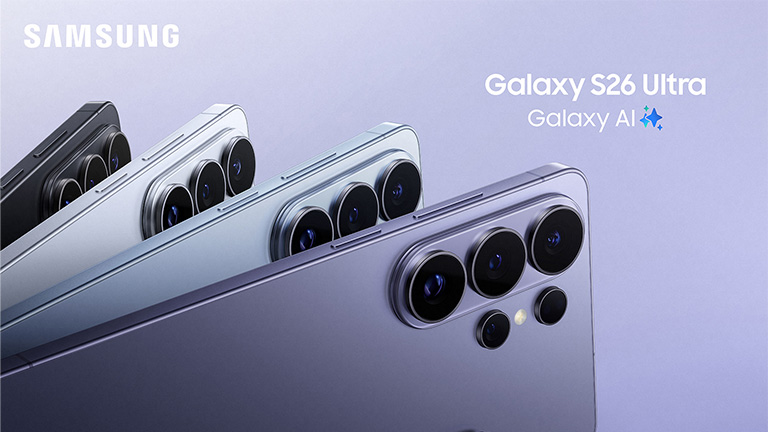 After many years of incremental performance improvements, Samsung introduced an interesting new hardware feature in its latest flagship Galaxy S26 Ultra — Privacy Display. This offers immediate, tangible benefits to all, especially privacy-sensitive and enterprise users.
I received a review unit at the Galaxy Unpacked event in San Francisco on Feb 25, 2026. It is a fantastic phone with tons of improvements to the camera, AI features, and, of course, the display.
There are complaints in the media about Galaxy S26 Ultra’s display not being bright enough, and some people with sensitive eyes experiencing eye fatigue and headaches. Because of that, this time, I took extra time (more than three weeks) to test and use the phone more rigorously before posting this review. I ran multiple tests comparing Galaxy S26 Ultra and S25 Ultra displays across various configurations and found negligible brightness loss with privacy ON and a noticeable loss with maximum privacy ON. However, once I configured it correctly (conditional privacy), had no issues, nor did I find the display brightness lacking. The summary of my findings and recommendations is in the table below, and the full details, including comparison pictures, are in my
After many years of incremental performance improvements, Samsung introduced an interesting new hardware feature in its latest flagship Galaxy S26 Ultra — Privacy Display. This offers immediate, tangible benefits to all, especially privacy-sensitive and enterprise users.
I received a review unit at the Galaxy Unpacked event in San Francisco on Feb 25, 2026. It is a fantastic phone with tons of improvements to the camera, AI features, and, of course, the display.
There are complaints in the media about Galaxy S26 Ultra’s display not being bright enough, and some people with sensitive eyes experiencing eye fatigue and headaches. Because of that, this time, I took extra time (more than three weeks) to test and use the phone more rigorously before posting this review. I ran multiple tests comparing Galaxy S26 Ultra and S25 Ultra displays across various configurations and found negligible brightness loss with privacy ON and a noticeable loss with maximum privacy ON. However, once I configured it correctly (conditional privacy), had no issues, nor did I find the display brightness lacking. The summary of my findings and recommendations is in the table below, and the full details, including comparison pictures, are in my 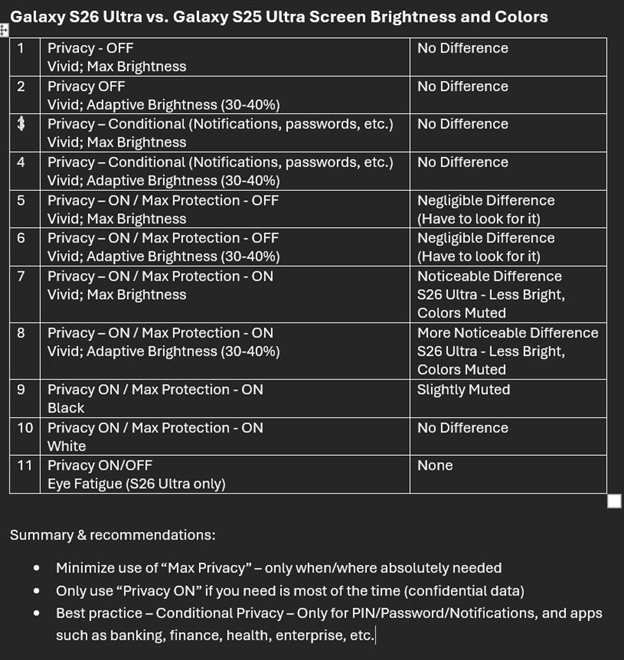 Industry’s first built-in Privacy Display
Today’s smartphones are a feast for peeping Toms, be it sitting on the planes, trains, meetings, or anywhere, where there are curious people around you. This is even more problematic for enterprise users, who often access confidential information from their phones. The only solution so far has been slapping a privacy screen on the display, which is a hassle and ruins the display experience. But no more, with S26 Ultra’s Privacy Display.
The new display uses two types of LEDs: one regular type that emits light in all directions, and another that emits light only in the front. When Privacy Mode is turned ON, only the new directional LEDs activate, blocking visibility from all sides except the front. Supporting privacy at the LED level allows activating privacy mode only when and where needed. For example, when viewing confidential or private content, only for selected apps, notifications, PIN, and password entry screens, etc (conditional privacy). The feature is highly configurable, even allowing maximum privacy, which makes the viewing angle even narrower, with sharp roll off.
I was actually surprised by how often I use it. It was a lifesaver during my recent trip to
Industry’s first built-in Privacy Display
Today’s smartphones are a feast for peeping Toms, be it sitting on the planes, trains, meetings, or anywhere, where there are curious people around you. This is even more problematic for enterprise users, who often access confidential information from their phones. The only solution so far has been slapping a privacy screen on the display, which is a hassle and ruins the display experience. But no more, with S26 Ultra’s Privacy Display.
The new display uses two types of LEDs: one regular type that emits light in all directions, and another that emits light only in the front. When Privacy Mode is turned ON, only the new directional LEDs activate, blocking visibility from all sides except the front. Supporting privacy at the LED level allows activating privacy mode only when and where needed. For example, when viewing confidential or private content, only for selected apps, notifications, PIN, and password entry screens, etc (conditional privacy). The feature is highly configurable, even allowing maximum privacy, which makes the viewing angle even narrower, with sharp roll off.
I was actually surprised by how often I use it. It was a lifesaver during my recent trip to 
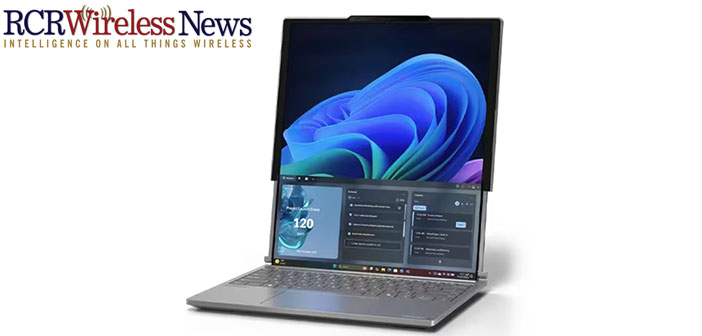
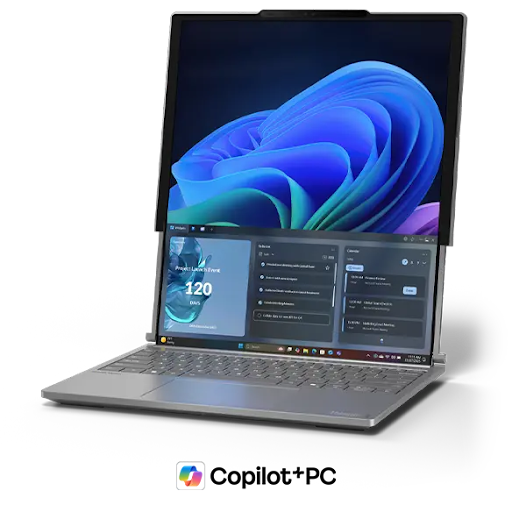 Lenovo rollable PCs charting a new path for laptops (Analyst Angle) 5
The display of this laptop, which extends and shrinks with the press of a button, seems like sheer magic. It turns out it has many practical use cases too. At the very outset, it would be ideal for anybody working with long-format content. At the top of the list are content creators, as well as folks who deal with long documents, such as legal and financial professionals, contract personnel, software/ web developers, and the like.
In today’s mobile age, content, especially visuals and videos (e.g., Instagram), is optimized for smartphone screens, i.e., for portrait mode. Usually, content creators use desktop PCs or laptops with vertically mounted external displays for editing and managing such content. This laptop would be ideal for them. Even for consumers, watching such content on a large vertical display would maximize screen real estate rather than fitting it on a horizontal screen with a lot of unused space. Since social media is optimized for scrolling, a long vertical display is almost a match made in heaven.
For folks who read, write, review, and debug long-form documents, a vertical extended display means fewer page-ups/downs and back-and-forth, which directly translates into improved productivity. Considering that the enterprise personnel who handle such content are usually highly paid (e.g., lawyers, financial analysts, software developers), even small productivity gains might yield significant cost and time savings.
Personally, I am a big user of X (Twitter) and LinkedIn, both of which are optimized for vertical content. Hence, I found this laptop extremely useful. I live-tweet/post from events, during which, in addition to sharing my own opinions, I have to monitor social media trends and what others post continuously. In such a case, this display is a lifesaver, as I can review a large chunk of content with a quick glance without scrolling. As an analyst, I also read a lot of documents and reports and review long spreadsheets, etc. For all of this, I found out firsthand that the productivity improvements are real.
There are two things you should consider before buying this or any such rollable product. First, its price! Being the first such laptops on the market, they will be priced as a premium offering (this rollable retailed at $3499). That means it is well-suited only for those who can realize productivity gains and achieve reasonable RoI. Second, it’s weight. Because of the larger display and rolling mechanism, such laptops will be slightly heavier. That means your utility of the larger screen has to be enough to justify lugging the extra weight all the time.
Since rollable displays are flexible OLED displays, not traditional glass screens, you also need to ensure the display quality meets your needs, especially if you are a graphics artist, etc. Also, they have moving parts, and the rolling mechanism is still in its early stages; you have to be cognizant of the working environment, such as the effects of dust, moisture, etc.
Just to be sure, during my limited use, I did not encounter any of these issues, and the user experience was very similar to that of traditional laptops, of course, with the added benefits of the large display. Lenovo rates the rolling mechanism for 20,000 rolling cycles, which cover most, if not all, use cases. I also got good battery life (almost a full day), even with extended, fully rolled-out display time.
Bottom line, if you are one of the target users and personas identified above, and can afford the price tag, buying these laptops is a wise choice.
Even more exciting rollable concepts coming soon
As mentioned, Lenovo is working on a broad portfolio of rollable concept devices, most of which were shown during its own and industry events.
The first one is ThinkPad Rollable XD, an evolution of the Gen 6 rollable, and likely its replacement. In this, the additional screen, when not in use, instead of stowed away, wraps around and works as a secondary display. This can enable many interesting use cases that increase productivity. For example, to share the screen with somebody in front of you, say for translation and other interactions, for customer service terminals, etc. Also, when the laptop is closed, the external display can be used for notifications, quick lookups, etc., minimizing the need to open the laptop and fire up the whole screen, mimicking the way foldable phones work. This will also increase battery life.
Lenovo rollable PCs charting a new path for laptops (Analyst Angle) 5
The display of this laptop, which extends and shrinks with the press of a button, seems like sheer magic. It turns out it has many practical use cases too. At the very outset, it would be ideal for anybody working with long-format content. At the top of the list are content creators, as well as folks who deal with long documents, such as legal and financial professionals, contract personnel, software/ web developers, and the like.
In today’s mobile age, content, especially visuals and videos (e.g., Instagram), is optimized for smartphone screens, i.e., for portrait mode. Usually, content creators use desktop PCs or laptops with vertically mounted external displays for editing and managing such content. This laptop would be ideal for them. Even for consumers, watching such content on a large vertical display would maximize screen real estate rather than fitting it on a horizontal screen with a lot of unused space. Since social media is optimized for scrolling, a long vertical display is almost a match made in heaven.
For folks who read, write, review, and debug long-form documents, a vertical extended display means fewer page-ups/downs and back-and-forth, which directly translates into improved productivity. Considering that the enterprise personnel who handle such content are usually highly paid (e.g., lawyers, financial analysts, software developers), even small productivity gains might yield significant cost and time savings.
Personally, I am a big user of X (Twitter) and LinkedIn, both of which are optimized for vertical content. Hence, I found this laptop extremely useful. I live-tweet/post from events, during which, in addition to sharing my own opinions, I have to monitor social media trends and what others post continuously. In such a case, this display is a lifesaver, as I can review a large chunk of content with a quick glance without scrolling. As an analyst, I also read a lot of documents and reports and review long spreadsheets, etc. For all of this, I found out firsthand that the productivity improvements are real.
There are two things you should consider before buying this or any such rollable product. First, its price! Being the first such laptops on the market, they will be priced as a premium offering (this rollable retailed at $3499). That means it is well-suited only for those who can realize productivity gains and achieve reasonable RoI. Second, it’s weight. Because of the larger display and rolling mechanism, such laptops will be slightly heavier. That means your utility of the larger screen has to be enough to justify lugging the extra weight all the time.
Since rollable displays are flexible OLED displays, not traditional glass screens, you also need to ensure the display quality meets your needs, especially if you are a graphics artist, etc. Also, they have moving parts, and the rolling mechanism is still in its early stages; you have to be cognizant of the working environment, such as the effects of dust, moisture, etc.
Just to be sure, during my limited use, I did not encounter any of these issues, and the user experience was very similar to that of traditional laptops, of course, with the added benefits of the large display. Lenovo rates the rolling mechanism for 20,000 rolling cycles, which cover most, if not all, use cases. I also got good battery life (almost a full day), even with extended, fully rolled-out display time.
Bottom line, if you are one of the target users and personas identified above, and can afford the price tag, buying these laptops is a wise choice.
Even more exciting rollable concepts coming soon
As mentioned, Lenovo is working on a broad portfolio of rollable concept devices, most of which were shown during its own and industry events.
The first one is ThinkPad Rollable XD, an evolution of the Gen 6 rollable, and likely its replacement. In this, the additional screen, when not in use, instead of stowed away, wraps around and works as a secondary display. This can enable many interesting use cases that increase productivity. For example, to share the screen with somebody in front of you, say for translation and other interactions, for customer service terminals, etc. Also, when the laptop is closed, the external display can be used for notifications, quick lookups, etc., minimizing the need to open the laptop and fire up the whole screen, mimicking the way foldable phones work. This will also increase battery life.
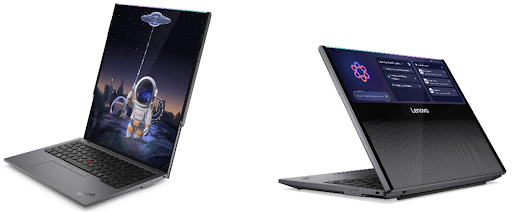 Lenovo rollable PCs charting a new path for laptops (Analyst Angle) 6
The most exciting concept was the Legion Pro Rollable gaming PC, which expands laterally to turn a standard 15-inch display into a 24-inch-wide screen. This would be an instant hit if priced right. Also, the increased weight of rollable laptops would be negligible compared to the usually heavy gaming laptops.
Lenovo rollable PCs charting a new path for laptops (Analyst Angle) 6
The most exciting concept was the Legion Pro Rollable gaming PC, which expands laterally to turn a standard 15-inch display into a 24-inch-wide screen. This would be an instant hit if priced right. Also, the increased weight of rollable laptops would be negligible compared to the usually heavy gaming laptops.
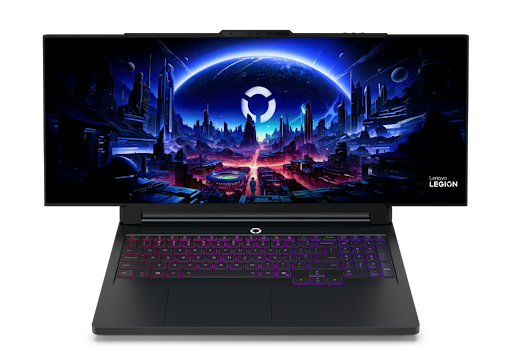 Lenovo rollable PCs charting a new path for laptops (Analyst Angle) 7
Going back to the notion of mimicking the smartphone experience on laptops, the Vertiflex brings it even further without a rollable display. It allows the display to rotate 90 degrees and switch between landscape and portrait modes. This is done manually, requiring a simple hinge mechanism without the extra weight or complexity of the rollable display.
Lenovo rollable PCs charting a new path for laptops (Analyst Angle) 7
Going back to the notion of mimicking the smartphone experience on laptops, the Vertiflex brings it even further without a rollable display. It allows the display to rotate 90 degrees and switch between landscape and portrait modes. This is done manually, requiring a simple hinge mechanism without the extra weight or complexity of the rollable display.
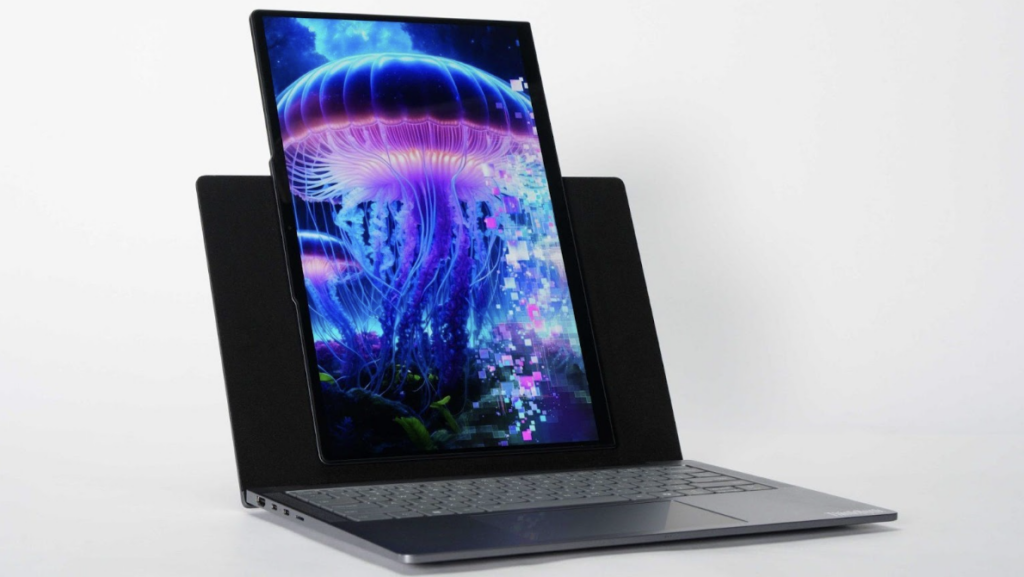 Lenovo rollable PCs charting a new path for laptops (Analyst Angle) 8
I am sure this is only the beginning of these new form factors. The rollable concept allows designers to go wild and experiment like never before. And with Lenovo’s proven track record of quickly commercializing them, foldables are charting a new path for laptops, and users are in for an exciting journey.
Lenovo rollable PCs charting a new path for laptops (Analyst Angle) 8
I am sure this is only the beginning of these new form factors. The rollable concept allows designers to go wild and experiment like never before. And with Lenovo’s proven track record of quickly commercializing them, foldables are charting a new path for laptops, and users are in for an exciting journey.

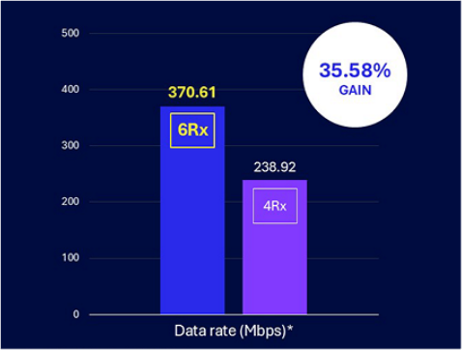 Qualcomm field testing (Source: Qualcomm)
Interestingly, these six antennas can also improve uplink performance. Although the uplink diversity remains 2x, it can utilize the best two antennas of the available six antennas, which will significantly improve user data speeds and latency. Again, AI can determine which of the two antennas to use, when for the best performance. Higher uplink performance is becoming crucial with the increasing popularity of social media apps. For example, during Super Bowl LIX 2025, Verizon experienced, for the first time, that the uplink traffic exceeded the downlink traffic at the sites covering the stadium. In such cases, six antennas can be extremely helpful.
What about Apple?
The feature is starting to gain commercial traction, led by the leading Chinese vendor, Xiaomi. While other OEMs are also considering the feature, one question in everybody’s mind is “What about Apple?” There is currently no public information available on the type/make/model of the modems that will be used for the latest iPhone 17 series, except for the iPhone Air, which will utilize its own C1X. There are rumors that all other models will use Qualcomm’s modems.
I am highly doubtful that iPhone 17s will have 6Rx (specs on Apple’s site don’t list it). There are many reasons for my doubt. Firstly, Apple’s C1X is still far behind contemporary modems from Qualcomm and MediaTek in terms of features. Even basic features, such as mmWave, are missing. So, doubt such advanced features are its priority now. Secondly, historically, Apple has always used the previous year’s/generation’s modem in its latest phones, and has been a laggard in adopting new wireless technologies. Thirdly, and most importantly, from a business perspective, it would be unwise for Apple to create too much of a performance gap between third-party and its own modems.
It’s a no-brainer
For anyone familiar with wireless technology, it is a no-brainer that more antennas mean better performance. The new 6Rx feature allows up to antennas in 5G smartphones, overcoming the space and power consumption constraints. Utilization of AI takes the 6Rx performance even further. This feature doesn’t require any changes to the network and can cost-effectively address two of the crucial challenges of operators—better cell-edge experience and higher overall network capacity. The feature is already commercially available, with smartphones featuring the feature starting to be rolled out.
Prakash Sangam is the founder and principal at
Qualcomm field testing (Source: Qualcomm)
Interestingly, these six antennas can also improve uplink performance. Although the uplink diversity remains 2x, it can utilize the best two antennas of the available six antennas, which will significantly improve user data speeds and latency. Again, AI can determine which of the two antennas to use, when for the best performance. Higher uplink performance is becoming crucial with the increasing popularity of social media apps. For example, during Super Bowl LIX 2025, Verizon experienced, for the first time, that the uplink traffic exceeded the downlink traffic at the sites covering the stadium. In such cases, six antennas can be extremely helpful.
What about Apple?
The feature is starting to gain commercial traction, led by the leading Chinese vendor, Xiaomi. While other OEMs are also considering the feature, one question in everybody’s mind is “What about Apple?” There is currently no public information available on the type/make/model of the modems that will be used for the latest iPhone 17 series, except for the iPhone Air, which will utilize its own C1X. There are rumors that all other models will use Qualcomm’s modems.
I am highly doubtful that iPhone 17s will have 6Rx (specs on Apple’s site don’t list it). There are many reasons for my doubt. Firstly, Apple’s C1X is still far behind contemporary modems from Qualcomm and MediaTek in terms of features. Even basic features, such as mmWave, are missing. So, doubt such advanced features are its priority now. Secondly, historically, Apple has always used the previous year’s/generation’s modem in its latest phones, and has been a laggard in adopting new wireless technologies. Thirdly, and most importantly, from a business perspective, it would be unwise for Apple to create too much of a performance gap between third-party and its own modems.
It’s a no-brainer
For anyone familiar with wireless technology, it is a no-brainer that more antennas mean better performance. The new 6Rx feature allows up to antennas in 5G smartphones, overcoming the space and power consumption constraints. Utilization of AI takes the 6Rx performance even further. This feature doesn’t require any changes to the network and can cost-effectively address two of the crucial challenges of operators—better cell-edge experience and higher overall network capacity. The feature is already commercially available, with smartphones featuring the feature starting to be rolled out.
Prakash Sangam is the founder and principal at 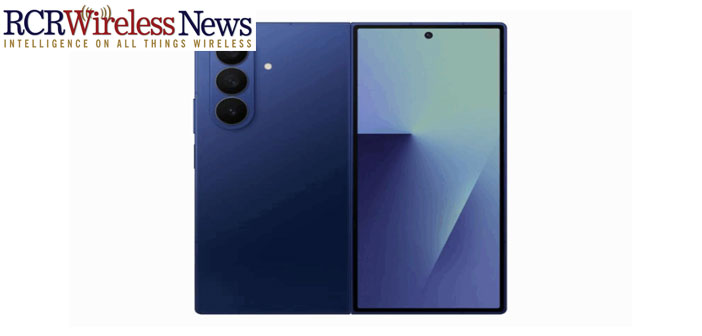
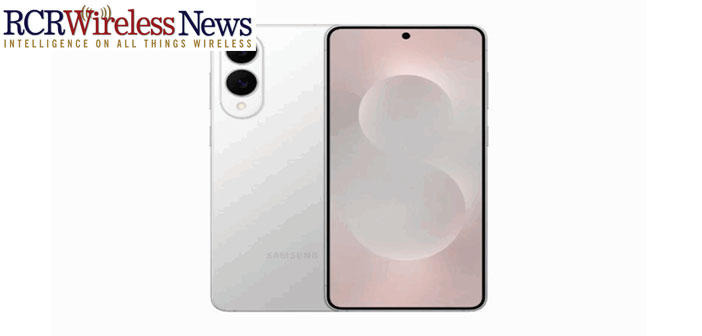
 Samsung Mobile held its second Samsung Galaxy Unpacked event of this year in Brooklyn, New York, on July 19th. As expected, the extravaganza event saw the announcement of its latest foldables and watches. I was among the select analysts invited to attend the event in person.
The star of the show was Galaxy ZFold 7, the ultra-thin, ultra-light folding phone/tablet hybrid. As evident, it is the 7th generation and has the most significant leap in improvements across the board—size, weight, camera, construction, and more. Along with that, Samsung also announced the Galaxy ZFlip 7, Galaxy ZFlip 7 FE, and Galaxy Watch 8 series. All devices are now ready for pre-order and will start shipping from July 25th, 2025.
You can find detailed specifications of each of the devices here:
Samsung Mobile held its second Samsung Galaxy Unpacked event of this year in Brooklyn, New York, on July 19th. As expected, the extravaganza event saw the announcement of its latest foldables and watches. I was among the select analysts invited to attend the event in person.
The star of the show was Galaxy ZFold 7, the ultra-thin, ultra-light folding phone/tablet hybrid. As evident, it is the 7th generation and has the most significant leap in improvements across the board—size, weight, camera, construction, and more. Along with that, Samsung also announced the Galaxy ZFlip 7, Galaxy ZFlip 7 FE, and Galaxy Watch 8 series. All devices are now ready for pre-order and will start shipping from July 25th, 2025.
You can find detailed specifications of each of the devices here: 

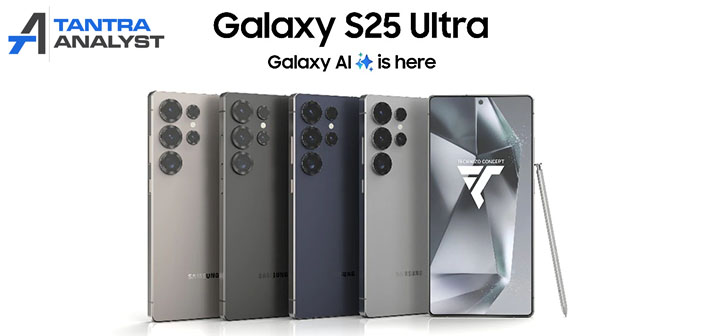
 Summary of Day 5
Check out the summaries of previous days:
Summary of Day 5
Check out the summaries of previous days:  Summary of Day 4
Check out the summaries of previous days:
Summary of Day 4
Check out the summaries of previous days:  Summary of Day 3
Check out the summary of
Summary of Day 3
Check out the summary of  Summary of Day 2
Check out the summary of
Summary of Day 2
Check out the summary of  Background
Qualcomm is one of the largest customers of Arm. However, ever since Qualcomm announced that it is acquiring Nuvia, the two companies have been at odds regarding their license contracts, culminating in today’s court trail. Today was the first day of this jury trial.
Check out my
Background
Qualcomm is one of the largest customers of Arm. However, ever since Qualcomm announced that it is acquiring Nuvia, the two companies have been at odds regarding their license contracts, culminating in today’s court trail. Today was the first day of this jury trial.
Check out my 
 Creators, whether in major corporations, ad agencies, or individuals, are constantly under pressure to create unique, stylized content. For many, Adobe Stock is the go-to place to find appropriate imagery. However, finding the exact image in the right colors, background, and style is almost impossible, especially if there are strict branding guidelines. But no more! Adobe’s newly introduced Gen AI-enabled features will allow creators to transform stock images and quickly and easily create exactly what they want.
These features will also increase the usability of contributed images and contributors’ earning potential without any additional effort.
AI-powered image transformation
In a
Creators, whether in major corporations, ad agencies, or individuals, are constantly under pressure to create unique, stylized content. For many, Adobe Stock is the go-to place to find appropriate imagery. However, finding the exact image in the right colors, background, and style is almost impossible, especially if there are strict branding guidelines. But no more! Adobe’s newly introduced Gen AI-enabled features will allow creators to transform stock images and quickly and easily create exactly what they want.
These features will also increase the usability of contributed images and contributors’ earning potential without any additional effort.
AI-powered image transformation
In a 

 Adobe’s Global Initiative to develop digital literacy for the youth
During its annual creativity conference,
Adobe’s Global Initiative to develop digital literacy for the youth
During its annual creativity conference,  Samsung Mobile had a launch event for Fan Edition (FE) versions of this year’s Galaxy phone, watch, and flagship Tablets on Sep 25th, 2024, in New York, at its Manhattan office. I was one of the select industry analysts invited to the event. The theme “Galaxy Al for All” was apt for the event, as all the devices announced had Galaxy AI support, including the first-ever AI-enabled Galaxy tab.
The most noteworthy devices were the Galaxy Tabs, not because of their AI function but because of the SoC that powered them—MediaTek Dimensity 9300+. This marks MediaTek’s entry into the premium device category in the US. As expected, all the FE devices were powered by Samsung’s own Exynos SoCs.
Here is the full list of announced devices and their salient features:
Samsung Mobile had a launch event for Fan Edition (FE) versions of this year’s Galaxy phone, watch, and flagship Tablets on Sep 25th, 2024, in New York, at its Manhattan office. I was one of the select industry analysts invited to the event. The theme “Galaxy Al for All” was apt for the event, as all the devices announced had Galaxy AI support, including the first-ever AI-enabled Galaxy tab.
The most noteworthy devices were the Galaxy Tabs, not because of their AI function but because of the SoC that powered them—MediaTek Dimensity 9300+. This marks MediaTek’s entry into the premium device category in the US. As expected, all the FE devices were powered by Samsung’s own Exynos SoCs.
Here is the full list of announced devices and their salient features:

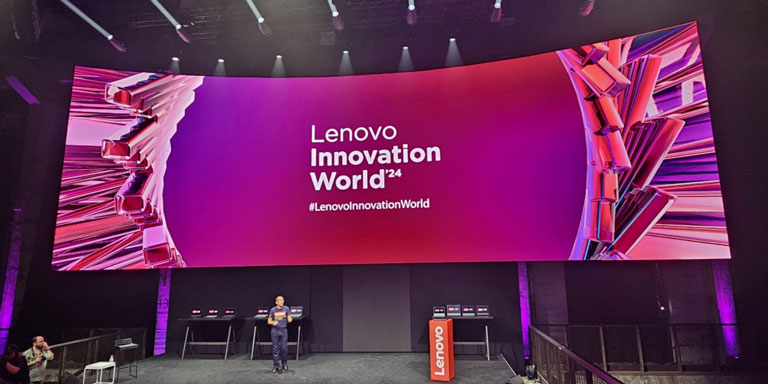 This year’s
  , ThinkBook


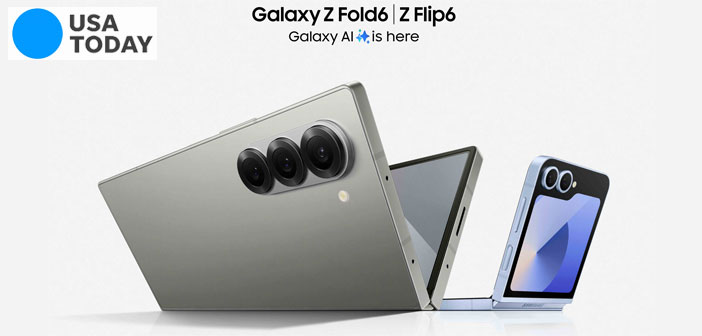


 The tool is excellent at editing even the most complicated backgrounds and surroundings, from removing stains from patterned clothing to removing someone standing in front of busy wallpaper.
You might be thinking, there are already tools like this out there, so what’s the big deal? It’s simple: the difference is ease of use and quality. For example, when editing the boundaries between the desired and undesired objects – for example, the person’s hair against a background or objects of the same color like water and the sky – the tool does a great job delivering results that are pixel perfect so that the edited generations blend in with the surrounding areas.
And, adhering to responsible AI principles, the photos modified with Generative Remove are embedded with that information, using a technology called “
The tool is excellent at editing even the most complicated backgrounds and surroundings, from removing stains from patterned clothing to removing someone standing in front of busy wallpaper.
You might be thinking, there are already tools like this out there, so what’s the big deal? It’s simple: the difference is ease of use and quality. For example, when editing the boundaries between the desired and undesired objects – for example, the person’s hair against a background or objects of the same color like water and the sky – the tool does a great job delivering results that are pixel perfect so that the edited generations blend in with the surrounding areas.
And, adhering to responsible AI principles, the photos modified with Generative Remove are embedded with that information, using a technology called “ Lens Blur
Another great tool to highlight the focus of your photo is Lightroom’s
Lens Blur
Another great tool to highlight the focus of your photo is Lightroom’s  After a few years of a lull because of COVID-19, the Huawei Analyst Summit was in-person this year. As usual, it was in Shenzhen from April 17th to April 19th, attended by many prominent analysts worldwide, but only a select few from the USA. The event’s highlight was 5.5G, Huawei’s name/brand for the next phase of 5G. The company went over the board to show that 5.5G is not just a vision but the real deal.
Apart from the keynotes and sessions, the event’s highlight was the tour of China Unicom’s Innovation Center in the industrial province of Guangzhou. During the tour, Unicom executives illustrated their groundbreaking work with Huawei in developing and deploying many realistic use cases of 5.5G.
Regarding the next phase of 5G, it doesn’t take too much to understand how far ahead Huawei and Chinese operators are compared to their cohorts in the US, Europe, and other regions. At the same time, questions remain on how all the restrictions put on Huawei regarding access to semiconductor technologies will affect their lead. However, those restrictions didn’t affect
After a few years of a lull because of COVID-19, the Huawei Analyst Summit was in-person this year. As usual, it was in Shenzhen from April 17th to April 19th, attended by many prominent analysts worldwide, but only a select few from the USA. The event’s highlight was 5.5G, Huawei’s name/brand for the next phase of 5G. The company went over the board to show that 5.5G is not just a vision but the real deal.
Apart from the keynotes and sessions, the event’s highlight was the tour of China Unicom’s Innovation Center in the industrial province of Guangzhou. During the tour, Unicom executives illustrated their groundbreaking work with Huawei in developing and deploying many realistic use cases of 5.5G.
Regarding the next phase of 5G, it doesn’t take too much to understand how far ahead Huawei and Chinese operators are compared to their cohorts in the US, Europe, and other regions. At the same time, questions remain on how all the restrictions put on Huawei regarding access to semiconductor technologies will affect their lead. However, those restrictions didn’t affect 
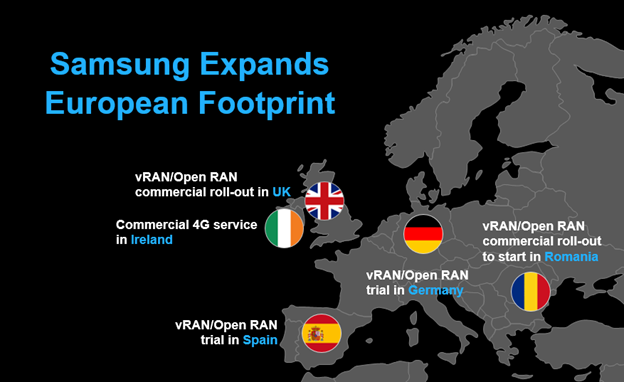 Telecom: a game of partnerships
Telecom is a game of partnerships. It’s even more critical in open RAN, where the whole premise is to utilize various vendors’ different software and hardware components. During MWC, Samsung announced new partnerships and further strengthened existing ones.
The first was with AMD, where Samsung and Vodafone made the
Telecom: a game of partnerships
Telecom is a game of partnerships. It’s even more critical in open RAN, where the whole premise is to utilize various vendors’ different software and hardware components. During MWC, Samsung announced new partnerships and further strengthened existing ones.
The first was with AMD, where Samsung and Vodafone made the 

 ChatGPT going public was a watershed moment for AI. The feverish pitch of Gen AI is affecting every aspect of the technology sector. Samsung
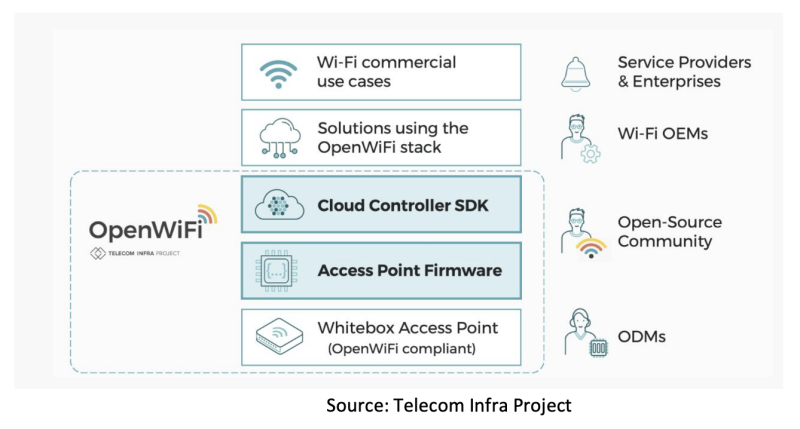 Under the auspices of TIP, the ecosystem partners collaborate, contribute and develop a single code base that becomes the “plumbing” for OpenWiFi systems. Solution providers then integrate this software into white-box APs, offering customers a complete system. Since it is all open-sourced, with open APIs, solution providers, and customers can easily mix and match hardware and software from different vendors without interoperability challenges. They can also deploy their own applications, services and differentiation on the top.
What are the benefits of OpenWiFi?
The biggest allure of OpenWiFi is its lower TCO, mainly because the basic software is open-sourced (free), and open systems create a highly competitive and cost-effective marketplace. The absence of huge R&D spend considerably lowers the entry barrier. Solution providers and customers can mix and match “best of breed” parts to offer the best possible Wi-Fi performance, achieve flexibility, scalability and quick time-to-market.
Since TIP provides basic Wi-Fi plumbing, the ecosystem participants can focus on specific parts of the system in which they have expertise, and solution providers can concentrate on applications and service innovation. Overall, OpenWiFi creates a large ecosystem of diverse players.
The current state of OpenWiFi
OpenWiFi was conceived and is still managed by TIP. It is one of the groups under TIP’s
Under the auspices of TIP, the ecosystem partners collaborate, contribute and develop a single code base that becomes the “plumbing” for OpenWiFi systems. Solution providers then integrate this software into white-box APs, offering customers a complete system. Since it is all open-sourced, with open APIs, solution providers, and customers can easily mix and match hardware and software from different vendors without interoperability challenges. They can also deploy their own applications, services and differentiation on the top.
What are the benefits of OpenWiFi?
The biggest allure of OpenWiFi is its lower TCO, mainly because the basic software is open-sourced (free), and open systems create a highly competitive and cost-effective marketplace. The absence of huge R&D spend considerably lowers the entry barrier. Solution providers and customers can mix and match “best of breed” parts to offer the best possible Wi-Fi performance, achieve flexibility, scalability and quick time-to-market.
Since TIP provides basic Wi-Fi plumbing, the ecosystem participants can focus on specific parts of the system in which they have expertise, and solution providers can concentrate on applications and service innovation. Overall, OpenWiFi creates a large ecosystem of diverse players.
The current state of OpenWiFi
OpenWiFi was conceived and is still managed by TIP. It is one of the groups under TIP’s 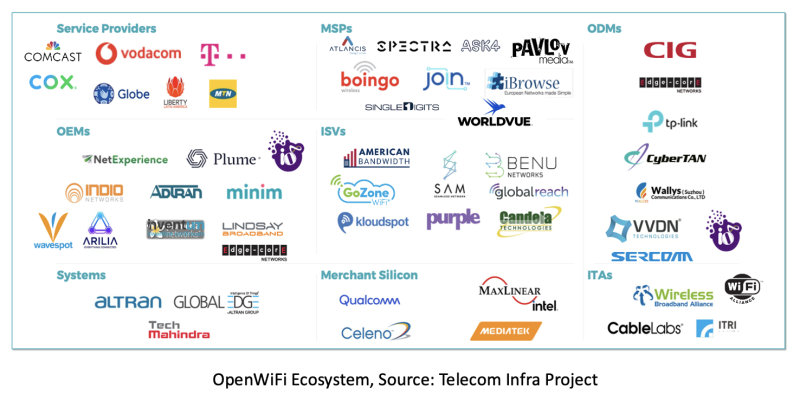 “OpenWiFi has grown substantially in 2023 with global deployments across hospitality, multifamily, stadium, senior living, student housing, and stadium verticals,” said Raynor. “OpenWiFi’s success is a testament to our community and how collaboration creates positive momentum. As they say, a rising tide lifts all boats.”
Some notable networks include the
“OpenWiFi has grown substantially in 2023 with global deployments across hospitality, multifamily, stadium, senior living, student housing, and stadium verticals,” said Raynor. “OpenWiFi’s success is a testament to our community and how collaboration creates positive momentum. As they say, a rising tide lifts all boats.”
Some notable networks include the 
 Every time the content is edited, the same information about the editor is appended to the record. This history can be seen by simply clicking the Content Credential symbol on the content or by uploading it to
  Leica’s announcement with its latest camera and the new Content Credentials feature is only the beginning. The company not only makes its own high-end cameras but also supplies cameras to many major smartphone makers, such as Huawei and Xiaomi. So, we could see support for this feature in those phones soon, too. Smartphone giant Qualcomm’s latest
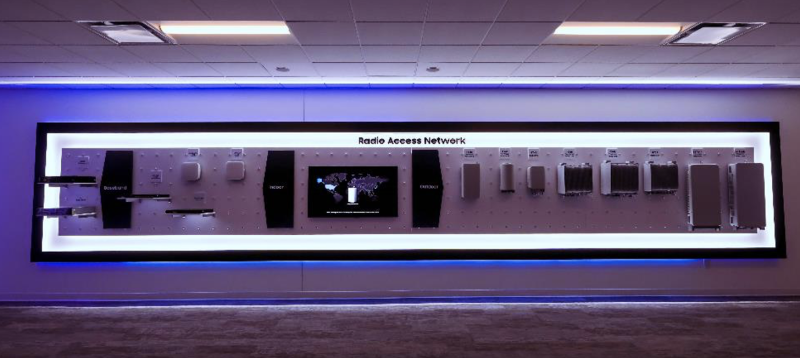 Optimizing and perfecting technologies for the Americas
The hallmark of any successful infrastructure player is to “think global and act local,” as markets are won by best addressing the specific needs of local and regional customers, which might often be disparate. Like other major cellular infra players, most of Samsung Networks’ core development happens offshore. But most, if not all, the customization and optimization happens in the country, including the crucial lab and field testing.
The best example of this localization is the fact that Samsung supports spectrum bands and band combinations needed for U.S. operators, including its unique shared CBRS band. There are estimated more than 10,000 possible band combinations defined by 3GPP, many of which are necessary in the USA. “Supporting and testing all the band combinations operators require is an arduous task, and that’s precisely where our well-equipped labs come into play,” says Vinay Mahendra, director of engineering, Networks Business, Samsung Electronics America, “The combinations are tested for compliance, optimized for performance, and can be demonstrated to operators at this facility before deploying them in the field.” This applies to many other local needs, such as configurations, deployment scenarios, and use cases. The new Plano Innovation Center is the showcase, and existing labs there and elsewhere in the country serve as the brains and plumbing.
Testing ground for partners
A 5G network is an amalgamation of different vendors, and seamless interoperability between them is a basic need. This need elevates the complexity to a new level with vRAN/open RAN, where software and hardware are disaggregated and might come from different vendors. A typical multi-vendor open RAN network could have different RU, D.U., CU vendors, cloud orchestration and solution providers, chip and cloud providers, etc. Integrating all those hardware and software pieces and making the system work together is no small task. It requires close collaboration among vendors, ensuring the system is thoroughly tested and pre-certified, so that the disruptions and issues in the field and hence the time and costs can be minimized. That’s exactly the role of the Innovation Center and the labs.
The next phase of 5G will be driven by non-traditional applications, services and use cases, such as IIoT, mission critical services, X.R., private networks, and many others that we haven’t even imagined yet. Those must be developed, tested, perfected, and showcased before being offered on commercial networks. Being a market leader, Samsung, with its partners, is in the driving seat to enable these from the network side. Again, a task cut out for its Innovation Center.
In closing
Samsung Networks’ Innovation Center in the U.S. is opening at the critical juncture when 5G is ready for its next phase in the country, exploring new deployment models, architectures and use cases. The center and the adjoining labs will serve as a centerpiece for the company and its partners to develop and commercialize that next phase. It will help Samsung Networks showcase its innovations and partner technologies and show company’s commitment to its customers in the region.
I am looking forward to seeing new technologies and concepts being demonstrated there.
If you want to read more articles like this and get an up-to-date analysis of the latest mobile and tech industry news, sign-up for our monthly newsletter at
Optimizing and perfecting technologies for the Americas
The hallmark of any successful infrastructure player is to “think global and act local,” as markets are won by best addressing the specific needs of local and regional customers, which might often be disparate. Like other major cellular infra players, most of Samsung Networks’ core development happens offshore. But most, if not all, the customization and optimization happens in the country, including the crucial lab and field testing.
The best example of this localization is the fact that Samsung supports spectrum bands and band combinations needed for U.S. operators, including its unique shared CBRS band. There are estimated more than 10,000 possible band combinations defined by 3GPP, many of which are necessary in the USA. “Supporting and testing all the band combinations operators require is an arduous task, and that’s precisely where our well-equipped labs come into play,” says Vinay Mahendra, director of engineering, Networks Business, Samsung Electronics America, “The combinations are tested for compliance, optimized for performance, and can be demonstrated to operators at this facility before deploying them in the field.” This applies to many other local needs, such as configurations, deployment scenarios, and use cases. The new Plano Innovation Center is the showcase, and existing labs there and elsewhere in the country serve as the brains and plumbing.
Testing ground for partners
A 5G network is an amalgamation of different vendors, and seamless interoperability between them is a basic need. This need elevates the complexity to a new level with vRAN/open RAN, where software and hardware are disaggregated and might come from different vendors. A typical multi-vendor open RAN network could have different RU, D.U., CU vendors, cloud orchestration and solution providers, chip and cloud providers, etc. Integrating all those hardware and software pieces and making the system work together is no small task. It requires close collaboration among vendors, ensuring the system is thoroughly tested and pre-certified, so that the disruptions and issues in the field and hence the time and costs can be minimized. That’s exactly the role of the Innovation Center and the labs.
The next phase of 5G will be driven by non-traditional applications, services and use cases, such as IIoT, mission critical services, X.R., private networks, and many others that we haven’t even imagined yet. Those must be developed, tested, perfected, and showcased before being offered on commercial networks. Being a market leader, Samsung, with its partners, is in the driving seat to enable these from the network side. Again, a task cut out for its Innovation Center.
In closing
Samsung Networks’ Innovation Center in the U.S. is opening at the critical juncture when 5G is ready for its next phase in the country, exploring new deployment models, architectures and use cases. The center and the adjoining labs will serve as a centerpiece for the company and its partners to develop and commercialize that next phase. It will help Samsung Networks showcase its innovations and partner technologies and show company’s commitment to its customers in the region.
I am looking forward to seeing new technologies and concepts being demonstrated there.
If you want to read more articles like this and get an up-to-date analysis of the latest mobile and tech industry news, sign-up for our monthly newsletter at 
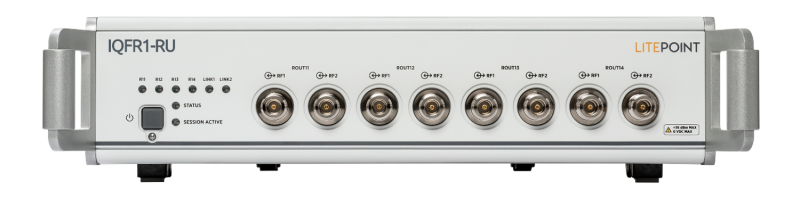 The IQFR1-RU is a compact, feature-rich, and high-performance RU testing kit specifically designed and built to address the requirements of O-RU vendors. Today’s O-RU test solutions comprise multiple signal generators, a signal analyzer, a DU emulator, and RF interfacing components. In contrast, IQFR1-RU is designed as a single-box wrap-around solution for O-RUs, simplifying test setups. It is ideal for Design and Verification Testing (DVT) and allows companies to scale seamlessly into production testing. It supports 3GPP Rel. 16 and the latest O-RAN Alliance radio specifications. It comes with a suite of software automation tools with many test cases preconfigured. The IQFR1-RU is being used by many O-RAN silicon and O-RU makers today.
Recognizing the market opportunity, other players in the T&M industry are following LitePoint’s lead and are working on optimizing solutions for O-RAN product testing. It will be interesting to observe how this new market and competitive landscape develops in the coming months and years.
If you want to read more articles like this and get an up-to-date analysis of the latest mobile and tech industry news, sign-up for our monthly newsletter at
The IQFR1-RU is a compact, feature-rich, and high-performance RU testing kit specifically designed and built to address the requirements of O-RU vendors. Today’s O-RU test solutions comprise multiple signal generators, a signal analyzer, a DU emulator, and RF interfacing components. In contrast, IQFR1-RU is designed as a single-box wrap-around solution for O-RUs, simplifying test setups. It is ideal for Design and Verification Testing (DVT) and allows companies to scale seamlessly into production testing. It supports 3GPP Rel. 16 and the latest O-RAN Alliance radio specifications. It comes with a suite of software automation tools with many test cases preconfigured. The IQFR1-RU is being used by many O-RAN silicon and O-RU makers today.
Recognizing the market opportunity, other players in the T&M industry are following LitePoint’s lead and are working on optimizing solutions for O-RAN product testing. It will be interesting to observe how this new market and competitive landscape develops in the coming months and years.
If you want to read more articles like this and get an up-to-date analysis of the latest mobile and tech industry news, sign-up for our monthly newsletter at 
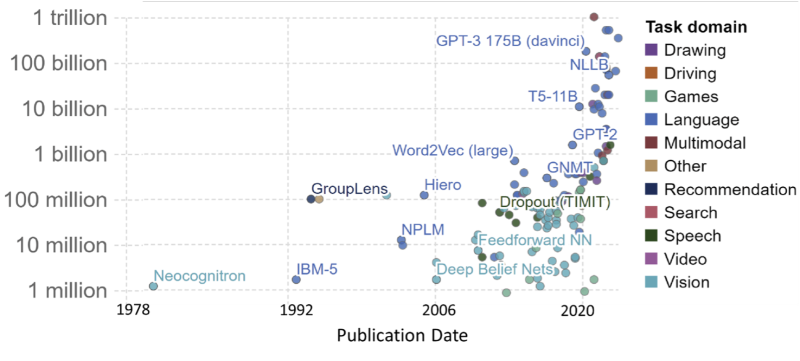 Gen AI models have to be optimized to be run on edge devices. The early demos and claims suggest that devices such as smartphones could run models typically one to several billion parameters today. Laptops, which can utilize discrete GPUs, can go even further and run models with more than 10 billion parameters now. These capabilities will continue to evolve and expand as devices become more powerful. However, the challenge is to optimize these models without sacrificing accuracy or with minimal or acceptable error rates.
Optimizing Gen AI models for the edge
There are a few things that help in optimizing the Gen AI model for the edge. First, in many use cases, inference is run for specific applications and domains. For example, inference models specific to the medical domain need fewer parameters than generic models. That should make running these domain-specific models on edge devices much more manageable.
Several techniques are used to optimize trained cloud-based AI models for edge devices. The top ones are quantization and compression. Quantization involves reducing the standard 32-bit floating models to 16-bit, 8-bit, or 4-bit integer models. This substantially reduces the processing and memory needed with minimal loss in accuracy. For example, Qualcomm’s
Gen AI models have to be optimized to be run on edge devices. The early demos and claims suggest that devices such as smartphones could run models typically one to several billion parameters today. Laptops, which can utilize discrete GPUs, can go even further and run models with more than 10 billion parameters now. These capabilities will continue to evolve and expand as devices become more powerful. However, the challenge is to optimize these models without sacrificing accuracy or with minimal or acceptable error rates.
Optimizing Gen AI models for the edge
There are a few things that help in optimizing the Gen AI model for the edge. First, in many use cases, inference is run for specific applications and domains. For example, inference models specific to the medical domain need fewer parameters than generic models. That should make running these domain-specific models on edge devices much more manageable.
Several techniques are used to optimize trained cloud-based AI models for edge devices. The top ones are quantization and compression. Quantization involves reducing the standard 32-bit floating models to 16-bit, 8-bit, or 4-bit integer models. This substantially reduces the processing and memory needed with minimal loss in accuracy. For example, Qualcomm’s 




 Additionally, the AI-based Studio Mode software tools make conference calls professional grade. The auto-framing feature ensures you are always at the center of the frame with perfect zoom. The blurring background effect is one of the best I have seen. Eye contact correction is excellent when reading and moving your eyes. For people concerned about how they look on screen, Face Effect has options to smoothen wrinkles and skin tone.
The included S-Pen in Book3 Pro 360 is interesting. I am slowly warming up to it for taking notes, drawing schematics, etc. If it could be stored in the laptop, I would have probably used it more. Others, who are more artistic, can use it better for drawing, painting, etc.
In summary
Samsung Galaxy Book3 Pro 360 is a worthy upgrade. It has many things that stand out in the crowded laptop market. Currently, it sells for $1099, which might feel a bit pricy, but it is well worth the premium hardware and the experience you get, especially if you have other Samsung devices.
If nothing else, I would buy this just for the “connected experience’ and super bright display alone.
If you want to read more articles like this and get an up-to-date analysis of the latest mobile and tech industry news, sign-up for our monthly newsletter at
Additionally, the AI-based Studio Mode software tools make conference calls professional grade. The auto-framing feature ensures you are always at the center of the frame with perfect zoom. The blurring background effect is one of the best I have seen. Eye contact correction is excellent when reading and moving your eyes. For people concerned about how they look on screen, Face Effect has options to smoothen wrinkles and skin tone.
The included S-Pen in Book3 Pro 360 is interesting. I am slowly warming up to it for taking notes, drawing schematics, etc. If it could be stored in the laptop, I would have probably used it more. Others, who are more artistic, can use it better for drawing, painting, etc.
In summary
Samsung Galaxy Book3 Pro 360 is a worthy upgrade. It has many things that stand out in the crowded laptop market. Currently, it sells for $1099, which might feel a bit pricy, but it is well worth the premium hardware and the experience you get, especially if you have other Samsung devices.
If nothing else, I would buy this just for the “connected experience’ and super bright display alone.
If you want to read more articles like this and get an up-to-date analysis of the latest mobile and tech industry news, sign-up for our monthly newsletter at 

 The telecom industry’s biggest show returned to its old glory with estimated 90,000 attendees. Also back were the expensive air tickets and hotels, long taxi lines, crowded metros and restaurants, and more. But it was all well worth for this yearly pilgrimage every serious telecom industry participant has to make.
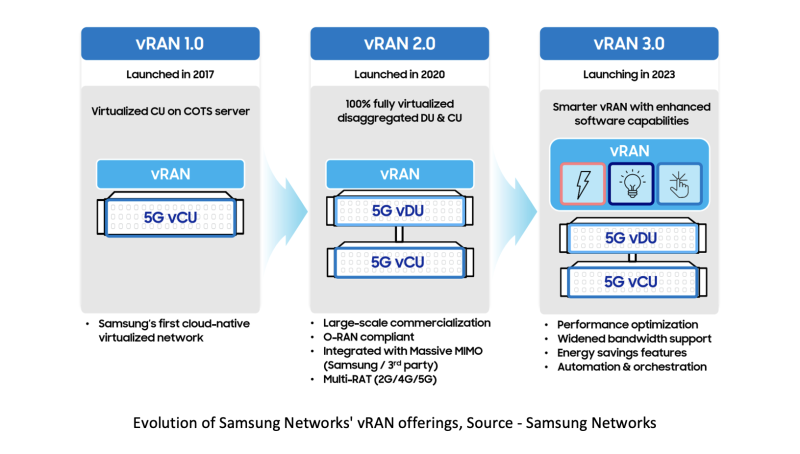 Also, part of vRAN 3.0 is the
 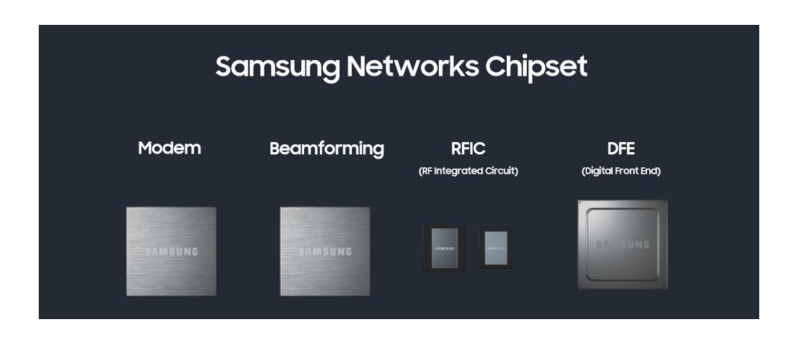 Strong operator traction and contract wins
Samsung Networks’
Strong operator traction and contract wins
Samsung Networks’ 
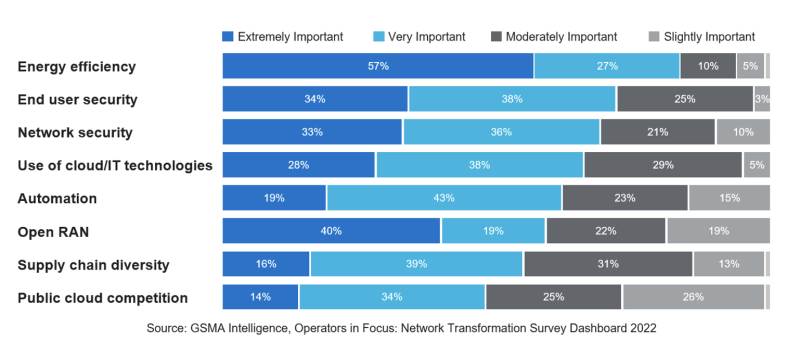 The reason energy efficiency is this high is twofold. First, fundamental operational and financial needs, and second, climate change compulsions. Reducing carbon footprint and becoming carbon neutral is in almost every operator’s corporate charter.
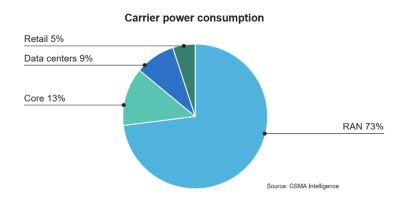 The most effective option for operators to save energy is in RAN.
 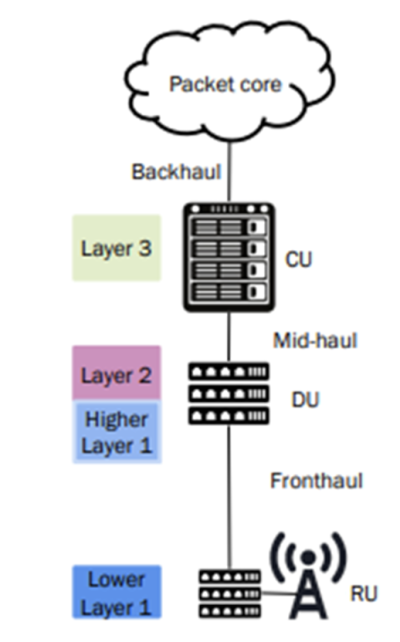 The crucial Layer-1 functionality is divided into two parts: Low-Phy and High-Phy. Low-Phy is managed by Radio Unit (RU). The High-Phy, which includes the most demanding functions such as demodulation, beamforming, channel coding, and Forward Error Correction (FEC), is managed by DU. These functions are highly latency-sensitive and consume a significant portion of the 90% processing power mentioned above.
Regarding compute, there is consensus on using dedicated, optimized silicon, such as application-specific processors (ASICs) for RU. The common industry perception was that general-purpose compute, often called COTS — Commercial Off The Shelf servers based on x86 or Arm processors are good enough for the CU. However, big data center operators like hyperscalers and large enterprises realized long ago that generic compute is highly inefficient for complex networking and security workloads, such as IPSec and encryption. Such functions are typically offloaded to optimized Accelerators known as DPUs or Smart NICs. When the industry is starting on the vRAN journey, it is similarly beginning to realize that COTS servers are also inefficient for High-Phy.
High-Phy is where 5G rubber hits the road and is the essence of 5G radio technology. High-Phy functions make or break vRAN/open RAN. RAN vendors spend years, if not decades, on optimizing the performance of these functions. They also offer the opportunity for vendors to differentiate. In such a case, it is straightforward and logical to understand that purpose-built and optimized Accelerators are an absolute necessity for this critical workload.
So, DU will be a mix of COTS (aka host processor) running Layer-2 and one or more Accelerators running High-Phy (and networking functions). These are connected through a standard PCIe interface, widely used in the IT industry. This setup also has many other advantages. Being optimized for specific radio workloads, Accelerators are far more energy efficient, require far less cooling, and have a smaller PCB footprint. They are easy and cost-effective to scale. For example, you can add more Accelerators, not the expensive COTS processors, to increase capacity or introduce new features such as URLLC. The PCIe interface ensures full interoperability, and eliminates vendor lock-in, be it Accelerators or host processors. Additionally, this allows Accelerator vendors to differentiate. Finally, the Accelerator + PCIe + host processor setup, in the true spirit of Open RAN, offers the best-of-the-breed combination: best Accelerators from radio experts and COTS processors from generic compute experts.
Theoretically, Accelerators could be FPGAs or optimized processors (ASICs or standard/semi-custom baseband processors). However, because of the nature of the specialized workload, it makes sense to use optimized processors rather than FPGA, from power, performance, and PCB space considerations. Of course, all accelerators are not created equal. They differ in terms of the number of Layer-1 functions supported and their configuration.
Accelerators can be deployed in look-aside or in-line configurations. As the names suggest, in the look-aside configuration, Accelerator acts as a side gig, relying on the host processor to communicate with Low-Phy. In the in-line configuration, Accelerator is in charge and communicates directly with Low-Phy. When the functions that Accelerator runs are so critical and latency-sensitive, it is a no-brainer to utilize in-line configuration. Recently
The crucial Layer-1 functionality is divided into two parts: Low-Phy and High-Phy. Low-Phy is managed by Radio Unit (RU). The High-Phy, which includes the most demanding functions such as demodulation, beamforming, channel coding, and Forward Error Correction (FEC), is managed by DU. These functions are highly latency-sensitive and consume a significant portion of the 90% processing power mentioned above.
Regarding compute, there is consensus on using dedicated, optimized silicon, such as application-specific processors (ASICs) for RU. The common industry perception was that general-purpose compute, often called COTS — Commercial Off The Shelf servers based on x86 or Arm processors are good enough for the CU. However, big data center operators like hyperscalers and large enterprises realized long ago that generic compute is highly inefficient for complex networking and security workloads, such as IPSec and encryption. Such functions are typically offloaded to optimized Accelerators known as DPUs or Smart NICs. When the industry is starting on the vRAN journey, it is similarly beginning to realize that COTS servers are also inefficient for High-Phy.
High-Phy is where 5G rubber hits the road and is the essence of 5G radio technology. High-Phy functions make or break vRAN/open RAN. RAN vendors spend years, if not decades, on optimizing the performance of these functions. They also offer the opportunity for vendors to differentiate. In such a case, it is straightforward and logical to understand that purpose-built and optimized Accelerators are an absolute necessity for this critical workload.
So, DU will be a mix of COTS (aka host processor) running Layer-2 and one or more Accelerators running High-Phy (and networking functions). These are connected through a standard PCIe interface, widely used in the IT industry. This setup also has many other advantages. Being optimized for specific radio workloads, Accelerators are far more energy efficient, require far less cooling, and have a smaller PCB footprint. They are easy and cost-effective to scale. For example, you can add more Accelerators, not the expensive COTS processors, to increase capacity or introduce new features such as URLLC. The PCIe interface ensures full interoperability, and eliminates vendor lock-in, be it Accelerators or host processors. Additionally, this allows Accelerator vendors to differentiate. Finally, the Accelerator + PCIe + host processor setup, in the true spirit of Open RAN, offers the best-of-the-breed combination: best Accelerators from radio experts and COTS processors from generic compute experts.
Theoretically, Accelerators could be FPGAs or optimized processors (ASICs or standard/semi-custom baseband processors). However, because of the nature of the specialized workload, it makes sense to use optimized processors rather than FPGA, from power, performance, and PCB space considerations. Of course, all accelerators are not created equal. They differ in terms of the number of Layer-1 functions supported and their configuration.
Accelerators can be deployed in look-aside or in-line configurations. As the names suggest, in the look-aside configuration, Accelerator acts as a side gig, relying on the host processor to communicate with Low-Phy. In the in-line configuration, Accelerator is in charge and communicates directly with Low-Phy. When the functions that Accelerator runs are so critical and latency-sensitive, it is a no-brainer to utilize in-line configuration. Recently  Samsung returned to in-person
 Marvell Technologies held its yearly industry analyst day on Dec 6th, 2022, at its headquarters in Santa Clara, California. The overwhelming message from the event was how its relentless focus on the Data Infrastructure market across mainly four segments— Data Center, Carrier Infrastructure, Automotive, and Enterprise Networking—is paying off.
All the speakers, including the COO, President, CTO, Chief Development Officer, all the business heads, and the breakout session leads, drove this message home with good proof points. Many guest speakers from present there physically or through videos endorsed Marvell’s technology and the collaboration between the companies.
Here are some of the key points from the presentations:
Data Infrastructure company
Marvell Technologies held its yearly industry analyst day on Dec 6th, 2022, at its headquarters in Santa Clara, California. The overwhelming message from the event was how its relentless focus on the Data Infrastructure market across mainly four segments— Data Center, Carrier Infrastructure, Automotive, and Enterprise Networking—is paying off.
All the speakers, including the COO, President, CTO, Chief Development Officer, all the business heads, and the breakout session leads, drove this message home with good proof points. Many guest speakers from present there physically or through videos endorsed Marvell’s technology and the collaboration between the companies.
Here are some of the key points from the presentations:
Data Infrastructure company

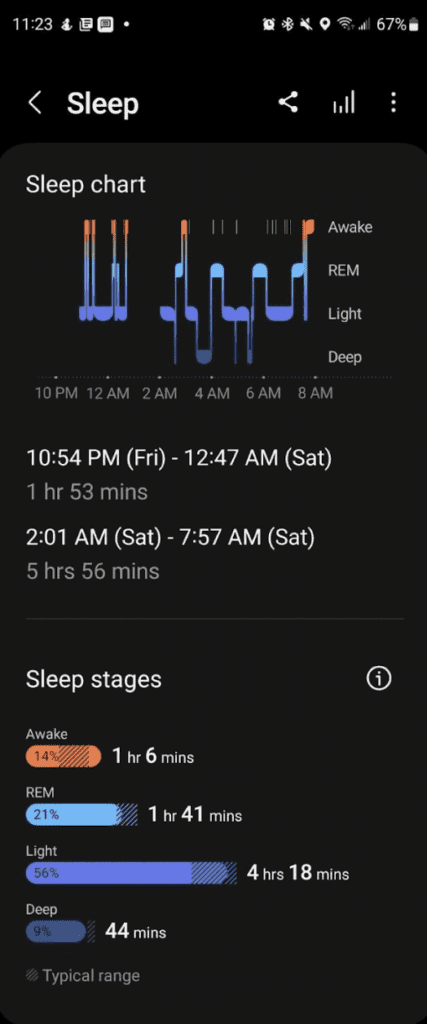

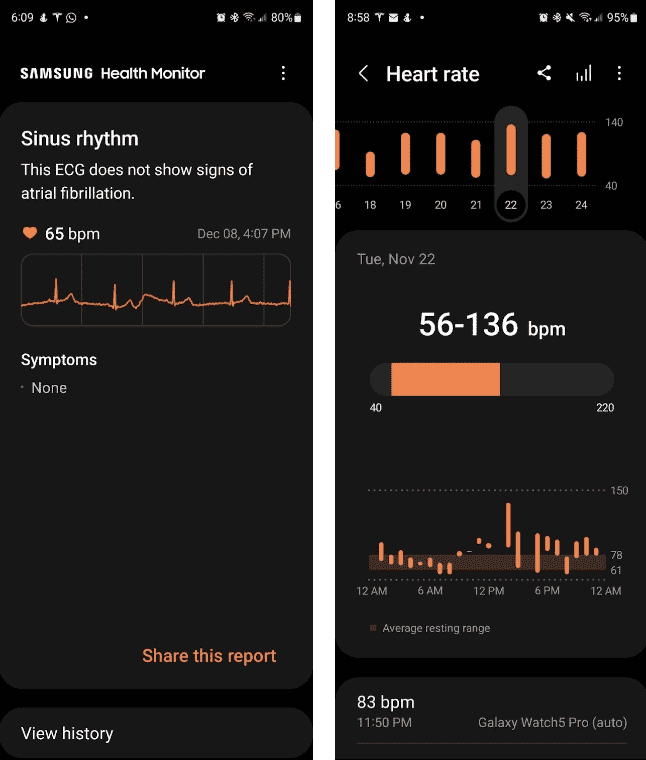 Support of the Electrocardiogram (ECG) is revolutionary. Fortunately, I had a normal heart rhythm on every occasion I checked. I also got to test the oximeter when I recently developed Covid-like symptoms. The readings from the watch were accurate and comparable to the fingertip oximeter. The watch also has a skin temperature sensor, but Samsung has not yet activated it.
Even though none of these trackers are considered clinical-grade or replace medical equipment, they indeed put a solid foundation for the future. A collection of such sensors can be utilized for ambient wellness monitoring and anomaly detection. For example, abnormal heartbeats and body temperature combined with other biomarkers could alert consumers to seek immediate medical attention, which they would have otherwise missed. Early detection might make a difference between life and death in cases like heart attack and stroke. So, although all these look like novelties now, they are the building blocks for that future.
Key features that pro users want
Apart from the rugged build, many other features make Watch5 Pro a good option for users that often engage in pro-like activities. I am that kind of a person; hence this watch is a perfect fit for me.
The most significant and hyped pro feature is GPX file support. I often used this while hiking locally here in San Diego and during our recent trip to Zion, Bryce, and Antelope Canyons. For reference, I compared this functionality with my brother-in-law’s Garmin Fenix 5, a top-rated pro watch, and the experience was comparable. For the most part, the feature lived up to its hype.
Support of the Electrocardiogram (ECG) is revolutionary. Fortunately, I had a normal heart rhythm on every occasion I checked. I also got to test the oximeter when I recently developed Covid-like symptoms. The readings from the watch were accurate and comparable to the fingertip oximeter. The watch also has a skin temperature sensor, but Samsung has not yet activated it.
Even though none of these trackers are considered clinical-grade or replace medical equipment, they indeed put a solid foundation for the future. A collection of such sensors can be utilized for ambient wellness monitoring and anomaly detection. For example, abnormal heartbeats and body temperature combined with other biomarkers could alert consumers to seek immediate medical attention, which they would have otherwise missed. Early detection might make a difference between life and death in cases like heart attack and stroke. So, although all these look like novelties now, they are the building blocks for that future.
Key features that pro users want
Apart from the rugged build, many other features make Watch5 Pro a good option for users that often engage in pro-like activities. I am that kind of a person; hence this watch is a perfect fit for me.
The most significant and hyped pro feature is GPX file support. I often used this while hiking locally here in San Diego and during our recent trip to Zion, Bryce, and Antelope Canyons. For reference, I compared this functionality with my brother-in-law’s Garmin Fenix 5, a top-rated pro watch, and the experience was comparable. For the most part, the feature lived up to its hype.

 Taiwanese tech giant MediaTek held its yearly executive summit last week in California. It had a bunch of exciting announcements and a set of executive presentations. The most interesting announcement was that of Dimensity 9200, the smartphone SoC, which signaled the arrival of MediaTek in the 5G premium segment. The executive speeches demonstrated MediaTek’s growing confidence in projecting its technology leadership and substantial share in the markets they play.
Announcements:
Dimensity 9200 SoC – This chipset offers a slew of advanced technologies, including the AI Processing Unit with impressive power savings, the world’s first Arm Immortalis-G715 GPU, hardware-accelerated ray tracing, AI-enhanced modem supporting mmWave and Sub 6GHz bands, WiFi7 connectivity, and more. It is fabed using TSMC’s latest 4nm Gen 2 process. You can check out its
Taiwanese tech giant MediaTek held its yearly executive summit last week in California. It had a bunch of exciting announcements and a set of executive presentations. The most interesting announcement was that of Dimensity 9200, the smartphone SoC, which signaled the arrival of MediaTek in the 5G premium segment. The executive speeches demonstrated MediaTek’s growing confidence in projecting its technology leadership and substantial share in the markets they play.
Announcements:
Dimensity 9200 SoC – This chipset offers a slew of advanced technologies, including the AI Processing Unit with impressive power savings, the world’s first Arm Immortalis-G715 GPU, hardware-accelerated ray tracing, AI-enhanced modem supporting mmWave and Sub 6GHz bands, WiFi7 connectivity, and more. It is fabed using TSMC’s latest 4nm Gen 2 process. You can check out its 










 Another critical benefit of Fold 4 for productivity is its bright displays with vivid colors. Both are pretty bright, emitting 1000 nits. You can use both in bright sunlit outdoors. That makes Fold 4 perfect for uses such as checking content (diagrams, plans, websites) outdoors. Also, the viewing experience of the flexible folding display was similar to that of the traditional outer display.
Fold 4’s battery life largely depends on the usage of its folding display. I consistently got one full working day when the large folding display was used for a few hours. Recharging was required if it was always open and continuously used.
Better grip and perfect width for narrow pockets
Large-display phones have become increasingly popular. I particularly like them because of the relative ease of typing and multitasking. But wider phones are usually tricky to use with one hand. They typically don’t have a good grip, feel awkward to hold, and are hard to type. They also usually don’t fit well in tight/narrow pockets.
Since Fold 4 is narrow when folded (2.64 in), it provides a perfect grip and can be operated with only one hand. It can also fit narrow pockets. It feels like the Candy bar phones of yester years.
Perfect for multitasking
Galaxy Fold 4 is a multitasking champion. I usually work on multiple apps at a time and exchange information between them. For example, I use TweetDeck to check out the latest trends, my personal Twitter account to post tweets based on those trends, and the Parallel app with the company’s Twitter account to comment on those tweets. I often move content between the three. Fold 4’s multi-screen is perfect for that.
On other phones, you could do all this with split screens, but it feels natural and more manageable when you have them on two screens next to each other. This is useful for Outlook, where you can check your mailbox while keeping emails open for a laptop-like experience and convenience. Similar is the case with Messaging, Whatsapp, and other apps.
My experience with frequently cited concerns
During my review, I talked to a few previous Fold users and industry observers and heard their experiences and concerns. Here are some of them:
Crease – The biggest concern was “How’s the crease?” My answer always has been, “What crease? You can notice it on a blank dark screen, but hardly visible when doing any work or watching content. Some previous Fold owners have warned me that it will worsen over time. It hasn’t changed much in the last six weeks. I will report how it holds up in the future on my
Another critical benefit of Fold 4 for productivity is its bright displays with vivid colors. Both are pretty bright, emitting 1000 nits. You can use both in bright sunlit outdoors. That makes Fold 4 perfect for uses such as checking content (diagrams, plans, websites) outdoors. Also, the viewing experience of the flexible folding display was similar to that of the traditional outer display.
Fold 4’s battery life largely depends on the usage of its folding display. I consistently got one full working day when the large folding display was used for a few hours. Recharging was required if it was always open and continuously used.
Better grip and perfect width for narrow pockets
Large-display phones have become increasingly popular. I particularly like them because of the relative ease of typing and multitasking. But wider phones are usually tricky to use with one hand. They typically don’t have a good grip, feel awkward to hold, and are hard to type. They also usually don’t fit well in tight/narrow pockets.
Since Fold 4 is narrow when folded (2.64 in), it provides a perfect grip and can be operated with only one hand. It can also fit narrow pockets. It feels like the Candy bar phones of yester years.
Perfect for multitasking
Galaxy Fold 4 is a multitasking champion. I usually work on multiple apps at a time and exchange information between them. For example, I use TweetDeck to check out the latest trends, my personal Twitter account to post tweets based on those trends, and the Parallel app with the company’s Twitter account to comment on those tweets. I often move content between the three. Fold 4’s multi-screen is perfect for that.
On other phones, you could do all this with split screens, but it feels natural and more manageable when you have them on two screens next to each other. This is useful for Outlook, where you can check your mailbox while keeping emails open for a laptop-like experience and convenience. Similar is the case with Messaging, Whatsapp, and other apps.
My experience with frequently cited concerns
During my review, I talked to a few previous Fold users and industry observers and heard their experiences and concerns. Here are some of them:
Crease – The biggest concern was “How’s the crease?” My answer always has been, “What crease? You can notice it on a blank dark screen, but hardly visible when doing any work or watching content. Some previous Fold owners have warned me that it will worsen over time. It hasn’t changed much in the last six weeks. I will report how it holds up in the future on my 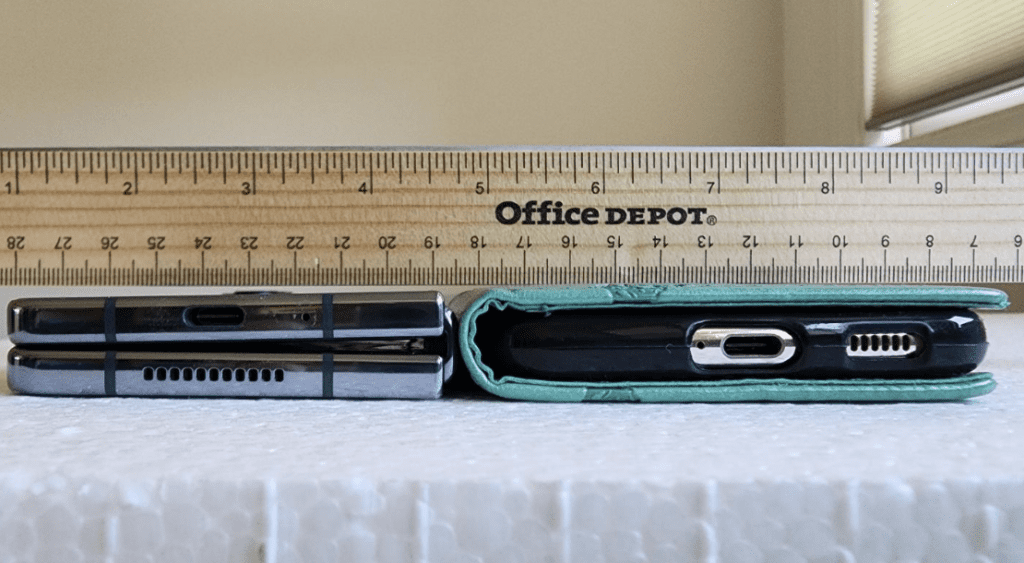


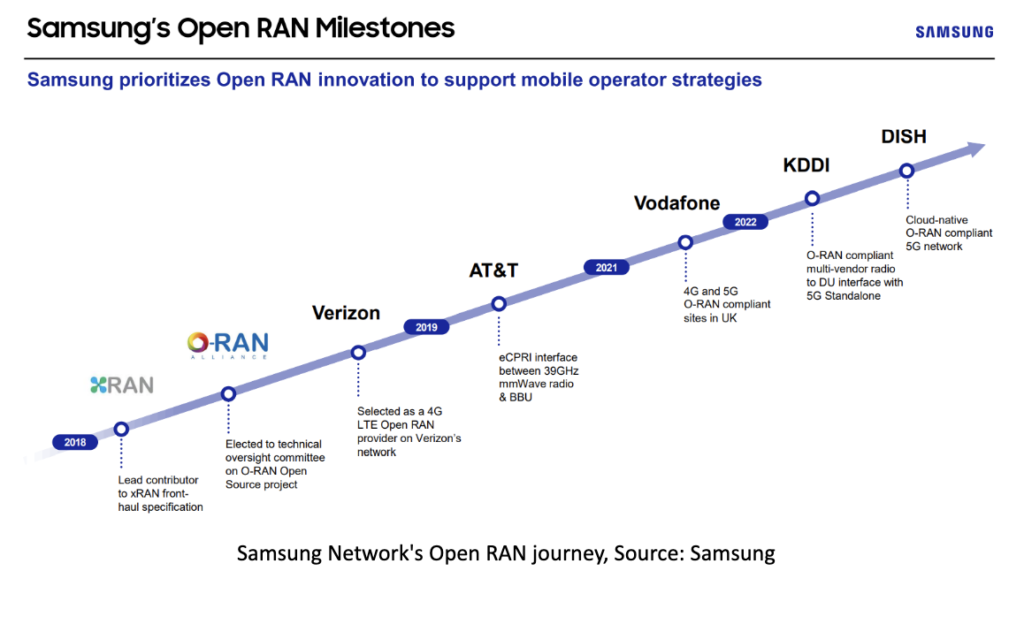 As Verizon’s VP Bill Stone explained to me during a recent
 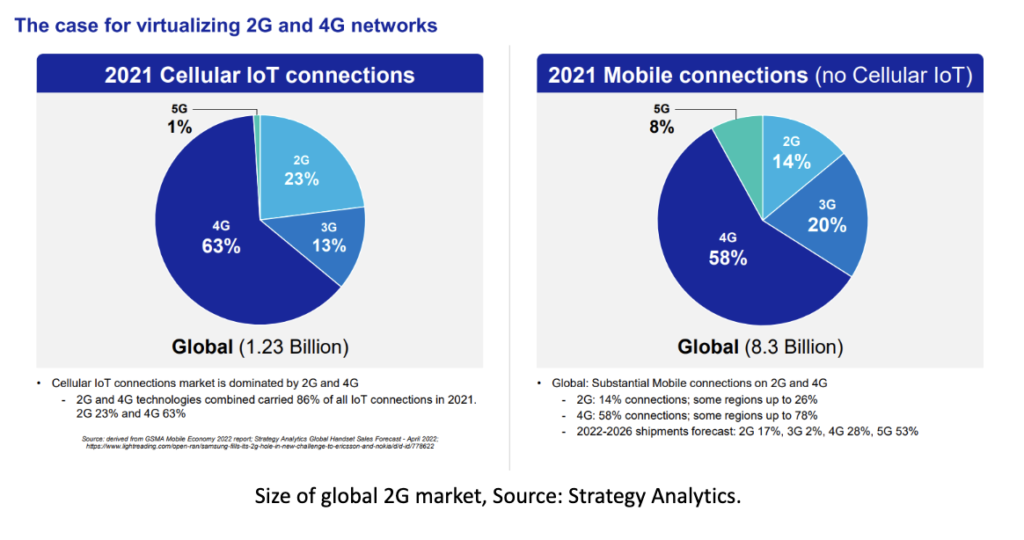 This option of supporting 2G on the same Open RAN platform will help operators efficiently support the remaining customers and eventually transition them to 4G/5G while using the same underlying hardware. From the business side, this option will help Samsung Networks break into new customers, especially in Europe.
Powering America’s first-ever Open RAN network with Dish
Nothing illustrates more than one of the world’s most watched new 5G operators fully committed to Open RAN launches its network with you as the
This option of supporting 2G on the same Open RAN platform will help operators efficiently support the remaining customers and eventually transition them to 4G/5G while using the same underlying hardware. From the business side, this option will help Samsung Networks break into new customers, especially in Europe.
Powering America’s first-ever Open RAN network with Dish
Nothing illustrates more than one of the world’s most watched new 5G operators fully committed to Open RAN launches its network with you as the 



 The massive 100x zoom is very impressive. But what shines even more when using the zoom is its image stabilization. Even when holding the phone in my hands (no tripod), I could zoom into and focus on the smallest of things. And the lenses are switched automatically when you zoom. This road sign in the following picture is more than 850ft away, and the photo was taken with 50x zoom. The text is clear, with minimal blurriness.
 Image stabilization was also evident when I got a close-up of this flower, even when it was swaying because of the wind.

 The biggest surprise was Galaxy S22 Ultra’s ability to take clear pictures when the camera directly faces the sun. Here are a couple of shots of that. The first one was in regular “Photo” mode, and the second was in “Portrait” mode. You can see the sun shining on the top-left edge.
 I didn’t do a lot of video testing. But I believe that any camera that can take great photos can make great videos.
Editing tools further enhance the camera experience
Galaxy S22 Ultra comes with tons of onboard photo editing tools. I am no big fan of editing pictures, let alone on the phone. But things like magic erasers are handy for a novice like me. For example, removing the ugly plastic chair in this otherwise excellent picture of San Diego golden hour. Using the S-Pen makes this editing even more precise.
I didn’t do a lot of video testing. But I believe that any camera that can take great photos can make great videos.
Editing tools further enhance the camera experience
Galaxy S22 Ultra comes with tons of onboard photo editing tools. I am no big fan of editing pictures, let alone on the phone. But things like magic erasers are handy for a novice like me. For example, removing the ugly plastic chair in this otherwise excellent picture of San Diego golden hour. Using the S-Pen makes this editing even more precise.
 The Photo Remaster feature is excellent in theory, but I was not impressed with its performance. It only applies to the photos it chooses, and improvements were hardly noticeable.
Galaxy S22 Ultra captures pictures in Multi Frame RAW format for pro-level editing. This editing requires a separate Expert RAW app that can be downloaded for free. But not being a pro, I didn’t play around with it.
To summarize, the camera on Galaxy S22 Ultra is literally “Point-and-shoot.” You can get pro-like photos without pro skills.
S-Pen, the ultimate productivity tool
The built-in S-Pen is an ultimate productivity tool. Its legendary note-taking ability now supports more than 80 languages. I tried English and Hindi, both were a pleasure to take notes in, and the app recognized my ugly handwriting and did the conversion quickly and accurately. The ability to easily annotate pictures or documents and share them with others is pretty neat.
I read quite a lot on the phone. Taking notes from what I was reading for further reference was cumbersome (taking screenshots or copying links, etc.). But it is a breeze with the S-Pen. I can mark what I need and quickly attach it to Samsung Notes.
The more you use the S-Pen, the more uses you will find.
Many useful features that people miss
Galaxy S22 Ultra packs quite a few handy features that people don’t realize unless they look more closely. Support for eSIM and Dual-SIM are some examples. eSIM is a software-based SIM that reduces activating a new cellular service on the phone to just downloading operator profile (After signing up for service).
The other related feature is Dual SIM, where you can have two SIMs from different operators working simultaneously on the same phone. Dual-SIM has been available in the international markets for a long time but has been recently introduced in the US. eSIM and physical SIM together make Dual-SIM configuration possible on Galaxy S22 Ultra.
My set-up with Google Fi physical SIM and Verizon eSIM worked perfectly on Galaxy S22 Ultra, as shown below. I get calls on both numbers and can pick either for data or to make calls.
The Photo Remaster feature is excellent in theory, but I was not impressed with its performance. It only applies to the photos it chooses, and improvements were hardly noticeable.
Galaxy S22 Ultra captures pictures in Multi Frame RAW format for pro-level editing. This editing requires a separate Expert RAW app that can be downloaded for free. But not being a pro, I didn’t play around with it.
To summarize, the camera on Galaxy S22 Ultra is literally “Point-and-shoot.” You can get pro-like photos without pro skills.
S-Pen, the ultimate productivity tool
The built-in S-Pen is an ultimate productivity tool. Its legendary note-taking ability now supports more than 80 languages. I tried English and Hindi, both were a pleasure to take notes in, and the app recognized my ugly handwriting and did the conversion quickly and accurately. The ability to easily annotate pictures or documents and share them with others is pretty neat.
I read quite a lot on the phone. Taking notes from what I was reading for further reference was cumbersome (taking screenshots or copying links, etc.). But it is a breeze with the S-Pen. I can mark what I need and quickly attach it to Samsung Notes.
The more you use the S-Pen, the more uses you will find.
Many useful features that people miss
Galaxy S22 Ultra packs quite a few handy features that people don’t realize unless they look more closely. Support for eSIM and Dual-SIM are some examples. eSIM is a software-based SIM that reduces activating a new cellular service on the phone to just downloading operator profile (After signing up for service).
The other related feature is Dual SIM, where you can have two SIMs from different operators working simultaneously on the same phone. Dual-SIM has been available in the international markets for a long time but has been recently introduced in the US. eSIM and physical SIM together make Dual-SIM configuration possible on Galaxy S22 Ultra.
My set-up with Google Fi physical SIM and Verizon eSIM worked perfectly on Galaxy S22 Ultra, as shown below. I get calls on both numbers and can pick either for data or to make calls.
 Dual-SIM is a lifesaver for frequent international travelers like me. I can continue to be available on my US phone number while using international SIM for data and local calling without paying exorbitant roaming charges. The eSIM/Dual-SIM options are also available on regular Galaxy S22, but I did not test them.
The other such features are seamless connectivity between Samsung devices and excellent integration with Windows11 laptops, as explained in my
Dual-SIM is a lifesaver for frequent international travelers like me. I can continue to be available on my US phone number while using international SIM for data and local calling without paying exorbitant roaming charges. The eSIM/Dual-SIM options are also available on regular Galaxy S22, but I did not test them.
The other such features are seamless connectivity between Samsung devices and excellent integration with Windows11 laptops, as explained in my  Some shortcomings
I’d be remiss if I didn’t point out some of the shortfalls of the phone. The well-publicized throttling issue seems to have been solved with the software update. Since I am not a big gamer, It didn’t really impact my experience.
The large size, thickness, and slightly higher weight of Galaxy S22 Ultra make single-handed use difficult, and fitting it in the pockets of skinny jeans inconvenient. This may not be an issue for regular Note users. But this being a premium Galaxy S-series phone, people who don’t care for the S-Pen functionality might feel the thickness and weight not worth it.
The face unlock feature is also less than stellar. It takes too long or does not work if there is not enough light on your face. Of course, unlocking doesn’t work when you have the mask on. Also, there is no microSD card slot.
In closing
Samsung Galaxy Galaxy S22 Ultra is a worthy upgrade as your next premium 5G smartphone. It packs tons of features, an excellent camera, and an S-Pen productivity tool. I highly recommend it if you can afford the price tag.
Meanwhile, to read reviews like this and get an up-to-date analysis of the latest mobile and tech industry news, sign-up for our monthly newsletter at
Some shortcomings
I’d be remiss if I didn’t point out some of the shortfalls of the phone. The well-publicized throttling issue seems to have been solved with the software update. Since I am not a big gamer, It didn’t really impact my experience.
The large size, thickness, and slightly higher weight of Galaxy S22 Ultra make single-handed use difficult, and fitting it in the pockets of skinny jeans inconvenient. This may not be an issue for regular Note users. But this being a premium Galaxy S-series phone, people who don’t care for the S-Pen functionality might feel the thickness and weight not worth it.
The face unlock feature is also less than stellar. It takes too long or does not work if there is not enough light on your face. Of course, unlocking doesn’t work when you have the mask on. Also, there is no microSD card slot.
In closing
Samsung Galaxy Galaxy S22 Ultra is a worthy upgrade as your next premium 5G smartphone. It packs tons of features, an excellent camera, and an S-Pen productivity tool. I highly recommend it if you can afford the price tag.
Meanwhile, to read reviews like this and get an up-to-date analysis of the latest mobile and tech industry news, sign-up for our monthly newsletter at 



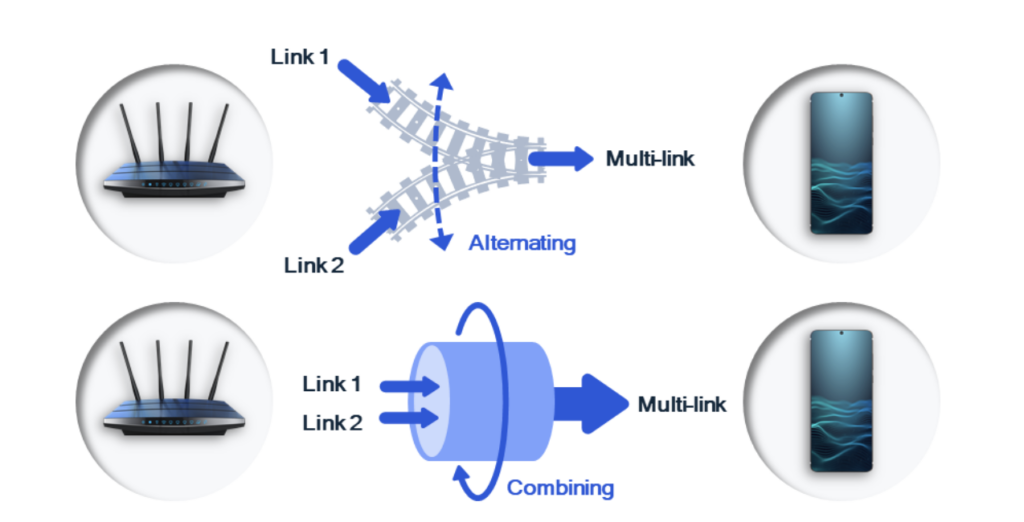


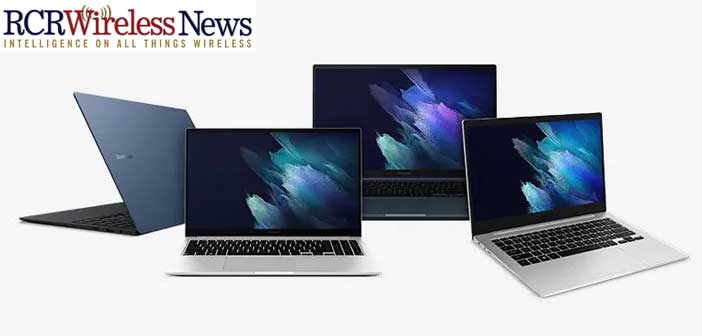

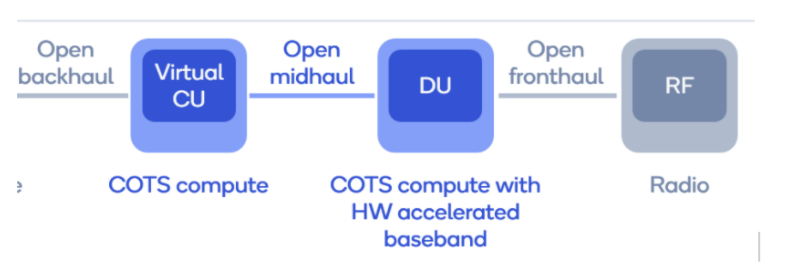 vCU primarily runs on Commercial Off-the-Shelf (COTS) compute hardware. DU runs on a combination of COTS and specialized hardware accelerators. RU purely has analog components without any digital blocks. The hardware, software, accelerators could all be coming from different vendors. All of these adopt a cloud-native architecture, meaning they utilize Kubernetes or Hypervisor for software and hardware disaggregation. As you can see, vRAN, Open RAN, and cloudification are complementary, enabling and improving the value of each other as well as that of the entire system.
From a deployment perspective, vCU and DU could be collocated and running on the same hardware (centralized mode) or on different hardware located at separate places (distributed mode), depending on use cases. For example, it makes sense to collocate vCU and DU at a central location in dense and high-traffic parts of the network. That is because, they can be run on large server clusters to achieve higher cost, processing, and energy efficiency. On the other hand, for small cell or mmWave deployments, it might make sense to collocate DU and RU. That is because mmWave’s beamforming/beamsteering and wide bandwidths (200 MHz – 2 GHz) require low-latency and very tight coupling between the digital (aka baseband) functions in the DU and the RF in RU. The cellular specifications body 3GPP has defined many different split configurations of vCU, DU, and RU to address various use cases.
Among all these blocks, the most challenging is DU, mainly because it controls the real-time functions. That is the very reason vRAN has taken so long to materialize. Additionally, fully virtualized multi-vendor Open RAN is still very much “work-in-progress,” especially for the advanced features such as massive MIMO, carrier aggregation, and others. The industry has realized that it is highly inefficient and almost impossible to run all DU on COTS, and hence specialized dedicated hardware accelerators are necessary. Those could be FPGAs (Field Programmable Gate Arrays), ASICs (Application Specific ICs), GPUs, or a combination thereof. And for best performance, they need to be in what is called “in-line” configuration. I will discuss more on this in a separate follow-up article.
Opportunities, challenges, and changing landscape
The best way to understand the opportunities of this novel approach is to compare IT/cloud and cellular ecosystems. The former has expanded tremendously in the last decade, resulting in a vast, diverse, and rich ecosystem of large and small players out-innovating each other. In contrast, the latter has seen severe shrinkage in the infrastructure space. Many infra vendors are needing governmental support, even when the cellular industry has thrived and prospered on the success of smartphones.
Although virtualization, open ecosystem, and cloudification seemed like a piped dream a few years ago, they have quickly become the only way forward for the industry. That is mainly because operators have realized the tremendous value they can bring, in terms of scale, flexibility, vendor diversity, speed of innovation, and most importantly, substantial cost-savings.
With the new approach, the cellular infra landscape is very rapidly changing. Prominent cloud players like Microsoft, Amazon, Facebook, Google, IBM, enterprise players like Dell, HPE, chipset vendors such as Qualcomm, Marvell, Intel, and scores of smaller, nimble yet innovative and disruptive companies are joining the traditional players like Ericsson, Nokia, Samsung, Huawei, ZTE.
Pivoting an industry thriving for more than four decades is easier said than done. Although there have been impressive early successes, more work needs to be done to ensure the performance of the new approach meets or exceeds the traditional one, especially in dense deployments with advanced features. The transformation will be gradual and must be methodical.
In terms of deployments, greenfield deployments are easy targets. All of them will start with the new architecture as that offers the most benefits with the minimum downside. However, existing networks, often referred to as “brownfield,” will probably transition in phases. First, moving to virtual and cloud-native architectures, even with open interfaces, but implemented with a single vendor. Soon after, moving to a fully open, fully interoperable, multi-vendor deployment.
In the following article, I will do a deep dive on how to build these modern 5G networks with the new approach, what is needed, from infrastructure, software, hardware, and especially DU accelerator perspective, and what it takes to ensure that these networks deliver on the grand promise of 5G.
In the meanwhile, for more articles like this, and for an up-to-date analysis of the latest mobile and tech industry news, sign-up for our monthly newsletter at
vCU primarily runs on Commercial Off-the-Shelf (COTS) compute hardware. DU runs on a combination of COTS and specialized hardware accelerators. RU purely has analog components without any digital blocks. The hardware, software, accelerators could all be coming from different vendors. All of these adopt a cloud-native architecture, meaning they utilize Kubernetes or Hypervisor for software and hardware disaggregation. As you can see, vRAN, Open RAN, and cloudification are complementary, enabling and improving the value of each other as well as that of the entire system.
From a deployment perspective, vCU and DU could be collocated and running on the same hardware (centralized mode) or on different hardware located at separate places (distributed mode), depending on use cases. For example, it makes sense to collocate vCU and DU at a central location in dense and high-traffic parts of the network. That is because, they can be run on large server clusters to achieve higher cost, processing, and energy efficiency. On the other hand, for small cell or mmWave deployments, it might make sense to collocate DU and RU. That is because mmWave’s beamforming/beamsteering and wide bandwidths (200 MHz – 2 GHz) require low-latency and very tight coupling between the digital (aka baseband) functions in the DU and the RF in RU. The cellular specifications body 3GPP has defined many different split configurations of vCU, DU, and RU to address various use cases.
Among all these blocks, the most challenging is DU, mainly because it controls the real-time functions. That is the very reason vRAN has taken so long to materialize. Additionally, fully virtualized multi-vendor Open RAN is still very much “work-in-progress,” especially for the advanced features such as massive MIMO, carrier aggregation, and others. The industry has realized that it is highly inefficient and almost impossible to run all DU on COTS, and hence specialized dedicated hardware accelerators are necessary. Those could be FPGAs (Field Programmable Gate Arrays), ASICs (Application Specific ICs), GPUs, or a combination thereof. And for best performance, they need to be in what is called “in-line” configuration. I will discuss more on this in a separate follow-up article.
Opportunities, challenges, and changing landscape
The best way to understand the opportunities of this novel approach is to compare IT/cloud and cellular ecosystems. The former has expanded tremendously in the last decade, resulting in a vast, diverse, and rich ecosystem of large and small players out-innovating each other. In contrast, the latter has seen severe shrinkage in the infrastructure space. Many infra vendors are needing governmental support, even when the cellular industry has thrived and prospered on the success of smartphones.
Although virtualization, open ecosystem, and cloudification seemed like a piped dream a few years ago, they have quickly become the only way forward for the industry. That is mainly because operators have realized the tremendous value they can bring, in terms of scale, flexibility, vendor diversity, speed of innovation, and most importantly, substantial cost-savings.
With the new approach, the cellular infra landscape is very rapidly changing. Prominent cloud players like Microsoft, Amazon, Facebook, Google, IBM, enterprise players like Dell, HPE, chipset vendors such as Qualcomm, Marvell, Intel, and scores of smaller, nimble yet innovative and disruptive companies are joining the traditional players like Ericsson, Nokia, Samsung, Huawei, ZTE.
Pivoting an industry thriving for more than four decades is easier said than done. Although there have been impressive early successes, more work needs to be done to ensure the performance of the new approach meets or exceeds the traditional one, especially in dense deployments with advanced features. The transformation will be gradual and must be methodical.
In terms of deployments, greenfield deployments are easy targets. All of them will start with the new architecture as that offers the most benefits with the minimum downside. However, existing networks, often referred to as “brownfield,” will probably transition in phases. First, moving to virtual and cloud-native architectures, even with open interfaces, but implemented with a single vendor. Soon after, moving to a fully open, fully interoperable, multi-vendor deployment.
In the following article, I will do a deep dive on how to build these modern 5G networks with the new approach, what is needed, from infrastructure, software, hardware, and especially DU accelerator perspective, and what it takes to ensure that these networks deliver on the grand promise of 5G.
In the meanwhile, for more articles like this, and for an up-to-date analysis of the latest mobile and tech industry news, sign-up for our monthly newsletter at 
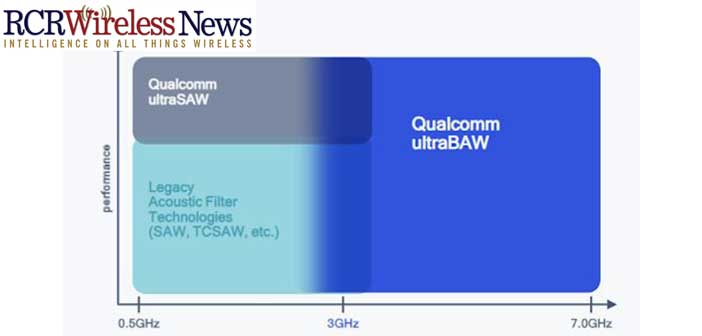
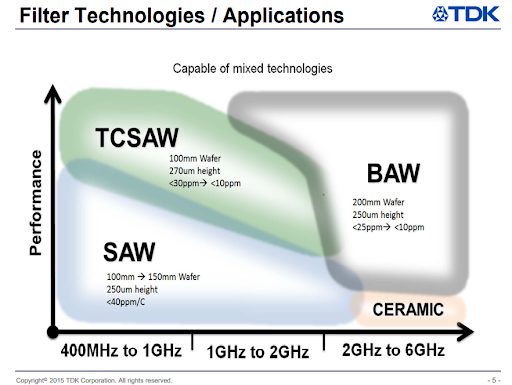
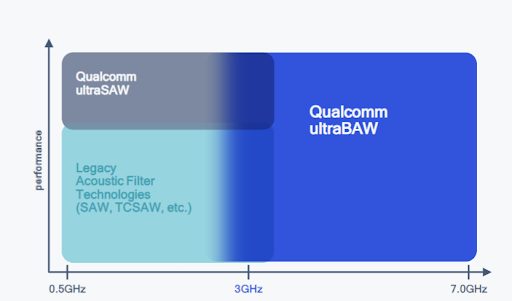
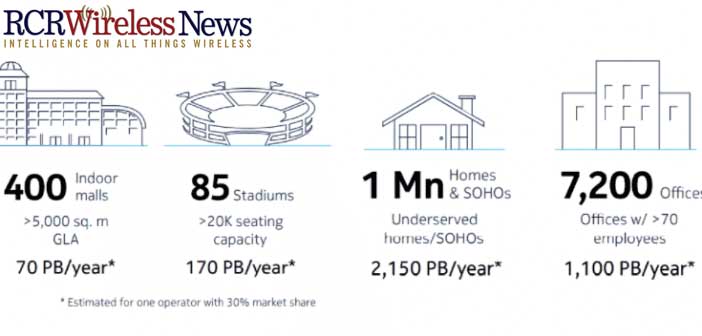
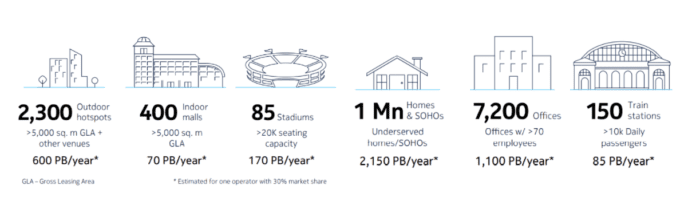 Deploying mmWave networks at these hot zones creates 4200 Peta Bytes /year mobile data traffic capture potential, 300 million Euros of incremental revenue potential, and 8% incremental revenue potential, according to the study.
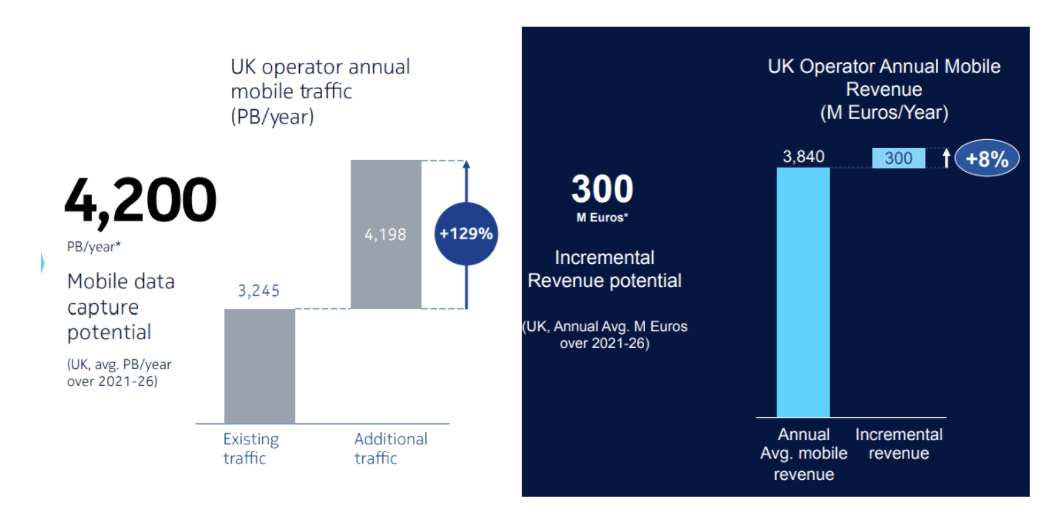 Fixed Wireless Access (FWA) is another exciting opportunity for 5G operators. Although there was a dire need for alternatives to DSL and cable fixed broadband services for a long time, 4G was not viable because of its limited spectrum and capacity. 5G mmWave because of its large available spectrum and capacity, makes it a perfect FWA solution.
Why is just the sub-6GHz spectrum not enough?
One of the most asked questions, whenever I talk about mmWave is, why is not just the sub-6GHz spectrum sufficient? Well, the sub-6GHz spectrum is most essential for operators to have expansive coverage. However, it may not be sufficient to cost-effectively support this deluge of data traffic prompted by 5G, especially in the fore mentioned hot zones. The report makes this point succinctly through a cost/GB comparison between the two bands over four years. The mmWave deployments could be up to 75% cheaper in typical busy train station locations. This is because of the large amount of bandwidth available to carry the increased traffic. These estimates were based on a 400 MHz mmWave deployment. With many operators having access to as much as 800 MHz bandwidth, the difference could be even higher.
Fixed Wireless Access (FWA) is another exciting opportunity for 5G operators. Although there was a dire need for alternatives to DSL and cable fixed broadband services for a long time, 4G was not viable because of its limited spectrum and capacity. 5G mmWave because of its large available spectrum and capacity, makes it a perfect FWA solution.
Why is just the sub-6GHz spectrum not enough?
One of the most asked questions, whenever I talk about mmWave is, why is not just the sub-6GHz spectrum sufficient? Well, the sub-6GHz spectrum is most essential for operators to have expansive coverage. However, it may not be sufficient to cost-effectively support this deluge of data traffic prompted by 5G, especially in the fore mentioned hot zones. The report makes this point succinctly through a cost/GB comparison between the two bands over four years. The mmWave deployments could be up to 75% cheaper in typical busy train station locations. This is because of the large amount of bandwidth available to carry the increased traffic. These estimates were based on a 400 MHz mmWave deployment. With many operators having access to as much as 800 MHz bandwidth, the difference could be even higher.
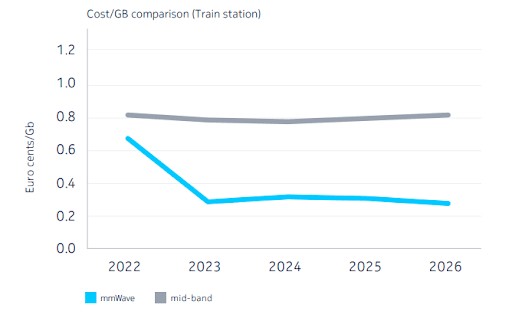
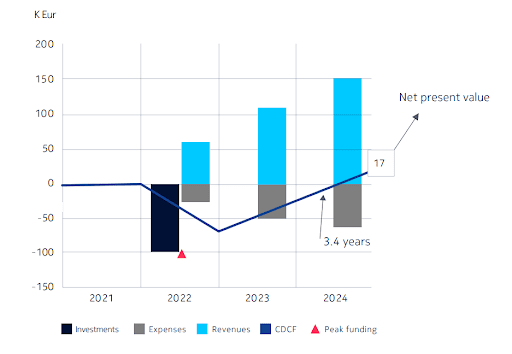
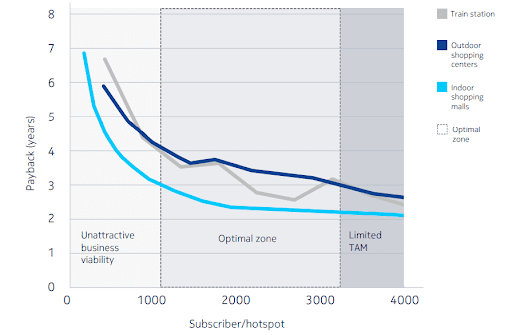
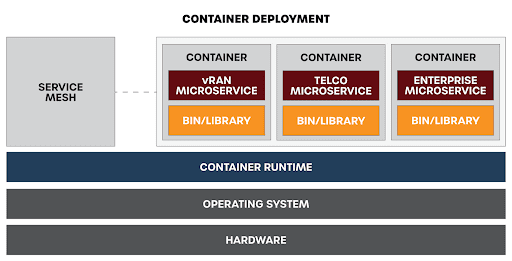

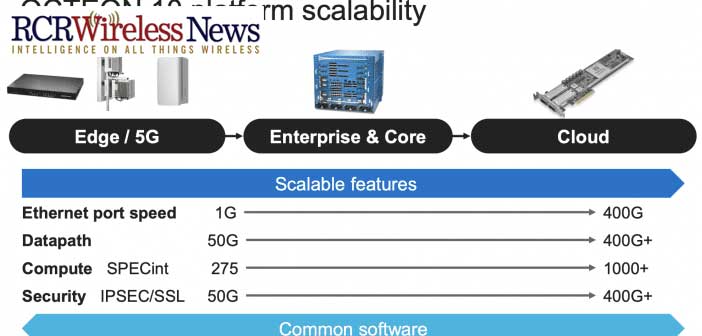
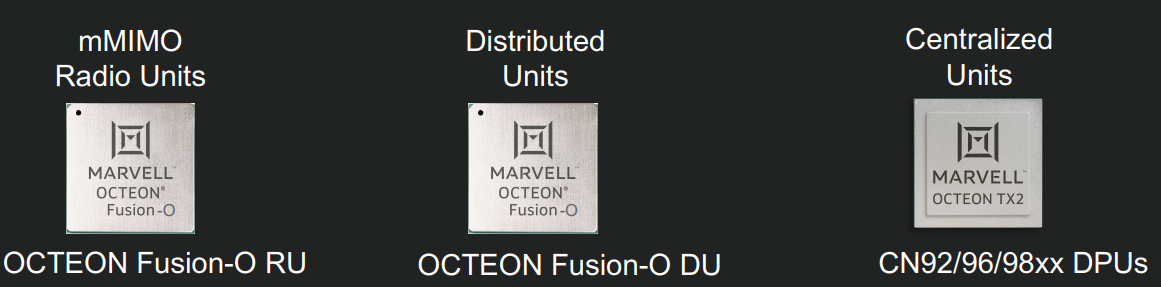 Close relationships that will make the difference
It is quite telling that every major cellular infra vendor other than Huawei has embraced virtual and Open RAN architecture—legacy players such as Ericsson more reluctantly and new entrants such as Samsung much more enthusiastically. Marvell’s close relationship with the major infra vendors is key to winning in the new landscape.
Early this year Samsung and Marvell announced the
Close relationships that will make the difference
It is quite telling that every major cellular infra vendor other than Huawei has embraced virtual and Open RAN architecture—legacy players such as Ericsson more reluctantly and new entrants such as Samsung much more enthusiastically. Marvell’s close relationship with the major infra vendors is key to winning in the new landscape.
Early this year Samsung and Marvell announced the 
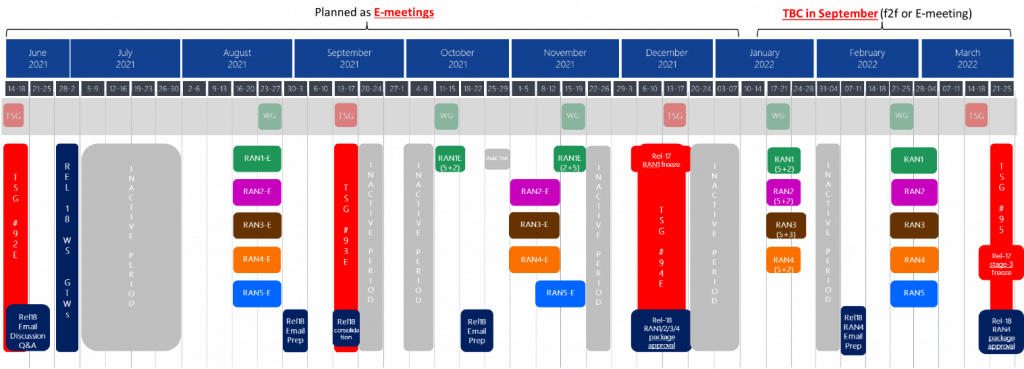 3GPP RAN TSG meeting schedule (Source: 3gpp.org)
Owing to the workload and the difficulties of virtual meetings, the possibility of down-scoping of some features was also discussed. These include some aspects of FeMIMO and IIoT/URLLC. Many delegates agreed that it is better to focus on a robust definition of only certain parts of the features rather than diluted full specifications. The impact of this down-scoping on the performance is not fully known at this point. The discussion is ongoing, and a final decision will be taken during the next RAN plenary #93e in September 2021.
The dawn of 5G Advanced
The releases 18 and beyond were officially christened as 5G Advanced in May 2021, by 3GPP’s governing body Project Coordination Group (PCG). This is in line with the tradition set by HSPA and LTE, where the evolutionary steps were given “Advanced” suffixes. 5G Advanced naming was an important and necessary decision to demarcate the steps in the evolution and to manage the over-enthusiastic marketing folks jumping early to 6G.
The 5G Advanced standardization process was kickstarted at the 3GPP virtual workshop held between Jun 28th and July 2nd, 2021. The workshop attracted a lot of attention, with more than 500 submissions from more than 80 companies, and more than 1200 delegates attending the event.
The submissions were initially divided into three groups. According to the TSG RAN chair, Dr. Wanshi the submissions were distributed almost equally among the groups:
3GPP RAN TSG meeting schedule (Source: 3gpp.org)
Owing to the workload and the difficulties of virtual meetings, the possibility of down-scoping of some features was also discussed. These include some aspects of FeMIMO and IIoT/URLLC. Many delegates agreed that it is better to focus on a robust definition of only certain parts of the features rather than diluted full specifications. The impact of this down-scoping on the performance is not fully known at this point. The discussion is ongoing, and a final decision will be taken during the next RAN plenary #93e in September 2021.
The dawn of 5G Advanced
The releases 18 and beyond were officially christened as 5G Advanced in May 2021, by 3GPP’s governing body Project Coordination Group (PCG). This is in line with the tradition set by HSPA and LTE, where the evolutionary steps were given “Advanced” suffixes. 5G Advanced naming was an important and necessary decision to demarcate the steps in the evolution and to manage the over-enthusiastic marketing folks jumping early to 6G.
The 5G Advanced standardization process was kickstarted at the 3GPP virtual workshop held between Jun 28th and July 2nd, 2021. The workshop attracted a lot of attention, with more than 500 submissions from more than 80 companies, and more than 1200 delegates attending the event.
The submissions were initially divided into three groups. According to the TSG RAN chair, Dr. Wanshi the submissions were distributed almost equally among the groups:


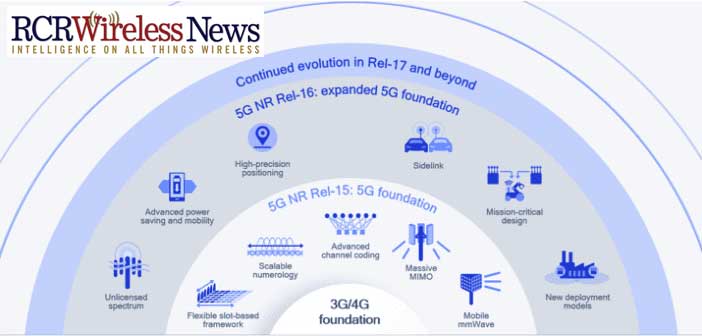


 Where does mmWave shine the most? Hint – capacity
The GSMA-I study looked at the Total Cost of Ownership (TCO) for various (hypothetical) geographies and use cases, utilizing 3.5 GHz only and mixed 3.5 GHz + mmWave configurations, for the duration 2020-2025. The study evaluated a total of six different scenarios: a) two scenarios with the deployment of outdoor sites in a dense urban area in Greater China and Europe; b) three scenarios with the deployment of Fixed Wireless Access (FWA) in urban areas in Greater China, sub-urban areas in Europe, and rural towns in the US; c) one scenario in a typical enterprise office space. The most interesting part of the findings was the sensitivity analysis, which looked at how the comparison changes when either the percentage of connected-users during the peak hour is changed (from 5% to 20%) or the amount of data consumption growth is varied (from a CAGR of 6% to 22%). As can be seen from the charts, in almost all high connected-users and high traffic growth cases, the mixed 3.5 GHz + mmWave configuration is more cost-effective, i.e., cheaper, than the 3.5 GHz only configuration.
Where does mmWave shine the most? Hint – capacity
The GSMA-I study looked at the Total Cost of Ownership (TCO) for various (hypothetical) geographies and use cases, utilizing 3.5 GHz only and mixed 3.5 GHz + mmWave configurations, for the duration 2020-2025. The study evaluated a total of six different scenarios: a) two scenarios with the deployment of outdoor sites in a dense urban area in Greater China and Europe; b) three scenarios with the deployment of Fixed Wireless Access (FWA) in urban areas in Greater China, sub-urban areas in Europe, and rural towns in the US; c) one scenario in a typical enterprise office space. The most interesting part of the findings was the sensitivity analysis, which looked at how the comparison changes when either the percentage of connected-users during the peak hour is changed (from 5% to 20%) or the amount of data consumption growth is varied (from a CAGR of 6% to 22%). As can be seen from the charts, in almost all high connected-users and high traffic growth cases, the mixed 3.5 GHz + mmWave configuration is more cost-effective, i.e., cheaper, than the 3.5 GHz only configuration.
 Let’s look at some scenarios a little bit closer. In the Dense urban scenario, while the mixed configuration cost is lower, it is reduced much faster in China than in Europe. This is mainly because the population density, technology adoption, and data consumption growth are much higher in China. Also, the mmWave bandwidth availability there is much higher as well (~800 MHz vs. ~400 MHz).
For FWA cases, as expected, the cost of 3.5 GHz + mmWave is lower than 3.5GHz only, as mmWave bands provide the much-needed capacity for higher data consumption, whereas 3.5 GHz is utilized for coverage. With very thin and dispersed population density and demand pockets, especially in the rural US, it might be much more cost-effective to utilize mmWave capacity where needed rather than blanket-covering with 3.5GHz.
The Indoor enterprise deployment case is pretty interesting. We all know that the majority of network traffic is generated indoors, and that is even higher when it comes to enterprises. The difference of TCO between the 3.5 GHz only and mixed configuration boils down to only one thing—capacity! 3.5 GHz’s limited spectrum availability is a big hindrance to address all that traffic demand. Its larger coverage footprint is an even bigger challenge as it increases interference between cells and reduces effective capacity. Hence, there is no surprise that the mixed case is proving to be more cost-effective. The study rightly considers the presence of the enterprise Wi-Fi network and distributes the traffic between that and the indoor 5G network. Additionally, some applications such as AR/VR/XR, mission-critical and latency-sensitive services in the dense enterprise setting, probably would need 5G by default, especially the high bandwidth mmWave 5G.
I highly encourage you to take time and thoroughly read the report. There are lots of detailed analyses and charts in the
Let’s look at some scenarios a little bit closer. In the Dense urban scenario, while the mixed configuration cost is lower, it is reduced much faster in China than in Europe. This is mainly because the population density, technology adoption, and data consumption growth are much higher in China. Also, the mmWave bandwidth availability there is much higher as well (~800 MHz vs. ~400 MHz).
For FWA cases, as expected, the cost of 3.5 GHz + mmWave is lower than 3.5GHz only, as mmWave bands provide the much-needed capacity for higher data consumption, whereas 3.5 GHz is utilized for coverage. With very thin and dispersed population density and demand pockets, especially in the rural US, it might be much more cost-effective to utilize mmWave capacity where needed rather than blanket-covering with 3.5GHz.
The Indoor enterprise deployment case is pretty interesting. We all know that the majority of network traffic is generated indoors, and that is even higher when it comes to enterprises. The difference of TCO between the 3.5 GHz only and mixed configuration boils down to only one thing—capacity! 3.5 GHz’s limited spectrum availability is a big hindrance to address all that traffic demand. Its larger coverage footprint is an even bigger challenge as it increases interference between cells and reduces effective capacity. Hence, there is no surprise that the mixed case is proving to be more cost-effective. The study rightly considers the presence of the enterprise Wi-Fi network and distributes the traffic between that and the indoor 5G network. Additionally, some applications such as AR/VR/XR, mission-critical and latency-sensitive services in the dense enterprise setting, probably would need 5G by default, especially the high bandwidth mmWave 5G.
I highly encourage you to take time and thoroughly read the report. There are lots of detailed analyses and charts in the 
 Prakash Sangam, December 20th, 2020
Defining the future of 5G, Rel. 16, has become a significant step expanding the reach of 5G and opening new markets and business opportunities for the cellular ecosystem. It focuses on Massive IoT and Mission Critical Services.
• Heralding a new Industrial IoT Era, and Industry 4.0
Prakash Sangam, December 20th, 2020
Defining the future of 5G, Rel. 16, has become a significant step expanding the reach of 5G and opening new markets and business opportunities for the cellular ecosystem. It focuses on Massive IoT and Mission Critical Services.
• Heralding a new Industrial IoT Era, and Industry 4.0

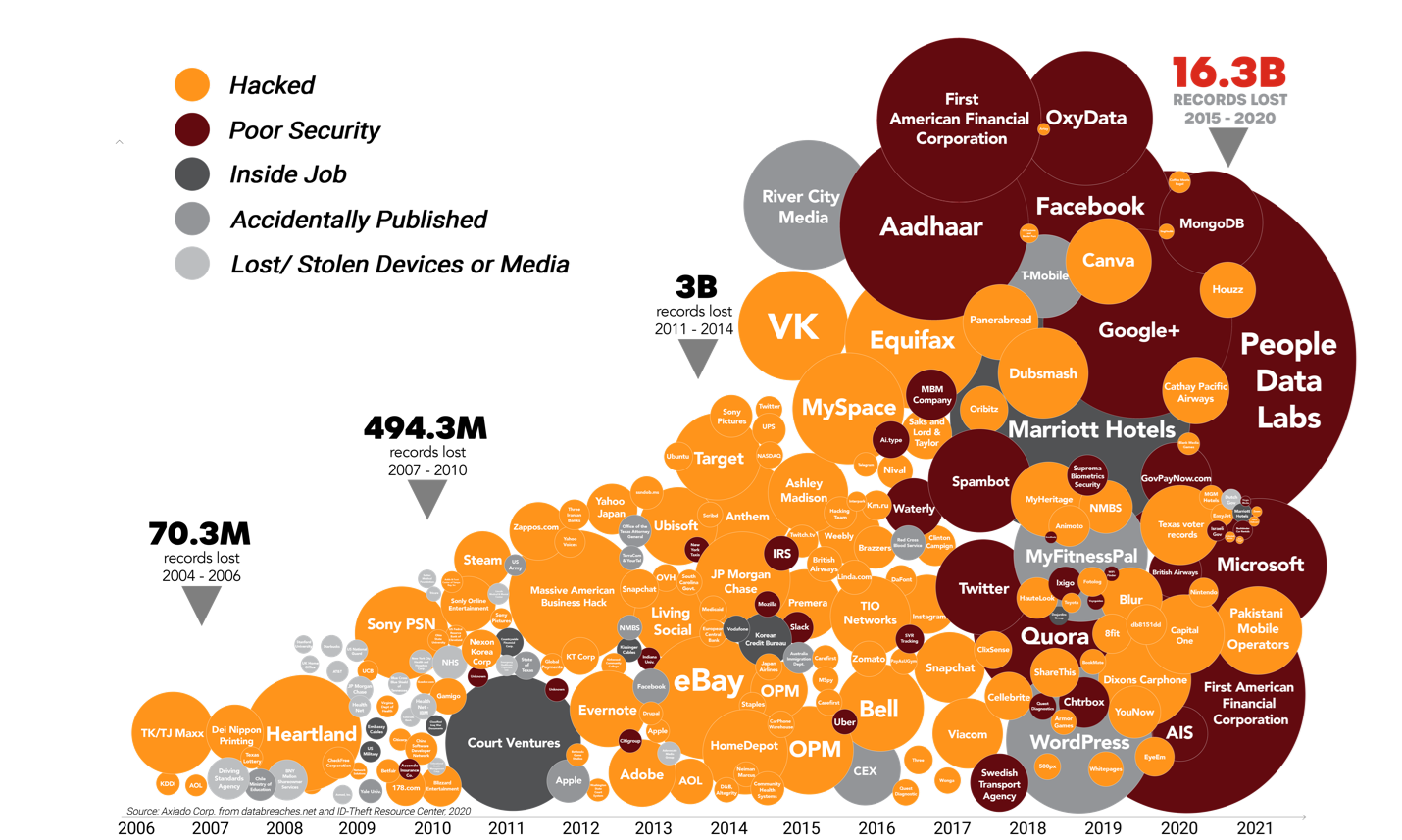
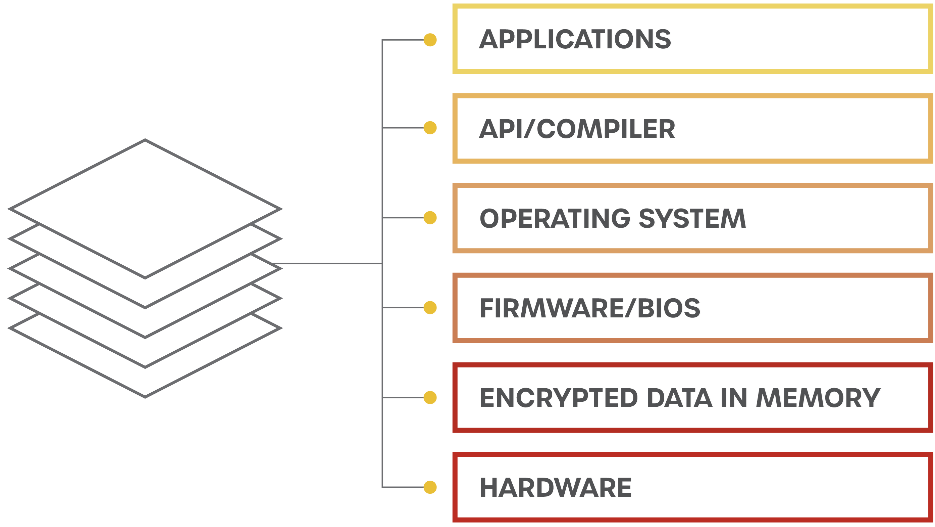
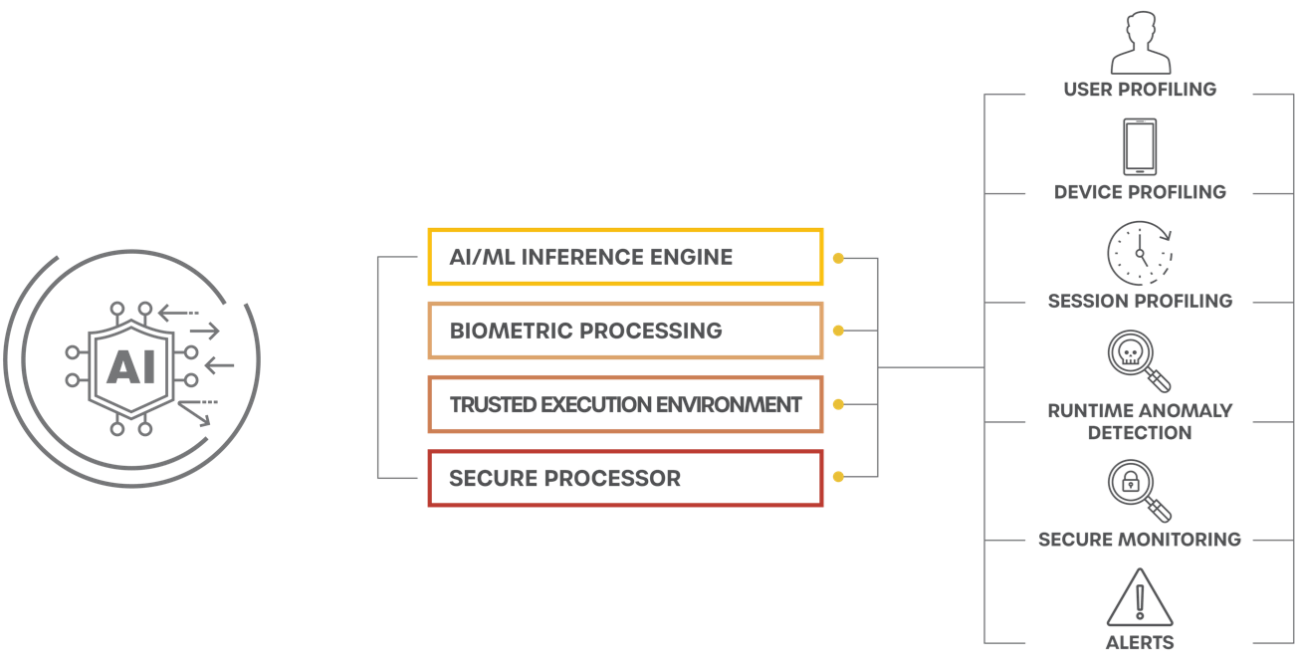


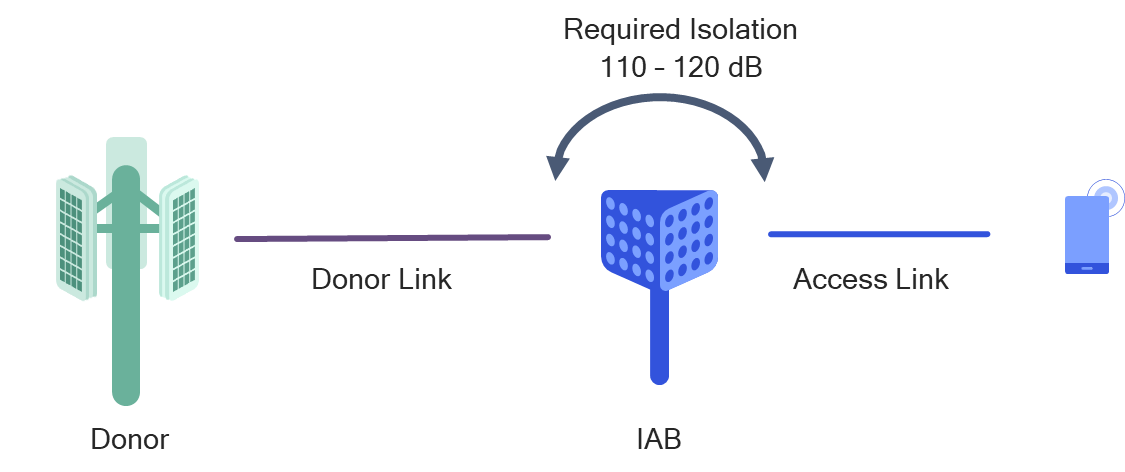 Locating the donor and access antennas far apart from each other or separating them with a solid obstruction could yield significant isolation. However, since we would like to keep the IAB unit small and compact, with integrated antennas, there is a limit to how much separation you could achieve this way.
The mmWave bands have many advantages over sub-6GHz bands in achieving such isolation. Their antennas are small, so isolating them is relatively easy. Since they also have a smaller coverage footprint, the interference they spew into the other link is relatively smaller. That is why I think IABs are ideal for mmWave bands. If you would like to know more about this, check out the
Locating the donor and access antennas far apart from each other or separating them with a solid obstruction could yield significant isolation. However, since we would like to keep the IAB unit small and compact, with integrated antennas, there is a limit to how much separation you could achieve this way.
The mmWave bands have many advantages over sub-6GHz bands in achieving such isolation. Their antennas are small, so isolating them is relatively easy. Since they also have a smaller coverage footprint, the interference they spew into the other link is relatively smaller. That is why I think IABs are ideal for mmWave bands. If you would like to know more about this, check out the  SLIC enables full-duplex IABs
Here is a chart that further illustrates the importance of SLIC in enabling full-duplex operation of IABs.
SLIC enables full-duplex IABs
Here is a chart that further illustrates the importance of SLIC in enabling full-duplex operation of IABs.
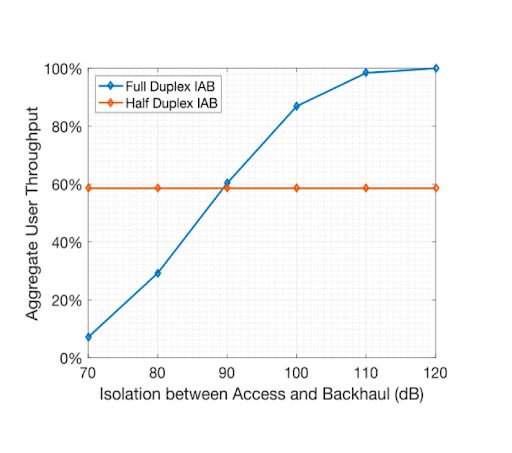 t plots the IAB efficiency against the amount of isolation. The efficiency here is measured as the total IAB throughput when compared to the throughput of a regular site with a fiber backhaul. As can be seen, IAB in full-duplex mode is more efficient than half-duplex, if the isolation is 90 dB or more. And with 120 dB of isolation, IAB can provide the same amount of capacity as that of a regular mmWave site. It is pretty clear that SLIC is a must to make IABs really useful for 5G.
When will IABs with SLIC be available?
Well, there are two parts to that question. Let’s look at the second part first. SLIC is not a new concept. In fact, it is available in the products being shipped today. For example, Kumu Network’s LTE Relays that support SLIC are already deployed by many operators. And they already have developed the core IP for 5G mmW digital SLIC and it is currently being evaluated by many of its customers. As mentioned before, the frequency chart showing the interference cancellation is from the same IP block.
Now, regarding the first part,
t plots the IAB efficiency against the amount of isolation. The efficiency here is measured as the total IAB throughput when compared to the throughput of a regular site with a fiber backhaul. As can be seen, IAB in full-duplex mode is more efficient than half-duplex, if the isolation is 90 dB or more. And with 120 dB of isolation, IAB can provide the same amount of capacity as that of a regular mmWave site. It is pretty clear that SLIC is a must to make IABs really useful for 5G.
When will IABs with SLIC be available?
Well, there are two parts to that question. Let’s look at the second part first. SLIC is not a new concept. In fact, it is available in the products being shipped today. For example, Kumu Network’s LTE Relays that support SLIC are already deployed by many operators. And they already have developed the core IP for 5G mmW digital SLIC and it is currently being evaluated by many of its customers. As mentioned before, the frequency chart showing the interference cancellation is from the same IP block.
Now, regarding the first part, 
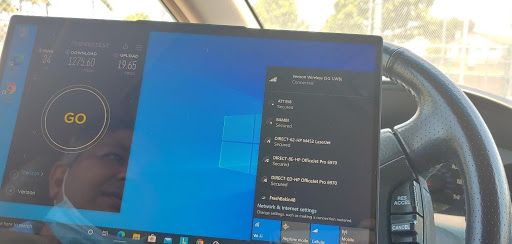
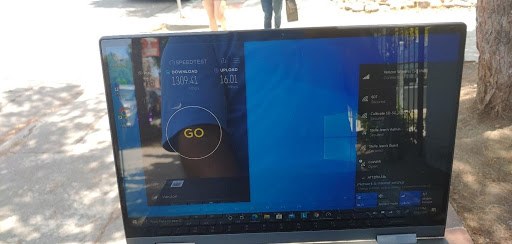
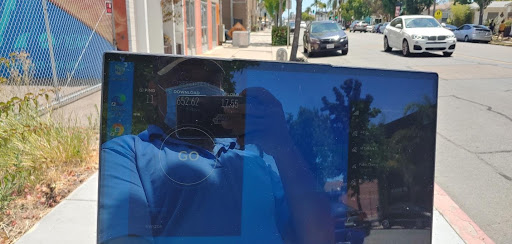
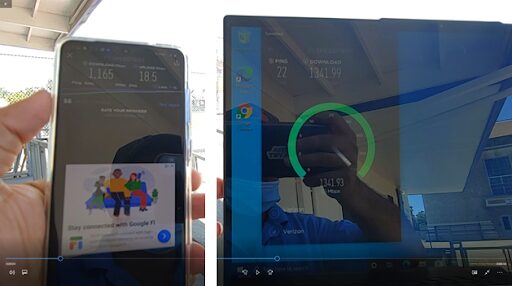

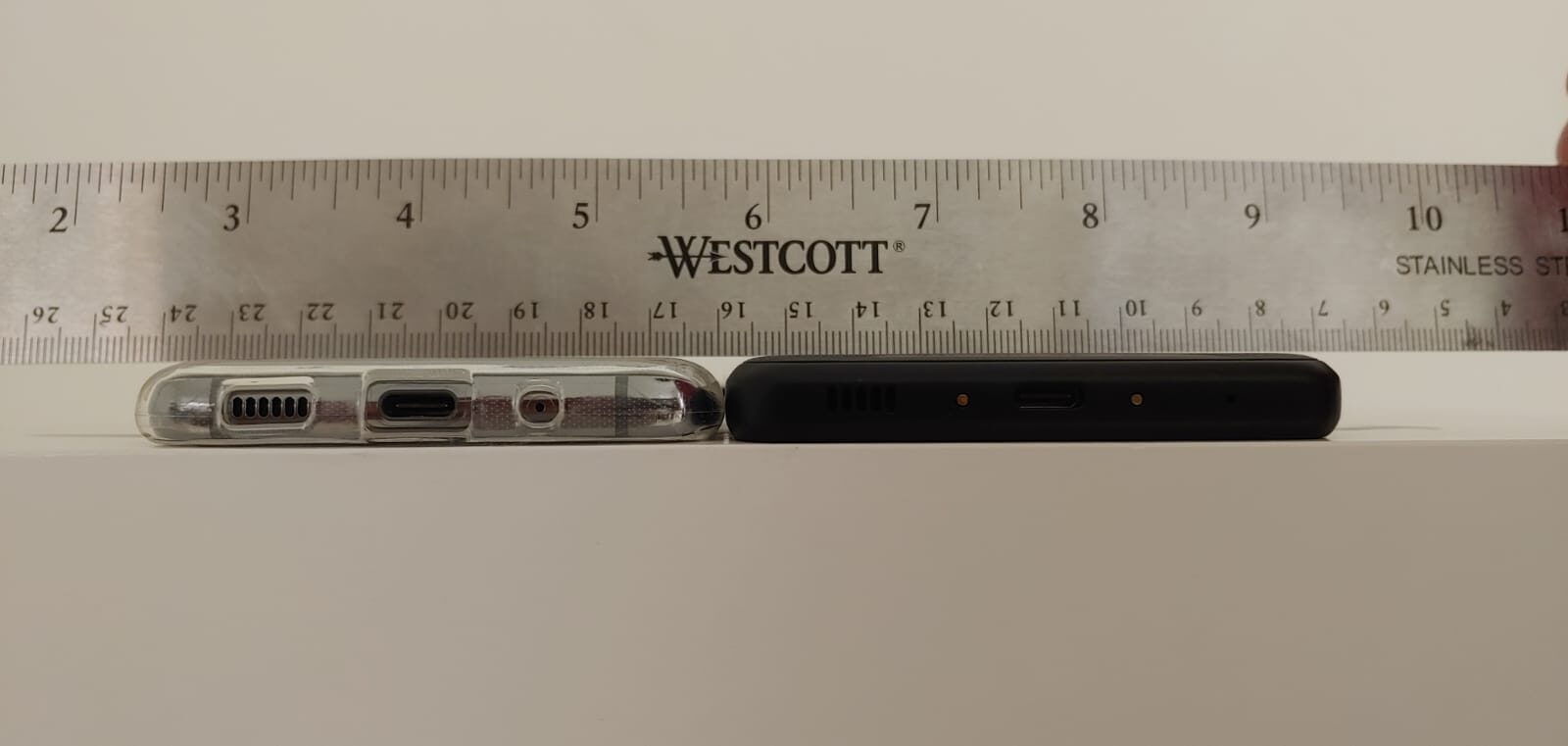 XCover Pro has MIL-STD 810G certification that ensures it is reliable in extreme altitude, humidity, and other severe environmental conditions. It is also sand, dust, and dirt resistant, theoretically capable of surviving 30 minutes in 1.5 meters of water, and can withstand drops from 1.5 meters.
I have often used this phone while in the pool or in the jacuzzi in our backyard. So, it has seen lot of water spillage and wet hand usage. I even once accidentally dropped it in the pool, but quickly picked it up and wiped it dry. The phone still works flawlessly. I have had the phone fall a few times on hardwood and tile floors without any damage. Its corners are strong enough to absorb shock, and the narrow bezel/edge that protrudes out protects the display from a face down fall.
XCover Pro has MIL-STD 810G certification that ensures it is reliable in extreme altitude, humidity, and other severe environmental conditions. It is also sand, dust, and dirt resistant, theoretically capable of surviving 30 minutes in 1.5 meters of water, and can withstand drops from 1.5 meters.
I have often used this phone while in the pool or in the jacuzzi in our backyard. So, it has seen lot of water spillage and wet hand usage. I even once accidentally dropped it in the pool, but quickly picked it up and wiped it dry. The phone still works flawlessly. I have had the phone fall a few times on hardwood and tile floors without any damage. Its corners are strong enough to absorb shock, and the narrow bezel/edge that protrudes out protects the display from a face down fall.
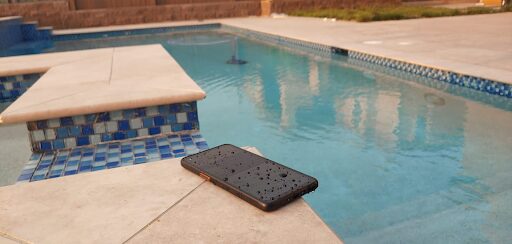 Being in San Diego and confined to home most of the time because of Covid-19, I was not able to test it for sand, dirt, extreme humidity, or high altitudes. Higher altitude testing would have been interesting. I have experienced phones, especially the ones with older batteries, behave erratically when taken above 10,000 ft. Last year when hiking
  The best feature of the phone that many frontline workers will love is its replaceable 4050 mAh battery. When you look at the multiple battery packs handymen and technician carry, you realize its importance. XCover Pro also has pogo charging which comes very handy when the phone is being used as a desktop handheld. It supports fast charging both through USB-C and pogo. Charging time was pretty fast using USB-C (I didn’t test pogo charging).
Impressive usability
The best feature of the phone that many frontline workers will love is its replaceable 4050 mAh battery. When you look at the multiple battery packs handymen and technician carry, you realize its importance. XCover Pro also has pogo charging which comes very handy when the phone is being used as a desktop handheld. It supports fast charging both through USB-C and pogo. Charging time was pretty fast using USB-C (I didn’t test pogo charging).
Impressive usability
 I found the phone to be highly functional, with many nifty features. Its power button with integrated fingerprint scanner on the side is much more convenient than the ones at the bottom (with home button) on the front, or on the back. This is because your thumb is there anyway during a natural hold. The scanner worked most of the time. I would say the reliability was similar to fingerprint scanners on other phones. Power button is flushed, which prevents accidental presses, and makes putting the phone on a cradle much easier, without pinching buttons.
The phone has two programmable keys, which work without unlocking the phone, and can be assigned for any applications that users desire. Phone supports Verizon’s push-to-talk (PTT) feature (requires additional service), which can be used to group call up to 250 people. This works like a walk-talkie service, and is useful for dispatchers, crews closely working together and such. One of the programmable keys, located on the side is designed to be used for this (I did not test the PTT feature). The other key on the top can be programmed for the most used app, for example for launching the enterprise service app, or camera.
The display has an extra sensitive touch feature that Samsung calls “Glove Mode.” As the name suggests, it allows the touch screen to be used even when wearing gloves. I tried this a few times, when working in my backyard with garden gloves on. I also tested it with gloves of different materials—rubber, woolen, cotton, faux leather etc. It worked pretty well. Considering that most frontline workers wear some sort of gloves when working, this will be a big plus for them.
I found the battery life to be quite good. It gave me a full day for normal productivity use. The usability for different frontline users will vastly vary. So, it is hard to fit every users’ need. In such cases, the removable battery and fast charging come in very handy. Samsung also sells spare batteries as well.
In closing
XCover Pro is very competitively priced at $499. In my view, the phone is a lot of value for the price, especially for the target market. It is an excellent choice for enterprises looking to provide rugged, stylish, powerful, and highly functional phones to their frontline employees. It is highly versatile and has many features that make frontline users’ life easy while improving their productivity. Kudos to Samsung in starting this new trend of sleek and stylish rugged phones, and for the sake of frontline users, I hope other phone OEMs follow their lead.
To read more reviews like this as well as to get an up-to-date analysis of the latest mobile and tech industry news, sign-up for our monthly newsletter at
I found the phone to be highly functional, with many nifty features. Its power button with integrated fingerprint scanner on the side is much more convenient than the ones at the bottom (with home button) on the front, or on the back. This is because your thumb is there anyway during a natural hold. The scanner worked most of the time. I would say the reliability was similar to fingerprint scanners on other phones. Power button is flushed, which prevents accidental presses, and makes putting the phone on a cradle much easier, without pinching buttons.
The phone has two programmable keys, which work without unlocking the phone, and can be assigned for any applications that users desire. Phone supports Verizon’s push-to-talk (PTT) feature (requires additional service), which can be used to group call up to 250 people. This works like a walk-talkie service, and is useful for dispatchers, crews closely working together and such. One of the programmable keys, located on the side is designed to be used for this (I did not test the PTT feature). The other key on the top can be programmed for the most used app, for example for launching the enterprise service app, or camera.
The display has an extra sensitive touch feature that Samsung calls “Glove Mode.” As the name suggests, it allows the touch screen to be used even when wearing gloves. I tried this a few times, when working in my backyard with garden gloves on. I also tested it with gloves of different materials—rubber, woolen, cotton, faux leather etc. It worked pretty well. Considering that most frontline workers wear some sort of gloves when working, this will be a big plus for them.
I found the battery life to be quite good. It gave me a full day for normal productivity use. The usability for different frontline users will vastly vary. So, it is hard to fit every users’ need. In such cases, the removable battery and fast charging come in very handy. Samsung also sells spare batteries as well.
In closing
XCover Pro is very competitively priced at $499. In my view, the phone is a lot of value for the price, especially for the target market. It is an excellent choice for enterprises looking to provide rugged, stylish, powerful, and highly functional phones to their frontline employees. It is highly versatile and has many features that make frontline users’ life easy while improving their productivity. Kudos to Samsung in starting this new trend of sleek and stylish rugged phones, and for the sake of frontline users, I hope other phone OEMs follow their lead.
To read more reviews like this as well as to get an up-to-date analysis of the latest mobile and tech industry news, sign-up for our monthly newsletter at 

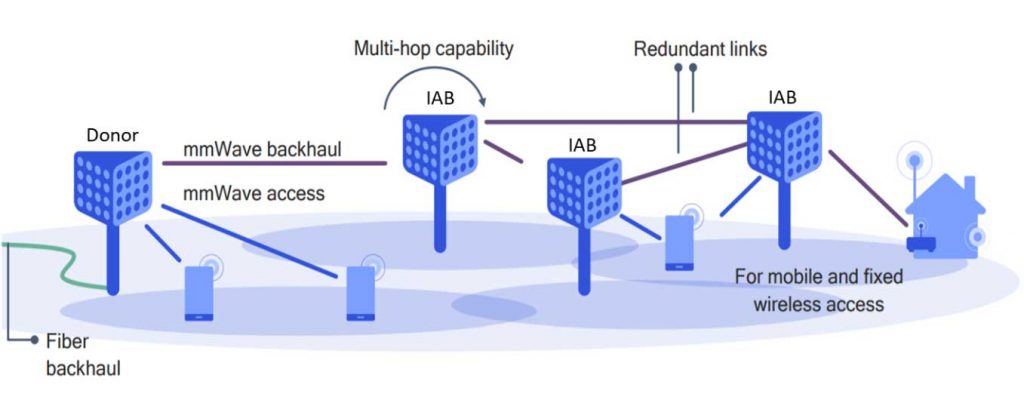 IABs are ideal for mmWave deployments
As I had explained in my
IABs are ideal for mmWave deployments
As I had explained in my 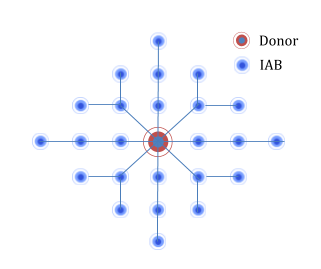 The best way to understand the performance of IABs is to simulate a typical system and analyze various scenarios.