GeistHaus
log in · sign up

https://readtangle.com/feed

rss
62 posts
Polling state
Status active
Last polled May 19, 2026 11:56 UTC
Next poll May 19, 2026 19:02 UTC
Poll interval 29065s
ETag W/"556ec-kHMLLBXERUUQ0TEFPCwXZ+PXBPU"

Posts

The Trump–Xi summit.
US-China relationsUS-ChinaChinaPresident XiXi JinpingIran negotiationsIran warTrade dealsGerrymanderingSolutions to gerrymandering
Plus, could states band together to ban gerrymandering?
Show full content
The Trump–Xi summit.

I'm Isaac Saul, and this is Tangle: an independent, nonpartisan, subscriber-supported politics newsletter that summarizes the best arguments from across the political spectrum on the news of the day — then “my take.”

Are you new here? Get free emails to your inbox daily. Would you rather listen? You can find our podcast here.

Today’s read: 15 minutes.🇨🇳As tensions between the countries rise, U.S. President Donald Trump and Chinese President Xi Jinping held a meeting in Beijing last week. Plus, a reader proposes a solution to prevent gerrymandering.Isaac’s message to college students.

On the last stop of his whirlwind college speaking tour, Executive Editor Isaac Saul implored students at St. Olaf College to “choose decency.” In this divided country, Isaac said, “be one of the fair ones. Be curious. Be open-minded. Be willing to say you’re wrong. Don’t treat politics like a team sport but as an opportunity to explore your own views, challenge your beliefs, and adopt new principles and ideas if you find them compelling.” To share what he’s been saying to America’s college students over the past five weeks, we published Isaac’s whole speech on Friday. You can read it here.

If you want to read Isaac’s speech in full — and access all future Friday editions, Sunday editions, and ad-free daily newsletters — become a Tangle member today for just $6/month!

SPONSORED by incogni

Don’t wait to become a victim. Take control of your identity.

Over 422 million people had their personal data exposed last year alone. And the easiest targets? People whose info is still floating around online.

Incogni tracks down and removes your personal details from over 420+ data broker sites, people-search pages, public records, and more — automatically. They periodically check if your information appears on the data broker sites and remove it, so you get total peace of mind.

With their unlimited plan, you can go even further. Google yourself and send them any link you find with your info on it. Their privacy team will assist you in getting it wiped.

Stop making it easy for identity thieves. Lock down your personal data before criminals take advantage of it. Remove your data now — 55% off with code TANGLE!

Get the deal! Quick hits.
  1. President Trump warned that Iran would “get hit much harder” if the country’s leaders do not offer a more favorable deal to end the war. (The negotiations) Separately, on Sunday, a drone strike sparked a fire on the edge of a nuclear power plant in the United Arab Emirates in what authorities are calling an “unprovoked terrorist attack.” (The strike)  
  2. The U.S. Supreme Court rejected a request by Democratic officials in Virginia to use a new congressional map recently approved by voters but struck down by the Supreme Court of Virginia. (The rejection)
  3. Senate Parliamentarian Elizabeth MacDonough rejected $1 billion of Secret Service security for a new White House ballroom from being included in a recent $72 billion Republican funding package. MacDonough ruled the ballroom security funding violated the Byrd rule for including non-budgetary items during reconciliation. (The removal)
  4. The World Health Organization has declared a public health emergency after an Ebola outbreak caused 350 reported cases and 88 deaths in Uganda and the Democratic Republic of Congo. (The outbreak)
  5. Sen. Bill Cassidy (R-LA) failed to advance to a runoff in the Republican primary for his Senate seat; instead, Louisiana Treasurer John Fleming and Trump-endorsed U.S. Rep. Julia Letlow will face off on June 27. Cassidy’s loss follows a Trump-backed effort to oust him over public breaks from the president. (The primary)
Today’s topic.

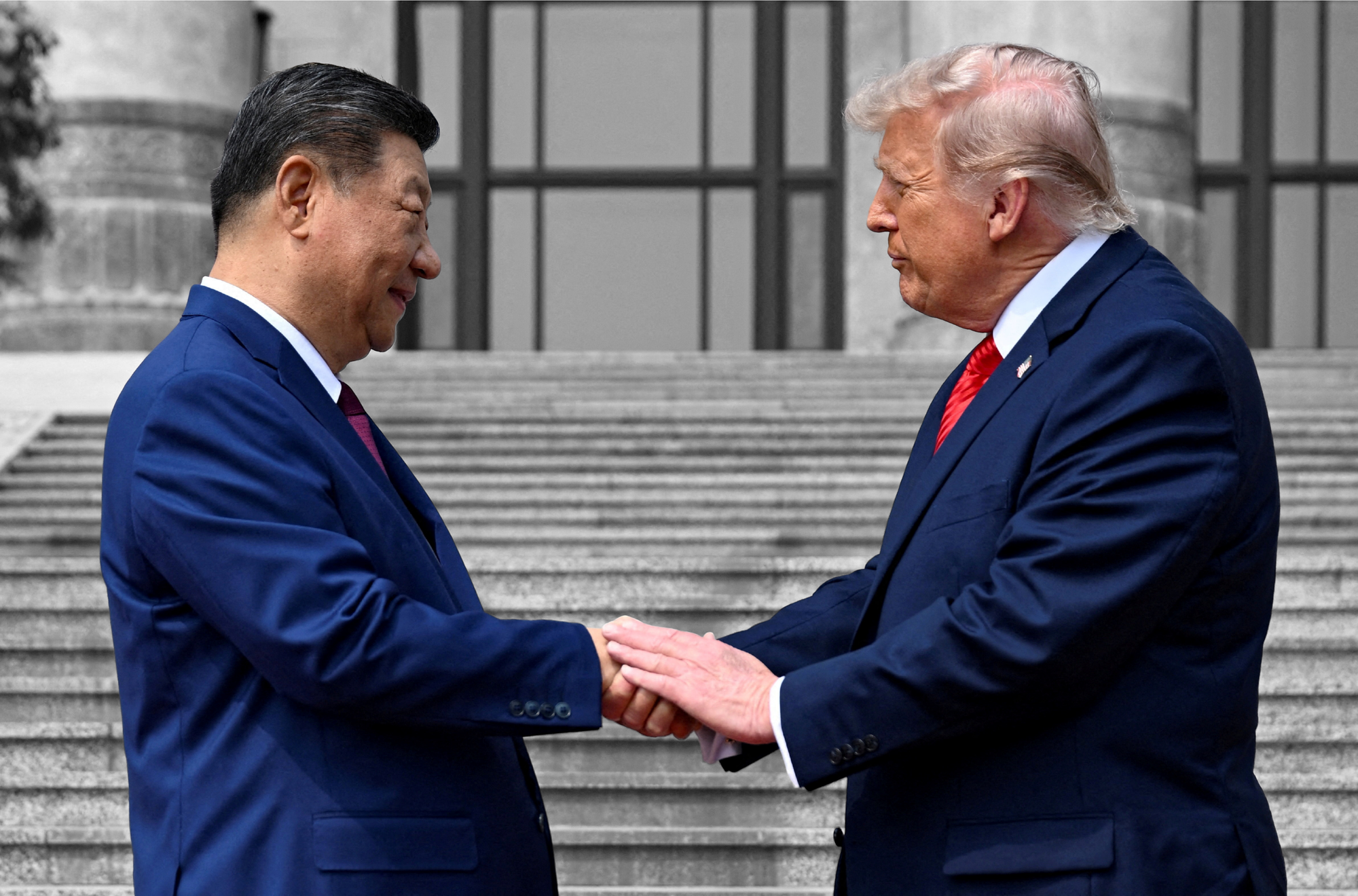
The Trump–Xi summit. On Friday, President Donald Trump departed China after a two-day summit with Chinese President Xi Jinping, in which the leaders discussed trade deals, diplomatic relations, the Iran war, and other issues. Trump and Xi each spoke favorably about the other and emphasized their interest in a mutually beneficial relationship between the countries, though the two sides did not mutually announce any major commitments. Trump’s state trip to China was the first U.S. presidential visit to the country since Trump’s 2017 visit during his first term.

The summit was held against the backdrop of rising U.S.–China tensions during Trump’s second term. In April 2025, Trump levied significant tariffs on Chinese imports, prompting China to impose export controls on rare earth materials; Trump and Xi later agreed to a trade truce in October. The Trump administration also placed strict export controls on the sale of advanced artificial intelligence chips to China. 

Separately, the Trump administration has begun sanctioning Chinese actors for allegedly aiding Iran in its war with the United States. On April 24, the Treasury Department announced sanctions against a Chinese oil refinery for buying billions of dollars of Iranian oil. On May 8, the State Department sanctioned three “China-based entities” for “providing satellite imagery that enables Iran’s military strikes against U.S. forces in the Middle East.”

President Trump was accompanied on the trip by senior administration officials as well as business executives, including Nvidia’s Jensen Huang, Tesla’s Elon Musk, and Apple’s Tim Cook. According to U.S. Trade Representative Jamieson Greer, the executives had an opportunity to talk with President Xi regarding their businesses, though Greer said AI chip exports were not discussed. Xi reportedly indicated that China would increasingly open up to U.S. businesses. 

Following the meeting, China agreed to buy 200 Boeing planes from the United States and President Trump said the countries had agreed to “fantastic trade deals.” The White House also announced that China has agreed to buy more American oil and agricultural products, but China has not confirmed its plans. Trump said that he and Xi agreed that the war in Iran should end and the Strait of Hormuz should reopen to commercial traffic; however, China did not address Iran in its post-summit comments, and the country’s foreign ministry released a statement during the summit that said the United States should not have started the war. 

U.S. policy on Taiwan was also a notable point of discussion. After a closed-door meeting with President Xi and President Trump, a Chinese foreign ministry spokesperson summarized Xi’s position, saying, “If [the Taiwan question] is handled properly, the bilateral relationship will enjoy overall stability. Otherwise, the two countries will have clashes and even conflicts, putting the entire relationship in great jeopardy.” Trump told reporters that Xi asked him if the U.S. would intervene if China invaded Taiwan, to which Trump said he responded, “There’s only one person that knows that — you know who it is? Me.”

President Trump praised the Chinese president at several points during the summit. “You’re a great leader. Sometimes people don’t like me saying it, but I say it anyway, because it’s true,” he told him. “It’s an honor to be your friend.” Before departing, Trump invited Xi to the White House in September, and Chinese officials confirmed the president will visit the United States in the fall. 

Today, we’ll share views from the left, right and foreign policy experts on the summit, followed by Executive Editor Isaac Saul’s take.

What the left is saying.
  • The left says Trump has weakened the U.S.’s standing with China.
  • Others called Trump’s position on Taiwan risky.

In Slate, Fred Kaplan said “Trump just gave Xi Jinping exactly what he wanted.”

“The best thing to say about the U.S.–China summit in Beijing on Thursday and Friday is that our allies’ worst fears didn’t come true. Aside from that, President Donald Trump failed to fulfill his fondest hopes for the meeting, while his host, President Xi Jinping, accomplished his own bedrock goals, though not much more,” Kaplan wrote. “Trump boasted to reporters after the summit that he and Xi had made ‘fantastic’ deals, but the only example he cited — Xi’s agreement to buy 200 jet planes from Boeing — was less than impressive. Boeing stock plunged by 4% because shareholders had anticipated that China would buy 500 planes.”

“Xi sees the United States as a declining empire… Trump’s praise of Xi — in the social media post and many more times during the summit itself, lauding the Chinese dictator as a ‘great leader’ and ‘really a friend’ — only reaffirmed Xi’s main goal in this summit: to solidify China’s standing as a peer power of the United States,” Kaplan said. “Xi, who cares little about friendship, was interested only in preserving his power, reinforcing China’s growing stature, and… ensuring that it can rise and flourish in a somewhat stable world. In that context of competitions, Trump flew home with little; Xi walked back to the palace, reassured.”

In Brookings, Ryan Hass wrote about “Trump’s dangerous Taiwan gamble.”

“During the run-up to U.S. President Donald Trump’s visit to Beijing, he remained ambiguous about his views on Taiwan. When asked in interviews, he regularly lamented that Taiwan ‘stole’ America’s semiconductor industry while adding a note of reassurance that there would not be a war in the Taiwan Strait under his watch. He would recount that he and Chinese President Xi Jinping shared an understanding about avoiding conflict over Taiwan,” Hass said. “The net effect of his comments was to suggest that his views on Taiwan independence were closer to Beijing’s preferences, that Taiwan had a greater responsibility to avoid provoking conflict, and that America’s security support for Taiwan was negotiable with China.”

“Beijing will seize on Trump’s recent comments to signal to Taiwan’s 23 million people that Trump cares more about his relationship with Xi than he does about them,” Hass wrote. “Trump is giving up credibility without extracting benefits from Beijing. This is not just a policy shift. It is a shift from deterrence to dealmaking in a domain where there is no deal to be made, beyond offering unilateral concessions that undermine deterrence. If Trump acts on his musings about treating Taiwan arms sales as a source of leverage, he would crater the confidence of America’s security commitments, not just in Taiwan but among America’s allies globally.”

What the right is saying.
  • The right is mixed on the summit, with some glad that the U.S. did not concede to Chinese interests.
  • Others think the summit is proof that American power is declining.

The Wall Street Journal editorial board wrote about “The good-news-is-no-news summit.”

“The main rule of presidential summitry with an adversary is first do no harm. By that standard President Trump’s Beijing parley with Chinese leader Xi Jinping this week was a success. It didn’t achieve much, but it also didn’t appear to give away anything notable to the wily dictator,” the board said. “Mr. Trump boasted about ‘fantastic’ Chinese purchases to come of U.S. soybeans and aircraft. But China didn’t confirm the sales… Mr. Trump also said the two now agree on Iran and the Strait of Hormuz, but there was no overt agreement from Mr. Xi.” 

“The good news is that the President doesn’t seem to have granted Mr. Xi’s wish that the U.S. allow the sale of advanced computer chips to China. This is a Communist Party priority as it seeks to catch up with the U.S. on AI,” the board wrote. “But Mr. Xi promised Barack Obama that China would stop its cyber raids on U.S. companies and agencies, and China kept on stealing American secrets and embedding malware in U.S. systems. This attempt at AI arms control won’t amount to much unless the Trump team is as naive as Mr. Obama.”

In The American Conservative, Jude Russo argued “Trump’s visit to China emphasizes American strategic weakness.”

“Few would say that the first Trump administration was a total success, but at the level of theory there was a certain coherence to it. On the China side of things, Elbridge Colby articulated the line of thought in the 2018 National Defense Strategy… The U.S., Colby wrote, should boost its partnerships in the Indo-Pacific to prevent China from establishing hegemony in the region,” Russo wrote. “Corollaries were a deemphasis on the Middle Eastern theater, which is not enormously important for American interests, and a real defense buildup, particularly a naval buildup… We have spent the past decade twiddling our thumbs and have little to show for it.”

“So it’s difficult not to look at President Donald Trump’s visit to Beijing this week and feel kind of bummed out. Xi Jinping said that he doesn’t want an Iranian tollbooth in the Hormuz, which is good, I guess, but it’s embarrassing that the administration is treating China getting on board with our position as manna from heaven,” Russo said. “When the gang gets home and sleeps off the jetlag, well, we’re still going to be at war in a peripheral theater (one that looks like it hurts us more than it hurts China, by the way, whatever the big brains on Twitter are saying), a subpar navy, and a largely compromised economy. It’s hard not to feel that China is very serious, and we are not.”

What foreign policy experts are saying.
  • Foreign policy experts observe how Trump’s visit differed from previous state visits to China.
  • Some argue that Trump’s novel attitude toward China won’t get the results he wants.

In Foreign Policy, James Palmer said “The Trump–Xi summit was remarkably banal.”

“You could be forgiven, reading and watching the Chinese press this week, for entirely missing U.S. President Donald Trump’s visit to Beijing,” Palmer wrote. “As it turned out, the lack of dramatics on the Chinese side was appropriate. Trump’s visit was a snoozefest. Xi stuck to political banalities, speaking about familiar red lines: Taiwan, democracy and human rights, China’s ‘path and system,’ and China’s ‘development right,’ referring to its ability to move up the global economic ladder without being pushed down by Washington.”

“Yet previous U.S. presidential visits were met with far more fanfare in China’s tightly controlled media, even when little of consequence emerged. Why was Beijing so muted this time around? One reason is unpredictability. Other U.S. presidents visiting China have stuck to an agreed-on agenda and have been controlled and careful in their speech. No one expects this from Trump,” Palmer said. “Chinese leaders also sought validation through recognition from Washington. The United States was recognized as the global superpower, and China gained status in the eyes of its own citizens by portraying itself as a peer and a gracious host… China no longer needs that validation from the United States. Its global primacy is more than sufficiently established — not just as a manufacturing superpower but also as a technological and scientific giant.”

In Responsible Statecraft, Michael D. Swaine wrote “On China, Trump wants to be Mr. Nice Guy now.”

“It appears that the president does not look at China as a conventional security threat, and certainly not an existential one. Yes, Beijing poses an economic problem, perhaps even an economic threat, but a very manageable one that can produce a great outcome for both countries,” Swaine said. “He believes this can be achieved by working with his ‘great friend’ XJP in a kind of personalized G-2 relationship… He apparently thinks that if he can make some great deals with Xi on Taiwan, on trade, and technology, etc., the great power problem will be resolved, and he can take another step toward his long-coveted Nobel Peace Prize.”

“The problem with Trump’s novel treatment of the China–U.S. relationship is rather obvious, however. Great power relations are not real estate deals. Enduring, positive changes in those relations can only occur if leaders’ decisions reflect compromises involving deep-seated structural and political interests across their respective societies and polities,” Swaine wrote. “Given Trump’s general unpredictability and impulsiveness and Xi’s apparent unwillingness to rule on the basis of a genuine collective leadership structure, Trump’s desired personalized G-2 is unlikely to prove sustainable, or even achievable.”

My take.

Reminder: “My take” is a section where we give ourselves space to share a personal opinion. If you have feedback, criticism or compliments, don't unsubscribe. Write in by replying to this email, or leave a comment.

  • Taiwan, mutual espionage, trade, and even China’s domestic practices are all fraught elements of the U.S.–China relationship.
  • With the war in Iran, Trump doesn’t have a lot of leverage to change the relationship’s dynamic.
  • Considering that, it’s not too surprising that nothing really happened at the summit.

Executive Editor Isaac Saul: Few topics leave me feeling as conflicted as the U.S.–China relationship.

Those conflicts appear, in broad strokes, in every element of the relationship. China is a country run by an authoritarian leader who is serving indefinitely, destroying any political opposition (sometimes disappearing them), and using a vast state-sponsored spy network to crush dissent. Yet there’s nothing wrong with the Chinese people, who are living under the thumb of that rule. China is an economic powerhouse whose relationship with us creates a great deal of prosperity and wealth. Yet that relationship also creates a dependency that makes our economy vulnerable. China has an advanced, modern military that could make us pay for any direct confrontation; yet that threat has mutually deterred both superpowers from an open conflict in places like the South China Sea. 

Every facet of our relationship to China is a double-edged sword, a handshake between two sides holding weapons behind their backs.

Take Taiwan, a topic that dominated the summit. Xi has made it clear that addressing Taiwan is his top priority with U.S. policy, and his remarks once again left a lot of people worrying about an imminent Chinese takeover. During his administration, President Joe Biden made waves for saying unequivocally that we’d defend Taiwan with our military. I argued that we’d have little choice; Biden’s faux pas, rather, was making the subtext explicit. Of course, the U.S. would want to defend Taiwan — it’s too important as a supplier of U.S. semiconductors, in its position in the first-island chain, and as a democracy in defiance of Xi’s totalitarian regime. But there’s a reason you don’t say that kind of thing out loud. Open war with China would be catastrophic, for both China and the U.S., and promising it is chilling. Our conflict with Iran, which is orders of magnitude weaker in almost every imaginable way, is already dragging the U.S. and global economy. Imagine the impacts of a conflict between the world’s two economic superpowers — to say nothing of the potential death toll.

And Taiwan is far from the only sticking point. China has a longstanding policy of deploying hackers to come after American government and private entities. Xi once promised President Barack Obama the cyber incursions would stop, but they never did. If anything, the espionage is getting more audacious. We just found out the mayor of a Los Angeles suburb was actually a Chinese spy; former Rep. Eric Swalwell (D-CA) was infamously embroiled in controversy for his ties to a woman who ended up being a Chinese spy. Yet what do we expect? Our hackers are constantly going after China. Our spies are all throughout the country. Our espionage efforts are robust. It’s hard to blame a global power for returning the favor.

What about our trade relationships? On the one hand, China supplies the U.S. with cheap goods in abundance. From consumer electronics to kids’ toys to complex medical devices, our supply chain depends on cheaply manufactured Chinese goods. Today, we take this arrangement for granted and frequently overlook its benefits. On the other hand, China’s manufacturing behemoth has significantly contributed to the decline of our own industrial economy. We’ve become reliant on a global adversary to supply us with things our consumers want and need, creating an obvious vulnerability. 

And of course there are tariffs, another vital element of trade. When President Biden slapped tariffs on Chinese automakers to try to keep their electric vehicles out of the U.S., I was deeply conflicted about the approach. Then President Trump significantly upped the ante, launching a full-on trade war to try to limit China’s economic influence and reinvigorate U.S. manufacturing. Imports from China have since fallen — in 2025, they totaled $308.4 billion, down nearly 30% from 2024

The spirit of both administrations’ approach is appealing: Let’s protect our workers and our factories and our American-made goods. Let’s not welcome competition from a country that is overly subsidized and totally reliant on unethical labor practices to make those cheap goods. But what has the approach brought us? Are U.S.-made electric vehicles improving? Have our automakers caught up? What about the rest of the manufacturing sector? Are tariffs improving life for Americans? Are production costs staying controlled? Even if these outcomes are coming, they will take time and patience — but the signals for many of them are not particularly strong.

With all those elements to consider, I’m left wondering what, exactly, is set to change after the latest Trump–Xi summit. Trump claims we scored some groundbreaking trade deals and the relationship has never been better, but China is confirming exactly nothing. Much-hyped “soybean sales” have been hyped before, as the Wall Street Journal editorial board noted (under “What the right is saying”). The board also celebrated the “no-news summit,” which it framed as a good thing, and I suppose I can see the rationale. 

After all, Trump is not negotiating from a place of strength. The U.S. economic sentiment is terrible; the war in Iran is deeply unpopular; and Trump’s tariffs have been on-again-off-again, with exceptions carved out in nearly every industry, and most global leaders have learned by now that they can fix their Trump-related issues with a phone call and some well timed flattery. With that backdrop, what could Trump have reasonably accomplished?

In short: I don’t think the president “gave Xi everything he wanted,” nor do I think we got much of anything. Trump the China hawk seems to have evolved yet again, and it’s not at all clear to me what his position really is on issues like Taiwan or tariffs. The administration will say that’s the point, but it wasn’t so long ago that a tough-on-China posture was the centerpiece of Trump’s foreign policy. 

For now, the story seems to be that not much really happened at all — despite much hype, and despite the president’s envoy asserting some wins it’s hard to ascertain the veracity of. 

Staff dissent — Managing Editor Ari Weitzman: I disagree with the interpretation that Isaac (and the punditry class in general) gave of Trump’s summit with Xi as unproductive. Yes, the complicated U.S.–China relationship has a lot of open questions that this summit didn’t shed any light on. And yes, summits like these often come with expectations of some larger redefinition. But given the dominance of the Iran war on the geopolitical scene at the moment, I think it’s actually quite significant that President Xi agreed that the Strait of Hormuz must remain open and Iran can’t develop a nuclear weapon. Given that China has been ambiguously encouraging the Iranians in the conflict, and that they’ve been hurt less than the Americans by the Hormuz blockade, Xi could easily have chosen to play hardball with Trump. Instead, he’s showing a desire to cooperate and avoid conflict between the superpowers. Trump gets the blame for instigating the war that stands in the way of progress in these other areas, but he should also get some credit for getting Xi to publicly commit to a cooperative posture.

Take the survey: What do you think should be a president’s top priority in managing the U.S.–China relationship? Let us know.

Disagree? That's okay. Our opinion is just one of many. Write in and let us know why, and we'll consider publishing your feedback.

Your questions, answered.

Q: I’m just curious: Is there any movement to end gerrymandering nationwide with an interstate compact? There’s that National Popular Vote thing that’s supposed to be triggered when enough states adopt it to make it decisive in elections. Why not an agreement between states that, when all of the states adopt it, commits each state to promptly enacting an independent redistricting commission? And if any state thereafter opted out, the others would be free to opt out as well (but its terms would be triggered again if the threshold adoption requirements were again met).

— Julian from New York, NY

Tangle: That’s an interesting idea. For context, the National Popular Vote Interstate Compact is a bill any state can pass for itself that would pledge all of its electoral votes in a presidential election to the winner of the national popular vote, rather than the winner of its statewide vote. If a total number of states whose electoral votes reach 270 pass the same statewide bill, that would mean the winner of the popular vote would automatically win the Electoral College — effectively making that system obsolete.

You can read more about that initiative here, and you can also check out a Friday edition where we interviewed Democratic and Republican strategists about the idea here.

Your proposal is almost the opposite of that compact. Instead of asking states to join an agreement to trigger a de facto national change, you’re proposing something close to a kill switch, or mutually assured destruction. Essentially, a group of states all agree to pass laws that require only decadal, census-based redistricting managed by independent commissions, and if any state abdicates, then all states are free to.

Maybe that would work, but there are a couple reasons why it might not. First, any state that thinks its majority political party would gain an advantage if all states openly gerrymandered could simply break the pact whenever they felt the field was tilted in their favor. Second, it would be very difficult to get enough states to agree to such a pact. Passing a federal law would be much more straightforward.

And that initiative is having enough trouble as it is. Democrats have repeatedly introduced the Redistricting Reform Act, most recently in 2025, which would ban mid-decade redistricting and require every state to establish independent redistricting commissions. Currently, Senate Republicans have no incentive to pass such a bill — but the problem goes back much further. Rep. Zoe Lofgren (D-CA) introduced a version of the bill in eight consecutive Congresses, but it failed to advance out of committee because it lacked support from Democratic leaders. It’s possible the political calculation changes after the midterms, but until then, gerrymandering reform isn’t likely to grow past a patchwork of specific state-by-state regulations.

Want to have a question answered in the newsletter? You can reply to this email (it goes straight to our inbox) or fill out this form.

Numbers.
  • 9. The approximate number of years since the last U.S. presidential visit to China.
  • 1, 4, and 3. The number of times, respectively, that Presidents Bill Clinton, George W. Bush, and Barack Obama traveled to China on official duties over the course of their presidencies.
  • 2. The number of times President Donald Trump has visited China as president. 
  • 129. The number of days until the next planned meeting between President Trump and Chinese President Xi Jinping.
  • 27%. The percentage of Americans who have a positive view of China, according to a Pew Research Center survey conducted in March.
The extras.
  • One year ago today we had just published a reader mailbag edition.
  • The most clicked link in our last regular newsletter was our most recent episode of Suspension of the Rules.
  • Nothing to do with politics: What will travel look like in 20 years?
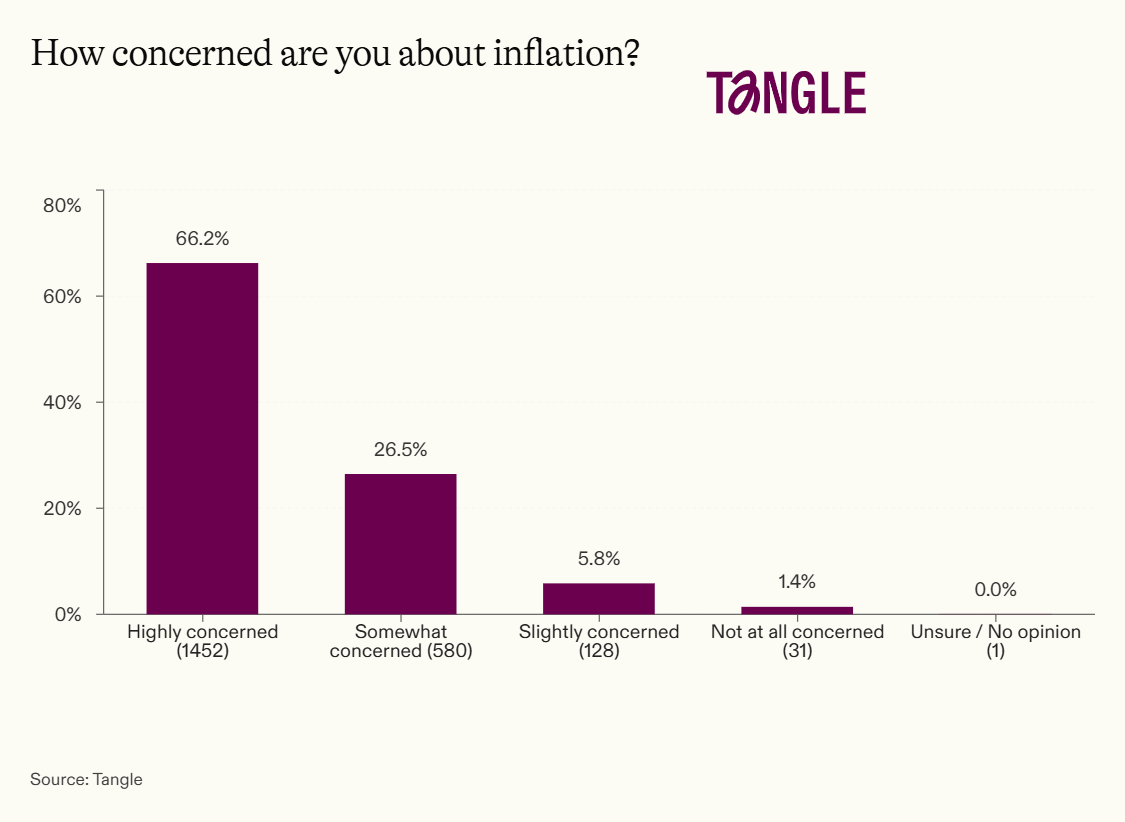
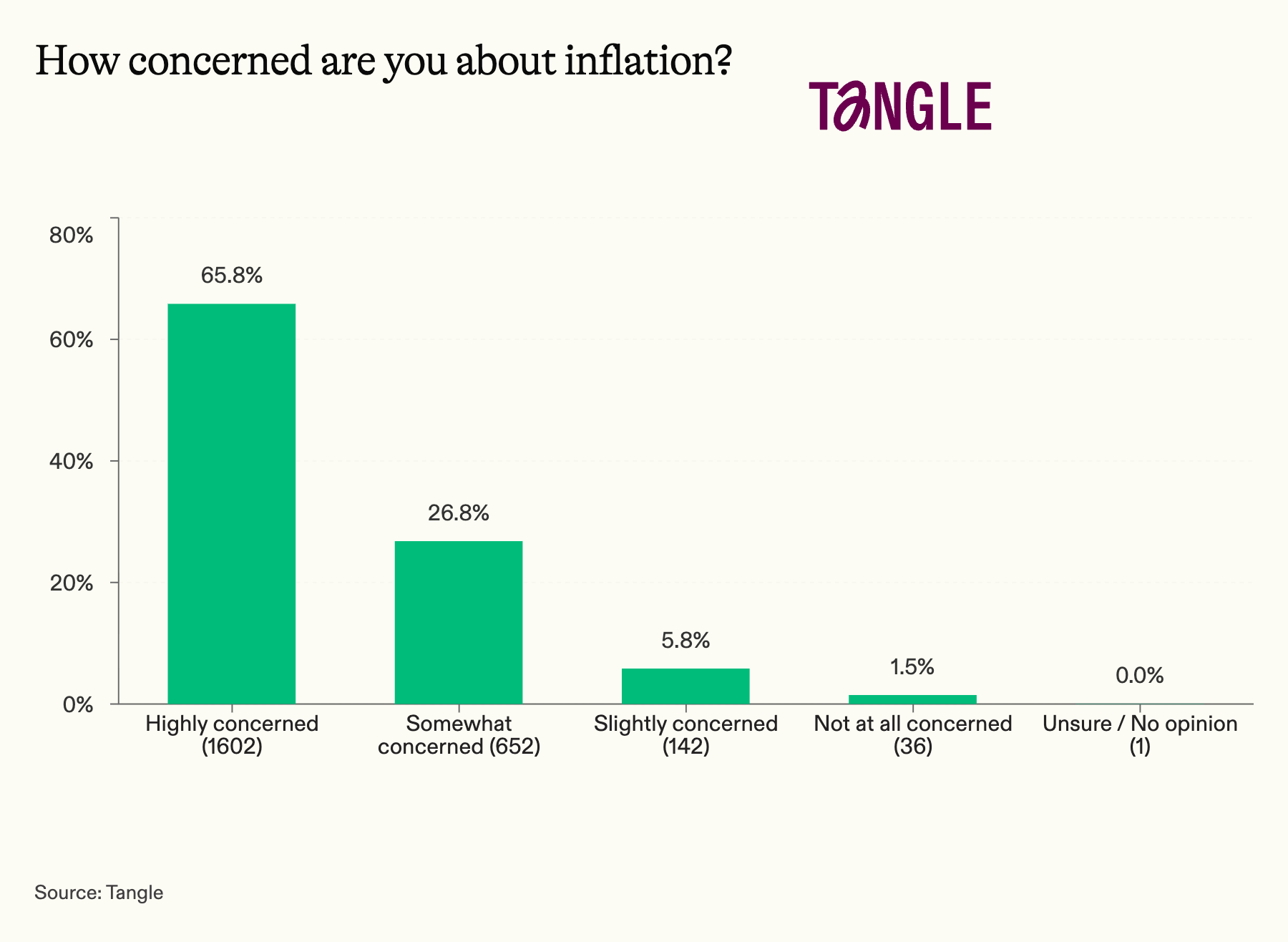
  • Our last survey: 2,433 readers responded to our survey on inflation with 66% saying they are very concerned. “I am concerned that gas prices will not fall back to prewar levels after Iran hostilities,” one respondent said. “With Iran, the tariffs, and the impacts of inflation during Biden’s term, I hope inflation improves soon but am not optimistic,” said another.
The Trump–Xi summit.
Have a nice day.

When Ahmed, Nasir and Preston — ages six and seven — were each hospitalized at the same time in need of a new heart, they each experienced the anxiety and uncertainty of not knowing what was ahead for them. But over the course of nearly a year in the hospital together, they became best friends, leaning on one another for support as they waited for heart transplants. Then, in a rarity, all three received transplants within 10 days of one another. They’re now recovering well, and their friendships are as strong as ever. “I think these children teach us how to be grateful for what we have,” Dr. Joseph Spinner, a doctor on the boys’ care team, said. “It’s amazing that they can be so sick yet have such a positive attitude.” KHOU11 has the story

6a0b043faca94b0001821d24
Extensions
The Sunday — May 17
The SundayVirginia gerrymanderingIran warHantavirusInflationCampus speech

This is the Tangle Sunday Edition, a brief roundup of our independent politics coverage plus some extra features for your Sunday morning reading.

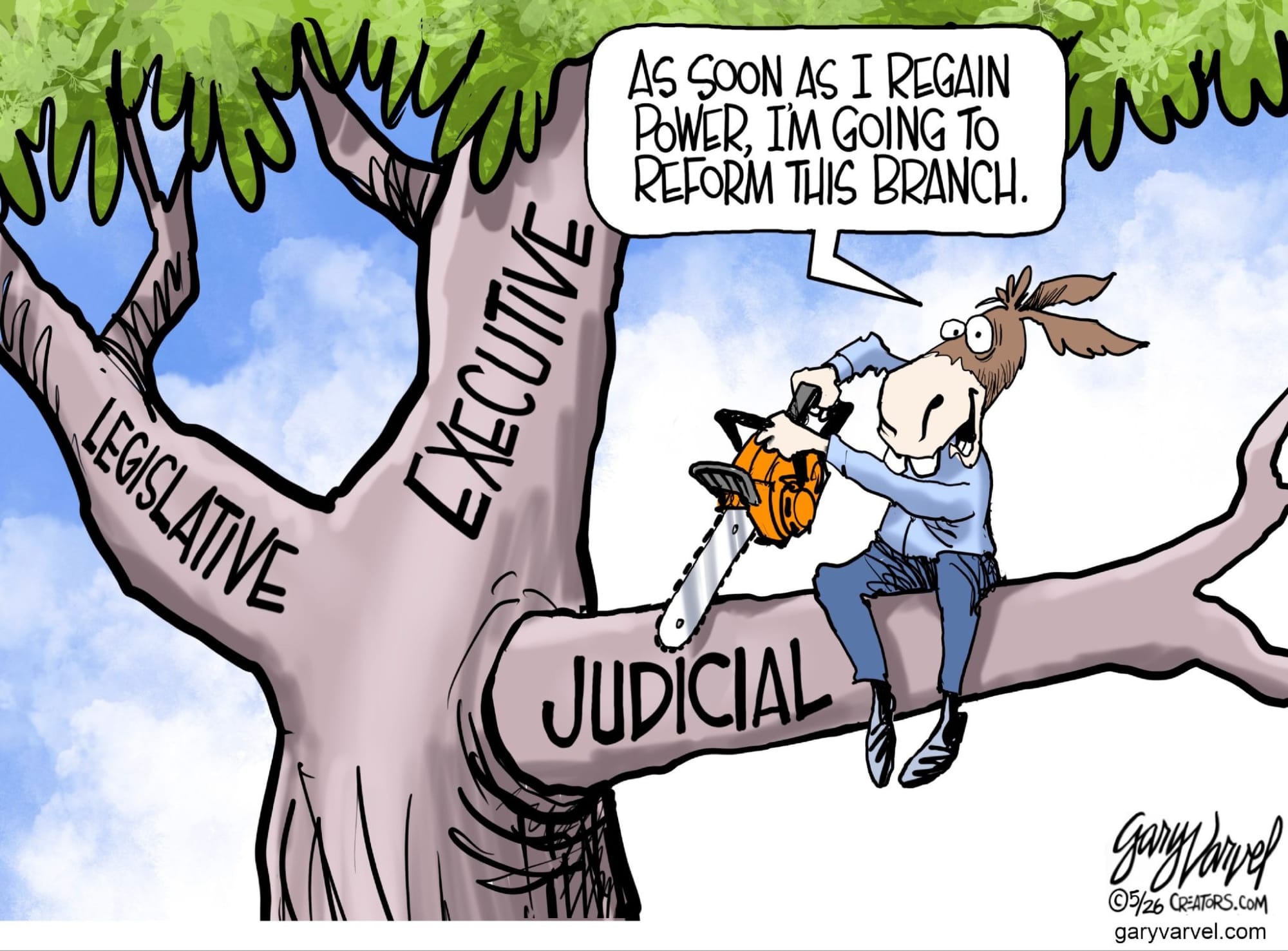
What the right is doodling.
Gary Varvel | Creators Syndicate
What the left is doodling.
John Deering | Creators Syndicate
Suspension of the Rules

Isaac, Ari and Kmele let

Show full content
The Sunday — May 17

This is the Tangle Sunday Edition, a brief roundup of our independent politics coverage plus some extra features for your Sunday morning reading.

What the right is doodling.
The Sunday — May 17
Gary Varvel | Creators Syndicate
What the left is doodling.
The Sunday — May 17
John Deering | Creators Syndicate
The Sunday — May 17
Suspension of the Rules

Isaac, Ari and Kmele let loose a bit in this week’s episode, discussing Sen. Rand Paul’s son hurling antisemitic remarks at Rep. Mike Lawler and Rep. Alexandra Ocasio-Cortez’s possible political ambitions. Plus, what were some lessons the media should have learned from the Covid-19 pandemic?

Check out the latest here!

Monday, May 11.

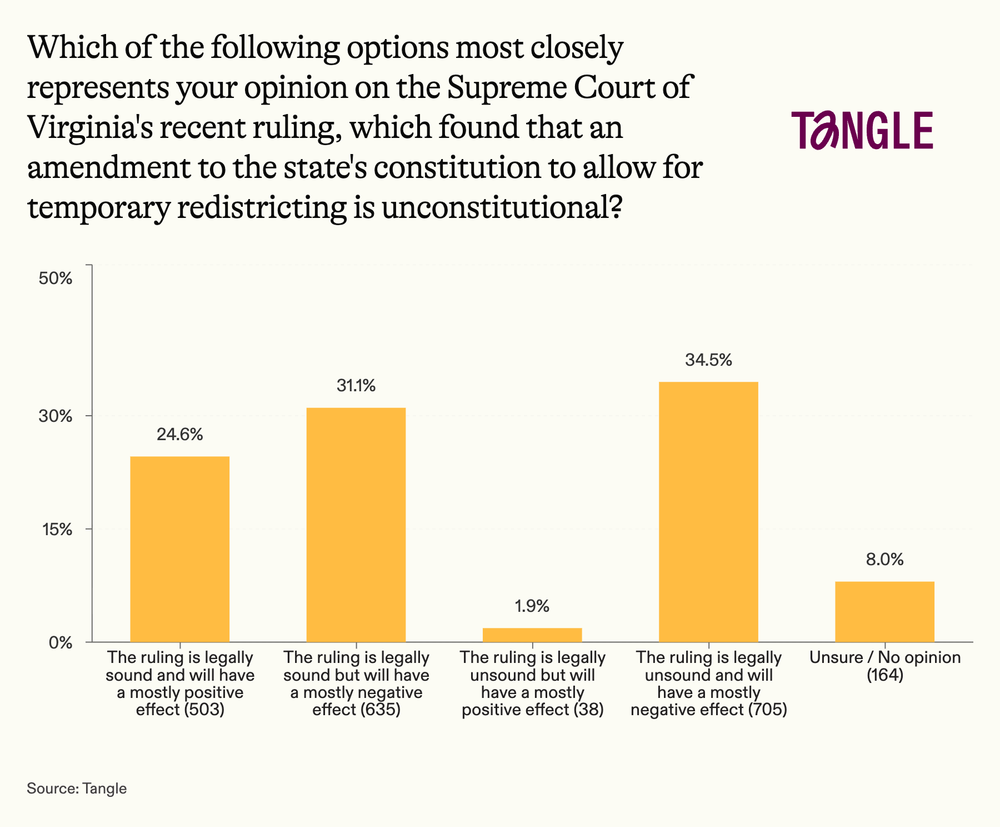
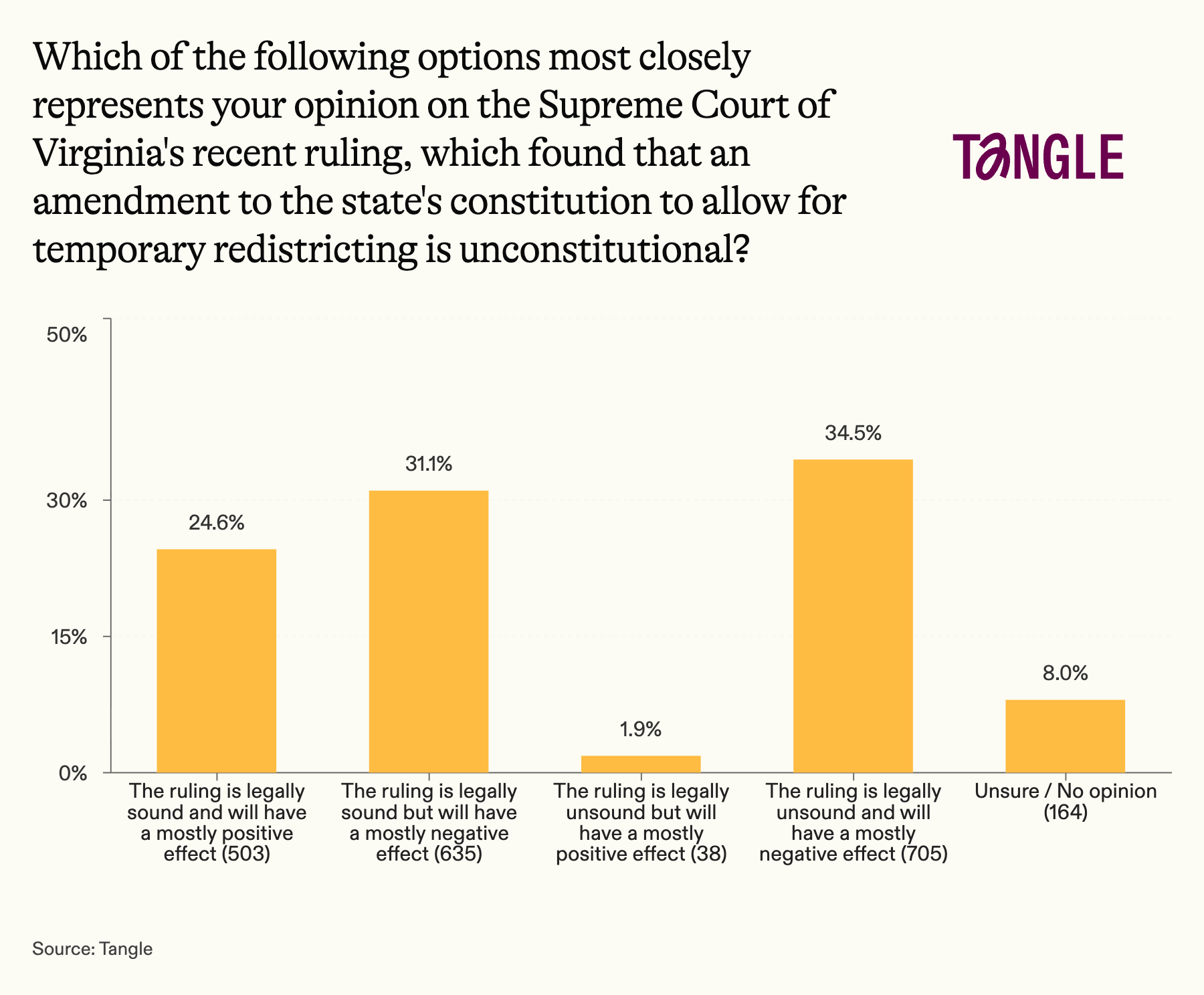
The Supreme Court of Virginia’s redistricting ruling. On Friday, May 8, the Supreme Court of Virginia struck down a redistricting measure recently passed by voters that would have allowed the legislature to adopt a new congressional map designed to give Virginia Democrats a 10–1 advantage in the U.S. House. In a 4–3 decision, the court found that the process of putting the measure on the ballot violated the state constitution, affirming a county judge’s ruling. The decision will keep the current map — under which Democrats have a 6–5 advantage — in place for the 2026 midterms. 

Our take: “This ruling is obviously a big win for Republicans and a huge blow to Democrats. On one hand I’m glad for that, because I cheer anytime a gerrymandering attempt fails. On the other hand I’m discouraged, because Trump and Republicans instigated this war and now they’re being rewarded for it.”

Reader Survey:

The Sunday — May 17
Tuesday, May 12.

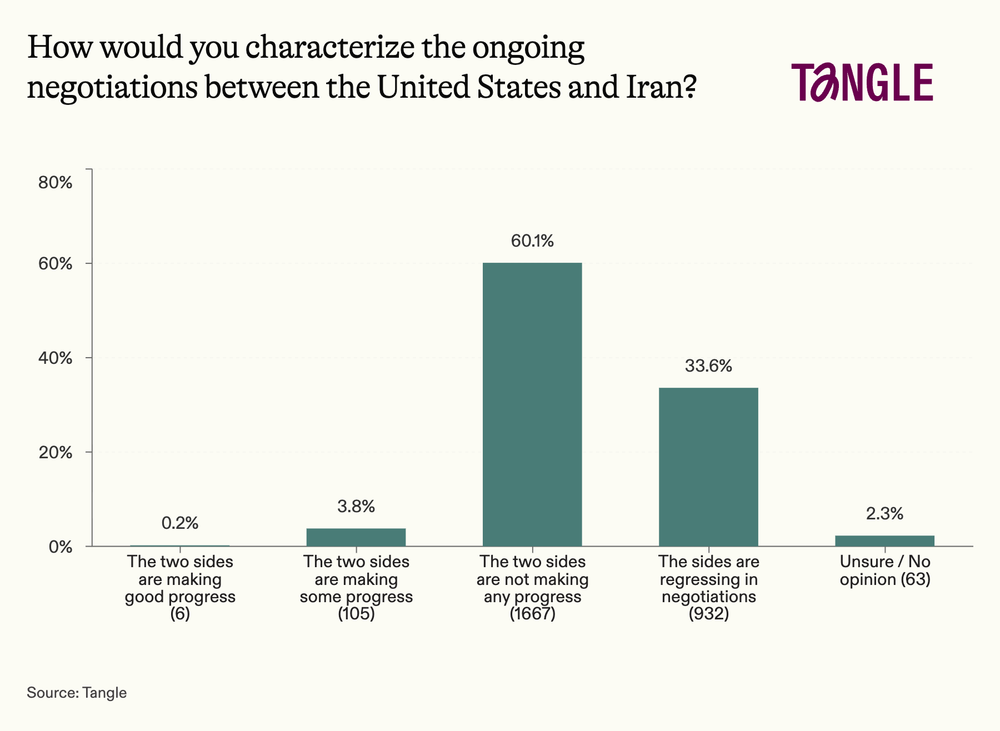
The latest in Iran. Over the past week, the United States and Iran have exchanged communications over plans to end the war between the countries, though talks have yet to produce a breakthrough. On Monday, May 11, President Donald Trump said the pause in fighting is on “life support,” calling Iran’s most recent response to a U.S. peace proposal unacceptable. Separately, the Strait of Hormuz remains mostly closed to commercial traffic, with the U.S. and Iran exchanging fire in the waterway over the past two weeks. 

Our take: “A timeline of events shows how unreliable the U.S. and Iran are as narrators. It also shows that, despite our military successes, Iran’s control over the Strait of Hormuz is a disaster. I don’t know how we proceed from here, but I don’t like our options.”

Reader Survey:

The Sunday — May 17
Wednesday, May 13.

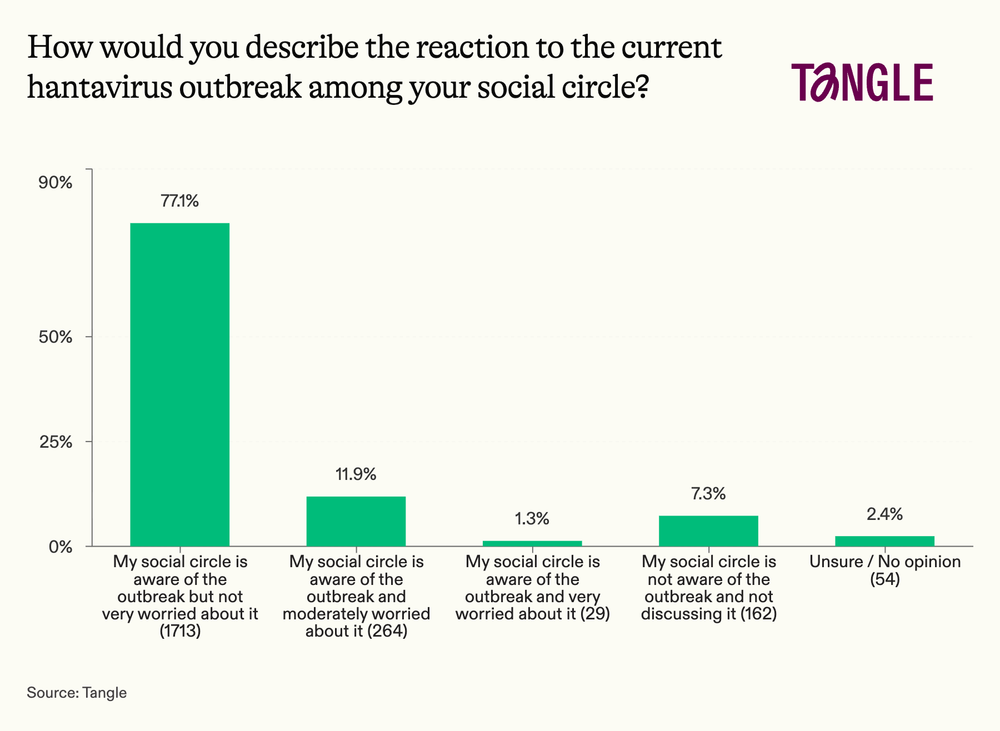
The hantavirus outbreak. On Monday, May 11, 18 Americans returned to the United States from a cruise ship where passengers had contracted a rare strain of hantavirus. The Centers for Disease Control and Prevention (CDC) transported the passengers to specialized quarantine facilities in Nebraska and Georgia; one American tested positive for the virus. As of Saturday, May 16, three deaths — a Dutch couple and a German woman — ten confirmed cases have been linked to the cruise ship outbreak. Health officials say the risk to the general public remains low.

Our take: “It’s tempting to compare this outbreak to the onset of Covid-19, but the situations are very different. Hantavirus is deadly and scary, but its transmissibility is low and the cases are being closely tracked. We should all be careful not to overreact and to closely vet any information we learn before sharing it.”

Reader Survey:

The Sunday — May 17
Thursday, May 14.

The latest economic news. On Tuesday, May 12, the Bureau of Labor Statistics (BLS) released its Consumer Price Index (CPI) report for April, which showed an increase of 3.8% from a year earlier, slightly higher than economists’ expectations. The latest inflation figures represent the highest annual increase since May 2023, up from 3.3% in March. On a month-to-month basis, prices rose a seasonally adjusted 0.6% after rising 0.9% in March. Core inflation, which excludes volatile food and energy prices, rose 0.4% for the month, its highest pace since January 2025. Separately, on Wednesday, May 13, the Senate confirmed Kevin Warsh to be the next Federal Reserve chair by a 54–45 vote.

Our take: “The economic shocks of the Iran war have fully arrived. Inflation could now persist long after the immediate conflict ends. Warsh has a tall task ahead of him, and his independence from the White House is a key test.”

Reader Survey:

The Sunday — May 17
Friday, May 15.

Over the past month, Executive Editor Isaac Saul has been on a speaking tour, visiting colleges around the country. He concluded his tour with closing remarks at a journalism conference at St. Olaf College in Minnesota, where he theorized about the real dividing lines between Americans today. You can read Isaac’s address here.


What just happened.

Here’s a rundown of the major stories that have broken since our newsletter on Thursday.

  • On Thursday, Central Intelligence Agency Director John Ratcliffe met with Cuban intelligence officials and security official Raúl Guillermo Rodríguez Castro in Cuba to discuss the country’s ongoing energy crisis. Ratcliffe reportedly told the officials that cooperation between the United States and Cuba is possible if Cuba makes “fundamental changes” to its government. (The meeting)
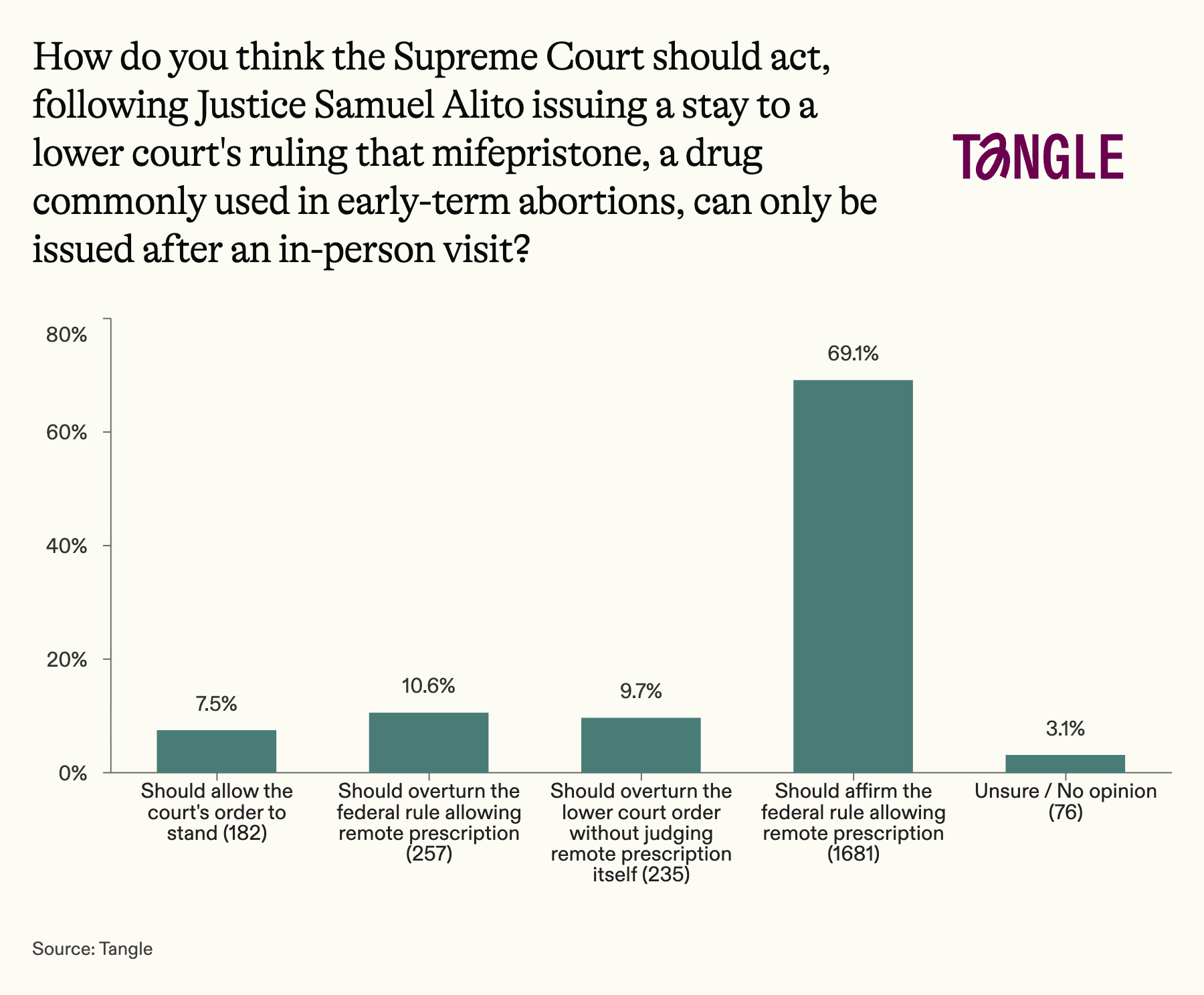
  • On Thursday, the Supreme Court extended its stay of a federal appeals court’s ruling that blocked mail-order distribution of mifepristone, a medication abortion drug. The Court’s order will permit mifepristone to continue to be available via the mail while a lawsuit challenging its distribution plays out in lower courts. Justices Clarence Thomas and Samuel Alito dissented. (The order)
  • On Thursday, Border Patrol Chief Mike Banks resigned, saying he wanted to spend more time with his family. Banks is the third high-level Department of Homeland Security (DHS) official to depart in the past two months, following DHS Secretary Kristi Noem and Immigration and Customs Enforcement Director Todd Lyons. (The resignation)
  • On Thursday, Senate Parliamentarian Elizabeth MacDonough ruled that some provisions of Republicans’ plan to provide approximately $70 billion in immigration enforcement funding in a budget reconciliation package did not comply with the chamber’s Byrd Rule and must be struck from the bill in order to pass it via reconciliation. (The ruling)
  • On Friday, President Trump concluded his visit to China, telling reporters that he has not decided whether to proceed with an arms package deal with Taiwan, which Chinese President Xi Jinping opposes. Trump also said that he and Xi discussed a nuclear deal between the countries, and including Russia, that would limit the nuclear warheads in their arsenals. (The debrief)
  • On Friday, Colorado Gov. Jared Polis (D) commuted the sentence of Tina Peters, a former county clerk who was convicted in a scheme to illegally examine voting machines in an attempt to prove the results in the 2020 presidential election were fraudulent. Polis said he believed Peters, 70, received an overly harsh sentence. (The commutation)
  • On Friday, the Supreme Court rejected a request by Democratic officials in Virginia to use a new congressional map recently approved by voters but struck down by the Supreme Court of Virginia. (The rejection)
The Sunday — May 17
Reader essay.
The Sunday — May 17
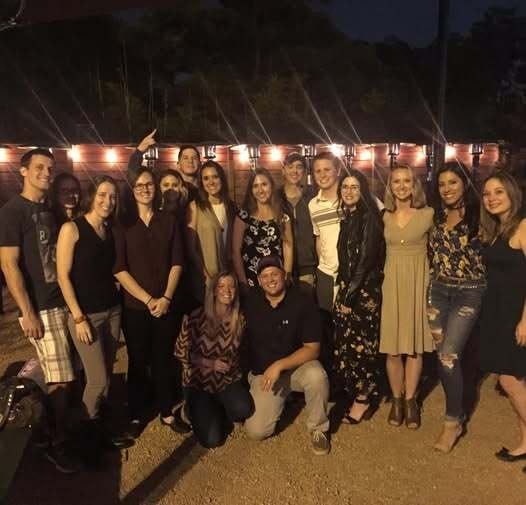
The author’s 10-year reunion | Photo from James Breen

This week, Tangle reader James Breen writes in defense of the high school reunion. Even though “high school felt more like a random sampling of four years of my life,” he writes, the value of the reunion lies in the ability to reflect and reconnect both with old friends and near strangers.

6a092140dc86930001685c60
Extensions
In defense of high school reunions.
reader-essay

By James Breen


This year marks the 20th anniversary of my graduation from high school.  That still seems weird to me, but what I think is weirder is the growing apathy about attending high school reunions. I graduated from one of the big high schools in the Northwest

Show full content
In defense of high school reunions.

By James Breen


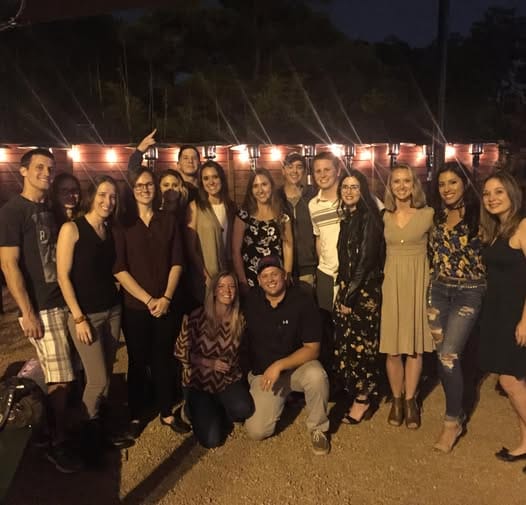
This year marks the 20th anniversary of my graduation from high school.  That still seems weird to me, but what I think is weirder is the growing apathy about attending high school reunions. I graduated from one of the big high schools in the Northwest suburbs of Houston, in a class of roughly 640 from a school of roughly 3000, and less than 10% of my graduating class showed up to our 10-year reunion. Not everyone stayed for the photo, but you can see it’s not a great turnout, particularly considering some of those people are spouses. Comparing notes with friends from different parts of the country, this appears to be fairly typical now. 

But it wasn’t always. 

Let’s back up though — what is the point of a high school reunion? High school tends to be cliquey to begin with, and in this modern age of social media, you’ve probably done a reasonable job of keeping up with the people you spent the most time with. Moreover, your HS class probably has a Facebook page, Discord forum, or something for the people who want to stay in touch to use regularly. But I’ll bet that whatever it is doesn’t get a lot of activity any random week. I would actually argue that this makes sense and is okay, as the primary purpose of such an alumni group is to broadcast and organize things relevant to that specific community — like a charity fundraiser, or a class reunion. 

I get the impression that, because people can use social media, they don't feel like HS reunions matter anymore. “I can and do keep up with the handful of people I cared about staying in touch with, so I don't need or want to spend an evening with the rest of you.” The general inactivity of these online spaces serves as evidence to this point, but as of yet there is no widespread digital activity that can replicate a large group of people all getting in a room and interacting with each other as they prefer. Despite Zuckerberg’s best efforts, to really get that feeling, you’ll need to find a local bar, ballroom, or even the school gym.

Which is to say, the point of a high school reunion is to preserve and foster our sense of community, specifically the community of our youth. “COMMUNITY?!” I hear you shouting into your depression generator, “I don’t even like most of these people, that was the worst four years of my life!” First off, I’m sorry; high school often isn’t the best four years some describe it as (I’m also sorry if it was for you), but people and communities change and grow over time and you never know who you were to someone. We are often noticed more than we assume, but contrary to our expectations we are generally perceived more positively than we expect. Researchers have dubbed this the Liking Gap

I was the student who had his hand in the air, confident in my answer, almost every time — no matter how many B’s I got — and I was fascinated by the kids who never said a word and made straight A’s. I was too intimidated to so much as talk to them, much less ask how they can know the answer and keep it to themselves when no matter how hard I tried I couldn’t keep my mouth shut for half a class! Reunions are a place to bump into that person you admired from afar (or vice versa) and finally tell them that story. To reminisce about the idiots we all used to be and revel in stories that are just as, if not more, funny now than they were then.

I don’t mean to be Pollyannaish. There are definitely going to be people in your class who haven’t changed, who were bullying trolls then and are bullying trolls now. They’ll show up in the comments section to harass whichever brave soul has decided to spearhead the organizing effort for your class. Usually they’re the kind that are too scared or just too busy to show up to the actual event, too — but if they do show up, they’ll probably more or less behave themselves. Small diverse groups like a high school reunion class tend to self-moderate fairly well. You can always stick to the opposite side of the room, and if worst comes to worst you can go somewhere else with the lovely people you’re talking to. 

That’s right, I’m assuming you’ve got a couple of your besties there with you. You should plan on going if for no other reason than to have a great night out with several of your best friends where planning is someone else’s problem and you benefit from a large group rate. 

When was the last time you successfully scheduled something with your friends? Plural! Personally, I struggle to schedule one friend, with how fast my and everyone else’s calendars fill up, nevermind spouses or other people too. I have a double date on my calendar that has had to be rescheduled FOUR times in as many months. Your high school reunion is an excellent opportunity for everyone to clear their calendars for an evening and have some fun, even if you only intend to hang out with your clique. Odds are good you’ve lost track of someone that you actually really like and you’ll strike up a conversation.

I’ll admit I went to my ten-year reunion mostly out of a sense of duty than any particular expectation of value or enjoyment. High school felt more like a random sampling of four years of my life, filled out with a smattering of activities, than any big central thing I specifically needed or wanted to revisit. But I was really glad that I went, because both of the things I talked about above happened to me. A friend of mine and I lost touch when we went to different colleges, and despite us both coming back to Houston to start our careers, it wasn’t until our 10-year HS reunion that we finally reconnected. Now we get together every couple months for a guys’ night out. It used to be more, but then kids entered the picture (see above about life and calendars). 

I had a conversation with a girl I thought of as out of my league, because she’d been looking forward to finding out what happened to me. I wasn’t single at the time so nothing came of it, but being a nerdy guy (despite, or perhaps because of, being a tennis player), it was quite the ego boost!

This is the part where we re-enact a scene from The Fellowship of the Ring where you as Strider (aka Aragorn) tell me I’ve had my breakfast reunion already, and I sound like Pippin responding that, “We’ve had one, yes. But what about second breakfast reunion?” And maybe you’re the same way. Like a movie sequel, your knee-jerk reaction may be, “Yeah, I went, no need to do that again” — especially if you’re in a particularly busy season of life, such as having young kids. 

But that’s a mistake. They keep making Rocky movies (Creed counts) for the same reason NCIS is going on season 24: because the audience wants to know what’s happened to the characters since the last time we saw them. I couldn’t possibly keep up with everyone I went to high school with whom I thought were cool or interesting, but getting together for a once-a-decade party to compare the major notes of life sounds like exactly the right pace. 


A divorced father and man of faith, James is an Engineer who’s favorite bridge building is between people towards each other and the truth.  In his little spare time, he enjoys solving puzzles and spelunking in nerd universes, but he sometimes bowls or plays tennis too.

6a078333dc8693000168102e
Extensions
Here’s my message to America’s college students.
Campus speechMinnesotaSt. OlafCollege campusCollege tourDecencyCuriosityPartisanship
What I said on my recent campus tour.
Show full content
Here’s my message to America’s college students.

I’m Isaac Saul, and this is Tangle. You are reading a preview of a members-only Friday edition. To read it in full, you'll be asked to subscribe.

Did someone forward you this email? Sign up here.


Over the last five weeks, I’ve been criss-crossing the country, hitting college campuses to talk about Tangle, political polarization, and the state of the media. 

I’ve spoken at Rowan University in New Jersey, Davidson College in North Carolina, Brigham Young University in Utah, Harvard University in Massachusetts, and St. Olaf College in Minnesota. Five very different campuses with very different student bodies in very different parts of the country.

There’s so much to say about each of these places and these visits, but the top-line takeaway is what I said last month: The kids are alright — smart, kind, thoughtful, inquisitive, skeptical, and desperate to find reliable sources of information. On every campus, the concept of Tangle was welcome; the most pushback I faced was probably at Harvard, speaking to a group of Nieman Fellows who weren’t really students but mid-career journalists, many of whom seemed more skeptical about the idea Tangle could bridge a trust gap in America.

On the whole, though, it’s been an uplifting and fulfilling few weeks. And as I’ve traveled the country, I’ve been thinking even more deeply about our state of affairs, the real factors driving our divisions, and where we go from here. These thoughts culminated in the last talk I gave on the last stop on my de facto campus tour at St. Olaf, outside Minneapolis. I wrote the talk the morning of May 2, at a coffee shop around the corner from campus, and then delivered it that afternoon.

Today, I’m sharing that talk — which I’ve amended, edited, and rewritten in parts — as our members-only Friday edition. I hope you enjoy.

6a070f8edc8693000160702b
Extensions
A new Fed chair stares down inflation.
Kevin WarshFederal ReserveThe Federal ReserveInflationThe FedJerome PowellFOMCInterest ratesTrump inflationTrump administrationFed independenceHantavirusCPIEconomyIran war
Plus, are journalists properly investigating the official hantavirus narrative?
Show full content
A new Fed chair stares down inflation.

I'm Isaac Saul, and this is Tangle: an independent, nonpartisan, subscriber-supported politics newsletter that summarizes the best arguments from across the political spectrum on the news of the day — then “my take.”

Are you new here? Get free emails to your inbox daily. Would you rather listen? You can find our podcast here.

Today’s read: 15 minutes.📈April's inflation figures show surging costs. Meanwhile, the Senate confirmed Kevin Warsh to be the next chairman of the Federal Reserve. Plus, are journalists properly covering the hantavirus outbreak? Correction.

In Monday’s “Have a nice day” section, we cited a Science Daily story about a retired Australian farmer who accidentally “mortared” a 240-million-year-old fossil into his garden wall. In fact, Mihail Mihailidis did not accidentally mortar the fossil. Mihailidis discovered it in a slab of sandstone he’d bought for a retaining wall, then donated it to science before using it in his construction. While the rest of the story — that scientists had recently formally identified the fossil as Arenaerpeton supinatus — was correct, we unfortunately repeated Science Daily’s misstatement of the facts of the discovery. Thanks to the thorough reader who brought this discrepancy to our attention.

This is our 157th correction in Tangle’s 353-week history and our first correction since April 23. We track corrections and place them at the top of the newsletter in an effort to maximize transparency with readers. (Note: We incorrectly tallied the length of Tangle’s history in our past few corrections, and have corrected that today as well.)

Our latest Suspension of the Rules.

Isaac, Ari and Kmele let loose a bit in today’s episode, discussing Sen. Rand Paul’s son hurling antisemitic remarks at Rep. Mike Lawler and Rep. Alexandria Ocasio-Cortez’s possible political ambitions. Plus, what were some lessons the media should have learned from the Covid-19 pandemic?

Check out the latest here!

Quick hits.
  1. A Democrat-led resolution to pause the conflict in Iran unless Congress authorizes further military action failed by a vote of 49–50 in the Senate. Republican Sens. Lisa Murkowski (AK), Susan Collins (ME), and Rand Paul (KY) voted with Democrats to pass the resolution, while Sen. John Fetterman (PA) was the lone Democrat to vote against it. (The vote)
  2. President Donald Trump arrived in China for a two-day summit with Chinese President Xi Jinping. Xi told Trump that discussions between U.S. and Chinese economic and trade teams had been “⁠balanced and positive” but said relations between the countries could be imperiled if the U.S. interferes with China’s policy on Taiwan. (The talks)
  3. The South Carolina Supreme Court overturned Alex Murdaugh’s conviction for murdering his wife and son, finding that the county clerk of the court where Murdaugh was tried improperly influenced jurors during the trial. Prosecutors intend to re-try Murdaugh, and he will remain in prison while serving a separate sentence for financial crimes. (The latest
  4. Vice President JD Vance announced the Trump administration is deferring $1.3 billion in Medicaid payments to California, saying the state has not taken sufficient measures to combat fraud. The vice president warned that other states could also lose funding if they do not address Medicaid fraud. (The announcement
  5. The number of surveillance flights conducted near Cuba by U.S. military and intelligence agencies has reportedly increased in recent weeks, which U.S. officials said was part of a planned military buildup in the Caribbean in the near future. (The report)
SPONSORED BY THE PENNY HOARDER A new Fed chair stares down inflation.

6 Companies That Send People Money

Most Americans don’t feel financially secure right now.

Prices are up.
Savings are down.
And one unexpected expense can throw everything off balance.

What if your car breaks down, or you have a sudden medical bill?

Ask one of these companies to help….

Today’s topic.

The latest economic news. On Tuesday, the Bureau of Labor Statistics (BLS) released its Consumer Price Index (CPI) report for April, which showed an increase of 3.8% from a year earlier, slightly higher than economists’ expectations. The latest inflation figures represent the highest annual increase since May 2023, up from 3.3% in March. On a month-to-month basis, prices rose a seasonally adjusted 0.6% after rising 0.9% in March. Core inflation, which excludes volatile food and energy prices, rose 0.4% for the month, its highest pace since January 2025.

Reminder: The CPI tracks price fluctuations for 80,000 items in a fixed basket of goods and services, representing everything from gasoline to apples to the cost of a doctor's visit. You can read our coverage of past inflation reports here.

A 3.8% surge in energy prices accounted for over 40% of the monthly increase for all items, while food prices climbed 0.5% and the shelter index rose 0.6%. Airline fares, household furnishings, education and apparel prices all increased in April, while medical care, new vehicles, and communication service prices declined. Separately, the producer price index, which measures the average change in selling prices received by domestic producers, rose a seasonally adjusted 1.4% for the month — its largest monthly gain since March 2022 — and was up 6% on an annual basis. 

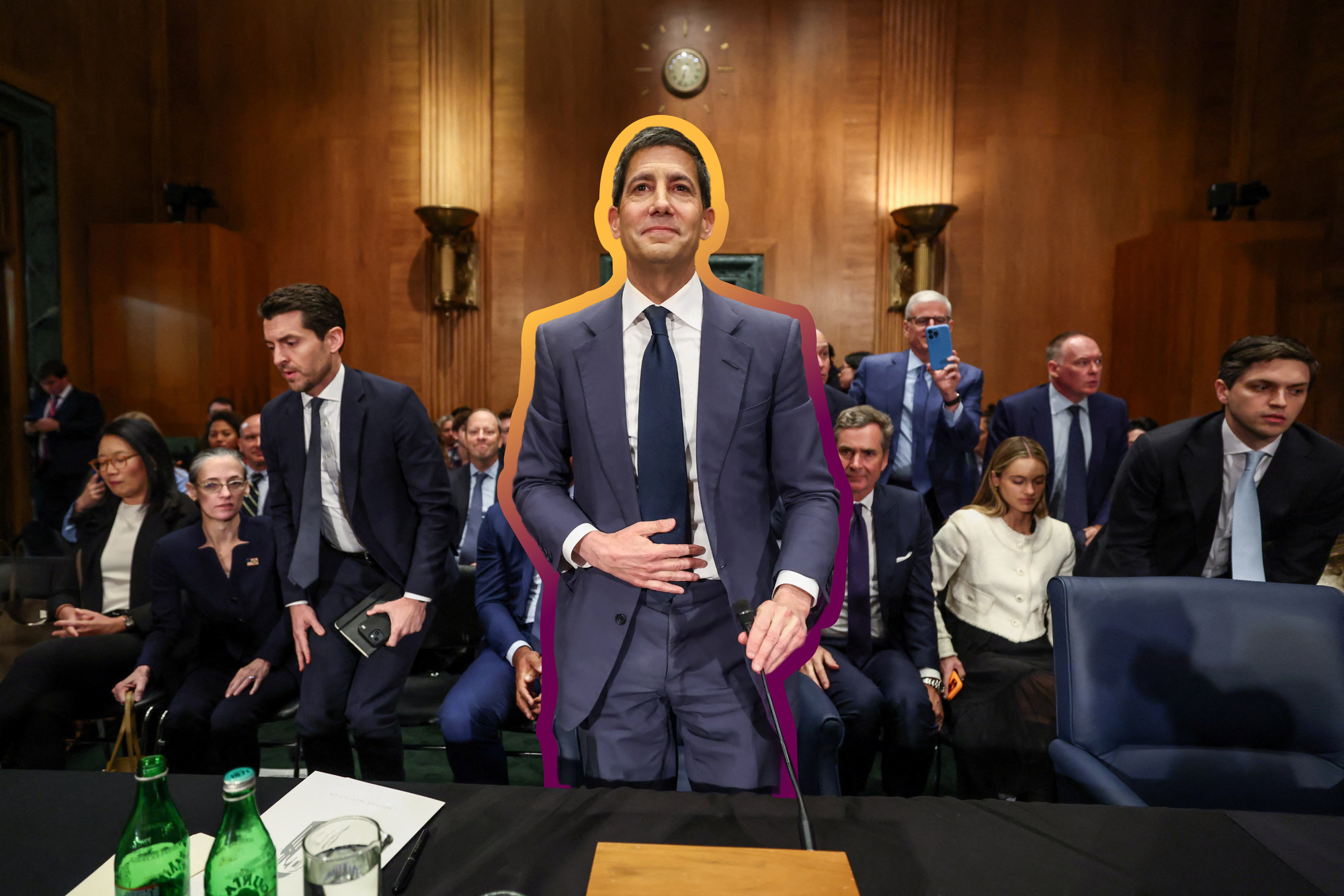
Lastly, on Wednesday, the Senate confirmed Kevin Warsh to be the next Federal Reserve chair by a 54–45 vote. Warsh, 56, served on the Fed’s Board of Governors from 2006–2011 as its youngest-ever governor, acting as a key liaison to Wall Street during the 2008–09 financial crisis. 

Warsh is set to take over from current Federal Reserve Chairman Jerome Powell, whose term ends on May 15. President Donald Trump announced his nomination of Warsh in January, but Sen. Thom Tillis (R-NC) blocked the nomination from advancing until after the Department of Justice dropped its probe into Powell for the cost of the renovation to the Federal Reserve’s headquarters. During his confirmation hearing, Warsh faced intense scrutiny from the Senate Banking Committee over whether he would maintain the Federal Reserve’s independence from President Trump, who has publicly pushed for aggressive interest rate cuts and criticized Chairman Powell for opting to keep rates unchanged amid inflation concerns. The Federal Reserve Open Market Committee will next meet to decide on interest rates on June 16.

We’ll get into what the right and left are saying about the latest economic news below, then Senior Editor Will Kaback gives his take.

What the right is saying.
  • The right is largely mixed on the economic figures, with some criticizing Powell and hoping Warsh can take a different path.
  • Some fault Bidenomics for the bad inflation numbers.
  • Others point out that voters are beginning to blame Trump for high prices.

The Wall Street Journal editorial board wrote about “Jerome Powell’s inflation legacy for Kevin Warsh.”

“[Warsh] may be wondering why he ever signed up for this duty. Tuesday’s consumer inflation data for April show he is inheriting one of the most difficult monetary tasks since Paul Volcker took over from G. William Miller in 1979,” the board said. “Some 40% of the [consumer price] increase was related to the Iran war’s energy shock. But that’s little consolation since so-called core prices, sans food and energy, rose 0.4% in April, an acceleration from 0.2% in March, and 2.8% for 12 months.”

“The latest inflation report marks a dispiriting end to Jerome Powell’s eight-year tenure as Fed Chair. The press focuses mainly on President Trump’s relentless attacks on Mr. Powell and praises him as a stalwart of Fed independence. We’ve supported him against those unfair assaults. But Fed chiefs are measured above all by their stewardship of the economy, especially price stability. On those grounds, Mr. Powell’s tenure has been a notable failure,” the board wrote. “The real challenge for Mr. Warsh will be navigating the economic reality he inherits of renewed inflation, an oil shock affecting consumer confidence, and a President who always wants lower interest rates but higher tariffs.”

In The New York Sun, Stephen Moore said “blame Bidenomics and big government for today’s stubbornly high inflation.”

“The new consumer prices report showing a 3.8% price rise in April confirms what Americans have been complaining about for months: Inflation is squeezing family budgets,” Moore wrote. “Oil and fertilizer supply disruptions in the Middle East are driving up prices here at home. Yet that’s only part of the inflation story. Consumer prices overall are up nearly 30% since Covid-19 derailed the American economy six years ago… It’s important to remember why this spurt of rising prices has hit consumers right in the nose — er, wallet — if we are going to solve the affordability crisis.”

“If you’re angry about the high price of nearly everything, Bidenomics is the primary villain… During Covid-19 and its aftermath, Uncle Sam spent more than $4 trillion. Remember the Build Back Better Act, CHIPS and Science Act, Inflation Reduction Act, and other ‘stimulus’ bills? Every penny of that spending blitz was borrowed and essentially printed,” Moore said. “Here’s the impending political and economic danger for Republicans. The solution isn’t just to get the oil flowing through the Persian Gulf. We also have to reduce government spending right now… If Republicans don’t start watching their Ps and Qs, as the old saying goes, we could see another Biden-type inflation surge with voters mad as hell.”

In Cato, Ryan Bourne, Jai Kedia, and Nathan Miller wrote “President Trump’s approval on inflation is now worse than President Biden’s ever was.”

“The Economist/YouGov’s May 1–4 poll shows 25% of Americans approve of the way Donald Trump is handling inflation/​prices while 69% disapprove — a net of –44%, lower than any point in either Biden or Trump’s presidencies,” the authors said. “That’s a remarkable development. Biden oversaw an inflation peak of 9%, which Trump hasn’t approached, yet Trump’s disapproval has surpassed Biden’s worst… Voters didn’t just want lower inflation, though; they wanted prices to fall.”

“More recently, inflation has accelerated again. The consumer price index increased 0.6% in April after rising 0.9% in March, meaning prices are up 3.8% in the past year… Some of those price rises were to be expected. War in Iran has driven gasoline prices 28.4% above year-ago levels, and that mostly explains the 20.7% surge in the highly salient airline fares. But the concern with oil shocks is that they can pass through into virtually all other prices,” the authors wrote. “These numbers are particularly problematic for Trump given that this is an election year where affordability will be at the forefront of voters’ minds.”

What the left is saying.
  • Many on the left argue that the latest inflation numbers are directly caused by the war in Iran.
  • Some argue that the economy is worse for consumers than for large companies.
  • Others say the Fed’s power to affect the economy is diminishing, and new Fed Chair Kevin Warsh can’t change that.

In Bloomberg, John Authers said “Warsh could find inflation too hot to handle.”

“US inflation is too hot for comfort. The numbers for April reveal that the headline rise in consumer prices reached 3.8%, continuing an upward trend that started before the Iran war,” Authers wrote. “The greatest problem is, of course, the spike in energy prices driven by the blockage of the Strait of Hormuz. Energy prices are always erratic and there is little monetary policy can do to control them, which is why central banks tend to look at core inflation... However, inflation excluding energy is still rising, while an array of other statistical measures of core price increases are also turning upward.”

“Fittingly, the inflation data dropped just as the Senate confirmed Kevin Warsh as a governor of the Fed, to replace the ultra-Trumpy Stephen Miran,” Authers said. “He arrives just in time for two-year Treasury yields to touch 4%, their highest since June last year, buoyed by the strong market expectation that the fed funds rate cannot move far from where it is now… There are worse inheritances for Warsh. The AI shock is strong enough to help the stock market withstand interest rates where they are, while the combination of rising inflation and stable employment should be enough to convince even the current administration that lower interest rates are not called for just now.”

In MS NOW, Ali Velshi argued that “for many Americans, the recession is already here.”

“The old-fashioned way of thinking about a recession is that it’s two consecutive quarters of negative growth in gross domestic product, GDP being the broadest measure of all economic activity in the country. Not only is that view of a recession outdated, it also may not fit an economy that, for a whole lot of Americans, is already feeling like one that’s in a recession,” Velshi said. “In May, consumer sentiment was the worst it has ever been…So what’s going on? The simplest way to understand it is this: There isn’t one American economy right now, there are two.”

“Economists call this a K-shaped economy, because if you draw it on a chart, the line for wealthier households invested in the stock market is going up (the top of the K), and the line for everyone else is flat or going down (that’s the bottom),” Velshi wrote. “Across every income group, real spending has actually turned slightly negative in recent months. So what’s holding the number up? Two things. The first is the government. Defense spending crossed $1 trillion this year, roughly a 15% jump from the year before, driven in large part by the war with Iran… The second is a major economic boom in a single narrow sector: companies pouring money into building data centers for artificial intelligence.”

In Semafor, Liz Hoffman wrote “the Fed’s most powerful economic lever is losing its edge.”

“[Kevin Warsh is] signalling a willingness to lower interest rates — either because the president wants him to, or because he thinks current conditions justify it. It’s not entirely up to him, and the market is losing faith in that outcome anyway, but the bigger question is whether it would matter,” Hoffman said. “The US economy is less sensitive to interest rates than it used to be. The long shift from manufacturing — which responds to higher borrowing costs (factories are expensive) in a way that services don’t — has blunted one of the Fed’s most powerful economic levers. The ultrarich, whose spending has ballooned, don’t care what money costs. Neither do the tech companies fueling the AI boom.”

“Another kink in that policy-transmission hose is that the Fed only controls overnight interest rates, not the longer-term levels that determine what money costs in the real economy. Expectations of inflation (if you’re a pessimist) or growth (if you’re an optimist) have kept longer-term borrowing costs higher than you’d expect after six rate cuts,” Hoffman wrote. “The economy is being tossed around by supply shocks, which central bankers can’t control, rather than the demand shocks they can. The Iran war is a shock to the supply of oil. AI is a shock to the supply of knowledge. The Trump administration is a shock to the supply of certainty. Put it together and central bankers are pushing on a string, and getting less bang for their buck on interest rates.”

My take.

Reminder: “My take” is a section where we give ourselves space to share a personal opinion. If you have feedback, criticism or compliments, don't unsubscribe. Write in by replying to this email, or leave a comment.

  • The economic shocks of the Iran war have fully arrived.
  • Inflation could now persist long after the immediate conflict ends. 
  • Warsh has a tall task ahead of him, and his independence from the White House is a key test. 

Senior Editor Will Kaback: Economic policymaking is hard, and it has a tendency to make even the smartest decision-makers look out of their depth when predictions don’t pan out. Tangle has always covered debates about the health of the economy, and I can honestly say — whether I’ve been a reader, researcher, editor, or writer for those editions — that I typically come away struggling to figure out which competing theories I find most persuasive. But every so often, the data from moments like this one tell a clear, simple story. 

The war in Iran has disrupted global energy markets, driven up prices, and led to rising inflation here in the United States. Unlike, say, the debate over Bidenomics or the tax policy put forward in the One Big Beautiful Bill, this interpretation doesn’t seem to be a source of disagreement. Opinions vary on whether the potential benefits of attacking Iran justify this disruption, but there’s no longer much debate that this war is directly responsible for heightened economic pain.

The question now is how bad it will get — and for how long. 

To state the obvious, the longer the war lasts — and the Strait of Hormuz remains effectively closed — the longer inflation will remain a problem. Unfortunately, that may not be on the immediate horizon. As Isaac documented on Tuesday, the productivity of peace talks (and length of the conflict) is difficult to gauge, but President Trump’s recent comments suggest the fighting could soon ramp back up. Additionally, new reports about Iran’s regained missile capabilities suggest they aren't ready to fold anytime soon.

Alternatively, the U.S. and Iran could soon reach a deal that reopens the Strait of Hormuz and restores some degree of stability to global markets. President Trump is currently meeting with Chinese President Xi Jinping at a high-stakes summit in China, where the two are expected to discuss the war. China is playing a behind-the-scenes, but pivotal, role in the conflict right now. It’s reportedly planning to provide Iran with weapons and could benefit from selective exceptions to Iran’s shutdown of the strait. A Chinese supertanker sailed out of the Persian Gulf yesterday — now, it’s testing the U.S. Navy’s blockade. 

The drama on the high seas raises the stakes of a rare face-to-face standoff between the two superpowers. Secretary of State Marco Rubio said Trump will push Xi to take a more active role in mediating an end to the conflict, saying, “It’s in their interest to resolve this.” Rubio is alluding to the economic pain China will continue to experience if the Strait of Hormuz remains closed, but that’s only one input China is weighing. The longer the U.S. remains engaged in Iran, the more the U.S. military’s resources will be depleted. Plus, with each passing day, Trump’s domestic political challenges become more acute. Xi and China are ultimately balancing their own economic challenges against the strategic benefit of a weakened United States. 

Even in the best-case scenario where the Trump–Xi summit produces a deal to pressure Iran to reopen the strait, inflation will get worse before it gets better. Energy markets have suffered massive shocks, the kind that don’t immediately rebound as soon as Trump declares the war over — or even after the strait reopens. 

An analysis from Oxford Economics published in April found that inflated oil costs caused by conflicts persisted for two to three years. In the Ukraine war, fuel prices in the U.S. remained elevated for roughly a year after Russia’s full-scale invasion before moderating to pre-war levels. That’s encouraging because it suggests energy markets can absorb the effects of upheaval over time. But it’s also deeply discouraging because a year of rising gas prices is a long time, and we still don’t know how bad the Hormuz crisis will get. 

Many Americans cannot, or will not, tolerate $4.50 gas (or worse) for an extended period, which creates an obvious political problem for the president and his party as we approach the midterms. Trump recently commented that he doesn’t “think about Americans’ financial situation” in relation to the Iran war. That makes for easy fodder for attack ads, but I’m also not sure how true it is behind the scenes. More likely, the White House hasn’t figured out how to reconcile the president’s insistence on continuing the war with a coherent strategy for our mounting economic challenges. But if inflation runs hot for another month (or two, or three), there will be no hiding from political reality in November.

In fact, that reality is already here. As Zachary Basu wrote in Axios this week, Trump is facing a “five-alarm economy” — surging prices, shrinking paychecks, mounting debt, cratering consumer confidence, and increasing pessimism among small businesses. Despite their redistricting gains, Republicans will probably lose the House, and you can draw a straight line from rising prices to that forecast. What’s more, the president seems to have learned little from his predecessor, whose administration suffered politically for downplaying inflation and casting it as “transitory.” Again, the connection between the Iran war and inflation is obvious (to say nothing of the impact of Trump’s tariffs), and publicly, the president seems deeply indifferent to the pain the conflict is causing. Forget the politics of it all; that posture is just plain aggravating to me as a citizen. 

Personally, the most unnerving aspect of our economic outlook is how clearly it demonstrates the fragility of the systems that make life “normal” — an understanding that was laid bare during Covid and now feels like a wound being reopened. Consider these stories from the past week: A massive Japanese snack company is switching to black-and-white packaging because the Iran war has disrupted supplies of an ingredient used in its typical packaging ink. The cost of food staples like tomatoes has risen up to 30% from pre-war levels, largely because of diesel prices. Healthcare supply chains have been similarly impacted. Auto industry insiders are warning that we’re weeks away from mass shortages of motor oil. Virtually all forms of transport — not just cars — are getting significantly more expensive. And a U.S. airline just shut down, unable to weather rising jet-fuel costs. 

My three years at Tangle have instilled a kind of reflex to check myself when I start to default to worst-case scenario thinking. But when I try to find optimistic outlooks here, I’m not seeing many compelling arguments. In our research for today’s edition, the most pointed defenses of the economy boiled down to blaming President Biden and arguing that Trump can bring down inflation by going after grocery price gouging. One is an admission of the situation, while the other is a potential solution to only one element of the problem, one that’s pretty far down the priority list at the moment. 

Wherever we’re headed, the big new variable in the mix is Kevin Warsh. When we covered his nomination back in February, I wrote that his singular focus on containing inflation as a Fed governor made him an intriguing candidate to lead the central bank at a time when the president was pushing aggressively for interest rate cuts. That was before we attacked Iran, and before the March and April inflation reports. Warsh’s inflation-curbing instincts could be well suited for this moment, but they could quickly bring him into conflict with President Trump. Will he buck the president if inflation continues to spiral? Or will he turn around and push for rate cuts? 

It feels odd to ask these questions about someone assuming a position that’s supposed to be fully independent of the president, but after the way Jerome Powell’s term ended, it’s necessary to consider his replacement’s fealty to the White House. Ultimately, President Trump’s anti-inflation strategy hasn’t arrived yet, and the new Fed chair will have an important role to play in whether Trump can execute it.

Take the survey: How concerned are you about inflation? Let us know.

Disagree? That's okay. Our opinion is just one of many. Write in and let us know why, and we'll consider publishing your feedback.

Your questions, answered.

Q: For a few weeks, it has seemed to me that the press is repeating what officials tell them [about hantavirus], with very little questioning, which is concerning. Your take doesn’t seem to shift much from that: listed as a fact is “It transmits through what every medical source I’ve read describes as ‘close contact’ with an infected person.”

So we the public hear that, but then see an increasing number of positive cases being identified. These two “facts” seem at odds... how did such a range of passengers get this if “close contact” was required?

— Eric from Elkridge, MD

Managing Editor Ari Weitzman: Maybe a quibble, but I would say the press has done a lot of questioning — the writers we summarized from the right and left, along with the epidemiologists we quoted, all brought a critical lens to this story yesterday. They just haven’t challenged the scientific consensus. And honestly, I think the data we’re seeing confirms that consensus. The Andes strain of the hantavirus seems to spread through bodily fluids, and in some cases “aerosolized saliva.” That requires heavy exhalations from the mouth, typically through a cough or sneeze, and is very different from other respiratory infections (like the flu), which can be transmitted simply through shared breath

Confirmed cases are going up because these people are on a very unusual cruise ship — it’s small, carrying a maximum of 170 passengers and crewed by about 70, and they’ve been at sea for a while following a tour of the Antarctic that was disrupted by the confirmed hantavirus infection. They’ve shared close quarters and would have had lots of opportunity for close contact — which can simply mean sitting near someone for a prolonged time while eating. Considering the virus’s long incubation period, some of them were likely infected before they knew what was going on. Hantavirus is still a contagious disease, so it’s not a surprise that cases are increasing — nor is it surprising that they’re going up slowly.

We’ll see what we learn in the coming weeks. Maybe something about this Andes strain is very different from previously studied ones, and the facts will bear that out. I’m not saying that won’t happen; it just seems unlikely based on what we know so far.

Want to have a question answered in the newsletter? You can reply to this email (it goes straight to our inbox) or fill out this form.

The road not taken.

Our decisions for the main topics to cover this week were all fairly non-controversial among our editorial staff. The Virginia redistricting decision was the clear story coming out of the weekend, we knew we were due for an Iran update, and the spike in inflation pushed us to cover the new data today. The only thing close to a judgment call we made was to hold our coverage of the Trump–Xi summit until after it occurred (which is standard practice for us) — that decision opened us up to discuss hantavirus on Wednesday, which coincided with the Americans on the infected Dutch cruise ship returning home. 

Several readers criticized us for adding to hysteria by choosing to give attention to the story at all (see today’s Extras section), but the concern from other readers about the outbreak (see today’s reader question) does seem to justify our decision.

SPONSORED BY THE PENNY HOARDER

Your savings account looking a little… theatrical lately?
Like every time you open your banking app it whispers, “good luck.”

Turns out adulthood is mostly just moving money around and pretending you understand APRs. Here are 6 companies that can help you save money, spend smarter, and panic slightly less.

Learn more The extras.
  • One year ago today we wrote about President Trump’s executive order to reduce drug prices.
  • The most clicked link in our last regular newsletter was our recent video about the new era of moon exploration.
  • Nothing to do with politics: NASA releases thousands of Artemis II photos.
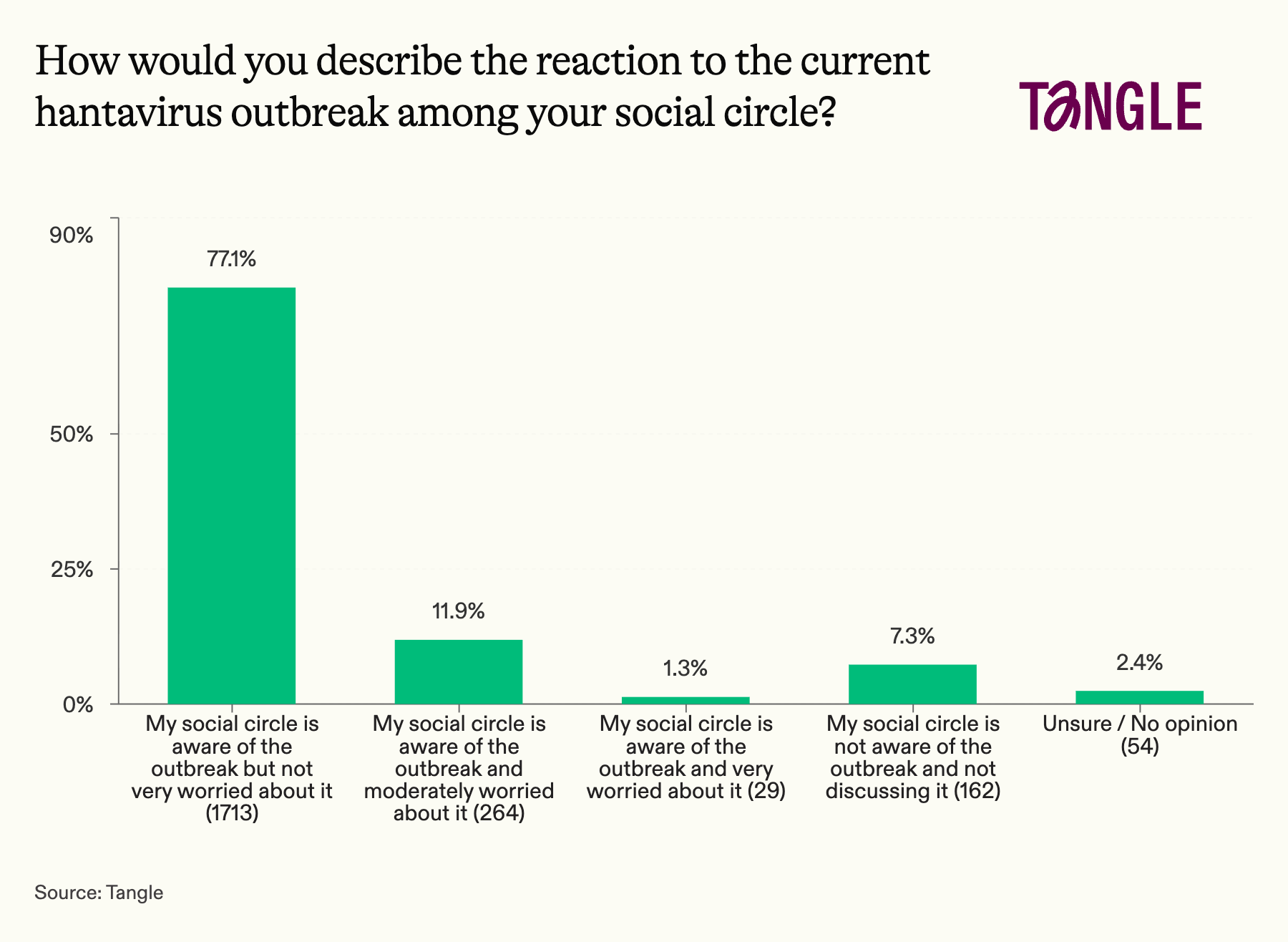
  • Our last survey: 2,222 readers responded to our survey on hantavirus with 77% saying their social circle was aware of the latest outbreak and not very worried. “Staying abreast and educated, but not panicking is probably the right framework,” one respondent said. “Nothing burger… wasted newsletter,” said another.
A new Fed chair stares down inflation.
Have a nice day.

The Taylor’s checkerspot butterfly has lost 97% of its native Pacific Northwest prairie habitat, and without human intervention, it might have disappeared completely. The intervention is happening inside a prison greenhouse, where incarcerated women tend to the endangered species as trained butterfly technicians — tracking egg clusters, monitoring larvae, and logging data. The program has helped raise and release 80,000 caterpillars into restored prairie habitats since 2011. For Margaret Taggart, who is set for release from prison in 11 months and is now considering pursuing environmental work, the work has meant something harder to quantify. “It gave me a belief in myself that I can learn and grow,” Taggart said. Reasons to be Cheerful has the story.

6a05d53a6a17d50001b7ac49
Extensions
Why is everyone suddenly racing back to the Moon?
Why is everyone suddenly racing back to the Moon? For more than 50 years, no human set foot on the lunar surface. But now, the United States, China,
Show full content
Why is everyone suddenly racing back to the Moon?

Why is everyone suddenly racing back to the Moon?

6a05115e6a17d50001b78650
Extensions
The hantavirus outbreak.
HantavirusCenters for Disease Control and PreventionPublic healthWorld Health OrganizationRFK JrCaliforniaCovid-19
Three deaths and nine confirmed cases are linked to the cruise ship incident so far.
Show full content
The hantavirus outbreak.

I'm Isaac Saul, and this is Tangle: an independent, nonpartisan, subscriber-supported politics newsletter that summarizes the best arguments from across the political spectrum on the news of the day — then “my take.”

Are you new here? Get free emails to your inbox daily. Would you rather listen? You can find our podcast here.

Today’s read: 13 minutes.🦠An outbreak of the Andes strain of the virus spurred a global response, but public health officials say the risk remains low. Plus, a deeper look at hantavirus's origins. The modern moon race.

For more than 50 years, no human has set foot on the lunar surface. But now, the United States, China, Russia, and others are all planning to return — not just to visit, but to stay. In our latest video, Associate Producer Aidan Gorman explores why the world’s great powers are suddenly dead set on getting back to the moon, and how the race could shape the future beyond Earth.

Check it out below.

Quick hits.
  1. A senior Pentagon official told Congress that the estimated cost to date of the Iran war is $29 billion, up from a $25 billion estimate given at the end of April. (The update) Separately, U.S. intelligence agencies have reportedly assessed that Iran has regained access to 30 of the 33 missile sites along the Strait of Hormuz, in addition to most of its other missile sites, launchers, and underground facilities. (The report)
  2. Food and Drug Administration Commissioner Marty Makary resigned, reportedly over the agency’s decision to authorize fruit-flavored e-cigarettes, which he opposed. President Donald Trump was reportedly preparing to fire Makary before his resignation. (The resignation)
  3. The Senate voted 51–45 to confirm Kevin Warsh to the Federal Reserve’s Board of Governors. The chamber is expected to vote on Wednesday on confirming Warsh to be chair of the central bank. (The vote)
  4. President Trump arrives in China this morning for a summit with Chinese President Xi Jinping. The two are expected to discuss trade relations, energy, and the Iran war. (The summit)
  5. Russia launched an estimated 200 drones at Ukraine, attacking locations across the country. At least five people were injured, and Ukrainian President Volodymyr Zelensky said that over 100 Russian drones remain in Ukrainian airspace. (The attack)
in partnership with butcherbox The hantavirus outbreak.

Why Isaac Uses ButcherBox at Home

How livestock is raised affects more than ethics — it shapes the nutrition and quality of the meat we eat. ButcherBox partners with farms that raise animals in healthier, lower-stress environments.

What that means:
•A high-quality protein source — not a grab-and-go, shelf-stable option
Higher levels of beneficial nutrients like omega-3s
• Zero antibiotics, growth hormones, or harmful additives

Simply put: healthier animals create healthier meat.

“I'm a meat eater and I love to cook. But I also worry about sustainable farming and impressing my wife. Maybe the biggest unlock for me in the last few years has been ButcherBox. I'm genuinely astounded at the quality of the meat, and the convenience of having the box show up on my front door once a month cannot be beat.” — Isaac Saul, Founder of Tangle

Code TANGLE gets you $60 off plus free protein for life!

Unlock $60 off ButcherBox Today’s topic.

The hantavirus outbreak. On Monday, 18 Americans returned to the United States from a cruise ship where passengers had contracted a rare strain of hantavirus. The Centers for Disease Control and Prevention (CDC) transported the passengers to specialized quarantine facilities in Nebraska and Georgia; one American tested positive for the virus. As of Tuesday afternoon, three deaths — a Dutch couple and a German woman — nine confirmed cases and two more suspected cases have been linked to the cruise ship outbreak. Health officials say the risk to the general public remains low.

Back up: Hantaviruses are a family of viruses typically transmitted between rodents, which can then infect humans who touch or breathe in rodent urine or droppings. The Andes strain, which the World Health Organization (WHO) identified in the cruise ship outbreak, is the only known subtype that allows for person-to-person transmission. Symptoms of the Andes strain include fatigue, fever and chills, and in severe cases, can cause a respiratory disease called Hantavirus Pulmonary Syndrome, which has a case-fatality rate of 38%. 

Approximately 150 people were aboard the MV Hondius, a Dutch polar-expedition cruise ship which set sail from Argentina on April 1, when a 70-year-old Dutch man fell ill with respiratory symptoms and died on board of a then-undetermined cause. Thirteen days after his death, on April 24, the man’s wife and over two dozen other passengers disembarked from the vessel on the remote island of St. Helena in the Southern Atlantic. The Dutch woman then flew to South Africa, where she died from the virus. On May 2, a German woman still on board also died from the virus. That same day, the WHO identified the incidents as a hantavirus outbreak; shortly after, health organizations began isolation and evacuation efforts. Most passengers have now returned to their home countries, and the ship is expected to dock in the Netherlands on Sunday or Monday.

Health officials acknowledge the novel, multi-country nature of the spread but say a larger outbreak is unlikely. On Tuesday, WHO Director-General Tedros Adhanom Ghebreyesus said that “all suspected and confirmed cases have been isolated and managed under strict medical supervision, minimizing any risk of further transmission.” 

Late last week, the CDC activated its Level 3 response, the agency’s lowest level of emergency activation. In a press conference on Monday, Health Secretary Robert F. Kennedy Jr. said the CDC has the outbreak “under control,” and that “we’re not worried about it.” President Donald Trump added that the CDC “acted very, very quickly” and called the disease “very hard to catch.” 

Below, we’ll explore what the left, right, and epidemiologists are saying about the hantavirus outbreak. Then, Managing Editor Ari Weitzman shares his take.

What the left is saying.
  • The left is concerned about the outbreak, particularly as the Trump administration has divested from global health systems. 
  • Some say health officials are overconfident in declaring what they know. 

In The Bulwark, Jonathan Cohn asked “seriously, how nervous should we be about hantavirus?”

“Donald Trump has spent much of his second presidency waging an all-out assault on America’s global health infrastructure — by downsizing or eliminating existing agencies and programs, and transforming them in ways that make them instruments of other goals like extracting mineral rights or ending DEI. This assault has also included withdrawing from the World Health Organization, and from global health cooperation more generally,” Cohn wrote. “That has left the federal government without some of the tools, systems, and personnel it has deployed in the past. The result is a federal response to outbreaks that is weaker overall, and could falter in the face of a more serious threat.”

“The ability to assess this hantavirus outbreak so quickly is testimony to the sophisticated international infrastructure now in place for disease surveillance and response. And that infrastructure didn’t appear out of thin air. It was constructed over time, with much of the essential money, leadership, and expertise coming from the United States,” Cohn said. “The worry now… is that the infrastructure is losing American support, thanks to Trump.”

In The New York Times, Zeynep Tufekci wrote “a new viral outbreak. The same mistakes all over again.”

“During a press conference last week, a W.H.O. official addressed people who had disembarked, asking them to present themselves to health care authorities if they were developing symptoms. W.H.O. officials also kept defining transmission as happening through close prolonged contact,” Tufekci said. “But even these definitions still suffer from a lack of learning from the Covid experience, such as limiting exposure to being within about six feet for a cumulative period of more than 15 minutes. We know from the study of airborne transmission that that guidance may be too rigid and fail to capture the full risk profile of the virus.”

“Public health officials… would be more helpful if they stopped constantly reassuring people about the likelihood of future events they can’t accurately calculate — like the odds of a pandemic occurring or how long this outbreak could last — and just told us more details about the things that matter: mode of transmission, lengthy period of incubation and the inevitable uncertainty of something for which there is little actual knowledge,” Tufekci wrote. “If we’re lucky, this hantavirus outbreak will peter out… If we are unlucky? It should be unthinkable, but here we are.”

What the right is saying.
  • Many on the right say the risk of a global health crisis currently appears low. 
  • Others note how the outbreak has fueled doomerism on the left. 

In The Spectator, John Power suggested “hantavirus doesn’t look like the next Covid.”

“There is only one strain of hantavirus which we know can spread from person to person, the Andes strain of the illness. The Andes strain can only be spread through ‘very close contact.’ That generally means things like sharing drinks, hugging and other things we would not normally do with strangers,” Power said. “That means that the non-pharmaceutical interventions we saw during Covid, such as lockdown or ‘hands, face and space’ measures would have little impact on the transmission of the virus. And because the disease is so difficult to spread it is unlikely to develop into a full pandemic.

“The need for ‘very close contact’ for human-to-human transmission is a characteristic that hantavirus shares with monkeypox… Monkeypox has indeed been a challenge, particularly in parts of Africa, but most people and indeed most dogs have been able to avoid the worst of it,” Power wrote. “From what we know at this stage hantavirus is, in some ways, more like monkeypox than coronavirus. A problem, but a manageable one, one that the vast majority of people will be able to avoid by keeping calm and carrying on.”

In National Review, Noah Rothman wrote about “the market for a new pandemic.”

“There isn’t a cable news producer on earth who could resist the temptations presented by the outbreak of a rare and deadly communicable disease — and on a cruise ship, no less,” Rothman said. “There is a species of news consumer who has little interest in relative risk. They seek out stronger stuff in their media diet. For those who want the press to stimulate their already hyperactive amygdala, there is no shortage of irresponsible communicators who are willing to trigger their readers’ fight-or-flight response by evaluating the outbreak through the prism of their contempt for the Trump administration.”

“More perverse still is the unstated wish fathering the thought that this virus could bloom into the next global pandemic. Maybe if it did, and if many more people died, the ‘abundance of caution’ that typified the public health apparatus’s draconian response to Covid-19 would be retroactively vindicated?” Rothman wrote. “Fortunately for the rest of us, this hantavirus outbreak is unlikely to relieve this unhappy cohort of their bitterness. The mainstream news outlets that are covering this outbreak like a tragedy rather than a disaster are getting the story right. But there will always be a market for doomerism.”

What epidemiologists are saying.
  • Epidemiologists say the risk level is still low, but some say the CDC can better communicate with the public. 
  • Others highlight the importance of international cooperation in limiting the disease’s spread.

In Your Local Epidemiologist, Dr. Katelyn Jetelina shared a “hantavirus update.”

“This virus has a long incubation period, up to 45 days (median 18 days), during which it can enter the body, latch on, and wreak havoc. Unfortunately, we are at the mercy of time and biology,” Jetelina said. “The international response has been fantastic so far. I continue to be impressed by WHO’s coordination across multiple countries, their public briefings, the swiftness of contact tracing and testing, and their success in negotiating with Spain to allow the boat to dock.”

“Public health scientists are on it. CDC scientists are actively involved behind the scenes, including standing up an Emergency Operations Center and coordinating with the WHO,” Jetelina wrote. “That said, I do have some major questions for CDC leadership and the administration. I want to know: Why haven’t they deployed a team to help with the international response? Why haven’t physicians been alerted through the Health Alert Network (HAN) as they typically would? Why is there zero communication with the public or updates to the website? This is abnormal. The muffling of scientists and the lack of transparency are unacceptable for Americans’ safety and security.”

In RTI, Claire Quiner and Lauren Courtney wrote about “what you should know about the Andes virus​​​​.”

“This scenario demonstrates, in real time, our vulnerability to infectious diseases. It shows how quickly infectious diseases that were previously isolated to a single location can reach distant corners of the globe. It underscores just how small our world has become,” Quiner and Courtney said. “It also highlights the important role of multi-country health agreements — such as the International Health Regulations (IHR) — that are put in place to handle these types of international events. Because of the IHR, ships like the MV Hondius have a responsibility to report to local authorities if people on board are sick and to follow stringent protocols to contain it.”

“Should we be concerned about another global pandemic? Many of our friends and family have been asking us this question, and our response has generally been, ‘probably not,’” Quiner and Courtney wrote. “Right now, the risk to the global population remains quite low, largely because the pathogen was detected and identified early. Cases are being contained and managed to prevent further spread and escalation. The type of international coordination that we are seeing for this outbreak, guided through the IHR, is what helps protect us from known infectious threats.”

My take.

Reminder: “My take” is a section where we give ourselves space to share a personal opinion. If you have feedback, criticism or compliments, don't unsubscribe. Write in by replying to this email, or leave a comment.

  • It’s tempting to compare this outbreak to the onset of Covid-19, but the situations are very different.
  • Hantavirus is deadly and scary, but its transmissibility is low and the cases are being closely tracked.
  • We should all be careful not to overreact and to closely vet any information we learn before sharing it.

Managing Editor Ari Weitzman: I remember my moment clearly. After a few months of applications and interviews, I had just started working at my second-ever software engineering job for a health insurance company in Pittsburgh, Pennsylvania. My wife — well, then-fiancée — and I had just moved back east from California, where we had spent the previous four years, and were settling into our new home and new life. A higher-up in the company was holding an informal corporate-style roundtable with all the new hires, the kind of “rap session” where an exec flips her chair around to jam about what it’s like working for COMPANY, and COMPANY’s values, and all of that good stuff. I don’t remember really much of anything specific about that meeting, except for a question she asked us towards the end.

“Is anyone feeling nervous about this coronavirus?”

It was mid-February of 2020, and reports were just starting to circulate online. Some new viral respiratory infection was taking hold in China. People were calling it different things — coronavirus, Covid-19… SARS-CoV-2, if you worked at a healthcare company (or with very pedantic people). Apparently, it was like the flu, but like a really bad flu. Cases were being reported in Australia and Europe. Some people said it had hit California.

I raised my hand to respond with the wrongest, least informed answer I may have ever given in my life.

“No, I’m not nervous. It’s like the flu, right? I don’t know, I’m not too worried about it.”

That was my moment of reacting to news of Covid-19 for the first time. And I wasn’t an aberration; most people in the room nodded along, and even the healthcare executive leading our discussion didn’t correct me (remember, this was February 2020; we simply didn’t know yet). Most people I knew were as unconcerned as I was, or they were following along with case reports as an idle curiosity — an explainer about airplane circulation here, a report about a Wuhan lab there. 

Two weeks later, and my entire team started working remotely, downloading Zoom, and learning how to use new terms like “hybrid office.” My fiancée and I had to scramble to make our planned August wedding “Covid-safe” (no one contracted a case from our wedding, more because it came rather fortunately in the middle of a blissful trough in the pandemic and less because of our attempted precautions, which quickly evaporated once the celebration began). The entire world was plunged into confusion, division, sickness and all manner of major disruption over the next two years, and the Covid-19 pandemic would prove to be the most impactful global event since 9/11.

Now, when I hear about the hantavirus cases across the globe, I find myself thinking similar thoughts as the ones I expressed in that first-floor conference room six and a half years ago: It doesn’t seem that bad… I don’t know, I’m not too worried about it. That symmetry, more than anything else, concerns me. Those three years at the beginning of the decade were like a giant hole in the middle of my life (okay, not the whole time — that span certainly offered its beautiful moments). 

Pretty much every public health expert is saying the same thing: This is not like last time, this is a very different disease, the chance that this becomes a global pandemic is not likely — which translates from scientific language into plain English as, “No, you’re right not to be too worried about it.” But that unanimity feels oddly discomforting — and once more, I’m not an aberration. A lot of people I talk to are expressing a similar concern, which feels like a collective trauma response. That feeling is perhaps best articulated by a text a friend shared with me earlier this week: Everyone I know who has a PhD thinks it’s going to be nothing, so I think it’s going to be a huge deal.

But let’s pause there. Our personal reactions to Covid-19 — when public experts were sounding the alarm — have absolutely no bearing on what will happen now. Whether you were wrong before and over-correcting now, or you were so impacted by the pandemic that you’re in denial that this could happen again, basing your beliefs on personal narratives is not a logical chain of reasoning. This is magical thinking, not rational thinking. Only the facts of what’s happening now will have any impact on what happens later.

So let’s break down the facts. Hantavirus is a rare, but often severe, disease that causes heavy flu-like symptoms like fever, fatigue, and muscle aches. The virus spreads through rodent feces and urine, and the Andes strain is the only hantavirus known to spread from human to human. The Andes strain (or ANDV, if you work in healthcare or with pedantic people) has been a known entity for long enough for scientists to understand some key aspects of the virus. It transmits through what every medical source I’ve read describes as “close contact” with an infected person. Its incubation period (the time between exposure and onset of symptoms) is typically about 1–6 weeks but can be longer. A person who contracts a hantavirus can develop either Hantavirus Pulmonary Syndrome (HPS), which comes with breathing difficulty, or hemorrhagic fever with renal syndrome (HFRS), which impacts the kidneys. The Andes virus is associated with HPS, not HFRS. Much of our recent knowledge about the disease comes from studying a 2018–2019 event in Argentina, in which 34 people contracted the virus and 11 people died.

We also don’t know a lot about the disease. For example, transmission rates aren’t fully understood, nor is the specific way the Andes virus spreads (although we do know that it tends to spread through prolonged contact within households, likely transmitted through inhaling saliva). And while vaccines exist for one variation of hantavirus, they’re only approved in South Korea and China and offer limited long-term protection. There is no current treatment specifically for the disease variation represented by the Andes strain, only for its symptoms.

Some of that is very scary. The disease has high mortality, its incubation period is long, transmission isn’t fully understood, and we don’t currently have a treatment for it. Some of it is reassuring. This is not a novel virus, it can only be transmitted through close contact, and the current outbreak was detected early and is being closely monitored. 

But one other frightening aspect of this current outbreak is a little harder to define: fear-based spread of misinformation.

As facts come out, it will be tempting to jump to conclusions based on unsubstantiated reports. Politicized echo chambers will have incentives to peddle you specific narratives based on ideology. Misinformation can travel fast in our media ecosystem, as it did during Covid. 

But we know how to treat the virality of misinformation, even if that treatment is often painful: Be fast to learn, but be slow to know. As Noah Rothman wrote (under “What the right is saying”), “There is no shortage of irresponsible communicators who are willing to trigger their readers’ fight-or-flight response.” Be careful about stories that play to your emotions (Trump slashing the CDC is making you vulnerable, or people are trying to scare you with twisted pandemic fantasies so they can control you) — stories like those usually contain some truth, but are designed to elicit a certain response. Look outside editorial pages for news and check for multiple sources to confirm new information. Don’t repeat things you aren’t sure of. Be skeptical, but be curious. Remain informed about areas with confirmed reports of infected individuals and avoid those areas, and if you find reports about infected areas to be credible and reliable, share that information with others.

We can’t know what is going to happen next, but I feel confident about one thing: This will not be like last time. This is a different disease and a different situation, with a much different virality and a very different initial response from public health officials. Looking for irrelevant patterns is a trap, and magical thinking isn’t helpful — only the current facts of the current situation will determine where we go from here. 

Block out the fear, be fast to learn, and be slow to know.

Take the survey: How much is your social circle discussing the current hantavirus outbreak? Let us know.

Disagree? That's okay. Our opinion is just one of many. Write in and let us know why, and we'll consider publishing your feedback.

Your questions, answered.

We're skipping the reader question today to give our main story some extra space. Want to have a question answered in the newsletter? You can reply to this email (it goes straight to our inbox) or fill out this form.

Under the radar.

On Monday, the Justice Department announced that Eileen Wang, the mayor of Arcadia, California, had been charged with acting as an illegal agent of the Chinese government. In 2022, Wang was elected to Arcadia’s city council, which selects a mayor on a rotating basis. According to her plea agreement, she worked at the behest of the Chinese government from 2020–2022, promoting pro-China content via a website that targeted the Chinese-American community. After agreeing to a guilty plea, Wang faces up to 10 years in prison. NewsNation has the story.
A deeper look.
The hantavirus outbreak.
Hantan River nearby Goseokjeong | Wikimedia Commons

From 1951–53, during the Korean War, more than 3,000 United Nations troops became sick with what was then known as Korean hemorrhagic fever. In the late 1970s, researchers in South Korea began testing trapped field mice and discovered the virus that had caused the fever. They named it the hantavirus, after the nearby Hantan River. As research into the new virus continued into the 1990s, scientists eventually realized that hantaviruses were not isolated to Korea, as they first thought; instead, different strains of hantavirus exist all over the world. For a long time, hantaviruses were thought to only occur in rodents; however, strains have been discovered in bats in Sierra Leone and in saltwater and freshwater fish in Europe and the South China Sea. Thus far, only rodent-borne hantavirus strains have been known to infect humans.

Hantavirus outbreaks have popped up throughout recorded history. The earliest likely outbreak occurred in Imperial China during the Warring States period and is recorded in the Chinese medical text the Inner Canon of the Yellow Emperor. Researchers now also believe that British soldiers in Flanders during World War I experienced hantavirus symptoms. And in 1993, a hantavirus outbreak in the Four Corners region of the southwestern United States prompted scientists to identify and research a new side effect of hantavirus, the hantavirus pulmonary disease.

The extras.
  • One year ago today we covered the plane Qatar gifted to President Trump.
  • The most clicked link in our last regular newsletter was the link to our Instagram page.
  • Nothing to do with politics: A Spotify Wrapped, but for your entire listening history.
  • Our last survey: 2,773 readers responded to our survey on the negotiations between the United States and Iran with 60% saying the two sides are not making any progress. “Iran is stalling until the midterms,” one respondent said. “Each time the U.S. is in peace negotiations, it attacks, and frequently kills the negotiators. This makes Iran justifiably concerned about peace negotiations,” said another.
The hantavirus outbreak.

3,143 readers responded to the same question on April 13; those responses are below.

The hantavirus outbreak.
Have a nice day.

Last week, a tornado injured 12 people and flattened homes in a rural Mississippi neighborhood. Ashton Lemley, a storm chaser who is allergic to cats, was walking through the rubble when he heard a meow. After several minutes of looking and five minutes of paused meowing, Lemley dug under insulation to find the wet, scared kitten with his flashlight. Lemley held the seemingly-uninjured kitten for a few minutes, and a volunteer dried it off. People have expressed interest in adopting the kitten, and some have suggested naming it Tornado. In a video of the rescue, Lemley says, “It’s okay, we’ll get you cleaned up, baby. Don’t you worry.” The Associated Press has the story

6a047453af3a6e00010ae4fa
Extensions
Why Everyone Is RACING BACK to the Moon
Why is everyone suddenly racing back to the Moon? For more than 50 years, no human set foot on the lunar surface. But now, the United States, China,
Show full content
Why Everyone Is RACING BACK to the Moon

Why is everyone suddenly racing back to the Moon?

6a05115f6a17d50001b78659
Extensions
What's next in Iran?
Iran CeasefireIran negotiationsWar with IranIran warU.S. bombs IranStrait of HormuzPresident Donald Trump
Plus, the advantages and disadvantages of digital voting.
Show full content
What's next in Iran?

I'm Isaac Saul, and this is Tangle: an independent, nonpartisan, subscriber-supported politics newsletter that summarizes the best arguments from across the political spectrum on the news of the day — then “my take.”

Are you new here? Get free emails to your inbox daily. Would you rather listen? You can find our podcast here.

Today’s read: 14 minutes.💥Negotiations to end the war in Iran have become precarious after the U.S. and Iran exchanged fire over the past week. Plus, why haven't we moved to online voting?Help us reach 100,000.

The Tangle Instagram has grown into a valuable source for breaking news and political analysis that tens of thousands of followers rely on. Soon, that number will tip into six figures (shoutout Russell Nystrom, our social media editor!). Unlike many other news organizations or influencers, we don’t buy followers. We grow the channel organically — and we’re currently sitting at approximately 91,000 followers, with an internal goal of reaching 100,000 by the start of summer. So… if you haven’t already — and are looking for a dependable breaking-news source to complement the newsletter’s in-depth analysis — please consider giving us a follow!

Quick hits.
  1. The Bureau of Labor Statistics reported that the consumer price index rose 0.6% on a monthly basis and 3.8% from the year prior. The annual rate increase is the highest since May 2023, with energy prices as a significant driver. (The numbers)
  2. The Supreme Court overturned a lower court order that had blocked Alabama from using a congressional map adopted in 2023 because it violated Section 2 of the Voting Rights Act. The Court did not explain its ruling, which follows an April 29 decision that narrowed the application of Section 2. The Court’s three Democrat-appointed justices dissented. (The ruling)
  3. Supreme Court Justice Samuel Alito extended the administrative stay on a federal appeals court’s ruling barring mail-order distribution of mifepristone, a drug used in medication abortions. The pause will now remain in place until May 14. (The extension)
  4. 18 Americans who were on board a cruise ship that experienced a hantavirus outbreak arrived back in the United States, and 16 were taken to a facility in Nebraska for observation and treatment. Two other passengers were taken to a facility in Atlanta, Georgia, where one is receiving care in a biocontainment unit for mild symptoms. (The return)
  5. The family of a man killed in a shooting at Florida State University in 2025 sued OpenAI, alleging the company’s artificial intelligence chatbot ChatGPT provided “input and information” to the suspected shooter and acted as a “co-conspirator.” OpenAI denied the charges. (The suit)
Today’s topic.

The latest in Iran. Over the past week, the United States and Iran have exchanged communications over plans to end the war between the countries, though talks have yet to produce a breakthrough. On Monday, President Donald Trump said the pause in fighting is on “life support,” calling Iran’s most recent response to a U.S. peace proposal unacceptable. Separately, the Strait of Hormuz remains mostly closed to commercial traffic, with the U.S. and Iran exchanging fire in the waterway last week. 

Back up: In April, President Trump announced a two-week ceasefire, which both sides say is still in effect. During that time, however, attacks have continued, primarily concentrated in the strait, where the U.S. Navy has imposed a blockade against Iranian ports. Furthermore, on Sunday, the United Arab Emirates, Kuwait, and Qatar reported drone attacks believed to be from Iran. 

Last week, the U.S. and Iran reportedly discussed a one-page plan to reopen the Strait of Hormuz and continue the ceasefire for at least 30 days; however, the future of Iran’s nuclear program remains a sticking point. Iranian officials claim the U.S. wants the country to give up its stockpile of highly enriched uranium, close three nuclear facilities, and suspend enrichment for 20 years. The officials said Iran has countered with a proposal to dilute some of the uranium, transfer the rest to a third country, and suspend enrichment for 10–15 years. 

Iran formally responded to the one-page plan on Sunday. The text of the communication has not been made public, but Iranian state media reported that the country demanded an end to the U.S. blockade of the Persian Gulf, an end to U.S. sanctions, and an end to the fighting. 

President Trump responded critically, posting on Truth Social, “I have just read the response from Iran’s so-called ‘Representatives.’ I don’t like it — TOTALLY UNACCEPTABLE!” On Monday, he again criticized the Iranian response as “a piece of garbage.” 

As discussions have stalled, gas prices have risen, with the national average for a regular gallon of gas reaching $4.52 on Monday — an increase of over 50% since the war began. President Trump told CBS News that he supports suspending the federal gas tax “for a period of time” to lessen the cost burden on Americans. “We’re going to take off the gas tax for a period of time, and when gas goes down, we’ll let it phase back in,” Trump said on Monday. Pausing the tax would likely require an act of Congress. 

Today, we’ll share views from the right, left and Middle East writers on the latest in the conflict, followed by Executive Editor Isaac Saul’s take.

What the right is saying.
  • The right is mixed on the war’s trajectory, with some urging Trump to wind down operations. 
  • Others say it’s time for Congress to authorize the war.  

In American Greatness, Fred Fleitz argued “Trump should end the Iran war now with an ultimatum.”

“President Trump delivered on his promise of a short, decisive action without US boots on the ground rather than another endless quagmire. Now is the time to declare victory, exit on our terms, and lock in the gains,” Fleitz wrote. “US and Iranian representatives are [reportedly] trying to negotiate a one-page memorandum aimed at ending hostilities and launching yet another round of negotiations. I am deeply skeptical that this is the right approach. I believe the best way forward is not another round of negotiations with a shattered regime but a clear and uncompromising American ultimatum.”

“In his ultimatum, President Trump should declare that Iran must immediately cease all threats to the Strait of Hormuz and guarantee safe passage for commercial shipping. In exchange, the US will halt military operations against Iran. Any failure by Iran to comply will result in the immediate resumption of the war,” Fleitz said. “This ultimatum must also state unequivocally that the United States will never tolerate Iran restarting its nuclear weapons program — nor will America ever allow Iran to acquire a nuclear weapon. Any attempt to do so will be met with overwhelming military force.”

In National Review, Andrew C. McCarthy said “Congress should authorize military force against Iran.”

“It’s past time for Congress to assert its constitutional power and authorize force, at least to reopen the Strait of Hormuz. No matter what one thinks of how we got here, Iran cannot be allowed to annex a vital global trade route whose closure is hurting Americans,” McCarthy wrote. “This should not be hard for the Republican majority, which wants to be seen as backing the president and being tough on Iran. Democrats should support it because it is essential to national security and economic stability.

“The partisan political temptation, of course, is to let Trump keep flailing away with inconsistent, incoherent justifications for an unpopular war. Yet, no matter how we got to this point, the nation cannot afford to allow Iran, an implacable American enemy, to control a vital international waterway as if it were sovereign Iranian territory,” McCarthy said. “The public has already made up its mind about the president’s performance, but it might reward congressional statesmanship in dealing with what, undeniably, is a security challenge from a committed American enemy.”

What the left is saying.
  • The left views the war as a disaster, arguing the U.S. is achieving none of its objectives. 
  • Some worry about how Trump will respond as the conflict continues to spiral. 

In The American Prospect, David Dayen wrote “there is no end to the war with Iran.”

“Every day we wake up to talk of a peace deal, and every day an oil trader makes money off it. There’s so much peace breaking out that the U.S. initiated military strikes on Thursday aimed at Iran’s Qeshm Port, a round of fire that was somehow deemed too ‘low level’ to break the cease-fire. But sure, we’ll get to peace someday soon,” Dayen said. “The Iranian leadership is biding its time before making its next move. And why wouldn’t they? It’s become public that President Trump desperately wants a deal completed before his summit in China on May 14–15. Every day closer to that gives the Iranians more leverage to set terms.”

“The U.S. and Israel said they wanted to eradicate Iran’s nuclear program and change its regime. The regime is now composed of more hard-liners than before, and Iran’s nuclear capability has not budged since last summer. Now the two sides are negotiating the opening of the Strait of Hormuz, which was open before the conflict, and the terms of Iran’s nuclear program, which they were negotiating before the conflict,” Dayen wrote. “All this war has done is killed thousands of people, opened a new front for Israel in Lebanon, [and] damaged most U.S. military sites and most energy production facilities in the region.”

In The Guardian, Robert Reich suggested “Trump’s looming defeat in Iran is a personal and political crisis.”

“Iran is unlikely to give in. It can withstand the economic pressure of a blockade better than Donald Trump can withstand the political pressure that comes with rising gas prices (now nearly $4.50 a gallon, on average), soon followed by rising food prices,” Reich said. “[Trump’s] ego cannot accept a humiliating loss, as we saw after the 2020 election. His need to bully, dominate and gain submission is so hardwired inside his insecure head that the defeats he’s now facing — to Iran and to Democrats — are already setting off explosions.”

“Regardless of what happens in Iran, he’ll claim victory. That will be difficult to do convincingly when gas prices remain more than $4 a gallon, but he’ll undoubtedly try. What if Democrats win control of one or both chambers of Congress in the midterms and he claims they lost or cheated? The nation barely survived the last time Trump’s fragile ego faced a major loss,” Reich wrote. “We’ll also have to cope with Trump as a lame-duck president who can no longer dominate and gain submission as he did before. Will he try to remain president beyond his second term to avoid this?”

What writers in the Middle East are saying.
  • Some writers in the Middle East suggest Iran’s internal challenges loom large as the war persists.
  • Others say the U.S. must consult Gulf allies to achieve a lasting peace deal.

In Ynet, Raz Zimmt said “the war may end, but Iran’s internal crisis is just beginning.”

“Whether the talks between Iran and the United States lead to a permanent ceasefire and the end of the war or collapse into renewed fighting, it is clear that the Islamic Republic will not emerge from the current conflict unchanged,” Zimmt wrote. “The regime faces a deep and ongoing legitimacy crisis stemming from a widening gap between the authorities and the public, particularly younger generations, alongside a worsening economic crisis and growing shortages of water and electricity.”

“For now, the leadership in Tehran is focused primarily on survival, preparing for the possibility of renewed war and efforts to bring the conflict to a definitive end. Once the war ends, however, it will have to direct most of its efforts toward rebuilding the country,” Zimmt said. “Even if regime change does not currently appear likely, the end of the war could force Iran’s new leadership to confront the realities of daily life, and it remains doubtful whether it has solutions to the country’s deepening crises.”

In Arab News, Osama Al-Sharif argued “only a win-win formula can break [the] US–Iran gridlock.”

“Trump has rejected all Iranian overtures, dismissing them as unacceptable. While the full details remain undisclosed, it is understood that Tehran is using the Strait of Hormuz card as a bargaining chip for a comprehensive settlement,” Al-Sharif wrote. “Washington’s conditions, by contrast, remain as maximalist as they were on the eve of the war… These are not American conditions alone — they are, in substance, Benjamin Netanyahu’s conditions. The Israeli prime minister is the only foreign leader who has been treated as a full and equal partner in this war. And it is here that Washington is committing a grave strategic error.

“America’s Gulf allies were neither consulted nor informed before the war on Iran was launched. Yet they are the ones who have absorbed multibillion-dollar losses to their energy and civilian infrastructure… Washington would do well to consult its Gulf partners before deciding its next move,” Al-Sharif said. “Short of a return to full-scale military confrontation, the two sides must come to terms with a simple reality: only a formula in which both sides can claim a measure of victory will end this crisis.”

My take.

Reminder: “My take” is a section where we give ourselves space to share a personal opinion. If you have feedback, criticism or compliments, don't unsubscribe. Write in by replying to this email, or leave a comment.

  • A timeline of events shows how unreliable the U.S. and Iran are as narrators.
  • It also shows that, despite our military successes, Iran’s control over the Strait of Hormuz is a disaster.
  • I don’t know how we proceed from here, but I don’t like our options.

Executive Editor Isaac Saul: On April 1, President Trump gave a national address announcing that the war in Iran was nearing completion “shortly, very shortly” and we were “on track to complete” our military objectives. 

On April 3, Iran shot down two U.S. military aircraft, setting off a search-and-rescue operation for the pilots on board. April 5: Trump threatened the “crazy bastards” in Iran to open the Strait of Hormuz before his deadline. April 7: Trump posted on Truth Social that “A whole civilization will die tonight, never to be brought back.” That same evening, he announced a ceasefire with Iran, saying he’d received a 10-point plan he believed to be “workable” towards a peace agreement. April 8: The president said it was a “big day for world peace” and that the U.S. Navy would safeguard traffic through the Strait of Hormuz. Later that day, Trump threatened that U.S. military forces would stay in place around Iran until the two sides reached a “real agreement.” April 12: He said “most points were agreed to” for a potential deal, but added that any Iranian who fires at the U.S. will be “blown to hell,” and then announced a Naval blockade

April 17: An Iranian official declared the Strait of Hormuz “completely open for the remaining period of ceasefire,” and Trump said the Strait was “completely open and ready for business” but said the U.S. blockade would remain. April 18: Iran resumed its blockade of the waterway. April 19: The U.S. attacked an Iranian cargo ship that tried to avoid its blockade of the Iranian coast. April 21: Trump announced an extension of the ceasefire while keeping the blockade in place. April 22: Trump gave Iran three to five days to offer a peace deal before resuming attacks; that day, Iran seized two commercial vessels. April 25: Trump canceled a planned envoy to Islamabad. 

May 1: Trump, in a letter to Congress, claimed hostilities with Iran had terminated. On the same day, Trump rejected Iran’s latest proposal to end the war. May 3: The administration announced “Project Freedom” to force the reopening of the Strait of Hormuz. May 5: Trump announced Project Freedom “will be paused for a short period of time.” May 6: He said Iran wanted to “make a deal badly,” citing “very good talks over the past 24 hours.” He also called Iran “difficult” to negotiate with, but said that we were “doing unbelievably well” in the “skirmish.” May 7: Iran attacked three U.S. destroyers transiting the strait. The president said they “trifled” with us and “we blew them away”; he also claimed the ceasefire was still in effect. May 10: Trump announced on Truth Social that he had received Iran’s counterproposal to end the war but called it “TOTALLY UNACCEPTABLE.” May 11: Five days after saying “very good” talks were happening, Trump said the ceasefire was “the weakest right now after reading that piece of garbage they sent us.”

When you zoom out and look at even just the last six weeks together, a few things become pretty obvious: First, the messaging and characterization of the war changes so much day to day that it isn’t valuable to follow every little update, tea-leaf reading, and Truth Social post about the war. The president is not a reliable narrator. Iranian representatives are even less reliable narrators (and increasingly prone to trolling). The leaks about some breakthrough in negotiations never seem to precede actual breakthroughs. The conflict has reportedly neared its conclusion and resumed, or the Strait of Hormuz has been opened for transit and then closed, at least a half dozen times. Reality is determined by on-the-ground reports of strikes, traffic in the strait and the state of regional stability, not the president’s social media posts. 

Second, we don’t have a genuine negotiating partner. Warring factions inside the Iranian government have made talks incredibly complicated and fraught, which is one of the downsides of killing several of the people you were negotiating with (as the U.S. and Israel have done throughout the conflict). Trump’s decisions demonstrate this; in late April, he extended peace talks to give Iran time to resolve its infighting and unify behind a counterproposal. That has not seemed to happen, and it might even seem like we are talking to one group about an agreement while another group actively undermines that progress… because we are.

Third, and finally: The U.S. might be winning a conventional military battle, but it’s losing the geopolitical war. Killing Iran’s leaders and destroying much of their military infrastructure does not, by itself, constitute a victory. I was struck by Robert Kagan’s piece in The Atlantic this week, titled “Checkmate in Iran,” in which he essentially argues that the United States has suffered a devastating loss whose consequences will not be easily undone. This was a gobsmacking message, considering the messenger. Kagan is the neocon of neocons — one of the most influential proponents of U.S. interventionism in American history. To read Robert Kagan declare the loss of the war and the disappearance of American dominance in the Gulf was a genuine stop-me-in-my-tracks moment. 

Kagan defined “losing” as Iran maintaining control of the Strait of Hormuz, which it can now use to threaten global energy flows anytime its interests are challenged and assert leverage over Israel, Gulf adversaries, and the United States. Iran could, for example, respond to threats against its proxies like Hezbollah by simply shutting down the strait, thus exerting new pressure on the U.S. and Israel to leave Iran’s allies alone. Under these conditions, Kagan argues, Iran will become a more important global power as more nations need to appease its leadership to keep their own access to fuel. All of this seems pretty conceivable if not totally straightforward and obvious to me. 

Trump is already trying to convince the American public that the war is over and we’ve moved on to Project Freedom, which is a mission to undo a problem we didn’t have before the war started. But is Operation Epic Fury over? Did we do it? If we’re being generous and accepting the idea that the administration’s goals have always been clear, I think those objectives are: obliterate Iran’s ballistic missile arsenal and production capability, annihilate its navy, sever its support for terrorist proxies, and ensure Iran never acquires a nuclear weapon (Rubio also once added destroying their air force). All four of these goals are incomplete, though we’ve made significant progress on destroying Iran’s navy and degrading its ballistic missile arsenal. Now, we’ve moved on to a new unrelated goal: reopening the strait in Project Freedom, solving a problem we didn’t have before Epic Fury. 

I continue to worry about the prospect of an “ambient war” that goes on in the background, costing us billions of dollars, shedding American and Iranian blood alike, and disrupting the U.S. economy for months or years on end. But what do we do next? I truly don’t know. If the war is over, then I don’t know exactly what we’re doing right now. If the war isn’t over, then I don’t know exactly what will end it. I also don’t know how we get out of Iran without them admitting defeat (which they won’t) or it becoming a quagmire; all I know is that I won’t be relying on this administration, the Iranians, or anonymous leaks to figure it out.

Take the survey: How do you think negotiations between the U.S. and Iran are going? Let us know.

Disagree? That's okay. Our opinion is just one of many. Write in and let us know why, and we'll consider publishing your feedback.

Your questions, answered.

Q: With all these voting-related cases before the Supreme Court (mail-in ballots, deadlines, voter registration, etc.), I keep wondering why we can’t just use online voting. In a world where we can use ID verification and photos on our phone to verify identity, use encrypted passkeys and sign-ins to access bank accounts and other financially sensitive information — why can’t every American vote online? 

What am I missing? Can you explain why we aren’t moving toward paperless voting practices?

— Laura from Gurnee, IL

Tangle: The answer, in a nutshell, is security. Voting with paper ballots has fewer vulnerabilities than internet-returned ballots and comes with an easy-to-follow paper trail that makes auditing possible. Unlike most other online activities, voting requires your identity to be verified and your ballot to be kept secret. Additionally, the tolerance for error is zero. 

Our current system does pretty well at preventing voter fraud and errors. That’s due in large part to the paper-ballot system that has built-in redundancies in every step from the time the ballot is assigned to the voter to the time that it is counted. To cite just one example, only one ballot can be printed per person. Any additional ballots printed (if you made a mistake before casting it and want a new one) must be signed off by election officials and documented, and the original ballot must be marked as invalid so that it cannot be counted. Of course, it’s not a perfect system, but it’s at least traceable

Replicating the same kind of audit trail online is difficult, if not impossible, because of the layers of security that would need to be implemented to keep the ballot secret. The internet also introduces vulnerabilities that are unique to the digital environment, like the susceptibility to cyberattacks. The American Association for the Advancement of Science declared that “Internet voting is not a secure solution in the United States, nor will it be in the foreseeable future.” Additionally, according to an interdepartmental government risk assessment from 2020, “Electronic ballot return, the digital return of a voted ballot by the voter, creates significant security risks to the confidentiality of ballot and voter data (e.g., voter privacy and ballot secrecy), integrity of the voted ballot, and availability of the system. We view electronic ballot return as high risk.”  

With all of this said, 34 states and U.S. territories currently allow internet voting in limited, specific instancesusually for military personnel and, less often, for people living with disabilities. That does not mean that it’s a secure best practice. In the end, there must be a balance between voting access and security, and as of now, paper ballots, whether cast in person or by mail, are our best option.

Want to have a question answered in the newsletter? You can reply to this email (it goes straight to our inbox) or fill out this form.

Numbers.
  • 73. The number of days since the U.S. and Israel launched their initial strikes against Iran. 
  • 250. The approximate number of senior Iranian officials Israel says it has killed as of April 23. 
  • 13,000. The number of targets the U.S. military says it has struck as of April 23. 
  • 29. The number of days the U.S. military’s blockade of the Strait of Hormuz has been in effect. 
  • 17. The number of ships that transited the Strait of Hormuz over the past 24 hours, according to the Hormuz Strait Monitor.
  • 10%. The number of ships that transited the strait over the past 24 hours as a percentage of normal daily transit before the Iran war. 
The extras.
  • One year ago today we wrote about the arrest of the mayor of Newark, New Jersey.
  • The most clicked link in our last regular newsletter was Isaac’s recent Friday edition responding to criticism of his Trump–corruption piece.
  • Nothing to do with politics: Why some of the best athletes in the world pretend to be someone else.
  • Our last survey: 2,045 readers responded to our survey on the Supreme Court of Virginia ruling a temporary gerrymandering effort unconstitutional with 35% saying the ruling is unsound and will have a mostly negative effect. “It sucks both ways,” one respondent said. “As a Virginian, I am so frustrated by this entire situation. I very reluctantly voted in favor of the question, only because it was temporary and because Texas did it first, and for what? What a waste of Virginians’ time and money this whole situation has been. I’m fed up with both parties, honestly,” said another.
What's next in Iran?
Have a nice day.

Four decades after the nuclear disaster at the Chernobyl Nuclear Power Plant, much of the land surrounding the site remains unsafe for human habitation. The lack of human pressure in this “exclusion zone” has caused it to explode with other residents: wolves, moose, deer, and lynx are just some of the species whose populations have rebounded. Wild Przewalski’s horses introduced in 1998 are also adapting to the area, which has not been associated with widespread animal die-offs despite persistent radiation. “For those of us in conservation and ecology, it’s kind of a wonder,” Denys Vyshnevskyi, the zone’s lead nature scientist, said. “This land was once heavily used — agriculture, cities, infrastructure. But nature has effectively performed a factory reset.” The Associated Press has the story

6a0337cfade68d00019b6bf0
Extensions
Saying goodbye, and saying hello.
Press PassPress Pass MayKmele Foster
We're losing two colleagues, and adding two more.
Show full content
Saying goodbye, and saying hello.

I’m Isaac Saul, and this is Press Pass: Our once-a-month, members-only newsletter that pulls back the curtain on the inner workings of Tangle.


In the seven years I’ve been running Tangle, we’ve never lost a full-time employee. 

That changed last month.

Over just a couple of weeks, we found out we’d be losing Associate Editor Lindsey Knuth (featured in February’s Press Pass) and our Head of Business Development Alex Starr (featured in March’s Press Pass). Lindsey is leaving for law school next fall, and we’re currently trying to hire her replacement. Alex departed the first week of May after getting an offer he couldn’t turn down to work at the intersection of his skills in writing, sales, and “vibe coding.” 

Losing employees is an odd thing. It comes with both a sense of sadness and pride — like seeing a band you listened to before they had any fans become famous. “Oh, I was right, they were good!” you think to yourself. But also, you’re sad because you know everything is about to change and you can’t do anything to stop it. 

I’ll miss both Alex and Lindsey because they were not just great employees but great people, too. And while the downsides of losing great people like that are real, hiring is also one of my favorite parts of the job. I started Tangle after failing to get seven different jobs — all of which I had gotten final interviews for — and then finally throwing my hands up and saying, “I can’t do this anymore; I’m just going to create something on my own.” I was defeated, depressed and losing confidence, but not getting those jobs ended up being one of the best things that ever happened to me. 

I reflect on those days a lot — some of the darkest of my life — as I lead a team of 12 full-time employees and have the budget to hire more. I try to never lose sight of where I was and maintain gratitude for where I am. In that spirit, I’m already having a ton of fun meeting potential new hires and looking around for folks to poach who can make Tangle an even better operation than it already is.

Amid the chaos of employee turnover, I also just wrapped up a mini “speaking tour” that took me to five colleges in five weeks. I tried to capture how much of a whirlwind those five weeks were (for posterity) by listing all the flights, train rides, and car trips I’ve taken since my wife and I closed on our first home. Here’s the list:

6a0331c4ade68d00019b6a17
Extensions
Democrats are dealt a blow in Virginia.
VirginiaVirginia Supreme CourtGerrymanderingGerrymandering rulingBallot measureRedistrictingVirginia redistrictingVirginia gerrymanderingMid-decade redistrctingState constitution
Plus, the latest on Obamacare enrollments.
Show full content
Democrats are dealt a blow in Virginia.

I'm Isaac Saul, and this is Tangle: an independent, nonpartisan, subscriber-supported politics newsletter that summarizes the best arguments from across the political spectrum on the news of the day — then “my take.”

Are you new here? Get free emails to your inbox daily. Would you rather listen? You can find our podcast here.

Today’s read: 15 minutes.🏛️The Supreme Court of Virginia struck down a redistricting measure designed to give Virginia Democrats a 10–1 delegation in the U.S. House. Where do the gerrymandering wars stand now?Your criticism, Isaac’s response.
When an article takes off, I write a follow-up piece addressing those criticisms and questions. I do this because I think engaging with our audience is an important way to gain trust and an important exercise in humility and intellectual honesty.”

— Tangle Executive Editor Isaac Saul

On Friday, we published a roundup of feedback to Isaac’s recent report exploring potential corruption in the second Trump administration. Isaac offered his response to some of the most common criticisms he received and answered a few questions his piece prompted. You can read it here.

Quick hits.
  1. President Donald Trump rejected Iran’s response to a U.S. proposal to end the war between the countries, calling it “TOTALLY UNACCEPTABLE!” (The rejection)
  2. The Centers for Disease Control and Prevention (CDC) activated its Level 3 response — the agency’s lowest level of emergency activation — following the hantavirus outbreak on a cruise ship. During a Level 3 response, CDC experts on the virus lead the effort to monitor the outbreak with their staff and potential assistance from the Emergency Activation Center. (The latest)
  3. The Labor Department announced that the U.S. economy added 115,000 jobs in April while the unemployment rate remained at 4.3%. The monthly jobs total was lower than March’s but higher than the 55,000 jobs predicted by analysts polled by The Wall Street Journal. (The numbers)
  4. Russian President Vladimir Putin told reporters that he thinks the Ukraine war is “coming to an end,” adding that he was open to discussing new security deals for Europe. The comments followed Russia’s annual Victory Day parade celebrating the Soviet Union’s victory over Nazi Germany. (The comments)
  5. Israeli Prime Minister Benjamin Netanyahu said in an interview that he wants to “draw down to zero” U.S. financial support over the next ten years. (The remarks)
Today’s topic.

The Supreme Court of Virginia’s redistricting ruling. On Friday, the Supreme Court of Virginia struck down a redistricting measure recently passed by voters that would have allowed the legislature to adopt a new congressional map designed to give Virginia Democrats a 10–1 advantage in the U.S. House. In a 4–3 decision, the court found that the process of putting the measure on the ballot violated the state constitution, affirming a county judge’s ruling. The decision will keep the current map — under which Democrats have a 6–5 advantage — in place for the 2026 midterms, though state Democrats said they will appeal to the U.S. Supreme Court. 

Back up: On April 21, Virginians voted 51.7%–48.3% to approve a constitutional amendment creating a one-time exception to the state’s redistricting system to allow it to redraw its congressional map. The new map would have been in place for the 2026 and 2028 elections, but the amendment stipulated that the state would revert to its standard process of redistricting via a bipartisan commission and court review at the start of the 2030s. 

In the Supreme Court of Virginia’s ruling, the majority wrote that the amendment violated Article XII Section 1 of the state constitution, which requires the state’s General Assembly to “twice vote in favor of a proposed amendment at two separate legislative sessions with an intervening election of the House of Delegates.” In this case, the General Assembly first voted to propose the amendment on October 31, 2025, roughly five weeks after early voting had begun for Virginia’s House of Delegates. Therefore, the court held, the amendment did not meet the “intervening general election” requirement, as roughly 1.3 million voters had cast their ballots without having an opportunity to evaluate lawmakers’ stance on the amendment. 

The dissenting justices argued that the state constitution defines an “election” as a single day — Election Day — and since the General Assembly voted to propose the redistricting amendment before that day, Article XII Section 1 was not violated. 

After the ruling on Friday, House Speaker Don Scott (D) and Attorney General Jay Jones (D) filed a motion asking the state supreme court to pause implementation of its ruling while they appealed to the U.S. Supreme Court.

If Democrats’ appeal fails, the party would be positioned to only gain up to six House seats in the midterms from mid-cycle redistricting in California and a state court ruling in Utah; Republicans could gain up to 14 seats from mid-cycle redistricting in six states, most recently Florida and Tennessee. 

Today, we’ll share views from the left and right on the ruling. Then, Executive Editor Isaac Saul gives his take.

What the left is saying.
  • The left strongly opposes the ruling, arguing the amendment process didn’t violate Virginia’s constitution. 
  • Some say the majority’s rationale fails under scrutiny.
  • Others call on Democrats to fight the decision. 

In Vox, Ian Millhiser described “the glaring error in the Virginia Supreme Court’s gerrymandering decision.”

“In essence, the majority argues that Virginia voters who opposed the amendment were disenfranchised because they were denied an opportunity to vote for lawmakers who oppose it in the 2025 state legislative elections,” Millhiser said. “But there’s a pretty glaring problem with this disenfranchisement argument: The amendment was submitted to the voters in a referendum. Virginia voters were, in fact, given an opportunity to cast an up or down vote on the redistricting amendment. And a majority of them voted to approve it.

“If Virginia’s constitution called for a simpler amendments process, where two subsequent votes of the state legislature were alone sufficient to amend the constitution, then the majority’s argument would make more sense. In that case, the election held between those two legislature votes would be state voters’ only opportunity to weigh in on the amendment,” Millhiser wrote. “But under Virginia’s actual constitution, voters are given a direct opportunity to vote on a constitutional amendment. So it makes no sense to say that they were denied an opportunity to express their view on the amendment by the timing of a legislative vote.”

In Above the Law, Joe Patrice wrote “Republicans spend 30 pages trying to explain why ‘election’ doesn’t mean ‘election.’”

“Mere days after the United States Supreme Court declared that the Voting Rights Act cannot be invoked to bar racially discriminatory gerrymandering as long as state legislators make a halfway plausible claim that the new districts were drawn for purely political purposes, the Virginia Supreme Court overturned a statewide election to approve purely political maps,” Patrice said. “Tennessee, Alabama, South Carolina… all actively redrawing their maps behind closed doors to strip Black voters of meaningful suffrage. Virginia sent their maps to the electorate, and after it passed, the state supreme court scrambled to rewrite the rules to erase the whole election.”

“Virginia’s robed GOP activists embraced the Opposite Day role, jettisoning several years worth of Republican messaging that ‘early voting is fake’ and ‘elections mean election day!’ to pronounce with a smirk that as soon as early voting begins, nothing a legislature does can be ‘before the election,’” Patrice wrote. “The majority grasps at historical hearsay that the purpose of the rule is to allow voters to make a single-issue vote for their next representative based on the possibility of a ballot measure.”

In The New York Times, Jamelle Bouie argued “Democrats who are soft on Republicans have got to go.”

“Key Virginia Democrats quickly acquiesced to the decision. Don Scott, the speaker of the House of Delegates, said, ‘We respect the decision of the Supreme Court,’ while Gov. Abigail Spanberger said that she was ‘disappointed’ but didn’t challenge the ruling or the court’s authority. This is a mistake,” Bouie said. “To start, the ruling is absurd… The effect of this new definition of ‘election’ would be to vastly complicate the state’s judicial system, as the Constitution forbids courts from pulling voters into the judicial process ‘during the time of holding any election at which he is entitled to vote.’”

“There is also the fact that the court had a chance to halt the process earlier this year. It didn’t. To then invalidate the referendum when it won is to suggest that the law here was less important than the politics,” Bouie wrote. “But more than the absurdity of the ruling is the basic principle. The referendum wasn’t just an election; it was the people of Virginia exercising their right to amend their Constitution as they see fit. On what basis can the State Supreme Court, a creature of that Constitution, invalidate a sovereign decision of the whole people?… The correct response is to fight back in the name of the people, who made their choice in a free and fair contest.”

What the right is saying.
  • The right supports the court’s ruling, saying Democrats gambled on a flawed process and lost.
  • Some frame the decision as a win for constitutional law. 
  • Others warn Democrats could respond by embracing more radical proposals. 

The Washington Post editorial board argued the court was “right to strike down [the] unconstitutional gerrymander.”

“Friday’s 4–3 decision may be technical and procedural, but the reasoning is solid. The Virginia Constitution includes clear requirements for any amendments, which were intended to make changes difficult,” the board wrote. “The justices concluded that [the constitutional] requirement wasn’t met because the state’s General Assembly voted for the first time on Oct. 31, four days before Election Day, to put the constitutional amendment to voters. By that time, more than 1.3 million people had already cast ballots, about 40 percent of the total vote. The election was well underway.”

“Prominent Virginia Democrats reacted disingenuously to the high court’s ruling by focusing on its timing… Attorney General Jay Jones complained that the decision ‘overturns’ election results and ‘silences the voices of the millions of Virginians who cast their ballots,’” the board said. “[Jones] is the one who insisted the court wait until after the election to judge the merits of the challenge… He believed a usually friendly court wouldn’t dare defy his party’s interests, and the case would be moot anyway if the measure failed. The result of Jones’s imprudent legal strategy is that national Democratic groups wasted $64 million to narrowly pass a referendum that the court was going to strike down all along.”

In The Daily Wire, Ken Cuccinelli wrote “Virginia’s constitution held — and Democrats’ power grab failed.”

“[Democrats’] scheme was as cynical as it was procedurally reckless. During a disputed Special Session, they rammed through a proposed constitutional amendment on a party-line vote — one that would temporarily suspend the bipartisan redistricting commission and let the General Assembly redraw congressional districts to their liking,” Cuccinelli said. “The Court rejected the Commonwealth’s tortured argument that ‘election’ means only Election Day — a single 24-hour period, rather than the entire 45 days of voting that Virginia allows (also thanks to the Democrats).”

“So where does this leave Virginia? The Court’s 2021 nonpartisan maps — the ones that earned an ‘A’ from independent analysts — remain in full effect for the 2026 congressional elections. Virginia will continue to have a 6–5 congressional delegation split, with districts drawn fairly and without a partisan thumb on the scale,” Cuccinelli wrote. “Today’s ruling is a reminder that constitutions matter, that process matters, and that no political party — no matter how large its legislative majority or campaign war chest — is above the law.”

In The New York Post, Jonathan Turley said “Virginia’s gerrymander flop leaves Democrats frustrated — and dangerous.”

“[Democrats are] facing a potentially catastrophic reversal of fortune… Once [Virginia Gov.] Spanberger sought to eradicate Republican representation, total war broke out — and now red states like Florida and Tennessee have moved forward with their own redistricting. On top of the fact that GOP states have more room for partisan gerrymandering, the Virginia Supreme Court decision comes on the heels of the US Supreme Court’s ban on racial gerrymandering,” Turley wrote. “To make matters worse for the Democratic Party, a new census in 2030 will correct the mistakes that erroneously awarded them multiple districts after the 2020 census.”

“That prospect of a political apocalypse has Democratic strategists pushing for radical changes in Washington before it’s too late. Top priority: packing the Supreme Court as soon as they retake power. As Virginia has shown, an independent court can unravel the best-laid plans,” Turley said. “Last week, [Minority Leader Hakeem] Jeffries declared the Supreme Court ‘illegitimate’ as he blasted its ban on racial gerrymandering. After the Virginia court’s ruling, the frustrated Democratic establishment is ever more likely to echo him — and to go beyond.”

My take.

Reminder: “My take” is a section where we give ourselves space to share a personal opinion. If you have feedback, criticism or compliments, don't unsubscribe. Write in by replying to this email, or leave a comment.

  • This ruling is obviously a big win for Republicans and a huge blow to Democrats.
  • On one hand I’m glad for that, because I cheer anytime a gerrymandering attempt fails.
  • On the other hand I’m discouraged, because Trump and Republicans instigated this war and now they’re being rewarded for it.

Executive Editor Isaac Saul: I’ve written and spoken a lot about gerrymandering in the last few months, and it’s fair to say I feel quite conflicted.

I have a visceral, intense loathing for all manner of gerrymandering across the country — a process that allows politicians to pick their voters rather than the other way around. I blame President Donald Trump for opening up a new front in this war through mid-decade redistricting, then escalating it further by forcing state leaders to play ball or face the consequences. And as I look for an off-ramp, I’m left thinking the only way any of this ends is if the gerrymandering gets so bad both sides realize it’s in their best interest to back off. In Virginia specifically, that means I’m in the uncomfortable position of rooting for gerrymandering, as a response to previous gerrymandering, to create an even national map. 

This ruling leaves me deeply conflicted. It is an obvious electoral victory for Republicans, and it’s bad news for Democrats. Yet it’s also a good outcome for democracy and a bad outcome for my long-term hope, which is that both parties see clearly that gerrymandering is a bottomless pit and start to back away. 

For Republicans, the electoral victory is clear. Democrats tried to gerrymander a purple state from a 6–5 congressional make-up to 10–1 in their favor, and the court’s rejection of the ballot measure to create that map gives Republicans either an edge or a shot at winning at least four competitive House seats they otherwise would have been very likely to lose. Paired with new maps in Florida and Tennessee, the last few weeks have very much tilted the gerrymandering wars in Republicans’ favor. I had been hoping for a draw so that Trump’s escalation would blow up in his face. That looked likely a week ago, but it’s ancient history now. Barring another dramatic twist in this saga, the president’s plan is working.

The court’s decision is obviously a bad outcome for Democrats — not just because of the national map advantage Republicans just fell into, but also because Democrats sunk a lot of time, effort, money, and political capital into trying to get their amendment through. It looks like they aren’t giving up, either; some members of the party are now considering a truly radical plan to lower the age limit for state supreme court justices, remove every justice currently on the court, replace them, and re-try the map. That would mean dumping more money, more time, and more political capital into an effort to disenfranchise their own voters, with the added spice of breaking every possible norm along the way. 

As for democracy, this is still a good outcome for Virginia. Gerrymandering is a scourge, and a 10–1 map in a purple state is a genuine absurdity. The court’s reasoning for striking down the map was technical and understandable. To me, it was also beside the point. As Ian Millhiser wrote (under “What the left is saying”), both sides had textual evidence in their corner, so the court could have justifiably ruled either way. It seems to me the court applied the technical rule the way it was supposed to here, specifically for this kind of moment, yet the rule itself feels almost unworkable. Are we really saying we don’t want voters to have any fast-moving power, even referenda, as a tool on their belt?

Ultimately, Democrats tried to rush this through, effectively deny millions of Republicans competitive elections, violate a 2020 voter-led effort to ensure independent map-making, and they failed. Plenty of people suspected they might fail, too, yet they barrelled ahead anyway. A court checking that kind of indulgence means other state parties should think twice about sinking tens of millions of dollars into efforts to undermine our representational democracy. 

Yes, this ruling helped a national party that is currently gallivanting across the country gerrymandering — and yes, unlike other gerrymanders, voters approved Virginia’s measure in a very narrow statewide referendum. But it was still a play to rob voters of fair representation. Even acknowledging the will of a slim majority of Virginia voters, gerrymandering is still a cancer on democracy — in that sense, I’m glad this effort failed.

Writers like Jamelle Bouie (under “What the left is saying”) criticized Democrats for “acquiescing” to a state supreme court ruling. Sorry, but no: If the left wants to criticize Trump and Republicans for attacking or ignoring the courts (which they should!), they can’t then publicly bemoan that Democrats aren’t doing the same thing anytime they get a really big ruling they don’t like. Bouie also complained that the court didn’t stop all this earlier, yet it was Democrats who insisted the court wait until after the referendum election to rule on the legal challenge.

And, finally, this is a terrible outcome in the effort to make President Trump pay for his mid-decade redistricting push. As I wrote in my deep dive on gerrymandering back in 2022, while both sides gerrymander, the practice more often produces advantages for Republicans. If Alabama, Louisiana and South Carolina re-draw their maps (which they likely will), Democrats will have to win the combined national popular vote by roughly four points in the midterms just to flip the House of Representatives. 

To be clear: Trump did not invent gerrymandering, and he isn’t the root cause of it. But right now, we are in the midst of one of the most egregious, unjustifiable, extralegal gerrymandering binges in American history. And Trump started it. He launched this war with pure cynicism, and for a moment it looked like it was all going to blow up in his face. Now, it looks like it may actually work out for him the way he wanted it to.

To call this frustrating or upsetting is an understatement. The Supreme Court has effectively said that it can’t do anything about partisan gerrymandering, only that it would overturn racial gerrymandering, even though it’s often impossible to tell one from the other. This means our only hope under the current circumstances is that state-level politicians do the right thing. Yet when Indiana Republicans stood up to Trump and refused to gerrymander, they ended up being ousted by their own national party’s money and attacks. 

I’m not rooting for Democrats to get an electoral advantage, but I was hoping that Democrats’ response would be successful enough that President Trump might back down. Yet, in their effort to punch the proverbial bully in the mouth, Democrats had to undo the progress of independent commissions in California and Virginia, which led to one of their maps being thrown out.

Meanwhile, the new Florida map Republicans just drew is an obvious violation of the state’s anti-gerrymandering law. Now, it’s Florida’s turn: Will its state supreme court do the right thing? Six of the seven justices were appointed by Republican Gov. Ron DeSantis, who just approved the map, so I’m skeptical. 

The result is that both sides wade deeper and deeper into this grotesque practice, wherein one side seemingly always ends up getting an advantage, our state- and local-level representation only matters as a rubber stamp for national political interests, our national and presidential races swallow up everything, and the legitimacy of the entire system that is supposed to make our country so special is strained further and further. All the while, a president who has shown a reckless disregard for the law, the courts, and the decorum of our system ends up “winning,” or forces his opponents to meet him in the mud to just further degrade our national polity. 

I wish I had some good news, but I really don’t. A few weeks ago, our best-case scenario was that millions of voters in California, Texas and Virginia would have their voting power diluted, and that both parties would back off. Now, we’re going to bull ahead on this unrighteous path with no bottom in sight.

Staff concurrence — Managing Editor Ari Weitzman: I agree with Isaac that both sides arguing before the Supreme Court of Virginia had valid arguments that could have won, and I want to explore that further. The entire case hinges on the Virginia constitution’s stipulation that a voter referendum to approve a constitutional amendment has to come after two consecutive general assemblies vote to approve it with a legislative election in between. In this case, it all boils down to whether a session ending four days before Election Day counts as preceding the election. A partisan on either side will be backed into a contradiction one way or the other. Either “an election” is defined as Election Day, presenting a problem for Democrats who have argued that ballots that arrive after that day still count for that election; or early mail-in votes are a legitimate aspect of an election, presenting a problem for Republicans suspicious of mail-in votes. 

How does one resolve this apparent dilemma? Personally, I’d try to separate out the distinct issues: First, at the Virginia level, voters who wanted to see how the legislative session proceeded before voting weren’t deprived of that opportunity simply because early voting was available (meaning, definitional issues aside, I disagree with the practical element of the state Supreme Court’s decision). Second, at the national level, the temporal parameters that define “the election” are in dire need of definition. I wouldn’t be at all surprised if the Supreme Court believes it is their place to step in to provide those parameters, either by hearing a challenge to this decision or by issuing a broad ruling in the upcoming decision in Watson v. Republican National Committee.

Staff dissent — Associate Editor Audrey Moorehead: I disagree with Isaac’s position that successful gerrymandering in Virginia could solve the problem of national gerrymandering rather than worsen it. Partisan gerrymandering is so pernicious and so wrong because it asks state voters to bear the burdens of the national parties’ woes when the system should be the other way around — with state-level interests fairly represented at the national level. As such, allowing Virginia’s gerrymandering to go through would not have solved the larger problem. Also, hoping the current cycle would stop with Virginia fails to recognize that it could have stopped with Texas and California — but now, because Virginia acted (and its proposed map was so egregious), the cycle continues in Florida. Arguing gerrymandering was okay in Virginia means believing it could be okay in Florida, too; really, gerrymandering is wrong in all scenarios.

Take the survey: What do you think of the Supreme Court of Virginia’s ruling? Let us know.

Disagree? That's okay. Our opinion is just one of many. Write in and let us know why, and we'll consider publishing your feedback.

Your questions, answered.

We're skipping the reader question today to give our main story some extra space. Want to have a question answered in the newsletter? You can reply to this email (it goes straight to our inbox) or fill out this form.

Under the radar.

According to preliminary data from the Centers for Medicare and Medicaid Services, Affordable Care Act (ACA) enrollment for 2026 decreased to approximately 23 million, roughly one million fewer enrollees from the year prior. A separate analysis by the consulting firm Oliver Wyman found that enrollment in HealthCare.gov dropped by approximately 8% from 2025, while enrollment in state-based exchanges increased 2%. The drop follows the end of the pandemic-era enhanced ACA credits, which Democrats unsuccessfully sought to extend last year during a 43-day government shutdown. Experts and state officials suggested the enrollment decline will continue through 2026 and beyond. The Hill has the story.
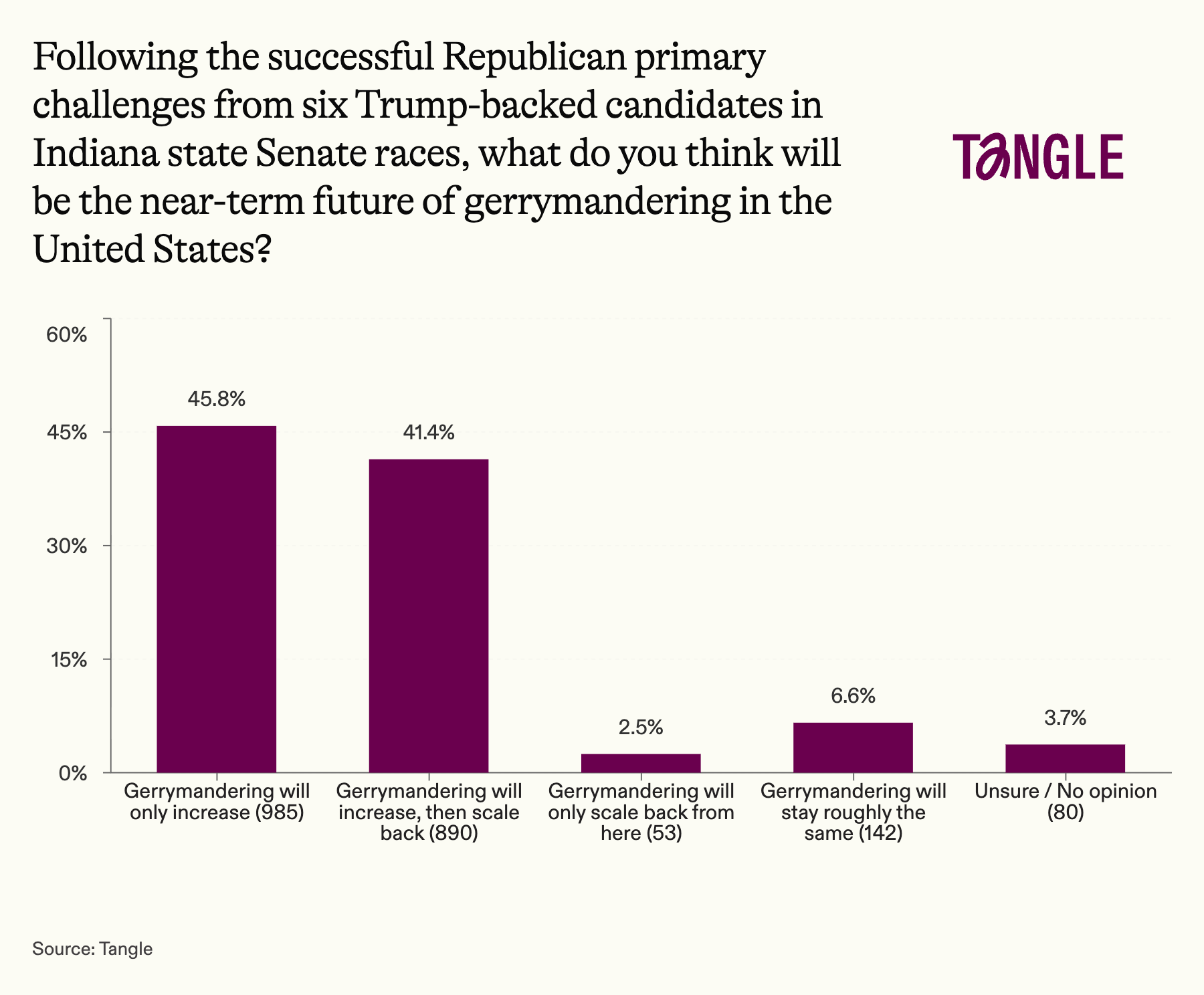
Numbers.
  • 6. The number of state constitutions Virginia adopted between 1776 and 1970.
  • 54. The number of amendments to the state’s constitution as of January 1, 2026. 
  • 12. The length, in years, of a justice’s term on the Supreme Court of Virginia.
  • 3. The number of justices on the Supreme Court of Virginia who were elected when Republicans controlled both chambers of the state’s General Assembly.
  • 3. The number of justices who were elected when control of the General Assembly was split.
  • 1. The number of justices who were elected when Democrats controlled both chambers.
The extras.
Democrats are dealt a blow in Virginia.
Have a nice day.

A retired chicken farmer in Australia gathered rocks from a nearby quarry for a garden wall — and unknowingly mortared a 240-million-year-old fossil into it. Researchers from UNSW Sydney and the Australian Museum have now formally identified the specimen as Arenaerpeton supinatus, a four-foot-long salamander-like river predator from the Triassic period. The fossil was remarkably well preserved, with faint traces of skin still present in the stone. “We don’t often find skeletons with the head and body still attached, and the soft tissue preservation is an even rarer occurrence,” PhD candidate Lachlan Hart said. Scientists say the fossil is one of the most significant finds in the state in decades. Science Daily has the story.
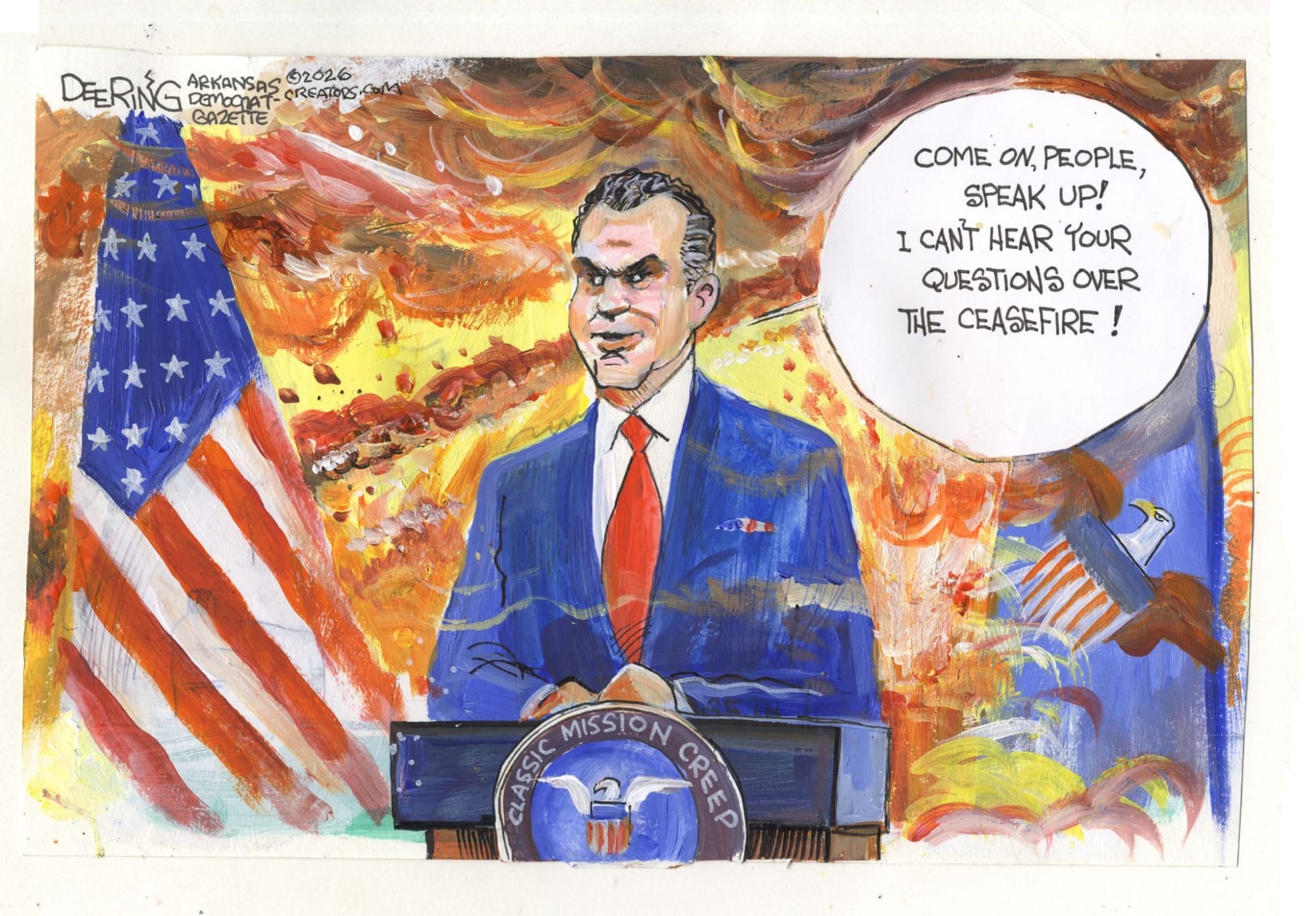
6a01ddca1cccf80001af6db9
Extensions
The Sunday — May 10
The SundaySpirit AirlinesMifepristoneIndiana primariesReader Feedback

This is the Tangle Sunday Edition, a brief roundup of our independent politics coverage plus some extra features for your Sunday morning reading.

What the left is doodling.
John Deering | Creators Syndicate
What the right is doodling.
Gary Varvel | Creators Syndicate
Suspension of the Rules

Isaac, Ari, and Kmele discuss

Show full content
The Sunday — May 10

This is the Tangle Sunday Edition, a brief roundup of our independent politics coverage plus some extra features for your Sunday morning reading.

What the left is doodling.
The Sunday — May 10
John Deering | Creators Syndicate
What the right is doodling.
The Sunday — May 10
Gary Varvel | Creators Syndicate
The Sunday — May 10
Suspension of the Rules

Isaac, Ari, and Kmele discuss the Indiana primaries and the relative morality of billionaires in this week’s Suspension of the Rules. Plus, Isaac tells an interesting tale about ChatGPT responding to his recent Friday edition on Trump’s corruption — and Kmele attempts a new look. You can take in the conversation here!

Monday, May 4.

The Spirit Airlines closure. On Saturday, May 2, Spirit Airlines canceled all flights and began an “orderly wind-down” of its operations. The budget airline had been struggling since the Covid-19 pandemic, and it hasn’t posted a profitable year since 2019. President Donald Trump had sought a deal to bail out the company before its shutdown but failed to reach an agreement with bondholders. About 17,000 Spirit employees and contractors are expected to lose their jobs; union representatives are negotiating with the airline to grant compensation packages to affected workers.

Our take: “This story brings a sad end to a unique company. More than anything else, the pandemic killed Spirit Airlines. The blocked merger and lack of a bailout didn’t help, but Spirit was headed for failure one way or another.”

Reader Survey:

The Sunday — May 10
Tuesday, May 5.

The end of the Homeland Security shutdown. On Thursday, April 30, the House of Representatives passed legislation to fund the Department of Homeland Security (DHS) and end the department’s 76-day shutdown, the longest shutdown in U.S. government history. The House of Representatives and the Senate each had passed separate bills to end the shutdown; on Thursday, the House approved the Senate’s legislation in a voice vote under suspension of the rules, and President Donald Trump signed the bill into law the same day.

Our take: “The shutdown may have felt pointless, but the long-term ramifications could be grave. The saga weakened both agencies and constitutional norms. Republicans may have ‘won’ in the short term, but at what cost?”

Reader Survey:

The Sunday — May 10
Wednesday, May 6.

The Supreme Court and mifepristone. On Monday, May 4, the Supreme Court issued a temporary stay on a lower court’s order that mifepristone, a drug commonly used in early-term abortions, can only be prescribed and dispensed in person. The order pauses the 5th Circuit Court of Appeals’s decision to prevent the drug from being accessed by mail. In a brief order, Justice Samuel Alito, who oversees appeals from the 5th Circuit, paused that court’s order until May 11, restoring telehealth access to the drug and giving challengers until May 7 to respond.

Our take: “I don’t think the FDA ever presented significant evidence to justify remote mifepristone prescriptions. At the same time, I doubt the Supreme Court is going to unilaterally overturn the agency’s rules. Trump won’t change those rules, either, and the pro-life movement needs to adjust to this administration.”

Reader Survey:

The Sunday — May 10
Thursday, May 7.

Indiana’s primary results. On Tuesday, May 5, Indiana held primary elections for the 2026 midterms. The state Senate primaries were closely watched after President Donald Trump supported challenges against incumbent Republican state senators in response to their opposition to a mid-decade redistricting plan last December. Six Trump-backed candidates defeated incumbent lawmakers, while another won an open-seat primary. Only one incumbent opposed by the president has won their election. 

Our take: “This primary result isn’t actually about Trump’s dominance over the GOP; it’s about spending and messaging. Still, it’s incredibly stark that ‘opposing gerrymandering’ garners such intense primary opposition. I believe an anti-gerrymandering backlash is coming, sooner or later.”

Reader Survey:

The Sunday — May 10
Friday, May 8.

Our May 1 edition on Trump’s corruption garnered extensive reader feedback, positive and critical, from all sides of the spectrum. In this week’s piece, Executive Editor Isaac Saul addresses the most common criticisms head-on. You can read it here.


What just happened.

Here’s a rundown of the major stories that have broken since our newsletter on Thursday.

  • On Thursday, the State Department said it will begin revoking the passports of parents who owe $100,000 or more in child support, with plans to eventually revoke passports for any parents owing $2,500 or more. (The plan)
  • On Thursday, the U.S. Court of International Trade ruled 2–1 that President Trump’s 10% global tariffs are illegal but only blocked them from taking effect for two private importers and Washington state. The tariffs were left in place for all other importers while the Trump administration appeals and are scheduled to expire in July. (The ruling)
  • As of Thursday, health authorities on four continents said they were tracking dozens of passengers from a cruise ship that experienced a hantavirus outbreak, which is believed to have originated in Argentina. Over two dozen people from at least 12 countries left the ship without contact tracing. (The update)
  • On Thursday, Tennessee’s state legislature passed a new congressional map designed to net Republicans an additional seat in the U.S. House by dividing the Memphis area into three districts. (The map) Separately, on Friday, the Supreme Court of Virginia struck down a redistricting amendment passed by voters, which adopted a new congressional map designed to give Democrats a 10–1 advantage. The ruling will leave the original map — with a 6–5 Democratic advantage — in place for the 2026 midterms. (The ruling)
  • On Thursday, the U.S. and Iran exchanged fire near the Strait of Hormuz, with the U.S. striking two Iranian ports after Iran fired on U.S. destroyers. Despite the strikes, both the U.S. and Iran say the ceasefire remains in place as peace talks continue. (The latest)
  • On Friday, the Pentagon released documents on unidentified anomalous phenomena (UAPs) that it said have never been shared publicly. The department said it will continue releasing declassified UAP files over the coming weeks. (The release)
  • On Friday, the Labor Department announced that the U.S. economy added 115,000 jobs in April while the unemployment rate remained at 4.3%. The monthly jobs total was lower than March’s but higher than the 55,000 jobs predicted by analysts polled by The Wall Street Journal. (The report)
  • On Saturday, Israel struck Lebanon, killing 39, amid clashes with the militant group Hezbollah. (The strikes)
The Sunday — May 10
Reader essay.
The Sunday — May 10
Hanna Rönnberg Mother and Child, image from Picryl

This week, Tangle reader Rebecca Durfee shares what it’s like to live a day in her life as a polio survivor, 65 years after she contracted the disease. By sharing her story, Rebecca hopes to show just how important it is to stay vigilant against these diseases, including through vaccination.

69fff1331cccf80001a63652
Extensions
I didn’t get the polio vaccine — instead, I got polio.
reader-essay

By Rebecca Durfee


I remember being so scared — terrified, really. The indoor pool was noisy. Inside the pool, wooden tables lined the sides. At one end of each table was a semicircular piece of wood designed to keep a person’s head above water. Kids lying on the

Show full content
I didn’t get the polio vaccine — instead, I got polio.

By Rebecca Durfee


I remember being so scared — terrified, really. The indoor pool was noisy. Inside the pool, wooden tables lined the sides. At one end of each table was a semicircular piece of wood designed to keep a person’s head above water. Kids lying on the tables were undergoing physical therapy. The whimpers of scared children and the screams from those who were having painful muscle stretches filled the air.     

Just a few days ago, I was a happy toddler of two and a half. Today, I could only move my neck and left wrist. I thought that if my head turned sideways, it would be in the water and I wouldn’t be able to move it and something bad would happen.

That is all I remember of the weeks and months of therapy following my diagnosis of polio. The virus ravaged my little body for several days, and I have been dealing with the consequences every day of my life since.

I’m not sure exactly when, where or how I contracted polio. What I understand is that we were visiting the United States and were unable to get the polio vaccine because we (my three siblings and I) were sick. We were going to get the vaccine as soon as we arrived home to  Mexico, where my parents were missionaries. My parents weren’t too worried because Mexico had done a good job vaccinating. On our way home, we stayed at a motel with a swimming pool in Arizona, I think. We didn’t know at the time that there was an outbreak going on in the Southwest. I most likely caught the virus from the pool. Polio has a two-to-three–week incubation period, and counting back from when I first got sick after we got home, the pool is the most probable source.

Due to successful vaccinations, very few people now know or have seen a person who has had polio. So I invite you to accompany me as I describe a day in the life of someone coping with the effects of this disease 65 years later. I don’t mean to sound alarmist, but these effects might soon be felt by your children, or grandchildren, or maybe the children down the street from your home.

Pain wakes me. Weakness in my right hip and shoulder, pain across my left chest as muscles struggle to support the side of my upper body that has been doing the work of two. Breathe. Breathe, I remind myself. Again, breathe, as I slowly move stiff joints before getting up.

Time to start my day. Carefully standing up, I check my balance before taking a step. Hanging onto shelves, doorways — anything to keep me steady — I crab-walk the 12 steps to the toilet.  It will be easier to walk after I put on braces and shoes. My left leg does most of the work since the virus left my right side very weak. My right foot drops and I have to swing my hip high to clear it off the ground. My back and hips strain from the effort, and tears form in my eyes as I fight back the pain. I angrily brush them away. 

I haven’t even gotten started with my day.

Next come the braces. Knee-high socks on both legs. Short AFO (ankle-foot orthotic) brace on the left leg (1.5 pounds, including orthopedic shoe), laced up. Cotton stockinette on the right upper thigh to protect my skin from the long KAFO (knee-ankle foot orthotic) brace (3.5 pounds, with shoe). Four Velcro straps. Oops. That one is too tight… that one too loose. 

The effort of getting up and dressed has fatigued me to the point that my hands shake. Worse still, I’m feeling tiny muscle tremors which indicate I need to rest. Resting is a new habit. Polio survivors are notorious for ignoring their bodies and pushing through any fatigue or pain, and I’m no different from the thousands of polio survivors who have gone before me. I’m having to learn to pay attention to what my body is saying and respond appropriately. Right now, my body is telling me to rest, so I head to the recliner for 20 minutes before going to breakfast.

I transfer to my motorized scooter, grab a small plastic glass and mug to use instead of the heavy ones from the dining room. Then I tie my thighs together. I no longer have the muscles to keep my legs together and without them being in the right position, I am unable to have my feet flat on the base. Without that support, I can’t sit up properly. 

I have a leisurely breakfast with friends in the dining room of our independent living community.  I appreciate not having to cook all my meals. Most of the time, I have my food served in a bowl and I eat with a spoon so I don’t spill so much. I eat slowly and chew thoroughly so I don’t choke on my food. I get tired from speaking after a while; my voice becomes hoarse, and I have to stop. 

Back in my apartment, I notice I’m having trouble pushing the “on” button of my electric toothbrush. Add that to the problem list. I have time to read and respond to some emails, pay some bills, and make a few calls. Time for my morning rest. Moving to my recliner to put my legs up, I place a pillow on my lap to support my arms.

Transportation is almost always difficult. Publicly accessible transport is in short supply and often cannot be reserved in advance. How am I supposed to get to any appointment on time? My independent living community offers a bus with a lift, but I’m out of luck if it is in the shop or if I want to go someplace the bus doesn’t go. Today, I’m off to one of my many specialists. I have to remember to turn left on my way out of my apartment and then back up so I can lock the door without leaning across my body with my left arm/hand. Then I turn around and head the opposite direction towards the elevator. By the end of the day, my back and shoulder will ache from having to constantly reach across my body with my stronger left arm to reach buttons, switches, and handles that almost always are on the right side.

At the doctor’s office, I have to wait for the assistant to prepare an exam room with an ADA exam table, even though it is in my medical record that I require this accommodation. The Americans with Disabilities Act passed 35 years ago, and some days it seems that it has accomplished very little. Sorry, I’m grumpy today. There have been changes. It’s just that some days dealing with unnecessary obstacles takes up energy that I don’t have or need for something else.

At lunch, I notice the hand tremors getting worse as well as the muscles in my thighs and around my mouth twitch — signs that I’m fatigued. I work hard to ignore it all so I can concentrate on the conversations going on around me and participate in my friends’ lives. By the end of lunch, I’m ready for another rest.

When I get back to my apartment, I do a quick check for pain and fatigue. This is important to note if something changes or gets worse. It is usually better to take care of things sooner rather than later, but I hate having to spend so much of my brain energy on how I feel, how much energy I have, and if I can do whatever I had planned for a particular day and time.

First, the pain: My right neck and right shoulder are screaming at me (I’m pulling the seat release lever on my scooter too many times each day… I need to figure something else out), there is a burning patch on my right upper back (reaction to chronic pain), and my right hip, left shoulder, and left elbow ache from severe overuse. That’s okay— nothing much new except the right shoulder. 

Next, fatigue: Muscles twitching around the mouth, left inner thigh, right lower abdomen. Hand tremor. Yep, it’s definitely time for a rest. I lie down after lunch for a minimum of two hours, sometimes four.

The rest of the day I alternate between trying to keep up with life’s necessities and life’s pleasures (family, friends, music, and art), interspersed with rest. It is hard to get everything done in about half the number of hours I had daily just a few months ago. I am much more conscious of how I spend my time.


By now, you have some understanding of the consequences of polio on my little two-and-a-half-year-old body some 65 years later. It took me over a year to walk again, although I was never able to run. I fall frequently. I am in constant pain, even though I take pain medication. Until recently, I believed that fewer and fewer of us would struggle daily with the effects of this sometimes-deadly virus until that number reached zero and never bounced back. That’s been mostly true — polio cases have flatlined, and nobody has died of the disease in the United States since 1988.      

However, in 2022, the first polio case in the United States in over three decades was reported in New York. The young woman contracted the disease after travelling abroad. She was 22 years old; she was unvaccinated. 

I’m not “special”; I’m not “brave.” I’m just tired and heartbroken that my country and many of its citizens have abandoned the public health principles that protect our children, our elderly parents, our neighbors and ourselves from diseases that leave people blind, deaf, scarred, paralyzed — and, sometimes, dead. 

The development of vaccines is widely viewed as one of the most important medical advances of the twentieth century. Millions of lives have been saved and spared the harsh consequences of various diseases as a result. Declining vaccination rates risk that progress as more and more parents are choosing not to vaccinate their children.

I often hear people say vaccines aren’t 100% safe. Well, neither are the diseases they prevent and I don’t know that anything in life is totally risk free. Drive a car? Car accidents kill around 40,000 people a year in the United States. Enjoy swimming? Approximately 4,500 people die annually from accidental drowning. Like to eat? Well, you might be one of the 5,000 to 5,500 people who die from choking on food each year. Here is an excellent post analyzing the objections raised about vaccines, if you’re interested in reading more. 

Another common argument is that people are free to make their own choices for themselves. The problem is that you don’t pay the price for your “freedom to choose” — other people pay the cost of your choice. Usually, those people aren’t your children, but the ones who have a medical condition that prevents their vaccination. But sometimes your child contracts a vaccination-preventable disease, and then it’s your child who pays the price. We have seen this just recently with the measles outbreak in the United States. The disease spread rapidly in various states and is still ongoing with patients dying. Dying — from a preventable disease!

So your freedom is costly. Those of us who have contracted these preventable diseases pay. We pay in the currency of pain, limitations, and struggles to do the simplest of things… every day… . for a lifetime. 


Rebecca Durfee is a retired mother of two daughters who worked as a Human Resources and Safety Director for a vineyard management company in California for 20 years. She recently started painting and is enjoying recreating some of the scenes she remembers from her childhood. 

69fe1b9a1cccf80001a567b0
Extensions
I'm responding to criticisms of my Trump corruption piece.
Trump corruptionCorruptionTrump administrationDonald TrumpDonald Trump fraud claimsReader FeedbackYour questions answered
Addressing your feedback on our recent Friday edition.
Show full content
I'm responding to criticisms of my Trump corruption piece.

I’m Isaac Saul, and this is Tangle. You are reading a preview of a members-only Friday edition. To read it in full, you'll be asked to subscribe.

Did someone forward you this email? Sign up here.


Last week, I published an exhaustive 6,000-word essay on the self-dealing and potential corruption of President Donald Trump’s second administration.

I shared clips of the article on X, and it went viral. The initial feedback from readers within and outside the Tangle community overwhelmingly asked us to drop the paywall on the piece. After a few hours, we did.

Since then, we’ve been inundated with comments, criticism, and questions. Usually, when an article takes off like this, I write a follow-up piece addressing those criticisms and questions. I do this because I think engaging with our audience is an important way to gain trust and an important exercise in humility and intellectual honesty. I often engage with feedback by quoting specific readers and then responding directly to what they said in a Q&A format. That’s exactly what I’m doing today.

Of course, as is typical, the responses came from across the political spectrum. To give just one illustrative example: One reader wrote in to say that I’ve “skewered Biden’s son over and over again” and used this article to “pour more venom” into that story. She also expressed her frustration that I was only “slightly less biased than the rest of the major media who report Trump corruption on page 3 or not at all on TV.”

Simultaneously, a reader named John said, “I’m one of the readers who stopped reading about half way [through]. Just couldn’t stand [Isaac’s] obvious distaste, if not revulsion of President Trump. It’s obvious in all his ‘My Take’ comments. I think he’s doing a disservice to the multiple employees of all those watchdogs he’s trying to hang. Not ONE of them can speak up? Even ‘off the record?’ By the way, I can’t stand Trump but I’d like to see some verified facts, not some ‘wanna be editor’ alleging such.”

This is the environment we live in now, and I’m trying to navigate it as honestly as I can. You write a piece like this, and one side says “where the hell have you been?” while the other side thinks you’re a hack editor making baseless allegations. 

Alternatively, some readers actually wrote in questioning the facts that provide the basis of the piece. One Tangle reader told me her friend had used ChatGPT to “fact-check” me and found that “there are multiple claims in that article that are either unverified, misleading, or very likely false as written.” In one telling example, ChatGPT said “there is no confirmed ‘Iran war’ being negotiated” by Jared Kushner, and that Kushner is a “private citizen” with no record of being involved in negotiating the war’s end, despite the fact there obviously is an Iran war and Kushner is a chief negotiator in ending that war. ChatGPT also claimed “there is no widely confirmed reporting from The New York Times” about Syrian billionaires lobbying Trump for sanctions relief, despite that very New York Times article obviously existing

What explains the enormous discrepancy here? It turns out the critic was copying and pasting the text of my piece into ChatGPT, without the linked primary sources. Once they sent ChatGPT the actual article, it conceded that the facts of the piece were accurate, apologized for getting it wrong, and suggested only that I was injecting strong language that included my own feelings (guilty as charged!).

On the Suspension of the Rules podcast this week, I talked more about this ChatGPT “fact-check” story, the other things ChatGPT got wrong, and the frightening new reality where people regularly export their critical thinking to artificial intelligence, even as they prompt the LLM in ways that produce inaccurate results. This is a new playing field where someone thinks I’m lying because an AI chatbot tells them things that are absolutely untrue. 

Now, onto some specific feedback.


One of the most common responses we got — and one I should have thought to preempt — was about the Obamas. Many, many readers said something along the lines of, “Obama came into office with ‘X’ amount of dollars and left with many more, yet you ignore that story.” This feedback was maybe best articulated by a reader named Kelly, who commented, “From community organizer making $35,000 at most, to state and U.S. senator, Obama entered the White House with $1.3 million — where did that come from? He left the White House with close to $40 million. By no means does this condone Trump ‘corruption,’ but what has been newly corrupted that already wasn’t?”

I think the big difference here is that we understand pretty clearly how President Obama accumulated his wealth. Obama released his tax returns throughout his career, so the way he accumulated his estimated net worth of $70 million is documented — and you can go find those tax returns and follow the paper trail. The vast majority of his wealth came from publishing books and speaking tours. He netted just under $5 million in royalties from his first two books by the first year of his presidency. Then, as his second term expired, he and Michelle got $65 million for two additional books (one from each). After that, Obama signed a TV deal with Netflix worth a reported $50 million. He also gets paid as much as $400,000 for a single speaking engagement.

I really don’t know what to say except that Obama’s opportunism is, self-evidently, very different from Trump’s. The closest comparison is that Obama’s Netflix deal was negotiated by Ted Sarandos, an Obama donor whose wife got an ambassadorship in the Bahamas. But, crucially, that appointment actually preceded the Netflix deal by roughly a decade. What’s more, it’s actually another example of a scandalous behavior Trump has engaged in to an even higher degree. In my entire 6,000-word piece, I didn’t even get into the Trump donors receiving ambassadorships because there was so much other stuff going on (more on that below). Also, Obama got his TV deal after he was in office, not during.

On top of that, the Trump family isn’t just getting money through TV deals while he’s president (see: Melania and Amazon); he is using the presidency to become wealthier. He is regulating businesses that make him money, or taking investments from foreign leaders while striking arms deals with them, or launching Trump-themed cryptocurrencies whose values evaporate for investors while he makes a profit.

Further, because Trump does not release his tax returns and is not transparent about his finances, we are left putting two and two together through investigative journalism and leaks. Conversely, the way the Obamas accrued their wealth is well documented — we know how they made the money and when. You can think those deals were too cushy, or his speaking fee is outlandish, and even that such a fee opens doors to palm-greasing. But the fact remains that these income streams were not as directly linked to his decisions as president in the way that Trump’s have been. 


Separately, quite a few readers wrote in about this sentence: “By the time Trump ran for office in 2016, under the ‘drain the swamp’ mantra of rooting out corruption by other politicians, he excoriated the Clintons for… taking money from Saudi Arabia and other Middle East monarchies. That money, which Trump criticized her for accepting, was going to the Clinton Foundation — a philanthropic fund run by the Clintons.”

Many people countered that the Clinton Foundation was actually just a front for the Clintons to get rich by leveraging their fame. One representative comment came from Gettaway Gal, who said, “You state, without qualification, that the Clinton Foundation was a philanthropic organization when it is well established it was simply a funnel to get what was then huge amounts of money to the Clinton family and associates (noting the Clintons are now personally worth hundreds of millions of dollars — where do you think that came from?)”

I’m going to start with a confession — something many Tangle readers may not know — an act of transparency that I hope will earn me some trust here.

69fdf9e91cccf800019db179
Extensions
An anti-incumbent wave in Indiana.
IndianaIndiana redistrictingelectionsIndiana primariesPrimariesElectionMilitaryGerrymanderingDonald TrumpGOP
Plus, a closer look at U.S. military bases abroad.
Show full content
An anti-incumbent wave in Indiana.

I'm Isaac Saul, and this is Tangle: an independent, nonpartisan, subscriber-supported politics newsletter that summarizes the best arguments from across the political spectrum on the news of the day — then “my take.”

Are you new here? Get free emails to your inbox daily. Would you rather listen? You can find our podcast here.

Today’s read: 13 minutes.🗳️Several Trump-backed Indiana state senators defeated incumbents who had opposed mid-decade redistricting. Plus, why does America have so many troops in Germany?Our latest Suspension of the Rules.

This week, Isaac, Ari, and Kmele discuss today’s newsletter topic: party primaries, Indiana, and gerrymandering. Things also get heady as they discuss whether billionaires should exist and unpack a ChatGPT criticism of last Friday’s edition on corruption in the Trump administration (which you’ll read more about tomorrow). To go deep on today’s story, preview tomorrow’s or just hear a debate over the wealth disparity, check out the latest Suspension of the Rules!

Quick hits.
  1. The United States and Iran are reportedly nearing an agreement to end the war between the countries and set a framework for future discussions over Iran’s nuclear program. The agreement reportedly includes a moratorium on Iran’s nuclear enrichment, an end to U.S. sanctions, and unrestricted transit through the Strait of Hormuz. (The report)
  2. Federal Bureau of Investigation agents searched the office of Virginia state Senate President Pro Tempore L. Louise Lucas (D) pursuant to a public corruption investigation. Another search warrant was executed at a cannabis store that Lucas co-owns. Lucas, who has not been arrested or charged, said the search was in retaliation for her recent support of a new congressional map in Virginia designed to boost Democratic representation in the U.S. House. (The search)
  3. Republican state lawmakers in Tennessee proposed a new congressional map designed to flip the state’s sole Democratic seat in the U.S. House. (The map)
  4. A federal judge rejected a request by Fulton County, Georgia, to order the Justice Department to return ballots and digital ballot copies related to the 2020 election that were seized in January. The judge found that the county did not show the federal government lacked probable cause or conducted the search illegally. (The ruling)
  5. A suicide note allegedly written by convicted sex offender Jeffrey Epstein was released on the order of a judge. (The note)
In Partnership with incogni

Don’t wait to become a victim. Take control of your identity.

Over 422 million people had their personal data exposed last year alone. And the easiest targets? People whose info is still floating around online.

Incogni tracks down and removes your personal details from over 420+ data broker sites, people-search pages, public records, and more — automatically. They periodically check if your information appears on the data broker sites and remove it, so you get total peace of mind.

With their Unlimited plan, you can go even further. Google yourself and send them any link you find with your info on it. Their privacy team will assist you in getting it wiped.

Stop making it easy for identity thieves. Lock down your personal data before criminals take advantage of it. Remove your data now55% off with code TANGLE.

Get 55% off — Remove your data now Today’s topic.

Indiana’s primary results. On Tuesday, Indiana held primary elections for the 2026 midterms. The state Senate primaries were closely watched after President Donald Trump supported challenges against incumbent Republican state senators in response to their opposition to a mid-decade redistricting plan last December. Six Trump-backed candidates defeated incumbent lawmakers, while another won an open-seat primary. Only one incumbent opposed by the president, Greg Goode of Terre Haute, has won their election. 

Back up: In December 2025, following similar efforts in other states, President Trump publicly pushed Indiana Republicans to adopt a new congressional map designed to net the GOP additional seats in the U.S. House. The state Senate, which has a 40–10 Republican majority, rejected the plan. Afterward, President Trump said he would support primary challenges to anti-redistricting state senators, and outside groups such as Club for Growth Action and Turning Point Action invested significant resources in recruiting and supporting challengers. 

On Tuesday, President Trump affirmed his support for the primary challengers, writing on Truth Social, “Good luck to those Great Indiana Senate Candidates who are running against people who couldn’t care less about our Country, or about keeping the Majority in Congress. There are eight Great Patriots running against long seated RINOS.” 

State Sen. Travis Holdman (R), the highest-ranking Republican that opposed the redistricting effort, was among the incumbents defeated by a Trump-backed challenger. Furthermore, the results could imperil state Senate President Pro Tempore Rodric Bray’s (R) leadership position, as the challengers are expected to vote to oust him if they win their general election races. Indiana has a large Republican voting majority, and most (if not all) of the Republican candidates are expected to win in November.

President Trump’s allies in Indiana touted the outcome as a signal to the party about the president’s enduring popularity. “Everyone in Indiana politics should have learned an important lesson today: President Trump is the single most popular Republican among Hoosier voters,” Sen. Jim Banks (R-IN) said. “Indiana is a conservative state, and we deserve conservatives in our State Senate who have a pulse on Republican voters.”

State Sen. Bray, an opponent of redistricting, noted the significant outside spending on the primaries, saying, “The amount of money that was spent in Indiana is material, it matters, and that was very, very difficult to overcome… We worked really hard. Our candidates worked really hard to get their message out, but the voters spoke.” State Sen. Holdman told The Indianapolis Star, “Revenge and retribution is not a Christian value, and that’s what this was all about.”

Today, we’ll share commentary on the results from the right, left, and Indiana writers. Then, Executive Editor Isaac Saul gives his take.

What the right is saying.
  • Some on the right say the result hammers home what GOP voters really want from their representatives.
  • Others suggest it could be a short-lived victory for Trump and the party. 

In The Daily Caller, Mary Rooke said “voters taught GOP leadership [a] valuable lesson.”

“Indiana has nine House districts. As a deep-red state, allowing two Democratic Party–controlled districts didn’t align with the state’s actual voters. Voters wanted the Indiana state legislature to redistrict the state from a 7–2 Republican advantage to a 9–0 GOP sweep,” Rooke wrote. “There were eight state Senators, part of a larger group of 21 Republicans, who voted against the redistricting bill and were up for re-election on Tuesday… Millions were reportedly spent on these races to unseat the defectors. Ultimately, six of the eight lost their races.”

“[Defeated incumbents are] not wrong to claim that his and the other’s losses were about ‘revenge and retribution.’ That’s exactly what happened here, and the broader GOP should take heed. Either use the power the voters gave you to enact their will and mandate, or sit back and watch the voters take you out one election at a time,” Rooke said. “The era for so-called ‘principled conservatism’ is over. Voters want elected officials to be fighting tooth and nail to get their wishes across the line.”

The Wall Street Journal editorial board wrote about “Trump’s hollow Indiana victory.”

“The media scorekeepers have declared that President Trump remains the king of the Republican Party… The more important question is whether his kingdom will shrink after November,” the board said. “The MAGA machine went all-in… And for what? Indiana’s current U.S. House districts are split 7–2, giving 78% of the seats to the GOP. Mr. Trump carried only 59% of the state’s vote in 2024. The map proposed last year aimed to turn Indiana into a 9–0 state, but that wouldn’t reflect Indiana, and a gain of two seats might get swamped by a blue wave.”

“When the state Senate rejected redistricting, 19–31, more Republicans voted against than in favor. ‘I was contacted by many, many, many constituents,’ Senate President Pro Tem Rodric Bray later said. ‘I would say 10 were against it to every one that was for it.’ He also raised doubts about trying to stretch the GOP’s finite voters to win all nine seats,” the board wrote. “‘We’re after you Bray,’ Mr. Trump wrote online in January, ‘like no one has ever come after you before!’ Mr. Bray isn’t up for re-election until 2028, but why is this GOP infighting a useful focus six months before November?”

What the left is saying.
  • The left frames the results as evidence of the GOP’s subservience to Trump.
  • Others say Trump reasserting his power could hurt the GOP in the midterms.

In MS NOW, Paul Waldman said the primary highlighted “the rot within the GOP.”

“While Trump largely ‘won’ these contests, did replacing conservative Republicans with other conservative Republicans really help him or the GOP? How these elections played out was evidence of the rot within the party — and the lengths it will go to in satisfying every one of Trump’s whims, no matter how self-destructive,” Waldman wrote. “All of those targeted were, to be clear, Republicans who support a conservative agenda. But Trump wanted their heads, so his will had to be done, whatever the cost.”

“One might argue that investing millions of dollars in taking vengeance on the Indiana Republicans will have a deterrent effect. Like a mob boss, perhaps Trump wanted to punish those who stepped out of line so no one in his party would get any ideas about showing independence,” Waldman said. “The problem, though, is that Trump will only be president for 2 1/2 more years. He is almost certain to lose the House this November, and perhaps the Senate as well, for the remainder of his presidency. Furthermore, the redistricting wars may be petering out: There are only so many seats even the most nakedly partisan state legislature can squeeze out of their maps.”

In The New Republic, Perry Bacon explored the “silver lining” in the results.

“The good news is that the results of Indiana show that the Republican Party is really a cult of Trump — so Republican candidates will be reluctant to distance themselves from an increasingly unpopular president and therefore might lose winnable races this November and in two years,” Bacon wrote. “The bad news, though, is that the results in Indiana show that the Republican Party is a cult of Trump — so Supreme Court justices, governors, state legislatures, congresspeople, and even rank-and-file GOP voters will keep falling in line with the whims of our wannabe dictator.”

“Trump just ended the careers of five politicians he probably hadn’t heard of a year ago. I don’t like the idea of party bosses. But what makes me really discouraged is being on the side of a party that doesn’t have effective bosses against one that does,” Bacon said. “There is a silver lining though. Trump will be emboldened by the results in Indiana. He will keep making Republicans defend whatever he does, such as stuffing funding for the White House ballroom into a budget bill moving through Congress this week. And Trump’s approval rating continues to sink, potentially plunging to post-Katrina lows of George W. Bush at the end of his second term.”

What Indiana writers are saying.
  • Some Indiana writers expect both new state Senate leadership and a new congressional map.
  • Others bemoan the outcome but acknowledge Trump’s electoral sway.

In The Indianapolis Star, Jacob Stewart said “Trump’s Senate wins mean redistricting is back in, Bray is out.”

“While it’s difficult to guess which senators would support Bray in a caucus, the 19 votes in favor of redistricting in December can serve as a decent proxy,” Stewart wrote. “If senators vote to oust Bray from his leadership position, they will likely replace him with Sen. Chris Garten… Garten, unlike his colleague Sen. Liz Brown, did not publicly criticize his colleagues for their votes against redistricting and has remained mostly behind the scenes during the primary campaign season. As a result, he maintained his leadership position and stands to gain support from both pro-redistricting and anti-redistricting senators.”

“U.S. Rep. Marlin Stutzman suggested the General Assembly would likely revisit the issue of redistricting at some point after the primaries were over. This would likely have to come after Bray is ousted, as Bray has significant control over what bills even get a hearing,” Stewart said. “If senators vote the same way as they did in December, with the extra votes in favor, redistricting would just barely pass. If the vote is tied, Lt. Gov. Micah Beckwith could still cast a tie-breaking vote in favor of redistricting.”

Also in The Indianapolis Star, James Briggs wrote “sometimes you gotta hand it to Trump.”

“Donald Trump is the most corrupt president in history. Every gas station sign you pass attests to the wreckage of his second term. But sometimes you gotta hand it to him: Trump is very, very good at politics,” Briggs said. “Indiana's primaries were a referendum on Trumpism. Trumpism prevailed. Simple as that. Even if you want to discount the results by attributing them to the unfathomable $13.5 million ad blitz that hit state Senate primaries, you have to acknowledge Trump is a singular figure who can make it rain on obscure state legislative elections because they happen to be important to him personally.

“Trump's endorsement in Indiana GOP primaries once again carried tremendous weight, backed by millions in outside spending from political action committees tied to allies, including Banks,” Briggs wrote. “On top of that, Indiana Republicans might wind up redistricting Democrats into oblivion sooner or later. The U.S. Supreme Court's weakening of the Voting Rights Act is sparking another round of race-to-the-bottom gerrymandering that will compel red and blue states to extend their partisan advantages further than ever.”

My take.

Reminder: “My take” is a section where we give ourselves space to share a personal opinion. If you have feedback, criticism or compliments, don't unsubscribe. Write in by replying to this email, or leave a comment.

  • This primary result isn’t actually about Trump’s dominance over the GOP; it’s about spending and messaging.
  • Still, it’s incredibly stark that ‘opposing gerrymandering’ garners such intense primary opposition.
  • I believe an anti-gerrymandering backlash is coming, sooner or later.

Executive Editor Isaac Saul: The lesson the right seems to have learned this week is that Trump understands what voters want; the Indiana GOP didn’t, and so they paid the price. 

In Hot Air, Ed Morrissey said the incumbents lost because “they didn’t bother to ask voters what they want.” In PJ Media, Matt Margolis said, “There was nothing subtle about the message from MAGA voters. They want strong Republicans who will fight the Democrats, not be weak, useful idiots for the left.” Mary Rooke, in the Daily Caller (under “What the right is saying”), threatened the GOP: “Either use the power the voters gave you to enact their will and mandate, or sit back and watch the voters take you out one election at a time.”

There is plenty more where that came from, and each writer seems to be insisting that Indiana’s GOP leaders were ousted because they wouldn’t be “team players” and redraw the state’s map to help Trump win the national gerrymandering war he started in Texas.

This theory has one problem, though: That isn’t what the Trump-backed candidates actually ran on. 

The MAGA-aligned state legislators who just won their elections weren’t running ads about how voters should elect them so they can redraw districts to maximize as many Republican seats as possible. Shocking, I know. Instead, the campaigns focused more on a broader set of conservative principles, like opposing gas taxes and transgender participation in sports. 

Let me put it in plain terms: Trump wanted Indiana Republicans to further gerrymander the state. State Senate President Pro Tempore Rodric Bray understood this was bad, and — early on in these gerrymander wars — he refused, hoping some other states would follow him. Unfortunately, few did. Trump and his allies were infuriated by the perceived betrayal, so they dumped millions into otherwise small races to crush Bray’s allies and oust him from his leadership role. $13.5 million was spent on Indiana Senate primaries overall, a roughly 5,000% increase in spending from 2024, when a total of $250,000 was spent.

In state Sen. Jim Buck’s race alone, $1.3 million was spent on ads opposing him, while his own campaign spent just $150,000. How did they attack Buck? Did they go after him for not gerrymandering? Not quite. In just one example, the ads framed Buck as “Old. Pathetic. Liberal.” Across the board, Trump’s allies used the money to boost candidates’ opposition to trans participation in sports or taxes on gas. They won. And now Trump’s supporters are celebrating as if this is proof voters want more ferocious partisan loyalty, even more gerrymandering.

Sorry, but I’m not buying it. 

Does this show Trump still has influence in the Republican Party? Of course. I never really doubted he did. Does it mean the national GOP could increase spending in tiny state races by 5,000% and get the results it wants by attacking its own party members? Yes, it probably does. But did Indiana voters have some organic desire to oust their representatives for not backing Trump on his gerrymandering push? No. 

The worst effect of this outcome goes well beyond Indiana. Several states, including Alabama, Louisiana and South Carolina, have upcoming primaries and are still considering gerrymanders. The message was sent to those state-level legislators: Do as we say, or face the consequences. And down the road, what’s to stop Democratic leadership from trying this model out themselves? Infighting in the party is already common, and I wouldn’t be surprised if a future Democratic president or House leader adopts this strategy to keep state-level representatives in line or force more gerrymandering in their favor. 

So what do we get for the attention and millions of dollars spent on this race? According to political analyst Ryan Girdusky, as few as 22 House seats in the entire country could be competitive when this wave of redistricting is over. According to Girdusky, if we take the numbers from 2024 as a starting point, that would mean about 7.6 million voters out of 149.5 million ballots cast are going to decide the composition of Congress — just five percent of all American voters.

This is the world decades of bipartisan gerrymandering have wrought, and it’s the one President Trump is making worse right now. Voters no longer choose their politicians; politicians choose their voters. 

I only maintain a few hopes for how to get out of this mess. One is that some charismatic, honorable, politically savvy leaders from both parties come together and mount a national campaign to treat the nationwide fever of gerrymandering. That seems, sadly, unlikely. Another is that a wave of grassroots, bipartisan organizations start campaigning heavily against gerrymandering, standing up voter referendums for independent commissions, and tee us up for a sea change in 2030. This is possible, but would require putting partisan point-scoring aside.

The third, and perhaps most likely hope, is that enough members of Congress watch as their seats get dissolved into these nationwide battles, then everyone realizes this is a horrible way to run a country and a piss-poor example of a functioning democracy. Basically: The self-interested and self-preserving strategy among politicians becomes not to gerrymander, and we go back to a world where reasonable, natural districts encompass a diverse set of voters whom Republicans and Democrats have to actually campaign to win over.

I am, obviously, dispirited by all these developments. But I’m not hopeless. Our country has gone through all manner of political movements, and the future is often less predictable than we think. Just because we’re headed this way now doesn’t mean it’s the only path forward, and the lesson from Indiana isn’t that gerrymandering is inevitable. What it does mean is that we are reaching an inflection point; and what we can learn from the Indiana primaries is that enough people need to keep repeating the same points until it gets through to the population at large. 

And here is that point: We are no longer choosing our politicians, they are choosing us. Until we make that an unacceptable arrangement, they’ll keep choosing us in perpetuity.

Staff concurrence — Senior Editor Will Kaback: On the point of “lessons learned” from these primary results, I would highlight another potential lesson for November. As GOP strategist Karl Rove has noted, the money spent on these races is money that Republicans won’t have to help vulnerable candidates in difficult House races. $13.5 million is a minor sum compared to the total funds that will flow into national races this year, but the spending is representative of a president who often struggles to keep his eye on the ball (and, by proxy, a disorganized party). Trump achieved his goals in Indiana, but I suspect Democrats have no problem with Republicans spending their time and money on state-level intra-party disputes.

Take the survey: What do you think will be the future of gerrymandering in the United States? Let us know.

Disagree? That's okay. Our opinion is just one of many. Write in and let us know why, and we'll consider publishing your feedback.

Your questions, answered.

Q: With the news that the U.S. is withdrawing 5,000 troops from Germany, I’m curious: Why do we have 5,000 troops in Germany to begin with? How many troops are in allied countries, and why? And how much does this contribute to our military budget?

— Kelly from Park Ridge, IL

Tangle: In total, roughly 170,000 active-duty United States military personnel are stationed on military bases in allied countries across the world — from Germany to South Korea to Australia to Peru. These bases serve an array of functions through their distance from the U.S. mainland. For instance, the U.S. Space Force says Pituffik Space Force Base in Greenland “supports Missile Warning, Missile Defense and Space Surveillance missions from the solid-state phased-array radar.” In Germany, U.S. bases provide operational support for the Army, Navy, Air Force, and Marines.

Somewhat ironically, considering the history, Germany is second only to Japan in hosting U.S. troops and military bases. Germany is a NATO ally, located in the middle of Europe with accessibility to much of the continent — as well as an aerial reach to Northern Africa and Eastern Asia — and waterways that can reach the North, Baltic, and Black Seas. Originally, the United States set up bases in West Germany after World War II to help with postwar reconstruction and observe and check the Soviet Union’s operations. Today, the U.S. maintains 58 bases across the now-unified country. 

All told, these bases host approximately 36,000 American troops (not including their families and civilian support) and include some of the largest and most important foreign bases the military operates. Stuttgart hosts over 20,000 Americans in total (troops, families, and support) and has been the headquarters of the U.S. European Command since 1967; Ramstein Air Base, which is home to 54,000 Americans, is the Air Force’s base of operations for all of Europe and Africa. 

Estimates for the cost of foreign bases vary. According to the Cato Institute, a single U.S. military base costs $50 to $200 million a year to operate — or around $60–120 billion in total. David Vine, a professor at American University and one of the most vocal critics of these bases, estimates they cost more than $150 billion to operate annually.

Want to have a question answered in the newsletter? You can reply to this email (it goes straight to our inbox) or fill out this form.

The road not taken.

The option that continued to fall off the board for us this week was the war in Iran. Over the weekend, we strongly considered running an edition focused on the U.S. policy of assuring passage for ships transiting the Strait of Hormuz, but opted for the Spirit Airlines closure because we believed it had interesting nuances to unpack. On Tuesday, the status of the war was in flux amid reports of renewed peace talks, so we chose to cover the end of the Department of Homeland Security shutdown. The lack of developments in negotiations by Wednesday left the mail-order mifepristone pause as our next option. For today, we were between peace talks in Iran (and a larger update on the war) and the Indiana state Senate primaries. We went with the latter for the electoral impact.

We can sometimes be slow to larger, important stories as we give them time to develop. For the Iran war, we also wanted to make sure we did not overly focus on one narrative, as we covered the story four separate times in April. Now that plenty of threads have developed in the war, we are expecting that it will receive a full newsletter edition early next week.

Numbers.
  • $490,000, $530,000, and $280,000. The approximate amount of advertisement spending on Indiana state Senate primaries in 2019–20, 2021–22 and 2023–24, respectively, according to AdImpact.
  • $13.5 million. The approximate amount of advertisement spending on Indiana state Senate primaries in 2025–26.
  • $5.2 million and $3.8 million. The approximate amount of ad spending on Indiana state Senate primaries by Hoosier Leadership for America and American Leadership PAC, respectively, which supported challenges to anti-redistricting Republicans. 
  • $3.5 million. The approximate amount spent in support of incumbent Republican state senators by Indiana Senate President Pro Tem Rodric Bray (R).
The extras.
  • One year ago today we covered Trump’s proposed film tariffs.
  • The most clicked link in our last regular newsletter was the video of the rescue of an Australian border collie.
  • Nothing to do with politics: A passenger flight that’s as long as some runways.
  • Our last survey: 2,431 readers responded to our survey on the Supreme Court’s consideration of mifepristone with 69% saying the Court should affirm the federal rule allowing remote prescription. “If it is made illegal or difficult to obtain, we will be creating a black market for all the wrong people,” one respondent said. “One can be pro-life and against government involvement beyond health and safety as defined by FDA approval,” said another.
An anti-incumbent wave in Indiana.
Have a nice day.

Amid growing concerns over water insecurity in the American West, a productive development from the San Diego County Water Authority could be providing a roadmap for the future: the Carlsbad Desalination Plant. The plant is North America’s largest desalination facility, and its output has been so successful that San Diego County dropped its reliance on outside water imports from 95% to just 10%. That drop in demand allowed Arizona and Nevada to meet their own needs, purchasing the county’s Colorado River allocation in exchange for funds to help maintain the facility. “This agreement could be a gamechanger for San Diego County and the entire Southwest because it creates the possibility of a new, collaborative path for moving water where it’s needed most,” Water Authority Board Chair Nick Serrano said. Good News Network has the story.
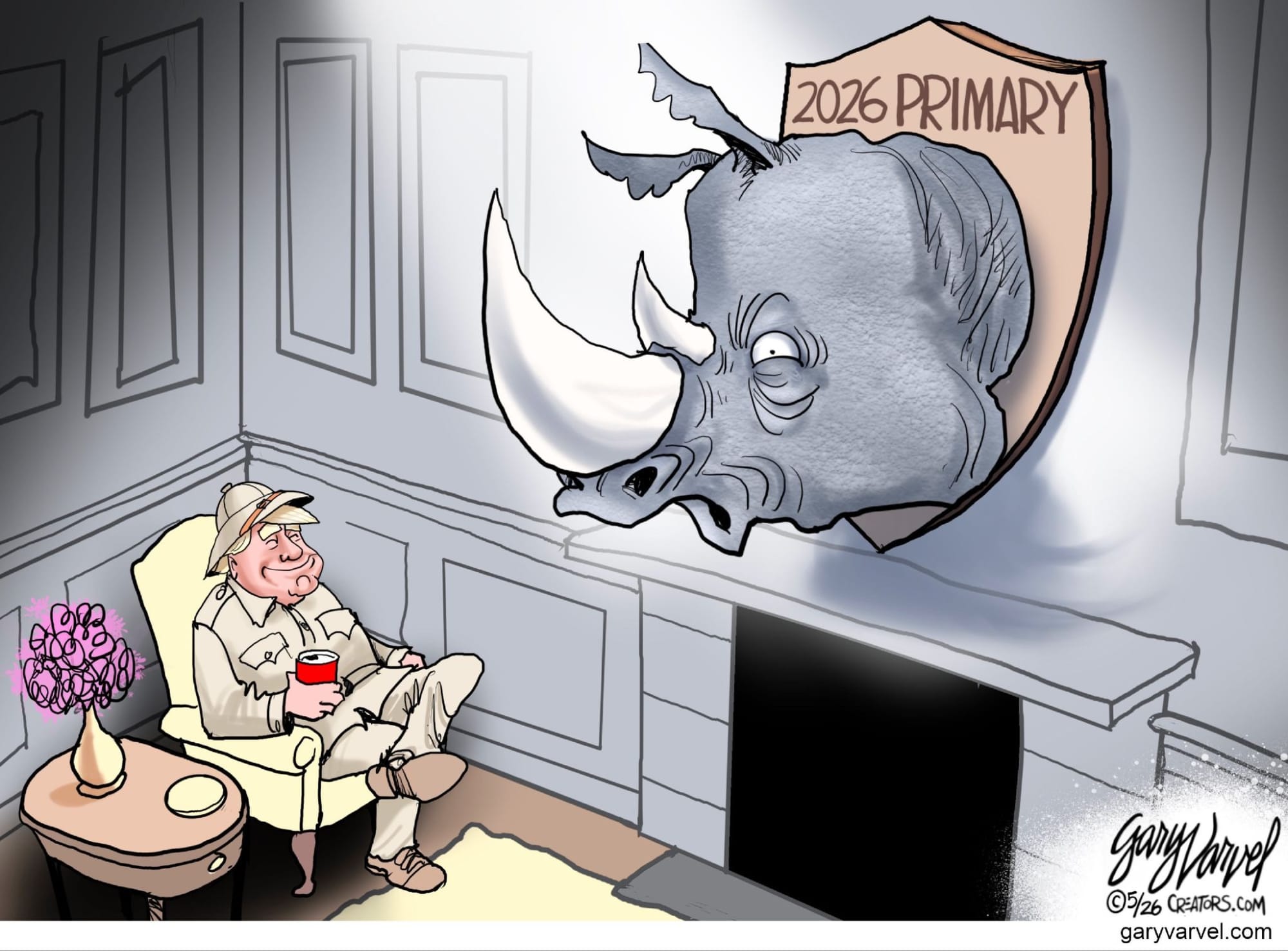
69fc97ba1cccf8000195355e
Extensions
What happens when you cross Donald Trump?
What happens when you go against Donald Trump? In this episode of Suspension of the Rules, we break down the real-world consequences of political
Show full content
What happens when you cross Donald Trump?

What happens when you go against Donald Trump?

69fd28471cccf800019d58d1
Extensions
Can abortion pills be prescribed online?
AbortionAbortion debateAbortion pillAbortion rightsLousiana abortion pillLouisianaMifepristoneSupreme CourtSCOTUSFifth Circuit
Plus, Meta starts using AI for age verification.
Show full content
Can abortion pills be prescribed online?

I'm Isaac Saul, and this is Tangle: an independent, nonpartisan, subscriber-supported politics newsletter that summarizes the best arguments from across the political spectrum on the news of the day — then “my take.”

Are you new here? Get free emails to your inbox daily. Would you rather listen? You can find our podcast here.

Today’s read: 15 minutes.💊The Supreme Court temporarily paused a lower court's ruling that mifepristone can only be given after an in-person visit. Plus, Meta will begin scanning users’ profiles using AI to estimate their age. Do Americans see each other as immoral?

Back in March, the headline was everywhere: “Americans Especially Likely To View Fellow Citizens as Morally Bad,” the title of a 25-country study from the Pew Research Center. Associate Editor Lindsey Knuth interviewed one of the study’s coauthors, Jonathan Evans, and Pew’s associate director of global attitudes research, Laura Silver, to talk about Americans’ national pride, partisan differences, and the state of professional polling. You can listen to the interview here.

Quick hits.
  1. Indiana held primary elections for the 2026 midterms, and at least five of seven Republican state senators who opposed an effort to redraw the state’s congressional map were defeated by challengers backed by President Donald Trump. One other race is too close to call. (The primary) Separately, entrepreneur Vivek Ramaswamy won the Republican nomination for Ohio’s gubernatorial election. He will face former Ohio Department of Health Director Amy Acton in the general election. (The results)
  2. President Trump announced he is suspending a U.S. military operation to assist ships in their passage through the Strait of Hormuz, saying the pause will allow for renewed discussions over a potential peace agreement with Iran. (The announcement)
  3. The Spanish government said it will accept a cruise ship experiencing a hantavirus outbreak, which has killed three people on board and infected at least three others. The ship was previously denied entry by the African island nation of Cabo Verde but will now travel to the Canary Islands, a Spanish archipelago, to receive assistance. (The latest)
  4. Russia carried out strikes across eastern Ukraine, killing at least 27 people. The attacks came hours before the deadline expired for a Ukraine-proposed ceasefire. (The strikes)
  5. Officials at the Food and Drug Administration (FDA) reportedly blocked the publication of studies conducted by agency scientists that supported the safety of vaccines for Covid-19 and shingles. An FDA spokesperson said the scientists drew overly broad conclusions that were not supported by data. (The report)
In partnership with Butcherbox

What Isaac’s Throwing on the Grill

Isaac loves to grill — and when summer hits, that means friends over, something sizzling, and zero guesswork. ButcherBox makes it easy with high-quality meat and seafood delivered straight to your door — no last-minute store runs, no tradeoffs on quality. Think grass-fed beef, humanely raised chicken, and wild-caught seafood you can feel good about serving.

“ButcherBox has made cooking for the summer easier than ever. Every month, I get a fresh box of delicious meats — all with ideas on how to cook them up and new recipes to try. The convenience beats going to a store every time, and the quality is better than other delivery services I could turn to.” — Isaac Saul, Tangle Founder.

Less time shopping, more time grilling — and enjoying it.

Code TANGLE gets you $60 off plus free protein for life!

Get free protein for life! Today’s topic.

The Supreme Court and mifepristone. On Monday, May 4, the Supreme Court issued a temporary stay on a lower court’s order that mifepristone, a drug commonly used in early-term abortions, can only be prescribed and dispensed in person. The order pauses the 5th Circuit Court of Appeals’s decision to prevent the drug from being accessed by mail. In a brief order, Justice Samuel Alito, who oversees appeals from the 5th Circuit, paused that court’s order until May 11, restoring telehealth access to the drug and giving challengers until May 7 to respond.

Mifepristone is a drug taken to treat hormone disorders, manage miscarriages, and chemically induce abortions (in combination with misoprostol). From 2000 to 2022, more than 6 million patients in the U.S. used mifepristone, and 63% of U.S. abortions in 2023 were medication abortions. Today, roughly a quarter of abortions are provided through telehealth prescriptions. As of 2024, the FDA reported 36 deaths of patients using the drug since 2000.

Back up: The Food and Drug Administration (FDA) has relaxed restrictions on mifepristone several times since its approval. In 2016, the FDA deemed mifepristone safe to use to terminate pregnancies up to ten weeks and in 2021 removed a requirement that it be prescribed in person. Finally, in 2023, the agency finalized rules allowing for drugs used in abortions to be accessed by mail. Pro-life medical groups and doctors challenged the 2016 and 2021 rulings, and the Supreme Court unanimously rejected that challenge in Food and Drug Administration v. Alliance for Hippocratic Medicine in June 2024, saying they did not have standing to sue. 

Then what? In October 2025, Louisiana sued the FDA, arguing its policy of allowing mifepristone to be delivered by mail was unsafe for women and allowed abortion to continue in Louisiana despite a statewide ban. On May 1, the 5th Circuit sided with Louisiana. Danco Laboratories and GenBioPro, two manufacturers of the drug, challenged that decision on May 2, arguing that Louisiana did not have standing to sue; Justice Alito issued the temporary pause two days later.  

The Supreme Court’s order is not a final decision in the case. After the challengers respond, the Court will decide whether to let the circuit court’s decision stand, take up the case itself, or extend the stay while it considers the arguments. The Supreme Court will decide how to proceed before the stay is lifted on May 11.

We’ll get into what the left and right are saying about this case. Then, Associate Editor Audrey Moorehead gives her take.

What the left is saying.
  • Many on the left suggest mifepristone could create a political crisis for Trump. 
  • Some believe the case is part of a national effort to restrict abortion access.
  • Others say the Supreme Court is to blame for the uncertainty over mifepristone. 

In MS NOW, Mary Ziegler suggested “the mifepristone ruling could bring Trump’s high-wire act on abortion crashing down.”

“In the 2024 presidential election, Donald Trump largely neutralized the abortion issue by simultaneously claiming credit for the end of Roe and suggesting that if he was returned to the presidency, each state could continue to set its own abortion policy,” Ziegler said. “After he was elected, anti-abortion groups rolled out a ‘Make America Pro-Life Again’ wish list, much of it focused on eliminating access to mifepristone. The Trump White House mostly ignored these demands, acutely aware of polls showing that most Americans opposed sweeping criminal laws and favored access to mifepristone.”

“This equilibrium has worked for the president and the GOP, but changes to the broader landscape made it increasingly untenable in the long term. While Trump has continued picking judges with strong anti-abortion credentials, social conservatives have grown tired of waiting for the president,” Ziegler wrote. “The 5th Circuit ruling could bring Republicans’ high-wire act crashing down… [Trump] is trapped between increasingly angry social conservatives and an electorate broadly approving of abortion rights and access. The 5th Circuit’s ruling could harm an already wounded Republican Party.”

In The Hill, Nikki Sapiro Vinckier said “an abortion ban won’t happen all at once — mifepristone is just the next phase.”

“In Trump v. CASA, Inc., the Supreme Court signaled that even when courts step in, they may not be able to block these kinds of restrictions nationwide. That means access may increasingly depend on where you live and whether a specific challenge has been brought in your state. So even when access is restored, it is fragile, temporary and inconsistent,” Vinckier wrote. “At the same time, pressure is building from every direction. Federal lawmakers are introducing legislation aimed at revoking the FDA’s approval of mifepristone entirely. Advocacy groups are pushing agencies to revisit decades of settled science.”

“The result is not one clear moment where abortion becomes illegal everywhere, but a series of decisions that slowly reshape access. The care is still technically available, but the path to get it becomes more difficult, more confusing and less reliable,” Vinckier said. “Banning medication abortion outright is deeply unpopular… Anti-abortion extremists think they can change access quietly without people noticing, without having to own it.”

In Slate, Jill Filipovic wrote “abortion access is in chaos. Blame the Supreme Court.”

“Overturning Roe didn’t resolve a contentious national argument and bring about an era of considered debate followed by a democratic process to set abortion laws that reflect public opinion; it just made abortion rights far more fragile, including in the liberal states that seek to protect them,” Filipovic said. “Instead of turning the issue back to the states, abortion opponents are now focused on ending abortion access nationwide. Instead of providing clarity, the courts have created chaos.”

“The provision of mifepristone via telemedicine is… at the core of this most recent legal about-face that led the Supreme Court to temporarily allow telemedicine abortion to continue. But the court… did not say that telemedicine abortion is legal, case closed. It has just acquiesced to the status quo until it can decide,” Filipovic wrote. “In the meantime, the anti-abortion movement has pressured the Trump administration into forcing an FDA review of mifepristone, the results of which are supposed to come late this year. The movement’s great hope is that the FDA will revoke the drug’s approval entirely. And so women and their doctors remain in limbo.”

What the right is saying.
  • The right supports restricting mifepristone because of its medical risks. 
  • Some expect the 5th Circuit’s ruling to eventually win out.
  • Others say the FDA must complete a thorough review of mifepristone.

In The Wall Street Journal, Sierra Dawn McClain called mifepristone “a tool of coercion.”

“The Fifth Circuit’s order has a sound basis. Mifepristone… poses clinical risks and is a potential tool of coercion and abuse. Its distribution without safeguards heightens these dangers,” McClain said. “An in-person doctor’s visit is the only reliable way to diagnose an ectopic pregnancy — a life-threatening condition in which an embryo implants outside the uterus. Because the symptoms of a chemical abortion (abdominal pain and uterine bleeding) can be similar to those of a ruptured ectopic pregnancy, a woman who doesn’t get an ultrasound or physical exam may mistake an emergency for a normal drug side effect.”

“Pro-abortion groups say they champion women’s rights, yet they promote a policy that endangers women,” McClain wrote. “The Fifth Circuit’s order is a necessary corrective to the FDA’s failures. The agency should use this pause as an opportunity to reinstate permanently in-person dispensing and physician-led follow-up visits, which are necessary to protect women’s health and freedom.”

In Hot Air, Ed Morrissey explored the Supreme Court’s “stay” in the case. 

“The Fifth Circuit shut [the requirement for medical supervision] down three years ago, but the Supreme Court overruled it on the basis of standing. The panel attempted to address that challenge in anticipation of another appeal,” Morrissey said. “This puts the new ruling on solid ground for standing, not to mention the FDA's acknowledgment of the use of incomplete data for its 2021 [Risk Evaluation and Mitigation Strategy (REMS)]. Since the 2023 reversal, the state of Louisiana can also point to specific financial losses due to the 2021 REMS and the likelihood that those costs will increase in the future as more misuses occur.”

“It makes sense to suspend the impact of the Fifth Circuit ruling for a brief period while hashing this out, but if Alito thought the court would just follow suit from their earlier ruling, he would have referred the case to the full court for cert, along with a more substantive injunction against the ruling,” Morrissey wrote. “This looks more like a quick way to reverse the previous ruling on standing, allowing the ruling to take full effect while Danco and GenBioPro pursue an appeal the hard way.”

In National Review, Dan McLaughlin made “the case for staying the FDA rule on the abortion pill.”

“The stay request that has advanced through the Fifth Circuit to the Supreme Court doesn’t ask those courts to ban the pill entirely from the market but simply to restore the pre-2023 rules for dispensing it, which required a single, in-person doctor visit,” McLaughlin said. “The case isn’t brought by doctors, so it doesn’t have the same standing-to-sue issues that doomed a similar challenge in FDA v. Alliance for Hippocratic Medicine (2024). Louisiana has laws against using the pill to commit homicide against an unborn child, and allowing the pill to be mailed into the state without the participation of a Louisiana-licensed doctor undermines its ability to enforce that unquestionably constitutional law.”

“[The 5th Circuit] found — unsurprisingly, given the lack of studies and the fact that the current FDA isn’t even defending the rule — that Louisiana is likely to win its suit on the merits. That’s always the most important factor, in practice, to granting an injunction, stay, temporary restraining order, or other emergency relief,” McLaughlin wrote. “Louisiana isn’t asking to stop the FDA from asking the right questions, or from answering them. It’s just asking the courts to tell the agency to stop acting as if it has the answers before it even starts asking the questions.”

My take.

Reminder: “My take” is a section where we give ourselves space to share a personal opinion. If you have feedback, criticism or compliments, don't unsubscribe. Write in by replying to this email, or leave a comment.

  • I don’t think the FDA ever presented significant evidence to justify remote mifepristone prescriptions.
  • At the same time, I doubt the Supreme Court is going to unilaterally overturn the agency’s rules.
  • Trump won’t change those rules, either, and the pro-life movement needs to adjust to this administration.

Associate Editor Audrey Moorehead: Let’s rip the bias band-aid off: My most strongly held political conviction is my commitment to a pro-life ethic. Most of my political convictions are downstream of my belief that the preservation of human life is the single greatest goal of a secular government, and chief among those convictions is my view that abortion and physician-assisted suicide are the most pressing moral injustices in the United States today. The only non-Tangle political work I’ve ever done is pro-life volunteering. 

With that said, I celebrated the Dobbs v. Jackson Women’s Health Organization decision for two reasons: First, and most pressingly, the Court acknowledged that abortion is not a federal constitutional right. Second, it asserted that states had the right to regulate abortion. Opinions on abortion vary across the country because the interest in preserving children’s lives and the interest in women’s autonomy and security are in tension, and our constitutional system was designed to allow the states to represent that variance in how they govern themselves. Therefore, the state-by-state variance in the current map of abortion access across the country is constitutionally necessary.

Mail-order access to mifepristone and misoprostol, however, throws a wrench into the state-level gears — a wrench that staunchly pro-life states are trying to remove through legal appeals. 

In 2023, the FDA changed its Risk Evaluation and Mitigation Strategies (REMS) policy to remove the in-person visit requirement to access abortion drugs. That meant, in practice, that people in pro-life states gained the ability to order the drugs online from pro-choice states, where doctors aren’t subject to restrictions on providing abortions. Additionally, several pro-choice states have enacted “shield laws” that protect in-state medical providers from out-of-state civil and criminal enforcement. Pro-life states have challenged those shield laws by attempting to charge doctors in pro-choice states, but so far those challenges have failed.

I have a few concerns with the FDA’s REMS revision regarding mifepristone and misoprostol. For one, the FDA ordered the change without significant new evidence suggesting further assurance of the drugs’ safety. The last significant review of mifepristone occurred in the early 2010s, and it resulted in no change to the in-person visit protocol out of an abundance of caution. The FDA temporarily allowed practitioners to bypass that requirement during the pandemic, but when it completely removed the in-person rule following the Dobbs decision in 2023, it didn’t seem to conduct a completely independent review. The agency only began a totally new internal review of the drug in 2025, and that review is ongoing. 

The FDA cited international evidence as part of its reasoning for relaxing the REMS. But I think the FDA was motivated more by changing state policies in the wake of Dobbs, and I’m alarmed that it made this decision without conducting further review on its own. No matter which direction it comes from, that sort of federal agency politicization is not good for a few reasons — it reduces trust in the agencies themselves, and in this case, it undermines the states’ ability to enforce their laws.

Answering whether mifepristone and misoprostol legitimately deserve the relaxed REMS is complicated by the researchers’ biased proclivities or by the data itself. For example, the most significant studies on the topic include a 2013 review of Planned Parenthood’s agency-reported data on adverse events following mifepristone use; that data found a 0.65% rate of significant adverse events, which would support relaxation of the FDA rules. But one of the authors of the paper was Planned Parenthood’s medical director, the study defined “significant adverse events” without including things like incomplete abortions, and some pro-life scholars have issued a study challenging Planned Parenthood’s numbers using FDA data obtained via Freedom of Information Act requests (pro-choice organizations disputed the results of this study).

On the other side, pro-life think tanks have funded their own controversial research into the topic. The most recent such review, conducted by the Ethics and Public Policy Center, found that the FDA underestimates the dangers of the drugs; however, their research was not peer-reviewed. In a prominent controversy, a series of papers published by pro-life researchers purporting to show increased health risks of mifepristone was retracted by the publishing journal in 2024 following concerns about methodology and conflict of interest (which the pro-life authors disputed).  

Some studies carried out overseas indicate that mifepristone is generally safe, though it might need to be treated with caution. One UK study of telemedicine access to mifepristone and misoprostol found no significant safety issues from the drug. But a 2009 Finnish study found that medication abortions had a higher incidence of adverse events than surgical abortion, using a wider definition of adverse events than the 2013 Planned Parenthood study. Much of the differences between various reports on mifepristone come from using different definitions of serious adverse events. Not only will different people reporting their issues define adverse effects differently, but those effects may not necessarily be caused by the drug itself (that is, a causal connection between the drug and adverse symptoms is difficult to establish). And what’s more, the FDA changed its practice of collecting adverse-event data in 2016 so that prescribers only needed to report deaths after use of the drug, not other serious events, limiting our understanding of the complexity of the issue. 

While I acknowledge that some research supports the safety of this medication, I think that competing findings should at least have necessitated an in-house FDA review before the in-person restrictions were lifted. It’s possible that that review would have turned up similar results as seen in the UK, and the restrictions could have been lifted anyway — but instead, it seems like the rules were changed based on pressure from drug manufacturers and the apparent political climate.

That said, even if the medication is reviewed and deemed safe for at-home use, that practice still creates issues — problems of autonomy that should disturb pro-choice and pro-life people alike. There has been case after case after case after case after case after case after case after case of people, usually men but sometimes families, ordering the abortion pill regimen online, then tricking, coercing, or forcing their partners or children into taking them. Often, these cases can involve the improper administration of the medicine — some partners force-fed the pills beyond the 10-week gestational limit, which carries higher risk of complications. In some of those cases, the women lost their babies. In at least one case, a baby was born prematurely and has experienced developmental delays. In nearly all cases, the women experienced the many negative symptoms of taking abortion pills — nausea, diarrhea, abdominal pain, and heavy bleeding. While some of these instances occurred while the FDA’s in-person requirement was still in place, they can occur more easily absent any in-person requirement — and they’re made especially easy by mail-order access across state lines, into states where these pills are ostensibly banned in the first place.

Ultimately, though, I’m genuinely unsure how the Supreme Court will rule on the 5th Circuit Court’s order pausing the 2023 standards update. I found Dan McLaughlin’s argument in National Review (under “What the right is saying”) somewhat convincing, that the Court could legitimately decide to ban remote access to mifepristone. Such a ruling would be consistent with the Court’s recent limitations on agency power. Even so, I think stepping in to restrict the use of a drug with agency approval is a bridge too far for this Court — especially when the president and new agency director have had ample opportunity to reverse the rule and just… haven’t.

That point actually brings me to what I think is probably the most interesting aspect of the pro-life movement at the moment: its apparent standoff with President Trump. The Wall Street Journal recently ran a piece reporting that major pro-life organizations and leaders are beginning to break with Trump over his refusal to do anything related to abortion at the national level. Before Trump was elected, Project 2025 raised the prospect of enforcing the Comstock Act, an 1873 law banning the mailing of abortion-producing substances. But Trump has neither done that nor restored the in-person requirement on mifepristone access. 

If you ask me, though, pro-life movement leaders fundamentally misunderstand the president — and they misunderstand how pro-life activism needs to adapt to the post-Dobbs world. I’d say President Trump is actually pretty pro-choice — he softened the abortion language in the 2024 GOP platform, which had been a party cornerstone since 1976. As a Florida voter in 2024, he only said he’d vote no on an abortion-rights ballot measure after he received backlash for appearing to support it in an interview. I don’t think President Trump was ever committed to pro-life ideals; he was willing to bring in justices who might overturn Roe, sure, but I honestly think that had more to do with politics than principles.

But once Roe was gone and abortion returned to the states, that calculus changed. National abortion bans have never been popular, and support for abortion rights (and the number of abortions) only increased after Dobbs. Trump is a savvy politician who’s tapped into populist instincts, and since he was never thoroughly committed to a pro-life ethic to begin with, he sees the writing on the wall. He’d much rather spend his political capital pursuing the agenda items he always cared about — immigration, tariffs, and his theory of foreign policy — than pursuing national pro-life legislation.

The pro-life movement has been rudderless post-Dobbs — it was designed as a national movement, not a state-level one. But now, when pro-life legislation in states like Tennessee and Texas can be compared against pro-choice laws in California and Massachusetts, the pro-life movement needs to focus on making sure that maternal outcomes in pro-life states are competitive with — or even better than — pro-choice states. 

As I said earlier, the interest of fetal life is often in direct tension with the interest of the mother’s autonomy and financial stability. As long as those interests are in tension, and as long as fetal life and consciousness are debated, the pro-life movement will never be able to impose federal, top-down, anti-abortion legislation. Likewise, the Supreme Court isn’t likely to step in and provide those rules itself. Instead, pro-life advocates should turn their focus to setting up pro-family policies that address the demand for abortion, not rigidly prohibiting the supply.

Staff dissent — Executive Editor Isaac Saul: I find Audrey’s arguments about the threats of mifepristone unconvincing. She, and many other conservative writers, engage in the “misuse fallacy” — the idea that because a product is misused by some people it needs to be more heavily regulated. I can find cases here, here, and here of antifreeze being used to murder spouses or family members. Similarly, I can find cases here, here, and here of over-the-counter insulin being used in murder or manslaughter, typically against spouses. Should either of these substances require stricter access because of potential misuse? Mifepristone is a well studied drug and the FDA has real-world data from thousands and thousands of patients over more than 20 years to analyze in its decisionmaking process. I trust trained regulators are taking a more evenhanded approach than pro-life legal challenges, which have often been farcical concoctions downstream of the movement’s success in striking down Roe. Ultimately, where Audrey sees a regulatory agency under political pressure, I see an agency that acted cautiously over more than two decades before making a justifiable safety decision that made a popular drug more accessible.

Take the survey: How do you think the Supreme Court should rule on the challenge to remote mifepristone prescriptions? Let us know.

Disagree? That's okay. Our opinion is just one of many. Write in and let us know why, and we'll consider publishing your feedback.

Your questions, answered.

We're skipping the reader question today to give our main story some extra space. Want to have a question answered in the newsletter? You can reply to this email (it goes straight to our inbox) or fill out this form.

Under the radar.

On Tuesday, Meta, which owns social media platforms Instagram and Facebook, said it will begin using artificial intelligence to scan users’ photos and videos to determine if they are underage. People 13 years old and younger are not allowed on the platforms, and Meta said the AI will look for “general themes and visual cues,” such as height and bone structure, to flag potential underage users. The system is currently operating in select countries, but Meta plans to expand its use in the near future. The announcement comes after a jury ordered Meta to pay $375 million for violating New Mexico’s consumer protection law and putting children at risk. TechCrunch has the story.

In Partnership with Butcherbox

Isaac’s Go-To for Summer BBQ

Isaac swears by ButcherBox for summer — high-quality meat and seafood, delivered straight to your door. No last-minute store runs, no compromises. “It’s easier and better quality than running to the store every time.” — Isaac Saul, Founder.

Less hassle, better grilling. Get started today. Code TANGLE gets you $60 off plus free protein for life!

Get free protein for life! Numbers.
  • 42% and 18%. The percentage of U.S. adults who consider abortion pills to be safe and unsafe, respectively, according to an October–November 2025 KFF poll. 
  • 55% and 9%. The percentage of U.S. adults who said they consider abortion pills to be safe and unsafe, respectively, in May 2023. 
  • 31% and 68%. The percentage of U.S. adults who say they support and oppose, respectively, laws that would ban the use of mifepristone or medication abortion nationwide. 
  • 33% and 65%. The percentage of U.S. adults who say they support and oppose, respectively, laws that would ban health care providers from mailing abortion pills to patients in states where abortion is banned. 
The extras.
  • One year ago today we wrote about defunding NPR and PBS.
  • The most clicked link in our last regular newsletter was once again our Friday edition about corruption in the Trump administration.
  • Nothing to do with politics: Ranking American light lagers.
  • Our last survey: 1,618 readers responded to our ranked survey on Department of Homeland Security shutdown with 42% saying the shutdown will have significant political and operational consequences. “It will be much worse than predicted,” one respondent said. “The operational degradation will go unnoticed unless some tragic incident happens that could have been caught by an agency that had not been legislatively abused and diminished,” said another.
Can abortion pills be prescribed online?
Have a nice day.

In March, a New Zealander became separated from her dog, Molly, after the two fell down a waterfall during a hike. The owner was rescued, but Molly remained missing. A helicopter crew equipped with thermal imaging technology located Molly a week later, lying down at the base of a waterfall. A rescuer — accompanied by support dog Bingo — was able to reach Molly and airlift her to safety. Dog and owner have since been reunited. Stuff has the story (with video of the rescue)

69fb4aa01cccf800018d0bfb
Extensions
Video of Marco Rubio DJing goes viral.
A video has gone viral of Secretary of State Marco Rubio DJing a family wedding. White House Deputy Chief of Staff Dan Scavino posted one of the
Show full content
Video of Marco Rubio DJing goes viral.

A video has gone viral of Secretary of State Marco Rubio DJing a family wedding.

69fa856c2dbb940001d4be0a
Extensions
The DHS shutdown ends.
DHSDHS shutdownHomeland SecurityMarkwayne MullinMembers of CongressICECBPImmigrationBudget ReconciliationGovernment shutdownFederal funding
Plus, what's included in the new ban on senators trading on prediction markets?
Show full content
The DHS shutdown ends.

I'm Isaac Saul, and this is Tangle: an independent, nonpartisan, subscriber-supported politics newsletter that summarizes the best arguments from across the political spectrum on the news of the day.

Are you new here? Get free emails to your inbox daily. Would you rather listen? You can find our podcast here.

Today’s read: 13 minutes.💵The longest government shutdown in history ended after 76 days. Plus, a reader asks about the Senate's new ban on prediction market trading.Isaac on Breaking Points.

Executive Editor Isaac Saul’s Friday report on allegations of corruption in the second Trump administration has driven a massive response across the Tangle community — and among those who are newly discovering his work. 

This morning, Isaac went on Breaking Points with Krystal Ball and Saagar Enjeti to discuss the piece. You can check out the interview on their YouTube channel at 3:00 PM ET.

Quick hits.
  1. The United Arab Emirates (UAE) said that multiple missiles were launched toward its territory from Iran; the missiles were intercepted or fell into the sea. The country also blamed Iran for a series of fires at UAE fuel facilities and on ships off its coast. Separately, the United States said it sank several Iranian military boats after Iran fired missiles at commercial vessels in the Strait of Hormuz. The incidents potentially imperil the U.S.–Iran ceasefire. (The latest)
  2. The Secret Service said its agents exchanged gunfire with a suspect near the White House, causing the building to briefly lock down. The suspect was shot and is currently hospitalized, but further details have not been released. A 15-year-old bystander was also shot and sustained non-life-threatening injuries. (The shooting)
  3. Florida Gov. Ron DeSantis (R) signed into law a new Congressional map that could net Republicans four additional seats in the U.S. House. The map is expected to face legal challenges. (The map)
  4. The Supreme Court issued an unsigned order granting a request to immediately finalize its opinion in Louisiana v. Callais, which found that one of Louisiana’s majority-black Congressional districts was unconstitutionally gerrymandered based on race. The decision will allow the state to adopt a new map before the 2026 midterms. Justice Ketanji Brown Jackson dissented. (The order)
  5. The Justice Department officially ended its investigation into Federal Reserve Chair Jerome Powell over the cost of the central bank’s renovation project in Washington, D.C. U.S. Attorney for D.C. Jeanine Pirro said the inspector general for the Federal Reserve is launching an inquiry into the project. (The update)
In Partnership with AquaVault

Small gift, essential for life on the go (perfect for Mom)

Ever had your phone die right when you needed to make a phone call, take a photo or call an Uber? Unfortunately, it happens all the time.

Meet the ULTRA SLIM Wireless ChargeCard — a portable charger that’s thin enough to slip right into your pocket or wallet (unlike those big, bulky chargers with long messy cables). Since it charges your phone magnetically, there are no cables needed.

Just stick it to the back of your phone and instantly start charging. It’s sleek, powerful, and ridiculously THIN. Innovated by a SHARK TANK company and featured in Forbes and Fox for a reason, the ChargeCard is arguably the most convenient charger around. 

Use code 30TANGLE to get 30% OFF your order today. 

Get 30% Off ChargeCard Today’s topic.

The end of the Homeland Security shutdown. On Thursday, April 30, the House of Representatives passed legislation to fund the Department of Homeland Security (DHS) and end the department’s 76-day shutdown, the longest shutdown in U.S. government history. The House of Representatives and the Senate each had passed separate bills to end the shutdown; on Thursday, the House approved the Senate’s legislation in a voice vote under suspension of the rules, and President Donald Trump signed the bill into law the same day.

Back up: The shutdown began on February 14 amid tensions over the Trump administration’s immigration enforcement efforts, with Democrats refusing to fund the department without significant reform to Immigration and Customs Enforcement (ICE) and Customs and Border Patrol (CBP). DHS oversees ICE and CBP, as well as a host of other agencies, including the Transportation Security Administration (TSA), the Cybersecurity and Infrastructure Security Agency (CISA), the Federal Emergency Management Agency (FEMA), the U.S. Coast Guard, and the Secret Service. While the shutdown paused funding for most DHS departments, the One Big Beautiful Bill Act provided advance funding for ICE and CBP, allowing them to continue full operations.

We previously covered the shutdown here and here.

The end of the shutdown comes after a weekslong standoff between House and Senate Republicans. The House of Representatives would not consider a unanimous Senate bill to fund all of DHS except its immigration enforcement agencies. Then, on April 29, the House voted to adopt a Senate resolution to increase ICE and CBP budgets by about $70 billion. Following the approval of the Senate’s budget proposal, the White House reportedly sent a memo urging the House to approve the DHS funding bill and end the shutdown. On May 4, Republicans in the House and Senate released the text of their plan, with $72 billion in total funding. The bill contains $38.2 billion for ICE; $26 billion for CBP; and smaller amounts for DHS, the Justice Department, and the Secret Service. GOP leaders are aiming to pass the bill by June 1.

Representatives of both parties welcomed the end of the shutdown and blamed the opposition for its length. House Minority Leader Hakeem Jeffries (D-NY) said, “For more than two months, Donald Trump and House Republicans have kept the Department of Homeland Security shut down because of their toxic demand to spend billions of taxpayer dollars on ICE brutality. Today, the extremists backed down.” Rep. Andrew Garbarino (R-NY), chair of the House Committee on Homeland Security, said, “For 76 days, Congressional Democrats forced a shutdown of the Department of Homeland Security… While the majority of the Department has now been funded, I remain committed to ensuring every component of DHS, including those tasked with border security, has the resources and oversight needed to succeed.”

Roughly 1,100 CISA staff reportedly left the agency during the shutdown. TSA staffing had a turnover of 8%, nearly double its usual rate of 4.6%, according to DHS Secretary Markwayne Mullin.

Below, we’ll get into what writers from the left and right are saying about the end of the shutdown. Then, Senior Editor Will Kaback gives his take.

What the right is saying.
  • The right expresses urgency around funding DHS — and its defense activities.
  • Some say the extended funding lapse has degraded DHS operations beyond border security. 
  • Others criticize congressional Democrats for long refusing to end the shutdown. 

In The Daily Wire, Tod Lindberg wrote “America can’t afford the high cost of a reactive defense.”

“A security camera captured video of the alleged would-be assassin charging through a magnetometer at the White House Correspondents’ Dinner Saturday night… The partial government shutdown affecting the Department of Homeland Security (DHS) didn’t have any direct impact on the effectiveness of the response on Saturday. But with the shutdown now in its 11th week, Congress is playing with fire,” Lindberg said. “Much of the activity of prevention consists of informed speculation about what might happen. The idea is to map out plausible sequences of events leading to a bad outcome, then to derail the sequence.”

“A lot of planning and war-gaming is essential to getting ahead of potential threats. Yet the partial shutdown at DHS has forced much of this activity to close shop as ‘non-essential,’” Lindberg wrote. “The Secret Service and the Transportation Security Administration were both on the scene Saturday to perform essential functions, and they did their jobs. Because Democrats loathe the Trump administration’s immigration policies, it falls to the GOP to find a way to fund DHS. Never has ‘non-essential’ been so essential.”

In Times-Republican, Rep. Randy Feenstra (R-IA) argued “the DHS funding lapse has strained homeland security.” 

“Operationally, agencies are struggling to pay vendors, maintain facilities, and support critical travel. These are not just abstract problems; they have direct consequences. At our ports of entry, CBP facilities risk losing essential services, including utilities and communications, if payments lapse,” Feenstra said. “Law enforcement officers incurred travel expenses they may not be reimbursed for, adding further strain on their families. Training programs across multiple agencies have also been canceled, and critical cybersecurity efforts have been scaled back, increasing vulnerabilities to foreign adversaries. The impacts extend far beyond just border enforcement.

“FEMA announced that it is nearing depletion of its Disaster Relief Fund, which has been a lifeline for communities like Rock Valley when responding to emergencies and natural disasters. TSA staffing shortages contributed to longer airport wait times, delayed flights, and even flights being canceled,” Feenstra wrote. “Let’s be clear: this is not about partisanship. It is about ensuring that the men and women who defend our country have the support they need to do their jobs. It is about maintaining the operational integrity of the agencies that safeguard our borders, respond to disasters, and prevent attacks.”

In Townhall, Jenny Beth Martin said “now” is the time to “fund the Department of Homeland Security.”

“Democrats are determined not to fund ICE and CBP, lest they offend the radical base that demands defunding all law enforcement authorities and lose the base’s engagement and turnout in the upcoming midterm elections,” Martin wrote. “When many of us advocated for a shutdown in 2013 rather than provide funding to implement Obamacare, we knew that Republicans would bring the shutdown to an end if the Democrats were unwilling to negotiate, and we knew we would have to make our case to the American people in elections, working to persuade more people to our side. 

“By contrast, the Democrats who now refuse to vote to fund DHS, or even to allow the bill to come to the floor of the Senate so that it can be funded by the votes of others, do not care about making their case against DHS funding electorally,” Martin said. “They are not denying the agency funding to draw attention to a political issue, they are denying funding to the agency because they want to eliminate it. They want what they want, and they want it right now, and the consequences be damned.”

What the left is saying.
  • Many on the left argue Republicans caved on the DHS shutdown.
  • Some suggest the shutdown’s ending was historically unique. 
  • Others frame the lack of ICE and CBP funding as a win for Democrats.

In New York Magazine, Ed Kilgore said “the shutdown finally ends.” 

“The surrender occurred as part of an extremely complicated series of developments in the House Republican Caucus this week that involved deals over FISA (foreign-intelligence gathering) reauthorization, a farm bill, and a budget resolution setting up a budget-reconciliation measure to pre-fund the immigration enforcement functions left out of the DHS bill to secure Democratic votes,” Kilgore wrote. “With this assurance that unencumbered money for ICE and the Border Patrol was on its way, House Republicans apparently decided to stop taking hostage the rest of DHS, including TSA, FEMA, the U.S. Coast Guard, the Secret Service, and various anti-terrorism programs.”

“Members of both parties probably have mixed feelings about the DHS shutdown now that it’s finally over. Democrats got the opportunity to talk for weeks about abuses by ICE and CBP agents and to display to restive elements of the party base their ability to stay unified while ‘fighting Trump,’” Kilgore said. “Republicans got the opportunity to find a way to stuff ICE and CBP full of even more funding than they had before without having to consider or adopt any of the ‘guardrails’ on their conduct that Democrats were demanding. And in the end, nobody in the House in either party had to go on record supporting or opposing the measure that ended the shutdown thanks to the voice-vote device.”

In MS NOW, James Downie argued “House Republicans caved — and changed the politics of government shutdowns.”

“For the first time, the side precipitating a government shutdown neither had to cave in the end nor suffer a backlash for holding out. It seems that, at least for now, the politics of shutdowns have fundamentally changed. It should be acknowledged at this point that unlike last year’s shutdown showdowns, this one was over one department and not the whole government,” Downie wrote. “The shift in shutdown politics may be a function of two circumstances, but neither is changing soon. It certainly helps Democrats that congressional Republicans can barely keep their ship afloat.

“The relationship between Johnson and Senate Majority Leader John Thune is frosty at best, and while Republicans’ narrow House majority would challenge any speaker, Johnson’s tenure has consisted largely of disorganization punctuated by last-minute scrambles to push through must-pass bills,” Downie said. “With midterms looming, Congress could punt the next round of funding bills until after votes are cast, as it did in 2024. But with even some Republicans expecting Democrats to flip the House and perhaps the Senate, a postponement could hurt the GOP’s leverage. Regardless of the date for the next funding fight, though, Democrats should reprise and even deepen the resolve they showed in this one.”

In The New Republic, Hafiz Rashid wrote “Republicans cave[d]” on the shutdown “without funding ICE.”

“The bill, passed by a voice vote in the House, is a win for Democrats, as it still includes no money for ICE or Border Patrol, and is now headed to President Trump’s desk to be signed into law. House Speaker Mike Johnson reportedly decided to finally support the bill after a private meeting with his fellow Republican leaders earlier in the day, where they agreed that the situation couldn’t continue,” Rashid said. “Previously, House Republicans had criticized their counterparts in the Senate for passing the measure with a voice vote, which doesn’t record individual members’ votes, only to adopt the same method on Thursday.

“DHS Secretary Markwayne Mullin complained last week that the department was almost out of money and soon wouldn’t be able to pay its employees. Now, assuming Trump doesn’t veto the bill, employees will still be paid,” Rashid wrote. “But the question of ICE’s future is still unanswered, as Democrats want the agency reformed at a minimum, with some calling for its abolition, and Republicans seem to be fine with the violence it visits on American cities. For now, at least, ICE won’t get any more money.”

My take.

Reminder: “My take” is a section where we give ourselves space to share a personal opinion. If you have feedback, criticism or compliments, don't unsubscribe. Write in by replying to this email, or leave a comment.

  • The shutdown may have felt pointless, but the long-term ramifications could be grave.
  • The saga weakened both agencies and constitutional norms.
  • Republicans may have “won” in the short term, but at what cost?

Senior Editor Will Kaback: So this is the way the shutdown ends — not with a bang but a whimper.

Maybe it’s just me, but I expected a record-shattering shutdown (of a purportedly critical federal department, no less) to feel like it meant something. Instead, very little has changed — except that our government dysfunction has deepened. DHS is responsible for ensuring homeland security, and while 76 days with a partially operational department likely weakened our security apparatus in many invisible ways, the department’s partial shutdown didn’t upend the federal government. Instead, it was more like a rash, flaring up on occasion (airport wait lines) but mostly melting into the background as a low-grade annoyance. Now that the Department of Homeland Security’s external problems are over, however, its internal problems are just beginning.

During the shutdown, critical DHS agencies were forced to scale back important functions: The Federal Emergency Management Agency restricted disaster-related travel, and the Coast Guard withstood energy shortages at duty stations as it racked up millions in unpaid utility bills. Then, the staffing. Roughly 1,100 Cybersecurity and Infrastructure Security Agency (CISA) workers have left since mid-February, a massive reduction for an agency that was already struggling with low headcount. Last week, DHS shared that over 1,000 Transportation Security Administration officers left the agency during the shutdown.

While it’s a relief that TSA workers will again have a reliable paycheck, replacing 1,000 employees lost in 2.5 months (even at a 50,000-person agency) will take time — time the TSA doesn’t have. As DHS stressed before the shutdown ended last week, “Ahead of the FIFA World Cup and summer travel, this [employee] loss has SIGNIFICANTLY decreased TSA’s ability to meet passenger demand and left critical gaps in staffing.” 

The issues at CISA are similar. The agency’s operations were already floundering pre-shutdown due to a lack of a Senate-confirmed agency head. Now, with the Iran war causing elevated cybersecurity threats, the agency tasked with cybersecurity and infrastructure protection across all levels of government is operating with a skeleton crew. In April, Acting Director Nick Andersen testified that CISA’s capacity to counter cyber threats was “more limited than I would like,” saying many of its core functions were “simply not possible or legally allowed during the period of a shutdown.” As with the TSA, those challenges won’t be resolved overnight by the shutdown ending. 

It’s difficult to assess the full scope of these less tangible costs, but we know from past shutdowns that they can be pervasive. A study of the 2018–19 government shutdown found it correlated with a 17% increase in quit rates among federal workers, with more experienced workers most likely to depart. Another report on the 2013 shutdown found “employees exposed to furloughs were 31% more likely to leave their jobs within one year.”

I know the Trump administration and others might see a long-term headcount reduction as a positive, but I’m not so sure. For one, these agencies all strike me as critical — I don’t think most people, Trump included, are arguing that a hollowed-out TSA would be a good thing. And while the president has railed against CISA for undermining his claim that the 2020 election was fraudulent, the rest of us don’t have to accept that framing. We’re fighting a war against a country known for perpetrating cyber attacks, and tech companies are sounding the alarms about powerful AI models that can be leveraged for cyber warfare. Given all that, I want a cybersecurity agency that’s beefing up its staffing, not hemorrhaging it. 

I’m also worried about how this shutdown contributed to an observable erosion of constitutional norms. When we covered the shutdown at the end of March, I wrote that President Trump’s memorandum to reshuffle federal funds to pay TSA workers was “a significant expansion of Trump’s claimed power to use federal funds for purposes that Congress hasn’t approved” — a quiet pilfering of the legislative branch’s power of the purse. Well, Trump’s order was executed without resistance from Republican leaders, TSA agents got paid, and the long airport lines mostly dissipated. What’s to stop the president (or a future one) from deploying the same tactic to resolve the next inconvenient budget fight? 

The coming reconciliation battle looms large. Remember: The recently signed funding package doesn’t fund ICE or Border Patrol, but Republicans are moving ahead with a plan to pass $72 billion in new funds for immigration enforcement through reconciliation, which they can pass with a simple majority in the Senate. This was the same tool Congress used to pass the One Big Beautiful Bill Act last year, which allowed immigration agencies to operate unaffected during the DHS shutdown. 

Republicans can’t just wave reconciliation like a magic wand to do this; key roadblocks remain. They’ll have to survive the Byrd Rule, which bars provisions that do not primarily affect federal spending or revenue, as well as other rulings from Senate Parliamentarian Elizabeth MacDonough, who previously blocked Democrats from putting immigration-related measures in their 2021 reconciliation bill. And of course, swing-vote Republican senators like Lisa Murkowski (AK) and Susan Collins (ME) are not guaranteed yeses. 

But if Republicans can pass CBP and ICE funding through reconciliation, any leverage to reform these agencies will be effectively killed for years to come. While less constitutionally alarming than Trump’s memorandum, this new norm still undermines the traditional appropriations process, which provided an annual check on agency policies. 

I’m left not only distressed, but perplexed. Democrats bet that ICE’s sagging popularity gave them leverage to demand sweeping reforms, but now they’ll probably get nothing. Republicans may not have come to the negotiating table in good faith, but at least for a brief period, the White House floated moderate reforms like body cameras for agents and identification requirements. Perhaps Democrats are content to settle for any electoral boost that appearing to “fight” on DHS reform will offer, but now they’re staring down the distinct possibility that they’ll get zero reforms and ICE will be fully funded for years to come. I can’t help but shake my head when I see Democratic leaders framing last week’s funding package as the GOP “caving” — what did Republicans lose here?

Republicans, meanwhile, are teed up to achieve their short-term goal of passing advance funding for immigration enforcement, but at what long-term cost? I’m reminded of the gerrymandering fight playing out across the country — a race to the bottom to accomplish short-term political goals to the detriment of functioning democratic governance. Democrats are guilty of abusing reconciliation, too (the Inflation Reduction Act is just one recent example), and this saga will only embolden both sides. I worry that we’re entering the age of unaccountable, preemptively funded agencies carrying out a president’s agenda without fear of oversight.

So maybe the DHS shutdown isn’t ending with a whimper but a subtle crack, a tap of a hammer to a fragile foundation. We may not feel the effects immediately, or even in the weeks and months ahead; but the foundation is weaker nonetheless, and there’s no telling how many more blows it can sustain. 

Take the survey: What do you think will be the impact of the DHS shutdown? Let us know.

Disagree? That's okay. Our opinion is just one of many. Write in and let us know why, and we'll consider publishing your feedback.

Your questions, answered.

Q: In your Sunday edition you wrote: “On Thursday, the Senate voted unanimously to pass a ban on senators trading on prediction markets, such as Kalshi and Polymarket, amid rising concern over insider trading.” What are the penalties if a Senator ignores the ban? Does the ban also cover family members and business associates? Is there a similar ban in the House, the Executive Branch, and the Judicial Branch? 

— Ben from Norfolk, VA

Tangle: Last week, the U.S. Senate unanimously passed a rule preventing senators, officers and staff from betting on prediction markets, effective immediately. The ban is not a law, but rather an amendment to Rule 37 of the Standing Rules of the Senate, and it applies only to senators and their staff — not their family, business associates, or members of the House of Representatives. Although the text of the amendment is not yet publicly available, the rule it amends prohibits senators and their staff from profiting off of the office in any way that conflicts with their duties, so adding text to apply to prediction markets is straightforward to imagine. 

The Standing Rules of the Senate are enforced by the Senate Select Committee on Ethics, a bipartisan commission that hears and investigates reports of violations of this code. Repercussions for violations can range from reprimand to censure to suspension from office up to expulsion.

Currently, the House’s Code of Ethics does not have any specific regulations preventing its members from placing bets on prediction markets. At the federal level, the judicial branch does not have a similar ban, nor does the executive branch (although the White House has issued a formal warning to its staff against placing trades or bets using private information). At the state level, New York, California, Illinois, and Maryland have included such ethics provisions in their official codes of conduct.

Want to have a question answered in the newsletter? You can reply to this email (it goes straight to our inbox) or fill out this form.

This day in history.
The DHS shutdown ends.
A monument of Mexican General Ignacio Zaragoza | Wikimedia Commons

After several decades of instability, the Mexican government announced in 1861 that it would suspend all payments to its European creditors for two years. Spain and the United Kingdom would cut deals with Mexico, but French Emperor Napoleon III had designs on taking Mexico by force. Napoleon III wanted to establish a colony to the south of the United States, then embroiled in civil war, and use that position to trade with the Confederacy for cotton — a resource made scarce in Europe by the Union’s blockade. 

In 1862, well trained French troops marched from Veracruz to take the capital of Mexico City. However, they were dealt a startling defeat by a mix of volunteers and conscripts under the command of General Ignacio Zaragoza outside Puebla on May 5. Although France would eventually go on to control much of Mexico from 1863–1867, the surprise victory delayed France’s advance, arguably giving Union forces time to establish control in the American Civil War. 

The upset was heralded as a moment of national pride in Mexico, and May 5 — Cinco de Mayo — would eventually become a celebration of Mexican heritage internationally, especially among Mexican Americans. “By 1863, Mexican Americans in California were already commemorating the date, treating it as a political and cultural moment tied to resistance and democracy,” Sehila Mota Casper, the executive director of Latinos in Heritage Conservation, said.

in partnership with Aquavault

The perfect gift for mom. Dead phone? Worst timing, every time. Bulky chargers? Nobody wants to carry them around. The ultra slim wireless ChargeCard lives in your wallet or pocket, snaps to your phone magnetically and powers it up instantly — no cables needed. Always with you, always ready, it keeps your phone powered all the time.

Get 30% off ChargeCard The extras.
  • One year ago today we wrote about President Trump’s 2026 budget proposal.
  • The most clicked link in our last regular newsletter was our Friday edition about corruption in the Trump administration.
  • Nothing to do with politics: A 17th-century Indian “supercomputer” heads to auction.
  • Our last survey: 1,631 readers responded to our ranked survey on reasons for the Spirit Airlines shutdown with respondents mostly blaming the Iran war. “The final nail in Spirit’s coffin was the price of fuel. JetBlue is having the same issue and a merger would have only delayed the inevitable,” one respondent said. “The most obvious reason is that it was a terrible airline to fly on,” said another.
The DHS shutdown ends.
Have a nice day.

Polish YouTuber Piotr Hancke has built an online following for rapping under the name “Latwogang.” Now, he has a different claim to fame: setting the marathon livestreaming record for fundraising, netting $76 million for children battling cancer. In a nine-day session from his Warsaw apartment, Hancke brought on celebrity guests including Coldplay’s Chris Martin and tennis star Iga Swiatek, drawing 1.5 million viewers to the finale. All told, Hancke netted over 276 million Polish zloty in donations to the Cancer Fighters Foundation, a Polish organization supporting children with cancer. “This simply isn’t about us — it’s about children and everyone who has no choice but to fight this injustice," Hancke said. “Let’s change the way we think about cancer forever. It’s not a death sentence — we will overcome it and fight it.” People has the story.

69f9f2085f7a530001ffbe05
Extensions
Marjorie Taylor Greene alleges Trump blamed her for death threats against her and her son.
Former Congresswoman Marjorie Taylor Greene (R-GA) claimed that she told President Donald Trump that she and her son were getting death threats after
Show full content
Marjorie Taylor Greene alleges Trump blamed her for death threats against her and her son.

Former Congresswoman Marjorie Taylor Greene (R-GA) claimed that she told President Donald Trump that she and her son were getting death threats after he called her a traitor. She said Trump responded by blaming her for the threats, and that he suggested that if her son were killed, it would be her fault.

69f93426a893bc0001290e12
Extensions
How do we fix gerrymandering?
How do we fix gerrymandering? In recent weeks, both Virginia and Florida chose to redraw districts, further gerrymandering the states. The Supreme
Show full content
How do we fix gerrymandering?

How do we fix gerrymandering?

69f93427a893bc0001290e1b
Extensions
Spirit Airlines shuts down.
SpiritSpirit AirlinesSpirit shutdownJet BlueFrontierAirlineAirline industryBudet airlineAntitrustMergerRead time
Plus, how do we calculate read times?
Show full content
Spirit Airlines shuts down.

I'm Isaac Saul, and this is Tangle: an independent, nonpartisan, subscriber-supported politics newsletter that summarizes the best arguments from across the political spectrum on the news of the day — then “my take.”

Are you new here? Get free emails to your inbox daily. Would you rather listen? You can find our podcast here.

Today’s read: 14 minutes.🛬The budget carrier abruptly ceased operations after a government bailout fell through. Plus, an explanation of how we calculate newsletter read times.Corruption in the Trump administration?

“After reviewing the evidence of the first 15 months of President Trump’s second term, I believe the president is profiting off the office and making foreign policy decisions based on business interests to a level we’ve never seen or even conceived of before, and apparently nothing is being done to stop it.”

Gold phones, Qatari planes, Syrian golf courses, cryptocurrency schemes, ballroom donations. Market moves, board seats, lawsuits dropped, lawsuits threatened. Pardons, prosecutions, profits, profits, profits… This past Friday, Executive Editor Isaac Saul waded through all of it in a thorough exploration of the charges of corruption against President Donald Trump.

We’ve decided to drop the paywall and make this Friday edition open to all readers, so you can read the full piece here. And as always, if you’d like to support our work, please consider upgrading to a paid subscription!

Quick hits.
  1. Iran said that it sent a 14-point peace proposal to the United States and that it had received a response, though President Donald Trump said he has not reviewed the plan in detail. (The proposal) Separately, President Trump announced that the U.S. military will assist ships attempting to transit the Strait of Hormuz by offering information on the best routes to avoid mines. (The announcement)
  2. The Pentagon announced that the U.S. would withdraw about 5,000 troops from Germany over the next 12 months. The move follows President Trump’s threats of withdrawal after German Chancellor Friedrich Merz criticized the Iran war. (The withdrawal)
  3. The Supreme Court issued an administrative stay on an appeals court ruling that had temporarily blocked mail-order distribution of mifepristone, a drug used to induce abortions. The order puts the 5th Circuit Court of Appeals decision on hold until May 11. (The ruling)
  4. On Monday, a trial will begin to adjudicate the second phase of a lawsuit brought by New Mexico’s attorney general against Meta. The social media company is accused of harming young users’ mental health and failing to protect them from sexual exploitation. In March, a jury found Meta guilty of violating New Mexico’s consumer protection law and ordered it to pay $375 million in damages. (The trial)
  5. Former New York City Mayor Rudy Giuliani (R) was hospitalized in “critical but stable” condition. The cause of his hospitalization has not been shared. (The latest)
In Partnership with Hear.com

Have we found the holy grail of hearing aids?

There’s a reason experts are calling hear.com’s new IX hearing aids “the ultimate conversation starter.” Because they’re the world’s first designed hearing aid with clarity in conversation in mind.

That means state-of-the-art noise suppression. Lightning-fast dual processing technology.

The most natural listening experience ever. In your day-to-day life, that means effortless conversation, wherever you go.

Tangle readers: Test drive hear.com's IX hearing aids today with a 45-day risk-free trial.

Start your no-risk trial today Today’s topic.

The Spirit Airlines closure. On Saturday, Spirit Airlines announced that it was canceling all flights and beginning an “orderly wind-down” of its operations. The budget airline had been struggling since the Covid-19 pandemic, and it hasn’t posted a profitable year since 2019. President Donald Trump had sought a deal to bail out the company before its shutdown but failed to reach an agreement with bondholders. About 17,000 Spirit employees and contractors are expected to lose their jobs; union representatives are negotiating with the airline to grant compensation packages to affected workers.

Back up: Spirit Airlines was known for having lower base fares than competitors but many additional fees. The airline lost $2.5 billion between 2020 and 2024 and had struggled recently with engine defects, expiring leases on its jets, and high fuel prices. These difficulties resulted in the airline declaring bankruptcy in 2024 and again in 2025. Spirit attempted to merge with JetBlue in 2022; however, the Biden Justice Department sued to stop the deal, and a federal judge blocked the move in 2024 over concerns that it could raise ticket prices and lead to significant debt for JetBlue. 

On Saturday, the Department of Transportation announced that several airlines — United, Delta, JetBlue, and Southwest — have agreed to cap or reduce ticket prices for Spirit customers looking to rebook their upcoming flights. Meanwhile, American Airlines, Delta, and Allegiant have announced temporarily reduced prices on routes they shared with Spirit, while Frontier will discount prices across its network. Spirit said it would automatically process refunds for customers who booked directly with the airline, telling customers who booked through an intermediary to contact their agent. 

“Unfortunately, despite the Company’s efforts, the recent material increase in oil prices and other pressures on the business have significantly impacted Spirit’s financial outlook,” Spirit said in a statement. “With no additional funding available to the Company, Spirit had no choice but to begin this wind-down.”

As Spirit’s financial outlook worsened in the past month, the Trump administration offered a $500 million bailout that would have given the U.S. government up to a 90% stake in the company. However, the administration could not reach an agreement with Spirit bondholders. 

The Trump administration blamed the Biden administration for Spirit’s shutdown, arguing it should not have blocked the Spirit–JetBlue merger. “Yet another mess the traveling public has to inherit thanks to the radical policies of Joe Biden and Pete Buttigieg,” Transportation Secretary Sean Duffy said. “In blocking the JetBlue/Spirit merger in 2024, they turned their backs on the American consumer and our great aviation workforce.” 

Democrats have argued that the Trump administration brought on the economic conditions that led to Spirit closing its doors. “Spiking fuel prices from Trump’s war was the nail in the coffin for twice-bankrupted Spirit airline,” Sen. Elizabeth Warren (D-MA) said. “[For what it’s worth], JetBlue merger failed because a judge, appointed by Ronald Reagan, said the deal was illegal.” 

Today, we’ll share views from the left, right, and airline insiders on Spirit’s shutdown. Then, Executive Editor Isaac Saul gives his take. 

What the left is saying.
  • Many on the left worry about the ripple effects of Spirit’s closure.
  • Others point to flawed regulation and anti-competitive tactics as drivers of Spirit’s demise.

In The Atlantic, Saahil Desai wrote “the only thing worse than Spirit Airlines… is a world without Spirit Airlines.”

“The end of Spirit was sudden and dramatic, but not unexpected. The budget airline had long been going through it: one failed merger after the next, two bankruptcies within the span of a year, and finally, rising fuel costs from the Iran war that turned a bad situation into a dire one,” Desai said. “Spirit was the airline of the masses — the kind of people who pack their own sandwiches instead of paying $21 for a turkey wrap at Hudson News. Because Spirit was so focused on budget travelers, the airline operated in many smaller cities that otherwise had few other options.”

“The paradox of Spirit is this: It was a horrible airline to fly. But it also allowed more people to fly than ever before. When you’re forced to squeeze inside of a middle seat in row 27, it’s not hard to feel nostalgic about a time when flying was glamorous and comfortable. In the 1950s, Pan Am passengers in coach were served stuffed guinea hen. Flying round-trip from Los Angeles to New York cost $208 in 1958; in today’s dollars that’s $2,377,” Desai wrote. “Since just 1995, average air fare in the U.S. decreased by 41 percent. Now cheap flights are becoming harder and harder to come by. Spirit is gone, and other budget airlines — Jet Blue and Frontier — are also struggling.”

In his BIG newsletter, Matt Stoller explored “who killed Spirit Airlines.”

“The most obvious reason is Donald Trump, who launched a war with Iran that caused jet fuel prices to double. Jet fuel takes up 20-30% of the operating cost of an airline, and all airlines globally are canceling flights and hiking prices,” Stoller said. “[The big airlines] are also acting to prevent the low cost carriers from bleeding off the cream from their fixed costs. We have to start asking why the same tactics keep recurring for forty five years, along with routine government bailouts. And the cause is deregulation. Airlines are public utility systems, but are regulated like they aren’t.”

“So who killed Spirit Airlines? Well, there’s a bit of a Murder on the Orient Express dynamic to it. Yes, it was Trump’s Iran war spiking costs, but it was also JetBlue sabotaging Spirit’s Frontier deal, and the big four legacy airlines, and Bush and Obama enforcers/regulators blessing a roll-up of power to the big four,” Stoller wrote. “Spirit won’t be the last to go. And until we decide as a country we want an airline system that serves all of us, and put the rules in place to make that happen, it’s going to get worse.”

What the right is saying.
  • Many on the right say the blocked merger led to Spirit’s downfall, highlighting the failures of anti-trust advocacy. 
  • Some argue the Trump administration was right not to bail out the airline. 

The Wall Street Journal editorial board wrote about “Spirit Airlines and the antitrust left.”

“Recall how Timothy Wu, Jonathan Kanter, Lina Khan and others on the left sought to revive long discredited theories of antitrust that view nearly all mergers as anti-competitive. Mr. Kanter tested that view on the airline industry, with disastrous results,” the board said. “Federal Judge William Young admitted Spirit’s financial troubles… He still ruled the merger an antitrust violation because it would eliminate one low-fare option on some routes. JetBlue ended its merger bid soon thereafter, and Spirit declared bankruptcy in November 2024, long before the Iran war fuel spike.”

“Congratulations Judge Young. With Spirit’s demise, that low-fare option is gone. The big boys are likely to snap up Spirit’s planes, airport gates and other assets, and there will be less competition than if the merger had been allowed. JetBlue is also struggling these days,” the board wrote. “The Spirit Airlines fiasco shows that when lawyers and politicians indulge in theories untethered to business reality, the results can be tragic for the lives and livelihoods of thousands of people.”

The Washington Post editorial board said “Sean Duffy stands up for taxpayers.”

“Transportation Secretary Sean P. Duffy opposed bailing out Spirit Airlines and went one step further on Saturday to say that there is no need for a federal bailout of any low-cost airline. While limited-government instincts seem to have atrophied for many Republicans, Duffy has retained the good sense of opposing government bailouts for private companies,” the board wrote. “Duffy reportedly opposed Commerce Secretary Howard Lutnick, who pushed for the bailout with the possibility of an up to 90 percent stake in Spirit for the federal government.”

“If the government is going to help Spirit deal with high fuel prices, the trade group for low-cost airlines said, why not set up a $2.5 billion fund to help all of them? That would have been five times larger than the proposed Spirit bailout, showing how quickly government interventions in the economy spiral,” the board said. “Duffy has poured cold water on that idea as well… It’s better for them, and it’s better for taxpayers. They have bailed out airlines enough times in the past. If people who work in the industry can’t figure out how to turn Spirit around, there’s no reason to believe Cabinet secretaries could do any better.”

What airline insiders are saying.
  • Many aviation writers say Spirit’s business model was risky, but the airline provided significant value to travelers. 
  • Some argue the government should have bailed Spirit out. 

In The Points Guy, David Slotnick called the shutdown “a sad ending for the storied budget carrier.”

“Spirit has spent the last year trying to reposition itself as a dynamic airline with both its famous low-cost base fares with a la carte pricing for add-ons, as well as things like packaged fares that include things like on-board snacks and even first-class seats, trying to take advantage of the post-pandemic finding that premium revenue is increasingly crucial for U.S. airlines. However, it appears to have been too little, too late,” Slotnick wrote. “The death of Spirit represents an end to a storied budget airline that, for whatever complaints people may have had, offered cut-rate fares that made travel more accessible for more people. 

“Unbundled fares, with add-ons for everything from bags to seat selection, proved to be so competitive that it forced the legacy airlines to introduce basic economy. Spirit, for instance, was the first airline to begin charging for carry-on baggage,” Slotnick said. “And as recently as 2019, the model worked, with Spirit turning a profit going into the pandemic. But the competition from bigger airlines’ basic economy fares, with more flights on the same routes, better reputations and tempting loyalty programs bolstering the bare-bones offering, turned out to be another blow to Spirit.”

In Live and Let’s Fly, Kyle Stewart said “saving Spirit was cheap, letting it fail, expensive.”

“The Spirit effect was real. It kept pricing within the lowest tier of the market, and it pulled the middle tier down with it. On routes like Pittsburgh to South Florida, American Airlines can charge close to $500 round trip nonstop into Miami whenever it wants to. JetBlue might run $250 into Fort Lauderdale on a good day. Spirit was $100,” Stewart wrote. “Spirit set the floor. JetBlue priced against it. American had to acknowledge it existed. That floor is gone. JetBlue is not going to keep Fort Lauderdale fares at $250 round trip when the only other competitor charges $500.”

“The Trump administration offered Spirit a $500 million loan, structured so the government would take a 90% equity stake and sit at the front of the line ahead of existing bondholders in any repayment… Was $500 million good money after bad? Maybe. But consider the alternative framing. The US population is roughly 335 million people. Split that bailout evenly across every American, and it costs about $1.49 per person,” Stewart said. “US airlines carry close to a billion passengers a year… A $30 average fare increase across even a fraction of those passengers adds up to multiples of the bailout cost, and unlike the loan, that money goes straight to American, Delta, and United rather than coming back to the government with interest.”

My take.

Reminder: “My take” is a section where we give ourselves space to share a personal opinion. If you have feedback, criticism or compliments, don't unsubscribe. Write in by replying to this email, or leave a comment.

  • This story brings a sad end to a unique company.
  • More than anything else, the pandemic killed Spirit Airlines.
  • The blocked merger and lack of a bailout didn’t help, but Spirit was headed for failure one way or another.

Executive Editor Isaac Saul: Spirit Airlines was always exactly what it said it was: A budget airline that’d get you from Point A to Point B as cheaply as possible.

Like many people, I’ve had a love–hate relationship with the airline for most of my life. In my early 20s, when I was too broke to fly on other airlines, Spirit got me all over the country on the cheap. If you could pack light and get past the ticket checker without them detecting a second carry-on bag, $90 to $150 could get you to most cities in the country. Yes, it often felt like you were riding a public sky bus to get there, but that was part of the charm.

“Selling cheap flights” isn’t a business model that engenders deep, personal brand loyalty, but I’m especially grateful to Spirit Airlines because they made it possible for me to regularly see my grandmother in Fort Lauderdale before she died at the age of 97. For millions of Americans, budget airlines like Spirit are a lifeline — a connector to family, friends, and experiences that otherwise would not be possible. I’m sad for the loss of this service, I’m especially sad for the roughly 17,000 workers who just lost their jobs, and I suspect ticket prices are about to go up without a competitor pulling everyone to the bottom (which would be a loss for anyone who flies).

Yet, it has to be said, the airline also almost always provided a miserable experience. Canceled flights, rolling delays, unconscionably cramped seating, hidden fees, bad on-plane service, malfunctioning air conditioning — pretty much anything that could go wrong on an airplane did go wrong anytime I chose to fly Spirit. The company seemed strangely proud of its patchy operations, offering the customary PA message of “welcome back to all our customers who swore they’d never fly with us again.” That sort of low-cost audacity exemplified the love–hate relationship I had with them.

Which is all just to say I felt a pang of nostalgia when I heard the news, combined with the immediate reaction of, “Well… yeah.” The partisans have gotten on their sides (look at us, we can even fight about an airline closure!) and as usual are selling their audiences only part of the story. Anyone narrowly blaming the Biden administration or Trump’s war in Iran isn’t interested in an honest post-mortem. The real culprit, if you absolutely had to pick only one, is neither Iran nor some failed merger. It’s the pandemic. Spirit was quite profitable before Covid-19, and it was actually one of the better performing airlines in the U.S. by some metrics. In 2019, it was operating at a 12.9% margin and had $1.1 billion in cash. In 2018, it had a 15.8% margin.
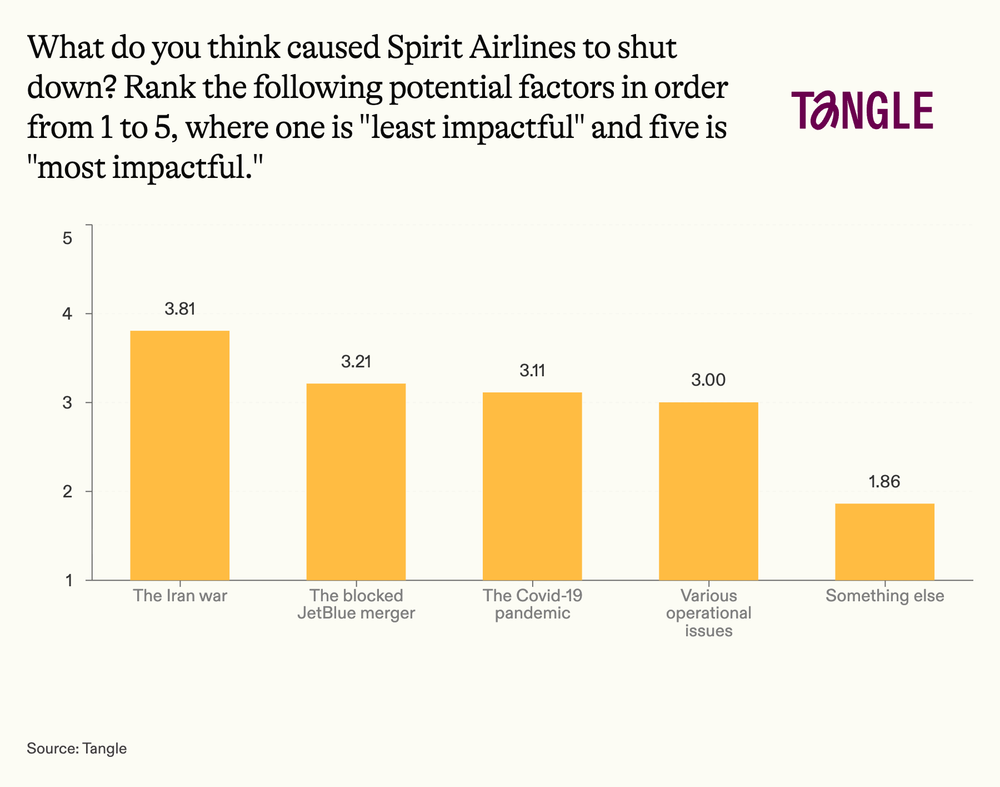
Then the pandemic came and broke the model. Demand cratered, and by the end of 2021, Spirit posted a $472 million loss. Post-Covid inflation continued to crush the business, and it hasn’t had a profitable year since. It simply never recovered.

Other challenges didn’t kill Spirit, but they did throw dirt on the coffin. Jet-fuel prices have skyrocketed since the beginning of the Iran war, and unlike other airlines, Spirit was not well positioned to withstand an oil shock. While some airlines hedge against fuel-price increases by buying futures contracts on jet fuel derivatives, Spirit explicitly noted that it didn’t have enough capital to make those purchases and thus had no such protection. So it was much more vulnerable to increasing fuel prices than other airlines.

The failed merger is even more complicated. While it’s true that the Biden administration challenged the JetBlue–Spirit merger, it’s also true that a Reagan-appointed judge blocked the merger after it went to trial and that JetBlue’s own internal documents showed prices could go up by as much as 40% on overlapping routes. “This merger was going to eliminate too much competition to get approved by a Republican-appointed judge” is much less punchy than “Biden killed Spirit Airlines,” but it’s true. 

Of course, the merger may not have been blocked if the Biden administration hadn’t challenged it, but that’s no guarantee either. Some state attorneys general were co-plaintiffs in the case, private parties sue under antitrust law all the time and — again — the case actually went to trial before the ruling came down, indicating the evidence was strong.

Had the merger gone through, the possibility that it would have helped consumers feels like a coin toss. On the one hand, a Spirit–JetBlue merger could have maintained some low-cost routes and kept some downward pressure on prices. That would have been a win for consumers and upwards of 17,000 workers. 

On the other hand, such a merger would also have been an end to the airline but by a different means. If you’ve flown both, you know JetBlue and Spirit are pretty different; and JetBlue’s entire bid was based on the premise that it would take over Spirit’s routes, raise the prices, and start flying people on JetBlue planes. It’s also plausible that thousands of Spirit employees still would have been laid off as a result of the merger. Before the JetBlue deal was accepted, Spirit’s CEO urged shareholders to reject it over concerns about antitrust regulations.

The entire Spirit–JetBlue merger was actually part of a larger effort to stop Spirit from merging with Frontier, another low-cost budget airline, that likely would have forced some of the larger airlines to bring down their prices even further. That was the merger that would have really benefitted consumers the most. Ultimately, Spirit merging with JetBlue would have been worse than its merger with Frontier, but Spirit shutting down is the worst outcome of all.

And, of course, there’s been a lot of chatter about whether the Trump administration should have bailed the airline out. Broadly speaking, I’m against the government picking winners and losers in the private sector. I don’t hand over my tax dollars so failing private businesses can pay lobbyists to convince the government to give them my money. I’d say this is a principle I believe in, though not an absolute red line. I can imagine some scenarios where a government bailout of a major corporation might be necessary because the consequences of not doing so would be so grave, but this situation really doesn’t come close to qualifying as one of them.  

Ultimately, I think the Trump administration made the right decision by not granting Spirit a cushy bailout. The bar for this kind of rescue should be extremely high. Transportation Secretary Sean Duffy put it in simple terms: “There’s been a lot of money thrown at Spirit, and they haven’t found their way into profitability,” he said. “If no one else wants to buy them, why would we buy them?”

In the end, this is a sad story about a genuinely helpful service not being able to survive a once-in-a-lifetime economic shock. That’s the main ingredient, even though plenty of others give this episode its flavor — corporate greed, government regulation, partisan fighting. Every business in today’s economy has to cook with those ingredients, and no matter how important you think each one is or isn’t, the hard reality is that Spirit just couldn’t get the recipe right. 

Staff dissent — Associate Editor Audrey Moorehead: Even if blocking the Spirit–JetBlue merger was legally defensible, that’s only proof that existing antitrust laws end up hurting the overall market rather than helping it. Yes, a merger would have raised prices along Spirit’s routes. But the resulting company still could have mounted genuine competition against the Big Four that kept prices lower across the board.

Now, Spirit’s ultra-low fares for consumers are gone, just two years after the federal government supposedly acted to preserve them. Meanwhile, JetBlue may be on the way out, too, leaving consumers with dwindling low-cost options and a market that continues to be dominated by the “big four” airlines.

Take the survey: What do you think caused the closure of Spirit Airlines? Let us know.

Disagree? That's okay. Our opinion is just one of many. Write in and let us know why, and we'll consider publishing your feedback.

Your questions, answered.

Q: I am a native speaker of the English language and as someone active in literature, I am a fairly robust reader. I don’t understand how you think any person reading with more depth than a simple scan could cover today’s material in 14 minutes or less. Or do you assume that your readers only scan the enormous amounts of material that you put out? 

— Linda in Saxony, Germany

Tangle: This is a bit of a sliding scale for us, and something that we’ve experimented with over time, but we’ve generally fallen into this rubric:

Assume a reading speed of 300 words per minute, which is in line with the average pace for high school- to college-aged readers. Aim for 4,000–4,500 words in the newsletter. Approximate the reading speed to these guidelines: Under 4,200 means 13 minutes, between 4,200 and 4,450 is 14 minutes, between 4,450 and 4,650 is 15 minutes, and the rare cases where we exceed that would be 16 minutes. As you can see, those cut-offs don’t line up exactly to 300 words per minute, but we tend to most often fall around 4,300–4,500 and want to use extra specificity for that range.

A few notes on this rubric. One, we know a lot of readers take the time to follow our links and check our citations, a great practice but also one that inflates one’s reading time. Second, those calculations don’t include ads that can add to the total length of our emails — not a lot, but enough to make a bit of a difference. Lastly, reading times are usually a little slower on screens than on print media, so that difference may be affecting even the fastest readers.

Generally, though, those read times are estimates. Averages are just averages, and plenty of people will fall above or below them.

Want to have a question answered in the newsletter? You can reply to this email (it goes straight to our inbox) or fill out this form.

Numbers.
  • 3.4%. Spirit Airlines’s share of the domestic airline market between February 2025 and January 2026, the eighth-highest among U.S. airlines. 
  • #8. Spirit’s rank for on-time departures among domestic airlines between February 2025 and January 2026. 
  • –17.9%. The percent change in Spirit’s operating revenue between FY2024 and FY2025.
  • –12.1%. The percent change in Spirit’s operating costs between FY2024 and FY2025.
  • –29.8%. The percent change in the number of passengers transported by Spirit between February 2025 and January 2026. 
  • 3.4 million. The approximate number of passengers served by Spirit in Fort Lauderdale, Florida, between February 2025 and January 2026, making it the company’s largest domestic market. 
In Partnership with hear.com

The most natural listening experience ever. Are these the holy grail of hearing aids? Get a 45-day risk-free trial to find out.

Learn more The extras.
  • One year ago today we had just released a Friday edition covering President Trump’s first 100 days.
  • The most clicked link in our last regular newsletter was our latest episode of Suspension of the Rules.
  • Nothing to do with politics: Read the events of Bram Stoker’s Dracula on the day they occurred in the book with Dracula Daily.
  • Our last survey: 2,823 readers responded to our survey on the Supreme Court’s recent decision to weaken Section 2 of the Voting Rights Act with 54% saying the legal reasoning is unsound and the effects will be harmful. “Racism is alive and well, and it will only get worse now,” one respondent said. “The only people keeping racism alive are the Democrats. Jim Crow is dead to everyone else,” said another.
Spirit Airlines shuts down.
Have a nice day.

Last month, a routine bus ride to Hancock Middle School in Kiln, Mississippi, turned extremely dangerous. After bus driver Leah Taylor passed out behind the wheel, five students leapt into action. Jackson Casnave grabbed the steering wheel as the bus veered off course while Darrius Clark hit the air brakes — so forcefully it nearly threw him through the windshield. Kayleigh Clark called 911, and Destiny Cornelius spotted the driver’s medication in her hand and administered it as McKenzy Finch helped keep everyone calm. “I’m very proud of them,” Taylor said afterward. “I couldn’t ask for any other students than my students on my bus. I'm gonna think of how they saved my life.” WLOX in Biloxi, Mississippi, has the story.
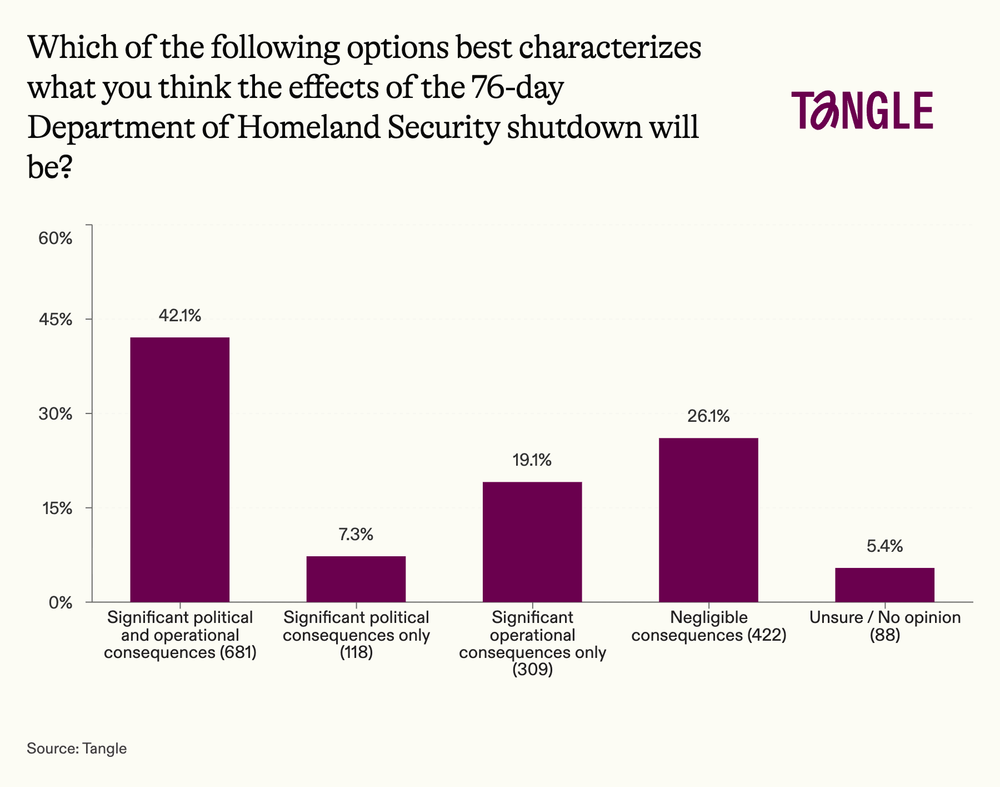
69f89f3aa893bc000120a6c3
Extensions
The Sunday — May 3
The SundayWhite House Correspondents’ DinnerSPLCGeofence warrantsVoting Rights Act

This is the Tangle Sunday Edition, a brief roundup of our independent politics coverage plus some extra features for your Sunday morning reading.

What the right is doodling.
Steve Kelley | Creators Syndicate
What the left is doodling.
Mike Luckovich | Creators Syndicate

An overwhelming response.

Our Friday edition detailing the way

Show full content
The Sunday — May 3

This is the Tangle Sunday Edition, a brief roundup of our independent politics coverage plus some extra features for your Sunday morning reading.

What the right is doodling.
The Sunday — May 3
Steve Kelley | Creators Syndicate
What the left is doodling.
The Sunday — May 3
Mike Luckovich | Creators Syndicate
The Sunday — May 3

An overwhelming response.

Our Friday edition detailing the way President Donald Trump has been profiting off the presidency has garnered hundreds of reader requests to drop the paywall. We make over 80% of what we write available for free, and gating our most in-depth reporting is the only way we can successfully operate as a business.

Still, when the demand is this large, we feel the need to supply.

We’ve dropped the paywall to our Friday edition, and it can now be read by — and shared with — anyone. You can find that Friday edition here.

Suspension of the Rules

Isaac, Ari, and Kmele take on partisan gerrymandering and the Supreme Court’s decision on the Voting Rights Act in the latest episode of Suspension of the Rules. After you finish reading today’s edition diving deep on the topic, check out the latest video for more discussion — plus an exploration on the recent assassination attempt against President Trump, the White House ballroom, and a dramatic “fight me, bro” challenge issued by a former Tangle interview guest. Watch the new episode here!

Monday, April 27.

The White House correspondents’ dinner shooting. On Saturday, April 25, a gunman fired shots at the Washington Hilton Hotel, which was hosting the White House Correspondents’ Association (WHCA) dinner. The Secret Service evacuated President Donald Trump and other senior leaders, and none of the guests were injured. One Secret Service officer was shot while engaging the suspect outside the ballroom, but he was wearing a bulletproof vest and was not seriously wounded. The gunman allegedly sent a manifesto to his family before the attack, suggesting that he intended to kill the president and other administration officials. He was charged with attempting to assassinate the president, transportation of a firearm and ammunition in interstate commerce with intent to commit a felony, and discharge of a firearm during a crime of violence.

Our take: “Unfortunately, we’ve had many opportunities to explore aspects of political violence in past coverage. Something that stands out to me this time is how many Americans dismiss these events as fake. Tackling these theories head-on is crucial, and we need a holistic effort.”

Reader Survey:

The Sunday — May 3
Tuesday, April 28.

The Southern Poverty Law Center indictment. On Tuesday, April 21, the Justice Department announced an 11-count indictment charging the Southern Poverty Law Center (SPLC) with financial crimes, including wire fraud and making false statements to a federally insured bank. Acting Attorney General Todd Blanche said the nonprofit organization secretly sent over $3 million to informants inside extremist groups without telling donors what their money was being used for. The SPLC denies any wrongdoing and plans to fight the charges.

Our take: “The SPLC almost certainly paid informants, and an indictment to determine criminal wrongdoing seems justified. Some of the SPLC’s recent actions, and its evolution over time, invite uncomfortable questions. The DOJ certainly has a political motive here, but that doesn’t discount the possibility of wrongdoing.”

Reader Survey:

The Sunday — May 3
Wednesday, April 29.

Geofencing before the Supreme Court. On Monday, April 27, the Supreme Court heard oral arguments in Chatrie v. United States, a case exploring whether the practice of scanning cell phone data of individuals based on proximity to a crime is constitutional. The case is the first time the Supreme Court has considered the use of “geofence warrants,” which enable the police to cast wide digital dragnets to investigate a suspected crime. The justices appeared split on the decision after two hours of arguments; the Court is expected to issue a decision before the end of the summer.

Our take: “The general concept of geofencing seems constitutional to me. Whether the government can get data from a third party, and what data they can get, complicates the issue considerably. I hope the Court provides some guidelines on what data the government isn’t allowed to access.”

Reader Survey:

The Sunday — May 3
Thursday, April 30.

Louisiana v. Callais. On Wednesday, April 29, the Supreme Court ruled 6–3 that Louisiana must redraw its congressional map, finding that one of the state’s majority-black districts was unconstitutionally gerrymandered based on race. The decision weakens — but does not strike down — Section 2 of the Voting Rights Act, which prohibits voting practices that discriminate on the basis of race or color. In the wake of the decision, several states could move to redraw their congressional maps based on the Court’s guidance, an effort that is expected to benefit Republicans. 

Our take: “We should understand the systems in place before we try to change them. The VRA was originally a necessary protection against racial discrimination, but more recently, it has mostly protected us from partisan gerrymandering. If we want to solve the gerrymandering problem, Congress needs to act, not the courts.”

Reader Survey:

The Sunday — May 3
Friday, May 1.

In this week’s Friday edition, Executive Editor Isaac Saul dives deep into the biggest story of this presidential administration: The allegations of corruption, ranging from shady business deals, foreign policy influences, and an apparent presidential pardon economy. You can read Isaac’s piece here — now available to everyone.

Further reading.

We’ve covered political violence, grand jury indictments, Fourth Amendment rights, and the Voting Rights Act before. Plus, read some of Tangle’s early reporting on the Hunter Biden stories — before the mainstream media was willing to cover it. Take a look at our past coverage below:


What just happened.

Here’s a rundown of the major stories that have broken since our newsletter on Thursday.

  • On Thursday, the House passed (by a voice vote) a package to fund the Department of Homeland Security — excluding Immigration and Customs Enforcement and Border Patrol — through September. President Trump then signed it into law, ending the department’s partial shutdown after 76 days. (The funding)
  • On Thursday, President Trump announced Dr. Nicole B. Saphier as his new pick for surgeon general. Saphier is the director of breast imaging at Memorial Sloan Kettering Cancer Center Monmouth and a former Fox News medical contributor. The president withdrew his previous nominee, Dr. Casey Means, after she had garnered insufficient support in the Senate. (The announcement)
  • On Thursday, the Commerce Department reported that the personal consumption expenditures price index rose 0.7% from February to March and 3.5% on a 12-month basis. The department also reported that U.S. gross domestic product grew 2% in Q1 2026, up from 0.5% in Q4 2025. (The reports)
  • On Thursday, Maine Gov. Janet Mills (D) suspended her Senate campaign, effectively ensuring that Graham Platner, who has built a substantial fundraising and polling advantage, will win the Democratic primary. Mills said that her campaign did not have the financial resources to continue. Platner will face Sen. Susan Collins (R) in the general election. (The suspension
  • On Thursday, the Senate voted unanimously to pass a ban on senators trading on prediction markets, such as Kalshi and Polymarket, amid rising concern over insider trading. (The vote)
  • On Friday, the 5th U.S. Circuit Court of Appeals temporarily blocked mail-order distribution of mifepristone, a drug used to induce abortions. On Saturday, Danco Laboratories, a company that produces the drug, asked the Supreme Court to pause the circuit court’s order. (The order)
  • On Friday, President Trump said he would increase tariffs on automobiles from the European Union to 25%, writing in a social media post that the EU was “not complying” with the trade deal reached last summer. (The tariffs) Separately, President Trump announced he would remove tariffs on some whiskey imported from the United Kingdom, following King Charles III’s visit to the United States. (The removal)
  • On Friday, the Pentagon announced that the U.S. would withdraw about 5,000 troops from Germany, following President Trump’s threats of withdrawal earlier this week after German Chancellor Friedrich Merz criticized the Iran war. (The withdrawal)
  • On Saturday, Spirit Airlines announced it is going out of business and ceasing operations, citing the impact of high oil prices amid ongoing financial challenges. (The shutdown)
The Sunday — May 3
Reader essay.
The Sunday — May 3

Photo from Beth Malow

Tangle reader Beth Malow has noticed something: It’s super easy to be pulled into echo chambers and tribes, to stop believing in reaching across the aisle, and to convince ourselves that exposure to different points of view is dangerous. But Beth thinks otherwise — instead, our political differences prove the importance of bridge-building… if you can call it that.

69f6b973a893bc00011676d1
Extensions
The Arc of Outrage.
reader-essay

By Beth Malow


Reader, what might you suggest as an alternative term to bridge-building?

Do you ever feel conflicted about doing the hard work of opening yourself up to hear different political viewpoints? Is it easier to be an activist than a bridge-     builder? Are you pulled to

Show full content
The Arc of Outrage.

By Beth Malow


Reader, what might you suggest as an alternative term to bridge-building?

Do you ever feel conflicted about doing the hard work of opening yourself up to hear different political viewpoints? Is it easier to be an activist than a bridge-     builder? Are you pulled to news sources that create outrage and raise your stress level, rather than those that value nuance? 

I’m a sleep doctor, science communicator, and a co-author of Beyond the Politics of Contempt. As a paid subscriber, I read Tangle to get both sides of the news. That helps me from falling into the outrage cycle. I’m inspired by Tangle essays such as Decency is about to make a comeback, which speak to Americans having grown tired of cruelty in our politics and wanting to see more kindness. 

When I talk with friends socially, or audiences at our book events, I’m struck by how easy it is to be pulled into our echo-chambers, bubbles, silos, and tribes (you choose the word that most resonates with you) and how challenging it is to leave these spaces. A common type of question we’re asked is “How can I talk with others, or read news sources, that have a differing view on FILL IN THE BLANK?” The BLANK can be abortion, climate change, gun rights, immigration —      to name a few. Aren’t I compromising my integrity and giving weight to immoral positions by listening to others? Isn’t reading about different points of view dangerous? Will I be sucked into a conspiracy theory at worst? Or at best, compromise my values and morals? 

I’ve been admonished by well-meaning friends. “Beth, it’s great that you are so nice and want to be a kind person. But there is a higher moral issue at play here in what Trump and his team is doing. How can you do anything but FIGHT?” Or “We will talk with the other side once we are victorious and they are out of power.” Or “This isn’t the time to bridge-build; the world is on fire! I need to save my limited energy for activism.”

Outrage does have its place in our culture and our history. Look at the American Revolution and the bravery of the colonists who rebelled against the Crown. I think of outrage as having an arc. It’s helpful in the short-term — motivating action in the face of injustice. But too much outrage can work against us. It can contribute to sleepless nights as we doomscroll on our phones. Outrage increases our stress level and harms our physical and mental health. We may withdraw and stop being engaged in whatever cause motivates us because it’s all too much. We may stop reading Tangle!
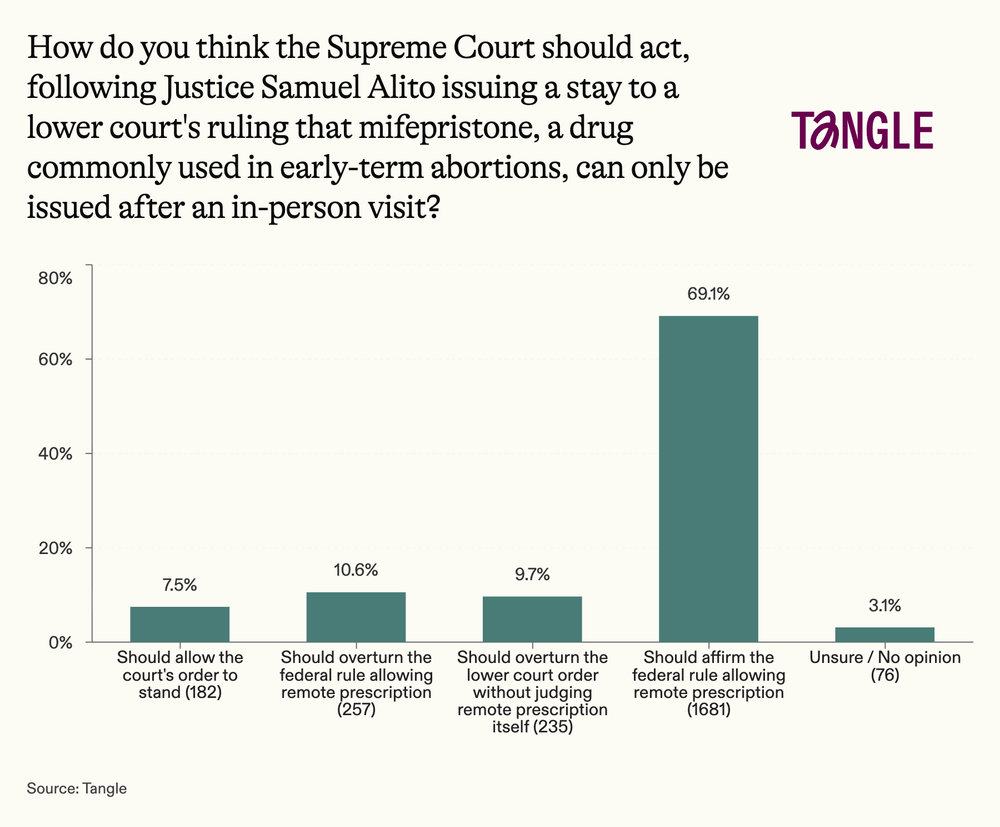
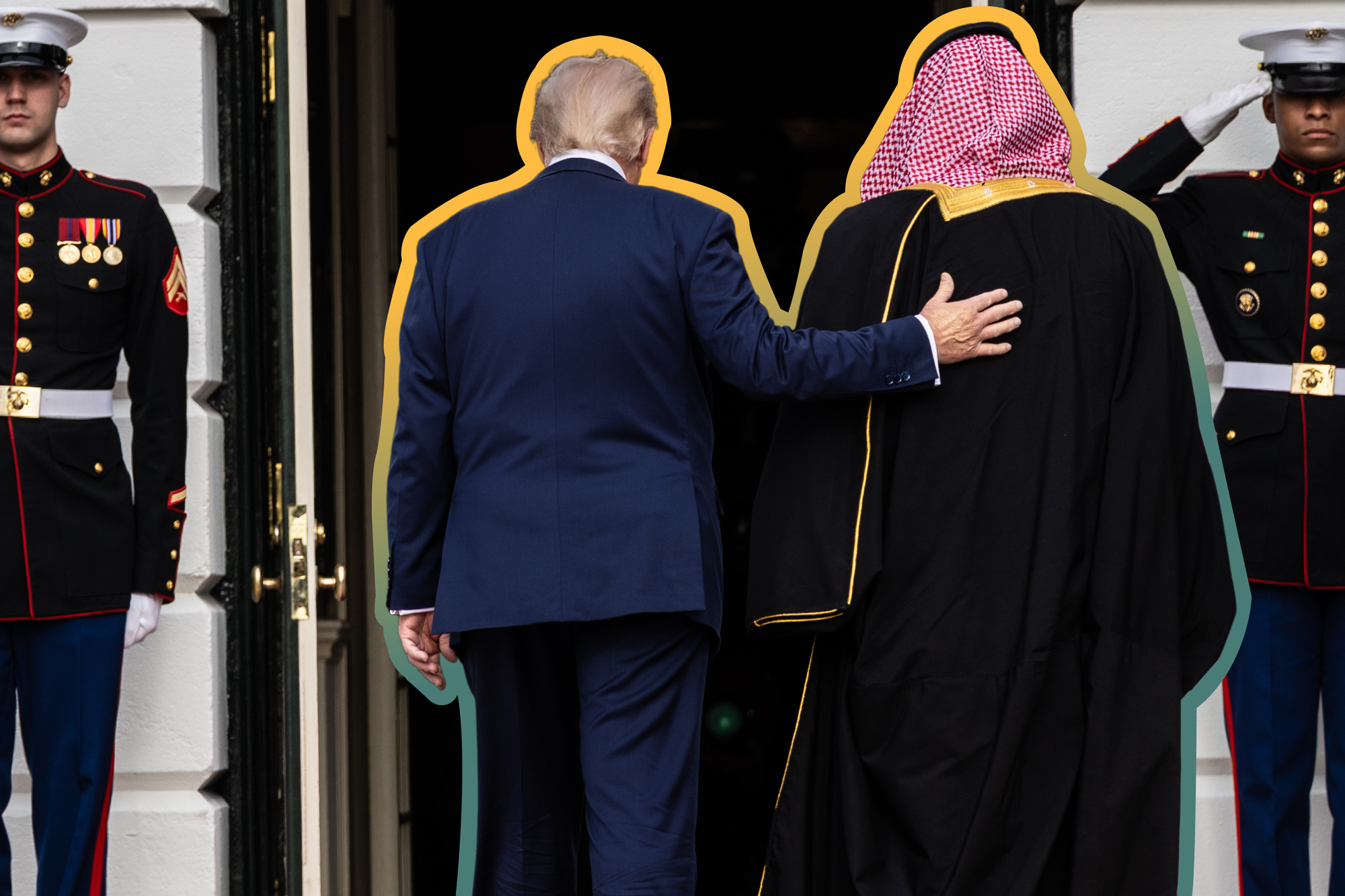
69f4f8a6a893bc00011595e8
Extensions
What have we learned about the WHCD shooter?
On this week’s Suspension of the Rules, Isaac, Kmele, and Ari take a look at the White House Correspondents Dinner shooting. What have we learned
Show full content
What have we learned about the WHCD shooter?

On this week’s Suspension of the Rules, Isaac, Kmele, and Ari take a look at the White House Correspondents Dinner shooting.

69f53f75a893bc000115e02a
Extensions