GeistHaus
log in · sign up

https://palatemag.co.uk/feed

rss
36 posts
Polling state
Status active
Last polled May 19, 2026 02:04 UTC
Next poll May 19, 2026 23:37 UTC
Poll interval 86400s
ETag "c4fb1c6e8d8747bea420b01941a3828c-gzip"
Last-Modified Sun, 17 May 2026 14:35:43 GMT

Posts

BiBi (Revisited)
londonnew
The BiBi I met back in 2021 was a newly-opened casual-ish restaurant serving flavourful Indian small plates and cocktails…
Show full content

The BiBi I met back in 2021 was a newly-opened casual-ish restaurant serving flavourful Indian small plates and cocktails of the bright and simple kind. Opening at the tail end of the pandemic, this restaurant was one of my first mask-less, QR-code-less experiences of the year and what a delight it was. Headed by chef Chet Sharma, I felt the experience back then was something special, and I enjoyed my first reservation so much that before I left I made another for the following week. BiBi had the irresistible promise of a new and exciting restaurant: optimistic, modern Indian cookery with a capital M. I was later reunited with Sharma’s cooking at Pavyllon, where he and Yannick Alléno produced a four hands menu that reignited my love for his work. A revisit to BiBi was overdue, and a few months later I have finally returned.

Whilst the restaurant remains polished and inviting with a beautifully crafted counter opposite the open kitchen, the current menu bears no resemblance to its former self. Soho style small plates have been replaced with a tasting menu that encourages you to chomp through some of the lesser-known flavours and regions of India. Some courses on the menu change frequently, with morels, truffles and other produce appearing at their best and disappearing at the end of their season. Priced at £145, the chef’s selection menu spans seven courses (and a few additional bites), and is described by the restaurant as “progressive”, which I think loosely translates to: no you can’t have chicken tikka and a garlic naan. Today’s BiBi is all grown up: the cocktail list is now award winning, the menu is tighter and now boasts a £70 N25 caviar supplement. In a market of increasingly dumbed down food, BiBi chose to get smarter, and I couldn’t be happier about it.

The first bite on this visit was a Wookey Hole papad that rose from its dish like a magnificent Cheddar totem, to be dipped into a layered bowl of cultured cream, mango and coriander chutneys. It’s a nod to the curry house favourite, but thoughtfully elevated – the three components of the dip worked in glorious harmony. Then, a steaming bowl of mushroom chai, the last sip of which included a mouthful of crunchy toasted buckwheat. It was woody and savoury, with a dash of smoked tea oil giving a fragrant finish.

My rematch with BiBi vastly exceeded my expectations; this place has evolved beautifully. I found the menu to be both joyful and meticulously thought out

An array of small bites arrived, the best of which was the chickpea sponge with mooli (Indian radish) and black truffle. Sharma showcases these humble ingredients in their Sunday best, to great effect. The whipped lentil fritter halibut and tomato chutney was the least successful of these initial bites – lacking moisture and texture, I could have done without it (which of course did not stop me gulping it down with a generous swig of Billecart-Salmon). Still, this was the strongest start to an Indian fine dining menu that I can remember, and palate sufficiently whetted, the first course, Hamachi and blood orange Nimbu Pani (with the N25 supplement – why not), was everything I’d hope it would be. The presentation was somewhat chaotic but the components were well organised – fat slithers of Hamachi, with subtle acidity, delicate herbaceousness and the nuttiness of the N25 made this a well-rounded dish.

The sudden lick of throat tingling heat from the Mangalori crab Idli (South Indian rice cake) was a potent reminder that although this is a fine dining menu, chef Sharma is brave enough to turn up the heat when appropriate. This elevated take on fiery Mangalorean crab was clever, three components made exceptionally well, cut by sharp citrus. This course was a nod to the future – an abstract take on Indian cookery, deceptively complex despite being plated like a modernist painting.

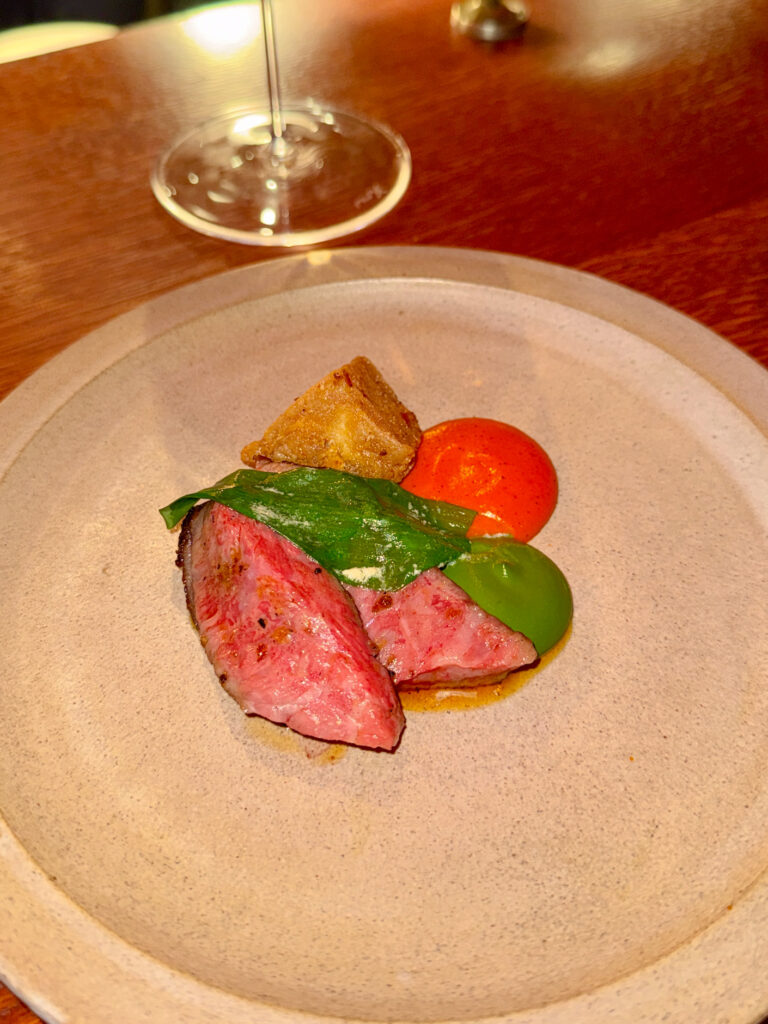
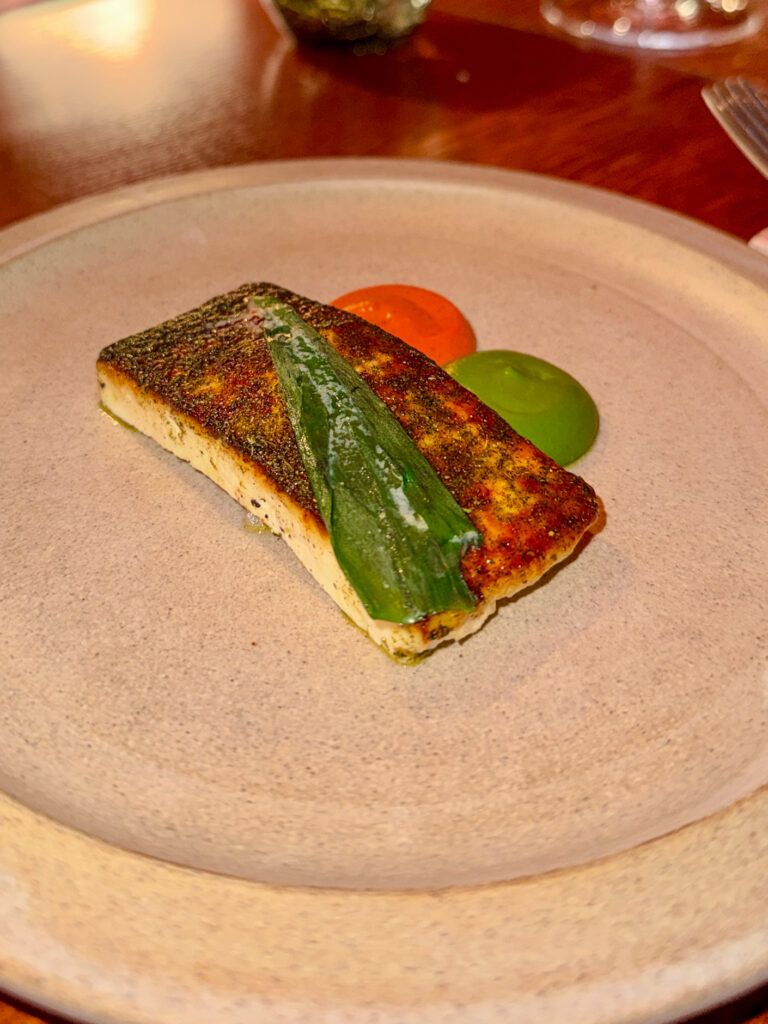
In the early days, the paneer at BiBi was one of the most loved dishes and I was pleased to see it had survived the menu changes. This is a beautiful ingredient – the paneer is made in the Cotswolds and the seasoning is just perfect – it arrives with two peppercorn sauces, the Timut pepper (a rare and aromatic peppercorn similar to Sichuan) adds a reassuring tongue tingle, and a little wild garlic. Having ordered one paneer and one wagyu, I felt the garnish better suited the paneer and this was my favourite plate of the two. I wasn’t convinced about applying the exact same sauces to both the paneer and wagyu and felt the wagyu would have benefitted from a different treatment.
Now for a bit of fun: Texel Lamb Nihari. Lamb Nihari would usually be a slow cooked stew, but is reimagined at BiBi as a 24hour cooked fork-tender lamb neck in an airy little bun with a sprig of coriander and some pickly bits, to be dipped into a steaming bowl of punchy curry sauce. It was truly orgasmic to eat (a finger bowl is needed).

BiBi’s signature dish is Sharmaji’s Lahori chicken. The recipe has been passed down by Sharma’s grandfather, and comes accompanied by rice, black dal and pickles. The spicing is very sophisticated – the sauce combines some 45+ ingredients, with buttery cashews cut by tangy yoghurt whey, and is light, fragrant and comforting. Even the rice isn’t just rice; instead it’s a riff on a Yakhni Pilau: fluffy rice cooked in rich chicken stock and topped with popped wild rice. The dal is enriched with ghee and there’s plenty of it. It’s very rare that I can muster excitement over a chicken breast, but this was one such rare occasion. The Lahori Chicken is easily of Michelin standard and was the star dish of the menu.

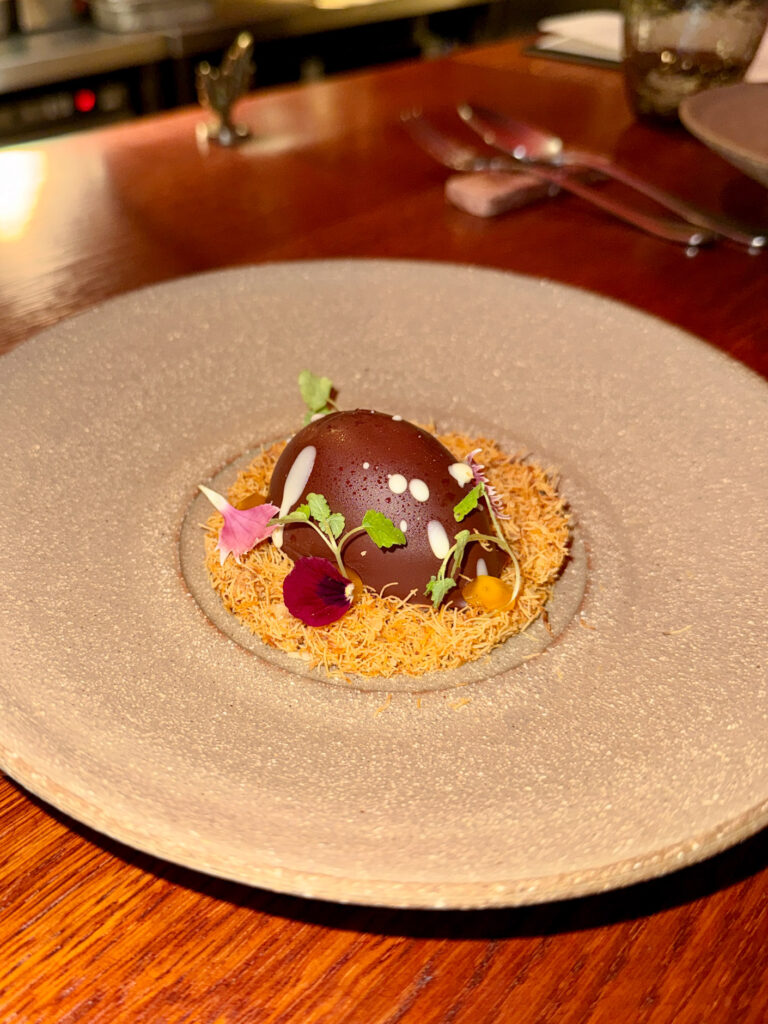
A rhubarb sorbet with cream cheese granita drags you back to the future – it’s an unusual pairing but it works, and I would have been more than happy to have finished the meal at this point. Instead, to follow was “Shah Babur’s Saffron Egg”. Inspired by a Mughal emperor, it’s very big and very sweet, with potent saffron, banana mousse, pineapple and a too-thick chocolate eggshell. Sadly this didn’t work for me, and I didn’t feel it was in the same league of culinary cleverness as the rest of the menu. A spoonful sufficed. Instead, I scoffed down the petits fours – a rose macaron and a passionfruit and chilli jelly – these were well-made and ended the tasting elegantly. Finally, clutching signed menus and a BiBi chocolate bar each, we tipped out of the restaurant onto North Audley Street, well-fed and inspired.

BiBi is offering the most interesting Indian fine dining I have experienced in London, and it’s difficult to understand (given the quality of ingredients, polished service and creative, sharp cookery) why they have been overlooked by The Michelin Guide whilst inferior restaurants offering a fraction of the finesse somehow coast through. My rematch with BiBi vastly exceeded my expectations; this place has evolved beautifully. I found the menu to be both joyful and meticulously thought out. I sensed this was a true labour of love by a chef who combines his futuristic vision with a well-trained hand and a remarkable talent for spicing. I shan’t wait another five years, or even another five days. I’ve shamefully rebooked again.

BiBi 17/20Food & Drink56Service56Ambience56Value22about our grading system

42 North Audley Street
London
W1K 6ZP

May 2026
https://www.palatemag.co.uk/?p=6710
Extensions
Consider The Campari Shakerato
articlenew
There are certain questions in modern life we can twist ourselves into a pretzel about: will AI ever be…
Show full content

There are certain questions in modern life we can twist ourselves into a pretzel about: will AI ever be sentient and enslave us all, should you add a splash of milk to a ragù, and what is the true meaning of a “staycation”? (The latter question really depends on what newspaper you read.) But here’s a head-scratcher next time you’re pondering what to order at a bar: can a drink made from one core ingredient be a “cocktail”, and can such a drink ever be worth ordering?

Consider the Campari Shakerato. I first enjoyed this drink a few years ago at Camparino in Galleria in Milan (Campari’s flagship bar located by the magnificent Duomo) and have gradually become obsessed with it, especially as it seems to be taking off in bars across London (or at least, bars that will make it on request).

Something truly magical happens with a Campari Shakerato

Conceptually it follows the same principles as a Caffè Shakerato. In this case, it all starts with about 65-100ml of unadulterated Campari over ice in a shaking tin. Now, this may already be off-putting to some: this vibrant, crimson apéritif, first created by Gaspare Campari in 1860, is most commonly mixed with other spirits and liqueurs to make a whole family of cocktails, each of which have their own fascinating backstories (such as the Americano, and how the soda was swapped for gin to make a Negroni, and then at Bar Basso an accident with prosecco gave birth to the Negroni Sbagliato, and so on). These are all wonderful in themselves, with further variations to discover (such as the Bicyclette/Bicicletta, the Boulevardier, the Cardinale, the Lucien Gaudin, the Mi-To, all probably worth an article in their own right). But Campari performing a solo act, in all its bitter natural glory? Probably not everyone’s cup of tea.

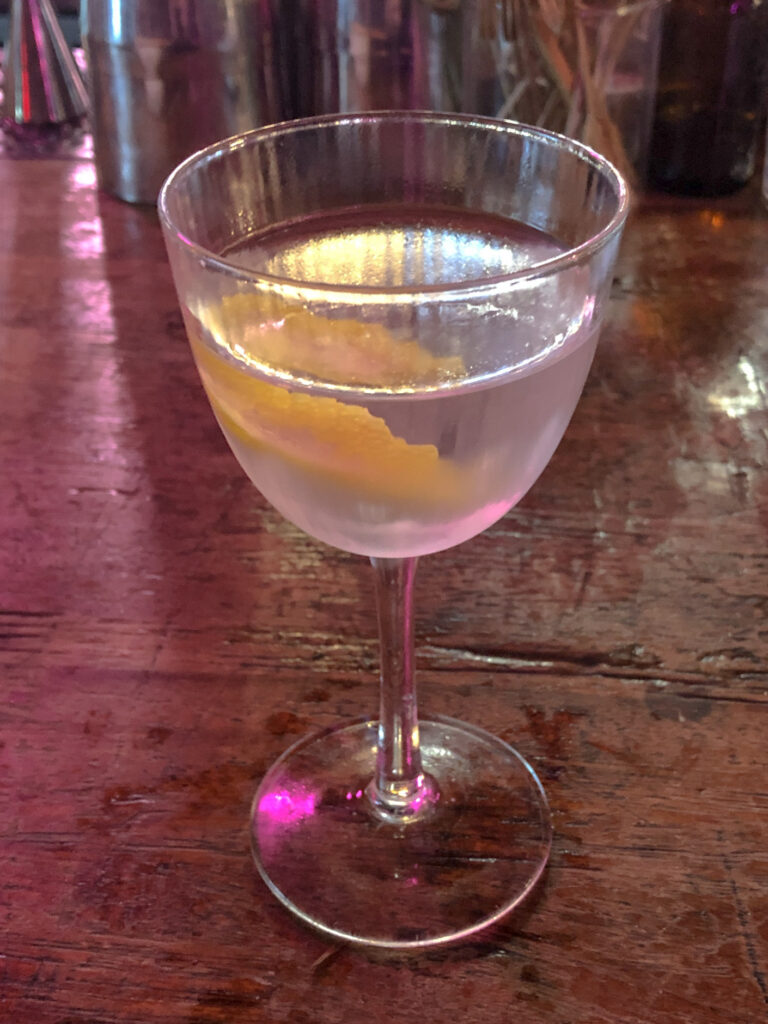
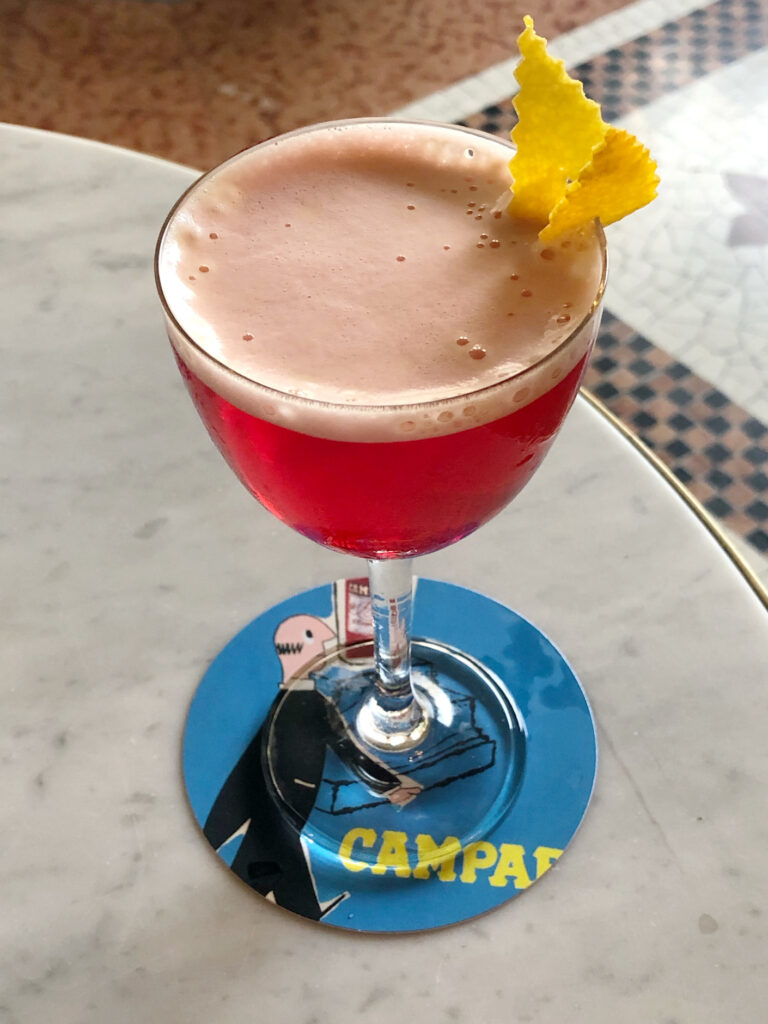
However, something truly magical happens with a Campari Shakerato. When shaken over ice within an inch of its life, then strained and poured into a chilled Nick and Nora (or similar) glass, the resulting drink is really quite astonishing: the shaking process releases the oils and sugars from captivity and it transmogrifies into something lighter and velvety; there is still that trade mark orange aroma but the gentian is gentler and the astringency is toned down. It is surely enough to convert any Campari refusenik.

But is it even a cocktail? Aside from possible additions to a Campari Shakerato (which we’ll come to in a moment – let’s establish our Shakerato 101 first), it lives or dies by one key element, namely Campari (even if Campari is itself a complex and secret blend of herbs and botanicals, though they no longer use beetle dye to achieve that distinctive red colour).

For this definitional test I had to turn to my trusty copy of The Savoy Cocktail Book by Harry Craddock (first published in 1930). While there is some debate about the etymology of the word “cocktail” itself, with some rather frivolous and dubious theories, the book’s introduction posits the view (based on the word’s first appearance in The Balance, an American periodical dated 13 May 1806) that any cocktail is “composed of spirits of any kind, sugar, water, and bitters.” So, an Old Fashioned, which comprises bourbon or rye, ice, Angostura and sugar, easily sails through that test like an open Strait of Hormuz.

In the equally stimulating Liquid Intelligence by Dave Arnold (2014), he defines a cocktail as the triumvirate of “liquor, mixers and ice at 0°C”, before explaining the interesting chilling phenomenon of thermodynamics and how stirring or shaking with ice cubes that start at 0°C can make the drink go sub-zero (and I can think of at least one bartender who stirs martinis with a thermometer to ensure this but let’s not go too off-piste).

On the surface, a single ingredient drink could fail these basic cocktail tests. But bashing bitter Campari against ice in a shaker, coaxing out its inherent sugars and inviting both dilution and aeration to the party, I’d argue it becomes a self-fulfilling cocktail.

Then there’s the theatre of its service. While at home you can definitely shake your own Shakeratos (or is the plural “Shakerati?”), there is something about watching a skilled bartender do this, especially as different types of shaking, and the number of strains, can result in very different serves. Further, this is not, by definition, a drink that can possibly be pre-batched or dispensed; it can only ever be shaken à la minute. And shaken well.

We can get into the fun of variations (e.g. adding Fernet Branca to make a “Ferrari Shakerato”!) but what we all want to know is where you can get a good, classic Campari Shakerato…


Where to get a good Campari Shakerato (in alphabetical order)

Here are Palate’s tried and tested bars and restaurants in London (and a couple in other cities) where you can discover the wonder of a Campari Shakerato:


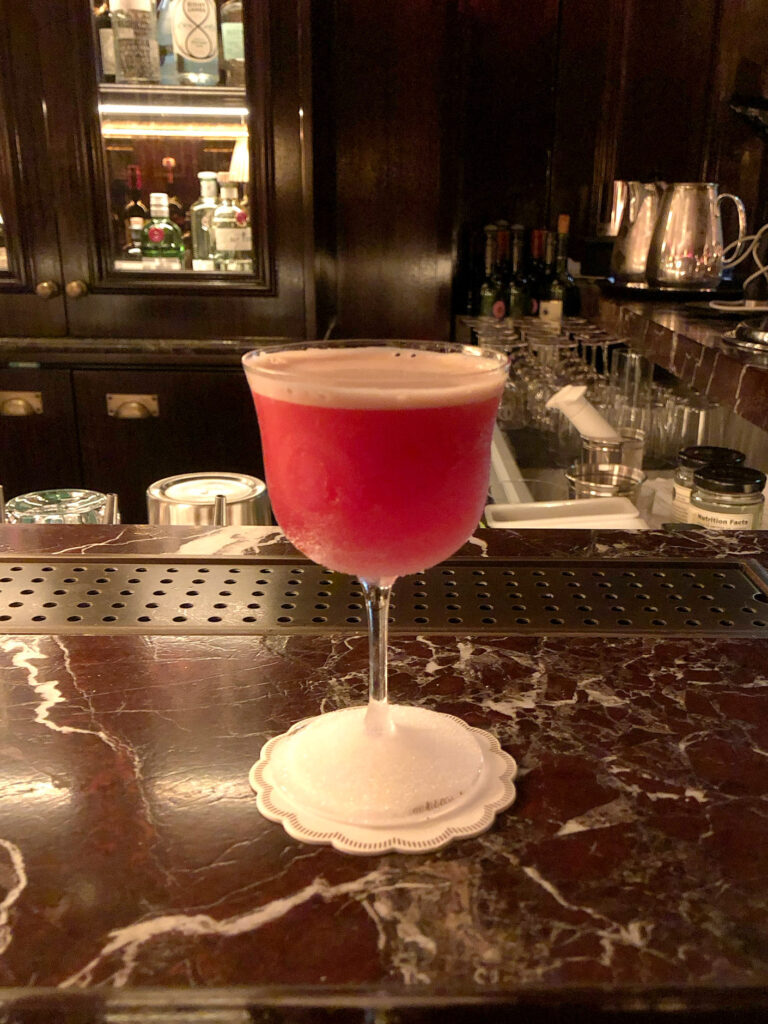
Amaro (Kensington) (pictured above): I love this Italian neighbourhood bar on Kensington High Street anyway but they do a truly excellent Campari Shakerato here, often with a wet and a dry shake so that it is super smooth, and always served with panache.


Bar Nouveau (Paris): this tiny Parisian bar serves a vintage Campari Shakerato using Campari they somehow got hold of from the 1980s. I had one on my last visit to Paris and it blew me away; it’s darker and more complex. It may not always be on the menu but they can probably do it off-menu if you use your best French.


Baudry Greene (Covent Garden): a lovely European café-bar on Endell Street, owned by the same people behind Parsons (opposite) and The 10 Cases (next door) and run by ex-Termini bartenders. Pleasingly they will ask if you would prefer “a single strain or a double strain” when requesting an off-menu Campari Shakerato. This is best enjoyed on their outdoor tables in the warmer months – with a bit of imagination you can pretend you’re on the continent.


Brutto (Farringdon): I was pleased as punch when Brutto officially added a Campari Shakerato to their cocktail menu in 2025 but they’ve been doing them on request for a while anyway. Always a great vibe here and, you never know, you might bump into Madonna…


Camparino in Galleria (Milan): the “OG” Campari Shakerato and most probably the best, especially if you’re lucky enough to enjoy one on their outdoor terrazzo overlooking the Duomo. Heaven.


Henson’s (Soho): unsurprisingly, another Italian-led bar, and one of Soho’s most underrated. It’s not on their official menu but they will definitely make a Shakerato on request. I’ve seen them use a foaming agent before which is technically cheating but the result is certainly very smooth.


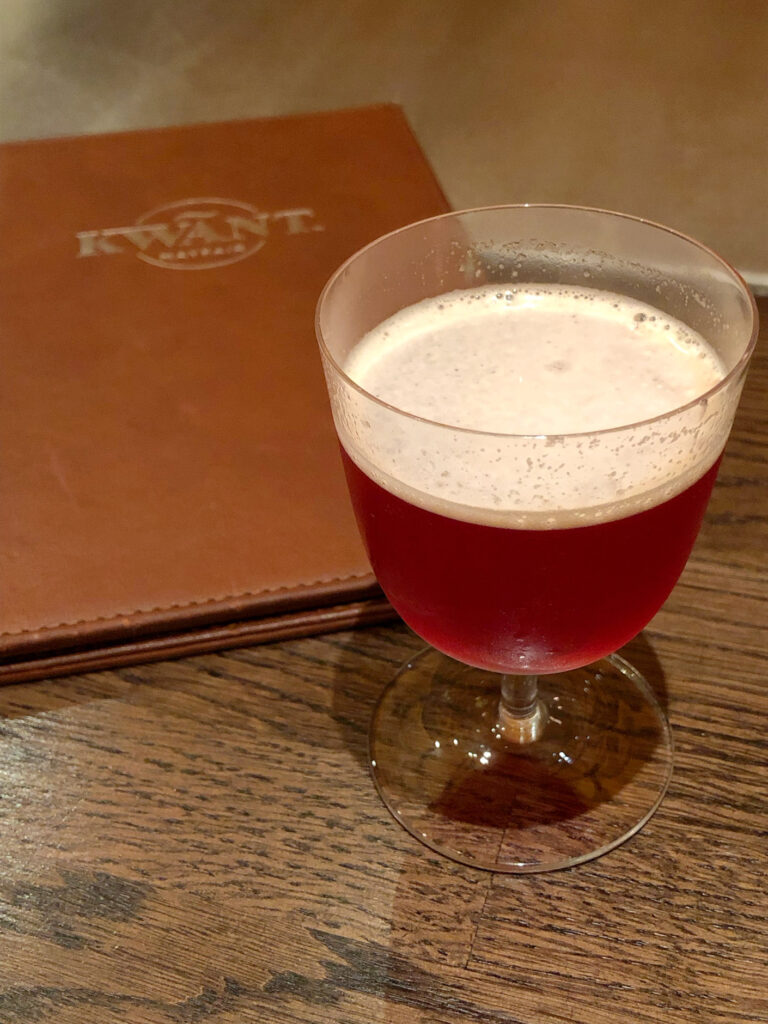
Kwãnt (Mayfair): their house Shakerato style is to do a hard wet shake and single strain which results in small particles of ice in the drink for further, gradual dilution as you consume it. They also often add a touch of Mezcal though you can customise it as you wish.


Martino’s (Chelsea): a slightly anomalous one as they add orange juice to their Campari Shakerato which makes it more of a shaken Garibaldi, as well as a bit too brunchy, but I’d recommend this as a gateway to a ‘pure’ Shakerato or for those with a sweeter tooth.


Simpson’s in the Strand (Covent Garden): they will serve a classic Campari Shakerato on request in either Simpson’s Bar (upstairs) or my new favourite underground theatrical den of iniquity, Nellie’s Bar, often with an orange garnish.


Termini (Soho): another Italian bar that will do it on request. Sometimes, if you’re lucky, they will serve it with complimentary chunks of Parmesan.


The Prince (Barbican/Old Street): this fantastic down-to-earth bar which opened in late 2025 (where The Gibson used to be) specialises in martinis, Black Velvets and punch. But they can make pretty much any classic cocktail to order and will happily do a very good Campari Shakerato.


Waltz (Shoreditch): another great new bar (and our best bar of 2025), owner Gento Torigata is a Kwãnt alumnus and so makes his Shakerato the same way (i.e. with a little Mezcal and a single strain).


And any self-respecting bar with Campari on its shelves will do it if you ask nicely. But just make sure whoever is shaking the Campari shakes the living daylights out of it or you won’t get the desired effect.

I’ll finish with Harry Craddock’s words of wisdom about shaking in The Savoy Cocktail Book, which are still relevant today: “Shake the shaker as hard as you can: don’t just rock it; you are trying to wake it up, not send it to sleep!”


Last updated in May 2026.

Neither Campari nor any of the bars / restaurants referred to in this article have provided any incentive or payment to be included. Their inclusion is independent, editorial opinion. And because they’re damn good. Cin cin. (Enjoy responsibly.)


https://www.palatemag.co.uk/?p=6723
Extensions
Jarana
londonnew
A quiet restaurant opening in West London is giving me a little hope of what’s to come. When I…
Show full content

A quiet restaurant opening in West London is giving me a little hope of what’s to come.

When I was first looking for Jarana – the newest Peruvian restaurant and Pisco bar in Hammersmith and Fulham – I think I passed it at least three times. The restaurant’s black, glass façade blends with the massive gym next door, so unless you’re actively searching for its colourful signage, it’s easy to miss.

And while that may be a shame for distracted passersby, maybe it’s a good thing for those who are already in the know. The space is quite small – maybe eight or nine tables in a deep turquoise-painted room, with pretty-patterned floor tiles and warm, pendant wicker lamps. There’s also a small terrace with a couple more tables that overlook The Distillers pub across the road, and will definitely fill up with thirsty locals on sunny days.

If you happen to be one of them, it’s imperative to order a Pisco Sour, Peru’s famous cocktail made with Pisco – a grape brandy, simple syrup, lime juice and egg white for texture. Here, it’s subtly sweet, subtly tart and entirely refreshing. When you’re ready for a twist, Jarana’s cocktail menu is an ode to the Peruvian spirit, with different takes on the Sour, and other Pisco-based drinks like the Spicy Peruvian that pairs the brandy with mandarin and basil – a sun-kissed delight.

Once they get everything in order, trust that I’ll be on that sunny terrace, sipping a Spicy Peruvian, (finally) slurping ceviche and enjoying the sun

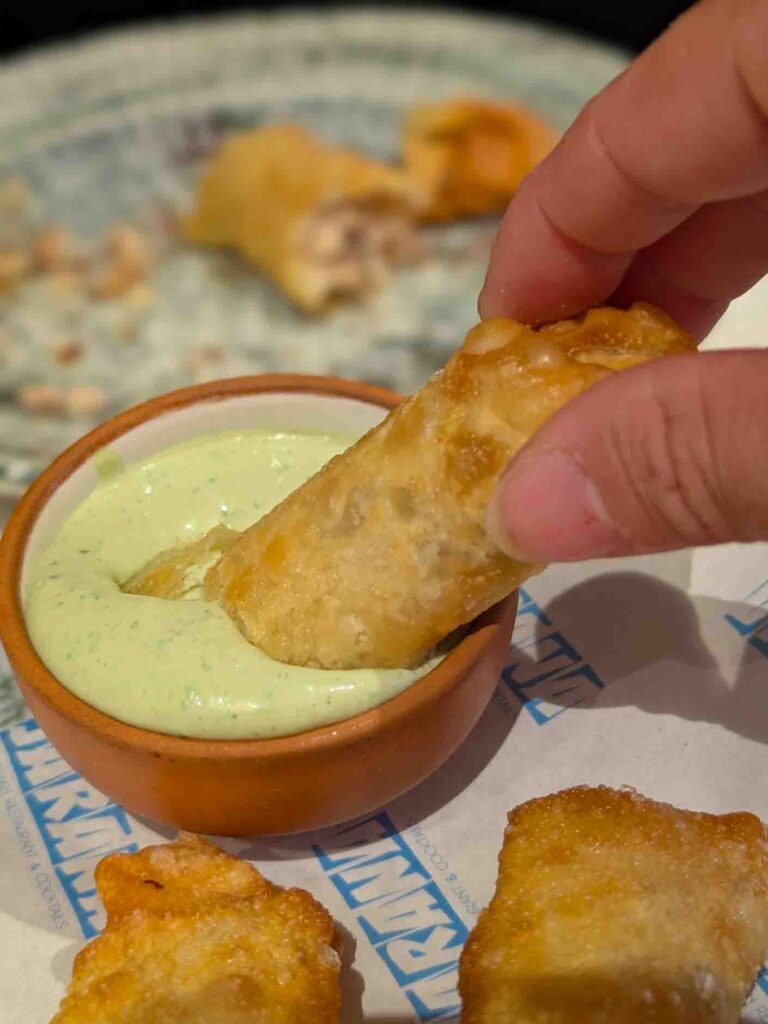
Pair your apéritif with Peruvian tequeños. Unlike the more common tequeños from Venezuela, which use buttery pastry to wrap around strips of queso blanco (white cheese) before they’re baked or fried, Peruvian tequeños use wonton wraps to encase a savoury chicken or cheese filling before they’re fried. It’s a small peek into the country’s Chinese influence when many Chinese workers moved to Peru, particularly Lima, in the 19th century. At Jarana, these crispy rolls are filled with chicken and caramelised onions, and served with a bright green avocado sauce for the most pleasurable dunks.

Other small plates include steaming, hot beef or chicken empanadas, both mixed with onions and raisins (beef also gets egg), and wonderfully seasoned; or Peru’s traditional papas a la huancaína, from the region of Huancayo. Boiled potatoes are sliced and served cold or at room temperature, and smothered with a creamy aji amarillo sauce made from peppers, cheese and milk. It was my first time trying the dish, so I fear I may not be a fair judge, but unfortunately I found no comfort in cold potatoes. I did, however, gobble up the rest.

Regardless of the starters you choose, I recommend taking your time with them. Staff certainly take their time in getting back to you, but more because of an understaffing issue than an over-snooty one. Once servers do return, they’re warm, informative and work hard to make up for the wait.

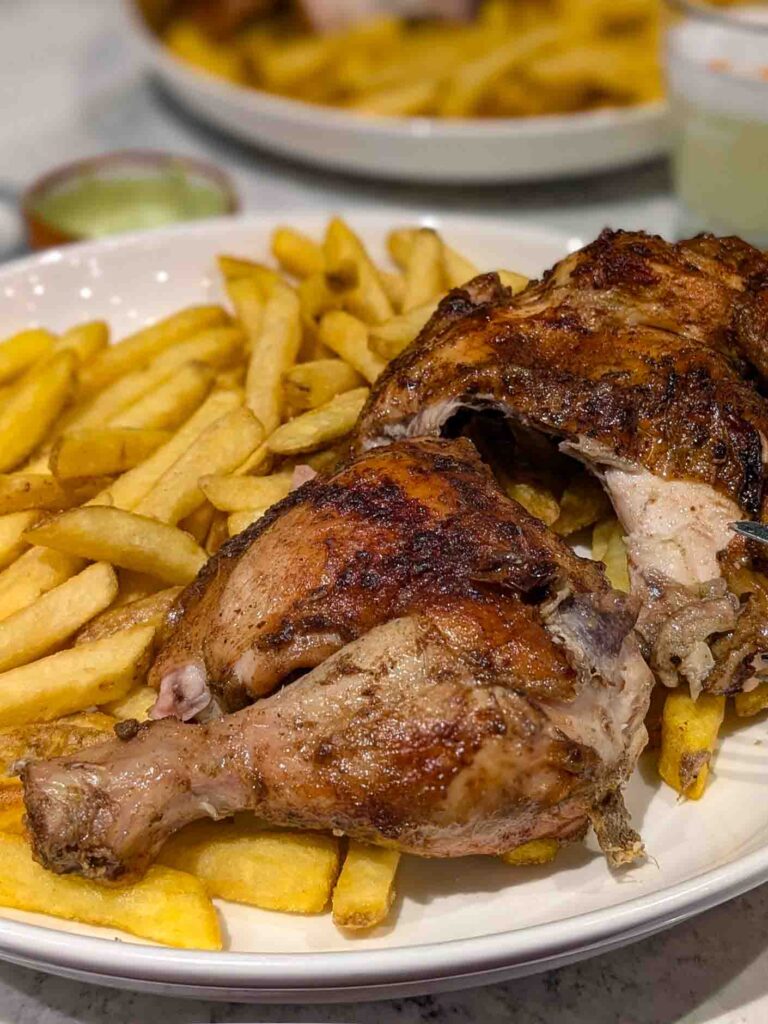
When the main dishes arrive, it’s quite the show. The half-portion of pollo a la brasa, Peru’s famous roasted chicken, comes in an enormous dish with an equally enormous portion of chicken that makes everyone’s eyes widen as it lands at the table. The chicken is floating on a sea of golden fries. And they’re shockingly good. It’s difficult to believe so much flavour can come out of such a simple, cooked fry. Cajun seasoning? Rosemary salt? No, thanks. Not needed.

As for the chicken, that’s Jarana’s star of the show and one of the best rotisserie chickens you’ll find in London. Juicy, flavourful, stunning and spiced (but not spicy). The skin is golden-brown, the meat is tender. The experience is feral. I don’t think I’ve ever dug into a meaty carcass with such carnage. And it’s certainly too filling to finish in one sitting, so what do you do? You ask for a takeaway box. You order more cocktails, and shamelessly finish the rest later, in the privacy of your own home.

Other dishes on the menu use the same juicy bird, too. The caldo de gallina (chicken soup) is classic and comforting, and the aji de gallina – a rich, curry-like dish of shredded chicken smothered in a creamy, nutty, slightly spicy sauce, served with sliced, hot boiled potatoes – was hearty and delicious, yet smaller than expected, and could’ve been better served with rice.

Now this is where it gets tricky. If you’re not craving chicken, you’re better off calling for the menu before actually dropping in – especially if you’re not from the area. When a friend and I arrived for a second visit, the staff kindly told us they were fresh out of everything but chicken, but to come back on a weekend for more variety, especially their prized ceviches. I returned on a Saturday, and the ceviche was 86-ed before the clock struck five. What was left? More chicken (always), and a signature dish called “Don Flavor” – traditional, Caja-China-style pork belly, where the pork is slowly-roasted in a top-down charcoal roasting box, allowing the meat to get nice and tender up top before flipping the box over for the crispiest skin. Unbelievable. It’s served with potatoes, criolla salsa (julienned red onions mixed with ají amarillo peppers, lime and cilantro) and mote, a white corn that’s common in Latin American cuisine and often served as a side.

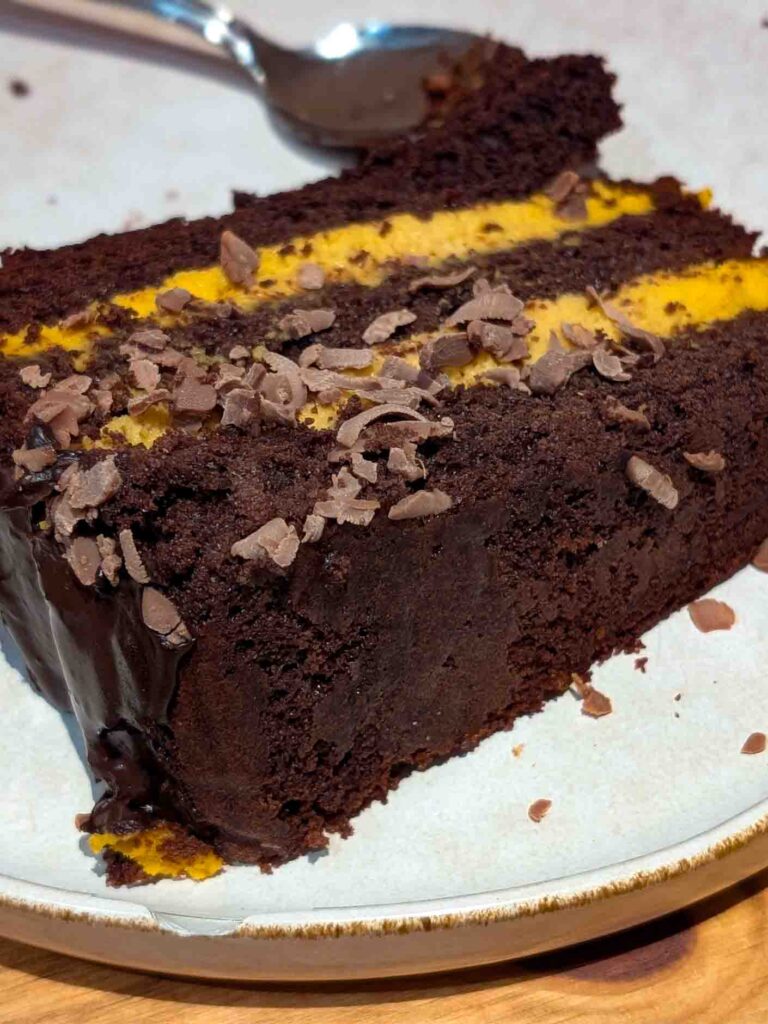
Desserts are thin, but chocolate lovers would be remiss not to order the chocolate lucuma cake, a fudgy delight with layers of lucuma, an orange-gold Andean superfruit with a velvety texture similar to mango that tastes almost like butterscotch. A sweet finish to a rather wonky, yet overall satisfying experience.

Sure, the menu mishaps aren’t ideal, but what they lack in kitchen inventory, they make up for in hospitality and a proper good Pisco.

Maybe Jarana just needs some time to get its bearings in London’s challenging (and costly) culinary scene, but once they get everything in order, trust that I’ll be on that sunny terrace, sipping a Spicy Peruvian, (finally) slurping ceviche and enjoying the sun.

Jarana 16/20Food & Drink56Service46Ambience56Value22about our grading system

77 Fulham Palace Road
London
W6 8JA

May 2026


https://www.palatemag.co.uk/?p=6739
Extensions
Labombe by Trivet
london
While bands wanting to build on a successful debut inevitably face their Difficult Second Album, successful restaurants face a…
Show full content

While bands wanting to build on a successful debut inevitably face their Difficult Second Album, successful restaurants face a similar challenge when they expand. Both artists and restaurateurs will want to show off more of their repertoire, perhaps build on an established niche, but not risk alienating their essential fan base. Some restaurants go more upscale (e.g. Cornus being an elevated version of its sibling Medlar) though the usual, perhaps safer, route is to open a casual satellite of the original (as Restaurant Twenty-Two in Cambridge did with Margaret’s, or Clare Smyth’s Corenucopia, though whether these are truly ‘casual’ is open to debate). For Trivet, which opened just before the first lockdown of 2020 and earned itself two Michelin stars despite Covidian interruptions, the gamble seems to have paid off; as a follow-up, Labombe by Trivet could be a test of whether the Bermondsey original was just luck, but with the alchemy of its owners, chef Jonny Lake and sommelier Isa Bal, this is proof of their talent. I’d expect nothing less.

On a first exploratory visit though, I was a little concerned. Despite the careful branding which clearly indicates the Trivet DNA in its name, its sleek look and its open kitchen being visible from the outside, it was very quiet in that autumn lull in late 2025. I’m not sure whether location could be to blame, the COMO Metropolitan London being amongst a hive of Hyde Park activity and where the Met Bar used to be. Perhaps it is simply due to cautious marketing and biding their time while bedding in: indeed, being awarded a Michelin star in early 2026 seems to have done wonders for the reservations book as it was full on the second visit. As I’ll explain, they deserve to be busy.

This is a fabulous sequel to Trivet

Arriving by the restaurant’s own entrance rather than through the hotel, on each visit there was an immediately warm welcome. I’ve yet to see the service slip at all here: always on-point, attentive without being irritating, and no obvious upselling (despite, perhaps, a subtle attempt to coerce you into some £6 bread at the start because, the server said, “I don’t want you to go hungry” – but the sourdough here is lovely). You’re not rushed over aperitifs either, which is how it should be; ice-cold martinis are prepared to order (they have a house Vesper too, which they normally shake in a nod to Ian Fleming I suppose, but they agreed to stir it instead).

Like the Trivet mothership, a lot of thought has gone into both the food and wine with neither taking precedence over the other. In this more détendu setting, the wine selection by sommelier Philipp Reinstaller is in two lists in the same book – the A list and the B list – like a record (the ‘B’ list being dedicated to Bordeaux, Burgundy, Barolo and so on). The mark-ups struck me as pretty fair for Mayfair and knowing Trivet’s penchant for the recherché and unusual, the globe-trotting list even has an Iranian wine on it (via Sweden) – perhaps not something to advertise to Trump, but then I doubt classy places like this would be his cup of tea (or bucket of Coca-Cola) anyway.

Onto the cuisine, it’s perhaps too simplistic to say they serve high-end bistro food, but under head chef Evan Moore (like Jonny Lake, a fellow former colleague of Heston Blumenthal) the menu is full of crowd-pleasers, all cooked extremely well but presented without fuss. Even your teeth can take the day off in some instances: the bottarga toasts (£8) – like high-end prawn toasts – just disintegrated in the mouth but imparted huge flavour, while the lamb sweetbread and purple garlic skewers (£7) were beautifully unctuous.

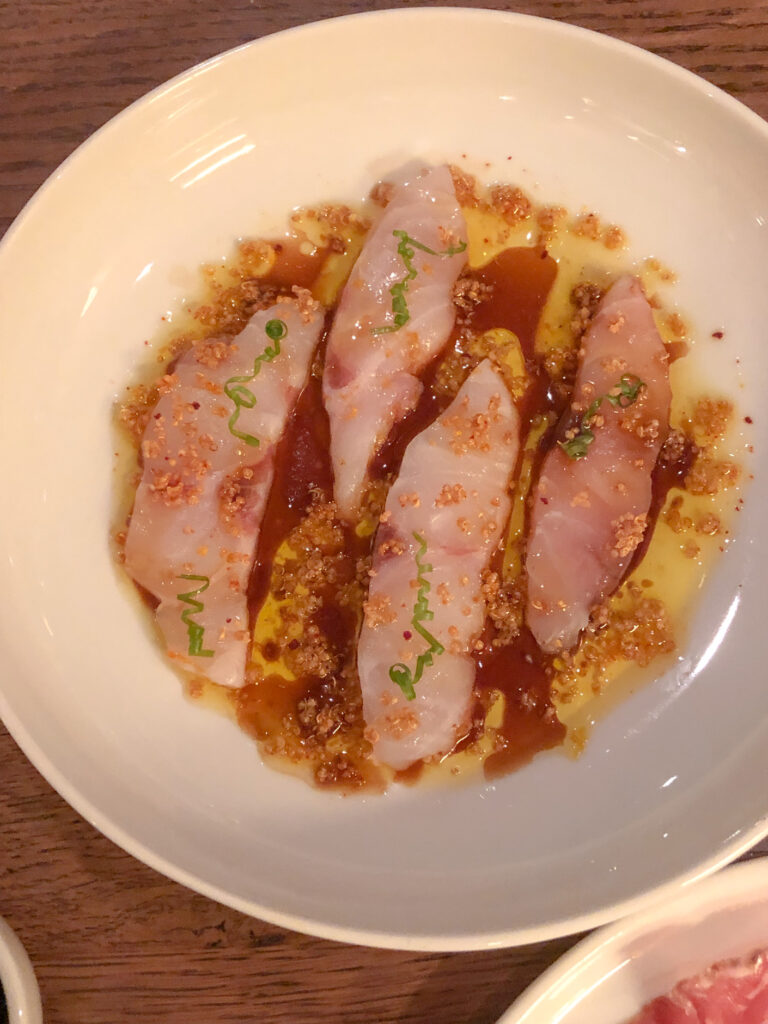
The sea bass crudo (£18) I could eat by the bucketload. Generously cut rather than wafer-thin slivers, and bathed in an orange ponzu and anchovy garum, split with olive oil, this was an absolute joy to eat. Clearly, sourcing is taken seriously here, as also evidenced by the Spanish Wagyu Cecina (£18) – while there was no cooking skill to see here, being something that is purchased and plated, it was still sensational with pickled padron peppers to spice things up a bit. You could legitimately just work through some of the wines and have these as snacks – there’s an almost playful informality about it all, which I think is what Lake and Bal have set out to do here.

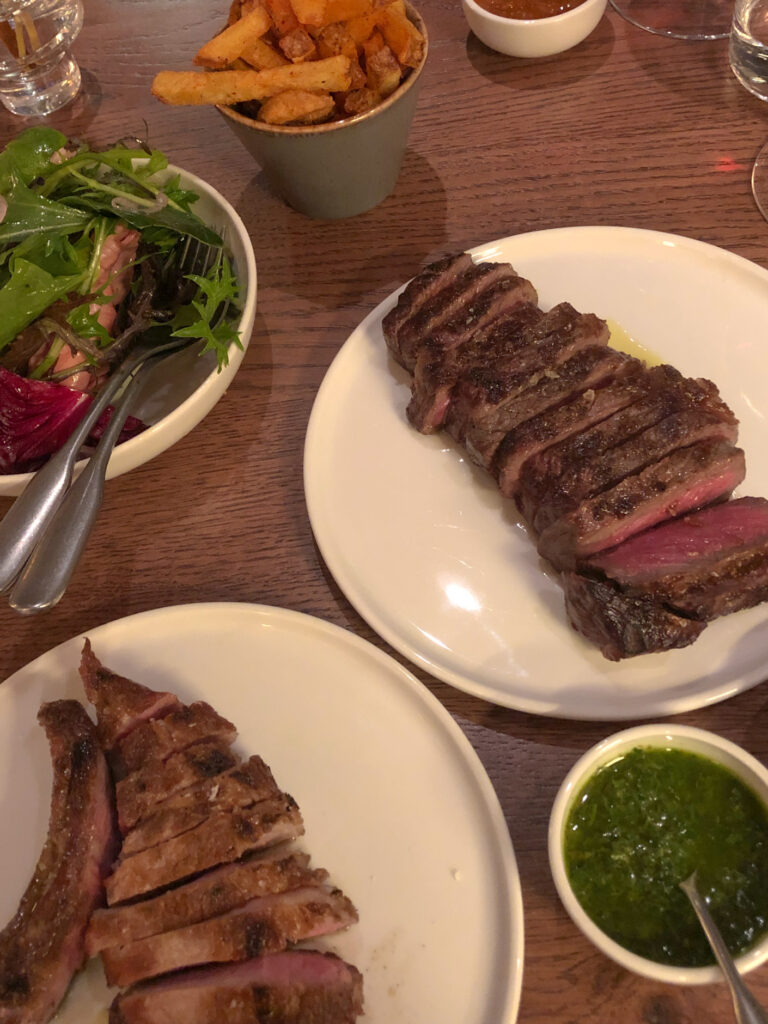
Testing the meaty mains, the Iberico pork chop (£30) was sensitively cooked – slightly pink with a good rendering of fat – while the sirloin (£44) was easily up there with Ibai or Quality Chop House in Farringdon. All pretty much faultless with well-executed fries and sauces too.

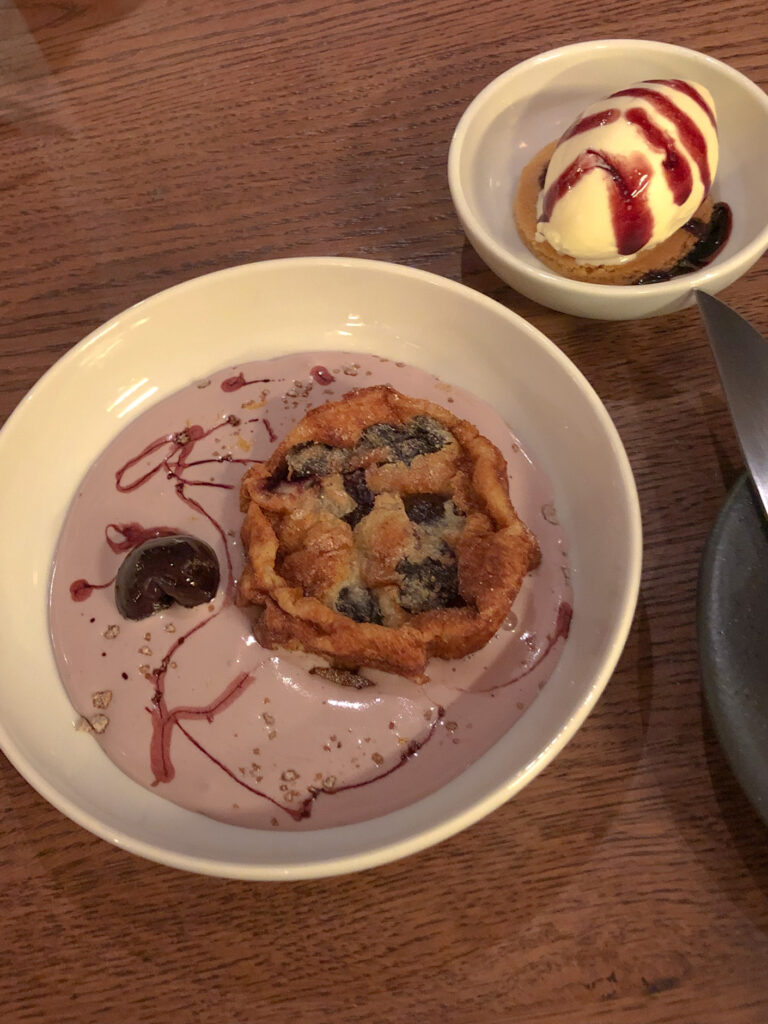
The only slight disappointment so far has been in the dessert department, a butter tart (£6) being a bit rich and unwieldy, and the interpretation of the pickled cherry clafoutis (£14) being too squidgy for my liking, despite its artistic presentation. Overall though, there’s no sophomore slump at Labombe by Trivet. This is a fabulous sequel to Trivet which I’d wholeheartedly recommend.

Labombe by Trivet 17/20Food & Drink5.56Service5.56Ambience56Value12about our grading system

19 Old Park Lane
London
W1K 1LB

April 2026

https://www.palatemag.co.uk/?p=6666
Extensions
Kenji Sushi (Edinburgh)
scotland
In a basement unit on Deanhaugh Street, Kenji Sushi is a dining destination you have to intentionally seek out…
Show full content

In a basement unit on Deanhaugh Street, Kenji Sushi is a dining destination you have to intentionally seek out rather than one you simply stumble upon. But once you descend the stairs and step inside, the fragrant noodles and delicate sushi rolls quickly overwhelm the senses. Over the handful of years I’ve lived in Edinburgh, I’ve never seen it empty. After dining at Kenji, it’s clear why.

That constant buzz has earned the restaurant a loyal following among Stockbridge locals and Edinburgh regulars alike; it’s been a fixture of the neighbourhood’s food scene for the past decade. The interiors are dotted with red lanterns that hang from the ceilings and a Japandi style that shapes the space – light wood, leafy plants lining the entryway and bamboo room dividers separating a handful of tables – cultivating an environment that feels both tranquil and sociable. One thing to note: the seating is somewhat eclectic, with traditional tables alongside four-person booths that can be tricky to access. Something worth keeping in mind for anyone with mobility concerns.

Kenji is a sushi restaurant I’m confident I’ll be returning to again and again

As my husband and I made our way to our table along the side wall, I was immediately struck by not only the dishes passing by but by the pottery that framed them. With every morsel of food set atop a differently designed piece of tableware, each felt like a small, curated work of art.

Once seated, we opened our menus to a plethora of food and drink options, spending longer than usual poring over the offerings: small plates like aubergine goma and cold dishes such as tuna tataki, to the main event of sushi in all its forms, including nigiri, sashimi, maki, temaki and rolls. And that’s before even reaching the back half of the menu, where images of tonkotsu ramen, donburi and stonebowl fried rice made deciding what to order all the more difficult.

In terms of beverages, it was a weeknight, so we made the difficult decision to pass on the sake – although next time, I have my eye on the Masumi “Okuden” Junmai from Nagano, Japan. Also on the list for a return visit? The ramen and donburi, as we found ourselves seduced this time by the extensive range of sushi rolls. Arriving hungry, we ordered five to start, gravitating towards salmon- and tuna-based options.

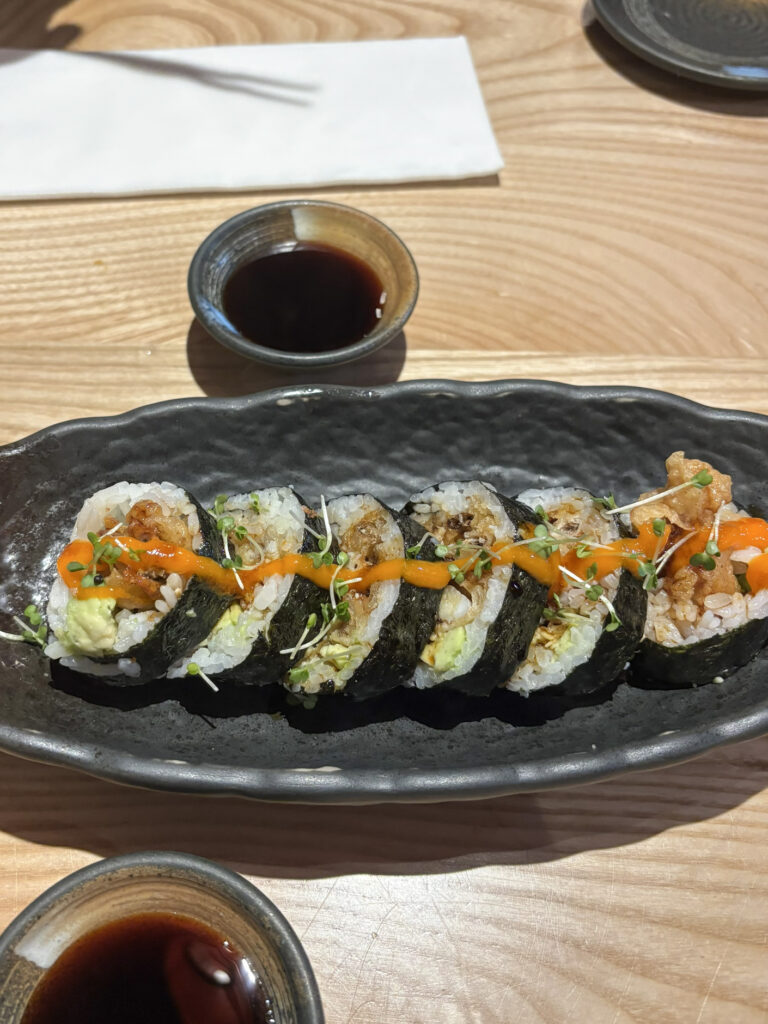
Dishes arrive as they’re ready, and the first to appear was the Dynamite Roll – six pieces of soft-shell crab tempura with salmon, avocado, and jalapeño, topped with tempura flakes, teriyaki sauce and spring onion. It delivered exactly what the name promised, a satisfying crunch from the crab and tempura flakes, balanced by the richness of the salmon and avocado, with the jalapeño adding a gentle heat.

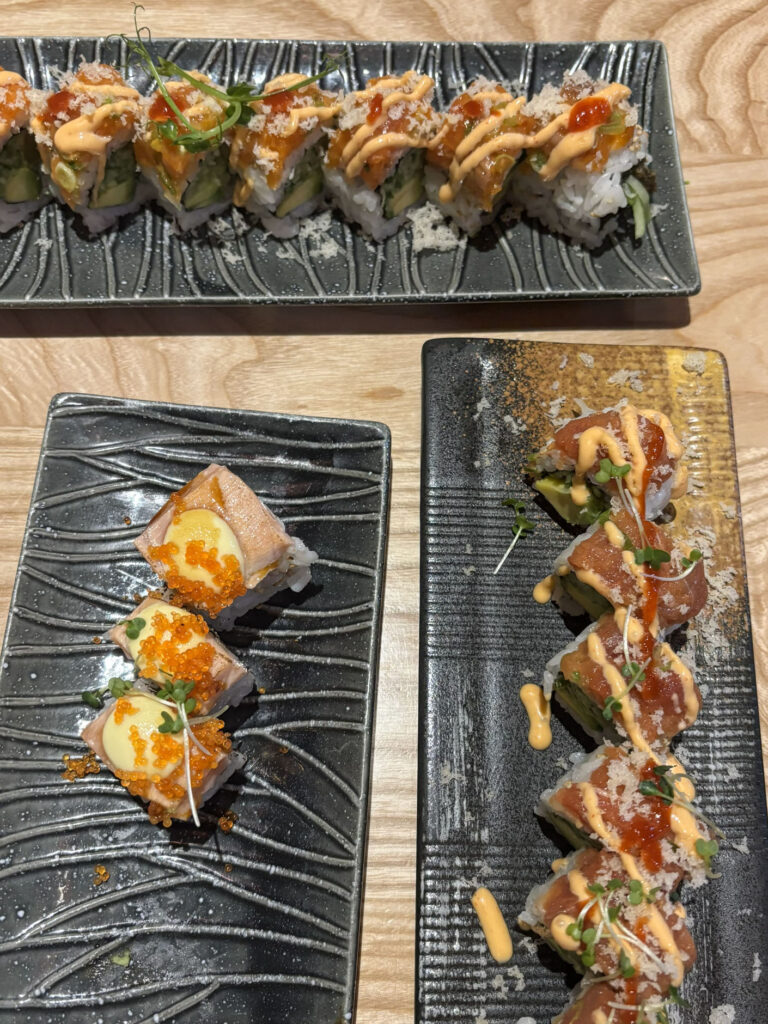
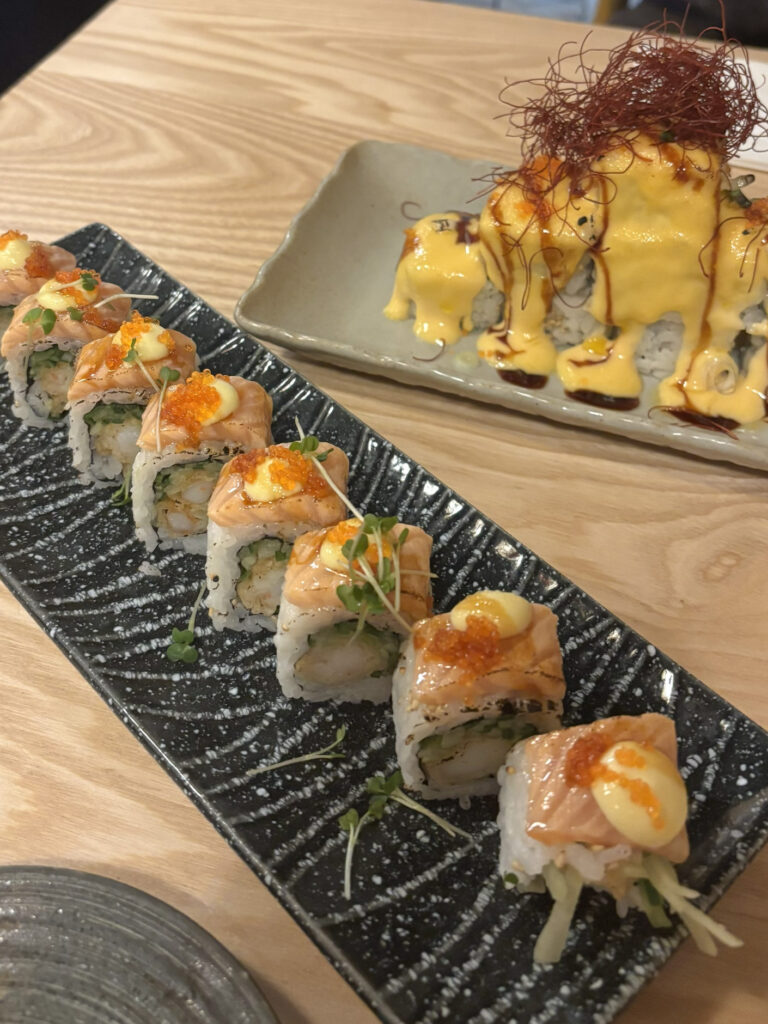
If the Dynamite Roll set the tone, the next two dishes raised the bar even higher. The Red Dragon Roll and Volcano Roll arrived, both a sight to behold. The former was a delicately composed lineup of prawn tempura and cucumber, topped with torched salmon, mayo and flying fish roe. The latter, by contrast, took on a more dramatic form: an eye-catching tower of prawn tempura, avocado and cucumber, finished with a creamy sauce, flying fish roe, spring onion and dried shredded chilli.

While we devoured both, the Volcano Roll’s sauce proved a touch too heavy for my personal liking, overwhelming the combination of flavours beneath. The Red Dragon Roll, however, stood out as one of the best I’ve had, striking that ideal balance between a crunchy interior, a small dollop of sauce and lightly charred salmon edges that brought both texture and depth to each bite.

Just as I was savouring the final bites of the Red Dragon Roll, our server delivered our final two plates: the Crazy Salmon Roll and the Crazy Tuna Roll. Nearly identical aside from the protein, we were persuaded to order both after wavering between them. Each featured asparagus, avocado and cucumber, topped with sesame, spicy salmon or tuna, spring onion and tempura flakes. They proved easy to eat, delivering a gentle heat that added interest without overpowering the freshness of the fillings.

Despite it taking a little extra time to catch our server’s attention for the bill, we didn’t mind lingering, people-watching and rounding off what had been a thoroughly comforting sushi dinner. Even as we stepped out the door, diners continued to file in well past 9 p.m., greeted by the same lively atmosphere we’d experienced all evening. Clearly, its popularity shows no sign of fading anytime soon. And I can attest: it’s a sushi restaurant I’m confident I’ll be returning to again and again.

Kenji Sushi 16.5/20Food & Drink56Service4.56Ambience56Value22about our grading system

24 Deanhaugh Street
Edinburgh
EH4 1LY

April 2026

https://www.palatemag.co.uk/?p=6694
Extensions
Juliet (Stroud)
south west
Stroud is a small and ‘arty’ Cotswolds town which is frequently identified in broadsheet listicles as one of the…
Show full content

Stroud is a small and ‘arty’ Cotswolds town which is frequently identified in broadsheet listicles as one of the nicest places to live in the UK. Like Stamford and other similarly quaint English towns though, I’ve often felt the restaurant offering is somewhat lacking, despite the plentiful pubs, wine bars and coffee shops. Certainly Juliet has changed that perception. Owned by sculptor Dan Chadwick (who also owns The Woolpack in Slad), he got the keys to the old Stroud Music Centre several years ago and finally decided the best use of that space would be a bistro named after his wife. It has quickly garnered national praise, and as it’s just a hop and a skip from the railway station it has an unsurprising allure for London daytrippers (it’s also very handy for Cheltenham and Gloucester, both being 10-15 miles away).

Walking in to the snug bar by the entrance, the staff in white jackets (mercifully not the medical kind, more the St John kind) and the erudite guests discussing the novels they’re reading confirmed the bohemian vibe I’d heard about. You’re less likely to see Geoff from the sitcom ‘Back’ picking up one of their tote bags – he’ll be propping the bar at The John Barleycorn putting the world to rights over a Lilt – but you will still have to fight for a table, and possibly wait in the bar which doubles as a holding pen for the inevitably stacked bookings.

Juliet is like a millefeuille of your best holidays in France and Italy rolled into one

Just to get this point out of the way (as the meal was lovely and this was my only mild irritation about the service), straight after sitting down the server issued a time limit. “Just so you know, we need this table back in 75 minutes.” Now, I completely understand the business need to turn the tables (and pay for the battalion of waiting staff – they seem to have four servers for every customer here), but they could make it feel less… terminal. They could soften the blow by, say, offering desserts, coffees and digestifs in the bar area if they’re so keen to get the next table in. But in any case, just over an hour isn’t enough time to enjoy the food here, and if the service is slow (which it wasn’t, I’m just being hypothetical) then that’s on the restaurant not the customer, and I’d fully expect a side order of Gaviscon with my bill.

While we’re on the ‘notes’, there was just one other minor disappointment: the Negroni was made with cloudy ice (à la Morchella in Exmouth Market, which I still can’t forgive them for). Pleasingly though, their gin martini was excellent and I was impressed by the breadth and decent value of the wine list.

Food-wise, the menu on this visit had to be one of most beautifully-constructed ones I’ve ever seen, every dish legitimately making a claim for your table (the countdown timer notwithstanding). Delving deeper, some things seemed to stretch seasonality and while mostly French-inspired with some Italian interlopers, there’s no particular loyalty to any region. But that could be getting as fastidious as I am about ice cubes; I was just happy to embrace the general mélange of loveliness. Really, it’s like a millefeuille of your best holidays in France and Italy rolled into one.

Starting with Marseille-inspired panisses and a snowfall of Parmesan (£10), these elongated chickpea flour fritters were light and fluffy, while the umami hit of the cheese complemented the citrus and juniper of the martini.

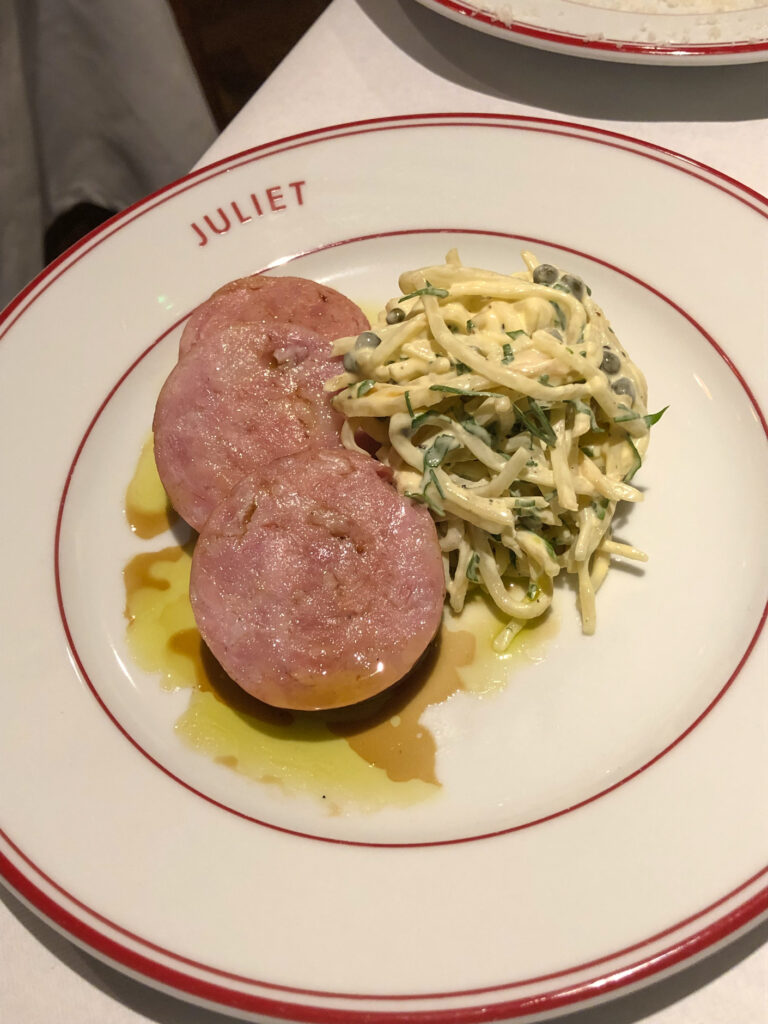
Heading to the Franche-Comté region, generous slices of Morteau sausage and celeriac remoulade (£15) were an utter joy. Here, the celeriac had the requisite crunch and the creamy mayonnaise was flecked with capers and tarragon, acting as a delicious counterpoint to the sausage’s inherent smokiness. They clearly know how to marry textures and flavours together at Juliet.

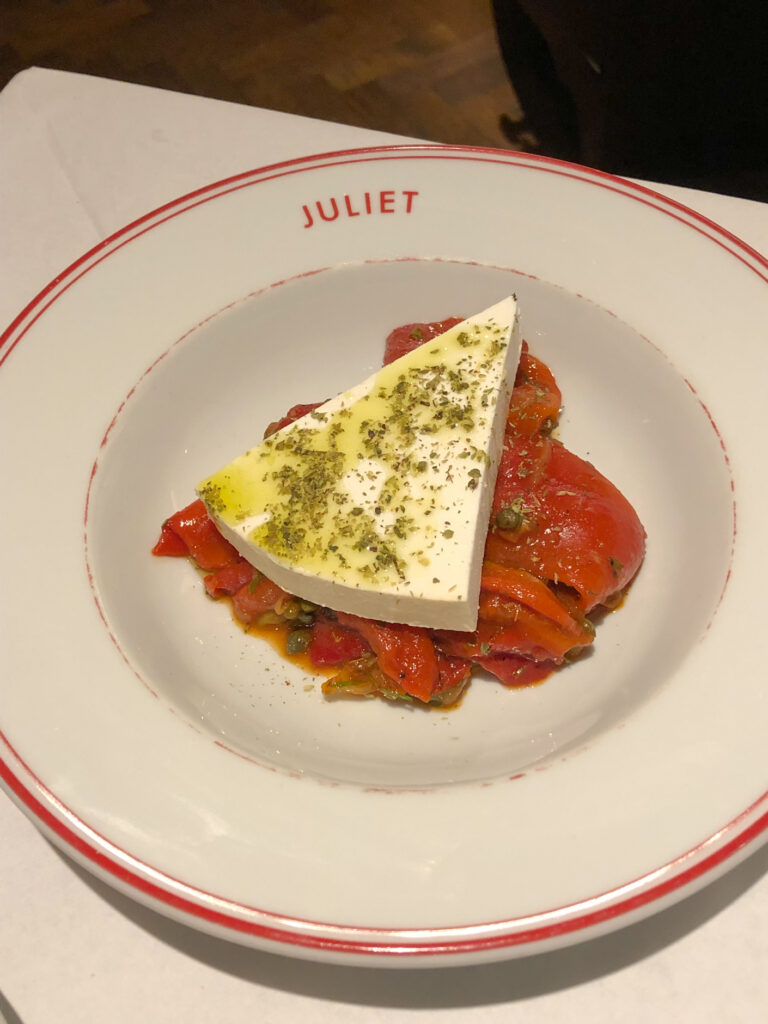
From one of the few vegetarian dishes available, peperonata with smoked ricotta (£13) had a rustic simplicity but was a masterclass in how you can make two things on a plate just be themselves and shine.

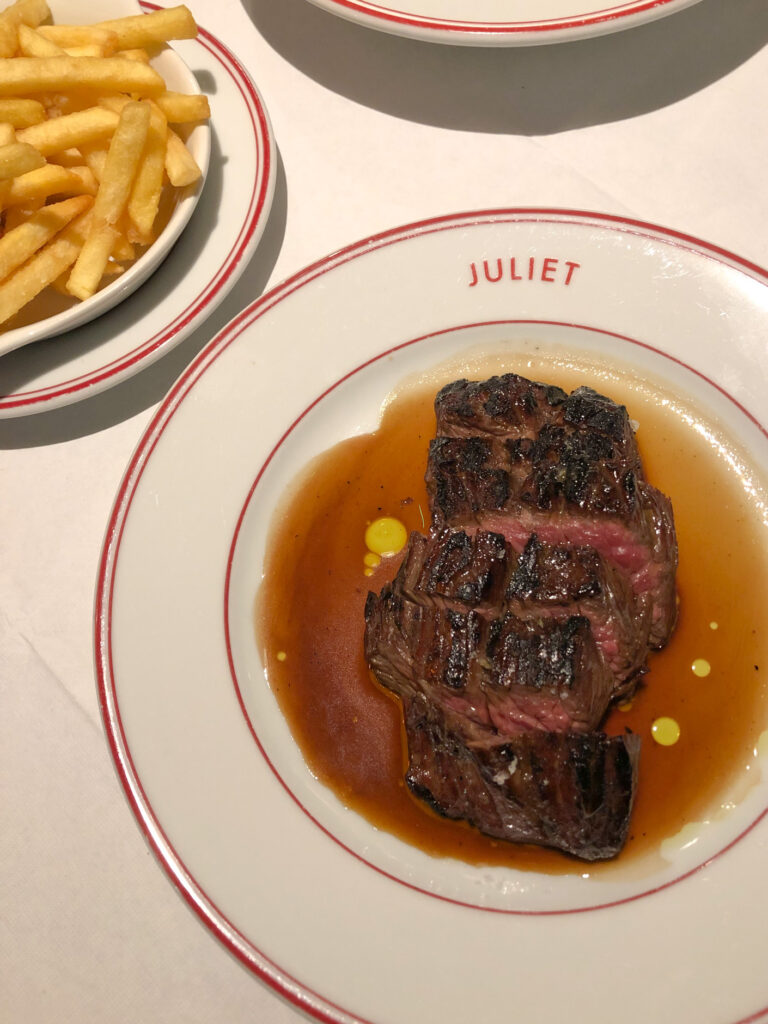
Steak frites (£25) – a staple on any French bistro menu but can often (paradoxically) be poorly executed in France – was frankly impeccable here. Like so many of their dishes at Juliet, from the hogget with baby artichokes to the lemon sole with Café de Paris butter, there’s nowhere to hide with this, but both the cuisson of the bavette and the cooking of the chips were perfect.

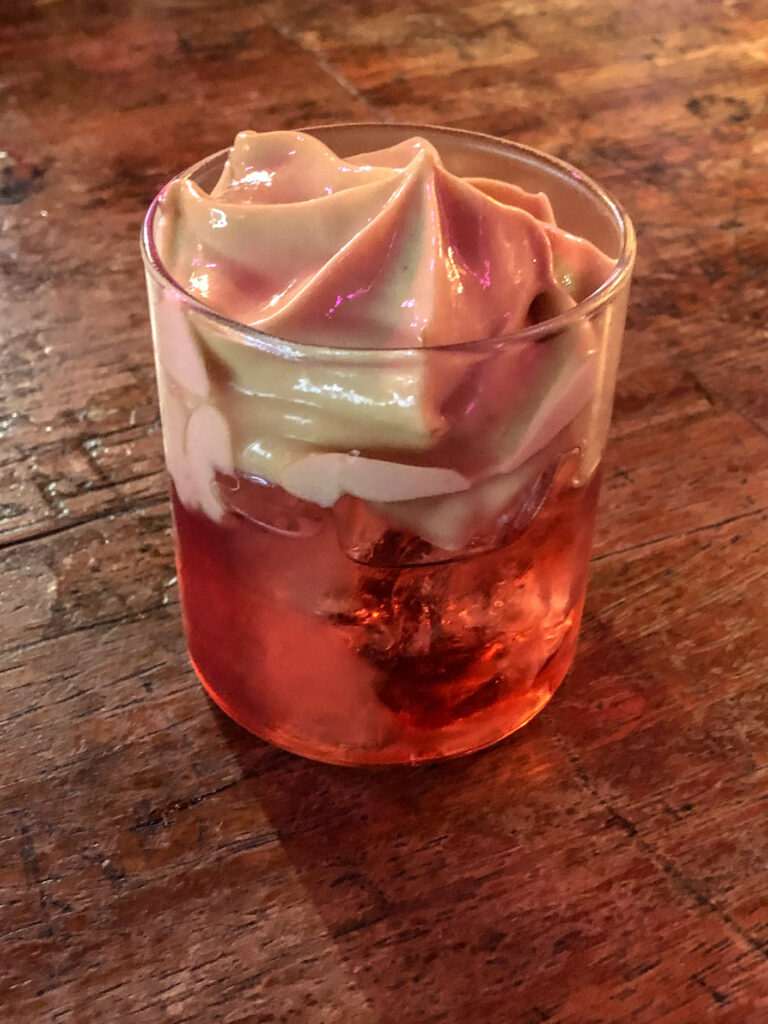
To cleanse the palate, an inspired Campari and orange sorbet (£4.50) was simply ambrosial, and an affogato (£7), while a bit rushed, was just the ticket.

It’s not exactly life-changing stuff, or inventive, but Juliet serves supremely comforting and restorative food at a reasonable price. Its attractive pull is both understandable and justified. I’d happily return when in the Cotswolds.

Juliet 16.5/20Food & Drink56Service4.56Ambience56Value22about our grading system

49 London Road
Stroud
Gloucestershire
GL5 2AD

April 2026


https://www.palatemag.co.uk/?p=6661
Extensions
Holy Water (Stroud)
palate cleanser
Some of the best things in life were never really intended: take, for example, Fleming’s forgotten culture plate yielding…
Show full content

Some of the best things in life were never really intended: take, for example, Fleming’s forgotten culture plate yielding penicillin, or how Worcestershire sauce became a hit only after its creators stumbled upon an abandoned batch, previously deemed too vile for human consumption but had magically matured. Organic growth can be funny like that.

Holy Water – a cocktail bar and bottle shop in Stroud which opened in 2024 – was never intended to be a bar. Apparently, its founder Adam McVay was searching for a new home to develop drinks for his successful events business of the same name – one that has served pop stars and other large-scale corporate functions (its clients have included the likes of Elton John, Nespresso, Duran Duran, Google and activations for films like Wonka). It’s a little bizarre to think that the drinks lab for such an international venture is now nestled in the Five Valleys. And how does this all translate into a bar? And in Stroud, where (no offence) the local predilection is probably more for a pint of ale at The Prince Albert?

Starting life as one bloke’s experimental studio conjures images of Ned Flanders’ secret underground bar but that couldn’t be further from reality: the bar here is a surprisingly large space with sofas, communal tables, bar stools, record players, and that famous photo of Anthony Bourdain doing a middle finger salute. Behind the bar, between the hanging pieces of equipment, is a bucolic (if a little incongruous) Gloucestershire view, while there is the ever-present scent of freshly-made popcorn. Carbonated highballs may possibly be served in a test tube.

It’s hard to describe but I think “quirky” is the word I’m groping for. But also, at the time of this visit, quiet (it was early doors, to be fair, and got busier later but I suppose its location on Lansdown, near the local MP’s surgery office and opposite Stroud’s library isn’t the most conducive for footfall). Nonetheless, this provided ample opportunity to test their website’s claim that they “champion the art of hospitality and host the rituals of drink.” I’m pleased to say these are accurate on both counts.

First, spotting Lillet, Cynar, Punt e Mes and various other vermouths in the fridge, I could tell this is a bar of serious intent. Then, a duo of young but knowledgeable staff were keen to explain that any cocktail can be bottled or even canned on your behalf (very handy if you’ve got a train to catch but they’re best enjoyed on site). Indeed, some of the drinks are pre-batched. Now, normally, I’m a bit more forgiving of pre-batching in restaurants and at events due to scale, convenience and lack of space, but not in a specialist bar where you’re paying (partly) for the skill and theatre of something made à la minute, or to order. Anything less is just a dispensary. I can forgive Holy Water for its pre-batched Negroni though (once developed for a Liberty launch party in 2017) – decently balanced and reasonably priced at £12 per serve (or £40 for a large bottle to take home). Oh, and with clear ice and good quality glassware too.

As for their highballs, their ‘Rhubarb and Rose’ (comprising a mystery vodka or tequila with rhubarb, rose and cranberry) was refreshing and delightful as a light, summery drink. The ‘Mezcaliano’, meanwhile, married mezcal, Campari and sweet vermouth, served with a coffee foam. My only ‘note’ here was that the foam, while delicious in itself, created both an obstacle to the ice-cold drink below and an embarrassing café-au-lait moustache with each sip. Texturally, the thick foam and liquid below just seemed confusing to me. With a little tweaking, I’m sure the same flavour combination could be achieved in a more user-friendly way.

Testing their cocktails-from-scratch skills, a Vesper Martini was prepared perfectly, and to order, while one of the bartenders proffered his thoughts on Cotswolds gin and created a small sample of the ‘Summer Martini’ they serve at Juliet down the road. Really, top marks for customer service, and all at a fair price point (most drinks coming in around the £10-12 mark).

All in all, I’m very glad I stopped by. Holy Water is an impressive watering hole and well-worth visiting when in Stroud. And no doubt, Bourdain would approve.

11 Lansdown
Stroud
Gloucestershire
GL5 1BB

April 2026

https://www.palatemag.co.uk/?p=6663
Extensions
Ynyshir
wales
Wales. A place where sheep outnumber humans 3:1, and 230 square miles of lush countryside soak up 173 rainy…
Show full content

Wales. A place where sheep outnumber humans 3:1, and 230 square miles of lush countryside soak up 173 rainy days a year. The journey is part of the experience, so expect your drive (or indeed helicopter ride) to Ynyshir to be an idyllic one; the pilgrimage provides a picturesque amuse yeux of rolling hills, lush valleys and all manner of free-range beasts, blissfully unaware of what chef Gareth Ward has in store for them.

13 years into his tenure, Chef Ward has remodelled the former country house hotel into a gastronomic destination, offering a 30-course Noah’s Ark of ingredients accompanied by open kitchen and live DJ. Sure, Gareth Ward has attained two Michelin stars. But more importantly he has earned a reputation for being one of very few visionary chefs in the UK, delivering a menu that follows his own stylistic principles.

The tasting takes place in a single sitting; a room of 20 dining disciples are fed in unison. I enjoyed this ritualistic quality, a collective experience that started with complimentary Champagne in the waiting area adjacent to the restaurant. Then arrives the first sip of Ynyshir: duck broth with spring onion. The restaurant uses Silverhill farm ducks – a unique breed that is exclusive to a single farm in County Monaghan, Ireland. The sincerity of the presentation made the eating even more miraculous; this was a broth so remarkable that I put it down and stared at it for a while, pondering its secrets. I was wowed. Fabulously savoury, intense and thrilling – the essence of duck suspended in a potent dashi.

I could have died happy in this moment, but instead wiggled into one of the restaurant’s floor-length fur coats and headed into the night for a brief visit to the Himalayan salt chamber, where the meats, fish and poultry on the menu are aged. The salt draws out moisture, leading to the intense flavour and rich meatiness characteristic of Gareth Ward’s style. We head back inside, where red sea bream with white soy and wasabi oil is waiting patiently and at perfect temperature. The ingredient sourcing is scrupulous – the best of everything, from wherever in the world they can get it. The menu reads like a who’s who of the world’s best producers. On the red carpet: N25 Caviar, Ethiopian coffee (exclusive because they bought the whole farm), A5 wagyu, fresh wasabi, rice vinegar from the 130 year old Ilo Jozo brewery, and those impressive rare-breed ducks.

Gareth Ward is producing one of the best and most exciting fine dining experiences in the UK

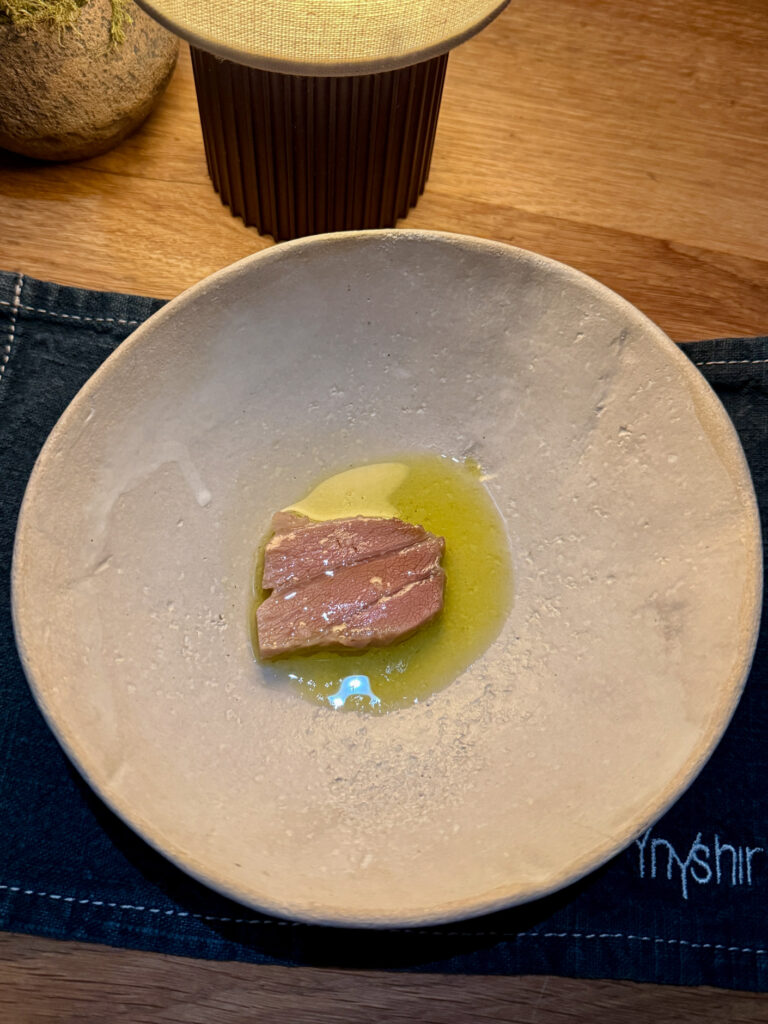
Whilst the menu is relentlessly full fat, the garnish and service are refreshingly lean. Most of the courses arrive without tedious storytelling (service is extremely well informed, friendly and minimal); dishes are instead explained simply as whatever chef Ward thinks tastes good, with whatever he thinks goes well with it. For example: a “triple fat bomb of confit fatty tuna with Novo Picual olive oil” (a notably grassy and spicy oil, that’s as close to a vegetable as you get in this dish) is as blissfully naked as a plate can be, and yet I didn’t feel cheated. The fish melts on the tongue, and a utilitarian thumb of sourdough (one of only two small morsels of bread on the menu) is provided to soak up the remaining oil.

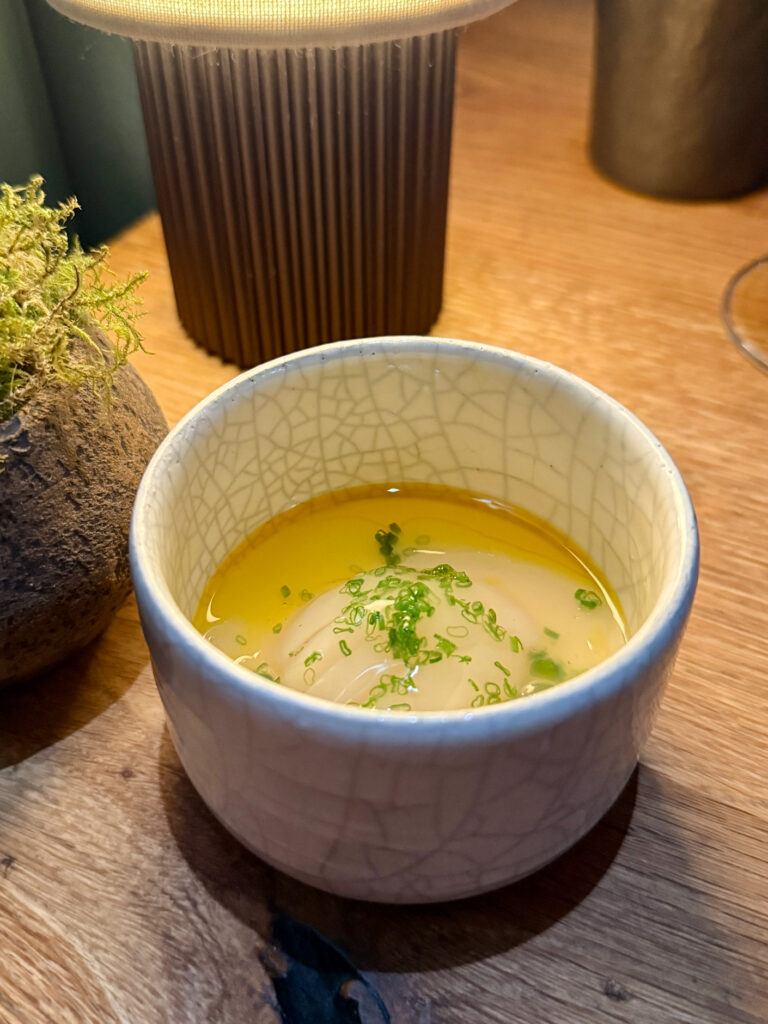
Complexity is ramped up for the scallop chawanmushi – a textural delight – silky and creamy Orkney scallop and sweet dashi on a warm custard of technical perfection. Wagyu is used liberally throughout the menu; not content with the tenderness of the very best A5 wagyu, Gareth Ward further insists on only using female cows. There’s method in the meticulousness: female wagyu have a hormonal advantage that makes them softer in texture, with a more consistent, finer marbling. Their fat, higher in oleic acid, melts at a lower temperature, ensuring the most buttery and luxurious mouthfeel. The apex of this fat-forward approach is the fatty tuna wrapped in A5 wagyu, with some pickled ginger and wasabi mercifully thrown in. Wagyu appears later in a different incarnation: with daikon and cured egg yolk. Like most of the courses it looks unassuming: a chunk of beef cap, a spoon of sauce, a mound of Daikon Oroshi; a simple and usually refreshing condiment, made rich with fatty egg yolk. A third wagyu serving comes as a beef broth with shiitake mushrooms and truffle: scented like a Piedmontese forest and rich in umami. It’s clear that the flavours and ingredients of Asia have heavily impacted the menu, but in ways that are unorthodox and surprising, like the fourth wagyu offering: “That First Bite” – designed to evoke memories of your first bite of cheeseburger. A wagyu patty, gherkin-esque pickles and sourdough mayo make for a phenomenal mouthful, a bit of fun, but well considered and perfectly executed.

Hold on, there’s more wagyu – an A5 curry with beef dripping sauce, because if you hadn’t quite understood the brief, fat at Ynyshir is not only a means to an end, but also an end in itself. Fat here can be a main protein, a seasoning, a condiment and a garnish. You may find your fat has been cooked in fat, aged in fat, wrapped in fat, or that your scallop arrives under beef fat gravy. Your cod may arrive in smoked butter and pork fat, or as in the case of this two-spoon curry, your delightfully fatty beef may be further enriched with yet more fat. He can’t help himself! The spicing is confident and intelligent throughout the menu: there’s a tongue-tingling laab with a reluctant bump of sticky rice, Dyfi shrimp (local to the restaurant) with braised aubergine and peas in a fragrant, delicately balanced Thai green curry. There’s an utterly indulgent lobster claw with satay sauce sharp lime zest and mischievous sprinkle of candied peanuts, or Singapore style chilli crab with chilli crab ketchup and spicy togarashi. I sensed we were eating the things Gareth Ward would himself choose from a menu, reimagined through the prism of his bold and reduced cookery style.

Working through the menu, I felt in awe of the Gareth Ward method. It’s fiercely utilitarian: you’ll find no wafer thin tuiles or artful blobs of puree here. Instead, everything on the plate has an irreplaceable role. This mission is further compounded by the carefully chosen aesthetics. Organic shapes and muted tones, complement the fuss-free food. The in-house blacksmith makes many of the knives, plinths and prongs that assist your dining, there are no tablecloths or clever cutlery designed to make a fool of you. Yes there’s a DJ, but even this feels purposeful: if you were cooking for 5 hours a night in your own gaff, why play music in flat mp3, when your favourite songs could instead be delivered in voluptuous analogue? This is the essence of Gareth’s approach: to consider what the best possible product is, and what the tastiest way to serve it might be, without considering budget, airmiles, or what the non-believers think.

Speaking of non-believers, it would be remiss of me not to mention the controversy surrounding Ynyshir’s recent One Star hygiene rating. Whilst some critics claim that Michelin Star restaurants should be exempt from the food hygiene standards that even burger vans adhere to, I’m of the belief that the same rules should apply to all (not to be confused with the belief that all the rules are “fair”). A 1/5 score conjures images of infestations and mouldy food, but in reality restaurants can receive low hygiene ratings for sins which may include missing paperwork or cracked floor tiles. Allowances have to be made for the realities of preparing fresh foods in rural environments (I once visited a famous Basque steakhouse that had a serious issue with flies, despite the dining room and kitchen being immaculate; such is the nature of preparing raw meat on a warm day in an agricultural setting). It’s also worth noting that creative chefs will often use novel processes that don’t fit comfortably into tick boxes. More can be done to understand these methods before judging them to be unsafe. With all that said, it appears there were shortcomings at Ynyshir. These were all resolved by the time of my visit: the restaurant and accommodation were of a higher standard than I had imagined, and were spotlessly clean.

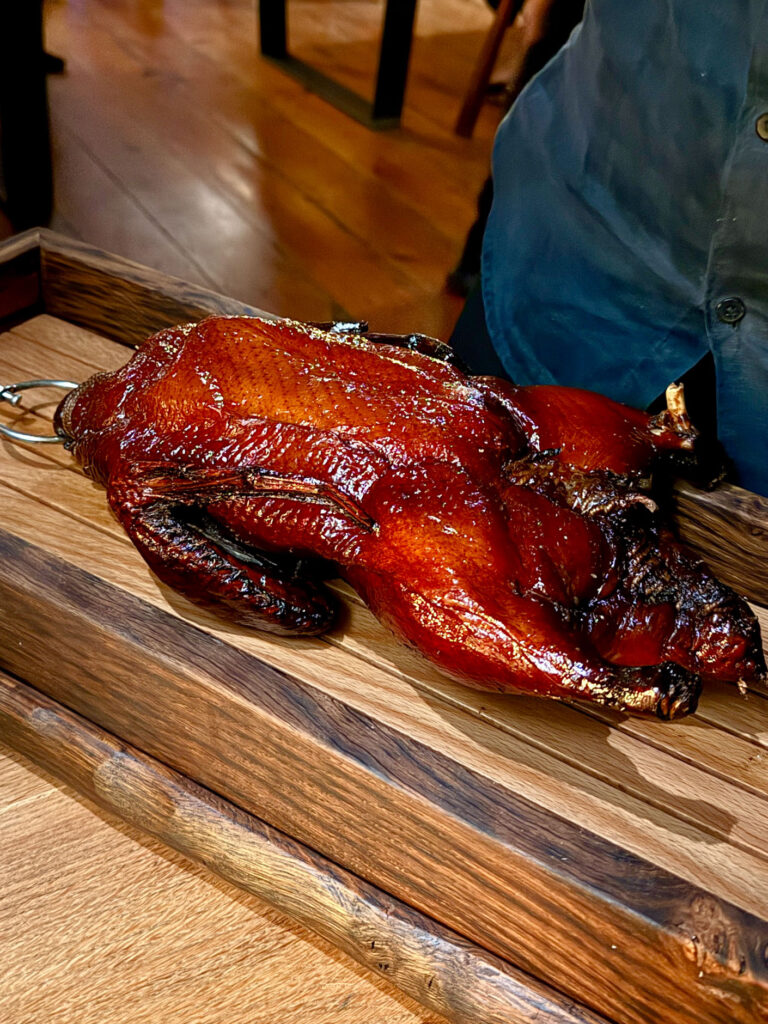
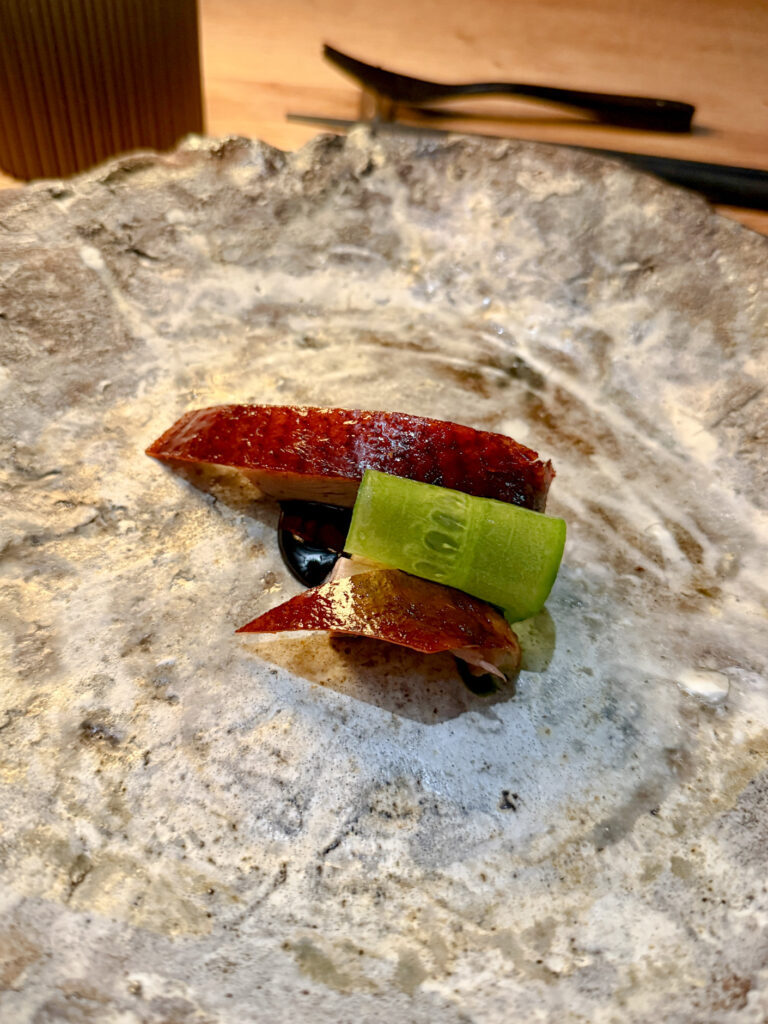
Anyway, I must tell you about the duck. The Silverhill Farm is secretive about what exactly makes these ducks taste so good, but what we do know is the farming is very selective and the ducks are purpose-bred for flavour. Presented tableside is the whole roasted duck in all its glossy glory, the product of a low, slow cook, after two weeks ageing. The fat is rendered to the point of stained-glasslike perfection, and seasoning is minimal – a little salt, a little hoisin, and a barely-there ribbon of cucumber, nods to the Beijing classic. This must surely be one of the best ways to appreciate the ingredient; I wish there was more of it.

Whilst nobody could claim the tasting menu (£390/pp) is a bargain, given the quality of ingredients, and the unique nature of the restaurant, I did feel the experience was worth it

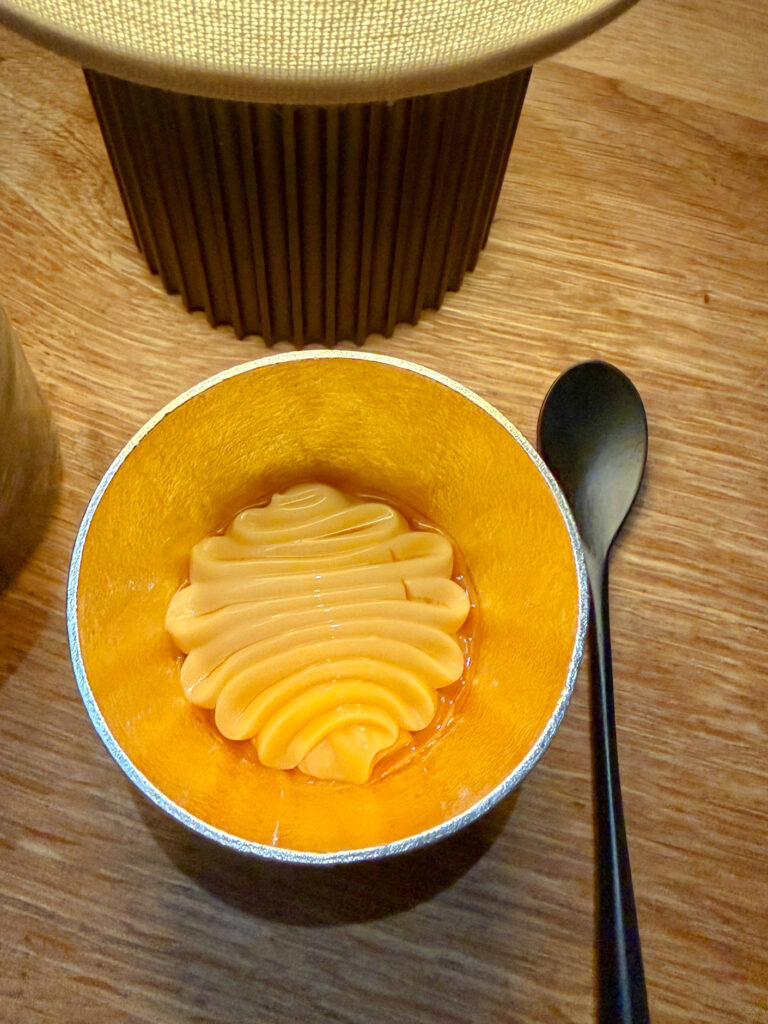
Whilst this is very much a manly affair, little whispers of femininity punctuate the menu: a delicate ginger shaved ice disappears in a moment and cleanses the palate, a barely set milk jelly topped with coral pink rhubarb tickles the inner child. It wouldn’t make sense if this masculine feast ended with macarons, and so it doesn’t. Desserts are less thrilling than the savoury courses, but still remain committed to the idea: lots of fat – this time mostly in the form of dairy: miso ice cream melts into sticky toffee pudding under medjool date sauce. My favourite dessert was the duck egg custard, which has remained on the menu for a decade. I’d be lying if I said was as smooth as butter; it was in fact smoother that butter, and topped with not so much a dash, but a full scale sprint of peach liqueur. By this point in the meal the experience, the music, your waistline, and your ability to hold your liquor, have all reached critical mass. Suddenly, “Smalltown Boy” by Bronski Beat began playing, and an inebriated diner broke ranks and began dancing in the dining room. It was strangely moving. I couldn’t name another restaurant of this stature where such a thing could happen.

Dining here isn’t cheap. Still, I was pleased to find that the menu offered no supplements. This has become all too common: some fine dining menus double in price once you allow for supplements (the process whereby they tempt you in with a reasonably priced menu, then bully you into paying extra for caviar, truffle and whatever else). I appreciated Ynyshir’s inclusive approach, which ensured every diner had a top tier experience that included generous helpings of luxury ingredients. The wine list is also surprisingly fair – glasses of sake start at £7.50, glasses of red wine start at £8. A decent bottle of red – a 2016 Chateau Musar, for example, that retails for £55 – will set you back £115, and a 2012 bottle of Billecarte-Salmon Champagne that retails for £170-200 is on their wine list for £325. Whilst nobody could claim the tasting menu (£390/pp) is a bargain, given the quality of ingredients, and the unique nature of the restaurant, I did feel the experience was worth it.

Man has been cooking on fire for 800,000 years; it’s nothing new. And yet in the hands of Gareth Ward, fire-cooked proteins are made delicate and indulgent. My fears of being served charred bits of lamb in a nightclub environment were not realised. Instead, a carefully curated playlist, a menu of silky textures, surprising complexity, and intensely saturated flavours. It’s easy, with hindsight to say I’d have liked an additional vegetable or two, but at the time I had no such desires. Ynyshir is truly unique – this is not a restaurant one could easily say reminds you of some other thing you’ve experienced. Gareth Ward is producing one of the best and most exciting fine dining experiences in the UK, one that is worth journeying to the end of the earth for. Your pilgrimage will be well rewarded, if you dare.

Ynyshir 18/20Food & Drink66Service66Ambience56Value12about our grading system

Ynyshir Restaurant and Rooms
Eglwys Fach
Machynlleth
SY20 8TA

March 2026

https://www.palatemag.co.uk/?p=6621
Extensions
Virtus (Paris)
international
The 12th arrondissement may not be very high on most people’s agendas when visiting Paris, even if walking along…
Show full content

The 12th arrondissement may not be very high on most people’s agendas when visiting Paris, even if walking along the elevated Promenade Plantée. A lot of this area is residential, but it’s also one of the largest and most diverse parts of the city. From Bastille through to the Bois de Vincennes on its eastern edge, this is an enlarged fatty liver of an arrondissement, though on the food front more attention tends to be paid to its northern neighbour and the uber-cool (still cool?) Oberkampf. Admittedly, whenever I’m killing time in Gare de Lyon (in the heart of the 12th) I’ve tended to make a virtue out of necessity and dined at Le Train Bleu between TGV connections (naturellement). But venturing out to the food market in Place d’Aligre, I was pleased to finally broaden those horizons and discover Virtus.

Virtus is a 12th arrondissement restaurant that seems to hide in plain sight (despite its bold façade and eclectic lampshades); for some reason it’s one of those places that has just eluded me, even though it has been around for several years and has already moved on from its first iteration. This used to be La Gazzetta but became Virtus under Chiho Kanzaki and Marcelo Martin di Giacomo (both ex-Mirazur). It is currently run by Camille Gouyer (front of house) and chef Frédéric Lorimier, with design by Marcelo Joulia, an architect and art collector of all things recherché. It certainly feels more like a virtuoso’s home than a flea market, and pleasingly the tables are spaced apart liberally (rare in Paris), but when you’re given a little booklet explaining the history behind all the mismatched chairs and random objets d’art, it does set off the ‘style over substance’ alarms.

The portions are notably generous rather than dainty: this is not one of those fancy restaurants where each course has the nutritional value of a communion wafer

Indeed, there’s a lot to take in about this place before you even eat anything, including the florid menu, which only heightens the anticipation. I’ve often thought French menu language should be studied in British schools: these menus are pure poetry. Of course, many modern French restos have gone down the laconic, single-word route – a form of menu construction that’s like communicating with a grunting teenager and tends to raise more questions than answers – but Virtus seems to belong to the Baudelairean school of carte lingo.

Take this opening gambit for instance: “crudo de gamberoni et fraîcheur d’une rose glacée au corail des têtes et au citron fermenté, bouillon chaud de crevette infusé à la citronnelle et à la mélisse.” Wonderful. You could try putting that through a translation app but it would probably go on strike after the third word. Instead, just bathe in that description, especially when the server repeats it out loud. And by the way, this three-way celebration of the humble prawn lived up to its expectations, commencing proceedings beautifully with a glass of champagne and a free brioche-croissant hybrid.

Keeping with the fishy theme, next came lightly seared lisette (a young mackerel, currently scarce in north Atlantic waters) with mustard seeds suspended in vinegar and artichokes à la barigoule (a traditional Provençal way of braising artichokes in white wine), bound by a nasturtium sauce. This was intricately balanced in both flavour and texture.

Then a particularly impressive dish of flame-cooked red mullet with a solitary pomme soufflé, a luxurious sage sabayon, and a deeply rich fish bone and red wine jus for the ages. This was astoundingly good but would’ve been even better with more than one pomme soufflé (devilishly difficult though they are to make).

For a little theatre between the fish and meat parts of the meal, a citrus granita was topped with yellow Chartreuse, served at the table from a giant bottle (though, understandably, used sparingly, given the international shortage).

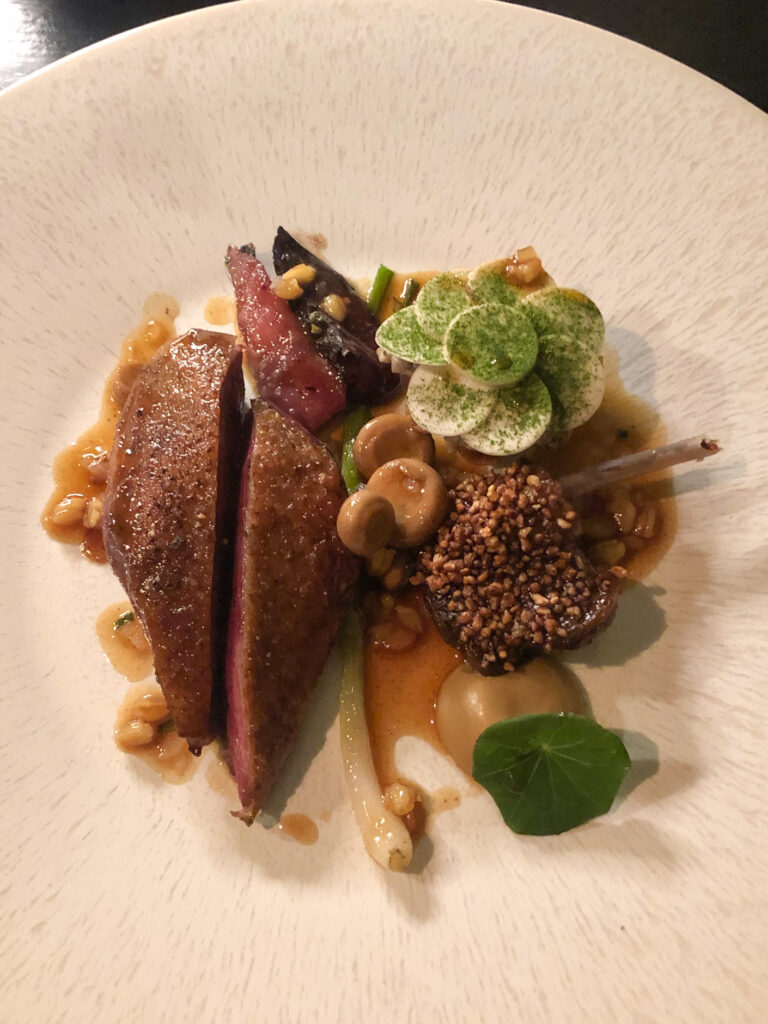
Squab, sliced open and looking like a heart, with a separate confit leg, a tarte fine of girolles, and another voluptuous jus studded with spelt, shallots and more mushrooms, was just divine, despite the crowded plating. And as with the prawns at the beginning, dessert was centred around one core ingredient – pear in this case – and elevated to something exceptional.

As the menu changes as often as government policy, this can only be a snapshot in time. But, these superb dishes – each of them pretty much faultless – were enough to tell me that this is very accomplished cooking. It certainly helped that the service was so sleek and professional too: discreet, pleasant and no tableside monologues about the life cycle of snails or the supremacy of Normandy butter.

A quick word about the pricing. This six-course feast (the “Echappée Belle”) started at 145 Euros and that was before ordering any drinks. With supplements for cheese at about 22 Euros, your wallet needs to be prepared for the thrashing it will take. But, the portions are notably generous rather than dainty: this is not one of those fancy restaurants where each course has the nutritional value of a communion wafer and you end up having an undignified emergency McDo on the way home. There’s a wine-matching option but the bottles are better value and, if restraining oneself, the wines by the glass are all priced around 15 Euros. Also, the Friday four-course lunch menu, which is a whole 65 Euros less, is a pretty good deal for this standard of cooking in Paris. Brace yourself for another terrible pun but I have to “virtus-signal” this further: this is worth your time and money for a special treat in eastern Paris.

Virtus 18/20Food & Drink5.56Service66Ambience5.56Value12about our grading system

29 Rue de Cotte
75012 Paris
France

March 2026


https://www.palatemag.co.uk/?p=6619
Extensions