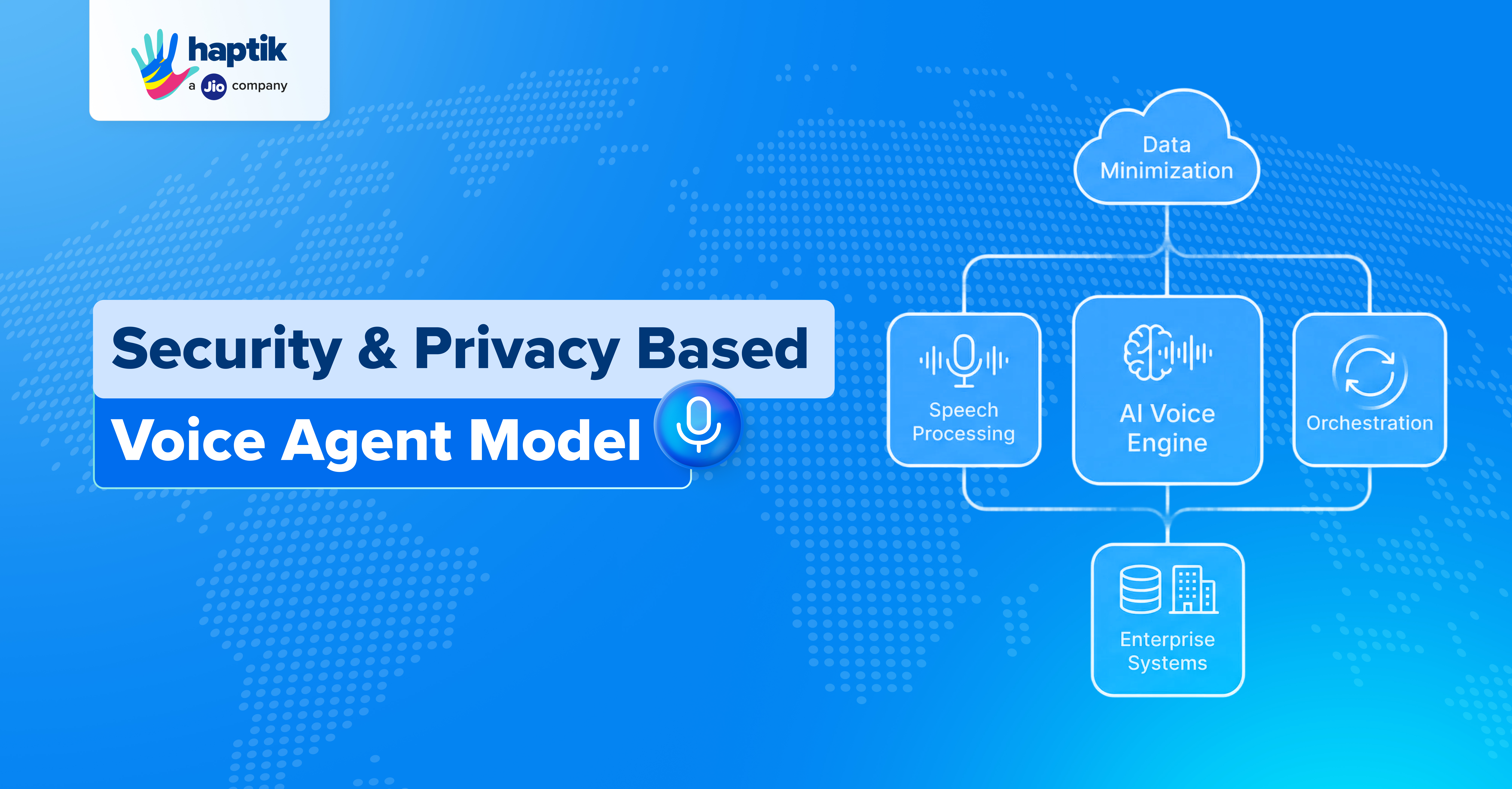
Voice has rapidly become the main interface between enterprises and their customers. AI voice agents now handle service requests, authentication, payments, and issue resolution at scale. In doing so, they move beyond responding, they actively listen, in real-time and at scale.
When AI listens, the security and privacy stakes fundamentally change. The focus is no longer limited to protecting databases and dashboards, but extends to safeguarding live conversations, emotions, and intent. This shift requires enterprises to rethink traditional security and privacy approaches.
In this blog, we discuss the main challenges being faced for Security and Privacy in AI voice agents and why this demands a new trust model and how organizations can respond.
Show full content
Voice has rapidly become the main interface between enterprises and their customers. AI voice agents now handle service requests, authentication, payments, and issue resolution at scale. In doing so, they move beyond responding, they actively listen, in real-time and at scale.
When AI listens, the security and privacy stakes fundamentally change. The focus is no longer limited to protecting databases and dashboards, but extends to safeguarding live conversations, emotions, and intent. This shift requires enterprises to rethink traditional security and privacy approaches.
In this blog, we discuss the main challenges being faced for Security and Privacy in AI voice agents and why this demands a new trust model and how organizations can respond.
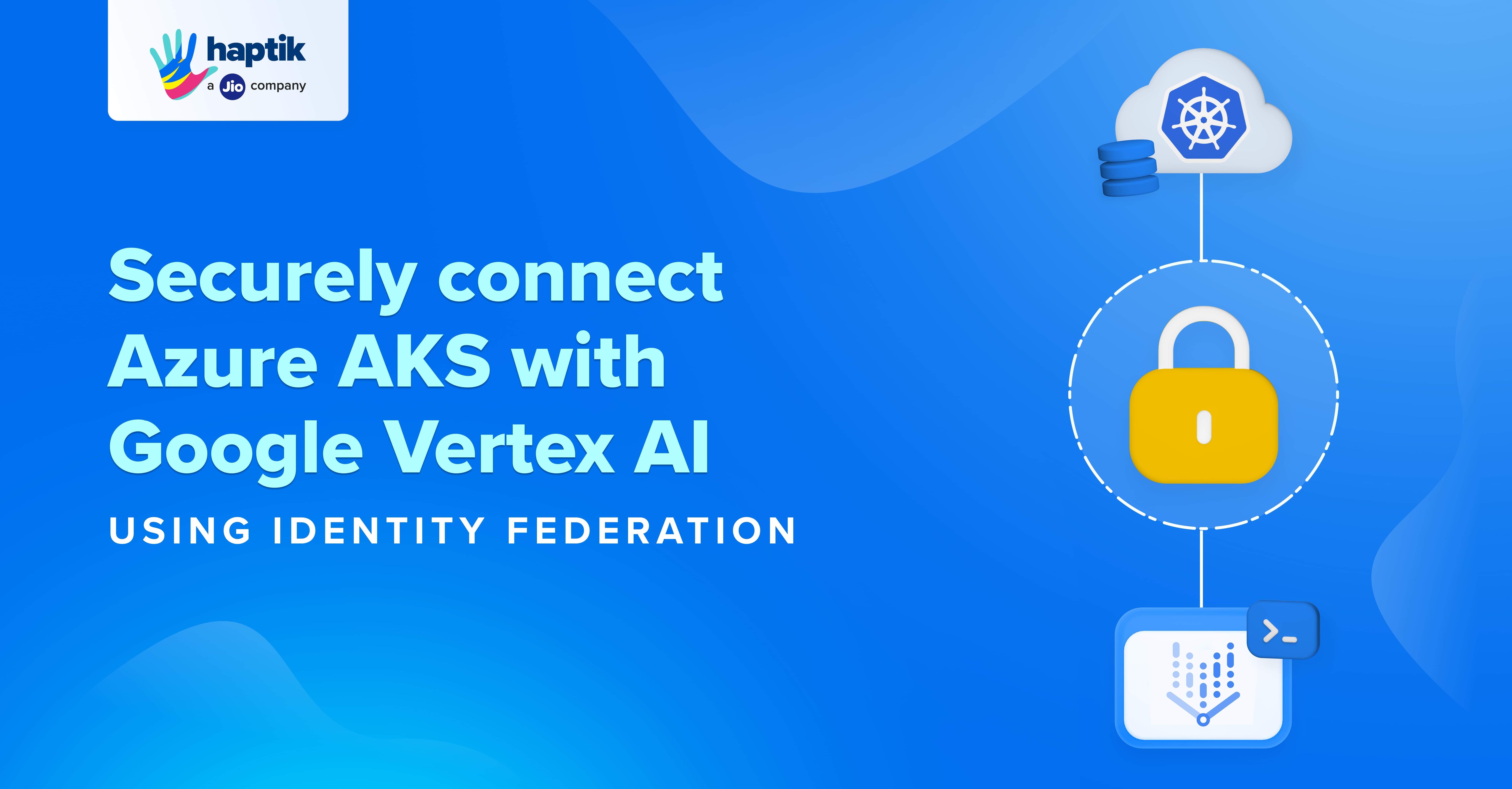
In 2025, organizations are moving beyond single-cloud strategies. Running containerized apps on Azure Kubernetes Service(AKS) while tapping into Google’s Vertex AIfor cutting-edge LLMs and generative AI is becoming the new norm.
Show full content
In 2025, organizations are moving beyond single-cloud strategies. Running containerized apps on Azure Kubernetes Service(AKS) while tapping into Google’s Vertex AIfor cutting-edge LLMs and generative AI is becoming the new norm.
At our scale, we needed to handle billions of transactions efficiently - routing across multiple environments and internal data centers - while maintaining reliability, security, and dynamic control. To achieve this, we chose HAProxy, a proven, high-performance load balancer known for its lightweight footprint, flexibility, and ability to handle massive concurrency with minimal overhead.
This blog walks you through how we deployed HAProxy in high-availability (HA) mode on Azure Kubernetes Service (AKS) -complete with autoscaling powered by KEDA, seamless integration with Azure Application Gateway, and dynamic token managementusing Azure File Share, all designed to deliver scalable, self-hosted traffic routing at enterprise scale.
At our scale, we needed to handle billions of transactions efficiently - routing across multiple environments and internal data centers - while maintaining reliability, security, and dynamic control. To achieve this, we chose HAProxy, a proven, high-performance load balancer known for its lightweight footprint, flexibility, and ability to handle massive concurrency with minimal overhead.
This blog walks you through how we deployed HAProxy in high-availability (HA) mode on Azure Kubernetes Service (AKS) -complete with autoscaling powered by KEDA, seamless integration with Azure Application Gateway, and dynamic token managementusing Azure File Share, all designed to deliver scalable, self-hosted traffic routing at enterprise scale.
Migrating terabytes of live MongoDB data across cloud providers is notoriously difficult. Standard approaches like extending replica sets across clouds fail at scale where initial syncs take weeks, oplogs roll over, and you're stuck in an endless retry loop.
Show full content
Migrating terabytes of live MongoDB data across cloud providers is notoriously difficult. Standard approaches like extending replica sets across clouds fail at scale where initial syncs take weeks, oplogs roll over, and you're stuck in an endless retry loop.
In today’s dynamic enterprise landscape, Customer Experience (CX) is no longer just a service function, it is a strategic advantage. Enterprises are seeking innovative ways to engage customers, personalize interactions, and create seamless, scalable journeys.
Show full content
In today’s dynamic enterprise landscape, Customer Experience (CX) is no longer just a service function, it is a strategic advantage. Enterprises are seeking innovative ways to engage customers, personalize interactions, and create seamless, scalable journeys.
We live in a world where communicating or talking to machines has become super normal. You ask your phone for the weather forecast, chat with a bot to know your food delivery status or even command Alexa to play one of your favorite songs — and boom, it just works.
Show full content
We live in a world where communicating or talking to machines has become super normal. You ask your phone for the weather forecast, chat with a bot to know your food delivery status or even command Alexa to play one of your favorite songs — and boom, it just works.
Let’s face it: in the world of microservices, managing traffic and scaling workloads can feel like trying to catch a runaway train. You’re flying down the tracks at full speed, but if you’re not careful, things can get out of hand real quick. We’ve all been there — constantly battling the scale-up and scale-down conundrum, trying to keep the system efficient without wasting resources.
Show full content
Let’s face it: in the world of microservices, managing traffic and scaling workloads can feel like trying to catch a runaway train. You’re flying down the tracks at full speed, but if you’re not careful, things can get out of hand real quick. We’ve all been there — constantly battling the scale-up and scale-down conundrum, trying to keep the system efficient without wasting resources.
Large Language Models (LLMs) are advanced AI models trained on vast datasets to perform a wide range of natural language processing tasks. Their widespread adoption in various applications, from chatbots to intelligent decision-making systems, requires a robust security framework to ensure that they function as intended without being susceptible to attacks or misuse. While there are numerous challenges, this blog focuses more on the key issues such as hallucination, ethical use of AI, and data security, and the best ways to address them.
Show full content
Introduction
Large Language Models (LLMs) are advanced AI models trained on vast datasets to perform a wide range of natural language processing tasks. Their widespread adoption in various applications, from chatbots to intelligent decision-making systems, requires a robust security framework to ensure that they function as intended without being susceptible to attacks or misuse. While there are numerous challenges, this blog focuses more on the key issues such as hallucination, ethical use of AI, and data security, and the best ways to address them.
Generative AI is transforming businesses across industries, unlocking efficiency and innovation at scale. Its disruptive capabilities help streamline processes such as content generation, image generation, and data analysis, among others. However, along with its tremendous potential, GenAI brings many inherent risks in security, data protection, and compliance for companies Navigating this risk landscape presents a huge dilemma: how can they leverage GenAI’s disruptive power while protecting sensitive information and adhering to the evolving data protection laws?
Show full content
Generative AI is transforming businesses across industries, unlocking efficiency and innovation at scale. Its disruptive capabilities help streamline processes such as content generation, image generation, and data analysis, among others. However, along with its tremendous potential, GenAI brings many inherent risks in security, data protection, and compliance for companies Navigating this risk landscape presents a huge dilemma: how can they leverage GenAI’s disruptive power while protecting sensitive information and adhering to the evolving data protection laws?