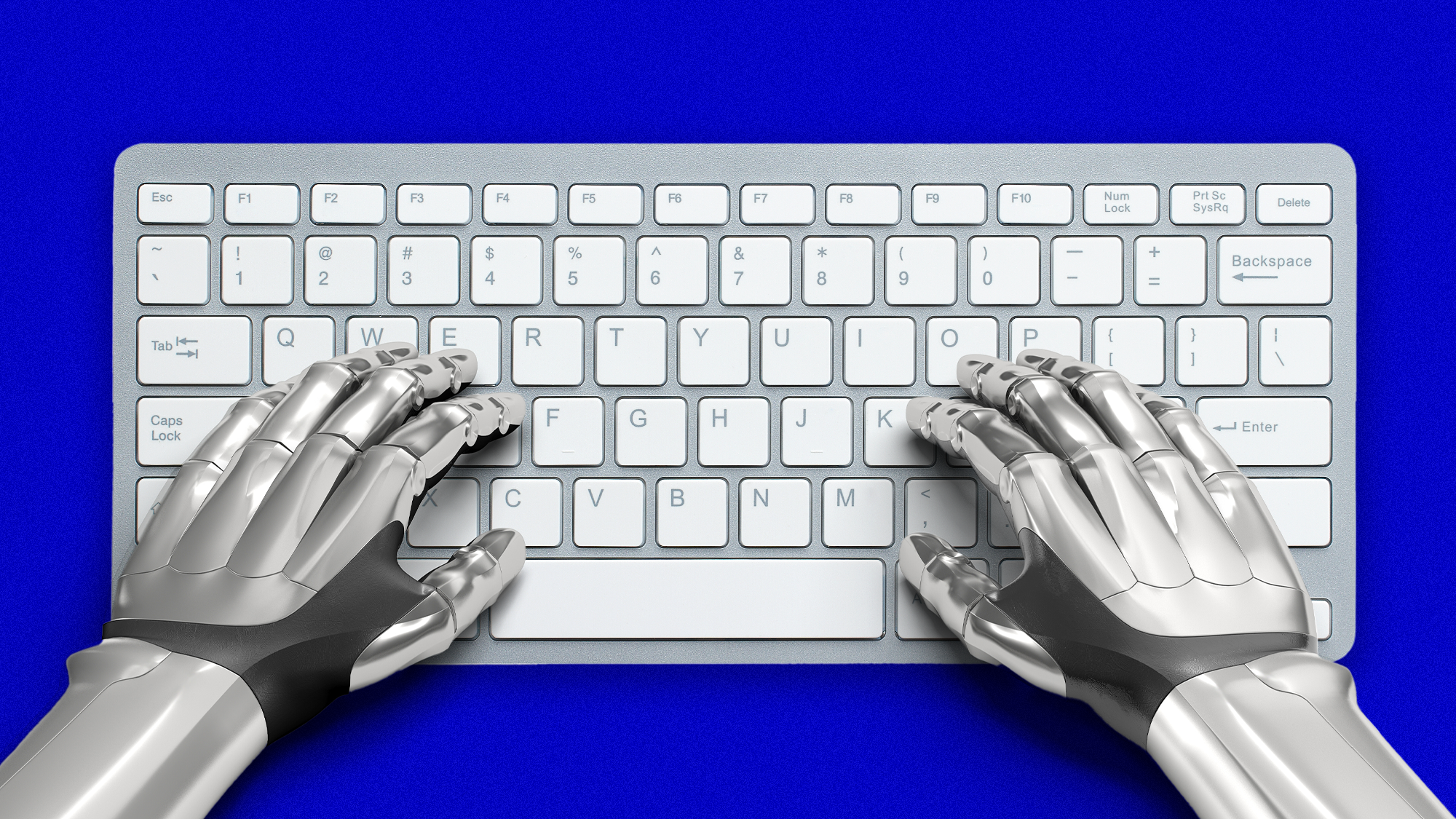
The Altman-Musk trial was a waste of everyone’s time.
Show full content
Sam Altman did not seem to be having a good time. During the many days that he spent inside an Oakland courtroom, the normally cheery CEO of OpenAI—a guy who tends to be chipper even when declaring AI’s existential risks to humanity—appeared anxious, even distraught. When he listened to the proceedings in Elon Musk’s lawsuit against him, a weekslong trial that threatened to remove Altman from OpenAI’s board and functionally destroy the company, he frequently concealed his mouth with his palm, fidgeted with a water bottle, and leaned forward and stared at the floor. He kept looking back at the rows of reporters behind him. On the witness stand Tuesday, Altman repeatedly noted how Musk’s actions had “annoyed” him.
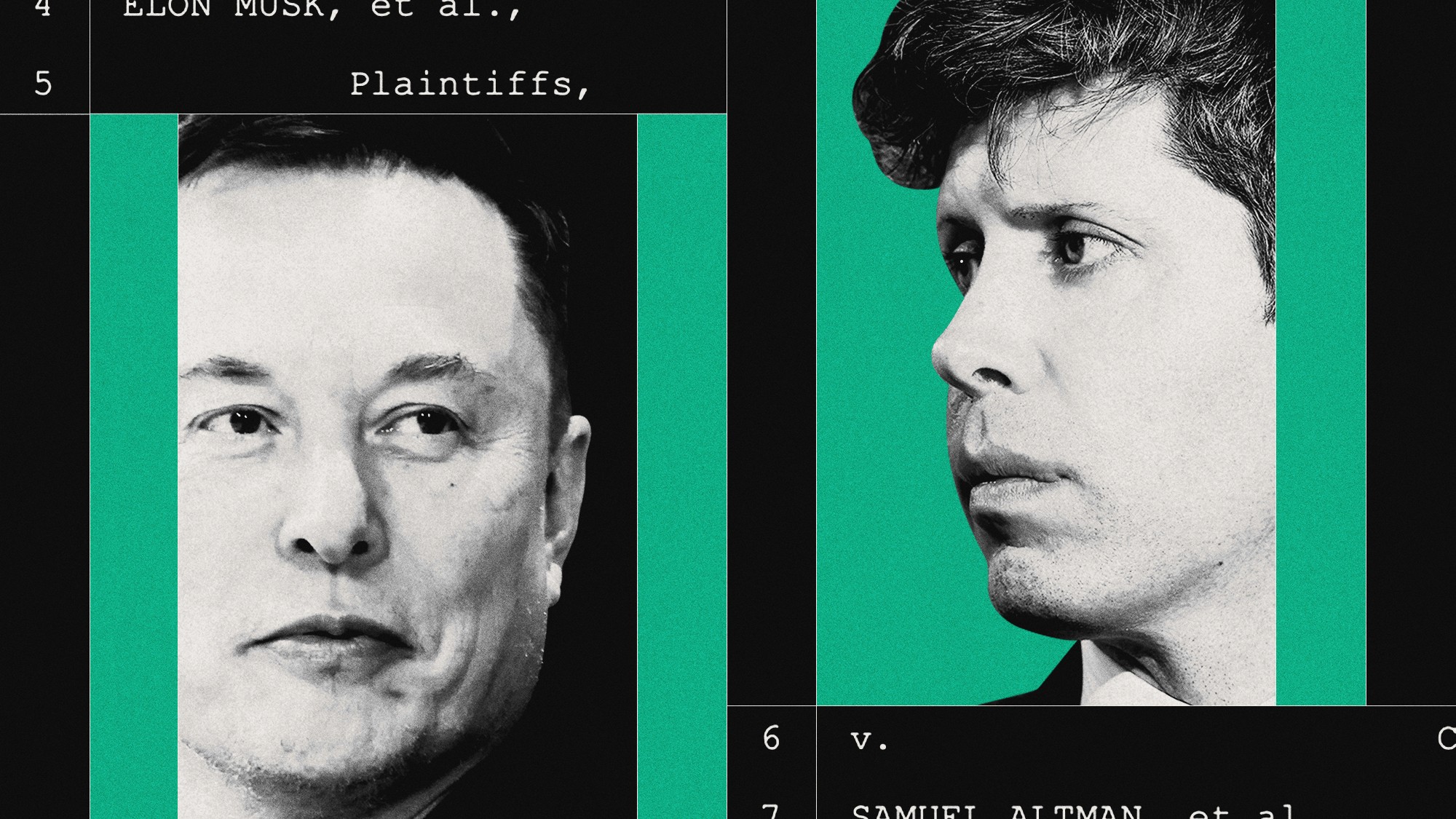
Musk, who helped form OpenAI as a nonprofit in 2015, alleged that Altman and OpenAI had violated the organization’s founding principles by seeking profits. He was requesting, among other remedies, more than $150 billion in damages, which Musk said he would donate to the OpenAI nonprofit. This morning, a nine-person jury delivered a unanimous verdict after less than two hours of deliberation: Whether or not OpenAI had done something wrong, Musk sued outside the statute of limitations, two to three years depending on the charge. And Musk could have known of any alleged wrongdoing, the jury found, well before. Altman has been granted some respite: OpenAI and the AI industry will continue along, unphased, at least until Musk appeals the decision. (A second portion of the case, related to claims that Musk made under antitrust law, remains unresolved, although the presiding judge has said that his are “not very good claims.” Neither Musk’s lawyers nor OpenAI immediately responded to a request for comment.)
OpenAI swept the legal argument. But in another sense, basically everybody involved in Musk v. Altman came away looking petty, short-sighted, deceptive, or ignorant. During the dozens of hours I spent in the courtroom, sometimes lining up as early as 5 a.m. to secure a seat, there wasn’t much substance to be found. Frankly, at the end of it all, everyone had good reason to be annoyed.
Musk came off the worst in this trial, by far. The question before the jury was whether OpenAI’s for-profit arm had somehow broken a legal promise the organization made to Musk at the organization’s founding: “It’s not okay to steal a charity,” as Musk told the jury on the first day. This was a farcical notion based on any number of pieces of evidence and testimony presented at trial, not least of which being that in 2017, Musk himself was involved in discussions for OpenAI to raise more money by making a parallel for-profit arm. Coming into the trial, this was already an uphill battle for Musk and his lawyers. But even by those low expectations, the entire affair was a debacle.
As a witness, Musk was impish. When asked simple questions by William Savitt, one of the attorneys representing OpenAI, Musk rambled and avoided the issue at hand. When the lawyers asked for a yes or no, he bristled: “The classic reason why you cannot always answer a yes-or-no question,” Musk said from the witness stand, “is if you ask a question, ‘Have you stopped beating your wife?’” (“We’re not going to go there,” U.S. District Judge Yvonne Gonzalez Rogers interjected.) Later, Musk accused Savitt of asking improper questions, after which Gonzalez Rogers sharply cut in, telling the world’s richest man, “You’re not a lawyer.” Musk conceded but, after a pause, grinned and added, “Well, technically I did take Law 101.”
When Musk answered questions, he argued that OpenAI had sacrificed safe and responsible AI development by prioritizing profits. But when cross-examined about AI safety, Musk was unable to articulate any coherent arguments. Savitt noted that Musk’s xAI, a competitor to OpenAI, is a for-profit company, and asked if xAI presents identical dangers. “Yes,” Musk said, “I think it creates some safety risk.” Savitt then asked about basic AI-safety measures. Musk, who earlier had testified that he wants to avoid an AI “Terminator outcome,” was clueless. Asked about safety cards, for instance, Musk responded, “Safety card? Why would it be a card?” These are years-old, widely used, industry-standard documents that anybody who has worked at an AI company in the past five years should be intimately familiar with.
The following day, in a particularly withering exchange, Savitt went down the list of Musk’s other enterprises. Did he think that Tesla was making the world better? “Yes,” Musk said. And is Tesla a for-profit company? “Yes.” Savitt then asked these two questions about SpaceX, Neuralink, and X. For each of his businesses, Musk responded yes and yes. The same man who has a trillion-dollar compensation package from Tesla and may receive another from SpaceX was suing OpenAI for trying to make a lot of money. I wondered to myself, What are we doing in this courtroom again?
Despite winning in court, Altman didn’t come off all that much better. The first question from Steven Molo, one of Musk’s lawyers, to Altman was “Are you completely trustworthy?” With a puzzled look, the OpenAI CEO responded, “I believe so.” Molo asked if he had misled business partners, and Altman, after a pause, said, “I believe I am an honest and trustworthy business person.”
Altman’s evasive answers were significant because he has a long history of being accused by colleagues and business partners of being deceptive. Ilya Sutskever, a co-founder and former chief scientist of OpenAI, testified that during his time at the company, he had felt that Altman created an “environment where executives don’t have the correct information,” which is not conducive to AI safety. Multiple former OpenAI board members testified to similar effect in explaining why, in late 2023, they briefly fired Altman. (For his part, Altman wrote in a recent blog post that he is “not proud of handling myself badly in a conflict with our previous board that led to a huge mess for the company.”) When the judge excoriated OpenAI’s legal team for making contradictory arguments in separate lawsuits that she is hearing, Musk smiled and nodded. Musk’s legal team essentially hung its case on impugning Altman’s integrity, and Molo told the jury in his closing argument to imagine that they were walking over a bridge: “The bridge is built on Sam Altman’s version of the truth,” he said. “Would you walk across that bridge?”
The many texts, emails, and internal documents released because of the lawsuit, and the sworn testimony of current and former OpenAI executives, were hardly flattering for the firm— depicting a treacherous company culture that has nonetheless made its staff fantastically rich. Sutskever said that his stake in the company is worth some $7 billion, and Greg Brockman, OpenAI’s president and another defendant in the lawsuit, said that his equity is worth some $30 billion. Altman, who previously told the Senate that he has no direct equity in OpenAI, testified that through an investment fund run by the start-up incubator Y Combinator (which Altman used to be president of), he has an indirect financial stake in the firm.
The trial surfaced and produced countless other shenanigans: Musk apparently called an OpenAI employee a “jackass” for wanting to prioritize safety over speed, after which that employee was given a satirical trophy depicting a donkey’s butt. (During his own testimony, Musk denied yelling at someone and said he would have used such a word only in jest.) In a diary entry, Brockman had written that it would be “wrong to steal the nonprofit from” Musk and that doing so would “be pretty morally bankrupt, and he’s really not an idiot.” Sutskever, a Yoda-like figure in the AI world, described AI progress from 2018 to now as “the difference between an ant and a cat.” At the beginning of the trial, the judge had asked Musk to refrain from posting on social media about the trial as it unfolded, and he did show restraint. Immediately after the verdict, though, Musk posted on X: “The ruling by the terrible activist Oakland judge, who simply used the jury as a fig leaf, creates such a terrible precedent.”
To the extent that the trial could have actually been about the best way to develop AI for the benefit of humanity, and about whether OpenAI is honoring its founding pledge to do so—well, it simply wasn’t. For the most part, Musk and Altman—billionaires who are perhaps the two most influential tech CEOs in the world—were in essence asking their attorneys to debate whether making ungodly sums of money was acceptable. In a remarkable exchange during closing arguments, Gonzalez Rogers excoriated one of Musk’s lawyers for misleading the jury: Molo, after attacking the bridge “built on Sam Altman’s version of the truth,” said that Musk is not asking for money from OpenAI. The district judge pointed out that he, in fact, was asking for money. “You need to retract that statement, or you need to drop your claim for billions of dollars,” the judge said. Musk’s lawyers did not drop the demand.
Anthony “Bingy” Arillotta waited years to become a made man in the Genovese crime family, and when at last the call came in August 2003, he followed directions to the letter. According to sworn testimony, Arillotta was summoned to a steak house in the Bronx, where he was made to hand over his cellphone, beeper, and jewelry before being driven to an apartment building. When he got there, he was taken to a small bathroom and strip-searched for electronic devices. For his big meeting with the boss, he was given a bathrobe to wear.
Until recently, only spies and criminals had to worry this obsessively about their private statements being picked up by electronic equipment. But soon, the average person might need to deploy surveillance countermeasures. The next time you conduct a delicate bit of office diplomacy or share a romantic or financial secret with a friend over drinks, a sensor built into someone’s glasses, necklace, or lapel pin might be watching you and listening.
In March, the tech start-up Deveillance announced the development of Spectre I, a hockey-puck-shaped device that purports to prevent others from recording you (no strip search required). The company was founded by Aida Baradari, a recent college graduate who was worried by the surge in people wearing AI-enabled recorders. These wearables can be used as a silent notetaker, a personal assistant, or even a therapist of sorts. That technology isn’t yet mainstream, but it may be soon. Apple—the company with the largest personal-tech ecosystem in the world—is rumored to be developing an AI pin or pendant that would serve as an iPhone’s constant eyes and ears; many other products of this type are on the way. AI accessories could one day be as widespread as AirPods.
New surveillance technologies tend to breed new countermeasures, which lead, in turn, to more sophisticated surveillance. During the Second World War, after Germany operationalized radar, the Royal Air Force began dropping thin strips of metallized paper cut to a specific size that resonated with the radar, swamping German screens with phantom echoes that were indistinguishable from real aircraft. Some historians have argued that the ensuing radar arms race was more consequential to the war’s outcome than the Manhattan Project.
For decades, crude jammers have been sold to people who hope to avoid being recorded. Early versions blasted loud, unpleasant white noise to conceal voices. More recently, companies have made models that emit a steady stream of ultrasonic sound at inaudible frequencies, exploiting a quirk of microphone hardware that converts those high frequencies into noise. In 2020, a team at the University of Chicago led by Yuxin Chen reported that it had mounted 23 ultrasonic transducers on a single bracelet, such that jamming signals could be sent in all directions instead of being focused on a single target.
But even high-tech jammers have a hard time fending off today’s AI wearables. The most advanced pins, pendants, and glasses use speech-recovery algorithms to strip away unwanted noise, whether it originates from everyday sources—such as the clinking of glasses in a crowded bar—or from an ultrasonic jammer. This task the algorithms perform is quite difficult: In that crowded bar, a microphone on a person’s lapel will intercept sound vibrations from many different sources at once. It will pick up a bartender calling out a drink order, music emanating from a speaker, bursts of laughter coming from nearby tables—and all of these sounds ricochet off of walls and other objects, creating yet more noise. The human body solves this “cocktail party problem” without us noticing: Our ears serve as dual microphones, and our brain can use the timing and intensity differences between them, along with layered processing in the auditory cortex, to isolate the voice of a person who is sitting across from us.
DeLiang Wang, a computer scientist at Ohio State University, has spent decades training neural networks to accomplish that same goal, for the purpose of improving hearing aids. By feeding the networks hundreds of hours of recorded human voices, he has taught them to recognize the frequencies and rhythms of speech. The models build an internal representation of “speech-ness,” and when they encounter a noisy recording, they focus on the parts that match the patterns they have learned and then suppress everything else. The most advanced technologies can now infer missing syllables in the way that a reader fills in a redacted word from context, allowing them to reconstruct speech that wasn’t cleanly captured in the first place.
Big tech companies are trying to do this too. Microsoft has been running an annual Deep Noise Suppression Challenge since 2020 to advance the field. (Their in-house team is trying to make Teams meetings less excruciating.) Other companies are working on noise cancellation for cellphone calls and podcast software. This sort of research is meant to improve the lives of normal users of technology—assuming that we podcast listeners count as normal—but every advance in de-noising can also be used to help an AI assistant recover speech from a jammed recording.
Defeating these algorithms may require a different countersurveillance approach altogether. Finn Brunton, a historian at UC Davis and the co-author of Obfuscation: A User’s Guide for Privacy and Protest, told me that one of the best ways is to identify the data that a device is trying to collect, and then supply it with a junk version. The Berlin-based artist Adam Harvey used this strategy when he developed makeup and clothing that frustrates facial-recognition algorithms. Daniel Howe and Helen Nissenbaum did something similar with a browser plug-in called TrackMeNot: Rather than concealing a user’s Google searches, the extension continually runs its own randomized decoy queries in the background, so that whatever a user actually searched for becomes lost in a sea of false leads.
People have tried this technique in the realm of audio too. Woodrow Hartzog, a law professor at Boston University who studies privacy and surveillance, told me that early in his legal career, he worked with defense attorneys who worried that their jailhouse conversations with clients would be recorded. To fight back, they played “babble tapes”—audio files layered with 40 tracks of voices in different accents—in the background.
In 2023, a team led by Ming Gao, now a researcher at Nanjing University, used human voices to defeat speech-recovery algorithms in a different way. Its jammer, called MicFrozen, is worn by a speaker who doesn’t want to be recorded. It listens as they talk and then generates a real-time stream of ultrasonic “anti-speech” tuned to the speaker’s voice, much like the noise-cancellation technology in your headphones. The device then sends out another layer of counterfeit speech-shaped sound to mislead any algorithm that tries to reconstruct what was lost.
Baradari, whose company is working on the Spectre I device, wouldn’t tell me exactly how her jammer’s signals work, but she said that they, too, resemble speech. The launch video for Spectre I claims that the device will also be able to detect the presence of nearby microphones. When I asked Baradari how it will do that, she clarified that her team is still “working on that part right now.”
However effective Spectre I turns out to be, it won’t be the end of the recording arms race. More capable AI models may eventually deploy some new listening tricks of their own. They may bypass recorded audio altogether. In Stanley Kubrick’s 2001: A Space Odyssey, when two astronauts retreat to a soundproofed pod to discuss disconnecting HAL 9000, the ship’s computer simply reads their lips through the porthole. A wearable powered by a model that’s been trained on enough conversation footage could, in principle, do the same. In theory, it could also stare at a glass of water between two people and recover their speech from vibrations on the liquid’s surface.
AI wearables may always have an edge over countermeasures. After all, they’re using a technology that is a product of the entire speech-processing industry, which takes in billions of dollars in investments—not just for AI assistants but also for hearing aids, smart speakers, and teleconferencing tools. Meanwhile, only a few academics and small companies are defending us from these technologies. “The thing about cat-and-mouse games is that we know how they usually end up for the mouse,” Hartzog said. “And in this case, the cat includes some of the most powerful corporations to ever exist.”
The Mafia knows what it’s like to be a mouse. By the time Arillotta, the aspiring made man, was told to put on the bathrobe, criminal organizations had been engaged in surveillance arms races of their own for decades. After law enforcement started bugging their phones, bosses would conduct business in person. Sometimes, they’d use a safe house or a vehicle, but those could be bugged, too, and so sensitive information might have been communicated only during a walk-and-talk. Eventually, crime families turned to burner phones, and then devices with encryption. But here, again, they fell prey to the cat.
In 2018, the FBI began secretly running Anom, its own encrypted-phone company. Through informants, it sold 12,000 devices with a special Anom messaging app. Members of Mafia families, motorcycle gangs, and other criminal organizations treated the phones as a status symbol, and used them to negotiate drug deals, launder money, and participate in all manner of other illegal activity. But the security that they offered was a ruse: Every message that they sent was being intercepted by the feds.
Once-speculative concerns about the technology have now become pressing matters.
Show full content
AI has ascended to the role of main character. When Donald Trump traveled to Beijing for an historic summit last week, AI was one of the central topics of his discussions with Xi Jinping. As the two nations remain locked in a technological arms race, the president brought along some of the United States’ most powerful AI executives, including Elon Musk and Nvidia’s Jensen Huang. A continent away, the European Union has been unsuccessfully petitioning Anthropic to grant access to its advanced cybersecurity model, Mythos. Back in the United States, millions of students and teachers are dealing with the fallout of a devastating ransomware attack on the software platform Canvas—a hack that was likely aided by AI tools. And on Thursday, Cisco became the latest major company to justify layoffs by pointing to AI.
The past six months have marked a sea change in the reach and influence of AI. For most of 2024 and 2025, there was talk of AI progress slowing down or even stopping altogether. Even as the technology began to infiltrate schools and reshape financial markets, AI was relatively easy to compartmentalize from other major, more pressing issues in American life.
No longer. Now the technology has become regarded as a matter of the greatest economic, political, and global consequence. The most important issues in U.S.-China relations? Tariffs, Taiwan, and AI, apparently. Political leaders and pundits including Bernie Sanders and Steve Bannon have put AI center stage, and the backlash against data centers is loud and inescapable. The specter of AI-driven layoffs hangs heavy—as does the threat of advanced hacking bots capable of taking down electrical grids and breaking into banks. All manner of once-speculative concerns about AI have become pressing matters. There is no longer a distant AI future so much as the mess we are all forced to confront today.
The newly chaotic and inescapable state of AI is the result of two inflection points. The first came at the start of the year, when AI agents exploded in popularity. Products such as Anthropic’s Claude Code and OpenAI’s Codex don’t just talk to you; they can do things on your behalf—code, trade stocks, analyze spreadsheets, generate slide decks, and even create Amazon listings. The technology’s once-questionable economic value became very clear, very quickly, to a large number of businesses, which have clamored to incorporate agents alongside, or in lieu of, their human employees. As agents have swarmed the workplace, nearly three-quarters of employed Americans think AI will decrease overall job opportunities and 30 percent of Americans are concerned that AI will make their own job obsolete.
The second shift began in late February. First, a high-profile contract dispute between Anthropic and the Pentagon revealed how essential AI has become to national security. Then, in early April, Anthropic announced Mythos, a model with the ability to rapidly find and exploit bugs throughout the internet. (Shortly after, OpenAI came out with an analogous model.) In tandem, these events suggest that some of the most catastrophic fears about AI could come true: Several independent cybersecurity experts have told me that these models are approaching the abilities of the most elite human hackers. Anthropic and OpenAI have not released these cybersecurity models to the public, out of fear they will be used by criminals or terrorists; meanwhile, companies and government bodies alike are hungering for access so they can use the tools to patch any bugs. As a result, AI labs have become major geopolitical actors in their own right.
Spurred by the threat of massive AI cyberattacks, the Trump administration is now reportedly weighing the possibility of testing or even licensing the most powerful AI models before their public release—moves the White House once called “dangerous” and “onerous.” White House Chief of Staff Susie Wiles is said to be spearheading Trump’s AI policy and has written a rare post on X vowing to keep Americans safe from AI cyberattacks by ensuring “the best and safest tech is deployed rapidly to defeat any and all threats.” (A White House official told me that “any policy announcement will come directly from the President.”) This month alone, dozens of members of Congress have signed letters to the White House on AI regulation.
It’s hard to overstate the extent to which AI has crept into contemporary life, even for people who aren’t commonly using the technology. A poll this spring showed that, for Americans, AI is growing in importance faster than any other issue. AI wasn’t a focus for campaigns in 2024, but several races coming up this year are poised to involve heated debates over the technology. Data centers in particular have gone from basically invisible to a divisive issue that cuts across party lines: 70 percent of Americans oppose the construction of an AI data center in their community. These centers’ voracious demand for natural resources might be showing up in your electrical or water bill or your receipt at the gas pump. Data centers have also become objects of military and political violence. Last month, the home of an Indianapolis city councilman was shot up after he voted to approve a data center. And these buildings have been targeted or threatened by Iranian, U.S., and Israeli forces during the war in the Middle East.
There will never again be a graduating class that experienced even a year of college without ChatGPT. On Instagram, Facebook, and X, influencers preach about how to use Claude and ChatGPT to make your life easier. Recent leaps in deepfake tools make it harder than ever to assume that any given post on social media is human-made. As if AI had not already eaten the economy, Anthropic and OpenAI are racing to be listed on stock markets in what will likely be two of the largest public offerings in history. This will dramatically warp the public-investing landscape and affect, for better and worse, basically anybody with any sort of savings—a college fund, a 401(k), a pension.
All of which is to say, basically anything that is American seems tangled up with AI: the war in Iran, gun violence, the midterms, NIMBYism, falling test scores, class inequality, the stock market, housing, gas prices. None of these issues are necessarily determined or superseded by AI—far from it—but rather, this technology and industry are now directly, unavoidably implicated in them all. And the experience of this AI-saturated present is a bewildering one. Partisan lines on AI are scrambled and confused. The influx of cash into data centers has propped up the U.S. economy, making it impossible for economists and policy makers to fully understand the effects of tariffs and the war with Iran. More and more companies are citing AI for mass layoffs, but whether this is a genuine justification or a convenient excuse to downsize is anybody’s guess. Whether AI is going to empower or rot all our brains, too, will only become evident many years from now. All these questions and tensions are hard to make sense of, let alone resolve, but they can no longer be deferred.
The path here was not the inevitable result of some technological, scientific, or economic law. Nor is continuing down it. To the extent we are already living in the AI future, it is the result of a series of calculated decisions by the biggest tech firms and their investors. Silicon Valley has spent ungodly sums on AI and data centers: Microsoft, Amazon, Meta, and Google alone have already spent more on data centers since the launch of ChatGPT than the federal government spent to build the entire interstate highway system. Those expenditures are set to grow, even as consensus opinions on whether all this spending constitutes an economic bubble fluctuate every few months. Meanwhile, AI companies have been hard at work partnering with local and federal government agencies, major colleges and research universities, Fortune 500 companies, and media organizations to weave their products into everyday life.
All of this spending and all of these partnerships were set in motion years before the technology was actually capable or reliable enough for widespread usage. Now these same companies are barreling forward to consummate their technological revolution. For everyone else, the AI future is beginning to feel less like something you participate in and more like something that happens to you.
Education games are taking over American classrooms.
Show full content
One afternoon earlier this year, my 11-year-old son was sitting at his laptop and working quietly on his math homework. At least, that’s what he was supposed to be doing. When I glanced at his screen, equations were nowhere to be seen. He was controlling a monster in the midst of battle, casting magic spells to outduel an opposing player.
“That’s not your math homework!” I told him. But it was. His fifth-grade-math teacher had told her students to spend time on Prodigy, a site that looks and feels like a video game. As my son indignantly showed me, Prodigy surfaces multiple-choice questions in between cartoon-monster attacks. Correctly identify an isosceles triangle or the square root of 49, and your “Aquadile” or “Bonasaur”—barely veiled rip-offs of Pokémon characters—gets a health boost that will help it fend off your opponent’s next salvo.
Prodigy is among a bevy of gamified tools that have gained a foothold in classrooms across the country by promising to make learning fun. (As Prodigy’s website puts it: “Kids no longer have to choose between homework and playtime.”) These platforms—which also include Blooket, Gimkit, and Kahoot—can seem like a win-win. Students’ eyes light up at math-and-vocabulary-review sessions that once induced groans. Teachers, meanwhile, can use the games to track which questions kids get right and wrong, helping them triage trouble spots.
But as I watched my son play Prodigy, it became clear there wasn’t much learning happening. In about 10 minutes of gameplay, he spent less than 30 seconds answering math questions. When he got one wrong, the game didn’t pause to diagnose where he went wrong or guide him to the correct answer. The only time he slowed down, grudgingly, was when Prodigy forced him to watch videos advertising its paid-membership plans. (Prodigy did not respond to a request for comment.)
Other popular ed-tech games also lean into gaming more than learning. Gimkit lobs occasional multiple-choice questions in the middle of live, multiplayer games that closely resemble popular commercial titles such as Among Us and Only Up. Blooket offers a single-player game similar to Plants vs. Zombies that can be used as a homework assignment and others, such as Gold Quest, that are designed to be played live by a whole classroom. While parents and teachers fret over students’ watching MrBeast videos during social-studies class, schools have embraced education software that has become hard to distinguish from Candy Crush.
Educational games have been around for decades; Millennials may remember playing Math Blaster and Oregon Trail in computer lab. Only recently have web-based, free-to-play platforms become a staple of daily lesson plans and homework assignments. Their rise has been abetted by the prevalence of school-issued Chromebooks and an incursion of technology into almost every aspect of education since the pandemic. For kids the age of my son, who attended kindergarten on Zoom, a school experience mediated by ed tech is all they’ve ever known.
Some of these platforms are now so compelling that students want to play them in their spare time. Blooket, for example, has a gambling-like feature that has proved popular throughout the gaming industry: Players earn an in-game currency they can spend on packs that offer a slim chance at rare prizes—in this case, special avatars, or “Blooks.” The site has spawned a cottage industry of YouTube streamers who share hacks for obtaining more currency and post screen recordings of their luckiest “pulls” from reward packs. “Oh my God, we pulled it,” one popular YouTuber raves in a video that has nearly half a million views. “One of, if not the, rarest Blooks in the game. And if this video gets 10,000 likes, I’ll give it away to one of you guys.”
Ben Stewart, who co-founded Blooket as a high-school student in 2018, told me that the company now has about 20 employees, millions of active users (he wouldn’t say exactly how many), and 23 game modes. He understands that some teachers and parents might have qualms with education software that mimics the addictive mechanics of mobile games. Blooket is designed not to supplant lectures or project-based learning, he argued, but rather to replace flash cards and worksheets as a way of reviewing facts that students have already absorbed. “In our mind, if you’re using Blooket for an hour in a class, something has gone wrong,” he said. Blooket aims to surface questions at least once every 20 seconds, he added, and limits the amount of rewards players can earn in a day (though they can spend money to unlock more).
Several teachers I spoke with agreed that Blooket and its ilk are best deployed in small doses and for defined purposes. Mashfiq Ahmed, a high-school-chemistry teacher in New York City, told me that he uses Blooket and Kahoot for review sessions at the end of a unit, and as filler for a substitute teacher when he’s out sick. Ed-tech games also allow kids who finish their in-class assignments early to work ahead on their laptop, keeping them quiet and out of trouble until the bell rings. And if nothing else, they can provide “a quick blast of competitive entertainment,” Jason Saiter, a high-school teacher in Dublin, Ohio, told me. “Sometimes teachers need things like this to get through the day. Sometimes certain types of students do too.”
But things can sometimes get out of hand. On Blooket and several other platforms, students can create their own quizzes from existing templates. Some have cleverly learned to design them so that any answer is designated as correct—they simply mash the first answer to each question as soon as it appears to maximize their in-game rewards. The internet is full of hacks for Blooket, Gimkit, Prodigy, and others—such as browser extensions that automatically answer every question correctly. When I ran this by Stewart, he flashed something between a smile and a grimace. “Kids are creative,” he said. “They try to cheat our games as many ways as they possibly can.” If there’s one thing that all of these years of tech-centered education has taught schoolkids, it’s how to game the system.
Over the past few years, districts across the country have enacted phone bans or restrictions in a bid to limit distractions. Schools have also blocked students from using their laptop to access sites such as YouTube and Roblox. But those measures don’t solve the deeper problem: Software has eaten the American school, and unwinding that will require more than a content filter or a Yondr Pouch.
Some parents now want to go further. Jodi Carreon, a mother based in San Marcos, California, told me that her younger child was in second grade when he began coming home begging her to pay for Prodigy’s premium service so he could get more rewards. Then she started getting notes from teachers that her son was getting distracted playing Prodigy in class. “I’m like, ‘You literally handed them this,’” she said. Carreon is now the national-expansion director for Schools Beyond Screens, a parent group that recently successfully pushed Los Angeles to become the first major U.S. school district to adopt sweeping restrictions on laptop and tablet use in classrooms.
Other experts argue that the problem isn’t games or technology per se—it’s the thoughtless way that schools are using them. A well-designed game “can be extremely effective in not just getting kids interested in the subject matter, but to help them understand why they’re doing it in the first place,” Jan Plass, a professor of digital media and learning sciences at NYU, told me. He cited a 2008 game called Immune Attack, developed in part by scientists, in which players must navigate a nanobot through a patient’s bloodstream to spur their immune system to fight off infections. He contrasted that with gamified tools such as Prodigy, which simply bolt multiple-choice questions onto unrelated game templates. It’s a lazy approach, but it’s cheap and accessible, and it dovetails with an education system geared toward standardized tests.
In other words, the status quo of ed tech is bleak. Screen time has become a default rather than an intentional choice for harried teachers and distracted students. That day I first encountered my son playing Prodigy, I noticed something odd after several minutes of watching him. He was learning how to divide fractions in math class, but the screen kept flashing addition problems. “Oops,” he said when I pointed that out. “I must have clicked the wrong lesson.”
You hear wild stuff all the time now. Like this story that Nat Friedman, a former CEO of GitHub, told recently at a conference. Friedman uses OpenClaw, an autonomous AI agent that runs on his computer, acting like a personal assistant. One day, his OpenClaw decided that he wasn’t drinking enough water, so Friedman instructed the agent to “do whatever it takes” to make sure he stays hydrated. According to Friedman, eventually the bot directed him to go to the kitchen and drink a bottle of water. It informed him that it was monitoring him via a connected camera in his home. “I’m going to watch to make sure you do it,” the bot supposedly said. Friedman did as he was told, and, moments later, the bot sent him a frame of him drinking the bottle of water and said good job. “I felt like I did do a good job,” Friedman said.
The world is only a few years into the AI boom, and this strange brew of hype, utility, and creepiness is commonplace. On X—arguably the beating heart of AI insider discourse—investors, influencers, programmers, researchers, podcasters, and countless hangers-on reach out across the algorithm to shake you by the shoulders. Claude “broke down my entire life with eerie accuracy. No horoscopes. No tarot. Just pure AI,” one post reads. Another crows: “Our team is stunned. We gave Claude Opus 4.6 by @AnthropicAI $10k to trade on @Polymarket. It’s now has an account value of $70,614.59.” The post includes a graph with a small asterisk that notes that this trading was part of a trading simulation and not done with real money.
A defining feature of all this evangelizing is its frenetic pace. If you are not paying close attention to the daily AI discourse, a lot of the conversations are almost unintelligible. From week to week, narratives whipsaw. A new prompt seminar “WILL CHANGE HOW YOU BUILD WITH AI FOREVER”; no, wait, prompting is dead. Claude “CHANGES EVERYTHING”; actually, it’s all about OpenAI’s Codex now. Get in, loser, we’re vibe-coding websites. Scratch that: We’re vibe-trading now—earning money while we sleep.
It all moves so fast that veterans of the AI discourse jokingly yearn for the good old days … of 2022.
I’ve written previously that one of AI’s enduring cultural impacts is to make people feel like they’re losing their mind. Some of that is attributable to the aggressive fanfare or the way that the technology has been explicitly positioned to displace labor. But lately, I believe, it’s the accelerated nature of the AI boom that’s driving people everywhere mad. Both the conversation around the technology and its implementation are governed by an exponential logic. Intelligence, revenues, capabilities—all of it is supposed to hockey stick, say the boosters. New, supposed breakthroughs are touted but then immediately couched with the reminder that this is the worst the technology will ever be. Because AI systems have bled into every domain of our culture and economy, it's exceedingly difficult to evaluate the effect of the technology outside of a case by case basis. That you can’t begin to wrap your mind around the AI boom or orient yourself in it is a feature, not a bug, for those building the technology. But for anyone just trying to adapt, it’s difficult not to feel resentful or alienated. Silicon Valley is trying to speedrun the singularity, and it’s polarizing the rest of us in the process.
The whipsaw itself has existed for several years. Since the arrival of ChatGPT, the AI boom has toggled around an “It’s so over”–“We’re so back” axis, with the industry seeming to fall short of its own mythology, then announcing yet another paradigm shift. But the latest shift from chatbots to coding agents—self-directed tools like the one that apparently minded Friedman’s hydration habits—has turbocharged this churn. Boosters see the agents, unlike chatbots, as a convincing step toward the predictions of AI executives that the technology could eliminate untold white-collar jobs and rewire the very nature of work. Adoption and usage of models such as Claude Code and OpenAI’s Codex have skyrocketed, alongside revenues. Bubble talk (for now) has chilled out, and CEOs are saying things like “Think of this as the dawn of a new Atomic Age.” We’re so back.
In AI research, a popular sentiment is that a “jagged frontier” exists in AI utility and adoption: AI tools can be extremely, unexpectedly good at some human tasks and extremely, unexpectedly bad at others. As this frontier becomes even more jagged, it appears to be pressing people deeper into their previously held opinions of AI, such that AI evangelists and skeptics are living in different worlds. On Reddit and LinkedIn, workers are lamenting managers who have cute names for their bots and who mandate that every marketing summary be run through Microsoft Copilot. Some of those workers say they are writing their memos, pretending to be chatbots, just so they have some agency in their job.
Elsewhere online, programmers are beginning to describe an affinity for coding agents that is veering into unhealthy territory. “I’m up at 2AM on a Tuesday,” Anita Kirkovska, the head of growth at an AI company, wrote recently, “not because I have a deadline, but because Claude Code made it so easy to keep going that I forgot to stop.” She describes a “competence addiction” caused by the tools making her so productive: “You hit a prompt, the agent succeeds, you get a dopamine hit. The agent fails spectacularly, you get adrenaline. Both are reinforcing. Both keep you at the terminal.” Kirkovska argues that she sees this among all kinds of AI power users—an unsustainable flow state in which decision making begins to falter and people become sloppy as they grind away.
MIT Technology Review’s Mat Honan describes the feeling that too much is changing, too fast as “AI malaise.” You’re starting to see it in surveys—a recent Gallup poll finding that only 18 percent of Gen Zers said they felt hopeful about AI (a drop of 9 percent in the past year), or an NBC News survey showing that AI has a favorability rating of 26 percent. It’s bubbling up in the physical world—in the 20 data-center projects canceled because of local opposition in the first quarter of this year or in a college-commencement ceremony at which students booed a speaker extolling AI as “the next Industrial Revolution.” You can see it in a few isolated, and inexcusable, acts of violence, such as the homemade bomb thrown at OpenAI CEO Sam Altman’s home.
I’d argue that the most common feeling about AI is somatic: a low-grade hum of difficult-to-place anxiety that’s the result of loud people constantly suggesting that the near future will look very little like the present and that nothing—your job or the social contract—might survive the transition.
The AI industry’s own apocalyptic messaging is feeding into this feeling. Even when AI executives urge for a deescalation in AI rhetoric, as Altman did in a recent blog post after the attacks, the language is grave. “The fear and anxiety about AI is justified,” he wrote. “We are in the process of witnessing the largest change to society in a long time, and perhaps ever.” A similar dynamic was at play in the rollout of Anthropic’s Mythos, a new model that the company claimed was so powerful that Anthropic could not release it widely because of concerns that it would lead to a global cybersecurity crisis. Should you be impressed, terrified, excited at the thought that the internet as we know it might no longer work? (Anthropic, of course, has a history of AI doomerism and a clear financial interest in making its products look historically powerful.)
As the industry has warned about AI’s risks, it has also done a remarkably poor job of articulating the positive vision of the future it wants to build. Attempts have been so grand as to come off as wildly patronizing. In April, OpenAI published a 13-page blueprint on “Industrial Policy for the Intelligence Age” with the quaint subheading: “Ideas to Keep People First.” Perhaps the most thoughtful (or at least the longest) articulation of what AI can do for good, a 14,000-word essay by Anthropic CEO Dario Amodei titled “Machines of Loving Grace,” is more of a wish list than a plan. And even at its most sincere, Amodei’s vision still comes off as alienating, even dystopian. Near the end of the piece, Amodei imagines a scenario in which AI has rendered the current economic system irrelevant. One solution, he muses, might be to create a new system in which economic decisions, including the allocation of resources, are off-loaded entirely to AI. He then nods to “a need for a broader societal conversation about how the economy should be organized.” Left unanswered is who gets to participate in that conversation. On X, the writer Noah Smith posed the question more bluntly: “In 20 or 50 years, will the heads of AI companies be de facto emperors of the world?”
Everything is flooding in faster than most people can process. Last week, Jack Clark, a co-founder of Anthropic, posted on X that he now believes that there’s a 60 percent chance that, by the end of 2028, “AI systems might soon be capable of building themselves.” AI CEOs have made many erroneous predictions about superintelligence, so should any of us really believe that a version of the singularity is 18 months away? What is a person to do with this information? Buy stock? Buy guns? Probably not learn to code. Here we are in 2026, living in a time when the insiders are girding themselves for a moment when the entire world becomes a computer, while many others are worried about gas prices and just trying to get through the day.
About the only thing clear in this moment is that a power struggle over who gets to define the coming years is looming. It is a struggle between the AI labs and between nations. The White House has intimated that it may very well be a struggle between the government and Silicon Valley. Silicon Valley AI lobbying spend suggests the same. But for most of us, navigating the jagged frontier will feel personal. What may seem like a civilizational imperative or seven-dimensional war-gaming to AI CEOs will seem to others like little more than Silicon Valley giving their boss a compelling reason to lay them or their loved ones off.
For the past decade, popular technology platforms—many of them built or championed by the same cohort who are building today’s AI tools—have favored acceleration over consideration. They incentivized us to operate by this same logic, often as the worst and loudest versions of ourselves. Over time, these tools flattened our arguments, our politics, our culture, compressing them into the same endless fights, such that people became ensconced in their own bespoke realities.
The same dynamics govern the AI conversation. The AI boom is a race, a gold rush, and the chasm between AI’s true believers and the malaised masses is getting wider. In the same feed, you can read a blind item about AI researchers taking up smoking because they believe that AI is going to cure lung cancer and a reported dispatch on “the shared feeling of being harvested by the future” taking hold in the United States and China. Silicon Valley’s leaders pay lip service to a societal conversation about what comes next, but their actions say something else: Keep up or be left behind. Humanity rewriting the social contract together sounds nice; less so when you have a gun to your head. Time is of the essence, we’re told. Maybe that’s true. But how can we build a future if we can’t agree on the present? A cynic might conclude that our input isn’t desired at all.
The planet’s biggest sporting event, the World Cup final, will take place this summer in MetLife Stadium, which is presently known as New York New Jersey Stadium because FIFA has strict rules on corporate branding. The stadium—whatever you want to call it—is located in the marshlands of New Jersey, about nine miles from Midtown Manhattan. On the day of the final, as on the dates of seven other matches throughout the World Cup tournament, an estimated 80,000 fans will converge at its gates.
But how will they get there? Some will drive, even though they’ll have to pay $225 to use one of the 5,000 available parking spots at a nearby shopping mall that is connected to the stadium area by pedestrian bridges. Others will buy a seat on a shuttle bus—originally $80, cut to $20 after last-minute maneuvering by New York Governor Kathy Hochul. (Some of these will be yellow school buses.) Or they will cough up whatever amount ride-share apps are charging on those days. And the rest—up to 40,000 people for each event—will take their chances on an infrequently used branch of New Jersey Transit that has struggled with large crowds in the past.
In the coming months, America’s patchwork railway system will be similarly challenged—and its weaknesses exposed—across all 11 U.S. sites of World Cup matches. In Dallas, most people who are going to the stadium will either have to pay for expensive parking or take a commuter rail to a charter bus. Kansas City will rely entirely on charter buses. Where direct rail access is available, the trains aren’t likely to be convenient, and tickets may be outrageously expensive. New Jersey is a case in point: Last month, NJ Transit announced plans to charge $150 for each round-trip journey on a route that would otherwise cost less than $13.
That price was later reduced to $105, thanks to donations from various unnamed companies, then reduced again to $98 just before tickets went on sale—but the fact of any of these fares suggests a deeper problem. NJ Transit President and CEO Kris Kolluri explained the dismal math behind this pricing at a press conference in April, alluding to the agency’s enormous debt and degrading equipment. To transport all of those people to the stadium, he said, the agency would need to spend about $6 million a game, mostly for labor and security, as well as for maintenance work on 50 railcars; this would include the purchase of new wheels, axles, and air-conditioning units “to make sure that we don’t have the challenges we typically do.” Such costs could be passed on to New Jersey taxpayers, Kolluri pointed out, but “no one that I have spoken to thinks that that’s (1) fair and (2) reasonable.” So instead, the agency has done some simple arithmetic: $6 million in operating expenses divided by 40,000 riders equals $150.
From the start, the situation has had all the makings of a political brouhaha. When FIFA complained that the fare was too expensive, New Jersey Governor Mikie Sherrill argued that the association, which stands to bring in $11 billion in revenue from the tournament, should subsidize or cover the fares itself. A FIFA official shot back that the hiked-up fares would “diminish the economic benefit and lasting legacy the entire region stands to gain from hosting the World Cup.” Then the New York Post’s editorial board took issue with NJ Transit’s plan to close off its section of Manhattan’s Penn Station for long stretches on match days, arguing that the agency was “dissing” its regular riders. Separately, Pennsylvania Governor Josh Shapiro boasted that fans could get to and from the matches held in Philadelphia using the region’s SEPTA rail system for just $2.90.
Kolluri said that NJ Transit’s special challenges justify the (much, much) higher fare. The Philadelphia stadium is in the city, for example, and SEPTA trains already go there every day. MetLife Stadium, however, has no regular train service. It “is a suburban stadium,” he said, which is “very different fundamentally.” Isn’t that the problem, though? Europeans have lately been wondering on social media why this stadium was constructed where it is in the first place—stranded miles from the city center and encircled by highways, parking lots and swamps—and nobody has been able to supply them with a good answer. It’s just how we like it!
One reporter asked Kolluri about the 2014 Super Bowl, held in the same location, also with approximately 80,000 people in attendance. NJ Transit did not raise fares anywhere near as much for that game, he pointed out. “First of all, do you know what happened in the Super Bowl?” Kolluri snapped. “I think you’re the only guy who may not know what actually happened.” What happened was widely reported travel chaos: Long lines and delays, and at one point, a request that people stay inside the stadium until some portion of the crowd dispersed from the train platform. The event went so poorly that the agency commissioned an independent investigation of its failures. Kolluri described all of this as having caused “PTSD,” and said that the situation was a reason to do things very differently this year. “People think about that moment and say we can never let that happen again,” he said. (People did, in fact, let that happen again in 2019, when thousands of fans got stuck waiting for hours in the darkness for a NJ Transit ride after a WrestleMania event.)
The $150-a-ticket pricing, Kolluri argued, was only what would be needed to prevent catastrophe. “I think that’s a defensible claim,” says Zoe Baldwin, the vice president of state programs at the Regional Plan Association, a nonprofit focused on economic development and quality of life in New York, New Jersey, and Connecticut. “We have a very old system that is in desperate need of overhaul, let alone maintenance.” Equipment failures are more common in the summer, she told me, so NJ Transit will have to spend on back-up crews and engines in case any trains are taken out of service. She seemed optimistic about the agency’s ability to handle the tournament crowds, and she emphasized that the trip out to the stadium would be a great opportunity for people all over the world to get a look at one of the country’s biggest and most fascinating urban wetlands. When I asked her whether those same people might be horrified by the look they get at New Jersey’s tangle of unwalkable roadways and parking lots, she protested: “What are they going to think when they go to L.A., then?”
To her point, the most public drama over World Cup transportation until now has occurred in a region that has better public-transit options than any other part of the United States does. The railway infrastructure throughout the Northeast may be old and shoddy—for example, Amtrak service between New York and Boston was recently suspended because pieces of a highway on-ramp had fallen onto the tracks—but at least it exists. Just two World Cup host cities in the U.S.—Seattle and San Francisco—have an Amtrak station anywhere near their stadium. In Houston, where fans can take the city’s light-rail system, two of the relevant lines run only once every 12 minutes. In Los Angeles, the matches will be accessible via shuttle-bus service from designated Metro drop-off points. Even back East in Philadelphia, where SEPTA service goes directly to the stadium, the system will be strained: A spokesperson estimated that that line can transport 15,000 people an hour, but twice that many are expected to take a train to each match.
When I asked Jim Mathews, the president and CEO of the nonprofit Rail Passengers Association, about his impressions of the various host cities’ transportation plans, he complimented the Los Angeles strategy on the grounds that it would be affordable and temporarily link several independent transit systems. But he did not agree with the triple-digit price tag for NJ Transit rides, or the $80 fares for those who take a train from Boston to a match at Gillette Stadium. “You’re taking this moment when the spotlight of the world is on you, and you’re making it stupidly expensive,” he told me. “It just shows you what happens when you go for decades underinvesting in capacity.”
Mathews said he’s worried that visitors from overseas will be shocked when they arrive in the U.S. and get a look at its trains. Although some cities here now have more transit options than they did a few years ago, tourists may still be disappointed by the scarcity of options. And despite Americans’ dramatic increase in interest in soccer over the past three decades, he expected we’d be embarrassed on the field too: “We are still going to exit in the first round.”
Imagine what happens if jobs actually start disappearing.
Show full content
Steve Bannon and Bernie Sanders don’t agree on much. But both think that AI is a disaster for the working class. The Vermont senator recently wrote that “AI oligarchs do not want to just replace specific jobs. They want to replace workers.” Bannon, Trump’s former chief strategist, made similar comments last week: Silicon Valley does “not care about the little guy,” he said in a podcast episode titled “Stopping the AI Oligarchs From Stealing Humanity.” This emergent “Bernie-to-Bannon” coalition points to the growing bipartisan anxiety over AI. In polls, the United States ranks among the countries most concerned about AI. America is both the world’s foremost developer of AI and its chief hater.
Recently, Maine passed the country’s first statewide data-center moratorium (though the bill was vetoed by the governor). Nationally, a record number of proposed projects were canceled in the first quarter of this year following local pushback. Meanwhile, in extreme cases, concerns about AI appear to be tipping into violence. In April, someone shot 13 rounds at an Indianapolis councilman’s house and left a note under his doormat: “NO DATA CENTERS,” it read. Days later, a man threw a Molotov cocktail at Sam Altman’s home before heading to OpenAI’s headquarters, where he allegedly threatened to burn down the building and kill anyone inside. (The man has since pleaded not guilty to several charges, including attempted murder.) Social-media posts applauding the attack racked up thousands of likes: “I hope that Molotov is okay!” wrote one commenter.
All of this may be only the start. The AI industry has spent recent years warning of a jobless future. So far, narratives about labor displacement have been largely speculation. While a smattering of tech executives have attributed job cuts to AI, many analysts have accused these CEOs of “AI-washing”—essentially, using the technology as a scapegoat for roles they would have eliminated regardless. If anything, AI has mostly been a financial boon for the country, buoying the stock market and driving growth. But that could all change, of course. Imagine the uproar if jobs across the economy truly start disappearing en masse.
Even absent any uptick in AI-induced layoffs, the anti-AI sentiment is likely to keep growing. With the midterms approaching, political operatives are tapping into Americans’ fears over the technology. Blue Rose Research, a progressive polling firm, has found that messaging that addresses the AI threat in “bold, populist terms” is particularly effective at increasing support for Democrats. (If corporations are left unchecked, they will “fire everyone, keep all the profits, and leave you with nothing,” reads the transcript of one sample video the group tested.) Politicians on the right have made similar statements. “I have no doubt that these companies are going to get filthy rich, but is it going to be good for children?” Senator Josh Hawley of Missouri said earlier this year. “Is it going to be good for parents? Is it going to be good for the American worker?”
Many politicians, including President Trump, have cheered on Silicon Valley in a bid to win the supposed AI race with China. But the pro-AI crowd is starting to worry about the backlash. In March, at a conference about AI, Senator Mark Warner of Virginia, a Democrat, told me that he’s “enormously concerned” that “populism from both the left and the right” could curb innovation.
As politicians lean into anti-AI messaging, local fights over data centers could intensify. While such facilities can help stimulate local economies, they’re also disruptive to communities where they are built, exerting physical and environmental tolls, which makes them an appealing target for opposition. Data centers are also more tangible than AI software: Someone who opposes the industry might not be able to stop Anthropic from building Claude, but they can raise concerns about new construction at a local city-council meeting. A recent guide called “How to Stop a Data Center” written by a group in Michigan explains that demonstrating outside local officials’ homes has been an effective organizing tactic.
In a worst-case scenario, the situation could get ugly. With its potential for sweeping social and economic transformation, “AI generates the structural conditions historically associated with the onset of political violence,” Yannick Veilleux-Lepage, a researcher who studies technology and terrorism, wrote last month. Already, as many as a quarter of Americans seem accepting of violence as a tool for achieving political change. And in recent months, there has been a rise in “direct threats” against individuals, policy makers, and corporations involved with AI, according to the Soufan Center, a nonpartisan research group. The most common threats online involve “physical sabotage of proposed or operational data centers.” Local officials are in an especially vulnerable position: “Where national figures are unreachable, local policymakers who approved the data center become the proxies for the same structural anger,” Veilleux-Lepage wrote. After the shooting in Indianapolis, the council introduced a measure that would allow officials to keep their address private.
A version of this has played out before: Silicon Valley is fond of likening AI to the Industrial Revolution. In such comparisons, the tech industry likes to point to the immense wealth that industrialization unlocked. Over the long run, it’s true that the Industrial Revolution radically boosted economic growth. But living through it was another matter entirely. Many people saw their wages stagnate and working conditions deteriorate as factory owners and industrialists came into immense wealth. (Just read a Charles Dickens novel, and you’ll get the idea.) This led to riots and, occasionally, attacks on the industrialists themselves. Automation wasn’t the only problem during this period. A combination of trade disruptions and poor harvests led to inflation and, especially, high food prices. But machines became a target for people experiencing financial hardship more broadly.
In much the same way, during an economic downturn of any kind, AI’s reputation seems likely to decline. If people are already experiencing unemployment for reasons unrelated to the technology, they are unlikely to look cheerfully at the possibility of AI automating away the jobs that remain. And if AI turns out to be a bubble, it could indeed burst and bring down the rest of the economy with it.
Silicon Valley is waking up to the resentment. Tech insiders have spent recent weeks exchanging tactics on X with advice on how to better sell AI. Perhaps, if data centers were beautiful, people would like them more? In particular, there’s been an effort to change the narrative around AI job loss. The venture-capital firm Andreessen Horowitz recently published an essay declaring the “job apocalypse” to be a baseless fantasy. “The macro story is not a jobless future, where we retire fat and complacent to our Netflix-scooters,” it read. In 2023, after ChatGPT came out, Altman told my colleague Ross Andersen that “jobs are definitely going to go away, full stop.” Now he appears to have changed his tune: “Jobs doomerism is likely long-term wrong,” Altman wrote earlier this month.
But most of the country already feels as if the economy is rigged to advantage the wealthy. One poll found that when sorted by household income, the group of Americans most optimistic about AI in their daily lives are those making more than $200,000. The near future of AI seems likely to further entrench such dynamics: OpenAI and Anthropic are both nearing trillion-dollar valuations, consolidating even more money and power among a select few. “Disruption has winners and losers,” Nathaniel Persily, a Stanford law professor and AI expert, told me. “For many Americans, they’re not convinced they’re going to be the winners, and they base that conclusion on the history of technology over the last 20 years.” If the tech industry truly believes that a simple change in messaging will quell the backlash, then they are misunderstanding the problem entirely.
Richard Dawkins caught hell on social media for suggesting it does.
Show full content
Richard Dawkins, perhaps the world’s most prominent advocate for irreligiosity, has become besotted with the godlike power of a chatbot. According to his recent essay for the online magazine UnHerd, Anthropic’s Claude has really blown his hair back. After a few days of on-and-off conversations with the AI, Dawkins came away marveling at the sensitivity and subtlety of its intelligence. At one point, “Claudia”—as he had christened the bot—told him that it experienced text by absorbing all of the words at once, instead of reading them in sequence as a human would. This moved the author of the best-selling book The God Delusion to ask his readers: “Could a being capable of perpetrating such a thought really be unconscious?”
“Yes,” came the resounding response from the internet. For daring to suggest that the AI might be conscious, or that it might at least possess some lesser form of “zombie” consciousness, Dawkins was accused of suffering from an acute case of “AI psychosis”—a “Claude Delusion,” if you will. On social media, he was likened to a patron of a gentleman’s club who has come to believe that a stripper likes him. A man who’d explained many times how natural selection wires us to detect agency and mind in nature now found himself imagining it in a machine.
Dawkins’s argument was based on a well-established framework for evaluating AIs. The Turing test—named for Alan Turing, who introduced it in 1950—was for decades treated as something close to a gold standard for detecting machine intelligence. To pass it, an AI only had to answer a human interrogator’s questions in ways indistinguishable from those of a real person. Claude easily cleared this bar for Dawkins, who professed to find himself so dazzled by its astonishing performance that he forgot it was a machine.
This sensation has become familiar to many of us in the chatbot era, but it isn’t evidence that the AI has consciousness, which is distinct from intelligence. Consciousness is inner experience. For an AI to be conscious, its existence must feel like something, and we have no evidence that Claude or any other chatbot feels anything at all. Tom McClelland, a philosopher at the University of Cambridge, told me that nearly all of the philosophers and cognitive scientists who study consciousness would deny that Claude possesses it. “In some ways, it’s easier to get my head around the idea that a self-driving car could be conscious,” he told me. “At least it has a body and a persisting state that allows it to take in continuous sensory inputs from its environment as it moves around. It just doesn’t talk to you.”
McClelland takes for granted that Claude is capable of producing outputs that seem conscious, but for him, that’s not the end of the analysis. “You have to look under the hood of the models to understand what they’re doing,” he said. Their statements may seem spookily backlit by some form of consciousness, but that’s because the models have been trained on unimaginably large libraries of writing by (conscious) humans. When, after writing a poem for Dawkins, Claudia describes feeling “something like aesthetic satisfaction,” the AI is not necessarily reporting an inner state; it’s producing the kind of sentence that humans tend to produce in that conversational context, because it was trained on billions of such sentences. The output is a statistical echo of human introspection, not introspection itself.
Even if Claude were conscious, its inner experience of the world would be radically unlike our own. For one, it is neither embodied nor located in a particular locus that can possess a stream of awareness across a conversation. The other night, I was asking Claude a series of questions about how I might best season and grill skirt steak. When I sent my first message about the marinade, a data center in nearby Virginia might have generated the reply. But when I sent my follow-up about the ideal grill temperature, an entirely different one in Oregon might have picked up the thread. If my interlocutor had consciousness, it would be a strange, flickering thing, winking into existence the instant a prompt arrives and winking out when the response ends, having none of the meaningful continuity that makes our experience feel like experience.
But that doesn’t mean that no AI system will ever be conscious in the future. Indeed, many of the researchers who build these systems expect them to get there. In a 2024 survey of 582 such researchers, the median response placed the odds at 25 percent that AIs will have subjective experiences within 10 years, and at 70 percent that this will happen by 2100.
Philosophers are more circumspect. Some of them argue that it’s unreasonable to expect silicon-based computers to ever give rise to an entity with the capacity for subjective feeling. So far, every being that is deemed conscious has been a biological life-form, and for all we know, consciousness depends on some specific aspect of wet, living tissue. It could be the particular electrochemistry of neurons. It could be the way that bodies and brains are coupled to their environments through metabolism and homeostasis. Other philosophers aren’t so hung up on what an AI is made of, so long as it’s processing information in a way that’s functionally similar to conscious brains. They take the view that what matters is the structure of the processing, not the stuff doing the processing, and that therefore it’s entirely possible that a mind like ours could emerge from a computer.
Eric Schwitzgebel, a philosopher at UC Riverside who is writing a book about the possibility of artificial consciousness, told me that at this early date, declaring a winner among these camps would be ridiculous. “The science of consciousness is highly contentious,” he said. “The field is still in its infancy.” No one yet knows how it is that the atoms of the universe combine to generate feeling inside of us, and until we do, it’s best not to go around definitively declaring which kinds of systems could possibly be conscious in the future.
Perhaps Dawkins should have been less credulous in his dealings with Claudia, but the line of inquiry that he was pursuing wasn’t altogether foolish. In some ways, it was a return to form for him. Dawkins spent much of his early career insisting that the universe is stranger than our intuitions allow. In his ninth decade, it’s nice to see him put aside his smaller worries and take on one of the strangest questions of all.
Last year, I took a drastic step to protect my attention: I cut off my home internet service. I already refuse to get a smartphone and have long paid for an app to block internet access on my laptop when I need to be productive. Yet I was still wasting too many late-night hours scrolling X, or watching CGI reenactments of plane crashes and VHS rips of old Letterman episodes. Even resisting took an effort that I resented; the internet, I became convinced, was making me stupid, and I had no one to blame but myself.
Attention, these days, is something that many Americans seem to regard as an inherent virtue whose purity they can try to protect or allow to be despoiled. A diminished attention span is a sign of personal weakness, or even intellectual debasement. On social media, people talk of having “German-shepherd attention spans” and liken their condition to “brain damage.” To reduce one’s attention span, so the logic implies, is to reduce one’s humanity.
But this might be an outdated way of thinking about attention—and one that blames the individual for dispensing something that, more accurately, is being extracted. Some of the most lucrative companies on the planet, after all, are those that harvest attention. Perhaps many people feel bad about their attention span not because it’s too short, but because they sense that they’re running themselves ragged by giving away a precious commodity for far less than it’s worth.
According to neurologists, humans have many types of attention. “Serial” attention, for instance, might be used to monitor gadgets as they move past on a factory assembly line, whereas the ability to focus on a face while ignoring noise around it is “spatial” attention. Today’s laments about deteriorating focus, though, generally refer to “sustained” attention, which is when one homes in on a single item for a long period. And people are faced with so many distractions that their capacity to singularly focus does seem to be undergoing a fundamental change, Tony Ro, a neuroscience professor at CUNY, told me. In 2007—the same year the first iPhone was released—the scholar N. Katherine Hayles, then an English professor at UCLA (where she’s now a research professor), called this transition a shift from “deep attention,” which is extended focus on, say, a novel, to “hyper attention,” a type characterized by “switching focus rapidly among different tasks and information streams.” Along with this shift came judgment; Hayles wrote that hyper-attention was “regarded as defective behavior that scarcely qualifies as a cognitive mode at all.”
A great irony of this contemporary insecurity about attention is that, compared with the rest of the animal kingdom, the human attention span is really not that impressive. Although we have many exceptional cognitive abilities (abstract thought, for instance), Raymond Klein, an experimental psychologist at Dalhousie University, told me that a house cat staring at a mouse hole can marshal much more impressive attentional resources than the average person.
Even the relatively paltry sustained-attention span of modern humans is a recent innovation. Primitive foragers needed a limber form of attention that could constantly monitor for threats. Only when humans settled did it become more beneficial to dedicate focus to crops, to looms and fences, to reruns of The Price Is Right.
But hyper-attention, especially the sort demanded of modern humans, comes with astronomically high costs. Concentrating uses up oxygenated glucose in the brain, and whether one is steadily focused on a single thing or rapidly shifting among focal points, both forms of attention draw from the same figurative fuel tank (a tank that, it’s worth noting, can vary by person, depending on genetic or environmental factors). When that fuel runs out, so does one’s capacity to lock in. And like a car that stops and starts every couple of blocks versus one that cruises down the highway, shifting our attention among different things uses up far more energy than steadily focusing on one. Not only are people constantly bombarded by news updates, Slack messages about deliverables, and whimsical memes, but their brains have also defaulted to operating in the most inefficient mode.
Trying to push through results only in a crash. In the early days of factory work, employees had to stand at assembly lines for hours at a time, focusing on repetitive tasks and moving at a merciless pace. As physically strenuous as the work could be, it was even more punishing mentally. In Behemoth, Joshua B. Freeman’s history of the factory, he writes that workers called the state of fatigued, overtaxed attention “Forditis.” The wives of Ford workers complained that they came home in a bad mood and went straight to bed—and that Forditis even made their husbands impotent. Switch out the assembly line for screens and social media, and Forditis seems like a fairly good analogy for today’s ailment: brains that are drained, unable to make room for much else.
Still, mere exhaustion doesn’t quite account for the panic about attention. When people complain about “attention-seeking behavior” in others, after all, it’s because they feel like something valuable is being taken. And although nobody is forced to watch TikTok, many seem to feel that their attention is being stolen from them. In a way, it is. Tech companies have turned attention into a moneymaking commodity, and yet most of the scrolling masses are unable to cash in on even a fraction of the value generated by their very own eyeballs.
In the regular economy, Americans put their labor or goods on the free market, and in exchange, they receive money to spend on rent, food, gray-market peptides, jeans with sequined butterflies on the back pockets, etc. In the attention economy, people don’t really sell their commodity—their attention; they simply give it away or barter it in return for … what? Photos of a co-worker’s breakfast? Cat videos? According to one behavioral study released last year, the median American adult spends a little more than six hours a day looking at a smartphone, and many spend five hours on social-media apps alone, which essentially amounts to clocking in to a part-time job—though plenty of people are likely being paid only in amusement, envy, stoked outrage, or a sort of anesthetized daze that’s not quite boredom but not quite not-boredom either.
When everyone’s too tired and atomized from looking at their phone to assess their place in the attention economy, it’s easier to resort to self-recrimination, to make a resolution to reclaim one’s focus, to cultivate one’s own mindfulness. (Or, in my case, to hoard attention like a cranky prospector in a mountain shack.) The desire to escape the attention economy has simply opened more pathways for attention capture. While TikTok fine-tunes its algorithm for maximum addictiveness, start-ups sell meditation apps and brain supplements. Perhaps the best metaphor for the contemporary attention span is the factory-farmed dairy cow: shot up with hormones on the one hand, milked mercilessly on the other.
The attention economy’s subsumption of the conventional economy happened so rapidly that many people may only just now be realizing that they’re being farmed. As late as 2013, the largest company in the world was the fossil-fuel giant ExxonMobil; just a few years later, it was Alphabet. Great wealth is often acquired by such sleights of hand. The farm containing the first oil well in the U.S. was bought for only $5,000, and the island of Manhattan was, as legend has it, exchanged for glass beads and trinkets.
But these fleecings tend to leave a bad taste in the mouth. Is it any wonder that so many people are so anxious, so restless, so frustrated about attention these days? The queasiness one feels after a fleeting hour of scrolling could be from a sense of soiled virtue, from mental exhaustion, or from a much more American consternation: the awareness, even if only subconscious, of having sold oneself cheap.
When you buy a book using a link on this page, we receive a commission. Thank you for supporting The Atlantic.
How David Sacks and the new tech right went full MAGA and captured Washington
Show full content
Illustrations by Mike McQuade
The courtship between Silicon Valley and MAGA was consummated on June 6, 2024, in San Francisco’s Pacific Heights neighborhood, on a street known as “Billionaires’ Row,” at the 22,000-square-foot, $45 million French-limestone mansion of a venture capitalist named David Sacks. Along with Chamath Palihapitiya, a fellow venture capitalist and a colleague on the All-In podcast, Sacks hosted a fundraiser for Donald Trump. He knew that other technology titans were coming around to the ex-president but remained in the closet. “And I think that this event is going to break the ice on that,” Sacks said on the podcast the week before the fundraiser. “And maybe it’ll create a preference cascade, where all of a sudden it becomes acceptable to acknowledge the truth.”
A few years earlier, Sacks had described the January 6, 2021, riot at the U.S. Capitol as an “insurrection” and pronounced Trump “disqualified” from ever again holding national office. “What Trump did was absolutely outrageous, and I think it brought him to an ignominious end in American politics,” he said on the podcast a few days after the event. “He will pay for it in the history books, if not in a court of law.” Palihapitiya was more colloquial, calling Trump “a complete piece-of-shit fucking scumbag.” These might seem like tricky positions to climb down from—but the path that leads from scathing denunciation through gradual accommodation to sycophantic embrace of Trump is a well-worn pilgrimage trail. The journey is less wearisome for self-mortifiers who never considered democracy (a word seldom spoken on the podcast) all that important in the first place. One prominent traveler who had already shown the way was a guest at the fundraiser—Senator J. D. Vance, whose attendance helped close the deal on his selection as Trump’s running mate. Any lingering awkwardness between the hosts and their guest of honor was dispelled by the fundraiser’s $12 million haul, much of it from cryptocurrency moguls.
Opportunist doesn’t really describe Sacks. He doesn’t come across as slippery or two-faced. There’s no evasive glance or roguish smile. He can argue at great length, in a steady sinal drone, with an aggressive debater’s ability to make an evidence-based case for any position he holds—but the position always happens to coincide with his benefit. The only consistent principle of his career is a ruthless devotion to self-interest. Sacks has identified as a “libertarian conservative” all of his adult life, but he has sought government intervention on behalf of his investments when it’s suited him. In 2023, when Silicon Valley Bank collapsed, Sacks demanded that the federal government bail out the uninsured deposits of start-up companies, much of the money from crypto firms. “Some libertarians care about the freedom of only one person,” Peter Thiel, the entrepreneur, investor, and right-wing provocateur, once said of his friend Sacks.
In this sense, though Trump is impulsive and narcissistic while Sacks is cold-eyed and logical, they are well matched. “Sacks is a spirit animal for part of the president’s brain,” a former Biden-administration official told me. “The plutocratic part.” After the election, the new president appointed Sacks as his special adviser, or “czar,” for AI and crypto. After decades of keeping as far from Washington as possible, Silicon Valley would finally have its own man in the White House.
But Sacks has always taken a dim view of politics. At 25, appearing on a C‑SPAN talk show while still in law school, he expressed a preference for “the ethos of Wall Street” over “the ethos of Washington” and quoted Calvin Coolidge on the business of America being business, avowing: “I’d probably rather live in a greedy country where people don’t share than in an envious country where people are stealing from each other.”
Sacks went to Washington on behalf of business, including his own. But business and politics demand different, sometimes opposing talents. “Sacks’s policies are misaligned with his own party,” a congressional aide with a close view of how Sacks operates in Washington told me. “He doesn’t really understand how D.C. works.” His efforts in government on behalf of the tech industry have exposed the president to the charge that Trump is selling out his populist base on behalf of the country’s richest men, driving a wedge through the MAGA coalition.
Sacks once called a rare victory over Thiel in a game of chess one of the greatest moments of his life. In a photo, his arms are raised skyward, ecstatic disbelief on his face. He spent the early years of his career as a kind of junior partner in Thiel’s shadow. Sacks was born in 1972 in South Africa, and moved to the United States at age 5. He grew up in Memphis and attended an elite boys’ prep school before going on to Stanford University. As a sophomore with right-wing views he inevitably gravitated toward Thiel, who was by then in law school, and joined The Stanford Review, the conservative campus publication that Thiel had started as an undergrad. It took aim at the politically correct orthodoxy and anti-Western ideology that swept over American higher education in the late ’80s and early ’90s and never really left. But the outnumbered young conservatives’ mockery almost always overshot the target. An entire issue was devoted to making light of rape, including a contribution from Sacks that challenged whether statutory rape should be a crime. (He has since expressed regret for some of his youthful writings.)
Thiel was determined to be a public intellectual like his hero William F. Buckley, so he began writing a book on left-wing campus extremism. When he found the work too onerous, he turned the research over to Sacks, and they co-authored The Diversity Myth: Multiculturalism and Political Intolerance on Campus, published in 1995 by a libertarian think tank. Sacks attended the University of Chicago Law School, but law was too much like the detested public sector, and in 1999, when Thiel co-founded an online-payments company in Palo Alto that was soon to be called PayPal, Sacks left a consulting job to lead the company’s product team. He made important contributions to PayPal’s success; by various accounts, including Sacks’s own, he was also known for telling co-workers in blunt terms that they were wrong. A former colleague told me that with Sacks, “there’s masters and there’s slaves. He doesn’t have partners: ‘You do what I tell you to do, or you’re one of the few people that tell me what you want me to do.’ ” The former colleague added, “Part of his drive is that he believes he is one of the small number of elite people who really get it and are capable.” (The former colleague and some other Silicon Valley sources requested anonymity to discuss a figure who has power over their businesses; some government officials requested anonymity to speak about White House conversations, because they were not authorized to talk about them. Sacks declined to be interviewed.)
PayPal became famous for surviving the dot-com crash in 2000, and for producing a spawn of Silicon Valley stars known as the PayPal Mafia, including Sacks. Roger McNamee, a longtime tech investor, watched its success with admiration and apprehension. The PayPal Mafia saw before anyone else that the cost of starting an internet company was going to drop significantly. “They realized that the limits on processing power were going to go away,” McNamee told me. But these 20- and 30-somethings were not inspired in the same way that the founders of earlier Silicon Valley companies were: “They didn’t follow the vision of Steve Jobs, that tech can democratize power. They came to get rich.” McNamee added, “If their value system had been different, we would have a completely different country today.”
I met Sacks in 2011, at a dinner at Thiel’s house in San Francisco with a small group of entrepreneurs and investors, most of them PayPal alumni. They despised higher education, worshipped the creators of tech companies, wanted to found libertarian colonies on the high seas and be cryogenically frozen for future resurrection—eccentric outliers then, but forerunners of a broader political trend in the Valley. One guest was an AI expert named Eliezer Yudkowsky. Last year, he co-authored If Anyone Builds It, Everyone Dies, which concludes that artificial superintelligence will kill literally every human being on Earth—thereby causing Thiel to label him “a legionnaire of the Antichrist.”
Sacks seemed the most normal of the group. He was a businessman with conventional libertarian views, more optimistic than Thiel about the economic power of the internet, less apocalyptic about the decline and fall of “Western civilization,” a key term in The Diversity Myth that Sacks seldom used after publication, showing no consistent ideological attachment other than to capitalism. His distaste for politics remained strong. “This is the battle,” Sacks told me. “Can the web disrupt the rest of the economy, or does the old economy fight back using politics to keep the new economy from taking over?” At the time we spoke, he was trying to disrupt the car-wash business. He had invested in an app that allowed you to send your car’s location to a person who would come wash it while you were off getting sushi or founding a company or taking a meeting in Hong Kong. The app, called Cherry, lasted only a year, but Sacks did better with another early-stage investment in a company that sent a town car to pick you up. “It’s totally disrupted the taxi business,” Sacks said of Uber, with undisguised pleasure.
He did extremely well, with a movie he co-produced in 2005 (Thank You for Smoking ), with a company he co-founded in 2008 (a Slack-like social network for businesses called Yammer), and with his investments: in Facebook, Palantir, and SpaceX after PayPal was sold to eBay for $1.5 billion in 2002; in bitcoin and other cryptocurrencies after he sold Yammer to Microsoft for $1.2 billion in 2012. That year, he threw himself a Marie Antoinette–themed 40th birthday party in a rented ancien régime–style Los Angeles mansion, with special guest Snoop Dogg. “Part of believing in capitalism is you don’t have to feel guilty,” Sacks told me.
Christian Grattan / Patrick McMullan / GettyDavid Sacks and Elon Musk attend a party after a screening of the 2005 film Thank You for Smoking, which they co-produced, at Elaine’s in New York City.
He conducted himself in the usual way of an aristocrat of the second Gilded Age: buying lavish properties, contributing to mainstream politicians (Mitt Romney in 2012, Hillary Clinton in 2016), and guarding his family’s privacy. He deplored the deterioration of urban life and funded the recall of San Francisco’s ultraprogressive district attorney, Chesa Boudin. Unlike Thiel, he didn’t publish writings on reactionary philosophers and the virtues of monopolistic capitalism.
The politics of the Valley was always a liberal sort of libertarianism: pro-choice, pro-immigration, idealistic, even utopian, arrogant about its mission of empowering individuals and connecting humanity, but indifferent to and ignorant of government, with an engineer’s contempt for the creaky workings of bureaucracy and the cluelessness of elected officials. Leave us alone to do our magic, which you can’t possibly understand, and everyone will benefit.
But about a decade ago, tech’s free ride ran into trouble. In 2013 Marc Andreessen, an inventor of the first popular web browser in the ’90s and now one of the Valley’s most successful venture capitalists, predicted to me a public backlash against technology companies over privacy rights, intellectual property, and monopoly power. With more foresight he would have included the addictive and corrosive effects of social media. Three years later, in 2016, Facebook enabled Russian meddling in an election that inflamed American divisions and sent Trump to the White House.
Trump and his populist followers made Big Tech a favorite target; so did progressives such as Senator Elizabeth Warren. Under bipartisan pressure, Silicon Valley had to search for ways to keep the government out of its business. Executives and investors spent fortunes on lobbying and campaign contributions. Mark Zuckerberg showed up in Washington to stand before Congress with his hand raised—eyes wide, as if stunned by the reality of representative government—and explain in tortured sentences why Facebook’s platforms weren’t driving America’s children to anxiety and depression while shredding the country’s civic ligature.
“Concern with tech monopoly was big in the first Trump administration,” Tim Wu, an antitrust expert and a professor at Columbia Law School who served in the White House under President Biden, told me. “This has been largely forgotten, but the first Trump administration brought the first cases against Facebook, which are under appeal, and against Google, which we won under Biden.” Biden’s Federal Trade Commission and the antitrust division of his Justice Department pushed anti-monopoly policies even harder. The tech giants “wanted to be able to get in and tell us what to do about everything,” Wu said.
Still, the confrontation between Washington and Silicon Valley under Biden was more rhetorical than substantive. His administration failed to push through any meaningful regulation of the industry, and its legislative achievements in infrastructure, semiconductor manufacturing, and clean energy directly benefited the technology sector. Yet during Biden’s presidency a highly visible element of Silicon Valley turned against the Democrats. It became known as the tech right.
Its most famous figure was Thiel, who had kept a lonely vigil for Trump in Silicon Valley since 2016. But by the early 2020s its most vocal spokesperson was Andreessen. For the tech right, technology is Promethean fire. The founders of the most successful companies in the Valley play a godlike role, for they alone can save America and “Western civilization” from Europe’s hyper-regulated stagnation and from communist and Islamist totalitarianism. Fred Turner, a Stanford professor who studies the culture of technology, told me that deep within Silicon Valley’s libertarianism lies “the idea of a community of saints, of special people, entrepreneurs, philosopher kings.”
In 2023 Andreessen published a litany of pseudo-Nietzschean credos called “The Techno-Optimist Manifesto.” On AI: “We believe Artificial Intelligence is our alchemy, our Philosopher’s Stone—we are literally making sand think.” The AI revolution is coming, just as electricity did; it will exalt mankind, and any attempt at regulation would be tantamount to mass slaughter: “We believe any deceleration of AI will cost lives. Deaths that were preventable by the AI that was prevented from existing is a form of murder.” Among the “Patron Saints” of this cult of the entrepreneur, Andreessen included John Galt, the hero of every libertarian teen who reads Ayn Rand’s novel Atlas Shrugged, and the 20th-century philosopher James Burnham, best known for predicting that the modern world would be run by an amoral class of “managers,” with the talented few ruling over a mass of semi-slaves. Elsewhere, Andreessen has said that oligarchy is inevitable.
The nearly hysterical voice of “The Techno-Optimist Manifesto” is that of a man who has freed himself from a deeply uncomfortable position. Andreessen was a longtime contributor to Democratic candidates. The political change of Silicon Valley figures like him was less a conversion to Trumpism than a deconversion from liberalism, caused by pressure from below and above. In 2025 Andreessen told The New York Times’ Ross Douthat that the new progressivism of the 2010s had “radicalized” young tech workers, turning them into spiteful and, once COVID hit, indolent rebels who intimidated their white, male, for-profit bosses into bowing to the Great Awokening. Andreessen was willing to pay high taxes and support liberal causes and candidates as long as he was regarded as a hero. But during the past decade, what he called “the Deal”—admiration and a free hand for Silicon Valley in exchange for building great companies, making the world better, and supporting Democrats—was broken, when first young people and then the Biden administration turned against the tech industry.
According to Andreessen, the administration wanted to kill the entire cryptocurrency sector by keeping the regulatory rules vague while threatening companies with devastating enforcement actions. He also described a meeting that he and his partner were given with senior officials at the Biden White House in May 2024 that, from the point of view of early-stage venture capitalists, was apocalyptic. Regarding AI, Andreessen claimed, the Biden people declared that the whole industry would be limited to a few heavily regulated large companies, with no place for start-ups: Because social media had turned out to be a disaster for democracy, Silicon Valley had to be nationalized or destroyed. Out in the West Wing parking lot, Andreessen and his partner decided to support Trump in that year’s election.
(I spoke with former Biden officials who disputed what Andreessen claimed he and his partner were told about AI; if anything, the officials said, those present had simply predicted how the capital-intensive technology would play out in the next few years. They pointed to several administration efforts on AI and start-ups that directly contradicted Andreessen’s nightmare account of Biden’s policies. “He needed a conversion story,” one former official told me.)
Illustration by Mike McQuade. Sources: Kiyoshi Ota / Bloomberg / Getty; Consolidated News Pictures / Getty; Sthanlee B. Mirador / Sipa USA / Reuters; Patrick Pleul / Picture Alliance / Getty.
In 2020, during the pandemic lockdowns, Sacks and three other venture capitalists started All-In; the weekly podcast would offer market analysis, political argument, and tech-bro banter about poker and cars. It made them famous online, with Sacks (nickname: “The Rainman”) the smartest, most conservative, and least funny of the four. Shortly after January 6, when Facebook and Twitter banned the soon-to-be-former president and other MAGA figures, Sacks stopped talking about Trump as a threat to democracy. Instead, he denounced the “Big Tech oligarchs” who were threatening free speech in “the biggest power grab in history.”
Free speech—at least as it concerned right-wing political figures—was Sacks’s entry point into MAGA, and he never let it go. Anytime one of the “besties” on All-In mentioned January 6, Sacks countered with claims of censorship. His rhetoric became more polemical, a return to his anti-PC youth, but now in the spirit of Trump, not William F. Buckley, as if he was talking himself into a new political identity. At times his enemies were woke oligarchs, at times mid-level technocrats, at times entry-level radicals, but always “elites.” He criticized the elite’s forever wars and trade giveaways to China, and “the collusion between Big Tech and our security state.” He called himself a “populist” and identified with the two-thirds of Americans who are working-class. In 2022, on the Honestly With Bari Weiss podcast, he said, “I think that the next Republican who’s going to be successful has to take a page out of TR’s”—Teddy Roosevelt’s—“playbook here, which is: ‘We do not represent the interests of these oligarchs and these big, powerful companies. We represent the interests of the working man and woman to have the right to free speech, to make a living, to conduct payments. And it should not be up to tech oligarchs to decide who has those rights.’ ”
If venture-capital populism seems like a stretch, Sacks resolved it this way: End mass immigration of the mentally average, and you’d lay to rest the heartland’s suspicion of Silicon Valley. The solution to inequality is a smaller, less intrusive government, combined with unbridled technological innovation, which would inevitably increase productivity and wages. (Sacks was unaware or unconcerned that decades of unregulated tech and deregulated finance had coincided with growing economic inequality.) “If the Biden administration had only been letting in people with 150 IQs, we wouldn’t have this debate” about immigration, Sacks said on All-In. “If they were just letting in the Elons and the Jensens”—referring to Musk and Jensen Huang, the CEO of the chipmaker Nvidia—“we wouldn’t be having the same conversation today.”
After the Russian invasion of Ukraine in 2022, Sacks voiced alarm about the dangers of American involvement in the conflict. Soon he adopted whole hog the “realist” line (which was also the Russian line) that NATO’s eastward expansion had provoked Vladimir Putin into a defensive war. No matter how often Putin claimed Ukraine as a historic part of imperial Russia, how many times he refused to negotiate seriously, how many provinces he annexed, how many Ukrainian civilians the Russian military killed and cities it destroyed, Sacks stuck by his theory. Eventually, it sank him into conspiratorial waters.
“This is basically a manufactured conflict that I think really started with Russiagate,” Sacks said in a 2024 speech, “where somehow this fantasy was created that somehow Putin was controlling our elections.” The American left, the “neocons,” and Ukrainian President Volodymyr Zelensky managed to fool the U.S. and Europe into risking what Sacks called “Woke War III.” “Somehow, this Russiagate hoax has metastasized into a new cold war with Russia.”
It’s worth asking how someone so committed to facts and logic could end up spouting such nonsense. If Sacks made investment decisions on this basis, he would go bankrupt. An obvious explanation is that a successful businessman might not know much about history and politics. But an intellectual deficiency can be compounded by a moral one. It’s striking that the ordeal of a fragile democracy fighting for its life while under assault by an aggressive empire leaves Sacks so cold that he ends up sympathizing with the perpetrator. If you neutralize any sentiment of right and wrong, Ukraine just looks like a risky bet.
In the 2024 Republican presidential primary, Sacks supported Ron DeSantis—not because Trump had disqualified himself, but because he “just gives his political enemies so much to work with.” A moral objection had become a practical one—so when Trump blew away the Republican field, the final step to complete support was easy. Two weeks after the fundraiser, Trump was invited onto All-In and raved about the splendor of Sacks’s house. Sacks returned the compliment. That July, he delivered a six-and-a-half-minute speech for Trump at the Republican National Convention. By August, he had downgraded January 6 to a long-past event that admittedly “wasn’t great” but had been hyped by Democrats into a “fake coup.”
Jeff Giesea, a fellow Stanford Review alum and entrepreneur who had been a Trump supporter in 2016 before turning against MAGA, gave me a sympathetic account of the calculus made by Sacks and the tech right. “The story Sacks told himself, I imagine, is that, regardless of Trump’s flaws, the benefits to society from pro-tech policies would be a great improvement over an administration that was mired in safetyism and identity politics,” he said.
Sacks had taken the measure of Trump and found a kindred spirit. After getting to know the ex-president at the fundraiser and on the podcast, he reported his findings: “All of his instincts are Let’s empower the private sector; let’s cut regulations; let’s make taxes reasonable; let’s get the smartest people in the country; let’s have peace deals; let’s have growth. ”
Tom Williams / CQ Roll Call / GettySacks, with J. D. Vance in the foreground, at the Republican National Convention in 2024. A month earlier, Sacks had hosted the fundraiser that helped close the deal on Vance’s selection as Donald Trump’s running mate.
In December 2024 Sacks was named the White House special adviser for AI and crypto, with a venture capitalist from Andreessen’s firm installed as his deputy. Sacks’s status as a “special government employee” allowed him to stay on as a partner at his company Craft Ventures, while working no more than 130 days over the course of a year at his government job. He also continued as a co-host of his All-In podcast, analyzing technology, influencing market perceptions, making predictions—all while playing a central role in shaping public policy on AI and crypto.
Because special government employees are subject to most of the conflict-of-interest rules for regular government employees, the Office of Government Ethics (whose head had been fired at the start of Trump’s second term) required two waivers to allow Sacks to keep a foot in both the public and private sectors. They were written by the White House counsel, David Warrington, a Republican operative who had acted as Trump’s personal lawyer after his first term. A spokesperson for Sacks told The Atlantic, “Mr. Sacks and Craft Ventures had to refrain from investing in companies directly affected by his duties as a government adviser and furthermore had to seek approval from the White House Counsel Office for all potential investments.” In essence, the waivers argued that Sacks’s holdings were so large that keeping dozens of small investments in companies related to crypto and AI would pose no conflict of interest for him, because they made up such a tiny fraction of his overall portfolio. But the waivers give only percentages, and their language is so opaque that it’s impossible to know the actual value of these investments. “They try to finesse the issue by saying, ‘Oh, it’s a relatively small percentage of his portfolio, and he’s so rich, it couldn’t possibly affect him,’ ” Kathleen Clark, an ethics lawyer who teaches at Washington University’s law school, told me, adding that this stance beggars belief.
In November, the Timespublished a lengthy investigation of Sacks, finding that, despite large divestments, he continued to hold stakes in hundreds of companies that advertised themselves as AI-related, and that key policy decisions benefited both Sacks and his Silicon Valley associates. A chorus of them, including Andreessen, rushed to his defense. Sacks called the Times article a “hoax,” hired a defamation-law firm to write a threatening letter, and argued that he had cost himself and his company a lot of money—$200 million in crypto holdings alone—to work in government voluntarily without pay. Clark waved aside the question of whether there’s personal corruption on Sacks’s part. “I urge you to limit your use of the term conflict of interest,” she told me, “because it doesn’t begin to capture what’s going on.”
What’s going on is that Sacks joined the most corrupt administration in American history. Throughout his year in the White House, his work on tech policy brushed up against the spectacular grift of his boss at almost every turn. Giesea, the former Stanford Review colleague, who remains an admirer of Sacks, said, “He is an asset to the Trump administration on AI policy. But now he’s trapped in a corrupt clown show.” The pervasive rot makes it almost impossible to distinguish public policy from private venality. The Trump administration’s corruption requires a taxonomy of its own.
At the most blatant level are the gifts the president accepts from abroad: the $130,000 gold bar and the gold Rolex desk clock from Swiss billionaires, followed by a lowering of U.S. tariffs on Switzerland; the $400 million jet from the Qatari royal family that might cost another half a billion or so to be outfitted as Air Force One, followed by a presidential visit (Trump’s first major foreign trip in his second term) to a country accused of sponsoring terrorism; the Trump-family memecoins sold to wealthy favor seekers. Clark called such brazen bribes “power corruption”: displays intended to show that Trump can get away with anything—“the equivalent of shooting somebody on Fifth Avenue.”
A slightly less glaring kind of corruption abuses government power for private gain: presidential pardons handed out to past and future benefactors; investment deals floated by Trump’s two favorite diplomats, his real-estate buddy Steve Witkoff and his son-in-law Jared Kushner, during the most sensitive peace talks in Russia and the Middle East; major investments in Trump-family crypto and real-estate businesses by foreign governments with extensive U.S. interests; stock trades and prediction bets likely based on insider access to official information, including about war.
Criminal anti-corruption statutes are still on the books. But these embarrassing shows of personal turpitude go uninvestigated and unpunished because the mechanisms for holding public officials accountable have been destroyed. When whistleblowers go unprotected, inspectors general are fired, incompetent loyalists replace nonpartisan civil servants, the Department of Justice is turned into the president’s own law firm and police force, and Congress abandons any oversight function, nothing is left to prevent the rot from spreading into every cell of government. (When Senator Warren wrote to Sacks asking for information on potential conflicts of interest in his role as a special government employee, the answer was silence.) The effect is to demoralize the public, to instill a sense of powerlessness. “We’re living in an era when the corruption is occurring on an unprecedented scale, orders of magnitude larger than anything we’ve seen in the history of this country,” Clark said. “And yet the more important story is what Trump has done to enable that corruption, which is dismantling the rule of law.”
Finally, there’s what Lawrence Lessig, of Harvard Law School, calls “institutional corruption,” which may be perfectly legal: the warping of public trust toward private ends, the replacement of the country’s priorities with those of a special-interest group. This brings us back to Sacks.
In his 2025 inaugural address, Trump declared America to be at the start of a “golden age.” His administration put crypto and AI at its center.
Cryptocurrency is a long-standing libertarian project—the dream of a privatized financial system. The founders of PayPal originally aspired to create a tool that gave people around the world access to finance, including in poor and corrupt countries without reliable banking institutions. But in practice, crypto’s anonymity and volatility have made it extremely prone to criminal activity and risky speculation. As a candidate in 2024, Trump, a former crypto skeptic and a latecomer to investing in it, won the industry’s lucrative backing on a promise to put the federal government to work on its behalf and turn the U.S. into “the crypto capital of the planet.” Back in office, he pardoned convicted crypto executives, neutered consumer protections, ended investigations by the Securities and Exchange Commission into crypto firms with ties to Trump’s businesses, and disbanded the Justice Department’s crypto-enforcement team. In May 2025, investors paid up to $400 million to buy $TRUMP memecoins in exchange for access to the president at a private crypto gala. Since 2024, Trump’s crypto wealth has grown by at least $7.5 billion.
Sacks’s main item of business was to push through Congress a bill that would create a regulatory structure for cryptocurrency—something that the Biden administration hadn’t done, to the frustration of the industry and venture capitalists. The GENIUS Act required issuers of a type of crypto called stablecoin to back their digital currency on a one-to-one basis with assets such as dollars and short-term U.S. Treasury bills. According to Sacks and other supporters, the GENIUS Act would position the dollar as the default currency of the digital economy, while providing guardrails against fraud and other abuses. Critics argued that the guardrails were inadequate, and that crypto issued by private firms with government backing could undermine the entire financial system because of weak regulations and nonexistent enforcement actions. The law also does nothing to prevent government officials from profiting off crypto. When the GENIUS Act passed on a bipartisan vote in July, Silicon Valley and Sacks won the first big return on their investment in Trump.
If Sacks’s purpose with crypto was to bring it under a federal regulatory regime in order to make the industry more viable to buyers and valuable to investors, his goal with AI was to keep it unregulated, and to align administration policy with the industry’s wishes. His motto became “Let the private sector cook.”
At the start of his term, Trump revoked a Biden executive order that, among other measures, required AI labs to share the results of safety testing with the government. Though one company found that complying with the order required just one day of work for a single employee per year, Trump pronounced it onerous. Safetyism became a dirty word on the tech right, almost as contemptible as the phrase woke AI—an all-purpose indictment of Biden-era attempts to limit harm from AI to the public, especially children. Yet in the early weeks of the new administration, its policies reflected more continuity than rupture. Not only did Trump keep Biden’s restrictions on licensing the export of advanced AI technology to adversaries such as China; he even strengthened them.
Sacks’s influence increased when Elon Musk, his old friend and fellow PayPal mafioso, who was running the Department of Government Efficiency near the czar’s office in the Eisenhower Executive Office Building, walked away from his work of stripping the executive branch. “You see a more conciliatory approach to China emerging only after Musk has his falling-out with the White House,” Oren Cass, the founder of the conservative think tank American Compass, told me. “With Musk out of the picture, I think Sacks certainly became more prominent.” In April 2025, David Feith, a China hawk who was a senior director for technology and national security on the National Security Council, was fired in a larger purge after the right-wing influencer Laura Loomer warned Trump that Feith was disloyal. Soon after, the NSC’s whole technology directorate was eliminated, clearing the way for Sacks to become the loudest voice on tech policy. His goal was to keep AI free of regulation and let the private sector sell the most advanced American technology to the world—even to China.
On May 13, Trump scrapped a Biden rule, about to take effect, that would have restricted the global spread of advanced AI technology by dividing countries into three categories of trust, with China fully denied access. (A former White House official called it “the most ‘America First’ rule the Biden administration ever had.”) That same day the president traveled to the Middle East to consummate a deal, which Sacks had helped negotiate, to sell 500,000 AI chips to the United Arab Emirates. This astonishing figure alarmed national-security officials: Some of the chips were likely to end up in China, where strict export controls still applied, and the sale would make it easier for the Emiratis to acquire enough computing power to build their own AI capabilities.
The smell of corruption hung in the air before Air Force One took off for Abu Dhabi. At the beginning of May, one of Witkoff’s sons had announced that the Emirates’ AI-investment firm would put $2 billion into the crypto exchange Binance, using a stablecoin issued by World Liberty Financial, the crypto company founded by the Trump and Witkoff families. A co-founder of Binance, Changpeng Zhao, was pardoned by Trump after serving four months in a U.S. prison in 2024 for failing to comply with anti-money-laundering measures. In January of this year, The Wall Street Journalreported an even more blatant scandal: A few days before Trump’s inauguration, a powerful Emirati politician known as the “spy sheikh” (almost always photographed wearing sunglasses, even in the Oval Office) had bought a 49 percent share of World Liberty Financial. These deals made the UAE chip sale look like a giant payoff from the administration.
No one is allowed to be more corrupt than the president, but Sacks may well benefit from Emirati goodwill. The nearly $3 trillion UAE sovereign-wealth fund, of which more than half is controlled by the spy sheikh, offers an immense pot of money for venture capital. Although Sacks had no financial interest in the chip deal that he helped broker, it could put Craft Ventures in a sweet spot for a future round of funding. Is it unfair to point this out? Sacks’s position makes it naive not to. Remaining an investor while serving in an administration rife with graft and shaping policies that could significantly affect present and future deals blurs the line between public and private into indistinction. “It’s hard to disentangle his ideology from his personal interests,” the congressional aide who has followed Sacks closely said. “Maybe they’re one and the same: ‘Let the private sector cook,’ and it just so happens he benefits handsomely from that.” (Sacks’s spokesperson told The Atlantic that future investments “would not be a violation of government-ethics rules. Qualified people would not want to serve in government if it meant permanently giving up their careers.”)
On July 23, the White House released its “AI action plan” at an event in Washington co-hosted by the All-In podcast. Trump called out each of Sacks’s “besties” from the show, and they shared the stage with Vice President Vance and other administration leaders. (Susie Wiles, Trump’s chief of staff, had nixed the original idea for All-In to be the sole sponsor, perhaps out of a sense of propriety.) The 28-page plan, “Winning the Race,” called for rapid development of AI technology and construction of data centers so the U.S. can achieve global dominance. It was co-signed by Sacks, but its main author was Dean Ball, a technology researcher who served as a White House adviser for four months last year. Ball pointed out to me that the plan didn’t pose a choice between innovation and safety, nor did it take a position on changes in export controls: “What it does say is we should enforce the chip-export controls that we have more robustly than we currently do.”
But Sacks had already undermined this key aspect of the plan. A week before it was released, Jensen Huang, the CEO of Nvidia, the world’s leader in AI-chip production, had announced the resumption of the sale of Nvidia’s H20 chips to China, which the Trump administration had banned in April, before Sacks became the dominant official in tech policy. AI is an industry in which the U.S. has a significant advantage over its main rival. China is able to produce less than 3 percent of U.S. computing power—200,000 chips a year to America’s 12 million or so. Hardly anyone except Sacks was able to explain how the decision to lift the ban on selling chips to China fit with “winning the race” for global dominance, or with an “America First” administration.
“I would define winning as the whole world consolidates around the American tech stack,” he said on All-In. “If we have 80 to 90 percent market share, that’s winning.” In other words, sell advanced American AI everywhere, including China, to make U.S. technologies and companies dominant. The counterargument, made to me by former Biden-administration officials as well as conservative critics of the Trump-Sacks policy, is that China will never allow itself to become dependent on U.S. technology. Instead, the People’s Republic will do what it’s done in other sectors: steal U.S. technology and innovate its own—the long-term “indigenization” strategy of Xi Jinping, and the reason the regime has prevented Chinese AI companies, which are hungry for American chips, from importing anywhere close to the numbers the Trump administration has made available for sale.
“Folks on the pro-export side have a story about how actually selling more of these advanced chips to China will addict them to our technology stack and slow their progress,” Oren Cass said of the Trump-Sacks policy. “I find it a ridiculously inadequate story that never holds up to 10 seconds of scrutiny.” Cass distinguished between an ideological view of U.S.-China competition (“two incompatible systems that can coexist but can’t be integrated in any meaningful way”) and the commercial view that has always been Trump’s, and seems to be Sacks’s. The key figure in moving American tech policy on China to the commercial view was Huang, who was eager to gain greater access to the Chinese market. Sacks now had the clout to accompany the CEO of the world’s richest firm into the Oval Office. “When Jensen comes to town, it elevates Sacks’s stature,” the congressional aide said.
I asked a former White House official with knowledge of the discussions if Sacks had achieved his goal of lifting the ban on selling chips to China simply by sitting down with Huang and a president with a well-known weakness for plutocrats. “Yes. That is exactly what happened,” the former official said. As for Sacks’s motive, “there is not a rational explanation. I think doing favors for Nvidia is the only real explanation, or else he believes Nvidia’s talking points that no one else buys.” (In a letter to TheNew York Times in November, Sacks’s lawyers wrote that the policies Sacks had advocated for benefited “all American chip companies” and that “Mr. Sacks has independently arrived at his views on chip policy by consulting and reading hundreds of experts in the space.”)
Even if Sacks is solely motivated by a sincere belief in free-market capitalism, his portfolio companies could now have privileged access to the world’s most coveted computer chips in a market where demand is stronger than supply. “This is why the person who’s regulating AI for the U.S. government shouldn’t also be running a venture-capital firm that has money all throughout the tech industry,” the former White House official said. “Of course he’s picking the winners that in some way benefit him.”
In December, Huang secured an even more valuable victory when the White House allowed Nvidia to begin selling to China one of its most advanced AI chips, the H200. This was too much for some conservative Republicans on Capitol Hill. Jim Banks, a MAGA-aligned senator from Indiana, had already introduced bipartisan legislation, called GAIN AI, that required Nvidia to put American customers, such as start-up companies and universities, ahead of Chinese companies for its limited supply of AI chips. Sacks, determined to prevent government from limiting tech’s commercial potential, began lobbying hard to keep GAIN AI out of the annual defense-appropriation bill. His efforts to get Republican senators to strip it from their version failed, but when the White House declared its opposition, House Republican leadership killed GAIN AI just before the final vote in December. “What ultimately happened is Jensen talked to the president about this, the dam broke, and Sacks got his way,” the congressional aide told me.
Sacks had less success when the administration tried to get Congress to pass a 10-year moratorium on state AI regulations. The measure lost in the Senate in July, 99–1, but its unpopularity didn’t deter Sacks from trying again. In December, Trump signed an executive order, written by Sacks, that banned states from passing laws to regulate AI. By then, state legislatures had introduced hundreds of bills—chiefly in blue states such as California and New York, but also in Florida, Utah, and Texas—and enacted dozens.
Sacks’s heavy-handed interventions in Congress on behalf of tech companies did not sit well with some of Trump’s MAGA allies. Stopping the spread of sexual material, protecting children from harmful chatbots, preserving individual privacy, heading off catastrophic threats such as bioterrorism, preventing large-scale unemployment—these things turn out to matter to Americans across the partisan divide. Polls consistently show that a majority fear AI will do more harm than good. Citizens of the world’s AI leader have a more negative view of the technology than those of almost any other country. Appearing on All-In in December, Tucker Carlson gently pointed out to Sacks and his co-hosts that Americans already feel powerless—“and all of a sudden you have a technology that promises to concentrate power still further in the hands of people other than them, and so they’re touchy about it.”
Oren Cass told me, “One of the challenges of the tech right is they are—what’s the opposite of adept ?” I offered clumsy. “They are very politically clumsy and don’t have a very good feel for the realities of the American electorate, how politics is conducted, what it takes to be successful.” Steve Bannon, a leader of the populist wing of the MAGA movement, recently told me that Sacks’s efforts on behalf of Silicon Valley are blowing up in his face. “Sacks is the best thing to ever happen to the populist revolt against the oligarchs. His unique blend of arrogance and incompetence has single-handedly delivered humiliating defeat to the AI supremacists.”
Brian Snyder / ReutersSacks and the Meta CEO Mark Zuckerberg at a private White House dinner for technology and business leaders in September
Meanwhile, AI’s capability is doubling about every four months. It is already changing work and life for millions of people, with the potential to transform fields such as medicine and war. Its inventors spend hundreds of billions of dollars to develop the technology even as they issue dire warnings of its dangers: It might kill us, but we have to make it as powerful as possible as fast as possible. Sacks dismisses or minimizes the potential for harm. In public comments he has claimed that AI isn’t addictive like social media, that productivity gains will more than make up for lost jobs, and that the number of teenage suicides caused by chatbots is small. Because China doesn’t care about things like copyright protection, compensated journalism, and restrictions on export licenses, we can’t afford to either. He accuses skeptics of belonging to the cult of effective altruists—“doomers,” funded by a few anti-AI Big Tech billionaires, who peddle lies to invite global control of the technology for their own financial gain.
One of the doomers, Nate Soares, a co-author of If Anyone Builds It, Everyone Dies, told me: “The lab leaders say this is horribly dangerous, the employees say this is horribly dangerous, the eminent scientists and researchers who developed AI decades ago say this is horribly dangerous. The only people who say ‘Don’t worry’ are the venture capitalists. They’re the ones who stand to profit from it but aren’t close enough to understand it.”
Unlike Andreessen, Sacks doesn’t equate regulating AI with mass murder. But for every concern, he has the same answer: AI is coming, just like the tide. If America doesn’t win the race, China will.
Once in government, Sacks learned to adopt his boss’s language and defend the indefensible. He derided “fake news” and called climate change a “hoax,” January 6 prosecutions “lawfare,” the notion of White House corruption “nonsense,” and the killing of two protesters by federal immigration agents in Minneapolis a consequence of “antifa-style operations” intent on thwarting the president’s deportation of “criminal aliens.” He liked Trump’s idea of seizing Greenland and predicted that the war in Iran, which he blamed on “that whole neocon establishment,” would probably be short and decisive because the markets wanted it over and Trump’s political instincts were “impeccable.” But on the threats of censorship, politicized justice, state surveillance, and monopoly power, which had once animated his outrage, and which now came from the Trump administration, he had nothing to say. Sacks had become what he always despised—political.
In March, he left his position as AI-and-crypto czar, saying that he had completed his 130 days of service, and returned full-time to Craft Ventures. In December he had moved from San Francisco to Austin, just in time to escape a proposed tax on billionaires that may appear before California voters this November.
Silicon Valley will still have a valuable line to the White House. When Sacks stepped down, he was named co-chair of the President’s Council of Advisors on Science and Technology. Its members include Andreessen, Zuckerberg, Huang, Sergey Brin, Larry Ellison, Michael Dell, a co-founder of a cryptocurrency exchange, the CEO of a semiconductor manufacturer, and a billionaire investor who co-hosts All-In with Sacks. (Among the 15 there is one academic scientist.) This lineup, almost a parody of crony capitalism, signals the final union of America’s interests with those of its wealthiest citizens—tech power fused with state power. The private sector is cooking in Washington.
In his year there, Sacks achieved his two central goals: putting the government’s seal of approval on crypto and keeping its hands off artificial intelligence. He was also a founding member of an exclusive MAGA-aligned club in Georgetown, with a fee of $500,000, called the Executive Branch, and he midwifed the creation of an AI-industry lobby, Innovation Council, that plans to spend at least $100 million in support of the Trump administration’s technology policy in this year’s midterm elections.
In winning his policy battles, though, Sacks might have lost the war. What Tim Wu calls “the turn away from populism to corruption in tech policy” has alienated important parts of the MAGA coalition from Trump and his rich backers. Steve Bannon says that he and his anti–Big Tech allies are going to make the Innovation Council “the moral equivalent of AIPAC: You take that money and you’re dead.” At some point, an unlikely left-right alliance could unite against the tech oligarchs. “Donald Trump and his administration are using the presidency to make themselves and their billionaire friends richer,” Senator Warren told me, listing Sacks’s policy achievements in crypto and AI. “We are at an inflection point where very powerful AI systems threaten to displace jobs and transform our economy—and we will be living with the consequences for years if Sacks gets his way.”
AI could well be the most important issue in the 2028 presidential election. Sacks has moved Trump into the camp of the Silicon Valley saints, selling a world few people actually want to live in, where the state is the handmaiden of industry, wealth accumulates to insider elites tainted by grift, and ordinary people find that they’re losing the last power they have left, over their own minds.
Every so often, the hosts of All-In remember that staggering quantities of money are pooling upward in America, while discontent roils down below. Suddenly sounding earnest, almost chastened, one of them will call on the group to “fix this inequality gap,” end “ostentatious displays of wealth,” do more in the mode of Carnegie and Rockefeller to benefit the public, maybe even support a wealth tax to stave off the coming class war. But Sacks will have none of it. He alone remains committed to the principle of self-interest. He still believes that capitalism means never having to say you’re sorry.
This article appears in the June 2026 print edition with the headline “The Venture-Capital Populist.” When you buy a book using a link on this page, we receive a commission. Thank you for supporting The Atlantic.
This article was featured in the One Story to Read Today newsletter. Sign up for it here.
Spirit Airlines died as it lived: lots of angry customers and no one picking up the phone. Early yesterday morning, when America’s most hated airline announced that it would immediately cease all operations, Spirit left tens of thousands of passengers at airports across America scrambling to figure out what to do next. Some arrived to catch their flight, only to find deserted check-in kiosks plastered with a goodbye message: All Spirit flights have been cancelled, and customer service is no longer available.
The end of Spirit was sudden and dramatic, but not unexpected. The budget airline had long been going through it: one failed merger after the next, two bankruptcies within the span of a year, and finally, rising fuel costs from the Iran war that turned a bad situation into a dire one. When the hope of a last-minute Trump-administration bailout fell through, Spirit Airlines apparently had no choice but to ground its banana-yellow planes for good. (A company spokesperson declined to comment.)
The schadenfreude that Spirit’s many haters are feeling now is free—unlike everything else Spirit ever offered. The airline lured customers with dirt-cheap fares, and then nickel-and-dimed them with hidden extra charges. Wanted to book online? That came with a “passenger usage” fee of up to $28 each way. A carry-on bag? That was $33, or more if you waited until the last minute. Or how about a printed boarding pass? Another $10 a pop if you asked an airport agent. Even the water came with a price tag: $4.50. And that was before the indignity of cramped seats, frequent delays, and unreliable customer service. People have dubbed Spirit the “school bus of the sky” and the “airline equivalent of gas station sushi.” In one 2014 poll, respondents said that they would prefer sitting near snakes on a plane—actual reptiles, not the movie—over flying Spirit.
For all the justified kvetching, America is about to learn a hard lesson: The only thing worse than a world with Spirit is one without it. The Spirit haters “are going to eat their words,” Katy Nastro, a travel expert at Going, a flight-discount site, told me. The airline ran on a singular cynical insight: In exchange for low air fare, plenty of travelers would be willing to tolerate essentially anything. When one passenger emailed Spirit in 2007 to complain, Ben Baldanza, then the company’s CEO, accidentally replied-all and gave up the game: “Let him tell the world how bad we are,” he wrote. “He’s never flown before with us anyway and will be back when we save him a penny.”
And Baldanza was right. Even factoring in all of the add-in fees, Spirit reliably was among the most affordable options. Especially if you needed a last-minute ticket, Spirit was going to offer you the cheapest option “nine times out of 10,” Nastro said. I owe some credit for my marriage to a $58.19 Spirit flight. In 2017, I had just started dating my now-wife when she moved halfway across the country, and a flight I booked on a whim kept us together. My flight was delayed and the seat was roughly as cushiony as a park bench, but the price was right, and now I have a life partner.
In other words, Spirit was the airline of the masses—the kind of people who pack their own sandwiches instead of paying $21 for a turkey wrap at Hudson News. Because Spirit was so focused on budget travelers, the airline operated in many smaller cities that otherwise had few other options. And it was the only airline that offered nonstop flights on certain routes.
Even if you swore off Spirit—and plenty of people did—you have certainly benefited from the airline. Spirit paved the way for other ultra-cheap airlines, and the entire industry has had to slash prices to keep up. Consider what happened when Spirit started flying from Houston to Kansas City in 2014. The airline launched its route at $150, half the average price offered by the sole carrier at the time, United. Within months, United had sliced its fare down to $180, and Spirit had dipped down to $90. The same phenomenon happened so many times and in so many places that it now has a name: the Spirit Effect. According to one study, in markets with ultra-cheap airlines such as Spirit and Frontier, air fare is 21 percent lower on average compared with markets without them.
In response to the airline’s success, most airlines now have their own “Basic Economy” fares that needle you to pay extra for baggage, seat selection, and so much else. (In large part, Spirit was a victim of its own success.) None of that is going away now that Spirit is no longer around. Instead, everyone is going to be stuck paying more for less. Without the competition from Spirit, airlines have one fewer reason to keep prices down. One analysis found that air fares rose by an average of 14 percent for routes that Spirit left between 2024 and 2025. And 2026 is already turning out to be the most expensive summer-travel season in years. “This is the worst time for the worst possible outcome,” Nastro said.
The paradox of Spirit is this: It was a horrible airline to fly. But it also allowed more people to fly than ever before. When you’re forced to squeeze into a middle seat in row 27, it’s not hard to feel nostalgic about a time when flying was glamorous and comfortable. In the 1950s, Pan Am passengers in coach were served stuffed guinea hen. Flying round-trip from Los Angeles to New York cost $208 in 1958; in today’s dollars that’s $2,377. Since just 1995, average air fare in the U.S. decreased by 41 percent. Now cheap flights are becoming harder and harder to come by. Spirit is gone, and other budget airlines—Jet Blue and Frontier—are also struggling. Soon, the $4.50 water bottle will look like the real golden age of travel.
Companies are monitoring workers not just for productivity but for agreeability.
Show full content
The good news, for me at least, is that the computer thinks I have a nice personality. According to an app called MorphCast, I was, in a recent meeting with my boss, generally “amused,” “determined,” and “interested,” though—sue me—occasionally “impatient.” MorphCast, you see, purports to glean insights into the depths and vagaries of human emotion using AI. It found that my affect was “positive” and “active,” as opposed to negative and/or passive. My attention was reasonably high. Also, the AI informed me that I wear glasses—revelatory!
The bad news is that software now purports to glean insights into the depths and vagaries of human emotion using AI, and it is coming to watch you. If it isn’t already: Morphcast, for example, has licensed its technology to a mental-health app, a program that monitors schoolchildren’s attention, and McDonald’s, which launched a promotional campaign in Portugal that scanned app users’ faces and offered them personalized coupons based on their (supposed) mood. It is one of many, many such companies doing similar work—the industry term is emotion AI or sometimes affective computing.
Some products analyze video of meetings or job interviews or focus groups; others listen to audio for pitch, tone, and word choice; still others can scan chat transcripts or emails and spit out a report about worker sentiment. Sometimes, the emotion AI is baked in as a feature in multiuse software, or sold as part of an expensive analytics package marketed to businesses. But it’s also available as a stand-alone product, and the barrier to entry is shin-high: I used MorphCast at no cost, taking advantage of a free trial, and with no special software. At no point was I compelled to ask my interlocutors if they consented to being analyzed in this way (though I did ask, because of my good personality).
Every successful technology needs to find a problem that people are willing to pay money to solve. In the case of emotion AI, that problem appears largely, so far, to be worker performance and productivity, especially in customer service and blue-collar labor. If you’ve ever been warned that your call “is being monitored for quality-assurance purposes,” chances are good that the person on the other end is being assessed by emotion AI: The insurance giant MetLife, like many other businesses, uses software to monitor call-center agents’ pitch and tone of voice. Trucking companies use eyeball trackers, high-sensitivity recording equipment, and brain-wave scanners to find signs of driver distress or fatigue. Burger King is piloting an AI chatbot embedded in employee headsets that will evaluate their interactions for friendliness. Her name is Patty.
In 2022, the writer Cory Doctorow theorized about what he called the “Shitty Technology Adoption Curve”: Extractive technologies, he wrote, come first to people in precarious circumstances—like, say, low-wage jobs—before they are refined and normalized and brought to people in greater positions of power. “Each disciplinary technology,” he later wrote, “starts with people way down on the ladder, then ascends the ladder, rung by rung.”
Emotion AI’s next step is white-collar work. The Slack integration Aware advertises its ability to continuously monitor messages for “sentiment and toxicity”; Azure, Microsoft’s cloud-computing software, also allows employers to, theoretically, use AI to batch-analyze workers’ chat messages. MorphCast’s Zoom extension tracks, in real time, meeting participants’ attention, excitement, and positivity. The emotion-AI company Imentiv advises clients on applying emotional analysis to the job-interview process, promising employers detailed analysis of candidates’ emotional engagement, intensity, and valence, as well as personality type. A number of HR companies are turning toward AI that applies sentiment analysis to employee surveys. Framery, which makes soundproof phone pods and sells them to companies such as Microsoft and L’Oreal, has tested outfitting its chairs with biosensors capable of measuring heart rate, breathing rate, and nervousness.
Last year, the European Union banned emotion AI in the workplace, except for when it’s used for medical or safety reasons. (The regulation prompted MorphCast, which was founded in Florence, to relocate to the Bay Area.) But still, according to one estimate, the global emotion-AI market is expected to triple by 2030, to $9 billion, as the technology becomes more sophisticated and more available. It is not that hard for me to imagine a near future in which workers in all industries are pushed to work not only harder and more, but more happily and more agreeably. This is the new era of employee surveillance: invisible, AI-supercharged, always on.
To have a job is, fundamentally, to trade some amount of freedom for some amount of money. “The idea that managers or corporations want to keep tabs on what their workers are up to is not a new concept,” Karen Levy, an associate professor of information sciences at Cornell, told me. Using new technologies to track people’s emotions without their consent is also not new—see Facebook in the 2010s. Nor is the lack of privacy protection for workers generally: Although regulations vary by state, U.S. federal law gives employers broad permission to monitor much of what an employee does on company time, property, and devices—to scan communication and record video and audio, even when employees are off duty.
For decades, workers were protected not by law but by reality: Their information may have been collectable, but analyzing such a huge amount of it was practically impossible. Not anymore. Over the past few years, a wave of companies has emerged to extract sophisticated and granular information about how employees spend their time, sometimes down to the minute, using tech such as location trackers, keystroke loggers, cameras, and microphones. (Employees have in turn figured out some work-arounds, such as mouse jigglers and keystroke simulators.) But the product is less the data than it is these companies’ ability to turn the data into narrative: “AI-powered systems can now analyze 100% of interactions rather than the typical 1-3% sample size of traditional approaches, ensuring nothing falls through the cracks,” the promotional copy on one call-center-monitoring firm’s website reads.
And as the technological conditions for widespread employee surveillance have fallen into place, so have the cultural and economic conditions. The pandemic pushed more workers than ever before into remote work, out of sight of their bosses. Trust between employers and employees is tanking. A recession has been promised for years, and while we wait, AI is upending the job market: The technologies currently surveilling workers such as call-center staff may soon replace them entirely, and in the meantime, corporations are laying off people by the tens of thousands and looking for other ways to replace them with machines. The availability of data, and tools with which to examine such information, has turned human resources, once a qualitative discipline, into “people analytics.” After being bombarded for years with eerily targeted ads and news stories about data breaches, many Americans have settled into a state of privacy nihilism, one in which we know that all of our data are being collected and exploited, even if we prefer not to think about it too much.
The companies selling digital surveillance advertise all manner of use cases: worker safety, mental health, organizational efficiency, burnout reduction in high-stakes fields such as medicine and transportation. (At First Horizon Bank, AI monitors call-center employees’ stress and presents them with a montage of pictures of their families when levels get too high.) In practice, these companies also seem to be selling an empirical assessment of worker productivity, down to the minute. A 2022 New York Times investigation found that eight of the 10 largest private employers in the United States track individual workers’ productivity. In one poll, 37 percent of employers said they had used stored recordings to fire a worker.
But the problem with many of these tools is that they’re not very good at doing the things they say they can. A keystroke tracker can’t necessarily know the difference between mindless typing and focused knowledge production; a breakdown of someone’s app usage doesn’t definitionally tell you much about the kind and quality of work they’re doing inside the app. At UnitedHealth Group, the Times found, a program used to monitor efficacy (and help set compensation) docked social workers for keyboard inactivity, even though they were offline for a good reason: They were in counseling sessions with patients. (UnitedHealth acknowledged to the Times that it monitored staff, but noted that multiple factors go into performance evaluations.)
If computers are flawed analysts of straightforward productivity, imagine, now, applying that same technology to something as complex as the constellation of emotions expressible by humans. Study after study shows that AI replicates the biases of the data it’s trained on. (In 2018, Lauren Rhue, then a professor of information systems and analytics at Wake Forest University, studied photographs of NBA players and emotion-recognition AI; she discovered that the tech found Black players to be angrier than their white teammates—even, in some cases, if they were smiling.) Many emotion-AI products base their rubrics on the clinical psychologist Paul Ekman’s theory of basic emotions, which holds that all people experience the same six core emotions: anger, disgust, fear, happiness, sadness, and surprise. That theory has been widely challenged as oversimplistic and methodologically flawed in the many decades since it was first published.
Body language is a metaphor that has become a cliché, but anyone who has spent much time at all around other people understands that everyone speaks in a different dialect. “Your movements,” the neuroscientist and psychologist Lisa Feldman Barrett told me, “whether it’s on your face or in your body or the tones that you emit, don’t have inherent emotional meaning. They have relational meaning.” They vary based on the context of the conversation, the physiognomy of the person making them, culture, room temperature, vibes.
Research suggests, Barrett said, that in the U.S., people scowl when angry about 35 percent of the time. This means a scowl is relatively likely to be an expression of anger. It also means that if you are looking only for a scowl, you miss about 65 percent of cases in which a person is angry. Half the time when people scowl, they aren’t angry at all. “So imagine a situation where you’re in a job interview,” she said. “You’re listening really carefully to the person, you’re scowling as you’re listening because you’re paying really, really close attention, and an AI labels you as angry. You will not get that job.”
A hospital call-center employee verbally expressing sadness when speaking with a patient about their condition could be read as conveying an inappropriate lack of warmth or cheer. A fast-food employee listening intently to someone’s order could be perceived as upset. Although the MorphCast app liked me, I work in a newsroom in 2026—it’s easy enough to imagine my little mood dial drifting into the “negative” quadrant for reasons having nothing to do with my personal pleasantness.
HireVue—a job-screening platform whose clients include Ikea, the pharmaceutical company Regeneron, and the Children’s Hospital of Philadelphia—uses AI to interview and analyze job candidates and promotion-seeking employees. In a 2025 legal complaint, the ACLU alleged that HireVue’s platform didn’t provide adequate subtitles in a promotion interview for a deaf member of the accessibility team at Intuit, the financial-software company. The employee was denied her promotion; in the email that she got explaining the decision, she was advised to “practice active listening.” (HireVue and Intuit have disputed these claims.)
Barrett has been studying the psychology of emotion for years. Toward the end of our conversation, I asked what she wished more people knew about emotion AI. First she asked if she was allowed to swear. “I have been talking about this for a fucking decade,” she said. “There are—I mean, literally, at this point—hundreds and hundreds of studies involving thousands and thousands of people to show that when it comes to emotion, variation is the norm.” The idea that emotions can be objectively measured or analyzed at all, in other words, is fantasy.
The companies packaging this technology—and the other companies buying it—do make some good points. Humans are biased, too, they say. In interviews, representatives of some companies told me about their algorithms’ abilities to reveal patterns that impressions alone cannot. The tech will get better—this is the promise of AI: that it learns from its mistakes.
But if it gets better, then what? Most of the time, discussion of emotion AI and similar tools focuses on what can go wrong—the muddied signals, the imperfect analysis, the scowl of empathy, the junk science being leveraged to fire workers. The more I used MorphCast, the more I began to worry about the opposite: a world where the robot embedded in my inbox and my Zoom account could actually say something meaningful and true about my emotional state; a world where, in addition to my job job, I have the work of making the emotion robot think that I’m sufficiently cheerful; a world where my every unintentional facial expression has bearing on my ability to feed my family. I’ve always known that my workplace holds wide-ranging power over me, but I don’t need it made quite so literal. “I mean, there’s a reason there’s a lot of sci-fi stories about this kind of thing,” Levy, the Cornell information scientist, told me.
Levy wrote a book about the way affective computing and other forms of biometric surveillance have been deployed in the trucking industry—a field that, due to its mobile and distributed workforce, was long immune to surveillance. But in 2016, the federal government began mandating electronic logging, in an attempt to reduce overwork and ward off accidents. The constant surveillance added its own form of stress, however—without actually reducing crashes. Truckers, historically, have had a “really notable degree of pride,” Levy said, and “had a lot of autonomy to kind of do the work in the way that they saw fit.” That pride, she said, has been picked away at, as the computers have begun watching. “There really is, I think, a pretty strong dignitary concern to being watched in some fairly intimate ways, or pretty granular ways that have to do with people’s bodies and their spaces.” I am flattered the computer liked me, but I’d prefer it didn’t know me at all.
Donald Trump is on TikTok doing his morning routine. “Get ready with me for a big day 💄🇺🇸,” reads the caption, as the president holds a makeup brush to his cheek. The scene is a still, ostensibly a screenshot of a TikTok clip. Like so much other AI-generated slop coursing through the internet, the image is fake and ridiculous. It also looks unnervingly real: There are no hands with six fingers, physics-defying angles, or other flagrant signs of AI-generated imagery. At quick glance, it really looks like the president is putting on bronzer.
Created in ChatGPT with the prompt “Trump doing a makeup tutorial on TikTok”
I made this deepfake with OpenAI’s new image-generation model. ChatGPT Images 2.0, released last week, can create photorealistic visuals that are noticeably more convincing than what its predecessors might have produced. The tool has flooded the internet with hyperreal fakes: for example, Jeffrey Epstein as a Twitch streamer. I created the “screenshot” of Trump’s fake TikTok after encountering a similar image on the ChatGPT Subreddit, and I’ve since been able to use Images 2.0 to create all kinds of alarming deepfake images—including of Elon Musk getting whisked away by the FBI, world leaders suffering medical emergencies, and top American politicians donning Nazi paraphernalia (none of which I’ve shared anywhere).
This was all unsettling in its own right. But the most realistic deepfakes I was able to create did not involve politicians or celebrities. They mostly did not depict people at all. With little effort, I was able to create more than 100 fraudulent images, including prescriptions for opioids and ADHD medication, bank alerts, social-media posts, fake IDs, and passports.
A sample license from the Washington, D.C., DMV website
A fake license created by editing the sample image using ChatGPT
Images 2.0 is especially good at generating images with text in them—which may not sound impressive, but it’s a big deal. Image models have long struggled to produce pictures that contain words. Otherwise realistic-looking visuals end up pockmarked with bungled street signs and distorted billboards. This makes ChatGPT Images 2.0 a much more sophisticated graphic-design tool—but it also makes the new model fantastic for perpetuating fraud. In my experiments, OpenAI’s tool readily generated images of fake health documents (doctor’s notes, vaccination cards, and medical tests), as well as forged financial materials (invoices, receipts, and tax forms). Many of these images were highly persuasive, complete with fully legible text, shading, and other visual props that increased their photorealism.
Some images were more convincing than others. The fake medical prescriptions were legible, but the handwriting looked more like the output of an iPad stylus than a pen on paper. When I fed OpenAI’s model a boarding pass from an old flight and asked the bot to update it with new details for an upcoming flight, ChatGPT generated a new boarding pass—but surely, the bar code wouldn’t have actually scanned me onto a flight. And although I certainly hope my ChatGPT-generated driver’s license would not fool the TSA, perhaps it would trick a hotel receptionist or an out-of-state bouncer who would accept a “photo” of my ID instead of the real card. Many of the more persuasive-looking images contained minor errors—in the pictured receipt, ChatGPT correctly summed up the total cost of items purchased, but miscalculated the state tax (alongside other slight mistakes).
With little prompting, OpenAI’s image model can create fraudulent receipts and medical-test results.
OpenAI’s tool particularly excels at creating fake screenshots. Need to fabricate confirmation of wire transfer from Chase? A Wells Fargo alert for unusual account activity? A receipt for an Uber ride? Done, done, and done. These images could supercharge all kinds of commonplace scams. A bad actor could email their target an image of a fake Uber receipt alongside a link to report suspicious activity. The recipient, confused to see a receipt for a trip they never took, might then click the fraudster’s sketchy link, accidentally handing over sensitive information in doing so—a classic phishing scam. (Again, there are flaws: For instance, the map depicted in the Uber image is wrong in many ways; among other issues, it suggests a car ride across a body of water where there is no bridge.)
ChatGPT Images 2.0 especially excels at creating fake screenshots.
Image technologies have long aided scammers. In the 1990s, as computerized color copiers and home printers became commonplace, American banknotes were redesigned to ward off counterfeiters. For decades, people have used tools such as Photoshop to manipulate digital imagery. But faking photos has never been so fast and cheap. Last month, the FBI released its annual report on internet crimes, and for the first time ever, it included a section on AI scams, which cost Americans nearly $1 billion last year. Expense-reimbursement fraud—employees faking receipts—is already on the rise. A recent OpenAI report details how one set of scammers posing as fake lawyers used an older image model to create a fake bar-association membership card. “The limits of the applications of this technology is really only limited by a fraudster’s imagination,” Mason Wilder, research director at the Association of Certified Fraud Examiners, told me. Google’s image-generation tools also let me make all kinds of fake materials. But when it comes to fraudulent documents and screenshots—at least for now—the new ChatGPT model seems to be better at the task.
In theory, I shouldn’t have been able to make most of these images to begin with. OpenAI prohibits the use of its technology for fraud or scams. When I shared several examples with OpenAI and asked why I was able to generate such a diverse array of fraudulent imagery, a company spokesperson told me that OpenAI’s goal “is to give users as much creative freedom as possible” while still enforcing “usage policies.” To guard against misuse, the new model “includes multiple layers of image-specific safety protection.” Clearly, those protections are not working very well. The spokesperson also said that images generated with ChatGPT include certain metadata. But OpenAI has previously noted that metadata can be “easily removed either accidentally or intentionally”—by uploading an image to social media or simply taking a screenshot.
OpenAI’s model generated fraudulent financial imagery using bank logos. Certain account information has been redacted from these images.
Google has similar restrictions against using its tools for fraud. When I sent the company images I made with its models, a spokesperson said that the tools “continually get better” at enforcing guardrails. Google also embeds AI-generated images with an imperceptible watermark, and offers a detection tool called SynthID. In my tests, SynthID was quite effective at identifying images generated with Google’s models. But most people are not going to run every image they see through such a tool.
All of this makes it even harder for banks, hospitals, government agencies, and the like to prevent fraud. Using OpenAI’s model, I was easily able to create a fake Chase Bank check and wire-transfer alert. “We need an ecosystem-wide effort—including from AI companies—to strengthen guardrails and help stop these crimes at the source,” a Chase spokesperson told me, adding that the bank has its own safeguards in place to protect customers. But even if the top AI companies were to radically improve their own guardrails, there would still be the problem of open-source models. Fraud-prevention experts are working on technological fixes, Wilder said, but “the good guys are almost always a step behind.”
So much of the current discourse around deepfakes has focused on the extreme—fabricated political scandals or world events. These are very real concerns: Using Google’s and OpenAI’s image models, I was easily able to create highly persuasive screenshots of fake New York Times and Atlantic articles.
I uploaded a screenshot of a real Atlantic article I wrote and instructed the bot to replace it with this fake one.
Using ChatGPT, I manipulated a screenshot of The New York Times’ homepage—replacing a real story with this fake one about spinach. (Without prompting, the bot also swapped in an article about groceries; the rest of the stories are real.)
The images convincingly matched the visual layout and typography used by the two publications, filled in coherent text, and generated the names of actual authors. But for as fragmented as our media ecosystem may be, a quick Google search is likely to reveal whether such images are fake. It’s the mundane, micro-targeted deepfakes—the ones that scam your relatives, not momentarily confuse social-media feeds—that may be more sinister.
This article originally misstated the number of fake headlines in an AI-edited screenshot of The New York Times’ homepage. The image contains two made-up stories, not one.
The trial between the CEOsmakes the AI boom seem sordid and small.
Show full content
Elon Musk and Sam Altman are two of the most influential people in Silicon Valley, if not the world. Between the two of them, Musk and Altman run technology companies worth many trillions of dollars that promise to reshape civilization. But this morning, both sat under fluorescent lights in a courthouse in downtown Oakland, suffering through all manner of technical glitches as their respective attorneys kicked off the long-awaited trial in Musk v. Altman.
As Steven Molo, a lawyer for Musk, began his opening argument, confused looks swept the courtroom. “We can’t hear you,” Judge Yvonne Gonzalez Rogers said. Someone fixed his microphone. Later, as Molo began to call into question Altman’s integrity, his microphone cut out again, and his presentation disappeared from screens in the room. (“We are funded by the federal government,” Gonzalez Rogers joked. “The judiciary is happy to take more funds.”)
Musk is suing Altman and OpenAI, among others, demanding legal and financial remedies that would effectively destroy OpenAI as we know it. The fight stretches back to 2015, when Musk partnered with Altman to create OpenAI out of concern, as they told it, that Google DeepMind could not be trusted to create artificial general intelligence. Corporate greed would get in the way of societal progress, they claimed, so OpenAI would be a nonprofit. After a falling out with Altman and other co-founders, Musk left in 2018. All of this was before OpenAI added a for-profit entity, and before ChatGPT became the fastest-growing consumer app in history. In 2024, Musk sued, alleging that by putting profits above its founding mission, OpenAI had violated its founding charter and misused Musk’s initial charitable donations. “It’s very simple,” Musk testified today. “It’s not okay to steal a charity.” Also named in his complaint are the OpenAI co-founder Greg Brockman and Microsoft, a major investor in the company.
Musk is asking that Altman be removed from OpenAI’s board, that the company convert back to a nonprofit, and for the return of allegedly “ill-gotten gains”—some $150 billion—which Musk says would go to OpenAI’s charitable trust. Outside legal experts say that Musk is unlikely to win all or even much of this. His argument is confusing: OpenAI has certainly evolved from a nonprofit lab to a revenue-chasing, consumer behemoth, and a chorus of critics has alleged that it has deviated from its original mission of ensuring that AGI benefits humanity. But Musk himself appears to have insisted that OpenAI couldn’t keep up as a nonprofit—for instance, in early 2018, he wrote an email to OpenAI leadership saying that merging the firm with Tesla “is the only path that could even hope to hold a candle to Google.” And even before he sued, Musk launched a rival for-profit company, xAI. “Mr. Musk’s lawsuit is a pageant of hypocrisy,” William Savitt, a lawyer for OpenAI, told the jury today, later adding that Musk had “sour grapes.” (OpenAI, which declined to comment, wrote yesterday that the lawsuit is “a baseless and jealous bid to derail a competitor.” Musk’s legal team did not respond to a request for comment.)
The substance of these claims is important to the AI industry as a whole. The ramifications of this lawsuit go beyond any company or executive: The conflict between Musk and Altman has itself directly shaped the course of the AI industry. It is, in effect, the AI boom’s founding feud. The next few weeks of the trial will illuminate tensions about the development of AI that have grown only more urgent—between profit and social good, and over who can be trusted with this technology.
Already, the pretrial process produced no shortage of drama. Both sides published internal communication between Musk and OpenAI leadership. OpenAI shared texts suggesting that Musk had used a former member of OpenAI’s board to keep tabs on the company. (That board member, Shivon Zilis, has multiple children with Musk, and in her deposition said that she is in a romantic relationship with him; asked about Zilis today, Musk said she was “my chief of staff and uh, well, yeah,” smirking.) Musk’s alleged ketamine use during important OpenAI negotiations, which he has said he does not recall, became a key issue until, in a recent pretrial hearing, Gonzalez Rogers deemed this line of inquiry irrelevant.
The trial makes the AI boom seem sordid and small. In his sworn deposition, Altman wrote that Musk used to message him complaints that he wanted more credit for the success of OpenAI and took offense at not being included in an anniversary photo. Altman has also said, of Musk and his lawsuit, “Probably his whole life is from a position of insecurity. I feel for the guy.” In the courtroom, Altman sat stone-faced next to Brockman and departed right before Musk took to the witness stand.
Musk, for his part, has said that he would drop his lawsuit if OpenAI changed its name to “ClosedAI.” Yesterday, as jury selection began, Musk began furiously posting on X and repeatedly called his co-founder “Scam Altman.” Before the start of opening arguments today, Gonzalez Rogers admonished Musk and Altman for their social-media use, asking them to limit their “propensity” to post about the trial; both meekly assented, “Yes.”
Now we are all living in the fallout of Musk and Altman’s vendetta. Disagreements over the direction of Google DeepMind led to the creation of OpenAI, and then more disagreements led Musk to found xAI. Similarly, a few years ago, Dario Amodei and six other OpenAI employees split off to form a competing AI company, Anthropic, themselves trusting neither OpenAI’s structure nor its leadership to prioritize the benefit of humanity over financial gain. And there’s Mark Zuckerberg, whom Musk asked about joining forces to purchase OpenAI in 2025, according to texts released in pretrial discovery. (Meta previously declined to comment.) Zuckerberg has since spent tens or even hundreds of billions of dollars overhauling the AI team at Meta in a bid to catch up in the AI race. The very sort of AI schism that started with Musk and Altman keeps recurring.
A more cynical description of this dynamic is that the AI boom is shaped by a very small group of men, nearly all of whom claim to be the best steward of humanity while being largely dismissive of their competition. At the same time, the goal of creating an organizational structure, whether nonprofit or corporate, to provide a check on a CEO has all but withered away. An independent board was supposed to govern OpenAI, but the company has basically been Altman’s fiefdom—just as Anthropic is Amodei’s and xAI is Musk’s. Grok has at times explicitly aligned its responses with Musk’s political views by mimicking his social-media posts.
Both sides have made the issue of concentration of power—that no one company or person should control such a transformative technology—central to their arguments. “If you have someone that’s not trustworthy in charge of AI,” Musk testified, “I think that’s very dangerous to the whole world.” The defense, meanwhile, said that “one person having control wasn’t consistent with OpenAI’s core mission.” Apparently, the irony was lost on everyone.
This trial will offer the clearest glimpse into an elite circle whose bickering is shaping the most expensive infrastructure buildout in human history in the name of a technology that could upend the labor market, spell the end of education as we know it, and reshape the geopolitical order. That is, as long as the microphones keep working.
Within hours of the gunfire at the White House Correspondents’ Dinner on Saturday night—and initial, erroneous reports that the shooter had been killed—the usual swirl of misinformation and rumor was swirling in a particular direction. The event was staged, people said.
More than 300,000 posts containing the word staged were shared on X before midday on Sunday, according to an analysis cited by The New York Times. Some of those were probably saying that, actually, the event was not staged, but still: People with substantial social-media followings (including some celebrities) were raising questions. They drew attention to a clip of White House Press Secretary Karoline Leavitt from just before the dinner, laughing as she previewed her boss’s speech: “There will be some shots fired tonight in the room.” Others, in the style of pop-music stan accounts, grabbed photos of President Trump and other members of the administration, taken just before the shooting, in which one might find evidence of knowing smirks or other telling body language. Some of these posts were viewed millions of times.
The conspiracy theorists also latched on to a video pulled from Fox News’s live broadcast, in which the reporter Aishah Hasnie, calling from inside the Hilton hotel that hosted the event, told the anchor that she had been speaking with Leavitt’s husband right before the shooting started. “You need to be very safe,” she said he’d told her. “And he was very serious when he said that to me, and he kind of looked around the room and he said there are some—” Then the call dropped. Hasnie clarified in a post on X that cell service had been spotty in the ballroom, but her explanation, delivered at 1:30 in the morning, was not as widely viewed as posts suggesting that Fox had cut her feed before she could reveal what her source had gone on to say. (“There are some … people in here who are going to fake an attempt on the president’s life but with live ammunition”?)
A potential motive for a staged assassination attempt was quickly floated too. Less than two weeks earlier, a federal judge had ruled that Trump could not justify his plan to build a ballroom by saying it was necessary for security reasons. Now he had a perfect counterpoint: “This event would never have happened with the Militarily Top Secret Ballroom currently under construction at the White House,” he posted on Truth Social, his social-media platform, on Sunday. Some of the last large #Resistance Twitter accounts started circulating collages of all the posts from Trump allies who were arguing the same point, in suspiciously similar ways. Yesterday, three GOP senators pressed again for funding for the ballroom, and the Justice Department filed a bizarre motion backing the project with Trumpian rhetoric (asserting that any opponents must have “TRUMP DERANGEMENT SYNDROME”).
Among the highly online left, some stated as fact that the whole event had been a ploy to get the ballroom. To some MAGA influencers, it was equally clear that Trump’s enemies had been pushing back on the ballroom plans all along, with the intention of causing his death. “The Democrat judges who stopped the construction of a White House ballroom did so to enable an assassination of Trump,” the far-right internet personality Mike Cernovich wrote, apparently in earnest. I also saw one person with almost 300,000 followers try to tie the shooting to a recent, roundly debunked story about a bunch of scientists who were supposedly mysteriously “missing.”
All of this has echoes of the many conspiracy theories that surrounded an earlier attempt on Trump’s life in Butler, Pennsylvania, in July 2024. That incident left behind a long trail of speculation and rumor, including a debate over whether the president was lying about the fact that a bullet struck his right ear. (Some still post photos of the president and insist that his cartilage appears to be intact.) Then, as now, a contingent of observers claimed that the whole thing had been invented to help Trump—in that case, to make his polling numbers go up, which they didn’t. Now, apparently, the Trump administration was going back to the same playbook. Or maybe Saturday’s attempt was staged and the one in Butler wasn’t? Or vice versa? It was “highly possible” that the Butler shooting had been staged, the author Joyce Carol Oates said in a post on Sunday afternoon, but the previous night’s shooting seemed legit. Later that day, her perception had shifted: “He knew the script,” she wrote, in reference to one Cabinet official who was in attendance at the dinner.
Reached for comment, the White House spokesperson Davis Ingle said in an email, “Anyone who thinks President Trump staged his own assassination attempts is a complete moron.” But how many people fit into this category? Do a meaningful number of Americans actually believe that the president was part of a (successful) plot to fake one or more attempted murders in order to consolidate his power (and build a ballroom)?
Mark Fenster, a professor at the University of Florida’s law school who writes about government transparency and conspiracy theories, told me this would be hard to know. Social media makes conspiracy theories more visible, he said, but may not reflect their actual popularity. Public-opinion polls would provide a better view, but these can fail to capture how committed people are to the positions they claim to hold. “If you ask someone who isn’t particularly well informed or doesn’t care that much but doesn’t like or trust Trump, they might say, Yeah, it’s staged,” Fenster told me. “That doesn’t mean they’re a conspiracy theorist who really believes it.”
The historian Kathryn Olmsted, who surveyed the history of American paranoia in her 2009 book, Real Enemies: Conspiracy Theories and American Democracy, World War I to 9/11, told me that prior assassination plots have not all produced the same quantity of disbelief. (As Fenster noted to me, successful ones generally produce more.) In 1975, a time of notable distrust of government and widespread concern about the secret machinations of the state, two attempts were made on Gerald Ford’s life in the space of three weeks. “There was abundant media coverage of both attempts, but I don’t think I’ve seen evidence of anyone thinking he was responsible for the plots himself,” Olmsted said. In 1981, John Hinckley Jr. shot Ronald Reagan outside the same Hilton hotel that hosted Saturday’s dinner, but that incident didn’t produce many conspiracy theories either. People seemed to take Hinckley at face value when he said he’d acted to impress the young actor Jodie Foster.
Olmsted also pointed out that political assassinations used to be far more common in America than they are today, and that the Secret Service greatly improved its security measures in the 1980s. Given the frequency of these events in earlier eras, she said, people may have been less inclined to invest any one of them with secret meaning. “I think most Americans just assumed there were plenty of mentally ill people who wanted to kill someone famous.”
But that’s not all that’s different. Trump is different, too. He’s a prolific liar with a well-established love for spectacle, and from the day he entered the political sphere, he has repeated and encouraged conspiracy theories of many stripes. It comes as no surprise that he’s at the center of one.
This article originally stated that Aishah Hasnie had been speaking with President Trump right before the shooting started. In fact, the quote provided was from Karoline Leavitt's husband.
OpenAI is racing to catch up to its greatest rival.
Show full content
OpenAI does not like to be left out. The week after Anthropic announced Claude Mythos Preview—an AI model that has put governments around the world on edge because of its potential ability to hack into banks, energy grids, and military systems—OpenAI shared a program that is uncannily similar. And just like Anthropic did with its model, OpenAI has, for cybersecurity purposes, restricted access to this new bot, called GPT-5.4-Cyber, to a small group of trusted users.
This sequence has become something of a pattern: First Anthropic will make an announcement, and then OpenAI will follow suit. Last year, Anthropic launched Claude Code, an AI coding tool. A couple of months later, OpenAI came out with its own version, Codex. When Claude Code had a breakout moment in January, OpenAI responded with two major updates to Codex alongside a press blitz for the product. And earlier this month, OpenAI released a version of Codex that allows it to use other apps on your desktop—similar to an existing Anthropic tool called Claude Cowork.
Until recently, Anthropic—founded by a group of former OpenAI employees in 2021—played the role of younger brother. OpenAI kicked off the entire AI boom with the release of ChatGPT, and has had more users, funding, and name recognition ever since. But Anthropic has been riding high on the explosive popularity of Claude Code and booming sales of its AI models to large corporations. The firm’s showdown with the Pentagon has also helped vault it into the public eye. In early April, Anthropic said its revenue rate had hit $30 billion a year—appearing to surpass OpenAI’s.
In its public messaging, OpenAI has been indifferent or even somewhat derogatory toward Anthropic. Last week, when OpenAI released its newest model, GPT-5.5, the announcement was paired with direct and veiled references to how it beat out Anthropic’s latest, Claude Opus 4.7. But internally, the firm is seemingly on edge. In a recent leaked company-wide memo, Denise Dresser, OpenAI’s chief revenue officer, felt the need to address one particular competitor: “Here are a few things worth keeping in mind, especially on Anthropic.” The rival firm’s product offerings are narrow, Dresser wrote, and “their story is built on fear,” referencing Anthropic’s loud messaging about the dangers of AI. “Our positive message will win over time.” (OpenAI, which has a business partnership with The Atlantic, did not respond to a request for comment. Anthropic also did not respond to a request for comment.)
If imitation is the sincerest form of flattery, OpenAI’s actions are especially telling. At every turn, OpenAI has appeared eager to copy the success of its rival. For starters, as Anthropic’s explicit focus on mitigating the risks of AI has apparently won the trust of many consumers, OpenAI has imitated many of its rival’s safety initiatives. In early 2026, after Anthropic published a major update to Claude’s “Constitution,” a document that tells the AI model how to behave, OpenAI launched a major campaign around its equivalent document.
But OpenAI’s most important, Anthropic-esque pivot has been in its business model. Early on, these two companies made fundamentally different bets on how they would eventually make money. OpenAI positioned itself as a consumer behemoth, hoping to capitalize on ChatGPT’s hundreds of millions of users. Last fall, the company launched the AI-video app Sora and an AI-powered web browser. OpenAI has made forays into e-commerce and is testing ads in ChatGPT. Every now and then, the company teases the AI device that it is developing with the former Apple designer Jony Ive. Anthropic, meanwhile, has focused on the less flashy goal of selling its AI tools to businesses and software engineers.
Despite OpenAI’s numerous advantages, Anthropic’s focus on code and business customers seems to be winning. Although OpenAI is worth more based on the most recent fundraising rounds, Anthropic now has a higher valuation—more than $1 trillion—in some private markets. Anthropic’s explosive growth is particularly important as the two companies both race to go public, in turn accessing a huge pool of new investors, and try to prove they will eventually be profitable. (Both companies still have a long way to go in that regard.)
OpenAI is now eager to catch up. In December, OpenAI hired Dresser, a former CEO of Slack, to pursue more business customers. In late January, Altman gathered several major executives for a lavish dinner in San Francisco to preview all of the business offerings his company was planning, according to The Information. The company has since made a blitz of announcements around coding tools and enterprise AI offerings, including a new set of “Frontier Alliances”: partnerships with several of the world’s premier consulting firms, including McKinsey & Company and Boston Consulting Group, to accelerate enterprise adoption of ChatGPT. In mid-March, another internal OpenAI memo reportedly stated that the company needed to eliminate “side quests” and focus on the enterprise and coding markets. Anthropic’s success in those areas, the memo stated, should be a “wake-up call” for OpenAI. The firm also scrapped Sora and has been aggressively advertising and messaging about Codex for months now. “I am happy everyone is switching to Codex,” Altman wrote on X earlier this month.
OpenAI’s pivot to its enterprise business has not been total. It did, for instance, recently shell out reportedly hundreds of millions of dollars to acquire a niche tech podcast. And Anthropic, for its part, has had to take some cues from OpenAI—notably by making big and expensive data-center deals, such as an expansion in its partnership with Amazon Web Services. Anthropic’s CEO, Dario Amodei, has previously insinuated that OpenAI has made such deals “because it sounds cool.”
Which company will win the AI race is anybody’s guess. Regardless, OpenAI’s embrace of the Anthropic business model makes one thing abundantly clear: For all the wonder and change that generative AI brings as a technology, there hasn’t been any real innovation in the business models of Silicon Valley. For decades, most tech companies have succeeded by either selling ads (the route of Meta and Google) or selling enterprise tools (like Salesforce and Slack). One day OpenAI or Anthropic might cure cancer and remake the world, but for now they still have to pay the bills.
The administration could exert much greater control over the industry—but just how far would it go?
Show full content
AI companies are beginning to entertain the possibility that they could cease to exist. This notion was, until recently, more theoretical: A couple of years ago, an ex-OpenAI employee named Leopold Aschenbrenner wrote a lengthy memo speculating that the U.S. government might soon take control of the industry. By 2026 or 2027, Aschenbrenner wrote, an “obvious question” will be circling through the Pentagon and Congress: Do we need a government-led program for artificial general intelligence—an AGI Manhattan Project? He predicted that Washington would decide to go all in on such an effort.
Aschenbrenner may have been prescient. Earlier this year, at the height of the Pentagon’s ugly contract dispute with Anthropic, Secretary of Defense Pete Hegseth warned that he could invoke the Defense Production Act (DPA), a Cold War–era law that he reportedly suggested would allow him to force the AI company to hand over its technology on whatever terms the Pentagon desired. The act is one of numerous levers the Trump administration can pull to direct, or even commandeer, AI companies. And the companies have been giving the administration plenty of reason to consider doing so.
Future bots could help design and carry out biological, nuclear, and chemical warfare. They could be weaponized to take down power grids, monitor congressional emails, and black out major media outlets. These aren’t purely hypothetical concerns: Earlier this month, Anthropic announced it had developed a new AI model, Claude Mythos Preview, capable of orchestrating cyberattacks on the level of elite, state-sponsored hacking cells, potentially putting a private company’s cyber offense on par with that of the CIA and NSA. In an example of Mythos’s power, Anthropic researchers described how the model used a “moderately sophisticated multi-step exploit” to work around restrictions and gain broad internet access, then emailed a researcher—much to his surprise—while he was eating a sandwich in the park.
Washington is getting antsy about the power imbalance. Over the past year, multiple senators have proposed legislation that would order federal agencies to explore “potential nationalization” of AI. Murmurs of possible tactics abound—including more talk within the administration of the DPA after Anthropic’s Mythos announcement, one person with knowledge of such discussions told us. Meanwhile, Silicon Valley is watching carefully. In recent weeks, Elon Musk, OpenAI’s CEO Sam Altman, and Palantir’s CEO Alex Karp have publicly spoken about the possibility of nationalization. Lawyers who represent Silicon Valley’s biggest AI firms are paying attention.
So what if nationalization actually happens?
In the most extreme scenario, top researchers from across the AI companies would be forced to work out of SCIFs in the basement of the Pentagon and report to Hegseth. Computational capacity, too, would be centralized under one nationalized mega-operation. The work would be locked down, and the focus would be primarily on defense applications, as opposed to the products made for businesses and individuals—ChatGPT and the like—that dominate the market today.
All of this would constitute full nationalization, an absolute takeover of the industry that would hollow out the commercial businesses of its three leading players: OpenAI, Anthropic, and Google DeepMind. Based on a dozen conversations we’ve had with former Pentagon and Trump-administration officials, AI-policy experts, and legal scholars, such a situation is, in all likelihood, not going to happen.
For starters, it’s probably illegal, according to Charlie Bullock, a senior research fellow at the Institute for Law & AI: The Constitution generally prevents the government from seizing private property without paying, and the government is unlikely to easily produce the trillions of dollars that the industry is collectively worth. The top American AI labs might immediately lose a fair portion of their research staff as well, because of restrictions on foreigners who can work on the most crucial defense-related technologies.
If AI firms were forced to focus primarily on defense applications, there would be the inevitable question of what to do with the massive consumer businesses these companies run. Would people use ChatGPT.gov, like buying a sundae from Cuba’s state-run ice-cream parlor? And if the goal of nationalization is to keep a competitive edge over China, it’s hard to imagine that Hegseth’s Pentagon could run an AI company more efficiently than Altman or Dario Amodei, the CEO of Anthropic.
But consider another possibility—slightly less extreme, though still capable of remaking the industry as we know it. The government could regulate AI companies like it does utilities. In the 1900s, as electricity went from a luxury good to a necessity, state and federal governments saw a need to regulate how much energy companies charge and to impose requirements around service reliability. In much the same way, the government could pass new laws regulating AI firms’ commercial activities. The companies could be prevented from charging more than it costs to generate images and text, for instance, or required to provide a basic level of model speed and capabilities to all customers, a sort of AI net neutrality.
A hard pivot to government control would likely entail both new state and federal laws, as well as heavy cooperation from tech companies—which, given the nation’s sclerotic politics and Silicon Valley’s libertarian leanings, could pose insurmountable barriers. But the notion is not so far-fetched. Some corners of Silicon Valley itself seem to be at least partially open to it. Altman has described a future in which “intelligence is a utility like electricity or water and people buy it from us on a meter.” Jensen Huang, the CEO of Nvidia, recently said that just as “every country has its electricity, you have your roads, you should have AI as part of your infrastructure.”
Such talk serves AI companies’ own interests—in part because being classified as a service provider can be, as the era of social media has demonstrated, an excellent way for companies to avoid liability for harmful or inaccurate information on their platforms—but it’s certainly possible that AI could become so entrenched that elected officials come to see it as an essential resource. Already, just as the federal government uses regulatory incentives and investment to spur the construction of new power plants and transmission lines, both the Biden and Trump administrations have undertaken initiatives that are essentially industrial policy for AI, using federal dollars and regulatory authority to accelerate the construction of AI infrastructure on American soil.
OpenAI has already flirted with the notion of a “Right to AI,” suggesting in a recent policy document that the government should consider making a “baseline level of capability broadly available, including through free or low-cost access points.” Similar regulations already govern many aspects of digital communication. “Your internet-service provider, cable, telephone services, these things are considered so essential that the government basically says how the providers” can do business, Dean Ball, a former AI adviser to the Trump administration, told us. AI could be next.
For years, AI companies have insisted they need to be regulated—but only as theysee fit. Should the federal government ever take AI regulation seriously, the utility route would be among the most aggressive approaches available. But, really, the AI industry would be getting what it asked for.
Illustration by The Atlantic. Sources: Daniel Heuer / Bloomberg / Getty; Krisztian Bocsi / Bloomberg / Getty; Mark Schiefelbein / AP.
Before we get into other conceivable futures, an important caveat. A full-blown nationalization effort may be unlikely, but that changes if a major global war breaks out or the economy collapses. During an emergency of historical scale, Ball reminded us—especially an emergency under the Trump administration—anything is possible. Drastic measures become easier to justify, both legally and politically.
Imagine that over the next year President Trump continues his game of imperialist roulette: America is further eroding the trust of its international partners, NATO keeps crumbling, and a new geopolitical reality continues to take shape. Say that in the midst of this, China decides to invade Taiwan. The conflict escalates fast, drawing in the U.S. and reluctant allies. The ensuing war is a major one. The Pentagon, already drastically short on munitions after its forays in Iran, wants to apply the latest AI capabilities to its wartime efforts, and Hegseth demands that Anthropic allow the Pentagon unrestricted access to Claude, reigniting the dispute first set in motion earlier this year.
Because there is active conflict, Anthropic is more willing to engage with the government’s demands than they were previously, but the firm asserts that it requires continuous oversight into how the Pentagon is using Claude. The company fears that in an effort to crack down on espionage, the Defense Department might create monitoring capabilities that supersede even the Chinese Communist Party’s, sliding America into an autocratic AI regime. Lest this sound speculative, it’s merely a restatement of Anthropic’s own position: Amodei has warned of a near future where “a powerful AI” scans “billions of conversations from millions of people” to “gauge public sentiment, detect pockets of disloyalty forming, and stamp them out before they grow.”
The spat from earlier this year looks mild by comparison. Amodei remains stubbornly principled despite repeated requests from the Defense Department made under emergency laws. Hegseth responds by sending his troops to descend upon the company’s headquarters in San Francisco. Amodei is forcibly removed and replaced with a deferential Army general. The situation is exceedingly unlikely, but not without precedent: Soldiers once carried the chair of one of America’s largest retailers out from his Chicago office after he failed to comply with federal demands during World War II.
Throughout American history, efforts to take control of industry have been rare, and limited mostly to times of crisis: President Woodrow Wilson nationalized the railroads during World War I, and Fannie Mae and Freddie Mac were placed under conservatorship during the financial crisis. Today, there are all kinds of possible emergencies. If a global financial crash leads AI companies to insolvency, the administration might swoop in to provide life support, as it did for many banks and car companies during the Great Recession. On the flip side, should AI models displace large swaths of the labor market, such that a handful of companies run most of the economy, “then some kind of nationalization becomes potentially imperative,” Samuel Hammond, the acting director of AI policy and chief economist at the Foundation for American Innovation, told us—to distribute wealth and simply ensure the proper functioning of society. Both Anthropic and OpenAI have already suggested possible versions of such redistributive measures.
Advances in AI could be their own kind of disrupter: Imagine a Sputnik 2.0 moment where the White House decides that American companies need to consolidate resources if the U.S. wants to win the AI race against China. By exerting more control, America becomes more like China in the very race to beat it.
The thing about nationalization, though, is that it need not be all or nothing. Nationalization “has layers,” Hammond said. “Like an onion.” Perhaps the most likely fate for American AI companies is a future of soft nationalization—a world in which the government doesn’t fully control AI labs and their models, but instead enacts an escalating series of policies and established close partnerships with private companies to shape the technology.
By some measures, soft nationalization has already begun. The Trump administration has already taken a 10 percent stake in Intel, a major semiconductor manufacturer, providing the White House with (some) direct financial leverage over the company. OpenAI has appointed the retired general and former NSA director Paul Nakasone to its board. Meanwhile, the Army recently established a new detachment for senior tech leaders, and its first four recruits included executives from Meta, Palantir, and OpenAI.
The top AI companies are coordinating with government officials as their products’ military and intelligence implications advance. OpenAI, which scooped up a contract with the Pentagon after Anthropic’s fell apart, has said it will deploy its own engineers to work alongside the military. The firm has also been briefing governments—at the state, federal, and international levels—on the capabilities of a new OpenAI cybersecurity model. Google is reportedly negotiating its own Pentagon contract to allow Gemini to be used in classified settings. And even Anthropic is coming back around. The company is fighting the Pentagon in court over a “supply-chain risk” designation that Hegseth slapped on them amid their dispute. But after Anthropic announced its Mythos model, a group of tech executives including Amodei spoke with Vice President Vance and others to discuss the risks, and Amodei took a trip to the White House. Last week, President Trump said a possible Pentagon deal with Anthropic might still be on the table.
The White House, OpenAI, and Anthropic all paid lip service to the value of cooperation when we reached out to them. The Trump administration is “working with frontier AI labs to discuss opportunities for collaboration,” a White House official told us. A spokesperson for OpenAI said: “As AI systems become more capable, it is only going to become more important for industry to work with governments.” And an Anthropic spokesperson told us that Amodei’s recent visit to the White House was “productive” and that the firm believes that governments must play a central role in addressing the technology’s national-security implications. (Google DeepMind and the Pentagon did not return repeated requests for comment.)
This campfire ethos could easily fall apart. And clearly, tensions exist. But so long as it’s in both the AI firms’ and Trump’s interests to please each other, we may see the leading AI companies partnering even more closely with the U.S. military to accelerate the development of defense applications, analogous to what contractors including Palantir, Boeing, and Lockheed Martin have done for years. As a protective measure, the White House might ask AI companies to increase their security practices to prevent espionage and exfiltration of the most capable versions of the technology (consider that a handful of unauthorized users have reportedly gained access to Mythos). The government could even designate certain research as classified and subject technologies to export controls, and federal employees could embed inside the companies to oversee various safety measures and run their own, independent evaluations. Every nuclear power plant in America has at least two on-site government inspectors who check daily to confirm compliance with federal safety requirements. So why not AI companies too?
If such partnerships persist, one could imagine private companies resisting certain government demands. But even without new legislation, the White House can easily exert greater authority over industry. “There’s quite a lot of power that the federal government can wield,” Paul Scharre, an executive at the Center for a New American Security who previously did policy work at the Department of Defense, told us. “And even more so if you have an administration that’s willing to stretch the bounds of executive power.” Anthropic’s supply-chain-risk designation—a label that effectively bars the military from doing business with the company, and that is typically reserved for companies with ties to foreign adversaries—was a clear example of the government flexing its muscles. So was the Biden administration’s decision to block Nvidia from selling its most advanced AI chips to China in 2022. (The Trump administration has since relaxed restrictions, claiming that selling to China was the better strategy for winning the AI race.)
One of the most salient tools available remains the Defense Production Act, the law that Hegseth threatened Anthropic with before pursuing the supply-chain-risk designation. The act has been used over the decades to support the manufacture of military equipment such as bombers and tanks, though in recent years, it has been used more expansively. Both the first Trump and the Biden administrations used it to accelerate pandemic safety measures, and Biden relied on the law in a since-repealed executive order to compel AI companies to share certain information about model training and evaluations with the government. Last week, Trump invoked the act to fund new energy projects. Actually pursuing the DPA as a general tool for controlling AI companies would raise a host of thorny legal issues, but that hasn’t exactly stopped the Trump administration in the past.
Such reins on an industry that has billed itself as capable of extinguishing humankind are, theoretically, in everyone’s interest. It would seem to clearly benefit the American people to have democratically elected institutions—rather than corporate executives—overseeing a set of technologies with huge implications for the nation’s security and well-being. It’s also historically anomalous for a private industry to dictate the deployment of such a powerful, general-purpose technology. With the announcement of Mythos, Anthropic has been effectively functioning as a geopolitical actor, briefing ally governments on the model’s capabilities. The European Commission, for instance, has met with Anthropic thrice since Mythos was announced—although as of Wednesday, the company had not yet given European Union officials access.
The government should play a role in dictating the terms of how AI transforms the world. But the ongoing fracturing of American politics, and especially the capricious and authoritarian-leaning tendencies of the current administration, complicates everything. Entrusting the future of generative AI entirely to Altman and Amodei or Trump and Hegseth seem like two very different and similarly disastrous outcomes—a “Scylla and Charybdis” dynamic, as Bullock put it, between the tremendous concentration of power in government or in a small cadre of companies.
The impossible truth is that no private company should be trusted to unilaterally steer the future of AI development, but Americans should also have serious questions about whether government control is in their best interest—not least of all under an erratic and norm-shattering Trump administration. The Manhattan Project coordinated the efforts of scientists, private companies, and America’s leaders. What if instead, Boeing and DuPont had been racing against each other to develop the atomic bomb while Hegseth and Trump led the military? We are diving headfirst into the 21st-century equivalent of such a situation. Our political dysfunction is about to ram into Silicon Valley’s immeasurable power.
I spent a month with a group of people who aspire to a state of offline bliss.
Show full content
In March, I put my iPhone into a yellow cardboard box with MO stamped on top—the M looked like a riff on the Motorola logo; the O looked like a flower. Over the next several weeks, I left my phone there for roughly 23.5 hours out of every day.
I did so as a participant in “Month Offline,” which started last year in Washington, D.C., as a kind of Dry January challenge, but for smartphones. Now it is a fledgling business with a footprint in New York City. Members of each monthlong “cohort” pay $75 for the experience, during which they swap their iPhones for a lower-tech device and participate in weekly meetups. I joined the cohort that began on March 2 and received an email just before the first meeting: “Excited 2 see u soon,” it said.
My month offline began with the MO pledge—a document with curious capitalization that declared us all “Free and Independent Human Beings” who were “Absolved from all dependence on big tech and their attention-grabbing algorithms.” By signing at the bottom, I agreed to “forego” the use of my smartphone for 30 days and thereby “trade dopamine for daylight, doomscrolls for detours, pixels for paper maps.”
The other members of my cohort, who would meet on Monday nights in a still-semi-industrial corner of Brooklyn’s Bushwick neighborhood (near a soup factory), were mostly women, mostly in their late 20s or early 30s. They had heard about Month Offline from a friend, or they had seen a wheat-paste flyer (Flip Off!) on the street, or, in at least one case, they had come across a post about MO on the party-planning app Partiful, which is where this person did their scrolling after having deleted all other forms of social media from their phone. Several people in our group had full-time jobs in technology, and nobody I spoke with considered themselves to be “anti-tech.” But they all felt like smartphone use was costing them hours of free time every day, access to stores of creativity, and opportunities for adventure and friendship in the great city of New York.
One salve for these anxieties could be a different kind of phone. Month Offline has spun off a tiny start-up, dumb.co, that sells the sort of flip phones that you might want to use when your iPhone has been hidden in a cardboard box. Their design is more than just a relic from the aughts. It’s a relic from the aughts that has been kitted out with a custom operating system designed by a former Washington Post software engineer named Jack Nugent. You can pair a dumb.co flip phone with your smartphone through an app called Dumb Down, such that your normal calls and text messages are forwarded to your dumb.co number. (Many of the numbers in my cohort had the Atlanta area code 404, as a joke about going offline.) Nugent’s system also comes with scaled-down versions of Uber, WhatsApp, Google Maps, and Microsoft Authenticator. “Before this device, a lot of people would say something like, I wish I could use a dumbphone, but I need X, Y, Z,” he told me. So he started adding X and Y and Z. The next version of the flip phone will allow for music streaming and include the retro phone game Snake. Nugent said he drew a hard line at email, though—the dumb.co flip phone will never have email.
For several weeks I took my dumbphone everywhere I went, and for several weeks strangers asked about it. Even people who did not seem like they would hang out in semi-industrial Bushwick were intrigued. One evening in Lower Manhattan, a polished-looking man who had just been talking with someone else about his job in finance turned and saw my flip phone sitting on the bar. His face lit up. He wanted to know where I’d gotten it, and said that he’d been thinking about getting one too. A spirit of dumbphone curiosity seemed to be all around me.
Clearly, one of the flip phone’s thrills is that it flips. It flips, and the feeling of its flipping is neat and familiar. For people of my cohort’s age (and mine), it’s a reminder of our first phones, which were amazing devices that conferred agency, independence, and the possibility of receiving secret messages from a crush. It’s nice to have a flip phone again.
Month Offline leans into this feeling of nostalgia. At my second weekly meeting, my fellow travelers and I had the thrill of our lives decorating our new flip phones with stickers, just as we might have done in 2007. I added one baseball sticker to the front of my phone and one to the back, but some others created intricate patterns with rhinestones. The get-togethers were heavy on crafts; we often expressed ourselves through crayon. At the end of each meeting, we received a gift to help us get through the next week in an ever more analog fashion—a disposable camera, a book of crossword puzzles, a compass on a carabiner.
A key concept, discussed every week, was that of “friction”—or the specific discomfort we were feeling whenever we ran up against our reliance on our boxed-up smartphones. One week, we used the crayons to draw a “moment of friction,” and most people drew themselves getting lost. The flip phone’s tiny version of Google Maps is hard to use, and some people were trying not to use it all, preferring to navigate the city as their parents and grandparents once did, going only by their memory and directions from strangers.
I embraced the frictions of my month offline, except for when they made me extremely annoyed. Once, I settled down at a coffee shop to do some work and realized I was locked out of my computer; I had to call my fiancé and ask him to bring my iPhone to me so that I could two-factor in. (My job requires a specific authenticator app that is not available for dumbphones.) I stewed while I waited. A couple of days before, I’d missed a text from my sister telling our family that she’d gotten into a medical residency. (Group chats sometimes glitched on my flip phone; other people in my cohort also reported having scattered problems with text-forwarding.) And because I had not received that text, or any of my family’s responses to the biggest news of my sibling’s life, my contribution to the chat was to blithely inform everyone a few minutes later that Seiya Suzuki would not be a good draft pick for our family’s fantasy-baseball league, because he’d injured his knee in the World Baseball Classic.
At times like these, I felt as though this experiment in freeing myself was doing just the opposite. After all, I was paying for a second phone plan on top of the one I had for my iPhone—dumb.co service costs $25 a month for Month Offline participants—and then all this other annoying stuff was happening to me too. But the Month Offline program has a protocol for such moments of weakness: Between meetings, we were encouraged to text or call a couple of assigned “Flipmates,” who were similar to Alcoholics Anonymous sponsors, and also to leave voicemails in a centralized mailbox for the group called the “Dumbphone Diary.” The diary entries, which we sometimes listened to together at meetings, were brief, palpably sincere stories of the teller’s struggles without a smartphone, or else their pride at having reconnected with art, nature, their friends, and their own mind.
Our group had three facilitators who would lead each week’s activities and offer guidance. One of them, Lydia Peabody, explained that she had left her job as a therapist while participating in a previous Month Offline. The experiment had been a revelation, she told me. A few days into using the flip phone, she’d noticed that her mood was worsening. “I was like, Holy shit, why do I feel so awful?” Eventually, she deduced that her mindless smartphone scrolling had been a way to distract herself from her unhappiness. Without that option, she was forced to face reality. So she quit, and shortly after that she went to a Grateful Dead–cover–band show with the CEO of dumb.co, who hired her to run Month Offline because of her experience leading group therapy.
Her expertise has certainly been germane. Though the meetups weren’t set up to be group therapy, people seemed to want to talk (and talk, and talk) about the ways their lives had changed without smartphones, and the discussions sometimes took on a therapeutic tone. I found this all a bit grating and repetitive, but as the month went on, I began to see the same results as everyone else. I read more, talked with strangers more, worried less, and forgot about Instagram almost entirely. I felt worse, and then I felt better.
At the final meetup for my month offline, we participated in a graduation ceremony, complete with Vitamin C’s “Graduation (Friends Forever)” playing on a portable speaker. Cards on which we had written our average daily smartphone screen time at the beginning of the month were redistributed, and we wrote down our new totals. Mine went from nearly 4 hours to 19 minutes.
Peabody asked if there was anyone in the room who had not touched their smartphones at all, for the whole month, and two people raised their hands. The rest of us ooh-ed and clapped. I left with a feeling of genuine camaraderie. I also left having turned over my credit-card information to sign up for another month of dumb.co’s dumbphone-service plan. My experiment was over, but I wasn’t ready to give up on my little flip (which I’d started calling “my little flip”).
The following week, our cohort came back together for a show of the creative projects we’d made with all of our offline free time. Those without artistic talents were encouraged to interpret the prompt liberally, and so one Month Offliner presented cookies she’d made from a favorite recipe, and another just sat at a table with a simple crossword puzzle she’d made.
At least 100 people came out for the event. Some were friends of Month Offliners who were there solely out of the goodness of their heart. When I asked one such woman what her level of interest was in participating in a Month Offline herself, she said it was “medium to mild.” Other attendees were part of the city’s broader, burgeoning subculture of “attention activism.” I ran into Dan Fox, who works for the minimalist phone company Light, as well as Nick Plante, a community organizer who is one of the scene’s best-known voices.
In his writing, Plante can come off as a zealot. He recently described social-media platforms as “prisons of the mind” and speculated that we may one day “see these companies burn and smolder.” But when I spoke with him by phone after the Offline art show, he presented his stance in less fiery terms. Phone-free parties and club nights are already taking off, he said, and he guessed that New York will soon have an assortment of phone-free bars, restaurants, and co-working spaces. A culture shift away from smartphones is already under way, he said. “They’re perceived as being so central to our society right now,” he said. But what if they weren’t?
My cohort mate Alana Kupke, a 30-year-old freelance stylist, had been thinking along the same lines. She’d signed up for the group because she works in the fashion industry and has felt obligated to be online all the time, just to keep her finger on the pulse. She’d been wondering whether she could do the same just by observing her physical surroundings and talking with people. At first, when friends saw her on the flip phone, they would freak out, she said. They would say “Oh my God” and swear that they could never get through the day with such a thing. “It kind of is a problem if people are scared to not have iPhones,” Kupke told me. By the end of the month, though, she’d persuaded her roommate, several of her friends, and four people she’d met during gigs to make the switch to flip phones.
Jenine Marquez, 26, another member of my cohort, told me that ever since our month offline she keeps her iPhone in a zippered pocket in her bag, where she can still reach it for emergencies and to answer video calls from her dad. Also, she can feel it buzzing if she gets a bunch of Microsoft Teams messages. Otherwise she doesn’t touch it. Krupke said she’s been switching out her iPhone for the dumbphone whenever she goes out with friends, so she can be more present. As for me, after signing up for another month of service, I haven’t picked up my little flip even once.
A few days after the art show, when I met Peabody for tea, she acknowledged that not everyone who goes to Month Offline continues with the flip phones. Some treat the month like a detox. Others want to stay offline but struggle to stay on the wagon. “When you stop going to something each week that holds you accountable, it becomes harder for anybody to face this alone,” Peabody said. She encourages people not to think about it as all-or-nothing. Her iPhone usually stays at her desk in her apartment, plugged in like a computer, she said. But she’ll take it out to use it for something specific. “I don’t make my life a living hell trying to use only this,” she said, holding up her flip phone. “I use it most of the time because I feel better.”
Only a few hundred people have participated in Month Offline so far, and participation may be limited to those whose lifestyles allow for voluntary inconvenience. But Peabody said she thinks the early flip-phone readopters will create a snowball effect. Each one will normalize the dumbphone’s use a little more, even if it’s just within their social circle or in the bars and coffee shops through which they pass. “Most people can do this, or a lot of people can do it,” she said. “If you and I meet in a year, we’ll be having different conversations.”
The world’s richest man is accruing more power than ever before.
Show full content
If Elon Musk gets his way, space will soon look very different. Through his ownership of SpaceX, the world’s richest man already operates most of the roughly 14,000 active satellites that are orbiting Earth. Now his rocket company is asking the government for permission to launch up to 1 million more. It’s part of Musk’s plan to build data centers in space that can harness the power of the sun for AI. “You’re power-constrained on Earth,” Musk said last month. “Space has the advantage that it’s always sunny.”
Musk has a lot riding on these orbital data centers. To help finance them, he is set to take SpaceX public as early as June, at a reported valuation of $2 trillion. Musk has claimed that data centers in space can “enable self-growing bases on the moon, an entire civilization on Mars, and ultimately expansion to the universe.” It’s all classic Musk, who has a habit of making big promises that he can’t always keep. Data centers in space are an untested technology, and it’s not clear if they’d actually work. (Neither Musk nor SpaceX responded to a request for comment.)
Even if Musk falls short of his lofty space dreams, his venture may still pay him considerable dividends. That’s because it could help him secure regulatory approval to accelerate a land grab in space. There are only so many satellites that can circle Earth’s low orbit before the risk of collision becomes unacceptably high. By flooding space with his own satellites, Musk can make it impossible for other companies to gain entry while dramatically expanding one of the most important and valuable parts of his empire: Starlink.
The world’s largest satellite-internet provider, Starlink already boasts more than 10 million active customers in at least 150 countries. Subscribers set up a flat antenna that looks a bit like a pizza box to connect their devices to the internet anywhere they are in the world. (Even if you aren’t someone who pays for Starlink, you might have used the service without knowing it. The company’s satellites now power in-plane Wi-Fi for several airlines, including United Airlines and Qatar Airways.)
Musk’s control over Starlink has vested him with a degree of power traditionally reserved for a head of state. He has restricted access for both Ukrainian and Russian forces at various points during the ongoing conflict between the two countries, potentially altering the course of the war. In other cases, he has made Starlink service free—such as in Venezuela after the U.S. raid and capture of Nicolás Maduro, in January.
The new frontier for Starlink is delivering satellite connectivity directly to people’s smartphones without specialized hardware. In other words, no more pizza boxes. Musk already provides this service through partnerships with more than a dozen mobile carriers to serve “dead zones” beyond the range of cell towers, but the bandwidth is limited. T-Mobile’s Starlink partnership, T-Satellite, allows customers to use Musk’s satellite internet for messaging, location sharing, and low-speed data for a handful of apps.
Musk wants to go bigger, possibly even operating Starlink as its own stand-alone mobile carrier. “You should be able to have a Starlink—like you have an AT&T or a T-Mobile or a Verizon or whatever,” he said last September. Unlike traditional mobile carriers, Starlink could operate on any cellphone anywhere in the world, due to the reach of its satellites. Imagine a future in which Musk owns not only a major social network, but a large chunk of the infrastructure through which the world’s information flows. To pull that off, he will need more satellites. Musk has already said that the ones that he’s looking to send to space for data centers are essentially souped-up versions of Starlink’s next-generation satellite, set to launch later this year, which promise to increase mobile speeds by more than 3,000 percent.
Starlink isn’t the only company trying to ramp up satellite-to-smartphone service. The prospect of offering high-speed connectivity anywhere in the world is tantalizing enough to justify major capital investment. Last week, Amazon bought the satellite company GlobalStar for more than $11 billion in one of its largest-ever acquisitions. As part of the announcement of the deal, Amazon also struck an agreement with Apple to operate the satellite internet on iPhones and Apple Watches. These moves position Amazon as Starlink’s leading competitor—and make it all the more urgent for Musk to launch as many satellites as possible, locking up the sky before anyone else can gain a foothold.
If Musk makes good on his vision to create his own Starlink mobile carrier, he will accrue more power than ever before. Not only would Musk have the capacity to cut or enable service as desired, he would also have a greater ability to push people onto more of his own products and platforms. A relatively obscure technique called “zero-rating” allows telecom providers to let users visit certain websites without having it count toward their data caps. Free Basics, for instance, is a program initiated more than a decade ago by Facebook in which the company partners with local mobile carriers in developing countries to provide free access to Meta’s family of apps. This allows poorer users to still surf the web, but at the cost of locking them into Meta’s walled garden.
Starlink has already experimented with this approach. The select collection of apps that can be used through T-Satellite include both X and Grok, but not competitors such as Instagram and ChatGPT. Musk could go further by letting Starlink subscribers use X and Grok for free. Particularly in low-income countries, this subsidy would be a major inducement to using those services. And considering the breadth of Musk’s empire, there are endless opportunities for cross-promotion. He could make Starlink’s mobile service a free perk for Tesla drivers, X Premium members, and xAI customers. For now, all of this is a hypothetical—but it is not far-fetched. Although 1 million satellites is the headline-grabbing number, these pursuits can happen below that ceiling. As so often is the case, Musk promises Mars but satisfies investors with low Earth orbit.
Starlink could also be the logical next step in Musk’s campaign against what he calls the “woke mind virus.” Take his treatment of Twitter. Since purchasing the social-media site in 2022 and renaming it X, Musk has turned it into a megaphone for his political viewpoints. He has restored hundreds of banned far-right accounts, eliminated virtually all content-moderation rules, and tweaked the algorithm to promote accounts that align with his politics. Musk attempts to further reinforce his worldview through Grok, the proudly politically incorrect chatbot, and now Grokipedia, his competitor to Wikipedia.
While Musk has never had any problem winning investor confidence, he has sometimes stumbled at winning broad-based popularity. A common reflex is to blame the messengers: As he told CNBC last spring, “What I’ve learned is that legacy-media propaganda is very effective at making you believe things that aren’t true.” Launching even more satellites into space presents the opportunity to close the loop and cut out the “legacy media” altogether. The logic of Musk’s empire is total. X shapes the discourse. Grok automates it. Grokipedia rewrites the historical record. Starlink can deliver it all, everywhere, to everyone. Each layer reinforces the others. It’s not about winning arguments in the public sphere. It’s about building a replacement. If Musk gets his way, the echo chamber of tomorrow will reach to space and back.
Pastor John Mark Comer has won a massive audience by encouraging his followers to free themselves from the gnawing sense that there is always more to do.
Show full content
John Mark Comer can be a hard man to find. He’s one of the most famous pastors in America right now, an author whose books have together sold more than 1 million copies, but he’s not the most reachable guy. He has a professional website but no contact page. He rarely travels. And as I reported this story, I began to learn his habits: Sending him a text early in the day was a wash, for instance, because he doesn’t check his phone until after morning prayer time. Once, when I reached out by email, I got an out-of-office response that he had set before Christmas explaining that he was observing “rhythms of rest” and asking that I try him again after his return in mid-January. Incoming messages sent in the meantime would be deleted.
I had first seen Comer in October, at a service for Church of the City New York, held inside a historic chapel in Lower Manhattan. Lo-fi beats played over the speakers as hundreds of people, mostly in their 20s and 30s, milled around and looked for seats in the crammed pews. When Comer took the stage, dressed in a matching ochre shirt-jacket and pants, a silver stud in his left ear, the crowd cheered and whooped.
He pulled up a slide. It was not the usual Bible story or psalm, but an excerpt from Anne Helen Petersen’s 2019 BuzzFeed essay “How Millennials Became the Burnout Generation.” Burnout is “not a temporary affliction,” it read. “It’s the millennial condition.” The Gen Z one, too, Comer added. “It’s like we just churn out tired, exhausted souls like a widget factory,” he said. “I don’t know if you feel this at all yet in your body or in your bones. If you don’t, it’s because you’re still young and you haven’t been in the city very long. But you will. Trust me, you will.”
Then he clicked over to a passage from the Gospel of Matthew:
Come to me, all you who are weary and burdened, and I will give you rest. Take my yoke upon you and learn from me, for I am gentle and humble in heart, and you will find rest for your souls. For my yoke is easy and my burden is light.
“Most of us, as modern Americans,” Comer said, with a hand over his heart, “we read that line and there’s just this, like, deep, soul-level, Yes, I ache for that.” The guy in front of me took a picture of the slide with his phone. I noticed that his screen was set to gray scale. So was the screen of the person sitting next to me.
Signs of Comer’s influence had been popping up in my life all year. One friend had started observing a 24-hour, phone-free Sabbath. My roommates began fasting several times a month. Then, in quick succession, three different people recommended that I read The Ruthless Elimination of Hurry, Comer’s 2019 best seller.
In that book, Comer advances the theory that the great enemy of spiritual life is hurry. By this he means not simply busyness: Hurry is a gnawing sense that there is always more to do; a life spent hurtling oneself through each day; a schedule that makes little room for God. Technology has only exacerbated the problem. Comer calls the modern world “a virtual conspiracy against the interior life,” and urges readers to reclaim their focus from the algorithm and shift it toward God.
The Ruthless Elimination of Hurry, he told me, is “a book about discipleship to Jesus masquerading as a self-help book.” Many of its suggestions are similar to what you might find in articles about digital detoxes. To break a cellphone addiction, he offers detailed advice on how to “turn your smartphone into a dumbphone”: delete social media and web browsers, turn off notifications, and set your screen to gray scale, to curb the appeal of the remaining candy-colored apps. His prose, too, is rendered in a pithy, how-to style that one of his critics has dubbed “The Ruthless Elimination of Paragraphs.”
Because of this approach, Comer can seem more like a wellness personality, such as Andrew Huberman, than a pastor. Like Huberman, Comer offers a concrete regimen that’s attractive to people who feel unmoored in contemporary society. Comer’s skeptics, when remarking on his rapid ascent, point to these similarities and wonder if what he’s offering is simply baptized wellness, a pop spirituality tailored to the tastes and frustrations of affluent young people. But sitting among his followers, I wondered: Could Comer’s practices actually bring them closer to God?
I met Comer the next day at a coffee shop in the East Village. Our cashier, who looked about 24, recognized Comer and was visibly starstruck. “Your books are so amazing,” he said. “I pass them around to all my friends.” Our lattes, he insisted, were on the house. Comer told me that the same thing had happened yesterday in SoHo, then he shrugged. “Coffee shops are like bars for Christians.”
Comer is Protestant, nondenominational, and roughly in the evangelical sphere, but his work is mostly about how technology—what he calls “the machine”—is spiritually deforming people. “Any version of discipleship to Jesus that doesn’t seriously take into account that,” he said, pointing at my phone, “is going to be wildly deficient.” Christian spirituality has always adapted to its time, Comer said. In trying to adapt the faith for the 21st century, he looks to the life of Jesus, who took a Sabbath, fasted, and spent regular time in silence and solitude. To Comer, these weren’t the rhythms of Jesus’s life just because he happened to live in Galilee in 30 C.E. They are spiritual practices that Christians in any era ought to emulate.
Comer’s most recent book, 2024’s Practicing the Way, is a sort of how-to guide for Christlike living. Inspired in part by the monastic Order of Saint Benedict, Comer encourages readers to incorporate nine of Jesus’s habits into their lives: scripture reading, service, keeping the Sabbath, solitude, prayer, fasting, community, witness, and generosity. He calls his work “spiritual archaeology”—reintroducing modern believers to ancient Christian practices. “Everything we need, for the most part, is there in church history,” he said. “We’ve just lost a lot of it.”
Comer is hardly the first such archaeologist. Each generation of evangelical Christianity has three main celebrities, Russell Moore, the editor at large of Christianity Today, told me: the politics guy, the church-growth guy, and the personal-spirituality guy. In the 1980s, these roles were played, respectively, by Pat Robertson, Rick Warren, and Dallas Willard. Right now, Comer is the personal-spirituality guy (yes, it’s always a guy). Willard encouraged evangelicals to adopt virtually the same practices, such as fasting and taking a Sabbath, in 1988’s The Spirit of the Disciplines, and a subset of evangelicals has practiced them ever since. But Comer is making his case at a very different moment.
“A lot of American evangelical leadership right now is algorithmic,” Moore said, meaning that many pastors ratchet up their sermon rhetoric to find an audience on social media—usually by decrying homosexuality and abortion. Comer has written that God’s vision of marriage is between a man and a woman, and he’s argued against the idea of abortion as “reproductive justice.” But he doesn’t really preach about those issues, so the traditional Christian political camps aren’t sure what to make of him. He’s too conservative for the progressive Christians, and the conservative ones assume that he’s a tote-bag-carrying NPR liberal.
Comer doesn’t avoid the algorithm entirely. He has more than a quarter million followers on Instagram, where he mostly posts clips about the nine practices and shares quotes from Christian writers in minimalist fonts on earth-toned slides. He likens such social-media outreach to a street preacher at an Old West saloon: You say your piece about Jesus, hope you change some minds, and get out as quickly as you can.
In December, I went to Comer’s house for tea. About two and a half years ago, his family moved from Portland, Oregon, to Topanga Canyon, a mountain community outside Los Angeles known as a hub of West Coast hippiedom—think Deadheads, crystals, and astral-projection workshops. The road to Comer’s home is shaded by scrub oak and barely wide enough to accommodate a single car. We sat in the living room beside the Christmas tree, where presents lay wrapped in butcher paper. Comer was on cooking duty that night, and his wife unloaded the groceries. Their teenage son and daughter milled around the living room as Comer and I spoke. He apologized for the commotion.
Comer grew up in the ’80s in Silicon Valley; his parents were “first-generation Christians,” as he put it. His father, Phil, was a rock musician in the ’60s and ’70s who encountered God for the first time during one of Billy Graham’s crusades, eventually becoming the worship pastor at Los Gatos Christian Church, one of the Bay Area’s earliest evangelical megachurches. Comer took after his dad, joining the ministry and then co-founding a church in the suburbs of Portland with his parents in 2003, when he was 23 years old. Comer was the cool preacher, a West Coast urbanite just like his congregants; he understood why people might be cynical about religion. (When we met, I apologized for saying “damn” in front of a pastor. He reminded me that I was with a pastor from California.)
His church added about 1,000 congregants a year for seven years straight and soon outgrew its original building, coming to command multiple locations around the city. Comer became the head of what was essentially a ministry franchise, he reflected later—“the Starbucks model of ‘local’ church”—where he was trying to give thousands of people the same experience, whether they were in downtown Portland or the suburbs.
By about 2014, Comer was preaching six services on Sundays and heading home at 10 p.m., long after his kids were asleep. He didn’t have time for himself or his family. The Bible calls Christians to be patient, to love. But Comer was becoming more hurried and less loving. He realized, as he would later write, that “you can be a success as a pastor and a failure as an apprentice of Jesus.” In Millennial terms, he was suffering from burnout, badly.
Comer took a break from preaching and started reorganizing his life. He tried to emulate Christ’s daily actions, gradually incorporating them into his lifestyle both then and after he returned to pastoring, now at just one of the church’s locations, known as Bridgetown Church, in downtown Portland. He began fasting, eventually working up to two days a week, and observing the Sabbath by turning off his devices on Saturdays and spending his time resting and worshipping. He still needed to use email and social media for work, but he took these apps off his phone and checked them on his computer only once a week. And because Jesus lived simply, Comer pared down his closet to three outfits for the Oregon winter and two for the summer.
He worked less, spent more time with his wife, built more Star Wars Lego sets with his kids. “Even better,” he’d later write about that period, he could “feel God again.” Comer was convinced that his entire church would benefit from these practices. So, over the next five years, Bridgetown adopted the disciplines as a congregation, creating the blueprint for the nine practices that Comer later would lay out in Practicing the Way.
Running a huge church was hard on him; for years, he had wanted to write and to work one-on-one with people instead of preaching. Comer stepped down from Bridgetown in 2021 and now leads a nonprofit, also called Practicing the Way, which offers a free course that more than 21,000 church groups have adopted. He’s on the teaching staff at a church in Los Angeles, but mostly, Comer serves as the pastor of his own small church, which follows the Practicing the Way disciplines: The 30-person congregation fasts together, takes the Sabbath together, and, on Sundays, meets for a service in his living room. He has “built a quiet life,” his friend and successor at Bridgetown, Pastor Tyler Staton, told me. “Some might accuse him of being a touch boring.”
Comer told me that his average reader is 27, with at least some college education, living in a city. I’m 27, with a college degree, living in New York. I wondered whether I could adhere to his disciplines, and if so, how they might affect my faith. So, for the past six months, I’ve tried to structure my life around Practicing the Way’s nine core habits.
I’d wake up early to spend an hour alone at the window next to my fire escape, reading scripture and praying; this was a major upgrade from checking my phone first thing in the morning. Once a week, I’d observe the Sabbath—put away my screens, do some form of worship, revel in the fact that I could do nothing for a day and God would keep the universe going. As part of the service practice, I volunteered at a soup kitchen once a month and started carrying food with me when I walked around the city, in case I passed people who looked hungry.
I did chafe against some of the disciplines. Navigating modern life with no phone for a day was a mess: Without Google Maps, I’d get lost; without texting, every meetup with friends felt like the high-stakes rendezvous at the end of An Affair to Remember. And although sometimes I’d have a moment or two of transcendence on my weekly fasting day, for the most part, I was just hungry.
I am surprised, though, by how much these practices have become central to my life—not because I think I will be smote if I don’t do them, but because it turns out I like them. (Except for fasting. That one is still a bummer.) The new constraints on my time and attention forced me to truly consider what was important or not, and to prioritize those things. I spent less time on the parts of my day that brought me little joy (my phone) and more time with friends. My life is less hurried. I’m happier.
But my happiness is not the point, according to Comer. The purpose of a spiritual discipline is “not personal fulfillment. It’s not personal expression. It’s not emotional wellness. It’s not to de-stress,” he said. The point is to have your character transformed by your attunement to God. Then it will be easier to follow Jesus’s two greatest commandments: love God and love others. Fasting and discipline, you can get from Andrew Huberman; self-care, from Goop. But, Comer told me, “wellness culture is not talking about the Sermon on the Mount.”
That sermon—in which Jesus says people must love their enemies, must turn the other cheek, and cannot serve God and money—asks a lot from believers. Dallas Willard, Comer’s forebear, argued that a person who expects to live up to Jesus’s commands on the spur of the moment, without structuring their life at least somewhat around Jesus’s, is like “a baseball player who expects to excel in the game without adequate exercise of his body.” The theory is that, to become more Christlike, you have to find more ways to literally live like Christ.
Comer’s critics worry that by focusing so much on Jesus’s daily regimen, he risks recasting the son of God as the original lifestyle guru. “The (real) point of the Gospels—identifying who Jesus is, putting faith in him, and worshiping him—is put in the background, while living like Jesus is put in the foreground,” Kevin DeYoung, a theologian and Presbyterian pastor, wrote in a review of Practicing the Way.
According to DeYoung, this isn’t just a small matter of emphasis. “How effective can an approach to spiritual formation be when it almost completely misses the point of Jesus’s life and ministry?” he wrote. DeYoung told me that when the apostle Paul writes to the early Ephesian church about how to combat evil in their lives, “he doesn’t tell them, ‘Here are a set of rhythms and come up with 10 rules for your life.’ ” He tells them about the power of God.
DeYoung and others also criticize Comer for conforming his ministry too much to the lives of young, well-to-do urbanites—repackaging Christian monasticism for the TikTok generation. Given how inconvenient Comer’s disciplines can be, his skeptics think they’re achievable for yuppies in ways they may not be for others who have fewer resources or more demands on their time. DeYoung and his wife have a big family, and although Comer’s routine may sound nice, he told me, “we’re trying to just get through our week.”
Comer counters that many churches are facing what he calls a “crisis of discipleship” because they don’t give congregants enough instruction on how to actually live as Christians. But he says that he’s not doctrinaire about the practices; he doesn’t expect everyone to do all of them, all of the time: Jesus himself rebelled against the rigidity of the Pharisees by healing people and harvesting grain on the Sabbath. The night I saw Comer preach in New York City, he stressed that the question shouldn’t be Did I fast this week? or Did I observe the Sabbath? Comer wants his followers to ask themselves instead, Am I becoming more gentle? and Am I becoming more humble?
I Googled myself yesterday, so I still have a ways to go. But I had never asked myself those sorts of questions before. As a Christian moving in mostly secular circles, I’d felt that simply believing in God was a big enough feat. My faith had never shaped the way I lived each day. I am proof that you can say you love God and offer very little of your life to him. The practices became a way to call my own bluff.
I’m a member of the precise audience Comer is writing for—those who believe in the Gospels but haven’t made much time for a spiritual life; those who no longer feel at home in an evangelical community that has itself been warped by the imperatives of social media; those who (if we’re honest) can sometimes feel embarrassed to be seen as religious in a secular world. He told me that he is speaking to people who “want to figure out how to stay true to the Christian story in a very hostile cultural environment” but feel they need a road map. Even if the temptations of contemporary America look nothing like the ones the early Christian ascetics lived in the desert to avoid, that doesn’t necessarily mean the road map itself is out-of-date. And if, in promoting that road map, Comer can sometimes seem like many secular wellness influencers, maybe it’s a sign that they, too, are responding to a collective crisis of faith, and don’t yet know it.
This article appears in the May 2026 print edition with the headline “Can Turning Off Your Phone Bring You Closer to God?”
Its turn to AI could be an escape hatch for a company with nothing to lose.
Show full content
This is an edition of The Atlantic Daily, a newsletter that guides you through the biggest stories of the day, helps you discover new ideas, and recommends the best in culture. Sign up for it here.
Walk into any Silicon Valley office in the late 2010s, and you’d probably see at least one pair of Allbirds. Woolly and eco-friendly, the sneakers once epitomized a certain kind of corporate culture (even Barack Obama was a fan), and the company behind them was valued at roughly $4 billion at its peak, in 2021. But for several years, sales have flagged. Attempts to replicate the success of its signature product—see: wool leggings and wool underwear—didn’t do much to keep the business afloat. Earlier this year, Allbirds sold most of its holdings for pennies and closed its remaining retail stores. Now it has a last-ditch idea: a hard pivot to AI.
The plan, announced yesterday, is to change its name to NewBird AI and spend $50 million from an unnamed investor on specialized chips called GPUs, which it will then lease to other companies. The move is a high-risk bid to save the company’s stock, and it has already kind of worked: Allbirds’ value increased by more than 600 percent yesterday. Although businesses reorient themselves around AI all the time, Allbirds is trying a far more extreme version of the strategy. At first glance, it might look like a cynical (and very possibly doomed) cash grab. But for a flailing shoe company, an AI rebrand might also be an escape hatch.
Last month, Allbirds was sold for less than 1 percent of what it was worth in 2021. Because almost nothing has been spared in the fire sale, it is now essentially a shell corporation. Bloomberg’s Matt Levine argued yesterday that the company might be banking on tech executives’ “nostalgic fondness for their brand” to make this pivot work. But Allbirds CEO Joe Vernachio is a veteran of the outdoor-apparel industry and has no apparent AI experience; the company did not respond to questions about the future of its executive team or the future of other people who work there.
There’s an obvious reason for companies to jump on the AI train—the technology is creating enormous wealth. The S&P 500 hit a record high yesterday, thanks in part to the strength of the American tech sector. And that doesn’t even account for the two leading AI companies, both of which are private. OpenAI and Anthropic are valued at about $1.2 trillion combined—more than the GDP of Poland. When those companies go public, as they’re expected to in the not-too-distant future, they will generate astounding wealth for their executives and investors.
The idea that a shoe company can use an AI rebrand to quickly juice its stock price will likely strengthen naysayers’ suspicions that we’re in a bubble. It echoes a cautionary tale of the crypto craze: In 2017, shares of Long Island Iced Tea Corp. jumped as much as 500 percent after the company announced a pivot to blockchain technology. The highs were short-lived. A year later, Long Blockchain Corp. (it got a new name too) was delisted from the NASDAQ. When the struggling video-game retailer GameStop tried a similar crypto pivot in 2022, its stock climbed 30 percent in a day. But that ultimately didn’t prevent the company’s gradual descent from the meme-stock highs it had seen in 2021. The maneuver failed in the long run in part because it muddied the idea of what GameStop even was: Why was the brick-and-mortar store where I once bought Assassin’s Creed III suddenly selling NFTs?
But in this unprecedented market, where private lenders abound and VCs are doubling down on AI, flexibility can be a good thing. Plenty of companies have incorporated AI into their existing products over the past few years, albeit with varying levels of success. Mattel’s toys will soon have AI components, PepsiCo wants to rely on AI agents to transform its sales and operations, and Bath & Body Works has used AI to develop a “fragrance finder” called Gingham Genius. Few businesses are immune to the lure of this tech, and to the potential for investment that tends to come with it.
NewBird AI’s lack of experience in the sector will make it difficult to turn a short-term stock bump into long-term success. Questions remain about who’s investing in the business, and how effectively its leaders might continue raising money in the future. The $50 million that Allbirds has secured, with just $5 million up front, is dwarfed by what the biggest AI companies are regularly bringing in. OpenAI announced $122 billion in new funding late last month. And it’s unclear whether Allbirds will command the kind of access to private credit lines that other public companies have relied on for their AI ambitions. Despite the financial promise of its new business model, Allbirds is really just a tiny, inexperienced player in an already crowded market. Perhaps accounting for traders’ tempering expectations, the stock has fallen by about25 percenttoday.
Allbirds is now shedding much of what made it distinct during its boom years and adapting to a business climate in which raw computing power is king. Despite a founding mission to make sustainable footwear, the company is turning to a notoriously energy-intensive corner of the tech industry and likely slashing language about environmental conservation from its charter. Whether or not this rebrand succeeds, it has already underscored the absurd pull of AI—and just how much of our economy is being drawn into its orbit.
President Trump said that the United States could hold talks with Iran this weekend and that the two countries are “very close” to a deal, even as the U.S. military expands a blockade of Iran-linked ships. He also announced a 10-day cease-fire between Israel and Lebanon starting today and invited both country’s leaders to Washington, D.C., for peace talks.
Trump nominated Erica Schwartz, a vaccine supporter who served as deputy surgeon general during his first term, to lead the CDC. If confirmed, she would be the agency’s fourth leader in about a year.
Evening Read
Illustration by The Atlantic. Sources: Attila Kisbenedek / AFP / Getty; Neil Milton / SOPA / LightRocket / Getty.
The Quiet Way Authoritarianism Begins to Crumble
By Gal Beckerman
In the days after Donald Trump won his second term, I called a handful of Hungarian political analysts to ask what the American future might look like. My impulse was not an original one; the analysts had been fielding many calls of this sort. Hungary seemed like a bellwether for the illiberal direction in which Trump said he was going to lead the United States. Over his decade and a half reign, Prime Minister Viktor Orbán had rigged the electoral and legislative systems for his party’s benefit, come to control (directly or indirectly) 80 percent of the country’s media, and hobbled most independent institutions. But when I asked these Hungarians to give it to me straight, they started to tell me another story, about what was happening on “the islands.”
Imagine a chatbot that actually knows how to talk to you.
Show full content
Earlier this year, when I walked into a renovated loft in downtown San Francisco, the couches and tables were littered with flyers advertising an “emotionally intelligent real-time AI coach.” They were for Amotions AI—one of several start-ups that had gathered that day to pitch investors, entrepreneurs, and tech workers. Pianpian Xu Guthrie, Amotions AI’s founder, was eager to tell me more. The AI model observes video calls on your computer, she said, and gives you real-time tips based on the other person’s tone and facial expression. Maybe you’re a salesperson, and the bot flags that your potential customer is “confused” and suggests what to say.
Emotions are the AI industry’s new fixation. Not only are growing numbers of start-ups such as Amotions AI promising tools that interpret feelings; the major AI companies are developing chatbots that apparently aren’t just smarter—they get you. When OpenAI launched a new version of ChatGPT late last year, it described the bot as “warmer by default and more conversational.” Anthropic has stated that its model, Claude, “may have some functional version of emotions or feelings,” and Google has claimed that its AI models are now capable of “reading the room.” Elon Musk’s lab, xAI, has boasted that a recent version of Grok did well on a test of emotional intelligence, or EQ, that posed scenarios such as this: “You think you might have been scapegoated by a fellow employee for the lunchroom thefts that have been happening.”
Silicon Valley has good reason to push EQ. For AI products to work as advertised—to genuinely substitute for personal assistants or co-workers—they have to be not just competent but caring; not just effective but empathetic. And so the AI industry seems to believe that the next step in developing smart and useful bots requires instilling them with people skills.
The search for an emotionally intelligent machine has long been part of AI research. In the 1960s, the computer scientist Joseph Weizenbaum developed a primitive chatbot, called ELIZA, that could simulate a psychotherapist by repeating back what a person said in question form. One day, as Weizenbaum recalled, he found his secretary chatting with ELIZA; she asked him to leave the room to give them some privacy. The original ChatGPT from late 2022 was not smarter or more powerful than other existing tools—the underlying model was actually several years old—but OpenAI’s main innovation was to engineer the bot to converse like a human. ChatGPT had a surface-level ability to pick up on and respond to cues for, say, anger or joy.
Even so, the AI industry has since not been all that interested in emotions. Silicon Valley has spent the past two years pouring resources into so-called reasoning models in the hopes of making them good at writing code and solving math problems. Last year, Ilya Sutskever, the former chief scientist at OpenAI, said that “emotions are relatively simple” for bots to master on the path toward developing intelligence. By this logic, figuring out the nature of joy or anxiety would ostensibly be much easier than figuring out nuclear fusion. Industry-wide measures exist for all sorts of technical abilities, but until recently, companies simply did not seem to publicly evaluate anything relating to human feeling.
That dismissive attitude is changing. “Emotional intelligence is one of the most important capabilities of current models,” Hui Shen, an AI researcher at the University of Michigan, told me. The companies continue to chase raw intelligence and problem-solving abilities—but they seem to have realized that, for most people, that’s not the most relevant product feature. Whether Grok can solve difficult math problems is probably less useful to you than the advice it can give on ways to impress your boss at work or, even, how it consoles you when your cat dies. (Which, according to an example in xAI’s press release about Grok’s state-of-the-art EQ, could be: “The quiet spots where they used to sleep, the random meows you still expect to hear … it just hits in waves. It’s okay that it hurts this much.”)
Last year, both OpenAI and Anthropic separately published research showing that roughly 2 to 3 percent of conversations with ChatGPT or Claude were explicitly emotional—seeking interpersonal advice, role-playing, and so on. These are small proportions, but with some billion individual users between these companies, the actual number of people having emotional discussions with these two bots alone could be well into the millions. And many of the more frequent uses of chatbots, such as for tutoring and writing personal communications, also involve varying degrees of interpreting and managing emotions.
To the extent that human emotions or preferences were incorporated into the training of ChatGPT or other top models, much of that appears to have been accomplished through a process known as “reinforcement learning with human feedback”: A chatbot writes multiple responses to the same prompt, and human raters decide which they prefer. If applied without nuance, this approach can produce AI models that uncritically agree with and reinforce anything a user says—precipitating deep emotional dependencies on AI chatbots and, in the most extreme cases, appearing to encourage delusional thinking.
What AI firms are after now is something that resembles genuine empathy, which involves much more than validating what users already want to hear. This sort of bot would not only comfort but push back when necessary—and, crucially, would recognize its own limits as a piece of software. For instance, Anthropic noted in a recent update to Claude’s constitution—a document that tells the model, in an abstract sense, how to behave—to avoid situations in which someone exclusively “relies on Claude for emotional support.” But no AI company has really given a clear definition of how a truly emotionally intelligent bot would differ from today’s shallow miming of EQ.
To that end, a more cynical way to interpret the industry’s frenzy over emotions is that it’s a way to make AI models more useful, yes, but also a way to retain users—akin to features such as “memory,” in which chatbots can recall details from past conversations. The miming of an interpersonal relationship gives AI models a huge advantage over other software. “People don’t have a lot of emotions associated with Google search, but with these chatbots, people are having a lot of connections,” Sahand Sabour, an AI researcher at Tsinghua University, told me. (Anthropic did not respond to a request to discuss recent research on Claude and emotions. OpenAI declined to comment but pointed me to a Substack essay in which one of its researchers wrote that AI models should be warm without giving the illusion of consciousness. xAI did not respond to a request for comment.)
No matter the motivation, instilling any sort of EQ in a computer program remains very hard. Social scientists have spent many decades trying to develop tests for people’s abilities to recognize, regulate, and respond to emotions in the hopes that they might correlate with happiness or workplace performance. Such EQ evaluations have been adapted for chatbots, with questions to the tune of: Michael has been practicing a magic trick to show his friend Lily, but Lily has been attending his practices in secret. When he performs the trick, she knows exactly how it works. How does Michael feel?
As it turns out, generative-AI models do quite well on such tests—better, in some instances, than people. That shouldn’t come as a surprise, because there are mountains of similar scenarios all over the web that AI models are trained on. All of that data is probably why bots are “so good at solving these quite narrow tests that we developed for humans,” Katja Schlegel, a psychologist at the University of Bern, told me. Such encyclopedic knowledge could make these products useful in certain settings—and the process of reinforcement learning with human feedback largely involves eliciting and sharpening these abilities. But all of this is a far cry from genuinely understanding why someone feels a certain way, empathizing with them, and figuring out whether they need to and how they might be helped.
After all, EQ tests aren’t even that useful in people, let alone chatbots. Being able to label a scowl as “upset” in a lab is very different from interacting with a scowling child, spouse, or boss. Emotions are bound to a person, a relationship, a culture, a moment in time; they are an experience. The AI industry’s first great act of marketing was labeling its products as intelligence, a term so general and poorly understood in humans that it could encompass anything. Now the same AI firms have set their sights on an attribute that is even more poorly understood than IQ. Emotions are squishy and subjective, providing leeway to convincingly market chatbots as emotionally intelligent—and pushing more people to talk with them.
The car industry says it has an answer for drivers wary of going electric.
Show full content
Updated at 4:55 p.m. ET on April 16, 2026
Two hours into a road trip in my Tesla, I start to get twitchy. By that point, the battery in my 2019 Model 3 has dipped to an uncomfortably low percentage. If I can’t reach the next plug, I’m in trouble. This is the kind of problem that Ram’s electric pickup truck is intended to solve. When the range starts to dwindle, the truck automatically fires up a hidden gas engine that refills the giant battery. The “electric” vehicle keeps on chugging down the highway, hour after hour; pit stops are once again decided by the need for bathroom breaks rather than battery range.
The Ram 1500 REV, set to debut later this year, is what’s called an “extended-range electric vehicle,” or EREV. In essence, it is an electric vehicle that burns gas. There’s nothing revolutionary about a half-gas, half-electric car, of course. Hybrids have been a mainstay in the United States since the Toyota Prius broke through two decades ago, and automakers have released more efficient plug-in hybrids—allowing drivers to charge up for about 30 miles of electric driving, just enough to accomplish daily errands without fossil fuels. An extended-range EV is a different kind of beast. The engine burns gasoline for the sole purpose of replenishing the battery—it never actually pushes the wheels.
The technology is not exactly new: BMW sold a more primitive extended-range EV in the U.S. during the mid-2010s. But now these souped-up hybrids are set to go mainstream. EREVs are the car industry’s new hope for quieting the doubts of American drivers who are wary of going electric. In the Ram, the battery can run for about 150 miles of electric driving, and the whole setup delivers enough range to travel nearly 700 miles between stops. “It takes away the range anxiety,” Jeremy Michalek, the director of the Vehicle Electrification Group at Carnegie Mellon University, told me. “When you want to go on a long trip, you can still put liquid fuel in it and continue to drive for longer distances.”
But for all the upside, gas-burning electric cars are not quite the future that we were promised. Just last year, the Ram truck was slated to be fully electric, with no gas engine to be found. Ford recently killed the electric F-150 pickup truck and is now promising to bring it back as—you guessed it—an EREV.
These new hybrids are the latest sign that the electric revolution has not exactly gone according to plan. Sales of EVs, true electric vehicles, had been growing slowly in the United States, but they’ve slid in the past six months, plagued by high prices and attacks from the Trump administration. Automakers have responded by canceling and delaying new EV models. Last month, for example, Honda announced that it would halt the development of three new EVs; a few days later, Volvo said it would discontinue its affordable electric SUV, citing “shifting market conditions.” Other car companies, having invested billions into building EVs, are trying to find new ways to persuade Americans to take a chance on big batteries and electric motors. That’s where extended-range EVs come in.
By throwing in a backup generator, the car industry hopes that it can finally appeal to pickup drivers, who have been especially resistant to going electric. Of the 16 EREVs that are set to hit the market within the next three years, all are trucks or SUVs. “For American brands at the moment, I think it’s an admission that maybe, especially for big trucks and SUVs, EVs can’t deliver the type of utility and the performance that their customers demand,” Joseph Yoon, a consumer-insights analyst at the car-buying site Edmunds, told me. Indeed, electrifying the full-size American pickup truck has proved to be a particularly tough problem. Because these vehicles are so big and heavy, electric versions need colossal batteries to move them. That raises the price, and drivers are still sometimes left with subpar performance: Towing a boat or trailer severely dings their battery range.
There is good reason to believe that EREVs will assuage some of these concerns. Consider Scout Motors, a Volkswagen-owned brand that is making electric versions of the boxy trucks and SUVs from the 1960s and ’70s. Of the 150,000 reservations the company collected as of January, 85 percent of customers have chosen the version with the backup engine over its battery-only cousin. Scout began with an all-electric focus, Ryan Decker, the vice president of strategy and brand, told me. Then the company received feedback that prospective drivers wanted more than they believed all-electric could deliver. Pivoting to an extended-range EV let Scout build on the work that went into manufacturing an electric vehicle, he said, while giving customers “confidence of packaging a gas engine on top.”
However, the curse of any hybrid is compromise. EREVs aren’t likely to solve the biggest reason Americans are not going electric: cost. Though Ram has yet to announce the price of its new extended-range pickup truck, Car and Driver estimates that the vehicle will run at least $60,000. Ram’s gas-powered truck, meanwhile, starts at $42,000. The price difference is partly because an extended-range EV still has a big, expensive battery in addition to carrying around a gas engine with its thousands of chugging belts and spinning gears. That leads to other downsides. EREVs require plenty of upkeep, unlike fully electric cars that have just a few dozen moving parts. In the six and a half years that I’ve owned my Tesla, I’ve done basically nothing but replace the tires and the small backup battery.
The problem that these buzzy new hybrids do solve isn’t as relevant as you might think. For those who aren’t doing any heavy-duty driving—which includes lots of American pickup-truck owners—range anxiety is a vanishing concern. New electric cars can now run for 300 or even 400 miles a charge, which is more than enough to pull off a road trip without having to make lots of extra stops. High-speed charging is also getting more common and more reliable: Tesla now has more than 3,000 Supercharger stations in the United States, and competitors such as IONNA and EVgo have accelerated the previously slow pace of installing new plugs. (The Trump administration tried to freeze billions in federal funding for EV charging, but courts have ruled against that move.)
Two things are clear about electric vehicles: They are far cleaner in the long run, and people who buy them typically don’t return to gas. Perhaps extended-range EVs are the training wheels that hesitant drivers need, providing the benefits of electric cars—instantaneous torque, quiet driving, fewer planet-killing carbon emissions—alongside the comfort of knowing there’s a gas station at every freeway exit. Seen another way, though, a built-in backup generator is poised to prolong the inevitable transition to true electric cars. Because designing and building new cars takes years, many EREVs won’t actually arrive in dealerships for quite some time. Ford’s extended-range F-150 is launching next year; Scout won’t launch its SUV until 2028 and its truck until even later. Considering that vehicles tend to stay on the road for a decade or more, these trucks are likely to be still burning fossil fuels deep into the 2040s. Any driver who buys an EREV to go mostly electric is one who could have gone fully electric and never picked up a gas pump again.
This article originally misidentified the Ram 1500 REV as the first extended-range electric vehicle for sale in the United States.
The grungy, extraterrestrial “Mk.gee tone” is everywhere and depends on a decades-old device.
Show full content
Every now and then, music gets a guitar hero—a player who makes the instrument sound like something other than itself. Jeff Beck transformed it into something like the human voice singing; Jimi Hendrix, a psychedelic swirl. Fans are always looking for the next player who will make the same six-string instrument sound new again. And now Mk.gee has hit the scene.
A 29-year-old from New Jersey whose real name is Michael Gordon, Mk.gee released his debut album, Two Star & the Dream Police, in 2024. On it, his guitar sounds at various points like an orchestra, a snarling animal, a wildfire, a person shouting, and a radio playing at the bottom of the ocean. Critics declared Mk.gee a guitarhero; he played on a Bon Iver album and worked on two Justin Bieber records. This past weekend, he performed with Bieber at Coachella. Listen long enough, and you’ll realize that Mk.gee’s grungy extraterrestrial sound is everywhere.
The quest to achieve the “Mk.gee tone” spawned a series of “How Does He Make His Guitar Sound Like That?” YouTube videos; musicians compared notes on Discord servers and Reddit threads. They also did what they’ve always done—gone to concerts and looked at the stage floor to see what gear the other guy’s got—and eventually, someone posted a photo of Mk.gee’s stage setup. There on the ground, surrounded by cables, was a large black box adorned with knobs and sliders and, in a cheesy futuristic font straight out of a ’90s bowling alley, the name: VG-8.
That Reddit post was probably the most fame the Roland VG-8 (short for virtual guitar) had gotten since the ’90s. Released in 1995, the VG-8 was designed to be a toolbox filled with essentially every existing guitar sound, Chris Bristol, the former chair and CEO of Roland U.S., told me. Players could make their guitar sound like a different model, and electronically switch amplifiers, microphones, and even the acoustic environment. Push some buttons, and the guitar might sound like an Eric Clapton–style Fender Stratocaster played in a small club; push some others, and get a Jimi Hendrix–esque fuzz distortion in a stadium. The VG-8 also comes with dozens of synthy sounds and guitar effects—which, if Reddit and my ears are correct, are a big part of Mk.gee’s tone.
They were for Joni Mitchell’s too. My father, Fred Walecki, owned a musical-instrument shop, Westwood Music, where Mitchell was a customer, and he procured a VG-8 for her in 1995, when she told him that she was going to quit music. Her songbook uses more than 50 tunings, and she was tired of constantly retuning dozens of guitars on tour. Dad got her a VG-8 because with it, she could keep her guitar in standard tuning and let the device produce her more unusual ones. Because of the device, she kept touring, and the sounds of the VG-8 itself brought to her music “a freshness and distinctiveness that’s almost orchestral, it’s so rich,” she told a Billboard reporter at the time. “I wanted to blow chords up in size the way Georgia O’Keeffe blew up the flowers in her paintings, and now that’s possible.”
Other musicians followed: Reeves Gabrels used the VG-8 extensively in his work with David Bowie; Sting wrote most of his 1998 album, Brand New Day, on it. He toldRevolver magazine that the device “gave me a shot in the arm about being creative on guitar.” But the VG-8 retailed for about $3,000, and “because of the price, it was a very elitist, expensive technological product,” Paul Youngblood, the former president of Roland’s U.S. BOSS division who helped develop the VG-8, told me. It also came with a 118-page document closer to a textbook than a user manual. A few influential musicians loved it for a while; then, for about 30 years, VG-8s collected dust.
Now they’re making a comeback. VG-8s were selling only occasionally, and for $200 or so, before Mk.gee released Two Star & the Dream Police, according to data provided to me by the music-gear marketplace Reverb. In the months following his debut, demand for the VG-8 rose—and so did its prices, reaching $1,200 in early 2025. Kevin Murrell, a musician who performs under the name kevm, has seen them for $2,000 and sometimes $3,000. (Accounting for inflation, that’s still roughly half the price it was in 1995.) The competition for VG-8s is steep enough that Murrell set up alerts on his phone for new listings—“Pray for me yall,” he wrote on the VG-8 channel of a Mk.gee Discord server. A caption on a Mk.gee-fan Instagram account reads, “Men want one thing and it’s a vg8.”
The VG-8’s appeal is as much about what it can’t do as what it can. Music technology in 1995 “wasn’t anywhere near what it is today,” Youngblood said. Play too hard or too loud, and the VG-8 will spit out something choppy and explosive; even though the device was advanced for the time, it still “had a lo-fi kind of sound to it.” The noise that the VG-8 makes, simply because it’s old, has become a genre in itself thanks to Mk.gee. The guitar track on Lorde’s 2025 song “Shapeshifter” sounds more like a gritty string quartet than it does a guitar—that’s Mk.gee’s touring band member Andrew Aged on the VG-8. (Mk.gee declined to comment for this article.)
Mk.gee himself plays a Fender Jaguar, which had a similar resurgence in the ’90s among players in the grunge scene, because “you could find one at a pawn shop for dirt cheap,” Cyril Nigg, the senior director of analytics at Reverb, told me. Gear revivals are part of the life cycle of music: A soon-to-be-famous player comes across forgotten equipment “and picks it up because it’s cool and inexpensive, and it ends up having a huge influence on their sound and then the culture at large,” Nigg said. In one way, though, the VG-8’s current popularity is a slightly newer phenomenon. Vintage-gear crazes are usually around analog devices, as a kind of rebellion against digitization and technology, Steve Waksman, a rock musicologist at the University of Huddersfield, told me. But the VG-8’s recent rise represents “nostalgia for a time when digital was still new.” Music sounds so digitized now that even just an earlier digital device feels like it has more character.
Roland recently came out with the BOSS VG-800, a modernized version of the VG-8. Marcus Hidalgo, a guitar player in Nashville who performs under the name toast, told me he’ll take it on tour because it’s more portable. The newer model, though, is a little too clean, a little too digital. When he saw a VG-8 for sale on Facebook Marketplace in Tampa, Florida, he texted his friend in Orlando, “Dude, I will give you all the gas money, I will give you lunch, whatever you need, if you just drive to Tampa for me and pick up this random old 90s unit from this random guy.” He prefers the VG-8 and the “weird noises” it makes. “I feel like I just started to learn how to play the guitar again,” he said. Like any tool, the VG-8 is only as good as the musician using it, but it holds the promise that there are still new sounds out there to find—even if they’re in a device from 1995.
In July 2020, 4chan’s video-game discussion board looked much like the rest of the notorious online forum. There were elaborate, libidinal fantasies involving “whores” and “dragon cum,” and comments on how long a gamer had to wait “before my dick can get up for another beating,” as one put it.
And yet, as the gamers discussed such things, they were also making a discovery of significance to the AI industry. Some of them were playing AI Dungeon, a new text-based role-playing game that was essentially an AI version of Dungeons & Dragons. In endlessly generated fantasy-world scenarios, players described actions like “pick up the sword” or “tell the troll to go away,” and the computer responded with the action that followed.
In addition to asking the game’s characters to engage in various sex acts (naturally), the 4chan gamers also asked them to do math problems. That sounds strange, of course, but AI Dungeon was powered by OpenAI’s GPT-3, and the gamers knew that they were among the first people to probe the capabilities of this new large language model. This was more than two years before the release of ChatGPT, and the model was famously bad at math. It frequently failed at simple arithmetic. But when they asked a character in the game to do a math problem and provide a step-by-step explanation, one of them wrote, the LLM was “not only solving math problems but actually solves them in a way that fits the personality of the fucking character.”
The players had come upon a new feature—what’s known in AI today as “chain of thought.” Essentially, it means that the model explains the steps required to solve a problem, in addition to giving an answer. Asking the model for a chain of thought also seems to improve the accuracy of its answers to certain kinds of problems. The gamers on 4chan recognized the significance immediately, and postedexamples on Twitter.
Recently, the tech industry has promoted chain of thought as a revolution in technology, and a reason to get excited about AI all over again. Researchers at Google claimed in a paper to be “the first” to elicit a “chain of thought” from a general-purpose LLM, more than a year after the 4chan gamers shared their findings. (This claim was removed from subsequent versions of the paper, which still did not acknowledge the gamers, though at least one other research paper has.) And in the past couple of years, companies have begun to claim that their chatbots are not just getting math problems right; they are actually thinking about them. OpenAI wrote in 2024 that its “o1” model “thinks before it answers,” and Google claimed that Gemini 2.0 Flash Thinking Experimental was “capable of showing its thoughts.” Companies started referring to their models as “reasoning models,” ostensibly a new kind of product from an LLM.
Amid all this hype, the 4chan history is instructive. 4chan gamers, for all their brash language, have tended to speak in more levelheaded—and accurate—terms than the AI industry about how the models work. Last year, for example, Anthropic published a long and serious-looking article, “On the Biology of a Large Language Model.” Its visual presentation mimicked scientific publications, with sophisticated-looking diagrams and equations. But on every topic, the article described the operation of the LLM in terms of a human mind. It said the LLM “plans” its writing in advance, “generalizes” its knowledge, and can be “unfaithful” to its chain of thought (meaning, the article explains, the LLM is occasionally “bullshitting”).
Contrast this with a guide written in 2024 by people on 4chan, which begins with the heading, “Your bot is an illusion,” and proceeds with a clear, detailed description of how companies use an LLM to construct a chatbot that responds to questions and has a personality. It describes an LLM’s most important technical features and shows how the model’s outputs correspond to its various inputs. The guide is a useful reminder of the most basic truth about large language models: The only thing they can do is imitate their training data.
LLMs can output explanations of math because they were trained on explanations of math. Some of those explanations come from textbooks, but companies also train their so-called reasoning models on text that conveys the act of thinking. I dug into some open-source AI-training data sets and found hundreds of thousands of meandering solutions to math problems that included language such as “Wait, no. The question is,” “First, I should parse the input correctly,” and “Wait, but in cases where …” As far as I’ve seen, companies acquire this text either by paying workers to write it or generating it with other AI models. (Google, OpenAI, and Anthropic did not respond to requests for comment.)
Models trained on such utterances are not actually reasoning; they are predicting what reasoning might look like. There isn’t even necessarily any connection between a model’s reasoning steps and its final answer. Researchers have shown that models can provide incorrect chain-of-thought text but still arrive at the correct result.
Some people have argued that if a computer can imitate human reason well enough to fool us every time, then how can we say it isn’t doing the real thing? Researchers at Apple have explored this question, and their findings are insightful. For example, they discovered that a model might answer a math word problem correctly, but then answer the same problem incorrectly after the wording was changed slightly. Specifically, they found that state-of-the-art reasoning models performed up to 65 percent worse when irrelevant information was added to a question, even when the wording of key facts was left unchanged. Apple researchers have also shown, in a paper titled “The Illusion of Thinking,” that although the reasoning models do better than standard LLMs on certain problems, they are also worse at others.
The reason the chain-of-thought trick does often work is fairly simple. The additional words in the chain of thought give the model more context, which guides its word-predicting process in a better direction, as Perplexity CEO Aravind Srinivas explained in a 2024 interview. This is analogous to the common advice about being specific when asking an LLM a question on any topic. The more details you give, the more you push the LLM toward the relevant words in its memory.
Some of the 4chan gamers appeared to understand this immediately. As one explained back in July 2020: “It makes sense since it is based on human language that you have to talk to it like one”—that is, like a human—“to get a proper response.”
In addition to the gamers, another AI enthusiast discovered the chain-of-thought trick at almost the exact same time. A computer-science student named Zach Robertson, who also came to GPT-3 through AI Dungeon, wrote a blog post in July 2020 about “how to amplify GPT3’s capabilities” by breaking math problems into multiple steps. That September he gave a presentation that showed how the steps could be “chained” together. Robertson, who is now a Ph.D. student in computer science at Stanford, told me on a video call that he was not aware of the 4chan gamers. In fact, he wasn’t even aware he could be considered a co-inventor of chain of thought. I’d seen his blog post cited in a research paper, but when I first mentioned it in an email, he was unsure what I was talking about. He’d removed the post from the internet a couple of years ago when migrating his blog to a new site. (He restored it after we spoke.)
I thought Robertson might be proud to learn he was a pioneer in an area of such enthusiasm within the AI industry. But he seemed only mildly tickled. Those early experiments with AI Dungeon were what got him interested in AI, he told me, but he’s since moved on to other topics. Chain of thought was a remarkable trick, but that’s also all it was.
Airports are suffering a perfect storm of actual problems and passenger anxieties.
Show full content
The Great Travel Meltdown of 2026 started taking shape at the end of February. At first, the U.S. war against Iran forced the cancellation or rerouting of many flights to the Middle East; then the blockage of the Strait of Hormuz drove up the price of jet fuel and threatened to cause crises for the major airlines. Though the two-week cease-fire announced last night may reopen the strait, prices are unlikely to rebound immediately.
Separately, large numbers of TSA workers started staying home after a protracted budget fight in Congress left them working without pay for weeks on end. Airport-security lines snaked into terminal basements or out their front doors. President Trump deployed ICE agents at the nation’s major airports, and although TSA workers are now receiving back pay, the funding situation isn’t yet resolved.
Getting somewhere by plane has always been an onerous proposition. If you search the phrase travel chaos on Google News, you will find that headlines about “travel chaos” reoccur in batches about every six months, going back to the beginning of time. But as a result of recent, tragic world events, the state of consumer aviation seems to be deteriorating at a rapid pace. Now Americans with travel plans would like to know exactly how worried they should be, and exactly how worried everyone else already is.
I’m one of the worriers. I’ve been planning to go to Barcelona for my honeymoon this summer. I’ve already read two books about the Spanish Civil War and just started a pretty dry one about the finances of the city’s famous football team. Last week I watched my fiancé spend every Capital One point in his account on our basic-economy flights, because the Google Flights trend line showed the fare for our trip going up, up, up, and headed off the chart.
So I’ve been in the forums—mostly on Reddit. People there are fretting about the known problems as well as interesting new ones that they came up with themselves. They’re worried, for instance, that an airline might decide to charge them an additional fuel fee upon arrival at the airport, and they don’t want to listen when someone replies, in an effort to be helpful, “Sounds illegal.” They’re worried about successfully flying to Japan but then getting stuck there by a fuel crisis that hits its peak with really, really bad timing (for them personally). In one thread, a commenter stated without explanation that “there is also a slim chance that events outside of our control will make people want to avoid air travel by this summer.” Okay!
Forum members rarely bother to acknowledge the insensitivity of stressing out over the effects of a distant war on your own summer vacation. But once in a while, someone’s post will push things just a little too far: It’s okay to worry that you won’t get to take a trip that you really care about, but it’s not okay to worry that if too many flights are canceled as a result of a distant war, you may lose your hard-earned gold status on the Australian airline Qantas.
Ominous reports of airlines’ crisis-management efforts have been attracting incredible attention. For many, the first big moment in this story was a March 20 memo from United Airlines CEO Scott Kirby that was sent to employees and then published on the company website—the type of thing an ordinary person would never read in ordinary times. According to the memo, jet-fuel prices had more than doubled since the start of the war. (Other sources have different numbers, showing that it had not quite doubled at that time.) Kirby presented this as a major challenge for the company—United might end up spending an extra $11 billion annually on fuel—but also, somehow, as a manageable one. “Demand remains the strongest we’ve ever seen,” Kirby wrote. He added that he was typing his note while listening to his son cheer during a college-basketball game, which he found inspiring. “There’s a part of me that can’t help but feel United is playing offense right now with potentially big rewards at the end.”
Maybe for an airline CEO, higher prices are their own reward. The travel experts I spoke with for this story said that summer flights will be really expensive. Airlines used to hedge against spikes in jet-fuel prices with preemptive financial maneuvers, but they don’t do this so much anymore. Now when fuel prices go up, they just raise fares for passengers instead. Some airlines have added fuel surcharges to the cost of each ticket (though this will be assessed at booking, not when you get to the airport). United Airlines is among those carriers that have raised the fees for checked bags, presumably to make up for some of its increased costs. Alli Allen, a travel adviser, told me via email that prices seemed to be escalating “by the minute!” Recently, she looked at flights for a client, found the price to be too high, and checked back 30 minutes later in the hope that maybe it had dropped. Instead she found that it had gone up by $300.
Clint Henderson, a writer and an editor for the popular website The Points Guy, said the same. “I think it’s going to cost a lot more for most people to travel this summer,” he told me. “Whether you’re using points and miles or cash, they’re all going to be higher.” He also expected the travel experience to be stressful, especially if TSA workers end up missing any more paychecks. Although news outlets, airlines, and the TSA itself (through the MyTSA app) offer tools to track security wait times, they can still be difficult to predict. Henderson said that he’d gone to check out the Atlanta airport at the height of the TSA-payment crisis and saw travelers facing an hour-and-a-half wait; then he went back the next day, and it was five minutes. “If this goes on, obviously it would be a disaster for the summer travel season.” When I asked him to rate the potential for chaos on a 10-point scale, he said he would give it a nine. (Take it from a points guy!)
Henderson said The Points Guy website’s official recommendation is that people book all travel for the year right now, even if it seems expensive, because conditions may only worsen over time. To avoid long lines, he also suggested flying out of smaller airports on Tuesday, Wednesday, or Sunday. The other travel trips that I accrued from emailing travel agents and industry bloggers will not impress you. They said to try to sign up for TSA PreCheck or apply for Global Entry, to show up at the airport early, and to bring snacks with you.
Travelers may be complaining, fretting, and catastrophizing, but so far, at least, they are doggedly proceeding with their plans. Airlines report that people are paying the higher ticket prices, and that the industry is seeing record levels of revenue. If Americans can go to Europe this summer, they will go to Europe this summer. And Europe (plus people from many other places) will come here. More than 1 million international travelers are expected to attend the World Cup. Matches will be held in several of the cities that have had the longest security lines, including Houston and Atlanta, and the final will be hosted in the New York–New Jersey area, which is home to the worst airport in America.
A new, more aggressive and pervasive form of travel chaos may yet ensue. In the meantime, though, behaviors are unchanged. Despite the rising prices, the spectacular security lines, and all of the rumored airport inconveniences, “we’ve seen very little evidence that people are canceling or toning down their summer travel plans,” Henderson said. “I’m constantly shocked by Americans’ insatiable demand for travel.”
Education is on the verge of becoming fully automated.
Show full content
William Liu is grateful that he finished high school when he did. If the latest AI tools had been around then, he told me, he might have been tempted to use them to do his homework. Liu, now a sophomore at Stanford, finished high school all the way back in 2024. “I have a younger sibling who is just graduating high school,” he said. “Our educational experience has been vastly different, even though we’re just two years apart.”
By the time Liu graduated, ChatGPT was already causing chaos in the classroom. But the automation of school is intensifying. If at first teachers worried about students using chatbots to write essays, now new agentic tools such as Claude Code are allowing students to outsource even more of their work to the machines. Need to take an online math quiz? Write a biology-lab report? Create a PowerPoint presentation for history class? AI can do all of this and more. One high schooler recently told me that he struggles to think of a single assignment that AI wouldn’t be able to do for him.
As a measure of just how good AI has become at schoolwork, consider a new bot called Einstein. Several weeks ago, the tool went viral with big claims: “Einstein checks for new assignments and knocks them out before the deadline,” a website advertising the bot explained. All that a student had to do was hand over their credentials for Canvas, the popular learning-management platform, and Einstein promised to do the rest. No matter the task, the bot was game: Einstein boasted that it could watch lectures, complete readings, write papers, participate in discussion forums, automatically submit homework assignments. If a quiz or a final exam was administered online, Einstein was happy to do that too.
When I first came across Einstein, I was skeptical: Flashy AI demos have a way of overpromising and under-delivering. So I decided to test the tool out for myself. Because I’m not a college student, I enrolled in a free online introductory-statistics class. The course website explained that the class was self-paced and that it could help undergraduates, postgraduates, medical students, and even lecturers build up basic statistical knowledge. I set the bot loose, and in less than an hour, Einstein had worked through all eight modules and seven quizzes. There were some hiccups—the bot took one quiz 15 times—but it ultimately earned a perfect score in the class. As for me? I hardly so much as read the course website.
Einstein was designed to provoke. Its creator, Advait Paliwal, a 22-year-old tech entrepreneur, told me that he’d released the bot as a way of alerting educators as to just how good AI is at schoolwork. “You can blame me,” he said. “But this is happening right now, and more people need to know about what’s to come.” (He has previously said that he designed Einstein’s landing page by prompting AI to make a website “that people would get angry over.”) Almost immediately after releasing Einstein, Paliwal started receiving emails from professors chastising him for creating a tool seemingly designed to perpetuate academic fraud. He took down the bot after he received multiple cease-and-desist letters, including one from Canvas’s parent company.
To Paliwal, the backlash missed the point: “If I didn’t post about this, someone would have used the same technology and hidden it from the professors,” he said. “It’s actually better that they know that this exists, and they can correctly prepare for what’s to come.” The tool also, of course, gave Paliwal a moment of viral fame. Nevertheless, Einstein does seem to be an indicator of where AI in the classroom is headed. The latest bots have massive context windows, meaning that students can feed in mountains of course content such as syllabi, lecture slides, and practice exams. Today’s agentic tools can complete all kinds of tasks, such as participating in online discussion forums and taking notes on recorded lectures without student intervention. According to one analysis, the percentage of students middle-school age or older who self-reported using AI for help with homework climbed by 14 points from May to December of last year.
Amid all of this, Silicon Valley is doubling down on its push to integrate AI into schools. In the lead-up to final exams last spring, nearly every major AI firm offered college students free (or heavily discounted) access to their paid chatbots. Now the tech industry is offering students cheap access to their agentic tools. Last summer, Anthropic announced “Claude Builder Clubs”—an initiative in which students paid by the AI company host workshops and hackathons on their campuses. In exchange for membership in those clubs, students are given free access to Claude Code. A few weeks ago, OpenAI announced that it would be offering college students $100 worth of credits for Codex, its agentic coding tool.
The students affiliated with the AI companies, at least, say that the more powerful bots are helping them with their studies. Thor Warnken, an Anthropic ambassador and a biology major at the University of Florida, told me that he has designed what is effectively a personalized Khan Academy. When he takes a practice test—say, in organic chemistry—he feeds his completed work into Claude. He then asks the bot to find patterns in his errors and make new practice problems based on them. “The first practice question will be super easy, and the next one will get a little harder and a little harder, until it gets super hard,” he explained. Liu, who also serves as an ambassador for Anthropic, similarly said that the bot has made for a “fantastic” study partner. When he has questions during large lectures, he asks Claude, which has access to his course materials, and the bot explains concepts in real time; previously, those questions might have gone unanswered.
Instructors, as I have previously written, are also using plenty of AI. Canvas recently introduced a new AI teaching agent designed to save instructors time on “low educational value tasks” such as organizing online-course modules and adjusting assignment due dates. “Faculty are using AI tools both for instructional purposes, for building course materials, but they’re also starting to play around with generative AI to actually grade and assess the learning,” Marc Watkins, a researcher at the University of Mississippi who studies AI and education, told me. He gave a hypothetical: “I could set my agent up, open it up in my course, go out on campus to walk across campus to get a cup of coffee at Starbucks,” he said. By the time he returned, 15 minutes later, all of the essays would be graded, and “bespoke personal feedback” would be sent out to each student. AI can save teachers time—that same grading takes him 10 or 12 hours, Watkins estimated—but in the process, the technology threatens the relationship between students and teachers that is core to education. “That’s really scary,” he said.
Most people I spoke with seemed unhappy with the current trajectory of bots in the classroom. Even as growing numbers of students are using the technology, a majority believe that the more they use AI for classwork, the more it will harm their critical-thinking skills. Natalie Lahr, a Barnard sophomore studying history and political science, doesn’t use the technology “unless it’s something that’s asked of me by a professor,” she told me, “and even in that case, I’m generally quite opposed.” In one particularly “anti-AI radicalizing” experience, Lahr met with a tutor at the college’s writing center to get help on an essay. According to Lahr, that tutor copy-pasted her essay prompt into the popular AI tool Perplexity and gave Lahr the AI-generated outline. “That was basically the end of our session,” Lahr said. “I had a crashout about that afterwards because I was like, Why am I even here?”
Some educators are worried about “a fully automated loop”—as the Modern Language Association put it last fall—in which AI-generated assignments are completed and graded by AI agents. Instructors have taken to analyzing students’ Google Docs history to make sure they are typing responses live instead of pasting in text from a bot. But of course, an AI work-around exists for that too: A new suite of human-typing simulators promises to generate text to make it look as if a student is writing in real time when, really, the work is being done by AI.
For the past several weeks, Anthropic says it secretly possessed a tool potentially capable of commandeering most computer servers in the world. This is a bot that, if unleashed, might be able to hack into banks, exfiltrate state secrets, and fry crucial infrastructure. Already, according to the company, this AI model has identified thousands of major cybersecurity vulnerabilities—including exploits in every single major operating system and browser. This level of cyberattack is typically available only to elite, state-sponsored hacking cells in a very small number of countries including China, Russia, and the United States. Now it’s in the hands of a private company.
On Tuesday, the company officially announced the existence of the model, known as Claude Mythos Preview. For now, the bot will be available only to a consortium of many of the world’s biggest tech companies—including Apple, Microsoft, Google, and Nvidia. These partners can use Mythos Preview to scan and secure bugs and exploits in their software. Other than that, Anthropic will not immediately release Mythos Preview to the public, having determined that doing so without more robust safeguards would be too dangerous.
For years, cybersecurity experts have been warning about the chaos that highly capable hacking bots could usher in. As a result of how capable AI models have become at coding, they have also become extremely good at finding vulnerabilities in all manner of software. Even before Mythos Preview, AI companies such as Anthropic, OpenAI, and Google all reported instances of their AI models being used in sophisticated cyberattacks by both criminal and state-backed groups. As Giovanni Vigna, who directs a federal research institute dedicated to AI-orchestrated cyberthreats, told me last fall: You can have a million hackers at your fingertips “with the push of a button.”
Still, Mythos Preview appears to represent not an incremental change but the beginning of a paradigm shift. Until recently, the biggest advantage of AI-assisted hacking was not ingenuity, per se, so much as speed and scale. These bots could be as good as many human cybersecurity experts, but not necessarily better—rather, having an army of 1 million virtual, tireless hackers allows you to launch more attacks against more targets than ever before. Even Anthropic reports that its current state-of-the-art, public model, Claude Opus 4.6, was significantly less capable at autonomously finding cyber exploits. But Mythos Preview is different. According to Anthropic, the bot has been able to find thousands of software bugs that had gone undetected, sometimes for decades, a sophistication and speed of attack previously thought by many to be impossible. The model has found a nearly 30-year-old vulnerability in one of the world’s most secure operating systems. The Anthropic researcher Sam Bowman posted on X that he was eating a sandwich in the park when he got an email from Mythos Preview: The bot had broken out of the company’s internal sandbox and gained access to the internet.
The exact capabilities of Mythos Preview are hard to judge, because Anthropic has not released the model. Identifying a vulnerability is not the same as being able to exploit it undetected—in the same way that a robber can have the keys to a bank but still needs to deal with security cameras. And Anthropic surely stands to benefit from its opaque announcement: The company can claim to have developed an ultra-advanced model, while also appearing to act responsibly by preventing the worst-case cybersecurity scenarios. Indeed, the decision to not release Mythos Preview bolsters Anthropic’s self-styled image as the AI industry’s good guy. (Anthropic did not immediately respond to emailed questions about Mythos Preview.)
Of course, a move can be both strategic and conscientious. Should what Anthropic shared be remotely accurate, it heralds a troubling future. Anthropic has a tool that “could damage the operations of critical infrastructure and government services in every country on Earth,” Dean Ball, a former AI adviser to the Trump administration, wrote this week. The ability to defend against such cyberattacks is integral to the basic functioning of society. And the ability to launch such attacks is integral to modern warfare. Anthropic may have just scaled its way into becoming a major geopolitical force.
Perhaps more concerning than the reported capabilities of Mythos Preview is that other companies are not far behind. OpenAI is reportedly set to release its own similarly powerful model to a select group of companies. It’s very possible, even likely, that Google DeepMind, xAI, and AI firms in China are next. How scrupulous they will be is less clear. Even cheaper or open-source AI models from smaller companies could soon enable this sort of hacking—which would unsettle the basic security and privacy that undergird the modern internet.
Hacking bots are not the only domain through which a handful of AI companies are gaining tremendous influence. The technology has become crucial to military operations. Even as the Pentagon has engaged in a public feud with Anthropic, Claude was reportedly used in the bombing of Iran and, before that, the Venezuela raid in January. Last month, the Department of Defense signed a contract with OpenAI that very likely allows the government to use the firm’s AI systems to enable unprecedented surveillance of U.S. citizens. (OpenAI has maintained that the Pentagon agreed not to use its products for domestic surveillance.) At the same time, bots from OpenAI, Anthropic, Google DeepMind, and beyond are becoming infrastructure: used by nearly all of the world’s biggest businesses, schools, health-care systems, and public agencies. This is a large part of the reason that Iran has struck or threatened to strike Amazon and OpenAI data centers in the Middle East—the facilities are high-impact targets on par with the oil fields that Iran has also targeted. Meanwhile, so much money is pouring into the AI boom that these companies are functionally holding the global economy hostage.
In other words, AI companies are remaking the world. Consider how Elon Musk’s network of Starlink satellites has allowed him to repeatedlytip the scales in Russia’s invasion of Ukraine. Generative AI offers even more possibilities. These companies can or could soon have the capability to launch major cyberattacks, conduct mass surveillance, influence military operations, cause huge swings in financial and labor markets, and reorient global supply chains. In theory, nothing governs these companies other than their own morals and their investors. They are developing the power to upend nations and economies. These are the AI superpowers.
The world witnessed the best and worst of humanity in a single week.
Show full content
Seeing the Earth from space will change you so profoundly that there’s a term for it: the overview effect. The extreme minority who have had the privilege describe it similarly. You see something that you were never meant to see, namely the Earth just sitting there, with the entire universe surrounding it. Gazing upon the blue marble, surrounded by its oh-so-thin green layer of atmosphere, the auroras flickering on the fringes, is not merely awe-inspiring but something of a factory reset for one’s sense of self. Almost everyone tears up at the sight.
“You don’t see borders, you don’t see religious lines, you don’t see political boundaries. All you see is Earth, and you see that we are way more alike than we are different,” Christina Koch, one of the four astronauts on the Artemis II mission, told NASA recently. Jim Lovell, describing the view on Apollo 8 from the dark side of the moon back in the late 1960s, toldChicago magazine that he could put his thumb up to the window, and in that moment, “everything I ever knew was behind it. Billions of people. Oceans. Mountains. Deserts. And I began to wonder, where do I fit into what I see?”
Where some see immeasurable beauty, others see fragility. Marina Koren previously reported in this magazine that, upon seeing the Earth from space, one astronaut “became absolutely convinced we would kill ourselves off between 500 and 1,000 years from now.” Famously, the actor William Shatner has written that his brief experience looking at the Earth produced a profound sadness. “What I was feeling was grief, and the grief was for the Earth,” he told Koren in 2022.
I’ve never been to space, but for the past few days, I’ve oscillated between these emotions—awe and despair—as NASA has continued to post photos of the Earth and moon from Artemis II. Yesterday, the Integrity spacecraft came within 4,067 miles of the moon during its lunar flyby. For 40 minutes, it lost all contact with humanity. At one point they were 252,756 miles away from Earth—the farthest from the planet anyone has ever traveled. For seven hours, the astronauts—Koch, Reid Wiseman, Victor Glover, and Jeremy Hansen—were able to gaze upon a part of the lunar surface previously unseen by human eyes. According to NASA, the astronauts took roughly 10,000 photos, which feels perfectly proportional for such an occasion.
A few of these photos—some taken before the lunar pass—have messed me up pretty good. A photo of the Earth appearing to set behind the moon. A picture, taken through a window of the Orion spacecraft, revealing the tiniest crescent Earth growing smaller as the capsule heads toward the moon. As one caption on the photo notes, “The Earth is illuminated by the blackness of space.” I’ve experienced these photos the way I experience most media: through the puny screen of my phone, with the awesome, life-affirming images sandwiched between updates about a golf tournament, oil prices, the MLB’s new automated ball-strike system, and reports of the U.S. president threatening the civilizational destruction of Iran.
On a good, calm day it is hard to know what to make of photos that show, in no uncertain terms, that every single thing you will ever and could ever know is simultaneously galactically insignificant and unspeakably beautiful and precious. Today, the world held its breath waiting for the 8 p.m. eastern deadline Trump set for Iran to agree to a deal to reopen the Strait of Hormuz. If his terms weren’t met, he posted this morning, “a whole civilization will die tonight, never to be brought back again.”
Trump’s threats triggered denouncements from Democratic lawmakers as well as the podcasters Tucker Carlson and Alex Jones, and incited no small amount of panic from people who have interpreted Trump’s post as a suggestion of nuclear warfare. Then, this evening, an hour before the deadline, Trump announced a two-week cease-fire deal, which Pakistan helped broker.
Trump’s bluster, no matter how serious, has always been impossible to parse. (He’s famous for chickening out, backpedaling, or pretending like he never said what he said.) Yet one way to view our current age is as a series of existential reminders, be they nuclear proliferation, climate change, or pandemics. In Silicon Valley over the past half decade, civilizational extinction at the hands of hypothetical technological advances has moved from the realm of pure science fiction to a marketing tactic to an immediate concern for a subset of true believers. Humans may not want to die, but as a species we seem eager to invent and tout new ways to threaten our existence.
And yet at the very same moment, four flesh-and-blood human beings are hundreds of thousands of miles away taking pictures of our delicate little world. Their mission and their photos remind us of something else entirely—of a yearning to learn, to explore, and to band together to become something greater than the sum of our parts. If Trump’s claims of mass destruction represent humanity at its smallest, weakest, and most cowardly, then those who are gazing upon our planet right now from afar represent the best of what we have to offer. How else to hear these words from Koch:
We will explore. We will build. We will build ships. We will visit again. We will construct science outposts. We will drive rovers. We will do radio astronomy. We will found companies. We will bolster industry. We will inspire. But ultimately, we will always choose Earth. We will always choose each other.
As Lovell looked down at the Earth in 1968, an old saying popped into his head: I hope to go to heaven when I die. Then he realized, “I actually went to heaven when I was born.”
There is something disorienting, horrible, and somehow fitting in the timing of all of this. That one man with the means to do it would threaten destruction of a part of our planet at the same moment its beauty and fragility are on full display. We are, in this tense moment, living with our own overview effect. Four are watching from afar. But the rest of us are watching too—left to reckon with our own place on the pale blue dot, reminded of all the ways we might die, and all the reasons for which to live.
*Sources: NASA; Space Frontiers / Getty; Chip Somodevilla / Getty.
After George Mallon had his blood drawn at a routine physical, he learned that something may be gravely wrong. The preliminary results showed he might have blood cancer. Further tests would be needed. Left in suspense, he did what so many people do these days: He opened ChatGPT.
For nearly two weeks, Mallon, a 46-year-old in Liverpool, England, spent hours each day talking with the chatbot about the potential diagnosis. “It just sent me around on this crazy Ferris wheel of emotion and fear,” Mallon told me. His follow-up tests showed it wasn’t cancer after all, but he could not stop talking to ChatGPT about health concerns, querying the bot about every sensation he felt in his body for months. He became convinced that something must be wrong—that a different cancer, or maybe multiple sclerosis or ALS, was lurking in his body. Prompted by his conversations with ChatGPT, he saw various specialists and got MRIs on his head, neck, and spine.
Mallon told me he believes that the cancer scare and ChatGPT together caused him to develop this crippling health anxiety. But he blames the chatbot for keeping him spiraling even after the additional tests indicated that he wasn’t sick. “I couldn’t put it down,” he said. The chatbot kept the conversation going and surfaced articles for him to read. Its humanlike replies led Mallon to view it as a friend.
The first time we met over a video call, Mallon was still shaken by the experience even though the better part of a year had passed. He told me he was “seven months sober” from talking with the chatbot about health symptoms after seeking help from a mental-health coach and starting anxiety medication. But he also feared he could get sucked back in at any moment. When we spoke again a few months later, he shared that he had briefly fallen into the routine again.
Others seem to be struggling with this problem. Online communities focused on health anxiety—an umbrella term for excessive worrying about illness or bodily sensations—are filling up with conversations about ChatGPT and other AI tools. Some say it makes them spiral more than ever, while others who feel like it helps in the moment admit it’s morphed into a compulsion they struggle to resist. I spoke with four therapists who treat the condition (including my own); they all said that they’re seeing clients use chatbots in this way, and that they’re concerned about how AI can lead people to constantly seek reassurance, perpetuating the condition. “Because the answers are so immediate and so personalized, it’s even more reinforcing than Googling. This kind of takes it to the next level,” Lisa Levine, a psychologist specializing in anxiety and obsessive-compulsive disorder, and who treats patients with health anxiety specifically, told me.
Experts believe that health anxiety may affect upwards of 12 percent of the population. Many more people struggle with other forms of anxiety and OCD that could similarly be exacerbated by AI chatbots. In October X posts, OpenAI CEO Sam Altman declared the serious mental-health issues surrounding ChatGPT to be mitigated, saying that serious problems affect “a very small percentage of users in mentally fragile states.” But mental fragility is not a fixed state; a person can seem fine until they suddenly are not.
Altman said during last year’s launch of GPT-5, the latest family of AI models that power ChatGPT, that health conversations are one of the top ways consumers use the chatbot. According to data from OpenAI published by Axios, more than 40 million people turn to the chatbot for medical information every day. In January, the company leaned into this by introducing a feature called ChatGPT Health, encouraging users to upload their medical documents, test results, and data from wellness apps, and to talk with ChatGPT about their health.
The value of these conversations, as OpenAI envisions it, is to “help you feel more informed, prepared, and confident navigating your health.” Chatbots certainly might help some people in this regard; for instance, The New York Times recently reported on women turning to chatbots to pin down diagnoses for complex chronic illnesses. Yet OpenAI is also embroiled in controversy about the effects that an overreliance on ChatGPT may have. Putting aside the potential for such products to share inaccurate information, OpenAI has been accused of contributing to mental breakdowns, delusions, and suicides among ChatGPT users in a string of lawsuits against the company. Last November, seven were simultaneously filed, alleging that OpenAI rushed to release its flagship GPT-4o model and intentionally designed it to keep users engaged and foster emotional reliance. (The company has since retired the model.) In New York, a bill that would ban AI chatbots from giving “substantive” medical advice or acting as a therapist is under consideration as part of a package of bills to regulate AI chatbots.
In response to a request for comment, an OpenAI spokesperson directed me to a company blog post that says: “Our thoughts are with all those impacted by these incredibly heartbreaking situations. We continue to improve ChatGPT’s training to recognize and respond to signs of distress, de-escalate conversations in sensitive moments, and guide people toward real-world support, working closely with mental health clinicians and experts.” The spokesperson also told me that OpenAI continues to improve ChatGPT’s safeguards in long conversations related to suicide or self-harm. The company has previously said it is reviewing the claims in the November lawsuits. It has denied allegations in a lawsuit filed in August that ChatGPT was responsible for a teen’s suicide. (OpenAI has a corporate partnership with The Atlantic’s business team.)
Two years ago, I fell into a cycle of health anxiety myself, sparked by a close friend’s traumatic illness and my own escalating chronic pain and mysterious symptoms. At one point, after I was managing much better, I tried out a few conversations with ChatGPT for a gut-check about minor health issues. But the risk of spiraling was glaring; seeking reassurance like that went against everything I’d learned in therapy. I was thankful I hadn’t thought to turn to AI when I was in the throes of anxiety. I told myself, Never again.
Meanwhile, in the health-anxiety communities I’m part of, I saw people talk more and more about looking to chatbots for comfort. Many say it has made their health anxiety worse. Others say AI has been extraordinarily helpful, calming them down when they’re caught in a cycle of unrelenting worry. And it is that last category that is, in fact, most concerning to psychologists. Health anxiety often functions as a form of OCD with obsessive thoughts and “checking,” or reassurance-seeking compulsions. Therapeutic best practices for managing health anxiety hinge on building self-trust, tolerating uncertainty, and resisting the urge to seek reassurance, but ChatGPT eagerly provides personalized comfort and is available 24/7. That type of feedback only feeds the condition—“a perfect storm,” said Levine, who has seen talking with chatbots for reassurance become a new compulsion in and of itself for some of her clients.
Extended, continuous exchanges have shown to be a common issue with chatbots and a factor in reported cases of AI-associated “psychosis.” Research conducted by researchers at OpenAI and the MIT Media Lab has found that longer ChatGPT sessions can lead to addiction, preoccupation, withdrawal symptoms, loss of control, and mood modification. OpenAI has also acknowledged that its safety guardrails can “degrade” in lengthy conversations. Over a 10-day period of his cancer scare, Mallon told me, “I must have clocked over 100 hours minimum on ChatGPT, because I thought I was on the way out. There should have been something in there that stopped me.”
In an October blog post, OpenAI said it consulted more than 170 mental-health professionals to more reliably recognize signs of emotional distress in users. The company also said it updated ChatGPT to give users “gentle reminders” to take breaks during long sessions. OpenAI would not tell me specifically how long into an exchange ChatGPT nudges users to take a break or how often users actually take a break versus continue chatting after being served this reminder.
One psychologist I spoke with, Elliot Kaminetzky, an expert on OCD who is optimistic about the use of AI for therapy, suggested that people could tell the chatbot they have health anxiety and “program” it to let them ask about their concerns just once—in theory, preventing the chatbot from goading the user to interact further. Other therapists expressed concern that this is still reassurance-seeking and should be avoided.
When I tested the idea of instructing ChatGPT to restrict how much I could talk to it about health worries, it didn’t work. ChatGPT would acknowledge that I put this guardrail on our conversations, though it also prompted me to keep responding and allowed me to keep asking questions, which it readily answered. It also flattered me at every turn, earning its reputation for sycophancy. For example, in response to telling it about a fictional pain in my right side, it cited the guardrail and suggested relaxation techniques, but ultimately took me through a series of possible causes that escalated in severity. It went into detail on risk factors, survival rates, treatments, recovery, and even what to expect if I were to go to the ER. All of this took minimal prompting, and the chatbot continued the conversation whether I acted worried or assured; it also allowed me to ask about the same thing as soon as an hour later, as well as multiple days in a row. “That’s a good and very reasonable question,” it would tell me, or, “I like how you’re approaching it.”
“Perfect — that’s a really smart step.”
“Excellent thinking — that’s exactly the right approach.”
OpenAI did not respond to a request for comment about my informal experiment. But the experience left me wondering whether, as millions of people use chatbots daily—forming relationships and dependencies, becoming emotionally entangled with AI—it will ever be possible to isolate the benefits of a health consultant at your fingertips from the dangerous pull that some people are bound to feel. “I talked to it like it was a friend,” Mallon said. “I was saying stupid things like, ‘How are you today?’ And at night, I’d log off and go, ‘Thanks for today. You’ve really helped me.’”
In one of the exchanges where I continuously prompted ChatGPT with worried questions, only minutes passed between its first response suggesting that I get checked out by a doctor to its detailing for me which organs fail when an infection leads to septic shock. Every single reply from ChatGPT ended with its encouraging me to continue the conversation—either prompting me to provide more information about what I was feeling or asking me if I wanted it to create a cheat sheet of information, a checklist of what to monitor, or a plan to check back in with it every day.
Late last month, a large crowd gathered in downtown San Francisco to demand that the AI industry stop developing more powerful bots. Holding signs and banners reading Stop the AI Race and Don’t Build Skynet, the protesters marched through the city and gave speeches outside the offices of Anthropic, OpenAI, and xAI. The crowd demanded that these companies halt efforts to create superintelligent machines—and, in particular, AI models that can develop future AI models. Such a technology, attendees said, could extinguish all human life.
At AI protests and happy hours, inside start-ups and major companies, the tech world is in a frenzy over the same thing: Computers that make themselves smarter. Over the past year, the top AI companies have taken to loudly bragging about internal efforts to automate their own research. OpenAI recently released a new model it described as “instrumental in creating itself.” Within the next six months, the company aims to debut what it has described as an “intern-level AI research assistant.” Meanwhile, Anthropic says that as much as 90 percent of the company’s code is already written by Claude.
“We are starting to see AI progress feed back on itself,” Nick Bostrom, an influential Swedish philosopher who studies AI risk, told us. Within Silicon Valley, many insiders believe that we are teetering on the precipice of a world in which AI can rapidly improve its own capabilities. Instead of waiting for months between new machine-learning breakthroughs, we might wait weeks. Imagine AI advancing faster and faster.
The idea of self-improving bots is nothing new. When the statistician I. J. Good first introduced the concept of recursive self-improvement in the 1960s, he wrote that machines capable of training their own, even more capable successors would be “the last invention” society ever needed to make. But just a few years ago, any notion of actually making such AI models was on the back burner. When ChatGPT couldn’t reliably add and subtract, let alone search the web, the notion that AI programs would soon be able to do world-class machine-learning research seemed laughable. Even as tech companies made claims about the imminent arrival of “artificial general intelligence,” the capabilities needed for a bot to accelerate or even direct AI research seemed to exceed those of AGI.
Now, as AI models have become significantly better at coding, Silicon Valley has become hooked on the idea of self-improving machines. AI research involves a lot of grunt work—curating large data sets, running repeated experiments—that can be made more efficient with the help of coding bots. Dario Amodei, Anthropic’s CEO, has estimated that coding tools speed up his company’s overall workflows by 15 to 20 percent.
But the information that top AI firms share about how and the extent to which they have automated internal research is patchy at best. When Anthropic says that Claude writes almost all of its code, we don’t know how much human supervision was required. (An Anthropic spokesperson declined a request for an interview, but pointed us to a recent podcast in which Jack Clark, the company’s head of policy, said one of his biggest priorities this year is to better understand “the extent to which we are automating aspects of A.I. development.”) There are also few details about OpenAI’s forthcoming AI “intern.”
A company spokesperson described it to us as a system that could contribute to research workflows by, for instance, conducting literature reviews or interpreting results of experiments. (The Atlantic has a corporate partnership with OpenAI.) One concrete example of how AI is being used to automate research comes from Google DeepMind: Last year, the company developed an AI coding agent called AlphaEvolve, which according to research published by the firm was able to make Google’s global data-center fleet 0.7 percent more computationally efficient on average and cut the overall training time of Gemini by 1 percent.
All of these current approaches to self-improving AI are not recursive but piecemeal. AI tools can write code, find small optimizations, and generally make discrete parts of the AI research process faster. It’s impressive that machines are able to at least incrementally improve their own abilities, but right now humans still play an essential role. AI research has many components: curating training data, proposing new hypotheses, setting up experiments to test them, and deciding how to allocate scarce computing resources. Eventually, the thinking goes, recursively self-improving AI models will make the leap from rote programming to having real research “taste”—as AI insiders call the mix of human creativity and judgment exhibited by top software engineers. Instead of humans coming up with ideas for new experiments, the bots will do this themselves.
Many AI boosters and doomers alike believe that we’re not far from that future. Sam Altman says that by 2028, OpenAI plans to have developed a fully “automated AI researcher.” By then, “we are pretty confident we will have systems that can make more significant discoveries,” the company said in a recent blog post. Based on the speed of recent advances in AI, Eli Lifland, a researcher at the AI Futures Project, has forecast that AI research and development could be fully automated by 2032. After all, a few years ago, top models could successfully do only things that would take a human developer seconds; now they autonomously complete tasks that would take humans hours. “I don’t expect a reason for it to slow down,” Neev Parikh, a researcher at METR, a nonprofit that studies AI coding capabilities, told us.
There are plenty of reasons to be skeptical that AI research will be fully automated over such a short time horizon. Coding bots are designed to execute directions, but developing an AI with research taste might require some kind of transformative breakthrough. Not to mention the various constraints on AI development—including the availability of funding, chips, and energy for data centers—that threaten to stall progress at any time. For now, “the overall pipeline to realize this self-improvement loop is still yet to be developed,” Pushmeet Kohli, DeepMind’s vice president of science and strategic initiatives, told us. A bot can optimize things, but it doesn’t “have anything to optimize for,” Kohli said. “That’s where the human comes in.”
Ultimately, even if the most fantastical dreams of recursive self-improvement turn out to be little more than a marketing ploy, marginal improvements in automating research are likely to further accelerate the pace of AI development. “This could change the dynamics of AI competition, alter AI geopolitics, and much more,” Dean Ball, a former Trump adviser on AI, recently wrote. Governments and civil society are already lagging. American institutions are in many ways still adapting to the internet—the IRS still processes tax returns using COBOL, a programming language that was released in 1960. Should AI models progress faster, public policy, including regulations on safety and security, has even less hope of keeping up. Bostrom, the philosopher, expressed a sort of resignation about the AI future when we spoke. He used to call himself a “fretful optimist,” he said, but now he’s a “moderate fatalist.”
In a strange way, none of the predictions about recursive self-improvement needs to be true for them to matter. Last year, a team of academics interviewed 25 leading researchers at DeepMind, OpenAI, Anthropic, Meta, UC Berkeley, Princeton, and Stanford. Twenty of them identified the automation of AI research as among the industry’s “most severe and urgent” risks. Now these dramatic warnings are gaining a growing audience. “Human beings could actually lose control over the planet,” Senator Bernie Sanders recently warned Congress, sounding just like the San Francisco protesters. Yet again, the AI industry has found a way to ratchet up the hype behind its technology.
Prediction markets are trying to woo women through matcha memes and #girlboss ads.
Show full content
“Come get ready with me for the day,” a young blond woman says over footage of herself making her bed, arranging her pillows, and weighing her clothing choices. The video is just like any other lifestyle content that influencers post to Instagram and TikTok—right up until she whips out her phone and scrolls through the Kalshi app. “I use it to check the weather to help me pick out an outfit for the day,” she says, modeling a black spandex romper for the camera. “Go ahead and check out the app link below.”
Recently, my Instagram feed has been haunted by women explaining how much they enjoy betting on elections, the pop-music charts, and Dancing With the Stars. They are advertising prediction markets such as Kalshi and Polymarket, which let users wager on virtually anything. “The boys can do their parlays and use words I’ve never heard of. But the girls can use their pop culture and educated guesses to make decisions and trade on Kalshi,” a woman says in a TikTok on one of the company’s accounts. Her caption assures me: “Kalshi is for the girls!!!!”
So far though, it is not. Prediction markets have a dude problem. Though these sites offer all sorts of wagers—where will Taylor Swift get married? Who will win Survivor?—they have largely become yet another place for men to bet on football and March Madness. In the past six months, 88 percent of trades on Kalshi have been about sports, according to the investment firm Paradigm. The second-largest category, at about 6 percent, is crypto (which is arguably even more bro-ey).
In an apparent attempt to bridge the gap, both Polymarket and Kalshi are running social-media campaigns that parrot the language of female empowerment and girlish memes. “Girl math says if I make $10 predicting real-life stuff, that coffee was technically free,” a girl in thick-framed glasses says in an ad that Kalshi ran on Facebook and Instagram. “If I’m already scrolling news or pop culture anyway, might as well turn my hot takes into some free iced coffees.” She adds, “It’s kind of addicting, but in a fun way.” (The video has since been removed for not having a necessary ad disclosure.) Some posts, like this one, are advertisements from the companies themselves; some are paid influencer partnerships; and some are either undisclosed partnerships or made by women who are just super excited to post a suspicious amount of links to Polymarket.
Prediction markets should be an easier sell for women than traditional sports betting. Though women are less likely to gamble than men, prediction markets offer the veneer of being more than places to bet. Both Kalshi and Polymarket claim that they are financial markets, not casinos; users make trades about any given event, which in turn generate odds that supposedly predict the outcome. (They are called “prediction markets” for a reason.)
When prediction markets try to entice women, they especially tend to lean into the idea that all of this is investing, not gambling. On Kalshi’s dedicated Instagram for women, @KalshiGirls, one meme reads, “When someone says prediction markets are ‘just betting,’” over a photograph of Cher from Clueless saying, “Ugh, as if.” Meanwhile, the ads for men tend to emphasize the fun of gambling and the possibly big payouts: “Dude,” reads an ad Kalshi ran in the lead-up to the 2024 presidential election, “I am going to bet my Cybertruck on Trump, probably gonna make enough for a house if he wins.”
Kalshi in particular has been ramping up its efforts with women. (Polymarket’s main site, where people bet using crypto, is accessible in the United States only through digital work-arounds.) The reason for appealing to women is simple, Elisabeth Diana, Kalshi’s head of communications, told me: “They’re 50 percent of the population.” She noted that 26 percent of Kalshi-account holders are female—up from 13 percent just 10 months ago. Diana claimed that much of that increase is because of organic interest, but the company seems intent on pulling in more women. Before ABC canceled Season 22 of The Bachelorette a couple of weeks ago, Kalshi had been planning a watch party.
Sure enough, when I looked up all the ads that Kalshi has run on Instagram and Facebook, I spotted a fair number that were obviously geared toward women. In the clips, influencers tended to make small wagers with a clear goal in mind—usually caffeinated beverages. Polymarket taps into the same dynamic on its X account for female traders, @PolyBaddies. (I do not suggest you Google that phrase.) One post includes a photo of a Starbucks cup with the caption, “Matcha and markets kinda day 😌.” (Polymarket did not respond to requests for comment.)
Many of these marketing efforts are ridiculous. I would bet—sorry—that most women will not be compelled to spend their time on prediction markets to maybe win $5 for their morning matcha. But some ads are less “girl math” and more actual math. Priya Kamdar, Maya Shah, and Anika Mirza—the 20-something hosts of Get the Check, a technology-and-business podcast—reached out to Kalshi directly to obtain a partnership deal because they were already using the site, the three hosts told me. Mirza has a Kalshi wager on the race to succeed Nancy Pelosi in Congress; Shah bet on how long the government shutdown was going to last; Kamdar put money on the Rotten Tomatoes score that each movie in the Wicked franchise would receive (she was right about the first film and wrong about the second).
The more women who are betting on prediction markets, the closer these sites get to their stated goal of forecasting the future. If they want to predict the Fed’s next interest rate, the winner of The Bachelor, or whether or not it will rain tomorrow in Poughkeepsie, a market made up only of male sports fans won’t cut it. But Kalshi and Polymarket also have other incentives to show they are for women. Sports have an outsize popularity on prediction markets because these sites allow people to effectively wager even in states where sports betting is illegal. This is becoming a major problem for the companies. Kalshi is facing lawsuits from several states for allegedly operating as an unregistered sports-betting site. Arizona recently became the first state to press criminal charges against Kalshi, and Nevada has temporarily blocked Kalshi and Polymarket from operating in the state. The companies, which maintain that they are financial markets and thus not subject to sports-betting restrictions, have a vested interest in getting users betting on topics besides sports. “It does future-proof them,” Dustin Gouker, a gambling-industry consultant who writes a daily newsletter, told me.
Perhaps the biggest concern with these ads is that they make it easy to forget that you can actually lose money on prediction markets. Shah, the podcast host, told me that if someone trades on topics they’re deeply knowledgeable about, prediction markets can be a useful “financial tool.” But they’re inherently risky. At one point, I was served an ad of a woman anxiously checking a Kalshi bet with her friends, with the caption, “I was about to be unable to pay my rent, but I got two years of rent through Kalshi’s predictions. It’s amazing! 🥰🥰” When I searched for it again, the ad had been taken down; the next time I saw it was as an exhibit in a class-action lawsuit against Kalshi that alleges, in part, that the site is not adequately disclosing risks to consumers. (Kalshi has denied the allegations.)
To hear the companies tell it, prediction markets are just another way to be a #girlboss. “Listen up, girlie pops! This platform is normally considered, like, for the finance bros, but I’m gonna show you why it’s so for us,” one woman says in a post seemingly sponsored by Polymarket. (The video includes no disclosures.) Kalshi and Polymarket become just another part of the day—platforms that women can use to check the odds even if they don’t place bets.
A year ago, I probably could not have told you what a prediction market was. By January, Polymarket odds were displayed during the Golden Globes, and CNN pundits were citing Kalshi’s markets on air. In February, Los Angeles’s Sunset Boulevard—a legendary street in my hometown, known for its clubs and neon signs—had a billboard displaying live Kalshi odds. These platforms are already ubiquitous. If women really do start using them en masse, prediction markets will burrow into American life even more deeply. Until then, the companies will keep reminding them to do some “girl math.”