Show full content
Halloween is so beloved by many of us queer and trans people that it’s sometimes jokingly called the gay high holy day or gay Christmas. But why is that?
To explain, we need to go back to a toll gate in Wales in 1839.
Stay with me here.
In the late 1830s, western Wales was experiencing a period of poor harvests, which severely decreased the income of farmers. Yet prices of rent, tithes, and taxes, including at toll gates, continued to increase.
It was a tense time when the rich were getting richer and the poor were getting poorer. Sound familiar?
The toll taxes in particular were meant to provide funding for the improvement of the roads, but they were often run with seedy practices and jacked up fees.
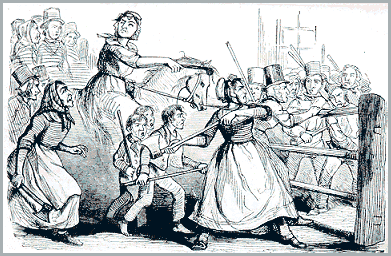
So on May 13th, 1839, a group of men launched a rebellion against the mounting economic inequality, picking toll gates as both their figurative and literal target. Late that night, they ambushed a toll gate keeper — appearing out of the darkness on horseback, making a ruckus with horns, drums, shouts, and gunfire.
The leader and several others were wearing women’s dresses, some even wigs. They set the toll house ablaze and galloped off into the night, disappearing again within minutes. But when hundreds of them returned a month later to fully burn the toll gate to the ground, they were overheard by the guards referring to their leader as Rebecca.
As their riots continued on and off for the next several years, with many of the men wearing women’s frocks and nightgowns as they destroyed toll gates, they would come to be known as the Daughters of Rebecca.
Now, I’m not saying these rioters who wore women’s clothes and nicknamed their leader Rebecca were trans. Or at least, we don’t know how all of them identified. Why is everyone assumed cis until proven otherwise?
Not that anyone in the early 19th century would’ve used the word “trans,” which didn’t really come about in the way we use it now until the twentieth century… but the point is: whether or not anyone involved in the rebellion was maybe feeling some fun gender affirmation from dressing in women’s clothes, that’s not why the Daughters of Rebecca as a group did it. It wasn’t a statement on gender. One possible explanation is simply that it helped disguise them from authorities, with dresses being a readily available “costume” from the women in their lives.
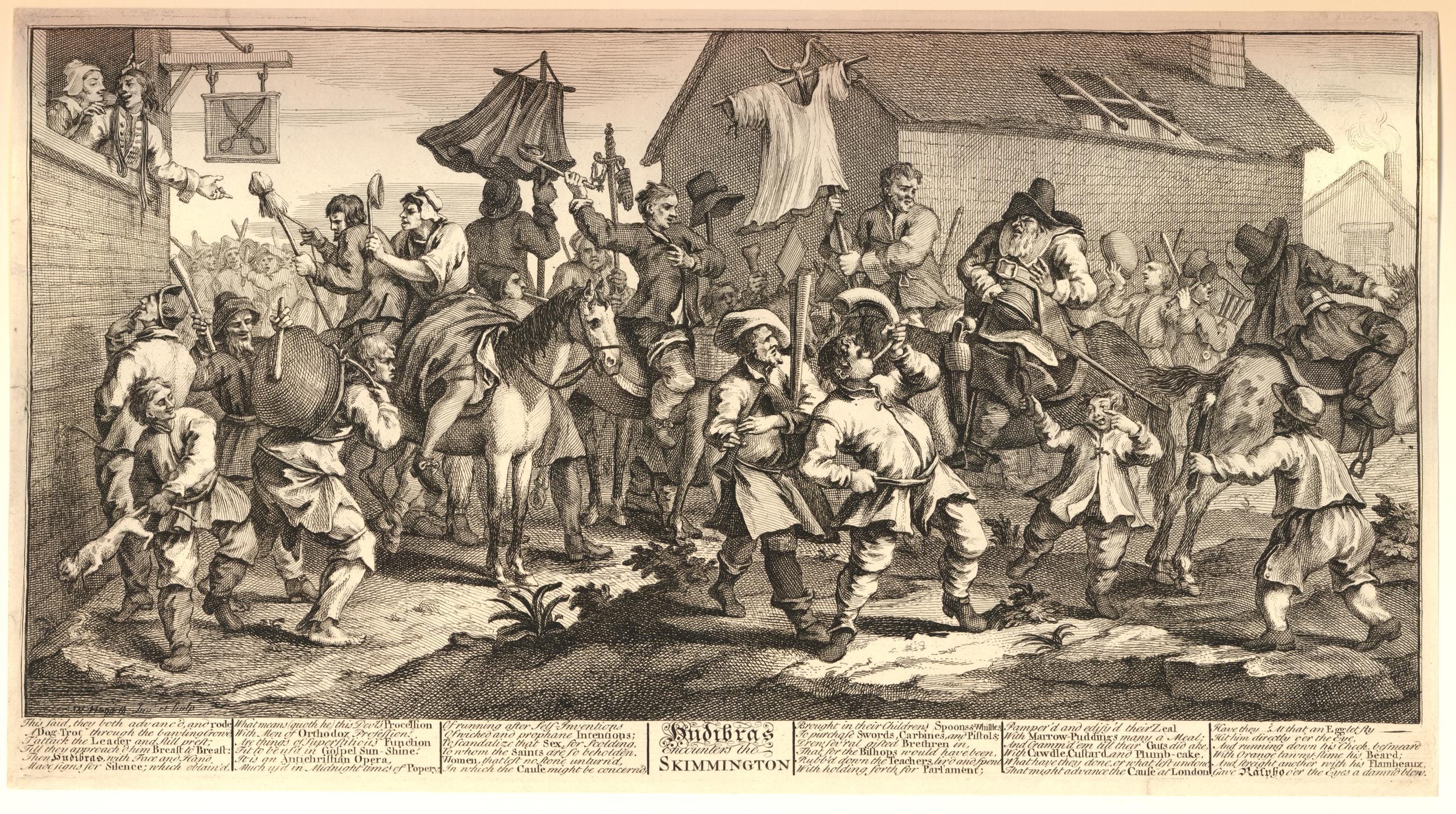
This also wasn’t the only instance of a cross-dressed rebellion. Around the British Isles alone, there were numerous instances going back to at least the 1400s of men dressing as women, and sometimes women dressing as men, as part of a protest—including uprisings in the 1620s against public land being sold privately and a Luddite revolt for labor rights in 1812.
But why did cross-dressing become the fashion of protests back then, like V for Vendetta masks or pussy hats in the 2010s?
Well, apart from convenient disguises, these rebellions were building on a long history of cross-dressing and other forms of social inversion performed on holidays.
Beginning at least with Saturnalia in Rome and continuing through early modern Christmas traditions and other festival days, people would celebrate by turning the world upside down. Boys might get to play as bishops. A common man might be king for the day. Someone might be appointed the Lord of Misrule to preside over the chaos and revelry of the holiday. And yes, people might dress up and play-act as another gender.
It was an important part of ritual and celebratory fun for many populations. But it was a bit too fun for the Christian church.
Now there’s a lot of debate around the extent to which Christian colonizers mapped their religious holidays on top of existing pagan or indigenous traditions in an effort to convert people. So I’m not exactly getting into all of that.
But we do know that, for many centuries in many places, festival practices like “masking” and “mumming” often included dressing as another gender, and that it was one of many aspects of the revelry and loosening of social norms that the church sometimes tried to prohibit.
Occasionally, these festival days would include a bit of political commentary or even bubble up into some kind of direct action. Since there was a feeling of being a bit cheeky or rebellious on these days and sometimes using the cover of the festival to air your true grievances, it’s not too surprising that some people would then incorporate the festival practices into their protests on non-festival days — like the Daughters of Rebecca dressing up to destroy toll-gates and fight for economic justice.
And it should be noted that some local leaders were relatively okay with certain festivals happening as a kind of “safety valve” on society. You give people this one day to let off some steam and do whatever they want, and then maybe they’ll be more obedient on every other day of the year.
Not everyone was convinced by the safety valve theory, however.
A lot of these festival celebrations were coming to be centered around the midwinter holidays and the Puritans, for example, straight-up banned Christmas for twenty-two years in New England due to, quoting Cotton Mather,
“[spending] Christ’s Nativity in Reveling… Masking… mad Mirth… long Eating… hard Drinking… lewd Gaming… [and] rude Reveling.”
I mean, sign me up.
Of course Christmas did not stay outlawed in New England or elsewhere in America, but as Christmas steadily made its way back into the mainstream it had lost a lot of its street revelry and inversion traditions becoming, by the mid-nineteenth century, more of a quiet holiday you spent at home with your family.
And some of that “mad Mirth” and masking shifted a little earlier in the calendar year, combining with other traditions of guising and souling—ultimately developing into an anarchic cacophony of traditions that has resisted definition and evaded legal bounds for centuries. A slippery, devilish beast that became the one holiday that those in power could never fully manage to capture. One day in which old traditions were kept alive in the new. One day in which, by a loophole, queer and trans people have been kept safe: Halloween.
A Brief History of (some parts of) HalloweenHalloween truly is a day of juxtapositions, Frankensteined from a whole mess of different cultural traditions.
Many cultures around the world and throughout time have had ritual observances at this time of year focused either on the harvest, or on the relationship between light and dark as we head into winter, often as an opportunity to remember ancestors and acknowledge our own mortality.
Which all makes sense in agricultural societies when autumn is the time of harvest, providing a bounty of fresh food to enjoy before it all goes to be preserved for the coming year. There’s, hopefully, a lot to celebrate in what you’ve managed to grow and in the start of some well-earned leisure time following many months of hard work in the growing season. It’s a time to take stock of your resources as you head into a harsh, dark winter season during which a good harvest could literally be the difference between life and death.
And so mortality might have been on the minds of people this time of year, as they prepared for the most challenging of the seasons. But also as they looked at the world around them––the days growing shorter, the nights growing colder, and the land growing nothing at all. Leaves decaying and falling from brittle tree branches.
It easily evokes a kind of death. But it could just as easily be a transformation. The changing leaves a new costume the Earth is trying on. And the dark winter a time of rest before a rebirth.
Halloween, as it’s celebrated today in America and increasingly around the world, pulls from many traditions, but perhaps most of all from Celtic ones——thanks to the many Irish and Scottish people who immigrated here prior to the twentieth century.
One of those traditions was “souling” in which people—usually children and/or people from lower classes—would go door-to-door ahead of All Souls Day singing or offering prayers for the dead in exchange for food or money. It’s similar to wassailing at Christmastime when peasants would go to the homes of the feudal lords and receive food in exchange for a song — that’s where the whole “bring us a figgy pudding” line in “We Wish You a Merry Christmas” comes from.
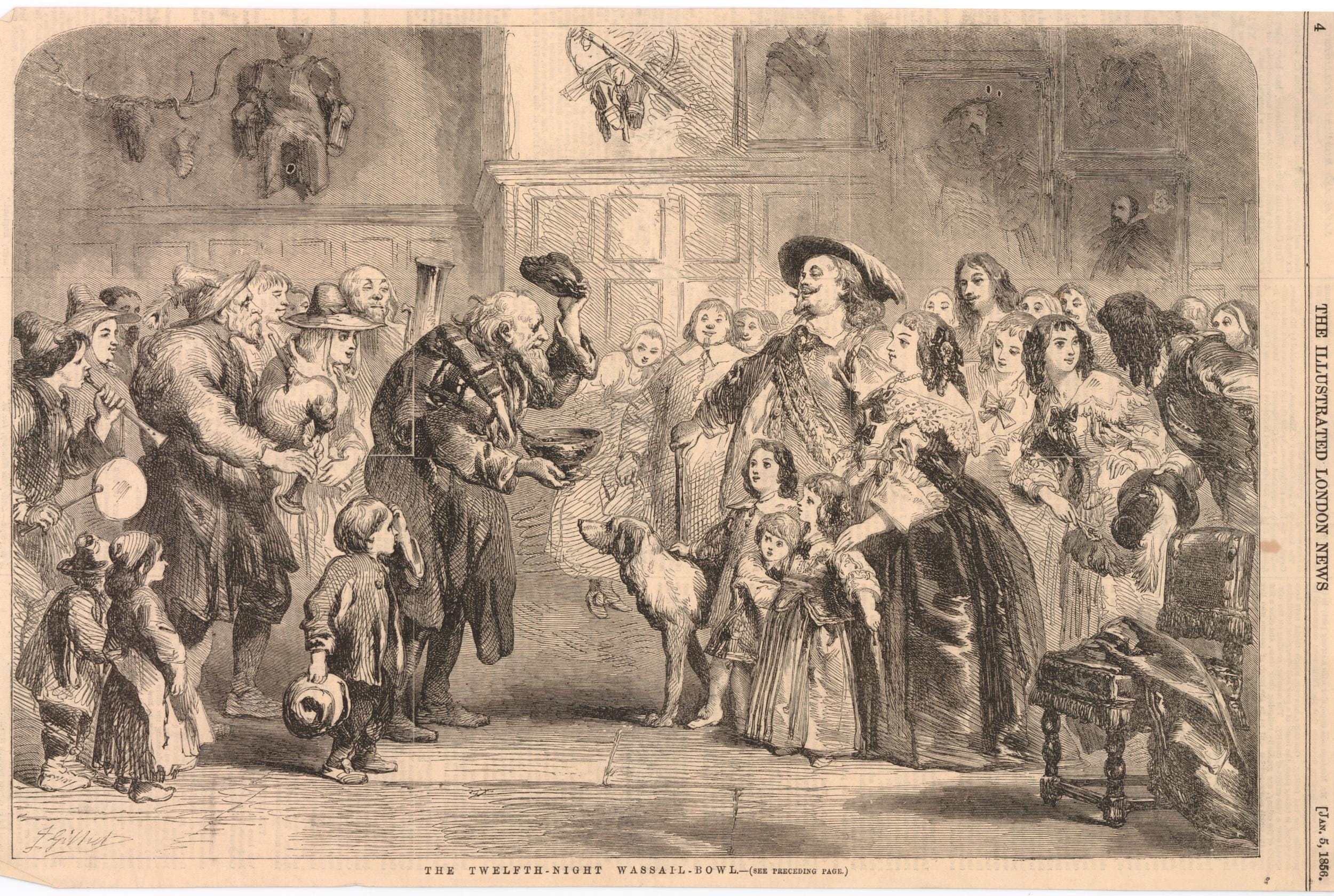
Anyways, souling, and wassailing, go hand in hand with the mumming I mentioned earlier, which sometimes involved, not just getting dressed up, but singing outside your neighbors door before joining the party inside.
Souling, in some parts of Scotland and Ireland, evolved into “guising,” which then included dressing in costume, or a disguise, and instead of praying for the dead, kids would now perform some kind of talent, or trick, in exchange for some kind of treat.
Some have argued that this harkens back to even older traditions, in which people would wear some sort of disguise to hide themselves from the spirits who were free to roam the land of the living during Hallowtide.
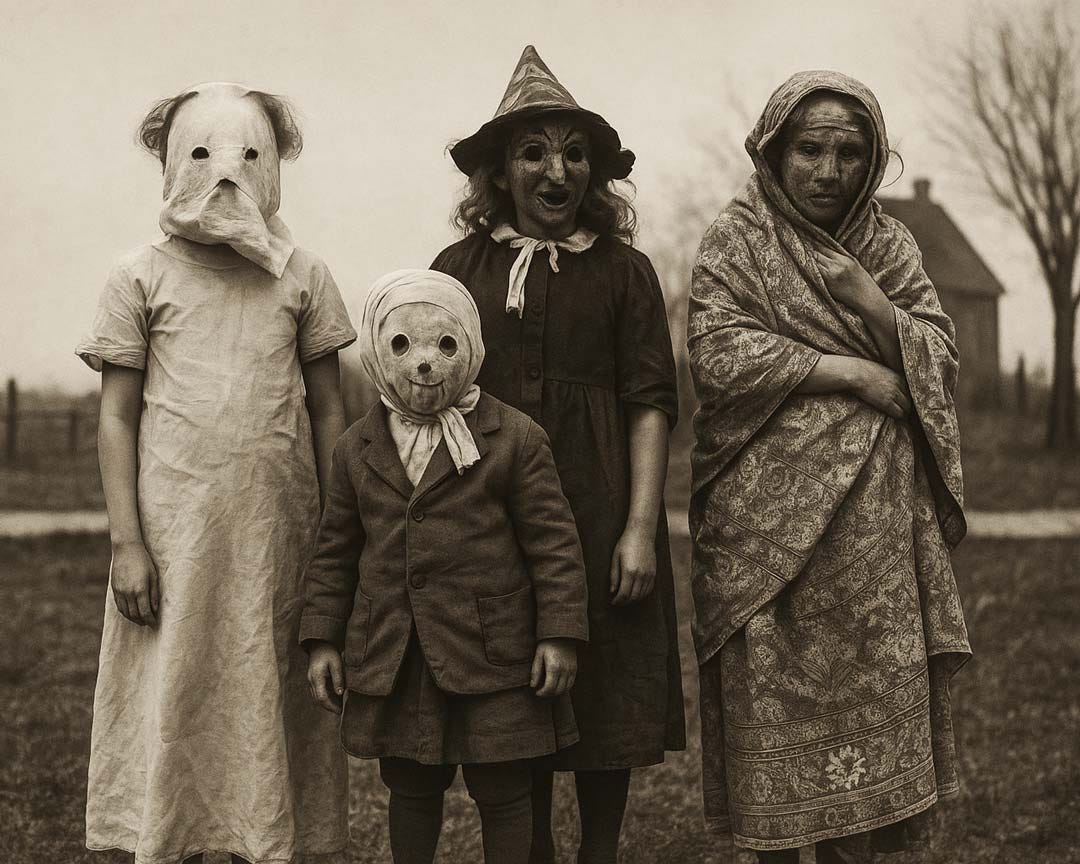
It might all sound rather quaint, going door-to-door to sing a song and being given a bit of cake in return. But it did occasionally get out of hand. Particularly throughout the 19th and early twentieth centuries, this custom often became an excuse for groups of mostly young men to level destruction if they weren’t given “treats.” And sometimes the exchange was abandoned all together, with simply the night of Halloween itself being the reason for mayhem, and violence.
To try to curb this destructive behavior, Americans attempted to sanitize the holiday. Trick or treating was emphasized as being for younger children—no exchange needed, really please no tricks, just dress up and be given candy. And families were encouraged to host parties for children and teenagers to keep them off the streets and out of trouble. This worked to a certain extent. Violence on Halloween decreased significantly by the 1950s, though it didn’t go away completely, and still hasn’t.
Halloween Becomes Gay ChristmasBut nonviolent festival-style celebrations were still happening among adults, especially in cities.
Halloween continued to be a day that evoked mischief, ambiguity, and turning social norms on their heads. And if you were a person whose very identity was alleged to be against the laws of god and man, wouldn’t you find a night like that at least a little enticing?
A night when you could play out your wildest dreams, or simply blend in for once. A night when the oppressive social order was disrupted, when the impossible felt possible, and when people danced in the face of death.
Halloween is “a cultural collision… between glitter and grave dust.”
— David J. Skal
As gay communities started gathering in public spheres in the first half of the twentieth century, largely at bars and drag balls, Halloween became a tent pole event.
Notably, in Philadelphia in the 1940s and 50s there used to be an annual event called Bitch’s Christmas, in which hundreds of drag queens led a kind of cross between a bar crawl and an unofficial parade that used to attract thousands of spectators, gay and straight. And because the city was at least socially segregated at the time, some of the Black drag queens soon started their own parade on South Street.
In a way, it’s not too surprising that Philadelphia would’ve been on the forefront of queer parades considering it’s home to the annual Mummer’s Parade each New Year’s Day. Founded officially in 1901 and still running to this day, it pulls, in part, from the same mumming, or dressing up in elaborate sometimes cross-gendered costumes, I mentioned earlier.
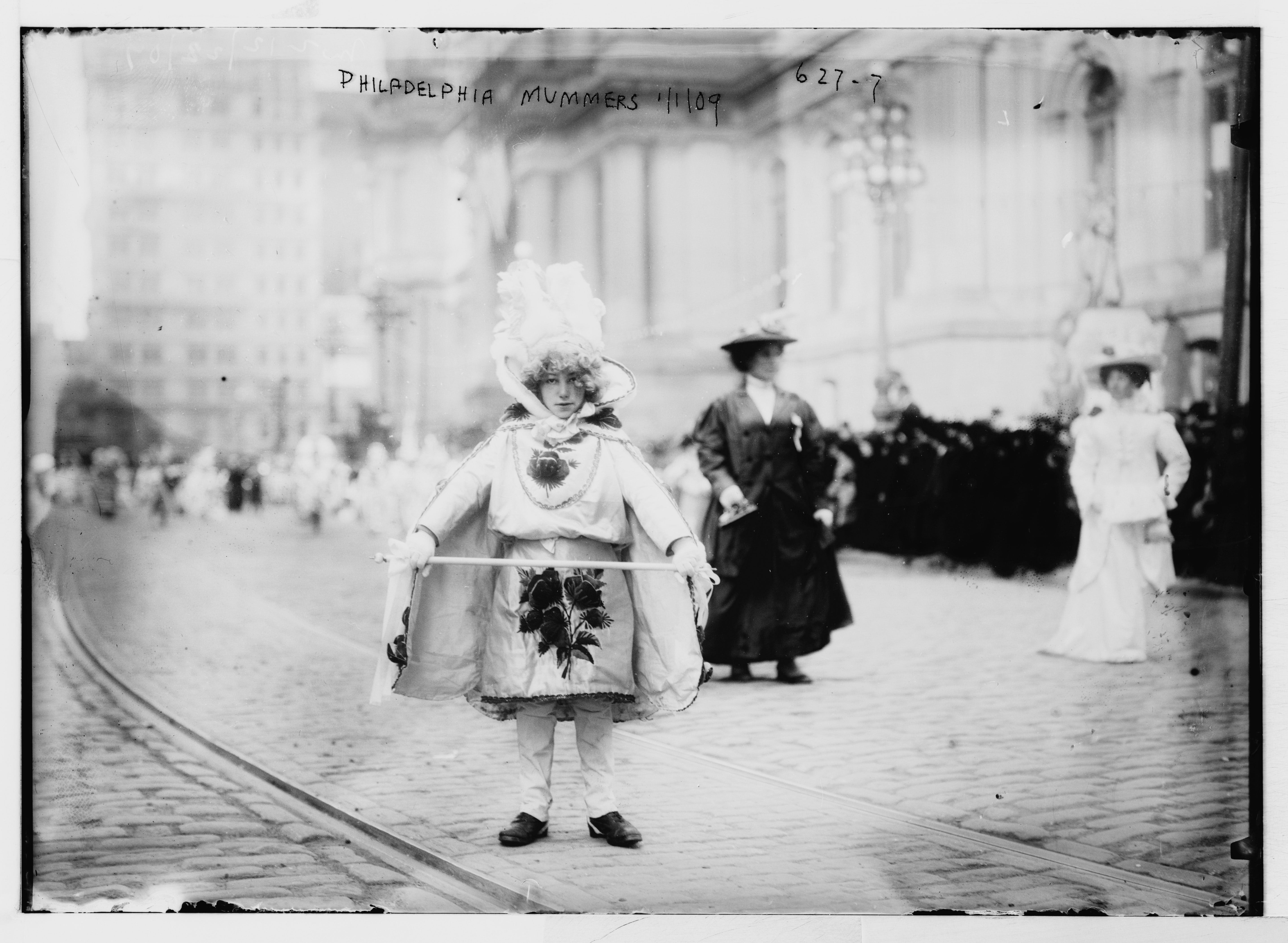
The Philadelphia Mummer’s Parade is not without controversy, especially in the kinds of costumes participants try to get away with, but the fact that it was a long established local tradition already in the 1940s probably helped make Bitches Christmas seem like less of an oddity or scandal.
And it’s notable that a public gathering of queer, trans, and gender nonconforming people was happening in the 40s and 50s because that pre-Stonewall era was particularly tough.
From 1848 until the early 1900s, dozens of US cities passed laws prohibiting cross-dressing. Usually these were a part of broader laws against various forms of public indecency, but they were used to arrest people for not conforming to their birth assigned gender presentation. These arrests ramped up in the 1950s and 60s, as gay communities increasingly gathered in public spaces.
Anecdotal accounts tell of people being arrested if they weren’t wearing at least three articles of clothing of their birth assigned sex. This was often used as a way for cops to harass and arrest queer and trans people even when they didn’t otherwise catch them engaging in or soliciting sex—which was still illegal among same sex partners in every US state until 1962 and in some of them until 2003.
But you know what day it’s nearly impossible to police people on the basis of gendered clothing?
Halloween.
It became a night when trans and gender nonconforming folks could breathe a little easier. Either they could dress in ordinary attire as they truly wanted to without as much fear of repercussions, or they could take the opportunity to explore their appearance in new and ever more magnificent ways.
But like Cinderella at the ball, as soon as the clock struck midnight, the spell was lifted and the cops would be on the prowl again.
Magic and fear, the opposing forces of Halloween.
Just like early modern rebels combined festival practices with political riots, queer and trans folks in the twentieth century knew how to use humor and art to effect political change, even on deadly serious topics.
Apart from simply showing up as your whole self being a political act, at the Halloween parades and gatherings that proliferated throughout North America in the 60s onward, you’d see costumes used as political satire, signs snarkily raising awareness on current issues, and sometimes direct action.
Like the Women’s International Conspiracy from Hell, or W.I.T.C.H., a decentralized feminist group that marched down Wall Street on Halloween 1968, dressed as witches, to emphasize it as the site of corporate greed and women’s persecution.
There was also an off-shoot of Queer Nation called the Grand Homosexual Outrage at Sickening Televangelists, or G.H.O.S.T., who led the counter-protest against thousands of “prayer warriors” who tried to invade the San Francisco Halloween parade in 1990.
The parade on Castro Street had been the site of anti-gay violence for decades. In 1979, Community United Against Violence was formed as a mutual aid effort year-round, but particularly assisted in keeping the Halloween parade going by training volunteers to spot weapons, de-escalate conflict, and provide first aid.
Also founded in San Francisco were the Sisters of Perpetual Indulgence, a drag group who dress as nuns, and who took over organizing the parade in the 90s after the mounting violence and challenges with crowd control threatened to cancel it. The Sisters also fundraised to keep the parade running and for causes like earthquake relief and AIDS-related charities.
WITCH, GHOST, and the Sisters of Perpetual Indulgence adopted a persona, got dressed up, and then went out to fight for their rights… just like the Daughters of Rebecca two hundred and fifty years before them.
And no, the Daughters of Rebecca may not have been queer. I don’t even know that any members of WITCH were queer—it was just a feminist group, not a specifically queer one. But to me, the ways they and the Daughters of Rebecca and other cross-dressed rioters over the centuries transgressed social norms make them a part of queer history.
Queer has so many definitions, but I like this one from Patricia Kaishian in her book Forest Euphoria: The Abounding Queerness of Nature,
Gay Halloween Today, An Invitation“…‘queer’ is a call to action, charging us to reject the many binaries that shape our current reality to the detriment of everyone. And while ‘queer’ is used primarily to describe categories of sex and gender that are not considered ‘normal’ in today’s culture, the term can also be used more broadly for anything that complicates our ideas of what is ‘normal’ versus what is ‘deviant’… ‘queer’… summons a spirit of camaraderie and a history of defiance.”
While Halloween continues to be important in the queer and trans community as a day in which some people might feel more safe to explore their gender expression — or simply as an excuse to blow off steam, be a little goofy, gather together, and engage in the time-honored gay tradition of themed parties… Halloween in gay communities since the turn of the century has become less political than it was throughout the 1900s. Largely because being gay in public became less political.
But that’s changing.
Times are getting dark again. Our rights as trans people are being systematically stripped away and the hard-won rights for cisgender gay people are under threat as well.
I felt a lately-alien sense of hope earlier this month when I saw the huge turnouts at No Kings protests even in the small towns near me. And I had to laugh a little at the timing, as I watched one harvest festival on a town commons end promptly at 1 PM so the protest could set up.
Halloween and protest; irreverence and justice going hand-in-hand once again.
Just like Halloween has never successfully been pinned down or stamped out, queer and trans people have persisted. We are resilient. We are defiant. We join together in the face of impending darkness and we find the light. We find the joy and we laugh at the ghouls and the malevolent spirits—knowing that darkness of winter is nothing more than the promise that spring will come again.
So as the air cools and the days get shorter, we summon the strength of our ancestors. We look to them as guiding lights, lanterns in the autumn twilight. We don their masks of courage, and we keep their traditions of resistance alive—believing, as they did, even if just for one night, that a better world is possible.
And so I say to you, with the utmost sincerity…
Happy Halloween.
End NotesThat “glitter and grave dust” quote is my all-time favorite line about Halloween and comes from David J. Skal’s Halloween: The History of America’s Darkest Holiday. His was the first history of Halloween I read and it remains my favorite. Skal was the pre-eminent scholar of horror films and incredibly well-loved in the horror and Halloween communities. On New Year’s Day of 2024, he and his husband Bob were killed by a reckless driver in California. In keeping with the holiday’s theme of honoring the ones we’ve lost, I wanted to share this obituary and encourage you, even more strongly, to check out some of his books.
And you can view the full works cited for this piece on my Patreon. The works cited is a free post, but if you’d like to support my work, you can subscribe to my Patreon to access a bonus video with some more Halloween facts that I couldn’t squeeze into the main video.
master of none
If you want to hear me talk about Halloween even more, I made a guest appearance on Not Sorry’s final season of Harry Potter and the Sacred Text discussing Halloween themes in the books. If you’re listening to this podcast in realtime, that episode might not be live just yet so just keep an eye out on the Sacred Text podcast feed. And as per usual when I mention my work with Harry Potter and the Sacred Text, I’ll also drop a link in the show notes to my blogpost about why I still participate in that podcast and everything I’ve ever said against both the franchise and its author, the Queen of TERFs.
On a lighter note, I recently started streaming weekly on Twitch. Every Monday at 6 PM Eastern time, I stream for a couple of hours while doing some cross-stitching. I encourage other people to bring projects to work on as well and we have a nice cozy time crafting together as we ease into the week. So if that sounds like your kinda thing, come join in on Mondays at 6 at twitch.tv/jackisnotabird.
And if you are a crafty kinda person, you may be interested in this round-up of some of the cross-stitch projects I’ve completed over the last couple of years or this short video series in which I’m using cross-stitch to track the books I read each year on a mini bookshelf.
I also started another short video series focusing on what I’ve learned from the wonder of everyday life. Here’s one from the summer.
Until next time,
Jack 🎃





 Tiktok failed to load.