I’m not sure if it helps anyone—I’m not sure if it even helps me, but for the past couple years, whenever the world has felt especially topsy-turvy, I’d think well, everyone is a loser right now.
Show full content
I’m not sure if it helps anyone—I’m not sure if it even helps me, but for the past couple years, whenever the world has felt especially topsy-turvy, I’d think well, everyone is a loser right now. Because everyone is a loser. The world’s richest man. The president. Everyone…
Everyone in culture industries. Those kind of shadowy figures, “producers” and “execs,” the kind you’d hear about from the 80s or 90s or even the 00s or 10s, who could ruin your career if you crossed them—who has that power today? Perhaps some people have constructed Good Bye, Lenin!-style but evil simulations of 2003 or 1983, and believe they still have that power now, but you can only lie to yourself for so long. Like I said, I don’t know if it helps, but I have found myself thinking about power differently lately as I realize there are no kings, if there ever were—just people who represent ideas with purchase over the minds of others, with hands on various levers to reach these minds. Levers that have grown rusty.
Some of the fake kings have money. Many are burning to the ground their own industries—the sources of what had been their clout and prestige to weed out what they call “wokeness,” even though, ultimately, they couldn’t care less if sitcoms are diverse or not, not even about pronouns. What they fear is what every rich person fears: justice and accountability. They have been so coddled, so isolated from the world, that sarcastic tweets from random people felt to them like the blade edge of a guillotine. Wrath toward the greater public—a public they must court if not serve, has come back to them in the end, as voided cultural capital and waning influence.
The remaining culture industries with budgets will cut checks to the worst possible people. Those who cared have left or were forced to leave, and the ones who remain have stopped pretending. Meanwhile, as AI slop enters institutional spaces, in the absence of curatorial instincts, exhibition is reduced to merchandizing.
There’s actually a fucking Beeple exhibition at LACMA right now. I went to LACMA to walk around, to escape the cynical world represented in the noisy apps on my phone. It was a little depressing to see it there, taking up space, expressing nothing but empty spectacle. When that same room, containing a work of art instead of a gag or bit (or whatever you call a Beeple), could offer solace, an experience of connection and meaning. Something that can change your life or make you think or take you out of this gray world for even a minute or two.
For those of us who care about art and books and, at some cost, both the continued production of new work and survival of what has been made, this is a challenging time. But from my tiny perch here, I encourage anyone reading this to stop playing rigged games. The first step is in realizing what’s fake is fake. Why legitimize institutions set on dismantling their own institutional memory? What is the money worth to you when you count all the strings attached? What can you do with your time and attention and care other than fight for charred crumbs among people who might otherwise be your friends?
As an author, I’d like nothing more than to write another book and throw it out in the world, letting it land where it lands; but finding readers doesn’t work that way. Maybe it does for like Rachel Kushner or Sally Rooney, but for the rest of us, there are various broken ecosystems to navigate. An emerging writer has to think about how they want their book published, an emerging filmmaker has to think about distribution, an artist has to think about gallery representation and how to engage with institutions. Neglecting what choices you do have, is where the despair sets in.
There aren’t many choices or great choices, but these are still choices. I think of it as part of the process now, finding the natural way forward for the work.
What does it take of me, with as little as I have, to stick to my principles, to endure when times are lean and hard?—and not just endure on my own, but to give back. Because everyone has to give back. Culture doesn’t happen alone.
The thing I’m always looking for—in art, in life, in general—is something that cuts through the noise.
Show full content
The thing I’m always looking for—in art, in life, in general—is something that cuts through the noise. In art, it’s when I feel the asynchronous presence of another. Someone was really there, alive and present, when they made it and when I look at this work, or read it, or listen to it, I’m really there too.
Another way of saying this is being present is a requirement for making something great.
This isn’t how people talk about art making. Typical writing advice is: butt in chair, write every day, 1,000 words a day (500 if you’re really swamped). Now I get an allergic reaction whenever I see some quote from a Paris Review interview on Instagram with a million likes where an acclaimed writer talks about how they write every day. I think this content goes viral because it breaks down something inexplicable, practically sacred—a classic novel—into a series of instructions. Do this, then this, then this, and by the end of it, you’ll have a novel.
I’m finishing up my next book (well, next two books—more on that later), and to get here, I’ve had to unlearn a lot of this encouragement—the belief in writing as a rote process. I brush my teeth at least twice a day and this isn’t leading me toward a masterpiece of teeth cleaning. I’m almost never paying attention to the toothbrush in my mouth. Maybe never.
If I can’t be present on the blank white page, if I’m typing to meet my word count for the day—just typing because I have to, checking it off a checklist—how can I hope to express the presence that cuts through? So that someone else, years and miles from when I am at this laptop, can feel it too?
The other part of this is making sure I’m in a place to receive the work that cuts through. I’m seeing a lot more movies in theaters lately because if I’m willing to give it two or three hours of my life then I can’t let my phone shield me from the possibility of this work cutting through.
I can’t always tell if something cuts through the noise and reaches someone else. But I do know what cuts through to me and this work doesn’t come around very much. I have to put effort into it just to be in a place to receive it. That’s a vulnerable position to be in. It’s easier to laugh at artifice, appreciate something viewed diagonally, rather than sit quiet and open and welcome the possibility of a transformation in you.
This might sound romantic and it should. Something that cuts through the noise also seduces. I’m usually floating around unfocused and locked into a life where I think I know what’s about to happen and what’s expected of me. I can have the same conversation three times in a day with three different people. What’s better than something or someone who anchors you to the present and makes you wish to experience minutes as minutes rather than seconds or hours?
Finally, what frustrates me the most in art right now are the cynical attempts to be political. This work isn’t present to the moment, it isn’t channeling responses to crises—courage, fear, resistance, despair. Instead, well-worn buzzwords gesture to the moment and force significance when only cynical intentions led to the creation of the work itself.
I think I might write a second part to this, but here’s what I’ve got so far.
There’s a line in Little, Big about how every holiday season feels like a continuation of the last.
Show full content
There’s a line in Little, Big about how every holiday season feels like a continuation of the last. I read the book many years ago and at this point, I can’t say whether it actually resonated with me, or it was such a vivid image that I started to experience holidays by these terms. I imagine it like slipping into a portal where the previous 51 weeks shake from memory and you return to the warmth and conflicts that you had stepped away from exactly a year ago.
At least, I think there is a line about this. I grabbed a copy from a bookstore shelf a few Christmases ago, looking for it so I could quote the exact words—remembering vaguely that it happens somewhere in the first few chapters—but I couldn’t find it. I’m going to have to reread the book at some point.
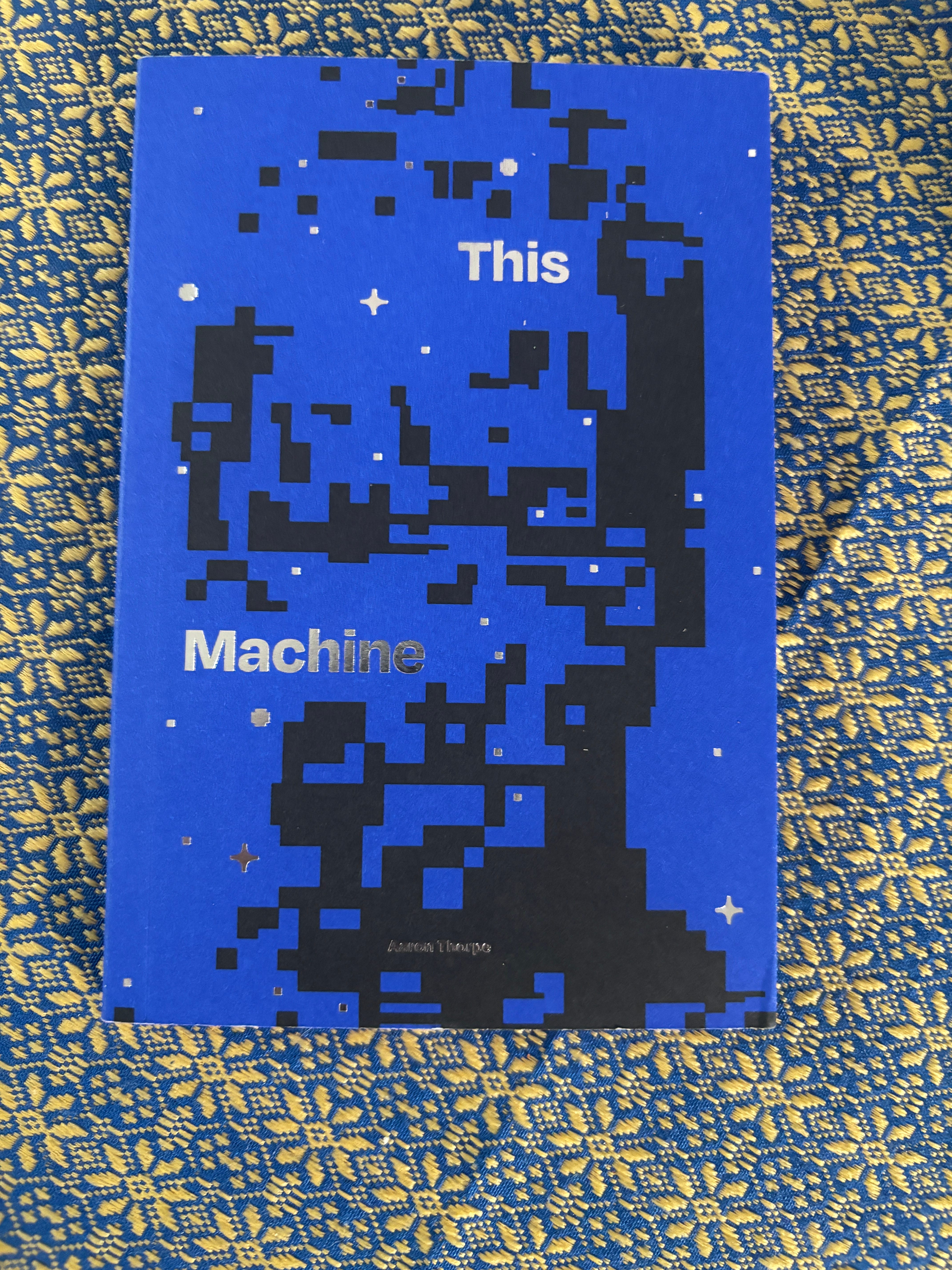
A book I think everyone should read is This Machine by Aaron Thorpe. And also buy because it is a really beautifully made book. He’s writing for and from the 22nd century—it’s been so long since I’ve read genre fiction that’s genuinely pointing future-wards, that’s genuinely surprising and smart. If you like JG Ballard and Philip K Dick— if you like good books, in general—you should read this and be on the lookout for more of his short stories. (Here’s a great one).
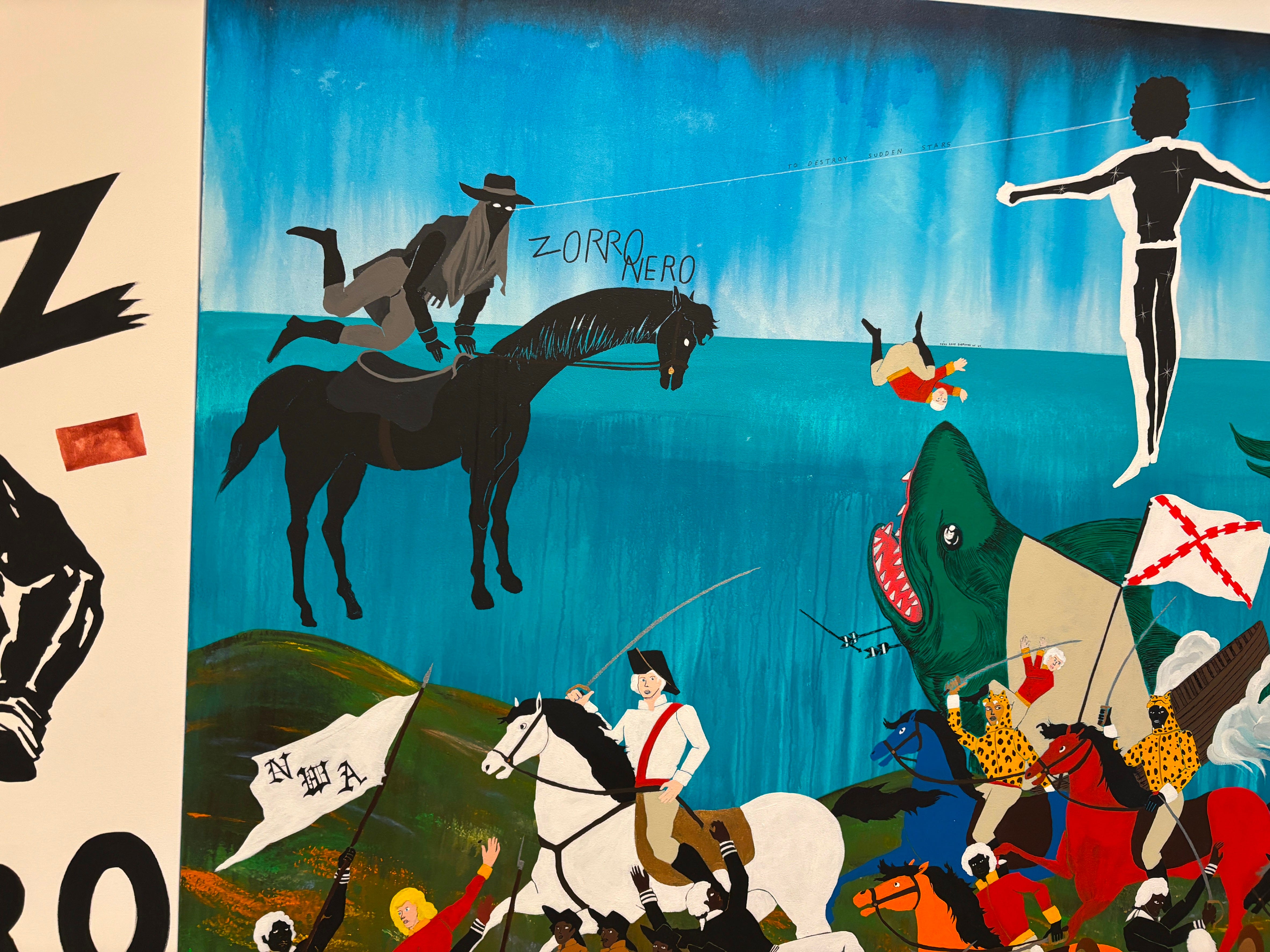
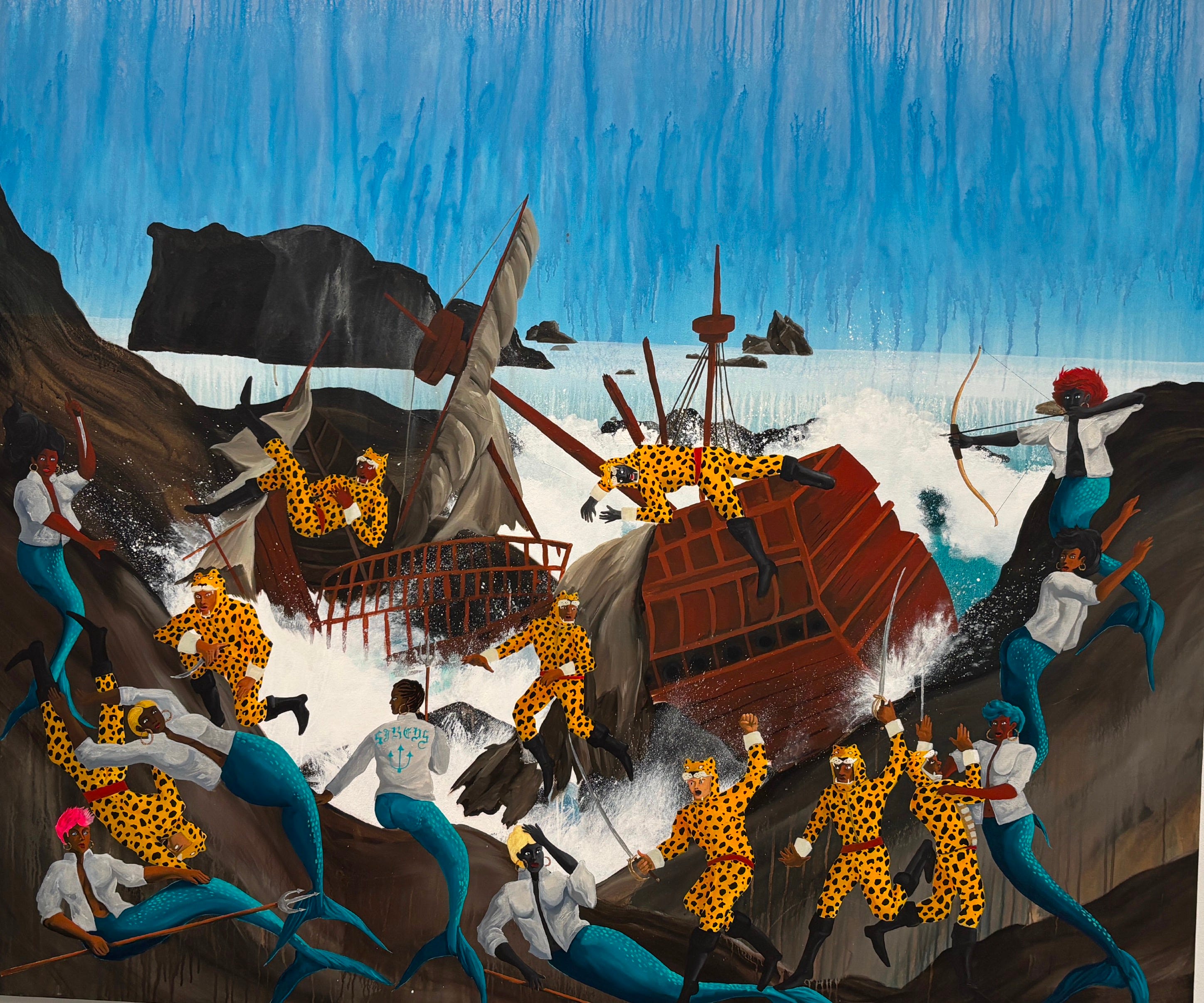
Something else I very much enjoyed recently was the Umar Rashid show at Blum. Just look at this—look how much fun he is having (while also being a genius!!)
I had some other notes and things to share, but at this point, all I want to do is sneak into the holiday portal and forget what came before (just for a little bit).
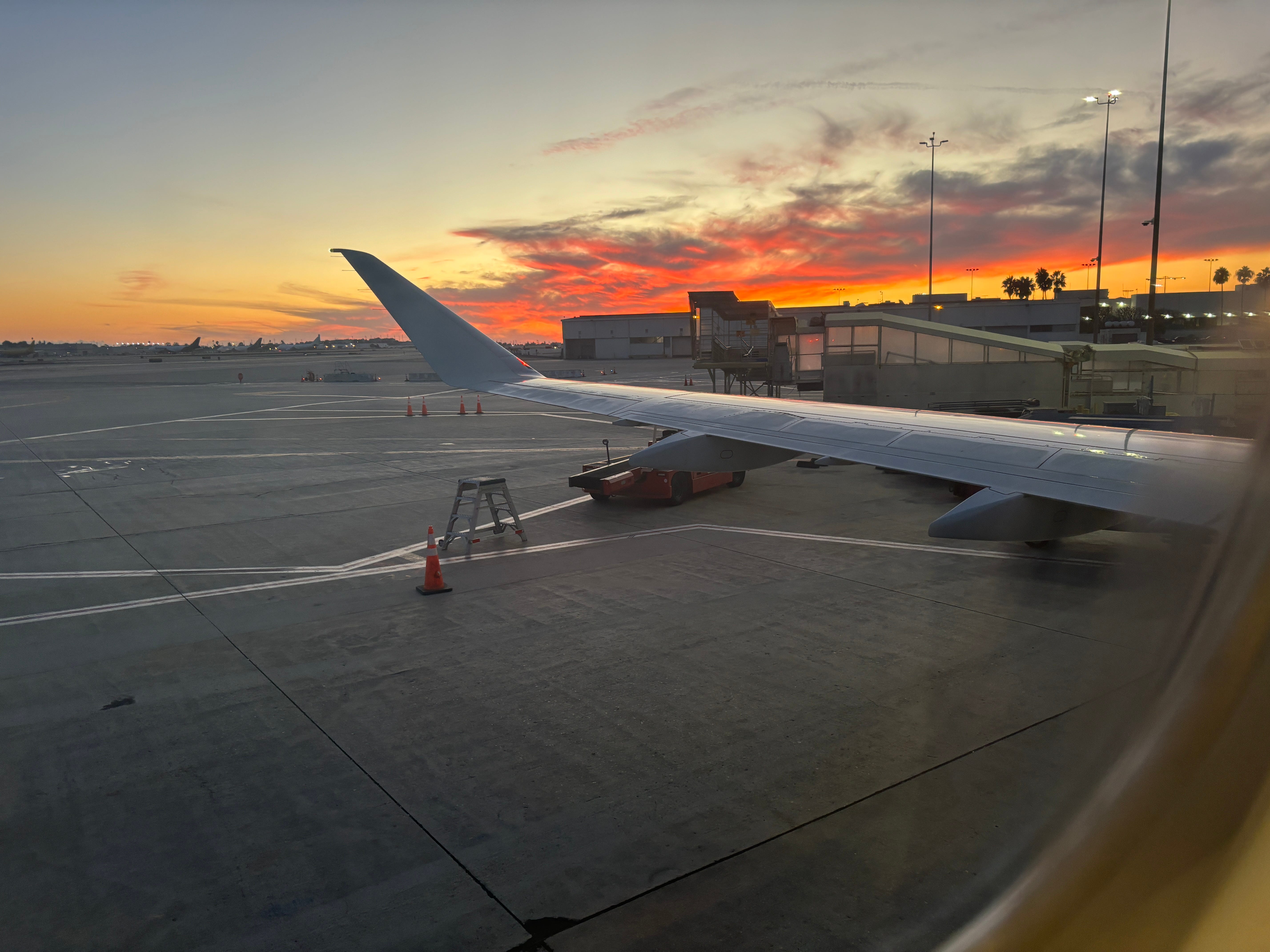
A few weeks ago, I got off a plane and instead of going straight to baggage claim, I stopped at a table and sent an email.
Show full content
A few weeks ago, I got off a plane and instead of going straight to baggage claim, I stopped at a table and sent an email. When I got up, I realized I wasn’t in the main concourse. The plane had landed at the remote terminal. And I’d just missed the shuttle out.
I waited beside a group of crew members still in their uniforms with their tiny TravelPro suitcases. Their shuttle came several minutes later. I wasn’t allowed on it. The security guard must have called someone to pick me up. It took another several minutes. I was expecting a golf cart or a truck, but the vehicle that arrived was huge. Big enough to fit everyone on the shuttle plane that arrived. Maybe it felt huge because I was boarding it alone. It was just me and the driver.
If I had taken the shuttle when I was supposed to, crunched between the elbows of strangers and carryon suitcases, I might have spent the time glued to my phone. But since I had a whole shuttle to myself, what could I do but look out the window.
It was night but the tarmac was illuminated with spotlights and lights from vehicles and planes. These giant jets were taking off real close on either side of me. I’d never seen a plane that big up close at lift off. The shuttle ride took about fifteen minutes because the driver had to stop pretty regularly to let these jets pass into the runway or let other vehicles pass. But I didn’t mind because I was stunned by what I was seeing out there.
I remember thinking the driver was young and handsome and that maybe he had aspired to be a pilot but ended up doing this instead. But I don’t actually remember the driver at all.
I also remember thinking about what a cool job he had, to get to drive through all of this, night after night. Most of the time I experience airports like nonplaces—as borders and barriers between me and my destination—but sometimes, say, a flight gets delayed, I’ll notice how an airport operates like its own city. Hospitals are like that too. Most of the workplaces I’ve experienced—from restaurants to offices—have been intimate like fucked up families I’m stuck dealing with or alienated from; I’ve always wondered what it must be like to experience a city-style workplace: where you are part of the rhythm and have a defined role to play in a section that also has a defined role. I noticed when I got off the shuttle, how many people in hi-viz tabards there were at various points. Because I was alone, they each said hi to me and directed me where to go.
The whole experience left me thinking about how one tiny action can go differently—someone can stop to send an email—and it can throw a process off. And that throwing a process off isn’t always a bad thing. I got to the baggage claim alright. I was, by that point, about forty minutes late, but the airline held my suitcase behind the desk. It all worked out, and plus, I now have this memory of how I accidentally went on a safari through the airport at night.
This is the second time I’ve had a vivid and life-giving experience at LAX. The first was on July 4, 2007. I was traveling to LA for the first time. I was reading William T. Vollmann’s The Rainbow Stories, a book I have yet to revisit but my foggy memory and distant appreciation of it has fueled much of my writing lately.
So I flew in on Independence Day because the ticket was cheap and what I got, before I landed, was….fireworks. But not fireworks that I knew before: from the ground, looking up. I saw fireworks out of the window as little sprinkles above each neighborhood. I was looking down on the fireworks, which from that vantage point, were candy-colored twinkling explosions beneath me in the sky. The way that houses look flat and small from the air, well I saw that, and above those little houses, little fireworks. From my window, I saw patchworks of communities spreading out to the Pacific Ocean. Every neighborhood, every suburb, every community that I could see had these little fireworks going off beneath my feet.
I came home to postcards from people thanking me for voting and telling me to tell five friends to vote. It was a couple days before the election and these postcards had struck me as ominous. I live in California now. How did the Democrats have that much volunteer labor and nowhere to direct this flow of energy and enthusiasm than postcards to Californians who already voted?
I rewatched Take Shelter last night, a movie I like and admire rather than love, but I admire quite a lot. Along with Wendy and Lucy, I think it’s one of the best films to express the bewildering despair of the Great Recession. You can’t really set out making something about the now, it has to happen. And for both of those films, it really happened. This is an obvious one, but I think ten years, when we try to put our finger on what was in the air, around this time, well, Killers of the Flower Moon is going to one of those works that help us remember. And Nightmare Alley.
Two podcasts you should listen to if you have the time, which, in very different ways reveal where the seams of our world are splitting:
The Wall Street Journal Reports on the current state of supply chain crises through the lens of grocery store distribution. How a new granola gets on the shelves at Whole Foods is a lot more complex than you might have thought
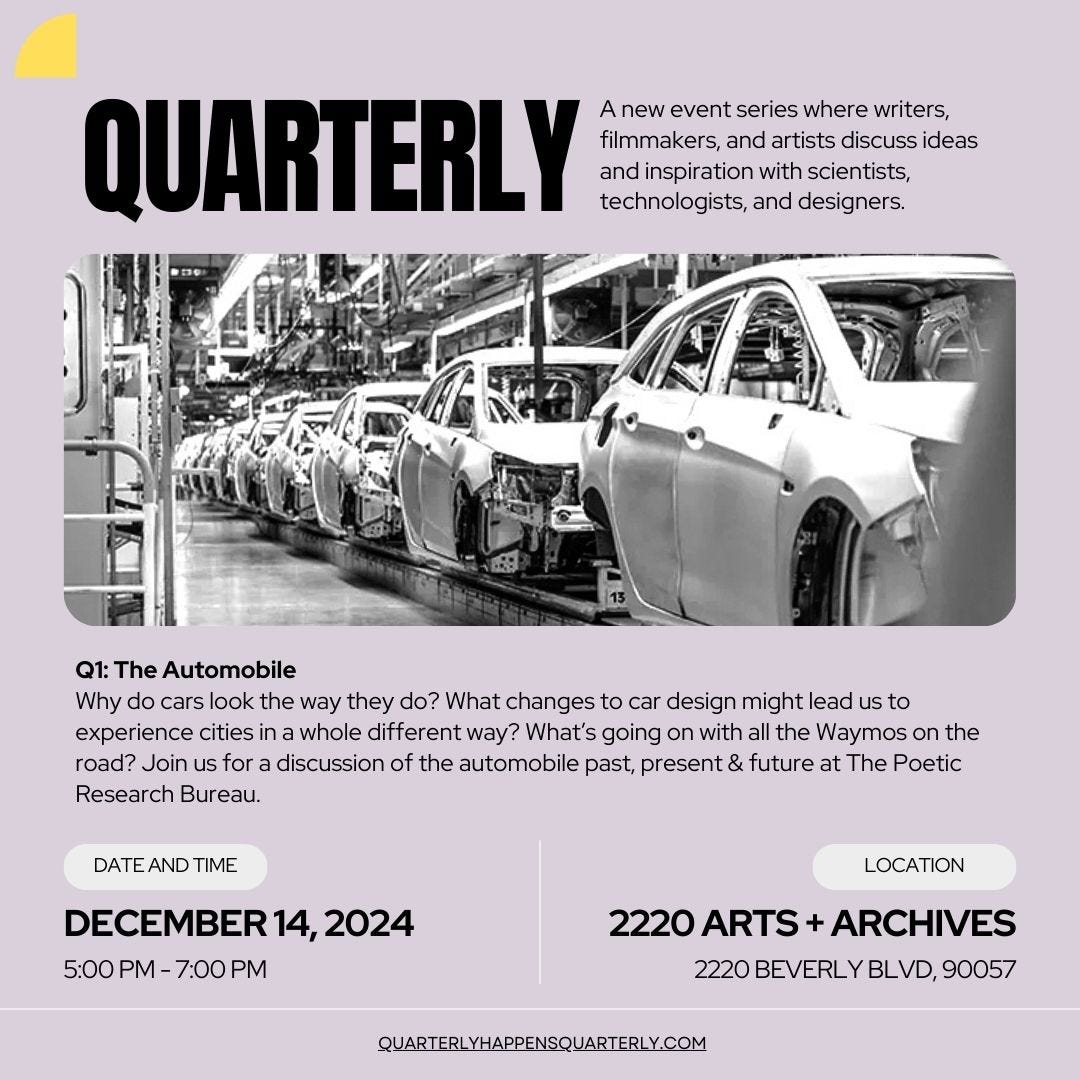
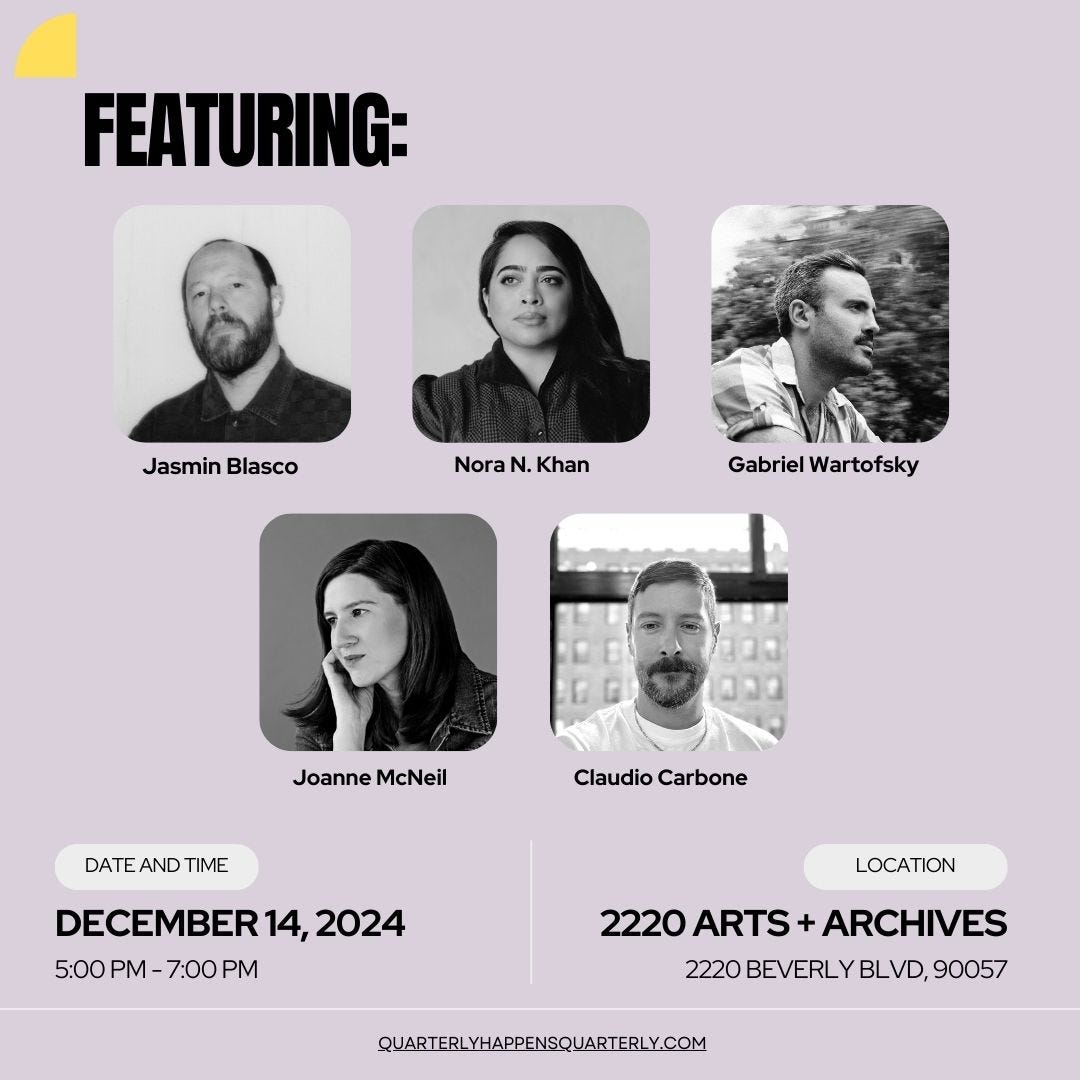
If you are in LA on Dec 14th, please come out to The Poetic Research Bureau for the first of a new event series I’m putting together called Quarterly. You can find out a little more about the event and this series at the website: quarterlyhappensquarterly.com
Something that often frustrates me about books is how siloed the community of authors and readers can be, and I wished for a space where books can be part of broader culture including the culture of science and technology. This is my attempt to create this space, inspired by conversations I had with the artist Jasmin Blasco, who is currently working on an incredible installation interrogating AVs.
It’s also a way for me to stay curious about the world. Something I really need right now.
There will be at least four more of these events. Four in 2025, for sure. Please reach out if you might want to get involved or subscribe to the mailing list.
Recently I had the privilege of writing an introduction to Lori Emerson’s forthcoming book, Other Networks. I can’t recommend this book enough—for you to preorder the book enough. For years, both in her scholarship and work at the Media Archaeology Lab, Lori has produced thoughtful and engaging work exploring the history of networks and encouraging people to think expansively about what we even consider a communications network to be.
Her publisher, Anthology Editions, has put great care into this publication. Just look at the gorgeous cover by Robert Beatty:
For Filmmaker Magazine, I profiled Bill Shaner and his projects, Rewind Video Store and the newsletter, Worcester Sucks But I Love It. It might seem like video stores and alt-weeklies are things of the past, but Shaner and his collaborators are showing what’s possible when it comes to community media and cultural activity.
I also wrote a piece on the 40th anniversary of Neuromancer and the legacy of cyberpunk. For my research, I read and watched and listened to just about every early interview with William Gibson that I could find. One of the interviews—a radio broadcast—stood out. The host was R. P. Bird, a broadcaster in Wichita, Kansas in 1987 and you can listen to the incredibly transportive audio on the Internet Archive. I was listening while I was washing dishes in my apartment on a quiet Sunday night, in 2024, of course, but I kept thinking what it must have been like, to be driving around Wichita in 1987 and turning radio dial through static before landing on this mind-blowing conversation between two people who sound thoughtful and kind.
I was curious who R. P. Bird was—this lighthouse keeper, this beacon of books and the future for people within the range of a broadcast out in Wichita— and sadly, first thing I found online was his obituary. (“He taught History at Butler County Community College and wrote for many magazines and published some Science Fiction books. He returned to Greensburg to care for his parents until the 2007 tornado caused him to move his mother to Hutchinson, Kansas.”) A book he wrote about the tornado, you can also read on the Internet Archive.
#
You owe it to yourself to see Megalopolis on as a grand a theater as possible. For me, it was the Chinese Theatre in Hollywood. If ever there was a movie made to see at the Chinese Theatre, it’s that one. It has the heart and soul of a post you vaguely remember reading on Ribbonfarm on your lunch break in 2006, and style somewhere Streets of Fire and that painted landscape where Gene Kelly danced with Cyd Charisse and her billowing veil. Movies like this don’t come around all that often. People with conviction like this don’t usually have the money to make movies like this. It’s an event. Is it good? Is it bad? Who cares. Don’t miss it.
#
Everywhere I look, I see cheat codes have stopped working. Maybe this will be my next-next nonfiction book: WHEN THE CHEAT CODES STOP WORKING. What I mean by this is organizations that have, for years, coasted on tricks and loopholes to work around bureaucracies, but the fundamentals get them in the end. New cheat codes are written, and those stop working too. Finally, it’s game over.
I’ve also been listening to a podcast by someone who worked as a buyer at a popular clothing chain. She talks about the logistics of retail from the warehouse and shipping of garments to the environmental consequences of overconsumption.
The episode on sweaters is especially great because it dives deep into supply chain issues: everything from how product orders and distribution work to how labels decide on what yarn to use. At 1:04ish into the episode (the episodes tend to be quite long), the host tells an incredible story about how, when she was working at the clothing chain, there was a blizzard in the Northeast and sales tanked. She knew the blizzard was the reason that no one was buying anything, the sales team knew why no one was buying anything, but the internal processes were so messed up that she had to make up a reason like they didn’t have enough turtlenecks in stock. It reminds me of a lot of stories I hear from publishing—cheat codes; it’s all cheat codes.
#
Something that happens often when you publish a book is people start asking you how to do it. Lately, I’ve been directing people who come to me with that question to the podcast Publishing Rodeo, which is—like Clotheshorse—looking at market forces and the industrialized nature of what might on the surface look like trends and whims and chance. It is hosted by two authors who had debut novels published by Tor in the same year. The authors had vastly different publishing experiences and use the podcast to compare notes. One of the authors had a book provided with extraordinary resources in-house. It was set up for success and it was a success. The other author had very little support and probably will struggle to find a publisher for his next book. Traditional publishing tends to operate in ways opaque to authors, which means you might be in the dark both about enormous effort put toward your book, or if the book isn’t supported at all—up until the last minute. It’s helpful to know what you are up against.
#
Finally read Moderan, which is as vivid and deliciously bizarre as I’d hoped. I also read The Notebook trilogy by Ágota Kristóf, which was even more bizarre—I’m at a loss to even describe it.
Much earlier this summer, I read Children of Men—which I thought I had already read— but when I picked it up, after listening to a wonderful episode of Backlisted on it, the opening took me by surprise (and I don’t think my memory is that terrible). It begins with questions about the legacy that humans will leave behind when the world is absent of them. (I scribbled some notes down while I was reading it but now I find what I’d written incomprehensible: “Whether the stones are too soft, what papers will serve as archives to possible outer space beings that could one day explore the ruins of humanity?” Anyway, right off the bat it tackles Big Questions).
Of course I love the movie, but the thing that got me about the novel was the generational dynamic. The youngest people are called the “omegas”. They are completely opaque to older generations—glamorous and baffling in the present, while also pitted in an alienated fashion, given their significance as humanity’s likely end of the line. The novel is haunted by the dark future that looms: an earth thinly populated by very elderly people with only themselves to care for each other. and then….the end.
Nine years ago, I was alone in my bedroom watching a livestream from the Freddie Gray protests in Baltimore on my laptop.
Show full content
Nine years ago, I was alone in my bedroom watching a livestream from the Freddie Gray protests in Baltimore on my laptop. I couldn’t look away. It was late at night. The cops were loading detained protestors onto buses.
Now this is where I don’t trust my memory because I wasn’t there and I was tired and I’ve seen no other reporting on this —just some tweets — but it’s stayed with me, so I’ll share the story with all these caveats.
The cops were loading detained protestors onto two buses. White protestors were sent to one bus, black protestors went on the other bus.
Again, my memory is hazy. I thought it happened at 2 or 3 in the morning, but the tweets say it wasn’t even midnight. What feels right in my mind might not be factually correct, but this is how I remember it: it was late, and what was happening on the livestream was horrifying.
White protestors screamed when they realized what was going on. I understood it as an expression of the white privilege that law enforcement had beamed to emphesis like light from a flashlight. Whatever happened next, the cops had already made a cruel joke of their expression of solidarity.
I thought of it again this weekend. I was, like everyone, listening obsessively to Columbia’s WKCR radio coverage of the police raid on the campus anti-genocide protests, impressed by their conviction and the thoroughness of their reporting. Charmed when the team would take a break and switch on Max Roach and how, in that moment, you realized this really was a college radio station, like any other. If a few things had happened differently in the world and on campus, these students would have been playing jazz all night.
But then the news kept coming. News about CUNY students, protesting that same night, charged with felonies while Columbia students were charged with misdemeanors. Yes, of course, give the Columbia student journalists all the awards and flowers and the cover of New York magazine. But, don’t forget the students at CUNY. We know the ending to this story.
#
I hate that we are living in such A Canticle for Leibowitz times. That I’ve got to be some idiot monk stating the incredibly obvious like, “But but but…art matters! Books matter! The human spirit and triumph of creativity must be preserved for the ages!!”
I guess the protests also made me miss New York. I don’t miss New York often but I do miss those nights you are out on a friend’s fire escape hearing word of something going down and deciding, okay, we need to be out there. Someone needs to witness this. The reason you came to New York is to be present for reality as it is happening.
#
Lately I've been playing The Wizard of Oz as background noise and visuals while I write. It’s working.
And I reread Anna Kavan’s Ice for the first time in twenty years. This time I was left with the curious feeling—not quite of disenchantment, but that the author doesn’t need me anymore. She doesn’t need my love, doesn’t need me to champion her work, she’s no longer forgotten. There was that Penguin Classics 50th edition, the novel is widely referenced, canonized. The readers she always deserved have found her, finally.
At the time, I got all those Peter Owen hardbacks from used booksellers online for less than seven dollars (my max budget for a single book, then). The same books now sell for hundreds of dollars. But in my idiot youth, I had marked up my copies with pink and blue highlighter pens thinking that they were mine forever since no one else would want these books but me.
It’s important to read writers when they aren’t in that moment. Because when the moment comes you are reading them a different way: with and against the flow of people’s impressions. I probably won’t enjoy Clarice Lispector quite the same now, as I did in my twenties, on the other hand, my fondness for the peculiarities of Anna Quin’s fiction hasn’t wavered. Maybe it’s a working class thing—there’s always something missing in new appreciations of her work.
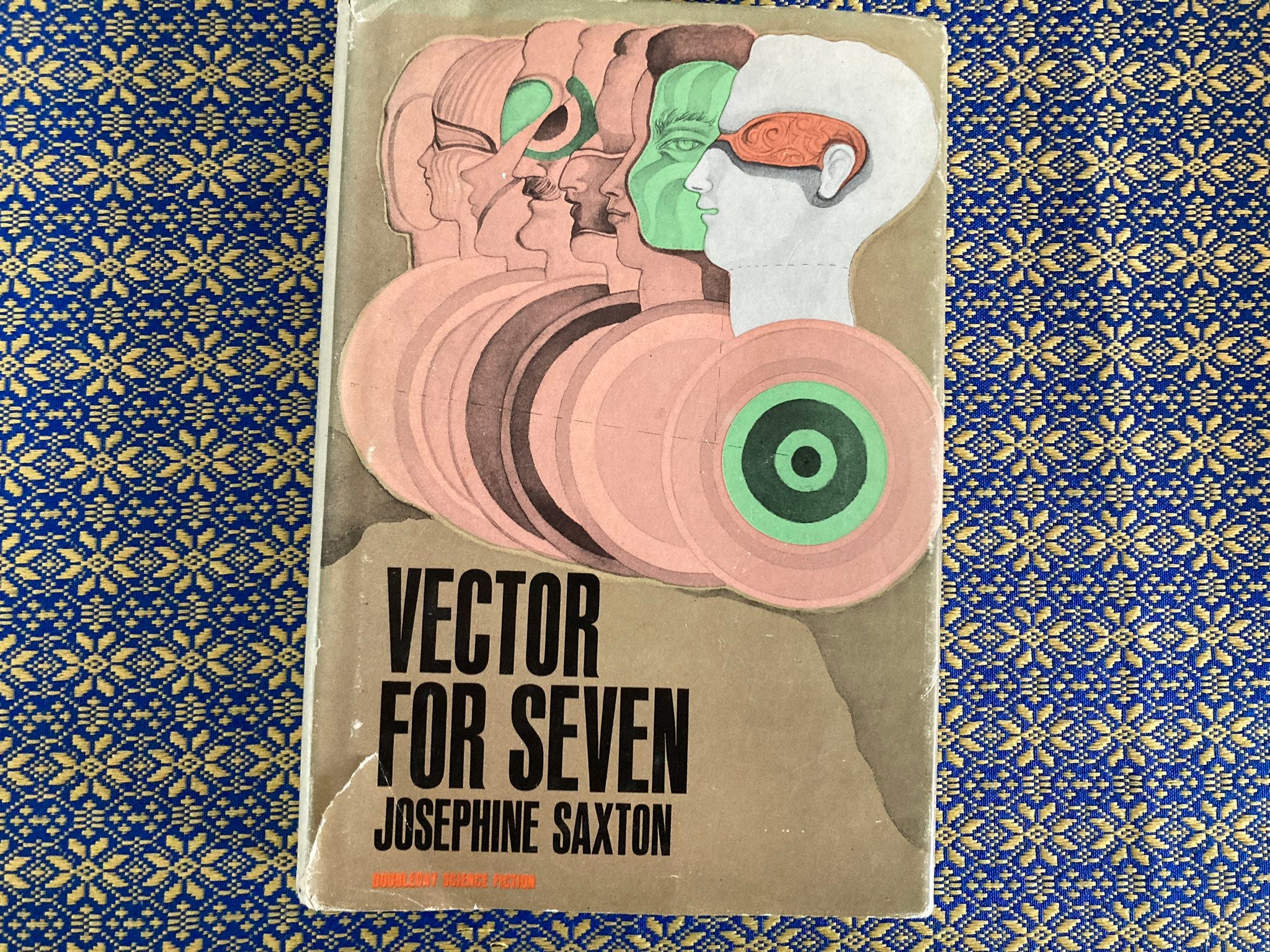
Anyway, my recommendation in this vein—still favoring the unknown—these days is Josephine Saxton. A novette-length story in The Big Book of Science Fiction, edited by VanderMeers, is a very good place to start with her work. But to dive head first into the weird, I think Vector for Seven, which I read last month, is where to go. A real triple-decker cake of bizarre. Don’t expect to understand what’s going on half the time (but that’s not what anyone reads these books for).
I’m obsessed with this cover:
She was published by The Women’s Press, which means something to at least five of you (and I love all five of you). On my list of things I keep meaning to write is an appreciation of the Women’s Press SF list.
Oh, I also reread We Who Are About To, which holds up amazingly well twenty years later. I forgot how incredibly funny it is: it’s about a woman on a space voyage who spends the entire book complaining about the other passengers. They get marooned and she hates them even more. The Netflix adaptation would star Lauren Oyler, I bet. But Joanna Russ wasn’t just a hater, she had a sense of humor about herself, which is why the book works.
Right now I want a book that will grab me by the shoulders and shake me and force me to decide whether there is a god or not, whether reality is true, humans can be just, what history is for—all those questions I have been to lazy to think about (but strangely I thought about all the time in college because I was lazy). I guess I should be reading something like The Brothers Karamazov or whatever.
#
My latest in Filmmaker magazine is proper tech criticism, which I haven’t written in while. It’s about what Apple has become in the 2020s, the company’s transition from a “fastidiously minimalistic underdog to a Procter & Gamble-style octopus of a conglomerate,” and why, despite its size and power (3 trillion market cap!), it continues to evade criticism.
I was on the Team Human podcast talking a little bit about Wrong Way and a lot about what it means to be a writer now. It was really wonderful to talk with Douglas Rushkoff about how to defend the arts from corporate interests and what—in a tricky moment to be an artist—does give me hope.
Recently, for Filmmaker magazine, I wrote about my friend Alan Warburton’s experience as the accidental archivist of work by his neighbor, George Westren, that otherwise would have ended up in the bin.
Show full content
Recently, for Filmmaker magazine, I wrote about my friend Alan Warburton’s experience as the accidental archivist of work by his neighbor, George Westren, that otherwise would have ended up in the bin.
I keep thinking about the reasons Warburton explained for getting involved. It wasn’t necessarily because Westren’s art is good (which it is), but Warburton, as a fellow artist, could see the hours it took, the attention, and care he put into it. “It was obvious how much time had gone into it,” Warburton said. That time and labor “was its own kind of currency.”
I guess I keep thinking about this example as a code of honor of sorts: that I know this thing I do is inefficient and senseless, that it costs nothing and at the same time you can’t put a price on it; I have to honor that same care and attention in work by others, even if it’s not to my taste (whatever than actually means).
by George Western
Two books I think you should read include Zito Madu’s The Minotaur at Calle Lanza (out Tuesday) and Holly Pester’s The Lodgers. I might try to pitch a review of The Lodgers because I straight up want to tap dance I love this novel so much. On every page there is at least one line that has me stunned. Howwwww did she do this?
Also, I expect soon enough to add my voice to the chorus about The Saint of Bright Doors by Vajra Chandrasekera. I just started it and oh, this is a real one. This is novel as an event. It’s exciting when things start snapping together for a book this good.
#
I’ve been incredible lucky to continue to receive thoughtful reviews of Wrong Way from writers and thinkers I admire like Henry Wessells and Peter C. Baker. And last month, the Spark on CBC, which has an excellent new series called Being Human Now, ran a profile of me and the book in the first half of its episode on AI and labor.
Also recently, Wm Henry Morris wrote this incredible review reading the book in the context (and outside) science fiction. I'm biased of course, as it concludes this is the "kind of science fiction we need right now," but I think this review would be of interest to anyone who wonders about the hazy spaces where science fiction and literary fiction overlap and depart.
This Thursday, I’m part of a free virtual event, Computer Pasts/Computer Futures, with Cory Doctorow, Laine Nooney, Charlton McIlwain, and Malcolm Harris. This should be fun.
Then on April 20th, I’m on a panel with Malcolm again and Brian Merchant for the Los Angeles Festival of Books. This also should be fun. Tickets, which are free, are available on the festival website on April 15th.
There have been a few wacky distribution problems tripping up both of my books but at least for now, today, you can order both from Bookshop dot org or from any independent bookstore. This is a really really wonderful time to pick up a copy (of both books, of one or the other, or even neither—wherever you are at, works for me).
#
I have had the sentence, “Americans love forgiveness and fear atonement” in an otherwise empty document in my files for several months now. I’m not sure where I meant to go from there. But perhaps the white space is what I have to offer, that loss of words I have for the genocide of Palestinians. It’s why, Pankaj Mishra’s essay for the LRB, The Shoah After Gaza, stands out as an essential text. It’s rare writing that moves from the big picture to the specifics on a vital issue that is hard to comprehend. You have to read it, if you haven’t yet.
#
Something else that you probably have already seen but I’ll link to again anyway, is this Cat and Girl comic, “on being listed on the court document of artists whose work was used to train Midjourney with 4,000 of my closest friends and Willem de Kooning”. It nails a sense of frustration I have felt over the idealistic ways that I had used the internet before which are no longer possible. Not just for now, but that my own past online is ground up in LLM sausage. You can try your best to avoid the most cynical and evil parts of the business and get bit in the ass all the same.
The answer to this and every question these days seems to be: don’t go back to blogs, go back to zines.
Well, I’m listening…
#
In my interview with Tech Won’t Save Us, I talked with Paris about the conundrum we face as artists. The world isn’t made for us to get our work out and appreciated. Sometimes we can be crafty with tools like Substack or TikTok to enter the castles of culture production, but it’s never sustainable.
And those castles have their own cheat codes. A book might appear like it came out of nowhere when in fact that nowhere is the result of marketing, which, when done right and with lots of money, you, the reader don’t see. It’s things like letters sent to thousands of librarians to put a specific book on their radar or sales reps arriving at individual bookstores with a dozen galleys for the staff and a cake. I imagine it in my mind like shadowy figures whispering, Mulholland Drive-style, “This is the girl.” (This is the book!!) Strategies like these create the groundswell of awareness, at least, and ideally enthusiasm that leads to sales. And these strategies require resources that various organizations no longer have in abundance. Also, these strategies require resources from the world—robust library funding and bookstores that remain in business. Social media has been a way to leapfrog some of this, but the results are inconsistent. Even when it works, it’s always a cheat code, and eventually every cheat code stop working.
I think a lot about how a book like the Female Man sold half a million copies in its day. And that, despite knee-jerk assumptions that no one reads because of the internet, in fact, there have got to be at least half a million people who would buy a book as experimental and unconventional as Joanna Russ’s novel today. But it would take some serious utopian thinking and risk-taking with a shit-ton of capital to build systems of distribution and discovery to make it possible.
Maybe I’ll feel like an idiot in a few years, because I haven’t given up on better ways of doing things. And to get there, I think, means to stop looking for the cheats, and try, finally, for something true and something real.
I’m lucky to have a number of good readers in my life: those driven with curiosity for the esoteric and generosity of spirit who scan dollar carts outside used bookstores and dusty thrift store boxes and anywhere really for something unknown with a pulse and beating heart.
Show full content
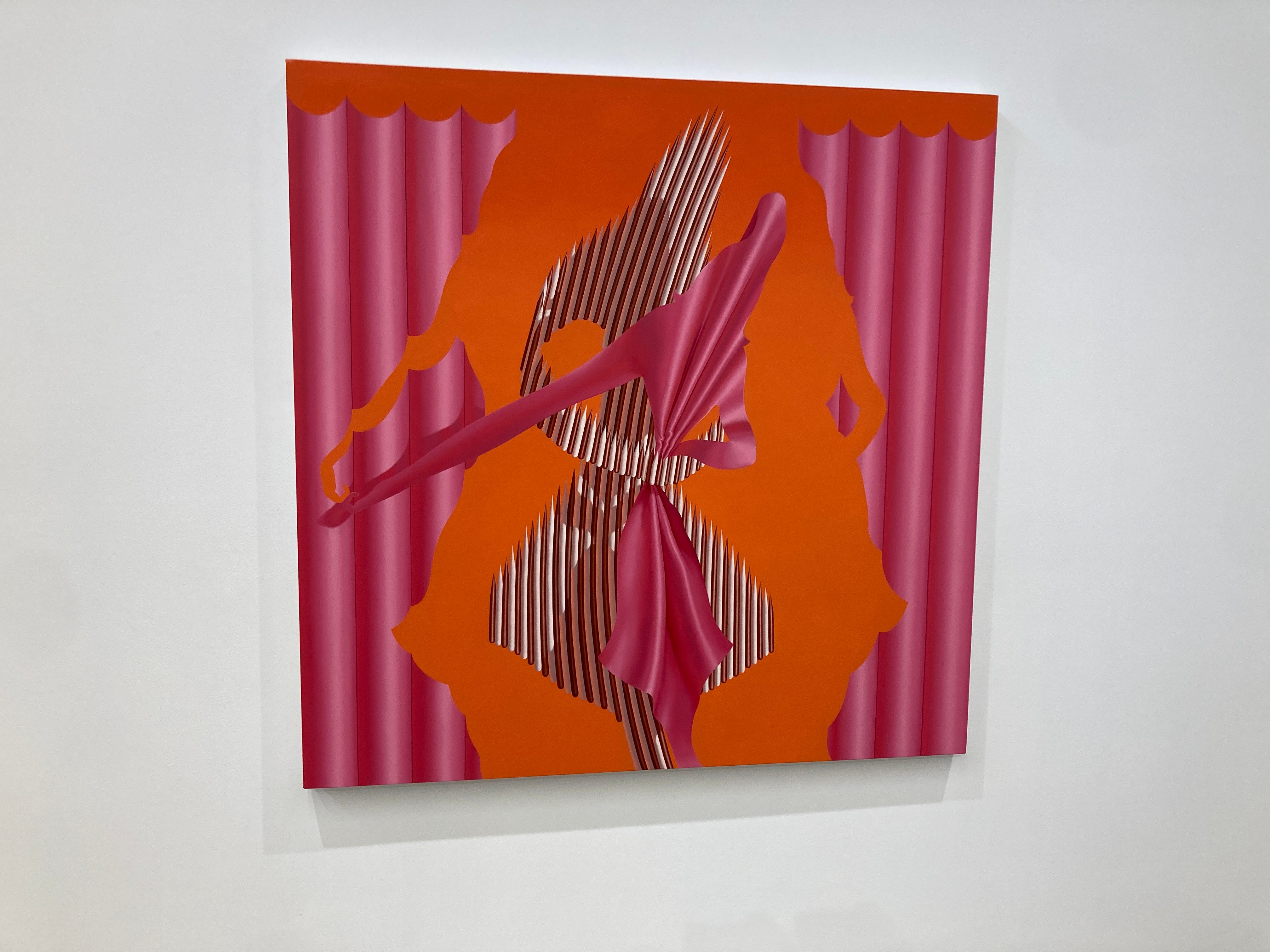
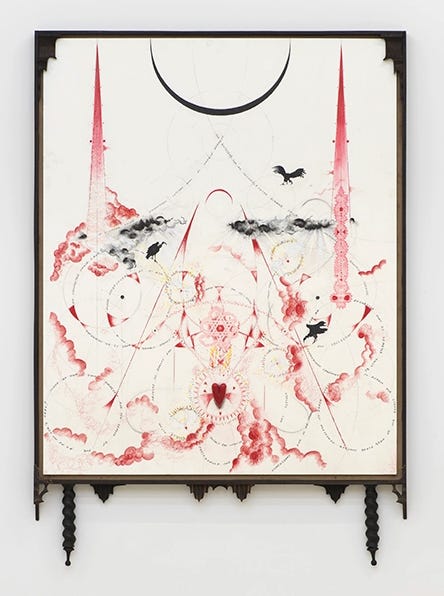
Sascha Braunig at Night Gallery
I’m lucky to have a number of good readers in my life: those driven with curiosity for the esoteric and generosity of spirit who scan dollar carts outside used bookstores and dusty thrift store boxes and anywhere really for something unknown with a pulse and beating heart.
The joy of reading this way is experiencing the strangeness of another person’s mind and with no hand-hold. You can’t do this with a new release. Every new book is either discoursed to death or even its lack of discourse creates another form of negative reputation for it. You receive the packaging of a new book as much as the content; it can flatter or pander to you before the first page or it can offend your sensibilities on sight too. When you read a new book you are reading with others and it’s impossible to fully inoculate oneself from prejudices and provincialism or praise that others heap on this work.
But I have these great friends, across generations and other otherwise vastly different contexts and experiences, who are driven like to me to find a book that is forgotten and to remember it; sometimes that means a book that is unloved and to properly love it. When they recommend something to me, something long out of print, inevitably “weird,” it feels like they are letting me in on a secret. There are just so many books that have been published throughout history. You can either look at this as a problem for you (“oooh noes my TBR pile is tooo big!!”) or a maze with various pathways to find respite, solace or joy or otherwise expand your world.
Also what I mean by a good reader is not like a good student of literature but more like a good listener. They read/listen for why something is on the page. They come to each work without a checklist of how to do something well, or what makes something a success or a failure. Their taste is unique and continually expanding with the work they turn to—and grow with.
It’s the opposite of typical internet cultural connoisseurship which seems born out of a perpetual impulse to raise your hand in class and show off to the teacher and your fellow students that you—you precocious ruby of a child—know exactly why Abigal turned on Goody Proctor, why Winston betrayed Julia, why everything happens because all books have right answers.
I like the idea of social media for cultural criticism in blips—for perspectives on culture outside of staid NYT reviews—but influencers on Goodreads or Letterboxed often sound professionalized like they are auditioning to be critics at the Times. Instead of personal taste and broadly dissenting perspectives, you’ll see these upvoted reviews composed in a self-consciously serious critic's voice: that such and such has "second act problems” or there's no “satisfying character arc." It's like they're checking off boxes on a handmade scorecard at a baseball game. That’s fine if you feel that way and want to share it, but I wonder where the impulse is coming from?
There is always a sense of judgement day looming over hustle culture. That after you take your last breath, the Harvard admissions committee in the sky will review all your achievements and failures. The ultimate verdict—the ultimate review—is in your hands right now. (“Sorry dude, no passing through the golden gates. You gave four stars to William Friedkin's The Bug (2006), when clearly it only deserved two and a half or—at most—three. Off to the the B minus aesthete afterlife for you.”)
Where I care about this stuff is, well, I wish there would be more good readers. That more people would turn to work with a sense of expansiveness rather than moral accounting. Art is created with work but our enjoyment and appreciation of it isn’t work. Well, it doesn’t have to be.
In science fiction, especially, the workification of appreciating it really kills me. In the 70s, you could write a novel that was like 40k words describing a woman’s ass and then 10k words about why the space program is a bureaucratic nightmare and then win a Campbell/Astounding Award for it (Ok, maybe just Barry Malzberg could do this and maybe these novels are indefensible. Idk I could probably make the case for them). The idea of showing up to that sort of novel like, “hold up, there are some serious SECOND ACT PROBLEMS here” is as absurd as it should be thought of any contemporary work.
I don’t think great art can coexist with fear of the unknown or fear of purposelessness. After all, many (most?) of the great pleasures in life are unknown and purposeless. All of this seems small and obvious to say; but I feel the seismic shift in all of culture right now—it worries me. Not since 2008 have I felt like things are slipping away fast but also there are silver linings too. I need to remind myself what I’m fighting for: what I want to hold on to, and what needs to change.
#
And what I have been reading lately: well, a mix of things. Normally I read one book at a time, I either finish or I don’t. But my focus hasn’t been with me this month, and I keep picking up and putting down this and that (in the current mix are Moby Dick and Wittgenstein’s Mistress, two novels that do benefit from this sort lazy susan-style approach).
I finally read Alan Garner’s Red Shift, a book I would have gotten to sooner if I’d encountered even a taste of the passionately bizarre dialogue between teenagers it begins with—or known that it’s largely set in a caravan (trailer) park. I scarcely understood what was happening half the time but I felt it, I sure felt it. It’s otherworldly, holy. If you find yourself in a state where every book delivers exactly what it promises to be, where nothing is unexpected and that is disappointing to you, well, you should read Red Shift because if nothing else, it is unpredictable and vibrating at a low-pitch that I can just barely receive.
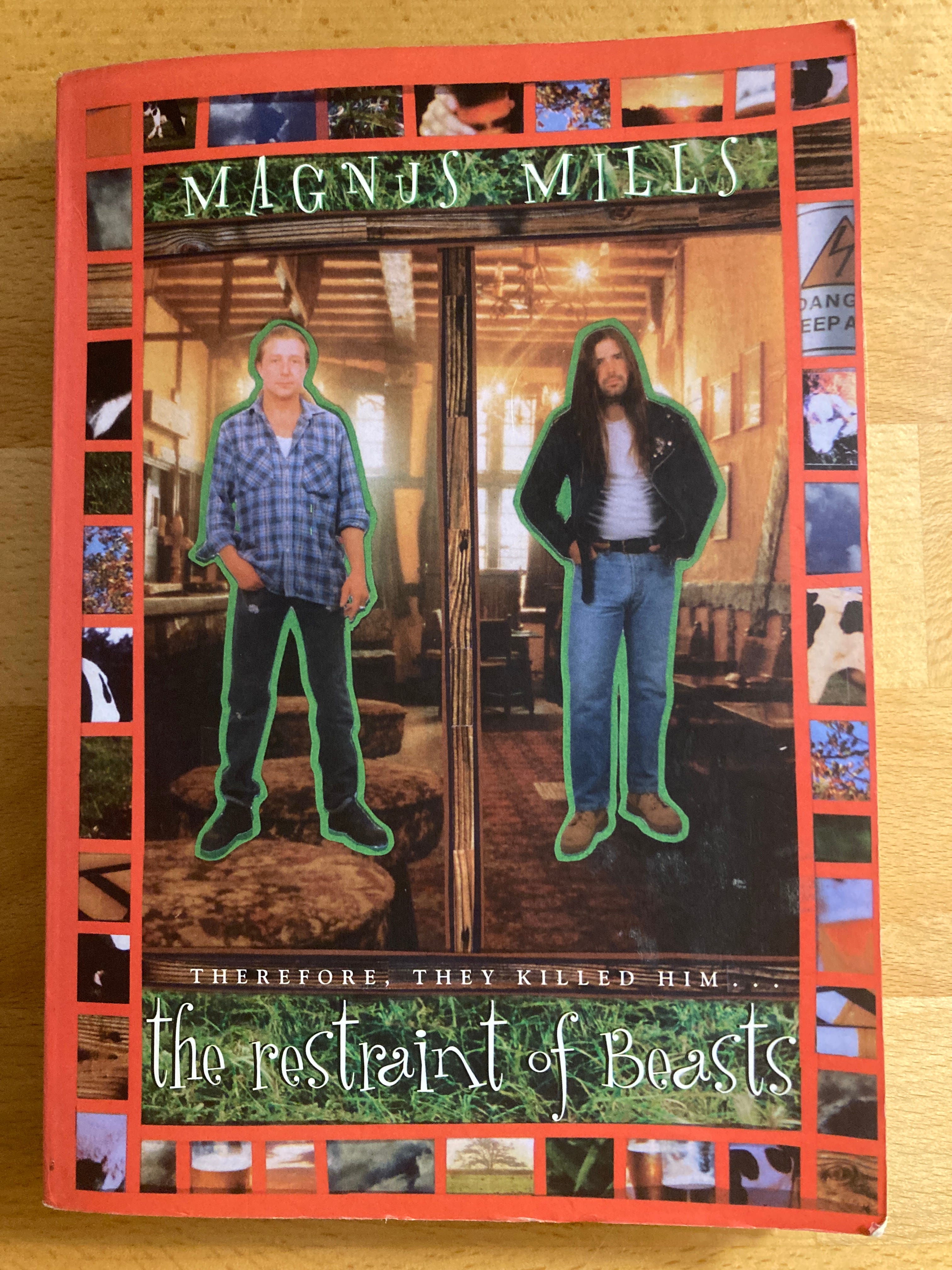
I also read a few books by Magnus Mills, which I thought I might really really love but mostly really really liked (still, really really liked). I’m obsessed with this jacket art…look at these lads, just look at them:
I am almost finished with Caren Beilin’s Revenge of the Scapegoat, which is short but also a book I couldn’t read in one sitting—didn’t want to, I mean, in a good way. I’m usually a little wary of this style of book (a little too cool), what I guess what you could call quirky autofiction. But there’s real pain at the core of the novel and it refracts through what might otherwise be light comedic scenes.
I read Lorrie Moore’s new one. The title is a little gooey and put me off but the novel earns it, I think. There are all these references to modern life, Airbnbs and such, and never awkward or overly done, but the ultimate feeling I got was a pleasant reminder of the sort of books I'd find at the old Powell's Bookstore in Lakeview, when I lived in Chicago. It was open until 10pm, and what a luxury it was to browse a bookstore that late. I'd pull something off the shelf and read it that night. Usually books I bought there were remaindered titles, popular releases from two or three years before, Lorrie Moore was inevitably one of the writers I’d discovered there. This book reminded me of that sort of easiness, entry to somewhere unknown, and a possibility with no underling obligations. How I can I explain this, I love that the book feels like a “it’s 10pm in 2006 in Chicago” novel, but it’s not nostalgic at all (nor am I).
I read Brigid Brophy’s The Snow Ball. A New Year’s Eve novel I read on the holiday. Not quite to my taste but I finished it anyway. I guess I was hoping for that shot from Phantom Thread we all know and respond to on a cellular level but in novel form and instead got a book that is *witty* and full of somewhat belabored descriptions of icing and drapes. Honestly, I was feeling down on New Year’s and it’s entirely possible that I wasn’t in a place to receive whatever pleasures the book contains.
I also read the first of David Peace’s Red Riding series, Nineteen Seventy-Four. Ok, I was loving it, ready to speed through the other three but (a pretty major BUT with all the exclaimation marks in the world)…first person point of view, unreliable narrator, a scoundrel, sure I get it…. BUT(!!!), it takes a turn when the protagonist starts narrating, quite graphically, his sexual assault of a woman (including graphic depiction of her traumatized response). You know, now that I think of it I don’t miss the before times at all. Why, one of those good things about being here now, in 2024, is that we might demand that authors have a think on scenes like this before committing to them. Or at least think through how it reads in the context of the rest of the material. Haven’t given up on Peace and will read GB84 at some point. But arghhh….I have a high tolerance for most anything but(!!!) that.
The best book I read in a while—one of the best I’ve read in my life—is 1982, Janine. I love that it’s pathetic and stupid as parts to cohere as a brilliant whole. It makes me wonder if a book can only achieve this brilliance with a naked willingness to be stupid on the page. It’s so beautiful, needless, and batty. There’s nothing mannered about it, nothing straightjacketed to anyone else’s approval. It shouldn't work, a book of (mostly) sexual fantasies that are somewhat lacking in eroticism and instead serve to illuminate the narrator's many neuroses. It’s not just his imagination that intriguies, but the way he revises his fantasies in excruciating detail—you realize that only in his headspace does he ever feel safe and in control. It’s one of the funniest books I’ve ever read. It makes me proud of my Scottish ancestry. I could celebrate it every year like my uncles with their Burns nights. Oh my god what a great novel.
Next up for me is Katherine MacLean’s Missing Man and Terry Bisson’s Voyage to the Red Planet.
Because I’m reading Moby Dick, I learned about Charles Olson and that he was 6’8. It just blows my mind that there ever was a poet who was 6’8. There are practicalities here that people closer to the ground might not realize. I’m normal tall and the hardest part of the writing is I think where to put my legs at a desk. Probably all of my writing makes sense if you realize it is conducted in a constant state of thinking: what do I do with my legs? Do I sit on my right ankle and then switch to sit on my left ankle? Stand up? Hug my knees to my chest and curl my arms around to the reach the keyboard? Every fifteen minutes, at least, I’m thinking….where do my fucking legs goooo????
#
This newsletter has been incredibly long. Thank you for either staying with me or skimming to the end where I usually stuff all my personal update. Well, I’ve got a few!
Catch me reading from WRONG WAY at the Edendale Library in Los Angeles on Feb 10th (weekend/afternoon event) Or, if you are in Portland, Oregon, come see me at Bishop & Wilde on February 21. I’ve also got an exciting event scheduled in San Francisco on February 23rd with a bunch of people I admire and I should try to send another newsletter before then to properly hype this one. I’ll share the details on Mastodon and Bluesky.
I’m back on the east coast the following month, appearing at Red Emma’s in Baltimore on March 21st (there will also be something schedule in DC and—probably—Pittsburgh around then.) Please come out and say hi if you are able.
Another quote, I've been thinking about, that I believe is a paraphrase because I can't quite find the origins:
Show full content
Another quote, I've been thinking about, that I believe is a paraphrase because I can't quite find the origins:
“Jailers love escapism. What they hate is escape.” Michael Moorcock, apparently, via China Miéville (in response to Tolkein’s drippy belief in the transportive potential of fantasy literature).
I'm going to leave it here, absent my own commentary for now, and instead share my interview with the great, fun and funny podcast This Machine Kills this week (which includes more than a few complementary ideas).
If you are curious about my novel — having read it or planning to or even notplanning to — this interview is a great place to begin. In addition to discussion about the book, there’s a shocking confession from me about my past and I refuse to spoil the surprise here. Just listen.
Or you can order it from Massive Bookshop which has it right now marked down to $12 following the pre-order campaign which raised $750 for MAAP with over a hundred preorders (Thanks everyone! )
There was also a little trouble getting galleys out. If you plan on writing about the book, and need a copy, just let me know and I’ll make sure you get one.
caption...
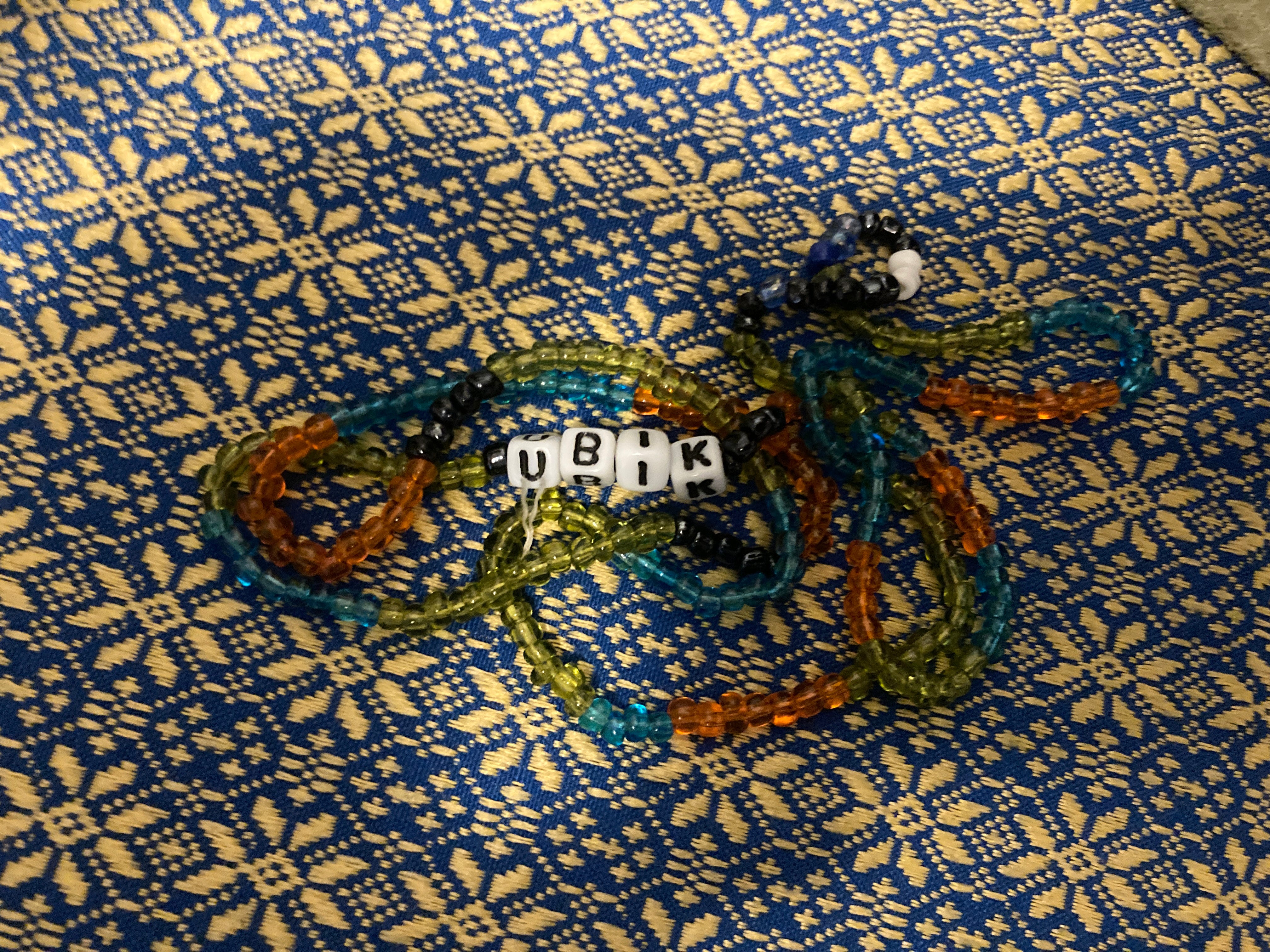
I'm not exactly the most sociable person on earth but at some point I realized I'd need to get reasonably okay at public speaking to have a writing career. I practiced and practiced, but honestly I think the thing that helped and continued to help the most is wearing these lucky beads that an internet friend once made for me. Haven’t failed me yet.
I know a question it raises is, can a book with so many scenes set in the past claim space on a science fiction / speculative fiction shelf? It’s in conversation with genre books but is it genre itself? Can it, if M. John Harrison’s Light, among other books, was a profound influences? I felt I had to, in some way, write beyond the limits of the genre because the genre in its contemporary state has given up on writers like me. But that I discuss in the TMK podcast too — the need for another New Wave-style era of experimentation as a counter to the cynically packaged sci-fi literature as something edifying and compliant with industry.
#
Yesterday, at my book talk at Fall River MoCA, Brittni Ann Harvey told me she had never read about a town like where she grew up or jobs she has had in a book like this before. That meant a lot to me.
Then, on Tuesday, in Providence, I am reading at Riffraff Bookswith Matthew Lawrence, publisher of Headmaster.
And 12/4 Monday in Brooklyn — a week from tomorrow — I’m in conversation with Zito Madu, author of The Minotaur at Calle Lanza, at Wonderville. more on that:
Please come and say hi!
More about things (other than me) soon. In the meantime….
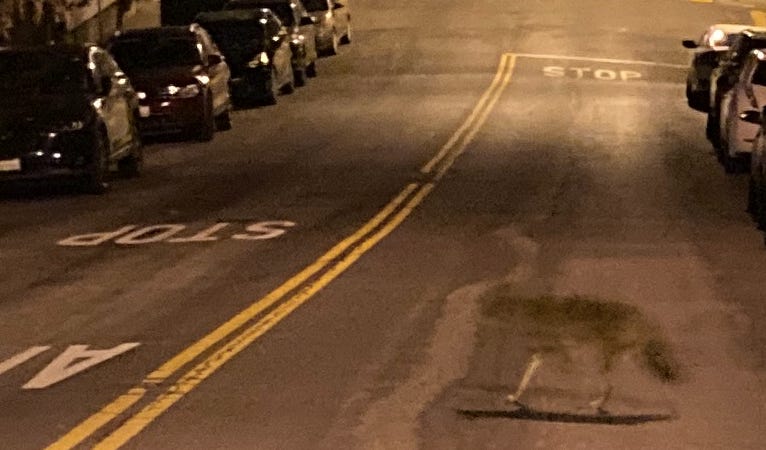
I finally saw one of the coyotes that howls outside my window almost every night.
Show full content
I finally saw one of the coyotes that howls outside my window almost every night. He looked straight ahead, rushing across the street like the celebrity he is.
This is a lovely profile of Terry Bisson (whose work feels incredibly relevant right now). The speculative news stories he writes, featured in the profile, are collected in his forthcoming book, Tomorrowing.
I've shared this quote before, which I love, even though it's one of those feathery text scraps that's made its way around the internet dislodged from its original context. And maybe that's fitting for these lines that resonate so strongly with other artists. It's attributed to John Cage via Philip Guston:
"When you start working everybody is in your studio—the past, your friends, enemies, the art world, and above all, your own ideas—all are there. But as you continue painting, they start leaving, one by one, and you are left completely alone. Then, if you are lucky, even you leave."
I was reminded of these lines again while reading a buzzy work of literary fiction—a book that seemed to me like it was written for the n+1 party in the author’s head. It’s okay if you start with an imagined party, but you also need the energy to imagine a door to kick them all out, eventually. The scene and culture this kind of writing grafts upon is what I mostly try to avoid; but, every once in a while a book I expect to be *like that* genuinely surprises me which is why, as a reader, I keep looking.
And I’ve been thinking about it again in response to what bugged me about that big essay by Jason Farago in the New York Times, "Why Culture Has Come to a Standstill.” As he begins,"for 160 years, we spoke about culture as something active, something with velocity, something in continuous forward motion. What happens to a culture when it loses that velocity, or even slows to a halt?" The limitations to his analysis have been addressed elsewhere (As Lyta Gold pointed out, "Ctrl+F in the article for ‘capitalism’ and ‘corporate’ or even ‘neoliberalism’—0 results!") Watered down Mark Fisher arguments in the NYT aren’t the worst thing they could publish, but, as a critic, it's kind of his job to hunt for the exceptions (in addition to the broad "direction" of culture, as he asserts).
I don't believe that originality is dead across music, literature, art, and film. I do believe—and know from experience inside legacy institutions—that work that demonstrates originality isn’t getting funded because it doesn’t plot neatly on a profit and loss statement.
One problem with the essay is it conflates “X meets Y”-style projects and their massive marketing budgets and publicity campaigns with all the art being made here on earth right now. Celebrating work that’s new and groundbreaking is what we expect critics to do: that they will not sit idly and wait for the buzz (generated by $$$) to sway their judgement. A better question, I think, is why would anyone want to be the hundreth critic to say that [insert name of derivative acclaimed work here] is a “stunning achievement”? We all know how little criticism pays—what do you get out of it, to be part of the critical consensus on something that does not involve “forward motion”?
It’s frustrating because the curators, editors, and producers who prioritize their discovery of new talent—and are good at it, who read the zines no one knows about and are the first to hear about the galleries opening in neighborhoods where few venture—are usually working with a shoestring budget, if that. (I’m tempted right now to veer off course with this newsletter and write about originality and tastemaking, and cite examples like when an independent curator puts together a group show with obscure artists and then, a few years later, a major museum group show includes all the artists from that exhibition. The first curator isn’t involved in the museum show but her taste, her labor paved the way. It happens all the time. What do we call this?)
It takes something of us, as audiences, to be open to work that challenges the status quo—to chose the unexpected over the comforting, pandering, and familiar. This is at odds with criticism as moralizing: that there is a perfectly correct way to respond to a work. If you aim to become the best student in the classroom that is all of culture, there is only one way to read a book: there is a correct opinion to be had, and you must first start with the “right” kind of book. You make the choice as the audience to offer up an A+ book report or reveal the sway of your own pathetic heart. (The heart always gets an F, scribbled in big red sharpie! Take it! Accept it with honor!)
Please consider preordering WRONG WAY from Massive Bookshop, which is donating 40% off the list price to the Material Aid and Advocacy Program (MAAP) in Cambridge.
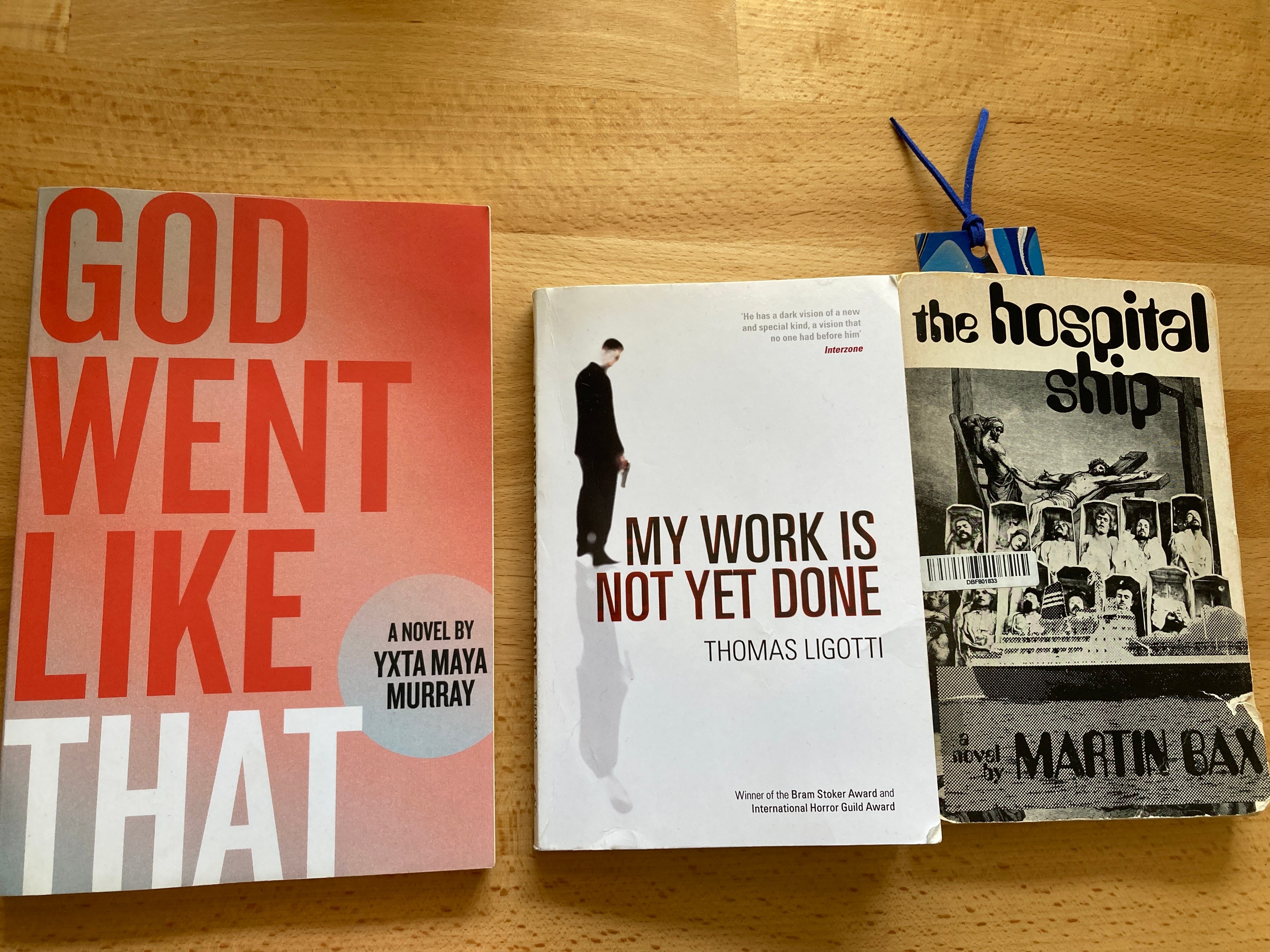
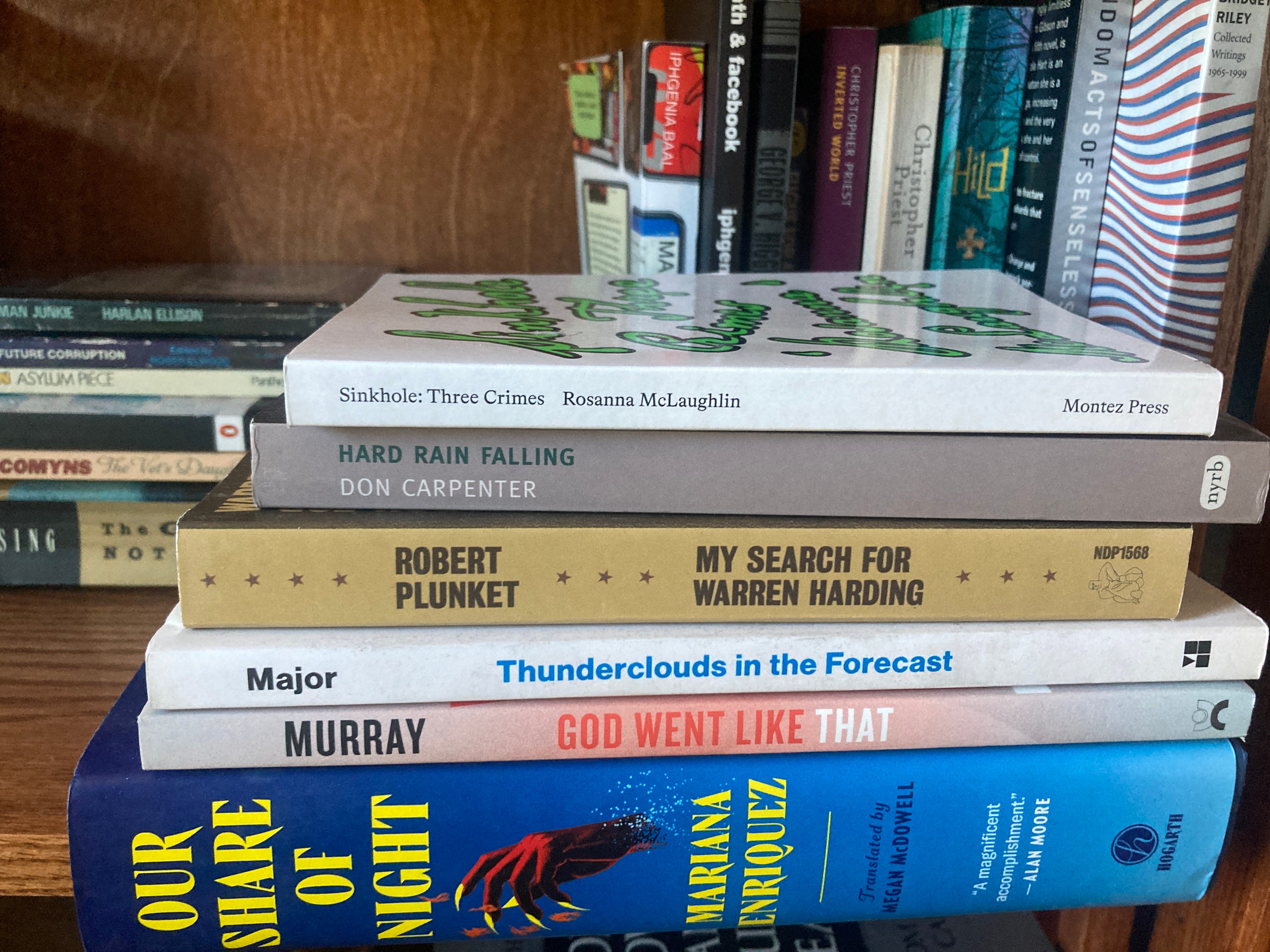
Excited to dig into this, my most recent 3am Alibris order:
Somewhere recently, I read an interview with an interior designer who said something like, “if you really love a piece of furniture, the style will always work in your home.” The notion being that your are your own through-line, you are the current: your taste and judgement is how everything in a room—your room—hangs together. Wish I could find it now (or maybe it’s common wisdom in design?) At any rate, I keep thinking about it as this advice might just as well apply to writing a book.
God Went Like That by Yxta Maya Murray might be my favorite novel this year. It’s structured as collected testimonies from people impacted by the Santa Susana Field Laboratory including the nuclear reactor meltdown. I’m ordinarily weary of novels with alternating narration but Murray builds on the story with each chapter. The writing is stunning and she reveals something of the characters in five to ten pages that other writers might need an entire novel to feel earned. Claws deep at the blinked pursuit of scientific knowledge and its human costs.
My Work is Not Yet Done is the first thing by Thomas Ligotti that I’ve read. I suspect this isn’t the best place to start with him, but it’s good enough for me. I watched Beau is Afraid the other week, and everything else on my bookshelf felt incredibly conventional in comparison. Not quite to my tastes, but intrigued by it.
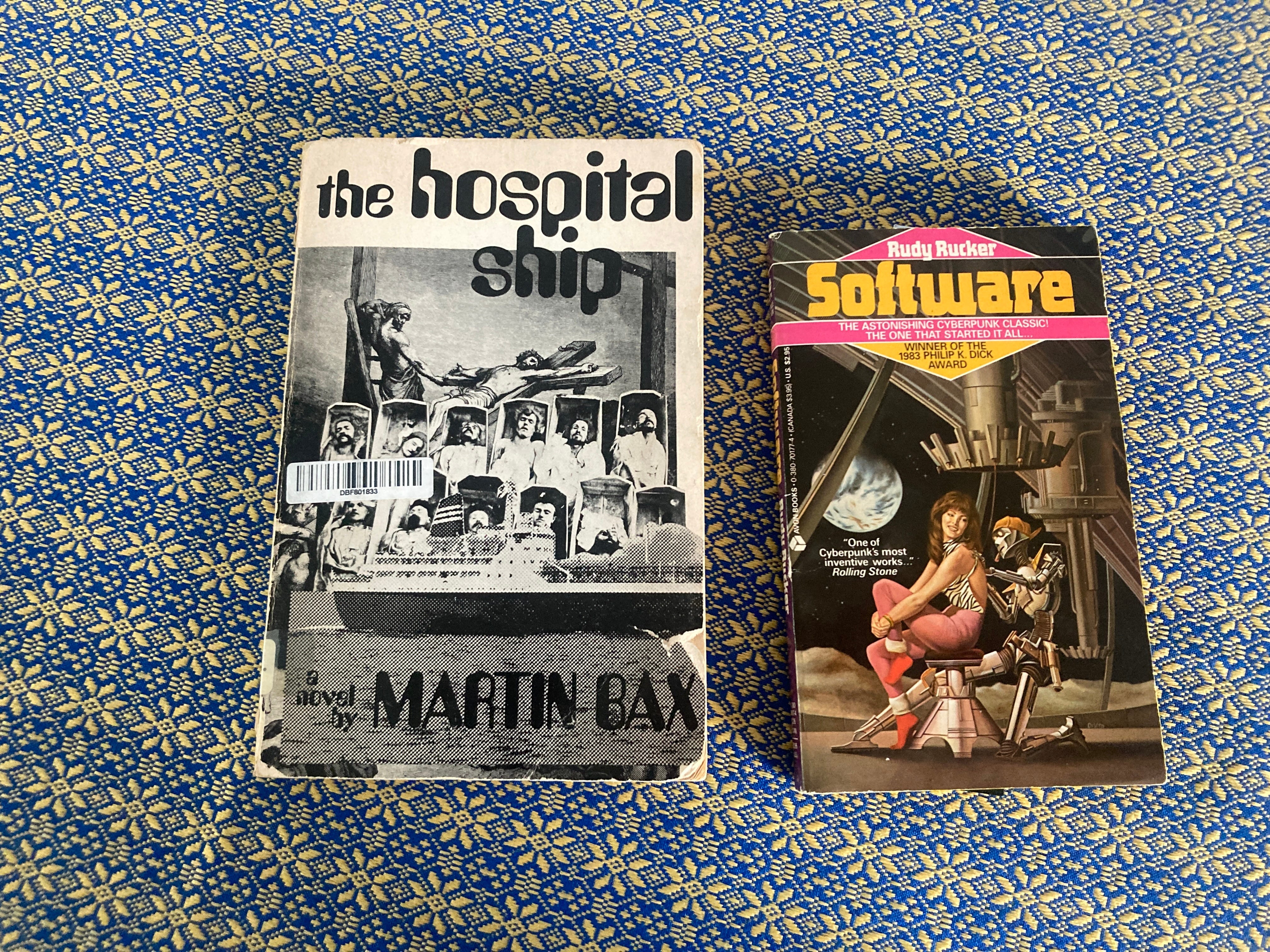
And I’d been meaning to read Martin Bax’s The Hospital Ship for, well, the past twenty years because JG Ballard recommended it (and Bax founded Ambit), but in this instance the past six months. I’d pick it up and marvel at the cover and admire the first several pages, and then, I'd just bounce off it. Something about Bax's style struck me as too lush and my mind would begin to wander before I made it to the next chapter. That was even before the fake medical reports and other dry found texts that chop up the narrative. Well, I stuck with it this time and I’m glad I did because it's one of the most charmingly and ambitiously stupid and incomprehensible novels I've ever read. It’s about the world and humanity but really it’s about the pleasures of of “big” and “chunky” blonde nurses. And it’s written in a swirly style with hesitant interiority that leaks out between the info-dumps. The back and forth from technical writing to stream of consciousness annoyed me until I realized the dry parts probably worked as intellectual scaffolding that freed the author to write all the wild stuff about the nurses. Anyway, it’s always great to be reminded that once there was a science fiction literature that wasn’t driven by saves-the-cat formulas, “inciting incidents” and rising-action-climax-falling-action story mechanics
#
Something I don’t necessarily believe but I think I could argue convincingly is that if you are really looking for the Octavia Butlers or the JG Ballards of today, the only place you’ll find them is romance genre.
It is the one genre left that has evaded mainstream acceptance. It’s a genre that authors of “literary” work never dabble with—well, never confess to, as a foot in that world would besmirch their reputations. Romance writers work outside traditional measures of literary prestige. Their books might be reviewed in the New York Times but only in a quarantined box alerting readers in advance like a content warning. To be clear: the reason I can’t and won’t make this case is I don’t know anything about romance writing other than its lack of respect commands a great deal of respect from me. Which is to say, I’m myself too much of a snob to know what a romance lit avant-guard would look like or if it’s happening.
Science fiction had always appealed to me as the genre of losers. The white maleness of it all was something I struggled with, but almost as much, I struggle now with the style of, you know…those books that are like, “five diverse young women have just graduated from the galaxy’s most technically rigorous astronaut training program. Can these ultra-elite feminist techno-astronauts save humanity from environmental collapse with their brilliance and extraordinary gifts?”
I suspect those authors are drawn to the genre for the thing that increasingly frustrates me about it: the way science fiction is mined for road maps and potential solutions in real situations of uncertainty and disaster. The way it’s “smart person” literature about systems with hyper-competent protagonists. I’m here for the losers. The losers are my people.
In quite a few interviews and essays by Ursula Le Guin, you can see how slighted she felt through much of her career, that literary establishment refused to take science fiction writing seriously or read it on its merits and intentions. Obviously the prestige and mainstream acceptance arrived over the course of the past two decades—especially for Le Guin—but at a cost, these new readers tend to straightjacket what’s interesting about the genre.
I’m regularly baffled by writing about Philip K Dick, especially, by mainstream literary critics. The man was a serious weirdo and very frequently hilarious (and, yes, problematic). He was always writing from another planet. But to be legible to scholars and critics, they construct a character out of his legacy: a serious man, who was part of counterculture, with a clear-eyed prophetic and ultimately useful view to the future. In their mind, he was the sort of person who could show up on NPR and tell us exactly what the world is like and where it’s going in super clean—not at all rambling or paranoid—tape. (Although, “not a great prose stylist” these types love to say—wrong on that too, on a line level A Scanner Darkly is fucking electric). This is happening with Octavia Butler in real time. Her daring and the moral complexity of her characters is swept away in recent assessments to create a coherent legacy—that of an earth mother tote bag caricature-icon. This is reading authors as flap copy, accessing the top layer of the writing, and refusing to convene with the messy human elements in the work. What are their books—any books—even for, other than for us to approach as humans, wandering around with their words and experience the extraordinary workings of another human’s mind?
The snobbery against science fiction in the past and today’s cartoon icons of some of its weirdest authors comes from the same root: an establishment that doesn’t know how to read or appreciate it. The establishment needs the work digestible as buzzy fragments. The feral elements in what are now science fiction classics—the originality and experimentation—isn’t legible to them; which means even the most famous authors, when you encounter the work on your own, are likely to surprise you. Their mysteries as authors remain mysteries and to a more generous reader—that mystery is exactly what hooks you.
Literary fiction, meanwhile, has entrenched dependence on shorthands to determine the merit of a work before it’s even read. I’d never in my life heard the word “pedigree” used in any conversation that wasn’t about dogs until I met people in publishing. There are frightening rituals of pre-screening, pre-reading of an authors—especially women authors. Where you went to school, who your parents are—all of this is irrelevant to the integrity of the work, but it is in the service of the creation of the mystique of a writer, the mystique of a “Real Writer.” There are specific magazines that a Real Writer writes for, friends and alliances they make, parties they attend (the right parties). It’s ultra-specific and not worth naming what are considered “real” institutions and cohorts. The flip-side of Real Writer reputation building and myth-creation is what we could call the Unreal Writer, who is anything but these things. And that’s most of us—especially the most of us who do not come from money.
What’s on offer in a book is only ever the book rather than a sillage of importance that blows from the author to the reader. But what a book is for a Real Writer is a mechanism to succeed, a means to satisfy an ambition that’s entwined with a need for external validation. If you enter through the “Real Writer” gates producing work that is “real,” there is only so much you can do from there. By narrowing the field—to the terms of what’s real writing or not real—they are stuck in their own crumbling castles. It’s only those working outside these castles who can subvert them, out run them.
I think about this a lot because I can only ever be an Unreal Writer. I’m unreal as a writer of fiction because I published a work of nonfiction before it. Before that book, I was unreal as a nonfiction writer because I had a blog and I wrote on the internet (this is not how it’s done, it’s utterly unreal of me). The sheltered voice of Real Writers of literary fiction is something I do not like nor aspire to mimic. That too makes me unreal: I’m working class and a leftist and someone who has no respect for—let alone engagement with—elite education in the United States. And always when I think about it, I come back to the belief that to be a Real Writer is a creative dead end.
Anyway, maybe I’m rambling here and revealing too much of my own writerly insecurities. I feel some temptation to press delete but fuck it, I’m about to smash that send button.
#
On that note: I’d love it if you’d please pre-order my extremely unreal novel, WRONG WAY (or request a copy from your local library).
This is about as good as the year gets, isn’t it? Unless you are having a particularly bad week, in which case, my sympathies. When it’s still summer, but the heat is fading, and responsibilities have yet to emerge on the other side of Labor Day—just can’t beat it.
I saw Ghost Dog at Vidiots recently and found it more affecting than I’d remembered. It’s Jarmusch, in the register I most enjoy, original and searching. I still think Patterson is one of the best films in the past decade. I’ve also been watching lots of TV due to anemia or depression or some delightful mix of both. Lately, The Great Pottery Throw Down and Succession, which I had put off watching for ages—completely annoyed by everything I knew about it—but found I could enjoy once the New York media self-reflexive hype cycle was out of the picture. I like how it captures sibling family dynamics—how they roast each other, well into their thirties and forties. And the way they team up to roast each other. I have some experience with this.
My sister was in town and we took a pottery class together. I was bad at it, she was great at it. The corner of my bowl fell over and the very kind probably stoned instructor smiled and said it looked like it could be a cool gravy boat. My sister appeared to agree, and I remember thinking, hmm, maybe it is a not bad piece, who knows. In fact, she took a photo when I wasn’t looking, sent it to my brother, who texted back, immediately, “Joanne better give me that pot as a wedding gift.” So now I kind of have to, because I cannot deny my brother the joy of pointing to this shitty piece of pottery and telling everyone it’s a wedding gift from his sister. She made it herself—can you tell? Like it was my idea!!
To follow up on the last newsletter, I have in my apartment, sixteen LURKING hardbacks left and I’d love to get them out of here. Pre-order WRONG WAY and I’ll send you one. (Also, if you already requested a copy and haven’t received it yet, just let me know. I might have written your address wrong or something (sorry about that)).
I don't know how international distribution works, exactly, but looks like you can pre-order it from non-Evil Store stores internationally like Librairie Drawn & Quarterly in Canada or Foyle’s or Blackwells in the UK. Pretty much any English language bookstore internationally should be able to acquire it like Shakespeare & Co, ABC in Amsterdam, or Dussmann das KulturKaufhaus in Berlin.
If you are in Los Angeles on November 15th, please join me at Skylight or join me, on November 27th at Harvard Book Store in Cambridge. Or join me a few other places that I’ll be able to share soon enough around those post-Thanksgiving weeks.
But enough about my books. Here are a few other books that I liked. And one I did not. (Do you see the restraint that went into the title of this newsletter? I could have titled it “Seven good books and one bad book” and everybody would click through).
#
Sorry to be a hater, but I’m just going to get the book I didn’t like out of the way. It’s TRUST.
TRUST is okay. I remember hearing about it when it first came out and I thought it sounded interesting but also it looked like a book that Obama would have on his summer reading list so I never got around to it. But then it just kept racking up awards and I felt I had to read it to be part of the conversation and argh. It's so aggressively just okay!! And it is is SUCH an Obama book. That I wasn’t keen on it could be because I recently reread both The House of Mirth and Bleeding Edge (a seriously epic story of stock manipulation). I think the fuss has to do with this being a relatively rare contemporary novel where the class positions of the characters is made explicit, rather than muddled. But still, power and power imbalances doesn’t come through fluently—there’s a lot more telling than showing.
One thing I tend to do when I’ve got a book like this in my hands is, I just stop reading. First of all, because I’m not enjoying the book (most obviously). But two, that means I can stay positive like, if someone asks me what I thought I can say, honestly, “Oh, well I just read the first three chapters so I don’t know. What did you like about it?” I read TRUST to the end and thought to myself, when I turned the final page, “IS THAT IT???!” That was it!
But I loved BIRNAM WOOD. That’s my current go-to recommendation for just about everybody. Michael Crichton-esque techno thriller written with ultra-piercing insights by one of the best prose stylists out there. Slows a little in the middle (what doesn’t) but incredibly worth it.
Other books I’ve enjoyed lately:
Blanche on the Lam by Barbara Neely — The funny thing about used books is how the really torn up ones, in worse shape, might have more material value. Because to the person browsing, you can see the previous owner of the book ripped through to the end. This was a $2 find in the carts outside Raven Books. It struck me as the perfect follow-up to TRUST and THE GUEST. Published in the nineties, there are many deliciously cutting observations on white wealth from a Black housekeeper’s perspective, forward for the time.
The Guest — I mean, what else can I say that hasn’t already been said? It’s breezy, evocative, and not too deep. I’ve heard it compared often to an A24 movie, which concisely encapsulates its strengths and weaknesses. One of those strengths is it’s extremely readable, so absolutely go for it if you're in a reading slump.
Doppleganger by Naomi Klein — Surprised by this one, how it stays focused while exploring ambiguous territory. Correct on where the left is losing the messaging on Big Tech. The best parts are when she interrogates her own public image—and her uneasiness about it. That she, at 29 years old, after No Logo came out, was fielding the same question again and again, “Aren’t you a brand?” Right at the middle where it seemed to begin to lag, she delivers a chapter containing some of the most thoughtful writing on being a parent I’ve read.
Strange Labor by Richard Penner — Great throwback to new wave sf. Realized I miss post-apocalyptic storytelling (when it’s done right, rather than played out and cliched, there’s nothing better). Instead of zombies, this one sees most of the population lose their sentience and form ant-like colonies building what seem to be nonsense constructions. Fun premise which Penner carries to the end.
Big Fiction by Dan Sinykin — Not only a strong systematic analysis of corporate publishing from warehousing to marketing, but it also shows how only certain authors thrive under these conditions resulting in a “conglomerate taste.” It made me think about how my own taste as a reader, starting in high school in the 90s, was shaped by publishing institutions and distribution channels that were, even then, on their last legs. Insightful, not only to writers, but musicians, filmmakers, graphic artists, and all other artists in industries perpetually squeezed (and the readers, listeners, and viewers who wish to see art thrive).
And this is my current TBR pile:
Right now I’m rereading The City & the City. Can’t believe how much I had forgotten of this book I love—one of my all-time favorites, but haven’t revisited since 2009. Miéville is peerless here, I think. He doesn’t have a sense of humor—more of a perpetually raised eyebrow—but makes up for it in, for lack of a better word, edge. Where are the writers with edges? I used to think this was a prerequisite for completing a novel; that you’d have to be the sort of person who follows their own rules, refuses to complete homework, rejecting reality for a world of your own. But the balance has tilted toward writers who really love doing homework—they see the novel as homework, something you get a gold star on.
ANYWAY! Having typed all that at a time when I should probably shut up about such things, I do HAVE A NOVEL COMING OUT ON NOVEMBER 14th than I hope (please) everyone will buy, love, read.
I have a novel coming out in November. It feels nice to say this. It’s a book I began writing in 2018 and had to put aside when pandemic happened because I had a vision of the near future before—when its set—and I stopped believing in it. Things that seemed stable before were upside down. How could I write about something like the housing crisis in Boston, when rents in Allston and Cambridge that summer were slashed in half because virtually no students were coming to town?
That obviously was temporary (the same apartments are now probably twice what they were in the before times). But I’d fallen out of practice and kept putting off the revisions I knew I had to do to finish the book. When Claire Evans reached out in the beginning of 2021, inviting me to contribute a short story to the forthcoming Terraform anthology, it was a catalyst. I used the opportunity to take some of the novel’s themes and apply them to an entirely different premise and setting with different characters. (Here’s that story by the way). And then finally I could write again and here I am.
The funny thing is, a similar situation happened when I was working on Lurking. I set aside six months to work on the manuscript. In the first of those six months, Trump was elected. I couldn’t write and part of the reason I couldn’t write was because the world in that moment felt so uncertain. I got my act together in August of 2017 and in that month, thanks to a residency, I cobbled together a messy-to-anyone-else but coherent-to-me draft. I think if I had tried to press on, in fall of 2016, the book would have been too reactive to Trump’s election, not as broad as it needed to be. Because that event came out of the culture and politics and circumstances that I already had been responding to in 2015.
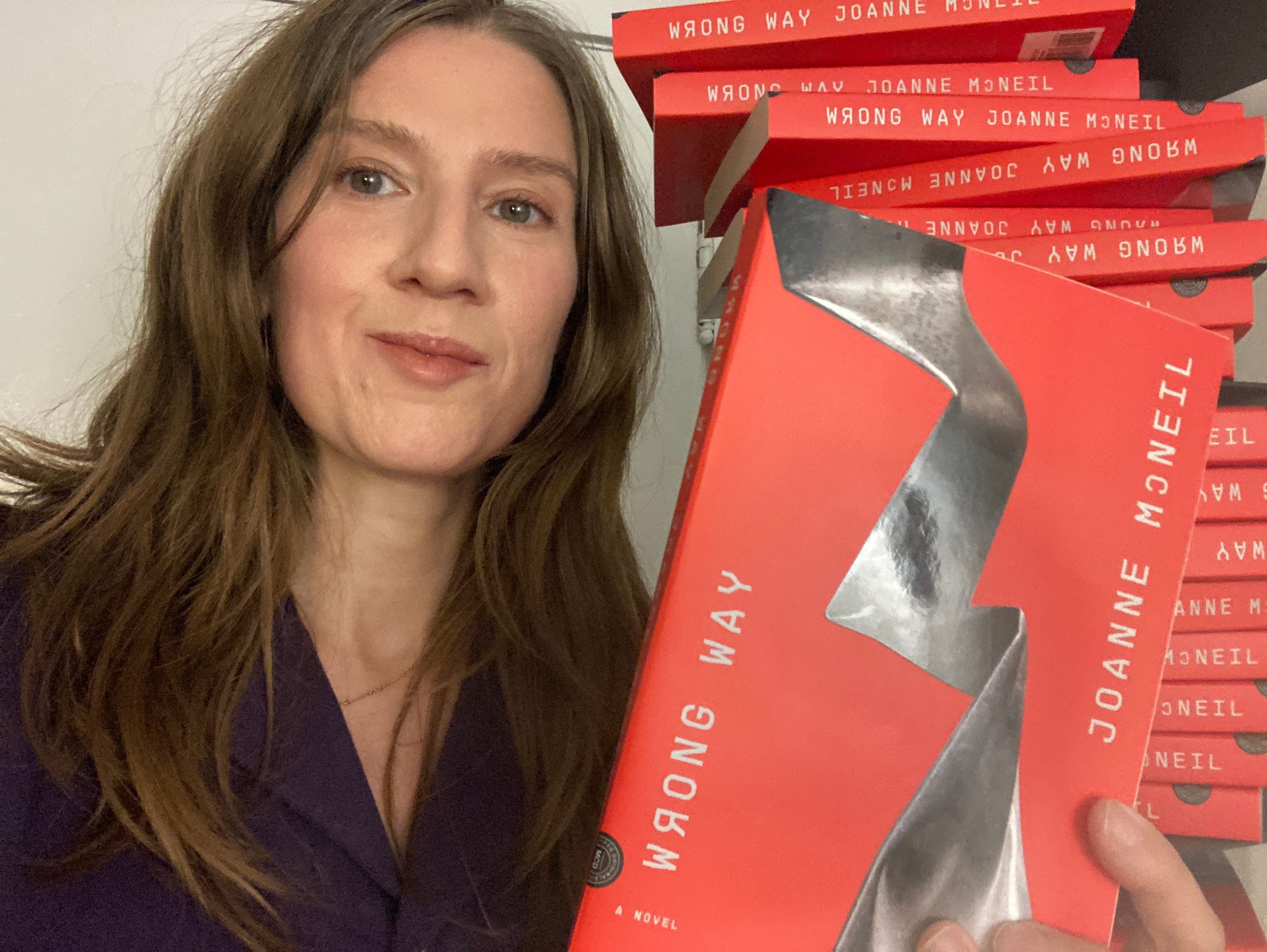
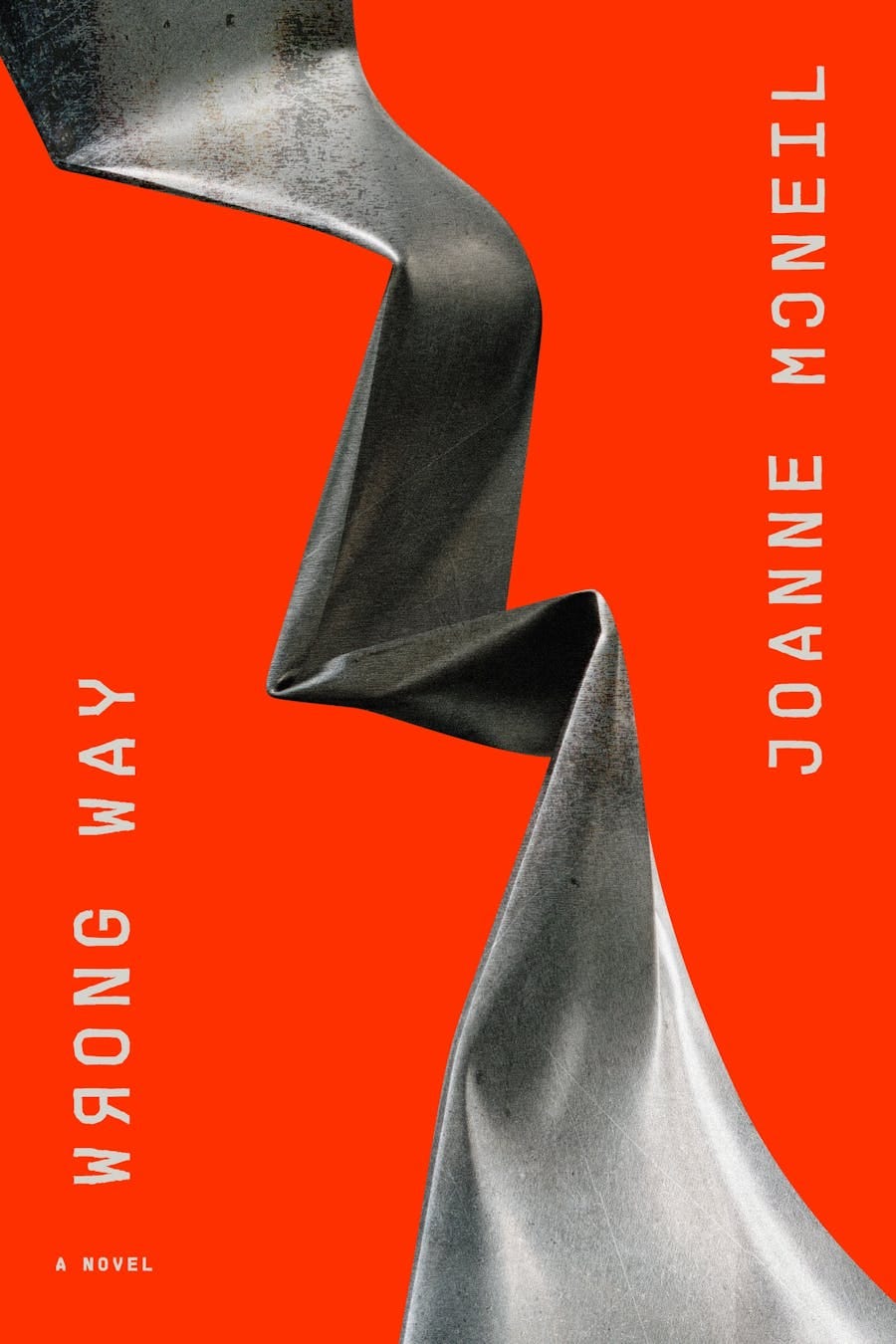
Wrong Way jacket art
Wrong Way is a novel about workplace precarity and careers. It's about a lot of other things like what it's like to lose a job (many, many times) and how even illusionary AI and "optimization" applications fill in the cracks and accelerate the pain. How the patriarchy determines a woman's potential, how elitism is anti-intellectualism in a tweed jacket, who bears the consequences of middle-class striving, and what’s under the hood of the American dream. And it’s a novel set in Boston that neither revolves around campus life or gritty red-haired criminals.
It comes out on November 14th and I could use your help.
If you're reading this newsletter, you probably enjoy my writing at least somewhat. Wrong Way is the best thing I've written in my career so far, and even modest success could give me enough wiggle room to go even further in books I hope to write in the future. Yes, it's a novel and it's long and it takes a long time to read, compared to a newsletter, but it's a page-turner (I hope) and not that long (you can read it in one sitting or two).
Please consider pre-ordering the book, especially from Massive Bookshop, a wonderful “anti-profit, abolitionist” online bookstore based in Western Mass.
For pre-orders of my book, Massive Bookshop is generously donating 40% off the cover price to MAAP (Material Aid and Advocacy Program). MAAP does incredible and much needed work in Greater Boston. They distribute things like winter coats and tents and sleeping bags to people sleeping outside and provide harm reduction and safe consumption services. I know how hard MAAP works — especially before severe weather—and even donating a few multiples of $7 can really go a long way.
As it happens, I was laid off from my day job on Monday and tomorrow is my birthday. So it's been a week. If either factors would inspire you to buy me a drink, if we were hanging out in person, well, I'd much much prefer a pre-order tbh.
Art that inspired me while I wrote WW, by Monica Alcazar-Duarte and Sascha Braunig
Other things that could help:
—Invite me to do any events, podcasts, whatever....I'm up for anything.
—If you’re an editor, consider assigning the book for review. There’s more than enough in it for one of those expansive review-essays about the way the world works now that everyone loves to write (and sometimes love to read too). Wrong Way is extremely topical with the moment. I welcome any commentary, even the pans (all the praise I've received so far always begins, "well, it's not for everyone ...but!!!”)
—Request your library order the book. It's a paperback original with a relatively tiny print run and libraries sometimes miss these ones for their collections. This really helps.
—Share on social media, add to Goodreads, review on Evil Store once applicable, whatever. We are non-optimized humans that none the less need to survive capitalism and its metrics of success. All the serendipities and chance and passions that art provides easily wilt without resources, and those resources are right now gatekept by this kind of bullshit.
And here’s the pre-order link again. By the way, if you send me a screenshot of your pre-order receipt, I’m happy to mail a personalized/signed copy of Lurking to you while supplies last (and I’ve got a ton in supplies, so that could be a while. Please take me up on this. I over-ordered copies when the hardback got remaindered, have no idea what to do with them all, and hate looking at my stupid name on my bookshelves).
(I’m sorry shipping costs make pre-ordering from a US-based store less ideal internationally, but I do know it’s currently available to pre-order at Foyles and Blackwell’s in the UK and Indigo and McNally Robinson in Canada. Let me know if you are aware of other places—especially independent bookstores!)
And, as always: if you cannot afford books — for whatever reason —and want a copy of your own, just drop me a line. No questions asked, I will get you a copy. I want you to have one.
This novel is one of those gambles that every once in a blue moon a big five publisher takes, which means every copy that moves off shelves will really count. Not only for me, but other writers who don’t adhere to the …*mutters something inaudible*
If you’ve ever said some variation of “why don’t they publish books like X anymore?” well, this one’s for you…
I don't exactly recommend it, but I remembered enjoying elements of the two or three episodes that I watched of Girlboss.
Show full content
I don't exactly recommend it, but I remembered enjoying elements of the two or three episodes that I watched of Girlboss. Yes, yes, the TV adaptation of Sophia Amoruso's book that was probably canceled as soon as it was released on Netflix in 2017. That’s the one. Stick with me here, I’ll get to why it came to mind in a moment.
What I liked about it was it captured how eBay transformed shopping in the aughts, which I haven't seen discussed as much as say, Napster to music. For a time, eBay was a cheat code: if you were patient enough and clever with search terms—anything you wanted, you could find eventually at a price within in your budget, it seemed.
And on the selling side, there were people making money—resellers like Amoruso, finding on-trend clothing in thrift stores. They would make the pieces look desirable on eBay with detailed listings and great photography with their most model-looking friends modeling. (Random thing I remember: you'd find storefronts like Nasty Gal not by searching for "vintage" but for "sienna" because Sienna Miller was THE fashion icon of the moment for her basic boho style. Typical listings would have a subject line like, "Vintage Faux-Calfskin Fringe Boots. sOooo SiEnNa!!!”)
I don't care about the building the girlboss empire stuff, but wow, do I miss when eBay was good. In 2006 — when the show begins — I was living in a group house, sleeping on whatever bed the previous tenant had left. Beside me were stacks of thrift store sci-fi novels. (I vividly recall having to cut mildew off the sides of two Thomas Disch paperbacks that I hadn't read yet because I knew I was unlikely to find those books again). Years later I would learn that Jeremy Hammond was one of my roommates but that I don't remember him at all—that there were roommates I didn't even know—says everything about my living situation at the time.
And despite this, I had Prada shoes in my closet, Narciso Rodriguez dresses, Gucci bags. (I hate that this sentence makes me sound materialistic but these were things I searched for and found). That’s what was hanging in the closet in my room in my shitty group house. I was struck by the craftsmanship of the pieces, the quality of the fabrics and the full-grain leather. I regularly wore outfits that retailed for what could have covered a year's worth of my rent. The spoils of eBay tricks: saving searches for a designer's name spelled wrong (“narscisco”), getting broken things — broken zippers that could easily be fixed, stains that could be hidden with a new hemline, etc. And if I didn't like the clothing that came in the mail, or if I got tired of it: I'd take better photos of it, write better copy for a listing, and sell it for more than I paid for (never could-make-a-living-off-this money, but, go-out-to-eat-several-times-a-month money).
It never occurred to me that reselling would scale—that seemingly thousands of people would try to build their own Nasty Gal types of empires. Thrift stores are just about useless now. Prices are jacked up for the Poshmark and Mercari resellers and the inventory is likely already clogged up with fast fashion Shein garbage, even Goodwill scans donations for good stuff it can put up on its own auction sites.
This is not the end of the world. Not in the least. But, yeah I really wish for women in their twenties making minimum wage to find a $3,000 dress for a couple bucks every once in a while, like I did then.
I finally found a good bookcase. That’s the second bookcase that has stood in this spot in my place in as many months. It’s a long story, so I’ll save it for the end.
Right now I am reading Money. In April, I had a library hold on the novel. Someone mentioned it to me in conversation and I thought, hmm...Martin Amis. He's fallen out of fashion, might be a good time to read him. I let my library hold lapse because other things had come up and by the time I remembered, he'd passed and there was a queue for it. That day, I got the last copy off Alibris. Surprised it’s out of print. Guess Amis really has fallen out of fashion.
I like it with perhaps even more reservations than I have for Girlboss. The story goes: what if a guy who sucks did not shut up and it was somehow entertaining. Oh, yeah, I’ve heard that one before too. But really, it’s okay. So far, at least.
It's taking me forever to read because I can only take about twenty pages at a time. I hate to be in this man's headspace for too long. It’s bleak and deficient in the self-loathing that ordinarily tempers an egotistical narrator. I have no empathy for this man at all. And yet I want to make it to the end. I see the Ballard influence on Amis (feeling alienated in the modern age) and I get from it what I had hoped to get from the Patrick Melrose novels (which struck me as minor—irritable rather than irreverent; too materially comfortable for wit that drives the knife in). This is the ravings of an unpleasant person at his lowest and brazenly despicable. It’s an interesting book and I’ll be glad when it’s done.
Now the bookcase…bookcases.
Let me tell you about my bookcase woes. These bookcases .... * Jennifer Coolidge voice*....are trying to murder me!!
I needed a bookcase for my new place. Don’t tell me about Billys. They are made of paper now and will inevitably topple over in an earthquake and kill me (yes, despite being made of paper). I needed a non-Billy bookcase and spent weeks searching for variations of “Oak bookcase” “Amish bookshelf” … on Facebook #$!@*&#! Marketplace.
Finally, I found a bookcase at a good price. I went to inspect it in person, it looked hefty—very midcentury grandfather’s study. Perfect, I thought. The sellers delivered it and within minutes my air purifier started going nuts and my allergies were acting up. The bookcase smelleddusty and vintage, like, musty in a sweetish way but not bad. I cleaned it with Murphy’s soap, washed it down with a vinegar rinse and everything else I read to do online. I removed all the shelves, and carried it — all 70 inches, about as tall as me — and put it on my porch to catch some sun and air out. And once the bookcase was outside, I felt so much healthier in my apartment. My throat wasn’t tickling anymore. I wasn’t sneezing, my eyes weren’t itchy. Inspecting the bookcase again, I realized the grime was mold and that the particle board the oak was veneered on was disintegrating because, it turns out, particle board is basically a sponge made of wood and glue and if it gets wet it stays moldy and mildewy forever. I remembered how the sellers took me to a dark garage to see the bookcase, and how, when they delivered it, they took their N95 masks off not when they left my place but after they put the bookcase down in my apartment. Welp, guess I got scammed.
The thing with bookcases is, they are big and heavy and a pain to move in or out. But I knew I had to get rid of this one, because I kept panicking that I’m going to get copies of my next book (more on that soonish) and if I put them on the moldy bookcase, the books—my books, written by me, a v very important authoress!!—would get moldy and maybe I wouldn’t even realize it. But what if I sent one of my books out….to somebody very important and…the book, in the mailer, sent media mail….got all moldy and arrived in that state. And that someone…opened my book… covered in mold!!!!!!!! (Sorry, guess this is the un-interesting part. All the intrusive thoughts I had in the space between discovering my bookcase was poisonous and not disposing of it yet). In the end, I put it up for free on Facebook Marketplace with detailed photos and some hardcore DIYer picked it up.
This left me bookcase-less.
The situation lit a fire in me. I did what I always do when I feel like I've been shown up: I obsessively studied the subject so it won't ever happen again. I spent what felt like years watching videos about types of woods, types of finishes, and furniture restoration (like this guy). I thought about taking woodworking classes but I’ve been taking pottery classes and my pottery keeps ending up with holes and all asymmetrical. And I thought well, what is the woodworking equivalent of fucking up and getting a hole in your pottery pot? Hmm…woodworking is probably not a good hobby for me, no.
I read countless Reddit threads about wood furniture and discovered the strangest of strangest people there — some guy whose entire posting identity is reminding people that This End Up is still in business. So then I just got lost down another rabbit hole looking at This End Up and vintage This End Up. And yes, I thought, this is probably a decent-ish solid wood bookcase but I couldn't get over the asshole hackysack philosophy major dorm-room early 90s aesthetic. If David Foster Wallace was a bookcase....I just know David Foster Wallace must have had a whole houseful of This End Up!
I expanded the scope of my studies to read about furniture in general, which has lead me to better appreciate set details from films I love, like that Rachel sits in a Charles Rennie Mackintosh Argyle chair in Blade Runner (Wow!)
Consequently, I have (newly) informed bookcase opinions. Here are some of them:
I believe the best bookcases —bang for buck-wise— are Amish-made, but oh, it turns out many in the Amish community are not good people. No, no. They don't just make bookcases but puppymills. Imagine learning that after spending thousands on a very well crafted cherry wood bedroom set. The poor puppies!
I believe that plywood is often a better material for a bookcase than "solid wood" if by solid wood someone means regular pine (and not “southern yellow pine.”)
More bookcase opinions from me: I think shelves with doors at the bottom are useful for authors because then you can store a bunch of your own books in there without having to look at them. Glass doors/barrister bookcases are also good if you have dust allergies or simply do not like dusting.
Finally, I got to the point where I think I can tell the difference between maple wood or poplar (like next-level wood familiarity). And finally, I felt informed enough to make an informed purchase. I went to a furniture store that’s been in business for a hundred years and got the marked down floor model of a Mission-style non-Amish but Amish-like REAL OAK WOOD 84 inch tall bookcase. Yes, it was still a lot of money but I will guard this bookcase with my life. It will never end up in a landfill!! Nevertheless, this second bookcase also, surprisingly, made me sick. Despite having been on the floor, it was off-gassing in my apartment like crazy the first few weeks. (You just can’t win—with old furniture, there’s the risk of mold and mites, and new stuff comes with VOCs.). The first night with Bookcase 2, I really thought that was it for me…I needed to decide: a bookcase or my health? Anyway, it seems to have mostly aired out by now.
More bookcase opinions:
Spine bookcase, I thought I hated. In photographs, I thought they looked too clever, too industrial and design-y and like you might as well just stack from the floor. But I found someone on OfferUp selling a DWR Story bookcase for a song and now I'm a convert. I want the planter now. It saves so much space.
That’s two bookcases in my little new place! More shelves than books, at least for now, with most of my books still in storage.
Oh, and the Story also solves the issue of transporting a bookcase — the whole thing can be dis/assembled with an Allen wrench. I knew someone must have written an ode to vertical bookcases by now. I did not expect that person to be Christopher Hitchens (and for City Journal??) But he was a mega-fan and if you look, you’ll find a bunch of photos of him posing all serious author-style with Sapien bookcases. Okay, well, he was right about *exactly one thing*.
Once I get a million things done this week, this is what I'm reading next. Look at that cover of Hospital Ship: Jesus and a dozen lads named Jez (I don’t know if any of them are actually named Jez but there’s definitely gotta be a "Euan" among them.) And that Rucker cover!!
I find myself often thinking about lost audiences.
Show full content
I find myself often thinking about lost audiences. Dhalgren was sold in airports. Someone living what might be thought of as ordinarily life could hear about it, get it, and go somewhere extraordinary with the work.
It worries me that an audience for any book now could be limited to people who themselves want to write books; attendees of an art exhibition are often people who themselves want to make art. I don't have hard numbers on this but I sense it. Instead of expansion and beaming work progressively out beyond the vanishing point, growth as an artist can feel like entering bigger and bigger echoing hallways.
Television, the prestige-y sort, fills this void somewhat. There is the broadly shared experience of HBO Sunday nights. Most of us can enjoy The Last of Us without scheming of ways to produce something like it ourselves—maybe because the challenge is obviously next impossible. I don't know enough about contemporary music to say whether that is still the case. But with art and books, it feels unusual to meet readers who appreciate the work for what it is: people who don't necessarily have interest in making or producing work themselves. It could be cultural institutions that have given up on trying to reach audiences beyond a party circuit; a niche that might feel like—when you are in the thick of it—that it is the entire thinking, breathing, art-appreciating world. But it could be a lot of things.
The role of the critic is another wrinkle here. Because someone with the exact and perfectly right opinions on music or film and can also...generate content off it (to use a coinage I don't like but can't really think of another way to put it). Another wrinkle here is that the internet—and creating culture through the internet—collapses boundaries between writer and editor and reader in a way that can lead to access points for people who wouldn't otherwise get a shot through traditional channels.
Maybe I'm still not explaining this well but when I think about lost audiences I think about being in high school and listening to the college radio from Bridgewater State College or Stonehill. There were no DJ personalities. Just music that was good and rare. Someone was probably spinning their own CD collection. And I got exposed to music that I wouldn't otherwise hear. I could listen to this music in the suburbs, I could sit on the floor and read Burroughs and Ballard novels at Borders in the suburbs. I could, myself, live what might be considered an ordinary life, while loving the culture that I do—I could find it, it was there. I didn’t need to know the right words to enter into a search engine.
Who were those DJs and where are they now? High school teachers, warehouse workers, veterinarians, office managers, accountants? I don't know. The people I'll never know who were spinning Spacemen 3 or Helium on state college radio stations that I heard one night out driving at midnight that was now a long time ago: yes, that's who I write for...that's why I'm here, and why when it's hard, I am stubborn to stick around. I got the signal from them, when I needed it; how do I send a signal back? What makes the cultural spaces I’ve gained access to such closed loops and how does one break out without giving up?
My attempt to answer these questions comes in a piece I wrote for Dissent magazine with the support of the Economic Hardship Reporting Project. It's a profile of two brilliant artists, Brittni Ann Harvey and Harry Gould Harvey IV, and their art space, the Fall River Museum of Contemporary Art.
My friend Julian Hoeber’s exhibition just opened up at Blum & Poe and it's so good it made me laugh. The work is fun. It’s a word I almost never use in an art context. But it’s fun! I love the rich colors and play on stereoscopic vision.
There’s also a great survey of Bridget Riley’s work at the Hammer. The show is installed in a clever way. There’s a room in the center of the gallery with Riley’s student work—typical art student paintings. But in this room, there are cuts in the walls, so you can see between Riley’s student paintings, glimmers of the rest of her work—the paintings that were soon to come, it underscores her potential that was always there. At about the age of thirty, she completely stopped producing traditional paintings. She transformed as an artist, and only painted “op-art” from that point on. And at the about the age of forty, she transformed again and introduced color into her work. I hadn’t realized how all-encompassing the chrysalis had been for her and I found it inspiring. I want to go back. I sort of rushed through it because I had several minutes to kill before meeting someone.
#
At another gallery, I found this newsletter. I took a seat and read the whole thing.
There have been a few newsletters I've written in my mind in the past several months but couldn’t find the time to send. Like how I spent Thanksgiving at Epcot with my sister and it really was exactly like I remember when I was six years old—Figment!!—but like, all janky and falling apart.
It’s really a magical place. Like the magical thinking required to believe that some five year old child, born in 2018, could possibly care about Buckminster Fuller or “The World of Tomorrow” as it appeared in 1955 or 1985—I think even then, it wasn’t clear when exactly the imagineering took place or what year was the future ideal. Spaceship Earth is the highlight, of course, because the lighting is so good that even these janky forty year old animatronics appear somewhat lifelike.
I also thought about writing about the X-Files again. I won't, but I still think "I want to want to believe" is a good title which is why I'm going with it.
Here’s something else I wrote: WPO. It’s a short story that appears in the Terraform anthology of science fiction. (Since then, I found a Suluki rescue page that hasn't been updated since...2006).
#
65 is the best movie I’ve seen in months because I haven’t bothered seeing movies in the theater in months. But if there were movies released like this every week, I would go every week. I did love it. It feels like a 21st century spin on the mid-century sci-fi thrilling adventure tale. It is, unexpectedly, very The Incredible Shrinking Man (because Adam Driver is wittle and the dinosaurs he wrestles are sooOOO BIG!)
##
I also had some messy notes to further explain my last newsletter. Maybe this is helpful to share? More of what I’m thinking about these days:
Integrity —that’s the self you bring to the project
Conviction —that’s belief in the project
High conviction, low integrity — belief in it for reasons outside of you; maybe you are convinced it is good for your career
Low conviction, high integrity - being yourself in a project, despite not believing in the purpose to the project
Again, raw notes. Every artist knows there’s a difference between cheating at cards (because the outcome of success is valued more than the process to get there) versus playing to experience chance and making yourself vulnerable to all elements of chance. People decide to put themselves in the work, or hide from it; and any reward you can possibly reap from it depends on the path that you take.
I had an epiphany over the weekend. No, I'm not going to tell you about what. But epiphanies are such a fleeting joy. I was just hanging around, not really paying attention to a Netflix show and eating that weird birdseed-looking peanut brittle from the Monadnock Food Co-op and then something occurred to me: ah yes, I should do that and I can do that and if I do, well, things might be slightly....more good for me.
I don't know if I've ever even used the word "epiphany" in a sentence before. Obviously I'm joking but not completely. I had an epiphany! It felt great!!
I will share the findings of a previous epiphany (which I did not think of as an "epiphany" at the time, but certainly fits the bill).
Ok, here goes: I realized that the quality I value among the most highly—if not the most hightly—in an artistic collaborator is conviction. A lot of words are thrown around when it comes to creative work: trust, community, "gift" in the Lewis Hyde sense, sincerity, etc. But conviction is different—it's belief in what you are doing, being driven to create something because it must exist. Because it exists already in your mind so strongly that it has to exist in the world. Conviction doesn't cower to market forces, it doesn’t move with trends. If it's not there, then what are you doing? I realize now that what I dislike about certain work—novels, films, whatever—is a lack of conviction.
And here's a borrowed epiphany. This John Cage quote on art-making knocked me out. Another great feeling: "When you start working everybody is in your studio—the past, your friends, enemies, the art world, and above all, your own ideas—all are there. But as you continue painting, they start leaving, one by one, and you are left completely alone. Then, if you are lucky, even you leave."
I went to the Whitney Biennial which was as uneven as a major museum survey exhibition with a political message can only ever be, but I was glad to see it. Especially Coco Fusco's video piece, Your Eyes Will Be An Empty Word (2021), which left me weeping. The piece strikes the perfect tone: not too polished, nothing mawkish, elegiac in simplicity. It's difficult to create a project that involves a history and structure as somber as the Hart's Island potter's field without seeming showy or too on-message. It's worth it to track down a clip, to see the artist struggle a little with the oars of the row boat and the awkward way she drops the flowers.
I also liked Jonathan Berger's flash fiction-style texts presented in tenderly garish metal structures. The piece, by the way, from every description I’ve read of it, is something I would—had I not seen it—have imagined I would not like. One of the floors was closed by the time I got to the biennial. So I'm just going to charitably imagine that I missed all the good stuff.
I also caught part of the New England Triennial at Fruitlands, which was so much better than I expected. Like this one…
of the artist Heather Lyon in a space blanket performing semaphore communications in various terrains and continents. Also, Sascha Braunig's paintings are astonishing to see up close.
#
My very easy go to book recommendation—as in, anyone will like this and there's not a lot else like it—these days is Chester Himes' A Rage in Harlem.
And somehow, despite having been a teenage girl who spent hours in the poetry section of the library, I'd never read 45 Mercy Street by Anne Sexton before. I had the sense when I read it for the first time last week that although I'd never read it before, I'd inherited it through indirect channels and much of what I've been writing lately has been working in that direction without me realizing it.
A highlight for me this summer was arriving in Malmo—after a flight from Boston to Copenhagen—drawing a hot bath in my hotel room as soon as I checked in (the knob, at the height of European practicality and luxury, let me set the temperature before turning the water on, thus no waiting around for the cold water to warm up and trying to mix it around with boiling water to reach the right level of hot), setting my laptop up on the sink….
Show full content
Malmo
A highlight for me this summer was arriving in Malmo—after a flight from Boston to Copenhagen—drawing a hot bath in my hotel room as soon as I checked in (the knob, at the height of European practicality and luxury, let me set the temperature before turning the water on, thus no waiting around for the cold water to warm up and trying to mix it around with boiling water to reach the right level of hot), setting my laptop up on the sink….
And watching The Sandman series straight through, all bleary eyed, until it was a reasonable CET hour bedtime. I loved it. But the conditions, I think, certainly influenced my love of it.
My memory of the comic book is pretty hazy. It’s something I enjoyed but not in a foundational, dressed-up-like-Death-for-Halloween kind of way. Magic and fantasy have never quite been my thing. Yes, I know what a sigil is and I've read and enjoyed the biography of Aleister Crowley and yes things like the history of JPL are really fascinating but ultimately I think there are two kinds of nerds.
There’s the sort who can look at an object like this and think....
Ah yes, a helm. This is something the Morpheus must absolutely have among his possessions. We can't expect the Dream King to go about his business without a) his sand b) his ruby and c) this helm and only this helm.
And others who think, okay, well, how essential can this thing actually be? Can't Morpheus refashion a replacement for it with some sunglasses lenses, pipe cleaners and old vacuum cleaner parts?
That's my problem. I bargain and concede too much, my temperament is insufficiently magickal. In many ways I wish I were the other kind of dork but I am not.
So the series. The acting is terrific, the special effects are as great as I’ve seen on television, but it’s definitely not perfect. Some of the story beats are out there obvious like exposed conduits and wires, like:
Oh, no. I have lost my helm. I must...
Try to get my helm back
Alas...I have Failed Once in my quest to get my helm. Therefore, I must Try a Second Time to get back my helm.
but, oh dear. I have Failed in this Second Attempt. I will Try a Third Time to recapture my helm.
My Third Attempt is a.....Success! My helm is back and therefore I, the Main Character, can Return to my Ultimate Adventure!
I can't remember how much this was in the comic books which I want to say were much more subtle about ratcheting up suspense. But even still, I loved the series.
Oh, yeah and Malmo. I was there for The Conference. Which was pretty great!
#
Like thousands (he was really great at making friends), I counted Peter Eckersley as a friend and I’m still in shock over his passing last week. Many remembrances speak of his influence and groundbreaking work in internet privacy and security, but a testament to his character was that when you met him, he was always just a person.
I met him fifteen years ago at a time when computers were still a niche interest and a genuine interest. For a blink of an eye moment in the aughts, people's conversations about technology were about technology and not actually about money. And this was a unifying interest for artists, activists, musicians and others who might have otherwise been siloed (as they are now).
I find myself mourning my old friend and this extremely brief moment in time. In other cities, I imagine the end looked like the money rolling in. VC funding and all that once web 2.0 cracked its problems with “monetization.” In Boston, the end of it looked like Harvard people at hacker spaces. Suddenly, everywhere you looked, there were Harvard people. I guess they heard about the money (And yes, almost certainly there were Harvard students in the mix in the years before 2009-ish but no one would have known because they would have had to show up as just a person among other people rather than a *jazz hands* Harvard person there to *hip roll* demonstrate leadership and *finger snap* build a personality and personal brand out of being there.)
I wrote a little bit about it here and I’d like to write more at some point about this particular time and place and what was special about it. Because I know I’m always going to be chasing something like it: a truly engaged community of open-minded people excited by new ideas with a generosity of spirit. A scene where no one cares what your dad did for a living, where you went to school or even if you went to school. Intellectualism without the elitism, collaboration without the gatekeeping. I know I’m romanticizing it, and certainly the white dudeness of it all was a real problem. But Peter was exemplary of the parts of that moment that were truly great.
#
Recently I reviewed Hanna Bervoets’s novella We Had to Remove This Post for The Nation. I also discuss the movie Kimi (which I absolutely loved), Sam Byers’ Come Join Our Disease, and the various ways for better or worse content moderators have been covered in the media.
Previously, in Filmmaker, I wrote about the excellent anthology “Dangerous Visions and New Worlds: Radical Science Fiction, 1950-1985” published by PM Press last year and the long influence of new wave authors. Something that anthology does very well is point out how much editorial visions (Michael Moorcock and Harlan Ellison, in particular) led to this great moment in experimentation in science fiction.
Leaving you with this photo of a tree frog I happened to meet yesterday:
At few weeks ago, at a virtual event, Michael Moorcock said JG Ballard couldn’t tolerate “nerdy stuff,” and that “Jimmy had lost his respect for Ray Bradbury” after he found out the other author collected science fiction memorabilia.
Show full content
At few weeks ago, at a virtual event, Michael Moorcock said JG Ballard couldn’t tolerate “nerdy stuff,” and that “Jimmy had lost his respect for Ray Bradbury” after he found out the other author collected science fiction memorabilia.
I keep laughing when I remember this; Ballard finding a photo like the above and thinking: AYFKM??!
Samuel R. Delany gave a talk too. Hopefully the videos will be online shortly. It was hosted by City Lights and should be on their YouTube page soon enough.
Delany was so serene looking when he was young:
I found out recently that Dhalgren sold over a million copies. Half a million in just the first two years; there were nineteen printings of the Bantam paperback original.
#
Everyone seems to be wondering what trends will emerge now that everything feels old—either very mid-quarantine or even pre-pandemic; and maybe we aren’t exactly post-pandemic yet but there is a new energy that’s happening and it’s hard to see, let alone name as of yet. My sense is it’s going to look like a return to ambiguity.
I find myself longing for art that refuses to explain itself. Dhalgren was like that for me, Mulholland Drive is another well-known example. Good music always does this. There’s been, for a while now, a Clarissa Explains It All-quality to movies and books, where everything is made for “analysis” and culture criticism. It is defensive and exhausting. When I saw that even Emily Ratajkowski released a Trick Mirror-inspired book of essays I knew that whatever you call that style of writing, it’s coming to an end. Also, this tweet about everyone talking these days like Patrick Bateman’s monologues on pop music (inspired by something from this interview) seems like a weak signal.
I want the work that’s intuitive, subconscious-driven, and hypnagogic rather than the contrived, the ass-covering, the people-pleasing, and the crowd-reading. “Analysis” of this work can’t be traded in Letterbxd reviews or Substacks—this one, included—which is exactly why I’d bet on it that this is where the wind is blowing.
I was sorting through some old files the other day and found this extremely messy attempt to storyboard the novel I was writing at the time that did not end up working out for a number of reasons. Don’t mistake this for the work of a precocious teenager. No, no, these illustrations were made by an extremely determined twenty-nine year old woman.
This story from an essay by Frederick Pohl (editor of Dhalgren!!!) is why I love science fiction: it’s a losers club! A proud losers club! How seriously can anyone take themselves if they are, on occasion, engaging with 14 years olds—as peers? Here’s a related story about another 14 year old approaching Octavia Butler to write for his zine.
#
One book I’d recommend to just anyone is the The Library of America Crime Novels of the 1930s & 40s. You get The Postman Always Rings Twice, They Shoot Horses, Don't They?, The Big Clock; two other novels I don't know but I imagine are great given that company, and then Nightmare Alley—the reason I picked up.
Every time I read crime fiction from that era, I always think I should do that more often because the dialogue is always so crisp. The detail and the stakes and the style is always so rich and engaging.
The flip side of the American Dream. Of course Nighmare Alley was bound to be good. I loved seeing co-screenwriter Kim Morgan’s influence all through the film, as well.
Guillermo del Toro is just the most humane kind of nerd and it comes strongly here. Now this is a film that could be written about to death with “analysis.” It’s about scams, after all, which invites writers like me to explain how it explains NFTs, MLMs, social media, gerrymandering, whatever.
I don’t really care to do that, but I will say that one element that I’ve seen criticized regularly — Bradley Cooper’s performance—is, I think, what ultimately holds the film together. Cooper is so flimsy and disposable; he shrinks in scenes next to Toni Collette and Cate Blanchett. He leaves you with the impression of a man, who isn’t terrified of doing wrong—merely scared of getting caught; losing it all. He’s done wrong from day one. Getting away with it is all he wants.
I keep watching TikToks of teen goth girls exploring abandoned (haunted) hospitals, theaters, and air fields around New England.
Show full content
I keep watching TikToks of teen goth girls exploring abandoned (haunted) hospitals, theaters, and air fields around New England. And teen commentary on New England field trips like this one.
It was a blog cliche a decade ago and exploitative, frequently—all those white Brooklyn photographers going to Detroit to take pictures of run down places. But I thought this interview conveyed what we actually see of these spaces, something more than time passing or the curiosity of the decay. When you look at these abandoned buildings, you see where "All the wealth was taken out." The abandoned theaters, especially, that were opulent in their time, "represent their own sort of loss, which is an investment in a community."
I’ve spent a little bit of time around Fall River this year, and each time I’ve visited I’ve felt overwhelmed for that reason: the built environment was made for people who are no longer around. You can feel the gap between the purposes the roads and buildings were designed to serve to what people need now, and what modern uses would demand. But even in the wealthier parts of the state, you are regularly standing on history and reminded of a past that was—in a specific way—better than what we have now. Like the rail trails everywhere. Nice to bike on, yes, but I’d much prefer to hop on a train.
#
I wrote about the metaverse for the new issue of Filmmaker magazine including 90s movies about virtual reality like Disclosure and The Thirteenth Floor. I also talked a little bit about Neal Stephenson as a colleague of Silicon Valley titans. There’s a lot I admire about his writing, but his original vision of the “metaverse” is, if anything, complementary to what Facebook and other companies are developing.
I was watching How To with John Wilson and got distracted trying to think of what the show reminded me of: Ross McElwee, yes, but there was someone else. Someone British. Had to be Channel 4. A video essay style documentary with a host walking the viewer through various histories….some man shouting to the camera about architecture, politics, automobile design, and “PRO-gress.” Not Chris Morris, not Louis Theroux, not Adam Curtis, not Charles Brooker, not any of them. The name I couldn’t remember but I knew it was a name like James Meek, the London Review of Books contributor. I thought about asking my readers here, but I was slightly worried that the videos might be deBotton-y and not hold up. Anyway, a million google searches later brought me to Jonathan Meades.
I also started watching Beforeigners, which I like so far—it’s the first science fictiony thing I’ve come across in ages with a premise that genuinely feels new. The “beforeigners” are people from various eras: 19th century, Cro-Magnons, etc that inexplicably keep washing up on the shore; and this being set in Norway, the beforeigners are mostly Vikings. There are lots of jokes about drinking mead and being someone’s “shieldmaiden,” but it reminds me, in a good way, of In the Flesh, as for the most part the show avoids the easy on-the-nose situational humor for conflicts that are a little more surprising.
#
The Current War is not much more than a Wikipedia article about Westinghouse and Edison come to life, but I really enjoyed it because it’s so beautifully shot. This is all the work of cinematographer Chung Chung-hoon, who shot a bunch of Park Chan-wook’s films like The Handmaiden, as well as It and Last Night in Soho. He’s got such a distinctive style that what could be another dusty period picture feels really alive and immersive.
One thing that doesn’t work in The Current War, is a common problem and that is, I don't think there will ever be an actor truly out-there enough to play Nikola Tesla. Not Nicholas Hoult, who is otherwise a great actor, but look, even David Bowie lacked the charisma to pull off the part in The Prestige. Tesla was lean and handsome like Keanu Reeves or Hozier or somebody like that, but without their inner peace; he had grace with an inscrutable edge. He was a spindly outsider—a gambler and a mark—who experimented with literal bolts of lightening, and was one of the weirdest people to have ever lived. I mean, just look at him:
Who is Tesla smirking at? The photographer? Society at the turn of the century? You? Me? All of humanity, past, present, and future?
This recommendation might be a little to late to be useful, or maybe it is extremely early: I picked up a Slingshot organizer randomly at the bookstore and it’s nice to scribble out notes for the day on paper. I used to order them every year and all the activists I knew from anti-war protests carried them. It was the cheapest day planner you could find: just $5 at the time (the price has now risen to a still very reasonable $8). But then I got an iPhone, and I had apps for calendaring and got out of the habit. I love the hand drawn calendars and activist trivia (today, January 27th, “2011: Yemanis take to the streets protesting President Saleh.”)
On the Slingshot Collective website it says, “Ug – huge apology the August, 2022 month-at-a-glance calendar in the organizer has the wrong numbers on it – you’ll have to fix it by hand." But that’s exactly why I got it: for the mistakes a computer would never make.
The book I'm recommending to everyone these days is Man Hating Psycho by Iphgenia Baal. But don't just listen to me. Look at the subtle yet effective way they worked Alan Moore's blurb on to the cover:
Show full content
The book I'm recommending to everyone these days is Man Hating Psycho by Iphgenia Baal. But don't just listen to me. Look at the subtle yet effective way they worked Alan Moore's blurb on to the cover:
I'm going to call this my favorite book of the year because I read it last month, loved it, and can't really remember what I read since January. It's so new and alive and responding to now in a way that no one else really has a handle on. Plus it's published by Influx Press which I'm pretty sure has never published a single bad book. So that's it: THE best book of 2021.
I also read a bunch of Percival Everett novels except for Trees, but I'm sure if I got to Trees that would be my other favorite.
My favorite movie this year was Censor but it might have been The Souvenir Part II if I had caught the film before it left theaters around me. I rewatched the first one a few weeks back and marveled again at Richard Ayoade character's line "So I'm trying to work out... where you two tessellate here." Tessellate! How do they tessellate? How do I tessellate with anyone? A remarkable verb changes everything.
I'm proud of this essay of mine which was published last month about the tech industry outside of Silicon Valley, including its culture and origins: Silicon Everywhere.
I also wrote a Nieman Lab journalism prediction for 2022, which I summarized in this shitpost tweet, a rare good tweet of mine to go viral (usually that's what happens to my boring tweets).
My other favorite this year is I Think You Should Leave. I love that the jokes all level up to the absolute tiptop of absurdity. With Dan Flashes, it’s not just that there’s a place with expensive pattern shirts, but that this guy is lying on a couch exhausted because he hasn’t been eating because he is using his per diem to buy the shirts. He's like, the hunger artist of dumb shirts. AND his coworker is really, really mad at him for doing this because its getting in the way of his work! Most of the sketch is exposition in the form of this extremely old coworker tattling on him. Incredible.
I guessed before looking him up that Tim Robinson had to be from the Midwest. I've had extremely dumb and horrible grunt work jobs in Boston and DC, but in Chicago, for whatever reason, that's where jobs were always strange in a way I can't describe other than ITYSL-ian.
Maybe I’ve told this story before, but I worked a temp job at the Quaker Oats corporate headquarters in Chicago for a couple months in the aughts. It was nice because there was a breakfast bar where you could get oatmeal with fresh berries and walnuts and other toppings. So I'd clock in, fix oatmeal and bring it back to my desk and do whatever mindless data entry that was my task for the day.
My second or third day on the job, the company had announced a new product: Tropicana OJ with fiber. The company staged a mock wedding for all staff to attend with oranges as the groom and fiber as the bride (I think this was represented with wheat stalks on a silver platter). I just remember feeling, well, “I don't want to be around anymore.” It was all the horrors of being at a wedding where I don't know anyone. And the horrors of being around coworkers I didn’t really know or want to know. And it was early in the morning that this "wedding" happened so I was exhausted and barely awake (The worst thing about Chicago was many of the jobs worked on New York time, which meant clock in at 8.) But, in retrospect, it’s hilarious that I witnessed all this. Anyway, that’s why I love I Think You Should Leave.