GeistHaus
log in · sign up

Brilliantcrank

From the opinion desk of Greg Storey

rss
15 posts · 1 narrative
Feed metadata
Generator Ghost 6.28
Status active
Last polled Apr 29, 2026 01:35 UTC
Next poll Apr 30, 2026 01:35 UTC
Poll interval 86400s
ETag W/"267af-ZlmivIHDGmqm5gWODb0zPYNoQkQ"

Posts

Corporations desperately want what we all have and what we can build.

About a year ago I wrote about companies stripping themselves to the studs—not just cutting costs but searching for their Minimum Viable Humans limit. Exploring what the corporation actually needs people for. Twitter was a very public prototype for this line of thinking, the work involved, and the

Show full content

About a year ago I wrote about companies stripping themselves to the studs—not just cutting costs but searching for their Minimum Viable Humans limit. Exploring what the corporation actually needs people for. Twitter was a very public prototype for this line of thinking, the work involved, and the consequences. The human cost has been extremely high but all things considered Twitter is still here. I won't argue that it's a shell of what it used to be, but no fucks seem to be given and the layoffs continue en masse.

Jack Dorsey recently cut over 4,000 people from Block and described it like a cleanse. A smaller company would give them space to grow the right way, he said, as if people were clutter in the garage. Zuckerberg keeps marveling that one employee can now do the work of entire teams—the same teams he hired, managed, and extracted value from for years before waking up one day to consider them optional. Oracle deleted thirty thousand from the books while mid-level businesses cut entire departments of 50-100 people without making a single headline. These aren't warnings. These are victory laps from men who praised the masses for their incredible work and then relabeled humans as bloat. And now they want praise for removing it.

What they aren't sharing is what's keeping them up at night: their irrelevance made possible by scrappy, comparatively tiny companies who aren't tied to shareholders, government regulations, operations that will always have at least one foot in the past—playbooks that are now worthless. The foundations that we created since the 90s and evolved over time are liquid magma. They might not show it, but I assure you the tech bros and their cross-domain siblings are running scared because one person with a laptop and a $100-a-month Claude account will start to chip away at their value proposition to both buyers and investors. And here's the kicker—the part I love—is that these individuals don't have to come up with a different version of the thing we already have because everything is liquid.

We're living through some very scary and disruptive times but history proves that this is the moment when our wants and needs shift the most. Tradition? Out the window. History? Exactly that. Long term relationships? In this economy, uh it's been swell, catch you on the flip side.

It probably doesn't feel like an advantage. It feels like exposure. But exposure and freedom are the same thing described by people in different moods. The billionaire bros would love nothing more than to tear everything down and rebuild from scratch, but they've got shareholders and regulators and the accumulated weight of their own empires slowing them down. You and I—whether we're solo or running a small team—are already standing on the cleared ground they're still demolishing walls to reach.

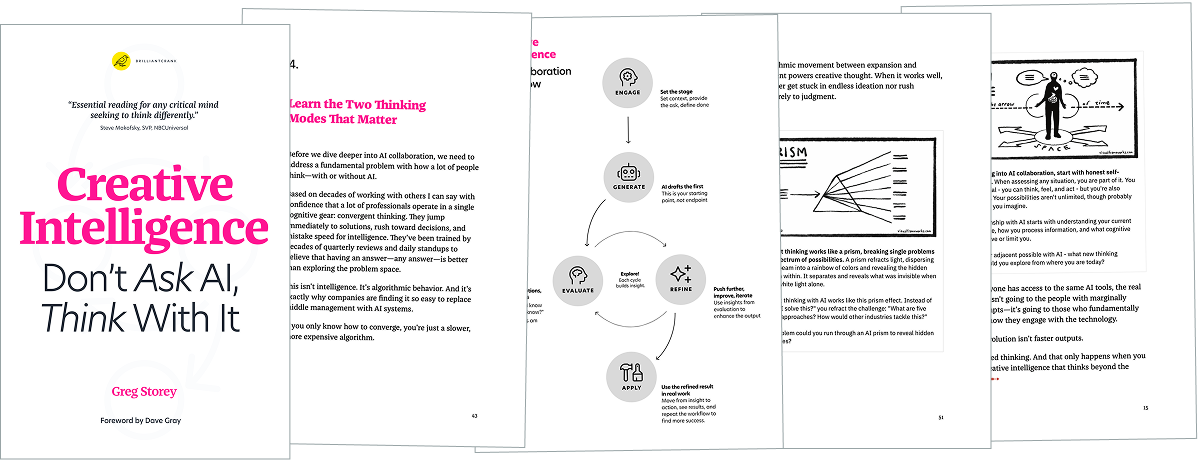
We have an asset that their money cannot buy. The freedom and ability to use new thinking and tools to create the future. We don't need investors. We just need to stay curious, rewire our brains as to how things are vs. how they could be, learn new skills, gain new perspectives, and build aggressively. This is a once in a generation opportunity to hit the reset button across professions, domains, and industries. We are living in a singular moment in human history when our ways of thinking and our technology are shifting simultaneously (read chapter 1 of Creative Intelligence).

Just so we're clear, I'm not thrilled that we're here. I think most of us would prefer to take the blue pill and go back to eating steak and drinking dead grapes. But we're all out of the Matrix one way or another and whether you feel like it, now is the time to move, but not alone.

Anil Dash recently wrote about coders with soul seizing this moment to build independently and look out for each other. He's right. But this isn't just a coder story. This is everyone's story. It's time to start forming communities. Real ones. Not social media, LinkedIn—let's grab a time for virtual coffee bullshit. Actually find and connect with people. Builders across disciplines—coders, designers, writers, strategists, people who make things. Communities formed and held together by trust, alignment on first principles, and mutual investment.

This is the one thing corporations structurally cannot replicate. Community requires actual humans. Not human resources. Not human capital. Humans who remember what you're working on and check in because they care, not because a project management tool sent them a notification. The companies that have been shedding humans as the reason why they fail to innovate and thus the stock isn't performing are not going to out-community you. This is our second superpower that Zuckerberg doesn't understand and cannot buy. Think about all of the communities that corporations purchased and how quickly they all turned to shit. This isn't a coincidence.

But don't go looking for a community to join. You don't build this by launching a Discord server or posting "looking for my people" on Bluesky. You grow it. Pick two or three people you're already in real conversation with—people whose work you actually follow, who'd notice if you disappeared. Make it deliberate. Not networking. A mutual commitment to show up for each other's work, to pressure-test each other's ideas, to build things together. That's the seed. Everything else grows from there, or it doesn't. Either way you're not alone anymore.

We can't will the past to come back and we should not wait to see what happens but instead make things happen. The sooner we exercise these new powers the sooner our futures will start to take shape.
69d66ec9294b750001207d59
Extensions
A roadmap to a Viking funeral.

This weekend I met with a long-time friend who was looking for direction on a new role. The legacy program they inherited is operating like it's 2005, the company is burning through money and leaving it on the table at the same time, and it's all

Show full content

This weekend I met with a long-time friend who was looking for direction on a new role. The legacy program they inherited is operating like it's 2005, the company is burning through money and leaving it on the table at the same time, and it's all happening because the entire company doesn't know what they don't know that they can't see. My friend is overwhelmed by the amount of change that should happen to help improve the people, practices, and the company in general.

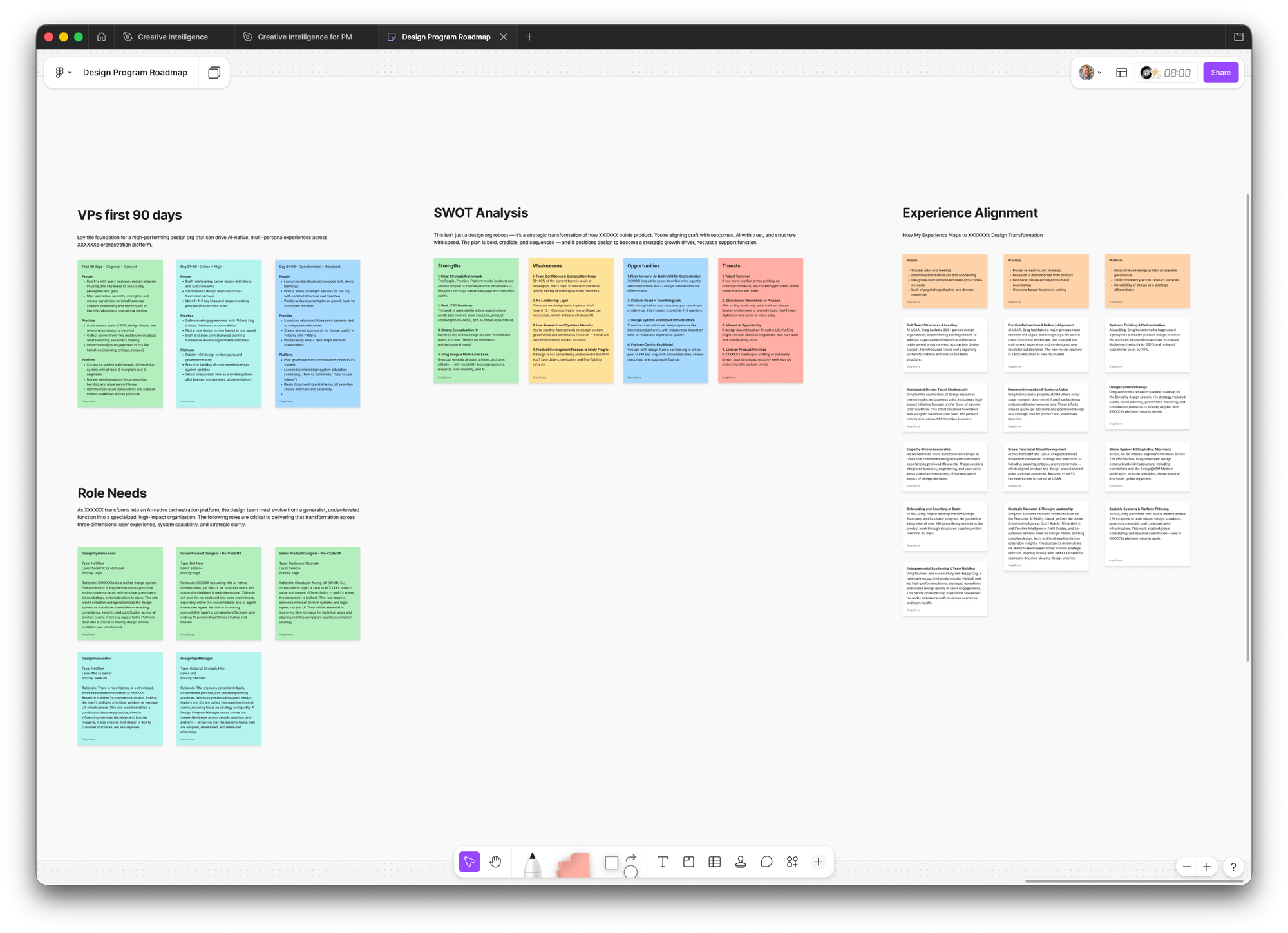
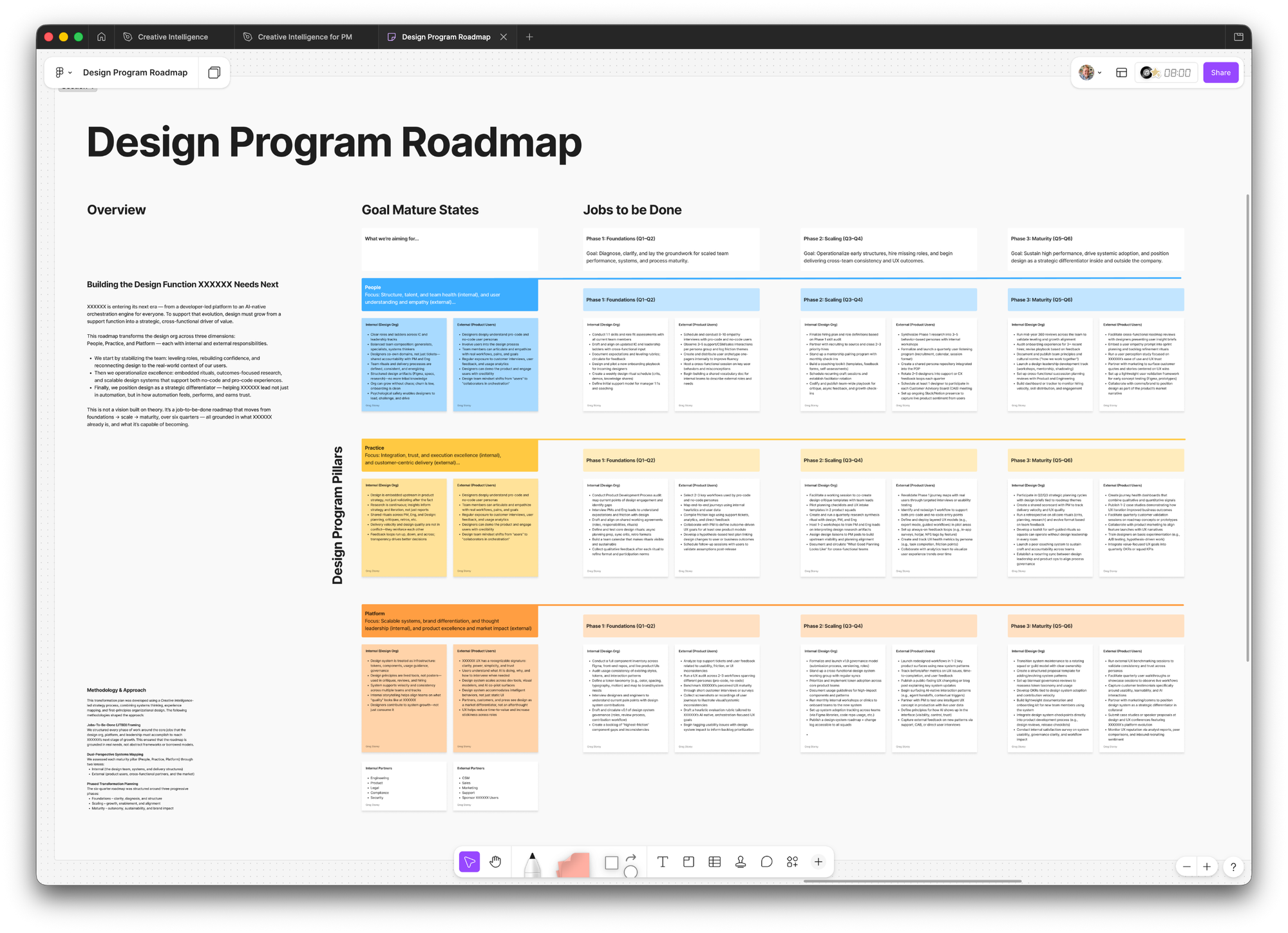
So, I brought up some work that I did last fall as part of an interview for a leadership role in product design. The hiring manager had come up with a rough plan for what they thought the program needed to do in 12–18 months to get design on par with operational maturity and work quality. They provided a high-level overview and in response I offered to come up with a plan from my perspective with the intent of comparing the details. I thought that would be a great way to immediately assess where we are aligned and where we need to collaborate to get aligned.

We met a few days later and I presented a plan that included a six-quarter roadmap of jobs to be done across the themes of people, practice, and platform. Each quarter contained internal and external objectives and goals. Because the program was to be stood up almost from scratch, I felt it was important to delineate between work inside the design program and work needed to develop partners and relationship management. I then included a high-level plan for the first 90 days, a SWOT analysis of the entire roadmap, notes on roles that I believed would need to be hired for mission success, and a section that mapped my direct experience to the different facets of the roadmap.

I presented everything to the hiring manager who called it a “good plan” and asked if they could review it. I granted permission and never heard from them again. The sound you're now hearing is a flaming arrow arcing gracefully through the air to light the Viking funeral pyre for my career. Maybe I'll try leading again in Valhalla.

Anyway, I'm sharing this work and the story for people out there who might be in the same position as my friend—people who need direction and structure to research and catalog all that needs to be done and prioritize it into a roadmap, a plan. This is what it looks and feels like. It's not the end-all-be-all, and no one should copy what I've done wholesale because what works for me may not work for you, but there are times in my career where it would have been so helpful just to get an idea of what strategy looks like.

69a5bbdd846ff90001604537
Extensions
Is it worth pointing out the use of technology anymore?

What happens when a prolific author integrates AI into their work so much that it turns up wholesale in their writing? Seth Godin—said prolific author—recently posted an argument for hiring freelancers instead of using technology on his blog. While I agree with his message I paused

Show full content

What happens when a prolific author integrates AI into their work so much that it turns up wholesale in their writing? Seth Godin—said prolific author—recently posted an argument for hiring freelancers instead of using technology on his blog. While I agree with his message I paused when I began the fourth paragraph which starts with a telltale sign of AI writing.

Here's the thing: nobody writes like this, only the robots. Now, I'm sure there are folks out there who do but it is now so prevalent that it stands out like a statement on a back of a consumer product: Made by AI.

It's not the making with the robots that I mind but the laziness of using the output wholesale. I use AI all the time to help with editing because I'm a horrible speller and sometimes my sentences don't always make sense. And even so, it still feels like a losing battle. How long has spell and grammar check been a feature of desktop publishing and I'm still hacking and slashing English like I'm back in middle school. Now add AI's tendency to turn prose into same same, but different and that's how we end up here.

Using AI to generate what we used to craft is not going away anytime soon, but I start to question at what point does my writing—or Seth's—lose authenticity when I use AI? In the music world, Auto-Tune can make someone who can't carry a tune sound like they belong on a record. The same goes for anyone who uses Canva, which helps people design without needing an eye for composition or an instinct for type.

None of this is going away, and there will always be telltale signs of robot assistance. So, I ask you, is it worth pointing out the use of technology anymore? Where is the cutoff when a product of our imagination, skills, and talent ceases to be genuine? I know this question is not new, only the technology du jour, but the irony of it showing up in a post about why we should hire humans instead of using technology is too good to ignore.

699c7bef7167970001d3fbca
Extensions
Land of the offended. Home of the outraged.

I watched yesterday’s sports match at a sports bar. Specifically in a reserved seat at the bar in front of a gigantic OLED screen. I’m in Vegas which means that a good portion of the seats at the bar have a video screen in front of

Show full content

I watched yesterday’s sports match at a sports bar. Specifically in a reserved seat at the bar in front of a gigantic OLED screen. I’m in Vegas which means that a good portion of the seats at the bar have a video screen in front of them where patrons can gamble. My seat at the bar did not have a video poker machine installed but the steel surface was already punched to accept such a device for future expansion. Which is why I specifically chose to reserve the seat. Not because I don’t like to play video poker and such but not for five hours and the screen leaves very little room for trying to eat food.

To my right was a gentleman who started imbibing well before I arrived just minutes before all of the ceremonies made for the benefit of creating more time for commercials. He was quiet but kind and also wearing a New England jersey despite being from Buffalo, New York. Our ongoing conversation was made of brief comments about the game as we were cheering for opposite teams and the Rocket Scientist was sitting to my left, and her company is superior to anyone else on the planet. 

Near the half way point of the game, I told my tipsy Patriots fan that hopefully his team will find inspiration in the locker room. Either from a moving, heartfelt pep talk from the coach or the big halftime show. He started to nod but flinched when I mentioned the show. Shaking his head right to left while he let out a “chyah” noise.

When said show began he turned away from the screen and retreated his attention by scrolling through something on his phone. In between key moments of the show my bar neighbor would look behind him and mutter, “chyah, nobody’s watching” which was followed by enormous cheers and applause which suggested otherwise. This happened a few times and I started to wonder if he was devoid of any powers of observation. Meanwhile, he kept looking at his phone and shaking his head to make it clear he did not approve while my wife joined the majority of the crowd doing what we were all there to do—have a good time. But the tension—while small—continued to linger until the end.

Whereas we started the evening friendly rivals now there was something more to set us apart, and nothing good. Conservative disgust and progressive support are just two sides of the same stupid coin that has zero value in the future. I like how Colby Hall said it in It Was Just a Halftime Show. The Meltdown Reveals How Dumb We’ve Become.

The conservative backlash wasn’t really about music. It was about discomfort with change and the refusal to admit that not everything is designed to feel familiar anymore. The progressive overpraise wasn’t really about art either. It was about signaling moral alignment and extracting symbolic meaning from something engineered to be disposable. Both reactions inflated the significance of a spectacle precisely because triviality does not feed engagement.

That’s the part worth lingering on. We now live in an ecosystem where boredom is intolerable and neutrality is suspicious. Everything has to be a fight. Every cultural artifact must be processed through a partisan lens or it feels wasted. A halftime show cannot just exist. It has to offend, affirm, threaten, or redeem.

Joe Scarborough proved Hall's point by calling out pastor Franklin Graham's praise for Turning Point USA's "family-friendly" alternative halftime show featuring Kid Rock. Graham complained Bad Bunny’s music was too "sexualized" while championing a musician who sings about having sex with underage girls.

Near the end of the game as Seahawks was clearly going to win a loud guy from somewhere behind us bellowed his support. Without looking I leaned to my right and said “I think he’s the mayor of Seattle.” He replied with a bit of a chuckle and, also without looking, said “he must be black.” Since he wasn’t wearing a white pillowcase over his head it was hard to tell if this comment was real or just tacked onto his performative disgust from earlier. In either case it wasn’t warranted and in no way funny. Just another stupid thing said by an idiot.

I’m not sure what Americans are supposed to be celebrating this year other than another mostly meaningless time-based milestone. Until our collective performative bullshit goes away we’re not “one nation, undivided” but quite the opposite. We’re not a country but a reality show with loyalty programs. We don’t have Freedom of Speech but instead a prison of soundbites. We don't practice Freedom of Religion—we practice hypocritical judgment. We love to flaunt bespoke values and moral victories built on our country’s selective history which is just as real as our president’s skin tone.

Not wanting to end on that particular visual, let’s sing this revision of the first stanza of the National Anthem. Uh, in no particular key at all. Bonus points for using a kazoo.

Oh say can you see by the television's glowing light,
What so loudly we rage at the halftime show's streaming?
Whose broad swipes and bright screens through the performative fight,
O'er the comments we scroll, always angrily screaming?
And the outrage we share, the hot takes everywhere,
Gave proof through the night that our team was still there;
Oh say does that star-spangled banner still wave,
O'er the land of live TV and the home of the staged?

 God bless the Divided Rage of America.

698a814c12a37800017509ad
Extensions
Slop doesn’t slop itself.

Proof that slop doesn’t just come from the robots is this article from CNN: Tired of AI, people are committing to the analog lifestyle in 2026. Before you get your hackles up, I’m not about to defend technology but rather call out real human stupidity.

Ramishah

Show full content

Proof that slop doesn’t just come from the robots is this article from CNN: Tired of AI, people are committing to the analog lifestyle in 2026. Before you get your hackles up, I’m not about to defend technology but rather call out real human stupidity.

Ramishah Maruf writes, “Analogers are tired of doomscrolling and AI slop, or just frustrated that ChatGPT and other generative AI services are doing the thinking and creating for us.  ‘AI slop is quite fatiguing both in the actual action of viewing the content and the fact that it’s so repetitive, so unoriginal,’ Avriel Epps, an AI researcher and assistant professor at the University of California Riverside, said.”

If you’re choosing to use AI to think and create for you then knitting a sweater or writing a letter is not going to fix what’s really broken: a lack of initiative, poor discipline, and questionable judgment. AI is a tool where you choose whether to use it, how you use it, and what to do with the output.

The same is true about consuming digital content via websites, streams, video, etc. If you’re tired of seeing “slop” then the answer isn’t to live like it’s 1999, but to make better choices about how and where you’re spending your time and attention. In this particular story, it’s lazy writing (reporting?) to use robots as the scapegoat.

AI technology doesn’t think or create on its own unless a human asked it to. It doesn’t post or publish or stream without a human involved. Slop isn’t a technology problem, but one made by humans making really bad decisions, over and over again.

Slop is the result of humans actively deciding to take shortcuts and being okay with the shittastic results. If people genuinely put forth the effort to avoid digital distractions and actually create and make—not as a lifestyle hack, but simple decision making—then we’d have a much better place to live and work. Slop is deliberate, not inevitable.

696d4720b7bdb000012d7546
Extensions
Prepare for Martial Law.

Near the end of the Cold War I read an editorial cartoon that depicted a group of people running away from the Kremlin towards the word DEMOCRACY and another group of people running away from the White House towards the words POLICE STATE. I don't recall what was

Show full content

Near the end of the Cold War I read an editorial cartoon that depicted a group of people running away from the Kremlin towards the word DEMOCRACY and another group of people running away from the White House towards the words POLICE STATE. I don't recall what was going on at the time that led to the artist depicting that perspective in 1989, but thirty-seven years we're living that prediction.

Now, you might look around and nothing looks different but our there are Americans living under martial law-like conditions in pockets around the country. Watch the videos coming out of Minneapolis and Los Angeles—more cities to come—and tell me different.

The federal gestapo is going door-to-door looking for people to incarcerate without cause. The leader of our country who swore an oath to protect the Constitution is ignoring it and actively threatening to tear it apart. Meanwhile police are using data from cameras and data collection devices to charge people with crimes they did not commit. And let's not forget all of the other data mining and gleaning activities the government has been engaged in under the guise of national security since 9/11. Compounding the problem are the tech companies like Google and Meta that are monitoring all of our online activity to routinely update their profiles of us and who knows what they are sharing or the government is simply taking from those efforts.

Make no mistake, the United States is a police state. Somewhat manageable with the right people at the top but with a wannabe dictator in power, we are ideologically not much different from the Soviet Union we battled for so many decades to stop. And I don't see anyone talking about this but he's just as old as the old Soviet premiers that we used to mock back in the 70s and 80s. Honestly, what are we doing here? So many lives lost of seemingly no reason at all now. What was the point if we have just ended up becoming a different version of the enemy we sacficed hundreds of thousands of lives to depose?

As things are quickly escalating out of control, I started looking for ideas on how to prepare for the next level. I came across this response to a thread on Reddit on what we should do to prepare for living under martial law:

Martial law means military displaces civilian authorities and exercises jurisdiction over people in some place for some time.

Martial law in the US would be similar either to some of the more draconian lock downs or to some of the recent instances of national guards sent into cities or the Biden's securing of DC after his inauguration.

Hallmarks could include:

Military control of specific zones, potentially including ongoing aerial surveillance by drones and hard access controls like road closures and barricades.

Movement controls like curfews, random stops/searches, check points/travel permits and other road access controls.

Direct military policing, high visibility patrols/presence.

Limits on assembly and other civic activity including tightened restrictions on protests/gatherings and social media monitoring.

Replacement or sidelining of civilian institutions.

While I think it's highly unlikely, prepping for martial law is ultimately easier than prepping for civil unrest, because there will be systems, stated goals/rules, and order (rather than chaos at the whimsy of crowds).

Martial law doesn't want to shut down the economy or starve you, so life would continue largely as normal if you aren't breaking the law or being suspicious. Be prepared to follow the rules and minimize life outside your home.

A lot of the advice I found in the Reddit thread could be simplified as stockpile and shelter in place. But the fallacy of this advice is in this line:

"Life would continue largely as normal if you aren't breaking the law or being suspicious."

This is wrong. Dead wrong.

Tell that to the Jackson family who were hospitalized after ICE agents threw flashbang and tear gas grenades at their SUV as they tried to leave a protest zone in Minneapolis. They weren't protesters. They were driving home from their oldest child's basketball game. They didn't even know protests were happening. When ICE agents screamed at them to leave, they said they would—if the agents moved away from their car. The agents didn't move. Instead, they rolled a tear gas bomb under the vehicle. The blast set off all the airbags. Their 6-month-old baby stopped breathing. Community members had to pour milk on the children and coach Destiny through performing CPR on her infant while Shawn begged ICE agents to call an ambulance. 

The agents refused for five minutes! A baby was dying and the Nazis gave zero fucks. Three children were hospitalized. All this because the family was just trying to go home.

We are so far from normal. We aren't living in unprecedented times—as the press likes to remind us time and time again—we're living in absolutely fucked up times. And it's all going according to plan.

Project 2025—the Heritage Foundation's playbook currently being implemented—explicitly includes plans to invoke the Insurrection Act for domestic law enforcement. Within 90 days of last year's inauguration, the administration ordered reports on invoking it. Federal troops have been deployed to California. Washington DC is under federal control. The administration has weaponized the word "insurrection" itself, applying it to court rulings that block military deployments, protests against ICE raids, and Democratic politicians who resist federal overreach.

As you might know, Trump is threatening to invoke the Insurrection Act in Minneapolis, framing judicial oversight as obstruction and protests as terrorism. Read that again: the president has framed constitutional rights and judicial oversight as terrorism. The infrastructure for sustained military presence in civilian life is being normalized right now. If we let this keep going we're going to be living Red Dawn soon.

Organized citizens are the ultimate threat to authoritarian regimes, and that is what we should be preparing for. Now is not the time to horde and hide but to be out in the open. Whether that's marching in demonstration or making signs for demonstrators. Rallying groups by bullhorn or posting to a blog. There are many jobs to be done in a resistance effort that do not require wearing a gas mask or the potential for physical harm.

However, there is one common activity we all need to do and that is to know your neighbors now. The people living to the left, right, across, and behind you. Get to know one another as humans and learn how you might need support one another if and when our freedoms are further torn away for who knows how long. Remember, organized citizens are the ultimate weapon against authoritarian regimes

This might sound paranoid but we're only two weeks into this new year and, I don't know about you, but it feels like we're already in March. Too many things are happening too quickly and the chaos is happening by design. There are highly organized forces that are doing everything they can to keep us all dizzy and confused.

Get to know your neighbors. Plan routine check-ins with them and regular check-ins with your family, friends, colleagues. Should nothing further happen you and I will still benefit from being more connected, more human-centered. And maybe, just maybe, we can begin a return to democratic governance where actual freedoms are protected rather than systematically dismantled.

The preparation isn't stockpiles. It's refusing to isolate. It's happening now.

696a60e2b7bdb000012d73d0
Extensions
The Dice — 045
Dice
Critical ignoring, de-algo'd, certified authentic human, pure evil in an app, wildfire portraits, and Max Headroom poetry.
Show full content

When people wish me a Happy New Year my reply is a curt, “It better be.” Only three days in and it’s pretty obvious any happiness to be found in 2026 is going to come from personal relationships. We can’t rely on society-at-large or the government, and I’m sure as shit not going to seek any measure of happiness from corporations. I'm not into astrology, but from my perspective, if the planets are going to align it’s finding as many ways to de-algo this year as possible. Everything from platforms with “like” buttons to anything Google.

My mantra for this year is “move.” As in move physically and mentally—beyond ties to the past where there’s a more interesting and curious future ahead. I came across this quote from David Bowie that captures where my heart is right now (and hopefully my head will soon follow). “Always go a little further into the water than you feel you're capable of being in. Go a little bit out of your depth. And when you don't feel that your feet are quite touching the bottom, you're just about in the right place to do something exciting.”

I believe I’m already there, but I’m still looking back at the shore when I need to turn around and head in a different direction.

Alright, let's roll.

As it turns out, we all have a bad attention deficit problem after thirty minutes of scrolling whatever on your phone. 

“Remember that your attention is a scarce resource. A pioneering 2021 study found that just 30 minutes of phone scrolling tires us out psychologically, actually reducing our ability to exercise. One 2022 paper concluded that a half-hour of social-media use before training caused enough mental fatigue to affect the hand-eye coordination of elite volleyball players.”

This is just one of a few but important findings collected in the WSJ article, Your Key Survival Skill for 2026: Critical Ignoring

Adding to this thread is this longer, required reading, The Art of (Attention) War. “We can only focus our attention on three to five meaningful chunks of information before our cognitive capacity overflows. Now, how does that compare to the number of tabs you have open right now? The number of TikToks you’ve scrolled today? The number of unread emails sitting in your inbox?”

Meanwhile, as Springfield level tire fire that is our world continues to add to our anxieties driving our perceived need to “learn more”, I have an app for that. Stop Doom Scrolling and Gain Perspective is a GPT I created that will help you analyze “major events by stripping away narratives, identifying real patterns, and giving clear, actionable guidance so people can make confident decisions without panic.”

Brian Kerr got rid of his LinkedIn “experience” (meaning all of his work history) and the site’s algorithm doesn’t know how to handle it.

“It started when I deleted my LinkedIn ‘Experience’. This small change confounded the algorithmic dragon crawling around beneath the thing. I stopped receiving the stream of touts and unsolicited messages that make this website go. The ads I was presented switched from reasonably targeted to bottom-of-the-barrel ad inventory absurdity, e.g., for the chamber of commerce for a tiny city two continents away; car-wash point-of-sale systems; onsite IT for distant regions. Merely removing this profile data confused the algorithm, and my experience was improved by its confusion.”

In his last post to LinkedIn ever, Brian goes on to tie his action to the words of Ralph Emerson, reminding us that meaningful work emerges from mess and accident, not from systems designed to calculate and control the outcomes. Retreat off the platforms isn’t the end of the world as we know it, but rather a reminder of the better one that awaits.

Brian and I were at this week’s School of the Possible’s weekly Campfire where he shared this with everyone. I get something meaningful every time I join the group on Friday morning. You should be there.

You may have seen reference to Instagram CEO’s end of year message on the increase of AI slop and declining trust users have for social platforms. As they should! Om Malik was quick to respond with an analysis that needs requires serious consideration.

“Instagram no longer believes it can beat AI by making more or better content. It wants to be the referee, to decide what is real and what is not, and to build systems that can do it at scale. Mosseri’s latest memo is about the next chapter in Instagram’s ever-changing story. The platform wants to control not only what you see but what counts as real. It wants creators, teens, advertisers, and regulators to tolerate that arrangement.”

Uh, no! 

Why so many people are still on that platform and others boggles my mind. And it’s not just Meta. This nonsense is coming for everything that relies on algorithms and scroll-sedated users to make money. 

This is a sign of things to come.


SPONSORED CTA Image

The original, human-centered AI mandate survival guide

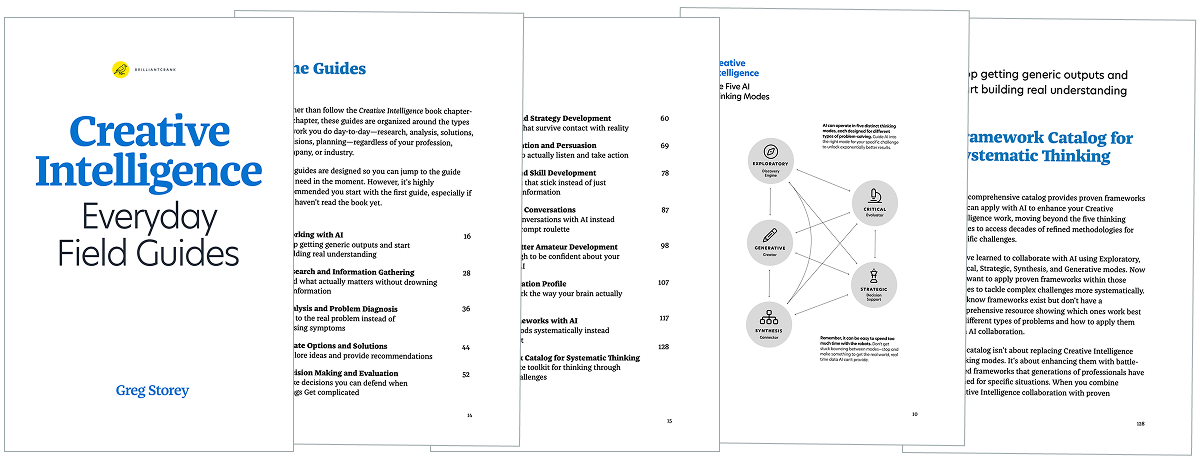
Creative Intelligence cuts through the hype and gives you practical frameworks for working with AI—not replacing yourself, but amplifying what you're already good at. No bullshit. No fear-mongering. Just clear thinking about what works, what doesn't, and how to stay valuable when machines do the boring parts.

Buy it now in digital or print.


Came across this uncheerful Reddit thread from Chris Glass’ always amazing site. It’s from a software engineer who just put in their two weeks notice working for a delivery app. They’re pissed off and exposing some pretty messed up practices.

“You guys always suspect the algorithms are rigged against you, but the reality is actually so much more depressing than the conspiracy theories. The thing that actually makes me sick—and the main reason I’m quitting—is the "Desperation Score." We have a hidden metric for drivers that tracks how desperate they are for cash based on their acceptance behavior.

If a driver usually logs on at 10 PM and accepts every garbage $3 order instantly without hesitation, the algo tags them as "High Desperation." Once they are tagged, the system then deliberately stops showing them high-paying orders. The logic is: "Why pay this guy $15 for a run when we know he’s desperate enough to do it for $6?" We save the good tips for the "casual" drivers to hook them in and gamify their experience, while the full-timers get grinded into dust.

Gee, without Meta’s trust monitors and authenticity cops who knows if this is true but it’s too damn evil not to believe. I think by the end of writing this issue, I toss my iPhone off a cliff.

A year after the historic Los Angeles fires, survivors share lessons from the burn zone is a somber look at the people who lost homes, neighbors, and their neighborhood. National Geographic sent a photographer Gideon Mendel to LA just weeks after the fires were put out. “He captured 129 portraits, meeting the displaced in the charred remains of their houses, businesses, and places of worship. Some gave him objects from the ruins, to be photographed in the studio.” 

While the devastation is due to what we call a “wild fire” there is new evidence that these disasters were caused by prioritization problems and bureaucracy. “A State Parks ranger recently testified that she observed the ground still smoldering when she documented the Lachman Fire burn area on January 1. Hikers who visited the burn scar over the following days took photographs and video capturing smoke rising from the blackened hillside. On January 2, LAFD firefighters on the scene expressed concerns that the fire remained active. Nonetheless, the firefighters were ordered to leave the smoldering burn scar.”

So fucking stupid. How have we forgotten common sense? Anyway, good luck with the lawsuits California, you're going to need it.

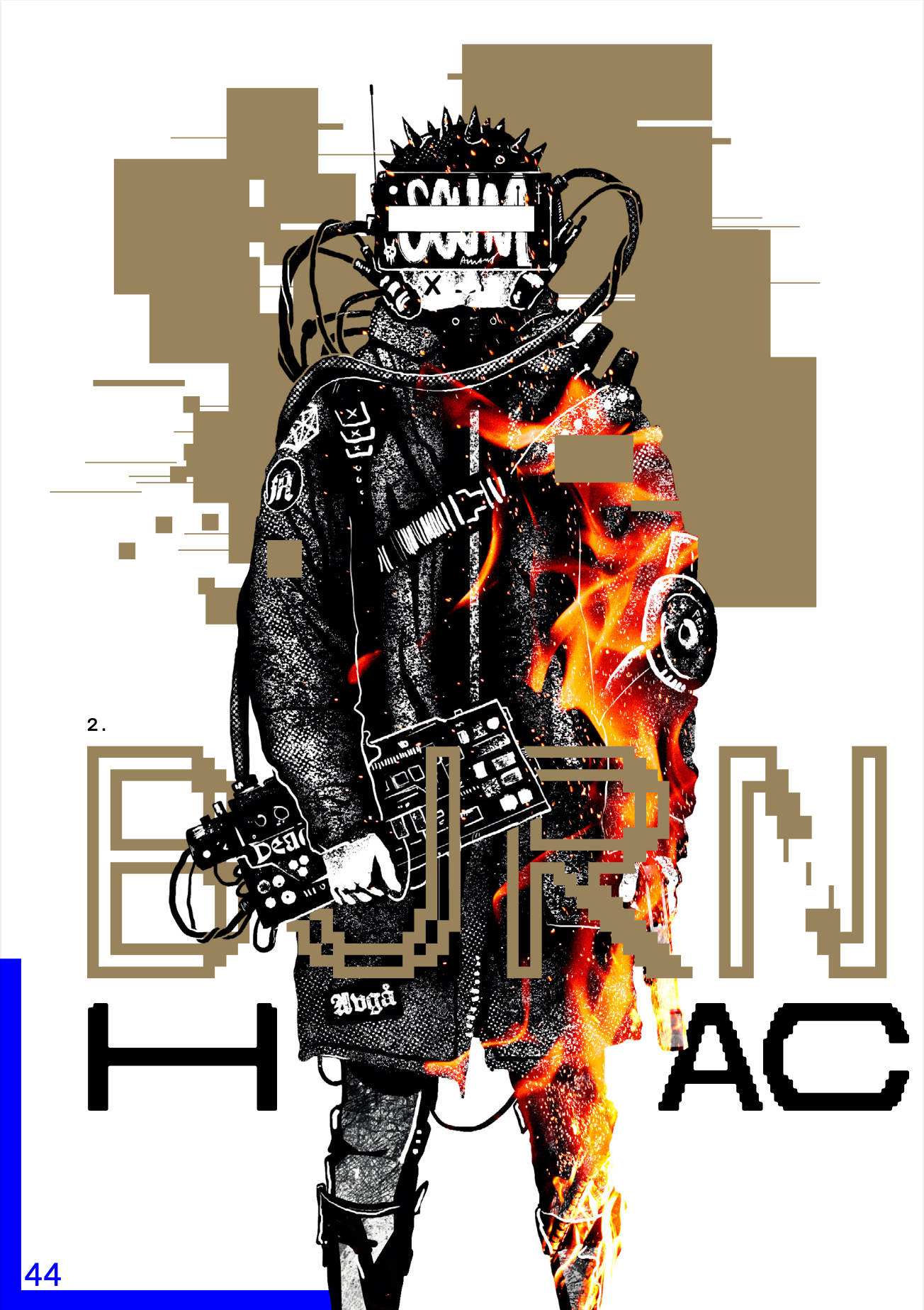
CY_BORG is a “Nano-infested doomsday RPG about cybernetic misfits and punks raging against a relentless corporate hell.” In addition to a great setting, punks vs. corpations, the game’s art and design are incredible (see above). I don’t know if I’ll ever play but I bought a copy just to gawk at the pages.

And because I can't go a week without sharing a zine or two, go check out these visual delights: The War of the Worlds Did Not Take Place and TW3NTY2.


Published in Tacoma, Washington while listening to Reconstructed… For Your Listening Pleasure by The Art of Noise.

695981ad140f620001699fbe
Extensions
The Dice — 044
Dice
Mirrors from '75, cultural change code cracked, mental health extraction, still bowling alone, building stories, and typography that shaped the world.
Show full content

Friday morning I was greeted in a meeting with, "welcome to the Upside Down." A reference to how quiet and sometimes stupid this time of year is if you're trying to get anything done. Between now and the second week of January is the worst time for getting anyone's attention. I used to get frustrated by it; now I tuck in.

Meeting people where they are develops empathy for users, customers, clients, colleagues, and peers. Between now and the beginning of the new year, a lot of people are focused on retreat in an effort to reflect and recharge. Be mindful of that not only for them, but especially for yourself. Times might be tough, but they only get worse when you’re doom scrolling or emailing into the void. Use this time to get your own rest and get ready to get ready so to speak.

I don’t care who you are or what you do, 2025 has been rough on everyone. So give yourself a break and enjoy the quiet however you can. 

Happy New Year to us all. We deserve it.

I had a feeling I would enjoy the new documentary Breakdown: 1975 on Netflix, but I didn't expect how directly it speaks to our current conditions. The film “explores how, for one brief shining moment, Hollywood was dominated by directors who held a mirror to the corruption and greed infecting American life. The chaos of the era was captured in films that challenged the collective consciousness in real time.”

Once you get about halfway through, the depictions of events from that era feel disturbingly current—if not for the grainy film quality and the youthful images of the actors, you'd think you were watching footage from today.

Back in July, I wrote about how we're stuck in the same fuckity-fuck cycle as the 1970s—political paralysis, economic stagnation, cultural flatness, beige everything. It was interesting to watch this documentary confirm this perspective. The parallels aren't metaphorical, they're structural. We're living through the same pattern of institutional breakdown, and filmmakers in the '70s saw it clearly enough to capture it on screen. The public's response then—the discomfort of looking into those mirrors—echoes what's happening now, almost too close for comfort.

I’m half-way through Irresistable Change by Phil Gilbert and loving every chapter thus far. I worked on Phil’s core team at IBM Design where we hired, onboarded, and prepared a thousand-plus early career professionals, most of them right after college graduation. The book is about making effective cultural change that sticks at incredible scale. Having been a part of the program I saw first hand how the program had a big impact on ways of working far beyond the walls of our studio in Austin and others around the world.

Phil does a fantastic job of sharing the lessons learned that can be applied everywhere, not just in big operations. There's a specific approach to cultural change we cracked at IBM Design that I have yet to see replicated elsewhere. After moving on to work with other large to small scale operations around the world, I can say with confidence that nobody did it better we did back then.

If reading a book isn’t on the radar, here’s a video or listen to Doug Powell discuss the book and the design program with Phil on his podcast, This is a prototype.

Also, just as I strongly encourage to write, I feel the same about taking IBM’s free courses on design thinking and get through the “Practitioner” course. 

Damilee is an architect and owner of Nollimedia a studio that tells wonderful stories about architecture in real life and from popular fiction. She has an excellent channel of videos with engaging stories and detailed tear downs of maps, structures, industries, etc. 

As she describes it, “the channel has grown into a platform where we talk about a wide variety of topics through the lens of architecture. With every video, we dig deep into research, and how we can tell the story from our unique perspective. I think what sets us apart is that we don't just talk about architecture, we actually make architecture as well.”

Some of my favorite episodes that I’ve seen to date are on Minas Tirith from Lord of the Rings, Kowloon City, and cyberpunk cities. Oh, and this episode on Akira.

As if that wasn’t enough, Damilee also publishes short books on the research she does for episodes and other topics like a travel guide for architecture in Japan


SPONSORED CTA Image

The original, human-centered AI mandate survival guide

Creative Intelligence cuts through the hype and gives you practical frameworks for working with AI—not replacing yourself, but amplifying what you're already good at. No bullshit. No fear-mongering. Just clear thinking about what works, what doesn't, and how to stay valuable when machines do the boring parts.

Buy it now in digital or print.


Big Think has a must watch video with George Bonanno, the author of The End of Trauma. George wastes no time identifying the problem he sees from the very beginning.

"There's a kind of a cultural trend toward thinking we're all pretty fragile right now. I think that's more and more been the case. And I don't know exactly why it all is. It has something to do with the internet has got us focused on how dangerous, how harmful the world is right now by all the things that we perceive that we're fed because it gets our attention. But there's also a lot of industry that sprung up around this idea, the industry that feeds off the idea that we are broken and fragile. And I think that's not a good trend."

George’s framework refuses the narrative that struggling means you're fundamentally damaged—it positions you as capable of working through situations by making active choices rather than accepting helplessness.

Meanwhile, mental health is on its way to becoming an industrial complex— If not already there—approaching half a trillion dollars today. It is “benefiting from increased venture capital interest, cross-industry partnerships, and policy reforms aimed at improving accessibility and affordability.”

This is all to say, remain vigilant with the information that you consume no matter where it comes from. And that’s especially true for the Internet and people who rely on the state of your mental health to acquire food and shelter—even when they mean well. We’re humans with incredible skills built-in for adapting.

Dave Rupert’s post “One thing churches do well” caught my attention and did not disappoint. “One thing faith-based communities do well is that they offer an endless series of opportunities for people to improve and show-off their talents.” He’s spot on and I appreciate his observation. 

What really struck me is Dave’s teardown of when this structure unravels. “In most of my experiences at a certain point (when money exchanges hands) and at a certain scale (over ~150 people), the church ladder begins to posture itself towards being another capitalistic corporate ladder with patriarchal undertones. The eternal growth model and the innate desire to build ever larger buildings replace vision and connection. The work becomes about managing real estate and optimizing to keep the pews full. Efficiency rises, the arts and music morph into a Live, Laugh, Love poster with mass appeal.”

The people limit Dave identified is interesting. Around 150 people is Dunbar’s number where communities stay human-scale and everyone knows everyone. Beyond that, the focus turns to managing populations, not building community. The progression system flips from developing people to extracting value for institutional survival. 

No wonder we’re all still bowling alone these days. We replaced community talent development ladders with work and KPIs, then wonder why burnout is a half-trillion-dollar industry.

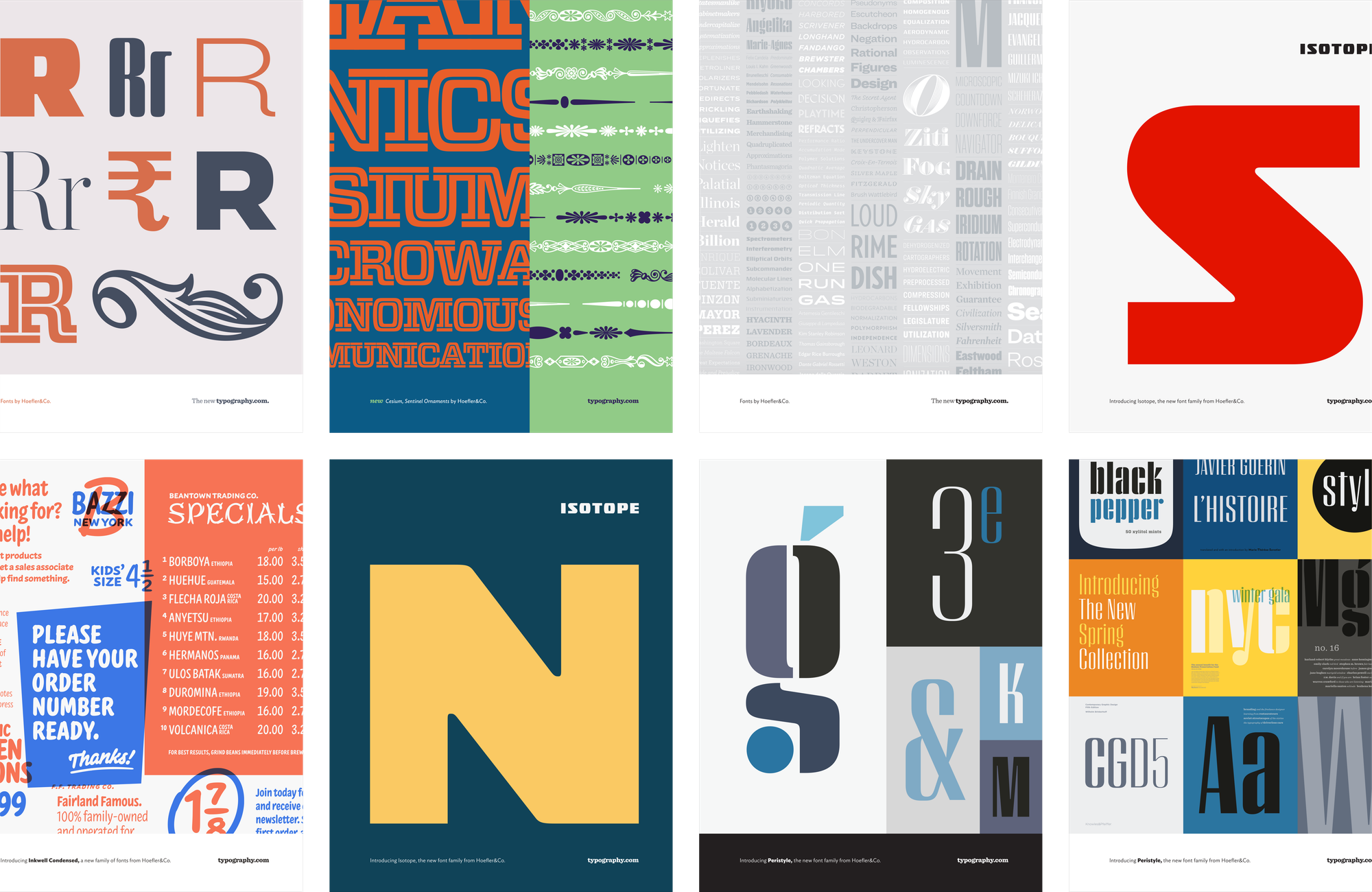
“I’ve been a working designer and creative leader in the graphic design industry for over two decades. Since 2008 I’ve played an influential role in shaping how the world chooses type, whether by creating inspirational artwork or developing new tools to help designers discover, try, and buy fonts with confidence.” That’s

Brian Hennings, former designer for the singular Hoefler&Co taking well earned credit for the influence his work and that of the Hoefler team has had on design, culture, and society at large. Through his personal site, Brian has published a thorough collection of his work that amplified Hoefler’s influence on designers worldwide and, I’m sure, product sales—with more to come.

In addition to gawking at the imagery, don’t miss the details that Brian leaves not only about the design, but his development work as well. For instance, this little tidbit in the email section, “A glimpse into the message source reveals web font implementation, light and dark mode support, and media queries to swap images based on screen size. In many instances, I altered the layout of desktop and mobile designs if it told the story or presented the type in a better way — a common technique for websites but really underutilized in email.”

If you’re not familiar with Hoefler & Co or you’d like to take a look back, listen to Design Better’s interview with studio founder Jonathan Hoefler and watch the typography episode of Abstract The Art of Design that features the studio and its work.


Hey, if you like The Dice then please check out these other fine variety publications with links and brief takes: Sentiers, Espresso Shots, BTW, and hiro.report. And if you’ve got one to share, please do.

Published in Tacoma, Washington while watching the Seattle Seahawks maul the Carolina Panthers.

6951a31e140f620001699d66
Extensions
The Dice — 043
Dice
Twenty years of talking points, indented clocks, the unconscious talking in circles. One Battle After Another Midnight Run, zine resistance, and covers covered.
Show full content

The Internet might be dying, but it still has it moments of serendipity. A comment on LinkedIn led me to a blog with a recent post on the Freedom of Missing Out. “We should not fear of missing out. Instead, let’s normalize a freedom of missing out. A freedom to let the insignificant and immaterial slide into the ether unnoticed. A freedom to be bored or reflective. A freedom that honors stillness and slowness. A freedom that empowers a focused mind, time spent with meaning, and whole presence in any given moment.” This is very much related to this week’s roll on drawing mandalas.

I received a few responses to last week’s roll about You’re Always Missing Out because I completely borked the acronym. Which is a shame because it perfectly sets up one of the greatest lines in film: “If I hear YAMO be there one more time I’m going to YAMO burn this place to the ground.” So consider this the definitive correction.

Have a safe and happy holiday this week.

This year the Storeyhouse Critereon film collection grew substantially with many films previously unseen. Years ago I wouldn’t have given many of the titles a second glance, but my curiosity is piqued when I hear creatives and makers provide their perspectives on what makes films meaningful and worth attention.

Every semester in college I added HIST A244 Studies in Film History by Ron Crawford to my schedule. We met every Monday evening in large theatre where Ron gave a lecture on film history followed by the viewing of a movie essential to the theme of the class.

This week I stumbled on a conversation between Leonardo DiCaprio and Paul Thomas Anderson where they discussed a long list of films that include Star Wars, The Battle of Algiers, Animal House, The Searchers and many more. Throughout they discuss backstories and influences these movies had on their career and in the development and performance of their movie One Battle After Another. Highly recommended whether you have watch the movie yet or not, but you are going to watch it.

Side note: I was surprised to hear how both men appreciate Midnight Run. It is one of my all-time favorite movies that never gets old nor fails to entertain even as I know some of the dialogue by heart. 

Marcin Wichary’s post on “clock indents” was new to me but thankfully like most of his wonderful writing, it’s timeless.

“In Poland, in the 1980s, the dead space in between programs was filled with…a clock. Or, to me, The Clock. I simply loved The Clock to death. Not for what it was, of course (time-telling was provided by our own wall clock that didn’t require aerials and cathode ray tubes — and later on, a prized Casio electronic watch on my wrist). Like Pavlov’s dogs, I loved The Clock for what it promised. I would stare at it just minutes before new adventures of Crockett and Tubbs. I would twiddle my thumbs in anticipation of the resolution to last week’s Crime Story — or, in the years before I was allowed to watch those series, another episode of a Polish, Czech, or Russian cartoon.”

I hope you enjoy this rabbit hole as much as I did. 

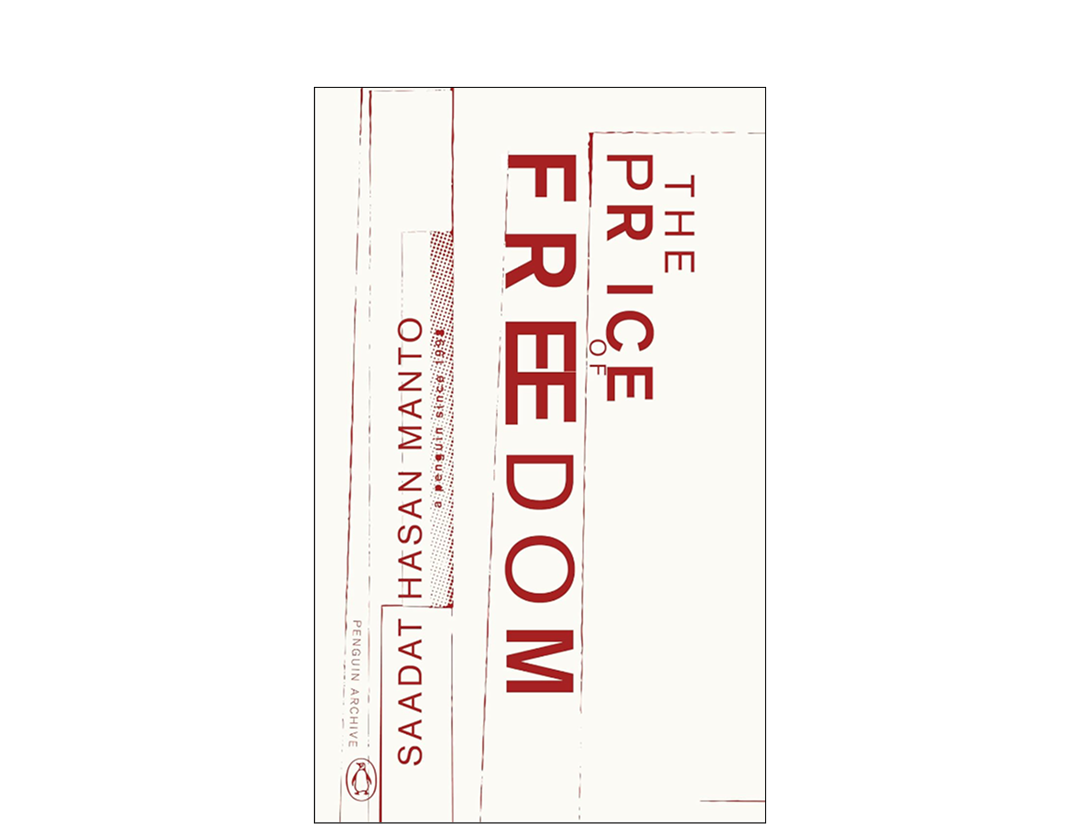
Book cover retrospectives make the very best “best of…” lists this time of year and this one by The Causual Optimist is top notch. This list kicks off with a hot, monochromatic series that immediately caught my attention. “The typographic covers for the

Penguin Archive designed by Jim Stoddart. Published in April to celebrate 90 years of Penguin Books, the designs use typography to evoke the different eras of the publisher.”

To appreciate the depth and breadth of Jim’s work, check out more of the collection as just a few images aren’t enough. I would like to see the entire set some day but I’m going to call it now: the cover for The Price of Freedom by Saadat Hasan Manto (see above) is the best of the set—for obvious reasons. But honestly there are so many amazing covers in The Casual Optimist’s list are worth worth savoring. 

New York Times Book Review art director Matt Dorfman has a nice curated list of notable covers. Super interesting is the cover for Searches by Vauhini Vara with what looks like AI generated overview of the book and the cover image. “It’s counterintuitive to market a book with a presentation this deliberately alienating, even if alienation from the self is one of its key themes. Praise is due for recognizing the opportunity to attract attention by setting the sterile informality of a ChatGPT overview against a sea of other books trying hard to look more considered.”

Meanwhile, there is a similar list for my favorite medium, but unlike books, the real creativity is not on the cover but within.


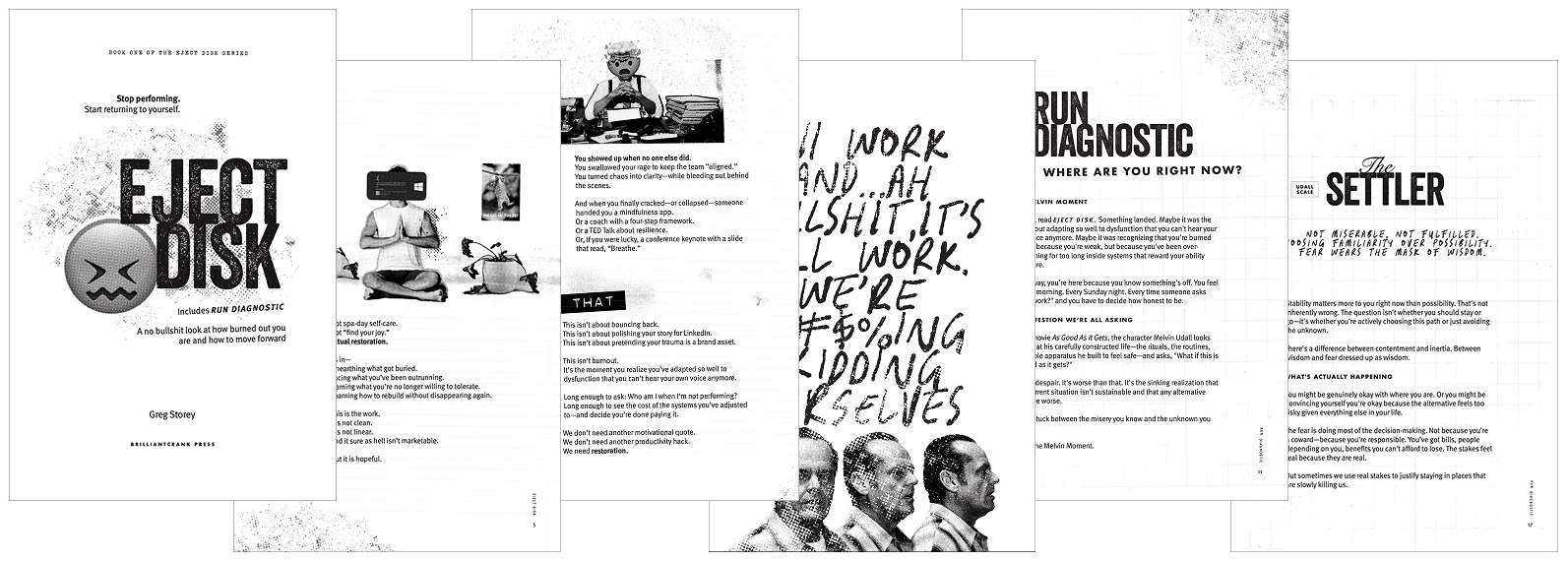
Get the Eject Disk zine for free.

Most of us are stuck. Stuck in jobs that are grinding us down. Stuck searching for work that won't come. Stuck between desperately wanting change and being terrified of what that change might cost. Eject Disk is a call to action to name these feelings and do something about them. And now I want you to have your own copy.

Just grab it, read it, and feel it. And if you're on Reddit, give this a bump.


If you’ve been around and were there when blogs became a thing, then you’ll appreciate Talking Points Memo’s Pivots, Trolls, & Blog Rolls: Reflections on 25 Years of Digital Media. 

So far my favorite entry is This Post Should Have Been Shorter by Hamilton Nolan on blogging as journalism.

“Newspaper and magazine stories come with a built-in frame. They have word counts. Even books, the pinnacle of Serious Writing, have their limits: a hundred pages is too few, a thousand is too many. On the internet, there is no word count. Indeed, there are almost no limits of any kind. At some sites, for every news item or essay or feature story, a lone blogger was tasked with deciding how long it should be, how serious or funny it should be, and how it should be presented on the page. This caused much unpolished crap to be published online, sure. But those who mastered the craft of blogging did a job that requires three editors and a graphic designer at a major newspaper. And they could make it funny, something that no number of New York Times editors can achieve.” 

Columbia Journalism Review has an interview with TPM founder and publisher Josh Marshall, who was a monumental figure in proving that good blogs have an important role to play in journalism.

When I caught a glimpse of Power Tools I could not click download button fast enough. It’s a new zine by Bart Fish dedicated to “critiquing AI and the billionaire toolmen behind it. The name is based on the common narrative that AI just a tool. This zine asks readers, ‘a tool for whom?’ We’re not anti-tech, we’re against irresponsible tech, the kind that steals, exploits, and endangers humans in the name of progress.” 

Though you might have a different or slightly different take on this new technology, as I do, it is important to support Power Tools and others like it. We all need to consider different perspectives that come from real people, not networks, corporations, politicians or—for fucks saketech oligarchs.

The download is free, but I highly recommend buying the print edition that comes with a sweet sticker pack while supplies last. It’s also worth noting that Bart is looking for contributors for future issues.

Speaking of zines, The Guardian brought attention to more and more people making, folding, and distributing zines as a form of resistance. “Zines have made a resurgence in recent months as communities seek to share information, such as how to protect one another from Immigration and Customs Enforcement (ICE) or how to resist the Trump administration outside No Kings protests. People of all ages, from all regions, are making, printing and distributing zines on the streets, in libraries and at local gathering spots.” More of this please, and maybe through in a pirate radio station or two?

Every Friday morning at 9am PST, Dave Gray kicks off his campfire call. I try to make it every week, even if it’s only for a bit because I get to see and interact with people from all walks of life and from all over the world—no membership required. Each call is filled with divergent conversations that get sparked by curious people with an interest in learn and share what they’re writing, crafting, making, doing—you get the idea.

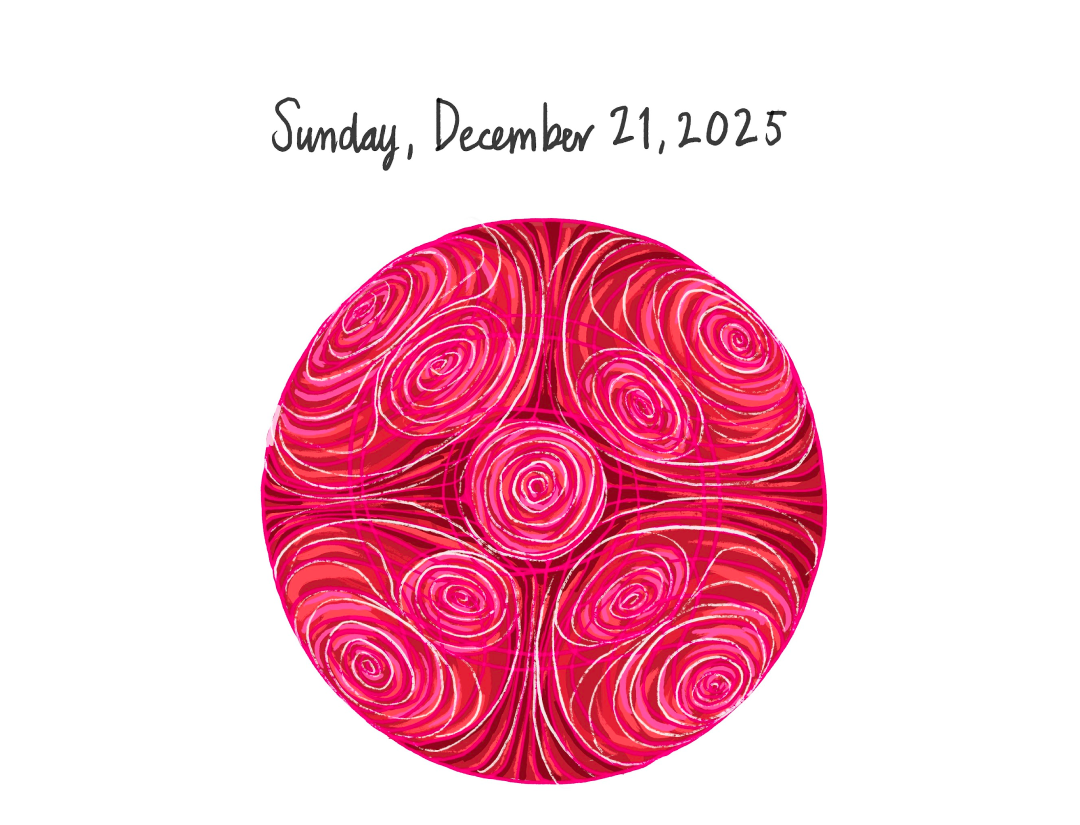
This week our conversation got off with a bang after Dave shared that he has recently start drawing mandalas every morning. The practice of creating a mandala starts with drawing a simple circle and letting your mind wander as you fill it in. Said Dave on the call, “the mandala is sort of like an invitation to that part of the mind which doesn't speak in language. It's an invitation to the unconscious, that part of the brain or the mind to reveal itself or talk to me.”

The results are striking and I was immediately drawn in to learn more as the results—at least for Dave—are wonderful works of art. The mandala from December 15th is my favorite to date.


Published in Tacoma, Washington head nodding to Cabin in the Sky by Da La Soul.

69482bc0140f620001699b18
Extensions
Second verse, same as the first.

Over at Same Team Partners we're making a move that I'm excited to share. But before I get into that, let me provide some context.

Back in 2013 Brett Harned came to me with a thought. There were conferences for designers, developers, UX researchers, content strategists,

Show full content

Over at Same Team Partners we're making a move that I'm excited to share. But before I get into that, let me provide some context.

Back in 2013 Brett Harned came to me with a thought. There were conferences for designers, developers, UX researchers, content strategists, even for leaders. But there was nothing for project managers. In response, Brett and I created the Digital PM Summit, an annual event that continues today. Five years later Brett wrote Project Management for Humans for Rosenfeld Media. We reconnected and recorded a podcast called Sprints & Milestones, sharing anecdotal stories related to each chapter of the book. About five years later we started Same Team with a focus on making better teams for studios and in-house programs.

This year, in 2025, Brett has been everywhere from Dubai to Denver, Portland to Indiana. He's given keynotes and workshops and listened to project managers share their stories. About mid-way through 2025 Brett started publishing what he's seeing and hearing—similar to what I've been doing here but with a focus on PMs. And his posts are hitting hard. Not because they're clever, but because they're true.

He's speaking truth for project management: You can't automate accountability. The anxiety around AI. The classic, continuing frustrations about how underserved PMs are in the workplace and the lack of support they get. What we've seen in these responses is that the PM community is hungry for people to speak what's happening and tell it like it is. No consultant jargon. No LinkedIn guru bullshit. Just what PMs are going through.

The response we're seeing from Brett's work signals to us that our work through Same Team needs to be directed back to the community that brought us together in 2013. I'm not surprised that we're going full circle here. In all of the places that I've worked or consulted in the last ten years, it's clear that project management still does not get the same level of attention and support as their peers. This isn't accidental—it's the same extraction pattern I write about here, just applied to exhausting effort to coordinate people and projects instead of creative work.

So, we're pivoting Same Team Partners to focus on project managers and their work. We're launching PM Squad, a year-long program built specifically for project managers of all stripes—whether you're on the PM career path, an accidental PM, a new PM, or an old hand who's just a little burned out. This is for everybody.

There are no cohorts. No online community. No BS like that. Just practical learning, tools, and frameworks you can use immediately. To show you what this looks like, I posted a video that walks you through our roadmap for 2026 and how it will work. In short, we're taking our talent for leadership, teaching, and writing and applying this to a field that rarely gets the support that it needs and deserves through a human-centered lens.

Now, I recognize that a lot of you aren't project managers, but I'd still like your help. For starters, watch the video and let me know what you think. And then share it with a PM or two that you likely know. If you don't know any PMs then please go find some, make friends, and share this video. Easy peasy.

694081bdf80fcb000164c1fe
Extensions
The Dice — 042
Dice
International translations, zines as resistance, Flea’s plea, the future of journalism, YAMA is the new FOMO, and the lame race to repost research.
Show full content

I can’t say that I’m a fan of December. It used to feel like a big payoff but now I just want to get through it unscathed. This time of year just keeps getting more difficult to sit through.

I was in a group conversation this week and we got to talking about how difficult this time of year is for people. Especially in the silence when you don't have work or family to distract you or to remind you of what you don’t have. 

So, call your friends. Check in on everybody. And if you’re the one in that silence, take this idea from a punk rocker—Make things and give them to people (see below).

Here’s this weeks 1d6.

I haven’t cracked open my copy of Enshitification yet, but I have a theory that FOMO contributed to it. Mark Manson, author of The Subtle Art of Not Giving a F*ck states the problem clearly, “The problem with FOMO is that it prevents you from actually experiencing what’s happening.” For some folks it does that and a bag of chips, by creating a building sense of obsession that is hard to shake. Hi.

While doing research for Reboot System I learned that many philosophies contain a key element: striving for simplicity through reduction. And not just of material things, but expectations and desires that can be fueled by FOMO. So as much as I dislike acronyms, I've got another one for you: YAMA.

You’re Always Missing Out “recognizes that missing out is a fundamental part of the human condition. Rather than fighting this reality or trying to optimize around it, YAMA suggests simply accepting that we’re finite creatures in an infinite world. What’s most liberating about YAMA is its honesty about the human condition. We have limited time, attention, and capacity for experience. No amount of productivity hacking or careful planning will change that.”

If you want the tactical side of this—how to actually practice distinguishing between what you can't control and what you won't engage—Protocol 6 in Reboot System walks through it.

In response to the escalating activity of Trump’s SS cosplay teams, 404 Media are making a zine on “the surveillance tactics used by ICE, and the ways people are resisting this technology.”

The group of four founders discussed the zine and getting into print on their podcast. “In an age where so much of what we do is moderated by algorithms and increasingly where everything is so automated, so AI focused, we wanted to create something that was like really tangible and and really human. Sort of as an experiment, but also because we thought it would be cool." The zine will contain a collection of new and republished stories and will be distributed at a few events. It is also available to purchase. Given the mission and purpose of this work, I’m surprised there isn’t an option to buy the zine in packs or a PDF version so people can make black and white copies and distribute them en masse.

Ernie Smith was tapped to design the zine and shared how he used the new Affinity app running on Linux to do the work. Adding to the complexity of the setup, they chose to go to print using Risograph. “At one point while I was trying to make a PDF, Affinity promised me that the file I would be exporting was going to be 17 exabytes in size, which my SSD was definitely not large enough for.” Yikes.

Related:  The internet didn’t kill counterculture—you just won’t find it on Instagram

Speaking of shitty Internet, LinkedIn certainly isn’t helping as it continues to circle the drain. I think we’re all sick and tired of scrolling through so many hot takes cut and pasted with pullquotes from the latest report. Hippie CEO, Jason Thompson shared his thoughts on what and why this is happening.

“I’m writing this to share how quality research gets turned into data theater, and why we, as analysts, need to resist the temptation to do the same. This happens because browsing a summary feels like reading a report. Finding a statistic feels like understanding the research. And citing McKinsey feels like doing your homework. None of those things are true.”

Thompson breaks this down through the activity that rose up after McKinsey published their report on the future of the workplace and AI. He also wrote a framework for “Better Data Hygiene” which is solid, but as long as the algorithms are in place and people refuse to slow down and read things, I doubt it will do much good.

Sigh. Maybe it’s time to start a commune.


Get the Eject Disk zine for free.

Most of us are stuck. Stuck in jobs that are grinding us down. Stuck searching for work that won't come. Stuck between desperately wanting change and being terrified of what that change might cost. Eject Disk is a call to action to name these feelings and do something about them. And now I want you to have your own copy.

No strings. No drip campaigns. Just grab it, read it, and feel it.


I can’t think of a better signal of resistance to all of today’s bullshit than Flea—you know, the bassist for the Red Hot Chili Peppers—writing and performing jazz, and jazz dancing. This was not on my bingo card for 2025 but so glad it’s here.

About his upcoming album Flea says, “I don’t care about the act of politics. I think there is a much more transcendent place above it where there’s discourse to be had that can actually help humanity, and actually help us all to live harmoniously and productively in a way that’s healthy for the world. There’s a place where we meet, and it’s love.”

Thanks to Chris Glass, I came across the recently released single titled A Plea that is wonderful to watch and wonderfully motivational and inspirational. Check out these lyrics: “Make something beautiful. I don’t care if it’s a little scrap of squiggly crayon on a paper. Make something beautiful and see somebody. Give it to somebody. I’m not being corny this shit is real. Live for peace. Live for love.”

The music might be called jazz, but all I hear is punk. And I love it.

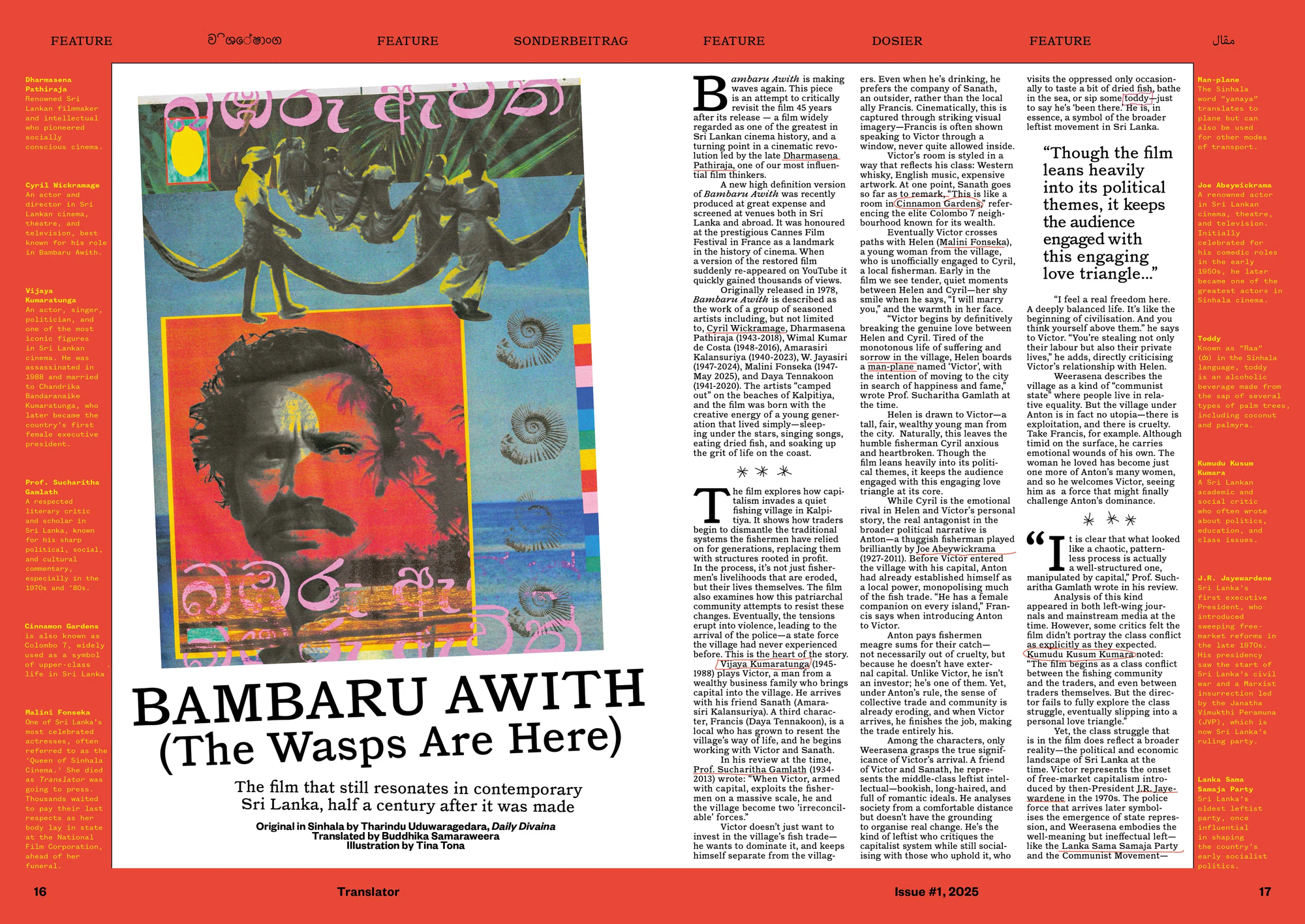
Translator is a new magazine of journalism and reportage from around the world translated into the English language that includes bits of context surrounding each piece. Think liner notes. 

It’s Nice That has an interview with the magazines creative director Jeremy Leslie (of MagCulture fame) and a look through pages of the first issue. “Every element of each page, even the glossaries beside articles are well placed and fitting of each page’s design ecosystem. An example of this is the striking page on Sri Lankan film Bambaru Avith (The Wasps Are Here) where informative meets aesthetic, strengthening immersion by its breaking down of the Sinhala language. Design is utilised to inform, accommodating readership with translator notes to create a diversity of thought—not only outside of the English language but cultures outside our own personal spheres of thought.” 

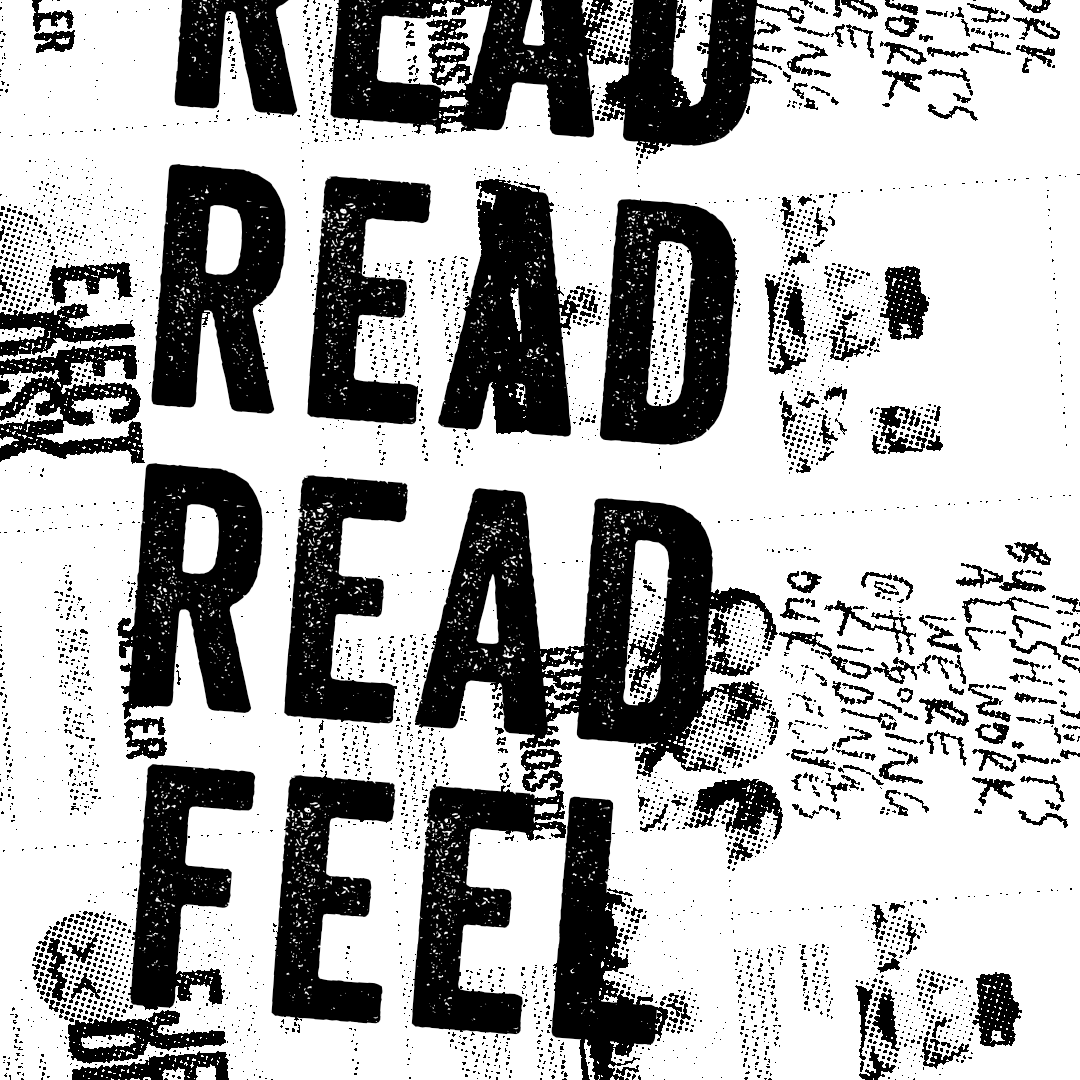
Marginalia is nothing new, but I love that this idea of additional context running throughout each story. Also be sure to take a look at the cover dominated by the publication logo as a clever device for displaying the table of contents.

Issue #2 is out now and there’s still time to grab the first. And there is a weekly newsletter to add to the experience.

One event I look forward to around this time of year is NiemanLab’s Predictions for Journalism. “Each year, we ask some of the smartest people in digital media what they think is coming in the year ahead. Here's what they told us.” It seems to get bigger and bigger each year and in 2025 they kicked it up a notch with the design and card interface. There is a lot to digest here but there are so many ideas and observations worth digging into, even if you aren’t working in journalism.

For instance: The future of news is happening where no one is looking by Garry Pierre-Pierre. “The people keeping their communities informed aren’t reporters. They’re the pastor who delivers immigration updates before the sermon. The barber who streams local politics on Facebook Live. The neighbor who translates every school notice and distributes it through five different group chats. The teacher who explains American bureaucracy to families who arrived last week. The WhatsApp moderator running a rumor-control operation that outperforms the mayor’s office. None of these people will keynote a journalism conference. But if journalism is about helping people understand their world, they are quietly doing the job. And that’s my prediction for 2026: the news industry will finally realize that these informal community information networks are not peripheral to local news—they are the most functional version of it.”

Bookmark this and make a point to return often. There are a lot of good ideas in there.


Published in Tacoma, Washington with National Lampoon's Christmas Vacation playing in the background.

693ee1b6f80fcb000164be50
Extensions
Trapped between equally impossible options.

Earlier this week the Eject Disk zine series was featured in the wonderful and must read publication Dense Discovery. Kai, the publisher, had the great idea of giving readers a copy of the first zine for free. So, we set it up and it’s been fantastic to see

Show full content

Earlier this week the Eject Disk zine series was featured in the wonderful and must read publication Dense Discovery. Kai, the publisher, had the great idea of giving readers a copy of the first zine for free. So, we set it up and it’s been fantastic to see people grab their copy and also become subscribers.

Meanwhile, I had to go to the dentist and as I was lying there with the hygenist’s fingers and tools crammed in my mouth, I thought to myself, “It’s the holiday season and you’ve got something pretty cool to give to everyone, so why aren’t you giving it to everyone?” And then I blew saliva into the mouth vacuum thingy.

From conversations I've had and posts that I've read this year, people are doing their damned best to hang on and keep it together. An incredibly isolating feeling. I see them, and I see you, because I see myself.

In times like these my mother always says, "I wish I could make it better”—but I can't make it better. What I can do is name what's actually happening.

Most of us are stuck. Stuck in jobs that are grinding us down. Stuck searching for work that won't come. Stuck facing the terror of starting over. Stuck between desperately wanting change and being terrified of what that change might cost.

Whether you have a job or need one, the feeling is the same: trapped between equally impossible options.

I wrote Eject Disk to give you a moment to stop performing and see yourself clearly. No frameworks to implement. No optimization. Just recognition. I created Run Diagnostic to give people an idea of where they are.

So, before whatever break you can manage this month, get your copy of my first zine for $0.00. And if you know someone who needs it, give it to them, or point to this post.

693894879ab38e0001c929b1
Extensions
The Dice — 041
Dice
The design of competitive Paris, Jack into ᑕ¥βєяรקค¢є, a signal for world revolution, seeking silence and a clear view without Akutaq. Frito is real, and it’s the scariest movie of 2025.
Show full content

This week we finished watching The American Revolution which was much more educational and enlightening than my wife and I anticipated. I'm fairly certain that most Americans have a bent perspective on the formation of this country based upon a combination of poor public education, a decline in civic duty, racism—which, unfortunately is engrained in the core of USA OS—and recent propaganda. In short, everyone who lives in this country should watch the documentary to remind ourselves how and why we are here, and who did what because the pictures that we have about our founders and what they did are badly skewed. Also, we have a much better understanding and appreciation for why Benedict—emphasis on ‘dic’—Arnold is considered a right and proper twat.

Arnold's story is a good reminder why people who do good work and are committed to a cause or a company or whatever, need to be appreciated, and told so. Also, why it's so important to sniff out and get rid of narcissists before they turn into real monsters. Like the fragile, decaying dummy squatting the White House today.

I'm finishing off this issue with a very needy cat tucked between me and the keyboard. Maybe I should have gotten a pet monkey so that at least it could help with editing—couldn't be any worse than most days with ChatGPT.

Enjoy this issue and have a great week.

Hey, are you reading Rolling Stone these days? If not, why not? I subscribed a year ago and love the looks I get when reading the magazine in a coffee shop. Like I'm holding something that has to be seen to be believed. Anyhoo, Rolling Stone kicks off the last month of the year with their take on the 20 best movies of the year and it's a solid list that includes some of my own favorites from 2025, like Edington, Black Bag, and The Phoenian Scheme, but also a bunch of films I'm intrigued to chase down. They include: On Becoming a Guinea Fowl, Universal Language, No Other Choice (I really want to see this one), and It Was Just An Accident. I knew it would make the list but glad to see One Battle After Another take the top spot.

Also featured is Orwell: 2+2=5, a haunting documentary on George Orwell’s writing paired with footage of current and historical events that maps all too well with his foresight. Rolling Stone dubbed it "the scariest movie of 2025." I would have called it the most sobering—it's only scary if you haven't been paying attention to the course of domestic and global politics and events in the last 25 years.

Related: The Ringer’s list of the top 100 TV episodes of the century. When I saw the number one pick, I could not believe it’s only been 21 years since that episode. Feels like five lifetimes ago.

Here’s a problem that’s highly likely going to get much worse, people [are] outsourcing their thinking to AI. “Many people are becoming reliant on AI to navigate some of the most basic aspects of daily life. A colleague suggested that we might even call the most extreme users “LLeMmings” For this set of compulsive users, AI has become a primary interface through which they interact with the world. The emails they write, the life decisions they make, and the questions that consume their mind all filter through AI first.” Look, I hope I don’t think I have to tell you that this is bad—how we end up in the Matrix. If only there was a brilliantly written book to give people a healthy, human-centered guidance on how to use AI in a way that doesn’t lead to Idiocracy.

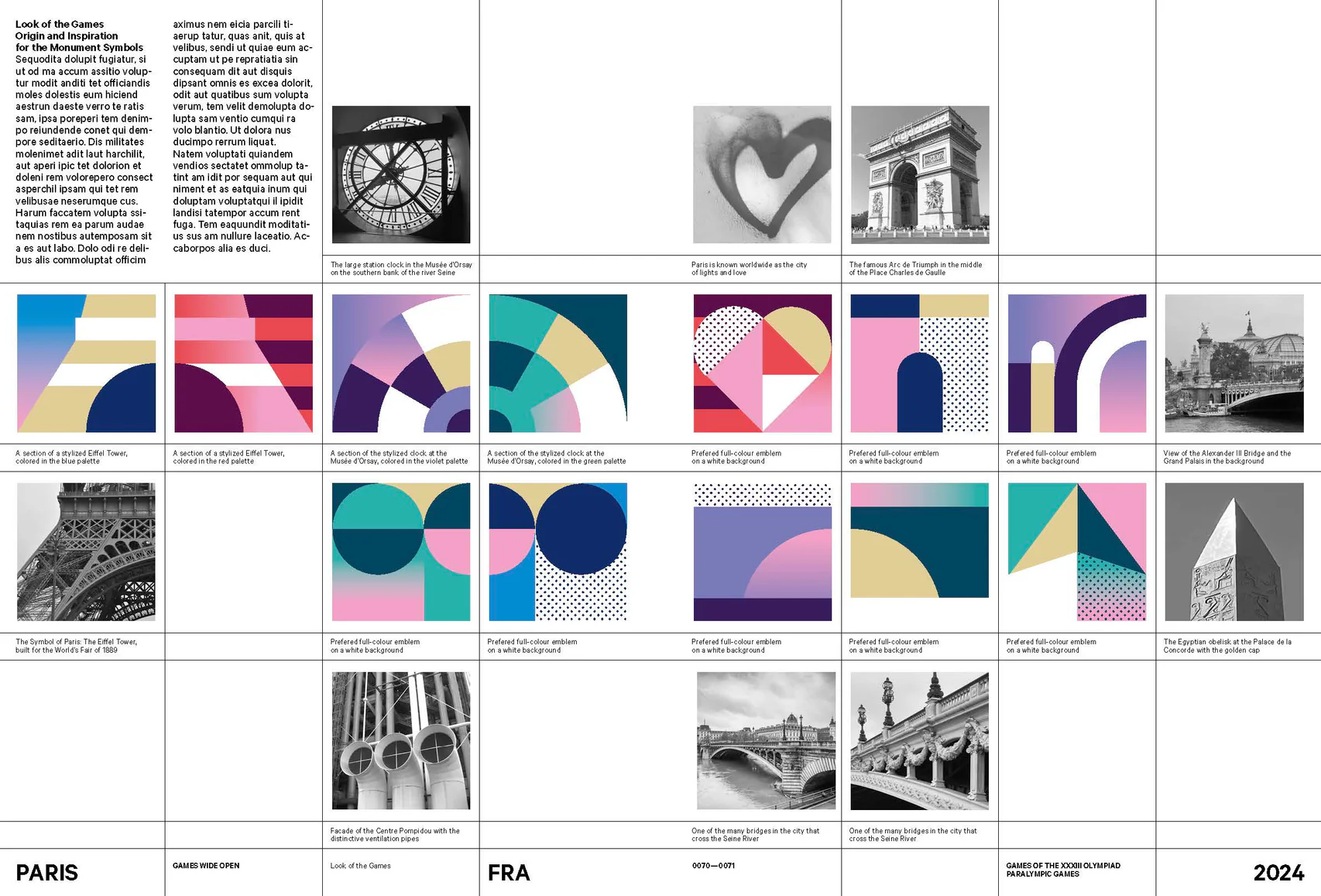
As a follow up to his amazing Olympic Games The Design, Markus Osterwalder is back with a book that focuses on the Paris 2024 summer games. “The design for Paris 2024 stands out with its clean, symbolic aesthetic, deeply rooted in the city’s cultural and historical heritage. Hosting competitions at iconic locations was a key element in the success of this approach. Markus Osterwalder has meticulously curated examples from fields such as graphic design, typography, and product design to showcase the design identity of these extraordinary Games in their entirety.” Extraodinary is right! Olympic Games. Paris 2024. looks gorgeous and is currently available at discounted early bird price.

Niggli makes phenominal books and I have a few in the Storey library. While you’re adding Markus’ books to your cart, check out Risomania, Guidelines and Standards for the Visual Design, Max Bill: Typography. Advertising. Book Design, and Design, Typography, etc., to name a few.


Buy the zine that hits hard...

Got this message recently from a reader: “[Eject Disk] really hit me. I think much of it would have brought tears running down my face if I hadn’t shut that faucet off long ago (for the reasons you explained). Highly recommended.”

Buy Eject Disk the zine or the four-zine series.


Outdoor enthusiast Steven Smith sought to find a place in the USA where you can absolutely escape noise pollution. With a country as large as the US you would think that it would be easy peasy but sadly no. “Silence is disappearing. Even in the largest and most remote wilderness areas it is nearly impossible to find. With the help of Dr. Preston Wilson of UT Austin and Matt Mikkelsen, Wilderness director of Quiet Parks International, I go looking for the last quiet place in America.”

I think I’m more bothered by light pollution. Thankfully there seem to be more locations where we can still see the Milky Way (which if you have not seen this in person, then make it a priority) at night.

On a more serious note: Steven’s wife was recently diagnosed with cancer and he had to step away from his channel for a while. Luke Nichols, a famous outdoor content creator came out of retirement to record an episode of surviving an Alaskan winter night in the wilderness without a sleeping bag.

Side note: Akutaq, the eskimo ice cream he eats in the video, is a real thing and it’s disgusting.

“Unlike old authoritarianism built on fear and force, this new system rules through code, capital, and infrastructure—making resistance feel architecturally impossible.” Created as a wake-up call for European countries, The Authoritarian Stack tracks “a network of firms, funds, and political actors turning core state functions into private platforms. Based on an open-source dataset of over 250 actors, thousands of verified connections, and $45 billion in documented financial flows.” It’s well organized and well designed to articulate just how screwed up the United States government is right now. Hopefully not forever.

When I read just how fucked up this situation is maybe we do need a world revolution. “Break the spell of the corpo-capitalist doomsday machine. Reclaim true freedom—from algorithmic control, climate collapse, and the worldwide authoritarian wave.” I’m pulling my copy of Adbusters Manifesto for World Revolution off the shelf and giving it a re-read. Consider doing the same.

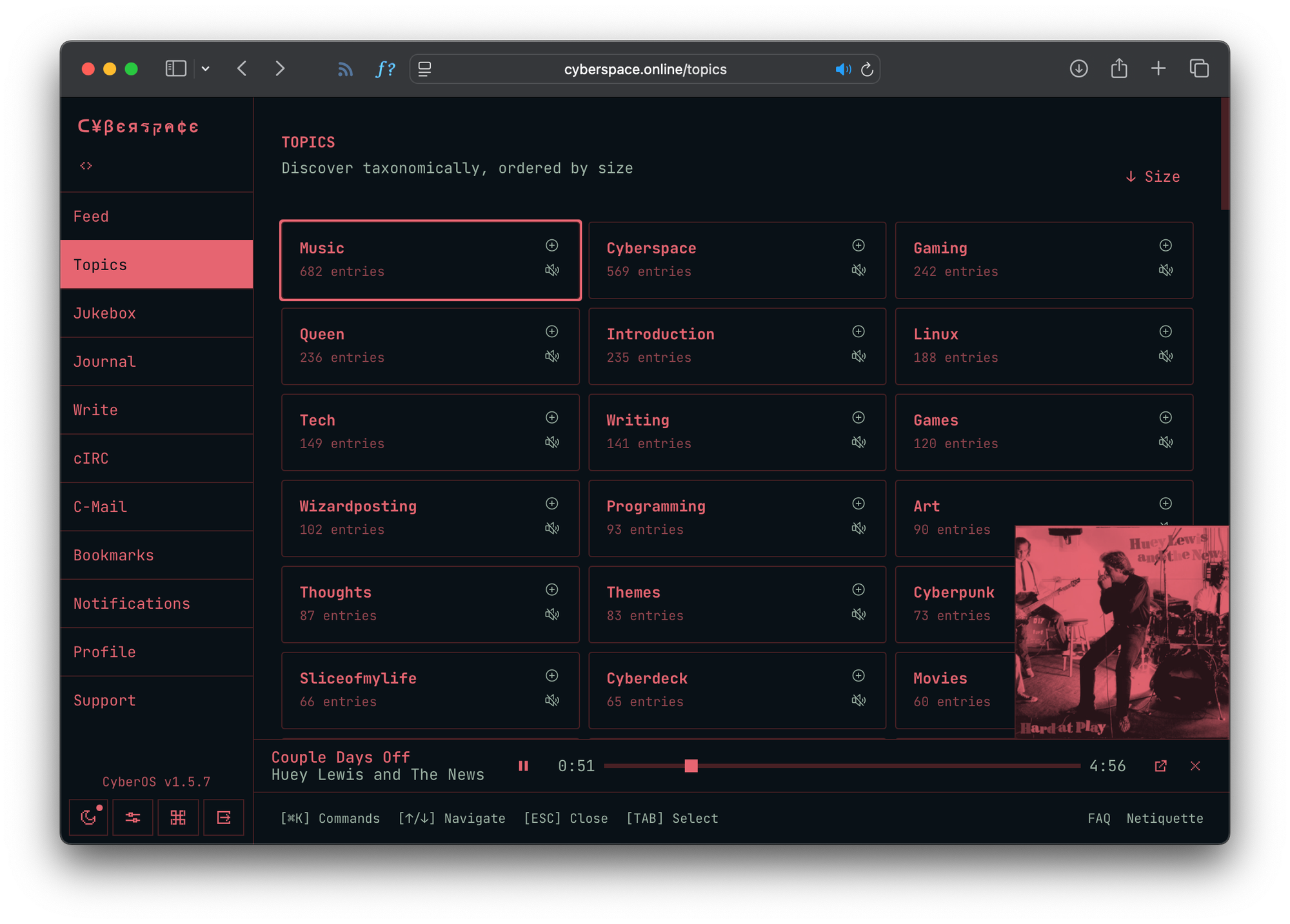
For a while I’ve had this idea for an old school BBS experience that had the look and feel of everything charm_ makes. After coming across a link in this week’s issue of Dense Discovery, I can call Bono and tell him that I found what I’m looking for. ᑕ¥βєяรקค¢є is “a quiet corner of the internet where you can think, write, read and connect. Like how the internet was supposed to be.” More of this please!

Though I kinda wish you had to use Telnet to add just a bit more dial-up experience but I’m not going to complain. In fact, Cyberspace has features that I would never have dreamed of while staying true to the mission (no AI, video, algorithm, suggestions, tracking, crypto, or ads) and the sweet charm_ like 8-bit asthestic. I’m impressed by the quality of the software and how much control each user has over their experience. Drop those Slack and Discord channels and jack-in to the real thing.


Published in Tacoma, Washington while signing along to Wild Child by Big Wild.

6934d2549ab38e0001c92758
Extensions
The Dice — 040
Dice
Small spaces as resistance, Infinite Right Answers, wild salmon from bay to tray, ditch Adobe already, AI futures mapped month by month, and Vertigo rises from the grave.
Show full content

Yesterday my order for print zines arrived and I immediately saw every flaw and mistake made. My design work assumed real zine-like printing where every page is used, including the inside of the front and back cover. Maybe I made the wrong paper choice but the copies I got are womperjawed. One of the reasons I dropped everything to get into web design is the constant difficulties I had with print publications—especially when working alone. 

I spent many years hunched in front of the monochromatic blue glow of a nine-inch Macintosh screen making signs, posters, flyers, brochures but without the ability to print anything out until I got to the print shop weirdly called TimeFrame. There were a few times that I opted to personally pay for a second print run after discovering flaws after seeing the finished print job. Which was not compatible with my state of revenue back then, but I could not deliver bad work. Now here I am decades later back to making pre-print mistakes though I’m in a slightly better position to pay for another run. 

Now that I’ve held the books and my zines I have the itch to dive deeper and have started looking into what it would take to start a TimeFrame of my own. This much I know: We need more printed pages in this day and age. I can’t prove it but I’m sure just as our mental health improves by walking among trees it must surely do the same by engaging the written word on paper made from them.

Alright, here’s what I’ve got for you this week.

Infinite Right Answers “is a zine for anyone who’s ever tried to build something weird, heartfelt, and wildly interactive. Part creative manifesto, part behind-the-scenes brain dump, and part choose-your-own-reflection, this zine explores the deeply human art of making stories with your audience, not just for them.” My issue came this week and I loved every page. Especially the bit on finding your flavor profile. Infinite Right Answers is from the creative duo Jeff and Andy Crocker who have an amazing CV in creative work for creative places. Each issue comes with a few worksheets and a sweet branded Sharpie.

People continue to ask what design tools I use these days. Seems there are still people out there who are either forced to continue using Adobe or they're nervous to make the jump. Well I'm here to tell you, go ahead and jump, I've got you. Nobody on this planet should be using Adobe products in a world where Affinity exists. None. Zero. If you're holding back because you don't want to have to learn a new application then I question your intelligence and life decisions.

Affinity used to be a family of three tools: Design, Photo, and Publisher, but they recently pulled everything into a single application (and file type). In short, they simplified the platform but added a large handful of new and powerful features. The best part is that it's 100% free and, unless you pay an additional fee, does not include AI. Yes, you read that right.

Here's a good overview of everything in the new Affinity.

I'm in my fourth year using Affinity tools for everything I can. I only use Figma when I have to collaborate, but after I get used to this new application I might ditch that as well and fall back on old collaboration methods that involve red pens.

AI 2027 is a report from the AI Futures Project based on the work of a ton of contributors. "Daniel Kokotajlo, Eli Lifland, Thomas Larsen, and Romeo Dean wrote the content of the scenario and endings. AI 2027 was informed by experience from more than a dozen tabletop exercises with hundreds of different people."

There are a few reasons to share AI 2027. First and foremost is to experience the data visualization that must be experienced on desktop to be fully appreciated. As you scroll through the months and years, the dashboard in the upper right updates in real time. I wish it was bigger.

Second, and most important is the actual content of the report itself. It's futures scenario planning mapped out month by month, year by year until October 2027. The narratives read like a future issue of The Economist's annual The World Ahead documenting trends in technology, economics, geopolitics, and society as they are impacted or impact AI.


And now a word from our sponsor...

Creative Intelligence is the foundational framework for AI collaboration that transfers across every tool and platform. Learn why most AI training creates false confidence, how to validate AI outputs, and the thinking modes that distinguish expertise from execution.

Buy it now in digital or print..


And now for something completely different, read Kim Cross’ long read on wild Alaskan salmon. She starts in Bristol Bay by joining a setnet crew and countinues her journey with a chef who knows how to cook salmon properly. “I’ve chosen Alaska for my salmon quest because I want to witness natural abundance. The world’s largest self-sustaining wild salmon runs are sockeye returning to Bristol Bay, “the mother lode of wild Alaskan salmon,” as one fisherman puts it. About the size of Virginia, Bristol Bay is the easternmost pocket of the Bering Sea, the vast cold stretch of ocean between Russia’s Kamchatka Peninsula and Alaska’s Aleutian Islands. All five species of Pacific salmon live here: sockeye, king, coho, pink, and keta.” Side note: Cross is accurate about the Copper River King being the absolute best salmon on the planet.

It’s also worth noting that when looking up Kim from the link in her article bio, I was surprised to discover that she too was published in the first issue of Geezer magazine. What a small world.

No matter your preference for domicile format, you should all subscribe to the wonderful magazine, Never Too Small, "a window into this world for inspiration and leadership in Small Footprint Living." It's a global quarterly publication with stories on dwellings, occupants, and lifestyles. I dig that small-footprint living is a form of resistance to consumer culture and extraction systems. Choosing less space means choosing less stuff, less maintenance, less of your life spent acquiring and servicing possessions.

Never Too Small shows you what that actually looks like in practice, not as deprivation but as deliberate design.

The feature, Character Driven, is a great showcase of the type of storytelling and photography you can expect from each issue. It's about Loo Lok Chern, a graffiti artist who lives in Kuala Lumpur but his work is featured around the world.

Each issue is hefty, almost book-like. Like Monocle there are inserts and special sections where the paper, printing, and design standout from the rest of the issue. Anyone who considers themself a print aficionado needs to grab a subscription. If you're not into print yet, holding Never Too Small in your hands will immediately convert you.

Let's end this issue on a high note. DC Comics announced that the groundbreaking and amazing imprint, Vertigo, is coming back in 2026. Beginning in February Vertigo will roll out with issue #7 of DC Black title, The Nice House by the Sea, followed by a slew of brand new books. Even more new titles will debut later in the year including Necretaceous with this fantastic setup: "There are many theories about the extinction of the dinosaurs. They're all wrong." 100 Bullets is coming back with a new run and I'm happy to see Ram V is a part of the fray with this premise, "Occult warfare was only a fantasy, dead and debunked…at least that's what they'd like you to think." I don't know about you, but I'm ready for this.

Meanwhile, the new Absolute Martian Manhunter is not to be missed. And if you missed it before then don't miss Warren Ellis' must read, Transmetropolitan. I could go on, but I will save more recommendations for future issues.

Having said that, I've got one more recommendation for parents with kids who want to read comics, but you're not sure if they're ready for the mainstream stuff. Bone by Jeff Smith, an Eisner winner, is written for everyone. It's a long beautiful story with artwork that amplifies the building narrative into a huge ending. A must read for everyone.


Published in Tacoma, Washington while signing along to Homogenic by Björk.

692cd17125a7db0001cbaea9
Extensions
The Dice — 039
Dice
Gen X gets its magazine, phones that force you to stay put, Burkina Faso's peanut butter secret, X-ray vision for sentences, the ramen movie turns 40, a way to look at the future, and print that fills the void.
Show full content

This has been a big year for expanding my writing through books, zines, and now as a contributing writer to a magazine. Months ago I was asked to republish Eject Disk as the opening act—so to speak—in the debut issue of Geezer, a magazine for Gen X.

My copy arrived this week and it’s so good. Geezer feels like a giant zine in the best possible way. If you grew up in the time of The Breakfast Club, Vuarnets, The Sex Pistols, the Pontiac Fiero, Max Headroom, food courts, the Original Mullet™, and invisible Pepsi, then you need to pick up the first issue.

Meanwhile, last week I promoted the Eject Disk zine collection, but I also quietly released the Everyday Field Guides for Creative Intelligence—see more below.

I’ve got so much more to type out of my brain and get into more publications in 2026. If ever there was a time to submit a request a topic or theme you’d like to see Brilliantcrank address, it’s now.

Enjoy the rolls, and for those who celebrate, Happy Friendsgiving.

This roll is for everyone who has a hard time looking towards the future and not feeling bleak. Could Should Might Don’t by Nick Foster is a book “about the history of the future and the history of the different futures that we have imagined, designed, or projected for ourselves.” I took a course on Future Studies a few years back and one of the key insights is that systems fail but that doesn’t mean they simply collapse. Check out Nick’s book and buck up happy camper. And if that doesn’t do it, then watch these humans imitate chickens.

Be sure to check out the “Go Further resources Things to Watch and Things to Read. But only after you subscribe to Sentiers and Near Future Laboratory who provide a lot of food for thought on the topic of the future.

Seemingly taking a page from Austin Kleon’s Steal Like an Artist, the website Writing Examples is a colorful collection of written passages that “deconstructs a piece of writing from an iconic writer. The goal is to give you X-Ray vision into what makes sentences and paragraphs come alive (so that you can improve at your craft). It’s a place where you can discover how great writing comes together. Where we lift up the hood and see the mechanics in action.”

The topics cover a broad range of methods and techiques for everything from creating a title, write great copy, describe an emotion, create a hero…you get the picture. Sources for these vignettes of instruction and inspiration include classic authors (Melville and Dickens) to speech writers (Churchill and King) and modern authors (Kerouac and Foster Wallace). I was surprised to find there is also an entry for how to write a design brief inspired by Coca Cola.

One of my goto YouTube channels is the Criterion Collection, which features artists selecting and talking about their favorite films from the catalog. Some titles get selected more than others, and one I see regularly is Tampopo. The movie turned 40 this year and anyone who loves ramen needs to watch it.

Tampopo is a 1985 Japanese comedy that follows a truck driver and his sidekick as they help a struggling widow perfect her ramen shop. It's a ramen western—like Seven Samurai but about noodles and human nature, with a dark comic edge.

Since you can't watch a movie about food without eating that food—try eating pizza while watching Jiro Dreams of Sushi, I dare you—get proper ramen before you press play.


And now a word from our sponsor...

Everyday Field Guides is the practical companion for applying Creative Intelligence to everyday work. The guides cover the cognitive work every professional faces—from research and information gathering to planning and strategy development to analysis and problem diagnosis.

Buy it now in digital or print.


The Tin Can is “a phone for kids. That’s it. No screens. No distractions. Just real, human connection.” From The Strategist: “[it's] not much different from the lo-fi landline I used at home as a kid. They have to be plugged into an outlet, forcing users to stay mostly in one spot and focus on the conversation at hand (perhaps while doodling on a nearby notepad)." I'd get the Flashback model.

While on the topic of nostalgia, here are the best cassette players to buy in 2025.

Niche Design is a “zine for designers and product makers seeking meaning beyond metrics, inviting you to rethink our culture through the ways we design.” Imagine an evolution of Offscreen magazine. The zine features interviews and profiles of product and industrial designers from the creator of mmm.pages to The Light Phone. While the production quality is all zine, it fills the gap for what we’ve been missing for a long time now. I hope to see many more issues in the future. Buy it now.

Also check out Plus81 magazine from a Japanese creative studio of the same name. Each issue is centered around a theme and is another example of excellence in design and print journalism. I picked up—and recommend—the issues Vol. 85 The Olympics, Vol. 90 The Evolution of Graphics from the1990s to now, and Vol.91 Street Art.

One more:  Third Place Zine #1. I don’t have it yet, but it looks awesome. The first issue contains stories “from the Han River in Seoul to the labyrinths of Barcelona” on the topics of “Parkscapes.”

Maybe it’s because the stories I read took place in France, but I’ve always thought that no other place in the world consumes peanut butter except for the United States, and maybe Canada. Oh, how I was wrong. There are ten countries that eat more peanut butter than the United States. The average person from the landlocked African nation of Burkina Faso (yes, I had to look this up) eats three times the amount of an American. 

It’s important to note that we’re not talking about Skippy here. “Peanut-based foods are staples, not snacks, in much of Africa and Asia—driving Burkina Faso, Myanmar, and Chad to the top of the global peanut butter consumption leaderboard despite limited industrial food sectors.” For example, West African Peanut Stew aka Maafe.

Great. Now I am starving and an Uncrustable ain’t gonna do it.


Published in Tacoma, Washington while signing along to Around The World In A Day Deluxe Edition by Prince.

692277897fc16600010ab1e4
Extensions

Related Narratives

← Back to feeds