GeistHaus
log in · sign up

99% Invisible

A Tiny Radio Show About Design with Roman Mars

rss en-US
10 posts · 1 narrative
Feed metadata
Generator https://wordpress.org/?v=6.9.4
Status active
Last polled Apr 29, 2026 01:36 UTC
Next poll Apr 30, 2026 01:36 UTC
Poll interval 86400s
ETag W/"6914cb91285c6998fcf6c3e14e30c8ff"
Last-Modified Tue, 28 Apr 2026 09:00:20 GMT

Posts

Citizen of the World
History

Every time you hand your passport to a customs official, there’s something inherently fraught about it. That little booklet confers enormous power depending on where you were born, and billions of people live in countries whose passports grant them little to no meaningful access to the rest of the world. An estimated 850 million people
Show full content

Every time you hand your passport to a customs official, there’s something inherently fraught about it. That little booklet confers enormous power depending on where you were born, and billions of people live in countries whose passports grant them little to no meaningful access to the rest of the world. An estimated 850 million people don’t even have documents to prove their nationality.

In an episode of his podcast Far From Home, frequent 99pi contributor Scott Gurian sat down with a man who reached his own conclusions about all this more than 75 years ago. In 1948, a 26-year-old former Broadway actor and WWII bomber pilot named Garry Davis walked into the US Embassy in Paris and renounced his American citizenship. He wasn’t becoming a citizen of another country. He was becoming, as he put it, a citizen of the world. The act made him stateless, undocumented, and suddenly very interesting to the international press. He camped on the steps of the United Nations, stormed the floor of the General Assembly, and drew support from people like Albert Camus and Albert Einstein. Then he founded the World Government of World Citizens and started issuing his own passports.

Those passports, printed in seven languages including Esperanto, have been used by everyone from Nigerian refugees fleeing persecution to a businessman who traveled Latin America so successfully he ran out of pages. They’ve also gotten plenty of people detained. Davis himself was imprisoned 34 times in nine countries. He died in 2013 at 91, and the organization he founded (now called the World Citizen Government) has issued roughly a million passports and continues to provide legal advocacy for refugees and stateless individuals worldwide.

Far From Home is an immersive travel and culture documentary podcast where Peabody award-winning journalist Scott Gurian reports stories from places like Iran, Chernobyl, and Mongolia. This story also appeared on B-Side Radio and Backstory Radio.

https://99percentinvisible.org?p=47992&post_type=episode&preview_id=47992
Extensions
Constitution Breakdown #9: Alondra Nelson
History

This is the ninth episode of our ongoing series breaking down the U.S. Constitution. This month, Roman and Elizabeth discuss Article VI and VII, which include some odds and ends like the Debts Clause, the No Religious Test Clause, and the process for ratification. But tucked into Article VI is the all-important Supremacy Clause, which
Show full content

This is the ninth episode of our ongoing series breaking down the U.S. Constitution. This month, Roman and Elizabeth discuss Article VI and VII, which include some odds and ends like the Debts Clause, the No Religious Test Clause, and the process for ratification. But tucked into Article VI is the all-important Supremacy Clause, which states that the Constitution is the “supreme Law of the Land,” and is probably the most frequently used constitutional law in practice.

When a new technology or policy area emerges, the question often comes up: whose job is it to regulate, the federal government or the states? Perhaps the most salient current example of this is artificial intelligence. To explore what the Supremacy Clause looks like in the context of artificial intelligence regulation, Roman and Elizabeth are joined by Dr. Alondra Nelson, a leading expert on AI. She currently holds the Harold F. Linder Chair at the Institute for Advanced Study in Princeton. She also served in the Biden administration as the acting director of the White House Office of Science and Technology Policy, where she spearheaded what’s called the Blueprint for an AI Bill of Rights. She discusses why AI is a challenge to regulate, what to think of the tug of war between the states and the federal government on the topic, and whether she’s optimistic governments will figure this out.

And a note on the show: We’re done with the original seven articles of the Constitution. Before we get to the 27 amendments, we’re going to take a pause on the Breakdown of the Constitution and return to releasing our What Trump Can Teach Us About Con Law episodes. There’s just so much happening in current events that we want to cover. There won’t be an episode of What Trump Can Teach Us About Con Law in May, but we’ll be back in June for Supreme Court decision season.

The 99% Invisible Breakdown of the Constitution
https://99percentinvisible.org?p=47997&post_type=episode&preview_id=47997
Extensions
Co-op City
Cities

Driving into New York City from the north, an unavoidable cluster of thirty-five identical brick high-rises dominates the horizon just past the Bronx border. All of them over twenty stories tall, all with the same brick facades. They’re easily mistaken for a public housing project. But the complex is Co-op City, the largest housing cooperative
Show full content

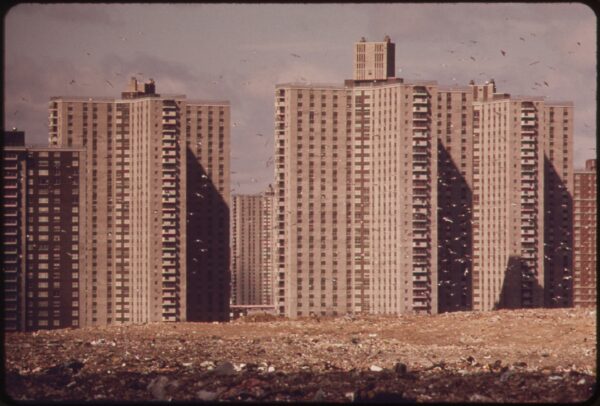
Driving into New York City from the north, an unavoidable cluster of thirty-five identical brick high-rises dominates the horizon just past the Bronx border. All of them over twenty stories tall, all with the same brick facades. They’re easily mistaken for a public housing project. But the complex is Co-op City, the largest housing cooperative in the world. Residents like Diane Patrick, who moved in back in 1978, don’t pay rent, but they don’t exactly own their units either. They buy shares in a corporation, paying monthly carrying charges that cover the mortgage and utilities, and they can renovate their apartments however they like. For Diane, who spent years working in real estate and watching people pay obscene prices for tiny Manhattan apartments, Co-op City is housing made for ordinary people.
The development traces back to Abraham Kazan, a Russian immigrant, socialist, and union organizer who became convinced in the early 1900s that unions should build their own apartment buildings and let members become collective owners, cutting out the predatory landlords who ran the tenements where garment workers lived. His cooperative housing idea was initially mocked by his own peers in the labor movement. He built anyway. By the late 1920s, Kazan and various union partners had put up buildings housing more than 850 working-class families. After World War II, an acute housing shortage and new federal urban renewal funding put Kazan’s organization, the United Housing Foundation, in business with the city’s most prolific and problematic planner, Robert Moses. Moses wanted to clear neighborhoods he deemed blighted. Kazan had the organization to build over the rubble.
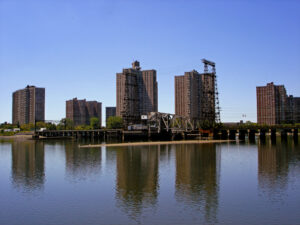
In 1955, New York State created the Mitchell-Lama program, offering low-interest mortgages and tax breaks to developers who built middle-class housing. The United Housing Foundation grew fast under the program. Their projects got bigger. The Penn South Cooperative in Manhattan was ten buildings, all about twenty stories, and fifteen thousand people showed up to its dedication ceremony in 1962, including JFK. But each project required demolishing old neighborhoods and displacing residents. Robert Caro estimated that Moses evicted a quarter million people to build highways in New York City, and another quarter million for urban renewal projects.

Jane Jacobs argued that the places being condemned were functioning communities, and that the sterile architecture replacing them killed the possibility of real neighborhood life. Looking to build even larger without the political cost of mass displacement, Moses and Kazan secured a four-hundred-acre swamp in the north Bronx that had briefly hosted a failed history-themed amusement park called Freedomland.
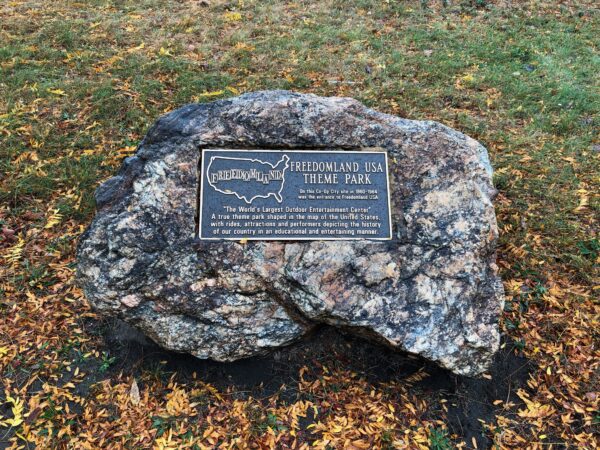
A few months after Co-op City opened on the site in late 1968, a blizzard buried New York City. Cars were abandoned on I-95 right past the development. Residents left the buildings, pulled stranded travelers inside, and brought them hot drinks while kids had snowball fights in the green spaces between the towers. It became a kind of founding story for the place, and an early rebuttal to critics who insisted that real neighborhoods couldn’t form inside modernist superblocks.
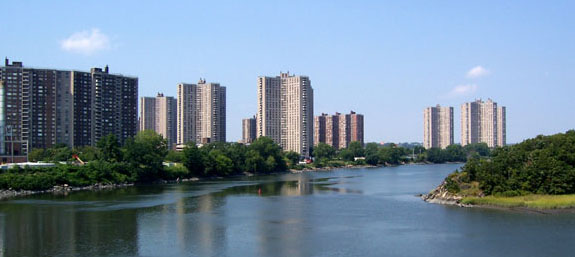
But building thirty-five skyscrapers on top of a swamp was not easy or cheap. The mortgage ballooned from $235 million to $391 million during construction, and the United Housing Foundation passed those costs to residents through increased carrying charges. When people complained, the UHF lectured them about the sacrifices of cooperative living. Residents had no voting power on the board that controlled the development. If you raised a complaint about costs or broken air conditioning, the response was essentially that you didn’t understand what it meant to be in a cooperative. Frustrated residents organized a thirteen-month mortgage strike, withholding their monthly checks and maintaining the buildings themselves. A lot of them were union members. They knew how to run a strike. In the end, the state conceded control of the board to the community. The United Housing Foundation never built another cooperative.

By the mid-1970s, the era of big-government liberalism that had made all this building possible was over. New York City was teetering on the edge of bankruptcy. The white flight that Moses had tried to stave off came to Co-op City. Early residents had been about eighty percent white and mostly Jewish, but over the course of the 1980s the development became a majority Black community. Co-op City avoided the decline that typically accompanied racial change in other neighborhoods. It stayed middle class. The equity deposit that the UHF had always been so insistent about may have had something to do with it. By the mid-seventies the Black middle class had grown, and families who could afford that upfront investment had a real stake in the place. Co-op City became a hub of early hip-hop culture, with students from the on-site Harry S. Truman High School appearing in the 1986 documentary Big Fun In The Big Town, the towers visible behind them.

Today, Co-op City is the largest naturally occurring retirement community in the nation, an affordable place to live on a fixed income in one of the most expensive cities in the country. New York’s new mayor, Zohran Mamdani, has proposed building 200,000 units of affordable housing over ten years. The last time anyone built housing at that scale in New York, it was after World War II, spearheaded by people like Moses and Kazan, and they made extremely harmful mistakes along the way. They bulldozed neighborhoods and treated whole communities as expendable. But the ambition to solve a housing crisis wasn’t a mistake. And in a city once again wrestling with how to house the people who keep it running, the question isn’t whether the government should attempt something that big again. It’s whether it can afford not to.

https://99percentinvisible.org?p=46882&post_type=episode&preview_id=46882
Extensions
RoboUmp Hits the Big Leagues
Objects

In Major League Baseball, there are four umpires on the field: one behind each base, and one behind home plate. The home plate ump has arguably the most important job, calling balls and strikes. A strike is basically any hittable pitch, something over the plate, between the batter’s chest and his knees. And a ball
Show full content

In Major League Baseball, there are four umpires on the field: one behind each base, and one behind home plate. The home plate ump has arguably the most important job, calling balls and strikes. A strike is basically any hittable pitch, something over the plate, between the batter’s chest and his knees. And a ball is everything else. Accurate calls are critical. But one study from 2018 found that umpires blow about 14 calls every game. That’s 34,000 bad calls every year. And it makes a difference.

A blown strike call can decide a win or a loss, a championship or long and sad off-season. This year, Major League Baseball has introduced a new system to help improve the accuracy of ball-and-strike calls – now, players are allowed to appeal to a so-called “robot umpire” if they disagree with the original, human call on the field.

The “robots” are actually a camera system called ABS, or “Automated Ball-Strike.” The system is similar to missile-guidance technology, and can pinpoint a ball’s location with startling accuracy. Back in 2023, 99% Invisible first covered this story, when the ABS system was introduced in baseball’s minor leagues. Now, with its arrival in the MLB, we revisit that story, and offer an update from producer Chris Berube on how the ABS system has been working out so far.

https://99percentinvisible.org?p=47969&post_type=episode&preview_id=47969
Extensions
Service Request #5: Dude, Where’s My Car?
Infrastructure

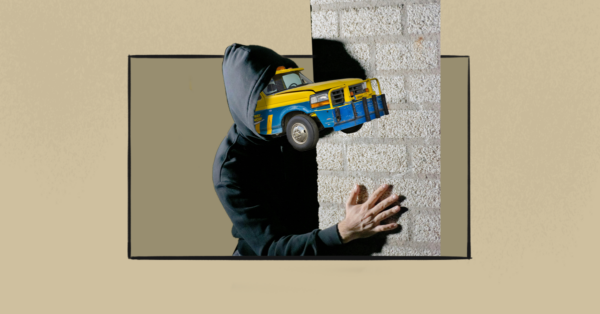
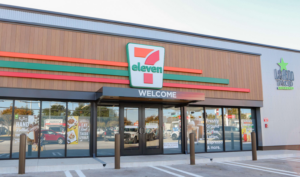
A brightly lit, entirely empty 7-Eleven parking lot in Brooklyn looked like a miracle to Kelly Prime. The 99% Invisible editor and her friends just needed a quick spot to leave their 2011 Mazda 6 while grabbing takeout next door. Fifteen minutes later, the car was gone. Assuming it was stolen, Prime asked the store
Show full content

A brightly lit, entirely empty 7-Eleven parking lot in Brooklyn looked like a miracle to Kelly Prime. The 99% Invisible editor and her friends just needed a quick spot to leave their 2011 Mazda 6 while grabbing takeout next door. Fifteen minutes later, the car was gone. Assuming it was stolen, Prime asked the store clerk for help, only to learn the vehicle had been towed. A quick search of the store’s Google reviews revealed a long list of drivers who had experienced the exact same rapid disappearance.

The incident left Kelly wondering how a business could legally snatch a car and hold it for an arbitrary ransom in a dark lot. Today’s episode investigates the opaque and highly lucrative world of predatory towing, a specific practice where companies actively hunt for vehicles to impound and then demand inflated fees from desperate owners.

Peering into the mechanics of these private property impounds reveals a massive regulatory gray area. Tom Berry, a retired Detroit police lieutenant and current fraud investigator, has seen the towing industry from every angle. He notes that while many companies operate ethically, others rely on aggressive tactics like the use of spotters. These are local residents paid by tow companies to monitor private lots. When a driver parks and walks off the premises, the spotter calls the tow truck and takes a cut of the profit. In many cities, this neighborhood surveillance network is entirely legal.

The aggressive nature of this business model takes a toll on the people behind the wheel. Shane Nation began driving a tow truck in Detroit at sixteen for a company notorious for its predatory tactics. He spent entire shifts idling near a hospital, waiting for spotters to flag visitors who parked in an adjacent apartment complex. The company trained drivers on how to handle angry owners and deflect police inquiries. Nation eventually left the company after experiencing a crisis of conscience, exhausted by the constant hostility and the reality of taking cars from people who clearly could not afford the fees.

When Kelly and her friends finally tracked down her Mazda at an impound lot a mile away, they faced a bizarre negotiation. Despite a posted sign listing a set fee, the attendant demanded an arbitrary, much higher amount because the office was “technically closed.” They eventually haggled the price down to the exact amount of cash they had on hand. This kind of fluid pricing is common. The towing industry is governed by a patchwork of state laws, and roughly half of all states lack basic consumer protections like fee caps or rules against kickbacks. Towers can easily inflate storage fees by delaying the release of a vehicle, sometimes hoping the owner will default so the car can be sold at auction.

Ultimately, when a vehicle gets hooked, the system is designed to force the driver’s hand. Fighting the charge or waiting a few days to gather paperwork usually just allows daily storage costs to multiply. It is an industry built almost entirely on leverage, relying on the simple fact that people desperately need their cars back.

What infrastructure mystery keeps you up at night? Submit your Service Request by recording a voice memo with your question and emailing it to servicerequest@99pi.org.

Service Request is a production of 99% Invisible and Campside Media.

Service Request
https://99percentinvisible.org?p=47382&post_type=episode&preview_id=47382
Extensions
Service Request #4: How Does the Grid in Phoenix Work?
Infrastructure

During the summer of 2023, Phoenix, Arizona, endured a streak of heat so unrelenting that saguaro cacti were collapsing in the streets. For thirty-one consecutive days, temperatures broke 110 degrees. Playgrounds sat empty. People navigated the city by dashing between buildings chilled to refrigerator temperatures. In Phoenix, air conditioning is not a luxury. It is
Show full content

During the summer of 2023, Phoenix, Arizona, endured a streak of heat so unrelenting that saguaro cacti were collapsing in the streets. For thirty-one consecutive days, temperatures broke 110 degrees. Playgrounds sat empty. People navigated the city by dashing between buildings chilled to refrigerator temperatures. In Phoenix, air conditioning is not a luxury. It is a vital piece of survival infrastructure. If the power goes out during a heatwave, the consequences are immediately life-threatening.

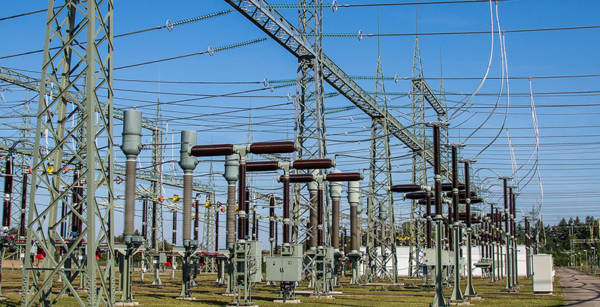
In Phoenix, the ultimate invisible lifeline is the electrical grid. Cultural anthropologist Gretchen Bakke describes the grid as the largest machine in the world, yet it remains almost entirely illegible to the public. Most people only interact with it through a confusing monthly bill. Behind that piece of paper is a massive physical network. Electricity is generated at large power plants and pushed across heavy transmission lines before being stepped down at neighborhood substations to ensure a safe voltage.

What makes this system particularly fragile is its timing. Electricity is incredibly fresh. When someone turns on an air conditioner, the power running it was generated just moments prior. Historically, the grid lacks large-scale storage, meaning electricity is consumed almost the instant it is produced. Grid operators are forced to maintain a perpetual balance between supply and demand, keeping the alternating current pulsing at exactly sixty hertz. If that frequency drops, the entire system risks a cascading failure. Phoenix does not do this alone. The city sits within the sprawling Western Grid, an interconnected network stretching from Canada to Mexico where utilities constantly coordinate to keep power flowing.

Locally, the responsibility of keeping the lights on falls to the Salt River Project, a public power utility. At SRP, Senior Director of Resource Management Angie Bond-Simpson oversees the complex forecasting required to prevent blackouts. Her team looks years ahead to anticipate population growth and climate shifts while also managing daily needs. Planners build a daily stack of energy sources, prioritizing weather-based renewables like wind and solar before tapping into dispatchable resources like natural gas that can be turned on like a faucet. Once the daily plan is set, it gets handed over to real-time operators working in a surprisingly quiet control room. They monitor the system constantly, adjusting on the fly to handle sudden drops in wind or localized outages.

The true stress test for these operators arrives in the summer. During the brutal heat of 2023, the system held up, but operators faced consecutive days of peak demand with a razor-thin margin for error. With Phoenix ranking as one of the fastest-growing cities in the United States and massive industrial users like data centers moving in, the challenge of maintaining that perfect balance grows steeper every year. Building the infrastructure to support that growth can take a decade, meaning the grid is always racing to catch up with a rapidly arriving future.

What infrastructure mystery keeps you up at night? Submit your Service Request by recording a voice memo with your question and emailing it to servicerequest@99pi.org.

Service Request is a production of 99% Invisible and Campside Media.

Service Request
https://99percentinvisible.org?p=47380&post_type=episode&preview_id=47380
Extensions
Service Request #3: Why Is There So Much Litter in San Francisco?
Infrastructure

Walking through San Francisco’s North Beach neighborhood with an empty cup in hand after grabbing a slice of pizza at Tony’s, 99PI host Roman Mars faced a surprisingly difficult urban challenge: finding a public trash can. This minor frustration opens up an investigation into one of the most fundamental services a municipality provides. The absence
Show full content

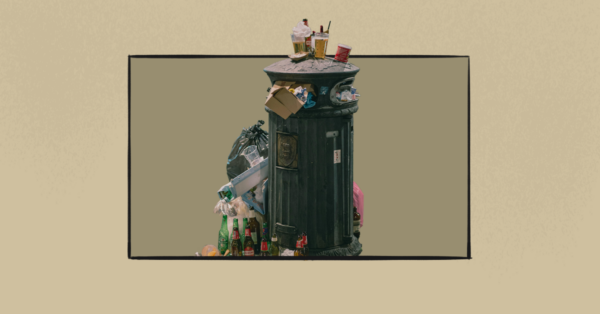
Walking through San Francisco’s North Beach neighborhood with an empty cup in hand after grabbing a slice of pizza at Tony’s, 99PI host Roman Mars faced a surprisingly difficult urban challenge: finding a public trash can. This minor frustration opens up an investigation into one of the most fundamental services a municipality provides. The absence of a simple receptacle reveals a complex system of behavioral psychology, municipal budgeting, and waste engineering, leading host Delaney Hall to investigate how the city manages its street-level infrastructure for an episode of Service Request.

San Francisco Public Works oversees roughly 3,000 public garbage cans, prioritizing placement near transit stops, schools, and busy commercial corridors. Rachel Gordon, the Director of Policy and Communications for the department, explains that the city also relies on public feedback and municipal requests to determine where new bins should be placed. However, managing this network is about more than just logistics. In 2017, the city launched the “Yes We Can” pilot in the Mission District, saturating a thirty-block radius with bins to test a widely held assumption that more receptacles would equal less litter.
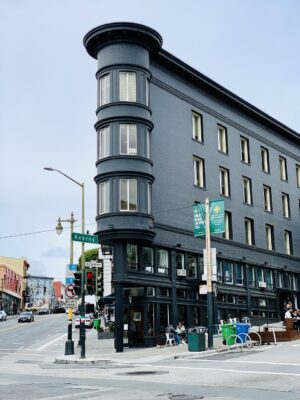


Surprisingly, the sheer volume of cans did little to change human behavior. Pedestrians continued to drop wrappers right next to the bins, highlighting a local culture of waste where some treat public sidewalks like a hotel maid service, assuming a city worker or private contractor will inevitably sweep in to clean up the mess. This behavioral paradox led the city to pivot from increasing the quantity of bins to improving their quality. The existing “Renaissance” cans, deployed back in 1993, were aging and constantly battered by graffiti, vandalism, and aggressive foraging.

To find a sturdier replacement, the city developed three custom prototypes and selected three off-the-shelf models, deploying them across fifty-two diverse locations for real-world stress testing. The initiative quickly became a lightning rod for local pothole politics, drawing national media ire over the twenty thousand dollar price tag attached to the custom prototypes. However, this upfront cost was simply a standard research and development expense for fabricating one-off industrial designs engineered to withstand the unique rigors of the street.

After nearly 14,000 residents weighed in via QR codes, the city selected the “Slim Silhouette,” a narrow design wrapped in exterior stainless steel bars to deter graffiti. Now slated for mass production at a much more reasonable unit cost of around thirteen hundred dollars, the bins have been fine-tuned to accommodate larger items and feature hardened locks. Ultimately, finding the perfect intersection of aesthetics and utility proves that navigating the fraught municipal politics of a simple garbage can is a surprisingly complicated job.

Service Request is a production of 99% Invisible and Campside Media.

Service Request
https://99percentinvisible.org/?post_type=episode&p=47588
Extensions
Constitution Breakdown #8: Jill Lepore
History

This is the eighth episode of our ongoing series breaking down the U.S. Constitution. This month, Roman and Elizabeth discuss Article V, which lays out the process to amend the Constitution, alongside historian and author Jill Lepore. Jill Lepore is an American History professor at Harvard, a staff writer for The New Yorker, and author
Show full content

This is the eighth episode of our ongoing series breaking down the U.S. Constitution. This month, Roman and Elizabeth discuss Article V, which lays out the process to amend the Constitution, alongside historian and author Jill Lepore.

Jill Lepore is an American History professor at Harvard, a staff writer for The New Yorker, and author of These Truths: A History of the United States. Her newest book is We the People: A History of the U.S. Constitution. She tells this history through amendments — the 27 that succeeded, and the thousands that have failed.

In the conversation, Lepore lays out her thesis that the Constitution is truly meant to be amended, explains why Article V amendments have become functionally impossible, and tells some fascinating stories about the people who have championed amendments.

The 99% Invisible Breakdown of the Constitution
https://99percentinvisible.org?p=47633&post_type=episode&preview_id=47633
Extensions
Service Request #2: Why Is This Red Light So Damn Long?
Infrastructure

Navigating Los Angeles by car is a notoriously soul-crushing endeavor, particularly when you find yourself trapped in the kind of infrastructural purgatory locals affectionately call the “Devil’s three-way”—the chaotic, multi-signal convergence of Fairfax, Olympic, and San Vicente. For 99% Invisible’s Vivian Le, sitting squarely in the passenger seat while her husband Cody Franklin white-knuckles it
Show full content

Navigating Los Angeles by car is a notoriously soul-crushing endeavor, particularly when you find yourself trapped in the kind of infrastructural purgatory locals affectionately call the “Devil’s three-way”—the chaotic, multi-signal convergence of Fairfax, Olympic, and San Vicente. For 99% Invisible’s Vivian Le, sitting squarely in the passenger seat while her husband Cody Franklin white-knuckles it through the gridlock, the frustration is palpable. It is exactly this kind of mundane, maddening urban experience that host Delaney Hall sets out to decode in Service Request, a collaborative series from 99% Invisible and Campside Media that pulls back the curtain on the hidden municipal networks keeping our cities running.

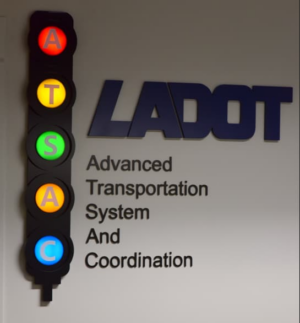
At the heart of the daily Los Angeles commute is a sprawling, centralized nervous system known as ATSAC, or the Advanced Transportation System and Coordination. The network links nearly 5,000 traffic signals across the city to a downtown control room. Seleta Reynolds, the Chief Innovation Officer at LA Metro who ran the agency for a decade, notes that the system operates like a massive civic brain. Sensors embedded directly into the pavement detect waiting vehicles and feed that data into algorithms that constantly calculate the delicate balance of space and time, orchestrating the flow of millions of commuters.
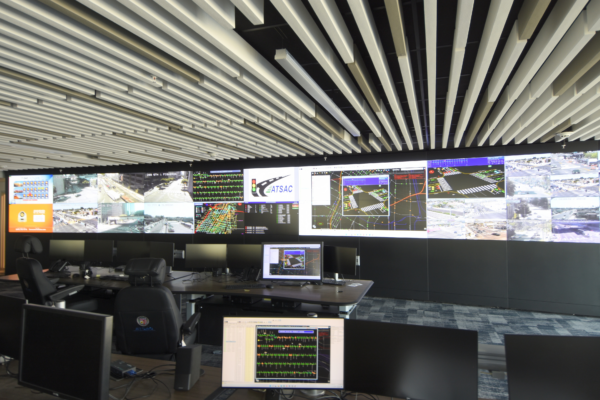

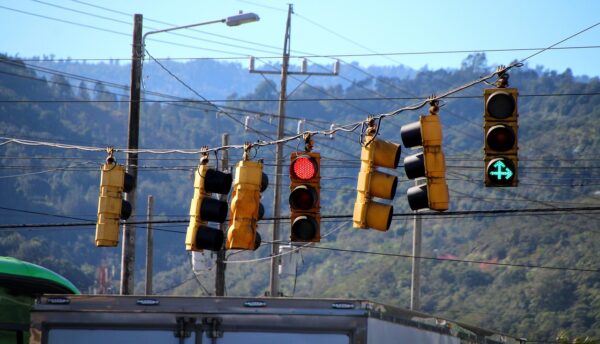
While the system relies heavily on automated math to dictate the rhythm of the streets, it still requires a human touch. In that downtown control center—a room so inherently cinematic it was famously hacked to create artificial gridlock in the 2003 heist film The Italian Job—engineers monitor hundreds of live camera feeds. When algorithms fail or extraordinary events like protests and sinkholes snarl the streets, these operators can manually override the signals, pushing green lights to clear out congested corridors.

What infrastructure mystery keeps you up at night? Submit your Service Request by recording a voice memo with your question and emailing it to servicerequest@99pi.org.

This high-tech approach to traffic management was actually born out of sheer civic desperation. In the lead-up to the 1984 Olympic Games, officials were terrified that millions of visiting spectators would push the city’s already strained roadways into total paralysis. Back then, fixing a jammed intersection meant deploying an engineer in a car to physically reprogram a local signal box. Faced with impending disaster, traffic engineer Ed Rowe spearheaded a moonshot initiative from a local garage, utilizing underground fiber-optic cables to remotely network 115 intersections around the LA Coliseum. The experiment was a massive success, preventing Olympic gridlock and establishing a technological blueprint that would eventually be studied and replicated by future host cities from Sydney to Beijing.

Over the ensuing decades, ATSAC expanded to cover the entire metropolis, but its core philosophy also underwent a dramatic shift. Under leaders like Reynolds, the department recognized that transportation engineering is less about pure mathematics and more about behavioral psychology. The metric for success evolved from simply minimizing car delays to prioritizing the collective good of the public right-of-way. The system was recalibrated to favor highly efficient modes of transit like buses and trains, and to actively protect pedestrians and cyclists. In some dangerous corridors, engineers even programmed signals to rest on flashing yellows or reds late at night, a subtle psychological design tweak meant to force speeding drivers to slow their roll.

As Los Angeles gears up to host the Olympics once again in 2028, the city is preparing to roll out the next iteration of ATSAC to manage an entirely new generation of transit challenges. But whether you are an international athlete, a daily commuter, or a frustrated passenger princess stuck at a red light, your wait is never truly arbitrary. You are simply one variable in an incredibly complex, constantly shifting utilitarian equation designed to keep the built environment moving.

What infrastructure mystery keeps you up at night? Submit your Service Request by recording a voice memo with your question and emailing it to servicerequest@99pi.org.

Service Request is a production of 99% Invisible and Campside Media.

Service Request
https://99percentinvisible.org/?post_type=episode&p=47578
Extensions
Service Request #1: What Happens When I Call 311?
Infrastructure

During the early days of the pandemic lockdowns, 99% Invisible producer Christopher Johnson found himself trapped in a high-rise apartment in Washington Heights, tormented by the relentless, looping jingle of idling Mr. Softee ice cream trucks. Armed with the knowledge that local noise ordinances required the trucks to silence their music while parked, he dialed
Show full content

During the early days of the pandemic lockdowns, 99% Invisible producer Christopher Johnson found himself trapped in a high-rise apartment in Washington Heights, tormented by the relentless, looping jingle of idling Mr. Softee ice cream trucks. Armed with the knowledge that local noise ordinances required the trucks to silence their music while parked, he dialed 311. He fully expected to be routed into an automated bureaucratic dead end. Instead, he reached a live, empathetic operator armed with highly specific probing questions, offering a rare glimpse into the surprisingly human machinery of municipal 311 lines.

This massive civic switchboard is a relatively recent urban invention. Throughout the 1980s and early 1990s, 311 lines didn’t exist and city residents routinely called 911 to report mundane issues like potholes and noise complaints, dangerously clogging emergency dispatch lines. To relieve the pressure, Baltimore launched the nation’s first dedicated 311 line in 1996. However, when New York City launched its own system in 2003, it dramatically scaled up the concept. The goal was to build a comprehensive customer service operation capable of handling any non-emergency inquiry, from sanitation schedules to homeless services.

What infrastructure mystery keeps you up at night? Submit your Service Request by recording a voice memo with your question and emailing it to servicerequest@99pi.org.

Building that exhaustive civic directory was a monumental undertaking. Per Joe Morrisroe, the deputy commissioner at New York’s Office of Technology and Innovation, the city had to consolidate disparate agency hotlines into a single location and cram thousands of protocols into a centralized, searchable database. When the system launched, it contained around 1,000 discrete pieces of information. Today, that number has swelled to over 7,000, allowing a staff of hundreds of operators to field millions of calls a year, along with millions of other contacts via web, text, and mobile app.

For the operators answering those calls, the work requires serious investigative skills. As NYC 311 supervisor Samantha Pierce notes, the system relies on understanding the “why” behind a grievance, requiring call-takers to probe beyond the initial frustration of residents dealing with sewage backups or illegal parking. They act as the de facto voice of the city, fielding everything from heartbreaking inquiries about the housing market to baffling reports of ghosts and neighbor-induced apartment vibrations.

Beyond simply logging complaints, the 311 network functions as a real-time feedback loop capable of adapting to unprecedented crises. During the massive Northeast blackout of 2003, an influx of callers suddenly needed to know how to safely store insulin without refrigeration, prompting 311 to rapidly coordinate with the Department of Health to issue new municipal guidance. In 2009, when US Airways Flight 1549 safely crash-landed in the Hudson River, a wave of unexpected inquiries about retrieving luggage that had washed ashore forced the city to invent a retrieval protocol on the fly. To this day, the 311 team uses the term “floating luggage” as an internal shorthand for the unpredictable emergencies they must constantly anticipate.

By mapping millions of individual service requests, the city can pinpoint systemic issues and even solve regional mysteries, like the time 311 data and wind patterns were overlaid to trace a phantom maple syrup scent back to a New Jersey fenugreek factory.

Yet despite this incredibly complex infrastructure, some localized annoyances remain stubbornly resistant to municipal intervention. Having filed his noise complaint anonymously, Johnson never received a tracking number, and the ice cream trucks continued their daily concerts completely undeterred. In the end, he solved his infrastructural nightmare with a decidedly analog workaround: he packed up his apartment and moved to Brooklyn.

What infrastructure mystery keeps you up at night? Submit your Service Request by recording a voice memo with your question and emailing it to servicerequest@99pi.org.

Service Request is a production of 99% Invisible and Campside Media.

Service Request
https://99percentinvisible.org/?post_type=episode&p=47565
Extensions

Related Narratives

← Back to feeds