1. The Crisp Shops of Madrid Spain, like the UK, has a big crisp culture, with fun regional differences in how they’re consumed. In Catalunya for example, you’ll often see crisps and berberechos (tinned cockles) topped with Salsa Espinaler during ‘L’hora del vermut’ (‘vermouth hour’) on a Sunday…. Not only are they to be found in bars across…
Show full content
1. The Crisp Shops of Madrid
Spain, like the UK, has a big crisp culture, with fun regional differences in how they’re consumed. In Catalunya for example, you’ll often see crisps and berberechos (tinned cockles) topped with Salsa Espinaler during ‘L’hora del vermut’ (‘vermouth hour’) on a Sunday…. Not only are they to be found in bars across the city, but they also light up the streets of Madrid through the windows of glorious little shops known as fábricas de patatas fritas — quite literally, ‘crisp factories’.
1. “Frasurbane”: a popular 90s postmodern design aesthetic titled from the 1990s TV show ‘Frasier’ a style that draws from more wild postmodern design movements like Grunge graphic design (eg. David Carson), Memphis Milano & Deconstructivism, but filters them through the lens of a more conservative and aging Baby Boomer population that was settling down,…
Show full content
1. “Frasurbane”: a popular 90s postmodern design aesthetic titled from the 1990s TV show ‘Frasier’
a style that draws from more wild postmodern design movements like Grunge graphic design (eg. David Carson), Memphis Milano & Deconstructivism, but filters them through the lens of a more conservative and aging Baby Boomer population that was settling down, becoming more wealthy & desiring to appear more sophisticated and worldly.
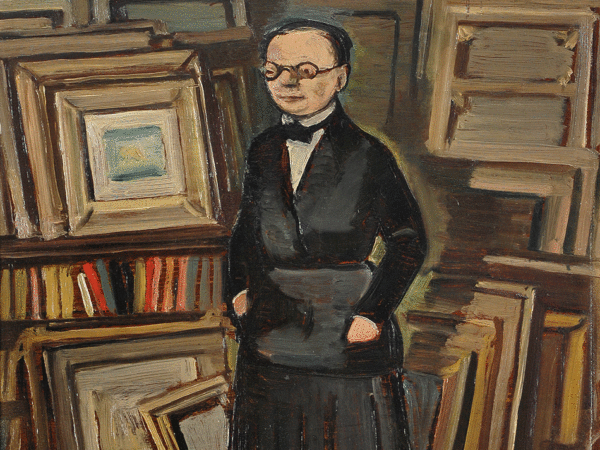
When Jewish art dealer Berthe Weill was forced to close her Parisian gallery and go into hiding during the Occupation of France, she had already helped build the careers of artists like Pablo Picasso, Henri Matisse, Amedeo Modigliani and Diego Rivera, as well as female including painter Suzanne Valadon, African-American sculptor Meta Vaux Warrick Fuller…
When Jewish art dealer Berthe Weill was forced to close her Parisian gallery and go into hiding during the Occupation of France, she had already helped build the careers of artists like Pablo Picasso, Henri Matisse, Amedeo Modigliani and Diego Rivera, as well as female including painter Suzanne Valadon, African-American sculptor Meta Vaux Warrick Fuller and Émilie Charmy, known for her portraits.
Editor's PicksInspiration VaultInternet ScrapbookLife is Messy
1. Rarely seen photographs of Josephine Baker at the Ziegfeld Follies, 1936 By the middle of the 1930s Joséphine Baker was firmly established as one of France’s brightest stars, and she had high hopes of furthering the great success she’d experienced with the French when she was engaged to be in the starry cast of…
Show full content
1. Rarely seen photographs of Josephine Baker at the Ziegfeld Follies, 1936
By the middle of the 1930s Joséphine Baker was firmly established as one of France’s brightest stars, and she had high hopes of furthering the great success she’d experienced with the French when she was engaged to be in the starry cast of the 1936 revival of the “Ziegfeld Follies” on Broadway. She sailed on the Normandie to New York in August of 1935 in order to begin rehearsals. But right from the beginning, she had to fight the sort of racism she rarely encountered in Europe; she was turned away from the hotel where she had reserved rooms, as the management didn’t want to offend their Southern clientele.
Editor's PicksInternet ScrapbookLife is Messy13 thingsinternet
1. The other Madame X Portraits When Madame X was shown at the Salon of 1884 it became instantly a salacious painting and a scandal in French society as a result of its sexual suggestiveness. The painting’s subject, socialite, Madame Gautreau, refused the painting, and Sargent, depressed and abashed, changed it, painting out the offending…
Show full content
1. The other Madame X Portraits
When Madame X was shown at the Salon of 1884 it became instantly a salacious painting and a scandal in French society as a result of its sexual suggestiveness. The painting’s subject, socialite, Madame Gautreau, refused the painting, and Sargent, depressed and abashed, changed it, painting out the offending strap, repainting it in its “proper” place.
Madame Gautreau, embarrassed, had temporarily stepped away from the spotlight, but she seems to have developed rather an affection for its glare, a taste for a certain degree of notoriety.
1. A mid-19th-century French watch bottle (circa 1850) Represents a luxurious, functional accessory blending horology and jewellery, likely created for the European market or high-end export. It typically features a miniature watch movement encased in azure blue enamel, decorated with seed pearls, and housed in a fitted red shell-shaped leather case. Found on the Decorative…
Show full content
1. A mid-19th-century French watch bottle (circa 1850)
Represents a luxurious, functional accessory blending horology and jewellery, likely created for the European market or high-end export. It typically features a miniature watch movement encased in azure blue enamel, decorated with seed pearls, and housed in a fitted red shell-shaped leather case.
1. Name that aesthetic: Domino Paper (for those of us who find as much joy in a book’s “clothing” as its contents) The forerunner of wallpaper, domino paper achieved its golden age in the second half of the 18th century. It took the form a 36X45cm sheet of paper that was printed using engraved wood-blocks…
Show full content
1. Name that aesthetic: Domino Paper (for those of us who find as much joy in a book’s “clothing” as its contents)
The forerunner of wallpaper, domino paper achieved its golden age in the second half of the 18th century. It took the form a 36X45cm sheet of paper that was printed using engraved wood-blocks in one color (black, blue or red) and then colored with a brush or stencil.
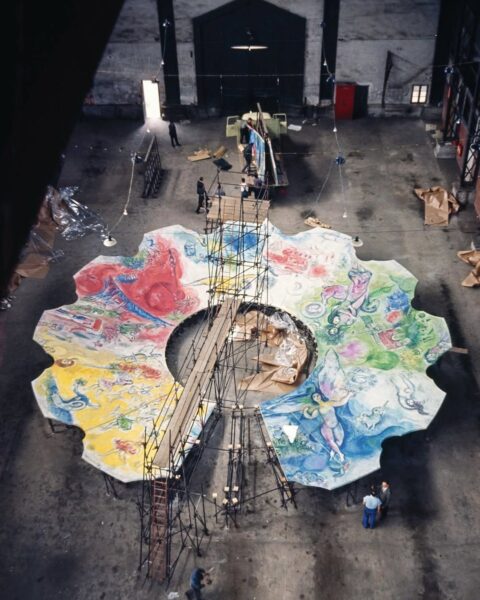
1. How Marc Chagall made the Paris Opera House Fresco Ceiling in the summer of 1964 (and should it be kept there?) On August 7, 1964, inside Hangar Y, (formerly the Chalais Meudon site where the world’s first airship hangar was built in the 1870s and is now an excellent art & culture museum in the…
Show full content
1. How Marc Chagall made the Paris Opera House Fresco Ceiling in the summer of 1964 (and should it be kept there?)
Don't Be A TouristEditor's PicksInspiration VaultInternet ScrapbookLife is Messy
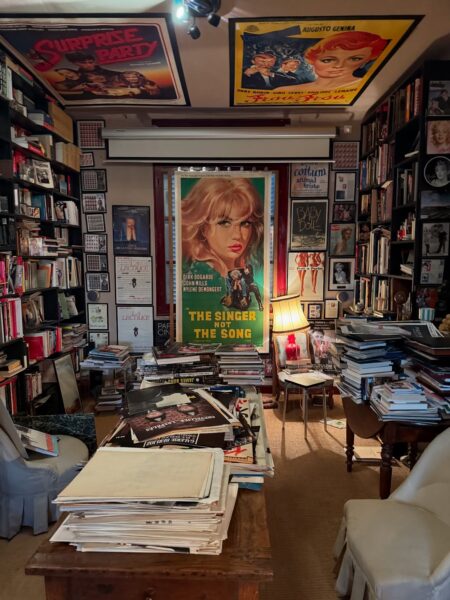
1. A Parisian apartment frozen in time with floor to ceiling cinema posters Inside the 400m2 home of a French doctor who was crazy about cinema. His walls that tell a lifetime of passion for cinema, every room is an archive, every wall a memory, Discovered and shared by vintage film poster restorer, Arthur Fouasse.…
Show full content
1. A Parisian apartment frozen in time with floor to ceiling cinema posters
Inside the 400m2 home of a French doctor who was crazy about cinema. His walls that tell a lifetime of passion for cinema, every room is an archive, every wall a memory, Discovered and shared by vintage film poster restorer,
1. A Behind the scenes look into the sketchbook of a medieval book illuminator Aren’t these incredible? Selected pages from the Spätgotisches Musterbuch des Stephan Schriber, a manuscript which appears to be some kind of sketchbook, belonging to a fifteenth-century monk working in South-West Germany, where ideas and layouts for illuminated manuscripts were tried out and…
Show full content
1. A Behind the scenes look into the sketchbook of a medieval book illuminator
Aren’t these incredible?
Selected pages from the Spätgotisches Musterbuch des Stephan Schriber, a manuscript which appears to be some kind of sketchbook, belonging to a fifteenth-century monk working in South-West Germany, where ideas and layouts for illuminated manuscripts were tried out and skills developed.
More from the Illuminated Sketchbook of Stephan Schriber (1494) found on
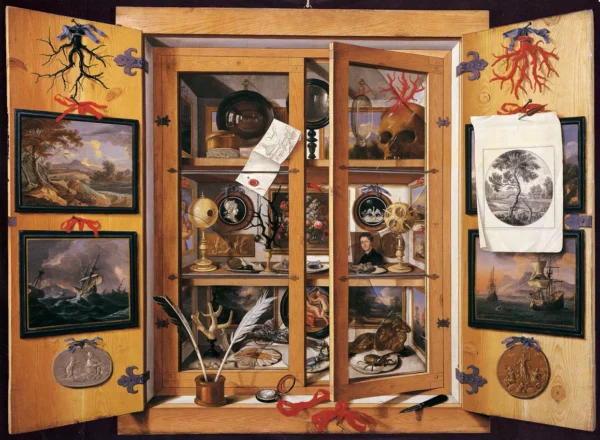
1. Art in Art: Cabinets of Curiosity and the Rise of the Gallery Painting A very interesting read for anyone who loves curiosity cabinets: In the 17th century, emanating from Antwerp, a new genre of artwork came on the scene:
Show full content
1. Art in Art: Cabinets of Curiosity and the Rise of the Gallery Painting
A very interesting read for anyone who loves curiosity cabinets:
In the 17th century, emanating from Antwerp, a new genre of artwork came on the scene:
Art & Design AwesomenessEditor's PicksInspiration VaultInternet ScrapbookLife is Messy
1. An ode to Shopfronts (shot in the early 80s) Scans from the vintage book “Shopfronts”, 1981, found by Press SF. 2. Some thoughts on Personal Business that obviously resonated with me “In You’ve Got Mail, Kathleen Kelly is positioned as virtuous but naive, a hopeless romantic stuck in the old way of doing things.
Show full content
1. An ode to Shopfronts (shot in the early 80s)
Scans from the vintage book “Shopfronts”, 1981, found by
1. The hidden worlds hiding inside Curtis Talwst Santiago’s jewelry boxes Canadian-Trinidadian artist Curtis Talwst Santiago uses reclaimed jewelry boxes as tiny stages for his elaborate miniature dioramas, which are part of his continuing “Infinity Series”. These meticulously built scenes—complete with lush plants, architectural details, and minuscule figures—are dense with narratives of home, intimacy, diasporic…
Canadian-Trinidadian artist Curtis Talwst Santiago uses reclaimed jewelry boxes as tiny stages for his elaborate miniature dioramas, which are part of his continuing “Infinity Series”.
These meticulously built scenes—complete with lush plants, architectural details, and minuscule figures—are dense with narratives of home, intimacy, diasporic identity, and memory.
In recent years, Santiago has focused on his personal history, as seen in his “Soca in the Suburbs” collection.


 1. The Crisp Shops of Madrid