Near the end of my first and perhaps only Renaissance Faire, as I stood wilting in the heat and dazedly eating a frozen banana, a medium-size child crept up and quietly gave me the plague. She was maybe eight years old, her face hidden in a furry gray rat mask. She sidled up beside me and my friend and quickly stamped both of us with a drawing of a little flea.
“You got the plague,” her mom called over. We clapped appreciatively as the little rat stealthily moved onto her next victim.
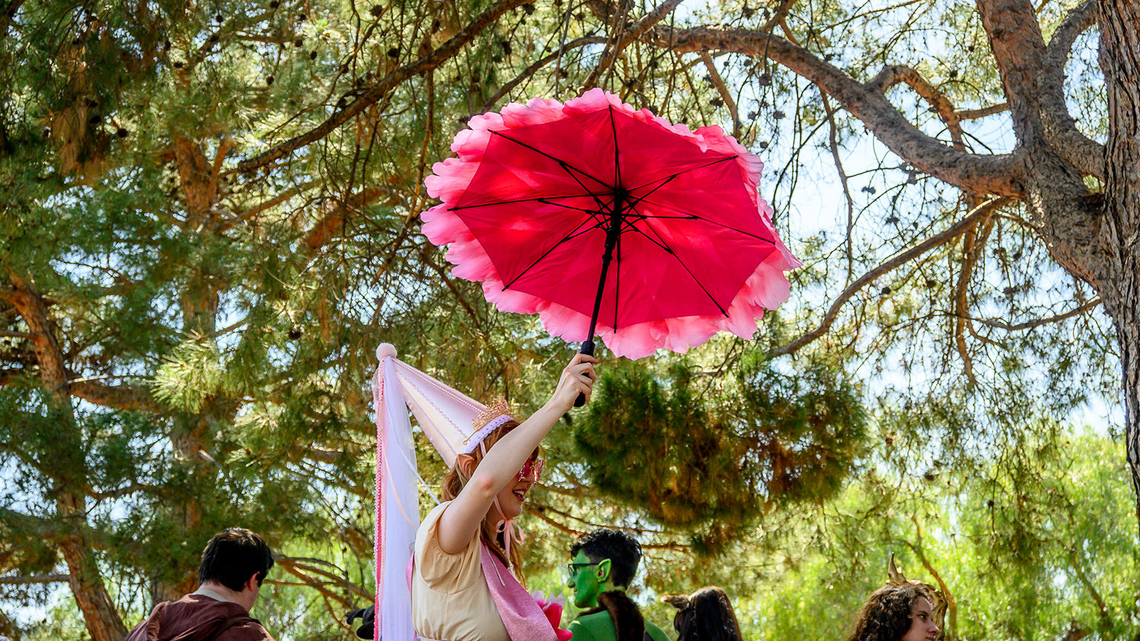
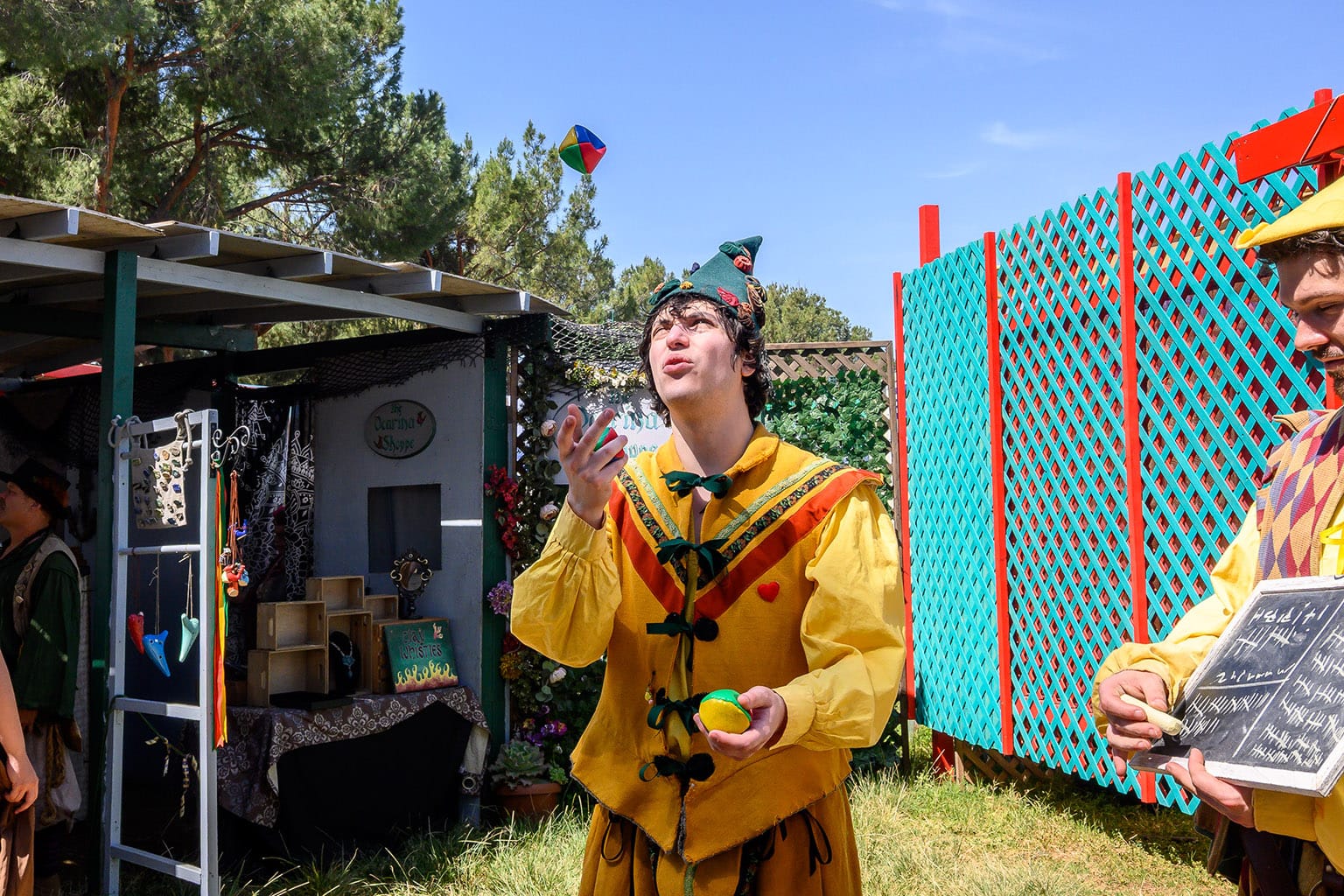
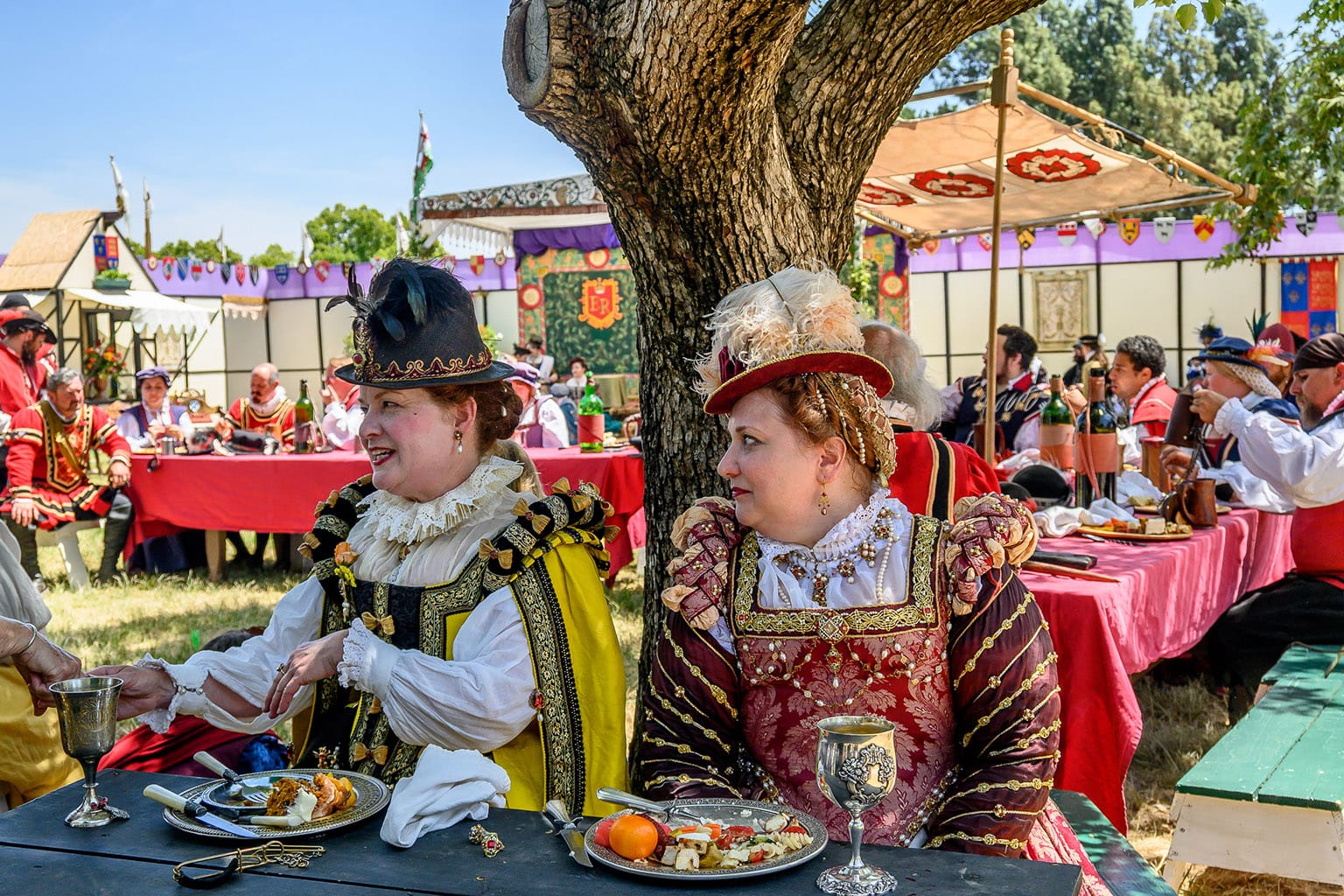
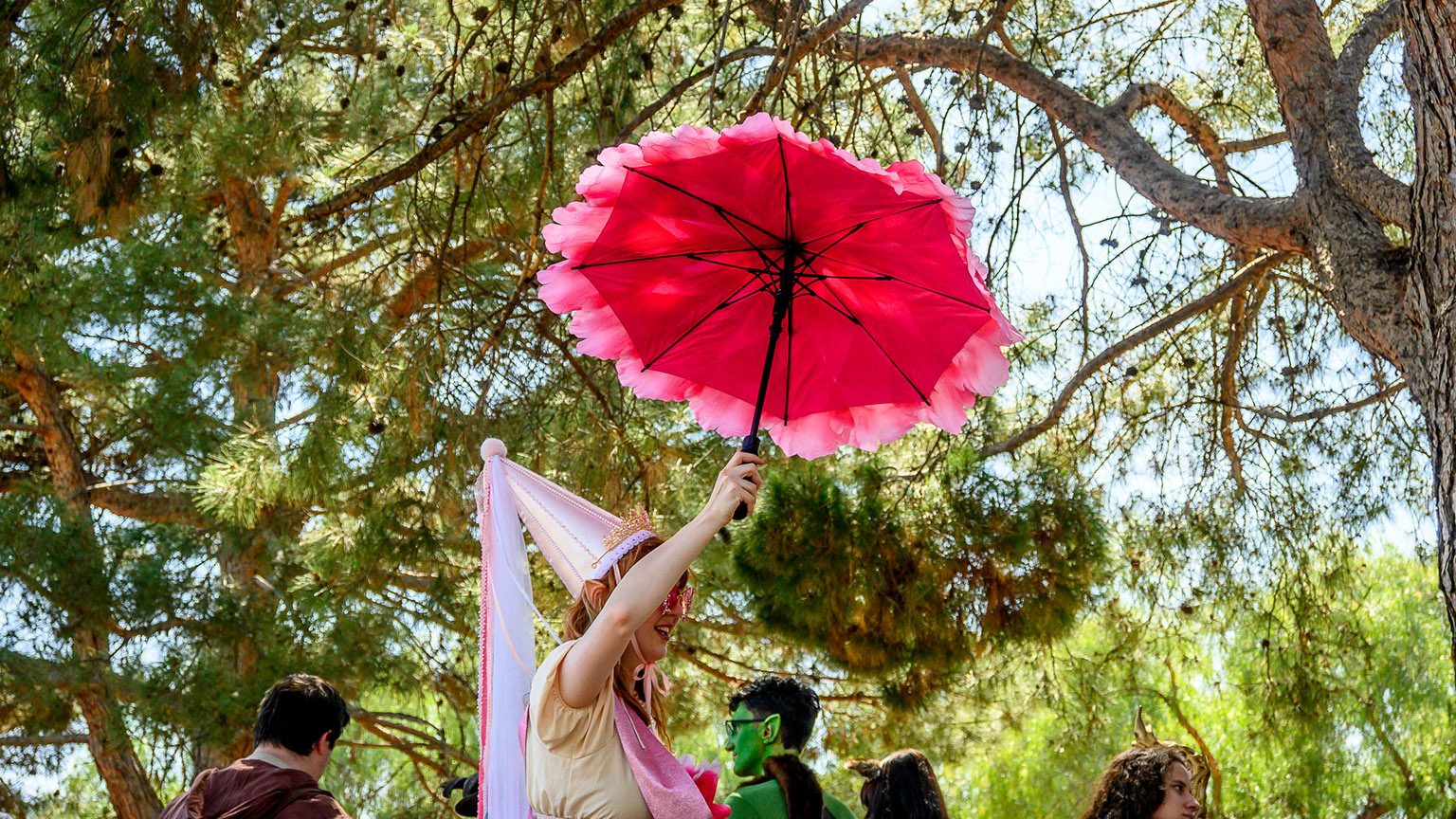
Irwindale is a flat and sleepy desert town in the San Gabriel Valley, about 20 miles east of Los Angeles. Here, in a mercilessly sunny park beside the Santa Fe Dam, we had come to attend the 63rd annual Renaissance Pleasure Faire, the nation’s oldest renaissance faire. The roasting-hot celebration is home to an absolutely flabbergasting number of people and things. Blacksmiths, archery ranges, a sword swallower, a “gnome hunt” for the children, hair-braiding “for maidens,” face-painting, juggling, jousting, children beaming in delighted confusion while being knighted; a young and grave Queen Elizabeth, in a heavy, beaded and embroidered dress and makeup that was probably lighter than historically accurate, being paraded through a solemn crowd; aerialists spinning themselves high into the air. My brain gently melted, from overstimulation and from heat, my flower crown slipping into my eyes.
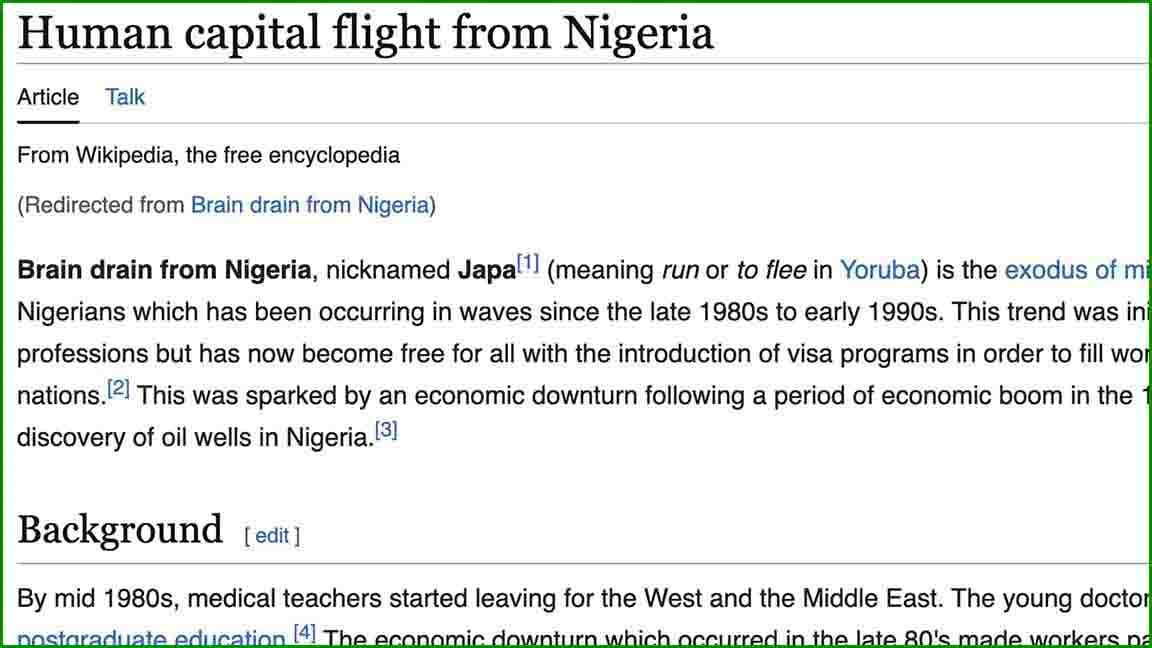
“Japa” is a Yoruba word that translates to “flee” or “escape” a precarious situation. But there is a specific context for the use of this word in modern Nigerian parlance.
In 2020, Nigeria witnessed the nationwide #EndSARS protests that led to the brutalization
Show full content
“Japa” is a Yoruba word that translates to “flee” or “escape” a precarious situation. But there is a specific context for the use of this word in modern Nigerian parlance.
In 2020, Nigeria witnessed the nationwide #EndSARS protests that led to the brutalization and state-sponsored killings of dozens of Nigerian youths in Lagos. The aftermath of this event led to an exodus of young people, who had seen the futility of their hopes for political change, so that today “Japa” has become a diasporic buzzword connected to the lack of faith in the Nigerian state and the country. The failure of the government to protect fundamental human rights is complete; the country has become a hardened police state where peacefully demonstrating puts your life in danger and can make you guilty of “treason.” This migratory wave was thus inevitable. It includes students and people in search of work, as well as political exiles who have had to flee for their lives.
On X/Twitter the other day I noticed a post with the headline, “Japa blessings.” It gave me the impression of a Nigeria whose future is on a knife-edge. The poster spoke of the CAD 50,000 grant their sister had received in order to pursue her studies in Canada. This post celebrates the vast-sounding sum of money, but does not address the topic of the loans that students must repay upon completion of their programs. This contributes to the long tradition of grand narratives of diasporic success, consolidating the green-pasture mythology that drives the desires and fantasies of many Nigerians back home.
Near the end of my first and perhaps only Renaissance Faire, as I stood wilting in the heat and dazedly eating a frozen banana, a medium-size child crept up and quietly gave me the plague. She was maybe eight years old, her face hidden in a furry gray rat mask.
Show full content
Near the end of my first and perhaps only Renaissance Faire, as I stood wilting in the heat and dazedly eating a frozen banana, a medium-size child crept up and quietly gave me the plague. She was maybe eight years old, her face hidden in a furry gray rat mask. She sidled up beside me and my friend and quickly stamped both of us with a drawing of a little flea.
“You got the plague,” her mom called over. We clapped appreciatively as the little rat stealthily moved onto her next victim.
Irwindale is a flat and sleepy desert town in the San Gabriel Valley, about 20 miles east of Los Angeles. Here, in a mercilessly sunny park beside the Santa Fe Dam, we had come to attend the 63rd annual Renaissance Pleasure Faire, the nation’s oldest renaissance faire. The roasting-hot celebration is home to an absolutely flabbergasting number of people and things. Blacksmiths, archery ranges, a sword swallower, a “gnome hunt” for the children, hair-braiding “for maidens,” face-painting, juggling, jousting, children beaming in delighted confusion while being knighted; a young and grave Queen Elizabeth, in a heavy, beaded and embroidered dress and makeup that was probably lighter than historically accurate, being paraded through a solemn crowd; aerialists spinning themselves high into the air. My brain gently melted, from overstimulation and from heat, my flower crown slipping into my eyes.
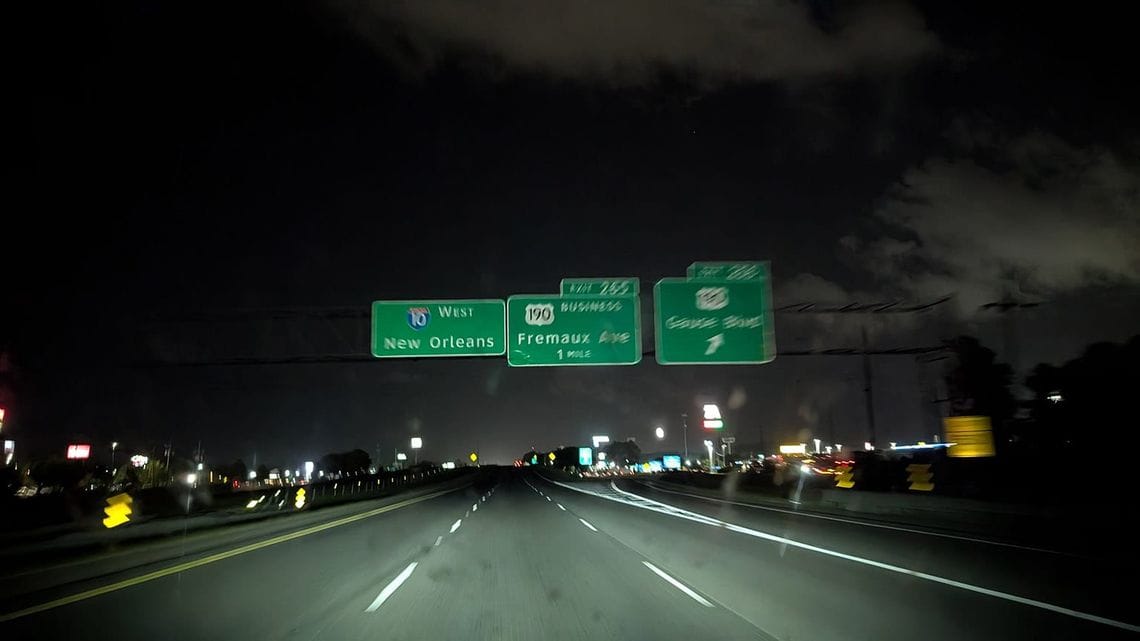
“Let’s drive to New Orleans!” I said in February—an impulsive suggestion that had emerged not from contemplation or planning, but out of whimsy. In Minnesota, the trees remained dead from the weight of winter, and every few weeks the snow threatened to return, keeping the dream of spring away.
In my post-college years I went on a lot of tours with bands. I’m not a musician, but I am (or was, in a different era for my lower back) good at carrying heavy things, driving big vans, selling merch, sleeping under tables (one of my many tour
Show full content
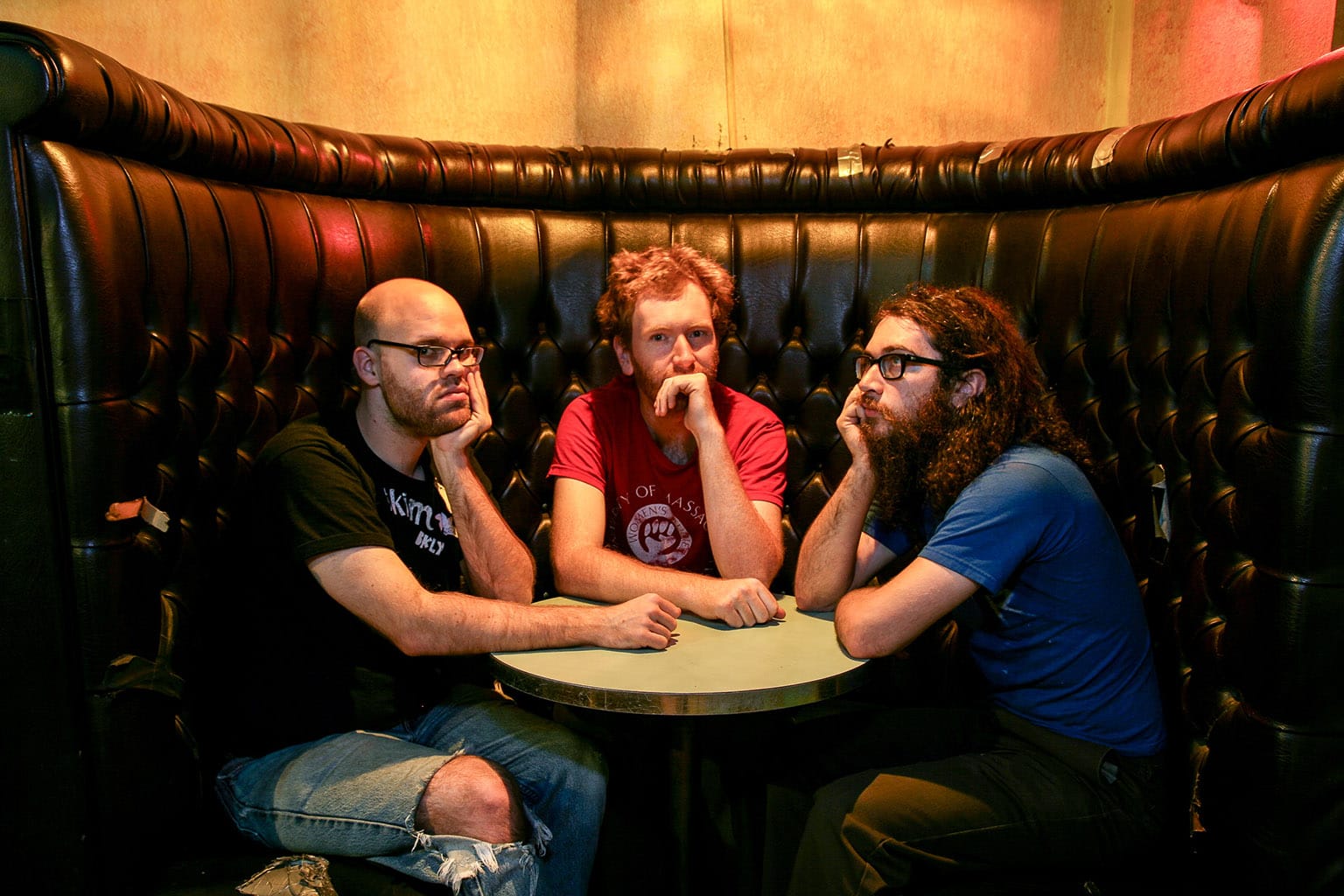
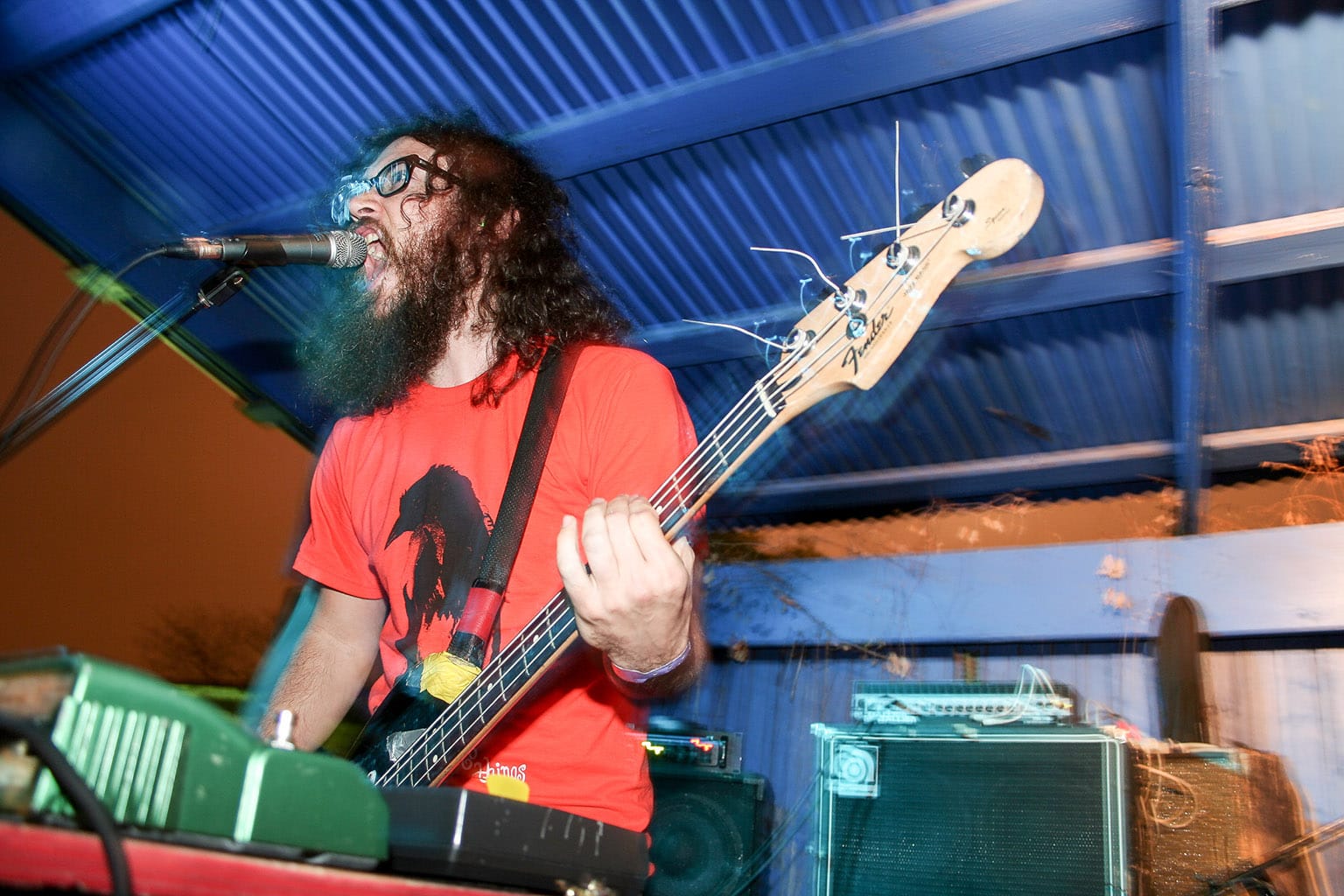
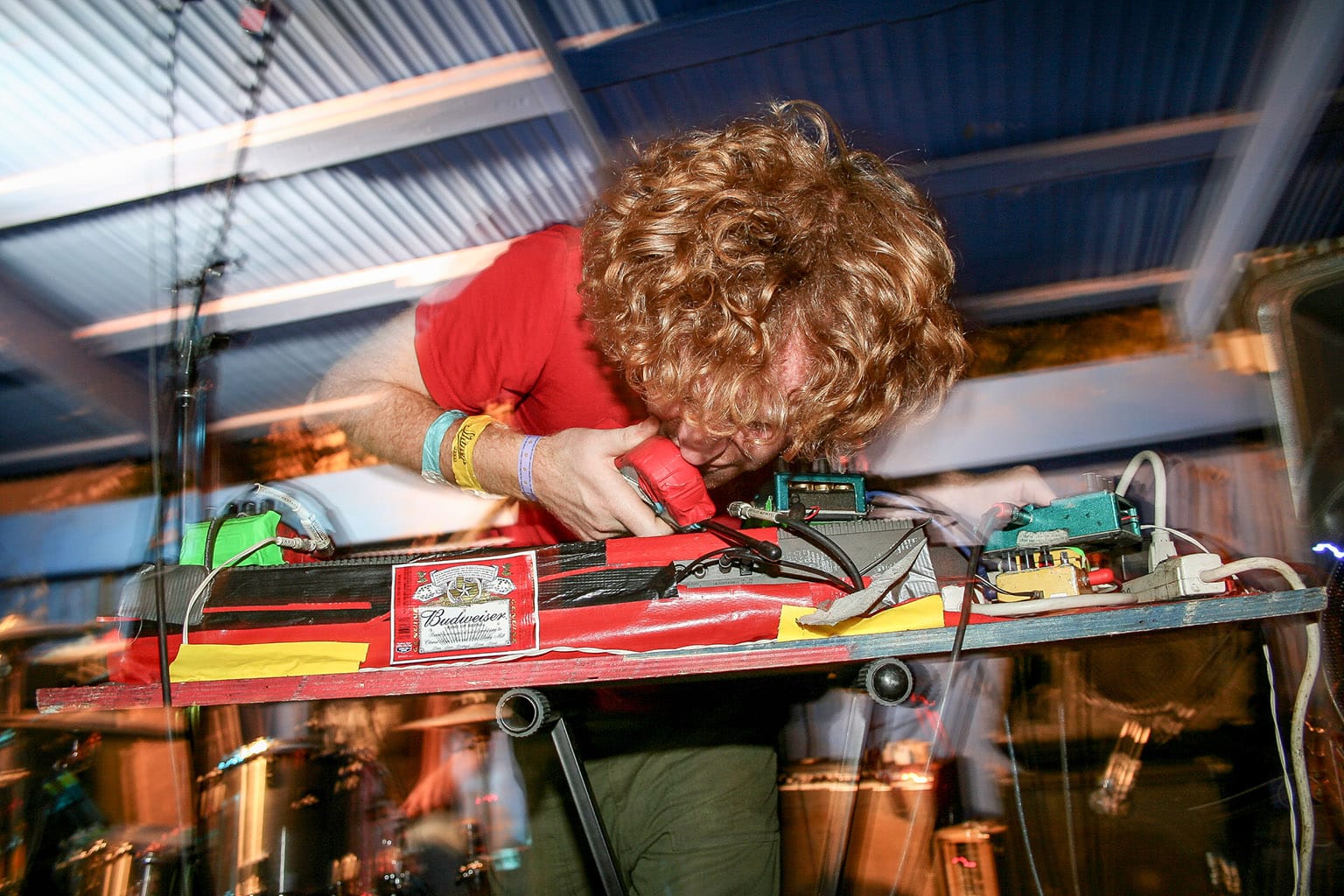
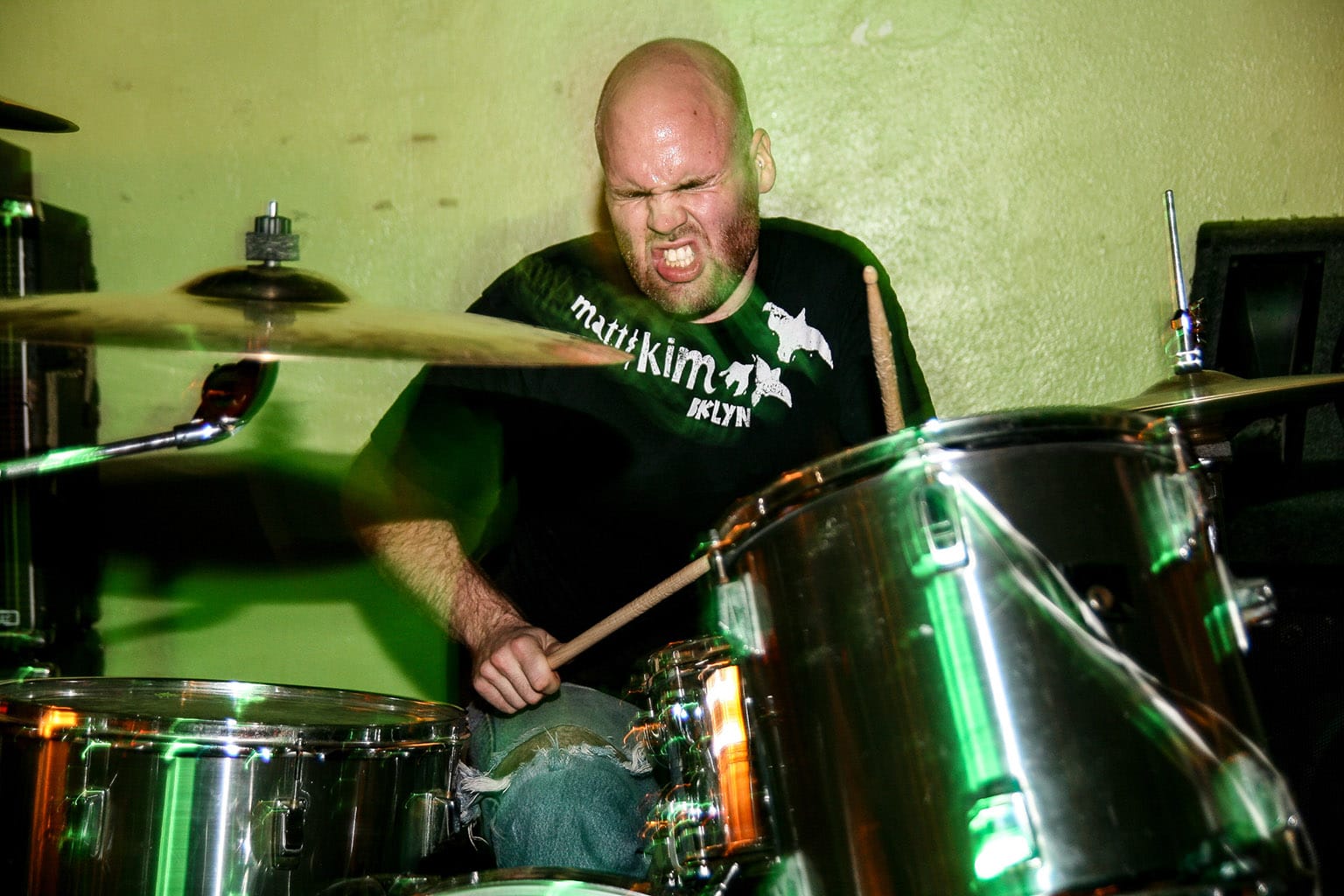
In my post-college years I went on a lot of tours with bands. I’m not a musician, but I am (or was, in a different era for my lower back) good at carrying heavy things, driving big vans, selling merch, sleeping under tables (one of my many tour hacks), and taking photos. I had a lot of friends in bands who appreciated the help, and who often had to hit the road, for example to SXSW in Austin, Texas. One of those bands was Parts & Labor, a group of very nice guys with a very distinctive sound; the closest I can come to describing it is that they play noise like an instrument. It’s a powerful, full-force sound, and something you should really hear for yourself.
Fifteen years after their last release, Parts & Labor are back with an epic double album. I was fortunate to be asked to create their new band photo and greatly enjoyed coming up with a visual approach to complement their sound. I was able to steal them away one evening for a brief photo session in Joshua Tree during their recording session.
“Let’s drive to New Orleans!” I said in February—an impulsive suggestion that had emerged not from contemplation or planning, but out of whimsy. In Minnesota, the trees remained dead from the weight of winter, and every few weeks the snow threatened to return, keeping
Show full content
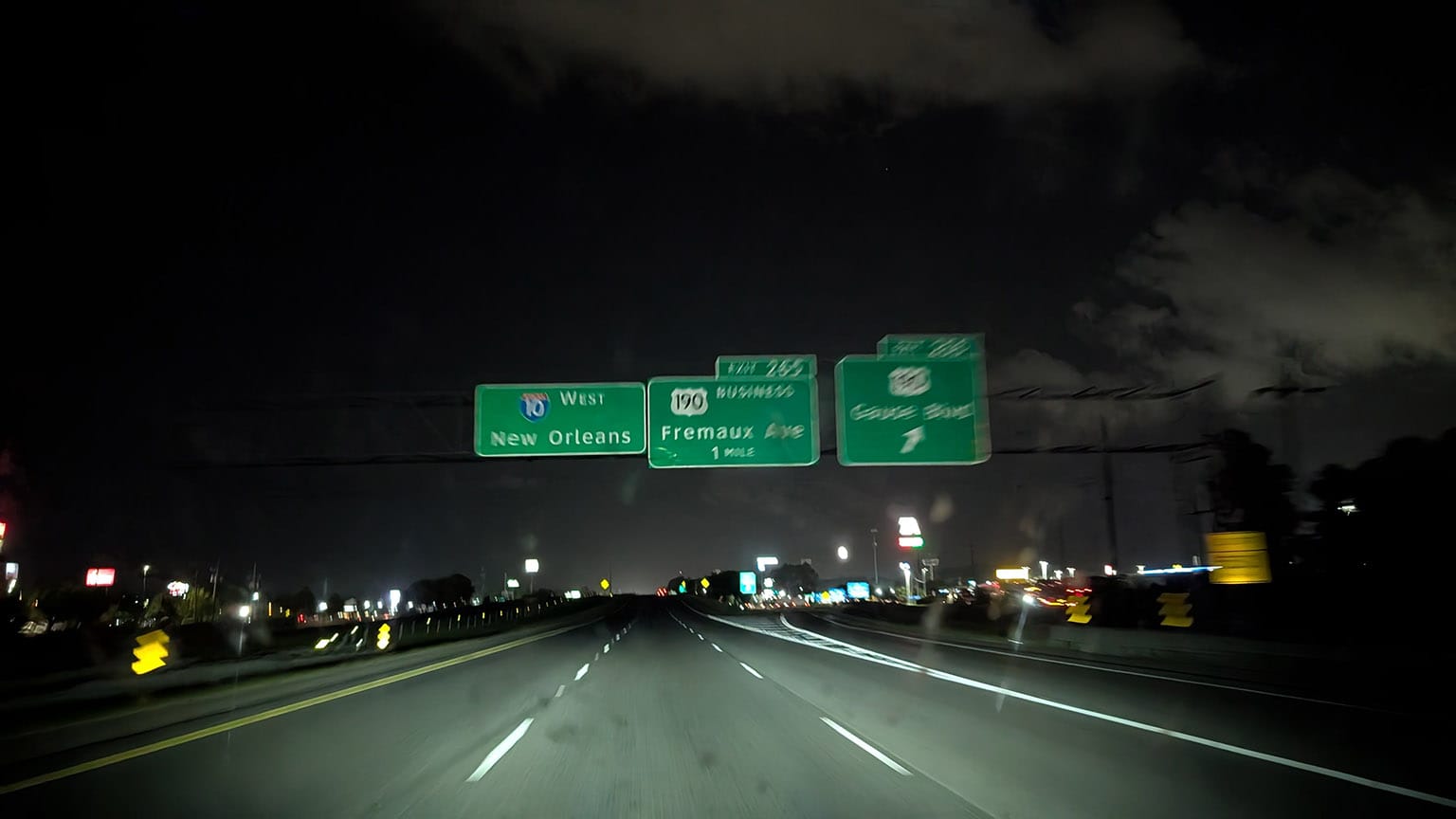
“Let’s drive to New Orleans!” I said in February—an impulsive suggestion that had emerged not from contemplation or planning, but out of whimsy. In Minnesota, the trees remained dead from the weight of winter, and every few weeks the snow threatened to return, keeping the dream of spring away.
Earlier this month, I went to grab dinner and a drink at a hip bar in Montréal’s Mile End neighborhood. The weather was finally getting nicer and I had just gotten paid for a copywriting gig. Plus I liked the outfit I had on that day. My plan was to eat and walk around for a while before heading back to my apartment. But when I got my check, the server asked me, “Are you here with the movie?”
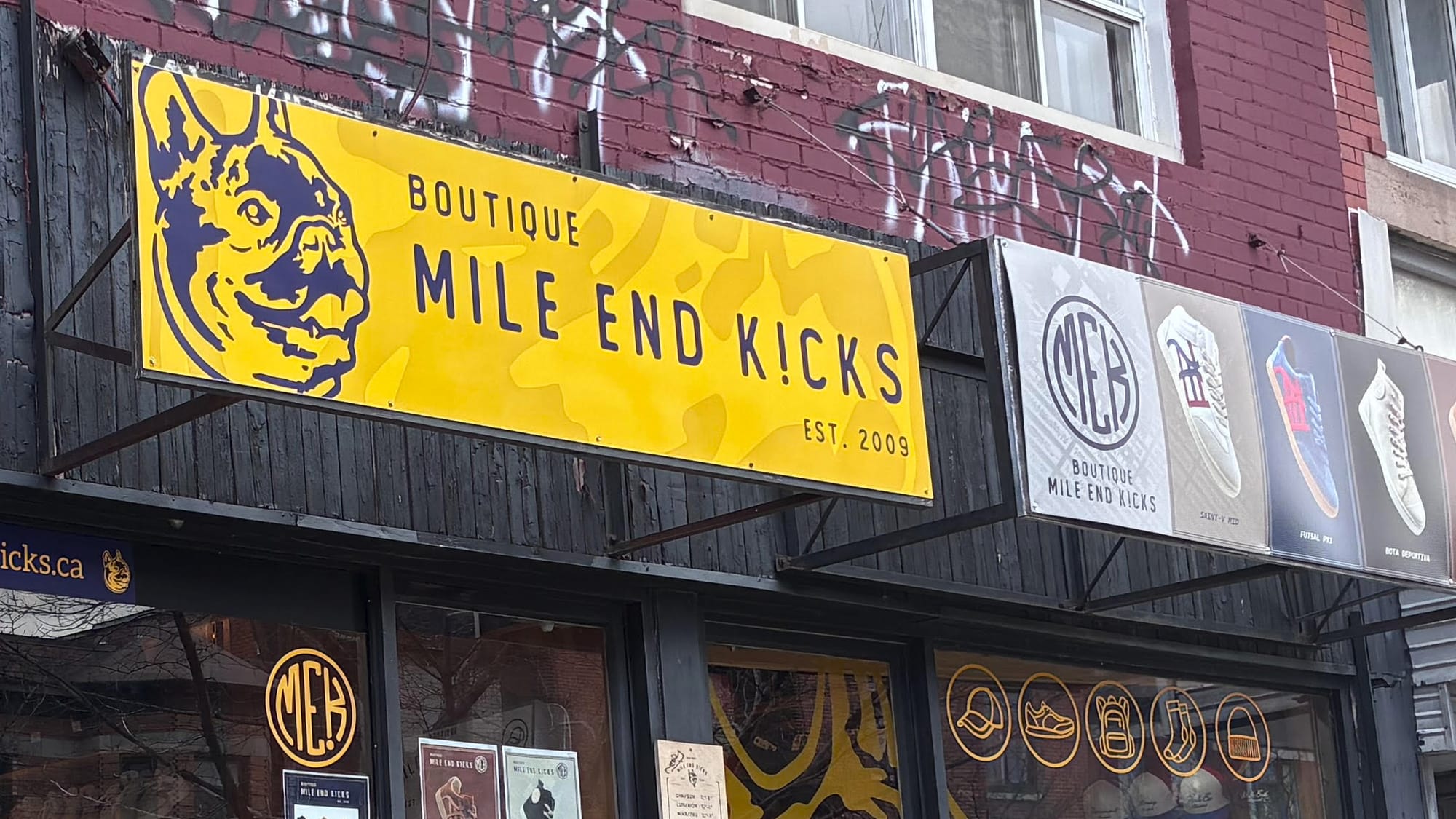
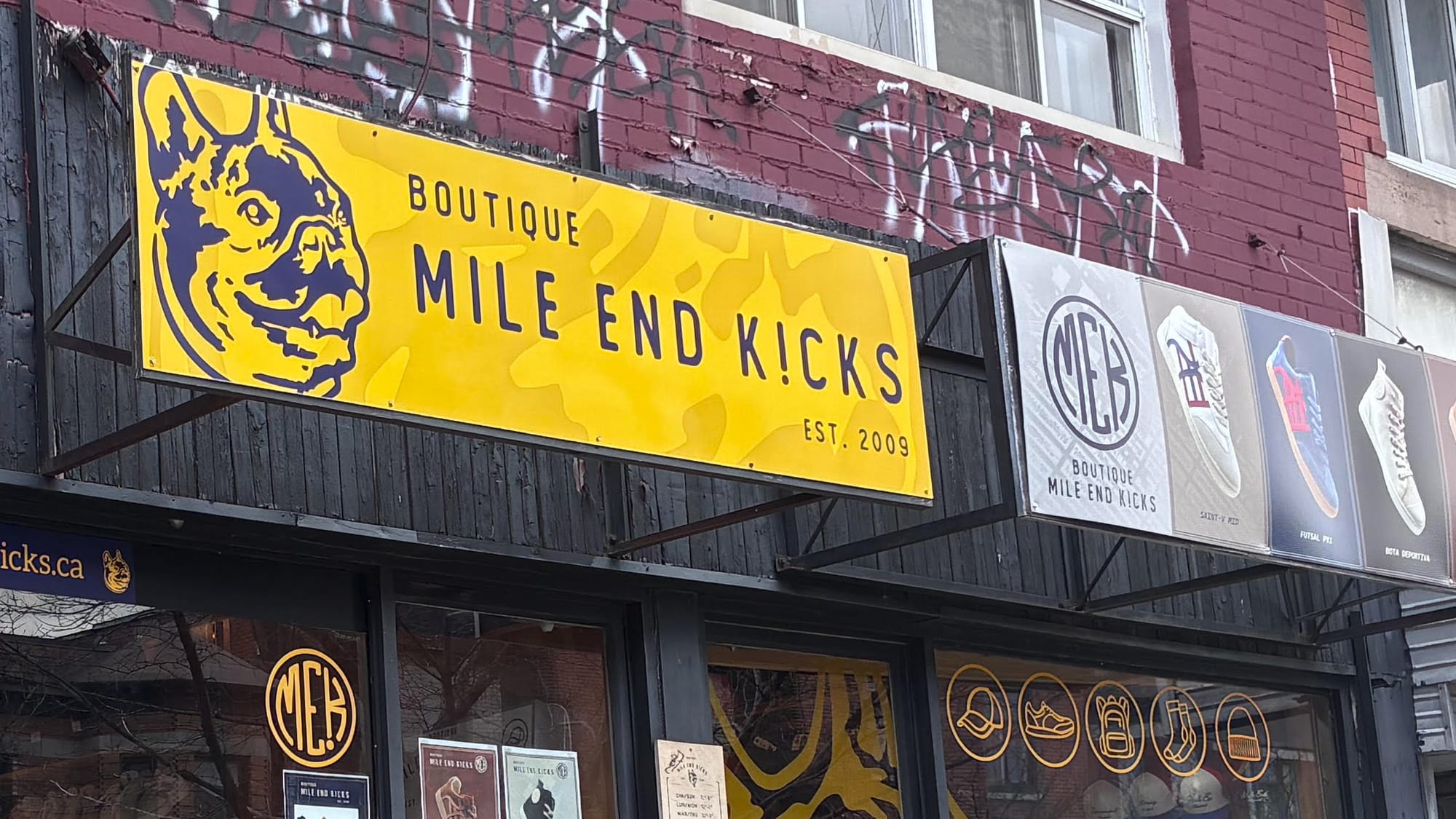
What movie? “Mile End Kicks. It’s about what Montréal was like in 2011. A bunch of people from the cast were here because the premiere’s tonight.” I knew nothing about it.
Walking back down Avenue Bernard, I saw a line outside Théâtre Outremont of at least a hundred people. The poster for Mile End Kicks was displayed on the digital marquee. I asked someone at the end of the line if they were all waiting to buy tickets, and he told me the premiere was invite-only. How exclusive! Whenever I stumble upon an event like this, I always have the irrational thought: How come I wasn’t invited? After most of the line had made its way into the theater, I approached the doorman and (somewhat) lied to him that I was with the press; I said that I had gotten approval at the last minute, so my name might not be on the list.
Earlier this month, I went to grab dinner and a drink at a hip bar in Montréal’s Mile End neighborhood. The weather was finally getting nicer and I had just gotten paid for a copywriting gig. Plus I liked the outfit I had on that day.
Show full content
Earlier this month, I went to grab dinner and a drink at a hip bar in Montréal’s Mile End neighborhood. The weather was finally getting nicer and I had just gotten paid for a copywriting gig. Plus I liked the outfit I had on that day. My plan was to eat and walk around for a while before heading back to my apartment. But when I got my check, the server asked me, “Are you here with the movie?”
What movie? “Mile End Kicks. It’s about what Montréal was like in 2011. A bunch of people from the cast were here because the premiere’s tonight.” I knew nothing about it.
Walking back down Avenue Bernard, I saw a line outside Théâtre Outremont of at least a hundred people. The poster for Mile End Kicks was displayed on the digital marquee. I asked someone at the end of the line if they were all waiting to buy tickets, and he told me the premiere was invite-only. How exclusive! Whenever I stumble upon an exclusive event like this, I always have the irrational thought: How come I wasn’t invited? After most of the line had made its way into the theater, I approached the doorman and (somewhat) lied to him that I was with the press; I said that I had gotten approval at the last minute, so my name might not be on the list.
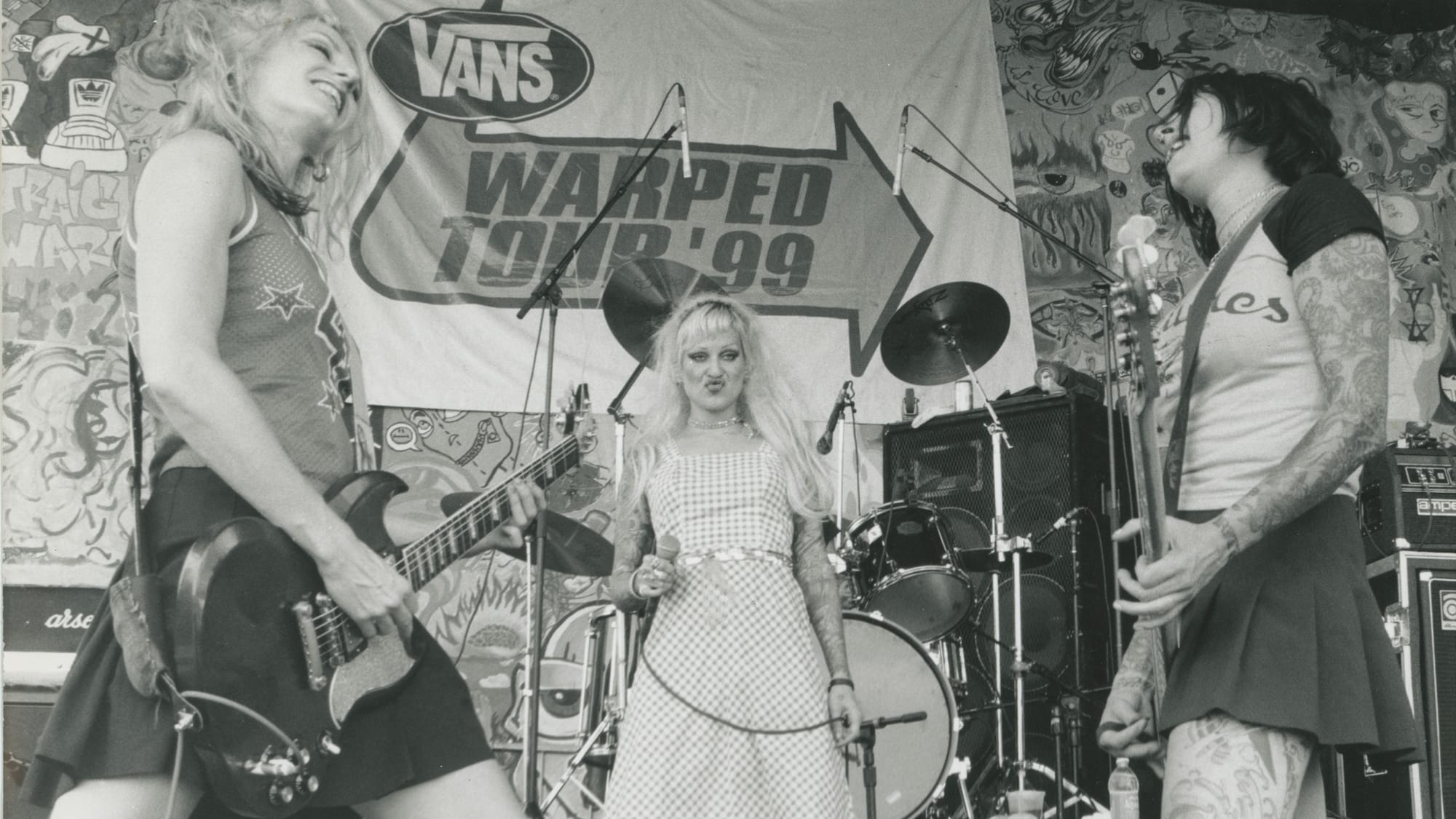
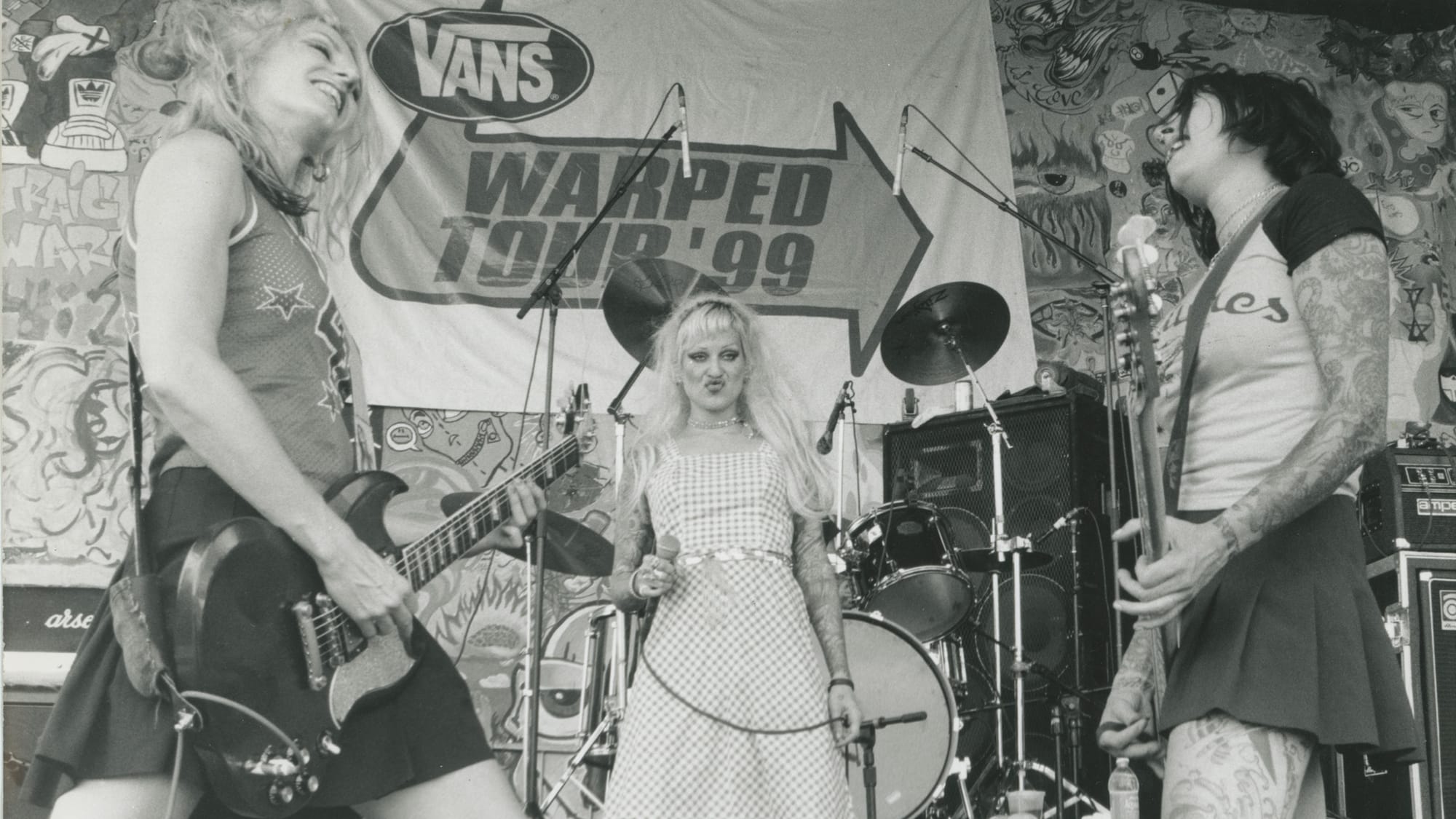
In the late 1980s, Theo Kogan, Gina Volpe, and Sydney “Squid” Silver—a group of friends from the Fiorello H. LaGuardia High School of Music & Art and Performing Arts in New York, aka “the Fame school”—connected with fellow scenester Sindi Benezra to form the punk rock band Lunachicks. It wasn’t long before the irrepressible teenage girl gang was discovered by Thurston Moore and Kim Gordon of Sonic Youth and signed to the indie label Blast First.
The pioneering band, known for its grunge-drag stage garb, gynecological humor, and in-your-face feminism, would go on to release five studio albums, beginning with 1990’s Babysitters on Acid. They toured the world with everyone from the Ramones to the Offspring to the Go-Go’s, and played the Warped Tour in 1999, the rare female band on a traditionally dude-heavy bill. The group, which had several lineup changes over the years, went on hiatus in 2001, reuniting a couple of times before going dormant again in 2004.
“I feel like we were sort of the redheaded stepchild, or the bridesmaid, of that time,” says Lunachicks singer Kogan today. “We never really got our due. And maybe it’s because people weren’t ready, and we were too wild and crazy and weird and funny.”
More recently, though, the band has been getting its flowers. In 2021, the same year the Lunachicks published a memoir—Fallopian Rhapsody: The Story of the Lunachicks, co-written with music journalist Jeanne Fury—the group played its first shows in 17 years. Last week, for Record Store Day, the Lunachicks released We Can Be Worster, its first-ever best-of compilation. And now, the band is the subject of a documentary, Pretty Ugly: The Story of the Lunachicks, directed by Ilya Chaiken. The movie comes out tomorrow in select theaters and via video on demand.
“I’m fucking thrilled,” says Kogan, now an accomplished makeup artist. “To know that this is an important story—and Ilya felt it was an important story to tell—is very affirming.”
In the late 1980s, Theo Kogan, Gina Volpe, and Sydney “Squid” Silver—a group of friends from the Fiorello H. LaGuardia High School of Music & Art and Performing Arts in New York, aka “the Fame school”—connected with fellow scenester Sindi Benezra to
Show full content
In the late 1980s, Theo Kogan, Gina Volpe, and Sydney “Squid” Silver—a group of friends from the Fiorello H. LaGuardia High School of Music & Art and Performing Arts in New York, aka “the Fame school”—connected with fellow scenester Sindi Benezra to form the punk rock band Lunachicks. It wasn’t long before the irrepressible teenage girl gang was discovered by Thurston Moore and Kim Gordon of Sonic Youth and signed to the indie label Blast First.
The pioneering band, known for its grunge-drag stage garb, gynecological humor, and in-your-face feminism, would go on to release five studio albums, beginning with 1990’s Babysitters on Acid. They toured the world with everyone from the Ramones to the Offspring to the Go-Go’s, and played the Warped Tour in 1999, the rare female band on a traditionally dude-heavy bill. The group, which had several lineup changes over the years, went on hiatus in 2001, reuniting a couple of times before going dormant again in 2004.
“I feel like we were sort of the redheaded stepchild, or the bridesmaid, of that time,” says Lunachicks singer Kogan today. “We never really got our due. And maybe it’s because people weren’t ready, and we were too wild and crazy and weird and funny.”
More recently, though, the band has been getting its flowers. In 2021, the same year the Lunachicks published a memoir—Fallopian Rhapsody: The Story of the Lunachicks, co-written with music journalist Jeanne Fury—the group played its first shows in 17 years. Last week, for Record Store Day, the Lunachicks released We Can Be Worster, its first-ever best-of compilation. And now, the band is the subject of a documentary, Pretty Ugly: The Story of the Lunachicks, directed by Ilya Chaiken. The movie comes out tomorrow in select theaters and via video on demand.
“I’m fucking thrilled,” says Kogan, now an accomplished makeup artist. “To know that this is an important story—and Ilya felt it was an important story to tell—is very affirming.”
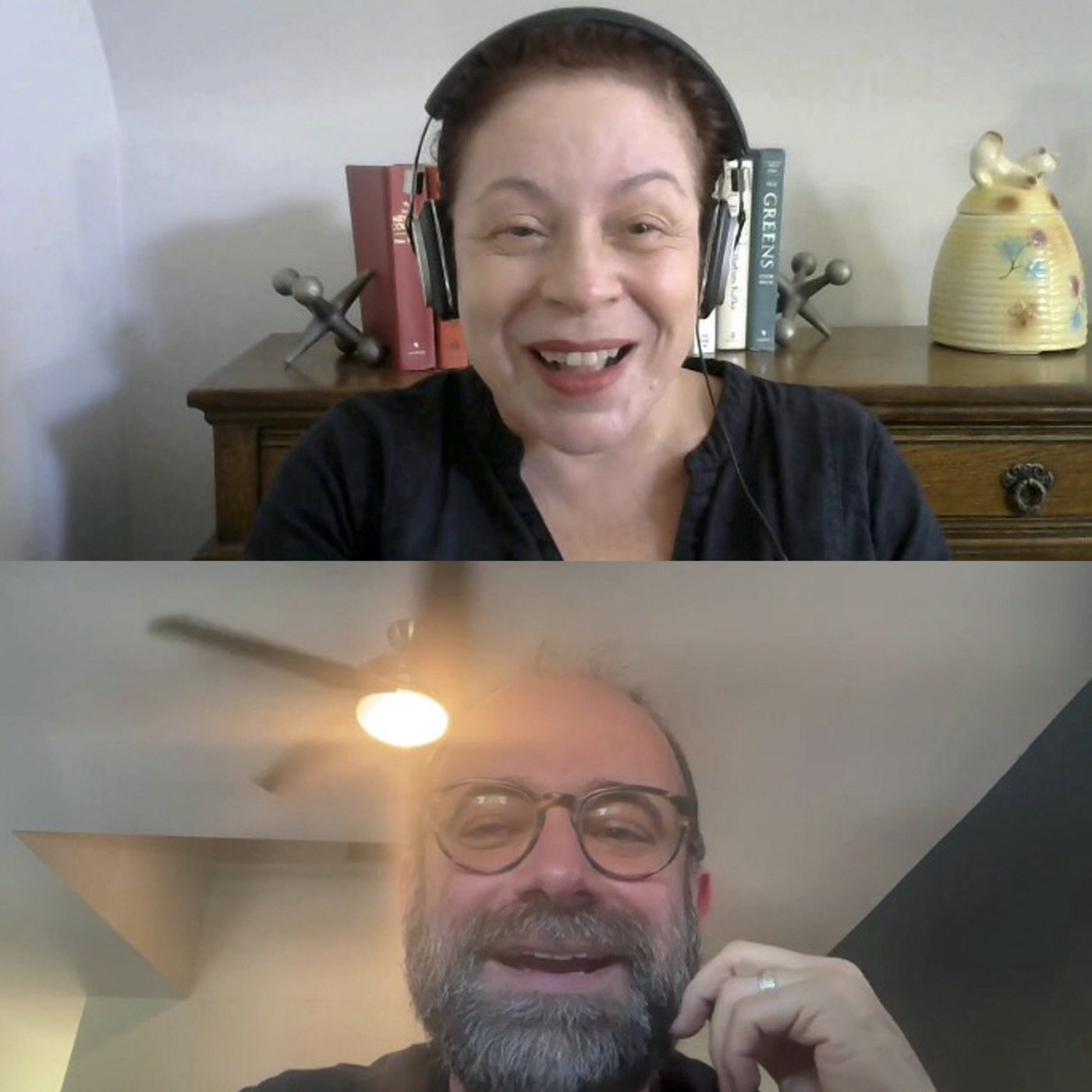
Professor of political communication at George Washington University Dave Karpf talks with Maria Bustillos about Palantir CEO Alexander Karp’s weirdo manifesto/defense contract pitch, and the “small-minded people with such large bank accounts” of Silicon Valley.
“So much of what we are calling capitalism today is just weird gambling shit!” — Dave Karp(f)
(TIL THE F IS SILENT Y’ALL so please remember: Good Karpf, Bad Karp.)
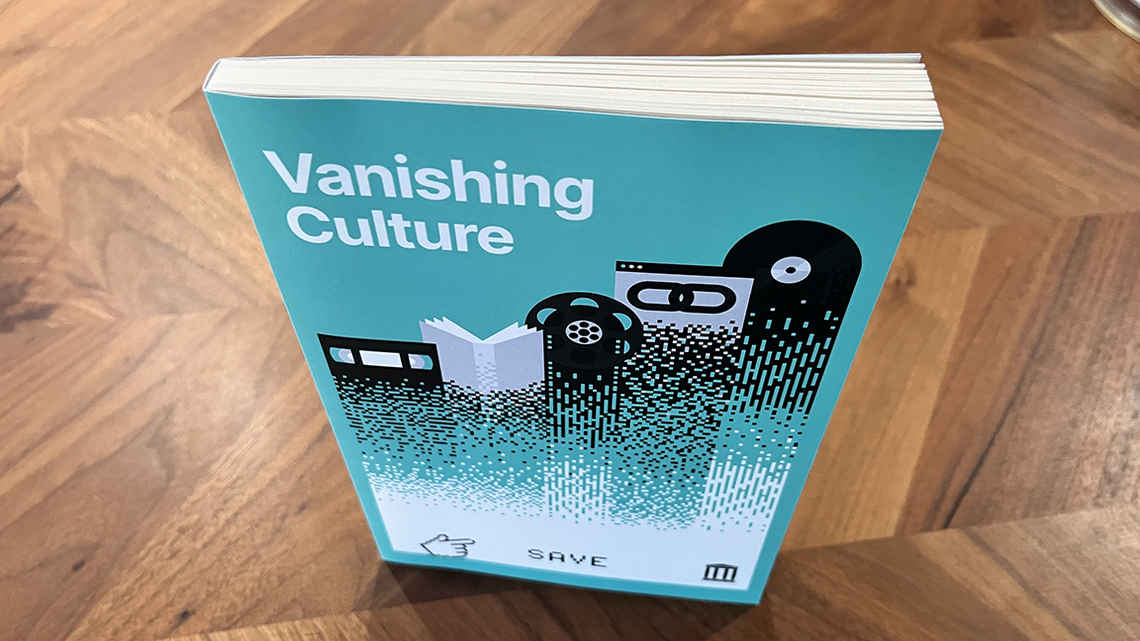
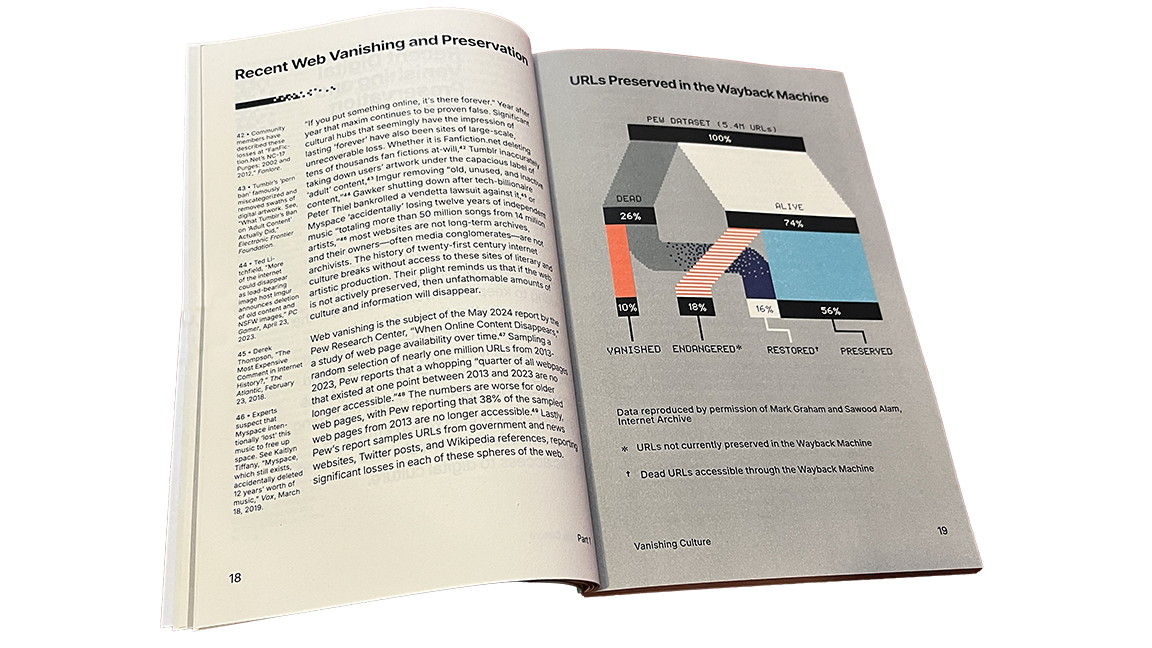
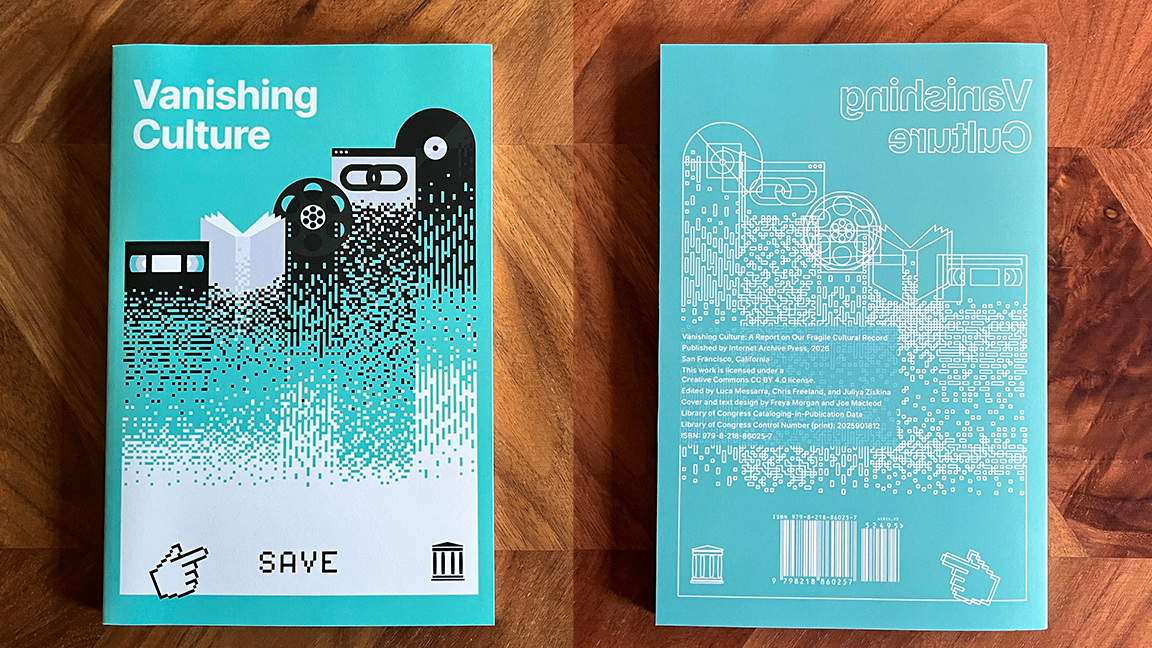
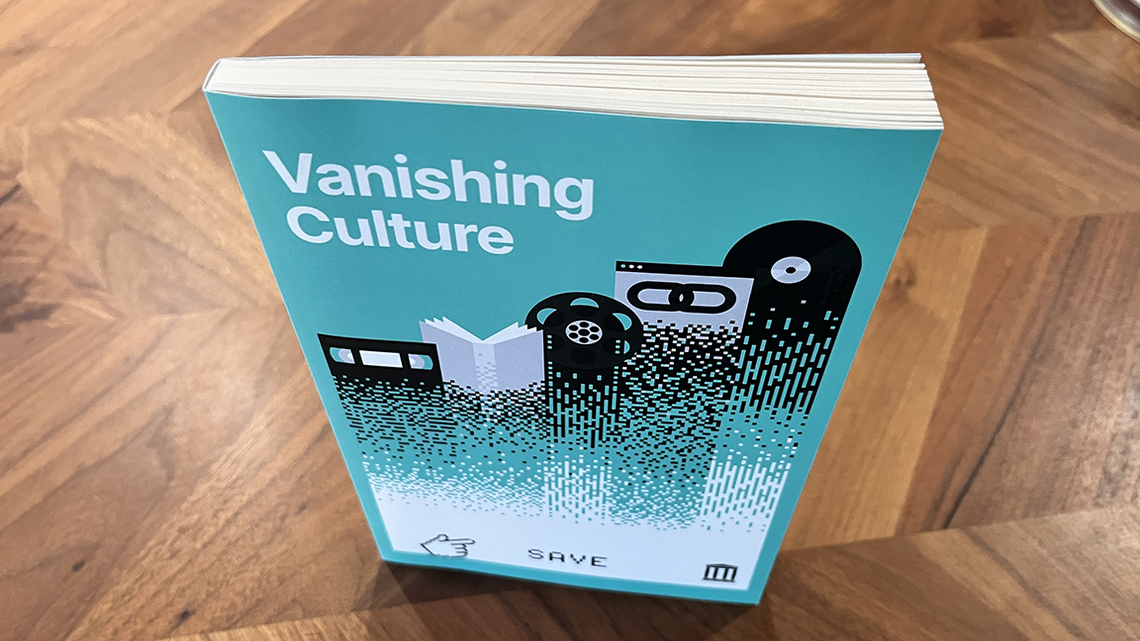
The Internet Archive’s Vanishing Culture project brought together dozens of voices dedicated to the preservation of digital media: librarians, archivists, journalists, curators, and scholars and historians in the fields of software, video games, film, broadcasting, digital humanities, book arts and much more—a fascinating interdisciplinary group, all sharing ideas, experiences, and writing on the vital importance of preserving our fragile digital history.
The effort expanded into a PDF book of essays including one by Hydra Maria Bustillos, alongside many luminaries including Digital Librarian Brewster Kahle, media scholar Claire Wardle, archivist and filmmaker Rick Prelinger, and video game designer Jordan Mechner. The collection was edited by humanities scholar Luca Messarra, the Archive’s Director of Library Services, Chris Freeland, and policy attorney Juliya Ziskina. And tomorrow will see the publication of a real live paper book, published by the Archive, and designed by Freya Morgan and our very own Joe MacLeod.
“I’m jazzed about it,” Chris Freeland tells us. “We’re committed to the work, we’re committed to this message. We’re trying to find all of the ways that we can let people know, to raise the alarm, to ring the bell of this challenge.”
If you are in San Francisco tomorrow, April 23, please head over to the book launch! Tickets are $10, and the event will take place from 5:30 to 7 p.m. at the Internet Archive headquarters on Funston Avenue.
Congratulations to all who collaborated, and who are joining forces to build a brave new world of publishing.
Professor of political communication at George Washington University Dave Karpf talks with Maria Bustillos about Palantir CEO Alexander Karp’s weirdo manifesto/defense contract pitch, and the “small-minded people with such large bank accounts” of Silicon Valley.
“So much of what we are calling capitalism today is just weird gambling shit!” — Dave Karp(f)
(TIL THE F IS SILENT Y’ALL so please remember: Good Karpf, Bad Karp.)
The Internet Archive’s Vanishing Culture project brought together dozens of voices dedicated to the preservation of digital media: librarians, archivists, journalists, curators, and scholars and historians in the fields of software, video games, film, broadcasting, digital humanities, book arts and much more—a fascinating interdisciplinary group, all sharing ideas, experiences, and writing on the vital importance of preserving our fragile digital history.
The effort expanded into a PDF book of essays including one by Hydra Maria Bustillos, alongside many luminaries including Digital Librarian Brewster Kahle, media scholar Claire Wardle, archivist and filmmaker Rick Prelinger, and video game designer Jordan Mechner. The collection was edited by humanities scholar Luca Messarra, the Archive’s Director of Library Services, Chris Freeland, and policy attorney Juliya Ziskina. And tomorrow will see the publication of a real live paper book, published by the Archive, and designed by Freya Morgan and our very own Joe MacLeod.
“I’m jazzed about it,” Chris Freeland tells us. “We’re committed to the work, we’re committed to this message. We’re trying to find all of the ways that we can let people know, to raise the alarm, to ring the bell of this challenge.”
If you are in San Francisco tomorrow, April 23, please head over to the book launch! Tickets are $10, and the event will take place from 5:30 to 7 p.m. at the Internet Archive headquarters on Funston Avenue.
Congratulations to all who collaborated, and who are joining forces to build a brave new world of publishing.
The Internet Archive’s Vanishing Culture project brought together dozens of voices dedicated to the preservation of digital media: librarians, archivists, journalists, curators, and scholars and historians in the fields of software, video games, film, broadcasting, digital humanities, book arts and much more—a fascinating interdisciplinary group, all
Show full content
The Internet Archive’s Vanishing Culture project brought together dozens of voices dedicated to the preservation of digital media: librarians, archivists, journalists, curators, and scholars and historians in the fields of software, video games, film, broadcasting, digital humanities, book arts and much more—a fascinating interdisciplinary group, all sharing ideas, experiences, and writing on the vital importance of preserving our fragile digital history.
The effort expanded into a PDF book of essays including one by Hydra Maria Bustillos, alongside many luminaries including Digital Librarian Brewster Kahle, media scholar Claire Wardle, archivist and filmmaker Rick Prelinger, and video game designer Jordan Mechner. The collection was edited by humanities scholar Luca Messarra, the Archive’s Director of Library Services, Chris Freeland, and policy attorney Juliya Ziskina. And tomorrow will see the publication of a real live paper book, published by the Archive, and designed by Freya Morgan and our very own Joe MacLeod.
“I’m jazzed about it,” Chris Freeland tells us. “We’re committed to the work, we’re committed to this message. We’re trying to find all of the ways that we can let people know, to raise the alarm, to ring the bell of this challenge.”
If you are in San Francisco tomorrow, April 23, please head over to the book launch! Tickets are $10, and the event will take place from 5:30 to 7 p.m. at the Internet Archive headquarters on Funston Avenue.
Congratulations to all who collaborated, and who are joining forces to build a brave new world of publishing.
Professor of political communication at George Washington University Dave Karpf talks with Maria Bustillos about Palantir CEO Alexander Karp’s weirdo manifesto/defense contract pitch, and the “small-minded people with such large bank accounts” of Silicon Valley.
“So much of what we are calling capitalism today
Show full content
Professor of political communication at George Washington University Dave Karpf talks with Maria Bustillos about Palantir CEO Alexander Karp’s weirdo manifesto/defense contract pitch, and the “small-minded people with such large bank accounts” of Silicon Valley.
“So much of what we are calling capitalism today is just weird gambling shit!” — Dave Karp(f)
(TIL THE F IS SILENT Y’ALL so please remember: Good Karpf, Bad Karp.)
Yes The Onion: Ben Collins Buys InfowarsbyLindsey Adler
Ben Collins is one of the most strategic do-gooders in America today: everything he says he plans to do sounds batshit insane—until he pulls it off. In 2024 he left serious political journalism to take over the satirical newspaper The Onion, an act of seeming lunacy that has since seen The Onion become one of the most respected and beloved news outlets in the U.S.
Ben is also an old friend from the New York media crowd, and I must have laughed out loud for five minutes straight, in public, when he first told me that The Onion’s parent company, Global Tetrahedron, was attempting to acquire Infowars—the flagship site of right-wing conspiracy theorist Alex Jones—in the bankruptcy liquidation of Jones’s personal assets ordered by a judge in June 2024. (Jones went bust after the families of victims of the 2012 Sandy Hook Elementary School shooting won a $1.5 billion defamation judgment against him for having spread conspiracy theories alleging that the massacre had been a “giant hoax.” 20 children and six school staff members were killed in the attack.)
The Onion’s first bid for Infowars was duly approved by the families of the victims, but failed in court in December 2024 when a judge ruled that the auction had not been properly competitive. Additional legal complications arose after that, but yesterday Global Tetrahedron announced that a licensing deal for Infowars content has been reached with the court-appointed administrator of the site, pending a judge’s approval, while the final legal disposition of the assets is settled. The deal could see the new Infowars begin publishing as soon as April 30.


 Flaming Hydra Round TableFlaming Hydra