Show full content
When Martin Aufmuth, a math teacher in Erlangen, Germany, read in 2009 that hundreds of millions of people worldwide suffered from vision impairment but could not afford glasses, he could hardly believe it. “It was the book Out of Poverty by Paul Polak,” Aufmuth remembers, “I thought, ‘This can’t be true.’”
But it was and it is. The World Health Organization estimates that at least one billion people have a near or distance vision impairment that could have been prevented or has yet to be addressed. Eighty percent of them could be helped with relatively easy means, like glasses. The day after reading Polak’s book, Aufmuth passed a one-euro shop and spotted reading glasses for a single euro. “I thought, strange, we have this here,” he says. “Why not elsewhere?”

After researching existing efforts, he found no large-scale solution that satisfied him. Donated second-hand glasses, often mismatched and poorly distributed, did not seem sustainable. “That wasn’t a solution for me,” he says.
Aufmuth was searching for ways to make a difference. Years earlier, inspired in part by his wife’s blunt advice — “then do something” — he had raised significant funds for development initiatives in Malawi and organized climate campaigns that mobilized hundreds of thousands of children. “I realized,” he says, “that even as an individual, I can move something.”
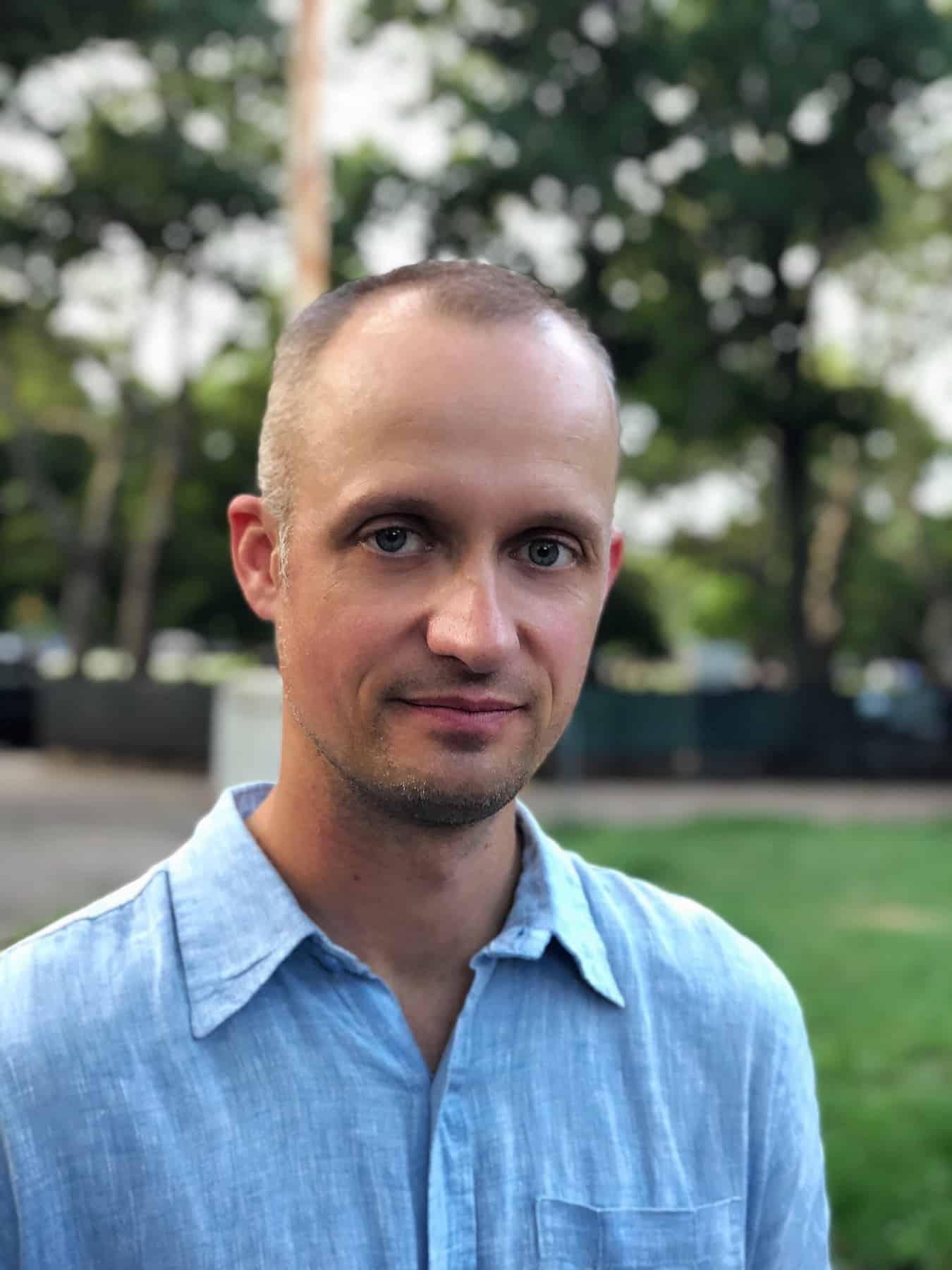
So he disappeared into his basement to tinker. The result was the EinDollarBrille (“One Dollar Glasses”), a pair of glasses made from highly flexible spring steel wire and shatterproof plastic lenses. Aufmuth has been wearing glasses since childhood and knows firsthand how precious eyesight is. He takes off his glasses, one of his models, pops out the lenses and shows how bendable the frame is. “You can take the lenses out, adjust everything,” he explains “You could run a jeep over it and it would not break.”
Courtesy of One Dollar Glasses“You could run a jeep over it and it would not break,” Aufmuth says of the glasses he created, which are made from highly flexible spring steel wire and shatterproof plastic lenses.
Manufacturing the glasses requires no electricity, no industrial production — just a compact, hand-powered bending machine small enough to fit in a shoe box. “I was looking for a technical solution that could have a big impact,” he says. “That was it.”
In 2011, Aufmuth traveled to Uganda with a group of eye specialists, carrying two of his prototype machines. There, he trained local participants to produce the glasses themselves. “People were already lining up outside, waiting for glasses,” he recalls. “We could start immediately.”
Weighed down by negative news? Our smart, bright, weekly newsletter is the uplift you’ve been looking for. [contact-form-7]The experience was transformative. He returned home five kilograms lighter, he jokes, but with a refined system and a clear sense of purpose. By 2012, recognizing the limits of working alone, he founded the organization that would later expand internationally as GoodVision.
Today, the network operates in 11 countries, employs around 600 people and is supported by volunteers around the globe. Much of its funding comes from individuals rather than governments. “Private donations keep us moving,” Aufmuth says. “Every €10 [about $11.70 U.S.] means another person can finally see.” He emphasizes the effectiveness of the solution: Every dollar invested in eye health can yield a $28 return in low- and middle-income countries. Production and distribution are localized: Glasses are manufactured on-site and sold for the equivalent of two to three days’ wages — about five euros in Malawi, four in India. “In Malawi,” Aufmuth notes, “that’s roughly the price of a local chicken.”
The impact of a simple pair of glasses is often immediate and profound. Aufmuth recounts a wide range of stories: a 10-year-old boy in a Brazilian favela who, upon putting on his glasses, looked at his mother and said, “Ah, so that’s what you look like.” A teacher in Bolivia who could finally read her students’ work again — and for the first time, read to her grandchild.

Across rural communities, the effects are deeply practical. The Seva Foundation estimates that $447 billion in productivity is lost every year due to impaired eyesight. A woman near Lake Titicaca, on the border between Peru and Bolivia, told Aufmuth that with her new glasses, she could once again sort seed potatoes. A Brazilian farmer harvesting açaí fruit no longer had to climb trees just to check ripeness. In the Amazon, a grandmother responsible for sewing clothes for an extended family with 56 grandchildren regained her ability to work.
In fragile economies, such changes can be life-altering. “If a farmer can’t see properly, yields drop,” Aufmuth explains. “In Malawi, that might mean three months of hunger instead of two.” In some cases, he adds, access to vision correction can be the difference between subsistence and crisis.
Courtesy of One Dollar GlassesToday, the network operates in 11 countries, employs around 600 people and is supported by volunteers around the globe.
While the glasses themselves are central, Aufmuth emphasizes that at least half the organization’s work lies in education and outreach. “Many people don’t even know what they’re missing,” he says. The shortage of trained eye care professionals remains a critical barrier. “The few opticians and doctors are in cities,” he says. “In rural areas, there is often no care at all.” To address this, GoodVision trains local technicians not only to manufacture glasses but also to conduct basic vision tests.
In India, mobile teams — often young women from rural areas — travel six days a week to remote villages and currently distribute 6,000 pairs of glasses each month. “What they do is remarkable,” Aufmuth says. In Brazil’s Paraná state, the organization partnered with public systems to test 300,000 schoolchildren within a few months, a logistical effort he describes as a “mammoth operation.”

The work has also expanded into more complex care. In India and Burkina Faso, the organization now helps coordinate cataract surgeries, arranging transportation and funding for patients who would otherwise never reach a clinic. “We realized,” Aufmuth says, “that many had never been to a hospital — not even once.”
Despite reaching over a million people, Aufmuth remains acutely aware of the gap between impact and need, given the WHO’s estimate of one billion people still living with uncorrected vision impairment. The scale can feel overwhelming. “A million glasses sounds like a lot,” he says. “But compared to the need, it’s very little.”

That tension defines his outlook. The work is meaningful — deeply so — but unfinished. “Of course, it gives purpose,” he reflects. “But I tend to look ahead — to what still has to be done.”
Analyses by the WHO have underscored that preventable vision impairment remains one of the most widespread — and solvable — global health challenges. Other groups are stepping in as well. International collaborations like International Agency for the Prevention of Blindness and initiatives such as Our Children’s Vision are working to expand access, particularly for children. Yet coordination remains a challenge. “Sometimes you see camps that screen for cataracts sending people home without glasses,” Aufmuth notes. “That’s a huge waste of resources.” His nonprofit’s efforts on the ground are hampered by political uprisings, floods, fires and hurricanes. “In Bolivia, the gas is currently tainted, preventing engines from running,” he says, sighing. “There’s always something.”
Join the Reasons to be Cheerful community by supporting our nonprofit publication and giving what you can.
Join Cancel anytimeFor him, the future lies in better integration — linking local initiatives with national health systems and global networks to create sustainable, scalable solutions. “What drives me is fairness — the idea that everyone should have the chance to see, to learn, to work.”
His belief in individual agency remains central. “People often say one person can’t make a difference,” he says. “That’s just an excuse. You have to start something, set it in motion.”
The post The $1 Visionary appeared first on Reasons to be Cheerful.