GeistHaus
log in · sign up

Open Culture

The best free cultural & educational media on the web

rss en-US
8 posts · 7 narratives
Feed metadata
Generator https://wordpress.org/?v=6.9.4
Status active
Last polled Apr 29, 2026 01:41 UTC
Next poll Apr 29, 2026 11:01 UTC
Poll interval 33598s
ETag "ffaaeccb8a836d5192e82cd464a00ca9-gzip"
Last-Modified Tue, 28 Apr 2026 09:00:03 GMT

Posts

Explosive Cats Imagined in a Strange, 16th Century Military Manual
History
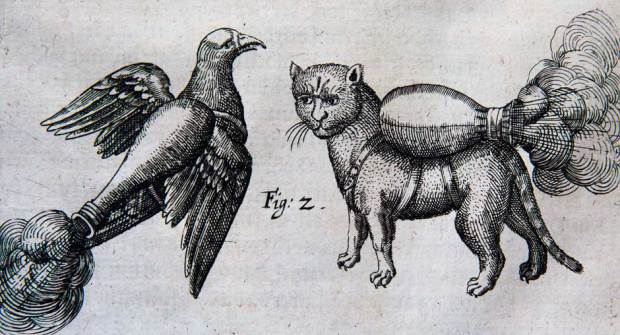
Paw prints and feline urine stains on a medieval scribe’s manuscript, perhaps they weren’t entirely out of the ordinary in the 15th century. But cats strapped to mini-powder kegs, bounding off to burn down a town — now that’s pretty unusual. The incendiary feline featured above (and elsewhere on this page) comes from a digitized version […]
Show full content

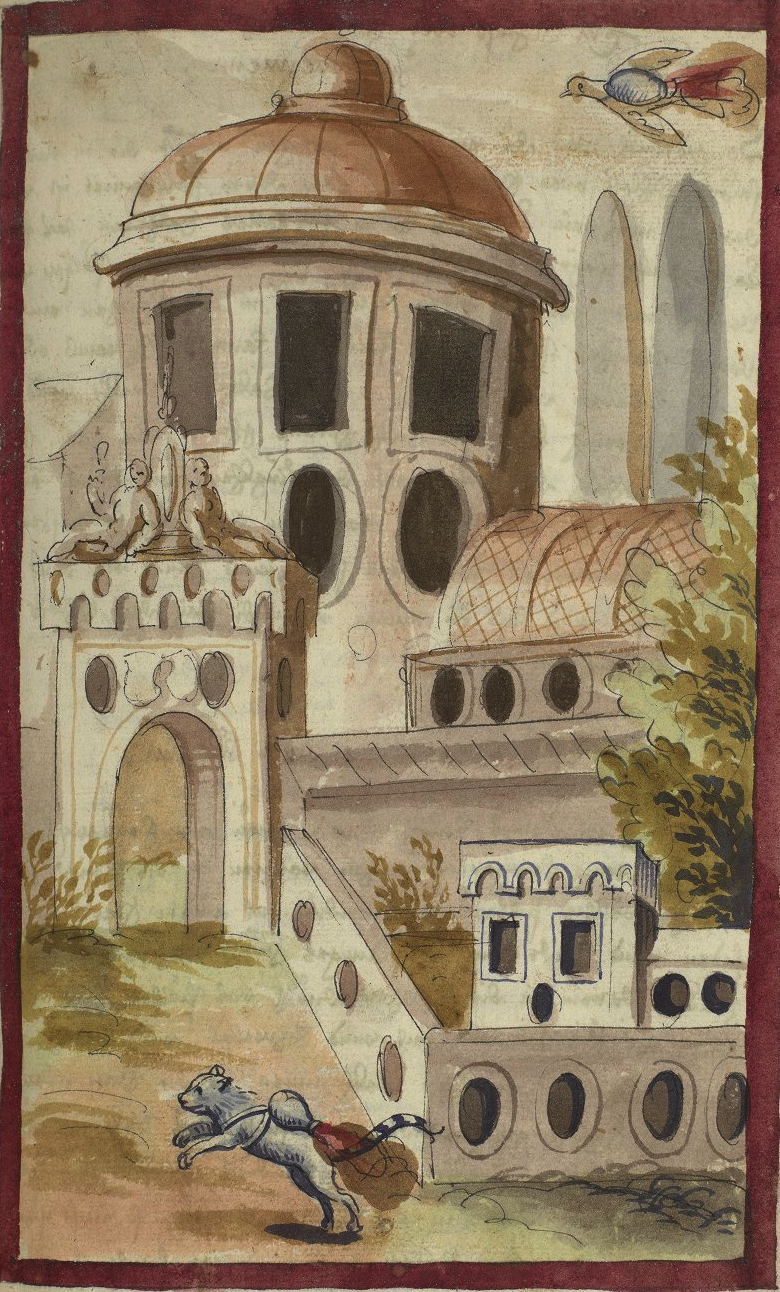
Paw prints and feline urine stains on a medieval scribe’s manuscript, perhaps they weren’t entirely out of the ordinary in the 15th century. But cats strapped to mini-powder kegs, bounding off to burn down a town — now that’s pretty unusual.

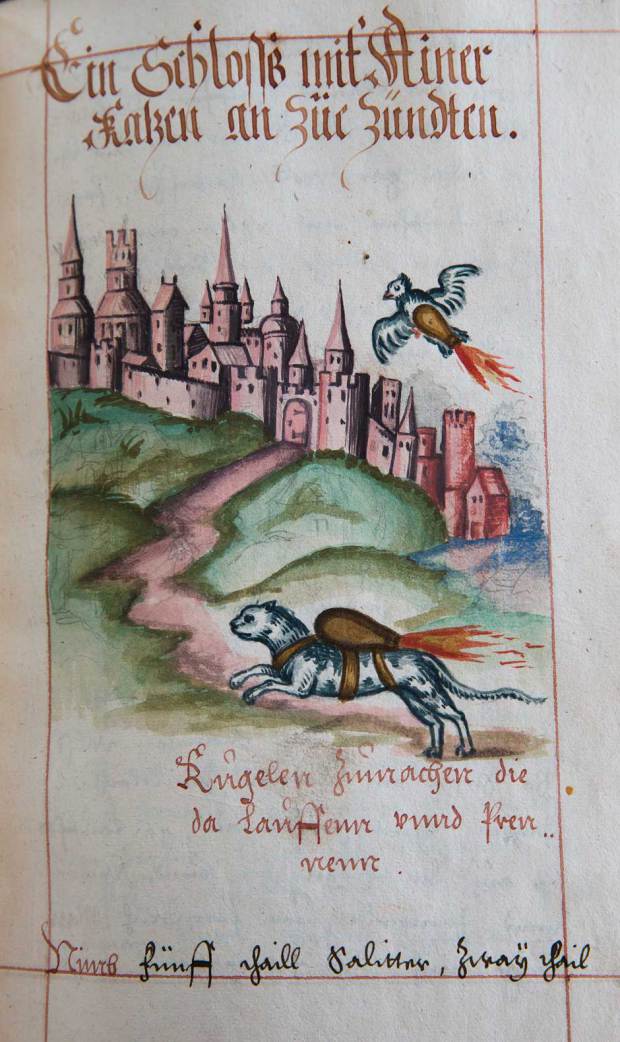
The incendiary feline featured above (and elsewhere on this page) comes from a digitized version of an early 16th century military manual written by Franz Helm. An artillery master, Helm wrote about a broad and imaginative set of destructive ideas for siege warfare. Although my German is somewhat rusty, I got the sense that he was awfully fond of exploding sacks, barrels, and various other receptacles, and eventually decided to combine these ideas with an unwitting animal delivery system. These animals, according to Helm’s guide, would allow a commander to “set fire to a castle or city which you can’t get at otherwise.”

runningcat1

The text was originally digitized by the University of Pennsylvania, and a UPenn historian named Mitch Fraas decided to take a closer look at this strange exploding cat business. According to Fraas, the accompanying text reads:

“Create a small sack like a fire-arrow … if you would like to get at a town or castle, seek to obtain a cat from that place. And bind the sack to the back of the cat, ignite it, let it glow well and thereafter let the cat go, so it runs to the nearest castle or town, and out of fear it thinks to hide itself where it ends up in barn hay or straw it will be ignited.”

That’s the military strategy in a nutshell. Seems like a great idea, apart from the fact that cats are notoriously unpredictable. In any case, here are more illustrations of weaponized cats to round out your work week.

runningcat2

Note: An earlier version of this post appeared on our site in 2014.

Related Content:

Cats in Medieval Manuscripts & Paintings

What People Named Their Cats in the Middle Ages: Gyb, Mite, Méone, Pangur Bán & More

Cats Migrated to Europe 7,000 Years Earlier Than Once Thought

Cats in Japanese Woodblock Prints: How Japan’s Favorite Animals Came to Star in Its Popular Art

https://www.openculture.com/?p=1127057
Extensions
Harvard Professor Answers Burning Questions About Iranian History
History
In a brisk WIRED interview, Professor Tarek Masoud answers frequently asked questions about Iran’s history. He explains that Iran is not an Arab country but a predominantly Persian one, with a distinct language and identity. He traces how the country became an Islamic republic after the 1979 revolution, driven by political repression, economic tensions, and […]
Show full content

In a brisk WIRED interview, Professor Tarek Masoud answers frequently asked questions about Iran’s history. He explains that Iran is not an Arab country but a predominantly Persian one, with a distinct language and identity. He traces how the country became an Islamic republic after the 1979 revolution, driven by political repression, economic tensions, and resistance to Western influence.

Along the way, he tackles the following questions: Just how liberal/progressive was Iran prior to the 1979 revolution? Why did the Iranian revolution happen? Is Iran the only Middle Eastern country whose modern borders were not created by colonial powers? The son of Iran’s last Shah is rallying protesters, but do Iranians really want another king?

By the end, you’ll know a little bit more about the country at the center of America’s latest military adventure.

If you would like to support the mission of Open Culture, consider making a donation to our site. It’s hard to rely 100% on ads, and your contributions will help us continue providing the best free cultural and educational materials to learners everywhere. You can contribute through PayPal, Patreon, and Venmo (@openculture). Thanks!

https://www.openculture.com/?p=1127053
Extensions
Discover the Copiale Cipher: The Mysterious 18th-Century Book That Took 260 Years to Decode
ArchitectureBooksHistory
In the world of cryptography, substitution ciphers are child’s play. Indeed, we may remember literally playing with them as children, writing secret messages to our friends by replacing all the letters with numbers, say, or shifting them one or two places over in alphabetical order. Cracking such codes was a trivial matter even before the […]
Show full content

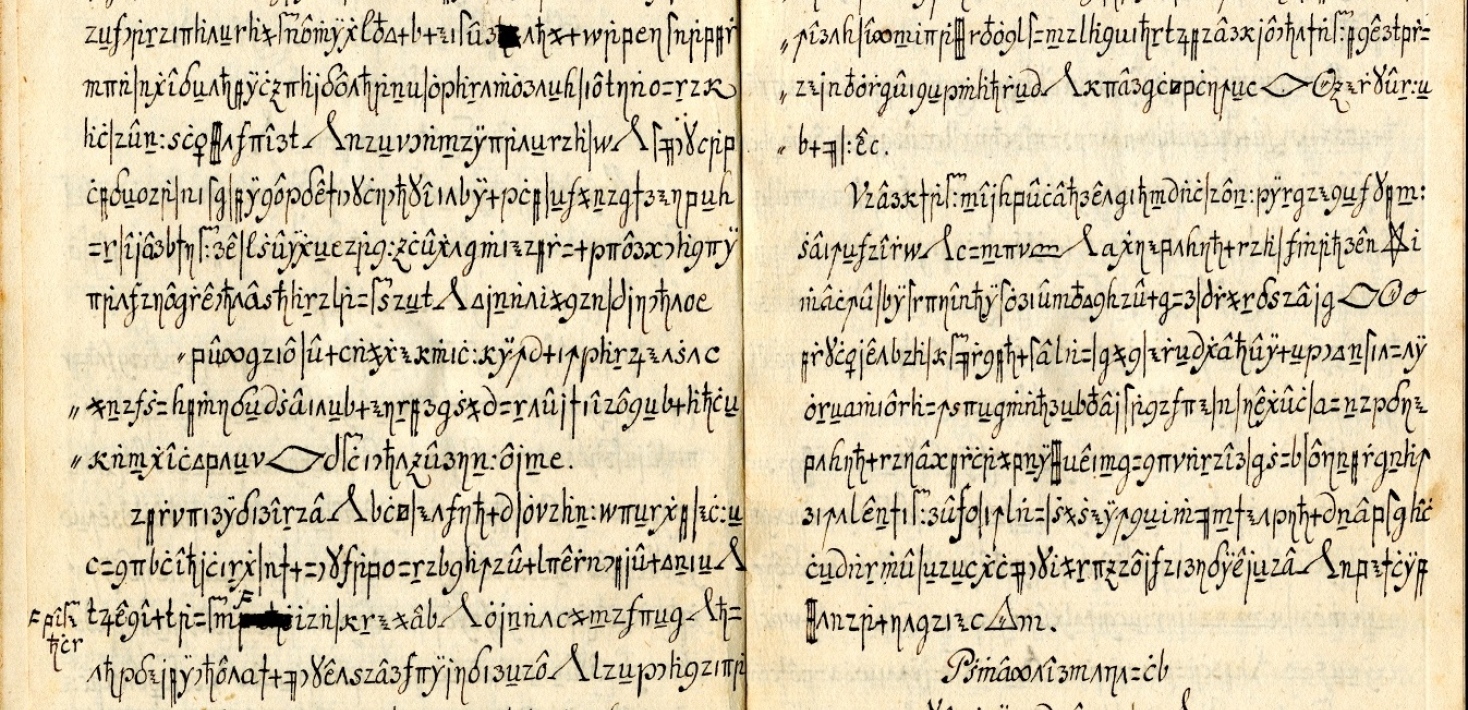
In the world of cryptography, substitution ciphers are child’s play. Indeed, we may remember literally playing with them as children, writing secret messages to our friends by replacing all the letters with numbers, say, or shifting them one or two places over in alphabetical order. Cracking such codes was a trivial matter even before the computer age, but certain simple variations could make them more robust. Take the document known as the Copiale cipher (downloadable as a two-part PDF), a 105-page bound manuscript that stayed undecipherable for more than 260 years. Its mystery finally yielded to the efforts of University of Southern California computer scientist Kevin Knight and Uppsala University linguists Beata Megyesi and Christiane Schaefer only in the early twenty-tens.

As Tommie Trelawny tells the story of the Copiale cipher in the Hochelaga video above, the manuscript, which was originally thought to date between 1760 and 1780, first had to be converted into machine-readable code. The text’s use of 88 unique symbols, one of them shaped like an eye, necessitated coming up with names for all of them apart from the Roman letters, which had no particular meaning in isolation.

When another scan searched for repeated letter combinations, its results shed light on probable similarities with the German language. This made sense, since the book was found in Germany in the first place. Could multiple symbols in this strange cipher have been substituted for single German letters? Could the code be, in cryptographic terms, a homophonic cipher?

Approaching the text under that hypothesis revealed meanings suggesting, tantalizingly, that it had been written by a secret society. It even describes an initiation ritual in which the inductee must first “read” a blank piece of paper, then try again with eyeglasses, then again after washing his eyes, and then, finally, undergo a symbolic “operation” involving the plucking of a single eyebrow. This society, the Oculists, turns out to have been composed entirely of ophthalmologists meeting in the seventeen-forties. That they did so covertly may owe to their having been Freemasons, whose rites had recently been banned by Pope Clement XII. The Copiale cipher suggests that Oculists appear to have had no aims more sinister than the pursuit of knowledge — not that, for most of us today, the notion of eighteenth-century eye surgery isn’t terrifying enough.

Related content:

Explore a Digitized Edition of the Voynich Manuscript, “the World’s Most Mysterious Book”

The Enigma Machine: How Alan Turing Helped Break the Unbreakable Nazi Code

Three Amateur Cryptographers Finally Decrypted the Zodiac Killer’s Letters: A Look Inside How They Solved a Half Century-Old Mystery

The Rohonc Codex: Hungary’s Mysterious Manuscript That No One Can Read

The Codex Seraphinianus: How Italian Artist Luigi Serafini Came to Write & Illustrate “the Strangest Book Ever Published” (1981)

Can You Crack the Uncrackable Code in Kryptos, the CIA’s Work of Public Art?

Based in Seoul, Colin Marshall writes and broadcasts on cities, language, and culture. He’s the author of the newsletter Books on Cities as well as the books 한국 요약 금지 (No Summarizing Korea) and Korean Newtro. Follow him on the social network formerly known as Twitter at @colinmarshall.

https://www.openculture.com/?p=1127041
Extensions
When Brazil Built Its Capital on Modernist Principles: The Controversial Design of Brasília
ArchitectureHistory
When we think of modern architecture, we often think first of what’s called the International Style, whose minimalist, rectilinear, decoration-free forms were championed by the likes of Walter Gropius, Ludwig Mies van der Rohe, and Le Corbusier. Though they did build projects all over the world, that isn’t exactly the reason for the name. In […]
Show full content

When we think of modern architecture, we often think first of what’s called the International Style, whose minimalist, rectilinear, decoration-free forms were championed by the likes of Walter Gropius, Ludwig Mies van der Rohe, and Le Corbusier. Though they did build projects all over the world, that isn’t exactly the reason for the name. In fact, the International Style represents an attempt to develop a culturally neutral aesthetic for all built environments, deployable equally in Europe, Asia, the Americas, and everywhere else besides. That pretense to universality may count as the most utopian aspect of an avowedly utopian movement — and the one whose impracticality came soonest to light.

Before he became Brazil’s most famous architect, Oscar Niemeyer subscribed to the principles of the International Style. But then, as an acolyte of Le Corbusier, he could hardly have done otherwise. When the great man came to Rio de Janeiro in 1936 to design the new Ministry of Education and Health, Niemeyer was hired to work on the project.

The experience seems to have done its part to convince him that the International Style wasn’t as international as all that, and furthermore, that its rigid dictates would have to be bent to suit his homeland. This bending would, in a sense, be literal: like Frank Gehry or Zaha Hadid after him, Niemeyer devoted his architecture to the pursuit of the curve, inspired by examples seen in everything from the mountains of Brazil’s landscape to the bodies of its women.

In 1956, the newly elected president Juscelino Kubitschek immediately realized the plan, written into the country’s constitution long before, of building a new central city to relieve Rio of its status as the capital. Christened Brasília, it was to be constructed on a vast, empty plateau entirely along rational, modernist guidelines, with defined districts organized along a cruciform city plan often likened to a bird or an airplane and monumental structures meant to project a forward-looking image. Niemeyer was selected to design those structures, which immediately became elements of the city’s visual signature upon its inauguration in 1960: ever since, seldom has a photograph failed to include the twin towers and domes of his National Congress or the Space-Age crown of thorns atop his Cathedral of Brasília.

The both administrative and otherworldly form of central Brasília remains alluring, though the city itself began drawing criticism even before its completion. “This is what you get when perfectly decent, intelligent and talented men start thinking in terms of space, rather than place, and about single rather than multiple meanings,” declared a frowning Robert Hughes in his 1980 TV series The Shock of the New. “It’s what you get when you design for political aspirations and not real human needs. You get miles of jerry-built platonic nowhere infested with Volkswagens.” Indeed, the domination of car infrastructure and strict separation of functions hardly proved conducive to the spontaneous, convivial aspects of Brazilian life. But residents and visitors alike tend to report that Brasília’s urban design has been improved as its population has grown, and massively, with commensurate improvements to its quality of life over the decades. It may not inspire many bossa nova songs, but the capital nevertheless reflects a genuine facet of what Brazil is — and what it once dreamed of becoming.

Related Content:

A is for Architecture: 1960 Documentary on Why We Build, from the Ancient Greeks to Modern Times

Leonardo da Vinci Designs the Ideal City: See 3D Models of His Radical Design

Why Dutch & Japanese Cities Are Insanely Well Designed (and American Cities Are Terribly Designed)

Frank Lloyd Wright Designs an Urban Utopia: See His Hand-Drawn Sketches of Broadacre City (1932)

The World According to Le Corbusier: An Animated Introduction to the Most Modern of All Architects

Take a Virtual Tour of Brazil’s National Museum & Its Artifacts: Google Digitized the Museum’s Collection Before the Fateful Fire

Based in Seoul, Colin Marshall writes and broadcasts on cities, language, and culture. He’s the author of the newsletter Books on Cities as well as the books 한국 요약 금지 (No Summarizing Korea) and Korean Newtro. Follow him on the social network formerly known as Twitter at @colinmarshall.


https://www.openculture.com/?p=1127035
Extensions
An Ancient Philosophical Song Reconstructed and Played for the First Time in 1,000 Years
HistoryMusic
Above and below, you can watch musicians perform “Songs of Consolation,” a 1,000-year-old song set “to the poetic portions of Roman philosopher Boethius’ magnum opus The Consolation of Philosophy,” an influential medieval text written during the 6th century. According to Cambridge University, the performance of the piece, which had been lost in time until recently, didn’t come […]
Show full content

Above and below, you can watch musicians perform “Songs of Consolation,” a 1,000-year-old song set “to the poetic portions of Roman philosopher Boethius’ magnum opus The Consolation of Philosophy,” an influential medieval text written during the 6th century. According to Cambridge University, the performance of the piece, which had been lost in time until recently, didn’t come easily:

[T]he task of performing such ancient works today is not as simple as reading and playing the music in front of you. 1,000 years ago, music was written in a way that recorded melodic outlines, but not ‘notes’ as today’s musicians would recognise them; relying on aural traditions and the memory of musicians to keep them alive. Because these aural traditions died out in the 12th century, it has often been thought impossible to reconstruct ‘lost’ music from this era – precisely because the pitches are unknown.

Now, after more than two decades of painstaking work on identifying the techniques used to set particular verse forms, research undertaken by Cambridge University’s Dr Sam Barrett has enabled him to reconstruct melodies from the rediscovered leaf of the 11th century ‘Cambridge Songs’.

The song is performed here by Benjamin Bagby, Hanna Marti and Norbert Rodenkirchen, three members of the medieval music ensemble known as Sequentia.

Note: An earlier version of this post appeared on our site in 2016.

If you would like to support the mission of Open Culture, consider making a donation to our site. It’s hard to rely 100% on ads, and your contributions will help us continue providing the best free cultural and educational materials to learners everywhere. You can contribute through PayPal, Patreon, and Venmo (@openculture). Thanks!

Related Content:

What Ancient Greek Music Sounded Like: Listen to a Reconstruction That’s “100% Accurate”

Hear the Oldest Song in the World: A Sumerian Hymn Written 3,400 Years Ago

See The Guidonian Hand, the Medieval System for Reading Music, Get Brought Back to Life

Hear the Song Written on a Sinner’s Buttock in Hieronymus Bosch’s Painting The Garden of Earthly Delights

https://www.openculture.com/?p=1127034
Extensions
What Happens When a Globalized World Collapses: Archaeologist Eric Cline Explains How Bronze Age Civilizations Adapted, Survived or Vanished
History
We live, as we’re often told, in the era of globalization. In fact, we’ve been told it so often over the past few decades that it now hardly seems like an observation worth making. But however thoroughly our era is defined by connections between far-flung nations, societies, economies, and cultures, we shouldn’t flatter ourselves into […]
Show full content

We live, as we’re often told, in the era of globalization. In fact, we’ve been told it so often over the past few decades that it now hardly seems like an observation worth making. But however thoroughly our era is defined by connections between far-flung nations, societies, economies, and cultures, we shouldn’t flatter ourselves into thinking we are pioneers in a wholly new globalized reality. As classicist Eric Cline explains in this recent Big Think interview, an interconnected world flourished in the late Bronze Age, and especially the fourteenth and thirteenth centuries BC. “Life was pretty good” in those days, he says, at least if you lived in one of the lands around the Mediterranean and Near East that constituted what he calls the “ancient G8.”

The member peoples of this retrospective organization included the Mycenaeans and Minoans in Greece, the Hittites in modern-day Turkey, the Assyrians and the Babylonians in modern-day Iraq, as well as the Cypriots, Egyptians, and Canaanites. Alas, as implied by the title of Cline’s 1177 BC: The Year Civilization Collapsed, their good times together didn’t last.

In that book, and in lectures on YouTube, he’s explained the variety of factors that contributed to the dissolution of that once prosperous “small-world network.” His surprising popularity for a historian of the Bronze Age owes in part to his willingness to draw comparisons with that time and our own. Many of his fans surely found him out of curiosity over one question: is our “flat” twenty-first-century world similarly headed for a collapse?

If so, we might pay less attention to why the ancient G8 collapsed, and more to what became of its formerly interdependent societies when the crisis had run its course. Such is the subject of Cline’s After 1177 B.C.: The Survival of Civilizations, and of the Big Think interview extract at the top of the post. Some coped, some adapted, some transformed, and others simply vanished. Cypriots and the Phoenicians of Canaan, for example, remade themselves to thrive in the chaos; the Egyptians muddled through with a mixture of adaptation and coping; the Mycenaeans and the Minoans lost more or less everything, including their writing system, and had to rebuild from square one. But the truly cautionary tale is that of the Hittites, whose civilizational annihilation appears to have been in large part self-inflicted. “Don’t be a Hittite,” is one of Cline’s pieces of advice; another is to gain an understanding of antifragility sooner rather than later.

Related content:

Why Civilization Collapsed in 1177 BC: Watch Classicist Eric Cline’s Lecture That Has Already Garnered 7.6 Million Views

Is America Declining Like Ancient Rome?

Göbekli Tepe: The 12,000-Year-Old Ruins That Rewrite the Story of Civilization

The Lifespan of Ancient Civilizations Detailed in a Handy Infographic: Are We Headed Towards Our Own Collapse?

The Fall of Civilizations Podcast Engagingly Explores the Collapse of Civilizations & Empires Throughout History

M.I.T. Computer Program Alarmingly Predicts in 1973 That Civilization Will End by 2040

Based in Seoul, Colin Marshall writes and broadcasts on cities, language, and culture. He’s the author of the newsletter Books on Cities as well as the books 한국 요약 금지 (No Summarizing Korea) and Korean Newtro. Follow him on the social network formerly known as Twitter at @colinmarshall.

https://www.openculture.com/?p=1127029
Extensions
Hear Classical Music Composed by Friedrich Nietzsche
MusicPhilosophy
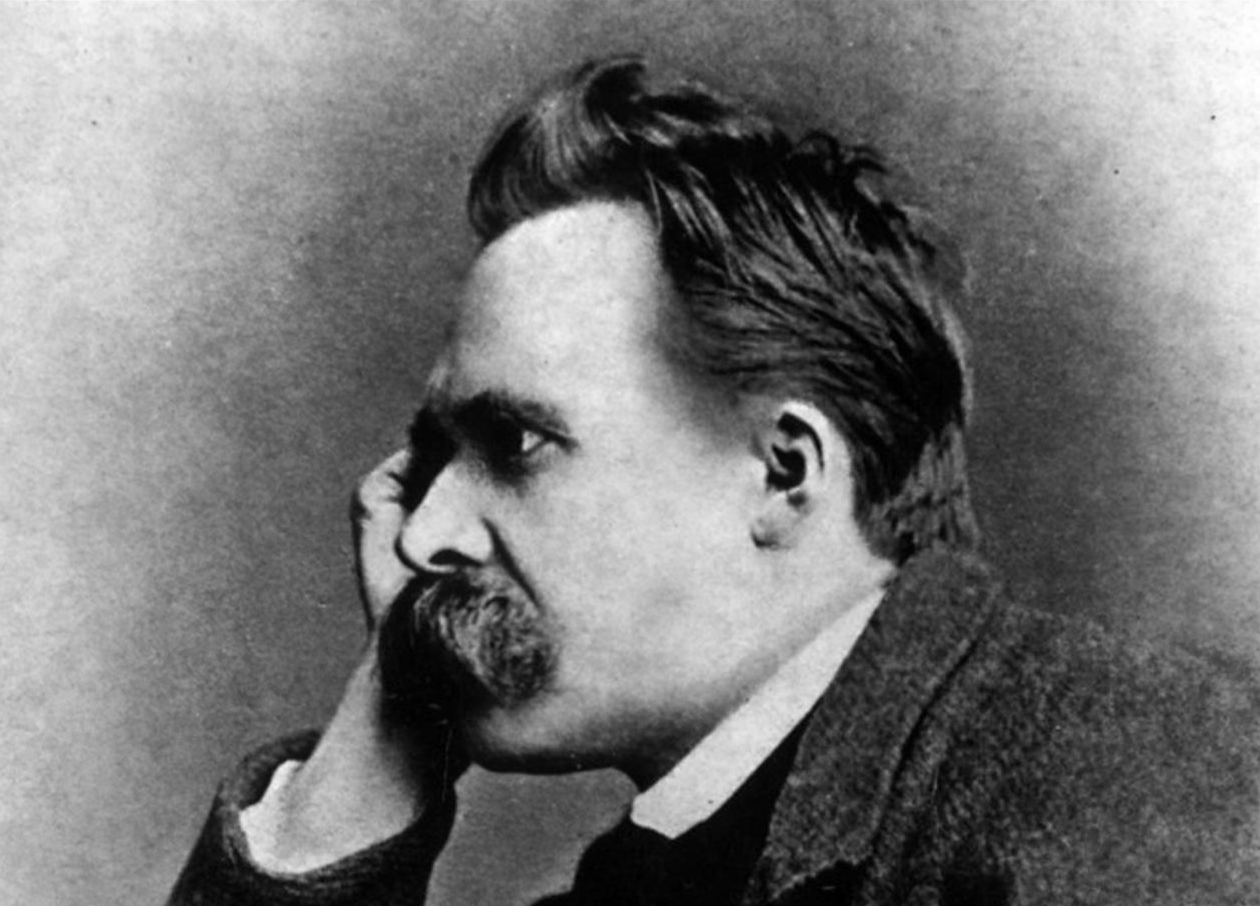
A philosopher perhaps more widely known for his prodigious mustache than for the varieties of his thought, Friedrich Nietzsche often seems to be misread more than read. Even someone like Michel Foucault could gloss over a crucial fact about Nietzsche’s body of work: Foucault remarked in an unpublished interview that Nietzsche’s “wonderful ideas” were “used by […]
Show full content

A philosopher perhaps more widely known for his prodigious mustache than for the varieties of his thought, Friedrich Nietzsche often seems to be misread more than read. Even someone like Michel Foucault could gloss over a crucial fact about Nietzsche’s body of work: Foucault remarked in an unpublished interview that Nietzsche’s “wonderful ideas” were “used by the Nazi Party.” But that use, he neglected to mention, came about through a scheme hatched by Nietzsche’s sister, after his mental collapse and death, to edit, change, and otherwise manipulate the thinker’s work in a way The Telegraph deemed “criminal.” Foucault may not have known the full context, but Nietzsche had about as much sympathy for fascism as he did for Christianity—both reasons for his break with composer Richard Wagner.

What Nietzsche loved most was music. Even in the wake of this scandal, with Nietzsche fully rehabilitated at the scholarly level at least, the philosopher is generally read piecemeal, used to prop up some ideology or critical theory or another, a tendency his anti-systematic, aphoristic work inspires.

A more holistic approach yields two important general observations: Nietzsche found the mundane work of politics and nationalist conquest, with its tribalism and moral pretensions, thoroughly distasteful. Instead, he considered the creative work of artists, writers, and musicians, as well as scientists, of paramount importance.

Nietzsche almost entered medicine and was himself an artist: “before he engaged himself fully as a philosopher, he had already created a substantial output as poet and composer,” writes Albany Records. In an 1887 letter written three years before his death, Nietzsche claimed, “There has never been a philosopher who has been in essence a musician to such an extent as I am,” though he also admitted he “might be a thoroughly unsuccessful musician.” In any case, he hoped that at least some of his compositions would become known and heard as complementary to his philosophical project.

Now serious readers of Nietzsche, or those simply curious about his musicianship, can hear some of his compositions online. The music ranges from sprightly to pensive, romantic to mournful, and some of it seems to come right out of the Protestant hymnals he grew up with as the son of a Lutheran minister. Nietzsche composed music throughout his life—a complete chronology spans the years 1854, when he was only ten, to 1887. See The Nietzsche Channel for a thorough list of published Nietzsche recordings and sheet music.

Note: An earlier version of this post appeared on our site in 2015.

Related Content:

An Ancient Philosophical Song Reconstructed and Played for the First Time in 1,000 Years

Listen to Music Playlists to Help You Study Like Nietzsche, Socrates, Kant & Other Great Thinkers

Hear Friedrich Nietzsche’s Classical Piano Compositions: They’re Aphoristic Like His Philosophy

Nietzsche’s 10 Rules for Writing with Style

An Animated Introduction to Friedrich Nietzsche’s Life & Thought

Josh Jones is a writer and musician based in Durham, NC. 


https://www.openculture.com/?p=1127011
Extensions
Why Animals Look So Strange in Medieval Manuscripts
ArtBooksHistory
Though you may not hear it every day, chimera remains an evocative word, perhaps even more so for its rarity. It descends from the Greek Khimaira, literally “year-old she-goat,” the name of a mythical fire-breathing creature with a caprine body, sure enough, but also the head of a lion and the tail of a dragon. Today […]
Show full content

Though you may not hear it every day, chimera remains an evocative word, perhaps even more so for its rarity. It descends from the Greek Khimaira, literally “year-old she-goat,” the name of a mythical fire-breathing creature with a caprine body, sure enough, but also the head of a lion and the tail of a dragon. Today the word broadly refers to any compound, usually bizarre, of parts drawn from disparate sources, a usage that dates back to the Middle Ages. Look at the illuminated manuscripts from that time, and you’ll find chimeras aplenty, a host of beastly mash-ups that look evocatively funny enough to be converted straight into twenty-first-century internet memes — most of which appear to have originally been intended as depictions of real, individual animals.

The video above from Curious Archive presents a gallery of medieval chimeras both intended and not. These include spiked sea turtles, small tigers without stripes, hippopotamuses with dorsal fins, elephants with entire stone castles on their backs, hyenas that resemble carnivorous cows, ostriches eating iron horseshoes, and scorpions with mammalian faces.

Mistakes of this kind were perhaps inevitable, given the difficulty of coming by such exotic animals in medieval Europe, even for artists with access to a royal court. Most would have had to rely on word of mouth or depictions in the Bestiary, a text that functions as both “a natural history and a series of moral and religious lessons,” according to the Metropolitan Museum of Art, and also incorporated “tales about the existence of bizarre and loathsome creatures.”

As in so many domains of the pre-Enlightenment world, the real and the fantastical went together in a way we can have trouble understanding today. We aren’t always aware, for example, that the lore of the time tended to link the lion — an animal locally extinct since before the Middle Ages began — with Jesus Christ. Thus “the symbolic aspects of lions were therefore as important for the artists as their actual physical features,” writes Mental Floss’ Jane Alexander, and in any case, “medieval artists typically weren’t concerned with realism.” At Hyperallergic, Elaine Velie quotes the Met’s associate curator in the Department of Medieval Art Shirin Fozi as observing that, “very often, people think that they’re laughing at the Middle Ages, and they’re actually laughing with the Middle Ages.” It may surprise us to consider that our ancestors, too, had senses of humor — and that the cultural concept of the “funny animal” has been around much longer than we might have imagined.

Related content:

Killer Rabbits in Medieval Manuscripts: Why So Many Drawings in the Margins Depict Bunnies Going Bad

The Aberdeen Bestiary, One of the Great Medieval Illuminated Manuscripts, Now Digitized in High Resolution & Made Available Online

Why Knights Fought Snails in Medieval Illuminated Manuscripts

Cats in Medieval Manuscripts & Paintings

The Medieval Manuscript That Features “Yoda”, Killer Snails, Savage Rabbits & More: Discover The Smithfield Decretals

A Field Guide to Strange Medieval Monsters

Based in Seoul, Colin Marshall writes and broadcasts on cities, language, and culture. He’s the author of the newsletter Books on Cities as well as the books 한국 요약 금지 (No Summarizing Korea) and Korean Newtro. Follow him on the social network formerly known as Twitter at @colinmarshall.

https://www.openculture.com/?p=1127000
Extensions
“The Most Intelligent Photo Ever Taken”: The 1927 Solvay Council Conference, Featuring Einstein, Bohr, Curie, Heisenberg, Schrödinger & More
HistoryPhotographyScience
A curious thing happened at the end of the 19th century and the dawning of the 20th. As European and American industries became increasingly confident in their methods of invention and production, scientists made discovery after discovery that shook their understanding of the physical world to the core. “Researchers in the 19th century had thought […]
Show full content

A curious thing happened at the end of the 19th century and the dawning of the 20th. As European and American industries became increasingly confident in their methods of invention and production, scientists made discovery after discovery that shook their understanding of the physical world to the core. “Researchers in the 19th century had thought they would soon describe all known physical processes using the equations of Isaac Newton and James Clerk Maxwell,” Adam Mann writes at Wired. But “the new and unexpected observations were destroying this rosy outlook.”

These observations included X‑rays, the photoelectric effect, nuclear radiation and electrons; “leading physicists, such as Max Planck and Walter Nernst believed circumstances were dire enough to warrant an international symposium that could attempt to resolve the situation.” Those scientists could not have known that over a century later, we would still be staring at what physicist Dominic Walliman calls the “Chasm of Ignorance” at the edge of quantum theory. But they did initiate “the quantum revolution” in the first Solvay Council, in Brussels, named for wealthy chemist and organizer Ernest Solvay.

“Reverberations from this meeting are still felt to this day… though physics may still sometimes seem to be in crisis” writes Mann (in a 2011 article just months before the discovery of the Higgs boson). The inaugural meeting kicked off a series of conferences on physics and chemistry that have continued into the 21st century. Included in the proceedings were Planck, “often called the father of quantum mechanics,” Ernest Rutherford, who discovered the proton, and Heike Kamerlingh-Onnes, who discovered superconductivity.

Also present were mathematician Henri Poincaré, chemist Marie Curie, and a 32-year-old Albert Einstein, the second youngest member of the group. Einstein described the first Solvay conference (1911) in a letter to a friend as “the lamentations on the ruins of Jerusalem. Nothing positive came out of it.” The ruined “temple,” in this case, was the theories of classical physics, “which had dominated scientific thinking in the previous century.” Einstein understood the dismay, but found his colleagues to be irrationally stubborn and conservative.

Nonetheless, he wrote, the scientists gathered at the Solvay Council “probably all agree that the so-called quantum theory is, indeed, a helpful tool but that it is not a theory in the usual sense of the word, at any rate not a theory that could be developed in a coherent form at the present time.” During the fifth Solvay Council, in 1927, Einstein tried to prove that the “Heisenberg Uncertainty Principle (and hence quantum mechanics itself) was just plain wrong,” writes Jonathan Dowling, co-director of the Horace Hearne Institute for Theoretical Physics.

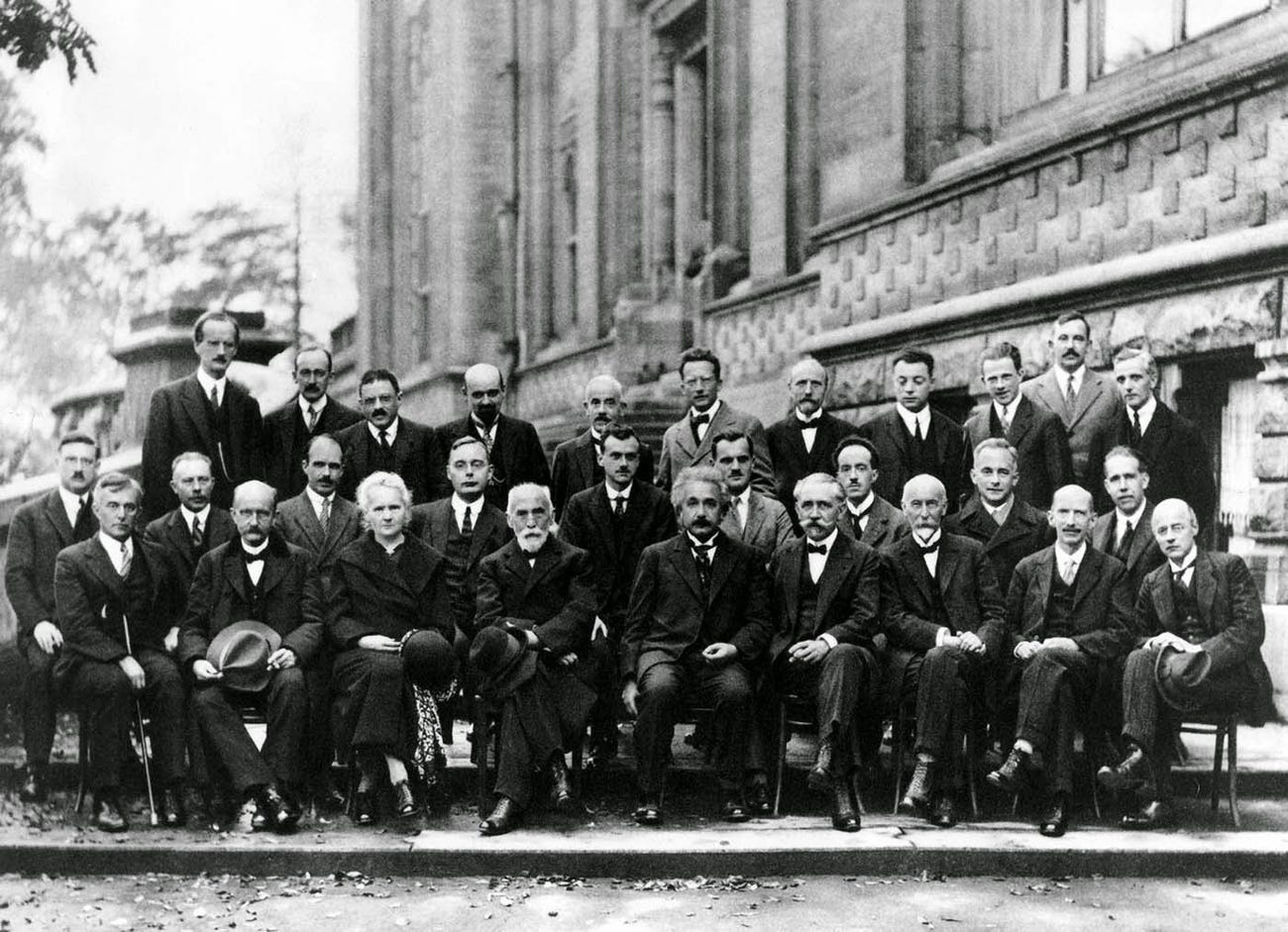
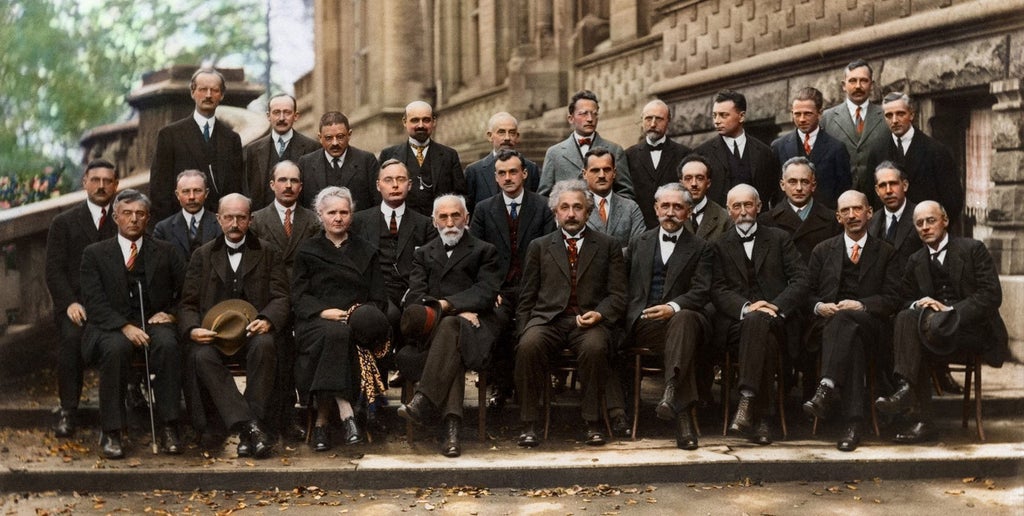
Physicist Niels Bohr responded vigorously. “This debate went on for days,” Dowling writes, “and continued on 3 years later at the next conference.” At one point, Einstein uttered his famous quote, “God does not play dice,” in a “room full of the world’s most notable scientific minds,” Amanda Macias writes at Business Insider. Bohr responded, “stop telling God what to do.” That room full of luminaries also sat for a portrait, as they had during the first Solvay Council meeting. See the assembled group at the top and further up in a colorized version in what may be, as one Redditor calls it, “the most intelligent picture ever taken.”

The full list of participants is below:

Front row: Irving Langmuir, Max Planck, Marie Curie, Hendrik Lorentz, Albert Einstein, Paul Langevin, Charles-Eugène Guye, C.T.R Wilson, Owen Richardson.

Middle row: Peter Debye, Martin Knudsen, William Lawrence Bragg, Hendrik Anthony Kramers, Paul Dirac, Arthur Compton, Louis de Broglie, Max Born, Niels Bohr.

Back row: Auguste Piccard, Émile Henriot, Paul Ehrenfest, Édouard Herzen, Théophile de Donder, Erwin Schrödinger, JE Verschaffelt, Wolfgang Pauli, Werner Heisenberg, Ralph Fowler, Léon Brillouin.

Note: An earlier version of this post appeared on our site in 2019.

Related Content: 

Marie Curie’s Research Papers Are Still Radioactive a Century Later

Read the Uplifting Letter That Albert Einstein Sent to Marie Curie During a Time of Personal Crisis (1911)

Marie Curie Became the First Woman to Win a Nobel Prize, the First Person to Win Twice, and the Only Person in History to Win in Two Different Sciences

The Bohr-Einstein Debates, Reenacted With Dog Puppets

Josh Jones is a writer and musician based in Durham, NC. 


https://www.openculture.com/?p=1127001
Extensions
Gandhi Writes Letters to Hitler: “We Have Found in Non-Violence a Force Which Can Match the Most Violent Forces in the World” (1939/40)
HistoryLetters
Image via Wikimedia Commons It must come up in every single argument, from sophisticated to sophomoric, about the practicability of non-violent pacifism. “Look what Gandhi and Martin Luther King, Jr. were able to achieve!” “Yes, but what about Hitler? What do you do about the Nazis?” The rebuttal implies future Nazi-like entities looming on the […]
Show full content

Image via Wikimedia Commons

It must come up in every single argument, from sophisticated to sophomoric, about the practicability of non-violent pacifism. “Look what Gandhi and Martin Luther King, Jr. were able to achieve!” “Yes, but what about Hitler? What do you do about the Nazis?” The rebuttal implies future Nazi-like entities looming on the horizon, and though this reductio ad Hitlerum generally has the effect of nullifying any continued rational discussion, it’s difficult to imagine a satisfying pacifist answer to the problem of naked, implacable hatred and aggression on such a scale as that of the Third Reich. Even Gandhi’s own proposal sounds like a joke: in 1940, Adolf Hitler abandons his plans to claim Lebensraum for the German people and to displace, enslave, or eradicate Germany’s neighbors and undesirable citizens. He adopts a posture of non-violence and “universal friendship,” and German forces withdraw from Czechoslovakia, Poland, Denmark, France, agreeing to resolve differences through international conference and committee.

Hitler may have been a vegetarian, but that’s likely where any sympathy between him and Gandhi began and ended. And yet, the above is precisely what Mahatma Gandhi asked of the Fuhrer, in a letter dated December 24, 1940. Engaged fully in the struggle for Indian independence, Gandhi found himself torn by the entry of Britain into the war against Germany. On the one hand, Gandhi initially pledged “nonviolent moral support” for the war, sensing an enemy—Germany—even more threatening to world peace and stability. (That stance would change in short order as the Indian National Congress revolted and resigned en masse rather than participate in the war). On the other hand, Gandhi did not see the British Empire as categorically different from the Nazis. As he put it in his letter to Hitler, whom he addresses as “Friend” (this is “no formality,” he writes, “I own no foes”): “If there is a difference, it is in degree. One-fifth of the human race has been brought under the British heel by means that will not bear scrutiny.”

Gandhi acknowledges the absurdity of his request: “I am aware,” he writes, “that your view of life regards such spoliations as virtuous acts.” And yet, he marshals a formidable argument for nonviolence as a force of power, not weakness, showing how it had weakened British rule: “The movement of independence has been never so strong as now,” he writes, through “the right means to combat the most organized violence in the world which the British power represents”:

It remains to be seen which is the better organized, the German or the British. We know what the British heel means for us and the non-European races of the world. But we would never wish to end the British rule with German aid. We have found in non-violence a force which, if organized, can without doubt match itself against a combination of all the most violent forces in the world. In non-violent technique, as I have said, there is no such thing as defeat. It is all ‘do or die’ without killing or hurting. It can be used practically without money and obviously without the aid of science of destruction which you have brought to such perfection. It is a marvel to me that you do not see that it is nobody’s monopoly. If not the British, some other power will certainly improve upon your method and beat you with your own weapon. You are leaving no legacy to your people of which they would feel proud. They cannot take pride in a recital of cruel deed, however skillfully planned. I, therefore, appeal to you in the name of humanity to stop the war.

As an alternative to war, Gandhi proposes an “international tribunal of your joint choice” to determine “which party was in the right.” His letter, Gandhi writes, should be taken as “a joint appeal to you and Signor Mussolini…. I hope that he will take this as addressed to him also with the necessary changes.”

Gandhi also references an appeal he made “to every Briton to accept my method of non-violent resistance.” That appeal took the form of an open letter he published that July, “To Every Briton,” in which he wrote:

You will invite Herr Hitler and Signor Mussolini to take what they want of the countries you call your possessions. Let them take possession of your beautiful island, with your many beautiful buildings. You will give all these, but neither your souls, nor your minds. If these gentlemen choose to occupy your homes, you will vacate them. If they do not give you free passage out, you will allow yourself, man, woman and child, to be slaughtered, but you will refuse to owe allegiance to them.

When Gandhi visited England that year, he found the viceroy of colonial India “dumbstruck” by these requests, writes Stanley Wolpert in his biography of the Indian leader, “unable to utter a word in response, refusing even to call for his car to take the now more deeply despondent Gandhi home.”

Gandhi’s 1940 letter to Hitler was actually his second addressed to the Nazi leader. The first, a very short missive written in 1939, one month before the ill-fated Soviet Non-Aggression Pact, strikes a conciliatory tone. Gandhi writes that he resisted requests from friends to pen the letter “because of the feeling that any letter from me would be an impertinence,” and though he calls on Hitler to “prevent a war which may reduce humanity to a savage state,” he ends with, “I anticipate your forgiveness, If I have erred in writing to you.” But again, in this very brief letter, Gandhi appeals to the “considerable success” of his nonviolent methods. “There is no evidence,” The Christian Science Monitor remarks, “to suggest Hitler ever responded to either of Gandhi’s letters.”

As the war unavoidably raged, Gandhi redoubled his efforts at Indian independence, launching the  “Quit India” movement in 1942, which—writes Open University—“more than anything, united the Indian people against British rule” and hastened its eventual end in 1947. Non-violence succeeded, improbably, against the British Empire, though certain other former colonies won independence through more traditionally warlike methods. And yet, though Gandhi believed non-violent resistance could avert the horrors of World War II, those of us without his level of total commitment to the principle may find it difficult to imagine how it might have succeeded against the Nazis, or how it could have appealed to their totalizing ideology of domination.

Note: An earlier version of this post appeared on our site in 2016.

Related Content:

Mahatma Gandhi’s List of the Seven Social Sins; or Tips on How to Avoid Living the Bad Life

Tolstoy and Gandhi Exchange Letters: Two Thinkers’ Quest for Gentleness, Humility & Love (1909)

Hear Gandhi’s Famous Speech on the Existence of God (1931)

Watch Gandhi Talk in His First Filmed Interview (1947)

Josh Jones is a writer and musician based in Durham, NC. 

https://www.openculture.com/?p=1126988
Extensions
The Greatest Documentary You’ve Never Heard Of: An Introduction to Wang Bing’s Nine-Hour Tie Xi Qu
Film
The Chinese filmmaker Wang Bing’s ‘Til Madness Do Us Part, a documentary about a mental institution in Yunnan, runs three hours and 48 minutes. Beauty Lives in Freedom, on the life of imprisoned artist Gao Ertai, is five and a half hours long; Dead Souls, on the survivors of a hard-labor camp in the Gobi Desert, […]
Show full content

The Chinese filmmaker Wang Bing’s ‘Til Madness Do Us Part, a documentary about a mental institution in Yunnan, runs three hours and 48 minutes. Beauty Lives in Freedom, on the life of imprisoned artist Gao Ertai, is five and a half hours long; Dead Souls, on the survivors of a hard-labor camp in the Gobi Desert, eight hours and fifteen minutes. Even if you know nothing else of his work, you may get the impression that Wang isn’t the most shamelessly commercial of filmmakers. The extreme duration of some of his movies surely make them a hard sell, as do his grim choices of subject matter. But if you want to understand the transformation of modern China, you could hardly find a richer body of cinematic work.

In the video essay above, YouTuber Ken Dai extols the virtues of Wang’s first film: Tie Xi Qu: West of the Tracks, whose more than nine hours of footage depict the last years of the titular industrial district of Shenyang. Wang draws them from the more than 300 hours he shot in the years between 1999 and 2001, by which time a shift in economic policy had made redundant what had once been not just a concentration of state-owned enterprises, but “a monument to a vision of the future.”

Tie Xi employed countless many in the foundries and factories that made possible the dramatic early decades of China’s economic rise, but for its workers and their families alike, it had also become a stage on which generations of life played out.

Wang bears witness to that stage’s dismantlement. In the film’s first part, Dai says, “we watch the workers show up, day after day, to a system that has already decided they’re no longer necessary.” The second turns to “the families, and particularly the teenagers”; the third “follows a freight railway that once connected all of it, and two men, a son and a father, who live and scavenge for scrap metals.” They and the many other remaining Tie Xi denizens who pass before Wang’s camera speak for themselves. At no point does the film incorporate narration, interviews, or even non-diegetic music. (There is, however, an impromptu performance by a nude guitar-playing man in a barracks.) In its refusal to use its people as metaphorical figures or political props, Tie Xi Qu stands as an example of “direct cinema” at its most direct — except, perhaps, for Wang’s later clothing-factory documentary, the aptly titled 15 Hours.

Related Content:

285 Free Documentaries Online

50 Must-See Documentaries, Selected by 10 Influential Documentary Filmmakers

A Chinese Painter Specializing in Copying Van Gogh Paintings Travels to Amsterdam & Sees Van Gogh’s Masterpieces for the First Time

The Goddess: A Classic from the Golden Age of Chinese Cinema, Starring the Silent Film Icon Ruan Lingyu (1934)

China’s 8,000 Terracotta Warriors: An Animated & Interactive Introduction to a Great Archaeological Discovery

Watch the Film That Invented Cinema: Workers Leaving the Lumière Factory in Lyon (1895)

Based in Seoul, Colin Marshall writes and broadcasts on cities, language, and culture. He’s the author of the newsletter Books on Cities as well as the books 한국 요약 금지 (No Summarizing Korea) and Korean Newtro. Follow him on the social network formerly known as Twitter at @colinmarshall.

https://www.openculture.com/?p=1126985
Extensions
Try the Oldest Known Recipe For Toothpaste: From Ancient Egypt, Circa the 4th Century BC
HealthHistory
Image of Ancient Egyptian Dentistry, via Wikimedia Commons When we assume that modern improvements are far superior to the practices of the ancients, we might do well to actually learn how people in the distant past lived before indulging in “chronological snobbery.” Take, for example, the area of dental hygiene. We might imagine the ancient […]
Show full content

Image of Ancient Egyptian Dentistry, via Wikimedia Commons

When we assume that modern improvements are far superior to the practices of the ancients, we might do well to actually learn how people in the distant past lived before indulging in “chronological snobbery.” Take, for example, the area of dental hygiene. We might imagine the ancient Greeks or Egyptians as prone to rampant tooth decay, lacking the benefits of packaged, branded toothpaste, silken ribbons of floss, astringent mouthwash, and ergonomic toothbrushes. But in fact, as toothpaste manufacturer Colgate points out, “the basic fundamentals” of toothbrush design “have not changed since the times of the Egyptians and Babylonians—a handle to grip, and a bristle-like feature with which to clean the teeth.” And not only did ancient people use toothbrushes, but it is believed that “Egyptians… started using a paste to clean their teeth around 5000 BC,” even before toothbrushes were invented.

In 2003, curators at a Viennese museum discovered “the world’s oldest-known formula for toothpaste,” writes Irene Zoech in The Telegraph, “used more than 1,500 years before Colgate began marketing the first commercial brand in 1873.” Dating from the 4th century AD, the Egyptian papyrus (not shown above), written in Greek, describes a “powder for white and perfect teeth” that, when mixed with saliva, makes a “clean tooth paste.” The recipe is as follows, Zoech summarizes: “…one drachma of rock salt—measure equal to one hundredth of an ounce—two drachmas of mint, one drachma of dried iris flower and 20 grains of pepper, all of them crushed and mixed together.”

Zoech quotes Dentist Heinz Neuman, who remarked, “Nobody in the dental profession had any idea that such an advanced toothpaste formula of this antiquity existed.” Having tried the ancient recipe at a dental conference in Austria, he found it “not unpleasant”

It was painful on my gums and made them bleed as well, but that’s not a bad thing, and afterwards my mouth felt fresh and clean. I believe that this recipe would have been a big improvement on some of the soap toothpastes used much later.

Discovered among “the largest collection of ancient Egyptian documents in the world,” the document, says Hermann Harrauer, head of the papyrus collection at the National Library in Vienna, “was written by someone who’s obviously had some medical knowledge, as he used abbreviations for medical terms.”

When we survey the dental remedies of Medieval England, we do indeed find that modern dental care is far better than much of what was available then. Most dental cures of the time, writes Trevor Anderson in a Nature article, “were based on herbal remedies, charms and amulets.” For example, in the 1314 Rosa Anglica, writer John of Gaddesden reports, “some say that the beak of a magpie hung from the neck cures pain in the teeth.” Another remedy involves sticking a needle into a “many footed worm which rolls up in a ball when you touch it.” Touch the aching tooth with that roly-poly needle and “the pain will be erased.”

However, “there is also documentary evidence,” writes Anderson, “for powders to clean teeth and attempts at filling carious cavities,” as well as some surgical intervention. In Gilbertus Anglicus’ 13th century Compendium of Medicine, readers are told to rub teeth and gums with cloth after eating to ensure that “no corrupt matter abides among the teeth.” In The Trotula—a compendium of folk remedies from the 11th or 12th century—we find many recipes for what we might consider toothpaste, though their efficacy is dubious. Danièle Cybulskie at Medievalists.net quotes one recipe “for black teeth”:

…take walnut shells well cleaned of the interior rind, which is green, and… rub the teeth three times a day, and when they have been well rubbed… wash the mouth with warm wine, and with salt mixed if desired.

Another, more extravagant, recipe sounds impractical.

Take burnt white marble and burnt date pits, and white natron, a red tile, salt, and pumice. From all of these make a powder in which damp wool has been wrapped in a fine linen cloth. Rub the teeth inside and out.

Yet a third recipe gives us a luxury variety, its ingredients well out of reach of the average person. We are assured, however, that this formula “works the best.”

Take some each of cinnamon, clove, spikenard, mastic, frankincense, grain, wormwood, crab foot, date pits, and olives. Grind all of these and reduce them to a powder, then rub the affected places.

Whether any of these formulas would have worked at all, I cannot say, but they likely worked better than charms and amulets. In any case, while medieval European texts tend to confirm certain of our ideas about poor dental hygiene of the past, it seems that the daily practices of more ancient peoples in Egypt and elsewhere might have been much more like our own than we would suspect.

Note: An earlier version of this post appeared on our site in 2016.

Related Content:

Why the Ancient Romans Had Better Teeth Than Modern Europeans

Who Really Built the Egyptian Pyramids—And How Did They Do It?

Discover the Oldest Beer Recipe in History From Ancient Sumeria, 1800 B.C.

An Ancient Egyptian Homework Assignment from 1800 Years Ago: Some Things Are Truly Timeless

Josh Jones is a writer and musician based in Durham, NC. 

https://www.openculture.com/?p=1126975
Extensions
The $666 Board That Built Apple: How the Apple I Changed Computing 50 Years Ago
HistoryTechnology
Americans of a certain age may well remember growing up with an Apple II in the classroom, and the perpetual temptation it held out to play The Oregon Trail, Number Munchers, or perhaps Lode Runner. More than a few recess gamers went on to computer-oriented careers, but only the most curious sought an answer to the question […]
Show full content

Americans of a certain age may well remember growing up with an Apple II in the classroom, and the perpetual temptation it held out to play The Oregon TrailNumber Munchers, or perhaps Lode Runner. More than a few recess gamers went on to computer-oriented careers, but only the most curious sought an answer to the question implied in the machine’s name: was there an Apple I? Half a century after the foundation of Apple, Inc., then known as Apple Computer, the product that launched what’s now one of the world’s most valuable companies remains very much an obscurity. Unless you frequent computer museums, you’re unlikely ever to have laid eyes on an Apple I, let alone used one. Even if one of the existing models were to come on the market, you’d need about half a million dollars to buy it.

It’s actually easier to buy the parts that went into an Apple I and build it yourself — which, as demonstrated by the 8‑Bit Guy in the video above, still isn’t easy at all. Yet it does convey something of what Apple’s very first customers would have experienced in 1976, when do-it-yourself was the order of the day in computing.

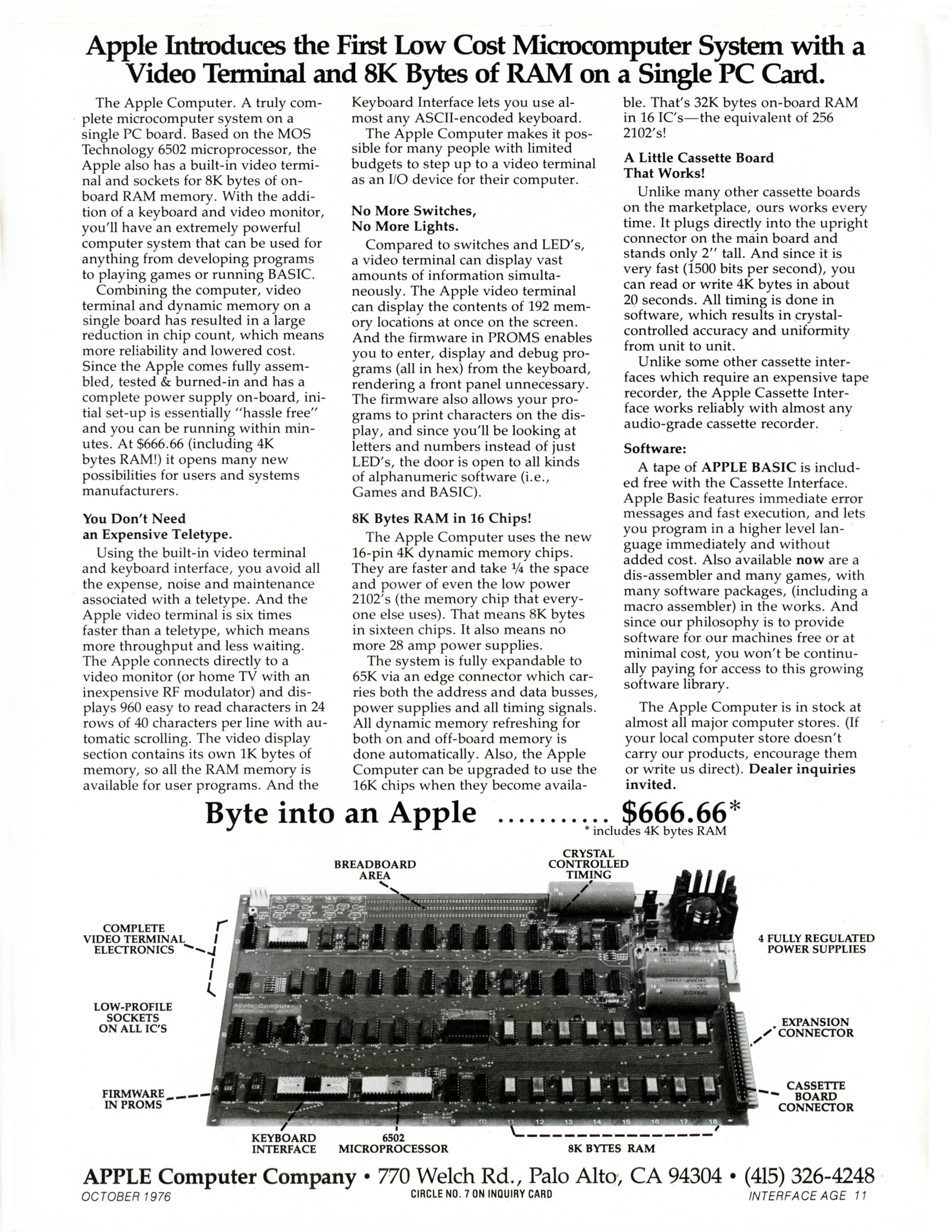
When I bought the MacBook on which I’m writing this post, I simply opened it up and, naturally, found it ready to use. That would scarcely have been imaginable to computer enthusiasts of the mid-seventies, accustomed as they were to soldering individually purchased chips onto electronics boards by hand. The Apple I marked a great leap forward in convenience by coming already assembled, albeit without a monitor, a keyboard, or even a case; the purchase price of USD $666.66 (closer to $4,000 today) just got you the board. But what a board.

Though we remember Steve Jobs as the mastermind, the Apple I is a tour de force of the engineering genius of his business partner Steve Wozniak. When the Steves debuted it at the Homebrew Computer Club in July of 1976, the relatively small number of chips and advanced functions (BASIC programming! Cassette-tape data storage! Actual video output, if only of teletype-like scrolling text!) created a considerable demand then and there. We often hear of Jobs and Wozniak starting Apple in a garage, and it was in that garage (as well as the house’s living room) that the first Apple I boards were put together. Ultimately, 200 were sold before the Apple II arrived the following year. Apple’s first computer may look intimidating to most of today’s Mac users. But consider the company’s reputation for minimalism, accessibility, and a knack for capturing the consumer’s imagination: all qualities present on that board 50 years ago.

Related content:

Ridley Scott on the Making of Apple’s Iconic “1984” Commercial, Aired on Super Bowl Sunday in 1984

Before The Simpsons, Matt Groening Illustrated a “Student’s Guide” for Apple Computers (1989)

Hunter S. Thompson’s Edgy 1990s Commercial for Apple’s Macintosh Computer: A Meditation on Power

Discovered: The User Manual for the Oldest Surviving Computer in the World

Based in Seoul, Colin Marshall writes and broadcasts on cities, language, and culture. He’s the author of the newsletter Books on Cities as well as the books 한국 요약 금지 (No Summarizing Korea) and Korean Newtro. Follow him on the social network formerly known as Twitter at @colinmarshall.

https://www.openculture.com/?p=1126974
Extensions
A Newly Discovered Recording Lets You Hear Delta Blues Legend Robert Johnson in Stunning Clarity
HistoryMusic
Great swathes of rock music since the nineteen-sixties would never have existed, we’re sometimes told, were it not for the recordings of Robert Johnson. Certainly the likes of Keith Richards, Eric Clapton, Robert Plant, and Bob Dylan have never hesitated to acknowledge his influence. “From the first note the vibrations from the loudspeaker made my […]
Show full content

Great swathes of rock music since the nineteen-sixties would never have existed, we’re sometimes told, were it not for the recordings of Robert Johnson. Certainly the likes of Keith Richards, Eric Clapton, Robert Plant, and Bob Dylan have never hesitated to acknowledge his influence. “From the first note the vibrations from the loudspeaker made my hair stand up,” Dylan writes in his autobiography of his first encounter with Johnson’s music. “The stabbing sounds from the guitar could almost break a window. When Johnson started singing, he seemed like a guy who could have sprung from the head of Zeus in full armor. I immediately differentiated between him and anyone else I had ever heard.” Not bad for a recording older than Dylan himself.

In the early nineteen-sixties, the blues as Johnson played it seems to have sounded electrifyingly revelatory to the generation of then-young musicians who managed to hear it, regardless of their own origins. All such recordings date from 1936 or 1937, the fruits of just two sessions in makeshift Texas studios overseen by producer Don Law.

Though the “king of the Delta blues singers” left behind only this small body of work after his still-unexplained death at the age of 27, it’s been endlessly scrutinized by the genre’s enthusiasts. All of them will surely regard as a godsend the newly discovered shellac master test pressing above of “Cross Road Blues,” a song that plays an outsized part in the legend of Robert Johnson, who some say sold his soul to the devil at just such a location in exchange for his formidable guitar skills.

Though it contains no reference to any such unholy pact, nor to any denizen of the underworld, “Cross Road Blues” does have a haunting sound that goes with the shadowy ambience of the man’s short life story. Some of that had to do with the less-than-ideal quality of the recordings that have long circulated, but this test pressing of Johnson’s second take sounds different. Uploaded by sound restorer Nick Dellow, it was originally made in 1940 straight from the metal master by Columbia Records producer George Avakian, who would go on to work with everyone from Miles Davis to Edith Piaf to John Cage. The sonic muddiness of most Robert Johnson releases thus far has done its part to prevent modern-day listeners from getting quite what the big deal was about him. But perhaps the unprecedented clarity of this recording will get the hair of young musicians and mature connoisseurs alike standing on end.

via Ted Gioia

Related content:

Keith Richards Shows Us How to Play the Blues, Inspired by Robert Johnson, on the Acoustic Guitar

Covering Robert Johnson’s Blues Became a Rite of Rock ‘n’ Roll Passage: Hear Covers by The Rolling Stones, Eric Clapton, Howlin’ Wolf, Lucinda Williams & More

Robert Johnson Finally Gets an Obituary in The New York Times 81 Years After His Death

Jimi Hendrix Plays the Delta Blues on a 12-String Acoustic Guitar in 1968, and Jams with His Blues Idols, Buddy Guy & B.B. King

The Legend of How Bluesman Robert Johnson Sold His Soul to the Devil at the Crossroads

A Brief History of Making Deals with the Devil: Niccolò Paganini, Robert Johnson, Jimmy Page & More

Based in Seoul, Colin Marshall writes and broadcasts on cities, language, and culture. He’s the author of the newsletter Books on Cities as well as the books 한국 요약 금지 (No Summarizing Korea) and Korean Newtro. Follow him on the social network formerly known as Twitter at @colinmarshall.

https://www.openculture.com/?p=1126968
Extensions
How George Orwell Predicted the Rise of “AI Slop” in Nineteen Eighty-Four (1949)
BooksLiteratureTechnology
We’ve lived but a few years so far into the age when artificial intelligence can produce convincing stories, songs, essays, poems, novels, and even films. For many of us, these recently implemented functions have already come to feel necessary in our daily life, but it may surprise us to consider how many people had long […]
Show full content

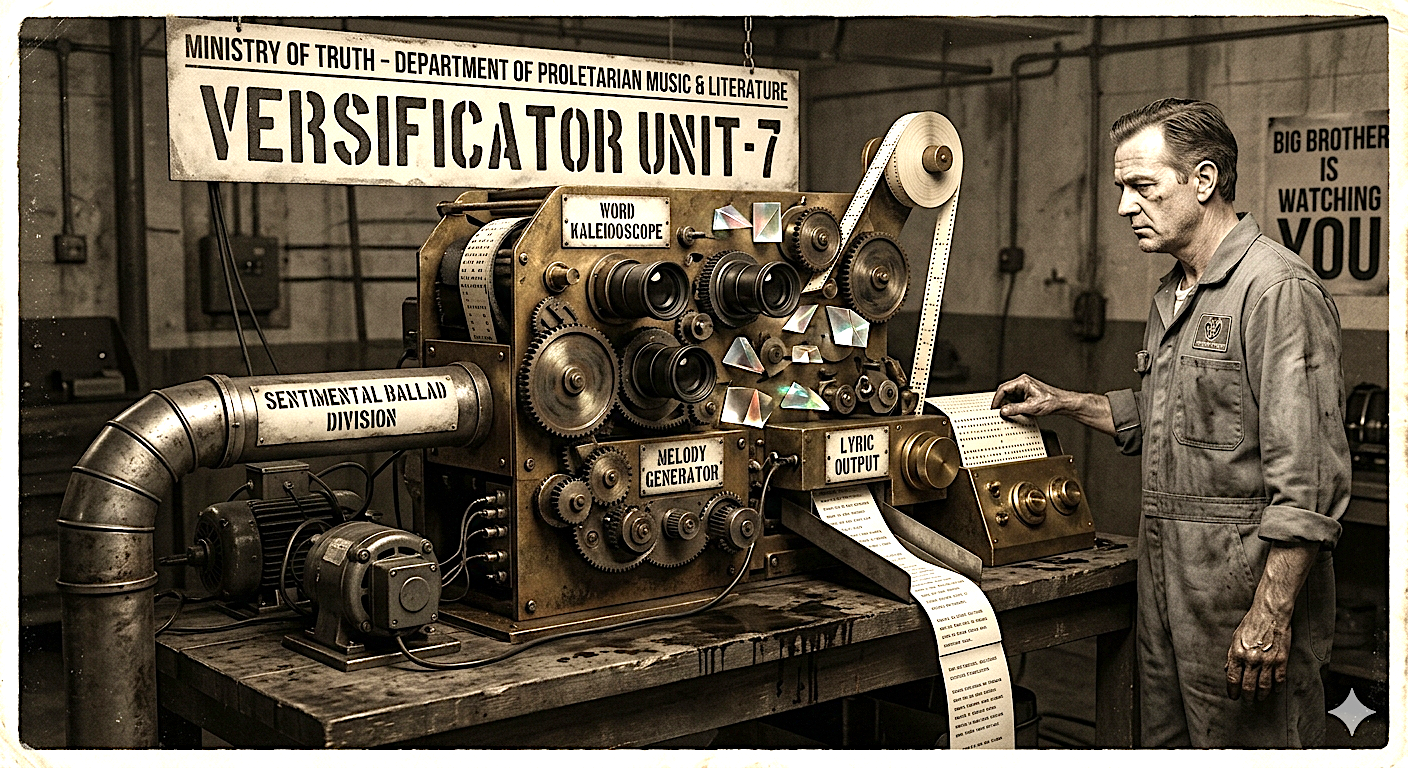
We’ve lived but a few years so far into the age when artificial intelligence can produce convincing stories, songs, essays, poems, novels, and even films. For many of us, these recently implemented functions have already come to feel necessary in our daily life, but it may surprise us to consider how many people had long assumed that computers could already perform them. That belief surely owes in part to the roles played by effectively sentient machines in popular fictions since at least the early decades of the twentieth century. Revisiting George Orwell’s Nineteen Eighty-Four, we even find a device very much like today’s large language models in use at the Ministry of Truth, the employer of protagonist Winston Smith.

Within the Ministry is “a whole chain of separate departments dealing with proletarian literature, music, drama, and entertainment generally. Here were produced rubbishy newspapers containing almost nothing except sport, crime and astrology, sensational five-cent novelettes, films oozing with sex, and sentimental songs which were composed entirely by mechanical means on a special kind of kaleidoscope known as a versificator.” Much later in the novel, Smith overhears a hit song composed on that very kaleidoscope, “without any human intervention whatever,” sung by a woman of this dystopian England’s lowest class, whose very baseness liberates it from the watchful eye that Big Brother’s vast surveillance system keeps on his ostensibly privileged Party members.

All the “proles” really require, in the view of the state, is the freedom to satisfy their vices and a steady stream of pacifying media. The extrusions of the versificator may now bring to mind the ever-increasing quantities of “AI slop,” often created with vanishingly small amounts of human intervention, whose potential to flood the internet has lately become a matter of public concern. What’s more chilling to consider is that such low-effort, high-volume content wouldn’t have attained such a presence if it weren’t genuinely popular. Much like the junk culture pumped out by the Ministry of Truth, AI slop reflects less the ill intent of (or at least neglect by) the powers that be than the undemanding nature of the public.

Perhaps we can provisionally chalk this one up in the “Orwell was right” column. It’s possible that, in light of real technological developments, even Isaac Asimov could be convinced to give it to him. Here on Open Culture, we recently featured Asimov’s critique of Nineteen Eighty-Four as a poor prophecy of the future, not least from a technological standpoint. That piece was written in 1980 at the very end of an “AI winter,” one of the fallow periods in artificial intelligence research. A boom was soon to come, but the truly astonishing developments wouldn’t happen until the twenty-twenties, about thirty years after Asimov’s death. When describing the versificator, Orwell was presumably extrapolating from the distracting, disposable entertainments of nineteen-forties England. Even if his readers couldn’t believe the idea of that sort of thing being created automatically, more than a few probably agreed with his diagnosis of its quality. Now, collective human intelligence may face its most formidable challenger, but individual human discernment has never been more valuable.

via Boing Boing

Related content:

Isaac Asimov Reviews George Orwell’s Nineteen Eighty-Four and Calls It “Not Science Fiction, But a Distorted Nostalgia for a Past that Never Was”

George Orwell Predicted Cameras Would Watch Us in Our Homes; He Never Imagined We’d Gladly Buy and Install Them Ourselves

An Introduction to George Orwell’s 1984 and How Power Manufactures Truth

George Orwell Explains in a Revealing 1944 Letter Why He’d Write 1984

Aldous Huxley to George Orwell: My Hellish Vision of the Future is Better Than Yours (1949)

Sci-Fi Writer Arthur C. Clarke Predicts the Future in 1964: Artificial Intelligence, Instantaneous Global Communication, Remote Work, Singularity & More

Based in Seoul, Colin Marshall writes and broadcasts on cities, language, and culture. He’s the author of the newsletter Books on Cities as well as the books 한국 요약 금지 (No Summarizing Korea) and Korean Newtro. Follow him on the social network formerly known as Twitter at @colinmarshall.

https://www.openculture.com/?p=1126957
Extensions

Related Narratives

← Back to feeds