In my misspent youth, I once worked a summer job as a waiter at Shoney's. It is an experience that I do not recommend. But it did teach me two valuable things: 1) How not to drown in a puddle of my own embarrassment when marching around the dining room with my fellow servers and singing a birthday song that began, "Happy, happy birthday, we're so glad you came"; and 2) That when the surly line cooks ran out of chicken fried steak, they would shout "86 the chicken fried steak!" through the pass.
To "86" something, in restaurant slang, is to say that it is out, finished, gone, through, not on the menu anymore. This is the only sense in which I have heard the term used in my entire life.
But according to Wikipedia, which naturally has an entry about the term, two further meanings do exist. "86" can also be applied to people a restaurant refuses to serve, and some slang dictionaries say it can refer to murder.
When doctors saw him, his limbs were discolored and crackling.
Show full content
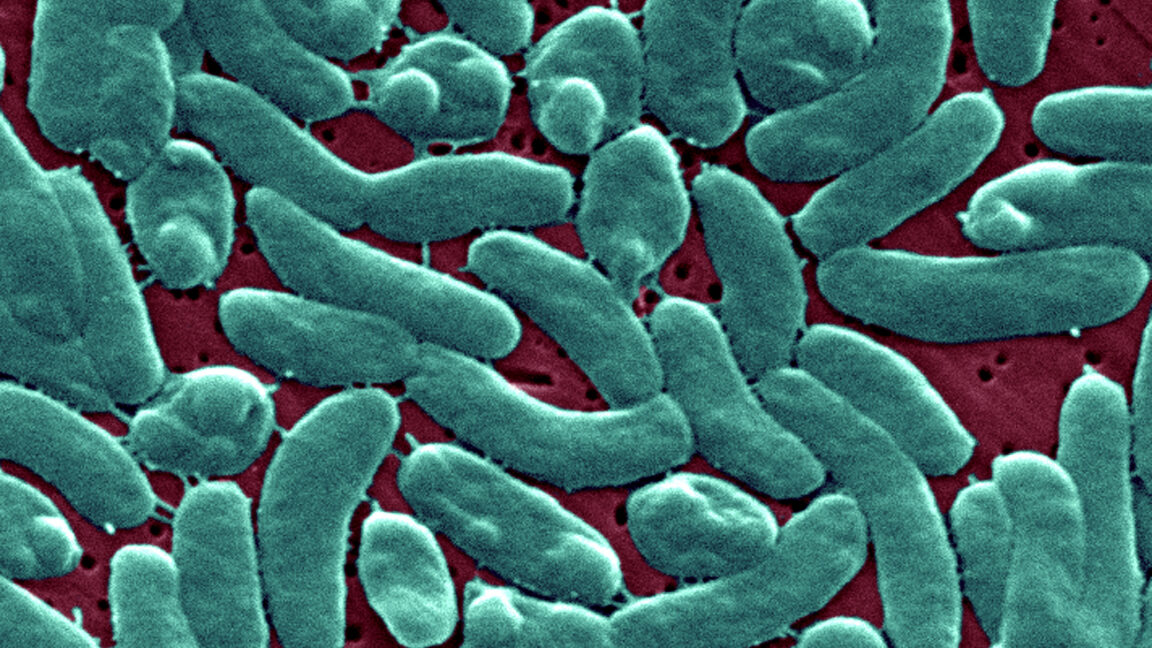
A 74-year-old man went to an emergency department in Florida with rapidly rotting limbs after jumping into the waters off Florida's Gulf Coast.
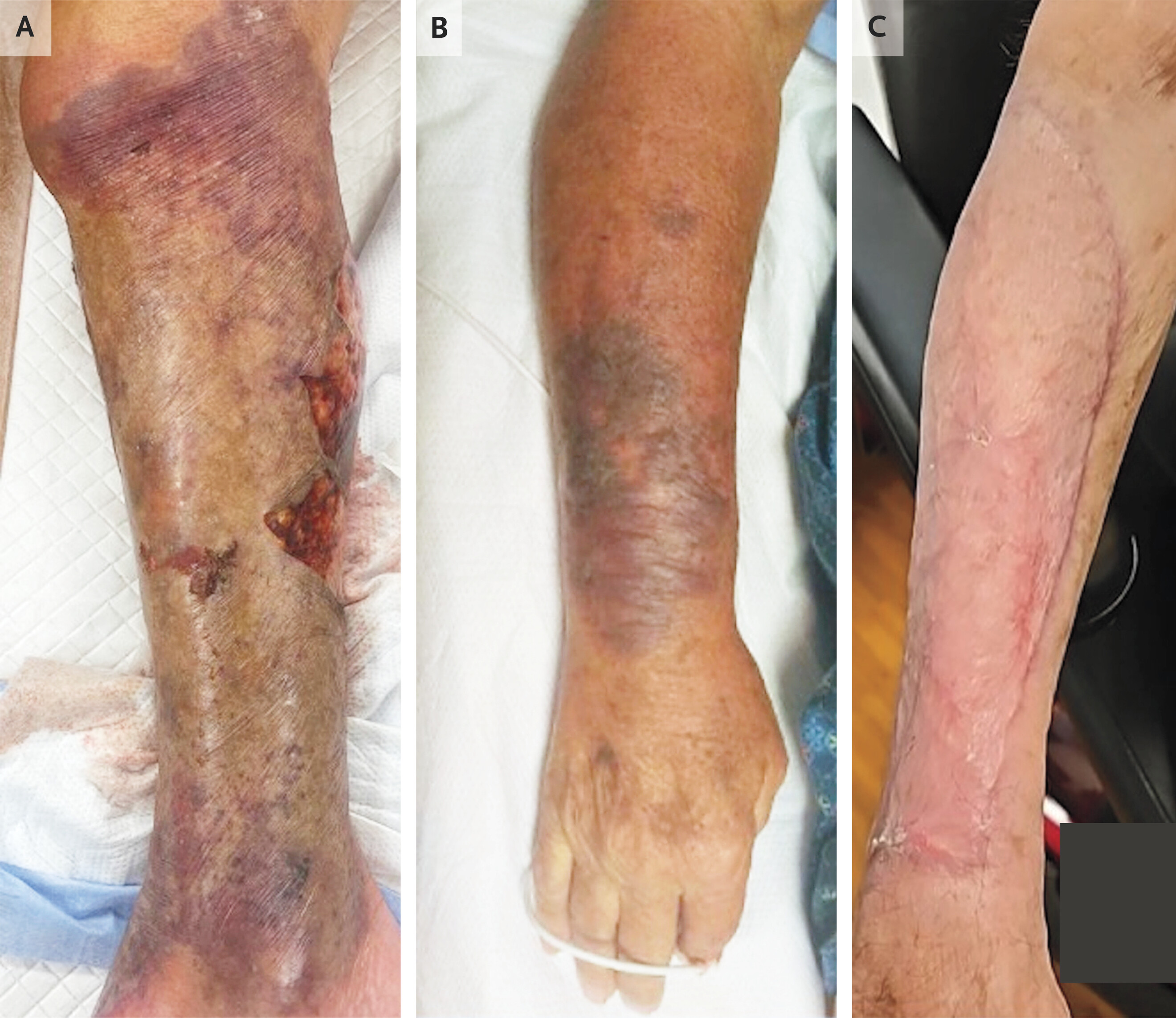
Just three days earlier, the man was otherwise healthy and active on the coast. But at one point when he jumped into the water, he got a cut on his right leg. It quickly became painful and bruised. Two days later, the skin on his right arm also started changing color.
According to a case report in the New England Journal of Medicine, by day three, when he arrived at the hospital, he was in dire shape. The lower half of his leg was darkly colored, indicating bleeding under his skin. Doctors noted a crackling sound, suggesting gases bubbling out of his dying flesh, and some of the outer layers of skin were peeling off. His arm wasn't much better. It appeared red, discolored, and swollen. A large blood blister (a hemorrhagic bulla) had formed, suggesting a severe flesh-eating infection. (You can see a graphic image here, including an end image of his arm.)
Kimmel joke calling Melania an "expectant widow" followed quickly by FCC order.
Show full content
The Federal Communications Commission today opened an unusual review of ABC's broadcast licenses, one day after President Trump and the first lady called on ABC to fire Jimmy Kimmel over a recent joke in which he said Melania Trump looked like an "expectant widow."
There are no TV station licenses for any company up for renewal until 2028, and the legal process for revoking licenses is so difficult that it's been described as nearly impossible. But the FCC today issued an order instructing ABC owner Disney to file early license renewal applications for all of its licensed TV stations by May 28.
"FCC rules provide that whenever the FCC regards an application for a renewal of a license as essential to the proper conduct of an investigation, the FCC has the authority to call the broadcaster’s licenses in for early renewal," the agency said. "Doing so both allows the FCC to conduct its ongoing investigation and enables the FCC to ensure that the broadcaster has been meeting its public interest obligations more broadly."
FeaturesPolicyTechcivil libertiescustoms and border protectionDepartment of Homeland SecurityDHSdrone pilotsdronesFAAFederal Aviation Administrationimmigration and customs enforcementminneapolisunmanned aerial vehicles
Civil liberty concerns spur FAA to revise drone no-fly zones near ICE vehicles.
Show full content
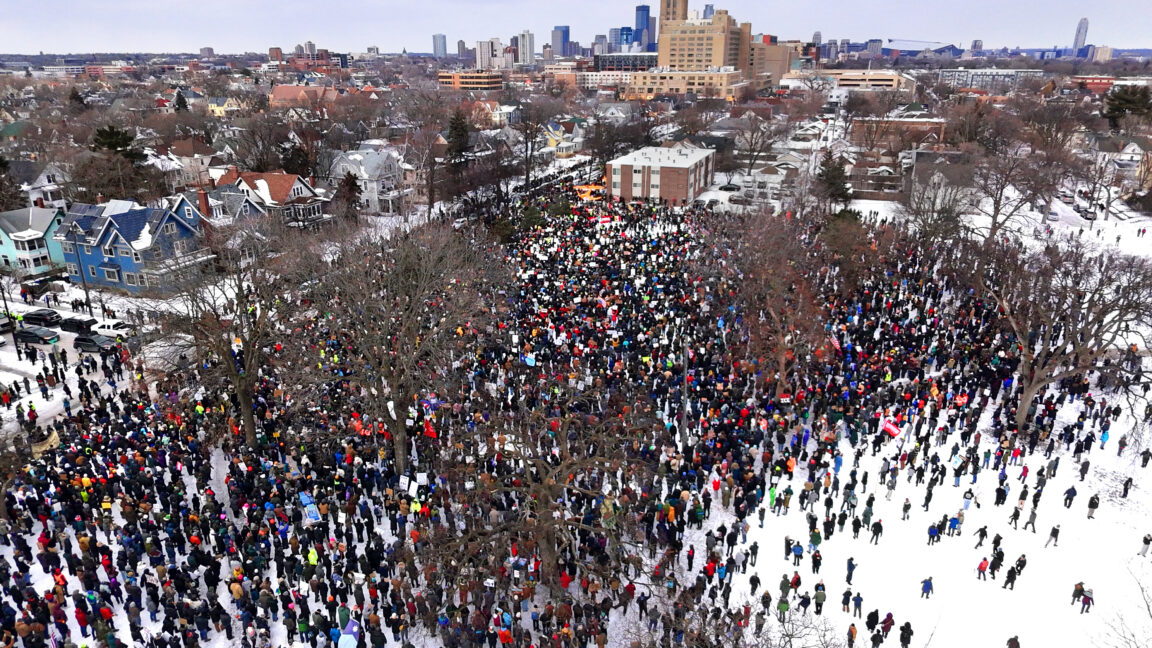
In January 2026, during the height of protests against immigration raids in Minneapolis, federal agents shot and killed 37-year-old Renee Good. Before even gathering all the facts, the Department of Homeland Security labeled the mother of three an “anti-ICE rioter” who “weaponized her vehicle against law enforcement” in an “act of domestic terrorism.”
Days later, the feds announced a major expansion of “no-fly zones” in the name of national security. While such no-fly zones used to be about controlling aircraft, they now often focus on small drones. The expanded no-fly zones announced on January 16 prohibited such drones from flying within 3,000 lateral feet and 1,000 vertical feet of federal facilities.
But for the first time, the order extended no-fly zones to ground vehicles belonging to the Department of Homeland Security. Even while the vehicles were in motion. Even if they were unmarked. And even if their routes had not been announced.
Humanoid robots could load cargo and clean aircraft cabins at Haneda Airport.
Show full content
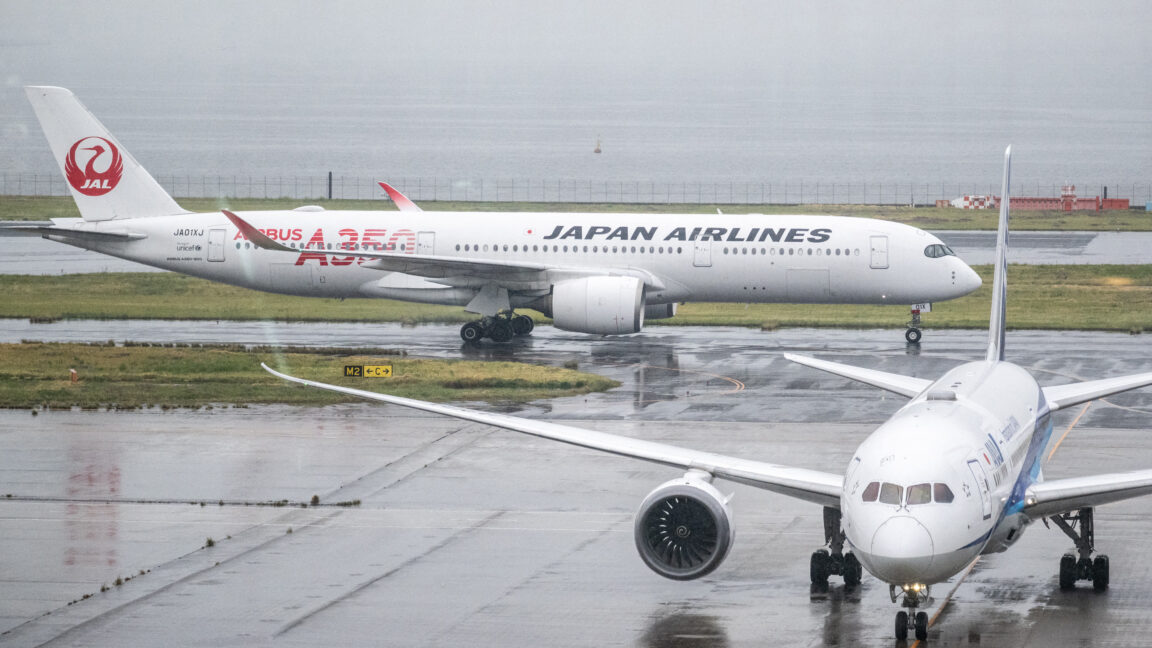
Humanoid robots are getting a new gig as baggage handlers and cargo loaders at Tokyo’s Haneda Airport—part of a Japan Airlines experiment to address a human labor shortage as airport visitor numbers have surged in recent years.
The demonstration, set to launch in May 2026, could eventually test humanoid robots in a wide range of airport tasks, including cleaning aircraft cabins and possibly handling ground support equipment such as baggage carts, according to a Japan Airlines press release. The trials are scheduled to run until 2028, which suggests that travelers flying into or out of Tokyo may spot some of the robots at work.
This marks the latest foray for humanoid robots after they have already begun pilot-testing in workplaces such as automotive factories and warehouses. Most robotic productivity so far has relied on robotic arms and similarly specialized robots that perform the same predictable tasks on assembly lines and in warehouses. By comparison, humanoid robots face a much stiffer challenge in dealing with more open and unpredictable work environments, and it remains to be seen whether the latest robotic software and hardware will be up to the task.
GitHub says it can no longer absorb "escalating inference cost" from it heaviest AI users.
Show full content
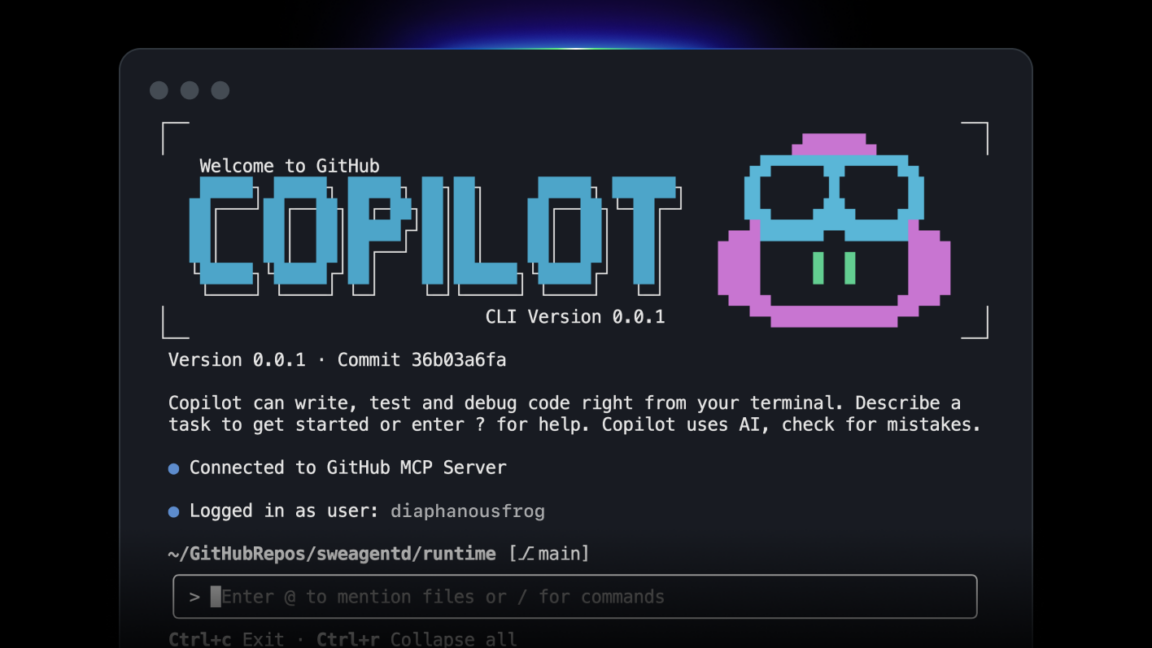
GitHub has announced that it will be shifting to a usage-based billing model for its GitHub Copilot AI service starting on June 1. The move is pitched as a way to "better align pricing with actual usage" and a necessary step to keep Copilot financially sustainable amid surging demand for limited AI computing resources.
GitHub Copilot subscribers currently receive an allocation of monthly "requests" and "premium requests," which are spent whenever they ask Copilot for help from an AI model. But those broad categories cover many different AI tasks with a wide range of total backend computing costs, GitHub says.
"Today, a quick chat question and a multi-hour autonomous coding session can cost the user the same amount," the Microsoft-owned company wrote in its announcement. And while GitHub says it has "absorbed much of the escalating inference cost behind that usage" to this point, lumping all "premium requests" together "is no longer sustainable."
University of Oregon scientists repurposed battery-testing tool to better measure coffee's flavor profile
Show full content
University of Oregon chemist Christopher Hendon loves his coffee—so much so that studying all the factors that go into creating the perfect cuppa constitutes a significant area of research for him. His latest project: discovering a novel means of measuring the flavor profile of coffee simply by sending an electrical current through a sample beverage. The results appear in a new paper published in the journal Nature Communications.
We've been following Hendon's work for several years now. For instance, in 2020, Hendon’s lab helped devise a mathematical model for brewing the perfect cup of espresso, over and over, while minimizing waste. The flavors in espresso derive from roughly 2,000 different compounds that are extracted from the coffee grounds during brewing. So it can be challenging for baristas to reproduce the same perfect cup over and over again.
That's why Hendon and his colleagues built their model for a more easily measurable property known as the extraction yield (EY): the fraction of coffee that dissolves into the final beverage. That, in turn, depends on controlling water flow and pressure as the liquid percolates through the coffee grounds. The model is based on how lithium ions propagate through a battery’s electrodes, similar to how caffeine molecules dissolve from coffee grounds.
Many rural communities are viscerally opposed to AI infrastructure.
Show full content
In Tazewell County, Illinois, Michael Deppert depends on a natural pool of water beneath the sandy soils of his farm to irrigate the pumpkins, corn, and soybeans growing in his fields.
So when a data center was proposed about eight miles away, he feared it would tap the same aquifer, potentially eroding crop yields and profits.
Deppert, who is also the president of the local farm bureau lobby group, says locals were also “nervous” about how a data center would affect the “good, clean drinking water.” Residents launched a fierce opposition campaign, packing city council meetings and mounting petitions. After several months, the project, led by developer Western Hospitality Partners, was scrapped.
The hands-free, eyes-on driver assist only works on geofenced highways.
Show full content
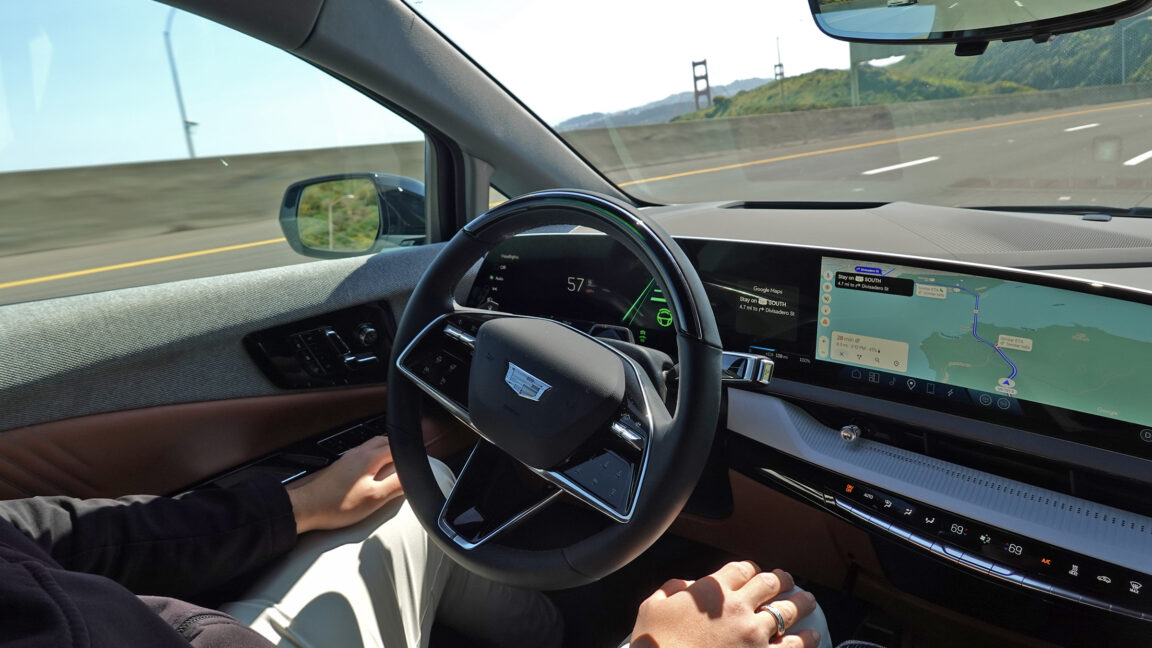
When Super Cruise debuted in the Cadillac CT6 in 2017, it showed there was a responsible way to give drivers a hands-free assistance system. Unlike Tesla, General Motors geofenced the system to only work on restricted-access highways that had been lidar-scanned and HD-mapped ahead of time. What's more, it added a driver-facing infrared camera to track their gaze and ensure their eyes remain on the road ahead for the system to stay active.
After starting out in the Cadillac flagship sedan, GM began adding Super Cruise to more and more of its models, and the system has just passed a billion miles driven (1.6 billion km) across almost 750,000 vehicles in the US and Canada. "And we're continuing to grow that, both with the new sales and also we have a very high renewal rate," said Rashed Haq, vice president of autonomous vehicles at GM.
That renewal rate is close to 40 percent for GM owners with Super Cruise, according to Haq, which is free for the first three years then is tied to an active OnStar subscription. "It really shows how Super Cruise is passing what I call the toothbrush test. The customers are using it continuously. Once they use it, they never go back. They continue to use it, and then they use it multiple times a day, just like a toothbrush. So it's really past that kind of stickiness test," Haq told me.
The bidirectional design has some clear advantages for a working taxi.
Show full content
These days, the hype is all about AI and robots, but almost a decade ago, the tech du jour was self-driving. You couldn't swing a lanyard at CES for the latter half of the last decade without hitting a robotaxi; post-COVID, the number of startups has shrunk, but the technology has definitely matured. Go to the right cities—San Francisco and Austin, Texas, spring to mind—and you might see dozens of sensor-festooned vehicles among the downtown traffic.
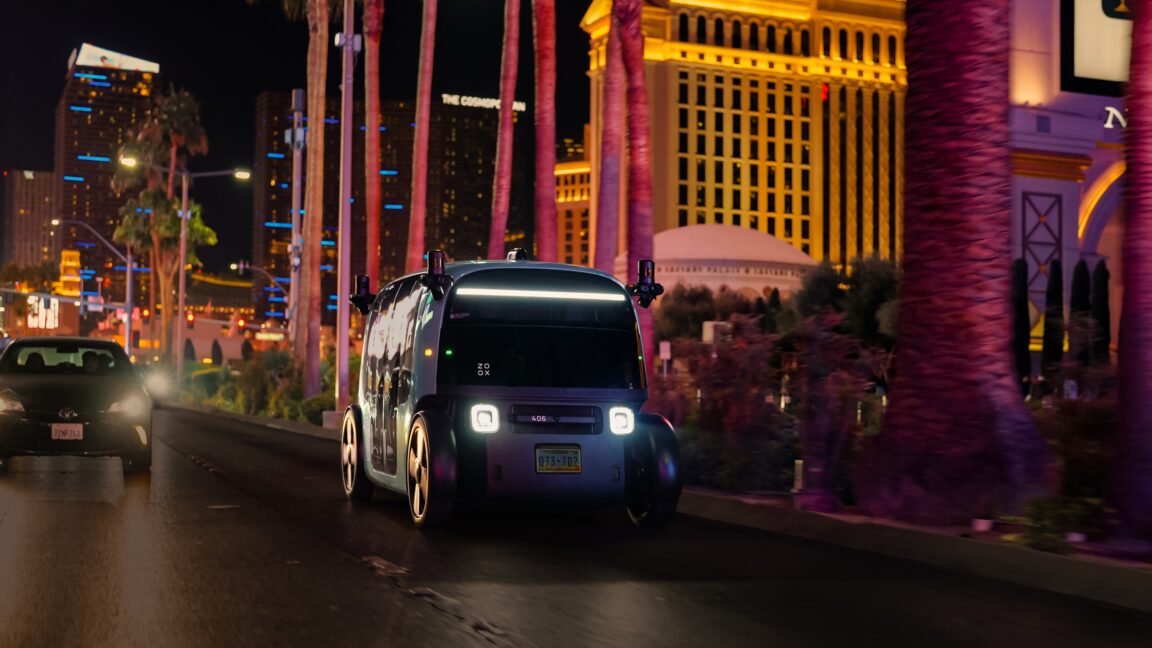
The pod-like robotaxis belonging to Zoox stand out. Other robotaxi developers are retrofitting existing vehicles like Hyundai Ioniq 5s with sensors and the computing power necessary for self-driving. Zoox, which was bought by Amazon in 2020, did that with its test fleet, but as it starts to offer ride-hailing services—currently in Las Vegas and San Francisco—it's doing so with a purpose-built design that looks like it just drove off the set of a big-budget sci-fi production.
"A robotaxi is not a car; it's not a human-driven vehicle, and the requirements are wildly different, although it has to live in that world," explained Chris Stoffel, director of robot industrial design and studio engineering at Zoox.
The differences between our brains and Neanderthals' were likely cosmetic.
Show full content
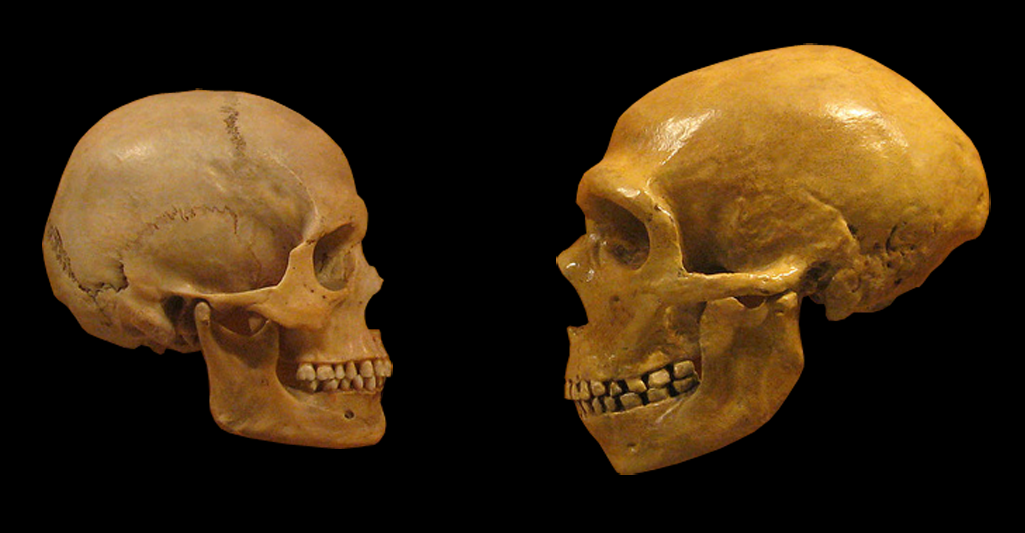
If you look at a Neanderthal skull and a Homo sapiens skull, they're visibly different: Neanderthal skulls are lower and longer, whereas ours tend to be rounder. However, those differences probably don’t say much about the brains within them, according to a recent study, which compared MRI scans of modern people’s brains with casts of the inside of Neanderthal skulls.
The results suggest that there’s more variation in brain size among modern people than between Neanderthals and Pleistocene Homo sapiens. And because brain size is actually a terrible way to predict cognitive capability, Neanderthals could have been a lot more like us than some previous studies have claimed, which definitely fits what the archaeological record tells us about how they lived. It would also mean that our species probably didn't out-compete the Neanderthals by being smarter or more adaptable.
Neanderthal brains fit within the modern human range
Years after you die, the inner vault of your skull will hold the shape of your brain; if future archaeologists make a cast of that inner space, they’ll get a neat resin model of the outer contours of your brain, called an endocast. (Sediment that filled the skull of an Australopithecus africanus child who died 2.8 million years ago did this naturally, creating an endocast that’s half rocky brain-sculpture and half sparkling crystal.) For years, researchers have studied endocasts of Neanderthal skulls, trying to piece together how their brains were different or similar to ours. And that has been a matter of some debate.
SpaceX and Blue Origin tell NASA their lunar landers will be ready for Artemis III in late 2027.
Show full content
NASA Administrator Jared Isaacman told lawmakers on Monday that SpaceX and Blue Origin, the agency's two lunar lander contractors, say they could have their spacecraft ready for the next Artemis mission in Earth orbit in late 2027, somewhat later than NASA's previous schedule.
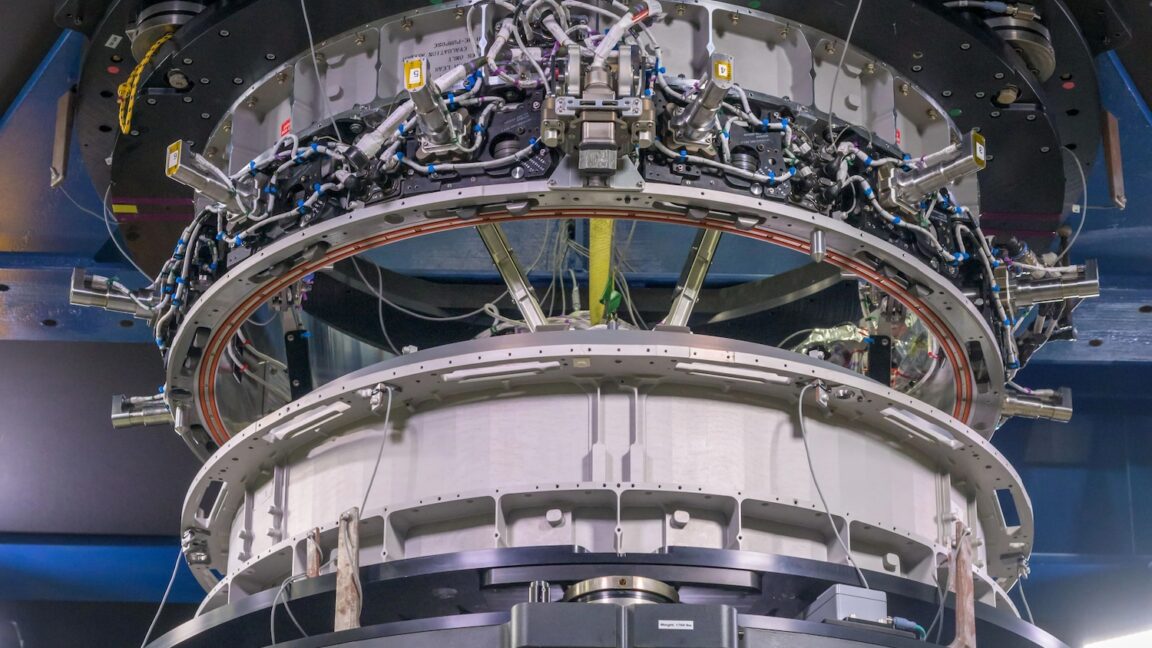
This mission, Artemis III, will not fly to the Moon. Instead, NASA will launch an Orion capsule with a team of astronauts to rendezvous and potentially dock with one or both landers in Earth orbit. The details of the Artemis III flight plan remain under review, with key questions about the orbit's altitude and the configuration of the Space Launch System rocket still unanswered.
A mission to low-Earth orbit, just a few hundred miles in altitude, may not require NASA to use up an SLS upper stage that is already built and in storage, saving the unit for the following Artemis mission to attempt a landing on the Moon. A launch into a higher orbit would require the upper stage, but it would allow NASA to perform tests in an environment more similar to the Moon. NASA is buying a new commercial upper stage, the Centaur V from United Launch Alliance, to pair with the SLS rocket after flying the last of the rocket's existing upper stages.
If you're one of millions using element-data, it's time to check for compromise.
Show full content
Open source software with more than 1 million monthly downloads was compromised after a threat actor exploited a vulnerability in the developers’ account workflow that gave access to its signing keys and other sensitive information.
On Friday, unknown attackers exploited the vulnerability to push a new version of element-data, a command-line interface that helps users monitor performance and anomalies in machine-learning systems. When run, the malicious package scoured systems for sensitive data, including user profiles, warehouse credentials, cloud provider keys, API tokens, and SSH keys, developers said. The malicious version was tagged as 0.23.3 and was published to the developers’ Python Package Index and Docker image accounts. It was removed about 12 hours later, on Saturday. Elementary Cloud, the Elementary dbt package, and all other CLI versions weren't affected.
Assume compromise
“Users who installed 0.23.3, or who pulled and ran the affected Docker image, should assume that any credentials accessible to the environment where it ran may have been exposed,” the developers wrote.
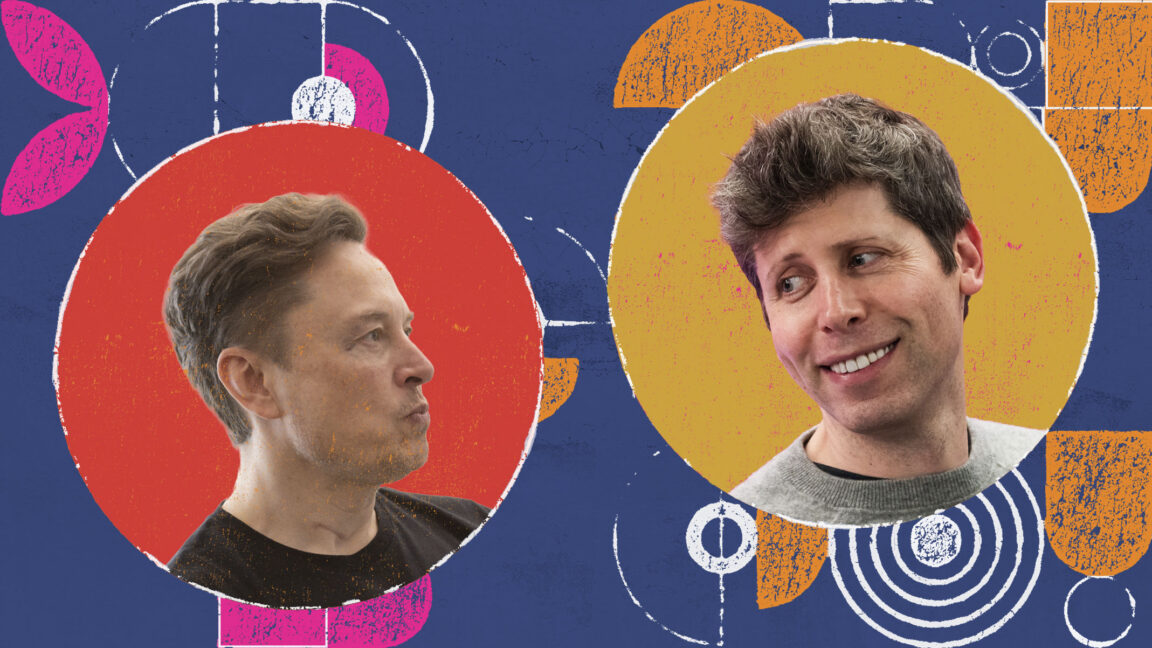
Musk’s shifting stance on AI dangers may complicate trial over OpenAI’s mission.
Show full content
A hotly anticipated trial starts this week, where Elon Musk will attempt to prove that OpenAI, under Sam Altman, has abandoned its mission to remain a nonprofit in order to ensure that artificial intelligence serves humanity, and not just billionaires.
Many view the lawsuit as a grudge match between Musk—who left OpenAI after serving as an early major donor and advisor—and Altman—who currently runs OpenAI, despite insiders' allegedly growing distrust in his commitment to the dominant AI firm's mission. But the lawsuit is about much more than a couple billionaires' big egos. The outcome could radically change the AI landscape, impacting how OpenAI runs and what resources the firm will have to uphold its mission.
If Musk wins, OpenAI's hopes of growing a for-profit arm that can fund the nonprofit could be dashed. Additionally, Brockman and Altman could be dropped as officers, and Altman risks losing his seat on OpenAI's board.
Amended agreement clears the way for OpenAI models to run on Amazon Bedrock.
Show full content
Since Microsoft invested $1 billion in OpenAI in 2019, the exclusive partnership between the two firms has been one of the strongest and most consequential in the AI industry. Today, though, OpenAI and Microsoft jointlyannounced an amended agreement that will allow the company to go beyond Microsoft's Azure and "serve all its products to customers across any cloud provider."
The announcement clarifies that Microsoft will continue to have a license for OpenAI's IP and models through 2032 and that Azure will remain the "primary cloud partner" for OpenAI during that time (should Microsoft continue to be able to honor that). But Microsoft's license "will now be non-exclusive," the announcement reads, letting OpenAI make its models available through other major cloud providers going forward.
While OpenAI will continue to make the same 20 percent revenue share payments to Microsoft under the amended deal, that total payment will now be limited to an unspecified cap and is only guaranteed to run through 2030. Importantly, that revenue share is now "independent of OpenAI’s technology progress," an apparent reference to the infamous "AGI clause" in the original partnership that would have scrapped the exclusivity deal if and when OpenAI achieved the hard-to-gauge benchmark of artificial general intelligence.
Gemini gets preferential treatment on Android, but maybe not for long (in Europe).
Show full content
In January, the European Commission began an initial investigation, known as a specification proceeding, into how Google has implemented AI in the Android operating system. The results are in, and the EU says Android needs to be more open, which is not surprising. Meanwhile, Google says this amounts to "unwarranted intervention," which is equally unsurprising. Regardless of Google's characterization of the investigation, the commission may force Google to make Android AI changes this summer.
This action stems from the continent's Digital Markets Act (DMA), a sweeping law that designates seven dominant technology companies as "gatekeepers" that are subject to greater regulation to ensure fair competition. Google has consistently spoken against the regulations imposed under the DMA, but it and the other gatekeepers have been subject to the law for several years now, and there's little chance the commission backs away from it.
The issue before the commission currently is the built-in advantage for Gemini on Android. When you turn on any Google-powered Android phone, Gemini is already there and gets special treatment at the system level. The European Commission is taking aim at the lack of features available to third-party AI services. The commission believes that there are too many experiences on Android that only work with Google's Gemini AI, and as a gatekeeper, Google must change that.
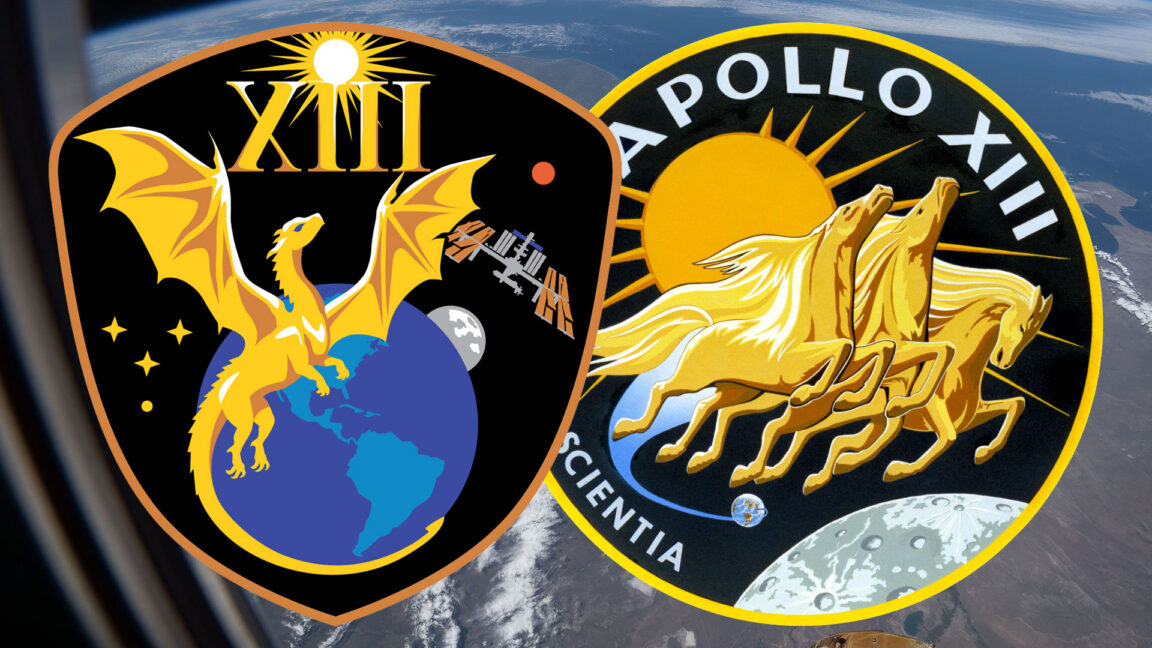
NASA has assigned its first crew to launch on a mission "13" since Apollo 13 "had a problem" on the way to the Moon 56 years ago.
Jessica Watkins and Luke Delaney with NASA, Joshua Kutryk with the Canadian Space Agency, and Roscosmos cosmonaut Sergey Teteryatnikov will lift off for the International Space Station as Crew-13 on a SpaceX Dragon spacecraft in mid-September. The four will serve as members of the station's Expedition 75 and 76 crews, before returning to Earth about five months later.
"This flight is the 13th crew rotation with SpaceX," NASA's announcement read. "The crew will conduct scientific investigations and technology demonstrations to help prepare humans for future exploration missions to the moon and Mars, and benefit people on Earth."
GamingTechemulationSNESSuper NintendoSuper Nintendo Entertainment Systemzsnes
Upgrades to SNES graphics and sound go way beyond the typical screen filtering.
Show full content
Aficionados of game console emulator history will almost certainly be familiar with ZSNES, an MS-DOS-based (and, later, Windows-based) emulator for the Super Nintendo Entertainment System that originally launched back in 1997. Originally written in x86 assembly code, it was known best for its performance on low-end PCs and was capable of running some games at full speed on chips as slow as a 233 MHz Pentium II, though it usually did so at the expense of emulation accuracy.
ZSNES developed rapidly (alongside the contemporary, competing Snes9x project) throughout the late ’90s and early 2000s. Updates slowed after the original creators left the project, and new releases ceased entirely around 2007.
But a successor to ZSNES has arrived. The project's original creators (who go by the handles zsKnight and _Demo_) have returned 19 years later with a new follow-up project called "Super ZSNES," an SNES emulator that emphasizes audio-visual upgrades to those aging ’90s-era Super Nintendo games. The only more surprising emulator news would be if NESticle somehow rose from the dead.
The unwinding of Meta’s deal shows how tech founders struggle to cut China ties.
Show full content
China has blocked US tech giant Meta’s acquisition of the AI company Manus that was founded by Chinese tech entrepreneurs. That development indicates how difficult it has become for US and Chinese tech companies to strike and sustain such deals as government authorities on both sides take an increasingly hard line amid the deepening US-China AI rivalry.
The Chinese government formally asked Meta to unwind the acquisition on April 27 after deciding to ban foreign investment in Manus based on national security concerns. It had already spent months officially scrutinizing Meta’s $2 billion acquisition of Manus that took place in December 2025—Chinese regulators announced they were reviewing the deal in January 2026 and instructed the two Manus cofounders to not leave China while the investigation was ongoing, according to The Wall Street Journal.
Manus burst onto the scene in March 2025 with its “general AI agent,” designed to help users with tasks such as searching real estate sites for a new home or booking airline tickets and hotels for an international trip. The Manus AI agent is an “agentic wrapper” or “agentic harness” that enables an underlying AI model—in this case, Anthropic’s Claude 3.7 Sonnet—to take actions to carry out user requests. But Manus actually incorporates multiple AI agents to perform and verify tasks, including a planner agent that assigns tasks and an executor agent that can browse and interact with websites, create spreadsheets, use various software tools, and even code new applications.
Low-frequency infrasound (below 20 Hz) can raise cortisol levels in saliva and increase irritability.
Show full content
The next time you walk into a purportedly "haunted" house and sense a ghostly presence, consider that those feelings might be due to vibrating pipes, mechanical or climate control systems, rumbling from traffic, or wind turbines, rather than anything paranormal. That's the conclusion of a new paper published in the journal Frontiers in Behavioral Neuroscience. All of those are sources of infrasound.
Scientists have long sought to find logical explanations for alleged hauntings. In 2003, for instance, University of Hertfordshire psychologist Richard Wiseman conducted two studies that investigated the psychological mechanisms underlying supposed "ghostly" activity. Subjects walked around Hampton Court Palace in Surrey, England, and the South Bridge Vaults in Edinburgh, Scotland—both with reputations for manifesting unusual phenomena—and reported back on which places at those sites they sensed such phenomena. The subjects reported more odd experiences in places rumored to be haunted, regardless of whether the subjects were aware of those rumors or not.
Those areas did, however, feature variances in local magnetic fields, humidity, and lighting levels, suggesting that such sensations are simply people responding to normal environmental factors. Wiseman hypothesized that stronger magnetic fields may affect the brain, similar to how electrical stimulation of the angular gyrus can make one feel as if there is another person standing behind, mimicking one's movements.